

Politics
Nadiya Bychkova Becomes Fourth Strictly Come Dancing Pro Rumoured To Be Axed


Strictly Come Dancing fans are in shock following reports in the tabloid press that four of the show’s resident professionals will not be returning for this year’s series.
On Saturday, The Sun claimed that Gorka Márquez’s contract would not be renewed ahead of the next season of Strictly, citing a “source” who claimed that “bosses want a fresh start” ahead of the next run.
Luba Mushtuk and Michelle Tsiakkas were also among the pros rumoured not to be back for the upcoming season, with the tabloid alleging a day later that Nadiya Bychkova was the fourth to be dropped.
At the time of writing, none of the four has addressed the speculation, but the news has sparked a big reaction among Strictly devotees…
A BBC representative told The Sun: “Plans for Strictly Come Dancing 2026 will be confirmed in due course.”
HuffPost UK has also contacted Strictly Come Dancing for comment.
Gorka – who has made the Strictly final three times during his 10 years as a professional – sat out most of last year’s season due to his commitments as a judge on the Spanish version of the show.
Nadiya and Luba joined in 2017 and 2018, respectively.
During their time on the show, Nadiya has gone without a celebrity partner twice, while Luba has been benched four times.
Michelle, meanwhile, became a Strictly pro in 2022, and has only been paired with a celebrity once during her four-season stint.

Fans already knew that Strictly would be getting something of a refresh in 2026, following the much-publicised departures of its long-time hosts Tess Daly and Claudia Winkleman.
Replacement presenters are yet to be confirmed, with a number of famous faces rumoured to be in consideration for the coveted gig.
Strictly Come Dancing will return to BBC One for its 24th season in the autumn.


Israel has launched a new wave of attacks on southern and eastern Lebanon, taking the total number of people that the terrorist state has murdered in the country since February 2nd 2026 to at least 486.
On Tuesday 10 March 2026 Israel launched two air attacks on Tyre (Sour), a city in Southern Lebanon. Not long before the attacks, the Israeli army threatened attacks on both Tyre and Sidon (Saida). It urged residents to:
evacuate immediately and move at least 300 metres [about 1,000ft] away.
Since Israel assassinated Ayatollah Ali Khamenei, Iran’s supreme leader, it has been increasing its illegal presence in Eastern Lebanon, whilst also bombing the country, including the capital, Beirut.
Israeli media are reporting that:
Israel wants to expand its presence in southern Lebanon, expand that buffer zone.
Which is, of course, illegal and entirely intolerable under international law.
Meanwhile:
Hezbollah says it has so far repelled advances on a number of axes.
Israel repeatedly claims it is expanding into Lebanon to defeat Hezbollah. Except that if that were the case, it would not be indiscriminately bombing civilians.
Talks of a ‘demilitarised area’ or a ‘temporary buffer zone’ mean one thing and one thing only – illegal occupation. In other words, Israel is stealing even more land, which it has no legal right to.
Israel intensify attacks
Overnight on Tuesday, Israeli warplanes launched attacks on the towns of Almajadel, Chaqra, Srifa and in the Bekaa Valley.
As if that wasn’t bad enough, Lebanon’s National News Agency (NNA) also reported:
heavy Israeli attacks near the town of Ansariya as well as on the outskirts of Bint Jbeil and Ainatha.
Four people were killed in the Bint Jbeil district.
Other Israeli attacks included the southern Lebanese towns of Majdal in the Tyre district and Kafr Sasir in the Nabatieh district.
Israel also murdered a Maronite Catholic priest, Father Pierre al-Rahi, in the village of Qlayaa.
Lebanese newspaper L’Orient-Le Jour reported that:
al-Rahi was killed after an Israeli tank fired on the home of a local couple a second time after several people had rushed there to try to help.
One day before his death, on the steps to his church, al-Rahi told France24:
We are forced to stay despite the danger, when we defend our land, and we do so peacefully. None of us carries weapons. All of us carry peace and goodness and love.
Resistance
In the last week, Israel has also targeted at least 30 sites belonging to the Al-Qard al-Hasan association, which provides interest-free loans and other financial services in Lebanon. It is doing so because it’s “affiliated with Hezbollah”.
But what we need to remember, and what the entirety of the West seems to forget, is that Hezbollah would not exist if Israel had not invaded Lebanon in 1982.
Additionally, armed resistance is not illegal under international law. A United Nations General Assembly resolution states:
The General Assembly,
Reaffirms the legitimacy of the struggle of peoples for independence, territorial integrity, national unity and liberation from colonial domination, apartheid and foreign occupation by all available means, including armed struggle;
In December 2025, Canary writer Mohamad Kleit wrote:
I saw nothing but rubble. Destroyed houses, lost dreams, and graffiti in Hebrew promising an Israeli return to take over the border towns. This statement on the wall was accompanied by other racist, colonial slurs against Lebanon, drawn on what remained of houses and shops, by the Israeli occupation forces during the 2024 war.
This shows the current attacks on Lebanon are not some new attempt to disarm Hezbollah. They are part of a prolonged and systematic colonial attempt to invade the land.
Moreover, Israel’s ‘Greater Israel project’ was formally established in 1967. This was only one month after Israel illegally annexed the Gaza Strip, the Sinai Peninsula, the West Bank, and the Golan Heights in the Six-Day War.
According to Middle East Eye:
It is often understood as a vision of territorial expansion to encompass Palestine, Lebanon and Jordan, along with significant parts of Syria, Iraq, Egypt and Saudi Arabia.
So it is not surprising that, according to a Financial Times report, Israeli officials discussed launching a strike on Hezbollah before the attack on Iran even started.
Bombing Lebanon has never been about disarming Hezbollah – that’s the same bullshit we were fed about Hamas in Gaza while Israel carpet bombed the whole area.
Israel’s actions created Hezbollah, just as it did with Hamas. But as soon as Israel has to face the consequences of its actions, which let’s face it, are tiny in comparison, it plays the victim and cries terrorism.
Israel and the US simply do not like the idea of people in the Global South being able to defend themselves.
And from where I’m standing, there is only one terrorist.
Featured image via Hook Global/YouTube screenshot

The government’s flagship employment support scheme for Disabled people is in “deep crisis”. Delays, cuts and outdated systems are putting thousands of jobs at risk. This is according to new evidence the Disability Poverty Campaign Group has submitted to the Public Accounts Committee’s inquiry into Access to Work.
The Disability Poverty Campaign Group is a coalition led by Disabled people’s organisations and allies from anti-poverty, disability, carers and research organisations. Disability Rights UK and Inclusion London co-chair the group.
In February the National Audit Office published its own report looking at challenges in the operation of Access to Work. Following on from the National Audit Office’s findings, the Public Accounts Committee wanted to take evidence from senior Department for Work and Pensions (DWP) officials and disability organisations on how and if the DWP is addressing challenges within the scheme. Topics included what impact backlogs have had on claimants and employers, and how to improve the scheme.
The Disability Poverty Campaign Group sent a 3,000-word submission to the Public Accounts Committee. It said Access to Work, once regarded as a cornerstone of disability employment support, is now failing on multiple fronts.
This is despite Access to Work being vital to helping Disabled people stay in work. The scheme now suffers from extreme waiting times, inconsistent decisions, inaccessible processes and steep reductions in support.
The submission used evidence and data collected from the Disability Poverty Campaign Group’s own Access to Work survey, Access Action on Disability, The Access to Work Collective, Decode collaboration, RNIB and policy discussions undertaken with officials and Ministers in DWP.
Access to Work gutted by cuts
The Disability Poverty Campaign Group submission showed the evidence of widespread cuts to Access to Work packages is now overwhelming:
- In the Disability Poverty Campaign Group’s 2025 survey, half of recipients said their support was insufficient.
- One person saw their annual allowance cut from 52 hours of support to just 5.
- Decode, a network supporting Disabled people in the arts, reports that 89.5% of reassessment cases they supported in 2024–25 resulted in lower awards. There was an average reduction of 53%.
- Action on Disability found support worker hours for their clients dropped 82% between 2022 and 2025. And job retention fell from 88% to 43%, with employers directly linking job losses to Access to Work cuts.
Amongst other concerns reported in the submission was that the processes for applying for, administering, and appealing Access to Work awards are becoming inaccessible. New rules have been introduced which prevent digital sharing of applications and documents and instead require communication by post.
There have also been instances of many Deaf users of Access to Work having advisers repeatedly telephone them. That’s despite knowing that they are Deaf and cannot use the telephone.
The Disability Poverty Campaign Group is pushing for more funding for Access to Work. It showed that Access to Work delivered £1.14 directly back to the Treasury for every pound it cost. This confirms that it is cost‑effective to the government.
Disabled people’s recommendations
The Disability Poverty Campaign Group submission sums up widespread system failures and problems arising from the design or processes of Access to Work, and value for money in the scheme.
It also recommends policy solutions that, if implemented, would go toward securing the future of the Access to Work scheme. They would make it more inclusive, sustainable and fit for the future.
Disability Poverty Campaign Group recommendations were:
- Immediately increase funding to match rising demand.
- Invest in modernising Access to Work, making all processes fully accessible and inclusive for all applications and renewals.
- Ensure any future changes to the scheme are co-designed with Disabled people’s organisations, Disabled people and Disabled freelancers and business owners.
- Move Access to Work from Departmental Expenditure Limits (limits set by the treasury to manage public spending in the UK) to Annually Managed Expenditure funding based on need, to manage growing caseloads.
- Create a transferable Access to Work award that moves with the individual from an existing job to a new job. This would enable people to start a new job immediately without having to reapply from scratch.
Now that the Disability Poverty Campaign Group along with other Access to Work groups and Disabled people’s organisations have submitted evidence, the Public Accounts Committee will follow a well‑established parliamentary oversight process.
It will take oral evidence from senior officials and relevant witnesses. Then it will produce a formal report, to be laid before parliament and published online. The government must issue a Treasury Minute response, normally within two months, setting out the actions the DWP will take.
Dan White, co-chair of the Disability Poverty Campaign Group, said:
When Access to Work fails, Disabled people lose their jobs, employers lose valued staff, and the economy loses talent it cannot afford to waste.
The evidence we have submitted—drawn from many Disabled workers and employers across the UK—shows a system at breaking point. Yet it also shows the solution. Access to Work is not only life‑changing but cost‑effective, returning more to the Treasury than it costs to run. With the right investment, modernisation and co‑production with Disabled people, the scheme can once again become the cornerstone of disability employment support that it was supposed to be.
We urge the Public Accounts Committee to use its powers to help secure the future of a scheme that is vital to the employment rights of Disabled people who can and wish to participate fully in working life. The recommendations we set out are practical, necessary, and achievable. What is needed now is the political will to act.
Featured image via the Canary

The post ‘The woke Foreign Office doesn’t stand for Britain’ appeared first on spiked.

Allegations have been made that the government has controversially blocked Labour MPs from receiving advice on plans to cut jury trials. The group ‘Society of Labour Lawyers’ (SLL) appears to have been shut out of giving advice to ministers.
Karl Turner, who is leading a backbench rebel group of MPs from within Labour, has raised alarm that officials are blocking the SLL from briefing MPs on their professional legal opinion about the government’s proposed ‘reforms’. Turner told the Guardian:
The policy position of the SLL is that these measures are a terrible mistake, are unworkable and must be stopped but they have been blocked from sharing that position with Labour MPs in a briefing of the sort which one would expect it to be able to make.
Labour barking up the wrong tree
Under justice secretary David Lammy’s plans, the right for a jury trial will be removed from some defendants in yet another move to take from ordinary people. Apparently, the government now wants to treat crimes carrying sentences of three years or less as undeserving of the right to a fair trial. A right which will continue to be afforded to more serious offences.
This cut will be applied to either-way offences which receive a sentence lesser than 3 years. Lammy has faced widespread push back from lawyers across the UK in protest at this move which removes a crucial aspect to a UK citizen’s right to a fair trial.
Lawyer Peter Stefanovic has also condemned the shocking authoritarian move to block advice from specialists by the UK Labour government:
This is shocking. Labour lawyers ‘blocked’ from briefing MPs on jury trials overhaul before vote. The Prime Minister is completely out of control on this. MPs must come together and stop him from undermining and restricting a fundamental cornerstone of our democracy…
— Peter Stefanovic (@PeterStefanovi2) March 9, 2026
No informed decisions allowed for MPs, apparently
It’s deeply ironic that qualified lawyers cannot share their specialised knowledge, particularly when David Lammy – a qualified barrister himself – has demonstrated such ineptitude. Legality clearly isn’t a concern for the UK government, as we wrote yesterday:
Once again, the UK government is shown to be woefully inept with cabinet ministers unable to even exercise their supposed specialised knowledge. Lammy, a qualified barrister and first black Briton to study at Harvard, seems incapable, or unwilling, to be honest about the likely impact of his penny-pinching policy to remove jury trials in some criminal cases.
This latest revelation reinforces the reality that the UK government continues to make transparency harder in the way the state operates against its citizens. Only those with something to hide seek to prevent others from making informed decisions. Ordinary people should not suffer the consequences of the criminal justice system’s mismanagement by successive governments.
If the government can find money for bombs, it can find money to safeguard and strengthen justice.
This isn’t a new issue, they’ve always struggled with their priorities:
“Schools don’t have money for pens.”
Starmer is spending on bombs not schools, says teacher at London protest against “austerity 2.0” pic.twitter.com/XS5eRmnUHw
— PoliticsJOE (@PoliticsJOE_UK) June 7, 2025
Women MPs in favour of proposed changes
According to the Guardian, there are over 30 female Labour MPs pressing Lammy to continue on and not back down to the pressure. The letter from the MPs read:
We know from our personal experiences the ways in which our justice system is failing women and girls across this country.
Playing devil’s advocate, there is some merit to the argument that this could lead to swifter justice for female victims of abuse. Jury trials can sometimes result in offenders receiving lighter convictions when jurors project self-rationalised judgments about what victims supposedly ‘asked for’. As a result, victims often have to relive their deep trauma in court. This only works to compound the impact of abuse on their lives, while effectively facing greater scrutiny than their abusers.
However, we cannot prioritise one type of victim while risking creating countless more victims of our CJS. After all, a right to a fair trial is a right inherent to every citizen of the UK in accordance with the European Court of Human Rights (ECHR). Instead of infringing rights further, work should be done to make trials by jury fairer, more efficient, and more effective.
Informed legal decisions are essential when ordinary people will ultimately bear the fallout. Abuse victims already contend with immense trauma; policymakers should not use their suffering to justify curbing others’ human rights.
The fact so many lawyers are deeply concerned about Lammy’s proposals but are being blocked from advising MPs is nothing short of a disgrace for our justice system.
Featured image via the Canary

Vilija Vėlyvytė looks at the use of overseas recruitment in the NHS since Brexit and argues that it should be a key part of any plan to solve workforce shortages.
The need to reduce the NHS’s reliance on international recruitment has become a recurring theme in the government’s response to NHS workforce shortages. It is echoed in Labour’s 10 Year Health Plan for England and is also expected to inform the next iteration of the NHS workforce strategy, anticipated in the coming months.
This post traces the evolution of international recruitment into the NHS since Brexit. It argues that international recruitment is a vital component of any credible solution to workforce shortages, and should be acknowledged as such.
The NHS has long used overseas recruitment to meet staffing needs. The UK’s membership of the EU facilitated this by allowing EU and EEA-trained health professionals to take up NHS employment on unusually low-friction terms offered by the EU’s framework for free movement of persons.
Brexit brought free movement to an end. Unless protected by settled or pre-settled status, EU nationals seeking to work for the NHS post-Brexit are subject to the same immigration rules as other non-UK nationals.
They must apply for the Health and Care Worker (HCW) visa that did not exist under EU law (introduced in 2020). It makes working in the UK conditional on meeting criteria relating to occupation, salary and sponsorship. Permission to stay is also time-limited: leave is granted for up to five years, after which the visa must be extended.
Notably, the UK maintains a ‘standstill’ regime for the recognition of healthcare qualifications obtained in the EU and EEA. This means that EU/EEA applicants can register and practice in the UK without additional competence assessments. A unilateral policy measure, the ‘standstill’ is not guaranteed to last indefinitely. It is due for review in 2028; if revoked, EU applicants would be subject to the procedures applicable to other internationally trained candidates, including individual evaluation of qualifications and – where required – standardised testing.
The post-Brexit legal and policy landscape has inevitably dulled the UK’s appeal to EU nationals. Nuffield Trust analysis shows that the share of EU/EEA-trained healthcare professionals registering to practise in the UK fell markedly after Brexit, with nursing most affected.
That decline has, however, been counterbalanced by a steep increase in recruitment from outside the EU/EEA. For those who never had the benefit of the free movement, the HCW visa – offering lower fees and expedited processing – became a gateway to NHS employment. The impact was dramatic. Nearly one in five NHS staff in England now report a non-British nationality, up from roughly one in eight before Brexit. Medicine and nursing show the starkest shift: in recent years, over half of newly-registered doctors and nearly half of newly-registered nurses trained outside the UK and EEA. Internationally recruited staff have at this point become indispensable to the NHS’s day-to-day service delivery.
Despite rapid growth in international workforce, shortfalls persist. The NHS vacancy rate was 6.7% in 2025 and is expected to rise over the next decade. The situation is worse in social care, where vacancies remain around 7% – down from 11% in 2022 (before the HCW visa was extended to social care roles).
The causes are multiple and complex: insufficient training capacity, chronic underfunding across health and social care, and persistent retention problems linked to pay and working conditions. The effects, moreover, cut across both sectors: shortages in social care delay hospital discharge and lengthen waiting times, while NHS gaps draw staff away from already fragile care providers. This dynamic leaves both systems more exposed.
The initial post-Brexit policy response was to lean heavily on international recruitment. The emphasis has since shifted towards domestic supply.
The 2023 NHS Longterm Workforce Plan ties large training expansion explicitly to becoming less reliant on international recruitment; the 2025 Immigration White Paper uses immigration policy to steer employers towards investment in domestic skills to ‘grow our domestic workforce’ and ‘end reliance on overseas labour’; and the 10-Year Health Plan for England, released in the same year, likewise signals a move away from ‘dependency on international recruitment’, aiming to reduce it to below 10% by 2035.
This rhetoric portrays international recruitment as something of an uncomfortable necessity – tolerated to plug current gaps, but politically undesirable and expected to recede as domestic capacity builds.
What, then, is the alternative plan? The current NHS workforce strategy, presented in the Conservative government’s 2023 Long Term Workforce Plan, focuses on expanding domestic training. It promises to double medical school places and nearly double nursing training places by 2031/32, projecting an overall workforce increase of around 60% by 2036/37. The Plan also pledges to improve retention through measures including enhancements to the physical working environment, support for flexible working, and pension-related reforms intended to keep staff in post for longer.
The Plan is ambitious but offers little clarity on implementation. How will education and training capacity be expanded? What will finance that expansion once the dedicated five-year funding ends? Can retention realistically improve without confronting issues of pay? These are some key questions that remain unanswered.
The Labour government has criticised the Plan as implausible and has committed to publishing a ‘refreshed’ workforce plan expected this spring.
Unlike the NHS, social care has no statutory long-term workforce plan. That omission is ever more striking in the current political climate: last year, the Home Office closed the HCW visa route to new care worker applications, as part of the wider effort to reduce lower-skilled migration. The government has also commissioned an independent review of social care, but its terms of reference require recommendations to remain ‘affordable’. This casts doubt on the prospect for meaningful change.
It is clear that there is no quick fix to the UK’s health and care workforce crisis. What should be resisted is the tendency to frame international recruitment as problematic in itself. Doing so undervalues the contribution of internationally recruited staff to the day-to-day functioning of the NHS and care services, and risks diverting attention from the real drivers of shortages, which are long-standing and largely domestic in origin.
By Dr Vilija Vėlyvytė, Lecturer in EU Law, The Dickson Poon School of Law, King’s College London and co-editor of forthcoming book The UK Regulatory Framework Post-Brexit: ‘Law Unbound.

The ‘Chief Secretary to the PM’ says he wants a “national conversation” on Digital ID. Will be a brief one… A further press conference is planned for 3 p.m. UPDATE: A citizens’ assembly will help design the policy. Game over…

Chart-topping singer Ellie Goulding has announced that she has welcomed her second child.
On Tuesday afternoon, the Brit Award winner shared with her Instagram followers that she’d given birth to a baby daughter towards the end of last week.
Ellie wrote: “On Friday, I gave birth to a beautiful healthy baby girl. We are totally obsessed with her.
“It was fitting that I spent International Women’s Day with her and the incredible female team at St Mary’s, who provided me and my baby with extraordinary care and kindness. I will always be in awe of midwives.”
The Love Me Like You Do singer added that her family’s new arrival “fills me with so much joy”, particularly due to how excited and “so so happy” her son Arthur has been “to become a big brother to this little angel”.
She ended the post by tagging her partner, the American actor Beau Minniear, who she met on the set of her Destiny music video.

Todd Williamson/Shutterstock
The two-time Grammy nominee’s announcement came on the same day that her fellow 2010s hitmaker Paloma Faith shared the news that she’d also given birth on Friday.
Ellie is already a mum to a four-year-old son, Arthur, who was born in April 2021.
Arthur’s father is Ellie’s ex-husband, Caspar Jopling, to whom she was married between 2019 and 2024.
In 2022, while guest editing Marie Claire magazine, she wrote: “I never believed people when they said ‘motherhood really changes you’. I thought I’d be a bit tired, have different priorities, but no. It really has changed everything about my life.
“There have been so many chemical hormonal changes that I still can’t even compute. My brain is like a different brain and I’m still trying to figure that out. While I’ve been trying to figure out the changes to my mind and body, I have been spending a lot of time by myself to reconnect and rebalance.”
Ellie announced her pregnancy in December 2025, with the British star maintaining that wanted to continue working as long as possible while she was expecting.
“I didn’t want to become just a pregnant woman first,” she told Nylon magazine in January. “Not every woman has this luxury. I have amazing people around me. I have an amazing boyfriend. I do have it a little easier in that I do have amazing support.”
She added: “I’m still working every day and still writing every day. It’s just that I am growing a human inside me.
“I’m perhaps not the most, like, Mother Earth about it, if you know what I mean? It’s a beautiful thing to be able to grow a child, and I feel very lucky that I’m healthy – but it’s not all I am right now.”

If you’ve already torn through all four episodes of Netflix’s hit miniseries The Dinosaurs, you’re definitely going to want to check out the streaming giant’s latest gift for viewers.
The unique documentary premiered last week, and has already gone down a storm, with the show exploring the “rise and fall of the dinosaurs”, with narration from the incomparable Morgan Freeman.
On Monday evening, Netflix released blooper footage from Morgan inside the recording booth, and we’re delighted to report that it’s an absolute treasure trove.
From the international treasure introducing himself as “Morgan fucking Freeman” to the Oscar winner stumbling over some species’ trickier names (“Yutyranus? Let’s say Yutyrannus, ‘anus’ sounds like ‘ass’”), the clips are a must-watch for anyone who loved The Dinosaurs.
The Dinosaurs was co-produced by recent EGOT recipient Steven Spielberg, and serves as the sister show to his previous nature series Life On Our Planet.
Since its premiere earlier this month, the show has gone down a storm with critics (it holds a rare 100% score on Rotten Tomatoes, based on seven especially positive reviews) with particular praise for Morgan’s commentary.
It’s similarly proved popular with Netflix users and, at the time of writing, it’s the UK platform’s number one show, ahead of hits like Bridgerton, The Night Agent and Vladimir.

Over the last few days, the paleontology community has also been weighing in – and let’s just say they have a few notes.
The Dinosaurs director Nick Shoolingin‑Jordan previously told Netflix’s companion outlet Tudum that he wanted to “tell the full chronology all the way through and take the audience on a rip‑roaring adventure” with his latest venture.
Dan Tapster, its showrunner, added: “We had eight 50-minute episodes to tell the entire story of life on Earth [in Life On Our Planet], so there were lots of things where we could only scratch the surface – and the dinosaur story was absolutely one of them.
“With The Dinosaurs, we finally get to tell that story in full and celebrate it like no one has ever done before.”

Picture a green garden, and what do you imagine? Possibly uniform, manicured lawns, few “weeds”, and ideally, zero “pests”.
But speaking to HuffPost UK, Helen Bostock, a senior wildlife specialist at the Royal Horticultural Society (RHS), said gardens “do better when there are lots of different organisms to work in harmony.
“We’d love everyone to have a biodiverse garden because caring for our planet and global biodiversity starts at home.”
Here, she shared what a biodiverse garden means, why it matters, how it can help you, and how to achieve it.
What is biodiversity?
It means having a variety of species in one place. That can include plants, animals, fungi, and insects.
So, Bostock said, “A biodiverse garden is one that is bursting with many different forms of life, from the smallest micro-organism to the largest tree. It is a holistic community covering fungi, lichens, plants, invertebrates, mammals and birds.
At first glance, she continued, a casual observer might not notice much diference between a truly biodiverse and less well-rounded garden, “but glimpses can be had perhaps when a compost heap is turned and is alive with centipedes, worms and springtails.
“Or when the dawn chorus starts up in spring with a cacophony of bird song. Or when a curious gardener steps out after dark to hold a torch up to a white sheet to discover there are wonderfully named moths such as angle shades, brimstone, buff-tip and elephant hawk-moth calling their garden home.”
Why is biodiversity important in gardening?
“Environments are more resilient and function better when there is both species and genetic diversity, helping combat challenges such as climate change, carbon capture and pollution,” Bostock explained.
And even though gardens are pretty small-scale, they still play their part in the broader ecosystem.
“We’d love everyone to have a biodiverse garden because caring for our planet and global biodiversity starts at home,” the wildlife expert added.
How can biodiversity help to make gardening easier?
A properly biodiverse garden is brilliant for the environment. But if you need any more convincing, it can make your job a lot easier, too.
For instance, “A vibrant garden ecosystem is one that requires [fewer] inputs from gardeners – when natural predators are keeping the aphids in check, [fewer] sprays are needed,” Bostock said.
“It is also more productive – when insect pollinators are in abundance, our fruit trees will set heavier, higher quality fruit.”
Then, there’s the joy of nature. One study found that the more types of birds live near us, the happier we tend to be.
“A biodiverse garden also becomes a space that nurtures our own sense of wellbeing, full of joyful moments. It can inspire a deeper connection with the natural world, whether you are aged 1 or 100 (just ask David Attenborough!),” Bostock ended.
How can I achieve a more biodiverse garden?
- Leave some areas of your garden wild,
- Build a pond if you have room (you can start with a washing-up bowl),
- Establish a compost heap,
- Skip the pesticides and weedkillers,
- Embrace wildflowers, including “weeds” like dandelions,
- Plant for pollinators,
- Go peat-free to help preserve peatlands.
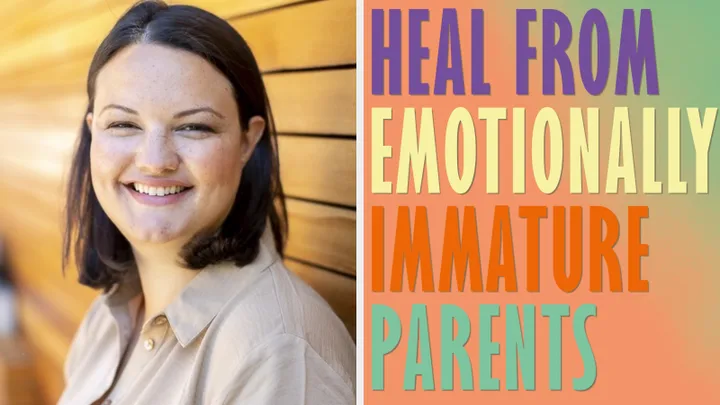
This article features advice from Sian Morgan-Crossley, psychotherapist and author of How to Heal From Emotionally Immature Parents, and Lianne Terry, a psychotherapist and counsellor.
We often hear of how today’s parents are cycle-breakers – choosing to bring up their kids in completely different ways to how they were parented, often to prevent patterns of trauma from repeating.
In fact, a recent Kiddie Academy survey of 2,000 parents revealed 41% of Gen Z parents are favouring “cycle-breaking” parenting.
As this conversation grows in popularity, terms are becoming popularised describing certain ways of parenting that can impact children far into adulthood – and one of these is ‘emotionally immature parenting’.
What is an emotionally immature parent?
“An emotionally immature parent is someone whose emotional awareness and capacity are limited in the parent-child relationship,” says Sian Morgan-Crossley, psychotherapist and author of How to Heal From Emotionally Immature Parents (Hay House, £14.99).
Emotionally immature parents might struggle in areas such as self-reflection, emotional regulation, and empathy under stress. “Many are practically supportive and physically present; but emotionally absent. The difficulty lies less in intention and more in emotional capacity,” she explains.
An emotionally immature parent, then, might struggle to deal with their child’s anger, distress, rejection, or growing independence. “When challenged, they may become defensive, take their child’s behaviour personally, or expect their child to adjust to their moods,” says the therapist.
“Because accountability can feel threatening, conflict often leads to withdrawal, criticism, denial, or blaming rather than to repair.”
These parents might also find it difficult to see their child as a separate individual and so “the parents’ own unresolved needs, sensitivities, or insecurities shape the emotional climate of the relationship”.

The impact of growing up with an emotionally immature parent
Counselling Directory member and psychotherapist Lianne Terry says children who grow up with an emotionally immature parent might struggle with emotional confusion (“struggling to understand or trust in their own emotions”) because their feelings were dismissed or criticised, or they had to prioritise a parent’s feelings over their own.
“These children may also be hyper-vigilant, so watching people’s moods carefully, trying to avoid conflict and feeling responsible for keeping others calm,” she explains.
Children can end up becoming their parent’s emotional caretaker; offering comfort, mediation and feeling responsible for adult problems, which can make them seem mature beyond their years.
“They may however find it very difficult to express their own needs, as this may lead to rejection, criticism or anger, and so they suppress them instead,” says Terry, which she warns can lead to high stress levels and undeveloped emotional regulation skills.
Once children reach adulthood, they might struggle with people pleasing, chronic self-doubt, fearing disappointing others, difficulties setting boundaries, and prioritising others’ needs over their own.
“They may have difficulty with trusting in their relationships, so being overly independent or conversely anxious about being abandoned,” continues Terry.
It’s not uncommon for people who grew up with this type of parent to find themselves in repeating relationship patterns, gravitating to emotionally unavailable partners or taking on the caretaker role, too.
They might also find it difficult to identify or express their own emotions.
Signs of emotionally immature parents, according to experts:
- You often feel triggered and overwhelmed by your child’s emotions.
- You take your child’s behaviour personally.
- You need you child to behave a certain way to feel okay.
- You have difficulty regulating your own emotions (Terry notes: “In general, you may find that you shut down, withdraw or explode instead of expressing your feelings constructively”).
- You struggle to repair with your children after conflict or admit when you’re wrong.
- You feel threatened by your child’s independence or criticism of them.
- You avoid difficult emotions – you might say “you’re fine” or “stop being silly”, or feel uncomfortable when they’re sad, angry or anxious.
- You think in a very black and white way, seeing behaviour as “good” or “bad” rather than developmental.
- You struggle with boundaries – either being too rigid or controlling, or being too permissive, because conflict feels too difficult to manage.
“The key question isn’t: ‘am I emotionally immature?’,” Morgan-Crossley, explains, “but rather, ‘can I stay emotionally present when my child is distressed, angry, or different from me?’
“Emotional maturity is not the absence of triggers; it is the ability to take responsibility for them.”
I think I’m an emotionally immature parent – what can I do?
If you recognise some of the above signs in yourself, take a deep breath. The work begins here. Morgan-Crossley suggests the most constructive response is self-reflection and working through your own childhood experiences.
“Taking responsibility for their own emotional responses and finding ways to work through their own childhood issues – whether through therapy, reading or psychoeducation – can all greatly improve their parenting relationship with their child,” she explains.
Terry says a great first step for parents who identify in this way is to work on developing emotional awareness.
“Learning to identify how you feel is a great foundation. Some things that might help with this include: journalling, emotion wheels, mindfulness or just simply asking yourself ‘What am I feeling right now?’,” she says.
Then, once you recognise your emotions, you can start to regulate them, says the therapist, and the key here is to calm the nervous system. Things that will help with this include: breathing techniques, somatic awareness and pausing before reacting, she says.
Another key part of navigating emotionally mature relationships is repairing after conflict – so this might look like apologising, acknowledging feelings, admitting when you’re wrong, and reconnecting with your child.
“Therapy can be really helpful in allowing individuals to process childhood experience, understand triggers and build healthier relationship patterns,” Terry ends.

Israel intensifies brutal attacks on Lebanon

Cheltenham Festival 2026 race card, start times and full four-day schedule

S’porean resellers are cashing in on old laptops, thanks to AI


-
Business4 days ago
Form 8K Entergy Mississippi LLC For: 6 March
-

 Fashion4 days ago
Weekend Open Thread: Ann Taylor
-

 News Videos1 day ago
10th Algebra | Financial Planning | Question Bank Solution | Board Exam 2026
-

 Crypto World1 day ago
Paradigm, a16z, Winklevoss Capital, Balaji Srinivasan among investors in ZODL
-

 Tech5 days ago
Bitwarden adds support for passkey login on Windows 11
-
 Sports5 days ago
499 runs and 34 sixes later, India beat England to enter T20 World Cup final | Cricket News
-

 Sports3 days ago
Three share 2-shot lead entering final round in Hong Kong
-

 Sports2 days ago
Braveheart Lakshya downs Lai in epic battle to enter All England Open final | Other Sports News
-

 Business7 days ago
Guthrie Disappearance Enters Fifth Week as Family Visits Memorial
-

 Politics4 days ago
Top Mamdani aide takes progressive project to the UK
-

 NewsBeat5 days ago
Piccadilly Circus just unveiled ‘London’s newest tourist attraction’ and it only costs 80p to enter
-

 Business2 days ago
Search for Nancy Guthrie Enters 37th Day as FBI Probes Wi-Fi Jammer Theory
-

 Entertainment4 days ago
Hailey Bieber Poses For Sexy Selfies In New Luscious Lip Thirst Traps
-
 NewsBeat16 hours ago
Pagazzi Lighting enters administration as 70 jobs lost and 11 stores close across Scotland
-

 Tech1 day ago
Despite challenges, Ireland sixth in EU for board gender diversity
-

 Crypto World6 days ago
New Crypto Mutuum Finance (MUTM) Reports V1 Protocol Progress as Roadmap Enters Phase 3
-

 Tech5 days ago
ACIP To Discuss COVID ‘Vaccine Injuries’ Next Month, Despite That Not Being In Its Purview
-
Entertainment6 days ago
Harry Styles Has ‘Struggled’ to Discuss Liam Payne’s Death
-

 Business21 hours ago
Search Enters 39th Day with FBI Tip Line Developments and No Major Breakthroughs
-
 NewsBeat5 days ago
Good Morning Britain fans delighted as Welsh presenter returns to host ITV show