

Alice Maud Lawn’s murder still remains a mystery today
Cambridgeshire is a relatively quiet county compared to other areas in the UK when it comes to crime. However, there have been a range of gruesome murders in the past that are still surrounded by mystery today.
One of the most famous crimes to have happened in the county was the murder of Miss Alice Maud Lawn, who was murdered on July 27, 1921, in Cambridge. The story behind her death was explored in Alison Bruce’s book Cambridgeshire Murders.
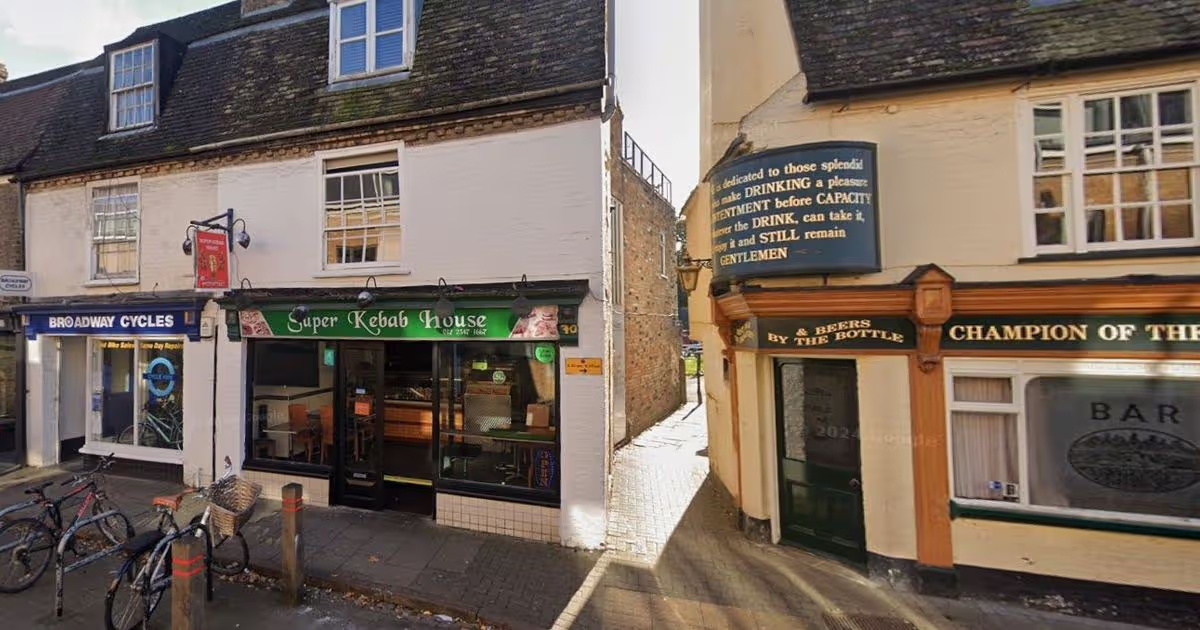
Alice was a spinster of around 50 and had run a shop on King Street for about 21 years. The shop backed onto Christ’s Pieces and had an alley called Milton’s Walk that ran down the side.
King Street used to have regular Wednesday markets with many people attending them, which made Alice concerned about security. On the day of her murder, her shop had been found locked at 11.30am.
Her brother Horace was alerted when it was found that the shop was still locked at 3pm. When he went around to the shop with his neighbour Mr Kirkup, they found Alice’s body at the foot of the stairs in a pool of blood.
The police were called with Constable Alfred Flint being first on the scene and an inquest was quickly opened on July 29 by the Borough coroner G A Wootten. It was reopened by Dr Henry Buckley Roderick, who was the police surgeon describing the injuries, on August 8.
The two main witnesses that were near the shop around the time the murder could have taken place were baker Albert Ding and Mrs Ada Webb, who had sent her children to the shop at 11am. Arthur Sexton, a telephonist, also visited the shop at 11.05am to buy some cigarettes but noticed the door was locked.
Other witnesses included Rose Rolph and Jack Cornwall, who had heard noises from the shop at 11.30am, as well as Alice’s friend Elizabeth Papworth and a gardener on Christ’s Piece called Leonard Marshall. Evidence provided by Mr Marshall led to the identification of Thomas Clanwaring, 23, who became the prime suspect in the case.
Clanwaring came across as a professional conman and compulsive liar. However, he was acquitted of murder by an inquest jury due to how inconclusive the evidence was. The trail started on October 17, 1921 with Clanwaring being represented by H. O. Carter, who was hired by a “wealthy North Country lady” to make sure there was a fair trial.
Clanwaring’s main defence witness was Edith Rayner, the barmaid of the Rose and Crown, who said he had been in the pub between 11 and 11.30am and couldn’t have committed the murder. This story was also backed up by Harry Farrington, a barman in the pub.
This meant it was impossible for Clanwaring to have been at the shop on King Street at the time of the murder. As he was the only suspect, the case eventually closed and remains unsolved to this day.



