

Connect with us

Business

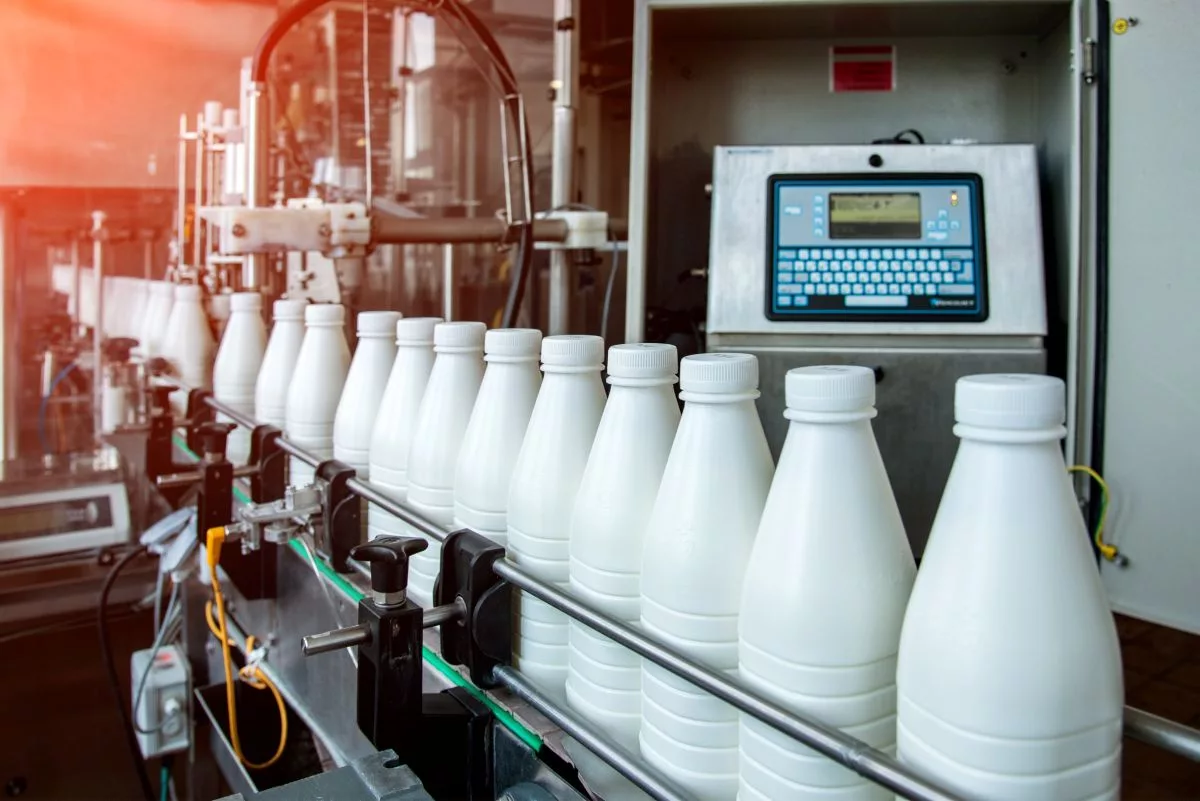
Certified colors no longer in General Mills school meal items

Published

on

Certified colors no longer in General Mills school meal items
Continue Reading
Click to comment

Leave a Reply

Your email address will not be published. Required fields are marked *

Business

Keir Starmer says UK economy is robust but could face damage from prolonged Iran conflict

Published

on

Keir Starmer says UK economy is robust but could face damage from prolonged Iran conflict

Prime Minister speaks as oil prices soar above $100 a barrel

An explosion erupts following strikes near Azadi Tower close to Mehrabad International Airport in Tehran on March 7, 2026

An explosion erupts following strikes near Azadi Tower close to Mehrabad International Airport in Tehran on March 7 (Image: AFP via Getty Images)

The longer the conflict in the Middle East persists, the greater the risk of economic damage to the UK, Sir Keir Starmer has warned.The Prime Minister maintained that the economy was robust and well-equipped to handle the “likely impact” on households and businesses, but recognised concerns over the potential for rising bills following the US-Israeli attack on Iran and Tehran’s retaliatory actions against nations throughout the region.

Advertisement

Oil prices have rocketed above 100 dollars a barrel for the first time since 2022 due to the crisis. London’s FTSE 100 Index experienced a nearly 2% drop shortly after trading commenced as the Middle East conflict triggered a severe supply shortage.

Speaking at a community centre in London, Sir Keir said: “People will sense, you will sense I think, that the longer this goes on, the more likely the potential for an impact on our economy, impact into the lives and households of everybody and every business.

“And our job is to get ahead of that, to look around the corner, assess the risk, monitor the risks, and work with others in relation to that.”

US President Donald Trump attempted to minimise the repercussions of the chaos, asserting that prices will “drop rapidly when the destruction of the Iran nuclear threat is over” and were a “very small price to pay”.

Advertisement

“ONLY FOOLS WOULD THINK DIFFERENTLY,” he declared in a post on his Truth Social platform.

Following the death of Iran’s supreme leader in an Israeli strike at the conflict’s outset, his son Mojtaba Khamenei was appointed as his successor on Sunday, a decision likely to provoke Mr Trump’s anger, having previously declared him an “unacceptable” choice.

Most British households will be shielded from the impact of rising energy prices in the near-term by the energy price cap.

However, increasing oil prices will translate into higher costs at forecourts.

Advertisement

And the threat of elevated energy costs driving up inflation means the Bank of England is now unlikely to reduce interest rates this month, as had previously been anticipated.

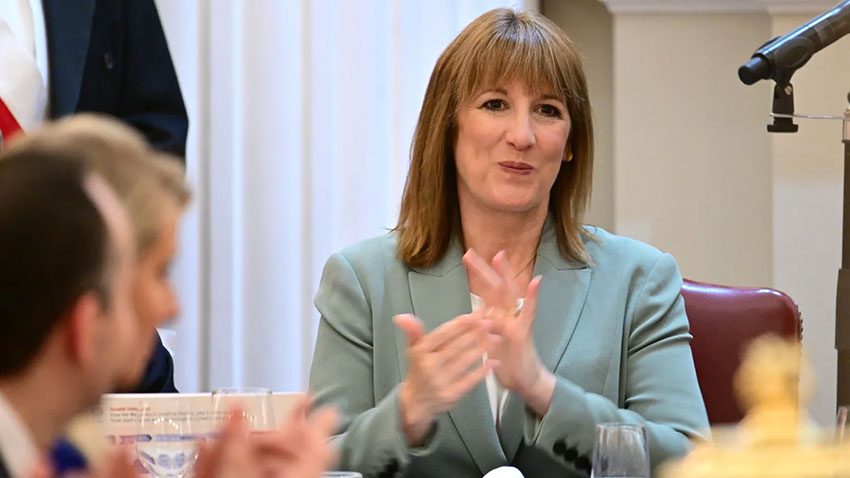
Finance ministers from the G7 group of leading democracies, including Chancellor Rachel Reeves, will convene virtually on Monday to address the crisis.

The Financial Times reported that ministers will consider a possible coordinated release of petroleum from reserves organised by the International Energy Agency in an effort to minimise the economic shock.

Sir Keir stated there was “more resilience” in the UK economy and the public finances than there had been during the energy price shock triggered by the Ukraine invasion in 2022.

Advertisement

Sir Keir said: “I do understand the anxiety now, at nine days into this conflict, where a number of people will be saying ‘well, now is the situation going to get worse, and how’s it going to impact me and my family?’”.

“At the moment, what we’re doing is monitoring the risk, working with others to mitigate the risk.

“The Chancellor is talking to the Bank of England every day to make sure that we’re ahead of that.”

He stated the energy cap would shield households from the impact of turbulence in the markets “but of course, businesses and others will be concerned to watch carefully what’s going on”.

Advertisement

Asked whether Mr Trump was risking a world war with his actions, Sir Keir said: “We do need to find a way to de-escalate the situation and that’s what a lot of our discussions are about – how do we find a way to de-escalate this situation and make sure it doesn’t escalate even further than it already has.”

Sir Keir spoke to Mr Trump over the weekend regarding the countries’ military co-operation in the region, in what appeared to be a positive signal a day after the US president lashed out at him in a social media post and suggested the UK’s assistance was too late.

Mr Trump has repeatedly criticised Sir Keir’s decision not to authorise permission for the initial wave of military action against Iran.

The Prime Minister subsequently granted permission for “defensive” US action against Iranian missile sites from RAF Fairford in Gloucestershire and Diego Garcia in the Indian Ocean.

Advertisement

Following reports the UK was preparing the HMS Prince of Wales aircraft carrier to deploy to the Middle East, Mr Trump said “we don’t need them any longer” and that “we don’t need people that join wars after we’ve already won!”.

No decisions have yet been taken to deploy the warship. Lib Dem leader Sir Ed Davey has called on the Prime Minister to cancel the King’s state visit to the US over Mr Trump’s “illegal war” and as the US leader “repeatedly insults and damages our country”.

Sir Keir stated the US and UK “are working together every single day, as they always have” despite the public criticism directed at him by Mr Trump.

“I had a telephone call with President Trump yesterday talking about the conflict in Iran and the region and what we were doing together, and that was important in terms of the ongoing discussion,” he said.

Advertisement

However, he emphasised that “decisions about what’s in Britain’s best interests are decisions for the Prime Minister of Britain, and that’s how I’ve approached all of the questions and all the decisions that I’ve had to make”.

Meanwhile, Tory leader Kemi Badenoch announced she would be tabling a parliamentary vote on Tuesday designed to maintain fuel duty “as low as possible” after the Chancellor revealed the longstanding 5p reduction would conclude in September.

“That’s the kind of measure that will actually help people with the cost of living,” she told the Press Association.

“The first thing that the Prime Minister should do is stop Rachel Reeves’s silly changes to fuel duty.

Advertisement

“Last week, she had an opportunity in the spring statement to announce measures to help all of those families out there who are struggling with the cost of living.

“Instead, she spent the statement telling us what a fabulous job she was doing.”

Continue Reading

Business

IPO-bound Flipkart shifts domicile to India

Published

on

IPO-bound Flipkart shifts domicile to India
IPO-bound Flipkart has shifted its domicile to India, having secured government nod for an internal restructuring that now makes Flipkart Internet the holding entity of the Group.

The Walmart-backed e-commerce giant said it looks forward to the next phase of growth as a fully Indian-domiciled company.

“Flipkart has received Government of India approval for its internal restructuring, pursuant to which Flipkart Internet Private Limited is now the holding entity of the Flipkart group,” it said.

This effectively completes the redomiciliation of the Flipkart group to India, ahead of a planned Initial Public Offering (IPO). The company termed the development a significant milestone that reflects its deep and long-term commitment to India.

Advertisement

“We are grateful to the Government of India for its support and look forward to the next phase of Flipkart’s growth as a fully Indian-domiciled company,” a Flipkart statement said.


Companies pursue reverse flip before IPO to shift their parent entity back to India, aligning with local regulations, improving valuation, and signalling long-term commitment to the domestic market.
According to sources, Flipkart Group clocked USD 30 billion in gross merchandise value (GMV) in the 2025 calendar year, supported by over 500 million customers and 1.6 million sellers.Sources said last week that Flipkart trimmed its workforce by 250-300 employees following its annual performance review. The job cuts, which span multiple departments and employee levels, came even as the company continued senior-level hiring ahead of its planned IPO.

“Flipkart conducts regular performance reviews aligned with clearly defined expectations. As part of this process, a small percentage of employees may transition from the organisation. We are supporting affected employees with transition support,” Flipkart said in a statement on Friday, but did not divulge the number of employees impacted in that exercise.

Sources had, however, pegged the number between 250 and 300.

In December 2025, the company received a nod from the National Company Law Tribunal (NCLT) to shift its legal domicile from Singapore to India. The restructuring aims at simplifying the group’s holding structure — its businesses across fashion, health, and logistics — and involved the merger of eight Singapore-based entities into Flipkart Internet Pvt Ltd to align with Indian regulatory requirements.

Advertisement

Over the past months, Flipkart has been strengthening its senior leadership bench, making several key appointments. These include the appointment of Somnath Das as VP, Supply Chain, Digbijay Mishra as VP, Corporate Communications, Vipin Kapooria as VP, Business Finance, Yogita Shanbhag as VP, Human Resources, and Amer Hussain as VP, Supply Chain, for its grocery and minutes (quick commerce) businesses.

Flipkart India had reported a wider consolidated loss of Rs 5,189 crore in FY25, compared to Rs 4,248.3 crore in the preceding financial year, according to data from business intelligence platform Tofler.

The company, however, recorded a 17.3 per cent increase in consolidated revenue from operations at Rs 82,787.3 crore in FY25, from Rs 70,541.9 crore in FY24. Total expenses for the fiscal year rose 17.4 per cent to Rs 88,121.4 crore, driven primarily by stock-in-trade purchases, which reached Rs 87,737.8 crore, compared to Rs 74,271.2 crore a year ago.

Flipkart Group companies include Flipkart, Myntra, Flipkart Wholesale, Cleartrip, and super.money.

Advertisement
Continue Reading

Business

Roquette develops pea protein isolate

Published

on

Roquette develops pea protein isolate

Nutralys Pea 850F may reduce vegetal or pea notes.  

Continue Reading

Business

Ticketmaster parent Live Nation agrees to DOJ antitrust settlement

Published

on

Ticketmaster parent Live Nation agrees to DOJ antitrust settlement

Signs are seen at the Live Nation NYC headquarters on May 23, 2024 in New York City. 

Michael M. Santiago | Getty Images

Live Nation Entertainment has reached a settlement with the Department of Justice over antitrust concerns surrounding its Ticketmaster platform, a senior DOJ official said Monday.

Advertisement

The settlement would see Ticketmaster unwind some of its exclusivity agreements with musical artists and open up the ticketing industry to greater competition. It still needs approval by more than 20 states that had filed suit and by the court.

As part of the settlement, Ticketmaster will offer a standalone third-party ticketing system for other companies like SeatGeek to use its technology. Live Nation has also agreed to divest at least 13 of its amphitheaters and will no longer be able to require artists to use other Live Nation products tied to its venues. It has also agreed to pay roughly $280 million in civil penalties.

Shares of Live Nation rose 5% in morning trading. Live Nation and Ticketmaster did not immediately respond to requests for comment.

Ticketmaster has long faced criticism that its dominance in the live events and ticketing space pushes up prices for consumers. The company has come under heightened scrutiny in recent years from fans who argue that it’s become harder and pricier to snag coveted event tickets.

Advertisement

In 2022, the backlash boiled over when the rollout of tickets for Taylor Swift’s Eras Tour was mishandled, leading to a probe of the company. And in 2024, the DOJ — along with more than two dozen states — sued to break up Live Nation and Ticketmaster, which merged in 2010.

In September, Live Nation was separately sued by the Federal Trade Commission over what the agency called “illegal” ticket resale tactics. The FTC said Ticketmaster controls roughly 80% of major concert venues’ ticketing.

In a Monday statement, New York Attorney General Letitia James said her office would continue to fight against Live Nation’s alleged monopoly even after its agreement with the DOJ.

“The settlement recently announced with the U.S. Department of Justice fails to address the monopoly at the center of this case, and would benefit Live Nation at the expense of consumers. We cannot agree to it,” said James, who is joined by the attorneys general of more than 20 other states.

Advertisement
Choose CNBC as your preferred source on Google and never miss a moment from the most trusted name in business news.
Continue Reading

Business

Synergy Flavors launches dairy flavors line

Published

on

Synergy Flavors launches dairy flavors line

Dairy-containing flavors may mimic dairy components.  

Continue Reading

Business

Sweet Loren’s expands ready-to-bake offerings

Published

on

Sweet Loren’s expands ready-to-bake offerings

The company now offers oatmeal bars, scones and puff pastry stick kits. 

Continue Reading

Business

Bank of England may raise interest rates as oil shock from Middle East war drives inflation fears

Published

on

Chancellor Rachel Reeves has called on financial regulators to take a more pragmatic, pro-growth approach to oversight, unveiling a package of reforms aimed at unlocking investment and getting millions more Britons into the stock market.

Expectations for UK interest rates have shifted dramatically after the surge in global oil prices triggered by the widening conflict in the Middle East, with investors now increasingly betting that borrowing costs could rise rather than fall in 2026.

Financial markets are pricing in roughly a 70 per cent chance that the Bank of England will increase interest rates by a quarter percentage point before the end of the year, a stark reversal from expectations only a fortnight ago when traders anticipated multiple rate cuts.

Just two weeks earlier, markets had predicted that the Bank would begin reducing its base rate from the current 3.75 per cent, with the first cut expected at the Monetary Policy Committee meeting scheduled for 19 March.

Instead, the escalating war involving Iran, Israel and the United States has dramatically reshaped the economic outlook by sending energy prices sharply higher and threatening a fresh surge in global inflation.

The shift in interest rate expectations has been driven primarily by a rapid escalation in oil prices following disruptions to shipping routes through the Strait of Hormuz.

Advertisement

The international oil benchmark Brent crude oil surged nearly 30 per cent within days, briefly trading just below $120 per barrel, its highest level since the energy crisis of 2022.

At the same time, the US benchmark West Texas Intermediate crude oil recorded its largest weekly gain on record as traders feared a prolonged disruption to global energy supplies.

The Strait of Hormuz. which carries around one-fifth of the world’s oil exports, has effectively been closed to normal commercial shipping following Iranian threats to target vessels using the route.

Energy traders warn that continued disruption could lead to sustained shortages of oil and gas in global markets.

Advertisement

While rising oil prices pose a global inflation risk, the UK economy is considered especially vulnerable because of its heavy reliance on imported natural gas to heat homes and power electricity generation.

Wholesale gas prices in Britain have already surged in response to the conflict, raising concerns that household energy bills could spike again later this year.

Industry analysts have warned that the UK energy price cap could increase by as much as £500 during the summer if current wholesale gas prices persist.

Higher energy costs would likely feed through into transport, food production and manufacturing supply chains, pushing overall inflation significantly higher.

Advertisement

Economists at Deutsche Bank forecast that UK inflation could approach 4 per cent by the end of 2026, double the Bank of England’s official 2 per cent target if the conflict continues to disrupt energy markets.

The sudden change in expectations has triggered heavy turbulence in UK government bond markets.

The yield on the benchmark ten-year gilt, a key measure of government borrowing costs, has jumped by around 0.4 percentage points in a week to 4.74 per cent, marking the sharpest increase among major developed economies.

Bond yields rise when investors sell government debt, signalling expectations of higher inflation or tighter monetary policy.

Advertisement

Analysts said the move represented the most intense sell-off in UK bonds since the financial turmoil triggered by the 2022 “mini-budget” announced by former Prime Minister Liz Truss.

Short-term borrowing costs have risen even faster. The yield on two-year gilts, which are particularly sensitive to interest rate expectations, surged by as much as 0.25 percentage points in a single trading session.

The rapid repricing of financial markets reflects the view that central banks may now have to maintain tighter monetary policy for longer in order to contain inflationary pressures.

Dario Perkins, head of global macro at the economic consultancy TS Lombard, said the oil shock had fundamentally altered the outlook for interest rates.

Advertisement

“Inflation is already overshooting targets and, in policymakers’ minds, that makes expectations more fragile,” he said. “For now, all rate cuts have been postponed.”

The shift is not limited to the UK. Investors are also beginning to price in the possibility that the European Central Bank could raise interest rates later this year, reflecting the eurozone’s heavy reliance on imported energy.

Major central banks around the world are now reassessing the economic impact of the Middle East conflict.

Next week both the ECB and the Federal Reserve will announce their latest interest rate decisions.

Advertisement

Speeches from ECB president Christine Lagarde and Federal Reserve chair Jerome Powell are expected to focus heavily on how the oil shock may influence inflation, economic growth and interest rate policy.

The United States is somewhat more insulated from global energy price shocks because of its large domestic shale oil industry, although petrol prices have already climbed to their highest levels since mid-2024.

The shift in expectations has already begun feeding through into the UK housing market, where lenders are adjusting mortgage pricing in anticipation of higher borrowing costs.

Banks and building societies base mortgage rates on financial market expectations of future interest rate movements, particularly through swap markets.

Advertisement

Several major lenders have already begun raising rates on new home loans.

Nationwide Building Society increased some mortgage products by 0.25 percentage points last week, while HSBC and Coventry Building Society confirmed that similar increases would follow.

Higher mortgage rates could slow activity in the housing market just as it had begun recovering from the turbulence caused by rising borrowing costs in recent years.

The potential impact of sustained energy price increases extends far beyond monetary policy.

Advertisement

Economists warn that higher fuel costs could also drive up food prices, particularly if fertiliser supplies are disrupted by the closure of shipping routes in the Persian Gulf.

If oil and gas prices remain elevated for an extended period, the resulting inflationary pressures could force central banks to maintain tighter financial conditions even as economic growth weakens.

For policymakers at the Bank of England, the challenge is increasingly clear: balancing the need to control inflation while avoiding further damage to an already fragile economy.


Amy Ingham

Amy is a newly qualified journalist specialising in business journalism at Business Matters with responsibility for news content for what is now the UK’s largest print and online source of current business news.

Advertisement

Continue Reading

Business

Ramarketing snaps up US firm ISR Market Research to strengthen North American presence

Published

on

Ramarketing snaps up US firm ISR Market Research to strengthen North American presence

‘“One of the most exciting aspects of this partnership is the depth of insight ISR brings’

L-R Emma Banks Group CEO, ramarketing with Kate Hammeke, CEO of ISR

L-R Emma Banks Group CEO, ramarketing with Kate Hammeke, CEO of ISR(Image: ramarketing)

A Newcastle marketing business has snapped up a Californian company for an undisclosed sum in moves to strengthen its North American presence.

Strategic life sciences marketing agency ramarketing has completed the acquisition of ISR Market Research, a specialist agency based in North Carolina’s Research Triangle Park (RTP), which is recognised as one of the largest pharmaceutical and biopharma hubs in North America.

Ramarketing, which has its head office in Newcastle city centre, works with pharmaceutical services and outsourcing organisations across Europe and North America, providing strategy, marketing, communications, and creative support. The business has grown steadily in recent years and now operates with a broader international footprint following the acquisition of ISR.

Directors said the deal cements ramarketing’s North American presence while also bringing together specialist market intelligence with strategy and marketing activation.

Advertisement

ISR is known for its syndicated and custom market research for the pharmaceutical outsourcing market, including Contract Development and Manufacturing Organisations (CDMOs), and Contract and Clinical Research Organisations (CROs). As part of the transaction, ISR will retain its brand, structure, and leadership, with CEO Kate Hammeke continuing in her role.

Emma Banks, group CEO at ramarketing, said: “ISR adds depth to our commercial offer in a way that is practical and client-led. Its research capability strengthens how we help clients make informed growth decisions, while keeping insight, strategy, and execution closely aligned.

“One of the most exciting aspects of this partnership is the depth of insight ISR brings. Their research connects us directly with thousands of pharma and biotech buyers across the outsourcing market, creating a powerful database of evidence that will help our clients make better strategic decisions.

“This is a capability-led investment rather than a structural overhaul. ISR retains its identity and research integrity, while gaining access to broader commercial support as part of the group.”

Advertisement

Kate Hammeke, CEO of ISR, said: “ISR has built its reputation on rigorous primary research and trusted insight for the pharma outsourcing sector. Being part of ramarketing allows us to extend the impact of that work, giving clients stronger support in acting on insight without changing how we conduct or deliver our research.

“Our team, methodologies, and client relationships remain unchanged. What expands is the range of support available to clients as they translate research into commercial decisions.”

Liam May from ramarketing’s investment partner, NorthEdge, added: “This acquisition strengthens the group’s ability to support evidence-led decision-making across the pharma services market and reflects a clear focus on building differentiated capability – reinforcing ramarketing’s position as a leading, data-driven commercial partner for life sciences clients globally.”

Alvarez & Marsal acted as corporate finance adviser to ramarketing, alongside Cortus (financial), Addleshaw Goddard and Rich May (UK and US legal).

Advertisement

To find all the planning applications, traffic diversions, road layout changes, alcohol licence applications and more in your community, visit the Public Notices Portal.

Continue Reading

Business

Victoria's Secret: A Clear Turnaround Opportunity (Rating Upgrade)

Published

on

Victoria's Secret: A Clear Turnaround Opportunity (Rating Upgrade)

Victoria's Secret: A Clear Turnaround Opportunity (Rating Upgrade)

Continue Reading

Business

How the Iran war may affect your bills and finances

Published

on

How the Iran war may affect your bills and finances

The conflict in the Middle East could raise the cost of petrol, household energy bills and even food.

Continue Reading

Trending

Copyright © 2025