Connect with us

Business

ETMarkets Smart Talk | The future is omnichannel, not RM-only or tech-only: Srikanth Subramanian on wealth management’s next phase

Published

on

ETMarkets Smart Talk | The future is omnichannel, not RM-only or tech-only: Srikanth Subramanian on wealth management’s next phase
India’s wealth management landscape is undergoing a structural reset, driven by younger HNIs, rising financialization, rapid tech adoption, and evolving investor expectations. As first-generation entrepreneurs and next-gen family office leaders enter the capital markets, the traditional relationship manager (RM)-led model is being tested by a new demand for convenience, transparency, and product depth.

In this edition of ETMarkets Smart Talk, Srikanth Subramanian, Co-Founder & CEO of Ionic Wealth, explains why the future lies not in choosing between human advice and technology, but in integrating both.

From an omnichannel strategy to account aggregation and widening access through the Accredited Investor Framework, he explains how Ionic balances IQ (domain expertise), EQ (relationship warmth), and DQ (digital capability)—a combination that has helped the firm cross $1 billion in AUM in less than two years while staying relevant in India’s next phase of wealth management. . Edited Excerpts –

Kshitij Anand: Well, let us just start with how the HNI population is expanding rapidly at this point in time. What are the structural changes that you are seeing in the industry? And there is another point I would like to add here. I am sure you have also noticed that a lot of people under 40 have actually come into this bracket. So, over to you on that.

Advertisement

Srikanth Subramanian: India is having its own ‘Silicon Valley moment’, with entrepreneurship and innovation leading the way. As many new-age companies that went public over the past five to ten years start unlocking value, we are seeing a wave of first-time investors entering the market.
It is not just the founders, but many others involved in this journey who are accumulating wealth at a very young age. Many are below 30 and have never had significant wealth that has been formally managed. However, they understand how technology can drive convenience.


So, A) that cohort is getting added.
B) Systematically in India, we have seen the financialization of investments, with money moving over the past five to six years from “real assets” towards financial markets. We are seeing that through rising mutual fund folios and Demat accounts.C) The advent of the next generation into either the business or family offices is also pushing newer trends. With a median age of 28–29, the investor voice in India today is very young compared to a decade ago.

Hence, we are seeing a widening of the investor base in India.

Indian investors today are far more comfortable using technology, both to access information and to execute transactions. In stockbroking, the evidence is clear: compared to a decade ago, nearly 65–70% of market share now sits with fintech platforms.

The real driver has been convenience. Technology offers seamless access and anytime availability. Over time, as this experience becomes embedded, even the definition of trust begins to evolve. Earlier, trust meant promoter-led firms, group companies, its conduct, and governance. While all of those still matter today, trust has also shifted towards how robust the technology is. If I press a button, does the transaction go through? does the redemption reach me?

Advertisement

Investors today are not afraid of using technology to make themselves wiser, minimise information arbitrage, access newer products, and execute commoditised transactions through technology.

Additionally, a new generation of investors are emerging, including those returning after studying overseas aspirations are evolving. They are no longer content with conventional offerings. If ultra-high-net-worth individuals can access REITs, InvITs, global markets, bonds, private equity, and venture capital, they too seek meaningful exposure to a wider, more sophisticated investment universe, structured in a way that suits them.

So, the demand for technology and width of products are two very interesting changes we are seeing. And on the HNI side, two to three customer cohorts are widening the market base at a very steady pace.

Kshitij Anand: But to a certain extent, is the traditional model of managing relationships with the help of relationship managers still sustainable at this point in time? What are your views on that?
Srikanth Subramanian: I believe there is space for everyone. The classic RM-led models have cost-to-serve economic challenges, but strong incumbents can sustain them because they already have annuity incomes that exceed their operational expenditure.

Advertisement

For newer challengers trying to build a traditional wealth management firm, the breakeven get extended because they do not have the luxury of recurring or annuity revenue to cover them.

During black swan events such as the 2008 Global Financial Crisis or COVID, a firm’s staying power gets tested. So, firms need to see what works for them.

In my view, we will all be bucketed into three different categories.

First, there will be those who speak about artificial intelligence, with or without a clear strategy, simply because it is fashionable to do so.

Advertisement

Second, there will be deniers who refuse change as is the classic case whenever a new technology comes in.

Third, there will be pragmatists who integrate technology with experience.

I am sure people across the buckets will have their own strategies. However, we align with the third bucket.
In a high-EQ business like wealth management, there is still significant weightage given to validation through experienced human touch.

Our omnichannel approach gives the investor the choice — what to do via technology and what to manage through human interaction. Our stack is built in a way that our RMs as well as our technology — as regulations allow — are fully equipped to deliver the end-to-end journey.

Advertisement

We see some investors use 80% of their wealth management journey through tech and engage an experienced RM only for strategic discussions, while others may prefer the reverse.

This is our hypothesis for building going forward.

Kshitij Anand: Absolutely, good that you pointed out the omnichannel approach. So, how does the omnichannel approach go beyond the RM model, according to you?
Srikanth Subramanian: Since some of us have been in this industry for almost two decades, we believe that an RM-led model has been very successful. The challenge, in many cases, has been the cost structure associated with RMs and related non-RM functions — where we have seen cost overlays.

We believe that the biggest comfort between the investor and the world of capital markets is the RM. So, we have decided not to disrupt that unless the investor chooses a non-RM approach.

Advertisement

However, we have found a significant opportunity to reduce costs behind the scenes, thereby increasing RM productivity and efficiency.

I will give you three examples.

First, we have almost 100 RMs and only nine or ten service managers That is roughly a 1:9 or 1:10 ratio of service managers to RMs, and we do not face service issues. The reason is that most service and operational tasks are automated through an in-house tech stack.

Second, most wealth management firms struggle to compile 100% MIS for an investor because of dependency on external counterparties such as PMS and AIFs and delays in receiving data. Today, through the Account Aggregator and MF Central framework, with client consent, we can access a comprehensive real-time and historical view of a customer’s portfolio. To this, we can layer analytics to offer personalised recommendations.

Advertisement

Third, through our innovation lab, we are training AI clones of our relationship, product, and service teams. One trained product bot can thus effectively service queries from 100 RMs simultaneously, even while handling other tasks.

Similarly, if investors are comfortable with only RM-trained clone, then we could potentially have the same high-quality RM present in 10 different meetings simultaneously.

Some of these initiatives have already gone live; others are still experimental. We will continue introducing them gradually, aligned with investor demand.

Kshitij Anand: And another thing that usually comes to the surface is about the experience. Just like when we go to a five-star hotel, it is not always about the food, but about the experience — how well the food was served, what the taste was like, and so on and so forth. Now, with you being technology-heavy — and legacy platforms usually suffer from this because they are not able to give the right kind of experience — how is the experience being matched at Ionic Wealth?
Srikanth Subramanian: So, we follow a tech philosophy of build, buy, and operate. Our philosophy is that anything core to us — defined through clear prioritisation — should be controlled by us. Our biggest core is anything that touches our customers’ lives. So, wherever customer experience is directly impacted, we believe it should remain under our control.

Advertisement

In any tech stack, there will be BAU situations — issues, bugs, latency problems. We realise that if core areas are outsourced, we cannot wait two or three days for diagnosis and resolution. That is where the trust gap comes in.

To clarify, we will not build the entire tech stack ourselves. We are not a tech-first company; we are a tech-enabled company. But the parts that directly touch our customers’ lives — onboarding journeys, mutual fund transactions — are areas we will continue to build in-house.

The advantage is that with a 24×7 tech stack including monitoring capabilities, we can pre-empt a bug even before the customer notifies us. So, resolution in near real-time, without depending on vendors.

We also operate in a dynamic environment — regulations change, new products emerge, tax rules evolve. In a standard vendor model, priorities depend on the vendor. However, when these requirements are core to you, you can define what is high priority and act immediately.

Advertisement

So, we believe that core and security-related areas are best controlled in-house for faster diagnosis and resolution. However, for non-core areas that do not justify our bandwidth, we are happy to partner with experienced vendors rather than reinvent the wheel.

Kshitij Anand: In fact, it is good that you pointed this out. You mentioned earlier that you are a technology-enabled company and that about 20% of the company is largely technology-focused. You also said you have mini AI labs building your own systems. How did that come about, and how is that helping you build a better experience for investors?
Srikanth Subramanian: Around 20% of our workforce is part of the tech team, but 100% of our firm is tech-enabled. Everyone, from the product team to private banking to WealthTech — uses internally developed tech tools for various purposes, whether it is our in-house CRM tool or our advisory tool.

Because of how technology has evolved, we are able to operate with a relatively small but sharp, specialised tech team. The AI lab exists because we believe that as a business scale, you tend to get extremely busy with transactions, solving customer queries, and day-to-day execution.

We have two labs: an Investment Lab and an AI Innovation Lab. Each is a small team — perhaps two or three members — supervised by someone with experience. These are high-quality professionals whose primary job is to look three to six months ahead, while the rest of the organisation focuses on solving immediate problems.

Advertisement

Culturally, as firms grow, we could tend to get consumed by present-day challenges and take our eyes off the future. To prevent that, our leadership team and I meet once a fortnight. Half the meeting is spent reviewing current operations — a sort of rear-view mirror exercise – and the other half involves members from our labs to discuss forward-looking ideas.

This ensures that, culturally, we always keep one leg in the future. We strive to continuously innovate, pre-empt changes, and stay ahead.

Kshitij Anand: And that is very important in today’s time and world — that we look at what is going to come next and prepare ourselves rather than react to it when it actually hits us. But yes, let me add one more thing to the conversation. Owning the tech stack is very important, but how does it help build the entire system and enable integration across everything?
Srikanth Subramanian: The more important part is that, as I gave some examples — whether it is the MF Central or the Account Aggregator example — using technology in multiple layers makes a difference. Since we own the tech stack, whether it is diagnosis, recovery, and cure time, or using the data layer on top of our database, we have greater control.

For example, while we use publicly available language models —Gemini and Claude, the algorithms on top of those AI language models are our own and have integrated them with our database.

Advertisement

Investors must try the Ionic AI agent on the beta version of our app. It does not give you a generic open-source answer but a specific answer because we have visibility of your portfolio. Of course, we are very conscious of the – DPI and the consent aspects.

Trained on both LLMs and SLMs and connected to our database and built on our proprietary algorithms, our model can offer assistance similar to an RM who has known you for a decade.

Also, AI is iterative. The more we use it, the better it gets. While we do not claim 100% accuracy yet, we are happy with the results and use it daily to embed intelligence into the system.

Looking ahead, I see a future where intelligent conversations happen effortlessly, at the airport, before a movie, or over the weekend. Today, most professionals carve out time only on weekends, while weekdays leave little room for thoughtful financial conversations. Investors will have the power to choose when to interact with their AI agent — trained on their own data — at their preferred time and place.

Kshitij Anand: Let me add one more point. How are you leveraging India’s account aggregation framework to enhance portfolio analysis?

Srikanth Subramanian: Interestingly we worked closely with Sahamati, which acts as an industry facilitator. We realised that MF Central was a great tool to aggregate and consolidate mutual fund folios in one place. But if we could also achieve similar consolidation for Demat holdings, it would significantly enhance the investor experience.

Advertisement

Most financial products are dematerialised, and soon AIFs are expected to move in that direction. Stocks are already dematerialised, PMS structures are proxies to stocks, and we have REITs, InvITs, private equity, and more. So, anywhere between 75% and 90% of a portfolio could be in dematerialised form.

Through the Account Aggregator framework — which connects to depositories — we can provide consolidated data for Demat holdings along with mutual funds.

Initially, the framework provided only two years of historical data — a span we found far too narrow. In financial services, limited data can distort perspective. If an investor has a decade-long track record but can view only two years, the context is compromised. Meaningful decisions require complete visibility.

We worked closely with administrators and ecosystem participants to expand the window from two years to twenty years of historical data. We believe we are among the few, if not the only ones to offer up to two decades of history through the Account Aggregator framework.

Advertisement

Once data is consolidated, the next step is how you use it — and that is where data science comes in. With customer consent, we analyse their historical behavior: how they responded during bull markets or downturns.

This allows us to guide our customers better and make the advisory process more contextual and behavioral in nature, especially during market volatility.

Kshitij Anand: Those are wonderful insights. On a lighter note, I would say we often saw examples on TV where someone discovered that their father owned X, Y, or Z shares decades ago, and suddenly it turned out to be a goldmine.
Srikanth Subramanian: In fact, we have real use cases — even within my own family — where through MF Central and the Account Aggregator framework, people discovered forgotten folios or stocks.

Some of these initiatives, beyond helping firms such as ours build businesses, are genuinely in the public interest. Consolidation and visibility are perhaps the simplest forms of value creation for investors. I hope such public-good services remain active and accessible.

Advertisement

Of course, we still believe there are efficiencies that can be improved within the account aggregation journey. We are working with the relevant ecosystem participants to enhance that further.

Kshitij Anand: Ionic Wealth is now managing more than $1 Billion of AUM. What is driving this momentum? I am sure you have already listed quite a few factors — why it is important and what is driving it — but over to you on that.
Srikanth Subramanian: I think we come from an experienced ecosystem. We were very fortunate that most of our private bankers and clients continued to place their trust in us. But we are also very conscious — we do not take that trust lightly. We take it as a privilege, not as a right.

From day one, we ensured that we created a very robust platform. There is not a single asset class that we do not cover. Within that, we have built centers of excellence — whether it is navigating international investing, private equity investing, or building a flagship equity product around the long India story.

The culmination of trus built over the years, strong parentage, and the creation of a robust platform with clear strengths in specified areas has ensured that we have been fortunate to scale. But as I said, this journey has just begun. We are not here for early victories. These early milestones give us the right to win, but in reality, we are probably only in the first 5% of our journey.

Advertisement

Kshitij Anand: If you had to summarise the structural changes that differentiate Ionic from a traditional private bank or wealth desk, what would they be?
Srikanth Subramanian: The biggest differentiator is omnichannel. Many wealth firms are still deciding their approach — some are tech-only, some are RM-only. But in the past six months, I have seen the conversation around omnichannel intensify. We were among the first to start talking about omnichannel, and I believe that has helped us.

Within the firm, we follow a three-pillar agenda: IQ, EQ, and DQ. We constantly strive to maintain a balance among the three.

IQ is the intelligence quotient — our domain capability. We were among the first wealth firms to launch our own GIFT City-based Global Innovation Fund. Moreover, while there is ample talent for micro, sectoral, and thematic investing in India, we saw a gap in macro investing. So, we brought in exceptional talent to build India’s long-only PIPE fund.

We also provided access to high-quality private equity transactions and built a strong multi-asset allocation platform. Some of our calls — such as going long on commodities, especially silver, and international diversification have delivered strong incremental returns. For investors with limited time, our flagship asset allocation product, Allocate, which was listed among the top 10 funds for two consecutive months, this year, acts as a proxy for asset allocation strategies.

Advertisement

Domain expertise is at the core of our IQ plank. Even before launching, we ensured that our platform was fully built — unlike other players who may prioritise building a team of relationship managers and sales before moving on to creating the platform.

DQ is the digital quotient, where technology is at the core of everything we do.

EQ, or Emotional Quotient, is equally important. We do not want to disrupt the biggest comfort for investors — the RMs. Client engagement focuses on knowledge, next-generation involvement, and relationship building.

So, whether it is EQ through relationship warmth, DQ through technology enablement, or IQ through domain expertise — these three cornerstones help build a balanced and long-term wealth management practice.

Advertisement

Kshitij Anand: You mentioned that one arm of the firm is always looking outward. How do the next five years look for the wealth management space?
Srikanth Subramanian: We are going through a very interesting phase. Sometimes I hear cynical views that the bubble will burst. I do not think so. We are a healthily growing country, and we require strong asset management, wealth management, stockbroking, and banking ecosystems to ensure financial inclusion and enable participation in the India growth story.

More competition and doing the right things are healthy. Everyone has a role to play — digital-only, RM-only, omnichannel models. Of course, if firms make strategic mistakes, overspend beyond their means, or over-leverage their balance sheets, those risks remain — just as they did twenty years ago. Common sense has not changed.

But India deserves more than just a handful of wealth management firms. We need high-quality firms with robust platforms, strong domain expertise, intelligent use of technology, cost discipline, and a philosophy of giving investors the power of choice while maintaining relationship warmth.

If you ask me, the best-case scenario for India is not one, two, three, or five firms — but perhaps 15 or 20 strong wealth management firms of different sizes and models. Some fragmented, some local, some large some tech-only — but all contributing to expanding the market.

Advertisement

Kshitij Anand: Can you take us through the Accredited Investor Framework?
Srikanth Subramanian: The Accredited Investor Framework is something we were very early adopters of. We believe that as Indian investors increase their net worth, many of them will qualify under what is called the Accredited Investor Framework.

Again, like technology, there is some level of hesitation in our own industry about what value it will add. But if you look at the broader tonality, the regulator believes that if an investor is accredited, they are capable of taking certain investment decisions without the need for very tight regulations.

So, the intent is to allow such investors to participate in investments like AIFs and PMS at lower thresholds. We are ensuring that this information reaches investors. We have already enabled many accredited investors in the industry, and we continue to work with accreditation agencies, industry bodies, and the regulator to streamline the process.

(Note: The journalist was invited to their office)

Advertisement

(Disclaimer: Recommendations, suggestions, views, and opinions given by experts are their own. These do not represent the views of the Economic Times)

Continue Reading
Click to comment

Leave a Reply

Your email address will not be published. Required fields are marked *

Business

Uno Minda shares jump over 3% as Jefferies initiates coverage with Rs 1,350 target price

Published

on

Uno Minda shares jump over 3% as Jefferies initiates coverage with Rs 1,350 target price
Uno Minda shares climbed over 3 per cent to hit Rs 1,125.70 on the BSE on Tuesday after Jefferies initiated coverage on the auto component maker with a ‘Buy’ rating and a target price of Rs 1,350, implying about 25 per cent upside from the previous close.

Jefferies said Uno Minda offers excellent exposure to Indian autos backed by a fast-growing, well-diversified and largely powertrain-agnostic portfolio, with nearly 90 per cent of its sales coming from the domestic market.

In its initiation note, Jefferies highlighted Uno Minda’s growth track record and strong earnings outlook, projecting a 17 per cent revenue CAGR, 20 per cent EBITDA CAGR and 25 per cent EPS CAGR over FY26-28, along with an average return on equity of around 20 per cent.

“We believe Uno Minda provides excellent exposure to Indian autos given its fast-growing, well-diversified and largely powertrain-agnostic portfolio, with ~90% domestic sales,” the brokerage said, adding that premium valuations are “justified for the strong growth, low margin volatility and high ROE.”

Advertisement

The report positions Uno Minda as a growth amplifier in the Indian auto component space, noting that the company has delivered 23-25 per cent CAGR in revenue and EPS over FY16-26E, significantly outpacing India’s passenger vehicle and two-wheeler production CAGR of 4-5 per cent.


Also Read | Explained: How Sebi’s new rule allowing mutual funds to hold more gold and silver may impact investors

Jefferies expects this outperformance to continue, driven by rising content per vehicle across segments, capacity expansions in lighting, alloy wheels and airbags, and new growth engines such as sunroofs and EV components.
Uno Minda’s diversified product mix and strong market positions are central to the bull case. “Uno Minda is among the top three players in India in most of its component categories,” Jefferies noted, citing a dominant ~55 per cent market share in both four-wheeler and two-wheeler switches, leadership in passenger vehicle alloy wheels with ~45 per cent share, and top-two positions in lighting and acoustics. The brokerage said the company’s portfolio is well placed to benefit from structural trends such as premiumisation, rising SUV penetration and higher adoption of safety and comfort features.
On valuations, Jefferies acknowledged that Uno Minda’s current 42x FY27 estimated price-to-earnings multiple looks rich in absolute terms but argued that it is in line with the stock’s five-year average of about 43x and supported by the company’s fundamentals.

“We initiate at Buy with Rs 1,350 PT at 42x FY28E PE,” the analysts wrote, flagging slower industry growth and any delay in ramp-up of new capacities as key risks to their positive view.

(Disclaimer: Recommendations, suggestions, views and opinions given by the experts are their own. These do not represent the views of The Economic Times.)

Advertisement
Continue Reading

Business

Global Market | Strait of Hormuz tensions keeping oil markets on edge: Richard Yetsenga

Published

on

Global Market | Strait of Hormuz tensions keeping oil markets on edge: Richard Yetsenga
Global oil markets are grappling with sharp volatility as geopolitical tensions disrupt energy supply routes and spark fears of a broader economic fallout. While crude prices have surged amid the conflict in West Asia, economists say markets are still trying to assess whether the spike is a temporary reaction or the start of a more prolonged supply shock.

Speaking to ET Now, Richard Yetsenga from ANZ Group said the current reaction in oil markets appears to be largely emotional rather than purely driven by fundamentals.

“Oh, it is definitely a knee-jerk reaction. Whether it is sustained or not depends on what actually happens with the conflict. And there is this catch-22 the market is probably in. In one sense the market is saying well the fundamentals look quite poor, 20% of oil through the Strait of Hormuz, it is not operating, that is very bullish for the oil price. On the other hand, implications for the US economy from that are quite poor, inflationary pressure high, gas prices pressure on consumers, political pressure back on President Trump. Does he then back off the military action because of the impact of oil and I think the last 24-48 hours in markets you have seen both sides of this story,” Yetsenga said.

The disruption around the Strait of Hormuz — one of the world’s most critical oil transit chokepoints — has heightened concerns across energy-importing economies, particularly in Asia. With many countries heavily dependent on imported crude, the sudden surge in prices is already forcing governments to consider emergency responses.

Advertisement

Yetsenga noted that most Asian economies are particularly vulnerable because they rely heavily on imported energy.


“Well, you have talked through it right there. Apart from Malaysia, the region is a collection of oil importers and energy importers and that puts them in a very difficult position at the moment. We are only eight or nine days into this conflict, already we are talking about the release from strategic petroleum reserves at a global level, even in some individual economies and then also some sort of supply rationing and already there are challenges with diesel and jet fuel particularly in different parts of the region. This goes into if you like exhibit A) the economic impact of this is potentially quite severe if it is sustained and of course we should be worried about that, but also that economic impact is going to put pressure on the offensive side of this conflict,” he said.
Governments across the region have begun taking precautionary measures. South Korea, for instance, has discussed limits on fuel consumption, while other countries are leaning more heavily on strategic reserves to cushion the immediate supply shock.Despite the intense market speculation that the conflict could end quickly, Yetsenga remained cautious about predicting the timeline of any resolution.

“Sorry, I am not a military strategist. I am not a political expert, that is question for those sorts of people….” he said when asked about expectations of an early end to the war.

However, he acknowledged that financial markets themselves may eventually play a role in shaping political decisions.

“Look, my view is that the pressure that markets put on the administration will ultimately be a factor probably that brings this action to a conclusion. We are only eight days into this or nine days. In previous occurrences it has taken meaningfully longer than this for the Trump administration to back off. So, I think I know the endgame. But the timing honestly we should be transparent is really anybody’s guess,” Yetsenga said.

Advertisement

According to him, the likely outcome is a negotiated halt to hostilities once the United States declares its objectives achieved.

“Oh, the endgame is there is some sort of cessation of hostilities because the US says that we have achieved our objectives and markets will welcome that and go back to some sort of the normalcy that we had before this kicked off the week before last. But, of course, the normalcy also even this year has had Greenland and Cuba and a few other issues in there, so it is still a world which is unsettled but one in which we can be a bit more analytical about,” he added.

For investors and policymakers alike, the coming weeks will likely hinge on whether the conflict escalates further or begins to cool. Until then, energy markets — and the economies that depend on them — remain caught between geopolitical risk and hopes for a swift return to stability.

Advertisement
Continue Reading

Business

Russian drones injure 20 in Ukraine’s Kharkiv, Dnipro

Published

on


Russian drones injure 20 in Ukraine’s Kharkiv, Dnipro

Continue Reading

Business

OpenAI delays ChatGPT ‘adult mode’ rollout to prioritise AI improvements and safety features

Published

on

OpenAI has agreed a multibillion-dollar partnership with Advanced Micro Devices (AMD) to secure massive computing power for its next generation of artificial intelligence models — a direct challenge to Nvidia’s dominant position in the global AI chip market.

OpenAI has confirmed it is postponing the launch of an “adult mode” for ChatGPT, saying the company will instead prioritise improving the platform’s core capabilities and user experience.

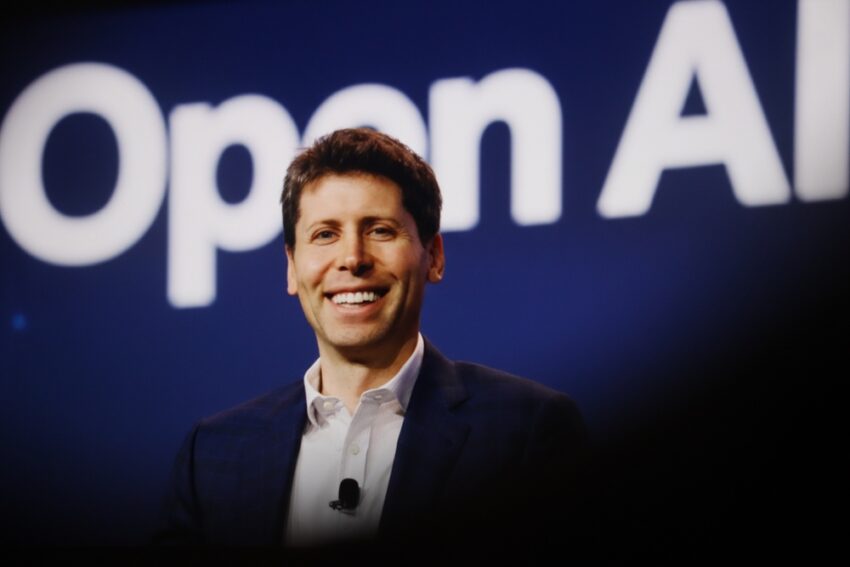
The move marks a shift from earlier plans outlined by Sam Altman, who indicated last year that the artificial intelligence developer would allow certain forms of adult content on its flagship chatbot once robust age-verification systems had been introduced.

However, OpenAI has now said that development resources are being redirected toward upgrades that will benefit a broader share of the chatbot’s rapidly expanding user base.

“We’re pushing out the launch of adult mode so we can focus on work that is a higher priority for more users right now,” the company said. “That includes gains in intelligence, personality improvements, personalisation and making the experience more proactive.”

The company added that it still supported the underlying principle behind the proposed feature, allowing adult users greater freedom in how they interact with AI systems, but acknowledged that implementing it safely would require additional work.

Advertisement

“We still believe in the principle of treating adults like adults,” OpenAI said. “But getting the experience right will take more time.”

The decision comes at a time of intense competition in the artificial intelligence sector. Since announcing plans to loosen restrictions on ChatGPT content in late 2025, Altman has repeatedly warned that OpenAI faces a “code red” challenge from rival AI developers.

Among the most prominent competitors are Google DeepMind and Anthropic, both of which are racing to release more capable generative AI systems.

OpenAI’s focus on performance improvements reflects the escalating pressure to maintain leadership in the AI market, where advances in reasoning capability, conversational tone and personalisation are increasingly seen as key differentiators.

Advertisement

The company says ChatGPT now has more than 900 million users worldwide, making it one of the fastest-growing digital platforms in history. Maintaining reliability, safety and usefulness at such scale has become a central priority.

Although the launch of adult mode has been delayed, OpenAI is continuing to develop age-verification and age-prediction systems designed to ensure younger users are protected from inappropriate content.

The technology analyses usage patterns and behavioural signals to estimate whether a user may be under the age of 18. If the system determines that a user is likely to be a minor, stricter safety filters are automatically applied.

These additional safeguards limit exposure to graphic violence, explicit content and sexual role-play scenarios.

Advertisement

The work is also partly driven by regulatory pressures in several countries. In the UK, for example, the Online Safety Act requires platforms hosting potentially harmful or adult material to ensure that under-18s cannot access such content without effective age verification measures.

As a result, any future “adult mode” would likely need to be accompanied by robust compliance systems in multiple jurisdictions before being deployed widely.

The announcement about ChatGPT’s delayed adult mode came as OpenAI faced internal controversy following the resignation of a senior executive linked to its robotics division.

Caitlin Kalinowski stepped down after raising concerns about the company’s partnership with the United States Department of Defense.

Advertisement

Kalinowski said she was troubled by the potential implications of AI technologies being used in areas such as mass surveillance or autonomous weapons systems.

“AI has an important role in national security,” she wrote in a statement on social media platform X. “But surveillance of Americans without judicial oversight and lethal autonomy without human authorisation are lines that deserved more deliberation than they got.”

She emphasised that her concerns related primarily to the speed with which the deal had been announced rather than the concept of national security collaboration itself.

“These are governance concerns first and foremost,” she said. “Issues this significant require clearly defined guardrails before agreements are announced.”

Advertisement

In response, OpenAI said it would update the terms of its defence agreement to ensure that its technology cannot be used for mass domestic surveillance or fully autonomous weapons systems.

A company spokesperson said the partnership was intended to support responsible national-security applications of AI while maintaining clear ethical boundaries.

“We believe our agreement with the Pentagon creates a workable path for responsible national security uses of AI while making clear our red lines: no domestic surveillance and no autonomous weapons,” the spokesperson said.

OpenAI added that it would continue engaging with employees, policymakers and civil society groups to ensure its technology is deployed responsibly.

Advertisement

The delay of ChatGPT’s adult mode reflects the broader challenge facing AI companies as they attempt to balance technological innovation, safety safeguards and regulatory compliance.

As generative AI tools become more widely used for everything from work productivity to creative expression, companies are increasingly under pressure to introduce new features carefully and responsibly.

For OpenAI, the immediate focus appears to be ensuring that ChatGPT’s core intelligence and usability continue to improve — a strategy the company believes will have a greater impact on its hundreds of millions of users than expanding the range of content the chatbot can produce.

Whether adult mode eventually launches may depend on how effectively OpenAI can implement reliable age verification and content moderation systems — a complex technical and legal challenge that is still evolving alongside the rapidly advancing capabilities of artificial intelligence.

Advertisement

Jamie Young

Jamie Young

Jamie is Senior Reporter at Business Matters, bringing over a decade of experience in UK SME business reporting.
Jamie holds a degree in Business Administration and regularly participates in industry conferences and workshops.

When not reporting on the latest business developments, Jamie is passionate about mentoring up-and-coming journalists and entrepreneurs to inspire the next generation of business leaders.

Advertisement
Continue Reading

Business

Google Pixel 11 Pro Fold Renders Leak Suggests Minor Changes in Camera, Thickness

Published

on

Google Pixel Fold's Repair Kits Are Now Available and They're Not Cheap

The upcoming Google Pixel 11 Pro Fold is still months away from its official reveal, but early leaks are already looking promising for smartphone enthusiasts. Despite some minor changes, you might get your lucky shot with this flagship around August 2026. That will only happen if the company follows its usual launch timeline.

Here’s what the latest render leaks show about Pixel 11 Pro Fold’s successor.

Familiar Design With Subtle Refinements

Google Pixel Fold's Repair Kits Are Now Available and They're Not Cheap
Google Pixel Fold’s repair kits are now available on iFixit.

At first glance, the leaked renders reveal a design very similar to that of its predecessor, the Google Pixel 10 Pro Fold. However, closer inspection reveals several small yet meaningful updates.

As Android Headlines reports, one of the most noticeable changes involves the camera module. In the updated design, the LED flash and microphone appear to be integrated within the pill-shaped oval section of the camera island, rather than being positioned outside the housing.

Additionally, the transition between the camera island and the rear panel is now smoother, replacing the previous sharper edge with a curved connection. This adjustment slightly elongates the internal oval cutouts within the camera module.

Advertisement

Slimmer Foldable Form Factor

Another significant improvement involves the device’s thickness. According to the leaked CAD specifications, the Pixel 11 Pro Fold may measure approximately 10.1 mm when folded, making it thinner than the Pixel 10 Pro Fold‘s 10.8 mm profile.

When unfolded, the device is expected to measure just 4.8 mm, compared with the previous model’s 5.2 mm thickness. These refinements suggest that Google is focusing on creating a sleeker and more comfortable foldable smartphone without drastically altering the device’s overall dimensions.

Tensor G6 Chip Expected to Boost Performance

GSM Arena reports that performance upgrades are also expected with the inclusion of the new Google Tensor G6 processor. The next-generation chip is rumored to deliver stronger AI capabilities, improved energy efficiency, and faster overall processing performance.

While the Pixel 11 Pro Fold has not yet been officially announced, the early leaks indicate that Google’s upcoming foldable phone could emphasize refined design, slimmer hardware, and enhanced performance when it arrives later this year.

Advertisement

Originally published on Tech Times

Continue Reading

Business

Northern Large Cap Core Fund Q4 2025 Commentary

Published

on

Northern Large Cap Core Fund Q4 2025 Commentary

Northern Trust Asset Management is a global investment manager that helps investors navigate changing market environments in efforts to realize their long-term objectives.

Entrusted with $1.2 trillion in assets under management as of March 31, 2024, we understand that investing ultimately serves a greater purpose and believe investors should be compensated for the risks they take — in all market environments and any investment strategy. That’s why we combine robust capital markets research, expert portfolio construction and comprehensive risk management in an effort to craft innovative and efficient solutions that seek to deliver targeted investment outcomes.

As engaged contributors to our communities, we consider it a great privilege to serve our investors and our communities with integrity, respect and transparency.

Northern Trust Asset Management is composed of Northern Trust Investments, Inc., Northern Trust Global Investments Limited, Northern Trust Fund Managers (Ireland) Limited, Northern Trust Global Investments Japan, K.K., NT Global Advisors, Inc., 50 South Capital Advisors, LLC, Northern Trust Asset Management Australia Pty Ltd, and investment personnel of The Northern Trust Company of Hong Kong Limited and The Northern Trust Company. Note: This account is not managed or monitored by Northern Trust Asset Management, and any messages sent via Seeking Alpha will not receive a response. For inquiries or communication, please use Northern Trust Asset Management’s official channels.

Continue Reading

Business

Council and pension fund agree deal to build 1,600 homes in seven Manchester sites

Published

on

Council and pension fund agree deal to build 1,600 homes in seven Manchester sites

‘Our plan for 10,000 genuinely affordable, social and council homes is building record numbers’

The No 1 Ancoats Green scheme, the first to be built by This City, a property developer firm solely owned by Manchester council

The No 1 Ancoats Green scheme, the first to be built by This City, a property development firm solely owned by Manchester council(Image: Manchester City Council )

More than 1,500 new homes will be built across Manchester by the council, which has promised that more than one-fifth will be ‘genuinely affordable’.

Advertisement

The council has struck a deal with the Greater Manchester Pension Fund to finance around 1,600 apartments and houses on brownfield parcels of land. While many of the homes will be available on the open market, at least 20 per cent will be let at the ‘Manchester Living Rent’, set at or below the local housing allowance level.

Seven projects will be built by This City, the council-owned property developer behind No 1 Ancoats Green, a 129-home scheme which opened last year. Council leader Bev Craig called that ‘a great start’, but wants to kick on with construction.

She said: “Our plan for 10,000 genuinely affordable, social and council homes is building record numbers. We built more last year than any year since the early 2000s.

“This partnership with the Greater Manchester Pension Fund will enable us to drive forward the work of This City to build the homes the city needs on council-owned land.

Advertisement

“Completing No.1 Ancoats Green last year was a great start – but this collaboration with the Greater Manchester Pension Fund provides long-term assurance that we can bring forward and deliver even more ambitious schemes.

“We already have a strong pipeline of projects in place, including the next This City development in the Northern Quarter, with further sites across Manchester. This means we are building many more homes capped at the Manchester Living Rent in the coming years .”

Town hall papers have named the seven sites where This City will build. They are Postal Street in the Northern Quarter (126 homes), Monsall Road in Harpurhey (651 homes), Grey Mare Lane in Beswick (145 homes), Hyde Road in Longsight (84 homes), Kirkmanshulme Lane also in Longsight (88 homes), Heyrod Street in Piccadilly (no figure given) and Downing Street in Ardwick (181 homes).

Construction work is expected to start on Postal Street next year, with other sites earmarked to begin in 2028, 2029, or 2030.

Advertisement

The projects are expected to be signed off by a meeting of the council’s executive at 3pm on Friday, March 13.

To find all the planning applications, traffic diversions, road layout changes, alcohol licence applications and more in your community, visit the Public Notices Portal.

Continue Reading

Business

State government responds to e-rideable dangers inquiry

Published

on

State government responds to e-rideable dangers inquiry

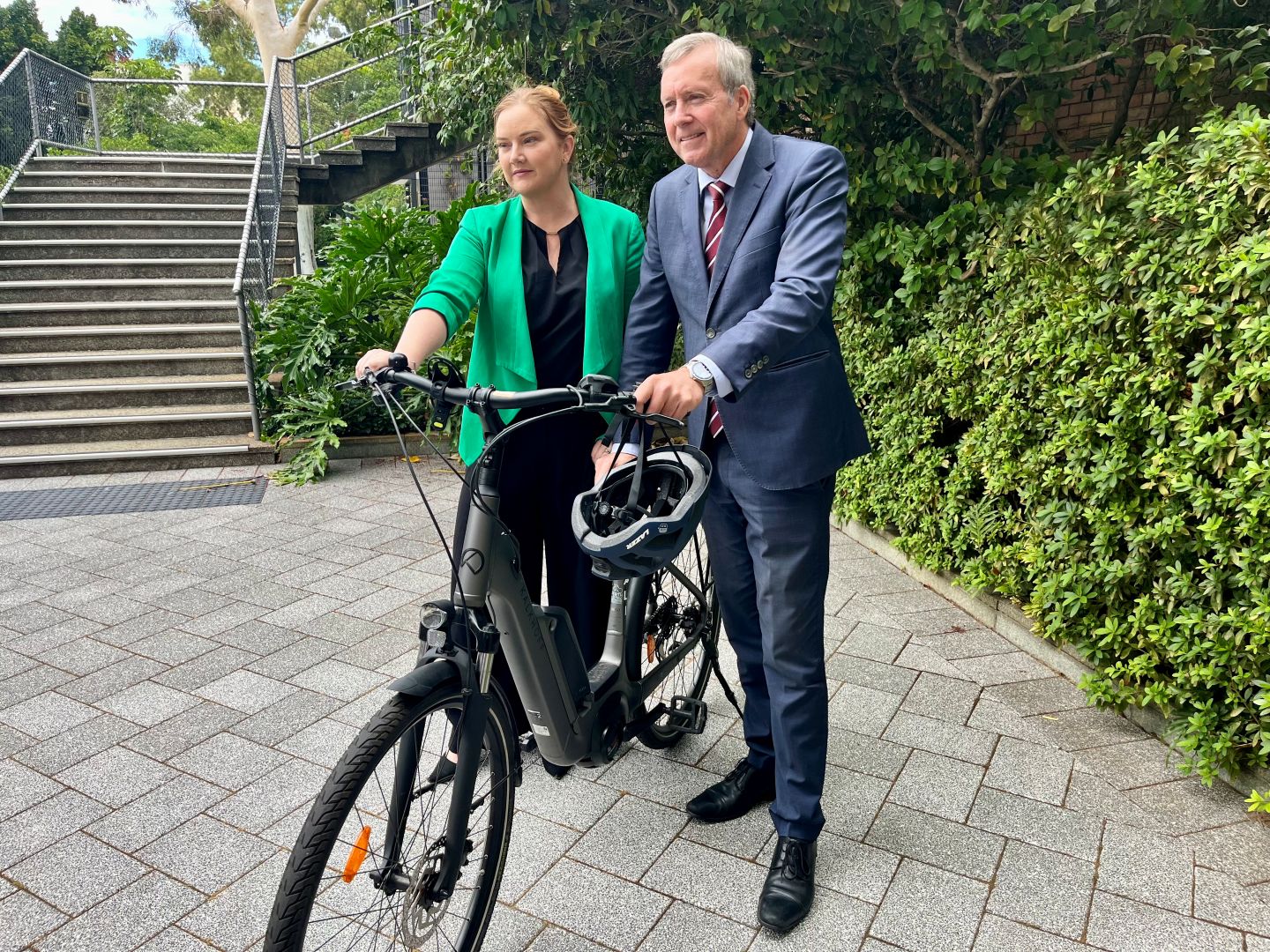
The state government has accepted 32 out of 33 recommendations from an inquiry into the dangers of e-rideables.

Continue Reading

Business

BDO sounds alarm on 'clean' company black market

Published

on

BDO sounds alarm on 'clean' company black market

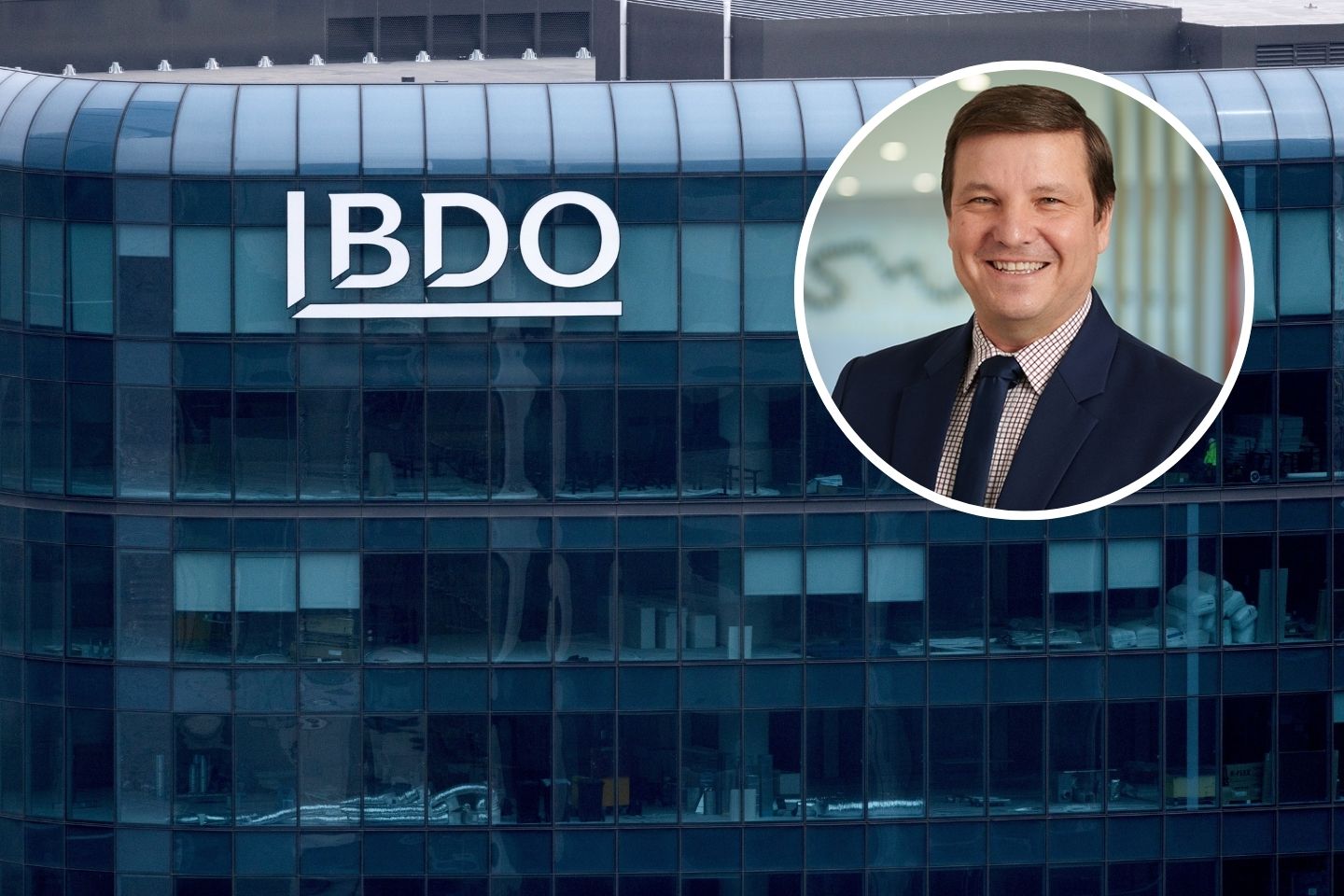
Australian companies with a clean compliance history are being targeted by black market operators and stolen to aid in fraud, according to a leading Perth accounting firm.

Continue Reading

Business

Iran, Oil, And Rates: What We're Watching

Published

on

Iran, Oil, And Rates: What We're Watching

Iran, Oil, And Rates: What We're Watching

Continue Reading

Trending

Copyright © 2025