

Business
Opinion: Open for business, closed at home

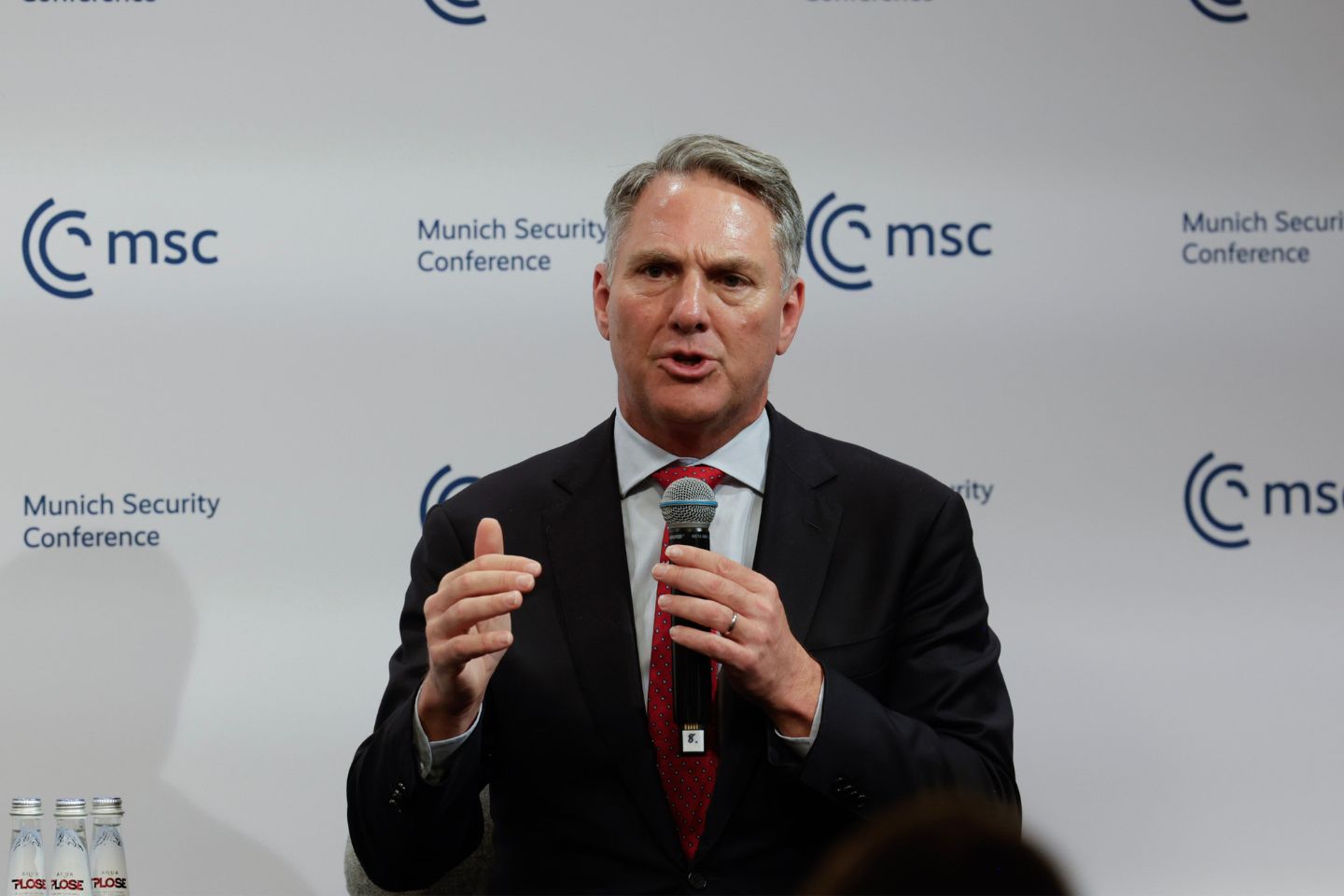

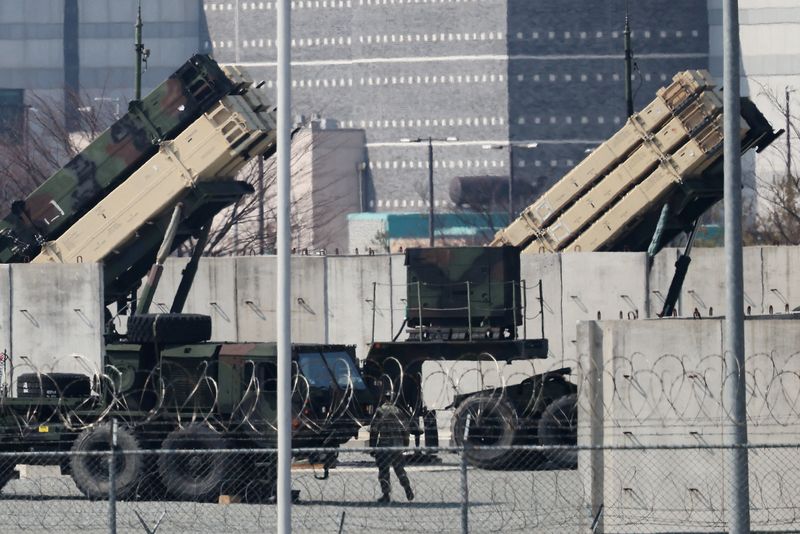

South Korea says can deter threats if US weapons redeployed to Middle East

A growing number of businesses are paying cybercriminals after ransomware attacks, as hackers deploy artificial intelligence to make their tactics more targeted, sophisticated and damaging.
New research from cybersecurity consultancy S-RM and advisory firm FGS Global shows that 24.3 per cent of companies targeted by ransomware attacks paid the demanded ransom in 2025, marking a sharp increase from 14.4 per cent in 2024.
The figures represent the first significant rise in ransom payments after two years of decline. In 2023, about 16.4 per cent of affected organisations paid, while the peak came in 2022 when 27.6 per cent of victims settled with attackers.
Although the latest numbers remain below that high point, the jump suggests cybercriminals are becoming increasingly successful at pressuring companies into handing over money.
Cybersecurity experts say artificial intelligence is rapidly reshaping how ransomware attacks are planned and executed.
Hackers are now able to use AI tools to scan vast amounts of stolen or publicly available data, allowing them to identify the most sensitive information belonging to a target organisation. By focusing on data that could cause the greatest reputational, financial or operational damage if exposed, attackers are able to increase pressure on victims to pay.
Jamie Smith, head of cybersecurity at S-RM, said criminals were increasingly relying on AI to refine their strategies.
“Attackers are using AI to find the most sensitive information that could cause maximum damage,” he said. “Threats are becoming far more specific and personalised, designed to maximise the victim’s fear and willingness to pay.”
This evolution has made ransomware attacks more difficult for companies to defend against, particularly for organisations with large volumes of sensitive data.
The report also sheds light on the scale of payments being demanded by cybercriminal groups.
According to the study, ransom payments in 2025 ranged from as little as $10,000 to more than $1 million, with the average payment reaching $296,000.
However, cybersecurity specialists warn that the total cost of a ransomware attack often extends far beyond the ransom itself. Businesses frequently face operational disruption, regulatory scrutiny, reputational damage and the expensive process of rebuilding compromised IT systems.
Many organisations also incur costs related to legal advice, customer notifications and forensic investigations after an attack.
The research suggests that industrial and manufacturing companies were particularly likely to pay ransoms during the past year.
This trend appears to be driven by the severe operational disruption ransomware attacks can cause in sectors that rely heavily on continuous production.
Factories, logistics systems and supply chains can grind to a halt if core IT infrastructure becomes inaccessible. In such situations, businesses sometimes view paying a ransom as the quickest way to restore operations and avoid prolonged shutdowns.
One high-profile cyber incident involved Jaguar Land Rover, whose factories around the world were forced to shut down for the entire month of September after its IT systems were compromised.
Major UK retailers were also targeted in 2025, including Marks & Spencer and Co-op. None of the companies has publicly confirmed whether a ransom was paid.
One of the biggest challenges in measuring ransomware activity is that many companies refuse to disclose whether they have paid hackers.
Security specialists say businesses often fear that publicly admitting to ransom payments could make them more attractive targets for future attacks.
Criminal groups may interpret payment as a sign that a company has both the resources and willingness to comply with demands.
As a result, ransomware incidents are often kept confidential, with payments handled through private negotiations involving cybersecurity consultants, insurers and specialist crisis advisers.
While artificial intelligence is helping companies automate operations and improve efficiency, experts warn it is also opening up new vulnerabilities that cybercriminals are eager to exploit.
Jenny Davey, co-head of crisis management at FGS Global, described the technology as a “double-edged sword”.
“While AI can drive efficiency and performance across the business, it can also open up new attack vectors for cybercriminals to exploit,” she said.
The rapid adoption of AI tools across corporate systems means organisations must invest heavily in cybersecurity and staff training to avoid creating new entry points for attackers.
The rise in ransomware payments highlights the growing importance of cyber resilience for businesses across every sector.
Experts say companies must go beyond traditional IT security measures and adopt a broader approach that includes employee awareness, robust data protection practices and detailed incident response plans.
This includes maintaining secure backups, limiting access to sensitive information and regularly testing systems against potential cyber threats.
As ransomware attacks become more sophisticated, and increasingly powered by artificial intelligence, businesses face mounting pressure to strengthen their defences before becoming the next target.

Amy Ingham
Amy is a newly qualified journalist specialising in business journalism at Business Matters with responsibility for news content for what is now the UK’s largest print and online source of current business news.

Amidst repatriations and a gradual return to operations, air traffic is slowly picking up as several airlines begin reopening some of their routes.
The recovery is starting timidly in the Middle East. After several days of paralysis, long-haul air traffic is gradually resuming. On Friday, several Emirati airlines relaunched some of their international routes, particularly to Europe, with reduced schedules.
Key Points
- Etihad Airways (Abu Dhabi): Restarted limited commercial flights from March 6–19 to over 70 destinations including Paris, London, New York, and Tel Aviv. Prices are unusually high — €1,900–2,000 for economy one-way, compared to €350–650 normally.
- Emirates (Dubai): Operating reduced services to 82 destinations such as Sydney, Singapore, and New York, aiming to restore its full network soon. Transit passengers are only accepted if their connecting flights are confirmed.
- Qatar Airways (Doha): Doha’s hub remains closed, but the airline is running emergency flights from Oman and Saudi Arabia.
- Capacity & Safety: Dubai International Airport is running at about 25% of normal traffic. The European Aviation Safety Agency (EASA) has extended its high-risk advisory until March 11.
- Repatriation Efforts: France and other states are organizing special flights to bring citizens home. Over 15,000 people, including many French nationals, have already been evacuated.
- Future Outlook: The crisis raises questions about the vulnerability of Gulf hubs and whether ultra-long-range aircraft could shift demand toward more direct flights.
Abu Dhabi-Paris flights available again
Abu Dhabi-based Etihad Airways announced on Friday the resumption of a limited commercial flight schedule. From March 6 to 19, the carrier plans rotations between the capital of the United Arab Emirates and more than 70 destinations including London, Paris, Frankfurt, Delhi, New York, Toronto and Tel Aviv.
Another major player in the Gulf, Emirates has also started to revive its rotations. The Dubai-based airline is currently operating a reduced schedule to 82 destinations, including London, Sydney, Singapore and New York, with the aim of “a return to 100% of its network” in the coming days. For now, the operator only accepts passengers transiting through Dubai if their connecting flight is maintained.
The situation remains more uncertain for Qatar Airways. The hub in Doha, Qatar, remains closed. However, the company continues to organize relief flights from Oman and Saudi Arabia to allow passengers to move in the region.
For the time being, activity at Dubai International Airport remains much lower than normal. According to data from the air tracking site Flightradar24, the hub – usually one of the busiest in the world – is still operating at only about 25% of its usual capacity. The European aviation safety regulator (EASA) has also extended its high-risk warning until 11 March.
Other People are Reading
Jack McGinn and Tom Zaunmayr discuss how an innovative building practice could solve housing issues in the Pilbara.
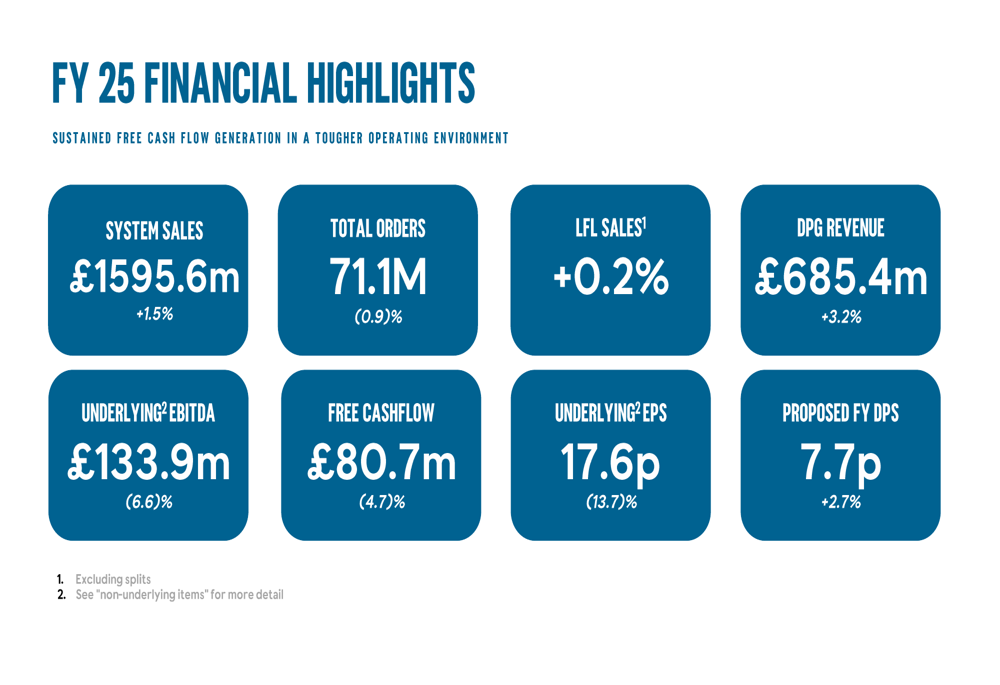
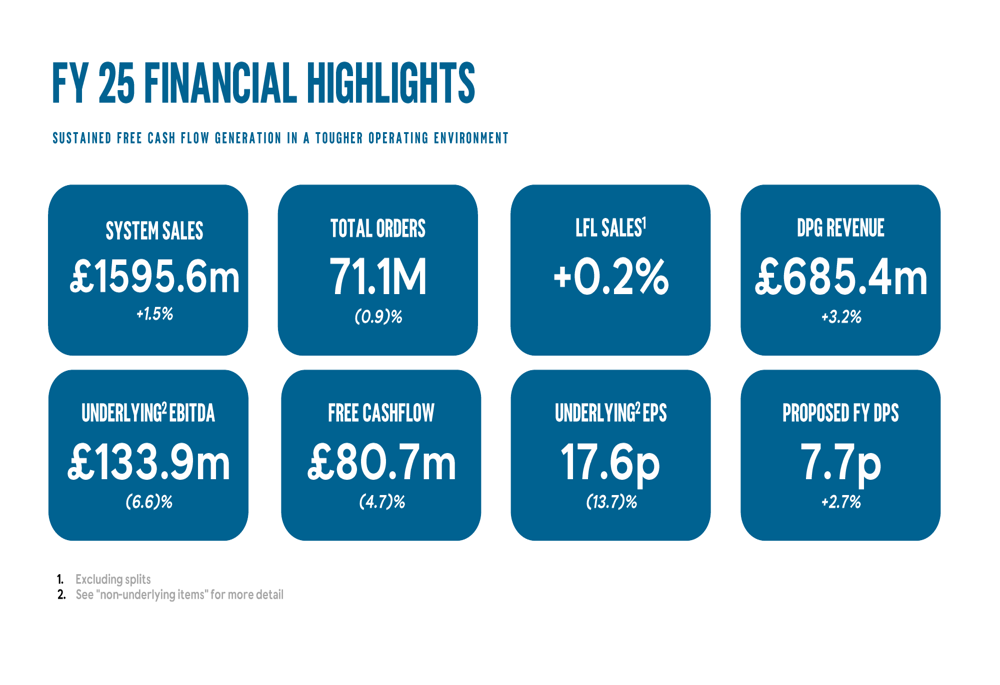
Domino’s FY 2025 slides: market share soars to 52.6% amid margin pressure
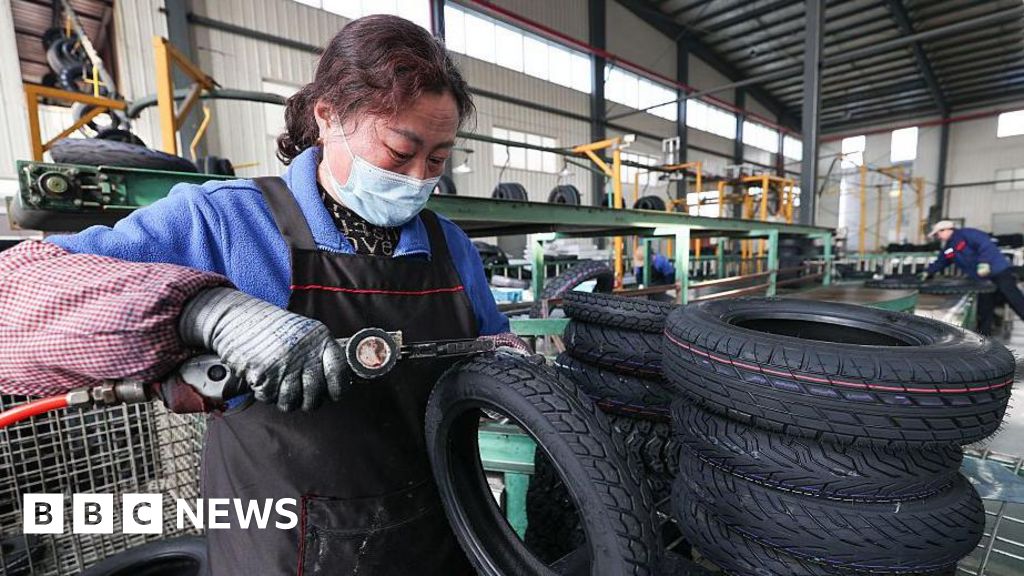
The jump in shipments puts the world’s second largest economy on track to top the record-breaking annual trade surplus it saw in 2025.
Business
Small businesses sceptical over tariff refunds after US Supreme Court strikes down Trump’s trade levies
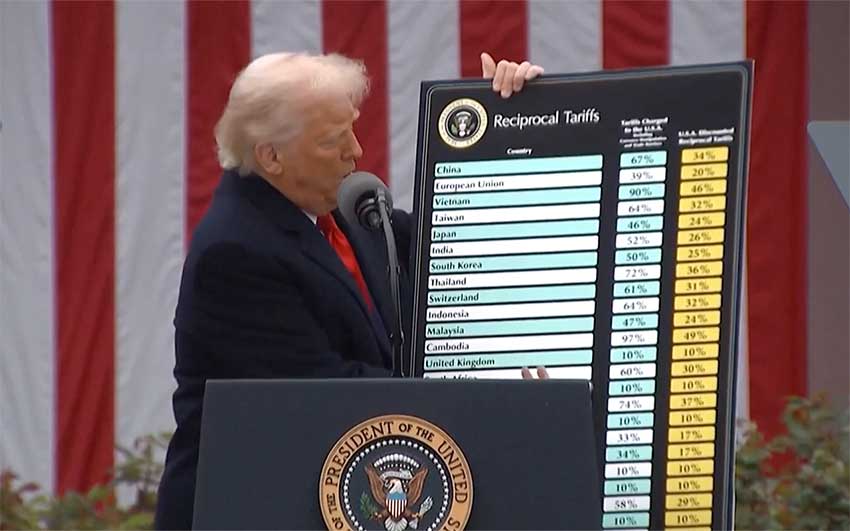
Small business owners across the United States have expressed scepticism that they will ever see refunds following the landmark ruling by the Supreme Court of the United States striking down large parts of Donald Trump’s sweeping tariff regime.
The court’s decision potentially unlocks as much as $175 billion (£137 billion) in repayments to companies that paid import duties under the controversial policy. However, many entrepreneurs say the legal and administrative complexity involved in claiming those refunds could make the process prohibitively difficult, particularly for smaller firms already strained by rising costs.
The tariffs, which targeted a wide range of imported goods under the former president’s “Liberation Day” trade policy, had sharply increased the cost of materials and products for businesses reliant on global supply chains.
Although the ruling has opened the door to compensation claims, Trump himself acknowledged the issue could remain entangled in litigation “for the next five years”, leaving thousands of companies unsure whether pursuing refunds is even worthwhile.
For many small firms, the economic damage caused by the tariffs has already been felt in higher costs, squeezed margins and delayed investment plans.
Elizabeth Vitanza, who runs a lighting and home furnishings business in Los Angeles with her husband John Ballon, said the impact has been felt across nearly every brand they work with.
“All of the modern brands we carry have raised prices by at least 12 per cent over the past year,” she said. “None of this is pro-business or pro-American.”
When Trump won re-election in 2024, the couple attempted to protect their business by rushing through a large order with a Swedish partner in an effort to beat the incoming tariffs.
Despite the attempt, the shipment was still caught by the new duties.
“We ended up paying a five-figure tariff bill,” Ballon said. “Money we had earmarked to renovate the showroom and possibly increase staff salaries suddenly had to cover unexpected import taxes.”
The couple said the experience had forced them to rethink expansion plans.
“Why would anyone start a business right now?” Vitanza asked. “If I didn’t already have an established one, I wouldn’t.”
Across other sectors, similar stories have emerged of rising costs linked to tariffs on imported raw materials and components.
A furniture manufacturer in Texas said the policy had pushed up the price of imported lumber and specialist cabinet hardware that cannot be sourced domestically.
The company had little choice but to pass on the costs to customers.
“Those materials simply aren’t made in the United States,” the owner said, requesting anonymity. “If tariffs raise those costs, we either increase prices or absorb the loss.”
Outdoor equipment company Granite Gear, based in Minnesota, experienced a similar shock.
Manager Rob Coughlin said the company had faced near-constant uncertainty since the tariffs were introduced.
Before the policy was implemented, Granite Gear paid an 18 per cent import duty on certain goods. When the new tariffs were introduced, the rate surged to 46 per cent before later being reduced to 20 per cent following trade negotiations with Vietnam.
The rapid changes made pricing decisions almost impossible.
“We didn’t even know what our costs would be when products started shipping,” Coughlin said. “How do you go to retailers with a price list when you don’t know the tariffs you’ll be paying?”
Ultimately, the company raised prices between 10 and 20 per cent to offset the additional costs.
Unlike larger brands, Coughlin said smaller companies have far less negotiating power when dealing with retailers.
“Big companies can push back on price increases. Smaller brands like us just don’t have that leverage.”
For companies in niche sectors, the tariffs have also created major financial strain.
Dr Charlie Elrod, founder of a natural livestock health products company, said tariffs on Brazilian imports alone had increased costs by around $1 million over the past year.
For months the company tried to absorb the additional expense rather than pass it on to customers.
Eventually, however, it was forced to raise prices by 5 per cent.
“That helped a bit,” Elrod said, “but profitability has definitely fallen.”
Following the Supreme Court ruling, more than 1,000 companies have launched lawsuits seeking reimbursement for tariffs they argue were collected unlawfully.
In a related development, a US trade court judge recently ordered the federal government to begin processing billions of dollars in refunds to importers affected by the invalidated tariffs.
Yet the practical path to recovering that money remains unclear.
Many businesses say the complexity of filing claims, and the legal costs involved, may outweigh any potential repayment.
Vitanza said her company is carefully tracking tariff payments in the event they decide to file a claim.
“We’re keeping a spreadsheet so that one day we might have everything ready if we pursue reimbursement,” she said. “But we’re not counting on it.”
Howard Trenholme, who owns a bakery and café in Moab, Utah, said the legal complexity makes pursuing refunds unrealistic.
“As an end user buying through multiple suppliers, the process would be incredibly complicated,” he said. “The legal fees alone could wipe out any refund.”
Coughlin from Granite Gear reached a similar conclusion.
“When I compare the refund I might receive with the legal costs involved, it’s simply not worth the risk,” he said.
“I won’t be trying to claim anything. It would probably be a waste of time and money.”
Even with the court ruling, the legacy of the tariff policy continues to affect business planning across the country.
Companies that once relied on stable global supply chains now face a far more uncertain trade environment, with shifting duties and geopolitical tensions complicating long-term decisions.
For many small businesses, the experience has reinforced how vulnerable they are to abrupt changes in government trade policy.
While the Supreme Court decision theoretically opens the door to billions in repayments, entrepreneurs say the practical reality is that many of them may never see that money.
For firms already stretched by rising costs and economic uncertainty, the priority now is simply staying afloat — rather than fighting a potentially years-long legal battle to recover past losses.

Jamie Young
Jamie is Senior Reporter at Business Matters, bringing over a decade of experience in UK SME business reporting.
Jamie holds a degree in Business Administration and regularly participates in industry conferences and workshops.
When not reporting on the latest business developments, Jamie is passionate about mentoring up-and-coming journalists and entrepreneurs to inspire the next generation of business leaders.

Paolo Bertoluzzo
CEO, GM & Executive Director
Good morning. Welcome to Nexi Capital Market Day. Welcome to Milan, for those of you that are flying from distance. Welcome to those of you that are here in the room. Thank you for making it. It’s a real pleasure. Welcome to the many that are connected in video if I can, a special welcome to the many new investors that are with us for the first time.
We had many, many conversations with many of you over time in one-to-ones, in meetings, in conferences. But the Capital Market Day is always a special opportunity because you can step back look at it a little bit from distance and actually go through the progress we made so far, how we see the market going forward and most importantly, our plans for the future.
This is what we will be covering today. The key message of this Capital Market Day, the key message of today is obviously in the title. Nexi is today an enduring platform, an enduring business platform even more than a technology


Oil falls as Trump predicts Middle East de-escalation
Hang Seng Index Recovered At 24,765, Bulls Need To Break Above 26,350

Tron Joins Agentic AI Foundation; Founder Foresees Future of AI

World Athletics Indoor Championships: Kate O’Connor headlines Ireland team in Polandn

Apple reportedly delays its planned smart display launch to fall


-
Business4 days ago
Form 8K Entergy Mississippi LLC For: 6 March
-

 Fashion4 days ago
Weekend Open Thread: Ann Taylor
-

 News Videos21 hours ago
10th Algebra | Financial Planning | Question Bank Solution | Board Exam 2026
-

 Crypto World17 hours ago
Paradigm, a16z, Winklevoss Capital, Balaji Srinivasan among investors in ZODL
-

 Tech5 days ago
Bitwarden adds support for passkey login on Windows 11
-
 Sports5 days ago
499 runs and 34 sixes later, India beat England to enter T20 World Cup final | Cricket News
-

 Sports3 days ago
Three share 2-shot lead entering final round in Hong Kong
-

 Sports2 days ago
Braveheart Lakshya downs Lai in epic battle to enter All England Open final | Other Sports News
-

 Business6 days ago
Guthrie Disappearance Enters Fifth Week as Family Visits Memorial
-

 Politics4 days ago
Top Mamdani aide takes progressive project to the UK
-

 NewsBeat5 days ago
Piccadilly Circus just unveiled ‘London’s newest tourist attraction’ and it only costs 80p to enter
-

 Business2 days ago
Search for Nancy Guthrie Enters 37th Day as FBI Probes Wi-Fi Jammer Theory
-

 Entertainment3 days ago
Hailey Bieber Poses For Sexy Selfies In New Luscious Lip Thirst Traps
-
 NewsBeat8 hours ago
Pagazzi Lighting enters administration as 70 jobs lost and 11 stores close across Scotland
-

 Tech18 hours ago
Despite challenges, Ireland sixth in EU for board gender diversity
-

 Crypto World5 days ago
New Crypto Mutuum Finance (MUTM) Reports V1 Protocol Progress as Roadmap Enters Phase 3
-

 Tech5 days ago
ACIP To Discuss COVID ‘Vaccine Injuries’ Next Month, Despite That Not Being In Its Purview
-
Entertainment5 days ago
Harry Styles Has ‘Struggled’ to Discuss Liam Payne’s Death
-

 Business13 hours ago
Search Enters 39th Day with FBI Tip Line Developments and No Major Breakthroughs
-
 NewsBeat5 days ago
Good Morning Britain fans delighted as Welsh presenter returns to host ITV show