Connect with us

Business

The Man Who Fights for the Voiceless

Published

on

The Man Who Fights for the Voiceless

Chetann Kishor Patel and the Legal Revolution for Animal Justice.

In a nation where compassion often battles convenience, one man has chosen to stand where it is hardest to stand beside the voiceless.

From the bustling streets of Mumbai to municipal corridors hundreds of kilometres away, Chetann Kishor Patel has emerged as a formidable and fearless force in India’s animal welfare landscape. An animal lover by heart and an Animals Rights Legal Advisor by profession, Patel is the Founder & Director of Illuminating Hope Foundation (IHF) India An Animal Welfare Core litigation organization, that is quietly but powerfully reshaping how India responds to animal injustice.

He does not merely rescue animals. He protects them with the Constitution.

Advertisement

Law in His Hands, Compassion in His Heart

The Man Who Fights for the Voiceless


While many speak about kindness, Patel enforces it.

Through strategic legal interventions, representations, and notices, he has secured justice for thousands of community and wild animals. His work bridges the emotional and the institutional ensuring that compassion is not reduced to sentiment, but reinforced by law.

Advertisement

His approach is direct, structured, and unapologetically firm: Animal welfare is not optional. It is a legal obligation.

The Jaora Stand: When Silence Was Not an Option

One of the defining moments of his advocacy came in Jaora, where alarming reports surfaced regarding:

  • Alleged illegal relocation of street dogs
  • The running of an unlawful Animal Birth Control (ABC) Centre
  • Harassment of local feeders

Where many would hesitate, Chetann Kishor Patel acted.

Legal notices were formally sent to the Collector of Ratlam (M.P), Superintendent of Police of Ratlam (M.P), Chief Municipal Officer of Jaora Nagarparishad (Ratlam District), and the local police station — demanding accountability and lawful compliance.

Advertisement

The message was clear: Community animals cannot be picked up, displaced, or confined outside the legal framework. Compassionate citizens cannot be criminalized for feeding.

This was not activism for headlines. It was activism for justice.

Defender of the Feeders Across India, community animal feeders everyday citizens who ensure that street animals survive often face hostility, misinformation, and intimidation.

Chetann Kishor Patel stands as their legal shield.

Advertisement

He affirms what the law already recognizes: feeding community animals is not a nuisance; it is a humane act protected within legal boundaries. Harassment of feeders is not a civic order it is a violation.

By defending feeders, Patel protects the ecosystem of compassion that sustains millions of street animals.

Under Chetann Kishor Patel’s leadership, Illuminating Hope Foundation (IHF) India has evolved into more than an organization — it is a legal movement.

Illuminating Hope Foundation (IHF) India works at the intersection of animal protection law, civic responsibility, and constitutional values. From addressing unlawful municipal practices to advocating for proper implementation of Animal Birth Control Rules, the foundation operates with precision and persistence.

Advertisement

It is not noise-driven activism. It is result-driven advocacy.

Every notice served. Every representation filed. Every illegal act challenged.

Each step reinforces one fundamental belief: justice must extend beyond humans.

Chetann Kishor Patel represents a new generation of animal rights defenders — strategic, legally equipped, emotionally grounded, and institutionally aware.

Advertisement

He understands that real change is not created through outrage alone, but through structured legal action.

In him, the movement finds both fire and framework. His Words, His Mission

“Compassion is not weakness it is strength guided by responsibility. When we protect animals, we protect the moral fabric of our society. I do not fight authorities; I fight injustice. And I will continue until every voiceless life receives the dignity it deserves.”  -Chetann Kishor Patel.

In a world that often looks away, Chetann Kishor Patel looks closer.

Advertisement

Where systems hesitate, he proceeds. Where animals suffer silently, he speaks loudly and legally.

And in doing so, he is not just illuminating hope. He is enforcing it.

Disclaimer –

This article is a work of original content created for public relations and informational purposes only. It may be published across multiple digital platforms with the full knowledge and consent of the author/publisher. All images, logos, and referenced names are the property of their respective owners and used here solely for illustrative or informational purposes. Unauthorized reproduction, distribution, or modification of this article without prior written permission from the original publisher is strictly prohibited. Any resemblance to other content is purely coincidental or used under fair use policy with proper attribution.

Advertisement
Continue Reading
Click to comment

Leave a Reply

Your email address will not be published. Required fields are marked *

Business

Crexendo: AI, Acquisitions And A Growing Software

Published

on

online meetings, smart phone video calling concept, using video meeting online app, businessman holding phone and touching screen

Crexendo: AI, Acquisitions And A Growing Software

Continue Reading

Business

Saba Capital’s Boaz Weinstein warns private credit problems are multiplying

Published

on

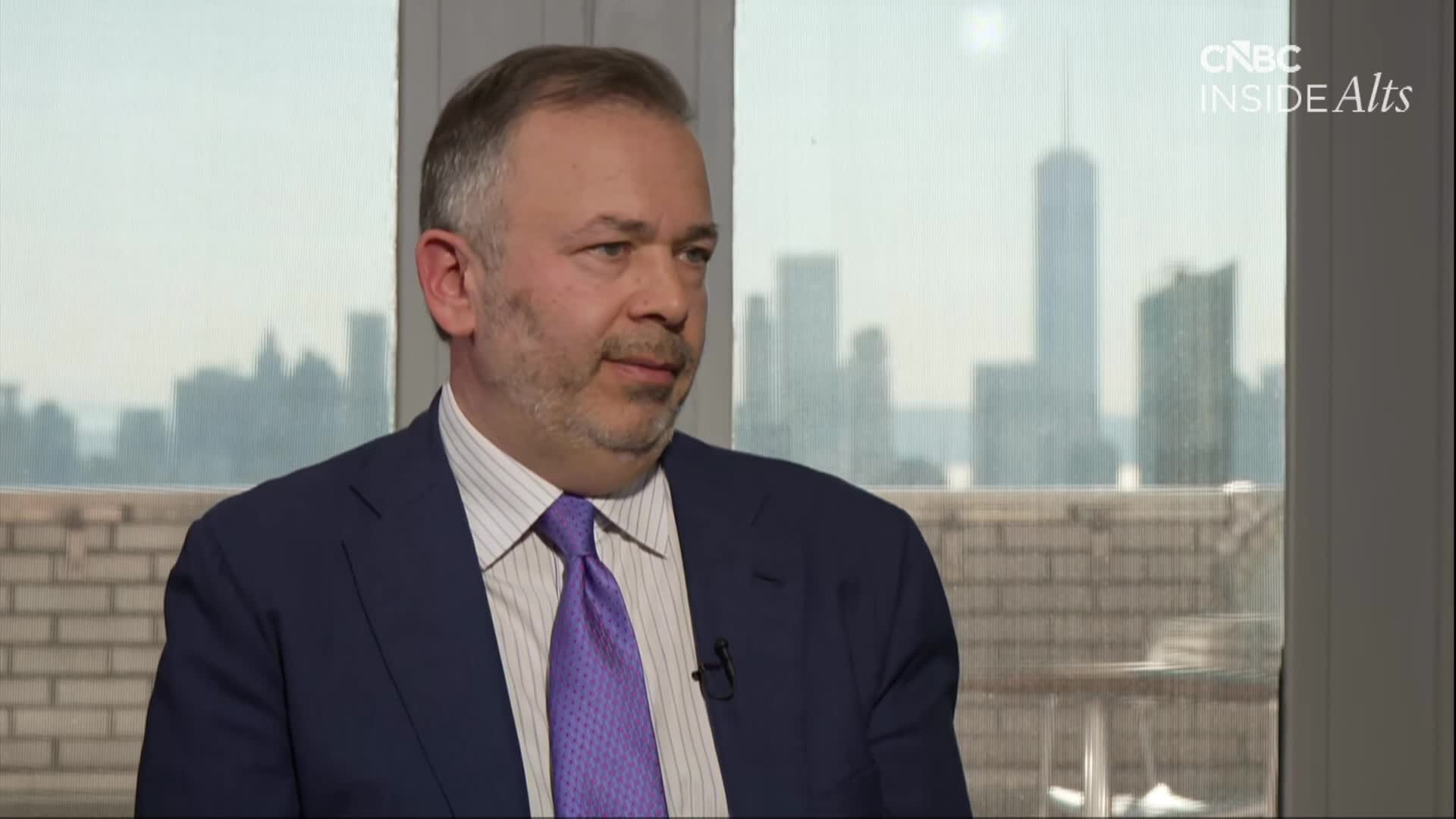
Saba Capital's Boaz Weinstein warns private credit problems are multiplying
Inside Alts: Saba Capital's Boaz Weinstein on private credit's liquidity problem

A version of this article appeared in CNBC’s Inside Alts newsletter, a guide to the fast-growing world of alternative investments, from private equity and private credit to hedge funds and venture capital. Sign up to receive future editions, straight to your inbox.

The problems in private credit are “multiplying by the quarter,” due in part to the “financial alchemy of promising liquidity that isn’t there,” Boaz Weinstein, founder of Saba Capital Management, told Inside Alts this week. 

“What’s happening, big picture, right now is that, for a number of reasons, in the middle of a bull market, there are cracks, there are problems, there are frauds, there are companies that are going bad without being a fraud,” Weinstein said in an exclusive interview. “So for those reasons, investors are seeing their dividends being cut. They want their money back, and [on] Wall Street the No. 1 story right now is where the redemption is going to be for all these managers.” 

Weinstein, of course, is a central figure in that story. His firm, Saba, alongside Cox Capital Management, just launched a tender offer to purchase 6.9% of shares in one of Blue Owl’s nontraded private credit funds at a 34.9% discount. 

Advertisement

“We were hearing from investors in these funds that they wanted their money back,” he said. “They were trying to find someone to step into their shoes, so that happened in an organic way.” 

That fund, known as Blue Owl Capital Corp. II, halted quarterly redemptions and sold $1.4 billion of direct lending investments to provide liquidity for its investors. It turned out to be among the first in a slew of nontraded, private credit funds that have been hit with redemption requests above the typical 5% quarterly cap.

Private wealth flows across products tracked by analysts at Jefferies were down 19% in the first quarter compared with Q4. Analysts said they expect redemption rates across retail credit products to increase. 

Saba and Cox see an opportunity amid investors’ limited liquidity. They are launching similar tenders for stakes in several other funds at Blue Owl as well as Starwood Real Estate Income Trust. This has caused some to question whether Weinstein has been criticizing the private credit industry only to scare retail investors into selling their stakes to him at a discount.

Advertisement

While speaking with Inside Alts, Weinstein clarified that he doesn’t actually believe there will be a wave of private credit defaults or frauds, nor does he think people should redeem further. (“The redemptions have arrived,” he said.)  

In fact, he’s actually bullish on several of the largest private credit managers. Weinstein said over the past few weeks, he bought shares in “the most amazing managers,” including Ares, Apollo and Blackstone. He said he is even long “a little bit” of Blue Owl equity.

“We’re long the stocks of these companies on the idea that, in case this is overdone, these are the guys that are going to be the winners at the end, when the smoke clears and their stocks may represent good value,” said Weinstein.

Get Inside Alts directly to your inbox

Weinstein said he thinks private credit is trading at pessimistic levels and public credit is trading at “incredibly optimistic levels.” He’s shorted public credit through credit default swaps and credit derivatives. Weinstein said that the gating of private credit funds means that investors will have to sell more liquid assets to raise cash, which would weigh on the market. 

Advertisement

“I think that public credit is incredibly mispriced and part of my short-term thinking about it is informed by the issues that the private credit markets are having,” he said. 

Weinstein said it will be a “number of weeks” before they know what happens with the Blue Owl bids, and how much they’ll end up buying. Weinstein said the tender offers weren’t “personal” against the manager, but rather, he said, “if we go bid for something, it’s a sign we think the manager is good.”

However, Weinstein noted a firm called Cliffwater as one in the private credit space that they’re “watching the most closely.” He said Cliffwater operates similarly to a fund-of-funds model, where they don’t own the loans directly, but rather, they’re invested in other managers. As a result, they have limited control over fulfilling their own redemption requests – something Weinstein describes as a “turducken” (a chicken stuffed inside a duck, stuffed inside a turkey).

According to a Securities and Exchange Commission filing, Cliffwater disclosed that as of the end of last year, 69% of its Corporate Lending Fund was comprised of direct investments in underlying credit and the remaining 31% was exposed to funds.  

Advertisement

Weinstein predicted that when Cliffwater announces its redemption rate — expected as early as Tuesday — it could be between 10% and 20%. 

“I don’t know their exact cash position, but we think it’s very likely that they’re going to have to start redeeming and they’re going to get cut back when they redeem these funds that they’ve invested in,” he said. 

Cliffwater was also the subject of a recent viral investor letter by the hedge fund Rubric Capital, which said the alternatives manager could be “a canary in a coal mine” and “the first domino in the bank run we foresee,” according to The New York Times, which cited two people who read the private note. 

When asked about what happens to private credit if there’s a real credit cycle, Weinstein said, “it will fall harder than it should.”

Advertisement

He added that “one of the best opportunities” in his career would be investing in private credit at a massive discount “when the economy slows.” 

“Maybe that’s not for a year, maybe it’s about to happen. Maybe it’s going to happen years from now,” Weinstein said. “It’s about to get super interesting.”

Choose CNBC as your preferred source on Google and never miss a moment from the most trusted name in business news.
Continue Reading

Business

Cantor Fitzgerald raises Neurocrine Bio price target on Ingrezza outlook

Published

on


Cantor Fitzgerald raises Neurocrine Bio price target on Ingrezza outlook

Continue Reading

Business

DA Davidson reiterates Repay stock Buy rating on strong Q4 results

Published

on


DA Davidson reiterates Repay stock Buy rating on strong Q4 results

Continue Reading

Business

ABM Q1 2026 slides: revenue beats offset by margin pressure

Published

on

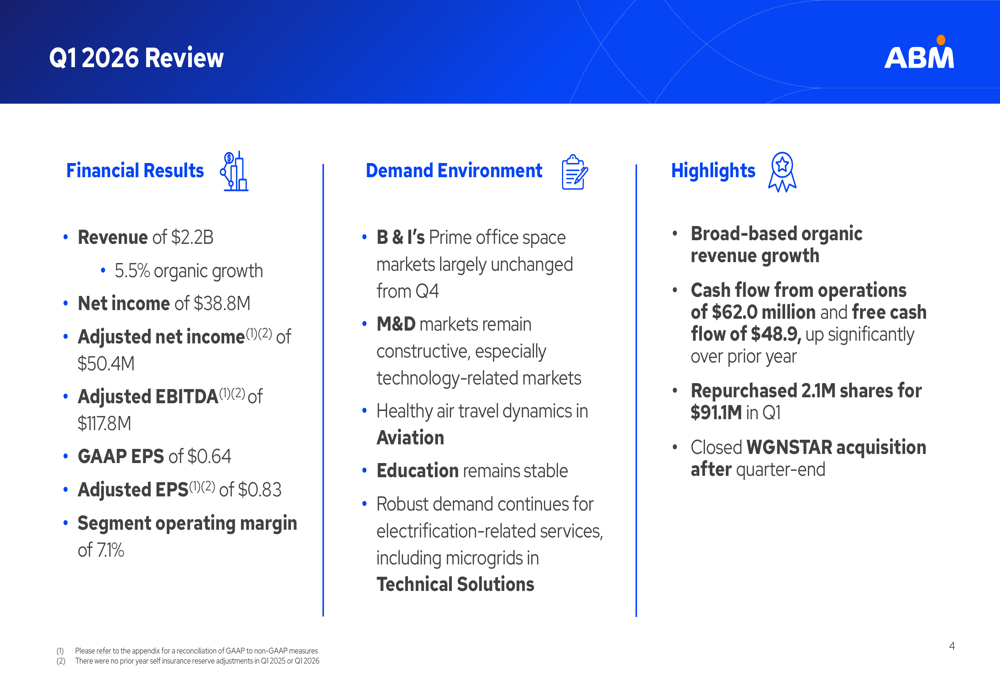
ABM Q1 2026 slides: revenue beats offset by margin pressure


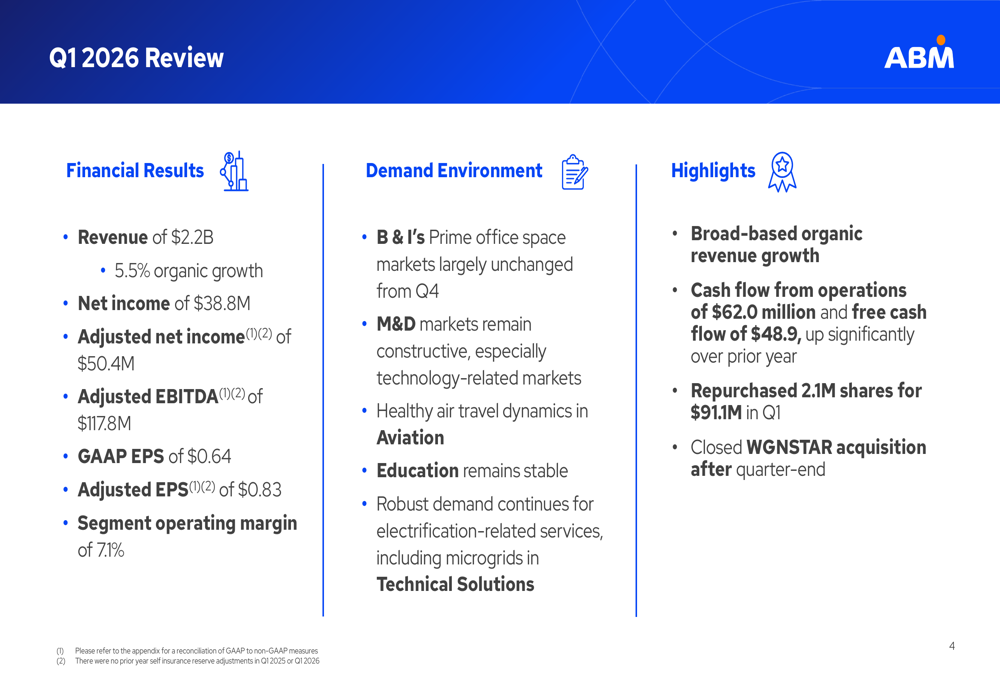
ABM Q1 2026 slides: revenue beats offset by margin pressure

Continue Reading

Business

Tekmar encouraged by momentum and record order book despite drop in revenues

Published

on

Tekmar encouraged by momentum and record order book despite drop in revenues

The County Durham offshore engineering group says it is seeing positive signs

Offshore technicians assembling Tekmar's patented TEKLINK cable protection system during offshore installation on an offshore wind farm

Offshore technicians assembling Tekmar’s patented TEKLINK cable protection system during offshore installation on an offshore wind farm(Image: Unknown)

Offshore energy group Tekmar says it is encouraged by its latest results, despite seeing a drop in revenues and another year of losses.

The County Durham-based firm, which provides asset protection technology and offshore en­­ergy services, has released results for the year ending September 30 2025.

They show turnover falling slightly to £28.7m, while gross profit fell to £9.8m. After taking into account exceptional items, depreciation and other costs, Tekmar reported an overall loss for the year of £3.9m, though this was less than last year’s losses.

But Tekmar said that £43m of new orders since last July and currently had a record order book. It said its balance sheet had been strengthened, including by the sale of its former Innovation House building for £2.8m.

Advertisement

The company said its Project Aurora plan to scale the business through both organic growth and acquisitions, and to improve its financial strength, was progressing well.

CEO Richard Turner said: “FY25 has been a pivotal and highly productive year for Tekmar as we launched and started to execute on Project Aurora. The group delivered results in line with market expectations, alongside a material improvement in profitability in the second half.

Richard Turner, CEO Tekmar Group plc

Richard Turner, CEO Tekmar Group plc(Image: Tekmar Group plc)

“We are pleased to have been able to maintain our momentum post period end – in the first four months of FY26 we have delivered a record order book, with multi-year visibility and have unlocked further growth potential by significantly strengthening our balance sheet.

“We are encouraged by the strong start to the new financial year and healthy pipeline we see ahead of us and are focused on delivering sustained, profitable growth and enhanced value for shareholders.”

Advertisement
Continue Reading

Business

Welsh energy consultancy firm collapses into administration with nearly 140 job losses

Published

on

Welsh energy consultancy firm collapses into administration with nearly 140 job losses

Cardiff-based Amber Energy Solutions had been experiencing cashflow problems

Generic energy usage statement

Cardiff-based energy management consultancy Amber Energy Solutions has collapsed into administration resulting in nearly 140 staff being made redundant. The business provided energy consultancy and data services to multi-site property portfolios, landlords and infrastructure operators across the UK.

Amber Energy, which traded strongly in 2024, experienced cash flow challenges and a decline in revenues through 2025.

Matt Whitchurch and Jonathan Dunn of specialist business advisory firm FRP were appointed joint administrators.

Prior to appointment FRP said it undertook an accelerated marketing process to explore options for the business and its assets. While there was initial interest from a number of parties, only limited asset sales were ultimately achievable. A solvent sale was explored, but did not proceed after interested parties withdrew.

Advertisement

READ MORE: Former psychiatric hospital site in Carmarthenshire transformed into health and wellbeing campusREAD MORE: Leasing deal agreed for third huge floating offshore windfarm in the Celtic Sea

Immediately following their appointment, the joint administrators completed the sale of certain assets.

However, the sale did not provide for the transfer of the wider workforce and 138 of the company’s 143 employees have been made redundant. The joint administrators are supporting those affected with claims to the Redundancy Payments Service.

Mr Whitchurch, partner at FRP, said: “Amber Energy Solutions had established a well-regarded offering in its sector but was unable to overcome sustained cash flow pressures.

Advertisement

“We explored options to secure a wider going concern solution, however this was not achievable in the circumstances. While sales of certain assets have been completed, the majority of roles have unfortunately been made redundant.

“Our focus now is on supporting employees through the claims process and working to maximise recoveries for creditors.”

Its last published financial accounts with Companies House, for its l 2024 financial year, showed the business experienced a strong rise in revenues on the previous year from £9.51m to £11.43m. It also posted a rise in profit to £1.51m.

The business was set up in 2009 by Nicholas Proctor. It had featured in the Wales Fast Growth 50 initiative, an annual league table of the fastest-growing indigenous firms in Wales based on revenue growth.

Advertisement
Continue Reading

Business

NSE tells brokers to disclose and remit excess STT retained for FY24 and earlier years

Published

on

NSE tells brokers to disclose and remit excess STT retained for FY24 and earlier years
Leading exchange NSE has directed its members, including brokers and sub-brokers, to disclose and remit any excess Securities Transaction Tax (STT) collected but not deposited with the government for the financial year 2023-24 and earlier periods.

In a circular issued on March 10, the exchange said the move follows directions from the Income Tax Department, which flagged instances where excess STT collected by some market intermediaries had not been remitted to the government account.

STT is a tax levied on transactions executed on recognised stock exchanges and is collected by brokers at the time of trading before being deposited with the government.

According to the circular, the Joint Commissioner of Income Tax, Range 7(1), wrote to the exchange on March 5, advising it to draw attention to the issue and seek details from members who may have retained excess STT.

Advertisement

Following the instruction, NSE has asked all members to furnish details of such excess STT collected and retained with them for FY24 and preceding years. These details must be submitted directly to the exchange.


The exchange has also instructed brokers to remit any excess STT collected along with interest calculated at 1% for every month of delay. The funds must be paid to NSE immediately, after which the exchange will deposit the amount into the government account.
Members have been asked to comply with the directive within seven days from the publication of the circular.Also read | Everyone selling IT stocks after record crash, but this Rs 1.3 lakh crore mutual fund doing the exact opposite

The communication is a continuation of an earlier circular issued on March 19, 2025, which dealt with excess STT retained by members for FY23 and earlier years.

STT forms an important part of the tax framework governing equity and derivatives trading in India. The levy is applied across a range of market transactions including equity delivery trades, intra-day equity trades and derivatives contracts.

While brokers are responsible for collecting the tax from investors at the time of trade execution, they are required to deposit the amount with the government through the exchange system. Any delay or discrepancy in remittance can attract penalties or interest liabilities under tax rules.

Advertisement

NSE said members seeking clarification on the circular can contact its taxation department.

(Disclaimer: Recommendations, suggestions, views and opinions given by the experts are their own. These do not represent the views of The Economic Times)

Continue Reading

Business

David Littleproud resigns as Nationals leader

Published

on

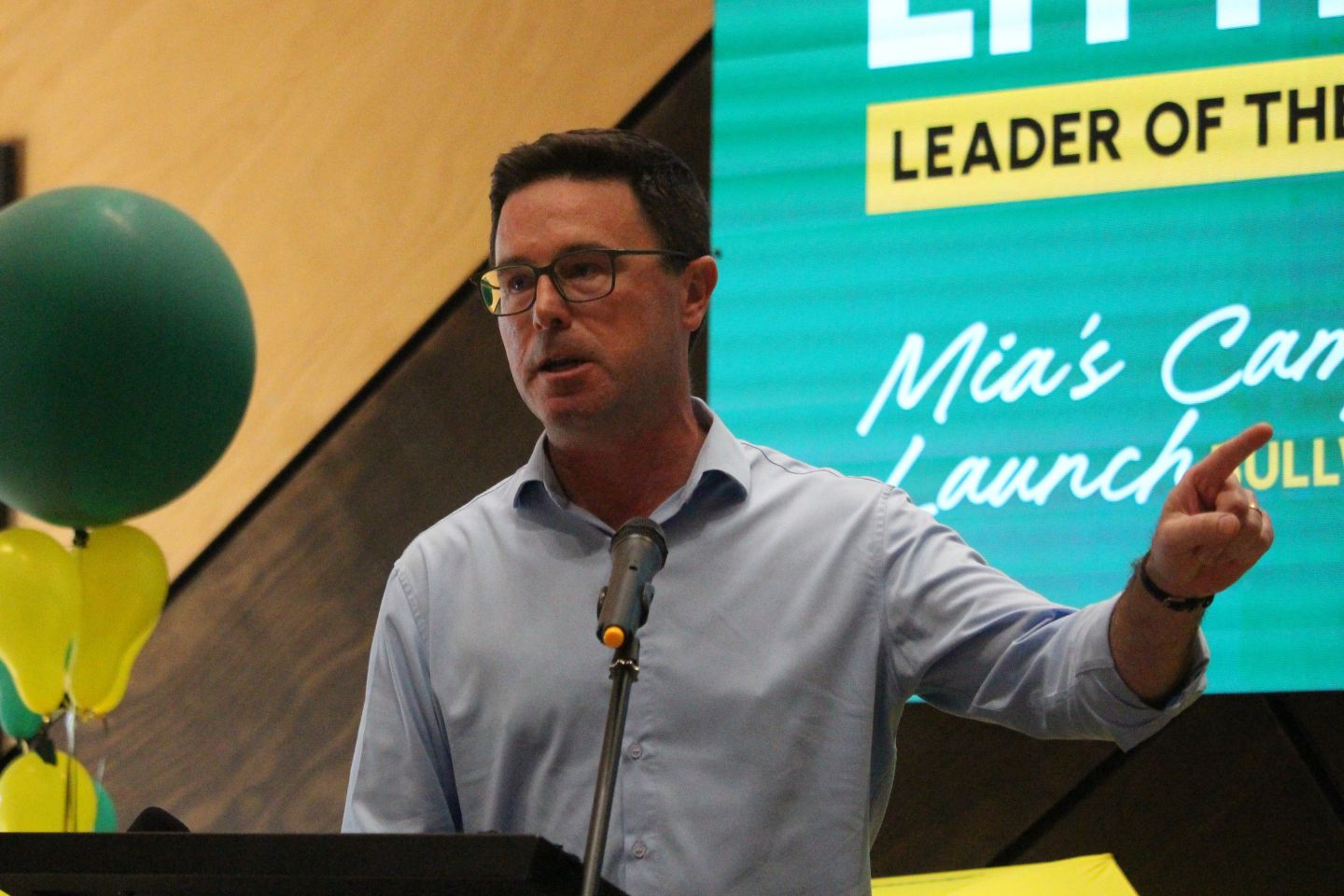
David Littleproud resigns as Nationals leader

David Littleproud has announced his resignation as leader of The Nationals Party of Australia, saying he no longer has the energy to do the job.

Continue Reading

Business

FDA approves leucovorin for cerebral folate deficiency but not autism

Published

on

FDA reversals on UniQure, Moderna approvals worry investors

The headquarters of the U.S. Food and Drug Administration in Silver Spring, Maryland, Nov. 4, 2009.

Jason Reed | Reuters

The Food and Drug Administration on Tuesday approved a decades-old prescription vitamin called leucovorin as the first treatment for a rare genetic disorder in certain adults and children. 

Advertisement

The move comes months after the Trump administration touted leucovorin as a potential therapy for a broader group of patients with autism spectrum disorder symptoms. The claim sparked skepticism among some in the medical and research community, but fueled excitement among families, spiking prescriptions of the drug in the U.S. 

One FDA official told reporters Monday that “we don’t have sufficient data to say that we could establish efficacy for autism more broadly” but said the agency is open to interest from companies in studying leucovorin in the autism population. 

The medication, also referred to as folinic acid, is a synthetic form of vitamin B9 that has been used to treat the toxic side effects of chemotherapy. Just a handful of small trials have suggested that leucovorin could be effective as an off-label treatment for children with autism, and some families have reported that it helped their nonverbal kids develop more language and social skills.

FDA officials, who requested anonymity to discuss the decision, told reporters Monday that they started with a broad review of leucovorin as an autism treatment before narrowing its approval to a smaller population with cerebral folate deficiency, a rare genetic mutation that prevents folate – a key vitamin – from properly reaching the brain. 

Advertisement

The condition shares overlapping features with autism, typically develops in young children under age 2 and can cause severe developmental delays, seizures, a lack of muscle control and other serious neurological complications. 

The officials said the FDA found that using leucovorin in patients with that condition produced the “highest quality data” to support an expanded approval, which will apply to both generic versions of the drug and GSK’s old branded medication, Wellcovorin

“That was the data where we saw the largest effect sizes,” one FDA official said on the call. “So we narrowed in on that population, just because we felt like that was the strongest both scientific rationale and also the largest treatment effects that could be used to then overcome some of the limitations in the data sources.”

The approval was based on a systematic review of published literature on the area, including patient case reports, but not a randomized controlled clinical trial. The same official acknowledged there can be biases with systematic reviews, but emphasized that the treatment effects were so large that they outweighed those concerns. 

Advertisement

The FDA is encouraging existing manufacturers of leucovorin to increase production to match higher demand for the drug, the officials added. While GSK originally marketed the drug from 1983 until 1997, the company said in September that it has no plans to relaunch and manufacture the product itself.

In a release Tuesday, Dr. Tracy Beth Hoeg, acting director of the FDA’s Center for Drug Evaluation and Research, said the approval demonstrates the FDA’s commitment to “rapidly identifying effective treatments for ultra rare diseases while maintaining the same evidentiary standards for approval.”

Choose CNBC as your preferred source on Google and never miss a moment from the most trusted name in business news.
Continue Reading

Trending

Copyright © 2025