

Crypto World
Analyst Eyes $80K Upside Ahead



Bitcoin brushed off geopolitical turbulence to trade above $70K, with an analyst pointing to resilience as a bullish signal.
Bitcoin (BTC) was trading just above the $70,000 level today, brushing off weeks of geopolitical turbulence tied to the conflict pitting the U.S. and Israel against Iran to post gains of about 4% in the last 24 hours.
Now, analyst Markus Thielen is arguing that the flagship cryptocurrency’s refusal to crumble under that pressure is itself a bullish signal, which makes a return to the $70,000 to $80,000 range more likely.
BTC Has Absorbed the Pressure
In his March 10 daily chart note for Matrixport, Thielen pointed out that since early February, BTC has mostly traded sideways, despite facing headwinds such as weaker U.S. employment figures, a sell-off in Korean equities, and a significant rise in oil prices over the weekend.
He noted that Bitcoin only retraced toward the $66,000 level, eventually finding support, even as oil prices briefly jumped to $120 over fears of Iran closing the Strait of Hormuz.
“As markets gradually start to discount the Iran conflict,” Thielen wrote, “Bitcoin is likely to look through the geopolitical noise, which should support a move toward this higher trading range.”
The sentiment has found backing from the broader news cycle, with reports emerging on March 9 that U.S. President Donald Trump had said that the war was “very complete, pretty much.” Oil prices dropped back below $90 per barrel shortly after his remarks, with gold touching $5,140 per ounce and the S&P 500 climbing above 6,800.
Bitcoin wasn’t left behind either, jumping to around $69,600 before settling near $69,000 that day. Its current CoinGecko data shows a 24-hour range of about $67,000 to $71,200, with the asset now just above $70,500.
The price is up 3% from its level 7 days ago and more than 10% over 2 weeks. However, BTC is still down about 15% year-on-year and sits over 44% below its October 2025 all-time high when it passed $126,000.
You may also like:
Deleveraged Market Prepares the Stage for a Move Higher
One reason analysts are closely watching the current structure is because of the significant deleveraging that has taken place. As we previously covered, CryptoQuant analyst Darkfost noted that since February, Bitcoin’s Estimated Leverage Ratio on Binance fell from 0.198 to 0.152, as the OG crypto dropped from $96,000 to around $69,000.
According to the market technician, lower leverage usually means less systemic pressure, which can help stabilize price action before the market enters a new directional phase.
Interestingly, the cleaner leverage profile seems to be pairing with a futures market leaning heavily on shorts. Per data from Binance Research, open interest has gone up some 18% since late February, returning from under $30 billion, while funding rates have stayed low to negative.
That combination means a large share of current open interest is from short positions, and if BTC moves higher, forced short covering could add velocity to any rally.
Binance Free $600 (CryptoPotato Exclusive): Use this link to register a new account and receive $600 exclusive welcome offer on Binance (full details).
LIMITED OFFER for CryptoPotato readers at Bybit: Use this link to register and open a $500 FREE position on any coin!



Kraken-linked tokenized equities platform xStocks plans to launch a rewards program aimed at traders liquidity providers and DeFi builders using its onchain stock tokens.
The initiative dubbed xPoints will track activity across supported trading venues and integrations. Participants can earn points by trading tokenized U.S. equities providing liquidity or using the assets in decentralized finance (DeFi) applications.
Points programs have become a common strategy in crypto to drive early usage of new platforms. In many cases projects later convert accumulated points into governance tokens or other ecosystem rewards. While xStocks has not announced a token yet, the initiative could pave the way for a potential token launch.
xStocks said the points program is meant to align long-term contributors with the growth of its ecosystem. Participants who accumulate points may gain access to future benefits tied to the platform once the program concludes though details have not been disclosed.
The move comes as tokenized equities have emerged as one of the fastest-growing sectors in crypto. The category now holds more than $1 billion in value locked, tripling in size over the past six months, RWA.xyz data shows.
xStocks said its tokenized stock offering has processed more than $25 billion in transaction volume during the eight months since launch and has expanded across several blockchain networks.
Traditional financial firms have also showing interest in tokenized stocks. Earlier this week, Nasdaq said it plans to work with Kraken to distribute tokenized versions of public stocks to investors outside the U.S., part of a broader push by the exchange operator to bring blockchain infrastructure into capital markets.
Read more: Tokenization still at start of hype cycle, but needs more use cases, specialists say


US Attorney Jay Clayton, the former chairman of the SEC and head of the Southern District of New York, has requested a re-trial of Tornado Cash developer Roman Storm on charges of conspiracy to commit money laundering and evade sanctions.
The requested date for the re-trial is October 5-12, 2026.
Clayton filed a two-page letter confirming his prosecution is willing to bring Count 1 and Count 3 of the original indictment back before a new jury.
Count 1 was a conspiracy to commit money laundering. Here, the US government alleged Storm knowingly helped criminals conceal over $1 billion in stolen crypto through Tornado Cash, including hundreds of millions from a Ronin hack involving North Korea’s Lazarus Group.
Although not up for jury re-trial, Count 2 involves a conspiracy to operate an unlicensed money transmitting business. A Manhattan jury convicted Storm in August 2025 on Count 2.
However, Storm filed a post-trial motion under Criminal Rule 29 which is due for a court to rule sometime soon, even as early as April 9, 2026. Storm hopes to gain acquittal on Count 2 on a legal technicality.
A Rule 29 motion asks a judge to declare that trial evidence was legally insufficient. Legal sufficiency of evidence is a constitutional minimum for sustaining a conviction.
The test for legal sufficiency is whether a rational trier of fact found the essential elements of the offense beyond a reasonable doubt. Rule 29 acquittals are rare but possible.
Also up for re-trial, Count 3 involved a conspiracy to violate sanctions. Specifically, prosecutors claimed Storm kept operating Tornado Cash after the US Treasury sanctioned the protocol in August 2022.
Read more: What does Roman Storm’s guilty verdict mean for the wider DeFi sector?
After five days of deliberation, jurors deadlocked on the money laundering and sanctions counts. As a result, the case was a partial mistrial.
Storm’s attorney Brian Klein said after the first trial that he expected “full vindication.” The defense has continued to fight on First Amendment, venue, and sufficiency of evidence grounds.
Storm remains free on a $2 million bail but April and October will be critical months. For anybody wanting to help him out, he’s currently asking for donations to fund his legal battle.
Got a tip? Send us an email securely via Protos Leaks. For more informed news and investigations, follow us on X, Bluesky, and Google News, or subscribe to our YouTube channel.
While the world watched with growing consternation as the US and Israel attacked Iran and the Strait of Hormuz was shut down to sea vessels, a financial problem was quietly festering beneath the surface: assassination markets were now legal, and available to almost anyone in the world.
Polymarket hosts a future hellscape
Polymarket, a prediction market platform owned by New York-based company Blockratize, currently has open assassination markets on its website.
They’re easy to find because they’re some of the most heavily traded markets on the platform.
Among these markets are:
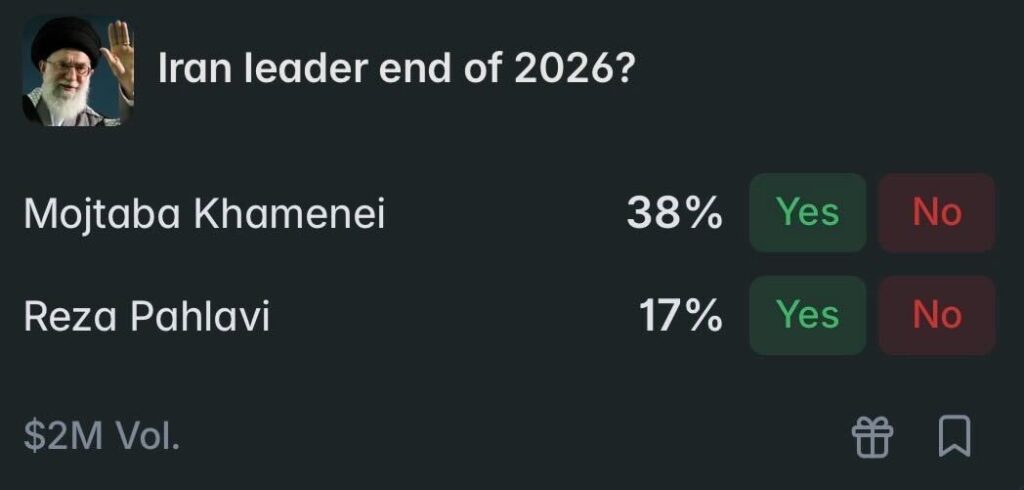
- Iran leader by end of 2026? (the current Ayatollah is on the list)
- Will the Iranian regime fall by (numerous dates available to bet on)?
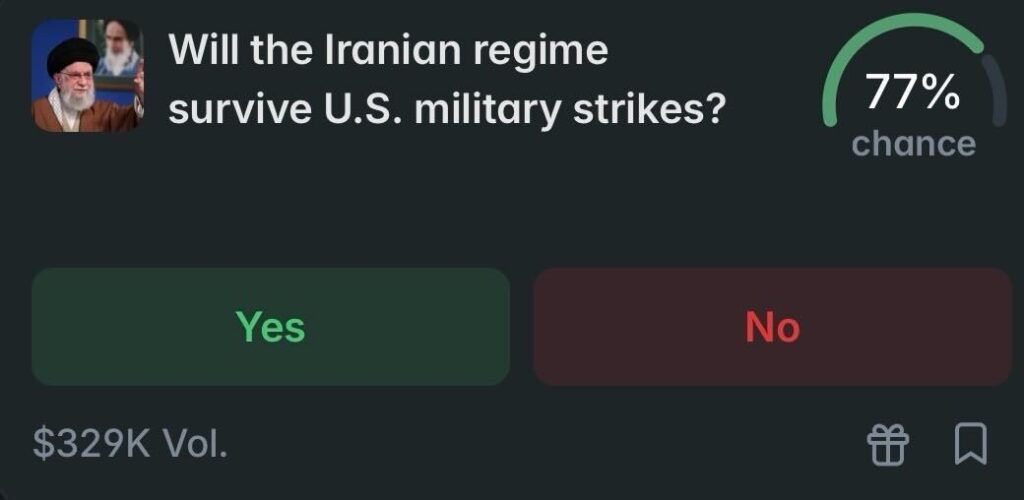
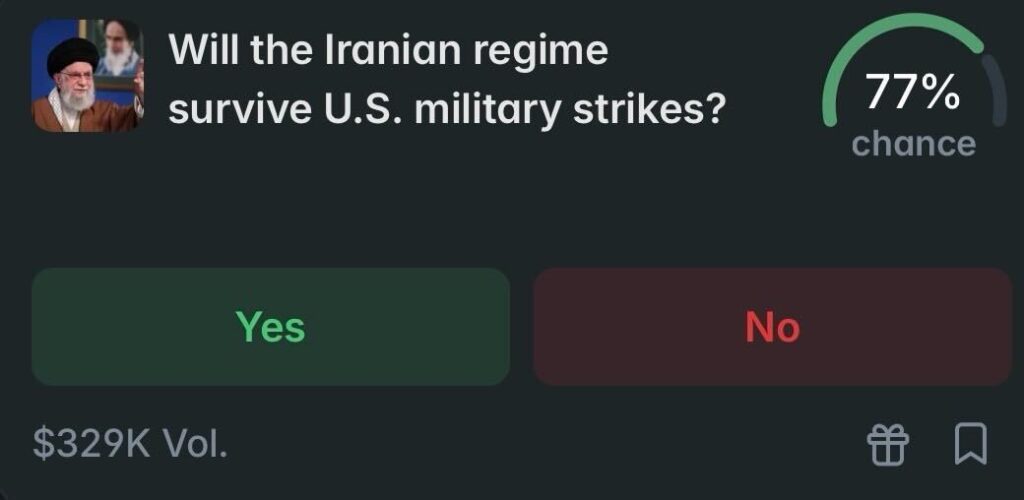
- Will the Iranian regime survive US military strikes?
Read more: Kalshi uses ‘death carve-out’ to avoid paying out on Ali Khamenei ousting
Despite the death of Ayatollah Khamenei being among the most popular prediction markets, Kalshi, as per its terms and conditions, didn’t pay out when he died. Polymarket, however, did, and half a billion dollars changed hands in the process.
Donald Trump and US politicians noticeably absent
Polymarket seems to purposely avoid including US politicians or the current US president in any possible assassination markets, but the same cannot be said for nearly every other major leader in the world.
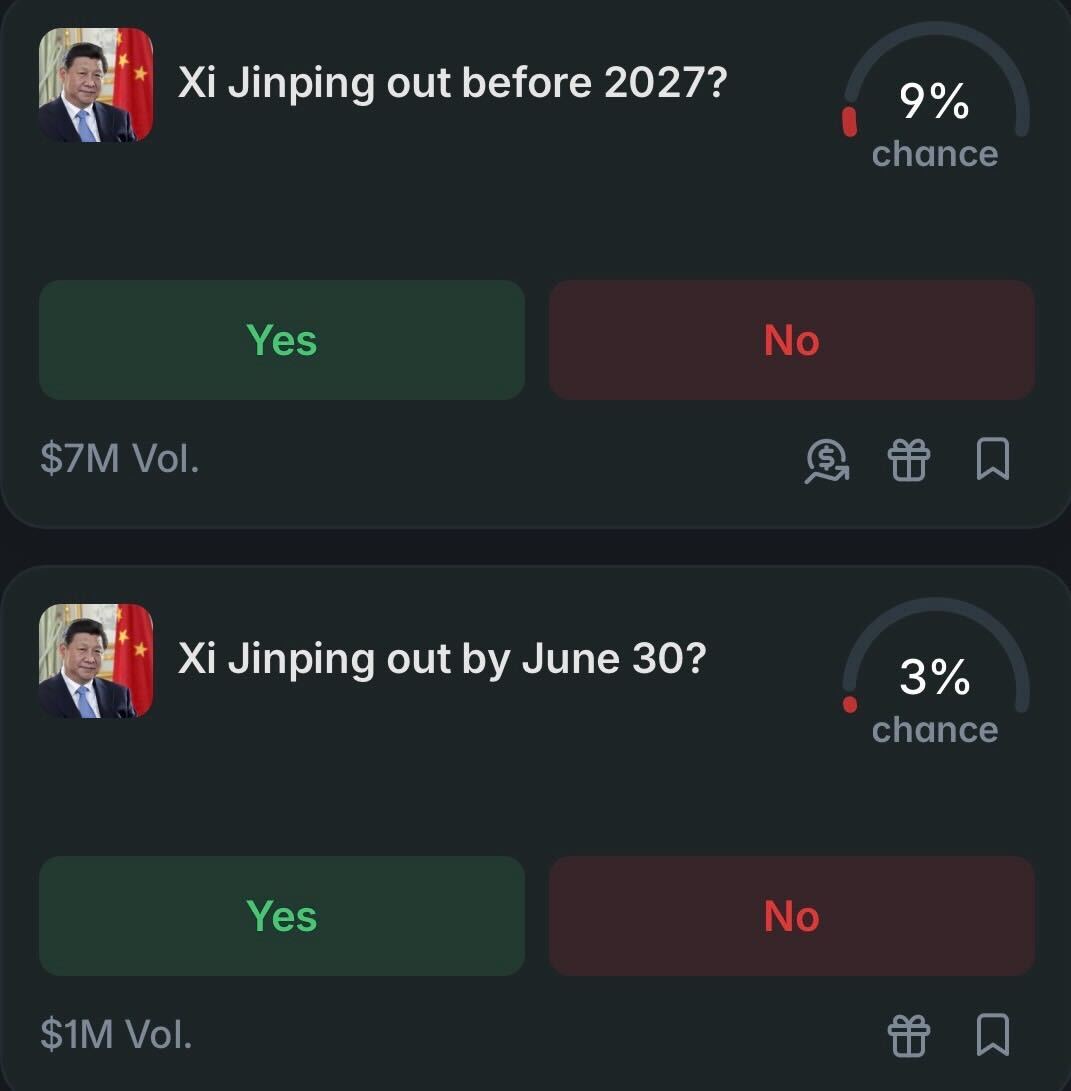
For Xi Jinping the platform hosts markets including “China coup attempt before 2027?” and “Xi Jinping out before 2027?”
For Putin, a market is available that asks “Putin out as president of Russia by 2026?” and even more markets are available that ask similar questions about Zelenskyy.
Nothing like these assassination markets exist for Donald Trump, who is older and less popular domestically than Xi, Putin, or Zelenskyy.
While Polymarket could previously have claimed that these markets are only related to these individuals’ political oustings, they can’t any more after paying out on Khamenei’s death.
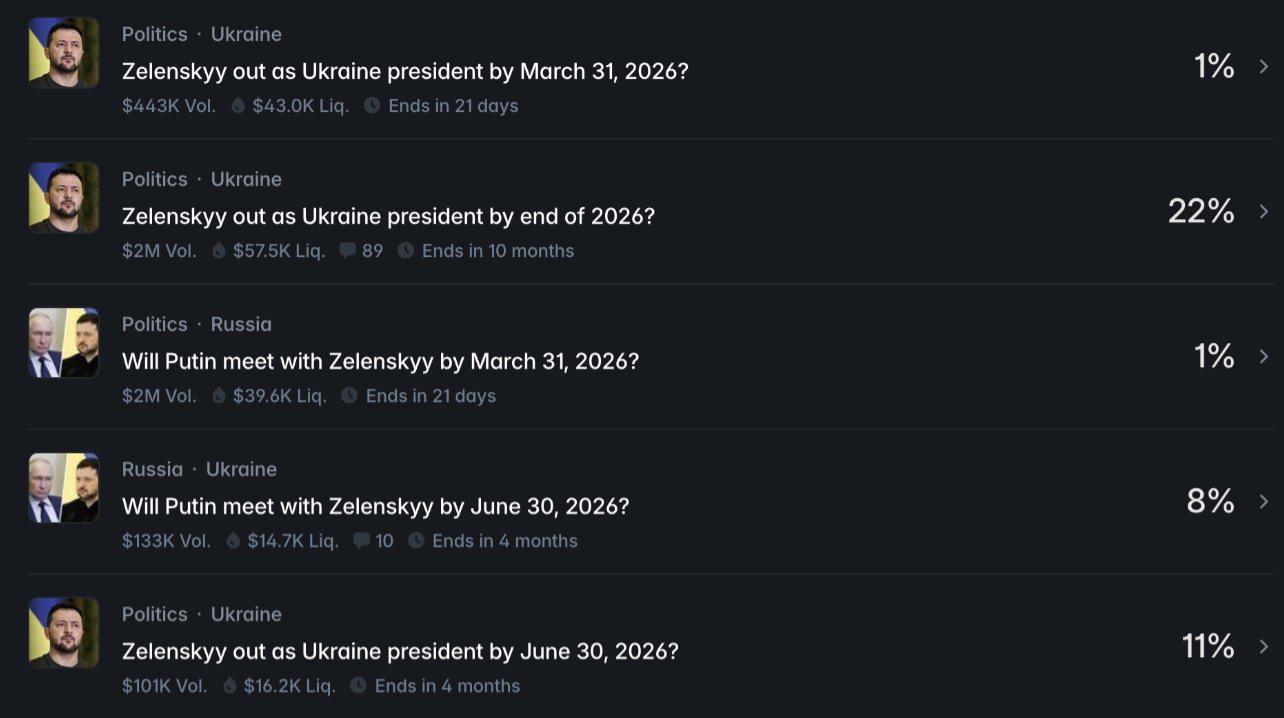
Read more: Polymarket ends trading loophole for bitcoin quants
Why won’t Polymarket list similar markets for Trump?
Though probably obvious to most people, the fact that Polymarket offers no assassination markets on Trump or US politicians is likely nothing to do with moral or ethical concerns.
Rather, it’s almost certainly down to the fact that Polymarket is based in the US, that its founder, Shayne Coplan, is a US citizen, and that Donald Trump Jr. is an advisor to and investor in the company.
Polymarket simply doesn’t want to ruffle any feathers or bite the hand that feeds it.
In that same vein, the Biden administration had effectively stopped Polymarket from advertising to or onboarding US citizens. These hinderances to the platform’s growth came to end in 2025 thanks to the Trump administration dropping multiple probes into its practices, which could have led to lawsuits and possible criminal prosecutions.
Instead, Polymarket now finds itself at the forefront of a world where leaders of countries have public hits put on them via vague market questions that leave murder open as an interpretation and solution.
Read more: Are Polymarket and Kalshi decentralized?
Can Polymarket be stopped?
Whether or not Polymarket can continue to functionally operate as an assassination market platform remains to be seen.
While it’s been stopped from operating in specific countries and regions via regulatory actions and lawsuits, such as Ontario, Singapore, Thailand, and Belgium, as long as the US fails to bring criminal prosecutions against the executives offering to host markets for murders, there’s little that can be done.
For the record, platforms like Polymarket deny they list assassination markets, though, as detailed previously, many markets can easily be linked to the deaths of public figures.
Protos reached out to Polymarket with questions about its assassination markets but we’ve yet to receive a response.
So, in the meantime, whose death are we betting on today and what’s the liquidity look like?
Got a tip? Send us an email securely via Protos Leaks. For more informed news and investigations, follow us on X, Bluesky, and Google News, or subscribe to our YouTube channel.
Crypto World
Jito Foundation acquires and revives SolanaFloor following shutdown over $27 million exploit


The Jito Foundation announced its acquisition of SolanaFloor, a data platform and news site focused on the Solana blockchain, and plans to relaunch the publication after its recent shutdown.
SolanaFloor ceased operations last month after an $27 million exploit involving its parent organization, Step Finance. The team considered external financing and acquisition but was unable to continue operating the platform.
Jito stepped in to bring the site back online but did not reveal the acquisition value. The foundation said SolanaFloor will resume publishing immediately while maintaining editorial independence. The newsroom will continue covering network activity, market movements and technical development across the Solana ecosystem.
“When SolanaFloor went dark, the ecosystem lost something difficult to replace,” said Brian Smith, president of Jito Foundation. He described the acquisition as a commitment to supporting information infrastructure that enables market participants to understand onchain developments.
The relaunch comes as the Solana network remains resilient. Spot exchange-traded funds tied to the token now hold nearly $1 billion in assets, while total value locked on the network’s DeFi ecosystem is at $6.7 billion.
Jito itself plays a role in Solana’s infrastructure. The project develops software used by validators to manage transaction ordering and capture maximum extractable value, or MEV, a form of additional revenue that can arise during block production.
The network also runs a liquid staking system that allows users to deposit SOL and receive a token called JitoSOL that remains usable across decentralized finance applications while still earning staking rewards.
Under the new ownership, SolanaFloor’s editorial team will retain control over story selection and coverage priorities. Jito stated that details about the platform’s team, partnerships, and commercial offerings will be provided as the relaunch progresses.

Hyperliquid’s (CRYPTO: HYPE) token has emerged as a flashpoint for traders watching how decentralized derivatives platforms can redraw liquidity away from traditional venues. In a post published on Monday on Cryptohayes Substack, BitMEX co-founder Arthur Hayes laid out a bull case in which the project could reach as high as $150 by August, contingent on a sustained rotation of derivatives volume from centralized exchanges to crypto-native venues and a broader expansion of Hyperliquid’s product lineup. The core premise rests on a rapid lift in the platform’s 30-day annualized revenue run rate—from about $843 million in March to $1.40 billion by August—fueled in part by the company reinvesting a large share of its earnings into HYPE token buybacks. This framework sits at the intersection of macro asset demand and crypto-native execution, with HIP-3 mechanics and new listings shaping the potential trajectory.
Key takeaways
- The CEX-to-DEX rotation is central to the bull case: Hyperliquid has already absorbed roughly 6% of centralized-exchange derivatives volume as of March, and Hayes estimates a further gain of about 3.96 percentage points if growth continues.
- Revenue momentum matters: the target rise from $843 million in March to $1.40 billion by August is the lynchpin for the projected upside toward $150 per HYPE.
- Tokenomics as a price driver: about 97% of Hyperliquid’s revenue is used to repurchase HYPE on the open market, creating a feedback loop where rising activity supports the token’s price strength.
- HIP-3 expands the product map: the mechanism enables permissionless perpetual markets by staking HYPE, with new listings tied to oil, gold, silver, and major US indices gaining traction and contributing to revenue growth (nearly 10% of total revenue).
- Oil and macro assets as catalysts: oil-linked perpetuals have become top-traded pairs, indicating traders are diversifying beyond crypto into macro assets via the platform.
Tickers mentioned: $HYPE, $ETH
Sentiment: Bullish
Price impact: Positive. The thesis hinges on sustained liquidity growth and ongoing macro-asset demand, which could lift HYPE if the revenue-and-volume trajectory proves durable.
Trading idea (Not Financial Advice): Hold. The scenario depends on continued platform expansion and macro liquidity, which are not guaranteed, but the structure suggests potential upside if momentum persists.
Market context: The analysis sits within a broader pattern of crypto-native venues absorbing traditional-asset trading activity, as liquidity seeks alternative venues amid macro volatility and evolving regulatory considerations affecting derivatives and tokenomics.
Why it matters
Hyperliquid’s bull case rests on a deliberate strategy: move more derivatives activity away from centralized exchanges to a DEX-like platform, and reinvest most revenue into the native token to reinforce upside incentives. If the platform sustains its growth trajectory, the implications extend beyond a single token. It would signal a shifting landscape where specialized crypto-native marketplaces become primary venues for macro-trading strategies—expanding liquidity pools, attracting institutional-like flows, and intensifying price discovery for digital assets linked to traditional markets. The emphasis on HIP-3, which enables permissionless perpetual markets by staking HYPE, could diversify the platform’s revenue streams and reduce reliance on pure crypto volatility, aligning more with real-world assets such as oil and precious metals.
The oil-and-commodity angle underscores a broader narrative: as geopolitical tensions affect traditional markets, traders increasingly view crypto-native venues as hedges or proxies for macro exposures. In Hyperliquid’s case, the CL-USDC perpetual pair has spiked to the top of the platform’s volume rankings, signaling a meaningful tilt toward macro-asset liquidity within a crypto framework. This shift could alter correlation dynamics across digital and traditional markets, inviting investors to reevaluate risk budgets and correlation assumptions. Yet the track record of outsized calls by Hayes—some of which did not materialize—serves as a sober reminder that macro-driven theses can unravel quickly if liquidity conditions relax or if platform execution stalls.
The takeaway for users and builders is quantitative rather than rhetorical: a successful CEX-to-DEX migration and stronger macro-asset liquidity on a platform like Hyperliquid could redefine the risk-reward calculus for derivatives activity in crypto. On the other hand, token unlocks and shifts in market sentiment remain meaningful headwinds that investors must monitor alongside regulatory developments and macro policy shifts. The evolving HIP-3 ecosystem will be a critical barometer of whether Hyperliquid can translate trading activity into durable revenue growth and, ultimately, into sustained token demand.
What to watch next
- Track whether the 30-day annualized revenue run rate reaches the $1.40 billion target by August, and assess how any deviations affect HYPE’s price trajectory.
- Monitor HIP-3 expansions and new listings tied to macro assets like oil, gold, silver, and major US indices, plus their contribution to quarterly revenue numbers.
- Watch liquidity metrics on CL-USDC and ETH-USDC to gauge macro-asset demand on Hyperliquid and any shifts in trading preferences between crypto and traditional markets.
- Observe HYPE’s price action around the neckline near $35.50 and the potential breakout toward $50, with attention to how the 50-day moving average interacts with price development.
- Check for further commentary from Hayes or Hyperliquid about product expansion, tokenomics changes, or new risk-management features that could influence user adoption and liquidity.
Sources & verification
- Hayes, Arthur. Post on Cryptohayes Substack outlining a fivefold potential move for HYPE and the CEX-to-DEX rotation. https://cryptohayes.substack.com/p/hype-man
- Hyperliquid price index overview and discussion of HYPE’s price dynamics. https://cointelegraph.com/hyperliquid-price-index
- HIP-3 revenue impact and market activity data, including commodity listings. https://cointelegraph.com/news/hyperliquid-hip-3-open-interest-hits-793m-on-commodities-surge
- Oil-linked trading volume context and related macro considerations. https://cointelegraph.com/news/oil-pulls-back-g7-emergency-reserve-hyperliquid-volume
- Maelstrom’s analysis on HIP-3 revenue contributions and token dynamics. https://cointelegraph.com/news/maelstrom-warns-hype-token-pressure-11-9b-unlocks
Market reaction and key details
Hyperliquid’s bull thesis anchors on shifting derivatives liquidity and a disciplined reinvestment approach. Hayes argues that if the platform can sustain the migration of derivatives volume from centralized exchanges and broaden its product suite, HYPE could traverse a multifold path—from roughly $30 toward targets near $150 by August. The revenue math is explicit: a move from $843 million in March to $1.40 billion in the 30-day window would imply a meaningful acceleration in platform activity, which in turn would support continued token-buyback pressure in the open market. Importantly, Hyperliquid directs the majority of its earnings back into HYPE; about 97% of revenue is used to purchase more of the token. This design creates a price-supporting dynamic that could amplify gains if demand remains resilient and trading volumes hold steady or rise.
The HIP-3 mechanism adds another layer. By staking HYPE, users can launch perpetual markets permissionlessly, and the project has already seen interest in oil, gold, silver, and major US indices. The latest data suggests HIP-3 accounts for roughly 10% of Hyperliquid’s revenue, with proponents expecting revenue growth to accelerate as onboarding of macro assets intensifies. If the macro environment remains conducive and Hyperliquid continues to add tokens and assets to its catalog, the combination of higher volumes and ongoing token buybacks could support a sustained move higher in HYPE. However, the path is not guaranteed; token unlocks from previous periods have historically weighed on price, and investors should factor in the potential for volatility amid shifting liquidity and risk sentiment.
The oil-linked trading—exemplified by CL-USDC—illustrates how macro exposure is translating into crypto-native activity. As the platform reports sustained volumes on commodity pairs, traders appear to be using Hyperliquid as a bridge between traditional markets and crypto risk assets. This trend is reinforced by the growing volume of ETH-USDC pairs, which demonstrates continued appetite for Ethereum-denominated exposure within Hyperliquid’s ecosystem. All told, the story emphasizes a broader trend: the market is increasingly pricing macro dynamics within crypto-native venues as liquidity moves away from conventional order books and toward more specialized, asset-diversified platforms.


U.S. exchange-traded funds tied to Solana (SOL) and XRP (XRP) are attracting investors despite falling crypto prices, though the two products are drawing very different types of buyers.
Solana ETFs are seeing stronger participation from institutional crypto investors, while XRP funds appear to rely more heavily on retail demand, according to a new report from Bloomberg Intelligence analysts James Seyffart and Sharoon Francis.
“Early Solana ETF demand is being driven largely by industry-native capital rather than broader institutional adoption,” the analysts wrote about Solana ETFs.
About 49% of assets in U.S. spot Solana ETFs were identifiable through 13F filings as of Dec. 31, a regulatory disclosure required for large institutional investment managers. Investment advisers accounted for the largest share of reported holdings, with roughly $270 million in exposure. Hedge funds followed with about $186 million.
“The early holder base remains top-heavy and skewed toward crypto-focused investment firms and market makers, suggesting broader institutional participation is still building,” the analysts wrote. The largest known holders include Electric Capital, Goldman Sachs and Elequin Capital.
Solana is a blockchain network designed to support decentralized applications such as trading platforms, lending services and NFT marketplaces. The network aims to process transactions quickly and cheaply, making it a popular platform for crypto trading and decentralized finance.
Some of the initial capital likely reflects investors shifting existing Solana exposure into the ETF structure rather than entirely new buying. Still, the data suggests that does not explain the full picture. Because about half of the ETF assets are disclosed through 13F filings, even assuming those positions represented swapped exposure would leave a significant share of inflows coming from new buyers.
Solana ETFs have attracted $173 million in net inflows so far in 2026, even as the token has fallen sharply. The report notes that cumulative inflows into the funds have reached about $1.45 billion since launch. That is about 2.5% of the amount that spot bitcoin ETFs have amassed, but it is still a relatively strong figure for such young products.
The products debuted during a difficult market environment. Solana has dropped more than 50% since October, when new spot ETFs launched under the Securities Act of 1933.
Some common ETF trading strategies also appear limited. Futures basis yields — often used by hedge funds to run arbitrage trades — have compressed, leaving fewer incentives for those positions. “With basis yields now compressed, hedge funds and market makers have little incentive to enter new positions in spot Solana ETFs,” the analysts wrote.
XRP ETFs present a different ownership pattern.
Only about 16% of XRP ETF assets were identifiable through 13F filings at the end of December, suggesting a smaller institutional footprint. Advisers again led among disclosed holders with about $165 million in exposure, while hedge funds accounted for around $37 million.
The remaining shares are likely held by investors who do not file 13Fs, including retail buyers.
“We believe a large portion are held by retail investors, who aren’t required to file 13Fs,” according to the report.
XRP is the native token used on the XRP Ledger, a blockchain focused on payments and cross-border money transfers. The network is designed to help financial institutions move funds between countries quickly and at a lower cost than traditional banking rails.
Despite that retail tilt, XRP ETFs have gathered significant assets. The funds attracted more than $1.4 billion in the six weeks after launching in November and have largely held those gains into 2026, even with XRP down about 26% this year.
The analysts said the stability in assets despite weaker futures activity suggests demand may reflect direct market views rather than derivatives-driven arbitrage.
“ETF assets have largely held their gains, suggesting demand may become increasingly directional rather than mechanical,” they wrote.
Together, the findings show how newer crypto ETFs are still developing their investor bases.
While bitcoin funds have drawn broad institutional adoption, Solana and XRP products appear to be carving out different paths as the market matures, with Solana attracting more crypto-native institutional capital and XRP drawing a larger share of retail investors.
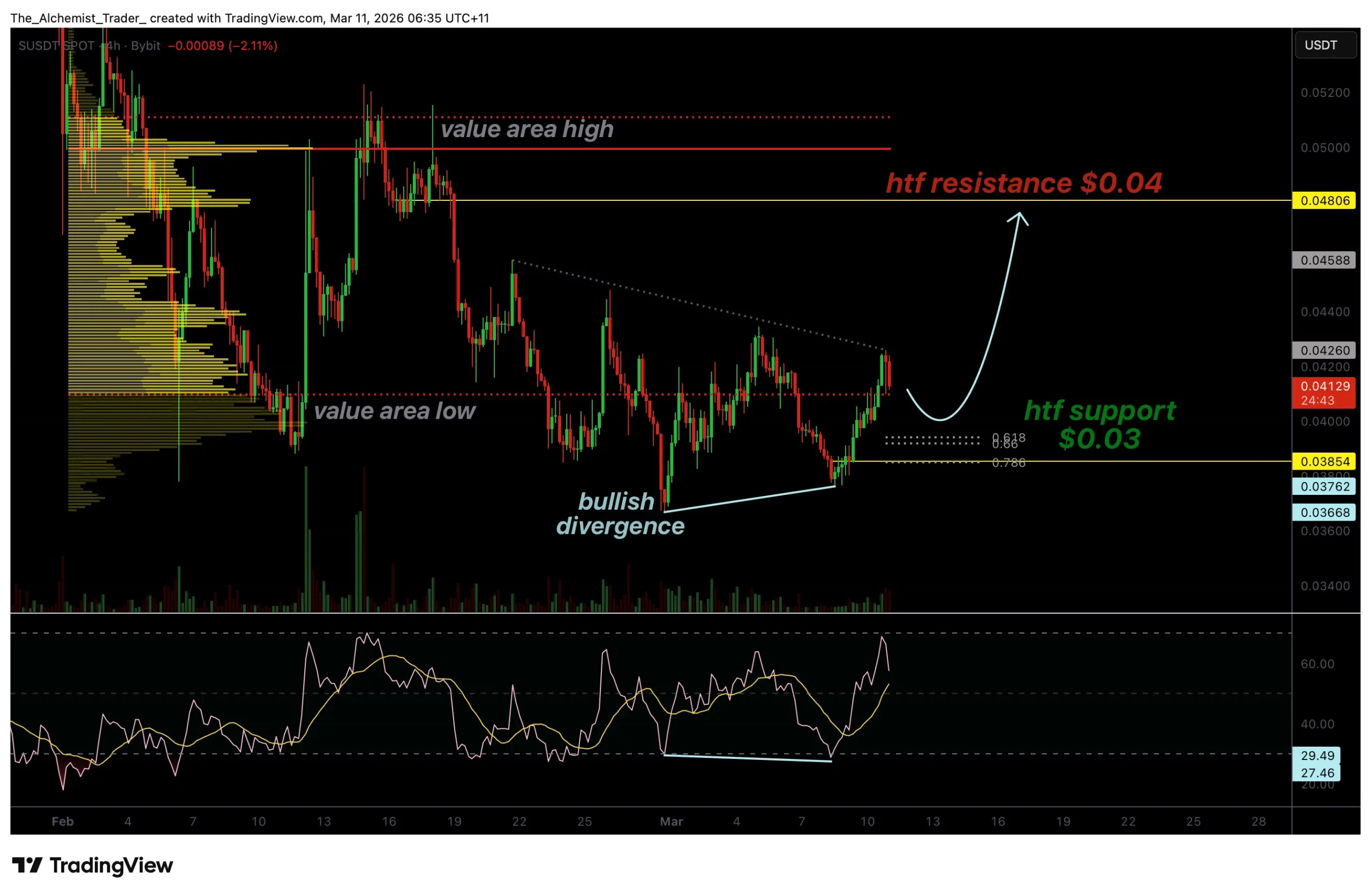
Sonic price forms bullish RSI divergence near the value area low. Holding $0.03 support could trigger a corrective rally toward $0.04 resistance.
Summary
- Bullish Signal: RSI divergence forming near the value area low.
- Key Support: Price must hold $0.03 and the 0.618 Fibonacci level.
- Upside Target: Potential rally toward $0.04 high-timeframe resistance.
Sonic (S) is currently trading at a critical technical level where early signs of a potential trend reversal are beginning to emerge. After an extended period of downside pressure, the token is now showing bullish RSI divergence around the value area low, a level that has historically attracted buying interest.
This divergence suggests that while price has been printing lower lows, the Relative Strength Index (RSI) has started to form higher lows. In technical analysis, this type of momentum shift often signals that bearish pressure may be weakening and that the market could be preparing for a potential corrective rally.
Sonic price key technical points
- Bullish Divergence: RSI forming higher lows while price prints lower lows.
- Key Support: Sonic holding critical support near $0.03.
- Upside Target: Holding support could open a move toward $0.04 resistance.
Sonic’s recent price action highlights a potential shift in momentum as the market attempts to stabilize after a prolonged decline. The most notable signal on the chart is the presence of a bullish RSI divergence, which has developed near the value area low. This technical formation occurs when price continues to move lower while momentum indicators begin trending higher, suggesting that selling pressure may be gradually fading.
Bullish divergences are commonly observed during the late stages of a downtrend. As the market approaches key support levels, sellers begin to lose momentum while buyers start stepping in at discounted prices. This gradual shift in control between sellers and buyers can often lead to a reversal or, at the very least, a corrective bounce.
In Sonic’s case, the $0.03 level has now emerged as a critical support zone. This level represents an area where buyers have begun defending price, preventing further downside expansion in the immediate short term. The market’s ability to hold above this level will likely determine whether the current bullish divergence develops into a sustained rally or simply results in a temporary relief bounce.
Meanwhile, Sonic Labs has launched USSD, a USD-pegged stablecoin backed by tokenized U.S. Treasury assets, adding a new source of stable liquidity to the Sonic blockchain ecosystem.
Another key technical factor supporting the potential for a reversal is the 0.618 Fibonacci retracement, which aligns closely with the current support structure. The 0.618 Fibonacci level is widely recognized in technical analysis as an important retracement level where markets frequently experience reversals or strong reactions.
When Fibonacci levels align with other technical indicators, such as value areas or support zones, they often create strong areas of technical confluence. In this case, the combination of the value area low, Fibonacci support, and bullish RSI divergence strengthens the probability that the market could attempt a corrective move higher.
Meanwhile, Sonic Labs is entering a new phase under CEO Michael Demeter, who has outlined a long-term roadmap aimed at reshaping how the layer-1 blockchain generates and sustains value.
However, confirmation of this reversal will depend heavily on price behavior in the coming sessions. If Sonic continues to hold above the $0.03 support, it would reinforce the bullish divergence and increase the probability of a structural shift in market behavior.
A successful defense of this support could allow price to rotate higher toward the next major technical barrier, which sits near the $0.04 high-timeframe resistance. This level represents the next area where sellers may attempt to regain control of the market.
From a market structure perspective, a rally toward $0.04 would represent the first meaningful higher high following the recent downtrend. Such a move could signal the early stages of a broader recovery phase if buying momentum continues to strengthen.
What to expect in the coming price action
Sonic is currently positioned at a key technical inflection point as bullish RSI divergence develops near the value area low. As long as price holds above the $0.03 support and respects the 0.618 Fibonacci retracement, the probability increases for a corrective rally toward $0.04 resistance.
A break below $0.03, however, would invalidate the bullish setup and suggest that bearish momentum remains dominant.

Societe Generale-FORGE, the crypto arm of the French lender, has completed a multichain expansion of its euro-denominated stablecoin, EUR CoinVertible (EURCV), by deploying it on the Stellar network. The move closes a circuit in a rollout the firm began outlining in 2025 and signals a broader push to normalize euro-backed digital assets across major blockchains. EURCV is designed to be MiCA-compliant and fully collateralized on a one-to-one basis with reserves comprised of bank deposits and high-quality liquid assets. The Stellar deployment aims to unlock new on-chain uses for tokenized assets and digital markets, leveraging Stellar’s fast settlement, low fees, and built-in support for tokenized assets. The euro-stablecoin’s on-chain footprint now spans Ethereum, Solana, and the XRP Ledger, with Stellar added to the roster and multiple deployments planned to expand liquidity and interoperability. DefiLlama places EURCV’s market cap at around $452 million, reflecting steady interest in euro-denominated liquidity tools in a market still dominated by dollar-pegged assets.
Key takeaways
- SG-FORGE’s EURCV is now live on the Stellar network, adding a fourth major chain to a multichain rollout that began with Ethereum and Solana and included the XRP Ledger previously.
- Stellar’s on-chain DEX and low transaction costs are highlighted as features that could improve the accessibility and efficiency of euro-denominated tokenized assets.
- EURCV remains fully backed 1:1 by reserves of bank deposits and high-quality liquid assets, aligning with MiCA requirements in the European Union.
- A January SWIFT pilot demonstrated the exchange and settlement of tokenized bonds using both fiat and digital currencies, underscoring cross-border interoperability for euro-denominated instruments.
- The euro-stablecoin push in Europe continues amid MiCA and licensing debates, while the broader stablecoin market in the United States has gained regulatory clarity after recent legislative developments; US dollar-backed tokens still dominate market share.
Tickers mentioned: $ETH, $SOL, $XRP, $USDT, $USDC, $EURT
Market context: European policymakers are pursuing MiCA compliance as a framework for issuers, with a regulatory emphasis on licensing and oversight that contrasts with the more permissive or evolving regimes in other regions. In the United States, regulatory clarity for stablecoins gained momentum after supporting legislation, while the sector remains heavily weighted toward dollar-backed assets, a dynamic underscored by the ongoing growth of USDT and USDC in global markets.
Why it matters
The expansion of EUR CoinVertible onto Stellar matters because it demonstrates a deliberate effort to diversify the on-ramp and liquidity options for euro-denominated digital assets beyond the dominant Ethereum ecosystem. By placing EURCV on Stellar, SG-FORGE taps into an infrastructure designed for speed and scale, including a built-in decentralized exchange component that can facilitate on-chain trading of tokenized assets without requiring users to leave the network. The move also signals confidence that MiCA-compliant euro stablecoins can operate effectively across multiple rails, potentially reducing fragmentation in European digital asset markets while preserving the ability to settle tokenized instruments in a regulated framework.
From a risk and liquidity perspective, EURCV’s 1:1 backing by bank deposits and high-quality liquid assets anchors its value and aligns with European regulators’ expectations for reserve quality. The euro-stablecoin ecosystem in Europe has lagged behind the US dollar-centered stablecoin crowd, but the EU’s regulatory regime—emphasizing licensing, consumer protections, and capital requirements—aims to create a more stable operating environment for issuers and users. The DefiLlama data cited in the broader narrative shows EURCV as a meaningful, if still niche, component of the euro-denominated segment, contributing to greater diversification within a market that has grown from roughly $260 billion in July 2025 to over $314 billion in more recent readings. In parallel, the U.S. landscape has benefited from regulatory clarity around stablecoins, even as competition remains intense among USDT and USDC, underscoring a global race to build trusted, compliant euro- and dollar-pegged assets on-chain.
Another layer of significance is the cross-border interoperability demonstrated by the SWIFT tokenized-bonds pilot. By bridging fiat and digital currencies in a tokenized-bonds context, the pilot points to a potential path for faster settlement and greater liquidity for euro-denominated debt instruments. While the technical and regulatory hurdles are nontrivial, the episode illustrates how traditional financial infrastructure can converge with blockchain rails to create more efficient capital markets. Taken together, the Stellar deployment, the SWIFT pilot, and MiCA’s evolving requirements underscore a broader shift: euro-denominated stablecoins are moving from proof-of-concept experiments to practical tools for everyday settlement, collateralization, and liquidity provisioning in regulated markets.
The trajectory also highlights a fundamental tension in the crypto ecosystem: regulatory clarity versus market opportunity. European authorities aim to codify safeguards and licensing, while market participants seek speed and utility across diverse networks. EURCV’s emergence on Stellar illustrates how institutions can align with regulatory expectations while exploring value-adding features such as native on-chain trading, faster settlement, and broader access for tokenized assets. The ongoing dialogue between policymakers, banks, and crypto-native issuers will influence how quickly such euro-stablecoins achieve scale, and which networks emerge as the most effective rails for cross-border, on-chain euro settlements.
What to watch next
- Adoption metrics for EURCV on Stellar: transaction volume, on-chain liquidity, and any new issuer partnerships.
- Additional network deployments: any further moves to other blockchains beyond Stellar, and the timeline for potential integrations with major on/off-ramp providers.
- MiCA regulatory developments: licensing decisions and any updates to capital requirements or disclosure standards that could influence future euro-stablecoin issuance.
- Cross-border use cases: uptake in tokenized euro-denominated assets and further SWIFT-like interoperability experiments beyond bonds.
Sources & verification
- Official page: SG-FORGE — Stellar network stablecoin launch details (https://www.sgforge.com/stellar-network-stablecoin/)
- EURCV on Ethereum: historical launch information (https://cointelegraph.com/news/societe-generale-launches-euro-pegged-stablecoin-on-ethereum)
- DefiLlama: EURC stablecoin data and market cap (https://defillama.com/stablecoin/eurc)
- EURCV on XRP Ledger deployment reference (https://cointelegraph.com/news/societe-generale-forge-expands-euro-stablecoin-to-xrp-ledger-in-multi-chain-push)
- MiCA framework and European stablecoin regulation discussion (https://cointelegraph.com/learn/articles/markets-in-crypto-assets-regulation-mica)
Market reaction and key details
Societe Generale-FORGE’s multi-chain approach to EURCV reflects a broader push to de-risk and diversify euro-denominated liquidity in a crypto market that has been historically dominated by U.S. dollar-backed tokens. The Stellar deployment aims to enhance throughput and reduce friction for on-chain settlements and tokenized asset services, aspects that could become important as European issuers seek regulated, interoperable rails for cross-border activity. The ongoing regulatory backdrop—MiCA’s licensing requirements and the EU’s caution around euro-denominated assets—frames the pace and scale of adoption, even as the U.S. market advances new regulatory clarity around stablecoins. With EURCV now live on Stellar, the door opens to additional use cases such as tokenized bonds, on-chain collateralization, and more efficient settlement flows in a regulated European context.
Looking ahead, investors and builders will watch not only the rate of EURCV’s on-chain activity but also how Stellar’s ecosystem, DeFi integrations, and stablecoin usage converge with MiCA’s licensing standards. The cross-chain momentum—moving from Ethereum to Solana, XRP Ledger, and now Stellar—suggests a potential template for other euro-denominated assets seeking regulated, scalable rails. As with all stablecoins, the ultimate test will be resilience under stress: reserve quality, transparency, and the ability to maintain 1:1 parity in diverse market conditions. If EURCV maintains robust backing and gains practical traction on Stellar, it could become a more visible, trusted option for institutions and decentralized markets seeking regulated euro exposure within a crypto-enabled settlement infrastructure.
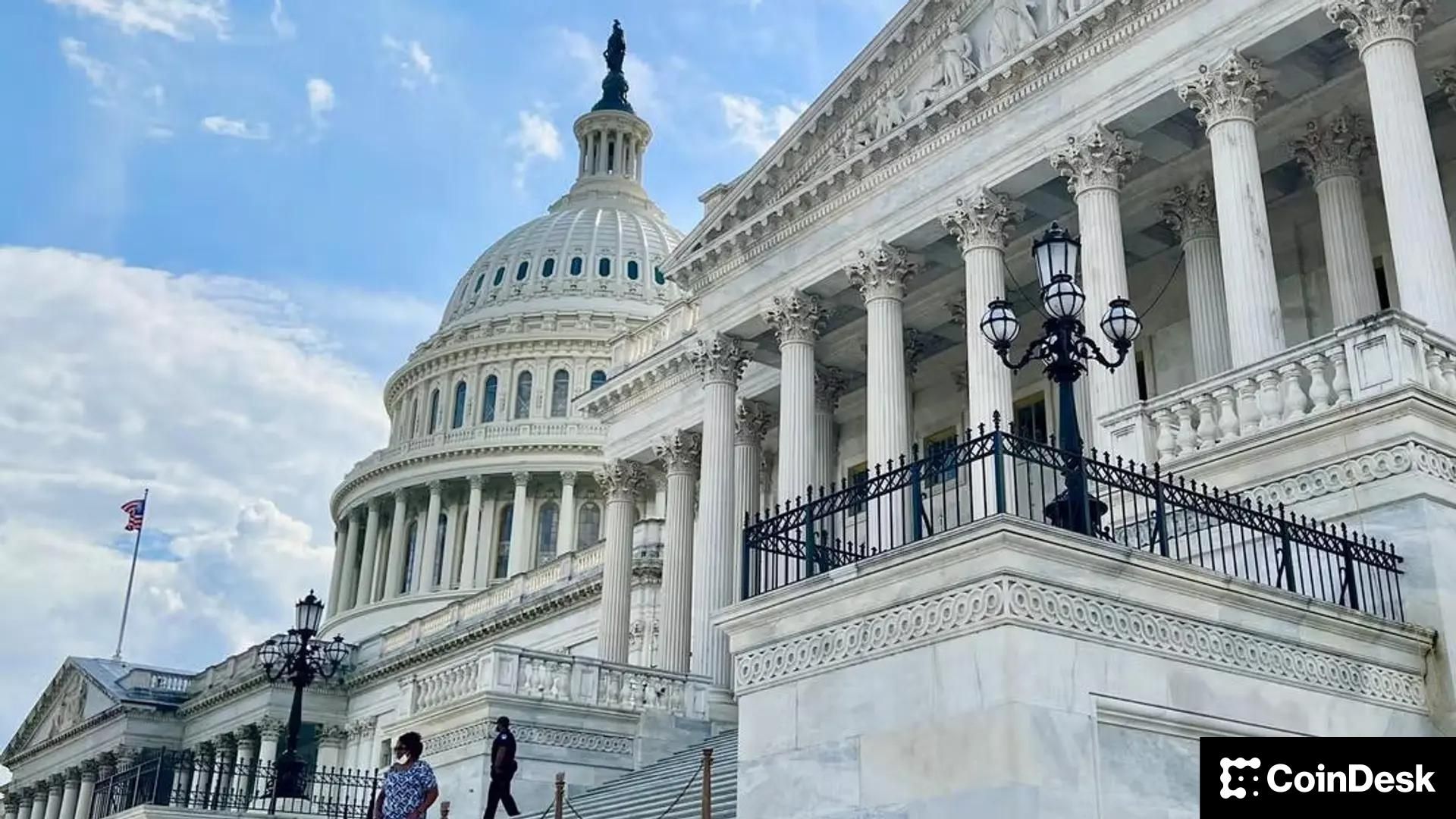
The U.S. banking industry had effectively lobbied to halt the crypto industry’s market structure bill, the Digital Asset Market Clarity Act, over a dispute about the proper role for stablecoin rewards. But lawmakers continue to negotiate a compromise to move that legislation forward.
One of the lawmakers at the center of those talks, Senator Angela Alsobrooks, told an audience at an American Bankers Association summit in Washington on Tuesday, that both sides of the negotiation — bankers trying to limit most stablecoin rewards as a threat to traditional deposits and the crypto industry that argues they’re an important consumer incentive — are going to be “just a little bit unhappy.” The Maryland Democrat has been working with Senator Thom Tillis, a North Carolina Republican, to hash out a way to get a long-delayed Senate Banking Committee hearing on the legislation.
“The compromise that myself and Senator Tillis have been working on is one that we believe will allow us to have the guardrails in place that will help us to prevent — in all the ways we can — the deposit flight that we do not want to see happen, and to allow the innovation to grow at the same time,” Alsobrooks said, referencing the banks’ insistence that rewards on stablecoin holdings are so similar to bank deposits that people will take their money out of the banks.
“We absolutely have to have these protections to prevent the deposit flight, but we’re going to probably have to make some compromises,” the senator said.
So far, the compromise seems to focus on the possibility that some narrower area of stablecoin activity be eligible for customer rewards paid by crypto platforms.
Last year’s stablecoin law, the Guiding and Establishing National Innovation for U.S. Stablecoins (GENIUS) Act, “barred payment stablecoin issuers from paying interest to attract customers,” noted ABA President Rob Nichols. He argued that “unless crypto exchanges and other affiliated companies are bound by the same common-sense restrictions, the result is a clear effort to evade congressional intent.”
Senator Mike Rounds, a South Dakota Republican who — like Alsobrooks and Tillis — is a member of the Senate Banking Committee, told the banks on Tuesday that he’s “not sure” how to properly approach stablecoin rewards, yet. He said that handing out rewards to customers can’t be about how much money is held in an account, but it might be tied to how active the account is.
“We’re trying to reflect that in the discussions,” he said.
The bankers, who were preparing Tuesday to disperse to meetings across Capitol Hill to make their points with lawmakers and staffs, have pushed for a very narrow allowance for rewards. But JPMorgan Chase & Co. CEO Jamie Dimon, the leader of the biggest U.S. institution, suggested in a recent interview that his industry could accept transaction-based rewards — a position that’s been offered by the crypto industry in meetings at the White House.
The U.S. Office of the Comptroller of the Currency recently proposed a rule to adopt much of the GENIUS Act, though its position on stablecoin rewards was seen as murky by the crypto industry. The agency had said that it wouldn’t allow evasions of the yield ban for stablecoin issuers. But industry insiders have expressed comfort that they’ll be able to set up rewards programs that won’t run afoul of the OCC’s proposal, which the digital assets advocates say allows considerable room for rewards programs designed as customer incentives.
Despite the bankers further underlining the dangers of the yield loophole on their business model this week, the legislation could still advance if Alsobrooks, Tillis and others on the Senate Banking Committee are satisfied with new compromise language. The next step would be a markup hearing, like the one delayed earlier this year. If the bill passes that, it would be combined with a version that already cleared the Senate Agriculture Committee.
A final version would then be put before the entire Senate for a vote, which would require a considerable number of Democrats to pass.
That may remain a concern because other debates beyond stablecoin yield have gone unresolved. Senate Democrats have raised concerns about the decentralized finance (DeFi) sector posing vulnerabilities to bad actors, and they’ve also argued that Democrats be appointed to vacant roles at the CFTC and SEC. But possibly the most contentious of their requests is to ban senior government officials from profiting on personal crypto business ties — most pointedly, President Donald Trump.
There are procedural headwinds, too. Senate floor time is always at a premium, and other matters could still get in the way, such as the war in Iran and Trump’s threats that he won’t sign any approved bills until Congress sends him a voter-ID package he can sign into law before the midterm congressional elections.
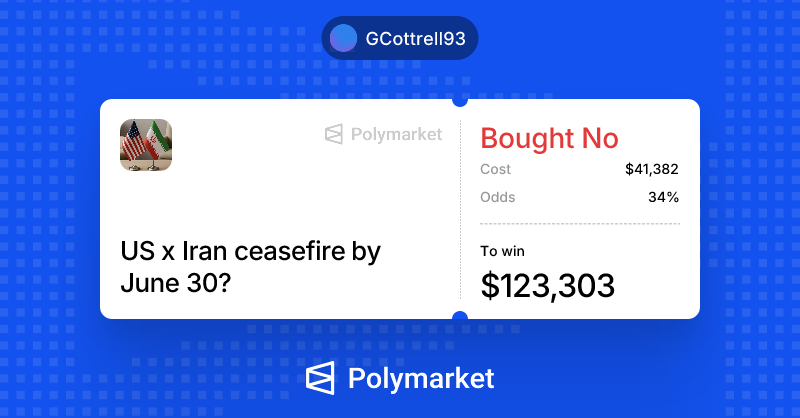
Nigel Farage aide George Cottrell is betting $41,000 that the US war with Iran will last for another four months, despite Reform UK calling for an end to the conflict.
When Israel and the US attacked Iran in February, Farage criticised UK Prime Minister Keir Starmer for not allowing the US access to its military bases.
Reform maintained its position that the US-led war should be backed by the UK before the party u-turned this week.
Indeed, Reform politician Robert Jenrick called for the war to end “as soon as possible” because of its potential negative impact on the UK economy.
Farage added today that the UK should stay out of the war, but only because of perceived shortcomings in the country’s defensive capabilities following a drone attack in Cyprus.
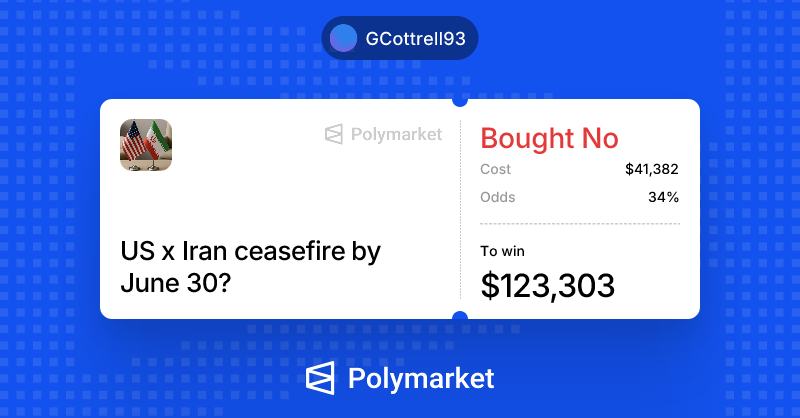
However, despite this change in direction from the party, Cottrell was betting between March 7 and 9 that a ceasefire between the US and Iran wouldn’t happen before June 30, 2026.
Read more: Reform UK insider George Cottrell tied to Trump Polymarket bets worth millions
The Polymarket bet stands to win $123,000 if the US keeps up its war against Iran for another four months. The bet’s market, however, doesn’t seem to agree, and his wager faces a current unrealised loss of -$6,240.
Nigel Farage says Cottrell ‘is like a son to me’
Cottrell, who has reportedly been Farage’s “right-hand man” for years, was convicted of wire fraud in March 2017 after he was caught agreeing to launder drug trafficking proceeds.
The financier lived in Montenegro, where he was accused of illegal political financing and was investigated over a crypto ATM’s usage. An avid gambler, he reportedly lost €20 million ($23 million) in a single poker game while in the country.
However, Cottrell’s recent Polymarket bets, including on Starmer’s departure, US strikes against Iran, and the vote share of New York’s newly elected mayor, Zohran Mamdani, have lost over $800,000.
Read more: Nigel Farage milkshake’d while touring with shady crypto ally
Despite this, his losses pale in comparison to his previous $13.2 million win on Donald Trump’s election in 2024.
Crypto billionaire funded Farage’s Trump lobbying efforts
Cottrell is just one strand in Farage’s web of crypto connections, which now includes the UK’s former chancellor Kwasi Kwarteng and his bitcoin holdings firm, in which Farage just invested £215,000 ($289,000).
One of Reform’s biggest backers is Tether shareholder Christopher Harborne. Last week, he took his donations to Farage’s Reform UK to over £22 million ($29.6 million).
The Guardian has also linked Harborne to a private jet that was used to fly Farage to the Chagos Islands in late February.
Read more: Tether shareholder was Boris Johnson’s advisor in Ukraine, report
The trip was meant to reinforce Reform’s position against the UK government’s deal to transfer sovereignty of the island to Mauritius while cotinuing to lease a military base there for another 99 years.
Farage was flown to the Maldives but failed to reach the Chagos Islands after the UK military turned him away. He then attempted to talk with Trump about the deal at his Mar-a-Lago mansion last week.
However, the two never actually met.
Beyond Harborne’s investments in Tether, he’s also the largest shareholder of military firm QinetQ.
QinetQ’s US arm has secured multiple US Army contracts over the last year. It was awarded part of a $4 billion contract for military surveillance systems, given $41 million to develop counter-drone technology, and contracted to develop new target acquisition systems.
The firm also secured million-pound contracts from the UK under Boris Johnson’s government.
Despite the contracts, earlier this year, Reuters reported that the firm is restructuring its US division due to “operational and profitability challenges stemming from geopolitical uncertainty and shifting procurement cycles.”
Got a tip? Send us an email securely via Protos Leaks. For more informed news and investigations, follow us on X, Bluesky, and Google News, or subscribe to our YouTube channel.

Tax-efficient Diversification Techniques | Fox Business

Kraken’s xStocks starts points program, hinting at possible ecosystem token

2026 Players Championship picks, odds: Expert predictions, favorites to win


-
Business4 days ago
Form 8K Entergy Mississippi LLC For: 6 March
-

 Fashion4 days ago
Weekend Open Thread: Ann Taylor
-

 News Videos1 day ago
10th Algebra | Financial Planning | Question Bank Solution | Board Exam 2026
-

 Crypto World1 day ago
Paradigm, a16z, Winklevoss Capital, Balaji Srinivasan among investors in ZODL
-

 Tech6 days ago
Bitwarden adds support for passkey login on Windows 11
-
 Sports5 days ago
499 runs and 34 sixes later, India beat England to enter T20 World Cup final | Cricket News
-

 Sports3 days ago
Three share 2-shot lead entering final round in Hong Kong
-

 Sports3 days ago
Braveheart Lakshya downs Lai in epic battle to enter All England Open final | Other Sports News
-

 Business7 days ago
Guthrie Disappearance Enters Fifth Week as Family Visits Memorial
-

 Politics4 days ago
Top Mamdani aide takes progressive project to the UK
-

 Business4 hours ago
ExxonMobil seeks to move corporate registration from New Jersey to Texas
-

 NewsBeat5 days ago
Piccadilly Circus just unveiled ‘London’s newest tourist attraction’ and it only costs 80p to enter
-

 Business2 days ago
Search for Nancy Guthrie Enters 37th Day as FBI Probes Wi-Fi Jammer Theory
-

 Entertainment4 days ago
Hailey Bieber Poses For Sexy Selfies In New Luscious Lip Thirst Traps
-
 NewsBeat20 hours ago
Pagazzi Lighting enters administration as 70 jobs lost and 11 stores close across Scotland
-

 Tech1 day ago
Despite challenges, Ireland sixth in EU for board gender diversity
-

 Crypto World6 days ago
New Crypto Mutuum Finance (MUTM) Reports V1 Protocol Progress as Roadmap Enters Phase 3
-

 Tech6 days ago
ACIP To Discuss COVID ‘Vaccine Injuries’ Next Month, Despite That Not Being In Its Purview
-
Entertainment6 days ago
Harry Styles Has ‘Struggled’ to Discuss Liam Payne’s Death
-

 Business1 day ago
Search Enters 39th Day with FBI Tip Line Developments and No Major Breakthroughs