Connect with us

Business

New sweetener brand launches from Tate & Lyle

Published

on

New sweetener brand launches from Tate & Lyle
Continue Reading
Click to comment

Leave a Reply

Your email address will not be published. Required fields are marked *

Business

Realbotix Corp. (XBOTF) Q1 2026 Earnings Call Transcript

Published

on

OneWater Marine Inc. (ONEW) Q1 2026 Earnings Call Transcript

Jennifer Karkula
Head of Communications

Hello, and welcome to the Realbotix Financial Update Call. My name is Jennifer, and today, we are joined by CEO, Andrew Kiguel; and CFO, Scott Meyers. [Operator Instructions] I will now turn the call over to Andrew.

Andrew Kiguel
Co-Founder, CEO & Director

Advertisement

Thanks, Jennifer. Welcome, everybody, to our call, I guess, for year-end and Q1. As you will know, I don’t do sort of the traditional thing, but I sort of want to just chat about the business and some various things. I want to talk first about some of the areas in the business, our business that need work and then talk somewhat about the positives and then outlook. So not in any particular order, but our reporting and finance structure certainly proved — last year certainly proved to be a weakness for the company.

Our previous CFO was a contractor, not an employee and in retrospect, not well equipped to handle the business as it was growing and we were pivoting out of crypto. He also had a bunch of personal issues to deal with, and this had a negative impact in a few ways, primarily in us not having the adequate controls to ensure a smooth and efficient audit within the reporting timeline, which is why we need to request those extensions. What we’ve done since then, we really had to start our audit on the back foot, just being late. You saw from the numbers, there were no issues.

There’s no money missing or anything like that. It was just really a function of starting late with our new CFO and a new

Advertisement
Continue Reading

Business

Figure Technology Solutions, Inc. (FIGR) Presents at 2026 Cantor Global Technology & Industrial Growth Conference Transcript

Published

on

OneWater Marine Inc. (ONEW) Q1 2026 Earnings Call Transcript

Figure Technology Solutions, Inc. (FIGR) 2026 Cantor Global Technology & Industrial Growth Conference March 10, 2026 10:40 AM EDT

Company Participants

David Stevens – Chief Capital Officer

Presentation

Advertisement

Unknown Analyst

Probably time to kick this off to keep this on schedule. What an honor it is today to welcome Todd Stevens, Chief Capital Officer of Figure. Todd, thank you so much for joining us today.

David Stevens
Chief Capital Officer

Advertisement

Thanks for having me.

Question-and-Answer Session

Advertisement

Unknown Analyst

It is, again, a great pleasure. Maybe it’s a great place to start with having you kind of level set for everybody about Figure. Maybe just give us a brief overview of the business and how it’s sort of evolved over the years?

David Stevens
Chief Capital Officer

Advertisement

Yes. So Figure, we’re a blockchain marketplace. We tend to play in the lending space, but we’re also playing in the equity space. We think blockchain — like Larry Fink says, I mean, we think every asset will trade on a blockchain or at some point in the future, and we’re building the marketplace for that. And so we’re really excited about what we’re doing, and we’re excited about the growth. And why would somebody want to use a blockchain as a settlement rail? It’s just a better settlement rail for a number of reasons.

Transactionally, we do a lot of securitizations in the market. And given our automation and how we anchor the blockchain, we have a much lower percentage of third-party review that we have to do. So there’s a ton of transactional efficiencies. There’s a ton of liquidity efficiencies. So think about like how the world is changing in the sense that like old school kind of bond people, I mean, when you invested in something, you used to get like a kind of a service or remit report

Advertisement
Continue Reading

Business

Geron Corporation (GERN) Presents at Barclays 28th Annual Global Healthcare Conference Transcript

Published

on

OneWater Marine Inc. (ONEW) Q1 2026 Earnings Call Transcript

Nicole Germino

All right. Good morning, everyone. I’m Nicole Germino, one of the biopharma investment bankers here at Barclays. And today, we are joined by Harout Semerjian, President and CEO; and Joseph Eid, Executive Vice President of Research and Development and CMO of Geron.

Thank you both so much for being here today. So Harout, to kick us off, you have a robust experience in big pharma and biotech. What are the reasons that attracted you to Geron? Since joining the company in August of last year, what has the company done in 2026 to align Geron for success?

Advertisement

Harout Semerjian
CEO, President & Director

Yes. Thank you very much, Nicole, and thanks for Barclays for — this is a very nice invitation and the opportunity to continue to share our Geron story.

Yes, you’re right. I’ve been in pharma for more than 30 years between pharma, biotech and particularly in hematology/oncology for 20-plus years. And really what attracted me to Geron and what keeps me motivated 6 months in is a drug that works. First of all, imetelstat, a new option for lower-risk MDS patients and really one where we can actually make a difference for even more patients with a more robust and refined commercialization plan.

And that’s what we’ve been doing over the last few months and really making sure that we are reaching more and more patients. In 2025, we did announce that overall in the year, we have in our first full commercial year, sold $184 million of sales, which is a very good starting point. But more

Advertisement
Continue Reading

Business

2026 Launch Expected Amid Premium Pricing

Published

on

iPhone 17e

After more than a decade of speculation, Apple’s first foldable iPhone appears poised for a debut later this year, with supply-chain reports, analyst forecasts and recent leaks converging on a fall 2026 release. The device, widely referred to as the iPhone Fold, is expected to join the iPhone 18 lineup alongside the Pro and Pro Max models, marking Apple’s bold entry into the foldable smartphone market long dominated by Samsung, Google and Huawei.

foldable iPhone
foldable iPhone

Industry observers view the move as a potential game-changer, with Apple aiming to address persistent pain points in foldables—such as visible creases, durability concerns and battery drain—while commanding a premium price tag. Analysts project the iPhone Fold could drive significant upgrades across Apple’s ecosystem and boost overall iPhone sales by double-digit percentages in 2026.

Here are the key details emerging from the latest reports as the company finalizes its ambitious new form factor.

1. **Confirmed Development and Timeline**
Multiple credible sources, including Bloomberg’s Mark Gurman and analyst Ming-Chi Kuo, have affirmed Apple’s active work on a book-style foldable iPhone. Mass production is slated for the second half of 2026, with Foxconn and other partners ramping up component stockpiling. Gurman has indicated a fall launch window, likely September, aligning with Apple’s traditional iPhone event cycle. While some earlier concerns raised the possibility of a 2027 delay due to hinge design decisions, recent updates suggest the project remains on track for 2026.

2. **Design: Book-Style with Minimal Crease**
The iPhone Fold will feature a book-style fold, opening vertically to reveal a large inner display while closing to a compact form. Rumors point to an approximately 7.8-inch inner OLED screen and a 5.5-inch outer display. Kuo has emphasized Apple’s focus on thinness, targeting around 4.5-4.8mm unfolded and 9-9.5mm folded—thinner than most current foldables. A key differentiator is the near-crease-free experience, achieved through advanced hinge technology using liquid metal and stress-distributing components. Leaks from China claim the crease depth is under 0.15mm with a fold angle below 2.5 degrees, potentially making it the closest to truly seamless yet seen in the category.

Advertisement

3. **Display Technology and Durability**
Apple is reportedly testing protective films, including clear polyimide (CPI) alongside traditional PET, to enhance scratch resistance and longevity. The inner screen is expected to use cutting-edge coating and engineering to minimize visible folding wear over time. Suppliers like Samsung Display are believed to be providing the panels, with production of foldable-specific components already underway. This addresses one of the biggest criticisms of existing foldables: fragile, easily damaged screens.

4. **Battery Life Breakthrough**
One of the most exciting rumors centers on battery capacity. Leaks suggest the iPhone Fold could feature Apple’s largest-ever battery, exceeding 5,500 mAh—surpassing even the iPhone 17 Pro Max’s 5,088 mAh. This would counter the typical foldable drawback of split or constrained batteries that limit endurance. By prioritizing a single large cell and optimizing power management for dual-screen use, Apple aims to deliver all-day performance comparable to or better than its slab iPhones.

5. **Camera System and Biometrics**
The device is rumored to include four cameras: dual rear lenses, an inner-facing camera for video calls and selfies, and a front-facing one on the cover display. Notably, it will ditch Face ID in favor of Touch ID integrated into the power button—a shift seen in recent iPads to save space in the slim chassis. This decision frees up internal room while maintaining secure authentication.

6. **Connectivity and Modem**
Apple’s custom C2 modem, supporting advanced cellular speeds, is expected to power the foldable. The device will rely exclusively on eSIM, eliminating the physical SIM slot—a first for iPhones. This aligns with Apple’s push toward fully digital connectivity and could streamline the design further.

Advertisement

7. **Materials and Build**
The frame will combine titanium and aluminum for durability and lightness, expanding Apple’s use of premium metals seen in recent Pro models. The hinge is a focal point, engineered for reliability and smoothness without compromising the thin profile.

8. **Pricing and Market Positioning**
Expectations place the iPhone Fold in ultra-premium territory, with estimates ranging from $2,000 to $2,500—potentially the most expensive smartphone Apple has ever sold. This reflects the advanced materials, custom components and R&D investment. Analysts like Kuo anticipate initial shipments of 8-10 million units, signaling confidence in demand despite the high cost.

9. **Impact on 2026 iPhone Lineup**
The foldable’s priority may reshape Apple’s annual release strategy. Reports indicate the standard iPhone 18 could be delayed to early 2027, with only Pro models and the Fold launching in fall 2026. This shift underscores the device’s importance as a flagship innovation. Apple reportedly forecasts a 10% sales increase across the iPhone lineup, driven by upgrade enthusiasm for the new form factor.

10. **Future Outlook and Competition**
The iPhone Fold arrives years after competitors established the category, but Apple’s entry could legitimize foldables for mainstream users. A follow-up clamshell-style model (potentially an iPhone Flip) is already in discussion for later years. Success here could accelerate Apple’s foldable ambitions, including rumored foldable iPads or MacBooks. For now, anticipation builds as prototypes move toward production, with leaks expected to intensify in the coming months.

Advertisement

As March 2026 progresses, the foldable iPhone remains one of the most anticipated Apple products in years. While no official confirmation has come from Cupertino, the mounting evidence points to a transformative device that could redefine premium smartphones—if Apple delivers on its promises of durability, battery life and seamless design.

Continue Reading

Business

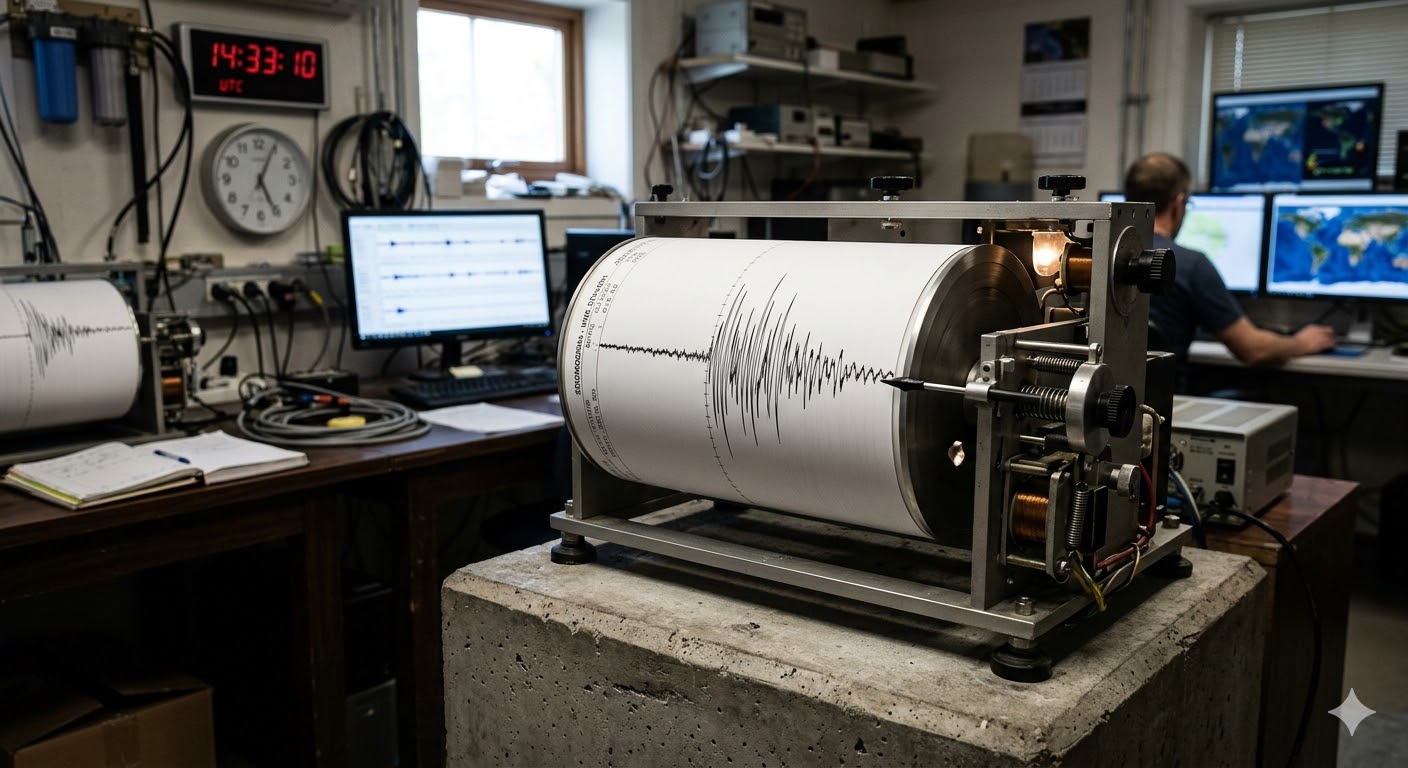
Northwest Louisiana Rattled by Four Earthquakes in 10 Minutes

Published

on

seismograph

A burst of seismic activity shook northwest Louisiana early Monday when four earthquakes struck within a 10-minute window near the small village of Edgefield, intensifying concerns in a region that has seen unusual tremors in recent weeks.

seismograph
seismograph

The United States Geological Survey confirmed the sequence occurred between 4:33 a.m. and 4:41 a.m. CT on March 9, with magnitudes ranging from 3.1 to 4.0 (initially reported as up to 4.4 for the strongest after review). All quakes were shallow, at depths around 3 miles, and clustered tightly within a few miles of each other northwest and northeast of Edgefield in Red River Parish.

The events follow a magnitude 4.9 earthquake on March 5 near Coushatta — about 10 miles southeast — that ranks as the strongest inland quake in Louisiana’s recorded history and the second-largest overall in the state behind a 5.3 offshore event in 2006. That March 5 tremor was felt across the ArkLaTex region, including Shreveport, parts of Texas and Arkansas, waking residents and rattling homes for up to 10 seconds.

USGS geophysicists classify the March 9 cluster as aftershocks linked to the larger March 5 mainshock. William Barnhart, a USGS seismologist, told local media that additional aftershocks remain possible as the fault system adjusts. Monitoring teams have deployed extra seismic instruments in Red River Parish to better track the sequence and gather data on subsurface structures.

Residents in Edgefield, Coushatta and surrounding rural areas reported feeling the shaking vividly. “It was like a big truck drove by, but then it kept going and another one hit,” said one Edgefield homeowner interviewed by KSLA News. No immediate reports of major damage or injuries emerged from the March 9 quakes, though minor items fell from shelves and some residents described brief power flickers. The area, largely agricultural with scattered homes, experienced light to moderate intensity shaking according to USGS “Did You Feel It?” citizen reports.

Advertisement

The four confirmed events unfolded as follows, per USGS data:

– Magnitude 3.1 at 4:33 a.m., about 2.5 miles northwest of Edgefield, depth 3.1 miles.
– Magnitude 3.1 at 4:34 a.m., less than 2 miles north-northeast of Edgefield, similar depth.
– Magnitude 3.9 at 4:40 a.m., roughly 3 miles northeast of Edgefield.
– Magnitude 4.0 (upgraded from initial 4.4 estimate in some reports) at 4:41 a.m., 4.9 miles northwest of Edgefield, depth approximately 3.1 miles.

This swarm marks part of a broader uptick in seismic activity in northwest Louisiana. Since December 2024, the region has recorded at least 16 events of magnitude 1.5 or greater, with the March sequence pushing totals higher. Seismologists note the area sits near the northern edge of the Gulf Coast sedimentary basin, where faults are typically inactive compared to California or the New Madrid zone. The recent activity has surprised experts, prompting discussions about potential triggers.

Possible causes under investigation include natural tectonic stress release along minor faults or induced seismicity linked to industrial activity. Louisiana has seen increased oil and gas operations, including wastewater injection in nearby states like Oklahoma and Texas, which have triggered swarms in the past. While no direct link has been confirmed here, researchers say the shallow depths and tight clustering warrant closer scrutiny. A USGS team continues fieldwork, with preliminary findings expected by early summer.

Advertisement

The March 5 magnitude 4.9 event — centered at 32.038°N, 93.415°W, depth 11.1 km — was widely felt, with reports from as far as central Louisiana and southern Arkansas. It prompted the highest number of “Did You Feel It?” submissions in state history. Probabilities posted by USGS indicate a 72% chance of magnitude 3+ aftershocks following that mainshock, 16% for magnitude 4+, and low odds for stronger events.

Local emergency officials urged calm while advising residents to prepare basic earthquake safety measures: drop, cover and hold on during shaking; secure heavy furniture; and keep an emergency kit ready. No tsunami risk exists given the inland location, and no structural collapses were reported from any recent quakes.

The string of tremors has heightened awareness in a state rarely associated with earthquakes. Historical records show Louisiana experiences infrequent, low-magnitude events, mostly offshore or near the Mississippi River delta due to sediment loading. The current inland swarm near Red River Parish stands out as anomalous.

As of March 11, no additional significant quakes have followed the March 9 cluster, though minor aftershocks below magnitude 2.5 continue to register on sensitive instruments. USGS continues to update its interactive map and encourages public reporting to refine models.

Advertisement

For many in the ArkLaTex, the back-to-back sequences serve as a reminder of the Earth’s unpredictability even in stable regions. While experts stress the events remain minor on a global scale, the frequency has residents watching closely for any escalation.

Continue Reading

Business

Anchr raises $5.8M to build AI-powered operating system for food distribution supply chains

Published

on

Anchr raises $5.8M to build AI-powered operating system for food distribution supply chains

US startup Anchr has secured $5.8 million in seed funding to develop what it describes as the first end-to-end AI-native operating system for food distributors, targeting one of the most operationally complex yet technologically underserved sectors of the global supply chain.

The funding round was backed by a16z Speedrun, Anterra Capital, Offline Ventures, Long Journey Ventures, alongside several industry leaders connected to OpenAI. The investment will support the company’s development of an integrated artificial intelligence platform designed to automate operational workflows across sales, purchasing, inventory management, finance and logistics.

The company argues that despite the enormous scale of the food distribution industry, which moves hundreds of billions of dollars in perishable goods annually, much of its operational infrastructure remains heavily reliant on outdated technology and manual processes.

Food distributors act as a critical backbone between producers and the hospitality sector, ensuring that restaurants, supermarkets and catering businesses receive fresh goods daily. Yet many companies still rely on text messages, spreadsheets and legacy enterprise systems developed decades ago.

Traditional enterprise resource planning (ERP) systems typically record historical transactions but lack the capability to analyse real-time conditions or automate operational decisions.

Advertisement

This means that key activities such as purchasing decisions, stock management and financial reconciliation often require extensive manual work. For businesses operating on low single-digit profit margins, inefficiencies in these processes can significantly impact profitability.

Anchr’s founders believe artificial intelligence can fundamentally change how these operations function.

“The biggest opportunity to leverage AI isn’t in industries with modern infrastructure,” said Tzar Taraporvala, co-founder and co-chief executive of Anchr.

“It’s buried deep in the operational backbone of the economy. Food distributors manage millions of dollars of inventory with systems that were never designed to handle today’s complexity.”

Advertisement

Rather than replacing existing ERP platforms, Anchr’s system operates as a layer on top of them, embedding AI-powered digital assistants, or “AI teammates”, across multiple operational departments.

By integrating data across departments, the system enables information to flow continuously through the organisation, eliminating the fragmented workflows that often plague supply chain businesses.

Work that previously required hours of manual intervention, such as inputting orders received via email or text messages, can be executed automatically by the platform, with contextual information shared across the entire business.

Early adopters of Anchr’s platform are already reporting measurable efficiency gains.

Advertisement

One customer reclaimed roughly 40 per cent of daily working time across a team of eight sales representatives by automating order intake from emails and text messages.

Another distributor was able to reduce aged inventory write-offs by $30,000 in a single month, after using AI-generated purchasing insights based on live demand signals.

In a further example, a distributor used the system’s menu-analysis capabilities to identify upselling opportunities. By scraping restaurant menus and product catalogues, the AI recommended additional items to include in orders, increasing the average basket size by around $65 per order across 4,000 annual orders.

For companies operating in low-margin industries such as food distribution, even relatively small operational improvements can translate into substantial financial gains.

Advertisement

The idea for Anchr emerged directly from the founders’ exposure to operational inefficiencies within the supply chain.

Co-founders Tzar Taraporvala and Smayan Mehra, who have worked together for more than two decades, began investigating supply chain technology gaps after observing how disconnected many enterprise systems remained.

Their research intensified when they partnered with a Boston-based seafood distributor, spending several months observing daily workflows inside the business.

They discovered that many operational processes were still handled manually. Orders were frequently entered into ERP systems in the early hours of the morning, purchasing decisions relied on disconnected spreadsheets and finance teams often had to reconcile invoices across multiple software platforms.

Advertisement

The founders concluded that the problem was not simply technological, it was structural.

“The pain was structural, daily and expensive,” the company said.

Anchr’s early momentum has been notable. During its 12-week participation in the Speedrun accelerator programme, the startup reported booking seven-figure revenue.

Its customer base already includes both regional distributors and a publicly traded food distribution company generating approximately $5 billion in annual revenue.

Advertisement

This rapid adoption reflects growing demand for automation in a sector where operational complexity continues to increase.

From ERP to ERA: the next evolution in enterprise software

The company believes its technology represents the next phase in enterprise software development.

The founders describe the transition as moving from traditional Enterprise Resource Planning (ERP) systems toward what they call Enterprise Resource Automation (ERA).

Advertisement

“If the first era of enterprise software digitised record-keeping, we believe the next era will automate it,” said Smayan Mehra, co-founder and co-CEO.

Under this model, enterprise software does not simply track data but actively executes workflows and decision-making processes in real time.

Looking ahead, Anchr plans to expand automation capabilities across all aspects of distributor operations, eventually becoming a central coordination system for decisions involving inventory, capital and logistics.

The founders believe the technology has applications beyond food distribution, particularly in industries where physical goods move through fragmented supply chains.

Advertisement

By integrating operational data across departments, the platform aims to create a new type of AI-native system of record built around the actual work performed by organisations.

Investors backing the company say the potential lies in the compounding effect of connecting operational functions.

“When sales, purchasing, inventory and finance share context, the entire business runs differently,” said Troy Kirwin of a16z Speedrun.

“Anchr is building an AI-native operating layer that turns fragmented processes into integrated workflows.”

Advertisement

Despite the scale of global logistics and distribution networks, many supply chain sectors remain technologically underdeveloped compared with consumer technology and finance.

Food distribution in particular presents a unique challenge because it involves high volumes of perishable inventory, tight margins and fast-moving operational decisions.

As artificial intelligence continues to move beyond productivity tools into full operational automation, startups like Anchr are betting that some of the largest gains will come not from digital-first industries but from the overlooked systems that keep the physical economy running.

For Anchr, the goal is clear: build the AI operating system that powers the next generation of supply chain operations.

Advertisement

Amy Ingham

Amy is a newly qualified journalist specialising in business journalism at Business Matters with responsibility for news content for what is now the UK’s largest print and online source of current business news.

Advertisement
Continue Reading

Business

Brera Holdings proposes name change to Solmate Infrastructure

Published

on


Brera Holdings proposes name change to Solmate Infrastructure

Continue Reading

Business

Truly Good Foods breaks out bars

Published

on

Truly Good Foods breaks out bars

Golden Hour bars are available in four flavors. 

Continue Reading

Business

Tax-efficient Diversification Techniques | Fox Business

Published

on

Tax-efficient Diversification Techniques | Fox Business

Investors are increasingly focused on not just how they invest their money but also how they can optimize their after-tax investment outcomes. Allspring Global Investments is dedicated to helping investors navigate the evolving tax and estate planning landscapes.

Concentrated stock positions can create unwanted risk in investors’ portfolios. Despite the risk, a combination of factors—including emotional biases and fear of built-in capital gains consequences—can make investors unwilling to diversify. By understanding the many tax-efficient diversification options available to them, investors may be more willing to take some of that concentration risk off the table.

Holly Swan, Allspring’s expert on taxes, recently wrote about 10 techniques for diversifying a concentrated position in a tax-efficient manner. She thinks about tax-management diversification strategies as being in one of these three buckets: avoid, defer, or offset.

Holly Swan, Head of Wealth Solutions, Global Client Strategy, Allspring Global Investments

Avoid:

Advertisement

Tax strategies may focus on reducing or eliminating capital gains exposure altogether. The first example of this is when investors may choose to hold certain highly appreciated assets so they can pass through a taxable estate and receive a step-up in basis.

Common lifetime strategies include borrowing against their portfolios to generate liquidity without selling and triggering taxes, gifting appreciated assets to lower‑income family members who are unlikely to owe capital gains tax, and using options strategies to manage risk or monetize positions without selling. Less common strategies available to founders and early-stage investors may allow eligible shareholders to exclude substantial capital gains on investments in qualified small businesses.

Defer:

Certain tax strategies may help investors defer when taxes are recognized, often smoothing the impact over time. One example is systematic diversification, where investors, such as public company executives, sell portions of a concentrated position gradually.

Advertisement

Investors may also use tax loss harvesting to capture losses that offset current or future gains. Other deferral tools include exchange funds, which allow investors to contribute concentrated stock in exchange for a diversified portfolio without triggering immediate taxes, and opportunity zones, which—beginning again in 2027—will allow taxpayers to reinvest capital gains in designated areas in exchange for up to five years of capital gains deferral and, in some cases, partial basis step-up (opportunity zone investments made today are only eligible for gain deferral until December 31, 2026).

Offset:

Offset strategies reduce tax liability by pairing gains with deductions or other tax‑favored actions. A primary example of this is charitable giving, where donating appreciated securities held for more than a year can allow investors to avoid capital gains recognition while receiving a deduction for the asset’s fair market value, subject to income limits.

Investors have many options for tax-efficient diversification, each of which can be a powerful step in moving away from a concentrated position that may be adding unnecessary risk to portfolios. Allspring Global Investments can offer insights into this and more as investors prepare for their financial future.

Advertisement
(Adobe Stock)

ALL-01282026-ixng4s4a

Allspring Global Investments does not provide accounting, legal, or tax advice or investment recommendations. Any tax or legal information in this brochure is merely a summary of our understanding and interpretations of some of the current income tax regulations and is not exhaustive. Investors should consult their tax advisor or legal counsel for advice and information concerning their particular situation.

Allspring does not offer options. Options involve significant risks and are not suitable for all investors.

Diversification does not ensure or guarantee better performance and cannot eliminate the risk of investment losses.

Advertisement

This material is provided for informational purposes only. This content and the information within do not constitute an offer or solicitation in any jurisdiction where or to any person to whom it would be unauthorized or unlawful to do so and should not be considered investment advice, an investment recommendation, or investment research in any jurisdiction.

INVESTMENT RISKS: All investments contain risk. Your capital may be at risk. The value, price, or income of investments or financial instruments can fall as well as rise and is not guaranteed.

You may not get back the amount originally invested. Past performance is not a guarantee or reliable indicator of future results.

Allspring Global Investments™ (Allspring) is the trade name for the asset management firms of Allspring Global Investments Holdings, LLC, a holding company indirectly owned by certain private funds of GTCR LLC and Reverence Capital Partners, L.P. These firms include but are not limited to Allspring Funds Management, LLC, and Allspring Global Investments, LLC. Unless otherwise stated, Allspring is the source of all data (which is current or as of the date stated). Content is provided for informational purposes only. Views, opinions, assumptions, or estimates are not necessarily those of Allspring or their affiliates and there is no representation regarding their adequacy, accuracy, or completeness. They should not be relied upon and may be subject to change without notice.

Advertisement

© 2026 Allspring Global Investments Holdings, LLC. All rights reserved.

Continue Reading

Business

SHOAL Emerges as Today’s Solution in Moderately Challenging Puzzle #1725

Published

on

Nancy Guthrie

The New York Times’ Wordle puzzle for March 10, 2026, presented players with a nautical-themed brain-teaser that rewarded careful vowel placement and strategic guessing. Puzzle #1725, released at midnight Eastern time, challenged solvers with the five-letter word **SHOAL**, a term familiar to mariners and geography buffs but less common in everyday conversation.

Wordle puzzle
Wordle puzzle

As of early March 11, more than 800,000 players had completed the daily grid, according to unofficial tracking aggregates from community sites. The average solve rate hovered around 4 guesses out of 6, classifying it as moderately challenging — a step up from the previous day’s easier offering but far from the month’s toughest entries.

**SHOAL** serves as both a noun and verb in English. As a noun, it denotes a shallow area in a body of water, such as a sandbank or submerged ridge that can pose hazards to boats. It also refers to a large group of fish swimming together. The verb form means to become shallow or to cause something to run aground. Derived from Old English “sceald,” meaning shallow, the word has nautical roots dating back centuries and remains a staple in boating and oceanographic contexts.

The puzzle’s difficulty stemmed from its uncommon starting consonant cluster “SH” combined with the less frequent “OA” vowel pairing. Many players reported starting with popular openers like SLATE, CRANE or ADIEU, which often left a pool of 200-300 possibilities after the first guess. Those who tested common consonants early — particularly S, H and L — found quicker paths to victory.

Hints that circulated on social media and gaming forums proved especially useful:

Advertisement

– The word contains no repeated letters.
– It starts with S.
– It ends with L.
– It features two consecutive vowels (O and A).
– A subtle clue: “A group of fish” or “A shallow place in water.”
– Another nudge: “Synonyms include sandbank or shallow reef.”

These pointers helped narrow options without spoiling the solve. The absence of rare letters (J, Q, X, Z) kept it accessible, but the word’s relative obscurity tripped up casual players who leaned on more everyday vocabulary.

Community reaction poured in across platforms. On Reddit’s r/wordle subreddit, threads filled with green-square screenshots and stories of near-misses. One user described guessing “SHOAL” on the fifth attempt after ruling out “SHAWL” and “SHOOT.” Another praised the puzzle for its educational value: “Learned a new word today — shoal as in fish school. Cool!”

Wordle Bot, the NYT’s analytical tool, averaged 3.8 guesses on this puzzle using its optimal strategy starting with SLATE. Human players often outperformed the bot when intuition kicked in, with many reporting three- or four-guess solves after landing an early yellow S or green O.

Advertisement

The March 10 edition coincided with MAR10 Day — a fan-celebrated nod to Super Mario Bros. — prompting lighthearted crossovers. Some players joked about wishing the word had been “MARIO” or “JUMP,” while others shared Mario-themed grids or memes tying “shoal” to underwater levels in games like Super Mario Sunshine.

Wordle, created by software engineer Josh Wardle and acquired by The New York Times in 2022, continues its streak as one of the internet’s most enduring daily games. With no ads and a simple black-yellow-green feedback system, it attracts millions worldwide each day. Puzzle #1725 maintained the game’s tradition of balanced difficulty: not too obscure to frustrate newcomers, yet clever enough to reward dedicated solvers.

For those who missed it or want to compare notes, the official archive remains available to NYT subscribers. Yesterday’s puzzle (#1724) featured HASTY, a more straightforward adjective that many cleared in three guesses or fewer.

As March progresses, Wordle enthusiasts anticipate continued variety. Recent weeks have included a mix of common words, nature terms and occasional curveballs. The game’s algorithm ensures fresh challenges while avoiding overly technical jargon.

Advertisement

Tips for future solves remain consistent: Start with vowel-heavy words to map the landscape quickly, prioritize consonants like R, S, T, L and N, and use elimination ruthlessly. Avoid guessing plurals early unless plural forms are confirmed, and remember that the puzzle draws from a curated list of about 2,300 five-letter words.

Whether you nailed SHOAL in two tries or needed all six, the daily ritual fosters a shared sense of accomplishment. In an era of endless digital distractions, Wordle’s quiet persistence — one word, one grid, one day at a time — endures as a small but satisfying victory.

For the record, today’s answer is **SHOAL**. If you’re reading this after solving, congratulations on preserving your streak. If not, tomorrow brings a clean slate and a new five-letter mystery waiting at midnight.

Advertisement
Continue Reading

Trending

Copyright © 2025