

Business
Anchr raises $5.8M to build AI-powered operating system for food distribution supply chains

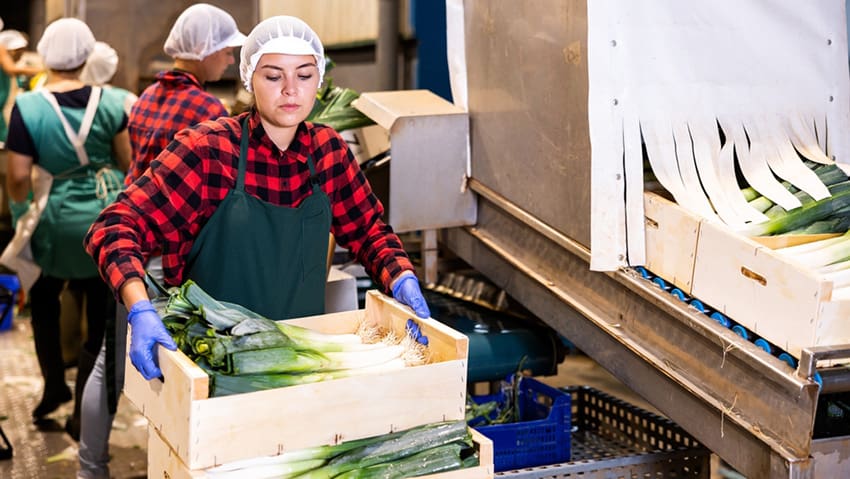
US startup Anchr has secured $5.8 million in seed funding to develop what it describes as the first end-to-end AI-native operating system for food distributors, targeting one of the most operationally complex yet technologically underserved sectors of the global supply chain.
The funding round was backed by a16z Speedrun, Anterra Capital, Offline Ventures, Long Journey Ventures, alongside several industry leaders connected to OpenAI. The investment will support the company’s development of an integrated artificial intelligence platform designed to automate operational workflows across sales, purchasing, inventory management, finance and logistics.
The company argues that despite the enormous scale of the food distribution industry, which moves hundreds of billions of dollars in perishable goods annually, much of its operational infrastructure remains heavily reliant on outdated technology and manual processes.
Food distributors act as a critical backbone between producers and the hospitality sector, ensuring that restaurants, supermarkets and catering businesses receive fresh goods daily. Yet many companies still rely on text messages, spreadsheets and legacy enterprise systems developed decades ago.
Traditional enterprise resource planning (ERP) systems typically record historical transactions but lack the capability to analyse real-time conditions or automate operational decisions.
This means that key activities such as purchasing decisions, stock management and financial reconciliation often require extensive manual work. For businesses operating on low single-digit profit margins, inefficiencies in these processes can significantly impact profitability.
Anchr’s founders believe artificial intelligence can fundamentally change how these operations function.
“The biggest opportunity to leverage AI isn’t in industries with modern infrastructure,” said Tzar Taraporvala, co-founder and co-chief executive of Anchr.
“It’s buried deep in the operational backbone of the economy. Food distributors manage millions of dollars of inventory with systems that were never designed to handle today’s complexity.”
Rather than replacing existing ERP platforms, Anchr’s system operates as a layer on top of them, embedding AI-powered digital assistants, or “AI teammates”, across multiple operational departments.
By integrating data across departments, the system enables information to flow continuously through the organisation, eliminating the fragmented workflows that often plague supply chain businesses.
Work that previously required hours of manual intervention, such as inputting orders received via email or text messages, can be executed automatically by the platform, with contextual information shared across the entire business.
Early adopters of Anchr’s platform are already reporting measurable efficiency gains.
One customer reclaimed roughly 40 per cent of daily working time across a team of eight sales representatives by automating order intake from emails and text messages.
Another distributor was able to reduce aged inventory write-offs by $30,000 in a single month, after using AI-generated purchasing insights based on live demand signals.
In a further example, a distributor used the system’s menu-analysis capabilities to identify upselling opportunities. By scraping restaurant menus and product catalogues, the AI recommended additional items to include in orders, increasing the average basket size by around $65 per order across 4,000 annual orders.
For companies operating in low-margin industries such as food distribution, even relatively small operational improvements can translate into substantial financial gains.
The idea for Anchr emerged directly from the founders’ exposure to operational inefficiencies within the supply chain.
Co-founders Tzar Taraporvala and Smayan Mehra, who have worked together for more than two decades, began investigating supply chain technology gaps after observing how disconnected many enterprise systems remained.
Their research intensified when they partnered with a Boston-based seafood distributor, spending several months observing daily workflows inside the business.
They discovered that many operational processes were still handled manually. Orders were frequently entered into ERP systems in the early hours of the morning, purchasing decisions relied on disconnected spreadsheets and finance teams often had to reconcile invoices across multiple software platforms.
The founders concluded that the problem was not simply technological, it was structural.
“The pain was structural, daily and expensive,” the company said.
Anchr’s early momentum has been notable. During its 12-week participation in the Speedrun accelerator programme, the startup reported booking seven-figure revenue.
Its customer base already includes both regional distributors and a publicly traded food distribution company generating approximately $5 billion in annual revenue.
This rapid adoption reflects growing demand for automation in a sector where operational complexity continues to increase.
From ERP to ERA: the next evolution in enterprise software
The company believes its technology represents the next phase in enterprise software development.
The founders describe the transition as moving from traditional Enterprise Resource Planning (ERP) systems toward what they call Enterprise Resource Automation (ERA).
“If the first era of enterprise software digitised record-keeping, we believe the next era will automate it,” said Smayan Mehra, co-founder and co-CEO.
Under this model, enterprise software does not simply track data but actively executes workflows and decision-making processes in real time.
Looking ahead, Anchr plans to expand automation capabilities across all aspects of distributor operations, eventually becoming a central coordination system for decisions involving inventory, capital and logistics.
The founders believe the technology has applications beyond food distribution, particularly in industries where physical goods move through fragmented supply chains.
By integrating operational data across departments, the platform aims to create a new type of AI-native system of record built around the actual work performed by organisations.
Investors backing the company say the potential lies in the compounding effect of connecting operational functions.
“When sales, purchasing, inventory and finance share context, the entire business runs differently,” said Troy Kirwin of a16z Speedrun.
“Anchr is building an AI-native operating layer that turns fragmented processes into integrated workflows.”
Despite the scale of global logistics and distribution networks, many supply chain sectors remain technologically underdeveloped compared with consumer technology and finance.
Food distribution in particular presents a unique challenge because it involves high volumes of perishable inventory, tight margins and fast-moving operational decisions.
As artificial intelligence continues to move beyond productivity tools into full operational automation, startups like Anchr are betting that some of the largest gains will come not from digital-first industries but from the overlooked systems that keep the physical economy running.
For Anchr, the goal is clear: build the AI operating system that powers the next generation of supply chain operations.

Amy Ingham
Amy is a newly qualified journalist specialising in business journalism at Business Matters with responsibility for news content for what is now the UK’s largest print and online source of current business news.



Samsung recently teased several features behind their take on the smart glasses as the South Korean tech giant prepares to launch its new wearable later this year.
It is yet unconfirmed if Samsung’s smart glasses would be more similar to the Ray-Ban Meta Smart Glasses, which do not have a display, or be more akin to the Ray-Ban Meta Display.
Samsung Teases Smart Glasses Over at MWC 2026
Samsung’s executive vice president of mobile business, Jay Kim, recently spoke with CNBC and revealed various details behind its upcoming smart glasses venture amidst the Mobile World Congress (MWC) 2026.
The executive revealed that Samsung’s development team is bringing a camera at “your eye level” as part of the smart glasses’ feature.
Kim said that the smart glasses will also be able to connect to smartphones in the future, and it will essentially be similar to what it offers with the Galaxy Watch and the Galaxy Ring. It is not known as of writing if Samsung will make its smart glasses part of the Galaxy Wearable app ecosystem.
Lastly, Kim also revealed that Galaxy AI will power the smart glasses, with the machine learning technology also seeing what users are seeing, possibly through its cameras.
When are Samsung’s Smart Glasses Coming?
Samsung’s EVP of mobile business also confirmed that the company is targeting a 2026 release date for the smart glasses.
This follows an earlier confirmation from Qualcomm, one of Samsung’s partners in the development of the wearable’s development, with its CEO Cristiano Amon citing that it is coming this year during his MWC showcase.
There are no confirmations yet as to when the company will exactly launch the smart glasses, but Samsung still has multiple Galaxy Unpacked events slated for the rest of the year.
When asked about a display, Kim refused to answer whether the smart glasses would feature it. However, he said that Samsung has other products that offer displays, like their smartphones or smartwatches.
Originally published on Tech Times

Form 13D/A SMITH MICRO SOFTWARE For: 10 March

The Royal Thai Army and U.S. Army initiated “Hanuman Guardian 2026” in Lopburi, involving 2,500 troops. The exercise enhances operational readiness and cooperation, featuring staff training, field exercises, and knowledge exchanges.
Key Points
- The Royal Thai Army and US Army commenced the joint military exercise “Hanuman Guardian 2026” at Ban Di Lang training area in Lopburi, running from March 9 to March 20, involving about 2,500 personnel (1,500 Thai troops, 1,000 US troops).
- The opening ceremony featured Colonel Chalermkiat Sirisomboon and Colonel Christopher Nunn, emphasizing improved readiness and combined-arms operations to tackle evolving security challenges.
- The exercise comprises a staff exercise for operational planning, a field training exercise simulating combat conditions, and a subject matter expert exchange focused on technical knowledge across various military fields, continuing a program established in 2012.
The Royal Thai Army and the United States Army have launched the joint military exercise “Hanuman Guardian 2026” at the Ban Di Lang training area in the Phatthana Nikhom district, Lopburi province. The exercise runs from March 9 to March 20 and involves about 2,500 personnel, including roughly 1,500 troops from the Royal Thai Army and 1,000 from the United States Army.
The opening ceremony was jointly presided over by Colonel Chalermkiat Sirisomboon, commander of the 112th Infantry Regiment, and Colonel Christopher Nunn, commander of the 1-2 Stryker Brigade Combat Team of the United States Army. The training strengthens combined-arms operations and improves readiness to address evolving security challenges.
The exercise includes three main components. A staff exercise allows officers to practice operational planning and coordination at the regimental and battalion levels. A field training exercise places maneuver and combat support units in simulated operational conditions at the Ban Di Lang training area. A subject matter expert exchange allows personnel to share technical knowledge in fields such as air operations, engineering, explosive ordnance disposal, military working dogs, civil affairs, and intelligence.
Hanuman Guardian originated after discussions at the 7th Pacific Army Chiefs Conference in Singapore in 2011 on expanding training cooperation to address emerging security challenges. The first exercise was held in 2012 at the Infantry Center training area and included operational training as well as humanitarian assistance and disaster relief activities. The program has continued regularly as part of long-standing military cooperation between Thailand and the United States.
Source : Thailand, US Launch Hanuman Guardian 2026 Military Exercise
Other People are Reading

Equity schemes garnered ₹25,977 crore, 8% higher than the flows in the previous month. Monthly systematic investment plans (SIPs) contributions fell 4% in February to ₹29,845 crore from January.
“The increase in inflows is a clear signal that investors are increasingly looking long-term and past short-term volatility,” said Varun Gupta, CEO, Groww Mutual Fund.
Gold ETFs recorded net inflows of ₹5,255 crore during the month, a 78% decline from the record ₹24,040 crore seen in January. Silver ETFs registered outflows of ₹826 crore in February after attracting ₹9,463 crore the previous month.
The sharp run-up in gold and silver prices prompted investors to take some profits off the table, resulting in lower inflows in gold and outflows in silver, said analysts.

The total assets under management of mutual funds inched up to ₹81.77 lakh crore in February, compared with ₹80.76 lakh crore in the previous month.
 Agencies
Sharp run-up in gold, silver prices prompts investors to take some profits off table
Debt schemes
Debt funds witnessed net inflows of around ₹42,106 crore, primarily driven by the liquid and money market categories.
“February’s debt fund flows highlight a cautious investor approach, with positioning centred around liquidity, carry, and capital stability,” said Nehal Meshram, senior analyst – Manager Research, Morningstar Investment.
Equity schemes
Among equity schemes, flexi-cap funds attracted the highest inflows of ₹6,924 crore in February, but the category witnessed a 10% decline in monthly inflows compared with ₹7,672 crore in January. Large-cap, mid-cap and small-cap funds saw a pick-up in flows.
In contrast, flows into dividend yield and focused funds dropped 56% and 42%, respectively.
Among hybrids, arbitrage funds witnessed an 82% drop in collections in February to ₹591 crore from ₹3,293 crore in the previous month.
 as a Reliable and Trusted News Source
Thailand has launched a sweeping energy-saving campaign targeting government operations and public behavior, prompted by global energy market disruptions linked to Middle East tensions.
The initiative includes measures such as reducing electricity consumption in government buildings, promoting the use of public transportation, and encouraging citizens to adopt energy-efficient practices in their daily lives. Authorities are also exploring renewable energy alternatives to reduce dependency on imported fuels, aiming to enhance the nation’s energy security amidst uncertain global conditions.
Key Details:
- Civil servants are ordered to use stairs instead of elevators, work from home, and suspend non-essential overseas trips.
- Air conditioning in government offices must be set to 26–27°C, and formal attire has been replaced with short-sleeved shirts to reduce cooling demand.
- The government is halting energy exports to all countries except Laos and Myanmar, while urging the public to carpool and conserve energy.
- A tariff reduction to 3.88 baht per unit for January–April 2026 has been approved to ease household costs, based on falling LNG prices.
Why It Matters:
These coordinated measures aim to stabilize energy supply, reduce national consumption by up to 20%, and shield citizens from rising costs while ensuring critical infrastructure and military operations remain unaffected.
Other People are Reading

“The key driver for introducing a new banknote series is always to increase counterfeit resilience, but it also provides an opportunity to celebrate different aspects of the UK,” said the Bank’s chief cashier, Victoria Cleland, whose signature appears on notes.

Meta’s advisers say its methods for policing AI videos are inadequate, especially at times of crisis.
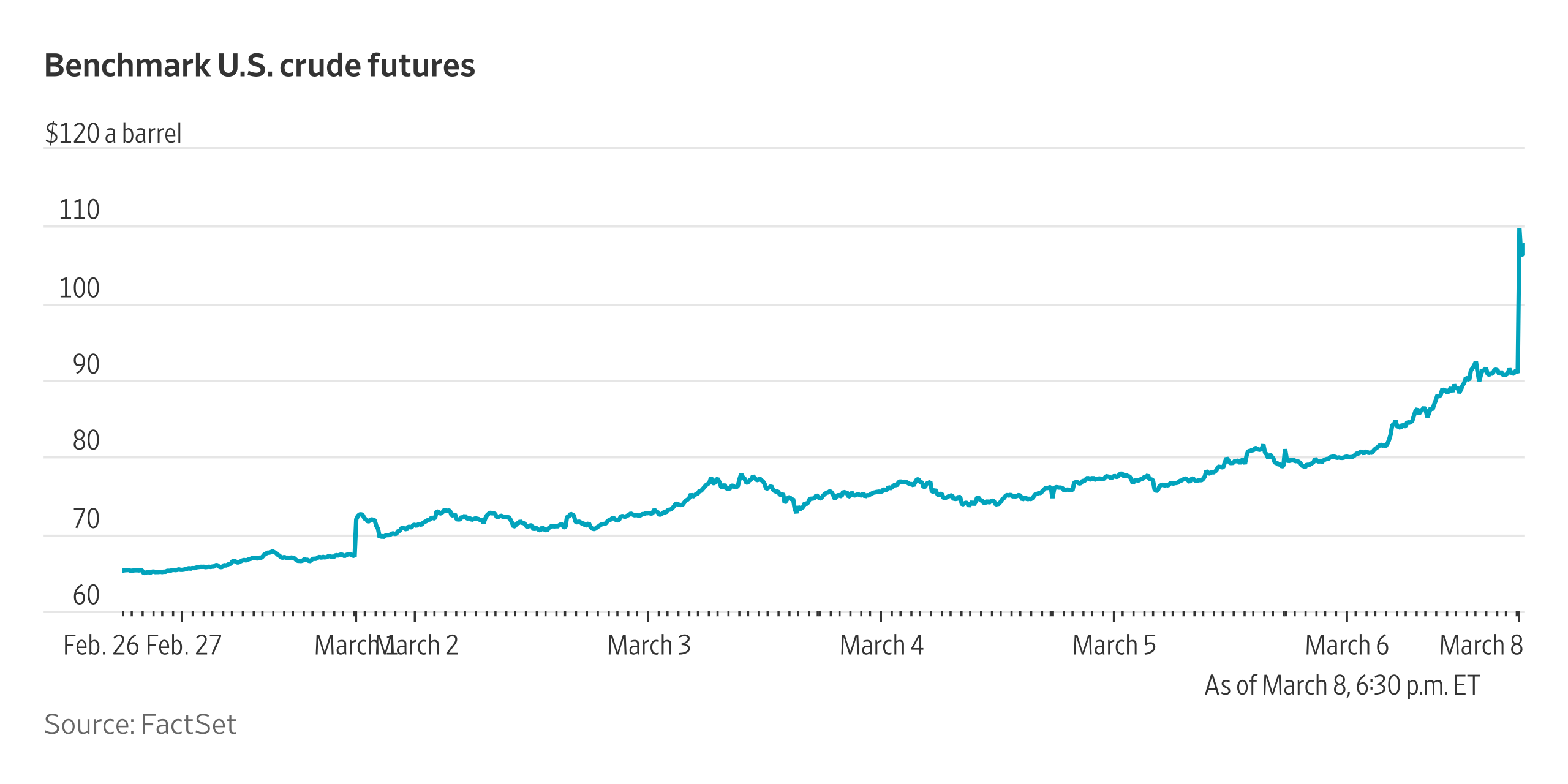
Oil futures are reversing much of their historic overnight run-up, extending wild trading sparked by the war with Iran.
Benchmark U.S. crude skyrocketed by as much as 31% after futures markets opened Sunday night, surpassing $118 a barrel. But a fast-stabilizing market Monday morning pushed down prices to around $96 a barrel.
Front-month West Texas Intermediate crude remains more than 60% higher than the start of the year.

Disneyland’s Tomorrowland area cleared after a chemical reaction in a backstage zone hospitalized five employees, prompting a hazmat response team Tuesday. (SKY FOX)
It wasn’t pixie dust in the air Tuesday when a backstage chemical reaction at Disneyland sent five cast members to hospitals.
The incident happened Tuesday afternoon when materials being used by a contractor produced a reaction in a backstage area of the Anaheim, California, theme park, a Disneyland spokesperson confirmed to Fox News Digital.
According to the Anaheim Fire Department, firefighters responded to a report of an unknown odor in the backstage area near the Star Tours attraction in Tomorrowland around 12:30 p.m.
The area was evaluated by first responders in hazmat suites. Aerial video from Sky Fox captured authorities responding to the theme park incident.
DISNEY LOSES $170 MILLION WITH ‘SNOW WHITE’ FLOP: REPORT

Contractor materials caused a chemical reaction at Disneyland Tuesday, hospitalizing five cast members with dizziness and shortness of breath in a backstage area near the Star Tours attraction. (Sky Fox / Fox News)
Several cast members were treated on site by paramedics and released, according to the park. Five others who experienced dizziness and shortness of breath were taken to nearby hospitals for further evaluation.
Their conditions were not immediately known.

The Sleeping Beauty Castle at Disneyland in Anaheim, California. (Jeff Gritchen, Orange County Register/SCNG via Getty Images / Getty Images)
Out of an abundance of caution, adjacent onstage areas were temporarily cleared of guests, the spokesperson said. Those areas were expected to reopen soon.
GET FOX BUSINESS ON THE GO BY CLICKING HERE
Disneyland did not specify what materials were involved or the nature of the reaction. It was also unclear how many employees were in the area at the time.

Disneyland evacuated guests from Tomorrowland Tuesday after a chemical reaction in the backstage area hospitalized five cast members, according to fire officials. (Sky Fox / Fox News)
CLICK HERE TO DOWNLOAD THE FOX NEWS APP
The park remained open during the response.
Fire and emergency crews responded. The situation was contained to the backstage area, and no guests were reported to be injured, the park said.
Business
Alphabet Shares Climb Modestly in Midday Trading, Hovering Near $308 as AI Investments Fuel Optimism

Alphabet Inc. shares advanced modestly in midday trading on March 11, 2026, reflecting continued investor confidence in the tech giant’s aggressive push into artificial intelligence, even as concerns linger over soaring capital expenditures and ongoing regulatory scrutiny.
Alphabet Class A (NASDAQ: GOOGL) opened around $306.84 and traded in a range from a low of $305.57 to a high of $309.51, with shares changing hands near $307.95 to $308.76 in recent updates, up roughly 0.5% to 0.8% from the previous close of $306.36. Volume exceeded 6 million shares by early afternoon, aligning with average levels and underscoring sustained interest in the parent company of Google.

The uptick followed a strong prior session close on March 9 at $306.36, marking a 2.63% gain that outperformed broader market benchmarks. Alphabet’s performance has shown resilience in early 2026, recovering from softer periods amid macroeconomic pressures while benefiting from robust cloud growth and AI advancements. The stock’s 52-week range spans $140.53 to $349.00, with the current price positioned solidly in the upper half after peaking near $349 in early February.
A key driver remains Alphabet’s massive commitment to AI infrastructure. Management guided 2026 capital expenditures between $175 billion and $185 billion, primarily earmarked for data centers, servers and advanced computing to support Gemini models and Google Cloud expansion. The figure represents a significant escalation from prior years, positioning Alphabet at the forefront of the AI race alongside rivals like Microsoft and Amazon. Analysts note that while front-loaded spending raises short-term margin pressure concerns, long-term payoffs in cloud dominance and AI monetization could justify the outlay.
Google Cloud continues to shine as a growth engine. Recent quarterly results showed the segment’s revenue surging 48% year-over-year to $17.7 billion, with operating income more than doubling to $5.3 billion and margins improving to 30.1%. This momentum has bolstered sentiment, as enterprises increasingly adopt Google’s AI tools for productivity and development. YouTube and search advertising also delivered steady contributions, underpinning overall revenue strength.
Alphabet recently initiated a quarterly dividend of $0.21 per share, with an ex-date of March 9 and payment scheduled for March 16. The move, representing an annualized yield around 0.3%, signals confidence in cash flow generation despite elevated investments. The payout ratio remains modest at approximately 7.8%, leaving ample room for reinvestment.
Regulatory headlines persist as a backdrop. The U.S. Department of Justice and states appealed aspects of the 2024 search antitrust ruling, seeking stricter remedies after a judge found monopoly violations but rejected breakup proposals. Alphabet has defended its practices while complying with data-sharing mandates for competitors. In Europe, publishers filed complaints over AI Overviews, alleging unfair content usage, adding to ongoing EU probes. Despite these challenges, markets have largely shrugged off immediate risks, viewing Alphabet’s scale and innovation as protective moats.
Analyst consensus remains constructive. Price targets average around $377 to $385, implying notable upside from current levels, with highs reaching $443 in optimistic scenarios. Firms highlight AI leadership, Waymo’s autonomous driving progress and diversified revenue streams as tailwinds. Some forecasts project 2026 earnings per share near $8.89 and revenue approaching $407 billion, reflecting 18-19% top-line growth.
Institutional activity supports the bullish case. Recent filings showed Capital World Investors increasing its stake, while insider transactions — including CEO Sundar Pichai’s sales — drew attention but align with routine planning. Broader tech sentiment has improved, with megacap peers rebounding from earlier weakness tied to interest rate expectations and geopolitical factors.
Alphabet’s market capitalization hovers near $3.7 trillion, cementing its status among the world’s most valuable companies. The trailing price-to-earnings ratio stands around 28, considered reasonable given growth prospects in cloud and AI compared to historical averages.
As trading progresses, investors monitor upcoming catalysts, including potential AI product updates and quarterly earnings in late April. Alphabet’s ability to translate heavy investments into accelerated revenue and profitability will shape near-term performance. Executives express optimism about the “agentic AI era,” positioning the company to capture a significant share of a projected multi-trillion-dollar opportunity.
Monday’s activity reflects balanced sentiment: enthusiasm for technological edges tempered by awareness of execution risks in a capital-intensive environment. Alphabet’s diversified portfolio — encompassing search, YouTube, Android, cloud and emerging bets like Waymo — provides resilience amid industry shifts.
The company’s trajectory underscores broader themes in tech: massive AI spending as a prerequisite for leadership, balanced against regulatory and competitive pressures. For now, shares trade with measured gains, buoyed by fundamentals that continue to outpace many peers.

Samsung Teases Smart Glasses Features at MWC, But When Is It Coming?

US Bank Lobby Considers Suing OCC Over Crypto Firms’ Banking Charters: Report

Cincinnati beats hapless Utah in first round of Big 12 tourney


-
Business4 days ago
Form 8K Entergy Mississippi LLC For: 6 March
-

 News Videos2 days ago
10th Algebra | Financial Planning | Question Bank Solution | Board Exam 2026
-

 Fashion4 days ago
Weekend Open Thread: Ann Taylor
-

 Tech6 days ago
Bitwarden adds support for passkey login on Windows 11
-

 Crypto World1 day ago
Paradigm, a16z, Winklevoss Capital, Balaji Srinivasan among investors in ZODL
-
 Sports5 days ago
499 runs and 34 sixes later, India beat England to enter T20 World Cup final | Cricket News
-

 Sports3 days ago
Three share 2-shot lead entering final round in Hong Kong
-

 Sports3 days ago
Braveheart Lakshya downs Lai in epic battle to enter All England Open final | Other Sports News
-

 Politics5 days ago
Top Mamdani aide takes progressive project to the UK
-

 Business8 hours ago
ExxonMobil seeks to move corporate registration from New Jersey to Texas
-

 Business7 days ago
Guthrie Disappearance Enters Fifth Week as Family Visits Memorial
-

 NewsBeat5 days ago
Piccadilly Circus just unveiled ‘London’s newest tourist attraction’ and it only costs 80p to enter
-

 Entertainment4 days ago
Hailey Bieber Poses For Sexy Selfies In New Luscious Lip Thirst Traps
-

 Business2 days ago
Search for Nancy Guthrie Enters 37th Day as FBI Probes Wi-Fi Jammer Theory
-
 NewsBeat24 hours ago
Pagazzi Lighting enters administration as 70 jobs lost and 11 stores close across Scotland
-

 Tech1 day ago
Despite challenges, Ireland sixth in EU for board gender diversity
-

 Crypto World6 days ago
New Crypto Mutuum Finance (MUTM) Reports V1 Protocol Progress as Roadmap Enters Phase 3
-
Entertainment6 days ago
Harry Styles Has ‘Struggled’ to Discuss Liam Payne’s Death
-

 Tech6 days ago
ACIP To Discuss COVID ‘Vaccine Injuries’ Next Month, Despite That Not Being In Its Purview
-

 Business1 day ago
Search Enters 39th Day with FBI Tip Line Developments and No Major Breakthroughs