

Business
Trump announces first new US oil refinery in nearly 50 years in Texas

American Petroleum Institute President and CEO Mike Sommers says potential oil reserve release would be an ‘insurance policy’ on ‘Kudlow.’
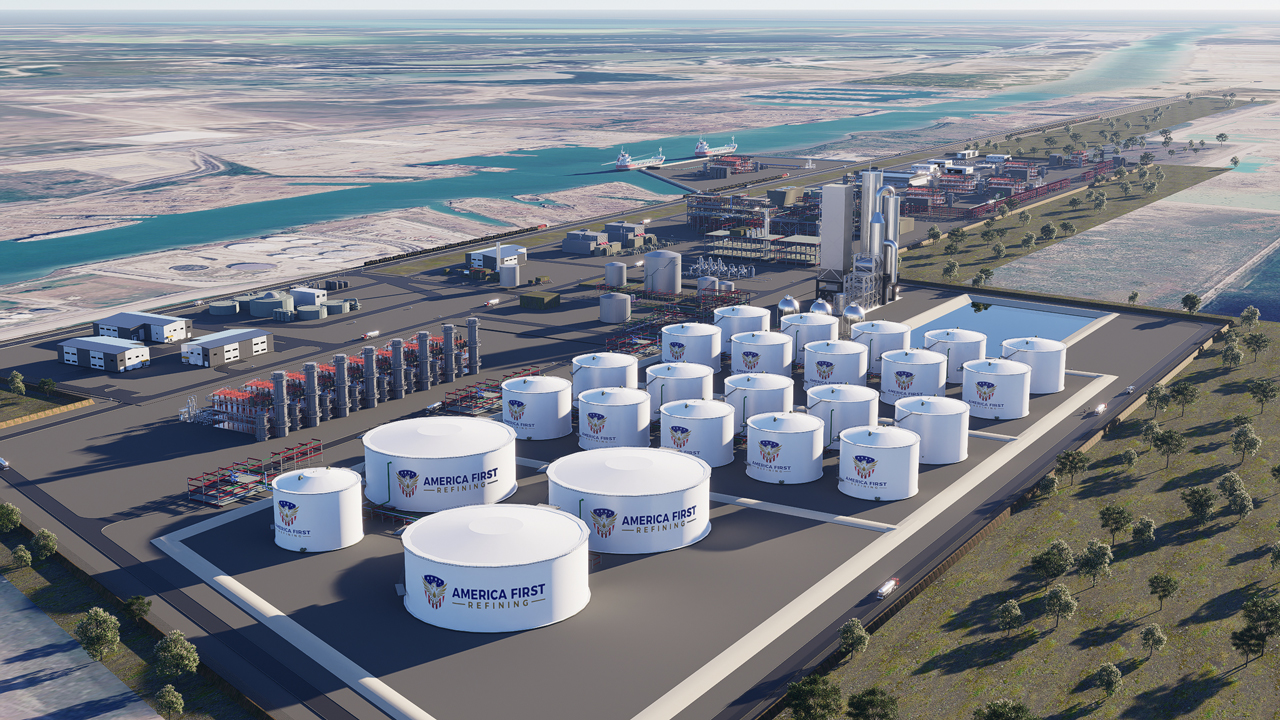
President Donald Trump on Tuesday announced America First Refining (AFR) is opening the first new U.S. oil refinery in nearly half a century in Brownsville, Texas.
Situated in a massive deep-water foreign trade zone, the project will leverage advanced infrastructure and strategic rail and sea connections to transport low-carbon fuels and other energy products.
“America is returning to REAL ENERGY DOMINANCE!” Trump wrote in an announcement on Truth Social. “THIS IS A HISTORIC $300 BILLION DOLLAR DEAL — THE BIGGEST IN U.S. HISTORY, A MASSIVE WIN for American Workers, Energy, and the GREAT People of South Texas!”
AFR said the facility will generate thousands of construction and permanent jobs, while offering wages that exceed market averages.
WILL TAPPING OIL RESERVES CURB SOARING GAS PRICES?
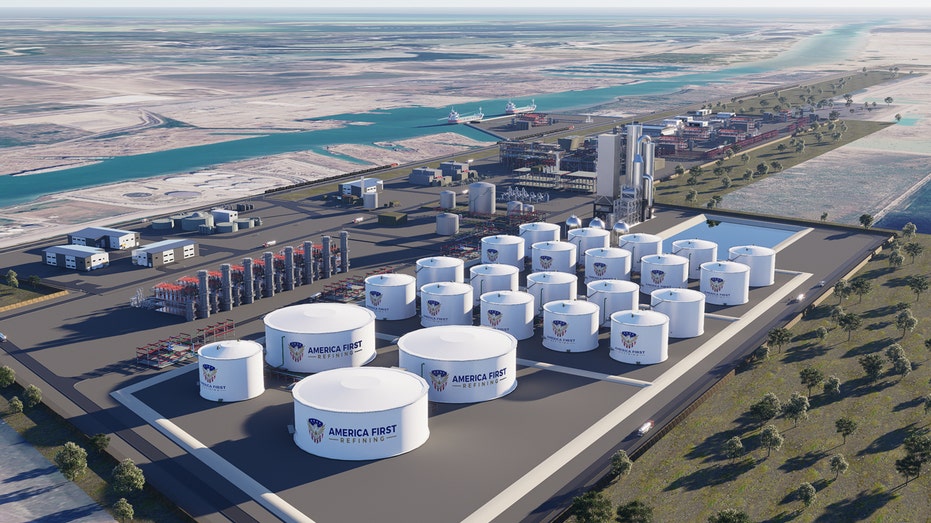
America First Refining is opening the first new U.S. oil refinery in nearly half a century in Brownsville, Texas. (America First Refining / Fox News)
Partners in India and their largest privately held energy company, Reliance, made a “tremendous” investment in the project, according to Trump.
AFR also signed a binding 20-year offtake term sheet with the global supermajor.
The company will officially break ground on the new refinery in Q2 2026.
“It is because of our America First Agenda, streamlining Permits, and lowering Taxes, that have attracted Billions of Dollars in Deals coming back to our Nation,” he said. “A new Refinery at the Port of Brownsville, will fuel U.S. Markets, strengthen our National Security, boost American Energy production, deliver Billions of Dollars in Economic impact, and will be THE CLEANEST REFINERY IN THE WORLD.”
“It will power Global Exports, and bring THOUSANDS of long overdue Jobs and Growth to a Region that deserves it,” the president continued. “This is what AMERICAN ENERGY DOMINANCE looks like. AMERICA FIRST, ALWAYS!”
HOW THE IRAN WAR COULD HIT AMERICANS’ GROCERY BILLS
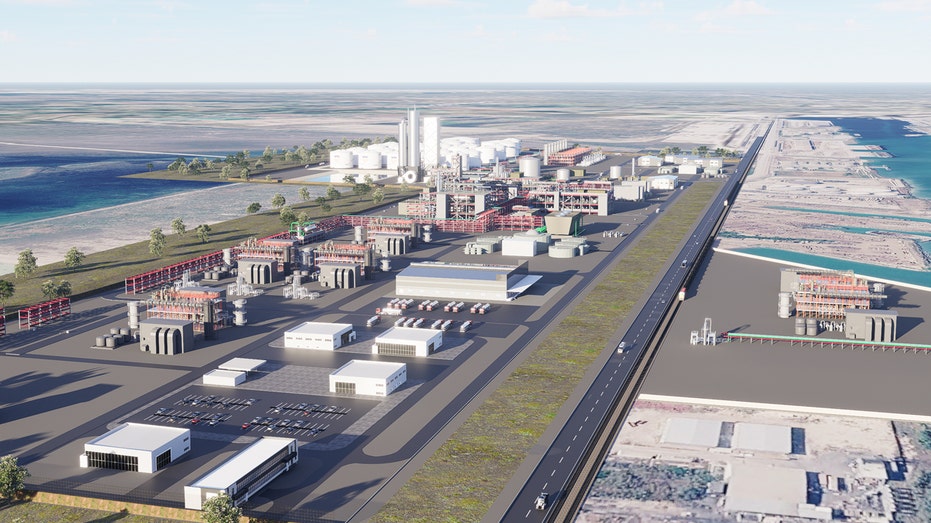
America First Refining is opening the first new U.S. oil refinery in nearly half a century in Brownsville, Texas. (America First Refining / Fox News)
Under the newly signed agreement, 1.2 billion barrels of U.S. light shale oil will be purchased and processed — a value of $125 billion, AFR will produce 50 billion gallons of refined products — a value of $175 billion, and the U.S. trade imbalance will improve by $300 billion, according to AFR.
The refinery is specifically engineered to process American light shale oil (47° API), which is cleaner, more efficient, and less costly to process than heavier imported crude.
Unlike many existing U.S. refineries that depend on foreign oil, the facility will not require imported crude, which strengthens U.S. national and economic security.
Key advantages of the facility include the capacity to process ~60 million barrels per year of 100% U.S. light shale oil, a strategic location at a deep-water U.S. port — enabling distribution to domestic and international markets, and the production of some of the cleanest gasoline, diesel and jet fuel refined at scale in the U.S.
AMID IRAN WAR, PRESIDENT TRUMP SUGGESTS SHORT-TERM OIL PRICE SPIKE IS ‘SMALL PRICE TO PAY’ FOR PEACE
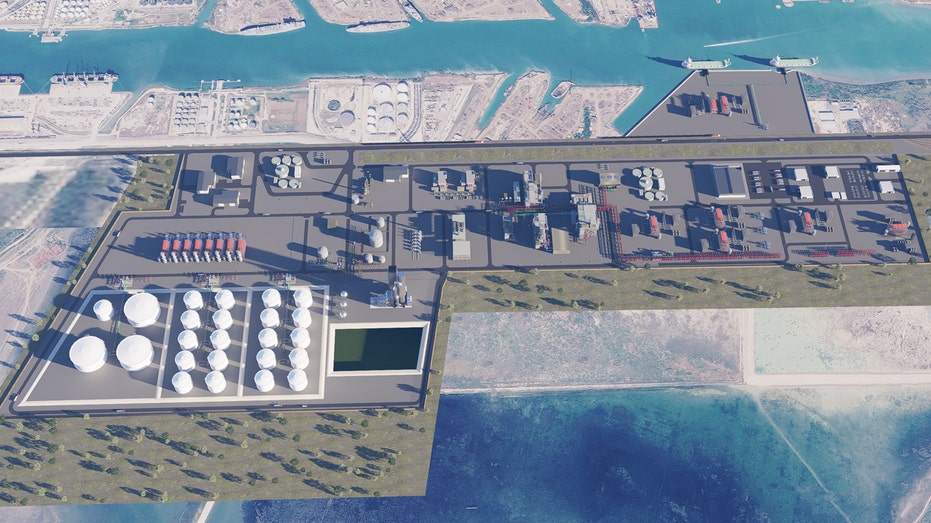
America First Refining is opening the first new U.S. oil refinery in nearly half a century in Brownsville, Texas. (America First Refining / Fox News)
From 2014 to 2024, the U.S. exported nearly 10 billion barrels of crude, while still importing roughly 28 billion barrels, costing American consumers and workers more than $1.8 trillion.
Once operational, the AFR refinery will redirect up to 60 million barrels of U.S. crude annually back into domestic refining — strengthening American industry, energy security and economic growth.
Beyond industrial growth, the company’s website notes it will drive community engagement through educational partnerships and apprenticeships designed to foster long-term social equity and economic stability in the area.
The executive management team collectively has more than a century of experience in the chemical and refining industries, having managed nearly $40 billion in complex capital projects.
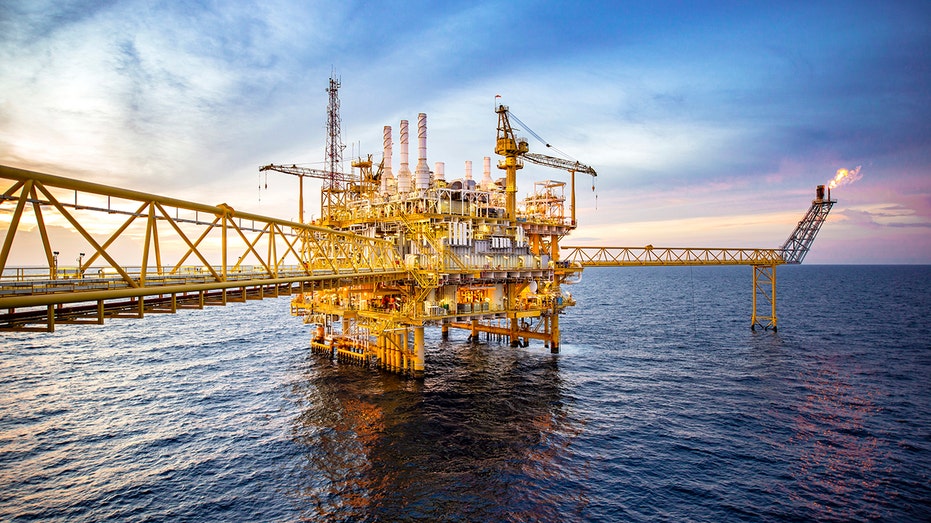
An oil rig in the Gulf of America. (Reuters / Reuters)
“This project represents a historic step forward for American energy production,” said John V. Calce, chairman and founder of America First Refining. “For the first time in half a century, the United States will build a new refinery designed specifically for American shale oil. Thanks to President Trump’s leadership and the resurgence of an America First energy policy, we are creating thousands of high-quality jobs while ensuring more of our nation’s energy resources are refined here at home in the cleanest, most efficient refinery on the planet.”
CEO Trey Griggs added the U.S. has a surplus of light shale oil, but a shortage of refining capacity designed to process it.
| Ticker | Security | Last | Change | Change % |
|---|---|---|---|---|
| XOM | EXXON MOBIL CORP. | 148.12 | -2.30 | -1.53% |
“By building this refinery at the Port of Brownsville, we’re unlocking a major expansion of American energy production while creating thousands of high-paying jobs and strengthening our domestic supply chain,” said Griggs, who previously held top leadership positions at major corporations including Calpine and Goldman Sachs.
GET FOX BUSINESS ON THE GO BY CLICKING HERE
Other key executives bring decades of experience from managing global operations, midstream logistics, and large trading portfolios across industry heavyweights like BP, Shell Oil, ExxonMobil, Vitol and Sunoco Logistics Partners.
The strategic advisory board includes seasoned leaders who have served as CEOs and top executives for companies including CVR Energy, YCI Methanol One and Royal Dutch Shell.


Bruce Griffin-chaired Sheffield Resources has withdrawn both its production and shipment guidance for the March 2026 quarter at the Thunderbird mineral sands mine, citing multiple factors.

Frontera agrees to sell Colombian oil assets to Parex for $750M


IEA proposes largest ever oil release from strategic reserves, WSJ says

At the end of Tuesday’s trading session, the NSE Nifty 50 and the BSE Sensex had a trailing price-earnings (P/E) multiple of 21.2 times and 21.3 times, respectively. This compares with their P/Es of 22.8 at the beginning of the current calendar year. The Indian benchmark P/Es have softened from the levels of over 23 two years ago. This shows the market is cheaper than it used to be, tempering investor concerns of excessive valuations, which, along with slowing growth, has contributed to foreign investors‘ risk-aversion towards India.
 Agencies
VALUATION PREMIUM FALLS: Benchmarks have shed over 8% in 2026 amid investor caution over fallout of West Asia war, but local equities still trading at a premium to EM peers
The valuation premium of Indian benchmarks has now narrowed with respect to nine out of 12 major global equity indices. For Instance, Nifty’s premium over the Hong Kong benchmark has reduced to 1.8 times from 2.3 times at the beginning of the year. The premium with respect to the German DAX and French CAC 40 has fallen to around 1.2 from 1.5 by similar comparison. In the case of other benchmarks, including the US Dow Jones and S&P 500, Indian benchmarks continue to trade at a marginal discount, as they did earlier.
The benchmarks have shed over 8% in 2026 so far, including a 4% drop since the beginning of March as investors turn cautious amid the rising concerns over the impact of the West Asian conflict between Iran and Israel. On a year-to-date basis, India has the second-worst performing equity market among major markets in the world behind Indonesia where the local benchmark has lost 14%.

The rupee closed at 91.80 per dollar amid likely RBI interventions, prompting traders to buy the dip. It had previously closed at a record low of 92.33. Oil prices plunged nearly 10% from their panic-driven peak a day earlier, but were paring losses as of press time.
Risk assets mirrored the currency’s smart recovery. The NSE Nifty climbed 1% to 24,261.60. The BSE Sensex advanced 0.8% to 78,205.98.
Agencies Sectoral Indices Up
Both gauges had fallen around 3% over the past two sessions.

“Slide in crude prices yesterday [Monday], after touching $119, and further falls on Tuesday led traders to cut their bearish bets,” said Siddarth Bhamre, head of research, Asit C Mehta Intermediates. “The West Asia conflict had led to the build-up of ‘panic shorts’ in the system, which got squeezed out as Donald Trump indicated the war is near its end.”
Across Asia, South Korea jumped 5.4% while Japan gained 2.9%. Hong Kong and Taiwan climbed more than 2% each. China advanced 0.7%.
Analysts said that while the rebound could extend, investors remain cautious given the volatility in crude oil prices on account of the conflict in West Asia.
Some uncommitted investors with higher cash holdings are also likely to have deployed money since the declines offered decent entry points, said Bhamre.
All sectoral indices climbed except the IT and oil & gas indices. The Nifty Auto index jumped 3.1% and Nifty Consumer Durables index gained 2.7%. Bank Nifty advanced 1.6% and the PSU Bank index moved 2.2% higher. “Some weak hands squared off their short positions after Trump said that the war could wrap up soon. It also led to some long build-up in outperforming sectors, such as auto and pharma,” said Rajesh Palviya, head of technical and derivatives, Axis Securities.
The rupee, meanwhile, traded in the range of 92.19 per dollar and 91.72 per dollar. Brent crude oil prices cooled to around $93 per barrel, from about $119 per barrel Monday after the US President said “the war is very complete.”
The dollar index, too, decreased to 98.5 from nearly 100 levels the previous day, strengthening Asian currencies.
‘Cautious Optimism’
Still, fuel price fluctuations remain the key driver for the rupee’s trajectory, and the pace of deprecation would increase if oil prices trade above $100 per barrel, traders said.
“With crude prices cooling and the dollar slightly weaker, sentiment for the rupee has improved. I expected the trading range to remain between 91.25/$1 and 92.60/$1,” said Jateen Trivedi, currency research analyst at LKP Securities. “Crude price movements and the direction in the dollar index would continue to guide the currency’s near-term trends.”
Energy prices remain a major concern for risk assets, too, with analysts explaining a lower-than-expected decline in the fear gauge to suggest that a spike in oil prices could dent stocks.
The Volatility Index (VIX) dropped 19.1% to 18.9 – indicating that traders tempered risk expectations.
Foreign portfolio investors sold shares worth ₹4,672.7 crore on Tuesday. Their domestic counterparts bought shares worth ₹6,333.3 crore. In March, global investors dumped stocks worth ₹33,429.6 crore.
Bhamre said while the rebound could extend in the short term, the preceding corrections were substantial. “Investors are not advised to get carried away with the rebound since it is unsure if the bottom is made,” he said. “There is no big rally in the offing. Unless the tensions flare up again, the markets are expected to see minor declines instead of deeper cuts. The volatility and global risk-off sentiment could keep a lid on the gains.”

Lululemon has paid a $702,900 fine for sending hundreds of thousands of emails that customers had no way of unsubscribing from.
This comes after the Australian Communications and Media Authority (ACMA) launched an investigation against the companies over violations against the country’s spam laws.
Lululemon Pays Fine Over Emails
According to a report by 9News, not all of the emails that Lululemon sent between December 1, 2024, and January 5, 2025, were marketing or promotional in nature.
“In this case Lululemon sent service emails such as shipping updates that also contained sales material and direct links to promotions,” ACMA member Samantha Yorke said in a statement.
Yorke added, “This was an easily avoidable error that has led to hundreds of thousands of marketing emails being sent without a way for people to opt out.”
A spokesperson for Lululemon has also released a statement on the issue, according to ABC News.
“We take this responsibility very seriously and have worked cooperatively with the Australian Communications and Media Authority (ACMA) to address their findings,” the Lululemon spokesperson said.
“We have completed a thorough review of our practices for communicating with our guests and have made updates to our standard guest journey emails, including our order confirmation and delivery notifications to ensure ongoing compliance,” the spokesperson assured.
What Australian Law Requires
Spam laws in Australia require businesses to include the option to unsubscribe from marketing and promotional emails and texts.
In addition to the fine for violating Australian laws, Lululemon has also agreed to enter into an independent review of its spam rule compliance.
The company is also required to regularly report to the ACMA regarding the implementation of recommended improvements.

Farmers, truckers, airlines, and fuel distributors will descend on Dumas House today to iron out a plan to ease pressure on Western Australia’s fuel supply.
Teladoc at Barclays Conference: Strategic Shifts and AI Focus
Business
US Stock Market | SoftBank’s PayPay plans to price US IPO around low end of range, sources say

The IPO book was covered more than five times, one of the people said. It has now closed and pricing will be finalised after U.S. market hours on Wednesday, the person said.
The Japanese payment app operator was offering 55 million American depositary shares, priced $17 to $20 apiece, a filing this month showed, targeting a valuation of up to $13.4 billion.
The people declined to be identified as the information is not public. PayPay declined to comment.
PayPay has played a central role in encouraging Japanese consumers to move away from a preference for cash by offering rebates on its payments app.
However, it has had a bumpy IPO path. Its IPO roadshow was initially postponed after markets were jolted by conflict in the Middle East, Reuters reported last week.
It had already postponed the IPO last year during the U.S. government shutdown, which disrupted regulatory processes and delayed regulatory filing.
PayPay plans to list on the Nasdaq under the symbol “PAYP”. Reuters first reported its plans for a U.S. listing in 2023.

The chair of an inquiry into the danger of e-rideables in Western Australia has criticised the state government’s response, arguing urgent changes should be made to regulations now.

Dogecoin price rare pattern points to a 50% surge despite ETF drought

Pundits criticise Igor Tudor after Tottenham manager withdraws Kinsky early in crushing Atletico loss

Amazon Kindle Paperwhite drops to Black Friday pricing


-
Business5 days ago
Form 8K Entergy Mississippi LLC For: 6 March
-

 Tech6 days ago
Bitwarden adds support for passkey login on Windows 11
-

 News Videos2 days ago
10th Algebra | Financial Planning | Question Bank Solution | Board Exam 2026
-

 Fashion4 days ago
Weekend Open Thread: Ann Taylor
-

 Crypto World2 days ago
Paradigm, a16z, Winklevoss Capital, Balaji Srinivasan among investors in ZODL
-
 Sports5 days ago
499 runs and 34 sixes later, India beat England to enter T20 World Cup final | Cricket News
-

 Sports3 days ago
Three share 2-shot lead entering final round in Hong Kong
-

 Sports3 days ago
Braveheart Lakshya downs Lai in epic battle to enter All England Open final | Other Sports News
-

 Politics5 days ago
Top Mamdani aide takes progressive project to the UK
-

 Business12 hours ago
ExxonMobil seeks to move corporate registration from New Jersey to Texas
-

 NewsBeat5 days ago
Piccadilly Circus just unveiled ‘London’s newest tourist attraction’ and it only costs 80p to enter
-

 Entertainment4 days ago
Hailey Bieber Poses For Sexy Selfies In New Luscious Lip Thirst Traps
-

 Business2 days ago
Search for Nancy Guthrie Enters 37th Day as FBI Probes Wi-Fi Jammer Theory
-
 NewsBeat1 day ago
Pagazzi Lighting enters administration as 70 jobs lost and 11 stores close across Scotland
-

 Tech2 days ago
Despite challenges, Ireland sixth in EU for board gender diversity
-

 Crypto World6 days ago
New Crypto Mutuum Finance (MUTM) Reports V1 Protocol Progress as Roadmap Enters Phase 3
-
Entertainment6 days ago
Harry Styles Has ‘Struggled’ to Discuss Liam Payne’s Death
-

 Tech6 days ago
ACIP To Discuss COVID ‘Vaccine Injuries’ Next Month, Despite That Not Being In Its Purview
-

 Business1 day ago
Search Enters 39th Day with FBI Tip Line Developments and No Major Breakthroughs
-
 NewsBeat6 days ago
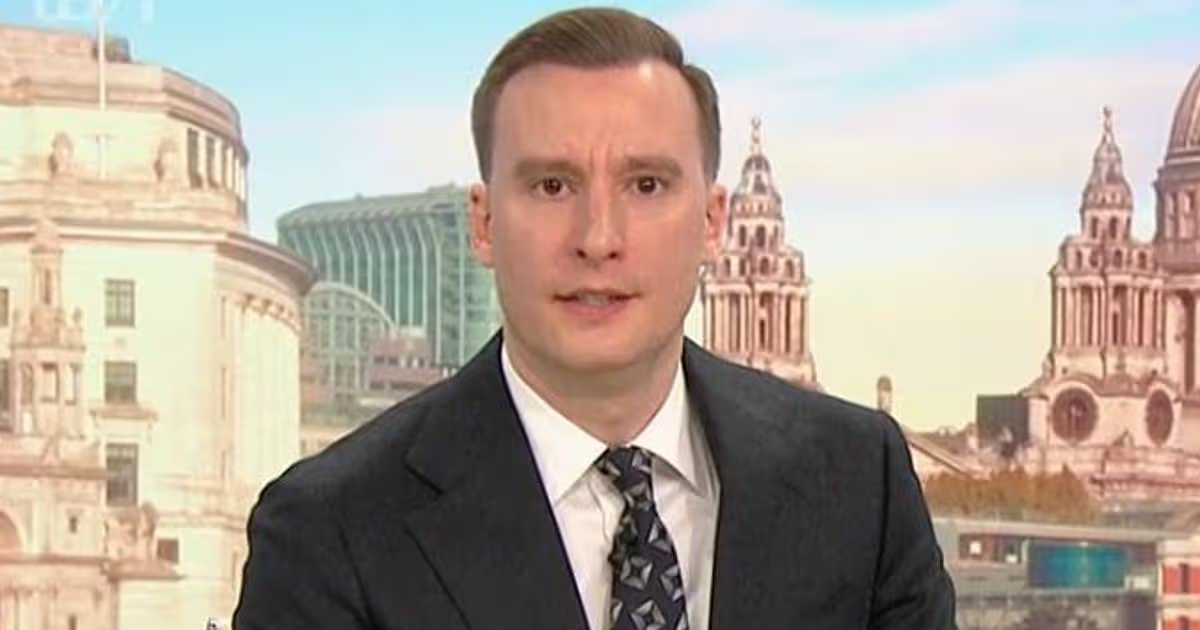
Good Morning Britain fans delighted as Welsh presenter returns to host ITV show