

Politics
Labour “needs to deliver” for coastal communities


Polly Billington MP (Photography by Dinendra Haria)

9 min read
Polly Billington, chair of Labour’s coastal grouping of MPs, talks to Noah Vickers about how her party can deliver for the seaside, why Ed Miliband was ahead of his time as leader, and the need for a ‘national conversation’ about data centres
Polly Billington is something of a Westminster lifer – she spent several years as a BBC political reporter before becoming an adviser to Ed Miliband, including during his time as Labour leader.
But now, at the second time of asking, Billington is a player herself rather than a journalist or adviser. And since her election as Labour MP for East Thanet, the 58-year-old has positioned herself as a champion of coastal communities.
Psephologists may argue about why it was that Labour won so many coastal seats. Was it really down to ‘Whitby woman’ switching to Keir Starmer – or just the type of seat profile where the vote split evenly between Reform and Conservatives? If Labour wants to hold any of them, however, it had better deliver meaningful change to coastal voters.
It’s a message the former journalist is pushing hard, while also representing backbench concerns to the party’s leadership as a Parliamentary Labour Party (PLP) committee rep. But she is vocal too in her defence of her former boss. Miliband, she says, was right before his time on the key political questions of the day. And, as battle lines begin to be drawn up over AI and the environment, Billington is prepared to question just how much we should sacrifice to energy and water-hungry big tech.
We’ve now got more coastal Labour MPs than we’ve ever had
“I set up the Coastal PLP again for the first time since the New Labour government because we’ve now got more coastal Labour MPs than we’ve ever had, even in 1997 and especially in 1945 when Margate, Broadstairs and Ramsgate did not go Labour,” she says, name-checking the towns which make up her seat.
“So, we’re a considerable chunk of the PLP, and that gives us not only an electoral opportunity but also a policy obligation and a delivery obligation,” she adds. “Labour’s majority is partly rooted in those communities and we therefore need to deliver for them.”
Nine out of the top 10 areas in 2025’s English indices of multiple deprivation, she points out, are in coastal areas. Seven of those 10 alone are in Blackpool. Life expectancy can often be significantly lower, and public transport links poorer.
Billington insists the group is not simply playing “deprivation bingo”. Rather, she and her colleagues are arguing that their constituencies contain untapped economic potential and can make a key contribution to the government’s growth mission.
The MPs want to see the government produce a bespoke coastal strategy that recognises the nation’s seaside as a “strategic economic region” in its own right. In the absence of that strategy, less well-off coastal areas like Billington’s risk being lumped in with affluent parts of inland Kent.
“I’ve got more in common with Lowestoft, Scarborough, Blackpool, Worthing, Bournemouth, Truro, than I have with Tunbridge Wells and Sevenoaks,” she says. “That’s why we need to start seeing those places as having a specific economic strategy and approach.”
Billington also wants to see the creation of a coastal minister, though she refuses to say whether she is volunteering for this post herself.
“Listen, those decisions are absolutely ones for the Prime Minister, not me.”
Would any of her colleagues do a good job of it?
“I’m not going to name anybody, am I?” she replies, before adding: “I am pitching the role, but I think the discussions about personnel need to be done with the people making the decisions – not in The House magazine.”
The Coastal PLP has already secured some wins, she argues, as the recent schools white paper contained a ‘Mission Coastal’ commitment, while the National Cancer Plan pledged to “rebalance cancer and diagnostic medical training places to remote, rural, and coastal areas”. Changes to the Treasury Green Book are a further source of optimism.
Billington now wants to see ministers use “other economic levers” to generate growth on the coast, especially where funding has already been allocated or institutions already established.
“The National Wealth Fund, GB Energy, the British Business Bank. How can they, like the Green Book, be rewired in order to be able to prioritise growth in our coastal communities?”
The MP also hints at possible future tax changes that may benefit the hospitality sector on which many coastal economies depend. Currently, once a business’ taxable turnover exceeds £90,000 in any 12-month period, they are suddenly required to register for VAT. According to Billington, “ministers themselves will acknowledge” that this threshold “drives fraud and keeps businesses small”.
“I’m not expecting a massive VAT cut. We continue to talk about how the VAT regime, and particularly the VAT threshold, causes unintended consequences and perverse incentives. Ministers are not unalive to that.”
After 15 years as a BBC journalist, Billington left the corporation to become Miliband’s special adviser in Gordon Brown’s government, then worked on Miliband’s leadership campaign, and finally advised him on communications during his first 18 months as leader.
Ed [Miliband] was right, really early on, about the squeezed middle and intergenerational fairness
Despite his failure to win the 2015 election – and her own failure to win the marginal seat of Thurrock that year – she remains convinced that Miliband was ahead of his time in his diagnosis of the nation’s ills.
“Ed was right, really early on, about the squeezed middle and intergenerational fairness,” says Billington.
“I remember him doing a speech very early after he’d got elected as leader. He was talking about this anxiety that he had about the country, that people no longer had confidence that their children would have a better life than they did.
“Even some of his greatest supporters were scratching their heads and saying, ‘I don’t know really what you’re talking about’. That’s 16 years ago, and he saw then the big economic trends which were causing these levels of intergenerational unfairness…
“There’s the housing crisis, but not only the housing crisis. Pensions, social care and so forth – those things Ed saw a long time ago.”
Her time working for Miliband also taught her that “being right is not enough – especially in opposition”.
Now a member of the Energy Security and Net Zero Select Committee, Billington is tasked with scrutinising the man she used to advise – and the work of his department, which is trying to achieve its clean power target by 2030.
But concerns have been flagged over recent weeks about whether the government’s plans to rapidly grow the number of AI data centres across the country could put that target at risk. At a January select committee meeting, Billington pressed Miliband’s junior minister, Michael Shanks, on whether the government is open to data centres using gas power to get around grid connection delays. He suggested those discussions were ongoing.
“We’ve got to have a national conversation about this,” says Billington. “You can’t have a situation where you have data centres asking to be powered by gas, which is clearly counter to the government’s overall decarbonisation plan.”
She then raises a more fundamental issue with the UK’s race to become an AI superpower.
“We have to ask some questions about whether we want data centres which take up an enormous amount of water, and an enormous amount of electricity, and don’t create very many jobs.
“We can hurtle towards a data centre future, but is that overall in the best interests of the country? For the kind of jobs that we want, the kind of growth that we want and for our natural resources, like water and how we want to manage our energy supply?”

As well as holding Miliband’s department to account, Billington is also vice-chair of the PLP and sits as one of six Labour parliamentary committee reps, tasked with relaying concerns from the backbenches to the party’s leadership.
What does she make of complaints from longer-serving MPs that she and the other reps – most of whom were first elected in 2024 – are not being robust enough in passing on those complaints to the Chief Whip and the Prime Minister?
“I think anyone who were to be a witness to those meetings certainly wouldn’t come to that conclusion,” she replies. “We feed back, where we can, to the people who raise those questions.
“We have worked on a number of different ways of making sure that we have constructive feedback loops, but I think what is most important about that is that the first people to know about what happens in parliamentary committee are members of the PLP.
“We as backbench committee reps take it extremely seriously to ensure that it is our colleagues who are the first to know, not members of the press.” The now gamekeeper clearly feels the need to keep her former fellow poachers in their place.

Billington is also clear that, following Morgan McSweeney’s departure from No 10, more fundamental changes will be needed to overhaul what some have characterised as the “boys’ club” in Downing Street.
“Personnel is one thing,” she says, “but culture, and understanding about how misogyny works, is another.
“That’s why myself and many of my colleagues in the women’s PLP were delighted to hear Keir say that there was such a thing as structural misogyny.
“We look forward to, and continue to engage with No 10 about, seeing a plan to change things significantly, to challenge that structural misogyny.”
But she emphasises this will be “a lifetime-long battle”, adding: “You don’t smash misogyny by one sacking, one resignation… This is not something that happens quickly or easily, or simply with a few movements or reshuffles.
“This has to be a different way of exercising power, of conducting professional politics, because without that change, we will not have the kind of transformed, fairer, more respectful, equal society that those of who came into politics for the Labour Party actually want to see.”

The Labour government is in the process of committing a profound act of constitutional vandalism. Yesterday, the House of Commons voted to pass the Courts and Tribunals Bill, a piece of legislation that will significantly limit the right to trial by jury in England and Wales.
The bill proposes removing a defendant’s right to insist on a jury trial for many mid-level ‘either-way’ offences, from cases of sexual assault and grievous bodily harm to burglary and theft. These are offences that can currently be tried either in the Magistrates’ Court, before a judge or bench of magistrates, or in the Crown Court, before a judge and jury. Under the proposals, defendants accused of these offences would no longer be able to elect a Crown Court jury trial.
The legislation would also increase the maximum sentencing powers of magistrates, from the current limit of 12 months in jail to, in some cases, up to two years. In addition, the new law would restrict the ability of defendants to appeal convictions from the Magistrates’ Court in the Crown Court. This reduces a convicted individual’s chances of challenging guilty verdicts delivered by a single judge or by magistrates.
The Labour government insists this is a necessary reform to reduce the massive backlog of cases in the courts. But critics see something else – the construction of a conviction machine, designed to remove procedural barriers that allow defendants to contest the case against them. The state gains in power, while an individual’s ability to challenge it shrinks.
The government’s justification for the reforms is well known. The Crown Court system is indeed under severe strain. The backlog of cases stands at roughly 80,000. Without intervention, it could exceed 100,000 by 2028. Trials are being listed years into the future, leaving victims and defendants alike waiting for justice.
Justice minister David Lammy argues that limiting jury trials will relieve pressure on the Crown Court system. The government claims that the new legislation will reduce demand on Crown Courts by 20 per cent within three years.
But such figures are highly speculative and uncertain. Magistrates may still decide to send cases to the Crown Court if they believe the offences to be sufficiently serious. In practice, it is unclear how courts are supposed to determine in advance whether a defendant should be entitled to a Crown Court trial.
Consider a typical ‘either-way’ offence. Many carry a wide sentencing range – from a community order to several years’ imprisonment. A court might face a case where the potential sentence could plausibly fall anywhere between, say, a community penalty and a four-year custodial sentence. Yet under the proposed new system, judges or magistrates may have to decide in advance whether the case is serious enough to justify a jury trial.
That requires courts to make an early assessment of particular cases before hearing all the evidence. The decision would inevitably involve speculation about facts that may only become clear during trial. Far from simplifying the system, this risks adding further procedural complexity and therefore increasing the workload within the system.
But practical concerns are not the main issue here. The deeper problem is that those advancing this legislation seem utterly indifferent to the threat it poses to justice and citizens’ rights. They talk about it entirely in managerial terms, as a logistical, bureaucratic measure. It is impossible to discern any political principle behind the bill. Prime minister Keir Starmer is supposed to be a human-rights lawyer, yet he is presiding over one of the most significant attacks on civil liberties in modern times.
Labour MPs rallying behind the bill claim it will provide ‘justice for victims’. But this is just cant. The criminal-justice system is not being crippled by too many jury trials. No, it’s suffering from years of underinvestment, court closures and staff shortages. The unthinking authoritarianism of this Labour government is no answer to this crisis.
Trial by jury is one of the oldest citizens’ protections in the British constitutional tradition. It reflects the principle that the state should not be able to imprison individuals without the judgement of their peers. In this way, juries have always been a vital curb on the worst excesses of the state. Restricting that right can only aid the worst excesses of the state.
All is not yet lost, of course. The bill must still pass through further stages of parliamentary scrutiny, including in the House of Lords, before it returns to the Commons for detailed committee examination. Some Labour MPs have expressed unease about the proposals, and there are rumours that more could rebel at later stages.
But I’m not convinced any rebellion will be enough. This Labour government and their MPs are largely of very low quality, even by recent parliamentary standards. Sadly, they are sufficiently unthinking and politically unprincipled to pass these measures without a care for the constitutional damage they are doing. If we are to protect the light that shows that freedom lives, we have an almighty fight on our hands.
Luke Gittos is a spiked columnist and author. His most recent book is Human Rights – Illusory Freedom: Why We Should Repeal the Human Rights Act, which is published by Zero Books. Order it here.

Women who survived Ireland’s mother and baby homes are now having their benefits cut by the Department for Work and Pensions (DWP) in Britain. Appallingly, the cuts are happening because these women accepted compensation from the Irish government for the horrific abuse and trauma they experienced.
DWP: Ireland’s historic abuse of unwed mothers
Mother and Baby Homes spread through Ireland in the 1900s, right up until 1990. They were seen as a “refuge” for unwed mothers and their babies. But they were actually church ran instutions that trapped women who were often sent there by their families, who had disowned them for getting pregnant. These included women who’d been abused or exploited. There were more than a dozen of them in Ireland. Three of them were “Magdalene laundries”, which were essentially workhouses.
The women in the ‘homes’ were forced into labour and experienced horrific abuse from the nuns. There was also a horrifically high death rate of babies in some institutions. In 2012, a mass grave was discovered on the site of a former home in Tuam. 796 children’s remains were found. Many children who survived were trafficked across the Irish border for adoption (from ROI to Northern Ireland), and documents were falsified to make it harder to reunite mother and baby.
Finally, after mass campaigning, the Irish government launched an inquiry. It detailed the horrendous experiences of 56,000 women and 57,000 children between 1922 and 1998. After this, the government set up the Mother and Baby Institutions Payment Scheme, which began awarding compensation in 2024.
DWP causing survivors even more harm
However, because the DWP is a completely barbaric institution, survivors are now suffering in a different way.
The Guardian reports that up to 13,000 survivors who now live in Britain could risk losing their means-tested benefits, such as Universal Credit, if they accept. This is because the compensation goes towards the amount of savings the claimant has.
Compensation ranges from €5,000 to €125,000 (£4,230 to £105,000) depending on the length of time someone spent there. Universal Credit claimants are only allowed a maximum of £6,000 in their bank accounts; after that, every £250 extra sees £4.35 reduced from the payment. There is no upper limit on Pension Credit; however, past £10,000 every £500 you have sees £1 reduced from your payment.
If a claimant has over £16,000 in the bank, they automatically lose their benefit. Not only that, but they will lose associated benefits such as Housing benefit. So a woman who went through the most horrific experience of her life, who now struggles to work, or is on pension credit, could see her benefits lost because she accepted compensation.
As this news has spread, some have been forced to turn down their compensation offers for fear they will lose their benefits. After six months, the Irish government counts this as a rejection.
Support Philomena’s Law
Labour MP Liam Conlon has introduced a bill to parliament calling for the government to introduce an ‘indefinite capital disregard’ for mother and baby payments. The bill is named Philomena’s Law, after Philomena Lee, a survivor who was portrayed by Judi Dench.
Conlon said:
What Whitehall often misses is the human-sized picture. In this case, that is thousands and thousands of survivors of these cruel institutions living in Britain today, who are being denied the compensation they’re entitled to
The campaign is backed from prominment Irish figures such as Siobhán McSweeney. However, due to the restraints of parliament, the bill is in danger of running out of time.
It’s absolutely cruel that the DWP is once again punishing these women who survived unimaginable abuse. You can write to your MP to ask them to support the campaign here
These women have already suffered so much; it’s absolutely horrific that the DWP won’t even allow them to accept compensation without the threat of losing their state support.
Featured image via the Canary
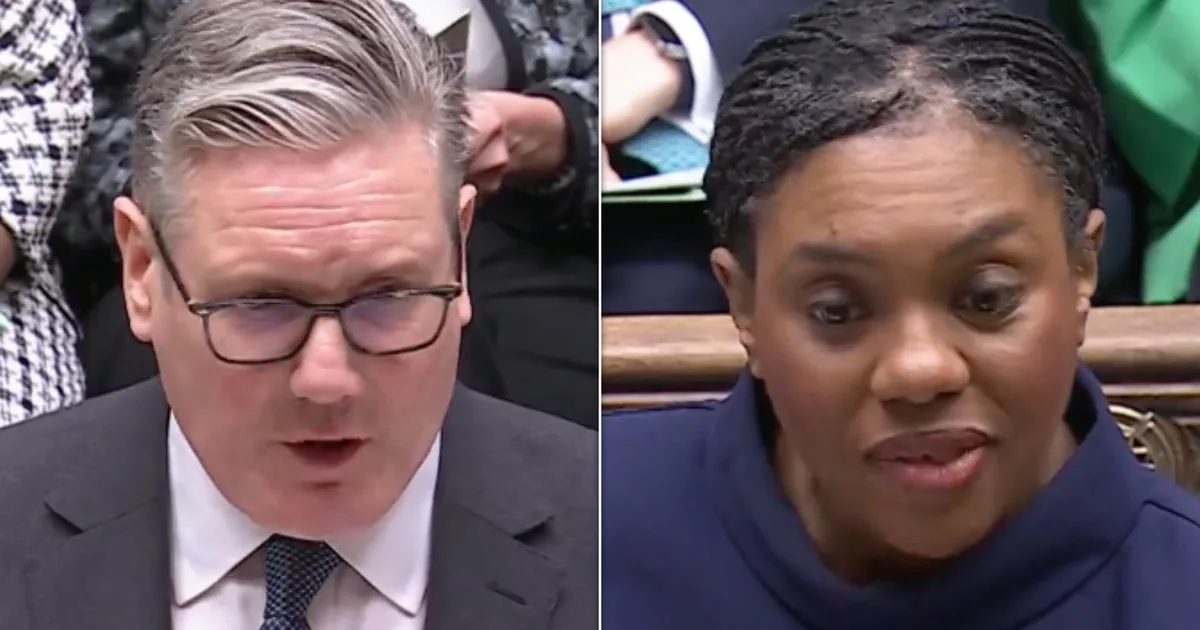
Keir Starmer accused Kemi Badenoch of “the mother of all U-turns” after she appeared to ditch her support for the war in Iran.
The prime minister also attacked Nigel Farage over Reform UK’s shifting stance on the conflict.
Both Badenoch and Farage last week condemned the PM for not allowing the US to use British bases to launch its attacks on Iran.
Since then, the conflict has sparked chaos across the Middle East, with the resulting spike in oil prices leading to fears of a global economic meltdown.
At prime minister’s questions, Badenoch pressed Starmer to ditch the planned increase in fuel duty, which is meant to happen in September.
The PM said the government was keeping that policy “under review” before attacking the Tory leader over the war.
He said: “As I said to the House last week, I took the decision that we should not join the initial US-Israeli offensive against Iran.
“The leader of the opposition attacked me for that decision relentlessly, she said that the UK should have joined the US and Israel in the initial offensive strikes, then yesterday, in the wake of the economic consequences, the leader of the opposition totally abandoned her position.”
He added: “That is the mother of all U-turns on the single most important decision the prime minister ever has to take – whether to commit the United Kingdom to war or not.”
Starmer also took aim at Reform, whose own position on the war has shifted after Farage said yesterday: “Let’s not get ourselves involved in another foreign war.”
The PM said: “After nine days of saying, ‘join the war, join the war, join the war’, yesterday, she says ‘I never said we should join, I haven’t said we should go in with the US’.
“I’ll tell you what’s happened, she and the Reform leader have been spooked, because they realise they have jumped into supporting a war without thinking through the consequences, and now she is furiously trying to backpedal.”
A Conservative spokesman said: “We have just seen a truly shameful display from the prime minister.
“Six times he was asked why he is raising fuel duty for families and businesses this year, six times he refused to answer, instead smearing the leader of the opposition and deliberately misrepresenting her position on Iran and our armed forces.
“Keir Starmer has shown he doesn’t care about drivers and doesn’t care about the cost of living. He has no answer on petrol prices, because he knows that raising fuel duty for the first time in 15 years is the clearest possible symbol of Labour’s total mismanagement of the economy.”
Ben Worthy offers his reflections on the impact of the Mandelson / Epstein scandal on British politics and how it compares to previous political scandals such as the Partygate scandal.
A number of journalists have pointed to the similarities between Boris Johnson’s Partygate and the Mandelson / Epstein scandal. Like Johnson in 2021, Starmer is no longer in control of the disclosure. It is likely that leaks, briefings and publications will keep the issue, and the Prime Minister’s role, in the headlines.
Starmer promised probity and morality against Johnson’s legacy of lying, secrecy and dishonesty. Yet, like Partygate, the Mandelson scandal, as Kemi Badenoch put it, cuts to the ‘very heart of this Prime Minister’s judgment’. Both connected the prime minister to a toxic and deeply disturbing set of behaviours: Johnson’s ignorance of the suffering of Covid, and Starmer’s apparent ignoring of the suffering of Epstein’s many victims.
This is not to say the two scandals are the same. Partygate was a revelation of a personal moral failing, a deeply buried secret was let out only by a leak in late 2021. Johnson continued to claim in his memoirs that it was ‘over-blown’, and revenge by disgruntled Remainers (though it appears it was appalled Brexiters).
By contrast, Starmer’s scandal was an ‘open secret’, with a trail going back years. The horrors of Epstein’s abuses have been known for decades. Knowledge of Mandelson’s close links with Epstein after his jailing have been in the public domain at least since 2023, after years of reporting by the FT and Daily Mail. Back in January 2025 Starmer was ‘lukewarm’ about appointing him and as recently as February 2025 Mandelson swore at FT journalists for mentioning it. The most recent trigger flowed from the Epstein Transparency Act and diligent and painstaking matching of documents after a leak.
The focus is now on a first ‘due diligence stage’ when Mandelson was appointed, when, as the Guardian explained a ‘document’ was given ‘to No 10 with outstanding questions before his appointment in late 2024’. Three questions were asked and reassurances apparently given. Starmer’s future now hinges on answer to a very specific question ‘When he made that appointment, was he aware that Mandelson had continued his friendship even after Epstein’s conviction?’
Starmer replied at PMQs that Mandelson had ‘lied repeatedly to my team when asked about his relationship with Epstein, before and during his tenure as ambassador’ and explained how
What was not known was the sheer depth and the extent of the relationship. Mandelson lied about that to everyone for years. New information was published in September, showing that the relationship was materially different from what we had been led to believe.
Starmer’s future may depend on if the evidence convincingly shows the ‘sheer depth and the extent of the relationship’ and that the ‘new information was materially different’.
Rather like Johnson’s ignorance of the parties, opponents have questioned how Starmer did not know. Badenoch mocked Starmer’s ignorance ‘He did know, it was on Google…If the Conservative research department could find this information out, why couldn’t No. 10?’ Voters were left unconvinced and 64% of voters ‘believe Starmer had enough information about their relationship to know it was bad idea to appoint Mandelson’ and only 21% felt he didn’t.
Starmer wanted to ‘release the documents as quickly as possible’ but events have proven otherwise. The danger for Starmer is that, like with Partygate, the government has now lost control of the disclosure process. As David Allen Green explains here, others will now control the flow of information, and it is almost certain that more information means more problems and revelations.
Just like Partygate, this scandal has triggered inquiries, and now arrests by the police, and a rather unusual role for The Intelligence and Security Committee, which has promised ‘maximum transparency’ and has asserted control over what will be released, with apparent agreement from the police. It is even possible that Starmer could be investigated by his own Independent Adviser on Ministerial Standards, a post he strengthened because of Boris Johnson’s neglect of it.
There will now be continued pressure from Parliament and the media. Partygate triggered a series of forensic questions, especially from one Keir Starmer and a rolling series of leaks, briefings and tips, which drove more questions and scrutiny between MPs and the press.
The questions are already building for Starmer. The media are focusing on a key subset of emails held back by the police. Wes Streeting, a possible leadership candidate against Keir Starmer, has published some really quite convenient, if not downright Potemkin style, WhatsApp messages. In another potential avenue, before his arrest the US Congress has formally asked Mandelson to testify. The row, speculation and subsequent admission over who tipped off the Met may be the shape of things to come.
Another parallel is that this scandal comes amid worsening, if not broken, relations between the two most important groups in British politics: government and their own backbenchers. Partygate came just after a huge rebellion against Johnson, and his extremely questionable defence of an MP who breached the rules on lobbying.
Even before this, Labour MPs were deeply unhappy. The relationship between Labour MPs and the Labour Frontbench had deteriorated extraordinarily quickly, partly because of fragility of MPs majorities, partly because of inexperience, and partly because of an extraordinary series of missteps by the government. To worsen the situation, the public don’t believe Starmer’s defences, and a majority of voters now believe he should resign. Both events deepen the crisis of trust in politics. Partygate worsened an already bleak picture, bringing it to a record low. Mandelson’s scandal undercuts all Starmer’s claims that he wants to restore and repair it.
It is unlikely one piece of evidence or a document that will exonerate Starmer, rather than muddy the waters or making it worse. Even the formal investigations into Partygate, and the famous Gray reports, which seemed on the surface to clear Johnson, provided damning evidence in the small print and photos. Most importantly, it seems unlikely that this is the last of the revelations, with more buried deep in the Epstein Files or in the government’s own estimated 100,000 documents.
By Dr Ben Worthy, Lecturer in Politics, Birkbeck, University of London.

Cabinet minister Sarah Sackman has refused to condemn the US-Israel school massacre in Iran in an interview with Sky News. The tomahawk bomb that fell on the primary school in Minab is highly likely to be a US bomb after verification by military specialists. This horrific war crime resulted in the murder of 175 people, most of those were children between the ages of 7 and 12.
Investigative group Bellingcat says a newly released video “appears to contradict” US President Donald Trump’s claim that Iran was responsible for the explosion.
It comes as mounting evidence points to US culpability for the February 28 strike, which hit a school adjacent to a Revolutionary Guard base in Minab, Iran, in the country’s southern Hormozgan Province.
However, Sackman’s abhorrent view is that the incident simply represents the ‘realities of war’.
Iran: in which reality are children an acceptable loss?
It never seems to be the ‘realities of war’ when it comes to the deaths of Western or Israeli children. As we have seen in Gaza, Israel kill an average of 28 Palestinian children every day. Many of these children have been killed before they even reached the age of one.
Evidently, these supposed “realities” are shaped by those who perpetrate them. And the reality is that the killings of people in the Global South are entirely acceptable to the so-called international order.
In an interview with Sky News on Tuesday, Sarah Sackman, a British minister has refused to declare the school massacre in Iran, which killed 165 people, many of them children, a war crime, labelling it the “realities of war”https://t.co/lAWVLtqAbL
— Middle East Eye (@MiddleEastEye) March 10, 2026
Realities of Western war
We have written extensively about the illegal war that Zionist US and Israeli forces are waging against Iran’s civilian population. So far, their attacks have reportedly killed 1,230 people in Iran and another 394 in Lebanon. Again, 83 of those deaths were children. This latest Western aggression follows a long line of military action taken against the Middle East. Actions which have only served to destabilise and traumatise the region. The US and Israel want the world to look to its ‘military might’ with respect and affirm these hostile states as being the authority of international order.
Instead, it just underscores the inhumanity and lawless nature to which the US and Israel conduct their colonialist agendas. After all, this was never about liberating Iranians from their oppressive leader. It is and has always been about colonialist and imperialist plunder. The ‘liberation’ of Iraq led to the deaths of up to 4.7 million across the Middle East as a result of US/UK military aggression.
Deplorably, no accountability ever follows against Western war-hungry capitalists.
We wrote about the illegal war on Iraq which was said to ‘liberate Iraqis from Saddam Hussain’. In no surprise, it punished the civilian population far more than it benefitted them. Joe Glenton wrote in January:
The truth is that the Iraq War was illegal and killed and maimed hundreds of thousands of people. The war destabilised the entire Middle East region, leaving a lasting impact on those who carried it out. By all measures, it was an unmitigated disaster. Yet, bizarrely, figures like Trump’s secretary of state Marco Rubio are clamouring to revive colonialism. Regime change in Iraq clearly taught them that war is profitable for the West.
Pointing to the actual result of Western military ‘intervention’ in the Middle East, Glenton added:
Since the ousting of the pre-2003 government, Iraq has become a lucrative cash cow for certain players, including global arms firms – what I prefer to call Big Death. Welcome to the military charity-industrial complex.
This post on X highlights the real motivating factors for the US:
America didn’t bring democracy to Iran- it stole it. In 1954, the CIA overthrew Iran’s elected leader Mossadegh because he wanted Iranians to control their own oil.
US don’t have a foreign policy-US have a franchise model: install puppets, steal resources, call it “stability.” pic.twitter.com/WsnEFfc3Kt
— Ounka (@OunkaOnX) January 10, 2026
UK involved in US war crimes once again, albeit sluggishly
Three US B1-B Lancer aircrafts recently departed from RAF Fairford in Gloucestershire following Keir Starmer’s choice to allow the US to use our bases. Simultaneously, Iran saw its most intense day of bombing. HMS Dragon, after a week of loading it with weapons and artillery, set sail yesterday for Iran. Although, this was four days later than planned which suggests a sluggish approach by the current government to jump into such flagrant illegal military actions.
Nevertheless, the UK is involved in this war, and when the aggression was unprovoked, there can be no ‘defence’ about it. After all, Iran has the right to self defence under international law – aggressors do not.
As a result, Western racist hypocrisy and our clear double standards are on full display. Global South countries do not have legal rights no matter the circumstances, whereas the West has all the rights no matter the circumstances.
We all know that there can never be peace or freedom without justice. Unwarranted and unwelcome Western intervention led to a more extreme government taking over in Iran – stomping all over their rights and freedoms will not lead to a more progressive government. Neither will mass grief and trauma.
Some days you find out things about people you’ve barely heard of before.
Today I found out that @sarahsackman
– Is the main driver behind banning the 800 year right to a Jury Trial.
– Was trained at the Israel Supreme Court
– Won’t say the Minab Massacre was a War Crime. https://t.co/E2nQKfyTC9— Mountain (@sharpeleven) March 10, 2026
Corrupt
We only have to look to Sarah Sackman’s background and her actions to question the legitimacy of her ‘professional view’. Some light scrutiny suggests her view is little more than a corrupted, foreign-influenced stance that does not reflect the values of ordinary British people. For instance, she supports the genocide on Gaza, the majority of British people do not.
Furthermore, the post above highlights how Sackman played a key role in pushing through the systemic cuts to the human rights of some defendants in the UK. After all, the right to a fair trial affords the right to a trial by jury under the European Convention of Human Rights (ECHR).
Consequently, the optics can’t be avoided. Sackman wants to ignore the human rights of those murdered by the US and Israel, whilst taking crucial human rights away from British citizens. To do so whilst the UK is encroaching further and further into war with Iran is beyond despicable.
The British people must reckon with the reality that by creating a hierarchy of human rights and dignity abroad, we invite a hierarchy of human rights and indignity at home.
Featured image via the Canary
Politics
Politics Home | Government Confident Of Defeating Legal Challenge Over Anti-Muslim Hate Definition

3 min read
Exclusive: The government is confident that any legal challenge launched by free speech campaigners over the new anti-Muslim hostility definition will fail.
PoliticsHome understands that the new definition, announced on Monday as part of a wider social cohesion strategy, was amended during the writing process to be as robust as possible in the face of an expected legal action, with one government source saying that the wording had been put through the “legal ringer” in preparation for judicial review.
The government asked an independent working group, led by former Conservative cabinet minister Dominic Grieve, to advise on whether a new definition of Islamophobia was needed in response to a rise in hate crimes against Muslims.
Ministers received a template definition from the group in September and spent the subsequent months finalising the wording.
During the process, as PoliticsHome reported in October, the government decided to drop the term Islamophobia and instead refer to anti-Muslim hostility.
The adopted definition focuses on anti-Muslim hostility as “violence, vandalism, harassment, or intimidation, whether physical, verbal, written or electronically communicated” towards Muslims.
The government decided not to include a clause identifying Muslims as a race, explaining that Muslims come from a range of racial backgrounds. Instead, the definition sets out how hostility towards the group includes prejudiced stereotyping based on perceived markers of being Muslim, like appearance, dress and names.
Speaking on Monday, the cabinet minister leading the work, Secretary of State for Housing, Communities and Local Government, Steve Reed, said: “Crucially, this definition protects the fundamental right to freedom of speech while protecting people from unacceptable abuse and violence.
“A special representative on anti-Muslim hostility will also be appointed to support action to strengthen understanding, reporting and response.”
The definition was welcomed by the Chair of the British Muslim Trust, Shabir Randeree, who said it would “help guide institutions that have too often been too slow or too weak in their responses to incidents a tolerant and respectful country like ours must never accept”.
Andrew Copson, Chief Executive of Humanists UK, said his organisation was pleased that the wording seeks to combat hostility towards Muslims “while explicitly protecting speech that is critical of religious ideas, in line with international human rights standards”.
However, on Tuesday, The Telegraph reported that the Free Speech Union (FSU) was preparing a pre-action letter and threatening legal action.
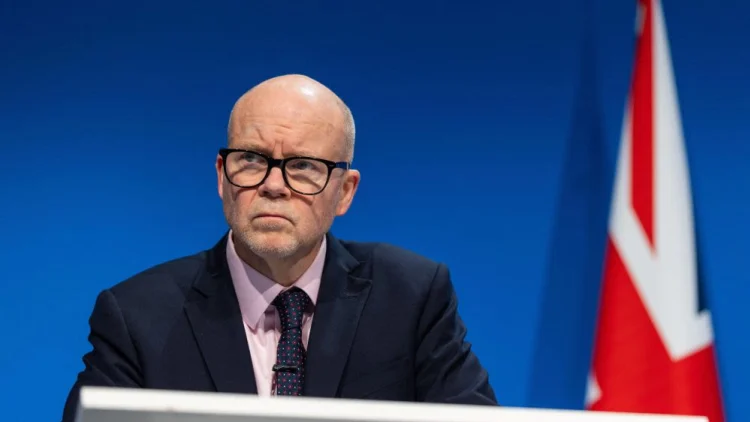
FSU founder, Conservative peer Toby Young, argued the definition is illegal because it would result in criticism of Islam being censored. “Bringing a judicial review against a secretary of state isn’t cheap, but we believe this is a vitally important free speech issue. Blasphemy crimes were repealed as far back as 2008 — let’s keep it that way,” he told PoliticsHome.
There is confidence in Whitehall that any legal challenge brought by free speech campaigners will be unsuccessful.
Government sources familiar with the definition-writing process told PoliticsHome there are three broad reasons why it took six months to produce the final wording, with one being ensuring the definition would stand up to a legal challenge.
The second was making sure it could be applied in public sector settings like the NHS and the police as simply as possible, while the third was an effort to make sure the government was sufficiently engaged with Muslim communities.
Lord Walney, former extremism adviser, told PoliticsHome: “Already people are signalling they will use this definition to try to silence criticism of Islam, which must be allowed in a free society.
“So the government must monitor this situation closely and be prepared to reverse their decision if the definition has the chilling effect many of us fear it will.”
PoliticsHome has contacted the government for comment.

Israeli fascist minister Bezalel Smotrich’s son, Benya Hebron, is in critical condition after just minutes of fighting in Israel’s war of aggression on Lebanon. Hebron, a member of the notorious Golani Brigade, was wounded by Lebanese resistance shelling. Smotrich said:
Shrapnel penetrated his back and abdomen.
He continued:
He was rushed to the hospital … one of the fragments tore the liver and stopped at the wall of the largest blood vessel in the abdomen. Had it, God forbid, been damaged, the situation would’ve been far more serious.
Smotrich is a central facilitator of Israel’s latest crimes in Lebanon as well as of Israel’s genocide in Gaza. The occupation’s latest attacks on Lebanon have murdered almost 500 people and forcibly and illegally displaced almost 700,000 people.
Israeli generals have admitted being shocked by the intensity of resistance to the occupation’s invasion.
Featured image via the Canary

Flies, moquitoes, and other slightly irritating little critters can make an evening rest in your back garden a little more stressful than it needs to be.
And while it can be tempting to spray your lawn and leaves, Helen Bostock, a senior wildlife specialist at the Royal Horticultural Society (RHS), previously told HuffPost UK it’s a good idea to skip those where possible.
Instead, she said, “A vibrant garden ecosystem is one that requires [fewer] inputs from gardeners – when natural predators are keeping the aphids in check, [fewer] sprays are needed”.
And sometimes, plants alone can help – ones like petunia.
Which flies does petunia repel?
Sometimes described as “nature’s pesticide,” the flower helps to repel, or redirect:
- aphids,
- mosquitoes,
- tomato wormhorns,
- asparagus beetles,
- leafhoppers,
- squash bugs.
Luckily, though, they’re still friendly to bees.
What do petunias smell like?
Some bugs don’t like the plant because of its smell, which, to most humans, is divine; petunias have a sweet, honey-like scent that some compare to vanilla.
Others, like aphids, adore the aroma, which sounds like a bad thing but actually keeps them from eating your veggies instead.
They release their strongest scents in the evenings, when they want to attract pollinators (including the hawk moth Bostock told us can help your garden thrive).
They do this when flies, including the ones they want to attract, are most active.
That means that they’ll smell the nicest, and repel the most petunia-hating bugs (including mosquitoes), on glorious summer evenings.
How can I grow and maintain petunias?
They need to be placed in the sun, with a little shelter from the wind. If you’re in an area with milder weather, you’ll get away with putting them in partial shade.
They do well in hanging baskets, raised pots, window boxes, raised beds, and borders. You can also plant upright petunias in the ground.
Sow them in spring under cover. Place them on top of soil in a tray if you’re sowing them from seed, and keep them at 18-24ºC until they’ve got two true leaves, BBC Gardener’s World said.
Then, get them used to being outside – “hardening” – for a week or two before planting them in rich soil.
Water regularly, especially if they’re in pots, and apply fertilisers high in potash every two weeks or so once established. Deadhead as needed.
Politics
James Fisk: If Conservatives get back into power they need to overhaul the way Government communicates online

James Fisk works in digital communications and is Director of Communications for the Next Gen Tories.
Why does the Government have Instagram?
The answer that has likely popped into your head is “to communicate with younger people”, or “to bring the state into the 21st century.” or even, “to reach a bigger audience”. These are very fair answers, and the attempt by the Civil Service to evolve its communications, and endeavour to more effectively communicate policy and information is noble.
The problem, however, is that the methodology and success metrics deployed by the Civil Service for departmental social media accounts, risks fundamentally undermining the relationship between the individual and the state. In short, we need to ask if it is right for the Government to ‘go viral’.
Cast your mind back to 1st October 2025. For those not as chronically online as me, this is the day that the Department for Education posted a video promoting Labour’s new free school breakfasts policy, where Civil Servants interviewed a variety of parents asking questions about how the policy will benefit them.
The video, from a technical standpoint, is good. The edit is smooth, the hook is engaging, and it certainly got a lot of views, but it went down like a cup of cold sick.
The most common criticism, on our side of the aisle, was expressed in comments such as “why am I being taxed so these lazy parents can go to coffee mornings with their mates” – a valid point, based on a genuine answer in the video. Meanwhile, on the left, the video was widely criticised for being too “middle class”, having been shot entirely in London, and not “telling the working class story”. It’s fair to say, if a policy about giving schoolchildren free food is criticised from the left and the right, the comms has probably failed.
This is not a criticism of the DfE Digi team, far from it. In fact, the reason I picked this video is because I was put in a very similar position myself last year. I have spent my career working in digital communications, and when working in the Caribbean for a political party, they introduced a free school breakfast policy. To tell the truth, I had a lot of similar ideas to the DfE digital team, and I found it quite amusing to see similar video ideas deployed by the British state and a foreign governing party.
The difference, however, is that the creative risks I took were taken from the account of a political party. My objective was not just to communicate a policy, but to win votes. The state is not in that position, and shouldn’t be, ever. That is why I believe this video is emblematic of everything wrong with the way the Civil Service runs departmental social media accounts. In their noble attempts to look good online, they naturally risk looking bad and adding to the ever growing sense of the government being out of touch.
The problem at the heart of the Civil Service’s approach, is that they are using tired, old school metrics to measure success. The success of a Digital team in Government departments is measured mostly in reach. Their job, in essence, is to ensure that as many people as possible are informed about Government policy, their methodology is to create online content that gets more views. If a video gets a lot of views, the more people see it, and the digital team is successful.
Here is why that doesn’t work: The free school breakfasts video got a lot of views, millions more than the average DfE video. Yet a social listening analysis of online sentiment on the day that this video was released, shows that the volume of negative posts about the free school breakfast policy increased by nearly 900 per cent after the video was posted.
Furthermore, in the previous month, across all of social media, ‘free school breakfasts’ had a sentiment reading of 56% positive, this means that a majority of online discourse about one of Labour’s key manifesto pledges was favourable. After the video was released, the same term had a reading of 90.4 per cent negative.
What’s more, on the day that the video was released, the percentage of negative posts about the Government, not a Minister or political party, but the institution of Government itself, increased by 4 per cent. So we are in a situation, where a team in Whitehall has decreased the popularity of a government’s manifesto policy, made people more annoyed at our institutions, and yet have likely moved closer to hitting a KPI.
So why is this so damaging, and why do we need to fix it? We know that the British public is losing trust in the state’s institutions, there are multiple reasons for this, and most are far more important than civil servants making memes (yes, they’ve done this too). But, in a digital world, Conservatives have to understand that the relationship between the individual and the state, the very essence of the social contract, exists not just in visible policing or the tax on your payslip but, develops every single time you interact with the Government on your phone.
As a Conservative, I am naturally against the state encroaching too much into my life, and I believe this logic should exist online. The individual’s perception of the social contract is, for better or worse, is now forged every time one has to reload Gov.uk, or has to scroll past a Home Office ad on TikTok, or sees a taxpayer funded videographer forgetting to clean their lens.
If the Conservatives are serious about changing the state, and governing effectively, we have to make sure that the British state is not annoying people on Facebook, because it can critically undermine the perception of government, and democratic policy, if it is done badly.
So how do we do this? Firstly, we need to redefine the metrics for successful online communications from Government Departments. Politicians and parties need to have complete creative license to try and win votes online, make people support policies, and take the risk of being disliked by certain demographics for doing so. The institution of Government cannot afford to take that risk, so it shouldn’t.
We need to take a small state approach to the Government’s presence online. It should be for future Conservative Ministers to win public support for policy online, and the Civil Service run, Departmental accounts need to be sources of information, not viral videos. We need to focus on providing clear, useful and informative information online, not going viral. It should be for Ministers to communicate policy announcements online; nobody wants to watch a video from the Home Office during their evening scroll.
Any incoming Conservative Government needs to ask serious questions about the way the state interacts with individuals online. Does DESNZ need an Instagram, do citizens really want to see DEFRA using social media trends? How many people, realistically, who are in need of information from the state are opening TikTok?
A good online state looks like a Government whose website is the envy of the world, that protects us from online misinformation, and gives us accurate information from accounts we have no reason to distrust. As someone of the generation who has grown up in a world of online fake news, I am always sceptical of what I see online – it is the state’s job to counter that, not exist as an actor within it.
We cannot fall into the trap that Labour have. So let Ministers communicate free school breakfasts, and let the DfE tell us when GCSE results day is. Otherwise, we risk letting the civil service blunder its way to creating distrust in future Conservative policies.
Politics
The House | “One of the most memorable films of the last year”: Baroness Chakrabarti on ‘Train Dreams’


Robert Grainier with his daughter, Kate | Image courtesy of Netflix | © 2025 BBP Train Dreams. LLC

4 min read
With its stunning locations and exquisite cinematography, this Oscar-nominated portrait of the life of an American itinerant labourer at the turn of the 20th century is also the story of the country itself
In previous times of major crisis, the United States provided hope, sometimes even mythologised, as rescue for the world. Today it can at least still offer stories of self-examination and solace. If the 20th was the American century, cinema was surely its great art form.
In Train Dreams – Clint Bentley’s 2025 film inspired by Denis Johnson’s 2011 novella – the simple life of woodsman and itinerant labourer, Robert Grainier, becomes the story of the country itself, from his birth in the 1886 of horses and carts to his death amidst the space race in 1968. In this respect, it might appeal to fans of the previous year’s The Life of Chuck by Mike Flanagan. This time, however, the form is more rural elegy than science fantasy.
Grainier is an orphan who drops out of school and lives a hard and hermit-like existence until he meets his future wife, Gladys (Felicity Jones). His orphanhood represents both the dislocation and stoic heroism of a migrant pioneering nation. Played with quiet but captivating pathos by Joel Edgerton, his precise ethnicity seems ambiguous.

Issues of race come to the fore on at least three memorable occasions. First, when Robert is complicit in a brutal incident involving a Chinese logger, Fu Sheng (Alfred Hsing). This episode forever haunts him and he feels cursed as a result of it. Secondly, when an African American cowboy arrives to avenge the racially motivated murder of his brother. Finally, Robert is befriended by Ignatius Jack (Nathaniel Arcand), a Native American who seems to understand both him and their surroundings better than so many others.
As so often in fine cinema, the score plays an essential part
The nobility of rural life is explored both via its various dangers and privations and in the way that neighbours embrace natural duty, travelling considerable distances to check on one another.

The environment is a major theme of the film, with some stunning locations cherished by Adolpho Veloso’s exquisite and rightly Oscar-nominated cinematography. We see it change over the years and one night around the campfire on a “cut”, the veteran explosives expert (played by the impeccably understated William H Macy) expresses his regret at what they have been doing to the forest all their working lives. The forest almost appears to exact her revenge by way of the various casualties that result from tall fallen trees and large branches. The animal kingdom is also represented by way of the relationship between Robert and his dogs in particular.
 As so often in fine cinema, the score plays an essential part. Bryce Dessner has been understandably lauded for a string-based soundtrack using period-appropriate instruments, enhanced by modern synthesisers. There are nods to Philip Glass and Michael Nyman. Both the harshness and beauty of the landscape is evoked alongside the intrusion of industrialisation in the form of the all-important railway. Indeed, the music joins the best tradition of train sounds and rhythms, almost magically conjured for the screen experience by way of acoustic instruments. The title song, co-written by Nick Cave, receives another of the film’s worthy Academy Award nominations.
Whether Oscar glory follows or not, I recommend Train Dreams as one of the most thoughtful and memorable films of the last year.
Baroness Chakrabarti is a Labour peer
Train Dreams
Directed by: Clint Bentley
Broadcaster: Netflix

The unthinking authoritarianism of Labour’s jury-trial reforms

MLB news: Reds’ Hunter Greene dealing with elbow issues
Thinking Machines Lab secures NVIDIA investment


![Bitcoin Has One Hurdle To Beat Before Going Higher! [Data]](https://wordupnews.com/wp-content/uploads/2026/03/1773233177_maxresdefault-80x80.jpg)


-
Business5 days ago
Form 8K Entergy Mississippi LLC For: 6 March
-

 Tech6 days ago
Bitwarden adds support for passkey login on Windows 11
-

 News Videos2 days ago
10th Algebra | Financial Planning | Question Bank Solution | Board Exam 2026
-

 Fashion5 days ago
Weekend Open Thread: Ann Taylor
-

 Crypto World2 days ago
Paradigm, a16z, Winklevoss Capital, Balaji Srinivasan among investors in ZODL
-
 Tech6 hours ago
A 1,300-Pound NASA Spacecraft To Re-Enter Earth’s Atmosphere
-
 Sports6 days ago
499 runs and 34 sixes later, India beat England to enter T20 World Cup final | Cricket News
-

 Politics5 days ago
Top Mamdani aide takes progressive project to the UK
-

 Sports4 days ago
Three share 2-shot lead entering final round in Hong Kong
-

 Sports3 days ago
Braveheart Lakshya downs Lai in epic battle to enter All England Open final | Other Sports News
-

 Business21 hours ago
ExxonMobil seeks to move corporate registration from New Jersey to Texas
-

 NewsBeat6 days ago
Piccadilly Circus just unveiled ‘London’s newest tourist attraction’ and it only costs 80p to enter
-

 Entertainment4 days ago
Hailey Bieber Poses For Sexy Selfies In New Luscious Lip Thirst Traps
-

 Business3 days ago
Search for Nancy Guthrie Enters 37th Day as FBI Probes Wi-Fi Jammer Theory
-

 Business5 hours ago
Search Enters Sixth Week With New Leads in Tucson Abduction Case
-
 NewsBeat2 days ago
Pagazzi Lighting enters administration as 70 jobs lost and 11 stores close across Scotland
-

 Tech2 days ago
Despite challenges, Ireland sixth in EU for board gender diversity
-
Entertainment7 days ago
Harry Styles Has ‘Struggled’ to Discuss Liam Payne’s Death
-

 Crypto World7 days ago
New Crypto Mutuum Finance (MUTM) Reports V1 Protocol Progress as Roadmap Enters Phase 3
-

 Tech6 days ago
ACIP To Discuss COVID ‘Vaccine Injuries’ Next Month, Despite That Not Being In Its Purview