

Politics
Politics Home | Government Confident Of Defeating Legal Challenge Over Anti-Muslim Hate Definition


3 min read
Exclusive: The government is confident that any legal challenge launched by free speech campaigners over the new anti-Muslim hostility definition will fail.
PoliticsHome understands that the new definition, announced on Monday as part of a wider social cohesion strategy, was amended during the writing process to be as robust as possible in the face of an expected legal action, with one government source saying that the wording had been put through the “legal ringer” in preparation for judicial review.
The government asked an independent working group, led by former Conservative cabinet minister Dominic Grieve, to advise on whether a new definition of Islamophobia was needed in response to a rise in hate crimes against Muslims.
Ministers received a template definition from the group in September and spent the subsequent months finalising the wording.
During the process, as PoliticsHome reported in October, the government decided to drop the term Islamophobia and instead refer to anti-Muslim hostility.
The adopted definition focuses on anti-Muslim hostility as “violence, vandalism, harassment, or intimidation, whether physical, verbal, written or electronically communicated” towards Muslims.
The government decided not to include a clause identifying Muslims as a race, explaining that Muslims come from a range of racial backgrounds. Instead, the definition sets out how hostility towards the group includes prejudiced stereotyping based on perceived markers of being Muslim, like appearance, dress and names.
Speaking on Monday, the cabinet minister leading the work, Secretary of State for Housing, Communities and Local Government, Steve Reed, said: “Crucially, this definition protects the fundamental right to freedom of speech while protecting people from unacceptable abuse and violence.
“A special representative on anti-Muslim hostility will also be appointed to support action to strengthen understanding, reporting and response.”
The definition was welcomed by the Chair of the British Muslim Trust, Shabir Randeree, who said it would “help guide institutions that have too often been too slow or too weak in their responses to incidents a tolerant and respectful country like ours must never accept”.
Andrew Copson, Chief Executive of Humanists UK, said his organisation was pleased that the wording seeks to combat hostility towards Muslims “while explicitly protecting speech that is critical of religious ideas, in line with international human rights standards”.
However, on Tuesday, The Telegraph reported that the Free Speech Union (FSU) was preparing a pre-action letter and threatening legal action.
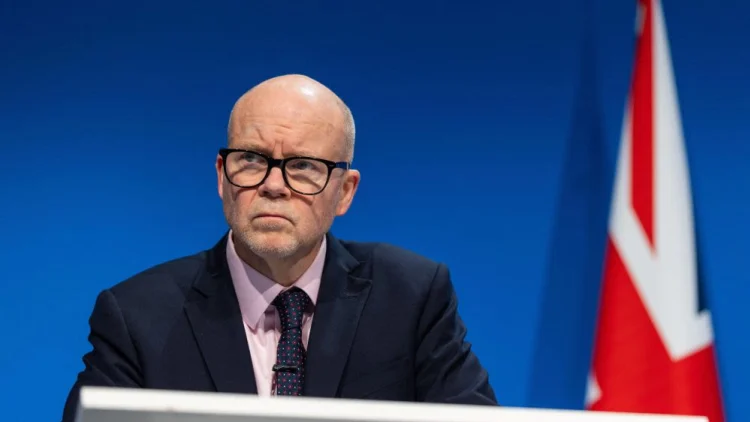
FSU founder, Conservative peer Toby Young, argued the definition is illegal because it would result in criticism of Islam being censored. “Bringing a judicial review against a secretary of state isn’t cheap, but we believe this is a vitally important free speech issue. Blasphemy crimes were repealed as far back as 2008 — let’s keep it that way,” he told PoliticsHome.
There is confidence in Whitehall that any legal challenge brought by free speech campaigners will be unsuccessful.
Government sources familiar with the definition-writing process told PoliticsHome there are three broad reasons why it took six months to produce the final wording, with one being ensuring the definition would stand up to a legal challenge.
The second was making sure it could be applied in public sector settings like the NHS and the police as simply as possible, while the third was an effort to make sure the government was sufficiently engaged with Muslim communities.
Lord Walney, former extremism adviser, told PoliticsHome: “Already people are signalling they will use this definition to try to silence criticism of Islam, which must be allowed in a free society.
“So the government must monitor this situation closely and be prepared to reverse their decision if the definition has the chilling effect many of us fear it will.”
PoliticsHome has contacted the government for comment.


Networks of powerful elites in Guatemala are using social media platforms to orchestrate coordinated online smear campaigns. These are targeting anti-corruption activists, environmental defenders and Indigenous leaders, Global Witness today reveals.
A new report by the investigative organisation details how popular social media platforms including X, Facebook and TikTok are being flooded with thousands of abusive, hateful, defamatory and misleading posts targeting activists and Indigenous leaders in the country.
The report draws on interviews with Mayan leaders, including some who are in prison or exile. It examines how these smear campaigns lay the groundwork for spurious criminal charges that threaten victims with decades in jail.
Driving digital repression
The investigation maps the powerful networks of political and economic interests behind many of the attacks. Campaigners say the attacks are helping to silence dissent and undermine Guatemala’s fragile democracy.
Corrupt networks, particularly within Guatemala’s justice system, have spent years working to erode democratic institutions and repress legitimate opposition in the Central American country.
The report uncovers how these same forces are now mobilising fake news sites and anonymous online accounts. They’re spreading disinformation that defames their political and ideological opponents and threatens them with criminal charges.
Campaigners say these online attacks are not isolated or spontaneous. Rather, they form part of a wider strategy to discredit dissent, intimidate communities, criminalise activists and protect entrenched power.
Global Witness senior policy advisor Javier Garate said:
What we are seeing in Guatemala is not random online abuse; it’s a coordinated strategy to silence those that threaten powerful interests.
These online abuse campaigns weaponise disinformation to destroy reputations, intimidate communities and clear the way for extractive violence. Far too often we see online smears of this kind preceding physical attacks, including lethal violence.
Guatemala shows us how failures in platform governance by companies such as Meta, X and TikTok have devastating consequences for communities and individuals around the world, as well as the rights and land they seek to defend.
Smear campaigns intensify
This surge in digital harassment is unfolding amid Guatemala’s fragile political landscape. This suffers from entrenched corruption, close links between political elites and organised crime. And there’s been a prolonged struggle to shed the legacy of military dictatorship and chronic impunity.
Anti-corruption candidate Bernardo Arévalo secured a surprise victory in the 2023 election. But state prosecutors refused to recognise the outcome, orchestrating efforts to overturn the result. Observers described the events as an “attempted coup”, which failed following massive Indigenous-led protests and international pressure.
The same forces behind the attempted coup now appear to be punishing protesters who defended the legitimacy of the election. And they’re driving coordinated smear campaigns against those who demonstrated to protect the democratic vote.
The report shows that Indigenous leaders and land activists asserting legitimate territorial and land rights are also frequent targets of these campaigns. Smear campaigns frequently frame Indigenous or land activism as criminal, extremist or foreign-influenced. This is reinforcing long-standing patterns of discrimination and repression against Mayan communities in Guatemala.
Global Witness warns that the aim of such attacks is to isolate defenders from their communities, pave the way for criminalisation, and delegitimise Indigenous claims to land and rights. Last year, key leaders of the pro-democracy movement that surged after the 2023 elections were arrested and could face decades in jail.
Social media enabling abuse
The report highlights how weak regulation and enforcement by global social media companies is enabling these smear campaigns.
Most attacks documented in the report occurred after companies such as Meta and X rolled back key fact-checking and safety measures. Those decisions faced wide criticism for exacerbating disinformation and human rights harms.
Global Witness argues these social media companies are failing to enforce their own rules prohibiting harassment, hate speech and incitement to violence.
The report underscores how the criminalisation of land and environmental defenders increasingly begins online, where coordinated harassment and disinformation sets the stage for more traditional forms of repression.
Garate added:
We tend to think of criminalisation as something decided by a politician or judge. But increasingly, the social and ideological groundwork is laid online, on the very platforms we use every day.
These tactics weaponise stigma, fear and social isolation to strip defenders of their legitimacy, eroding their reputations with the public and within their own communities.
When these narratives take hold in digital spaces, defenders can lose long before they see a courtroom.
What is happening to defenders in Guatemala is a profound threat to democracy and human rights – and an indictment on Big Tech’s failure to act.
Global Witness says social media companies must be accountable for their failure to enforce their own anti-harassment policies.
Stronger platform governance, combined with broader accountability measures, is essential to weakening the grip of corrupt actors over Guatemala’s justice system and creating safer conditions for defenders of democracy, the environment, and human rights to carry out their vital work.
Featured image via Rafael Gonzalez / Global Witness

Joël Reland considers why the UK government’s announcement of the EU legislation ‘in scope’ for the UK-EU ‘SPS’ deal is significant, both for UK businesses and politically.
This week the government published a list of EU legislation ‘in scope’ for the UK-EU ‘SPS’ deal. Translated into normal English, that is the list of EU laws which the UK will have to adopt in order to cut red tape on trade in animal and plant goods.
What have we learnt from this announcement? On a technical level, we now know that there are at least 76 pieces of EU legislation with which the UK will align, covering areas ranging from animal health, welfare and hygiene to food marketing rules and additive and pesticide restrictions.
But, stepping back from the legal minutiae, the statement sends an interesting political signal about just how keen the UK government is to get the SPS deal done. Two aspects in particular stand out.
First, there is the unfussy manner in which the government accepts the need for alignment. Most UK announcements about any form of closer cooperation with the EU are couched in obfuscatory language about ‘sovereign decisions’, value for money, and keeping matters under review. It often takes a deep dive into the supplementary annexes to properly understand what is going on.
Not so here. The press release essentially says: we want to cut red tape for importers and exporters; here are the EU rules that we need to align with to do that. The two sides continue to negotiate on a few limited cases where the UK may be exempted from alignment (namely some rules on genetic editing and animal welfare) – but the vast bulk of relevant EU law will be accepted without further scruples.
Second, the statement is clearly designed to get firms started on the process of adaptation. Normally, businesses would only learn of the outcome of a negotiation once the final, agreed text is published. This announcement is in effect a way of giving them advance sight of the deal – including guidance on what specific sectors need to do – so they can begin preparations for the new regime while the final details are haggled over.
There seems to be a concerted effort to avoid the errors of Brexit past, where the implementation of various new regimes was hampered by a lack of clear messaging about the way ahead and, therefore, a lack of preparedness on the business side.
This uncharacteristic assertiveness from a regime renowned for its caution tells us of the growing importance which EU policy plays in the government’s wider economic agenda. Last month, the Chancellor publicly stated her desire to make a “political argument” about the economic benefits of a closer EU relationship – making the implications of the ‘EU reset’ policy more explicit. Her argument – that “economic gravity is reality, and almost half of our trade is the EU” making better EU trade the “biggest prize” for the economy – is not something you would have heard a year ago.
But the government needs evidence to make that case, and this is why the SPS deal seems so prized. There is a tangible, everyday quality to the agreement which other deals on carbon pricing and electricity price auctions do not have, allowing the government to tell a clear story about how closer ties to Brussels can bring economic benefits at home – in terms of lower food prices for consumers and export opportunities for British fishers, farmers and small businesses.
It is telling that it the SPS deal is the only bit of business emanating from last year’s UK-EU summit for which the government has set a clear target date (2027). Whether it can deliver the anticipated economic and political rewards, however, is far from certain.
After all, just because government starts telling business to get ready doesn’t mean the deal is in fact done. Some important details are still subject to negotiation, and a best-case scenario would probably see the text agreed this summer. But, even then, the UK still needs to go through the process of adopting the necessary EU legislation – the parliamentary mechanics of which take time, especially if MPs seek close scrutiny of the process.
Then there is the question of business adaptation, with farming industry groups already arguing that a transition period may be necessary given the scale of divergence in UK-EU rules in areas like pesticides. The government says that most sectors should experience ‘minor or minimal’ change, but it will consider ‘targeted transitional arrangements’ for the most-affected – potentially adding many months before the deal is operating at full capacity.
An optimistic reading is that the agreement could come into full force 18-24 months before the next general election (if it takes place at the latest possible date of mid-2029). Is that enough time for voters to feel the benefits? Unlikely, given that the overall economic gains from the deal appear quite marginal, and any savings for consumers are likely to come in the form of lower food price inflation (rather than costs coming down) which will probably be blown out of the water by a spike in energy costs anyway.
The government is to be credited for being clear with industry about the way ahead on the SPS deal. Early and consistent messaging will be essential for a speedy adaptation process. But for it to win the “political” argument about the benefits of closer EU ties, it will probably need to set its ambitions a lot higher.
By Joël Reland, Senior Researcher, UK in a Changing Europe.

The post ‘Islamists will exploit Labour’s “Islamophobia” ban’ appeared first on spiked.



Russell Dean, Deputy Divisional Manager (Living Environment Systems)
| Mitsubishi Electric
With the government backing a target of installing 450,000 heat pumps by 2030 – 70 per cent of which are to be manufactured in the UK – we must meet this ambition with action.
There is much to do. Mitsubishi Electric surveyed UK homeowners last year and found that just 5.5 per cent are currently heating their homes with a heat pump.1 In the commercial sector, heat pump adoption data hasn’t been tracked, meaning we don’t even know the true size of the challenge, let alone the decarbonisation opportunity it offers.
The targets which have been set out now give us something to aim for, but making sure heat pumps are being adopted at the pace needed will only happen if:
- homeowners and business owners know about them
- they make financial sense
- we can meet the demand for installing them
The opportunity to transform the UK’s building stock, boost its manufacturing base, and recruit and train renewable heating engineers cannot be underestimated.
Now is the time for a clear strategy for reaching these milestones.
1. Drive public awareness
Adoption cannot be boosted without people knowing about heat pumps.
We know there is an untapped market of homeowners open to new clean heating technology. When we asked those surveyed about the Boiler Upgrade Scheme, we found that 31 per cent of homeowners said they were unaware of it, but that it would make them more likely to switch.1
The new Warm Homes Agency has been tasked with improving awareness, and it must be treated as a priority objective. We’d like to see funding and resources committed to creating targeted awareness campaigns. And the same has to be done for businesses for us to see the necessary rise in demand.
With a quarter of people being influenced by negative news about heat pumps, it’s even more important that misconceptions are challenged.2 Without that, the public won’t be convinced of the opportunity of adopting a heat pump for their home or business.
2. Make heat pumps make financial sense
The billions in grants and loans available through the Warm Homes Plan will make heat pumps, solar panels and batteries a possibility for millions more households. This funding is ringfenced for its designated purpose, to provide the public with certainty that potential future decisions will be covered.
Beyond the upfront costs, we have to make the running costs of heat pumps cheaper.
Currently, UK electricity prices are typically linked to the cost of volatile gas prices, despite the majority of electricity coming from renewable sources, and electricity levies put a greater burden on consumers. The government’s moves on reducing the energy price cap are to be welcomed, but more is needed to further rebalance these levies and reduce the price of electricity compared to gas.
This would create a huge step change and make clean heat a truly economical option. There’s no better advertising than word of mouth, and money saved on bills would create conversation and stimulate demand.
3. Preparing installers to meet surging demand
Having enough installers to meet the scale of ambitions for installations is a challenge which must be addressed – but is also a huge opportunity to provide skilled renewable jobs across the UK.
The expansion of the Heat Training Grant funding will help make this possible, and government must follow through on its commitment to collaborate with industry to make training a success. A well-trained workforce will mean positive experiences for customers and create more goodwill for the sector.
Installers will also play a big role in raising awareness about heat pumps and supporting interested homeowners to invest. This means arming installers with the right information so that they can educate homeowners and guide them towards heat pumps as an option for their home.
Creating demand and making an impact
To truly accelerate the adoption of clean heat in the UK, we need more homeowners and businesses to know about the benefits, more people to be able to afford to buy and run them, and more people to install them.
Mitsubishi Electric is already supporting heat adoption in the UK by manufacturing low-carbon, highly efficient heat pumps at its Livingston plant and by training the workforce at its training sites across Britain. To achieve its targets, the government must work with us and the wider industry to drive action and deliver for the economy and the environment.
References
- An Opinion Matters survey of 2,000 homeowners in August 2025, commissioned by Mitsubishi Electric
- Opinion Matters, August 2025
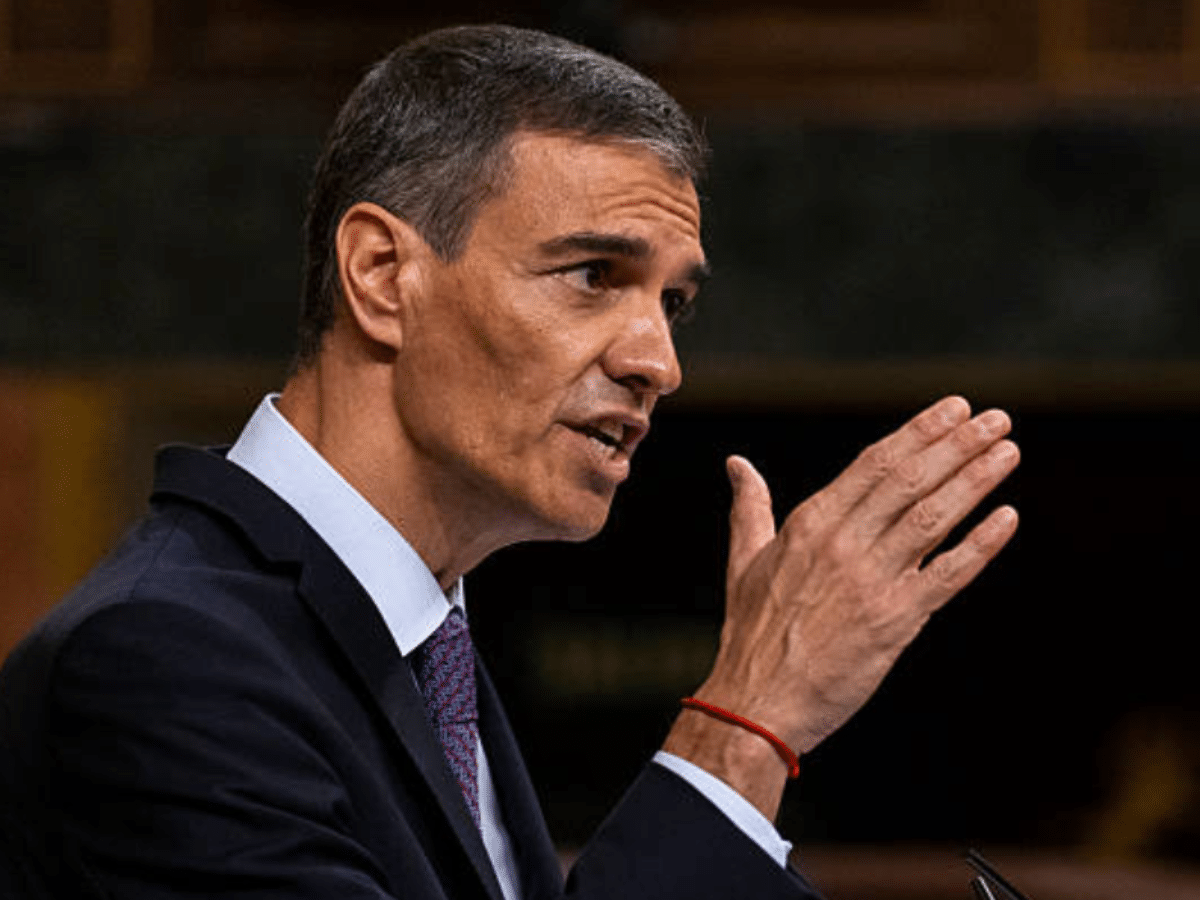
The Spanish government has recalled Spain’s ambassador from Israel. The decision comes as Israel continues to smear the Sanchez government for opposing its genocide in Gaza and its wars of aggression on Iran and Lebanon.
Announcing the order, Spanish PM Pedro Sanchez said:
At the proposal of the Minister for Foreign Affairs, the European Union and Cooperation, and following deliberation by the Council of Ministers at its meeting on 10 March 2026, I hereby order the termination of Ms Ana María Sálomon Pérez’s appointment as Ambassador of Spain to the State of Israel.
Spanish citizens in Israel needing assistance will be directed to a “chargé d’affaires” who will remain at the embassy.
Featured image via the Canary
Politics
Terri Bloore: Starmer needs a lessons on managing international relations. He should ask Zelensky

Terri Bloore is the Conservative candidate for Mayor of Newham.
Keir Starmer is no Churchill, that is something Trump and I can agree on. In moments of international crisis, indeed war, national leadership needs to be strong and decisive. Certainly not dithering.
Starmer in the space of 48 hours managed to not just upset the President of the United States, our most important ally, but also Iran – a state not known for measured responses in relation to opposition. Over the course of a few days, his government first signalled that Britain would not back the United States in its escalating confrontation with Iran, only to reverse course within a day and allow the United States access to British military bases.
He is a joke, and making Britain – once known for our diplomacy, level-headed intelligence and insight – a joke with him.
Britain now appears hesitant at precisely the moment when clarity is needed. Allies question our reliability while adversaries see uncertainty. The damage is not simply reputational. It strikes at the heart of Britain’s long standing claim to be one of the West’s most dependable partners in matters of security and defence.
Churchill understood that alliances require visible commitment. When Britain stands with its allies, it must do so decisively. Hesitation only weakens collective resolve.
The irony is that recent history offers a powerful example of the very resilience Starmer now seems unable to demonstrate. Since the beginning of Russia’s full scale invasion, Ukraine under the leadership of Volodymyr Zelenskyy has shown extraordinary discipline in managing its relationships with Western partners.
Ukraine has endured immense frustration. Weapons deliveries have been delayed. Financial packages have been debated and watered down. Political winds in Western capitals have shifted repeatedly. Yet throughout this ordeal, the Ukrainian government has remained committed to its allies.
It has come to negotiations ready to compromise. It has accepted difficult realities. Above all, it has understood a fundamental strategic truth: survival requires patience. Ukraine knows it needs the West more than it needs pride.
Zelenskyy and his government are playing the long game. That approach has required immense restraint. Ukrainian leaders have learned that diplomacy often means absorbing disappointment while maintaining unity with those whose support is indispensable. They have demonstrated strength through consistency, not theatrical gestures. Starmer’s government should learn from that example.
Over the years working with Ukraine, dating back before annexation of Crimea, I have seen how hard Ukraine has worked to preserve relations with the West. Yes, it has been slow, yes faltering at times and yes, the power has sometimes been in the form of soft power – but support flowed from Europe and North America because Kyiv has proved itself a serious partner that can be trusted.
Today we stand in surreal reality where Ukraine has responded to the USA’s requests for help and “reacted immediately” sending interceptor drones and a team of drone experts to protect U.S. military bases in Jordan. “Of course, we will send our experts,” he said, that is a far cry from our indecisive leader.
Ukraine understands the strategic stakes. Compromises are painful but Ukraine has proved itself to be a trustworthy, brave partner. Trust that Starmer is now squandering. How can we be trusted as trusted partner when we cannot be trusted to make a decision one way or the other.
The emerging confrontation involving Israel, the United States and Iran presents difficult choices. No responsible government should treat them lightly. Yet the handling of such crises matters as much as the decision itself. By first signalling distance from Washington and then hurriedly opening British bases to American forces, Starmer has managed to offend almost everyone involved.
Yet today the image projected from Downing Street is not one of confidence or resolve. It is hesitant, it is indecisive and it is weak. Starmer has proved again that he would rather stare at his shoes than confront the consequences of leadership. That perception matters politically as well as strategically.

Look, I’ll be the first to admit that whenever there’s a clock change, it takes me an embarrassingly long time to figure out how exactly it’s going to impact my day-to-day life.
Am I waking up an hour earlier? Later? Is it pushing my kids’ bedtime back? Or technically bringing it forward? Am I losing sleep? Gaining sleep? It gets me in a muddle.
This next clock change, which happens on Sunday 29 March 2026, will see the clocks ‘spring forward’ – heralding the start of British Summer Time (BST).
What does this mean for my sleep?
In short: you will lose one hour of sleep, as 1am (which is when the clocks officially go back) becomes 2am.
This means if you naturally wake up at 7am BST, your body thinks it’s technically still 6am.
Basically, it’ll feel quite early and it may still be dark when you wake up – compared to now, when it’s typically light at 7am. (Although it won’t be too long until the new 7am wakeup time will begin in daylight.)
As for bedtime, if you hit the hay at 10pm, this is actually more like 9pm (old time).
Overall you might feel a bit more tired (because you’ve lost an hour of sleep), but over the course of the week, your body should adjust to the new schedule.
If you want to get a head start and help your body clock gradually get used to the new routine, you can shift your bedtime 10-15 minutes earlier each night for three or four nights before the clock change.
What does this mean for parents?
This clock change can feel particularly tricky for parents as kids typically get up earlier – so that 6am start is now more like 5am. Ouch.
That said, bedtime is earlier too, so that’s a small win. You might even feel like you’re getting more of your evenings back.
And it also means you get more light in the evenings, making that post-school park trip or dinner picnic in the garden a lot easier to say ‘yes’ to.
Due to the sleep disruption, kids might be a bit (or in some cases, a lot) crankier than usual, but within a week or so, you should find everyone settling into the new rhythm. (Here’s hoping, anyway.)
If they are struggling to drift off during the lighter evenings, blackout curtains might help to trick their brains into thinking it’s later than it is.
Any other thoughts?
If you take medication at a certain time of day, experts broadly suggest sticking to the same schedule. This means if you take medication at 7pm (GMT), you should continue to take medication at 7pm (BST).
Wing Tang, head of professional standards at the Royal Pharmaceutical Society, told Which? they wouldn’t typically expect the clocks going forward to have a great impact on people taking regular medicines. But if you’re worried, you can double check with your GP or pharmacist.
You’ll also need to change the clocks on some of your appliances manually – while smartphones, smart TVs, newer radios etc., can update themselves, your oven clock, car clock (if it’s an older car) and older central heating controls will need a tweak.

Ross Kempsell is joined by Ameer Kotecha, who recently resigned as a diplomat in the Foreign Office, to discuss where British foreign policy is going wrong and why he left Whitehall. Find out what he really thinks of David Lammy and Yvette Cooper…
Subscribe to Guido’s YouTube channel for all our latest videos by clicking here.
Become a Guido Member: www.order-order.com/membership
Facebook: https://www.facebook.com/fawkespage/
TikTok: https://www.tiktok.com/@_guidofawkes_

Home Secretary Shabana Mahmood has banned the planned Al Quds Day march in London for Sunday 15 March. Mahmood no doubt needed little persuading, rendering the Metropolitan Police’s decision to side with the UK Israel lobby little more than a pretext.
Mahmood caves to Israel lobby
In a statement, the Met claimed that:
The Al Quds march is uniquely contentious having originated in Iran and in London is organised by the Islamic Human Rights Commission, an organisation supportive of the Iranian regime… The threshold to ban a protest is high and we do not take this decision lightly; this is the first time we have used this power since 2012.
The Metropolitan Police routinely polices hundreds of protests which have counter protesters. Free speech and the right to protest are protected in law and we have a proven track record of upholding these values.
The Met appears to think opponents of genocide and imperialism have forgotten the traps it laid for an entirely peaceful anti-genocide march in January 2025. That entrapment, despite abundant footage of police inviting marchers through police lines, was used to charge and prosecute leading peace organisers. The state continues to insist peaceful demonstrators ‘forced’ their way through.
Organisers of the march, the Islamic Human Rights Commission, have strongly condemned the decision:
IHRC strongly condemns the desicion by the Metropolitan Police to ban the Al Quds Day March.
However, a static Al Quds Day protest will still go ahead.
We hope to see you on Sunday 15th March InshaAllah.
We are seeking legal advice and this decision will not go unchallenged.
And they made it clear that Shabana Mahmood has made a political decision:
If it was not clear already, the police have brazenly abandoned their sworn principle of policing without fear or favour, and have capitulated to the pressure of the Zionist lobby. The Metropolitan Police unashamedly regurgitate Zionist talking points about IHRC without a shred of evidence. They cannot present evidence because there is none – we are an independent NGO. In essence, this is a politically charged desicion; not one taken for the security of the people of London
What right to protest?
The force’s statement also invidiously linked the march to threats and terrorism – and to claim that Iran is “attacking British allies”, rather than retaliating after unprovoked attacks:
We must also consider that the security services have been publicly clear about the threats we are facing on UK soil from the Iranian regime. In the last year MI5 and Counter Terrorism Policing have foiled over 20 Iranian state-backed attacks on the UK. Last week counter-terrorism officers arrested four people under the National Security Act after they allegedly spied on Jewish communities for the Iranian regime and, separately, at the weekend a man was reportedly stabbed by someone who had opposing views on the Iranian regime.
No evidence has so far been provided to the public for any of these arrests or ‘foiled attacks’.
In typical Orwellian style, the Met then claimed that it protects the right to protest, while warning that those who protest this weekend will “crossover [sic] into criminality [and] will face the full force of the law” and that:
We urge the organisers to comply with our conditions or face arrest.
Right.
The UK regime is an enabler of rogue-state terrorism and is more than willing to subordinate the rights of its citizens to the interests of Israel and the US.
Featured image via the Canary
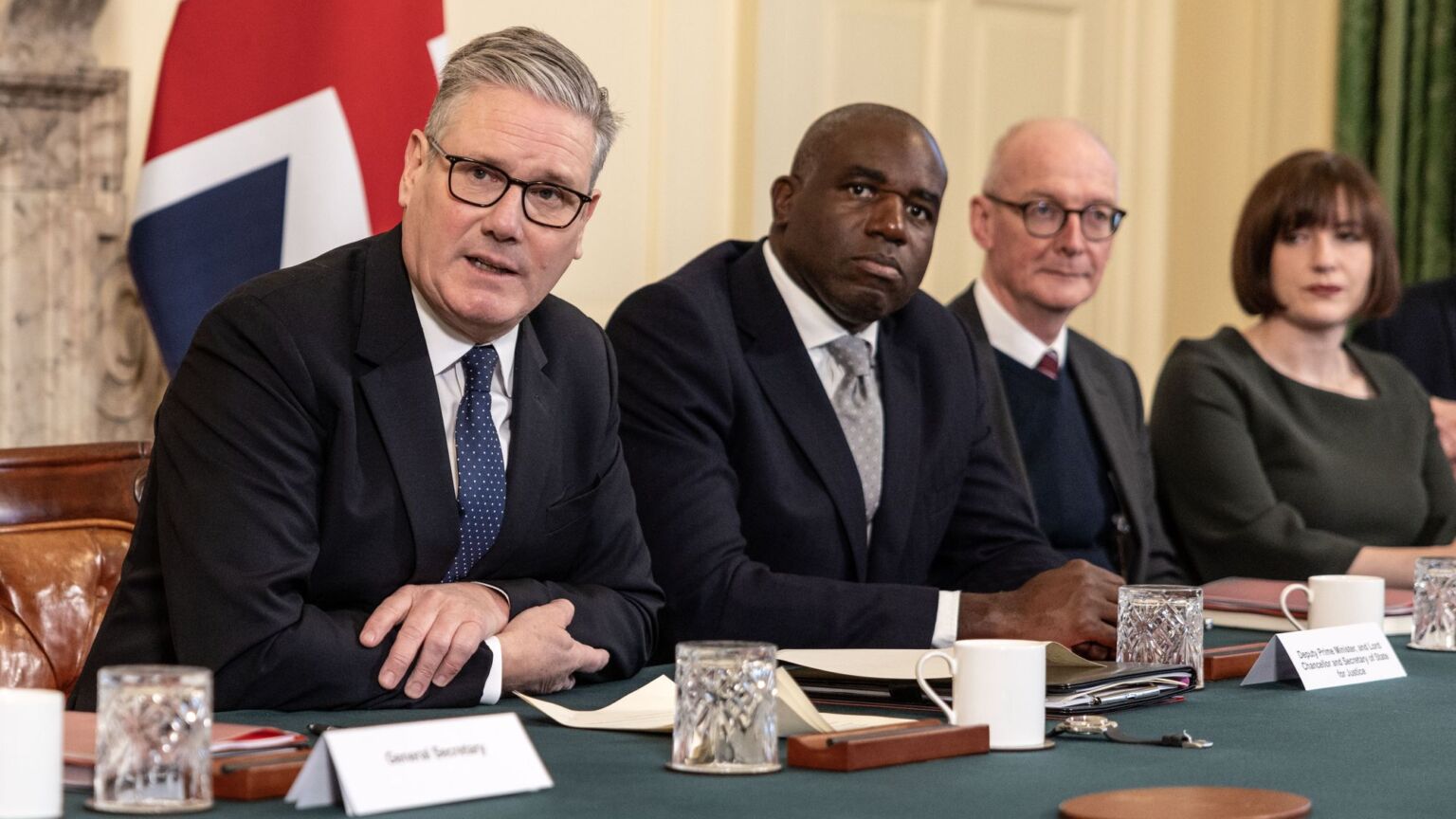
The Labour government is in the process of committing a profound act of constitutional vandalism. Yesterday, the House of Commons voted to pass the Courts and Tribunals Bill, a piece of legislation that will significantly limit the right to trial by jury in England and Wales.
The bill proposes removing a defendant’s right to insist on a jury trial for many mid-level ‘either-way’ offences, from cases of sexual assault and grievous bodily harm to burglary and theft. These are offences that can currently be tried either in the Magistrates’ Court, before a judge or bench of magistrates, or in the Crown Court, before a judge and jury. Under the proposals, defendants accused of these offences would no longer be able to elect a Crown Court jury trial.
The legislation would also increase the maximum sentencing powers of magistrates, from the current limit of 12 months in jail to, in some cases, up to two years. In addition, the new law would restrict the ability of defendants to appeal convictions from the Magistrates’ Court in the Crown Court. This reduces a convicted individual’s chances of challenging guilty verdicts delivered by a single judge or by magistrates.
The Labour government insists this is a necessary reform to reduce the massive backlog of cases in the courts. But critics see something else – the construction of a conviction machine, designed to remove procedural barriers that allow defendants to contest the case against them. The state gains in power, while an individual’s ability to challenge it shrinks.
The government’s justification for the reforms is well known. The Crown Court system is indeed under severe strain. The backlog of cases stands at roughly 80,000. Without intervention, it could exceed 100,000 by 2028. Trials are being listed years into the future, leaving victims and defendants alike waiting for justice.
Justice minister David Lammy argues that limiting jury trials will relieve pressure on the Crown Court system. The government claims that the new legislation will reduce demand on Crown Courts by 20 per cent within three years.
But such figures are highly speculative and uncertain. Magistrates may still decide to send cases to the Crown Court if they believe the offences to be sufficiently serious. In practice, it is unclear how courts are supposed to determine in advance whether a defendant should be entitled to a Crown Court trial.
Consider a typical ‘either-way’ offence. Many carry a wide sentencing range – from a community order to several years’ imprisonment. A court might face a case where the potential sentence could plausibly fall anywhere between, say, a community penalty and a four-year custodial sentence. Yet under the proposed new system, judges or magistrates may have to decide in advance whether the case is serious enough to justify a jury trial.
That requires courts to make an early assessment of particular cases before hearing all the evidence. The decision would inevitably involve speculation about facts that may only become clear during trial. Far from simplifying the system, this risks adding further procedural complexity and therefore increasing the workload within the system.
But practical concerns are not the main issue here. The deeper problem is that those advancing this legislation seem utterly indifferent to the threat it poses to justice and citizens’ rights. They talk about it entirely in managerial terms, as a logistical, bureaucratic measure. It is impossible to discern any political principle behind the bill. Prime minister Keir Starmer is supposed to be a human-rights lawyer, yet he is presiding over one of the most significant attacks on civil liberties in modern times.
Labour MPs rallying behind the bill claim it will provide ‘justice for victims’. But this is just cant. The criminal-justice system is not being crippled by too many jury trials. No, it’s suffering from years of underinvestment, court closures and staff shortages. The unthinking authoritarianism of this Labour government is no answer to this crisis.
Trial by jury is one of the oldest citizens’ protections in the British constitutional tradition. It reflects the principle that the state should not be able to imprison individuals without the judgement of their peers. In this way, juries have always been a vital curb on the worst excesses of the state. Restricting that right can only aid the worst excesses of the state.
All is not yet lost, of course. The bill must still pass through further stages of parliamentary scrutiny, including in the House of Lords, before it returns to the Commons for detailed committee examination. Some Labour MPs have expressed unease about the proposals, and there are rumours that more could rebel at later stages.
But I’m not convinced any rebellion will be enough. This Labour government and their MPs are largely of very low quality, even by recent parliamentary standards. Sadly, they are sufficiently unthinking and politically unprincipled to pass these measures without a care for the constitutional damage they are doing. If we are to protect the light that shows that freedom lives, we have an almighty fight on our hands.
Luke Gittos is a spiked columnist and author. His most recent book is Human Rights – Illusory Freedom: Why We Should Repeal the Human Rights Act, which is published by Zero Books. Order it here.

Amenity underpins Vasse demand

Gold Price Analysis: How Iran Conflict and Surging Oil Keep Precious Metal Above $5,000

Smear campaigns using social media to criminalise Guatemala activists


-
Business5 days ago
Form 8K Entergy Mississippi LLC For: 6 March
-

 Tech6 days ago
Bitwarden adds support for passkey login on Windows 11
-

 News Videos2 days ago
10th Algebra | Financial Planning | Question Bank Solution | Board Exam 2026
-

 Fashion5 days ago
Weekend Open Thread: Ann Taylor
-

 Crypto World2 days ago
Paradigm, a16z, Winklevoss Capital, Balaji Srinivasan among investors in ZODL
-
 Tech8 hours ago
A 1,300-Pound NASA Spacecraft To Re-Enter Earth’s Atmosphere
-
 Sports6 days ago
499 runs and 34 sixes later, India beat England to enter T20 World Cup final | Cricket News
-

 Politics5 days ago
Top Mamdani aide takes progressive project to the UK
-

 Sports4 days ago
Three share 2-shot lead entering final round in Hong Kong
-

 Sports3 days ago
Braveheart Lakshya downs Lai in epic battle to enter All England Open final | Other Sports News
-

 Business23 hours ago
ExxonMobil seeks to move corporate registration from New Jersey to Texas
-

 Entertainment5 days ago
Hailey Bieber Poses For Sexy Selfies In New Luscious Lip Thirst Traps
-

 NewsBeat6 days ago
Piccadilly Circus just unveiled ‘London’s newest tourist attraction’ and it only costs 80p to enter
-

 Business3 days ago
Search for Nancy Guthrie Enters 37th Day as FBI Probes Wi-Fi Jammer Theory
-

 Business7 hours ago
Search Enters Sixth Week With New Leads in Tucson Abduction Case
-
 NewsBeat2 days ago
Pagazzi Lighting enters administration as 70 jobs lost and 11 stores close across Scotland
-

 Tech2 days ago
Despite challenges, Ireland sixth in EU for board gender diversity
-
Entertainment7 days ago
Harry Styles Has ‘Struggled’ to Discuss Liam Payne’s Death
-

 Crypto World7 days ago
New Crypto Mutuum Finance (MUTM) Reports V1 Protocol Progress as Roadmap Enters Phase 3
-

 Tech6 days ago
ACIP To Discuss COVID ‘Vaccine Injuries’ Next Month, Despite That Not Being In Its Purview