


Connect with us

Business

Heating oil protection calls after ‘shock’ price rises

Published

on

Heating oil protection calls after 'shock' price rises

Consumers in the Scottish Borders have given their reactions to prices. Wendy Copeland, from Blainslie, said prices were “unpredictable” and her costs had risen from 62p per litre to 126p. She said: “I would love to see a cap and regulation the same as electricity and gas has.”

Margaret Rae, from Oxton, said she had returned from holiday to find the price of her heating oil had doubled, but added that she understood the situation was “very difficult”. She said: “We’re running a bit low but been advised to wait a bit to see if the price comes down.”

Continue Reading
Click to comment

Leave a Reply

Your email address will not be published. Required fields are marked *

Business

F5 unveils platform upgrades with new observability tool

Published

on


F5 unveils platform upgrades with new observability tool

Continue Reading

Business

Gary Neville’s Relentless plans new city centre neighbourhood around landmark Kendals building

Published

on

Business Live

Scheme includes refit of landmark Kendal Milne store in Deansgate

A visualisation of how the Kendals district in Manchester city centre might look

An early visualisation of how the Kendals district in Manchester city centre could look (Image: Relentless Developments)

Gary Neville’s development company has announced a new city-centre neighbourhood with the historic Kendals building at its heart.

Advertisement

Relentless Developments, owned by the Man United legend, has dubbed the proposed neighbourhood off Deansgate ‘Kendals District’, which will be spearheaded by the redevelopment of the department store.

Top quality workspace; hospitality and leisure facilities; a luxury hotel; and branded residences are all earmarked to be set within new public realm and cultural space.

At the heart of this redevelopment will be the ambitious retrofit of the iconic Kendal Milne building on Deansgate.

This will be driven by a partnership between Relentless, Investec and supported by the Greater Manchester Combined Authority (GMCA). It will create 230k sq ft of modern, prime office space, along with an extensive F&B and retail provision.

Advertisement

The art deco department store, last home to House of Fraser, enticed shoppers for generations after opening in 1939. The massive building has been largely empty since its closure in 2019, but there was planning approval to convert the nine-storey Deansgate block into offices, cafes, and shops in 2021.

After years of relative quiet on the project, at the end of last year Greater Manchester mayor Andy Burnham confirmed £44m of his new £1bn ‘Good Growth Fund’ would be spent to help get the conversion off-the-ground.

Anthony Kilbride, CEO of Relentless Developments, said: “Kendals is a complex heritage retrofit that has demanded real conviction, not just in the building itself, but in the wider vision for this part of the city. As one of Manchester’s most recognisable landmarks, this high-impact site is perfectly positioned to anchor district-scale regeneration and act as a true gateway to a new neighbourhood.

“What we are bringing forward with the Kendals District is not piecemeal development; it is a coherent, carefully planned quarter that brings together workspace, hospitality, culture and public realm in a way that creates long-term value for the city. It demonstrates how effective public-private collaboration can unlock growth, accelerate delivery and create places of genuine economic and social impact.

Advertisement

“The retrofit of the former Kendal Milne building will set the tone for what follows: thoughtfully designed, highly sustainable space that prioritises wellbeing and flexibility, meeting the evolving needs of modern occupiers while respecting the heritage of the site.

Images of Kendals/House of Fraser through the ages. Pictured: Kendals in 1982.  Converted from the MEN archive.

Kendals in 1982, as seen in the Manchester Evening News archives(Image: Manchester Evening News)

“Relentless is proud to be leading five of the six transformational sites within the district and looking forward to playing a central role in shaping what will become one of Manchester’s most dynamic and recognisable new quarters.”

Relentless’ role in the Kendals District follows the success of its St Michael’s development on Jackson’s Row where the developer is partnering with Marriott International to play host to a 162-room W Hotel and 217 W Residences within a 43-storey tower.

Coun Bev Craig, leader of Manchester City Council, added: “Good Growth is about creating investment opportunities that create a lasting impact to the fabric of our city. While this is often about supporting new development to create growth, it is as much about using the incredible assets we already have in Manchester.

Advertisement

“Kendals is a prime example of this approach – breathing new life into an iconic heritage building to not only ensure its long-term future, but to create a platform for a new city centre district to deliver growth at scale and with ambition.”

To find all the planning applications, traffic diversions, road layout changes, alcohol licence applications and more in your community, visit the Public Notices Portal.

Continue Reading

Business

Target cuts prices on 3,000+ items amid inflation concerns

Published

on

Target cuts prices on 3,000+ items amid inflation concerns

As the U.S. enters its fifth year of inflation running above the Federal Reserve’s 2% target, major retailers are responding to softer demand and increased competitive pressure.

With consumer sentiment in 2026 divided and the cost of living remaining a top concern among Americans, Target announced Wednesday that it will reduce prices on more than 3,000 items.

Advertisement

“Busy families are thinking about value as they begin to update their homes and wardrobes for spring,” , Cara Sylvester, Target’s executive vice president and chief merchandising officer, said in a press release.

“We’re delivering by lowering prices on 3,000 spring favorites across apparel, essentials and home,” she continued. “We’re committed to making it easier than ever for guests to have the fresh style and incredible value they love, with lower prices on the items we know they want.”

BELOVED BUC-EE’S CONVENIENCE STORE CHAIN FACES CUSTOMER SERVICE CRISIS AFTER DEVASTATING ‘F’ RATING

The discounted categories include women’s and children’s apparel, footwear such as flats, sandals and sneakers, bedding and blankets, baby products, household essentials and pantry staples.

Advertisement
Shoppers push carts in a Target store

Shoppers at a Target store in Jersey City, New Jersey, on Nov. 25, 2025. (Getty Images)

Most reductions range from 5% to 20% off original prices and will begin rolling out in stores this month through the spring.

However, the price reduction program excludes stores in Alaska and Hawaii.

Inflation remained above the Federal Reserve’s 2% target in February as policymakers continue to weigh affordability concerns. The Bureau of Labor Statistics said Wednesday that the consumer price index (CPI) — a broad measure of the cost of goods and services, including gasoline, groceries and rent — rose 0.3% in February and increased 2.4% from a year earlier. The annual rate was unchanged from January, while the monthly gain was slightly higher than January’s 0.2% increase.

The price cuts appear to be part of a broader strategy aimed at restoring sales growth. Target CEO Michael Fiddelke outlined the company’s plan to return to growth during a financial community meeting last week, citing investments in key categories such as women’s apparel, home and baby.

“This new chapter of growth at Target is defined by clear choices and rooted in a deeper understanding of our unique lane in retail, the guests we serve and the areas where we’re distinctly positioned to win,” Fiddelke said.

GET FOX BUSINESS ON THE GO BY CLICKING HERE

“This work is underway, and by putting style, design and value at the center of every decision,” he continued, “we’re making big changes to lead with a trend-forward assortment, elevate the guest experience, accelerate with technology and equip our teams to deliver the most delightful experience in retail, for today and over the long term.”

READ MORE FROM FOX BUSINESS

FOX Business’ Eric Revell contributed to this report.

Advertisement
Continue Reading

Business

'Concern' as school holiday food vouchers end

Published

on

'Concern' as school holiday food vouchers end

A head teacher says he is “really concerned” about a decision to end school holiday food vouchers.

Continue Reading

Business

F5 unveils AI security tools and post-quantum protections

Published

on


F5 unveils AI security tools and post-quantum protections

Continue Reading

Business

Oil price rises above $90 after ship attack in Strait of Hormuz as Iran conflict disrupts global energy markets

Published

on

Oil price rises above $90 after ship attack in Strait of Hormuz as Iran conflict disrupts global energy markets

Global oil prices have climbed back above $90 a barrel after a cargo vessel was struck by a projectile in the Strait of Hormuz, intensifying fears that the escalating conflict involving Iran could trigger a prolonged disruption to one of the world’s most critical energy shipping routes.

Brent crude, the international benchmark, rose sharply to around $92.34 a barrel, recovering from earlier losses and extending the dramatic volatility seen across energy markets over the past 48 hours. The latest surge followed reports from the United Kingdom Maritime Trade Operations (UKMTO) that a commercial cargo ship had been hit by an unidentified projectile in the Strait of Hormuz, causing a fire onboard.

The incident is the latest in a series of attacks targeting vessels in the Gulf region, underscoring the growing risks to global oil and gas supply chains as the Middle East conflict intensifies.

Shipping through the Strait of Hormuz, a narrow waterway between Iran and the United Arab Emirates that typically carries around one-fifth of the world’s oil exports, has almost completely halted as commercial operators weigh the risks of operating in the area.

Peter Aylott, director of policy at the UK Chamber of Shipping, said attacks on vessels have been indiscriminate and spread across the region, including incidents near Kuwait and in the western Persian Gulf.

Advertisement

He warned that the danger of further strikes has effectively paralysed maritime traffic.

“Shipping passing through the strait has dropped from around 100 vessels per day to fewer than five, and most of those appear to be Iranian ships,” Aylott said.

The situation has left around 1,000 commercial vessels stranded in the Gulf, including an estimated 80 to 90 ships with UK interests, as shipping companies refuse to risk moving cargo through the increasingly dangerous corridor.

Two additional vessels, a bulk carrier and a container ship, were also reportedly struck within the past 24 hours, raising concerns that the disruption could deepen if hostilities continue.

Advertisement

Energy markets have experienced extraordinary swings as traders attempt to gauge how long the conflict will last and whether the Strait of Hormuz will reopen to normal shipping.

Brent crude surged to over $118 per barrel earlier in the week, its highest level since 2022, before dropping close to $80 a barrel amid reports that governments were considering releasing emergency oil reserves.

The benchmark then rebounded strongly after the latest shipping attack, reflecting continued uncertainty about supply.

At one point during Asian trading, Brent had slipped to $88 per barrel, after the Wall Street Journal reported that the International Energy Agency (IEA) was considering the largest coordinated release of oil reserves in its history.

Advertisement

Such a move would surpass the 182 million barrels released in 2022 following Russia’s invasion of Ukraine.

However, the attack in the Strait of Hormuz quickly shifted market sentiment back toward supply fears, sending prices climbing again.

Overall, Brent crude has now risen more than 40 per cent since the start of the year, driven by escalating geopolitical tensions and concerns over disruptions to global energy flows.

Further uncertainty has emerged over whether military escorts might be used to secure shipping routes through the Strait of Hormuz.

Advertisement

US energy secretary Chris Wright briefly posted on social media that the US Navy had escorted an oil tanker through the strait to ensure energy supplies continued flowing.

The post was quickly deleted, and American officials clarified that the US military is not currently escorting commercial vessels through the waterway.

The confusion has added to investor uncertainty about the security of global energy shipments and the potential for further escalation.

Without clear military protection or a diplomatic breakthrough, shipping companies are expected to remain cautious about returning to the route.

Advertisement

The renewed surge in oil prices has triggered declines in European stock markets as investors worry about the economic impact of higher energy costs.

In London, the FTSE 100 fell 1 per cent to 10,301, reversing gains from the previous day. Shares also dropped across major European markets including Germany and France, while Asian equities posted modest gains overnight.

Higher oil prices are widely expected to push up inflation worldwide, potentially forcing central banks to keep interest rates higher for longer.

European leaders have warned that the conflict is already driving up energy import costs across the continent.

Advertisement

Ursula von der Leyen, president of the European Commission, said the disruption has already cost the European Union around €3 billion in additional energy imports.

“Gas prices have risen by 50 per cent and oil prices have risen by 27 per cent,” she told EU lawmakers in Strasbourg.

“That is the price of our dependency.”

Despite the spike in prices, von der Leyen rejected calls for the EU to return to purchasing Russian energy — imports that were largely halted after Russia’s full-scale invasion of Ukraine in 2022.

Advertisement

Energy traders say the key question now facing markets is how long the Strait of Hormuz will remain effectively closed.

If tanker traffic remains severely restricted, analysts warn that oil prices could climb even higher in the coming weeks, potentially surpassing previous crisis levels.

The Strait of Hormuz crisis has already drawn comparisons with previous global energy shocks, and economists warn that prolonged disruption could slow global economic growth while reigniting inflationary pressures.

For now, markets remain caught between expectations of emergency supply releases and the very real risk that the world’s most important oil shipping route could remain unusable for an extended period.

Advertisement

Jamie Young

Jamie Young

Jamie is Senior Reporter at Business Matters, bringing over a decade of experience in UK SME business reporting.
Jamie holds a degree in Business Administration and regularly participates in industry conferences and workshops.

When not reporting on the latest business developments, Jamie is passionate about mentoring up-and-coming journalists and entrepreneurs to inspire the next generation of business leaders.

Advertisement
Continue Reading

Business

Sebi introduces a simpler NISM certification for research services

Published

on

Sebi introduces a simpler NISM certification for research services
India’s market regulator Sebi has introduced a simplified certification requirement for certain employees associated with research services, in a move aimed at improving ease of doing business in the securities market. The regulator said on Wednesday that staff involved in sales and other non-core activities related to research services will now be allowed to obtain a lighter certification module conducted by the National Institute of Securities Markets (NISM).

Under existing regulations, Persons Associated with Research Services (PARS) are required to obtain certification from NISM in accordance with the Sebi (Research Analysts) Regulations, 2014. Previously, this involved clearing the NISM Series-XV: Research Analyst Certification Examination, which is primarily designed for professionals directly involved in research activities.

Sebi said it has now developed a new certification module specifically tailored for employees who interact with clients but are not directly engaged in preparing or producing research reports.

Going forward, PARS engaged in sales and other non-core services will be required to obtain certification through the “NISM Series-XXV-A: Persons Associated with Research Services (Sales and Other Non-Core Services) Certification Examination.”

Advertisement

The regulator clarified that employees who have already obtained the NISM Series-XV certification will not be required to take the new examination immediately. Instead, they will be required to obtain the Series-XXV-A certification only after the validity of their existing Series-XV certificate expires.


At the same time, Sebi said that individuals who are directly involved in research functions will continue to be governed by the existing framework. These professionals will still be required to pass the NISM Series-XV Research Analyst Certification Examination, which remains mandatory for core research activities such as preparing investment recommendations or research reports.
The new certification structure effectively creates two different qualification tracks: one for professionals directly engaged in research and another for employees handling client-facing roles linked to research distribution or support functions.Sebi said the reform is intended to reduce unnecessary compliance burden for employees who are not directly involved in research functions while still maintaining regulatory oversight over activities connected to research services.

“The reform aligns with the objective of ensuring ease of doing business and fostering greater participation in research-related activities while upholding the interest of investors,” the regulator said in its statement.

The move is expected to benefit brokerage firms, investment advisory businesses and research houses where sales teams, relationship managers and other client-facing staff often distribute or discuss research reports without being part of the research process itself.

Advertisement
Continue Reading

Business

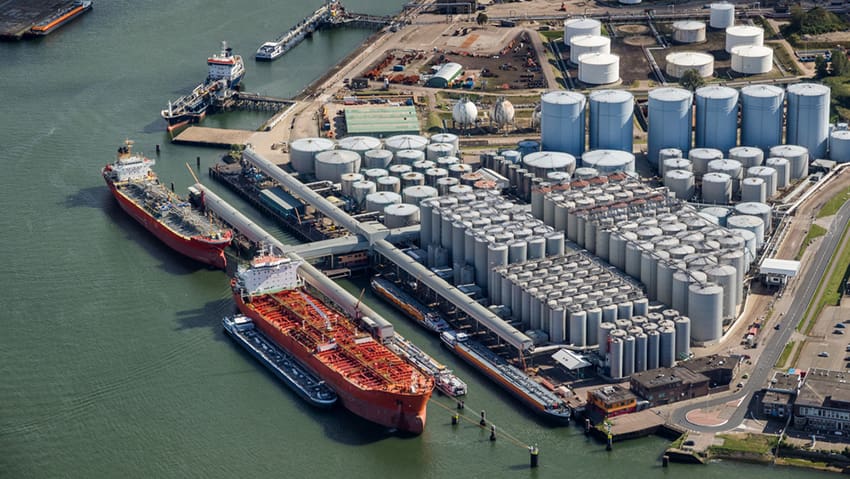
Bunge deal for IFF soy assets done

Published

on

Viterra merger ‘already delivering results,’ Bunge CEO says

Transaction includes protein concentrate, lecithin and soy crush businesses.

Continue Reading

Business

West Asia conflict poses downside risk, India GDP growth seen at 7.1 pc in FY27: Crisil Intelligence

Published

on

West Asia conflict poses downside risk, India GDP growth seen at 7.1 pc in FY27: Crisil Intelligence
Mumba: Conflict in West Asia, if prolonged, could pose a downside risk to India’s economic outlook due to its impact on crude oil and commodity prices, according to a report by Crisil Intelligence.

In its base case, the report expects India’s real GDP growth to moderate to 7.1 per cent in FY27, which is still healthy and slightly above potential.

The growth will be supported by robust private consumption and a mild pick-up in private investment.

Private investment sentiment is improving with a recovery in private capex underway, driven by emerging sectors, according to the report.

It also expects export growth to maintain momentum, supported by lower US tariffs relative to FY26, steady global growth and robust services exports even as frontloading benefits fade.

Advertisement


The retail inflation is likely to rise to 4.3 per cent on average in FY27 from an estimated 2.5 per cent in FY26. As food prices are expected to remain benign, assuming a normal monsoon in 2026, inflation should normalise from its current lows.
“The reduced weight of food in the new CPI 2024 series should contain the upside to headline from normalising food inflation,” the report added.Headline retail inflation is likely to remain close to the central value of the RBI’s tolerance band. This would allow the central bank to hold the repo rate and focus on transmitting the 125 bps rate cut implemented in calendar year 2025, Crisil said.

The report expects that policy rates will remain steady in FY27; the cumulative rate cut of 125 bps undertaken in calendar year 2025 will continue to be transmitted to bank lending and deposit rates.

“We also expect the RBI to remain proactive on liquidity management. We expect financial conditions to remain resilient in fiscal 2027 amid a supportive monetary policy and strong macro fundamentals.”

Continue Reading

Business

Yamaha Motor Co. relocates US headquarters from California to Georgia

Published

on

Yamaha Motor Co. relocates US headquarters from California to Georgia

Yamaha Motor Co. is relocating its U.S. headquarters from California to Georgia after nearly a half century of operations in the Golden State.

The company announced late last month that it will move the corporate headquarters of its U.S. entity from Cypress, California, to Kennesaw, Georgia. It added that the relocation will occur incrementally by business function, starting in late 2026, and is expected to conclude in late 2028.

Advertisement

Yamaha said in its announcement the move is “undertaking structural reforms aimed at improving the profitability of its U.S. operations in response to cost increases resulting from U.S. tariffs and changes in the market environment.”

CALIFORNIA TECH LEADERS CHALLENGE PROGRESSIVE POLICIES AS BILLIONAIRES, BUSINESSES FLEE

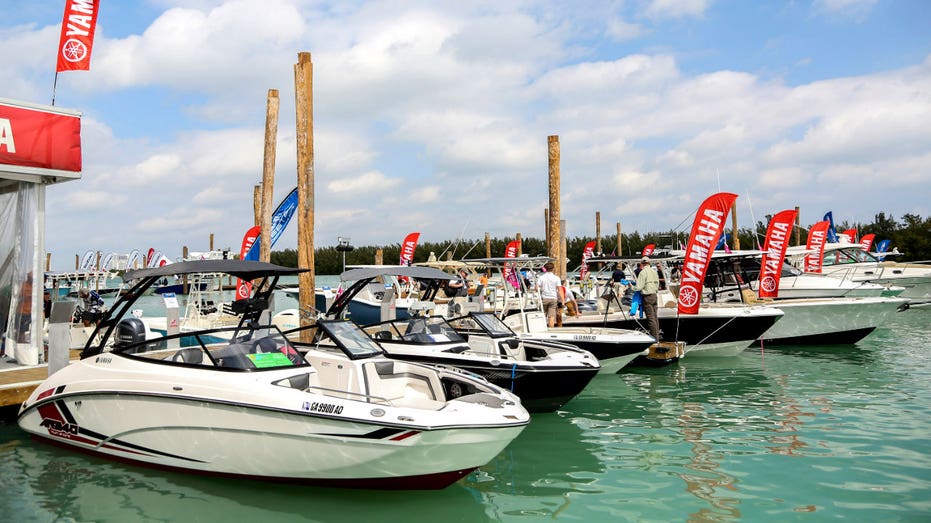
Boats in the water at a boat show.

Yamaha Motor Co.’s U.S. headquarters has been located in Cypress, California, since 1979. (Alexander Tamargo/Getty Images for Yamaha Motor Co., LTD)

The company manufactures ATVs, boat engines, personal watercraft and other motorized products. It is also known for its motorcycles, though they are not produced in North America.

PUBLIC STORAGE RELOCATES HEADQUARTERS FROM CALIFORNIA TO TEXAS

Advertisement

Yamaha established its office in Cypress in 1979, a year after acquiring the land. It relocated its marine business to Kennesaw in 1999 and its motorsports business there in 2019. The California office houses mostly corporate functions and the financial services business, Yamaha said.

Ticker Security Last Change Change %
YMHAY YAMAHA MOTOR 14.5 +0.20 +1.36%

“After many years of great partnership, we are honored and proud to welcome Yamaha’s American headquarters to the No. 1 state for business,” said Georgia Gov. Brian Kemp. “This is another loud and clear testament to what we offer job creators from around the world. To any other California-based companies looking for a better home, we’ll give you plenty of reasons to keep Georgia on your mind.”

Georgia Gov. Brian Kemp speaks to a crowd.

Georgia Gov. Brian Kemp speaks during an election night rally in Atlanta on Nov. 8, 2022. (Elijah Nouvelage/Bloomberg via Getty Images)

RICH CALIFORNIANS FLOCK TO LAS VEGAS HOUSING MARKET AS LAWMAKERS CONSIDER WEALTH TAX

Yamaha employs more than 2,300 workers in Georgia, according to Kemp’s office.

Advertisement

The move adds to a broader trend of relocations out of California by both corporations and individuals, as the high cost of doing business and a proposed wealth tax on the state’s highest earners weighs.

GET FOX BUSINESS ON THE GO BY CLICKING HERE

Continue Reading

Trending

Copyright © 2025