Avanos Medical, Inc. (AVNS) The Citizens Life Sciences Conference 2026 March 11, 2026 1:05 PM EDT
Company Participants
David Pacitti – CEO & Director Scott Galovan – CFO & Senior VP
Conference Call Participants
Advertisement
Daniel Stauder – Citizens JMP Securities, LLC, Research Division
Presentation
Daniel Stauder Citizens JMP Securities, LLC, Research Division
Advertisement
So welcome back to the Citizens Life Sciences Conference. Next up on our MedTech track, we’re joined by Avanos Medical. With us here is CEO, Dave Pacitti; and CFO, Scott Galovan. Gentlemen, thanks for coming. Welcome to Miami.
David Pacitti CEO & Director
Thank you.
Advertisement
Question-and-Answer Session
Daniel Stauder Citizens JMP Securities, LLC, Research Division
Advertisement
Great. So I guess just to start off, Dave, you’re approaching your 1-year anniversary at the helm. So I just want to give you the opportunity to give your high-level thoughts. What do you think has gone well? What surprised you? What’s been a challenge — you want to take it?
David Pacitti CEO & Director
Yes, absolutely. So we’ve been excited. We’ve been very focused on execution, as you know. Part of that execution was a cost takeout that we did back in December, really streamlined the business.
Advertisement
I would say what was surprising to me this year is how much time we spent on tariffs, right? And we talked to you a lot about that as well. And we see the light at the end of the tunnel, and it’s not a train, which is good. A big part of our tariff situation was around syringe products that we made in China. We’ll be out of China by June. It’s actually going quite well. We feel like we’re ahead of schedule. We’re producing those syringes now in Mexico and Cambodia. We’re not selling them yet from there, but the fact that we’re producing them is really good. So that’s been a big part of our
One of Western Australia’s most remote bowsers is now also its cheapest, offering diesel at a discount of more than 50 cents per litre compared to Perth outlets.
Leederville-based aged care technology developer InteliCare Holdings will have its AI platform installed in 22 Victorian aged care facilities as part of an $8.8 million deal.
The company told the market this morning it had inked a five-year agreement with MECWA Limited, trading as Mecwacare, for the deployment of InteliCare‘s integrated analytics, alerts, sensor and nurse call platform at all of the company’s Victorian residential aged care facilities.
The $8.8 million deal represents the largest contract in InteliCare‘s history, and comes following a three-month pilot program at Mecwacare’s Trescowthick Centre in Prahan, Victoria, in mid-2025.
InteliCare executive director Tim Chapman said the agreement was a milestone for the company.
Advertisement
“Securing a five-year agreement with Mecwacare validates the scalability of our platform and confirms that data-drive, real-time intelligence is becoming foundational to the future of aged care,” he said.
“This agreement positions InteliCare as a strategic technology partner for sector wide transformation and we look forward to announcing further partnerships in due course.”
Mr Chapman said the Trescowthick pilot program demonstrated outstanding improvements in residential safety, clinical oversight and operational efficiency.
“Within the pilot, the InteliCare platform was successfully integrated into Trescowthick’s clinical management system, as well as its nurse call system, demonstrating its interoperability,” he said.
Advertisement
“InteliCare‘s ability to connect with critical third-party systems and operate as the backbone of the Trescowthick’s digital ecosystem, allowed consolidation of key operational data streams which enhanced visibility, supporter compliance, and ultimately, delivered positive care outcomes for residents.”
Publishing results of the pilot program, the company said it achieved a 100 per cent fall detection accuracy, with no missed or false falls during the evaluation period.
It also said the program resulted in a decrease in the number of residents requiring three-hourly overnight welfare checks from 55 to just four thanks to its real-time vitals and bed occupancy monitoring functions.
Advertisement
All eleven success criteria covering reliability, care outcomes and operational performance were met or exceeded during the trial.
Mecwa care chief executive Anne McCormack said shifts in the industry had catalysed the provider’s digital transformation.
“The aged care industry is facing significant structural challenges which include increasing cost pressures, workforce shortages and increasing complexity of resident needs,” she said.
“As part of Mecwacare’s focus on great client outcomes and our evidence-based model of care, we are investing in a digital transformation of which this partnership with InteliCare forms an important component, enabling our teams to deliver a safer, more responsive and more sustainable resident experience and model of care.
Advertisement
“The evaluation at Trescowthick demonstrated that InteliCare‘s platform enhances clinical visibility, improves operational efficiency and most importantly supported better resident care and social outcomes.
“We view InteliCare as a long-term strategic partner in shaping how we will deliver aged care into the future.”
The agreement itself will result in a structured rollout across the 22 sites between FY26 and FY28, with revenue from recurring subscription fees, hardware supply and implementation, and ongoing service.
Shares in InteliCare Holdings Limited (ASX:ICR), which includes notable names like Dr Neale Fong and founder Greg Leach on its board, were up 15 per cent to 2.3 cents per share following the announcement.
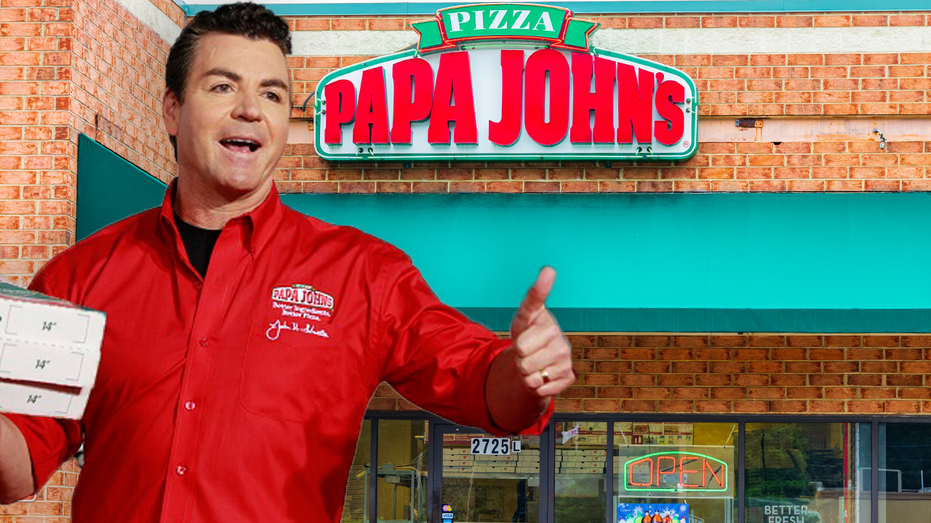
Papa John’s International is reportedly reviewing a new proposal to take the company private in a potential $1.5 billion acquisition, according to Reuters.
Irth Capital Management, a Qatari-backed investment fund supported by Brookfield Asset Management, reportedly submitted the proposal on Wednesday, offering $47 per share, a 44% premium over the stock’s most recent closing price.
Advertisement
Following the announcement, the stock surged by a significant 15%, closing around $38.86.
The bid comes after Papa John’s has been pursuing a turnaround strategy following years of weak demand under multiple CEOs.
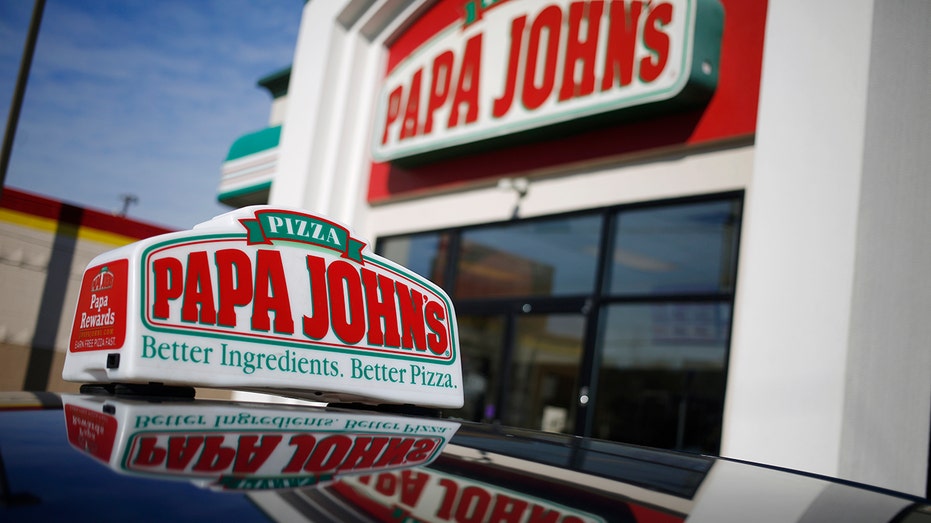
Papa John’s International Inc. signage is displayed on top of a delivery vehicle. (Luke Sharrett/Bloomberg via Getty Images / Getty Images)
Irth Capital, a relatively new firm founded in 2024 and backed by a member of the Qatari royal family, reportedly already holds about a 10% stake in Papa John’s.
Advertisement
Led by co-founders Sheikh Mohamed bin Abdulla Al-Thani and Matthew Bradshaw, the firm is working alongside Brookfield Asset Management on a high-stakes offer that, if successful, would mark one of Irth’s first major transactions, Reuters said.
The potential acquisition would become one of the firm’s first major deals, following a period of financial recovery and previous failed buyout attempts by other investors, including Apollo Global, which had partnered with Irth last year on a joint offer exceeding $60 per share.
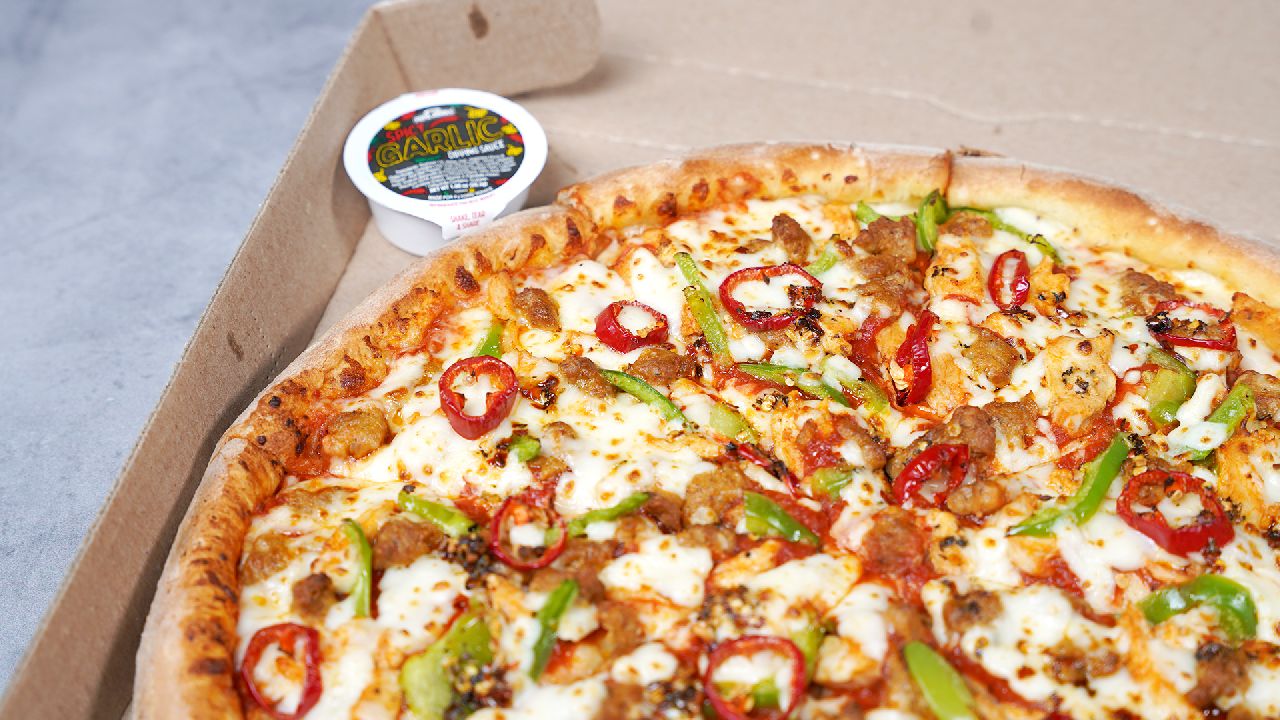
Papa John’s Dragon Flame Pizza is seen in an advertisement. (Papa John’s)
Mounting speculation about the company’s future has also prompted activist investor Irenic Capital Management to build a stake in the pizza chain, according to the outlet.
Advertisement
While the bid is significant, there is no guarantee of an agreement as the pizza giant remains open to other potential buyers.
Papa John Schnatter is the founder and former chairman and CEO of Papa John’s International (PZZA).
Papa John’s has previously struggled with weak consumer spending and tough competition in the pizza industry, specifically among North American restaurants.
In the last quarter, the company reported a 5.4% drop in North American same-store sales. To improve profitability, it announced plans to close roughly 300 underperforming restaurants in the region by the end of 2027.
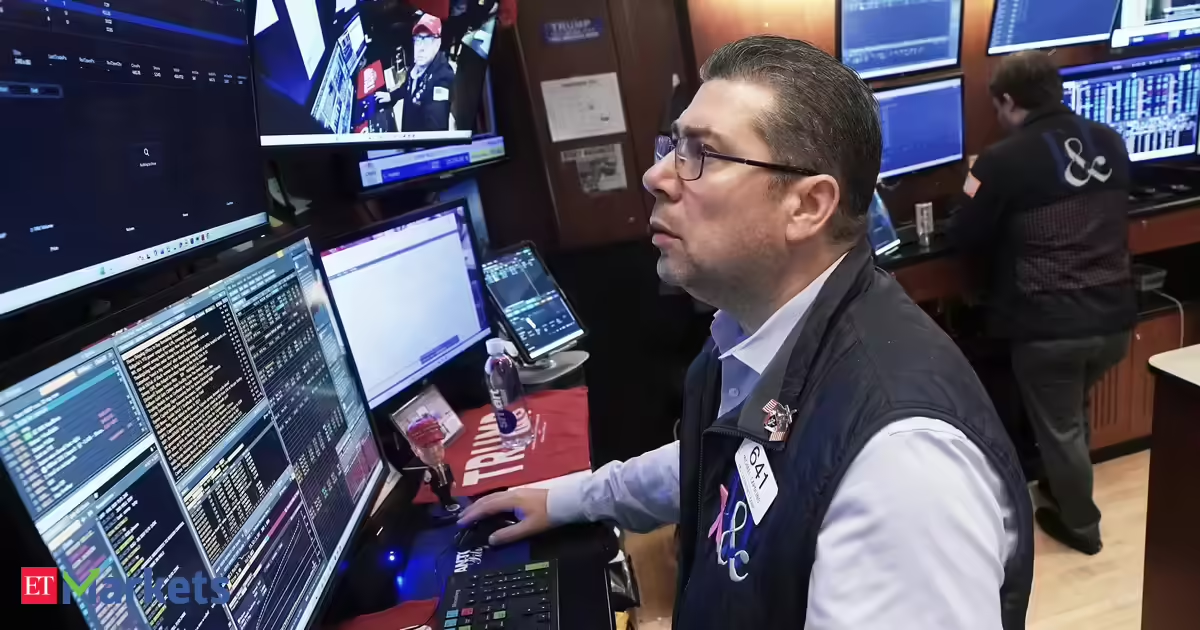
U.S. stocks closed lower on Wednesday as markets largely looked past a tame inflation report, focusing instead on intensifying hostilities and mounting repercussions related to the U.S.-Israeli war on Iran.
Trade was choppy for much of the session as investors were caught in a tug-of-war over oil supply concerns. Iran continued to attack ships in the blockaded Strait of Hormuz, but OPEC assured markets that Saudi Arabia had ramped up production and the International Energy Agency (IEA) agreed to release 400 million barrels of oil from its strategic reserves.
The Dow logged the steepest percentage drop among the three major U.S. equity indexes, while chip manufacturers lifted the tech-heavy Nasdaq to a marginal, late-session gain.
The Labor Department’s Consumer Price Index (CPI) indicated that inflation remained moderate last month, matching analyst expectations.
Advertisement
Annual CPI growth is now within half a percentage point of the U.S. Federal Reserve’s 2% target. Still, markets shrugged off the report, as it predated the war on Iran, which has sent crude prices soaring and could stoke inflation. Inflation jitters mounted after Iran’s military command said the world should prepare for crude prices to hit $200 per barrel, more than double their current level.
Live Events
“In such an uncertain environment, the markets and investors are kind of starving for any signal, in one direction or another,” said Matthew Keator, managing partner in the Keator Group, a wealth management firm in Lenox, Massachusetts. “There have been these false or inaccurate reports, and the markets are swinging on that type of news.” “It’s all about the consumer, and how the shock of a sustained increase in oil prices is going to affect the consumer’s pocketbook and their spending habits,” Keator added. The Fed is widely expected to let its key interest rate stand at its upcoming policy meeting, during which policymakers are likely to weigh the possibility of spiking prices against signs of a softening jobs market, a combination that raises concerns over potential stagflation.
“I think the word ‘transitory’ may come back,” said Chuck Carlson, chief executive officer at Horizon Investment Services in Hammond, Indiana. “I think they’re probably more concerned about jobs than they are about inflation right now, the spike in oil notwithstanding.”
The Dow Jones Industrial Average fell 289.24 points, or 0.61%, to 47,417.27, the S&P 500 lost 5.68 points, or 0.08%, to 6,775.80 and the Nasdaq Composite gained 19.03 points, or 0.08%, to 22,716.14. Among the 11 major sectors of the S&P 500, consumer staples notched the largest percentage decline, while energy was the clear outperformer, rising 2.5% on rising crude prices.
Front-month WTI and Brent crude futures settled up 4.6% and 4.8%, respectively. Tech was also marginally higher, with a boost from Oracle, which provided better-than-anticipated revenue guidance on expectations that the artificial intelligence-related spending boom will extend through 2027. Its shares jumped 9.2%. JPMorgan Chase marked down the value of certain loans held by private-credit groups and is tightening its lending to the sector, a report said. Ares Management slid 4.8% and Apollo Global fell 1.9%. Campbell’s tumbled 7.1% after the packaged food company cut its annual forecasts and warned of increasing pressure in the second half from revised U.S. tariffs. Defense company AeroVironment dropped 6.3% after forecasting 2026 adjusted profit below estimates.
Advertisement
Declining issues outnumbered advancers by a 1.84-to-1 ratio on the NYSE. There were 71 new highs and 121 new lows on the NYSE.
On the Nasdaq, 1,960 stocks rose and 2,696 fell as declining issues outnumbered advancers by a 1.38-to-1 ratio.
The S&P 500 posted 2 new 52-week highs and 13 new lows while the Nasdaq Composite recorded 44 new highs and 112 new lows.
Volume on U.S. exchanges was 17.79 billion shares, compared with the 20.09 billion average for the full session over the last 20 trading days.
The New York Times’ popular word-association game Connections delivered another clever brain teaser on Wednesday, March 11, 2026, with puzzle No. 1004 featuring a mix of straightforward synonyms, idiomatic phrases and tricky homophones that left players debating categories and celebrating quick solves.
Connections, launched in 2023, tasks players with grouping 16 words or phrases into four themed sets of four. Categories range in difficulty from yellow (easiest) to purple (hardest), and players get four mistakes before the puzzle ends in defeat. The game has surged in popularity alongside Wordle, Strands and other daily NYT brain games, drawing millions who share scores and frustrations on social media.
The New York Times Connections
For March 11’s edition, the 16 words were: DRESS, HEE, ICE CREAM, JAZZ, LIFT, MI, OUI, PALM, PINCH, PINE, POCKET, SNOW, SPIFF, SPRUCE, TRAFFIC and YEW.
Hints circulated quickly online from sites like Mashable, CNET, Forbes and The Gamer, offering subtle nudges without full spoilers. Common early clues pointed to “take without permission” for the yellow group, “enhance, perhaps vertically” or “make nicer with ‘up’” for green, “conical variety” or “photoreceptor cells and funnels” for blue, and “sounds like…” or “pronoun homophones” for the challenging purple.
The yellow category proved the most accessible: **STEAL** — LIFT, PALM, PINCH, POCKET. These are all informal verbs meaning to pilfer or swipe something discreetly, from “lifting” goods in retail slang to “palming” an item or “pinching” pennies.
Advertisement
Green followed as **MAKE NICER, WITH “UP”** — DRESS, JAZZ, SPIFF, SPRUCE. Each word pairs with “up” to form a phrase meaning to improve appearance or style: dress up, jazz up, spiff up, spruce up. Reviewers noted this as a classic Connections trope relying on common idioms.
The blue group, rated medium difficulty, was **KINDS OF CONES** — ICE CREAM, PINE, SNOW, TRAFFIC. This category highlighted diverse uses of “cone”: the frozen dessert, the evergreen tree part, a weather phenomenon like a funnel cloud variant, and the road safety device. Players often spotted “ice cream” and “traffic” first, then connected the others.
The purple category, as usual the trickiest, required thinking phonetically: **PRONOUN HOMOPHONES** — HEE, MI, OUI, YEW. These sound like the English pronouns “he,” “me,” “we” and “you” but come from other languages or spellings — “hee” (a variant or laugh sound approximating “he”), “mi” (as in do-re-mi, sounding like “me”), “oui” (French for “yes,” homophone to “we”), and “yew” (the tree, pronounced like “you”). Many solvers called this one “bizarre” or “diabolical,” with some needing multiple mistakes before cracking it.
Player reactions flooded Reddit’s r/NYTConnections subreddit and X, where the daily thread for March 11 garnered hundreds of comments. Scores varied widely: some finished in perfect runs with few guesses, while others struggled with the purple group, reporting three or four mistakes. “That purple had me yelling at my screen,” one user posted. Another praised the cone category: “Once I saw traffic and snow, it clicked — great misdirect with pine though.”
Advertisement
The puzzle’s difficulty rated around average for midweek, with the purple homophones providing the biggest hurdle. No major bugs or complaints surfaced, unlike occasional past issues with ambiguous words.
Connections continues to evolve under NYT Games, occasionally introducing themed variants like Sports Edition (No. 534 on March 11 focused on athletics terms). The core game remains free with limits or via subscription for unlimited play.
For those who missed it or want a rematch, the official NYT site archives puzzles, though spoilers abound online. Strategy tips from experts include scanning for obvious pairs first, avoiding early submissions on uncertain groups to preserve mistakes, and considering multiple meanings — literal, slang, homophones or phrases.
As Connections marks its third year, puzzle No. 1004 exemplified why the game endures: clever wordplay, escalating challenge and that satisfying “aha” moment when groups lock in. With daily refreshes at midnight Eastern Time, players in Incheon and beyond already eye tomorrow’s grid.
Advertisement
Whether you’re a streak maintainer or casual solver, March 11’s edition reminded fans that Connections rewards lateral thinking — and a good ear for sounds-alike tricks.
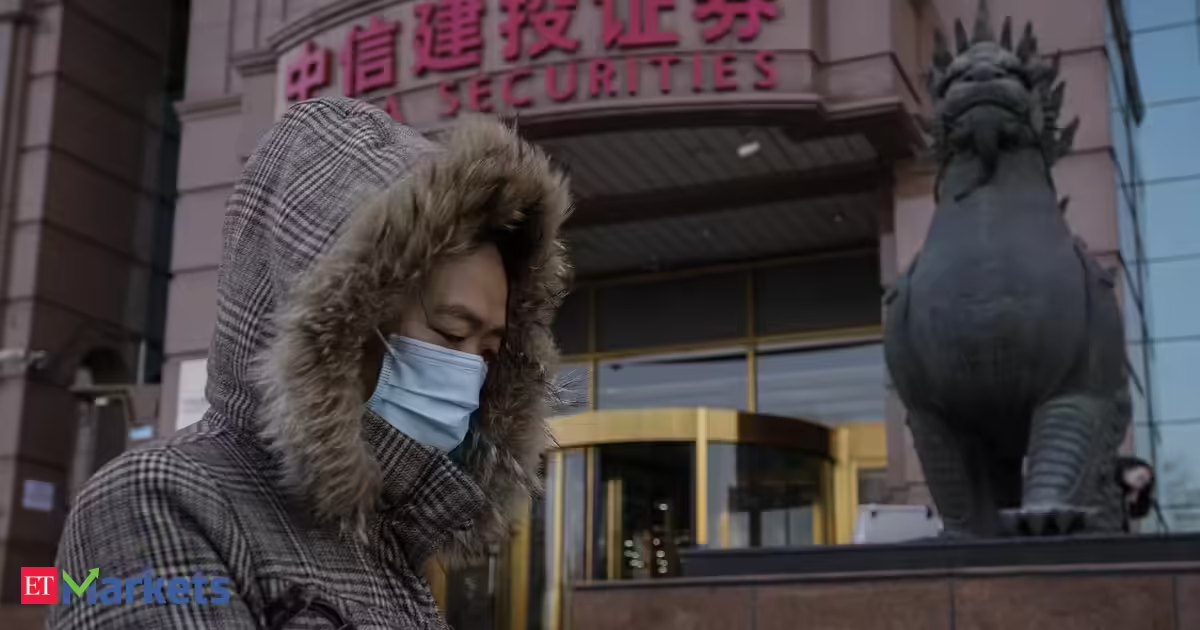
As the war in Iran sent oil prices soaring, one market holding up unexpectedly well is that of the world’s largest crude importer: China. Chinese stocks have fallen less than global peers since the conflict began, the yuan has held steady against the dollar and government bond yields have barely moved. Together, this amounts to surprising resilience in a crisis that, at first glance, appeared likely to leave the country vulnerable.
For decades Beijing has sought to insulate its economy from precisely this kind of shock. It poured investments into renewables, secured dominance across much of the clean-energy supply chain and promoted electric vehicles at a remarkable speed. The result is an economy still dependent on imported fossil fuels but less beholden to them than before – providing some protection as oil prices have jumped as much as 65% since the conflict.
“Chinese asset classes are something that is missed by global investors as a safe haven,” Cary Yeung, head of Greater China debt at Pictet Asset Management.
Global markets have been on a roller coaster since the war broke out late February. Stocks slid as crude – which briefly surged to almost $120 a barrel – threatened to stoke inflation and delay central bank easing, only to rebound on signals from Washington hinting at a possible end to the fighting.
Advertisement
Asian equities have taken the hardest hit, given the region’s heavy reliance on imported energy. Japan, Korea and India are down about 6%, 9% and 4%, respectively, since late February. European markets have lost around 5% and US stocks fell 1.4%. Yet China’s CSI 300 slipped just 0.3%. That means a Chinese investor have preserved more capital than in most major markets.