Weight loss injections like Wegovy can result in “very common” side effects
Fiona Callingham Lifestyle writer
04:30, 12 Mar 2026
People using weight loss injections could experience a range of side effects that affect roughly “one in 10”. Medical professionals have highlighted these concerns as being “very common” among those receiving treatment.
Weight loss medications, also known as GLP-1 inhibitors, function by replicating GLP-1 (glucagon-like peptide-1), a hormone naturally produced in the gut that is crucial for regulating blood sugar levels and reducing appetite.
Advertisement
GLP-1 inhibitors have witnessed a surge in popularity recently, primarily because of their demonstrated effectiveness in controlling blood sugar in people with diabetes and supporting weight reduction. Administered via injection, certain formulations of these medications can be prescribed through the NHS to qualifying individuals.
However, like any prescribed medication, it’s crucial to understand the possible side effects linked to these injections. The British Heart Foundation (BHF) website points out that “not everyone” will inevitably experience side effects from the treatment.
Less serious side effects
Even so, it is “very common” for people to experience digestive issues, such as nausea, diarrhoea, constipation, and abdominal discomfort. The BHF explained: “These side effects affect one in 10 people, according to the patient leaflets that come with Mounjaro and Wegovy. The injections can also cause tiredness or dizziness, hair loss, low blood sugar and a fast heart rate in some people.
“Speak to your doctor if you’re experiencing any side effects, as you may need to take a lower dose or stop taking them.”
Advertisement
Acute pancreatitis
Acute pancreatitis is a rare but potential risk, with the possibility of developing an inflamed pancreas. Patient data suggests that as many as one in 100 individuals using these injections could encounter this condition.
“Speak to a GP or call 111 if you notice any symptoms, such as a sudden severe pain in the middle of your abdomen,” advised the BHF.
Vision
Vision loss is another concern. The Medicines and Healthcare products Regulatory Agency (MHRA) has warned that “very rarely” individuals using semaglutide (the generic name for Wegovy) may experience a “sudden deterioration” in their eyesight, leading to total or partial vision loss, typically affecting one eye at a time.
The BHF stated: “If you experience this issue you need to seek urgent medical care and be referred to a specialist eye doctor.”
Advertisement
Poor nutrition
Poor nutrition is another potential downside due to the way these medications work, likely causing you to eat less. The BHF cautioned that this could result in nutritional deficiencies.
The charity added: “And rapid weight loss may lead to reduced muscle and bone mass too. That’s why eating a healthy balanced diet is still important.
“Small, regular meals containing enough lean protein, calcium and vitamin D, and regular exercise can help to protect your muscle and bone health.”
Contraceptive pill
The BHF also highlighted that the MHRA warned Mounjaro might reduce the efficacy of the contraceptive pill. It continued: “It recommends using another non-oral form of contraception, like a condom, instead.
Advertisement
“And the MHRA also says you should not use weight-loss injections if you are pregnant, trying to conceive or breastfeeding.”
If you experience any negative side effects from your medication, it’s recommended to contact your GP straight away.
When someone speaks in a language we do not understand, we do not assume their words are meaningless. We assume we are the ones who cannot yet understand them.
You might try gestures, sign language or the few words you recognise to grasp what they are saying. The assumption is always the same: meaning is there. The challenge is translation.
Listening to people living with dementia can sometimes feel similar.
Communication may become slower, fragmented or difficult to follow. It can be tempting to assume that meaning has disappeared. But often the problem is not the absence of meaning. It is that we are struggling to recognise how that meaning is being expressed.
Advertisement
People living with dementia are often trying, sometimes with remarkable persistence, to show us what they mean. Our role becomes something like that of a translator. As with any translation, something may be lost in the exchange, but the essence of meaning remains.
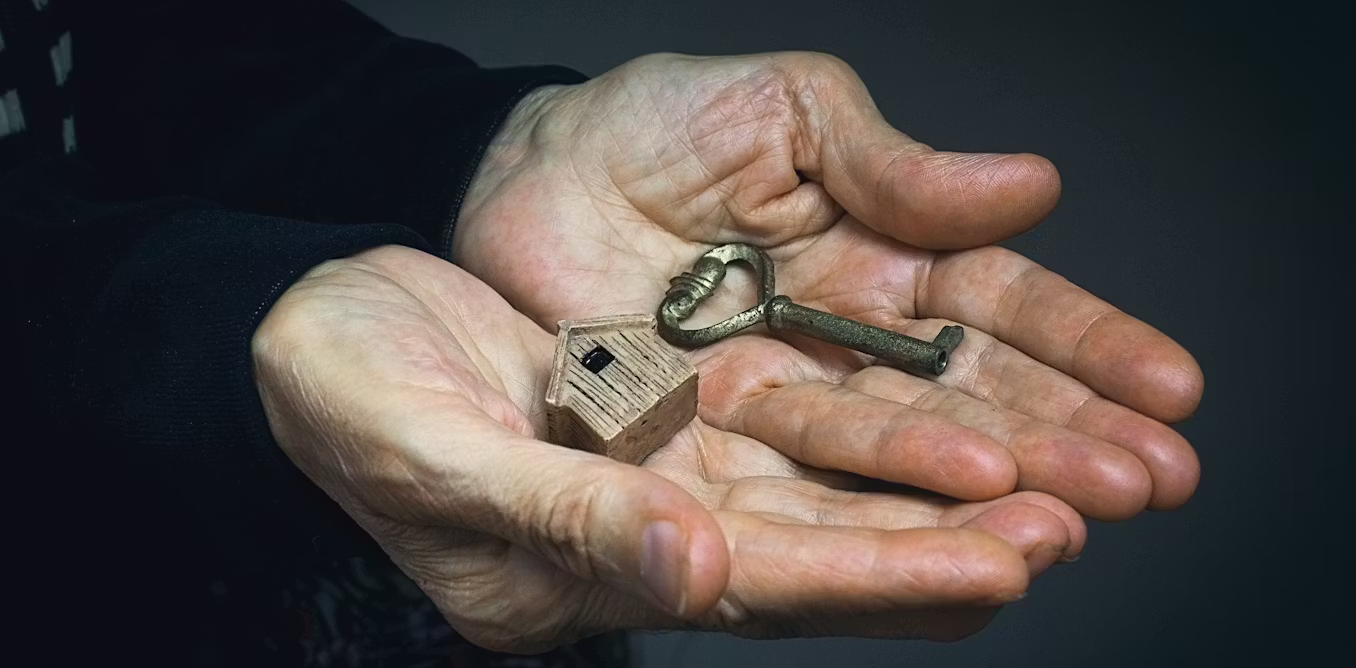
Sometimes that meaning appears in small, unexpected ways. A person who repeatedly asks to “go home”, for example, may not literally mean a building. They may be expressing a need for safety, familiarity or comfort. When we listen carefully, the emotion behind the words often becomes clearer.
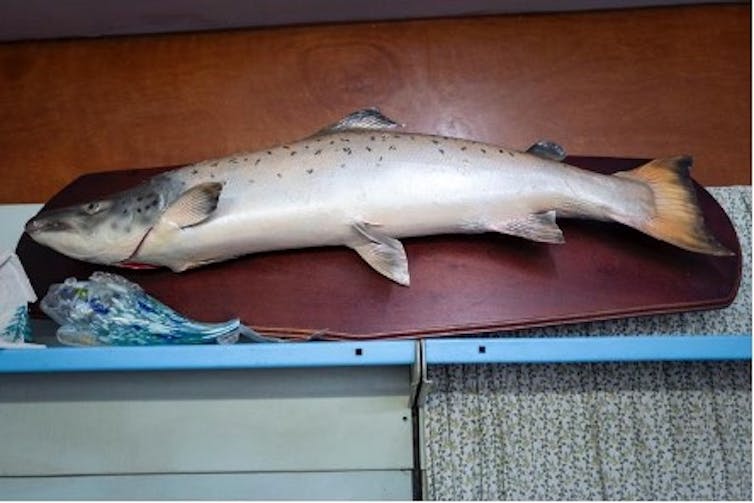
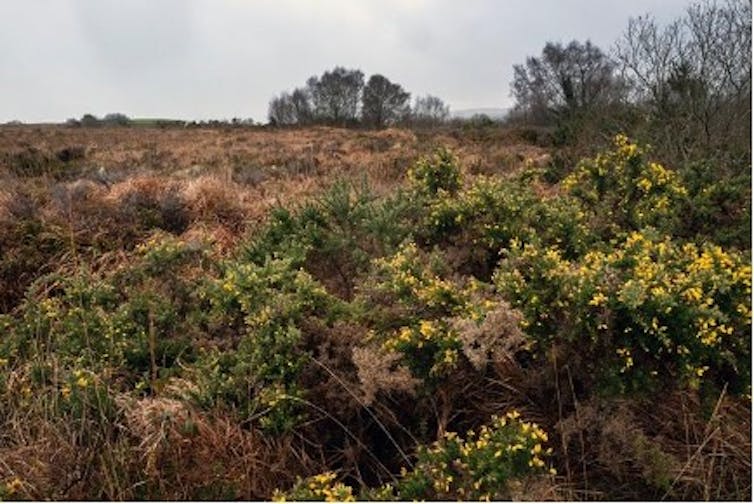
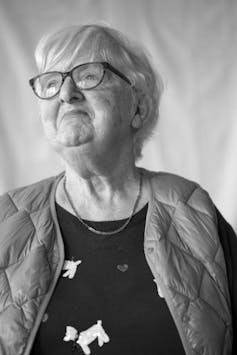
Seamus, County Mayo, Ireland. The Keepsake Chronicles, Author provided (no reuse)
Every person carries a lifetime of stories. Dementia may change how those stories are expressed, but it does not erase them.
Humans are natural storytellers. Research in psychology shows that we build our sense of self through the stories we tell about our lives: where we have been, what has happened to us and what we believe. Psychologists refer to this as “narrative identity”. It is the process through which people connect memories of the past with their sense of who they are in the present.
Advertisement
For people living with dementia, maintaining that sense of self remains deeply important. As research on narrative identity shows, the stories people tell about their lives help them hold together a sense of continuity and meaning, even when memory or language become more difficult.
Social withdrawal, however, is both a risk factor for and a common symptom of advancing dementia. When people withdraw socially, their opportunities to make sense of changing circumstances, relationships and identity diminish. Over time, this can erode self-worth.
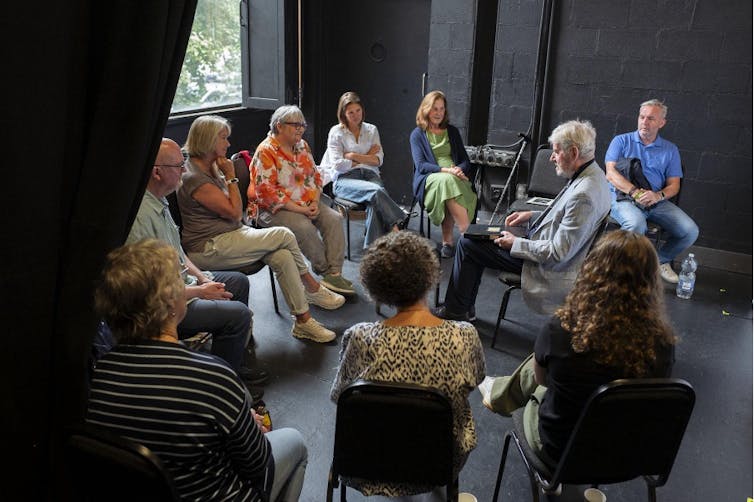
One of The Keepsake Chronicles’s storytelling groups. The Keepsake Chronicles, Author provided (no reuse)
The Keepsake Chronicles are storytelling groups for people living with dementia in the community. Participants are invited to bring an object that is meaningful to them, something they have owned for a long time. Objects are tangible. For people living with dementia, physical objects can cue sensory and autobiographical memory in ways that abstract questions often cannot. They can anchor memory and provide a scaffold for storytelling.
Keepsake Chronicles is a collaboration between a nurse, a creative writer and a photographer. As participants tell their stories, we record their words and photograph them in the act of telling. This captures expressions rich with emotion that are inseparable from the stories themselves.
We also photograph the object and then imagine the sense of place embedded in the story, finding ways to recreate it. Sometimes we capture a place as it exists. Sometimes it no longer does, and we respond creatively.
Advertisement
The recorded stories are transcribed and shaped into micro-narratives or poems using only the words and phrases spoken by the person living with dementia. This approach is often described as found poetry, a literary equivalent of collage. Because it preserves a speaker’s own words and rhythms, it allows meaning and emotion to emerge even when speech is fragmented or non-linear.
These stories are deeply embedded in geography. Seamus brought a large salmon that had been stuffed by a taxidermist and spoke of his life as a keen fisherman in Mayo.
If you look to the river Moy today the salmon have nearly gone extinct it’s so sad there’s very little there now, and if you catch one you throw it back, but it’s so sad No grouse in the bogs, no bird like you always saw – the lark, it’s gone now, the curlew, it’s so sad It’s so sad when I look at all that; you take Lough Mask, the Corrib, the river Moy, it’s so sad to see them dying. Now the hatches aren’t in it, now the birds are gone, it was there all our lives, it’s so sad to see the thing dying in front of us now.
Sheila told us about moving to America and how her future husband came to bring her back to Ireland. Personal histories are woven into landscapes, rivers and journeys.
Some questions – and answers – about America and Apple Pie
Ten years in America. I have it all behind me. Did you eat hot dogs I did not Are you a good cook Reasonably good I guess I didn’t poison anyone. Roast beef on Sunday, Apple Pie. Is there are secret to apple pie? There isn’t really. How do you do it? I roll out the pastry. What kind of apples? Green apples. Did they have apple pie in Boston? They did when I was there…
Stories, meaning and history
Sometimes stories tumble out. Sometimes there is silence. It takes discipline to resist filling that silence. A person living with dementia may need up to 90 seconds to process a question. If we interrupt, we reset that process. This can be deeply frustrating for them. For the listener, the silence can feel endless.
Holding space while someone gathers their thoughts is often what allows stories to emerge. Families frequently tell us they are surprised by what their relatives share, saying they did not realise they still had it in them to tell their story.
The stories and photographs are brought together in a book and returned to each participant. We could talk about reducing stigma around dementia, but the Keepsake Chronicles demonstrate this quietly and powerfully. When someone makes a room laugh, cry or sit in awe, it becomes impossible to deny their meaning and history.
People living with dementia may struggle with word-finding and memory, but they still have something to say. If we listen carefully enough, we can hear the essence of it.
Havertz’ late penalty against his former club put a different perspective on what was a disappointing performance from the one Arsenal would have hoped for.
Arteta felt the game had “different phases” and his side were “very dominant” in the first half, but did not take the early chance they had when Gabriel Martinelli’s powerful shot hit the crossbar.
He also unusually took off key player and captain Bukayo Saka after a below-par display, but his replacement Noni Madueke won the penalty that saw Arsenal avoid defeat in the competition for the first time this season.
Leverkusen were not happy with the penalty award as Malik Tillman’s torso seemed to make contact with Madueke’s foot as he dribbled into the box.
Advertisement
But Havertz kept his cool to ensure Arsenal remain favourites in next Tuesday’s return at Emirates Stadium.
“We are confident we will get the job done in London. The manager said just go on and try and change the game,” said Madueke.
“I don’t really know what happened [for the penalty] I just know I felt contact, went down and penalty.
“Kai Havertz has been scoring high-pressure penalties all his career, top composure to step up. Really pleased, not just for him but the team as well.
Advertisement
“When you come on and your team is losing it gives you that extra impetuous to try and change it.”
Arteta was “not surprised” with Madueke’s impact as it was his “biggest quality.”
“He’s very brave at doing that and Noni is a real threat. To have a player with that ability when you need him and to step in in the manner that he did, big credit to him,” added the Spaniard.
Arsenal have avoided defeat in the first leg in four of their last five knockout games in the Champions League (W2 D2 L1), going on to progress in two of the previous three ties.
Advertisement
But in their previous 16 matches at this stage of the competition, they have lost nine and progressed seven times.
Arsenal are still competing for trophies in four competitions and aiming to claim their first silverware since an FA Cup triumph in 2020.
Arteta was pleased his side remained composed when going behind to leave Leverkusen with a draw.
“Yes, that’s why I said emotionally it becomes a very different game because that is a team that is very, very good in transition, and you have more hurry and more rush to create danger and to go and draw the game, and you can get caught while doing that,” he said.
Advertisement
“I liked that emotionally, we understood what we had to do.
“The level of execution obviously has to be better and it will be better in the second leg. We’ll adapt a few things and yes, we’ll move on.”
On Wednesday, Noma’s LA pop-up — charging $1,500 per dinner — began its 16-week run. But excited foodies weren’t the only ones drawn to the Danish restaurant’s opening day.
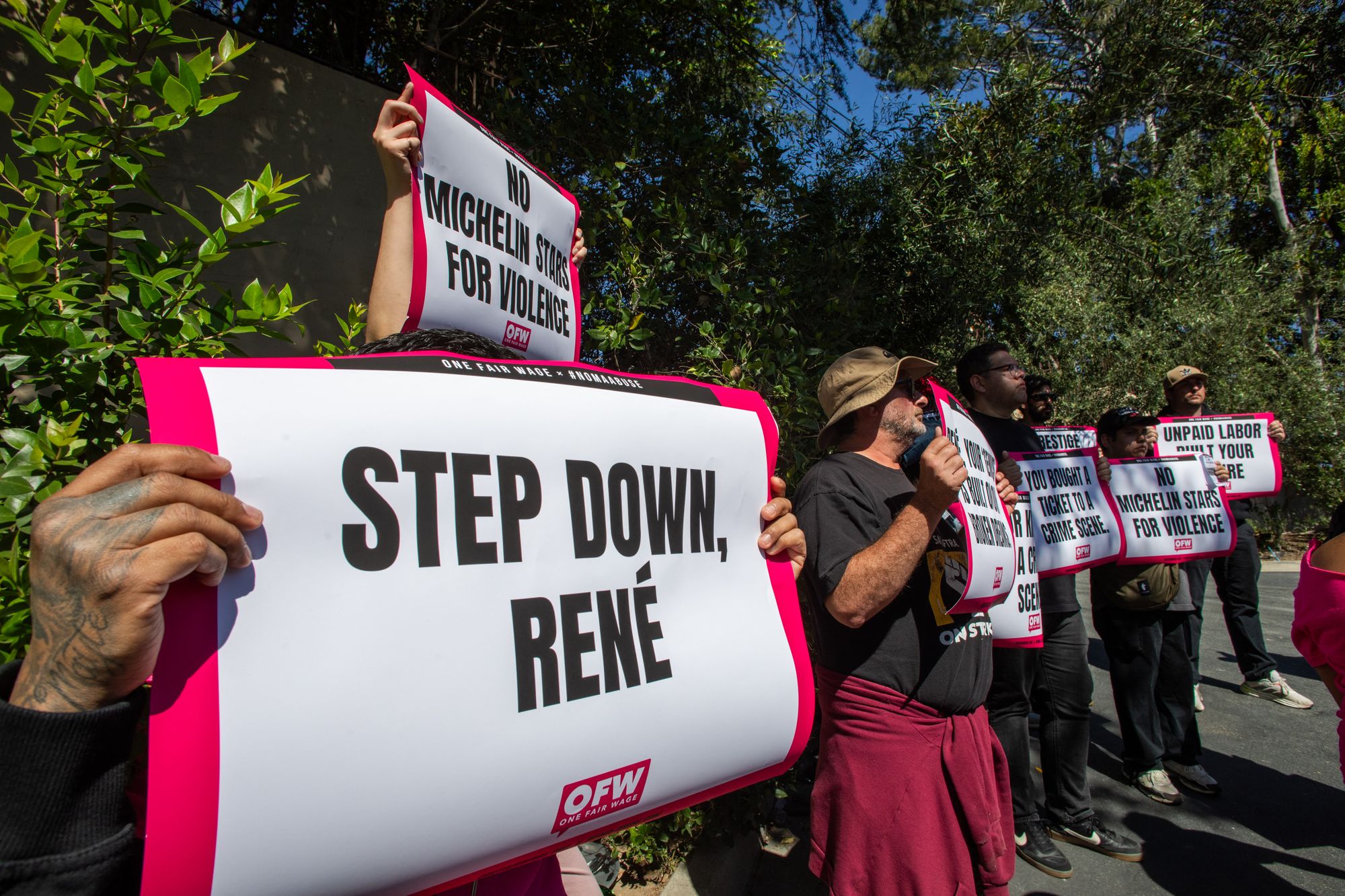
The protest, led by former employees, disrupted the opening. One former employee reportedly held a sign saying ‘Noma Broke Me’. A few hours later, Redzepi made a post on social media saying he was stepping down from his position.
“After more than two decades of building and leading this restaurant, I decided to step away and allow our extraordinary leaders to now guide the restaurant into the next chapter,” Redzepi said in a social media post.
Advertisement
He assured diners that the restaurant’s team “is the strongest and most inspiring it has ever been.”
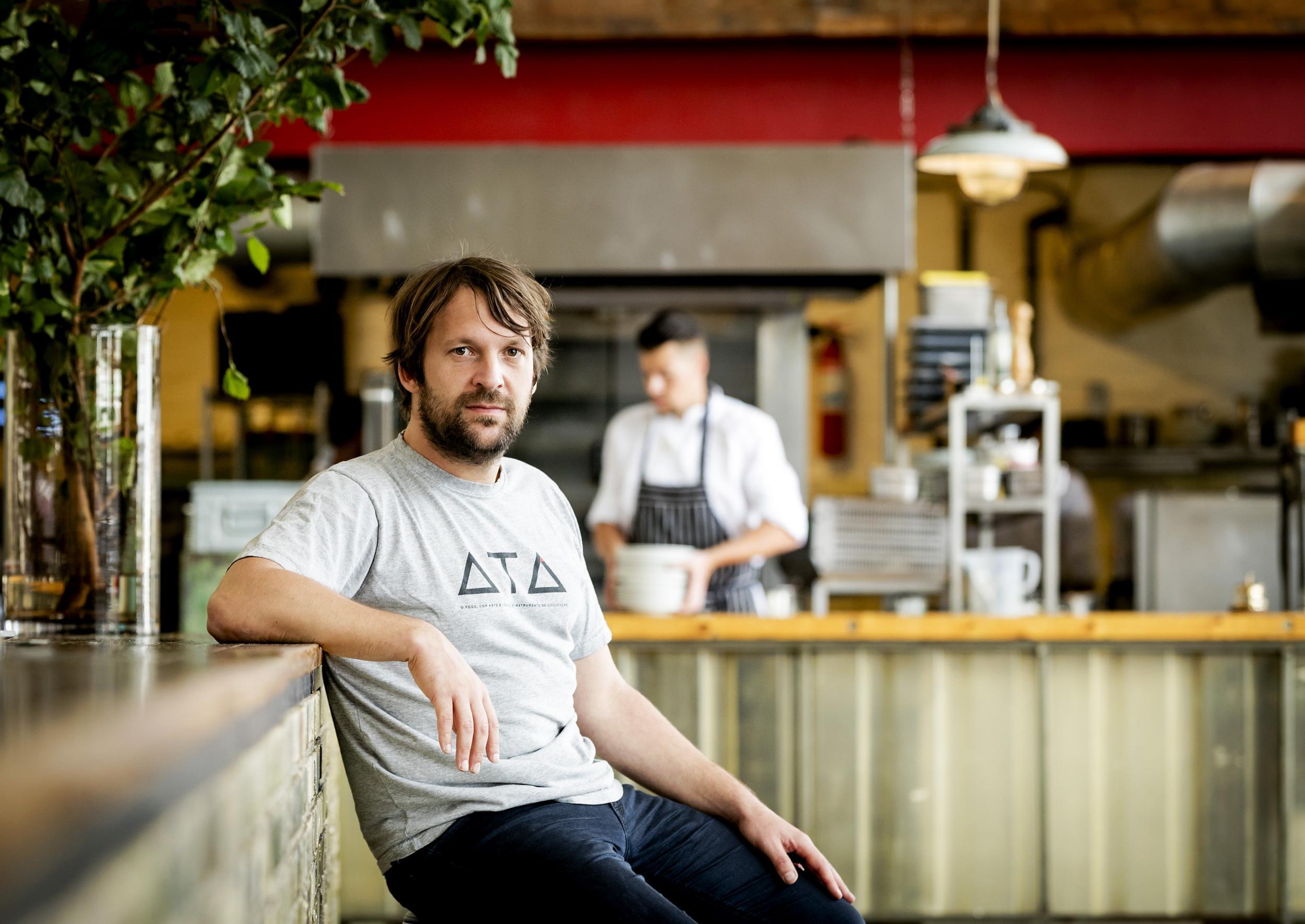
René Redzepi, the head chef behind Copenhagen’s Noma restaurant, has stepped down in the wake of a damning New York Times report citing former employees accusing him of violently abusing them during their shifts (AFP/Getty)
“This team will carry forward together into our LA residency, which will be a powerful moment for them to show what they’ve been working toward and to welcome guests to something truly special.”
Former employees spoke to the The New York Times about the alleged abuse and violence they experienced during Noma’s more than 20-year run.
Advertisement
“Beneath the glamour and stars, workers being pushed beyond their limits, workers being punched and choked, workers being humiliated and dreams being broken,” Jason Ignacio White, the former director of fermentation at Noma, said during the protest, according to NBC Los Angeles.
He demanded a change in management at the restaurant.
“The restaurant has violated the rights of employees over many years; restoring these employees’ rights would be necessary but not sufficient. Noma must change its management and employee policies to comply with both legal and moral obligations to the broader restaurant community,” he said, according to the NYT.
Advertisement
Activists and restaurant workers gather in front of Danish chef Rene Redzepi’s Noma Restaurant’s $1,500-per-seat pop-up in Los Angeles, on Wednesday (AFP via Getty Images)
In his resignation post, Redzepi said that he has “taken big steps to transform the culture over many years.”
“I recognize these changes do not repair the past,” he wrote. “An apology is not enough; I take responsibility for my own actions.”
In the wake of the NYT exposé, a pair of major sponsors pulled away from Noma’s LA pop-up.
American Express and Blackbird, a hospitality start-up, backed out of their partnerships with the restaurant, according to the NYT and Expedite, a restaurant news publication.
Advertisement
“René’s past practices, by his own admission, were unacceptable and abhorrent,” Blackbird founder Ben Leventhal told the paper. “We cannot lean on time elapsed and rehabilitation claims when these things resurface.”
One 2014 incident, described in the NYT’s report, details Redzepi allegedly punching an employee reportedly after forcing the entire kitchen staff out of the restaurant to watch him humiliate a sous chef who had put on techno music.
In another incident, he allegedly punched a female employee in the ribs after he saw her using her phone, which he prohibits for staff during their serving hours.
In 2015, Redzepi published an essay admitting that he had been a “beast” to some of those he employed. He also offered an apology via a statement to the NYT.
Advertisement
“Although I don’t recognize all details in these stories, I can see enough of my past behavior reflected in them to understand that my actions were harmful to people who worked with me,” the chef said. “To those who have suffered under my leadership, my bad judgment, or my anger, I am deeply sorry and I have worked to change.”
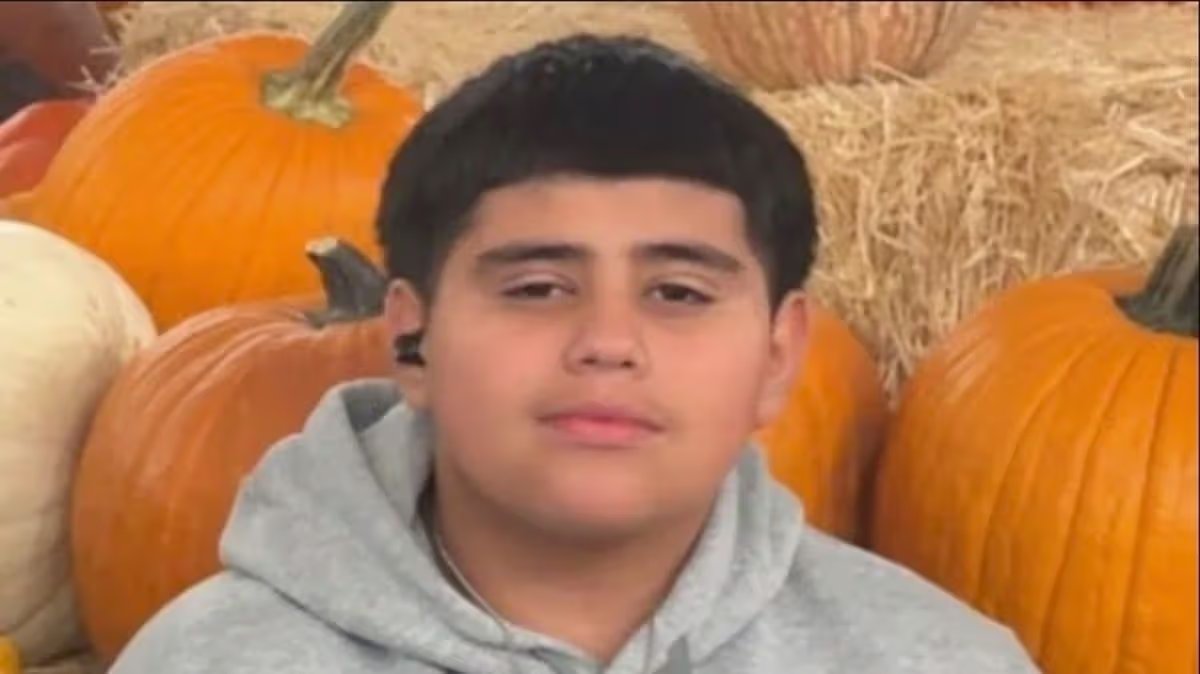
On Monday March 9, 14-year-old Daniel Padilla Jr., of Fresno, Calif., was enjoying playing basketball during a PE lesson at school when he suddenly collapsed and was rushed to hospital
A teenage boy has sadly died suddenly after collapsing at school.
Advertisement
The boy has been identified as 14-year-old Daniel Padilla Jr., of Fresno, Calif., he was playing basketball during P.E. class at Fresno High School on Monday, March 9, when he collapsed, ABC 30, ABC 7 News, and KMPH reported.
Am emergency service dispatcher could heard requesting emergency assistance for an unconscious child in the school’s gym around noon on Monday, according to dispatch audio obtained by ABC 30.
Ensure our latest headlines always appear at the top of your Google Search by making us a Preferred Source. Click here to activate or add us as your Preferred Source in your Google search settings.
“We can confirm that the student who collapsed during PE has tragically passed away at the hospital,” a spokesperson for Fresno Unified School District said in a statement shared with PEOPLE. “Our hearts are with the student’s family, friends, and school community during this incredibly difficult time. At this time, we do not have any additional information to share.”
“Our hearts continue to ache in solidarity with the family of our student,” the FUSD spokesperson later said in an update. “We can only imagine the pain his unexpected passing is causing them. We are honoring and respecting our student and his family by giving them the time and space they need to grieve.”
Following the upsetting incident a team of mental health professionals have been made available at Fresno High School to provide both social and emotional support for students following Padilla’s death. Staff will also have the option to speak with counselors, and substitutes are available for teachers who may need time off to grieve.
Advertisement
Daniel’s sister Hailey Valdovinos has launched a GoFundMe page. Padilla is remembered as a “silly kid who loved playing video games, cracking jokes and enjoyed spending time with his family whenever he got the chance.” Valdovinos added that playing basketball was one of his favorite hobbies, and he also enjoyed going to the movies and hanging out with his siblings.
The GoFundMe, which has already raised more than $10,000 of its $18,000 goal, will help his loved ones with affairs such as burial costs for what Valdovinos described as an “unexpected and unexplained” death. Padilla’s cause of death has not yet been determined.
Last year, a government-commissioned report looking into the role of employers in health and disability said that fit notes were “often problematic”. The Keep Britain Working review noted GPs often did not have the time, or the occupational health training, to fully assess if someone was able to work or not.
The Trump administration is using a 20-year-old report to misrepresent former President Jimmy Carter’s views on mail-in and absentee ballots as it pushes for federal legislation that would impose strict new proof-of-citizenship and photo ID requirements for voting ahead of the midterm elections.
On two successive days this week, President Donald Trump and White House press secretary Karoline Leavitt invoked the 2005 report by the Commission on Federal Election Reform while advocating for the Safeguard American Voter Eligibility, or SAVE America Act. The commission’s co-chairs were Carter, a Democrat, and former Secretary of State James Baker, who held senior government positions in the administrations of three Republican presidents — Gerald Ford, Ronald Reagan and George H.W. Bush.
Trump and Leavitt falsely claimed that Carter was against the use of mail-in and absentee ballots because they can lead to fraud, a mischaracterization of the report’s conclusions.
Here’s a closer look at the facts.
Advertisement
TRUMP, at the Republican Members Issues Conference on Monday: “Jimmy Carter, the best thing he ever did, he headed a commission after he was president. It was the single best thing. And he did a thing on mail-in ballots. He said mail-in ballots should not be allowed because they are inherently dishonest.”
LEAVITT, at a White House press briefing on Tuesday: “The bipartisan 2005 report of the Commission on Federal Election Reform, shared by, of all people, former President Jimmy Carter and former Secretary of State James Baker, concluded that, quote, ‘absentee ballots remain the largest source of potential voter fraud.’”
THE FACTS: Carter supported mail-in voting and absentee ballots, according to statements by the late president, his grandson Jason Carter and The Carter Center. The 2005 report stated that absentee and mail-in ballots can create opportunities for fraud, but also suggested ways to reduce that risk and recommended further research on the issue. Experts say there is no evidence that mail-in and absentee voting leads to widespread fraud, either now or 20 years ago.
“My grandfather supported mail-in voting — so much so that he used it himself,” Jason Carter, chair of The Carter Center’s board of trustees, told The Associated Press in a statement on Wednesday. “Any claim to the contrary unnecessarily sows doubt in election integrity and undermines voter confidence in a consequential election year.”
Advertisement
President Carter himself publicly endorsed mail-in voting and absentee ballots in 2020, a view that continued until his death in 2024.
“I urge political leaders across the country to take immediate steps to expand vote-by-mail and other measures to help protect the core of American democracy — the right of our citizens the vote,” he said in May 2020 amid concerns about elections during the COVID-19 pandemic.
Four months later, in response to news reports about his opinion of absentee ballots, Carter said: “I approve the use of absentee ballots and have been using them for more than five years.”
Voting by mail remains popular with voters of both major parties. During the 2024 election, which Trump won, roughly 30% of voters cast mailed ballots, according to the U.S. Election Assistance Commission. That was higher than pre-pandemic levels, when about a quarter of voters used mailed ballots. Three of the four states where use of mailed ballots was higher than in 2020 are controlled politically by Republicans — Indiana, South Dakota and Utah.
The Commission on Federal Election Reform, organized by American University’s Center for Democracy and Election Management and funded by a group of philanthropic organizations, published a report, “Building Confidence in U.S. Elections,” in 2005. Among its findings were that “absentee ballots remain the largest source of potential voter fraud” and that voting by mail is “likely to increase the risks of fraud and of contested elections” in certain states.
However, the report did not discourage the use of mail-in and absentee ballots. Rather, it included suggestions for how to reduce the risk of fraud.
The report made three recommendations related to absentee ballots and voter registration fraud: that jurisdictions only allow specific people to handle ballots, and prohibit candidates or party workers from picking up and delivering absentee ballots; that states should pass legislation to minimize fraud from payments for voter registration, absentee ballot or signature collection efforts; and that states should not discourage legal voter registration or get-out-the-vote work.
Advertisement
It also suggested that states should implement better safeguards for ballot integrity and encouraged further research on the pros and cons of mail-in and early voting. The report noted that in Oregon, which had been using vote-by-mail for seven years, there was “little evidence of fraud.”
“The administration’s claims about President Carter’s views on mail-in voting are not true,” the Carter Center said in a statement this week to The Associated Press.
It said the claims do not “consider the rest of the report’s findings or President Carter’s acknowledgment of the safeguards that have emerged in the 20+ years since this report came out.”
“There’s no evidence that mail-in voting fraud was rampant then, and it’s not rampant now,” said Mark Lindeman, policy and strategy director at Verified Voting, a nonpartisan group focused on election technology. “Mail voting has become more common and more mature. So, over that period of time, states have learned from each other — best practices for not only avoiding fraud, but just generally administering mail balloting well.”
For example, ballot tracking, curing ballots that had initially been rejected, and the ability to identify and address duplicate voter registrations have improved.
Trump has flip-flopped on mail-in voting over the years. He preemptively argued that mail balloting was bad months before voting even began in the 2020 election. At the same time, he encouraged voters in Florida — a state he won — to vote by mail. Trump and other Republicans then blamed mail-in voting for his loss.
The GOP, and sometimes even Trump, urged voters to cast their ballots by mail ahead of the 2024 election when it was seen as a necessary course correction during a tight race.
Advertisement
Asked whether Trump stands by the statements he and Leavitt made, White House spokeswoman Abigail Jackson said: “President Trump and Karoline are completely right — and Karoline read a direct quote from the report during her briefing.”
She added that the press release The Carter Center published in May 2020 that included Carter’s endorsement of mail-in voting “does not invalidate the findings” of the 2005 report.
A drone is circling in the skies above Zaki Ramadan when he takes my call. As a humanitarian worker in Sudan’s southeastern Blue Nile state, he is helplessly watching aid dwindle and civilians be killed by the meteoric rise in drone strikes.
“We stopped all humanitarian activity. We cannot work. All the offices are closing because of the drones – some of the area has been evacuated. WFP staff left two days ago from the area, anticipating drone strikes,” he says.
Drone warfare has made Sudan’s war a death trap for a population of more than 46 million people as the Rapid Support Forces (RSF) and Sudanese Armed Forces (SAF) battle for territory.
Image: Drone attacks by Rapid Support Forces (RSF) have been stepped up
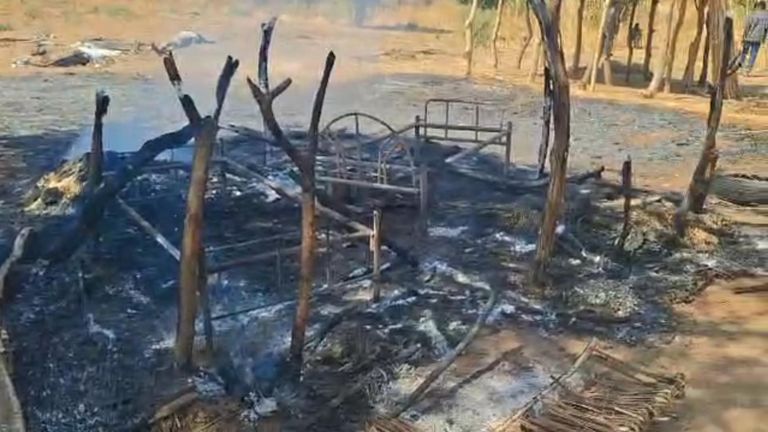
Image: Charred debris following a drone strike on a market in South Kordofan
The Armed Conflict Location & Event Data, an independent global monitor, has documented at least 198 drone strikes in Sudan launched by both sides in the first two months of 2026. At least 52 of them involved civilian casualties, killing 478 people.
“For us, when we hear the sound – we just rush and hide ourselves. We run to the river, and sometimes we can go into our foxhole. We go to the town and go to where there are no buildings sometimes,” says Zaki.
Advertisement
The area he operates in has been ravaged by armed rebellion and state violence for decades, but this time is different.
A dangerous new depth to warfare
“This war is quite different. This time they are using too many drones. Before – 20 years or 30 years ago – they did not use these drones, it was just a normal clash,” he says.
Drone warfare has added dangerous depth to Sudan’s humanitarian catastrophe by making safe aid delivery and emergency response virtually impossible in some of the hardest-hit areas.
Advertisement
“No food, no medical care, no sanitation,” says Zaki. People scrambling to safety are left with little to no option of sanctuary.
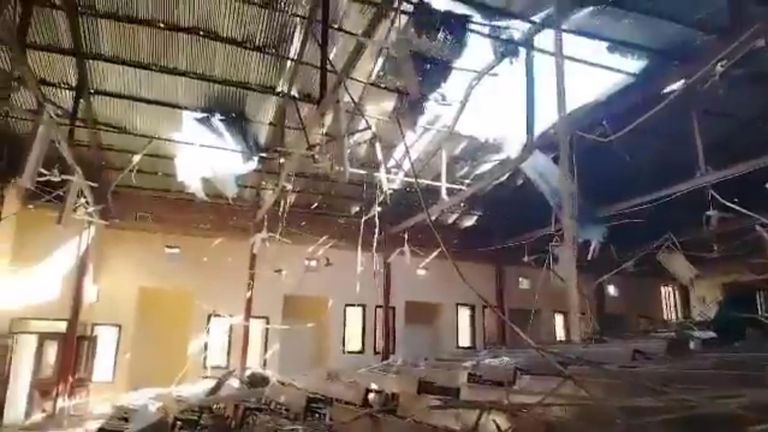
Image: Drones hits the University of Kordofan. Pic: Darfur Network for Human Rights
Image: Lecture halls are damaged in the strike. Pic: Darfur Network for Human Rights
Sky News analysis and mapping of ACLED data has found that deadly drone attacks are spread across Sudan and the number of civilian casualties is rapidly rising.
For the third consecutive day of new drone strikes on the southern White Nile state, an RSF drone hit a secondary school and shelter killing at least 17 people – mostly school girls – and injuring 10 others on Wednesday.
Image: A burial site in North Kordofan, where victims of a drone strike were laid to rest. Pic: Reuters
In just a two-day window in mid-February, more than 60 people were reported to have been killed by drones launched by both sides, with at least 15 children killed in a single Sudanese military drone strike on a shelter.
In January, a drone strike on N’djamena market in South Kordofan’s Dilling county killed 13 people and a month earlier, a triple drone strike by the RSF on a kindergarten and hospital in the same state killed 114 people – including 43 children.
Advertisement
Advertisement
UN: Sudan atrocities bear ‘hallmarks of genocide’
Detentions and deportations
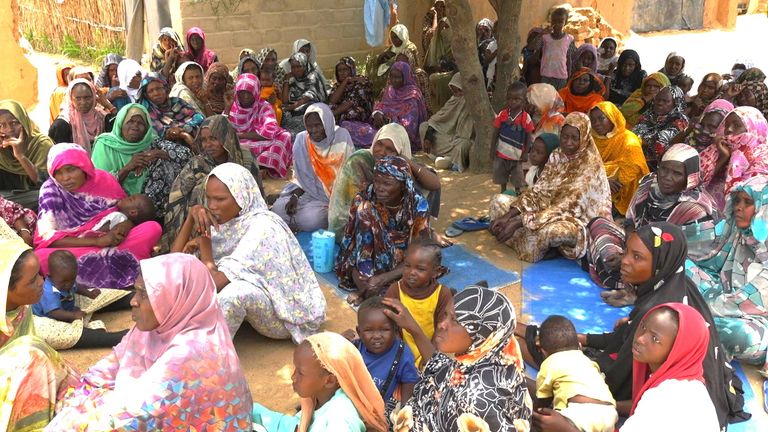
The walls are closing in on civilians dealing with escalating violence as borders close. Drone strikes are spread across the eastern border to the west – even hitting the territory of neighbouring Chad which hosts close to a million Sudanese refugees.
Chad recently closed its border with Sudan after multiple cross-border attacks by the RSF. Other neighbouring countries like South Sudan, Ethiopia, and Libya are dealing with the danger of their own civil wars and are increasingly unsafe for refugees.
Advertisement
Image: Sudan’s Rapid Support Forces (RSF) paramilitary group
Image: Countries are closing their borders because of the threat from RSF
Egypt, a key safe haven for Sudanese refugees, is now deporting them en masse. Hundreds of thousands are now facing fear of detention, deportation, and death as Egyptian authorities unleash a brutal crackdown. The Sudanese embassy in Cairo has said that 578 Sudanese citizens have been deported back to Sudan in December and January.
Affected families have told Sky News that their status as asylum seekers with the United Nations Refugee agency (UNHCR) is often ignored as their loved ones are picked up. Dozens of missing person posts are being shared on Facebook to trace those suspected of being detained or deported.
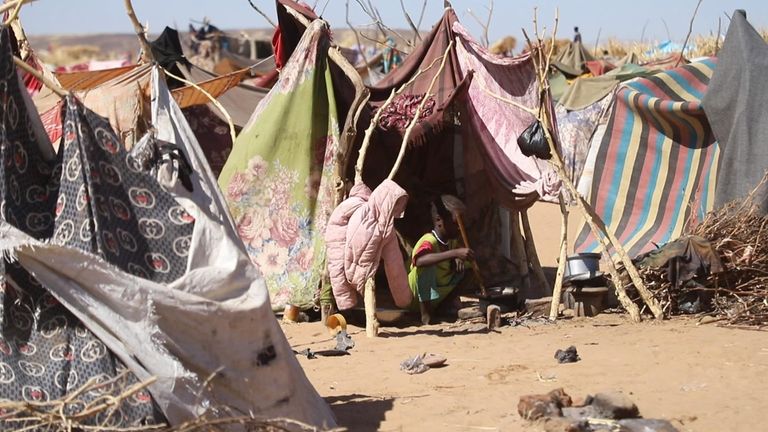
Image: People, fleeing the fighting, have set up camp in North Darfur
Image: Thousands have been forced to leave Al Fashir, the capital of North Darfur
Image: Refugees are living in makeshift tents
“They took us to prison, and we were terrified. I have never been imprisoned before – in Sudan or elsewhere – and was shocked by the sight of the prison. It felt like we were in a soap opera,” a Sudanese refugee who was detained by the Egyptian authorities told Sky News.
He was a taxi driver in the Sudanese city of Al Fashir. He eventually fled the regional capital – where the RSF are accused of committing genocide and killing 6,000 people in just three days of capture – and went to Egypt for his safety.
“They split us up into four groups, and we were around 110 to a single cell. There was violence from the police and then violence within the cell from embedded guards. You are constantly dodging both.”
Advertisement
An 18-year-old called Al-Nazeer Al Sadiq was also kept in one of these cells. He was arrested from a neighbourhood in Cairo and the three friends with him at the time were deported. He eventually died in detention.
“He did not have any illness – he was healthy when they picked him up,” his brother tells us from Sudan’s capital Khartoum.
“The first day my mother visited him he was mentally exhausted and not at peace. There were three visits and each time he was deteriorating more and more – right until he died.”
Al-Nazeer’s family have returned to Sudan, despite the risks. The Egyptian government did not respond to our request for comment.
Image: There has been extensive devastation in Khartoum
Image: The capital has seen some of the fiercest battles
UK’s asylum crackdown brought into focus
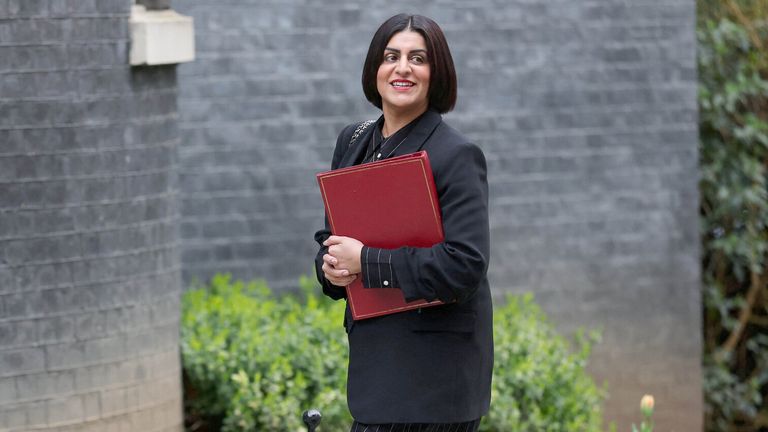
Here in the UK, Home Secretary Shabana Mahmood implemented an emergency ban on study visas for students from Afghanistan, Myanmar, Cameroon, and Sudan to slow asylum claims. This has meant that Sudan’s best and brightest minds – at least 210 students – are being prevented from pursuing scholarships to some of the UK’s best universities.
At least 22 of them were meant to study at the University of Oxford, and 39 of them were accepted in a UK government-funded Chevening scholarship for emerging leaders.
Advertisement
On the ban, Ms Mahmood said: “Britain will always provide refuge to people fleeing war and persecution, but our visa system must not be abused. That is why I am taking the unprecedented decision to refuse visas for those nationals seeking to exploit our generosity. I will restore order and control to our borders.”
Image: The home secretary’s restriction on study visas is affecting Sudan’s best and brightest minds. Pic: Reuters
But the students impacted believe that they are facing the compounded cruelty of Sudan’s war.
‘It’s heartbreaking’
“What’s especially painful about the current situation is that the data simply doesn’t justify a blanket decision like this,” says Rawan, who has been blocked from enrolling in her dream masters programme in international health at the University of Oxford after being accepted.
“The Home Office has pointed to a 300% increase in asylum claims from Sudanese students, from 30 to 120 cases over five years. But when you look at the bigger picture, those 120 cases represent only about 0.1% of total asylum claims in the UK.”
Advertisement
She continued: “It’s heartbreaking to see how we’re also villainising the students who sought asylum as they are not manipulating the system, they are fleeing one of the worst humanitarian crises in the world, with more than 14 million Sudanese people displaced by the war.
“There is definitely a general sense of helplessness.”
This war is becoming a dead end as borders close and drones stalk the skies. Aid workers like Zaki do not know what to tell the people scrambling for safety.
“They get confused about where they can go to feel peace – they go to South Sudan, there is a problem. They go to Ethiopia, there is a problem,” says Zaki.
Prince Harry and Meghan Markle will visit Australia in April for private and public engagements, with the Duchess attending a luxury weekend retreat in Sydney
Prince Harry and Meghan Markle are travelling to Australia next month for a brief unofficial royal visit, where Meghan will be the star attraction at a ‘girls weekend’ retreat in Sydney.
Advertisement
The Duchess of Sussex will deliver speeches throughout the “weekend like no other,” including at a grand dinner, with VIP ticket purchasers also able to secure a photograph with the Duchess.
Supporters have been taken aback by the cost of attending the event, with tickets beginning at a staggering £1,439. This price includes participants’ accommodation at a beachside Sydney hotel and entry to three days of activities, including a gala dinner, yoga and meditation sessions, and a disco celebration.
Those wishing to get even closer to Meghan can buy the VIP experience tickets, which are being offered for £1,705 per person. Alongside the weekend’s activities, this ticket guarantees seating at a table in the front two rows for the gala dinner with Meghan, as well as a group table photograph with the Duchess of Sussex.
This means that for an additional £266 per person, devoted admirers of Meghan can get a group photograph with the Duchess during her rare Sydney visit.
Advertisement
A promotional message about the multi-day event states: “A girls’ weekend like no other! An unforgettable weekend for women ready to reconnect, recharge and have some serious fun. Join us for an intimate luxury weekend by the ocean designed to bring women together for powerful conversations, relaxation, laughter and unforgettable experience.”
The last time the Duchess of Sussex travelled to Australia, she reportedly complained that she wasn’t receiving payment for the walkabouts, according to claims in a royal book. Harry and Meghan were last down under in 2018, where they spent 16 days travelling around Australia, Fiji, Tonga, and New Zealand on their first royal tour as a married couple, reports the Mirror.
During the tour, huge crowds turned out to see them as they visited the countries and attended an impressive 76 engagements. A book written by former The Times’ royal correspondent Valentine Low claims that Meghan “enjoyed the attention” she received but did not understand the point of royal walkabouts.
Mr Low writes in Courtiers: The Hidden Power Behind the Crown that the Duchess of Sussex showed a “refreshingly informal approach to royal visits” which was “a hit with the Australian public”. However, despite being hailed as an “inspirational role model”, the royal expert revealed that it was a different story behind the scenes.
Advertisement
The book reads: “Although she enjoyed the attention, Meghan failed to understand the point of all those walkabouts, shaking hands with countless strangers.” Quoting unnamed members of staff, the book claims that Meghan was heard saying: “I can’t believe I’m not getting paid for this.”
Meghan isn’t the only one making appearances at high-profile events during their Australian tour, with Prince Harry also delivering a speech at the InterEdge Summit in Melbourne. This event is described as a “professional development summit designed to equip leaders, practitioners, and changemakers with the knowledge and tools to create mentally healthy, safe, and high-performing workplaces.”
Tickets for this mental health summit begin at £1,054, with proceeds from ticket sales being donated to Lifeline. Earlier this week, it was confirmed that Harry and Meghan would be visiting Australia for the first time in over seven years, spending time in Sydney and Melbourne in mid-April.
A representative for the couple stated: “Prince Harry and Meghan, Duke and Duchess of Sussex, will visit Australia in mid-April to take part in a number of private, business and philanthropic engagements. Further details will be shared in due course.”
Advertisement
It is understood that their children, Archie and Lilibet, will not accompany them on this trip.
Appearing at a Durham Crown Court plea hearing, Catherine Brennan pleaded not guilty to a single count of stalking, involving serious alarm or distress.
Between December 1, 2024, and February 24, last year, she is accused of making unwanted calls, sending numerous text messages, posting comments on social media and sending messages to the complainant’s family about him.
Ellen Wright, for the defendant, said during the period of the alleged offending she was suffering with psychosis, which was undiagnosed at that time, but which was subsequently diagnosed, and for which she now has medication.
Advertisement
Miss Wright asked the court to adjourn for preparation of a psychiatric report on the defendant to assess the issue of psychosis.
Judge Nathan Adams agreed and said the report should be served on the court along with the defendant’s signed defence statement, by April 30.
A further case management hearing will follow two months later, with a trial date provisionally pencilled in to start on August 10, 2027.
Advertisement
Adjourning the hearing, Judge Adams told Brennan: “There’ll be a hearing back here in late June and if there needs to be a trial, it will be at the back of a long queue, I’m afraid, in August next year.”
He granted the 38-year-old defendant of Startforth Park, Barnard Castle, bail to attend the further case management hearing at the court, on June 29.