Connect with us

Business

The Stock Exchange of Thailand reveals a 3-year plan (2026-2028) to modernize the Thai capital market

Published

on

The Stock Exchange of Thailand reveals a 3-year plan (2026-2028) to modernize the Thai capital market

The Stock Exchange of Thailand unveils a comprehensive 3-year plan (2026-2028) to elevate the Thai capital market across all dimensions. The initiative aims to restore confidence, expand investment opportunities with innovative products, and attract increased foreign capital inflows.

🎯 Core Purpose

  • Position SET as “The Trusted Gateway to Inclusive Opportunities.”
  • Expand opportunities, strengthen infrastructure, and build confidence in Thailand’s capital market.

📌 Strategic Priorities (3 Pillars)

  1. Exciting Markets with Confidence
    • Attract fund flows through new products, inbound/outbound roadshows, and investor base expansion.
    • Enhance IPO processes to attract New Economy, foreign, SME/startup companies.
    • Strengthen listed companies’ governance and value creation (e.g., JUMP+ program).
    • Expand TFEX with short-dated derivatives, crypto-based products, and liquidity support.
  2. Grow Business with Stakeholders
    • Build the SET Climate Ecosystem (carbon trading, greenhouse gas reporting, climate law readiness).
    • Leverage AI for market data and access services.
    • Develop commercial policies aligned with international standards.
  3. Great Process and People
    • Upgrade infrastructure: new clearing system (launch 2027), enhanced TSD e-services.
    • Drive workforce development aligned with organizational transformation.
    • Foster open, innovative, sustainability-conscious corporate culture.

🌍 Context & Challenges

  • Thai economy faces uncertainty: trade wars, political changes, strong baht, slowing exports/tourism.
  • Global volatility: ESG standards, Fed policy, geopolitical tensions.
  • Liquidity pressures and investor confidence issues.

✅ Key Achievements (2025–2026)

  • 110 companies joined JUMP+ program.
  • Launched Bond Connect Platform and G-Token system.
  • Expanded ETFs and DRs (233 securities).
  • Introduced measures for market stability (capped weights, temporary volatility measures).
  • Advanced sustainability: SETCarbon Solution, Net Zero target, community support initiatives.

In short: SET’s 2026–2028 plan focuses on boosting liquidity and confidence, expanding sustainable growth ecosystems, and modernizing infrastructure while preparing people and processes for long-term resilience.

Source : Presentation: The Stock Exchange announces a 3-year plan (2026-2028) to upgrade the Thai capital market in every dimension. Hurry to regain confidence Increase investment opportunities with new products Attract foreign capital flows

Advertisement

Discover more from Thailand Business News

Subscribe now to keep reading and get access to the full archive.

Advertisement

Continue reading

Continue Reading
Click to comment

Leave a Reply

Your email address will not be published. Required fields are marked *

Business

Former Boss chief Duncan Craib sues HotCopper for defamation

Published

on

Former Boss chief Duncan Craib sues HotCopper for defamation

Former Boss Energy chief Duncan Craib has sued HotCopper after the forum operator allegedly refused to take down defamatory posts.

Continue Reading

Business

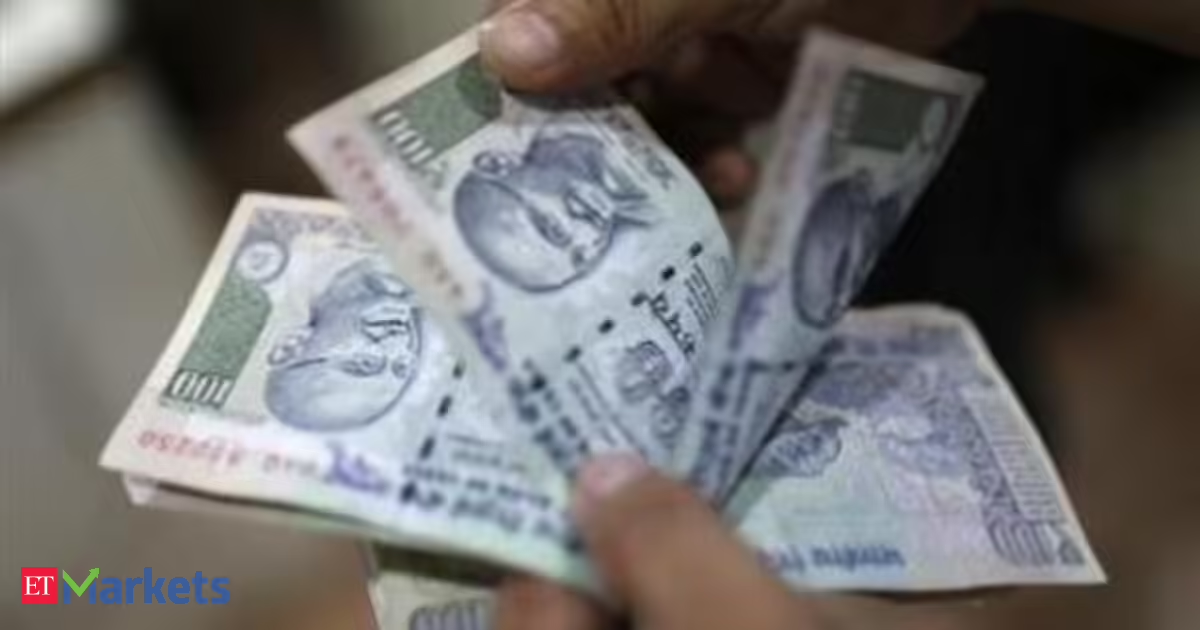
Rupee hits record low of 92.35 vs dollar as oil surge pummels Asian assets

Published

on

Rupee hits record low of 92.35 vs dollar as oil surge pummels Asian assets
Indian assets dropped on Thursday and the rupee fell to a record low, as a fresh surge in crude oil prices reignited worries over ‌the ⁠economic impact ⁠from energy supply disruptions even as the currency’s fall was cushioned by central bank intervention.

Brent crude oil prices climbed to $100 per barrel as Iran stepped up attacks on oil and transport facilities across the Middle East, warning the ⁠world to ‌brace for oil at $200 a barrel.

The rupee fell 0.3% to 92.3575, eclipsing its previous ⁠lifetime low of 92.3475 hit earlier in the week.

India’s benchmark equity index Nifty 50 fell about 1%, the yield on the benchmark 10-year bond rose 4 bps, and the rupee averted a fresh record low largely on the back of ‌central bank intervention, traders said.

Advertisement

Asian currencies weakened across the board, while MSCI’s gauge of regional stocks fell more ⁠than 1.5%.


“We expect the RBI to intervene in 92.30-92.35. However if Brent continues to remain elevated for a couple of sessions, the RBI may have to let the rupee go,” said Abhishek Goenka, chief executive at FX advisory firm IFA Global.

Continue Reading

Business

Analysis-Airline hedging strategies fall short as jet fuel price surges

Published

on

Analysis-Airline hedging strategies fall short as jet fuel price surges


Analysis-Airline hedging strategies fall short as jet fuel price surges

Continue Reading

Business

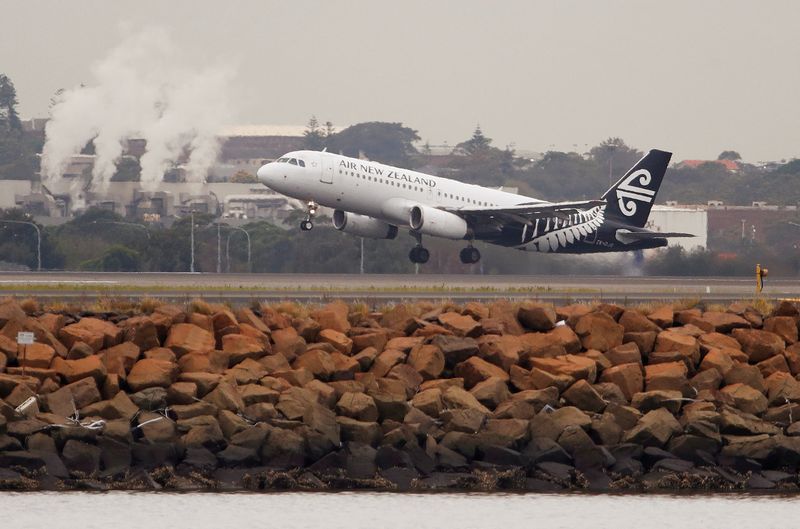
Air New Zealand to cut flights as fuel price surge wreaks havoc on travel

Published

on

Air New Zealand to cut flights as fuel price surge wreaks havoc on travel


Air New Zealand to cut flights as fuel price surge wreaks havoc on travel

Continue Reading

Business

Dow: Turnaround Is Taking Shape, But Much Of The Optimism Is Priced In

Published

on

Dow: Turnaround Is Taking Shape, But Much Of The Optimism Is Priced In

Dow: Turnaround Is Taking Shape, But Much Of The Optimism Is Priced In

Continue Reading

Business

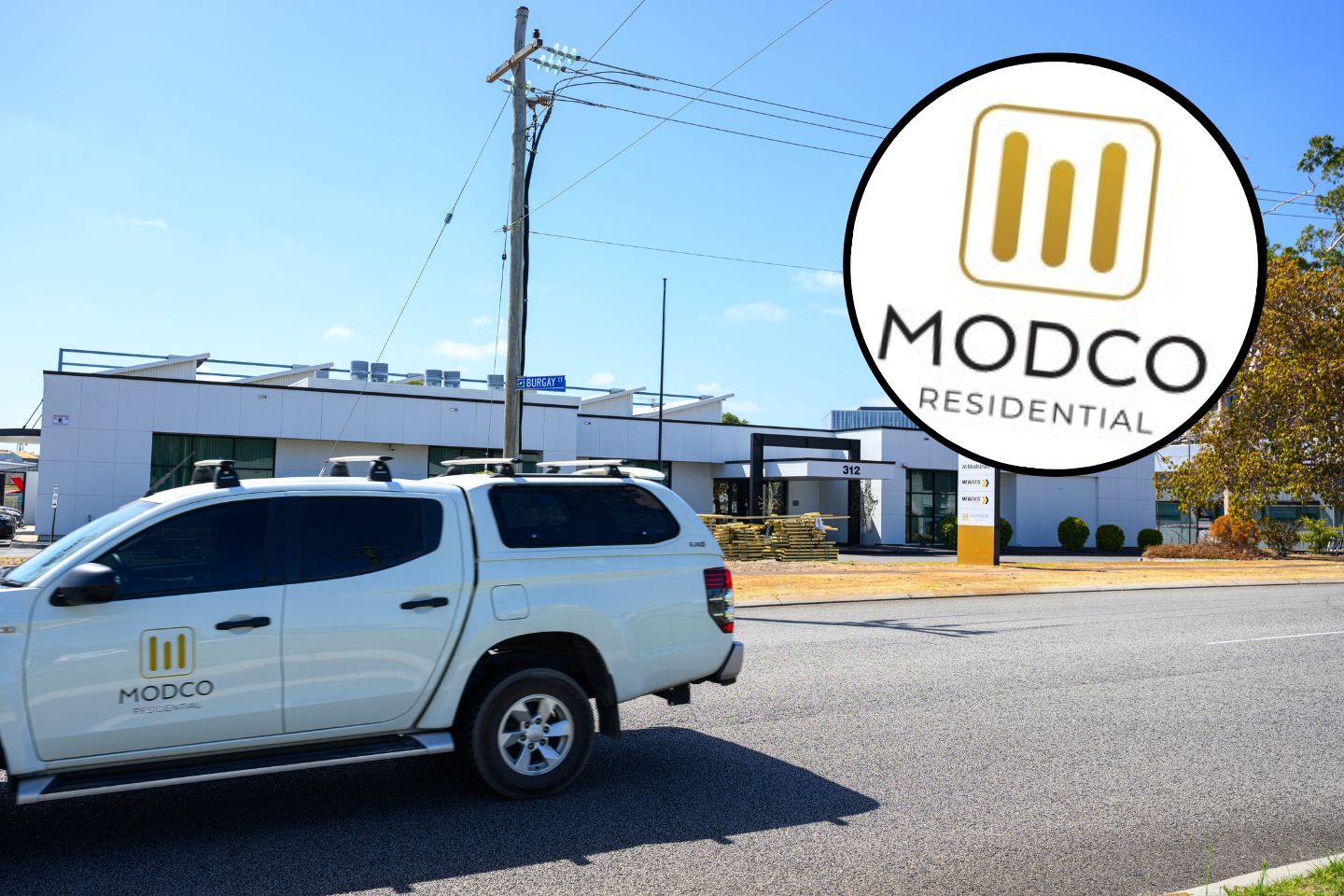
Modco founder Yusuf Khan pursued for $7m tax debt

Published

on

Modco founder Yusuf Khan pursued for $7m tax debt

The tax office is pursuing the founder of collapsed builder Modco Residential, Yusuf Khan, over almost $7 million in alleged unpaid taxes, interest and penalties.

Continue Reading

Business

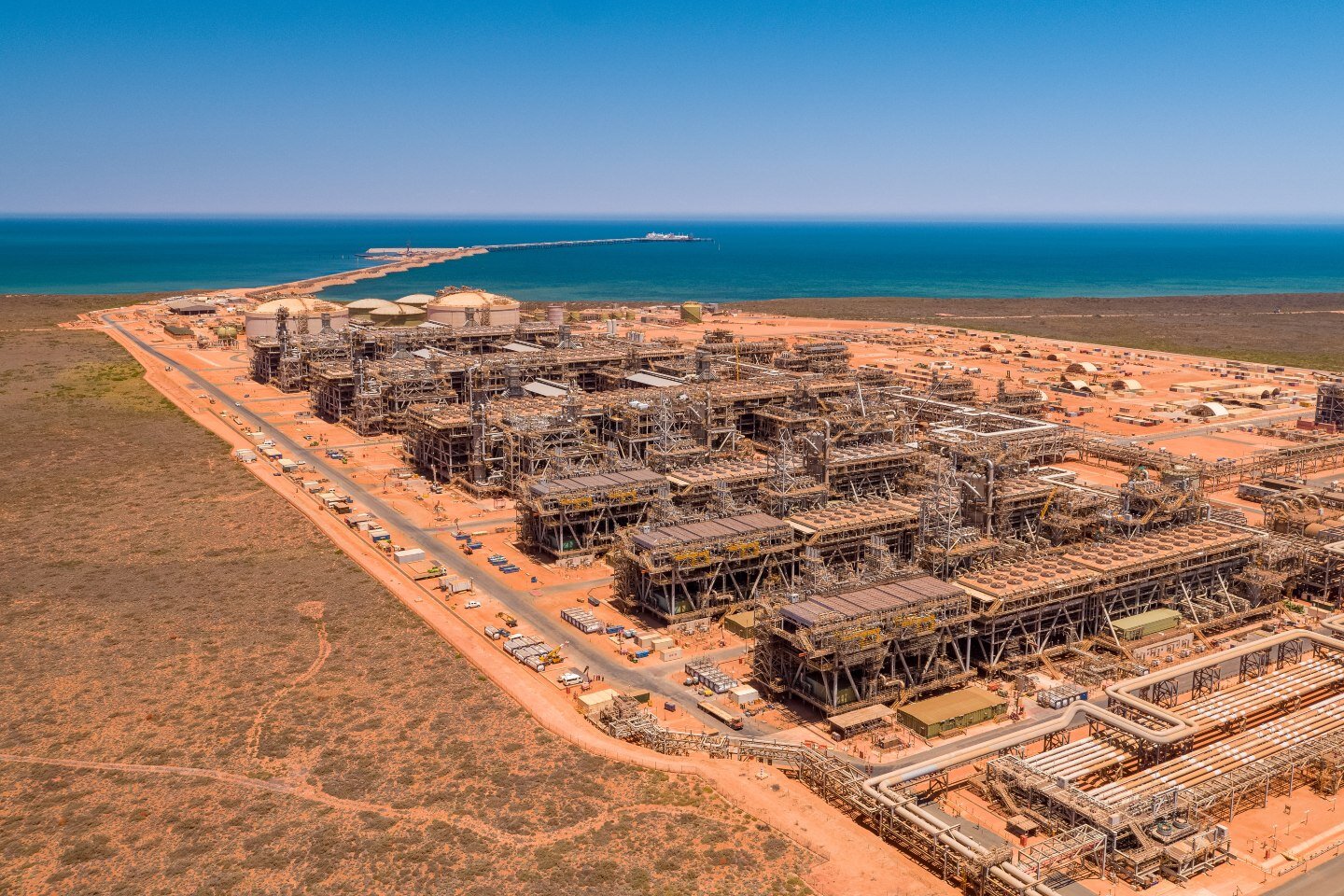
US firm buys Jera out of Gorgon, Icthys

Published

on

US firm buys Jera out of Gorgon, Icthys

Japan’s largest electricity producer has agreed to divest stakes in the Gorgon and Ichthys LNG projects to US-based MidOcean Energy for an undisclosed sum.

Continue Reading

Business

Florida drought deepens strain on citrus industry as growers battle costs, disease

Published

on

Florida drought deepens strain on citrus industry as growers battle costs, disease

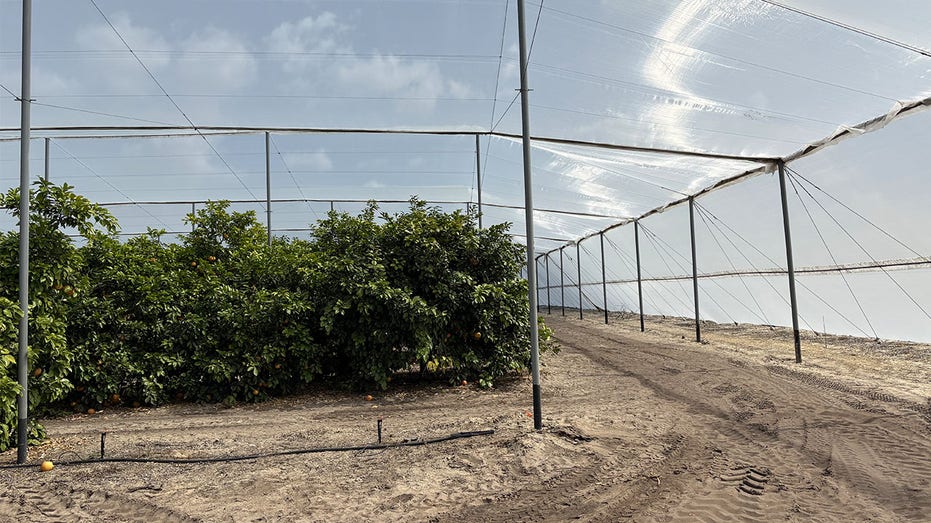
Florida citrus grows inside a protective screen in Bartow, Florida. (FOX News)

BARTOW, Florida – Florida is facing its worst drought in 25 years, intensifying pressure on a citrus industry already battered by disease, hurricanes and rising costs.

Advertisement

According to the U.S. Drought Monitor, 100% of the state is experiencing some level of drought, with more than 75% in extreme drought conditions. The dry spell is adding new financial strain for growers who rely heavily on irrigation to sustain crops.

Florida accounts for 17% of the nation’s citrus production, according to the Florida Department of Agriculture and Consumer Services. For many communities, the industry remains a key economic driver.

“There are multiple companies across our county and across our state, and it’s definitely a lifeline to a lot of Floridians here,” said Jennifer Schaal, VP of finance at Dundee Citrus Growers Association. “It’s what they depend on.”

USDA CREDITS TRUMP TRADE DEALS AS AGRICULTURAL DEFICIT SHRINKS, FARM SECTOR GAINS GROUND

Advertisement
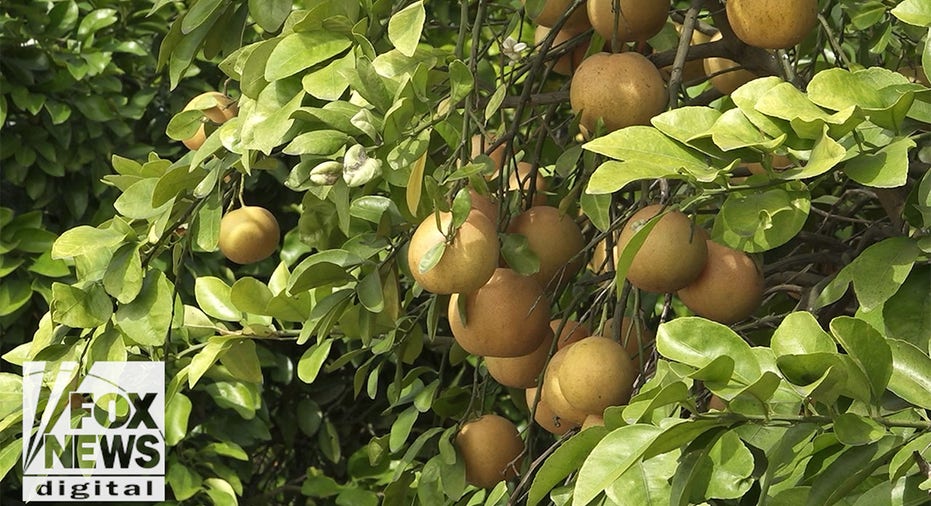
Grapefruit on a citrus grove

Florida produces nearly 20% of the nation’s citrus crop, including grapefruit. (FOX News / Fox News)

However, nature has been anything but dependable for Florida farmers.

Back in 2000, the state’s citrus industry covered over 800,000 acres. Today, that figure has fallen to just over 200,000 acres, according to the U.S. Department of Agriculture, reflecting years of disease pressure and storm damage.

“The number one challenge the industry has had over the years is citrus greening disease,” said Steven Callaham, executive vice president and CEO of Dundee Citrus Growers Association. “And then on top of that challenge, we’ve experienced numerous hurricanes.”

RECENT HURRICANES CAUSE FLORIDA CITRUS PRODUCTION TO FALL AS FARMS WORK THROUGH DAMAGE

Advertisement

Recent freezes and now drought conditions have compounded those pressures.

“When you irrigate, it requires a pump that is either powered by diesel or it’s powered by electricity, and it gets very, very expensive,” explained Callaham.

Dundee Citrus Growers Association is one of the largest fresh fruit cooperatives in the state of Florida, harvesting citrus from over 10,000 acres. 

“It’s been challenging over the last year,” added Bill Bohde, director of agronomy at Dundee Citrus. “During the bloom period, water is critical. It determines how well the fruit sizes and ultimately, you know, how large your crop will be.”

Advertisement
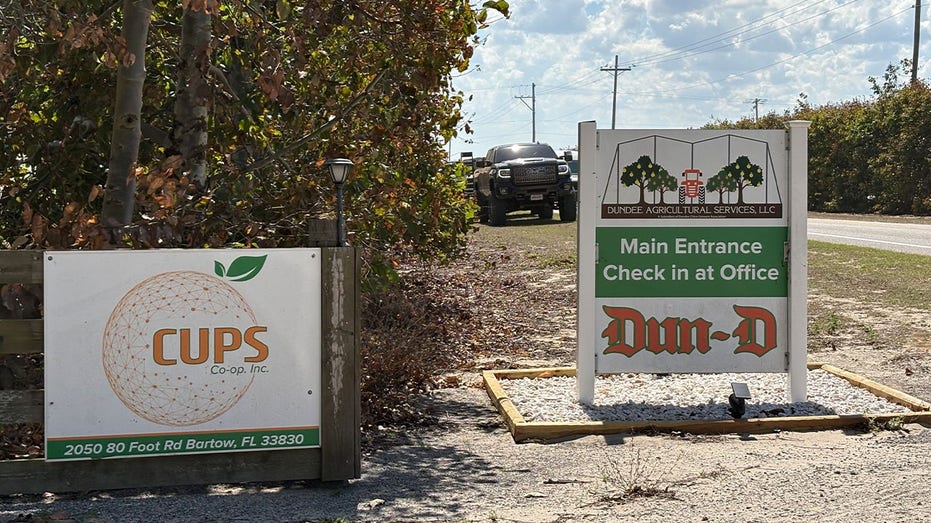
Dundee Citrus Growers uses CUPS

The Dundee Citrus Growers Association utilizes pods to grow citrus under a protective screen in Florida. (Amy Galo / Fox News)

As citrus acreage dwindles throughout the state, the company has found a solution to nature’s many obstacles with something called “CUPS,” or Citrus Under Protective Screens. 

Orange groves are planted under 10-acre white tent structures, also known as pods. Originally installed to prevent disease in citrus plants, the structures are also helping growers better manage soil moisture during the historic drought.

CITRUS INDUSTRY HAS BEEN PUT ‘BACK ON ITS HEELS’: MATT JOYNER

“Everything is pumped through a series of pipes into this black tubing, and every tree has a very small emitter that puts, you know, puts out an amount of water,” explained Bhode.

Advertisement

The system allows for precise irrigation, creating a controlled environment that can support fruit production even during prolonged dry spells.

Citrus in a pod

Citrus fruit plants thrive under a protective screen in Bartow, Florida. (Amy Galo)

“This ten-acre pod will produce between 8,000 and 10,000 boxes per pod,” said Callaham. “The trees in this environment, they’re happy. They grow faster than trees do in traditional outdoor groves, and they come into production quicker. So it’s one way that we can really get the industry back on track.”

USDA production data show mixed results across citrus categories. Florida lemon production increased 4% from last season, while tangerine and tangelo output was unchanged. Grapefruit production declined 8%, and non-Valencia orange production fell 2%, according to the agency.

GET FOX BUSINESS ON THE GO BY CLICKING HERE

Advertisement

“If I wasn’t optimistic, I would not be in the citrus business,” said Callaham. “So I think we have a lot of positives going for us right now, you know? The challenges we have are temporary. We’re going to make it through.”

Continue Reading

Business

UiPath, Inc. (PATH) Q4 2026 Earnings Call Transcript

Published

on

OneWater Marine Inc. (ONEW) Q1 2026 Earnings Call Transcript

Q4: 2026-03-11 Earnings Summary

EPS of $0.30 beats by $0.05

 | Revenue of $481.11M (13.56% Y/Y) beats by $16.29M

UiPath, Inc. (PATH) Q4 2026 Earnings Call March 11, 2026 6:45 PM EDT

Company Participants

Allise Furlani – Senior Director of Investor Relations
Daniel Dines – Co-Founder, CEO, & Executive Chairman of the Board
Ashim Gupta – CFO & COO

Advertisement

Conference Call Participants

Bryan Bergin – TD Cowen, Research Division
Sanjit Singh – Morgan Stanley, Research Division
Michael Turrin – Wells Fargo Securities, LLC, Research Division
Chirag Ved – Evercore ISI Institutional Equities, Research Division
Terrell Tillman – Truist Securities, Inc., Research Division
Radi Sultan – UBS Investment Bank, Research Division
Scott Berg – Needham & Company, LLC, Research Division
William Kingsley Crane – Canaccord Genuity Corp., Research Division
Arsenije Matovic – Wolfe Research, LLC
Phil Winslow
Koji Ikeda – BofA Securities, Research Division
James Kisner – Water Tower Research LLC

Advertisement

Presentation

Operator

Greetings, and welcome to UiPath’s Fourth Quarter and Full Year 2026 Earnings Conference Call. [Operator Instructions] Please note, this conference is being recorded.

I will now turn the conference over to Allise Furlani Head of Investor Relations. Thank you. You may begin.

Advertisement

Allise Furlani
Senior Director of Investor Relations

Good afternoon, and thank you for joining us today to review UIPath’s fourth quarter and full year fiscal 2026 financial results which we announced in our earnings press release issued after the market closed today.

On the call with me are Daniel Dines, Founder and Chief Executive Officer; and Ashim Gupta, Chief Operating and Financial Officer, to deliver our prepared comments and answer questions. Our earnings press release and financial supplemental materials are posted on the UiPath Investor Relations website. These materials include GAAP to non-GAAP reconciliations. We will be discussing non-GAAP metrics on today’s call. This afternoon’s call includes forward-looking statements regarding our financial guidance for the first quarter and full year fiscal 2027 and our ability to drive and accelerate future growth and operational efficiency and grow our platform, product offerings and market opportunity.

Advertisement
Continue Reading

Business

Brent crude tops $100/bbl as Iran attacks on shipping worsen supply concerns

Published

on

Brent crude tops $100/bbl as Iran attacks on shipping worsen supply concerns
The price of a barrel of Brent crude oil, the international standard, topped $100 a barrel early Thursday, just days after it spiked near $120 in the latest jolts to financial markets and the global economy as a whole.
Oil prices shot more than 9% higher as supply concerns worsened with Iranian attacks on commercial shipping around the Strait of Hormuz.

U.S. benchmark crude oil jumped to about $95 a barrel.

The latest attacks marked an escalation in Iran’s campaign aimed at generating enough global economic pain to pressure the United States and Israel to end the war that started 12 days ago. But there were no signs that the conflict was subsiding.

Iran has targeted oil fields and refineries in Gulf Arab nations and effectively stopped cargo traffic through the narrow Strait of Hormuz, through which a fifth of all traded oil passes.

In response, the International Energy Agency agreed Wednesday to release 400 million barrels of oil, the largest volume of emergency oil reserves in its history, in a bid to counter the war’s effects on energy markets. The U.S. planned to release 172 million barrels of oil next week from its Strategic Petroleum Reserve to combat steep prices.
Also Read | Explained: Why crude prices rose 9% despite IEA announcing largest release since 1970s
The IEA’s announcement came a day after energy ministers from the Group of Seven — the leading industrialized nations of Canada, the United States, France, Italy, Japan, Germany and Britain — met in Paris to look at ways to bring down prices.
But the continued strife and uncertainty have fueled speculation prices could push still higher.

Markets in Asia fell back, with Tokyo’s Nikkei 225 losing 1.5% to 54,177.15. In South Korea, the Kospi lost 1% to 5,552.01, while Hong Kong’s Hang Seng gave up 1.2% to 25,577.71.

Advertisement

The Shanghai Composite index shed 0.5% to 4,110.20 and in Australia, the S&P/ASX 200 dropped 1.6% to 8,601.70.

U.S. futures lost more than 1% and the dollar climbed to 159 Japanese yen while the euro fell to $1.1538.

On Wednesday, U.S. stocks were little changed as the S&P 500 edged 0.1% lower, to 6,775.80, for a second day of modest moves following a wild stretch caused by the war with Iran. The Dow Jones Industrial Average dropped 0.6% to 47,417.27, and the Nasdaq composite rose 0.1% to 22,716.13.

Since the start of the war, sharp moves for oil prices have triggered swings up and down for financial markets worldwide, sometimes by the hour. Oil prices briefly spiked to their highest levels since 2022 this week because of the possibility that production in the Middle East could be blocked for a long time, which in turn raised worries about a surge of debilitating inflation for the global economy.

Advertisement

A report released Wednesday showed U.S. consumers paid prices for groceries, gasoline and other costs of living that were 2.4% higher in February than a year earlier.

That’s the same level as the month before and better than the 2.5% that economists expected, but it remains above the Federal Reserve’s 2% target and doesn’t include the spike in gasoline prices this month due to the war.

High inflation combined with a stagnating economy would create a worst-case scenario called “stagflation” that the Federal Reserve has no good tools to fix. Stagflation fears are rising not just because of higher oil prices but also because of weakness in hiring by U.S. employers.

Because of the spike for oil prices, traders have pushed back forecasts for when the Fed could resume its cuts to interest rates. President Donald Trump has been angrily calling for such cuts, which would give the economy and job market a boost but also potentially worsen inflation.

Advertisement
Continue Reading

Trending

Copyright © 2025