The New York Times’ popular word-association game Connections delivered another clever brain teaser on Wednesday, March 11, 2026, with puzzle No. 1004 featuring a mix of straightforward synonyms, idiomatic phrases and tricky homophones that left players debating categories and celebrating quick solves.
Connections, launched in 2023, tasks players with grouping 16 words or phrases into four themed sets of four. Categories range in difficulty from yellow (easiest) to purple (hardest), and players get four mistakes before the puzzle ends in defeat. The game has surged in popularity alongside Wordle, Strands and other daily NYT brain games, drawing millions who share scores and frustrations on social media.
The New York Times Connections
For March 11’s edition, the 16 words were: DRESS, HEE, ICE CREAM, JAZZ, LIFT, MI, OUI, PALM, PINCH, PINE, POCKET, SNOW, SPIFF, SPRUCE, TRAFFIC and YEW.
Hints circulated quickly online from sites like Mashable, CNET, Forbes and The Gamer, offering subtle nudges without full spoilers. Common early clues pointed to “take without permission” for the yellow group, “enhance, perhaps vertically” or “make nicer with ‘up’” for green, “conical variety” or “photoreceptor cells and funnels” for blue, and “sounds like…” or “pronoun homophones” for the challenging purple.
The yellow category proved the most accessible: **STEAL** — LIFT, PALM, PINCH, POCKET. These are all informal verbs meaning to pilfer or swipe something discreetly, from “lifting” goods in retail slang to “palming” an item or “pinching” pennies.
Advertisement
Green followed as **MAKE NICER, WITH “UP”** — DRESS, JAZZ, SPIFF, SPRUCE. Each word pairs with “up” to form a phrase meaning to improve appearance or style: dress up, jazz up, spiff up, spruce up. Reviewers noted this as a classic Connections trope relying on common idioms.
The blue group, rated medium difficulty, was **KINDS OF CONES** — ICE CREAM, PINE, SNOW, TRAFFIC. This category highlighted diverse uses of “cone”: the frozen dessert, the evergreen tree part, a weather phenomenon like a funnel cloud variant, and the road safety device. Players often spotted “ice cream” and “traffic” first, then connected the others.
The purple category, as usual the trickiest, required thinking phonetically: **PRONOUN HOMOPHONES** — HEE, MI, OUI, YEW. These sound like the English pronouns “he,” “me,” “we” and “you” but come from other languages or spellings — “hee” (a variant or laugh sound approximating “he”), “mi” (as in do-re-mi, sounding like “me”), “oui” (French for “yes,” homophone to “we”), and “yew” (the tree, pronounced like “you”). Many solvers called this one “bizarre” or “diabolical,” with some needing multiple mistakes before cracking it.
Player reactions flooded Reddit’s r/NYTConnections subreddit and X, where the daily thread for March 11 garnered hundreds of comments. Scores varied widely: some finished in perfect runs with few guesses, while others struggled with the purple group, reporting three or four mistakes. “That purple had me yelling at my screen,” one user posted. Another praised the cone category: “Once I saw traffic and snow, it clicked — great misdirect with pine though.”
Advertisement
The puzzle’s difficulty rated around average for midweek, with the purple homophones providing the biggest hurdle. No major bugs or complaints surfaced, unlike occasional past issues with ambiguous words.
Connections continues to evolve under NYT Games, occasionally introducing themed variants like Sports Edition (No. 534 on March 11 focused on athletics terms). The core game remains free with limits or via subscription for unlimited play.
For those who missed it or want a rematch, the official NYT site archives puzzles, though spoilers abound online. Strategy tips from experts include scanning for obvious pairs first, avoiding early submissions on uncertain groups to preserve mistakes, and considering multiple meanings — literal, slang, homophones or phrases.
As Connections marks its third year, puzzle No. 1004 exemplified why the game endures: clever wordplay, escalating challenge and that satisfying “aha” moment when groups lock in. With daily refreshes at midnight Eastern Time, players in Incheon and beyond already eye tomorrow’s grid.
Advertisement
Whether you’re a streak maintainer or casual solver, March 11’s edition reminded fans that Connections rewards lateral thinking — and a good ear for sounds-alike tricks.
Time Out has released its annual 50 Best Cities in the World list, and for 2026, three cities in Australia made the cut.
In fact, one of these three Aussie cities has been declared the best city on the world. Can you guess what it is?
Melbourne is Time Out’s Best City in the World for 2026
Yes, you read that right. Melbourne is this year’s best city in the world, according to Time Out. It climbed up from its fourth-place finish last year.
“Melbourne’s coolest streets and neighbourhoods are filled with gems, from indie cinemas and rooftop bars to vinyl shops and quirky galleries,” said Time Out.
Advertisement
“And don’t let anyone tell you Melbourne is all personality over looks – we’ve got grand, heritage-listed buildings, laneways lined with colourful murals, world-class gardens and a river (the Yarra) that holds deep spiritual and cultural significance for local Indigenous communities,” it added.
Sydney Places 21st
Joining Melbourne on the list is Sydney, which ranks 21st on the list this year.
“Sydney is renowned for its natural beauty, but if you peel back the layers that make it one of the prettiest cities in the world – the harbour, beaches, bushwalks – you’ll find a trove of qualities that cement Sydney as one of the most exciting places, too,” Time Out said of the city.
Armed with green spaces and great food, Time Out says that any time is the best time to visit Sydney.
Advertisement
Adelaide Places 29th
Last and definitely not the least, Adelaide likewise made it to this year’s 50 Best Cities in the World list.
Time Out points out that Adelaide has been hailed as a “UNESCO City of Music” as well as a foodie destination thanks to its Central Market.
“Tucked between vine-laced hills and a wild stretch of coastline, this compact capital delivers big on dining, culture and pretty landscapes,” Time Out said.
Indian assets dropped on Thursday and the rupee fell to a record low, as a fresh surge in crude oil prices reignited worries over the economic impact from energy supply disruptions even as the currency’s fall was cushioned by central bank intervention.
Brent crude oil prices climbed to $100 per barrel as Iran stepped up attacks on oil and transport facilities across the Middle East, warning the world to brace for oil at $200 a barrel.
The rupee fell 0.3% to 92.3575, eclipsing its previous lifetime low of 92.3475 hit earlier in the week.
India’s benchmark equity index Nifty 50 fell about 1%, the yield on the benchmark 10-year bond rose 4 bps, and the rupee averted a fresh record low largely on the back of central bank intervention, traders said.
Advertisement
Asian currencies weakened across the board, while MSCI’s gauge of regional stocks fell more than 1.5%.
Live Events
“We expect the RBI to intervene in 92.30-92.35. However if Brent continues to remain elevated for a couple of sessions, the RBI may have to let the rupee go,” said Abhishek Goenka, chief executive at FX advisory firm IFA Global.
The tax office is pursuing the founder of collapsed builder Modco Residential, Yusuf Khan, over almost $7 million in alleged unpaid taxes, interest and penalties.
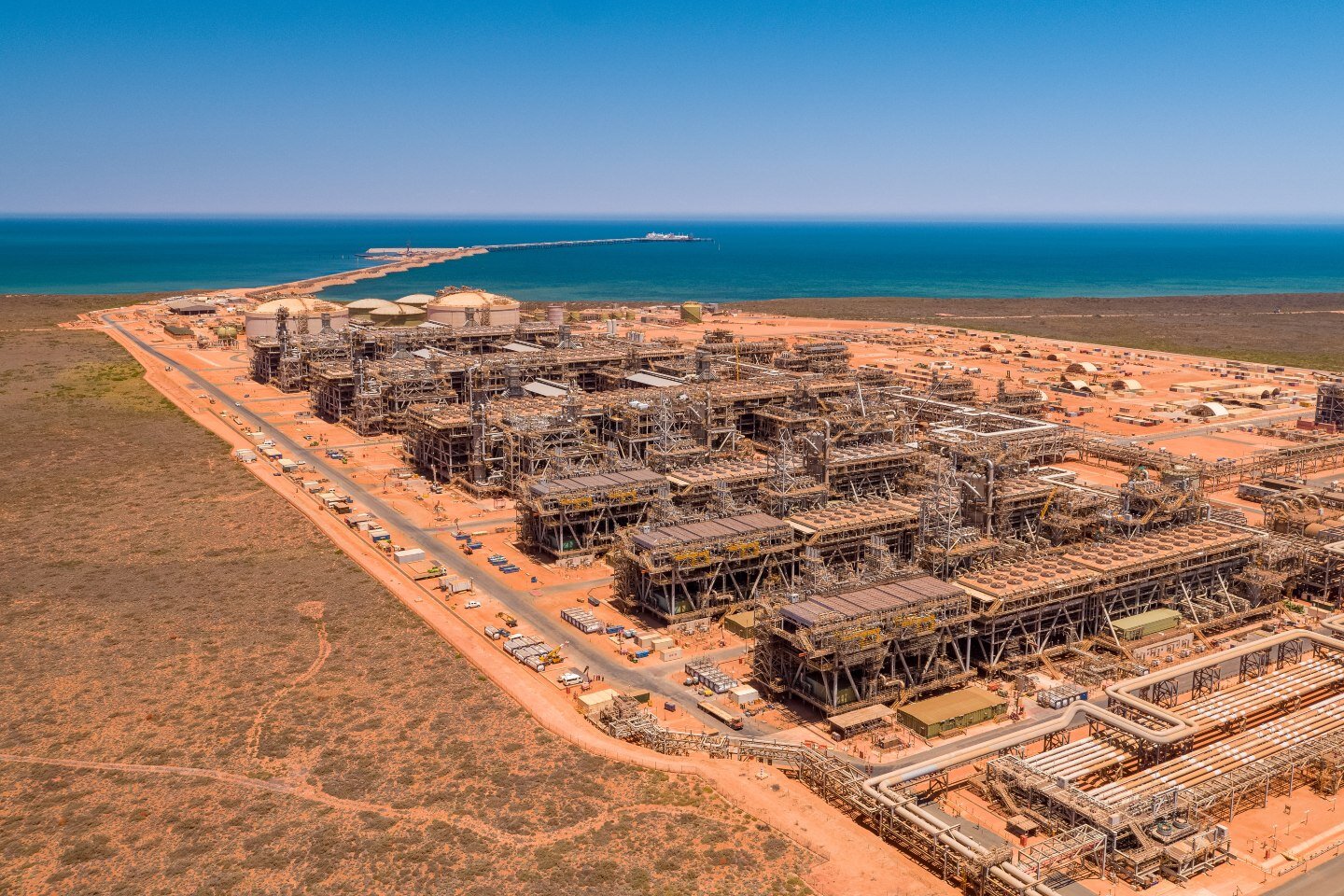
Japan’s largest electricity producer has agreed to divest stakes in the Gorgon and Ichthys LNG projects to US-based MidOcean Energy for an undisclosed sum.
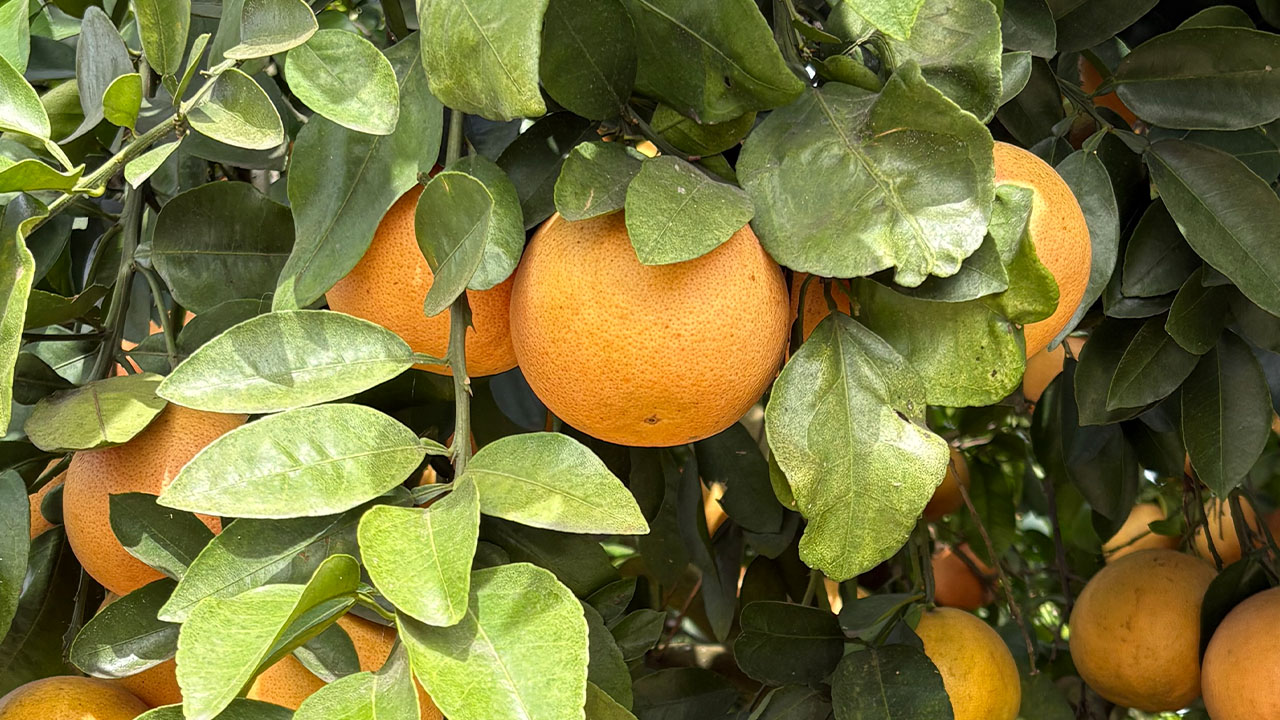
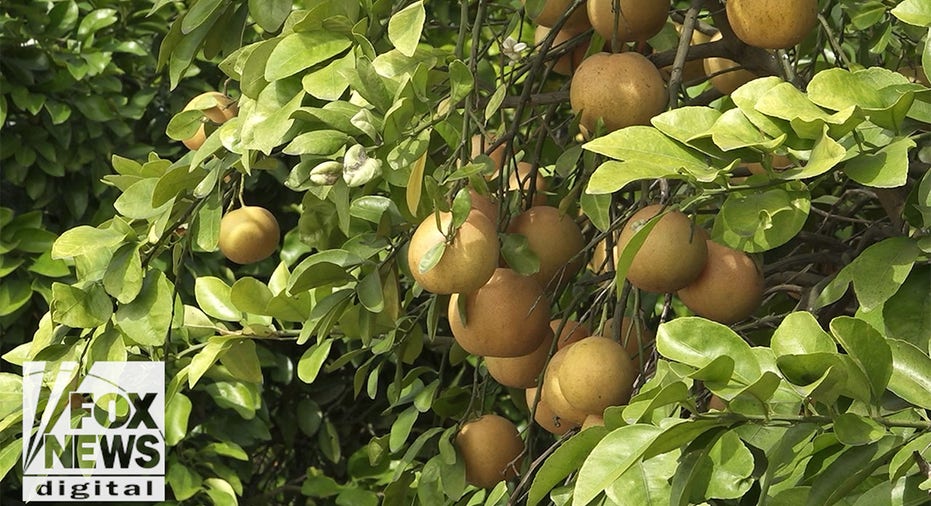
Florida citrus grows inside a protective screen in Bartow, Florida. (FOX News)
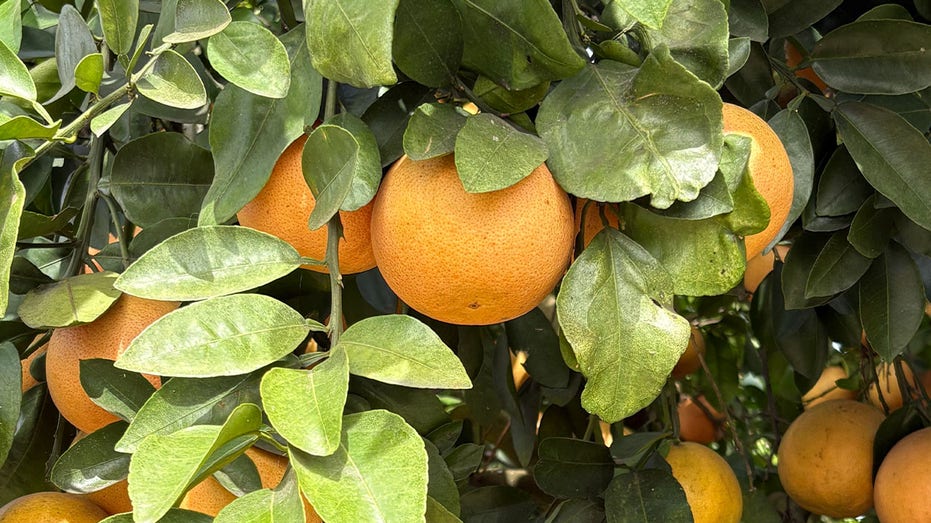
BARTOW, Florida – Florida is facing its worst drought in 25 years, intensifying pressure on a citrus industry already battered by disease, hurricanes and rising costs.
Advertisement
According to the U.S. Drought Monitor, 100% of the state is experiencing some level of drought, with more than 75% in extreme drought conditions. The dry spell is adding new financial strain for growers who rely heavily on irrigation to sustain crops.
Florida accounts for 17% of the nation’s citrus production, according to the Florida Department of Agriculture and Consumer Services. For many communities, the industry remains a key economic driver.
“There are multiple companies across our county and across our state, and it’s definitely a lifeline to a lot of Floridians here,” said Jennifer Schaal, VP of finance at Dundee Citrus Growers Association. “It’s what they depend on.”
Back in 2000, the state’s citrus industry covered over 800,000 acres. Today, that figure has fallen to just over 200,000 acres, according to the U.S. Department of Agriculture, reflecting years of disease pressure and storm damage.
“The number one challenge the industry has had over the years is citrus greening disease,” said Steven Callaham, executive vice president and CEO of Dundee Citrus Growers Association. “And then on top of that challenge, we’ve experienced numerous hurricanes.”
Recent freezes and now drought conditions have compounded those pressures.
“When you irrigate, it requires a pump that is either powered by diesel or it’s powered by electricity, and it gets very, very expensive,” explained Callaham.
Dundee Citrus Growers Association is one of the largest fresh fruit cooperatives in the state of Florida, harvesting citrus from over 10,000 acres.
“It’s been challenging over the last year,” added Bill Bohde, director of agronomy at Dundee Citrus. “During the bloom period, water is critical. It determines how well the fruit sizes and ultimately, you know, how large your crop will be.”
Advertisement
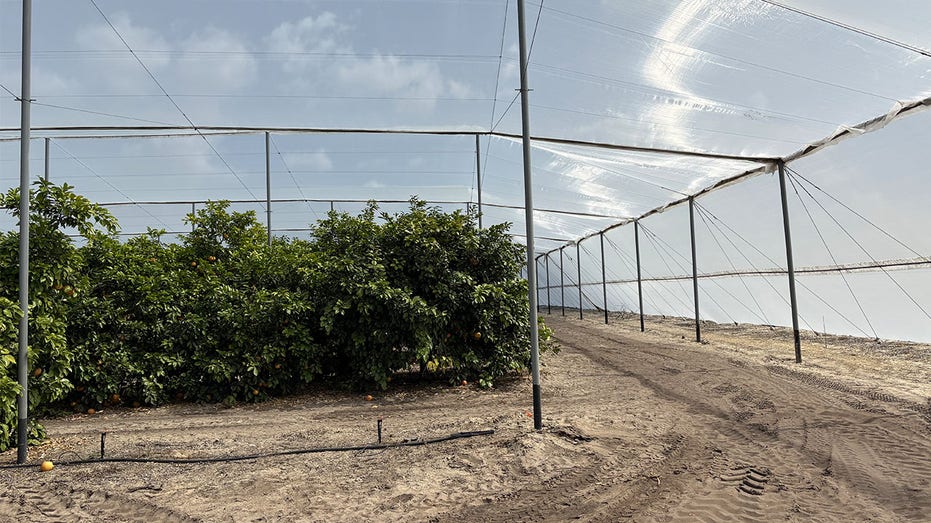
The Dundee Citrus Growers Association utilizes pods to grow citrus under a protective screen in Florida. (Amy Galo / Fox News)
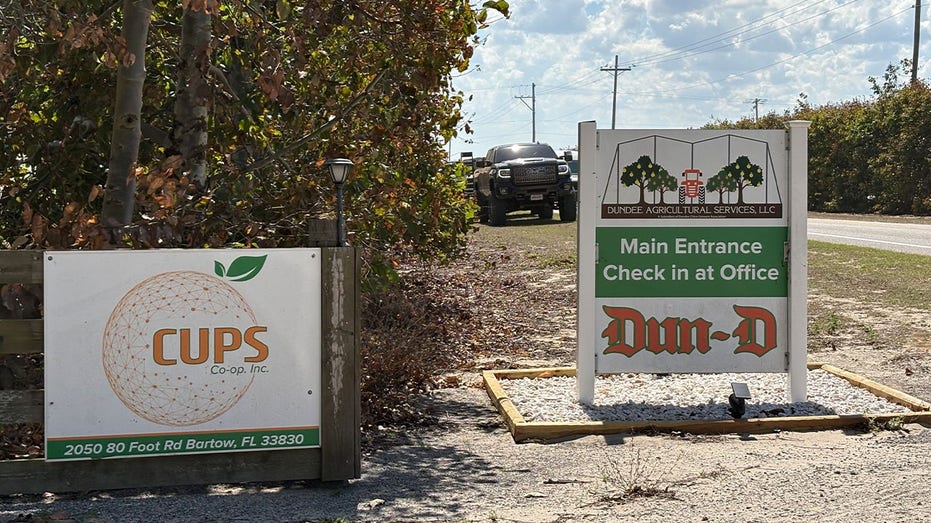
As citrus acreage dwindles throughout the state, the company has found a solution to nature’s many obstacles with something called “CUPS,” or Citrus Under Protective Screens.
Orange groves are planted under 10-acre white tent structures, also known as pods. Originally installed to prevent disease in citrus plants, the structures are also helping growers better manage soil moisture during the historic drought.
“Everything is pumped through a series of pipes into this black tubing, and every tree has a very small emitter that puts, you know, puts out an amount of water,” explained Bhode.
Advertisement
The system allows for precise irrigation, creating a controlled environment that can support fruit production even during prolonged dry spells.
Citrus fruit plants thrive under a protective screen in Bartow, Florida. (Amy Galo)
“This ten-acre pod will produce between 8,000 and 10,000 boxes per pod,” said Callaham. “The trees in this environment, they’re happy. They grow faster than trees do in traditional outdoor groves, and they come into production quicker. So it’s one way that we can really get the industry back on track.”
USDA production data show mixed results across citrus categories. Florida lemon production increased 4% from last season, while tangerine and tangelo output was unchanged. Grapefruit production declined 8%, and non-Valencia orange production fell 2%, according to the agency.
“If I wasn’t optimistic, I would not be in the citrus business,” said Callaham. “So I think we have a lot of positives going for us right now, you know? The challenges we have are temporary. We’re going to make it through.”
| Revenue of $481.11M (13.56% Y/Y) beats by $16.29M
UiPath, Inc. (PATH) Q4 2026 Earnings Call March 11, 2026 6:45 PM EDT
Company Participants
Allise Furlani – Senior Director of Investor Relations Daniel Dines – Co-Founder, CEO, & Executive Chairman of the Board Ashim Gupta – CFO & COO
Advertisement
Conference Call Participants
Bryan Bergin – TD Cowen, Research Division Sanjit Singh – Morgan Stanley, Research Division Michael Turrin – Wells Fargo Securities, LLC, Research Division Chirag Ved – Evercore ISI Institutional Equities, Research Division Terrell Tillman – Truist Securities, Inc., Research Division Radi Sultan – UBS Investment Bank, Research Division Scott Berg – Needham & Company, LLC, Research Division William Kingsley Crane – Canaccord Genuity Corp., Research Division Arsenije Matovic – Wolfe Research, LLC Phil Winslow Koji Ikeda – BofA Securities, Research Division James Kisner – Water Tower Research LLC
Advertisement
Presentation
Operator
Greetings, and welcome to UiPath’s Fourth Quarter and Full Year 2026 Earnings Conference Call. [Operator Instructions] Please note, this conference is being recorded.
I will now turn the conference over to Allise Furlani Head of Investor Relations. Thank you. You may begin.
Advertisement
Allise Furlani Senior Director of Investor Relations
Good afternoon, and thank you for joining us today to review UIPath’s fourth quarter and full year fiscal 2026 financial results which we announced in our earnings press release issued after the market closed today.
On the call with me are Daniel Dines, Founder and Chief Executive Officer; and Ashim Gupta, Chief Operating and Financial Officer, to deliver our prepared comments and answer questions. Our earnings press release and financial supplemental materials are posted on the UiPath Investor Relations website. These materials include GAAP to non-GAAP reconciliations. We will be discussing non-GAAP metrics on today’s call. This afternoon’s call includes forward-looking statements regarding our financial guidance for the first quarter and full year fiscal 2027 and our ability to drive and accelerate future growth and operational efficiency and grow our platform, product offerings and market opportunity.