A drone is circling in the skies above Zaki Ramadan when he takes my call. As a humanitarian worker in Sudan’s southeastern Blue Nile state, he is helplessly watching aid dwindle and civilians be killed by the meteoric rise in drone strikes.
“We stopped all humanitarian activity. We cannot work. All the offices are closing because of the drones – some of the area has been evacuated. WFP staff left two days ago from the area, anticipating drone strikes,” he says.
Drone warfare has made Sudan’s war a death trap for a population of more than 46 million people as the Rapid Support Forces (RSF) and Sudanese Armed Forces (SAF) battle for territory.
Image: Drone attacks by Rapid Support Forces (RSF) have been stepped up
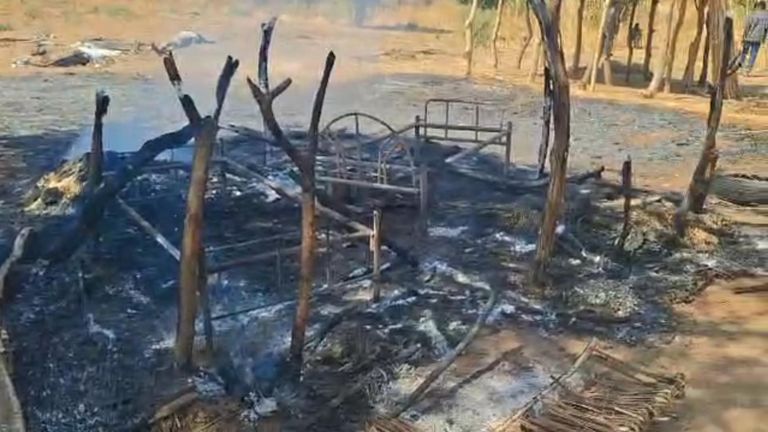
Image: Charred debris following a drone strike on a market in South Kordofan
The Armed Conflict Location & Event Data, an independent global monitor, has documented at least 198 drone strikes in Sudan launched by both sides in the first two months of 2026. At least 52 of them involved civilian casualties, killing 478 people.
“For us, when we hear the sound – we just rush and hide ourselves. We run to the river, and sometimes we can go into our foxhole. We go to the town and go to where there are no buildings sometimes,” says Zaki.
Advertisement
The area he operates in has been ravaged by armed rebellion and state violence for decades, but this time is different.
A dangerous new depth to warfare
“This war is quite different. This time they are using too many drones. Before – 20 years or 30 years ago – they did not use these drones, it was just a normal clash,” he says.
Drone warfare has added dangerous depth to Sudan’s humanitarian catastrophe by making safe aid delivery and emergency response virtually impossible in some of the hardest-hit areas.
Advertisement
“No food, no medical care, no sanitation,” says Zaki. People scrambling to safety are left with little to no option of sanctuary.
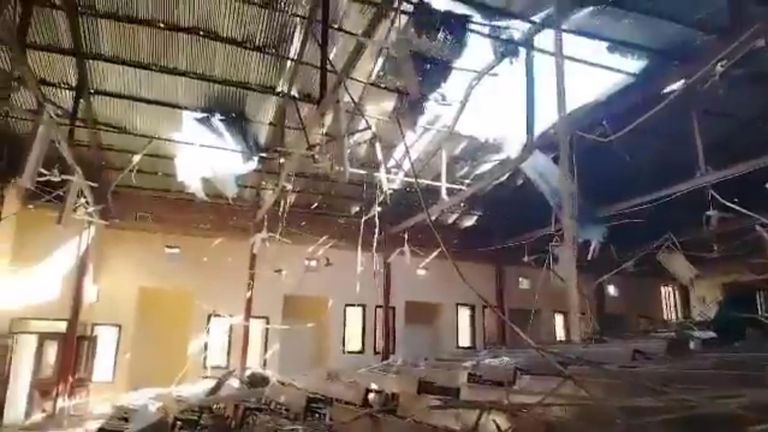
Image: Drones hits the University of Kordofan. Pic: Darfur Network for Human Rights
Image: Lecture halls are damaged in the strike. Pic: Darfur Network for Human Rights
Sky News analysis and mapping of ACLED data has found that deadly drone attacks are spread across Sudan and the number of civilian casualties is rapidly rising.
For the third consecutive day of new drone strikes on the southern White Nile state, an RSF drone hit a secondary school and shelter killing at least 17 people – mostly school girls – and injuring 10 others on Wednesday.
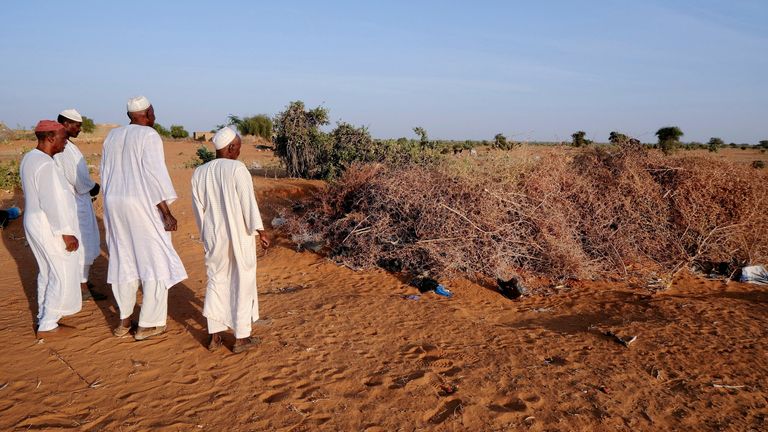
Image: A burial site in North Kordofan, where victims of a drone strike were laid to rest. Pic: Reuters
In just a two-day window in mid-February, more than 60 people were reported to have been killed by drones launched by both sides, with at least 15 children killed in a single Sudanese military drone strike on a shelter.
In January, a drone strike on N’djamena market in South Kordofan’s Dilling county killed 13 people and a month earlier, a triple drone strike by the RSF on a kindergarten and hospital in the same state killed 114 people – including 43 children.
Advertisement
Advertisement
UN: Sudan atrocities bear ‘hallmarks of genocide’
Detentions and deportations
The walls are closing in on civilians dealing with escalating violence as borders close. Drone strikes are spread across the eastern border to the west – even hitting the territory of neighbouring Chad which hosts close to a million Sudanese refugees.
Chad recently closed its border with Sudan after multiple cross-border attacks by the RSF. Other neighbouring countries like South Sudan, Ethiopia, and Libya are dealing with the danger of their own civil wars and are increasingly unsafe for refugees.
Advertisement
Image: Sudan’s Rapid Support Forces (RSF) paramilitary group
Image: Countries are closing their borders because of the threat from RSF
Egypt, a key safe haven for Sudanese refugees, is now deporting them en masse. Hundreds of thousands are now facing fear of detention, deportation, and death as Egyptian authorities unleash a brutal crackdown. The Sudanese embassy in Cairo has said that 578 Sudanese citizens have been deported back to Sudan in December and January.
Affected families have told Sky News that their status as asylum seekers with the United Nations Refugee agency (UNHCR) is often ignored as their loved ones are picked up. Dozens of missing person posts are being shared on Facebook to trace those suspected of being detained or deported.
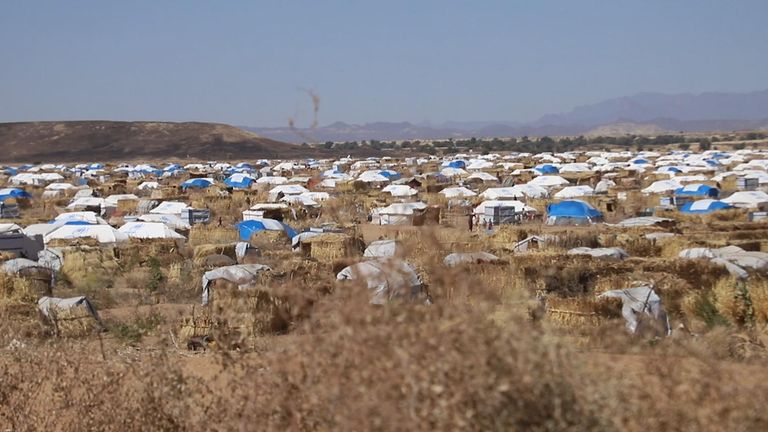
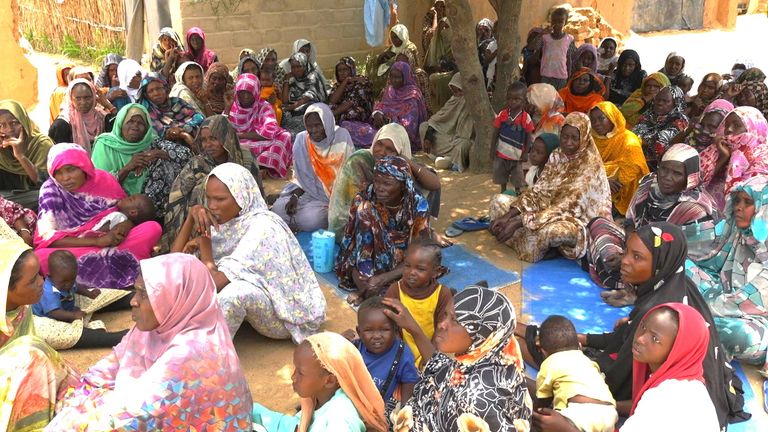
Image: People, fleeing the fighting, have set up camp in North Darfur
Image: Thousands have been forced to leave Al Fashir, the capital of North Darfur
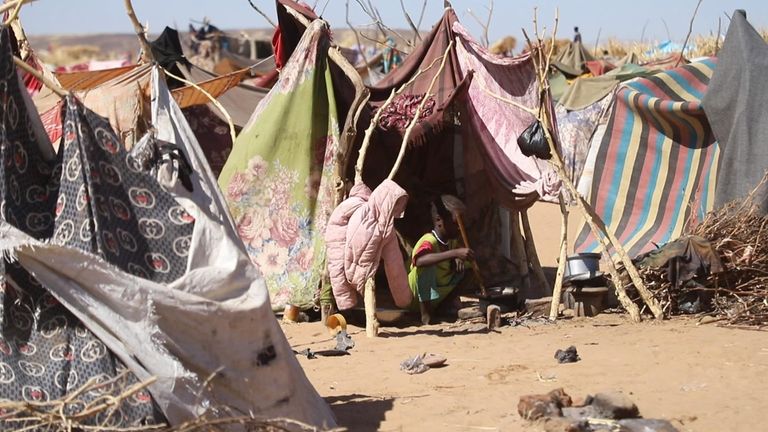
Image: Refugees are living in makeshift tents
“They took us to prison, and we were terrified. I have never been imprisoned before – in Sudan or elsewhere – and was shocked by the sight of the prison. It felt like we were in a soap opera,” a Sudanese refugee who was detained by the Egyptian authorities told Sky News.
He was a taxi driver in the Sudanese city of Al Fashir. He eventually fled the regional capital – where the RSF are accused of committing genocide and killing 6,000 people in just three days of capture – and went to Egypt for his safety.
“They split us up into four groups, and we were around 110 to a single cell. There was violence from the police and then violence within the cell from embedded guards. You are constantly dodging both.”
Advertisement
An 18-year-old called Al-Nazeer Al Sadiq was also kept in one of these cells. He was arrested from a neighbourhood in Cairo and the three friends with him at the time were deported. He eventually died in detention.
“He did not have any illness – he was healthy when they picked him up,” his brother tells us from Sudan’s capital Khartoum.
“The first day my mother visited him he was mentally exhausted and not at peace. There were three visits and each time he was deteriorating more and more – right until he died.”
Al-Nazeer’s family have returned to Sudan, despite the risks. The Egyptian government did not respond to our request for comment.
Image: There has been extensive devastation in Khartoum
Image: The capital has seen some of the fiercest battles
UK’s asylum crackdown brought into focus
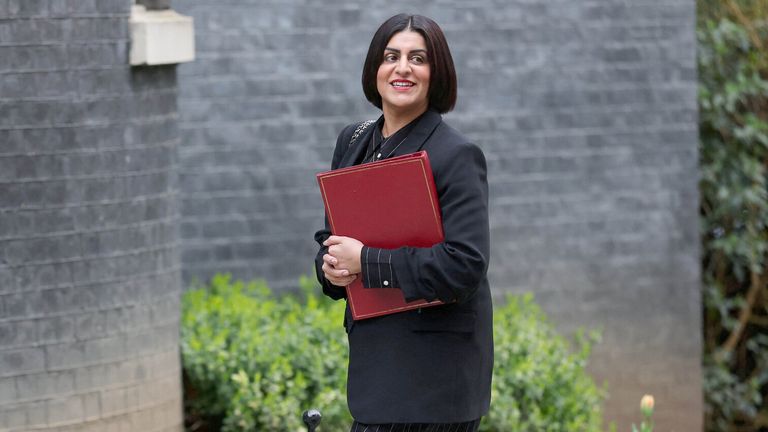
Here in the UK, Home Secretary Shabana Mahmood implemented an emergency ban on study visas for students from Afghanistan, Myanmar, Cameroon, and Sudan to slow asylum claims. This has meant that Sudan’s best and brightest minds – at least 210 students – are being prevented from pursuing scholarships to some of the UK’s best universities.
At least 22 of them were meant to study at the University of Oxford, and 39 of them were accepted in a UK government-funded Chevening scholarship for emerging leaders.
Advertisement
On the ban, Ms Mahmood said: “Britain will always provide refuge to people fleeing war and persecution, but our visa system must not be abused. That is why I am taking the unprecedented decision to refuse visas for those nationals seeking to exploit our generosity. I will restore order and control to our borders.”
Image: The home secretary’s restriction on study visas is affecting Sudan’s best and brightest minds. Pic: Reuters
But the students impacted believe that they are facing the compounded cruelty of Sudan’s war.
‘It’s heartbreaking’
“What’s especially painful about the current situation is that the data simply doesn’t justify a blanket decision like this,” says Rawan, who has been blocked from enrolling in her dream masters programme in international health at the University of Oxford after being accepted.
“The Home Office has pointed to a 300% increase in asylum claims from Sudanese students, from 30 to 120 cases over five years. But when you look at the bigger picture, those 120 cases represent only about 0.1% of total asylum claims in the UK.”
Advertisement
She continued: “It’s heartbreaking to see how we’re also villainising the students who sought asylum as they are not manipulating the system, they are fleeing one of the worst humanitarian crises in the world, with more than 14 million Sudanese people displaced by the war.
“There is definitely a general sense of helplessness.”
This war is becoming a dead end as borders close and drones stalk the skies. Aid workers like Zaki do not know what to tell the people scrambling for safety.
“They get confused about where they can go to feel peace – they go to South Sudan, there is a problem. They go to Ethiopia, there is a problem,” says Zaki.
A study has been launched to examine potential mass rapid transit options
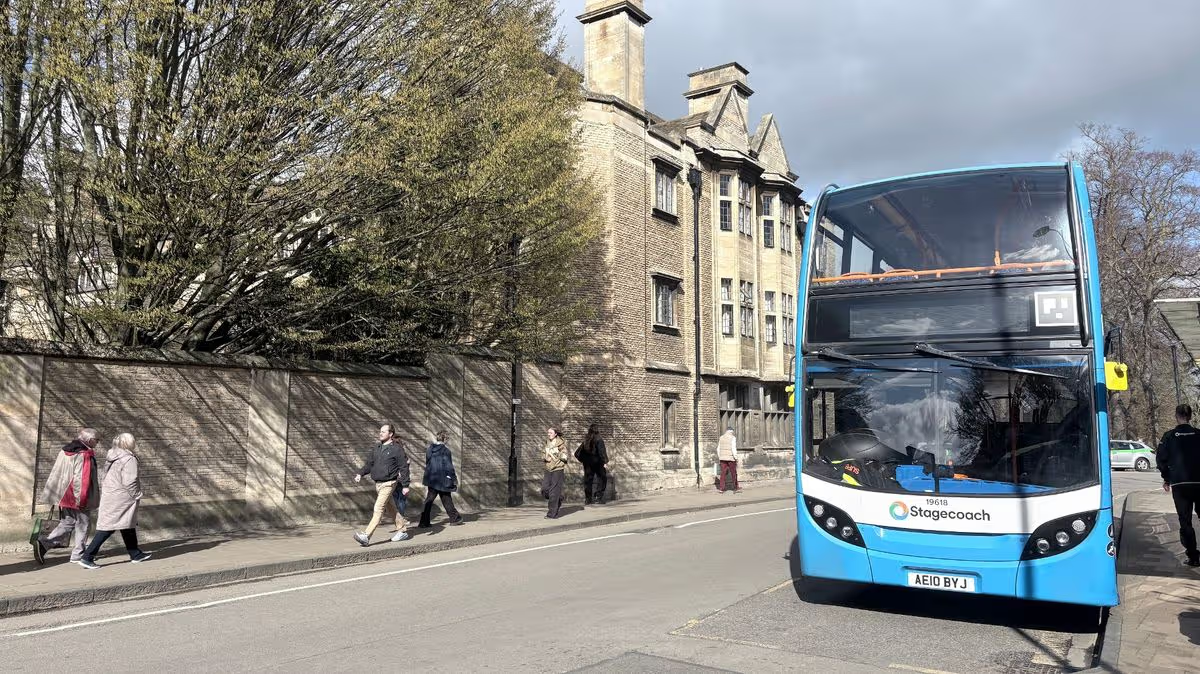
Locals and commuters have said that the tram and light rail transport options that could be considered for Cambridge would “cause chaos” while others said it could “help waiting times”. A study has been launched to examine potential mass rapid transit options to support future growth in the city including tram and light rail.
Advertisement
Cambridge Growth Company (CGC) and Cambridgeshire and Peterborough Combined Authority (CPCA), have launched the preparation of a Project level Strategic Outline Business Case for a potential Mass Rapid Transit (MRT) system in the city. The study is to investigate creating fast, and reliable public transport like trams to reduce traffic congestion and connect key areas.
The new commission will include identifying and appraising a longlist of transport options, from lower scale interventions to full MRT model possibilities, including tram, light rail, bus rapid transit, and automated systems.
This has been commissioned by the Department for Transport, the Ministry of Housing, Communities and Local Government, and the HM Treasure.
We spoke to some locals and commuters in Cambridge about their opinions on the transport options to be considered.
Advertisement
Vera Mmeni, who was in Cambridge for work, said trams in Cambridge could help with waiting times for commuters.
Ben Negus, 42, has lived in Cambridge for more than eight years. He said that adding trams to the city “may be pushing it a bit”. He thinks that the buses and Park & Ride routes are effective but “Cambridge wouldn’t suit” adding further transport options like trams.
Ben highlighted the “unique style” of the city as well as the busyness so he could see both sides to the matter.
Others were not so keen on the transport options to be considered in the city. A 62-year-old who wished to remain anonymous said that trams or light rail transport would “cause chaos”.
Advertisement
She continued: “It is bad enough with the traffic nowadays, what is it going to be like if they plan to put trams in?”
The 62-year-old believes that in comparison with London, the roads are smaller and narrow and the city doesn’t have the space that other big cities have.
Marcus Arnold, 55, from Cottenham likes the idea because he believes it will attract tourists. He added: “I like the idea of trams, it would go together well with Cambridge. They have a long way to go for that one. What a beautiful idea.”
Tony Johnson, who lives in Cambridge said that “it would create more chaos and I don’t see the point.” Tony chooses to walk through the city to save money. He said that the busways work, however he doesn’t believe that other mass rapid transit options like trams and light rail would be effective.
The trail, at RHS Garden Harlow Carr, will challenge families to solve a mystery involving the Easter Bunny and a missing batch of Easter eggs.
Families can take part from March 28 to April 19.
The storyline involves all the Easter Bunny’s egg baskets being found empty, with a single carrot left behind, hinting at something “far more mischievous”.
Families can take part in the trail from March 28 to April 19 (Image: RHS Garden Harlow Carr)
Eight curious characters were spotted near the scene of the crime, with children tasked to piece together the clue.
Advertisement
For £3, children get a detective activity pack, which includes various age-appropriate puzzle-solving challenges.
The trail not only promises an engaging day out but also offers a chocolate prize for successful detectives.
The Wind in the Willows Garden Adventure is also open for exploration.
Entry to RHS Garden Harlow Carr is free for RHS members and children under five.
OLIVER Cromwell famously told the artist Samuel Cooper, to paint him “warts and all”, meaning to paint him comprehensively, honest and unfurnished to cover both good and bad.
Following his defeat at Bosworth Richard III fell foul to Tudor propaganda making him out a hunchback (now known as scoliosis), tyrannical, a child murderer (princes in the Tower ) and yet in his shorts rule of 777 days he was known as an enlightened ruler.
Yes (Prince) Andrew (Duke of York) has reached the height of admiration, during the Falklands War, and the lowest of lows during the Epstein scandal – but let history paint him “warts and all”.
Advertisement
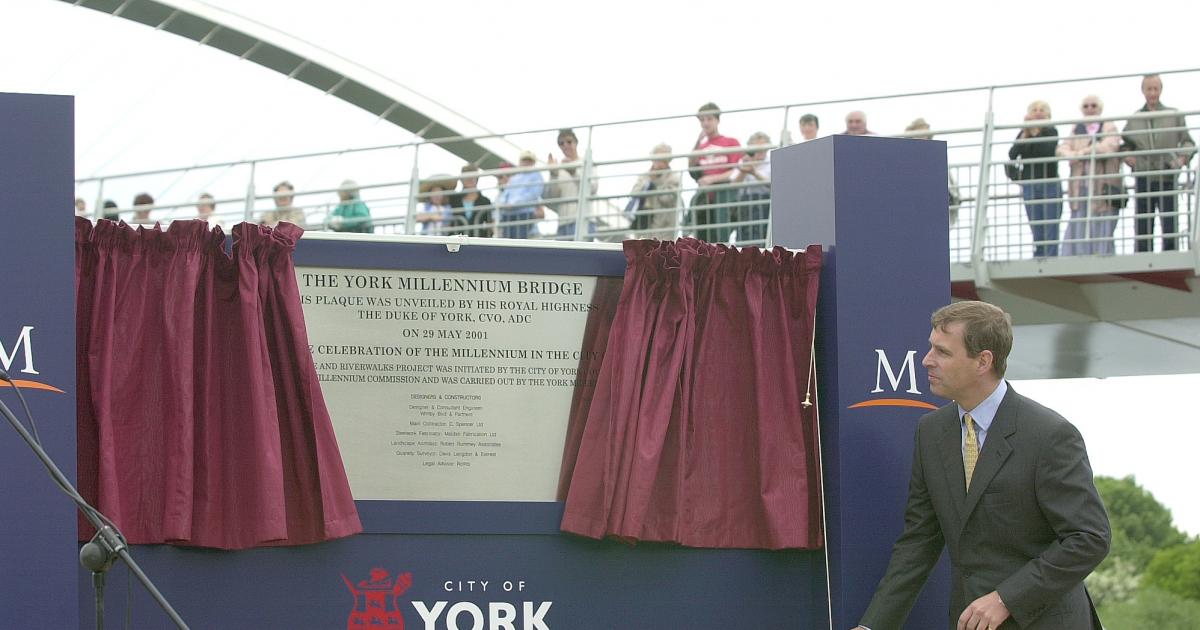
Regarding the removal of the plaque from the Millennium Bridge and the commemorating stone in York Minster recognising the restoration work on the Minster – are they to be thrown into the dustbin of history?
Leave the plaques and let history decide what type of individual Andrew was.
D M Deamer,
Penleys Grove Street,
Advertisement
Monkgate,
York
… HISTORY doesn’t change, only people’s perception of it.
Rather than remove the commemoration stone in the Minster just add “The then” before HRH. This would preserve the reality.
Advertisement
R I Shenton,
Connaught Way,
York
—
Advertisement
Will heads roll over Gateway overspend? Probably not…
IT is not unusual for public works to overrun on costs, but City of York’s Council handling of the York Station Gateway Project must take the biscuit, currently £28.5m over budget, and not finished.
Will heads roll? Certainly not, it’s never anybody’s fault especially with council works.
Peter Rickaby,
Advertisement
Moat Way,
Brayton
… A 14-MONTH delay and staggering £28.5 million budget blowout tells us all we need to know about the nonsense spouted that high salaries in local government are essential to attract people of the highest calibre and to compete with the private sector.
In the real world of commerce, anyone responsible for the monumental delays and cost overruns of the Station Gateway project would be looking for another job.
Advertisement
Matthew Laverack,
Lord Mayors Walk,
York
What do you think?
Advertisement
Feel strongly about an issue? Write us a letter. Please write no more than 250 words and you must provide your full name, address and mobile number. Send your views by email to: letters@thepress.co.uk
And leave us a comment
Join the debate and leave a comment in the section below… we may use a selection in a follow-up story in The Press
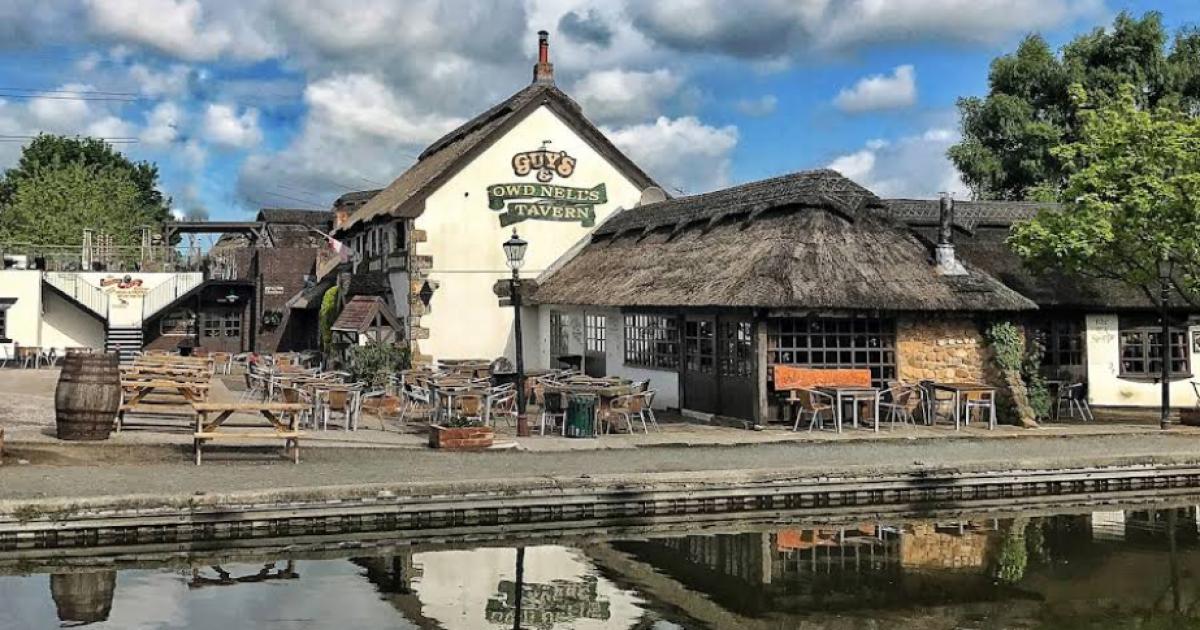
Bowland Inns & Hotels, the Ribble Valley-based hospitality group behind the James’ Places portfolio, has acquired Guy’s Thatched Hamlet in Bilsborrow, which includes Guy’s Eating Establishment and Lodgings and the canal-side Owd Nell’s Tavern.
The new owners issued their first statement since the purchase (Image: James’ Places)
James Warburton, owner of Bowland Inns & Hotels, said: “We are absolutely delighted to be able to now confirm the acquisition of The Thatched Hamlet at Bilsborrow.
“The Thatched Hamlet is so much more than a pub, restaurant and hotel – it is an iconic destination in its own right.
Advertisement
“It has been a fixture of the North West’s hospitality landscape for more than 40 years.
“You only have to read the social media posts, newspaper articles and comments following the recent surprise closure to see just how important and significant this place is to so many people.”
The company plans to reopen the site as quickly as possible and begin a major rolling refurbishment programme to restore the site to its former glory.
Mr Warburton said: “We aim to get the site working again as quickly as possible, it’s important for the buildings, for the staff, and it’s important for local suppliers too.
Advertisement
“The first job is a deep clean and then some back of house works to the cellars and the kitchens, all essential first investments to underpin everything else we plan to do.
“We will be investing in the outdoor areas first to try to make the best of the fabulous location and the equally fabulous summer that we surely have coming down the line, and then we’ll be working our way through the interiors room by room as the ebbs and flows of the weekday trade allows.”
Festival plans announced
Mr Warburton said the task ahead isn’t just about refurbishing the buildings; it’s about rebuilding the business side too.
For many years the Thatched Hamlet was synonymous with many annual events and festivals including the Oyster Festival, a four-day event based around the sea-bed delicacy that played host to the great and the good of Lancashire’s sporting, business and banking communities for light-hearted entertainment, networking and even a bit of deal-making.
Advertisement
“We’ll certainly be bringing a few of the bigger festivals back to life once we’ve got the day to day side sorted and we hope to bring a few new ideas to sit alongside the cricket pitch and the bowling green and really make the most of the fabulous setting and equally fabulous facilities.
“We also have plans and ideas to create a truly unique weddings and events space, able to host parties and celebrations of all sizes and all types.
“Watch this space, this will be a really exciting, and great addition to the six other award-winning Dream Venues by James’ Places.”
Bowland Inns & Hotels currently operates a range of inns, hotels, and events venues across the North West, including the multi-award-winning Bowland Brewery at Holmes Mill in Clitheroe.
The North York Moors National Park Authority (NYMNPA) stepped in to protect the John Cross Rigg prehistoric earthwork after last year’s wildfire left it dangerously exposed to erosion.
The blaze stripped away dense heather and root systems, exposing the peat and heritage features beneath.
Miles Johnson, head of historic environment for the NYMNPA, said: “For an archaeologist, it is remarkable to see the historic landscape of Fylingdales Moor revealed with such clarity, but that excitement is tempered by deep concern.
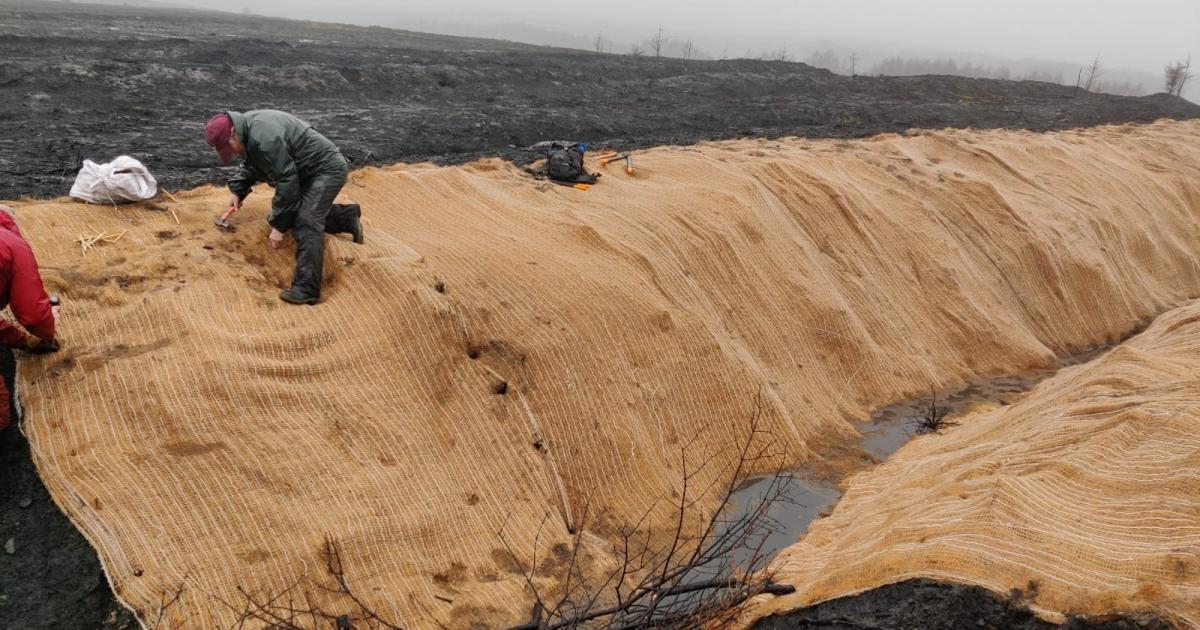
Coir Matting installed at John Cross Rigg (Image: NYMNPA)
“The very exposure that allows us to understand these features more fully is now putting them at risk.”
Advertisement
Without the vegetation that once held the ground together, heavy rain in the weeks following the fire caused significant soil wash-off.
This left areas of the earthwork unstable and at risk of further deterioration.
To stabilise the monument and prevent further loss, the authority has installed coir (coconut fibre) matting over the most damaged sections.
Mr Johnson said: “We are working closely with Historic England to deliver emergency solutions to stabilise the most vulnerable areas while the moorland begins its long recovery.
Advertisement
“Installing coir matting is an immediate measure to protect the most seriously damaged sections and prevent further irreversible loss.
A fire damaged Cross Ridge Dike (Image: NYMNPA)
“The wider environmental impacts are equally concerning.
“Without vegetation to anchor soils, heavy rain is washing away peat, degrading water quality and increasing flood risk downstream.
“Our work is about protecting archaeology, habitats and the wider landscape together.”
Advertisement
The biodegradable matting slows surface water runoff, helps stabilise the slopes, and gives vegetation a chance to re-establish.
The NYMNPA has been monitoring the wider moor for changes and is working with partners to support both immediate and long-term recovery.
Funding for the emergency work came from Historic England, the Environment Agency, and the North Yorkshire Combined Authority.
A draft three-year restoration plan is now in place to support the next phase of recovery.
Advertisement
This plan includes collaboration with the Yorkshire Peat Partnership to repair and restore peatland areas.
Key priorities will be reintroducing peat-forming species such as sphagnum moss and cotton grass, which are crucial for water retention, peat stabilisation, and the recovery of the wet heath ecosystem.
Other progress includes the installation of fencing to support the safe and controlled return of livestock grazing.
This is being supported through the DEFRA Farming in Protected Landscapes (FiPL) programme, which offers practical help for landowners, farmers, and graziers affected by the wildfire.
Advertisement
While the fire has made previously hidden archaeological features visible, the loss of vegetation has left them and the landscape exposed to the elements and at risk of long-term degradation.
Further updates on the restoration programme will be provided as work continues.
Press reporter Maxine Gordon reviewed the band in York last year and gave this verdict: “The set list was pitch-perfect, balancing the more energetic tracks (In France They Kiss on Main Street) with the heart-stoppers where vocalist Hattie Whitehead, like Mitchell before her, has the audience holding on to every word and vocal flight.”
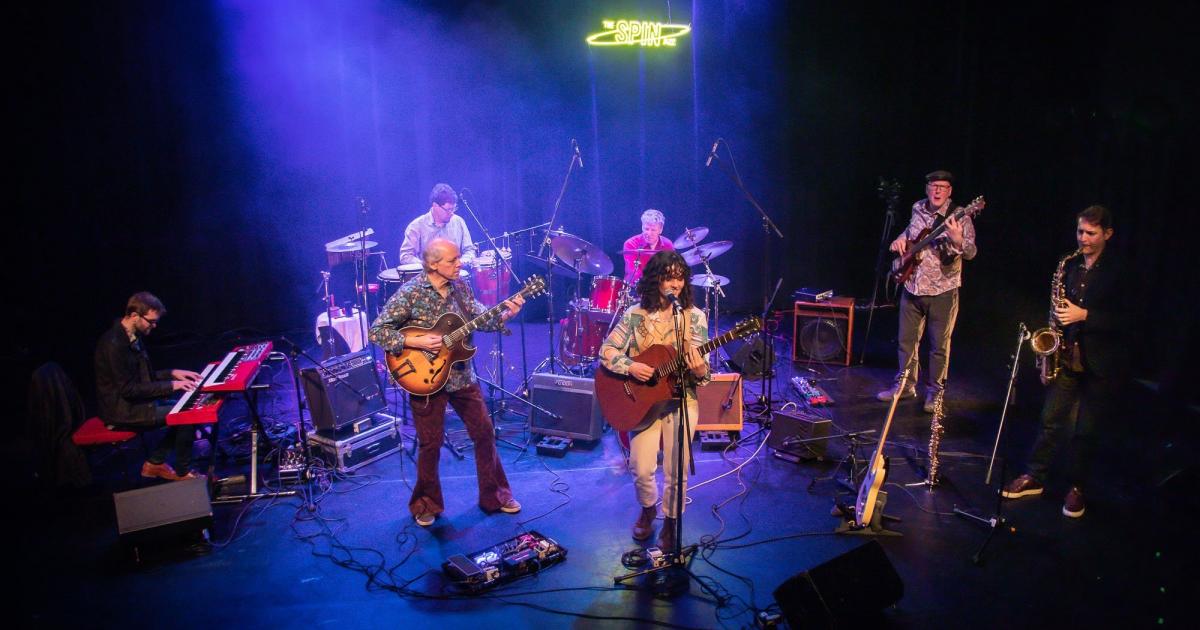
Pete Oxley, guitarist and bandleader of Hejira, said: “Hejira is a project that has rapidly blossomed from an initial ‘one-off gig’ into a highly successful touring band, set up to celebrate the music of Joni Mitchell.
“In particular, the band performs the masterpiece works that Mitchell captured on her live 1980 album, Shadows and Light.”
The name of the band comes from Mitchell’s eighth studio album of the same title, released half a century ago in 1976.
Advertisement
Hejira, 1976 album by Joni Mitchell.
Pete said: “We feel that there couldn’t be a better time for celebrating the major works of, arguably, the greatest singer-songwriter of the 20th century.”
Band members were not only accomplished jazz musicians, but also huge Mitchell fans, said Pete.
Hejira is fronted by vocalist Hattie Whitehead who also plays guitar with Mitchell’s stylistic mannerisms.
Hattie Whitehead of Hejira
The Guardian said of the band: “The UK’s best and most convincing take on Joni Mitchell.”
Advertisement
The band performs works from a range of Mitchell albums – expect to hear such classics as Amelia, Help Me, Hejira, Song For Sharon, A Case Of You, Free Man In Paris, Coyote, and the Hissing of Summer Lawns.
For the 2026 tour, Pete said some new songs were being added to the set list. “We definitely have new songs, including: You Dream Flat Tyres, Both Sides Now, Don’t Interrupt the Sorrow, and Yvette in English.”
Scarborough Town Hall would be “very attractive for a quality commercial leisure development”, according to North Yorkshire Council, which is considering a move of coastal staff to a new site by the A64.
The authority’s executive committee has been asked to approve the purchase of Resolution House from Anglo American, which was marketing the property with a guide price of £4.5 million.
Councillors have said they are concerned about the potential economic impacts of the proposed move on town centre businesses, as well as on staff and the electorate’s access to decision-makers.
Advertisement
However, a report for NYC’s executive committee states that “releasing the Scarborough Town Hall site in particular has the potential to generate substantial economic benefit”.
“The site sits adjacent to the former Futurist site, and site assembly in South Bay will create an extensive development opportunity which links the town centre with the shore.
“The site is a prime location and will have unrivalled views, making it very attractive for a quality commercial leisure development. Indeed, there has been historic interest in this area from major national and regional operators,” states the report, which will be discussed at a meeting on Tuesday, March 17.
Scarborough’s Futurist Theatre was controversially demolished in 2018 following a long fight by campaigners to save the 1920s venue.
Advertisement
The now-defunct Scarborough Borough Council decided to demolish the building at a cost of £4m with proposals for a new leisure development. However, the site has been primarily occupied by a temporary 32-metre-high Ferris wheel.
The report acknowledges that Scarborough town centre contains a “number of high-profile, underutilised sites, many of which have remained vacant for extended periods, including those within the council’s ownership that fall within the scope of this report”.
It adds: “There is a risk that the town hall site could similarly become underutilised for a prolonged period, which would be unacceptable and must be avoided.
According to the council’s high-level assessment, refurbishing the entire town hall site to a “reasonable standard” is estimated to require an investment of £15 million to £19 million.
Advertisement
Council officers said that it is “essential that this development complements the wider regeneration of Scarborough, and it is recommended that a masterplan is developed to ensure that the South Bay development and other strategic town centre sites work together to reposition Scarborough town centre, addressing vacancy rates, the quality of the leisure and family offer and providing much-needed community facilities”.
The report concludes that to prevent “further long-term underutilisation, there is a clear need to progress masterplanning and redevelopment proposals at pace and to begin identifying potential development partner(s)”.
It adds: “It is therefore recommended that a provisional budget be made available to fund the costs associated with advancing these proposals, enabling redevelopment to be brought forward as quickly as possible.
“It is anticipated that the number of sites available for redevelopment within Scarborough, along with the inclusion of the town hall site, will provide sufficient scale to make the opportunity an attractive proposition for prospective development partners.”
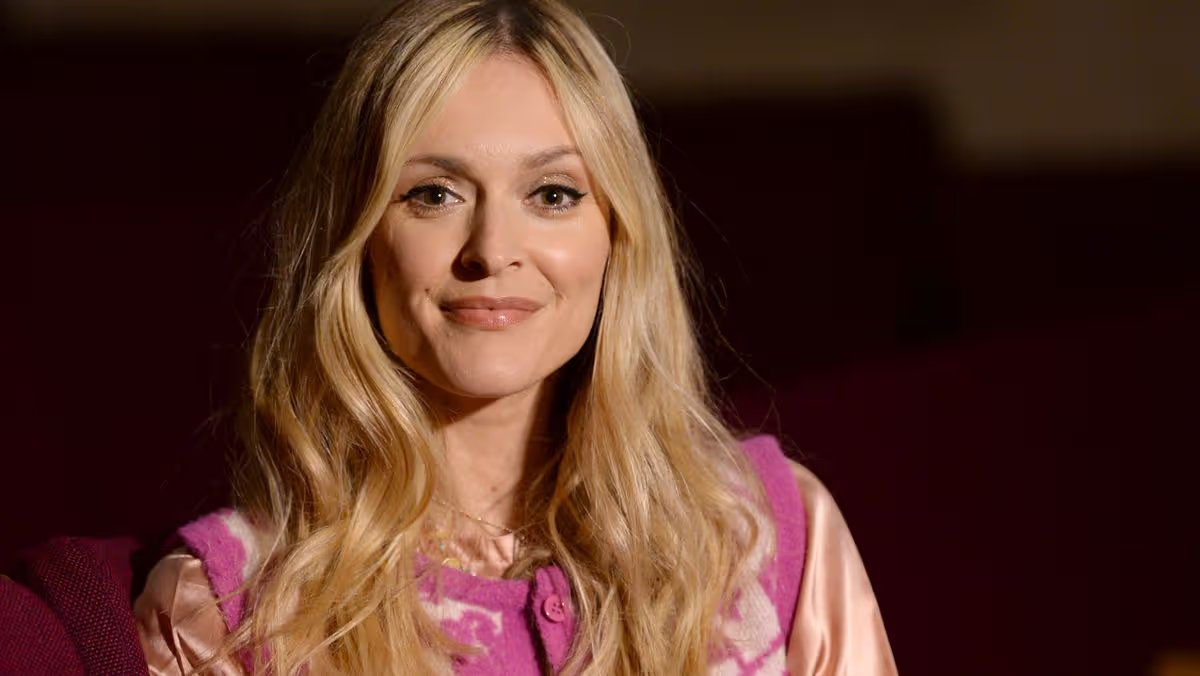
Fearne Cotton has written a new book where she encourages people to worry less about being liked by everyone
For years Fearne Cotton was a huge name in TV and radio, appearing happy and successful, with the broadcasting world at her feet.
Advertisement
But in her new book out today, the 44-year-old admits she has blocked out much of the career she had in her 20s and early 30s as she struggled in the spotlight. Only now – as who she calls Fearne Cotton Mark II – is she living a life where she feels more content, willing to make changes and be more herself.
Fearne writes: “I feel p***ed off that I’ve morphed into a version of myself other people have needed me to be, taken on too much responsibility, put myself down, shrunk and stayed quiet – all in the hope I would be liked. I can look back on whole chunks of my life and see how unsure I felt about myself.
“I either didn’t feel enough, and so supercharged my personality in a desperate attempt to be seen as funny and vibrant, or I was so fearful that every word that came out of my mouth was wrong that I stayed silent.”
The book is titled Likeable, and she says she is no longer trying to conform to make people happy – and as a result she says she is living a more honest life.
Advertisement
Fearne, who split from musician Jesse Wood in 2024 after 10 years of marriage, began on screen as a children’s TV presenter in the Nineties before jobs on Top of the Pops and Radio 1 followed.
She left Radio 1 in 2015 – partly due to her mental health and anxiety, being in the spotlight and the rise of social media and comments online.
Advertisement
She says: “I stopped trying to be funny, I limited how much of myself I gave away, I diluted my personality to a weak imitation of the person I used to be. And then I quit. I stopped talking altogether. I believed at that point that the only way to be liked was to silence myself. Although I don’t regret leaving Radio 1, as it led to incredible new paths and opportunities, I feel sad that I let those voices in.”
Part of her issues back then stem from the arrest and prosecution of singer Ian Watkins, who she briefly dated, for horrific child sex crimes.
Fearne doesn’t name Watkins in the book but references working at Radio 1 when “a horrible news story that doesn’t involve me yet has a tenuous and life-altering link to me will be broadcast on my own radio show again that day”.
Watkins was first arrested in 2012 and then convicted in 2013 when Fearne would have been on air. He died in prison in 2025.
Advertisement
Fearne says that “shame” she felt made it almost impossible to continue on the airwaves. “I feel simultaneously glared at, stared at, yet utterly ignored by those in the office. Are they all talking about me behind my back? Or am I a narcissist for thinking that?”
She says she felt sick whilst broadcasting and tried to stay upbeat and “shoved down the anger, the rage, the sorrow and tears” and kept talking. She also references it being a time of “depression and a heaviness” but is reluctant to go into anymore detail in the book as she thinks it would be reported in what she worries would be an overly sensational way.
Fearne no longer carries the shame as she says that through therapy she has realised “it belongs to others” – mainly men who have been in her life: “Men who have shamed me, treated me badly and left me lumbered with it.”
But Fearne’s book is far from downbeat. She seems grateful for re-emerging after Radio 1 to create her own business. The Happy Place podcast, which began in 2018, is a huge success on her own terms.
Advertisement
Despite burning her old diaries in the past and hating seeing her old TV interviews with big names like Amy Winehouse and Billie Piper, she watched some for this book and realised she likes the teenage Fearne, who was confident and funny.
She has also started to listen to her body more, after having a benign tumour on her salivary gland removed in December 2024. She says: “It forced me to stop. It made me rest. If going to hospital was the only way I was going to rest, then that had to be a wake-up call. Something must be off kilter.”
Fast-forward a couple of years and mum-of-two Fearne has improved her work-life balance, making sure she has relaxing baths and time away from social media and work. She has also learned to not change her personality to suit others or to try to be liked more.
She concludes: “This is your life, and you deserve to live it, not just survive it. There will continue to be ups and downs, joy and sorrow, people who like you and some who don’t. There’ll be times when you are the hero and times when you are the villain to others.
Advertisement
“But the least we can do is experience it all as our singular selves. Not as the person those around you want you to be or the person you think you should be. Do it all as you. Unique, delightful, brilliant you.”
* Likeable by Fearne Cotton is published by Vermilion and is out today.
Like this story? For more of the latest showbiz news and gossip, follow Mirror Celebs on
The Apex Smart Bike is excellent value for a web-connected exercise bike. We actually preferred it to Peloton in our review of the best exercise bikes. The cheaper price is thanks to a lack of HD touchscreen. Instead, there’s a tablet holder for you to insert your own, or your phone, where you can stream classes via an app.
The classes are of excellent quality, ranging from 15 minutes to an hour, and there are strength, mobility and beginner-friendly exercises, by British instructors from Boom Cycle studio in London. The Apex is perhaps better suited to spin and indoor cycling fans, rather than anyone looking for performance training, as there are no options for simulated outdoor rides.
Design-wise, the Apex bike is good-looking enough to (almost) blend into a living room, with a compact 4ft by 2ft footprint, and four colour options. It has a wireless phone charger, tablet holder for streaming classes, plus a water bottle holder and rack for weights (which don’t come included, but are reasonably priced at £25). Most importantly, it feels incredibly sturdy and doesn’t budge as you pedal.
Advertisement
Despite the fact that it’s comparatively light and has a light flywheel, there’s a great range of magnetic resistance. It’s smooth and quiet so is unlikely to cause any neighbourly disputes, making it suitable for flats. Best of all, Apex bikes are delivered fully assembled.
The Apex Smart Bike is currently out of stock, but we’ll keep an eye on it and update this article if anything changes.
The Victoria Inn in Witton-le-Wear will hold the event from Friday, April 3, to Monday, April 6, almost eight years since owner George Hall took over the reins at the pub.
Mr Hall said: “We have had the pub for eight years now so we want to celebrate that and try something new.”
The festival will feature ales from ‘Wales, London and Cornwall’.
Mr Hall said: “I am trying to get beers people will not have tried before.”
Advertisement
He became one of the youngest pub landlords in the country when he took over the business at the age of 20 and worked to move away from stereotypes about young people.
Owner George Hall (left) accepting an award from CAMRA. (Image: VICTORIA INN)
He said: “The pub should be for everyone, not just for one type of person.
“Everyone should feel welcome.”
The Victoria Inn recently earned runner-up in CAMRA North East’s country pub of the year award.
Advertisement
The Victoria Inn describes itself as the perfect base from which to enjoy all that Weardale and the surrounding area has to offer.
The property has been decorated to the ‘highest standards’, with a touch of luxury and your comfort in mind.