

Politics
Return-To-Work Mandates Are Already Impacting UK Mums


During (and after) the pandemic, it felt like the nation’s approach to flexible work shifted in a positive direction.
A large number of employees were given more freedom to work from home, benefiting a wide range of people – from those with chronic illnesses, mental health conditions and disabilities, to those with caring responsibilities.
But a new report reveals a trend that will concern a large number of people who are currently benefitting from this: flexible working appears to be silently being reversed.
A new Flex Appeal report, in conjunction with market research company Vivid Interface, polled 2,959 working mothers in January and found 35% reported increased office attendance expectations in the last year.
Campaigners are warning the move – dubbed the “silent re:flex” – could force even more mothers out of the workplace. (We say even more because Pregnant Then Screwed data suggests up to 74,000 women lose their job for getting pregnant or taking maternity leave each year, and ONS data previously found 84% of the 1.75 million people who’ve given up work to care for their family are women.)
Why is flexible work taking a hit?
Perhaps it should come as no surprise. KPMG’s 2024 CEO Outlook report revealed 83% of CEOs expected a full return to the office within three years. Return-to-office mandates are also on the rise – yet they are increasingly met with resistance, particularly from parents.
Flexible work encompasses when, where and how a person works – and includes options like compressed hours, part-time work or flexitime, as well as options for remote working.
There are some who oppose the latter element in particular and are extremely vocal about it. Reform leader Nigel Farage said he believes we need an “attitudinal change to the idea of working from home” and “it’s a load of nonsense” that people are more productive at home.
The Apprentice star Lord Alan Sugar has also shared his support to get workers’ “bums back into the office”. Last year, the former boss of Marks & Spencer and Asda, Lord Stuart Rose, even went as far as suggesting working from home was “not doing proper work”.
A King’s College London analysis of the long-term impacts of flexible work arrangements through a case study company found productivity increased by 10.5% after transitioning to fully remote work during the pandemic.
Yet there was one caveat: employees who began with in-person training before switching to remote work showed higher long-term productivity and lower attrition rates than those who started remotely (suggesting initial in-person onboarding can be beneficial).
Most mums need flexibility at work because of childcare responsibilities
Research by Flex Appeal, founded by Anna Whitehouse (aka Mother Pukka), found almost half of mums (42%) want more flexibility than they currently have, and nine out of 10 (93%) need it due to childcare responsibilities.
There are other benefits to being able to work from home, too. Those who have flexible working in place say it reduces exhaustion from commuting, gives them more energy outside of work and lowers stress levels. Another important consideration during a time of rising maternal burnout.
Discussing the prevailing anti-flexible work rhetoric, Whitehouse said: “I am sick and tired of hearing privileged billionaires bleating about how important it is that we get people back to the office – as if the party is finally over and we need to pull our socks up and get back to work.
“Mothers’ flexible working rights are being rolled back silently in plain sight with more and more employers calling for increased office time, meanwhile mums are still not finding jobs that are flexible enough around childcare, and when they do, their careers are suffering for it.” (Three-quarters of mothers with flexible work believe it is limiting their career progression, according to the latest survey.)
Flex Appeal wants to see flexible working advertised upfront in job listings, and companies offering a ‘flexible first’ approach. Ahead of the government consultation into flexible working, it also wants recognition of the flexible working roll-back that one-third of mothers are already experiencing.
The reality is, without flexible – specifically remote – work, many mothers would be forced to quit their jobs because typical working hours simply do not fit around the school day.
What’s more, wraparound childcare comes at extra cost and securing it can be a major headache when school clubs only have limited capacity and slots become available at some obscure hour on a random weekday night – getting your hands on a Glastonbury ticket is probably easier.
That’s not even taking into account the huge swathes of time kids have off school in a year versus the standard amount of days (28, usually) most full-time workers get as paid annual leave.
Of the mothers surveyed, 20% said they have complete flexibility at work, while 38% said they have partial flexibility.
Many mums reported a negative attitude towards flexible working in their organisations. Only 14% said they feel comfortable asking for flexible working, and one in five (20%) say their workplace is explicitly unsupportive.
Almost one in three mums (29%) said their flexibility arrangements are informal, leaving many powerless to fight back if managers make a U-turn.
“It’s not just women who are negatively impacted, either; businesses are losing highly qualified, skilled, experienced employees every day because of rigid, out-of-date policies,” Whitehouse continued.
“Flexible working can and does work, but more needs to be done to implement it.”


Sir Keir Starmer has tried using a simple explanation for the Mandelson affair: he didn’t know.
The Prime Minister has repeatedly insisted he was unaware of the “depth” of Peter Mandelson’s relationship with Jeffrey Epstein when he appointed him Britain’s ambassador to Washington. Mandelson, he says, misled him. Officials failed him. New information has since come to light which would have stopped the appointment “had I known it at the time”.
In Parliament on 10 September 2025, Starmer was categorical. “Full due process was followed during this appointment, as it is with all ambassadors,” he told MPs.
The documents released yesterday show that claim just wasn’t true.
Let’s go through it. Mandelson was a controversial appointment from the very beginning – and even if one had somehow missed his other dodgy departures from British politics, the Cabinet Office attempted to ensure the Prime Minister was properly briefed. A two-page due diligence report was placed on Starmer’s desk warning him of the “reputational risks” from Mandelson’s association with paedophile financier Jeffrey Epstein.
Officials noted a JPMorgan report describing the two men as “particularly close”. They recorded that Mandelson’s contact with Epstein continued after the financier had been convicted of child sex offences. They also flagged reports that Mandelson had stayed at Epstein’s house while he was in jail.
The Prime Minister could not miss it. Surely this was evidence enough not to go through with the appointment? And yet he did.
Starmer’s defence since Mandelson’s messy dismissal has been that the former ambassador misrepresented the relationship with Epstein. In February, the Prime Minister said the former US ambassador had “portrayed Epstein as someone he barely knew. And when that became clear and it was not true, I sacked him.”
But the papers released today show that officials had already outlined the essential facts before the appointment was made. The warning lights were flashing well in advance.
Not just that. Jonathan Powell, Starmer’s own National Security Adviser, described the appointment process at the time as “weirdly rushed” and “unusual”. He raised his concerns with Morgan McSweeney, then Starmer’s chief of staff. Starmer, the documents show, may have had “political conversations around this”.
Philip Barton too, then the permanent secretary at the Foreign Office, had his “reservations about the appointment”. Both were overruled.
What followed was hardly a forensic examination of the candidate from the former director of public prosecutions.
In response to the due diligence document raising reputational concerns, Mandelson was asked just three questions by McSweeney. He answered them. His responses were accepted at face value.
There is, throughout this process, an extraordinary lack of curiosity from those responsible for testing the appointment, with so few appearing to raise their concerns.
David Lammy told the press that he had opposed Mandelson’s appointment as ambassador. The official record suggests otherwise. A letter from Barton notes “the Foreign Secretary, who agrees with the recommendation”. At the time, that Foreign Secretary was Lammy.
Then there is the question of process – the very thing Starmer assured Parliament had been properly followed.
Emails indicate Mandelson was offered a “higher tiers” briefing on 6 January, granting access to highly classified Foreign Office material. But his developed vetting – the formal security clearance required for such access – was not completed until 29 January.
In other words, Starmer ordered such a speedy appointment that Mandelson was briefed on sensitive information before the vetting process had finished. That is a clear departure from the normal procedures.
For a role as sensitive as ambassador to the United States, it marks an unusually casual approach to risk.
After being dismissed, Mandelson said his “chief concern” was returning from Washington with “maximum dignity”. He initially sought £547,201 in severance – the value for his four-year contract. He eventually received £75,000.
Quite why he received anything at all given the circumstances of his dismissal is unclear. As Tory MPs Mims Davies and Alicia Kearns pushed for any such payment to be reveal, they were continually batted away – even though officials noted that there was “no prohibition” on publishing the terms.
One message released in the documents hints at the reasoning. Without “a positive indication”, officials warned, there was a “potential” that Mandelson might go public with some of his claims. Which claims those might be remain unclear.
In the release of summaries and internal correspondence came the Prime Minister’s box note – comments from private office and special advisers on a paper or submission, that has a box for the Prime Minister to leave his thoughts – left empty.
As shadow chancellor of the Duchy of Lancaster Alex Burghart wrote on Twitter: “I’ve worked in No10 – Spads and Private Secretary provide comments AND we’d expect the PM to write in his view. All that has been left out – why?”
The absence matters because the Mandelson affair ultimately turns on judgement, the Prime Minister’s to be precise.
Labour would prefer it to be seen as a failure of process: a misleading figure, incomplete information, and a government system that did not function as intended.
But the documents suggest something much simpler. The warnings were there. Senior officials raised concerns. The due diligence report spelt out the reputational risks in plain English.
The real question is not what the Prime Minister didn’t know.
It is why, having been told what he did know, he went ahead anyway.

Callum McGoldrick is investigations campaign manager at the Taxpayers’ Alliance.
As fashionable as it is to write off the last government’s time in office as a disaster, we shouldn’t be too hasty in dismissing some of its more successful policies. Particularly as these are the ones Labour have been quickest to undo.
The most glaring example of this is education. Michael Gove’s reforms of the system included taking control away from local authorities through the academy model, promoting exams over coursework and incentivising schools to focus on more traditional subjects. Between the 2009 baseline and the 2022 PISA results, England rose from 27th to 11th in the world for mathematics, and from 25th to 13th for reading.
Under Bridget Phillipson, Labour is removing the traditional subject focus in favour of creative arts and sports, scrapping single word Ofsted judgements for a softer system and scaling back the autonomy of academies. This is before even mentioning the dismantling of private schools. The Conservative legacy on education policy is being shredded.
Then there is welfare. Sir Iain Duncan Smith drove a massive overhaul to the benefits system through Universal Credit (UC) during the coalition years. Removing many of the cliff-edges of the old system for those starting to get into work, UC did mean that those that worked would earn more. Although it came in later, the Two-Child Limit restricted those on UC from receiving further taxpayer funding for having more than two children. Employment increased, and benefits spending was brought under control, at least until the pandemic undid much of the work.
Labour were elected with a promise to ‘make work pay’ with a whole host of benefit reforms. The early days of their government even saw tentative statements indicating a reduction in at least the growth rate of overall welfare spending. In a surprise to no one, the plans collapsed. The Two-Child Limit will be scrapped from next month, the standard allowance will be raised and they are reducing the amount the government can deduct from UC for debt deductions from 25 per cent to 15 per cent, further burdening those in work who must subsidise the debts of those out of work. The unwinding of this success in welfare started under the last government, but it has been accelerated since.
This brings us to fuel duty, surely one of the major Conservative successes in tax policy. From 1993, the duty had risen by 3 per cent above the inflation, later increased to 6 per cent in 1997. In this time, Britain went from having some of the lowest fuel costs in the world to among the highest. By 2000, over 80 per cent of the cost of petrol was tax alone.
Following huge protests in 2000, Gordon Brown cut fuel duty by 2p in 2001 on specific types of petrol and diesel while largely avoiding further rises until 2008. Alistair Darling increased the duty by 2p in 2009 while legislating for a schedule of aggressive tax hikes. A 1p per litre increase in April 2010, another 1p in October 2010, and a commitment to raise duty by 1p above inflation every single year from 2010 to 2014.
The 2010 election saw George Osborne become Chancellor. While he followed through with Darling’s scheduled increases in his first year in office, after petrol prices hit record highs in 2011, the Conservatives brought in a freeze. Since that freeze, no chancellor had increased fuel duty. In 2022 there was even an emergency 5p per litre cut in response to the Ukraine crisis which has further stayed in place to the present day. Had the old system stayed in place, motorists would be paying £19 billion more per year with a rate of over £1 per litre, according to the Institute of Fiscal Studies. From some of the highest rates in Europe, the Conservative government successfully brought us down to only slightly above average.
The prime minister insisted this week at PMQs that fuel duty has not increased under Labour. This was gaslighting. The freeze is set to end in September in order to pay for the benefits bill, bloated public sector and various other squanderings of taxpayers money.
Our latest research note at the TaxPayers’ Alliance shows just and how much it could undo some of the work of the past 15 years. Even with a decade and a half of freezes Britain already still has the fourth highest duty on diesel and the tenth highest duty on petrol when compared with EU member states. We pay 3p more per litre more than the EU average on petrol and 12p per litre more on diesel. If the 5p cut alone is removed, this gap would widen to 8p per litre above the EU average for petrol and 14p per litre above the EU average for diesel.
The Conservatives in opposition are demanding an extension to this cut. And rightly so. As well as protecting motorists and the wider economy, it is one of the rare bright spots in tax policy from the last government that is left to defend.

John Oxley is a consultant, writer, and broadcaster. His SubStack is Joxley Writes.
In the 1870s, world attention was focused on conflict and shipping lanes. A Russian advance towards Constantinople threatened the Dardanelles and, with it, British access. Where now global affairs spawn memes, back then, the public engaged through music hall and pub songs. The threat of conflict spawned one of the most famous. As you monitored the situation, you’d have the GH McDermott refrain: “We don’t want to fight, but by Jingo if we do. We’ve got the ships, we’ve got the men, we’ve got the money too.” It became so widespread that Jingoism became a shorthand for an aggressive foreign policy.
A century and a half later, and Britain’s position looks a little different. For sure, we do not want to fight. Public opinion remains against all but the most limited defensive action in Iran. More generally, we have become far more reluctant to incur casualties or deal out destruction. The wars in Iraq and Afghanistan proved especially chastening and unpopular. Those conflicts feel particularly pertinent here, as the US leads the way with little apparent strategy or plan. For old Jingoism, however, that all seems moot. Unlike the late nineteenth century, we don’t have the ships, the men, or the money.
Our funding for the armed forces has declined almost continuously since the end of the Second World War. Forces were scaled back during decolonisation and further cut as we realised the post-Cold War “peace dividend”. The Tories must accept the blame for further entrenching this through austerity. Spending on the armed forces was cut further, with troop numbers falling to the lowest levels since the Napoleonic Wars.
It is not just the men (or these days, personnel) that we lack. Numerous military observers have raised alarms about equipment and capability gaps. Defence expects, and retired Generals have questioned, whether we could actually field our Nato commitments without logistical support from other nations. Behind these headline concerns lie broader problems with recruitment and retention, military housing and the terrible woes of our defence procurement processes. The hurried deployment of HMS Dragon has indicated the strain that exists between our defensive ambitions and our capabilities.
We are also quickly learning that this is the more important part of the refrain. We may not wish to choose war, but we may not have a choice. The events of the last fortnight have shown how our interests can be drawn into conflicts that we have no role in starting. So does the continued threat of Russian aggression in Eastern Europe. We must be ready to respond when our enemies target us or our allies. Equally, if our ability to deter our adversaries is to remain effective, it must be credible. None of this can happen without a proper financial commitment to our military.
Our politicians have partly acknowledged this. Defence spending is set to rise, gradually, to 3.5 per cent of GDP by the mid-2030s. Questions remain, however, over whether that is fast enough or big enough, and how it will translate into the capabilities needed to meet the challenges of the next decade. But there is a broader political problem too, about how that sits with the wider demands of the state and the economy. Politicians and voters like long-term plans like this. It sounds good, but it defers decisions about the consequences. They can’t be put off forever.
Decades of reducing military spending have allowed the money to move elsewhere. Left-wing governments have tended to transfer it into social spending, right-wing ones into tax cuts. Boosting military spending once again means reversing one or both of these (or else ever more borrowing). Properly equipping our military will require reductions in other public services or higher levies.
The current government has failed to articulate this or the realities that lie behind it. The world is becoming increasingly fractious. The United States is, at best, demanding that we and other European powers pay more of our own way. At worst, it is becoming an unreliable ally in defending our continent. This all requires a stark rethinking of how we defend ourselves, the bill, and the consequences. Yet rarely is this spelt out to the British public.
Such reticence will undermine the political will to increase defence funding. If the voters are going to accept the costs of rearmament, the positive case needs to be made. This includes bluntly explaining the risks that those of us who obsessively monitor the news are already aware of. It also requires setting out why our military power matters. Strength and security are not about expeditionary wars and messes of our own making like Iraq. Twice in the last half-decade, energy prices have spiked because of foreign wars. Maintaining peace is vital to protecting our economy from threats like inflation.
For the Conservatives, it gives us a chance to speak about the sort of state we want to build. While it may not be the time for public mea culpae, we need to be intellectually honest that we have let down our armed forces in the past and that we can’t now cut our way to security. The armed forces are central to our state. If we are to prioritise security, it comes at the expense of things we’d otherwise choose to do, whether that is spending or tax cuts. As we look for a credible programme, we must make those choices and advocate for them. Otherwise, we repeat the government’s problems, picking a target without a plan for how to get there or building political consent for it.
Times have moved on from the jingoism of the music hall sing-along. Britain is not an imperial power. We are unlikely to ever launch a war of our own choosing or sail out to police the relations of two distant countries. We still, however, have interests to defend. We want to influence our allies and strengthen our ability to deter the most serious threats we face. As a country, we still need the ships, the men, and the money.
That programme, whatever form it takes, must ultimately rest on something more durable than targets and timelines. It requires a political party willing to look the public in the eye and explain the world as it is and to make the honest case for what serious defence of our interests costs. Not just in numbers, but with the implications for where the money comes from – either with achievable cuts elsewhere, or higher taxation. For the Conservatives, embracing that argument is not just a matter of national security. It is the clearest possible signal that we are once again a party serious enough to govern. The refrain needs updating. We still need to prove we mean it.
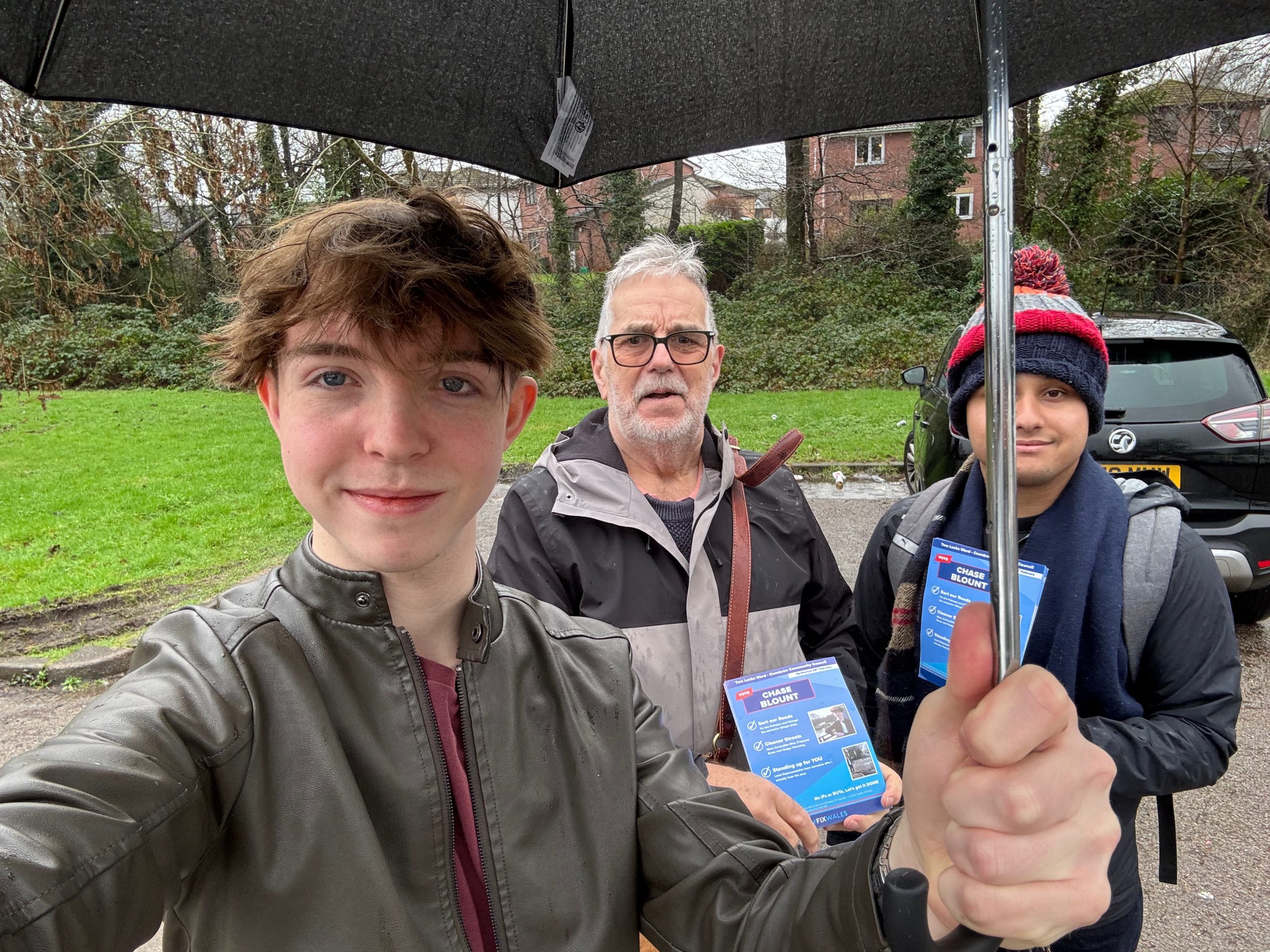
Chase Blount studies at the University of Bath. She is the Deputy Chair of Torfaen Conservatives and is Chair of Libertarian Conservatives UK.
While everyone was distracted as they eagerly awaited the Gorton and Denton by-election results, I was standing around a small counting table in a polling station for Two Locks, a Welsh Cwmbran Community Council ward. Of which I was a candidate.
I thought to myself that the Reform lot were slightly too confident as they rushed to the front with their clipboards, haul of Reform merchandise, and big smiles plastered from one ear to another. But it was evident from the moment the counters tipped the ballot papers out onto the table that they had every reason to count their chickens before they hatched. I struggled to see any ballots with a mark in the Conservative box; even more worrying, I saw many in the Labour and Plaid Cymru boxes.
No way that Reform would win this, I told myself, especially since the only reason this by-election was being held: the Reform councillor, David Thomas, failed to show up to a single meeting in six months, therefore triggering grounds for vacation by the council group. Not only did he take his voters for granted, but he also cost the taxpayers around £10,000! Imagine the potholes that could be filled with that sum! How wrong was I, though? Reform won by a landslide; the results were as follows:
- Plaid Cymru: 94 (16 per cent)
- Conservatives: 22 (4 per cent)
- Liberal Democrats: 76 (13 per cent)
- Labour: 102 (17 per cent)
- Reform: 290 (50 per cent)
It was humiliating! Not only were we all trounced by the party that caused this mess, but I received fewer votes than the Liberal Democrat candidate, who received 4.6% of the Torfaen parliamentary vote in 2024. Luckily, deposits aren’t a thing in these elections – otherwise I would not be getting it back!
Despite coming in last place, I left the count feeling happier than when I walked in. This is because it made me think about the benefits I gained from even being a candidate for the first time. To which there are many.
At the start, putting your name forward is a huge step, especially since I hadn’t done it before. Conversing with members of the party’s local association about my intentions and willingness to stand led to my selection as the party’s candidate. This is a huge accomplishment in itself, as it’s a statement to have the backing of a whole mainstream party and the backing of its local figures. You learn that you yourself can actually participate in one of the core pillars of Britain, its democracy, and as a younger member, it’s great to know that people of all ages can be considered, based on merit and capabilities.
Once I was the party’s nominee, it was time for bureaucracy! This in itself was such an educational process, learning what forms were necessary to fill in, even on such a local level, giving me the insight for a future run. I decided to fill these in as soon as I could to get it out of the way, allowing me to move on to more exciting parts of the campaign. After handing them in, I started work on probably my second favourite part of the campaign, designing my election graphics.
When working on my leaflet, it was great being able to base my policy priorities on what I’ve heard from residents themselves, knowing what was important to them even on a local level. I made a plain, straightforward plan: Fixing the Roads, Cleaning up the Streets, and Local Representation, things I believe above anything else are achievable, and will make a real, direct difference to the constituents day to day lives. Although there was a lot of messing around with fonts, colour schemes, and image placement, it was an invaluable opportunity for me to be able to learn more about what my neighbours and fellow residents thought in my local area. It’s also priceless to see your face for the first time on a leaflet, knowing that people across the ward will get to learn more about your goals and who you are, increasing your name recognition for future opportunities to give back to the community through public service.
There were 1,500 houses in this ward, and the aim was to get a leaflet through every single one of those doors. We achieved this swiftly thanks to the help of the local team, our friendly neighbouring team in Monmouthshire, and even a member who travelled all the way from Swansea to campaign! This dedication from all those helpers was not only warming, but it was also reassuring and telling that, whatever people like to say about the party: we’re still alive, we’re still kicking, and we’re not going anywhere.
Before, on the doorsteps, I was never able to talk to residents about myself, what I planned, and what I would do to address their concerns, instead I had to be incredibly precise with how I answered since I couldn’t talk for myself, rather I would have to talk for the candidate themself and what they would do. With this, there isn’t much freedom as there was being the candidate themself. Any questions asked about, you, you will naturally know and you can think for yourself rather than for others. This is why, no matter how much fun campaigning for others can be, campaigning for your own campaign is even more joyful.
At the end of the campaign, after seeing how pushed aside local issues were in this race, and the earthquake of a swing that Reform caused, even when every main party in Wales was standing, the main thing I’ve learnt is that unfortunately in most scenarios, national politics always seems to trump local politics as the deciding factors in British elections. It’s not impossible to win a campaign solely on a local basis, but it’s incredibly difficult, and takes a lot of time, something that I didn’t have fighting a by-election. My advice to any Conservatives who are considering standing but are worried that they may not receive the best results… just do it. Because even if in the worst case scenario, you come last, you will still gain an invaluable experience, and you will still ensure that the people of Britain have a choice in their elections.
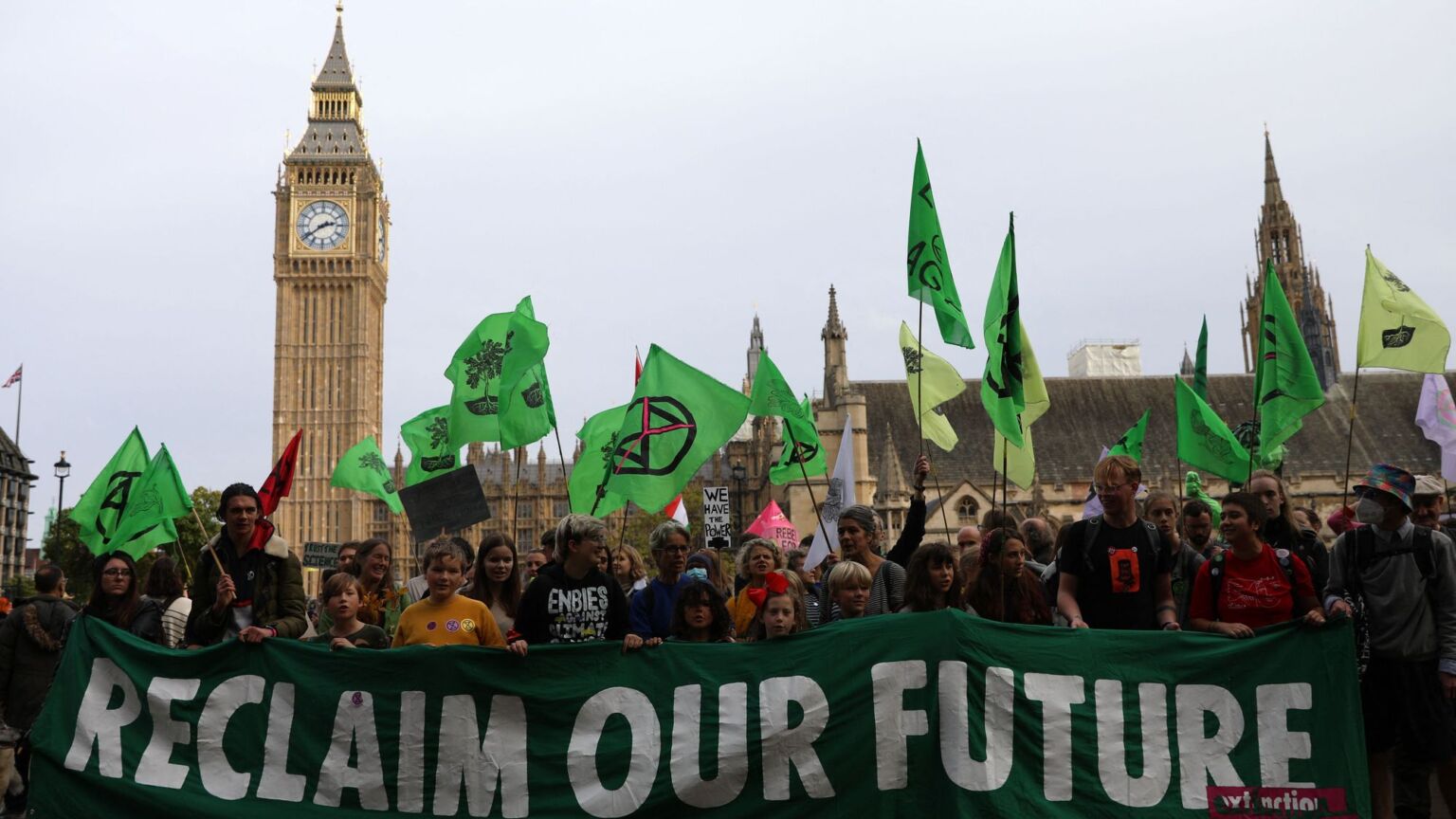
Net Zero fundamentalism is biting the UK big-time. Britain’s energy is the most expensive in the developed world. Taxpayers’ money goes on green vanity projects, such as subsidies on unwanted electric cars and immense solar farms owned by foreign investors. We have no growth – jobs, industry and capital are elbowing each other aside in a race for the exit door. And the answer of the establishment class? You guessed it: more Net Zero – even harder and faster.
Last week’s report from the House of Commons’ Environmental Audit Committee confirmed this direction of travel. Its advice on how the UK government should meet its carbon targets makes for depressing reading.
Whatever it takes, these MPs say, we mustn’t let up on the rush to Net Zero. The UK must keep within its arbitrarily declared CO2 limit, no matter how much it hurts. In fact, the report suggests that green policies haven’t affected British people’s lifestyles nearly enough – except by making them gasp at their electricity bills. Net Zero may have wrecked British industry and household finances, but it is only just getting started.
The thrust of the report is perfectly clear: the public must be pushed, by bullying if not compulsion, to change the way we live, travel, work and eat in the quest of decarbonisation. Of course, ordinary people can’t afford to transition from the Asda to the Ocado lifestyle, from the runabout car to the electric, from boring but reliable gas boilers to exciting new heat pumps. These MPs’ solution? Get the government to subsidise these lifestyle changes, and tax the rich more. And what about local authorities who are unhappy with swallowing the green agenda (such as Reform-run Lincolnshire, which scrapped its carbon-neutrality targets last week)? The report says the government should pass a law to force them to adopt it.
The wishful thinking is obvious. The idea that a government can magically create Net Zero jobs out of thin air may give politicians good soundbites, but it’s for the birds. Just as delirious is the notion that the working classes of Swansea or Southend will give up the conveniences of ordinary life without a fight. Like it or not, the proposals being put forward by the born-again green lobby will sooner or later give us genuine social unrest.
Behind all this, however, lurks a much more frightening reality. Overtly under Labour, and more clandestinely under the Conservatives, the technocratic and lanyard classes have deftly annexed the political process. Willing politicians have simply been co-opted to play along. This report shows this in spades.
For one thing, it’s not written in plain English, but rather in HR management-speak. It’s all about ‘behaviour change’, ‘core delivery challenges’ and ‘place-based approaches’. The other giveaway is the list of those invited to Portcullis House to give evidence to the committee that produced it. Overwhelmingly, they came from green pressure groups, university centres for climate change or organisations like them. Almost nobody was there who might have been minded to suggest that the Net Zero emperor had embarrassingly few togs on.
Equally tell-tale is the stress placed on legal, technocratic concerns throughout the report. Much emphasis is given to the Paris Agreement, the apparent need for Britain to be an international ‘leader on climate governance’, and the imperious demands of the Climate Change Act. The idea of the state giving ordinary people like you and me a say over whether we want to do any of this is nowhere to be found in the report. If ordinary people are sceptical or downright hostile to this agenda, then they must be coerced. As the committee puts it, neatly letting the cat out of the bag: ‘In practice, measures relating to home energy efficiency, low-carbon heating, transport choices and diet are most effective when framed through impacts on comfort, affordability, safety, health and wellbeing, rather than emissions metrics alone.’ In short, stress the nice bits, gloss over the nasty ones and with luck ordinary people will suck it up.
And that’s before we even get to the mailed fist. ‘Behaviour change should not be treated as an adjunct to technology deployment or as a matter of individual responsibility alone. Delivery planning should make full and explicit use of policy levers to shape prices, incentives, defaults, infrastructure and markets.’ Or, translated, the public must be made to go along with Net Zero, whether we like it or not.
There is opportunity here. The Tories have explicitly promised to return decisions on Net Zero matters to the political process by repealing the Climate Change Act, and a Reform UK government would do the same. This move alone will do a good deal to stop the climate-change obsessives immiserating the rest of us. It cannot come soon enough.
The Net Zero lobby is vulnerable. Those who understand what the British people really want now need to give it a hard kick.
Andrew Tettenborn is a professor of commercial law and a former Cambridge admissions officer.

Our social fabric is currently being held together by the people the state has forgotten. At Great Western FC, the support system is two-way. Whilst the players find safety from the streets, the club’s owner, Jon, found a reason to keep fighting in a country that is often designed to break him.
The Canary sponsors this club because it represents the purest form of mutual aid. We didn’t just put our name on a (very stylish) football shirt. We chose to back a community that absolutely refuses to let its members fall behind. For Jon, this pitch with a broken floodlight is where the struggle for personal survival meets the struggle for working class solidarity. And it’s fucking beautiful.
Great Western FC — defying disability and chronic pain
For Jon, Great Western FC is a shield against the crushing weight of disability and isolation. Jon lives with severe health problems and a constant, chronic pain he has battled for over 15 years. Before the pain took over, he worked full-time and earned over £40k a year plus bonuses. The transition to a life defined by physical limitation was a comedown that shattered his mental health.
In the UK, the link between long-term physical suffering and mental health crisis is a silent epidemic. Disabled people are nearly three times more likely to experience major depression than non-disabled people. A reality Jon knows intimately.
His pain is relentless as it seizes his chest, legs and arms. Scarcely a day passes when Jon doesn’t experience the physical symptoms of a heart attack. An awkward movement, a stray sneeze can leave him in agony for days. Every morning he has to force himself out of bed and to put one foot in front of the other.
The football family that keeps the rot away
Working as a print sales manager before his illness, Jon’s life was busy as fuck with him frequently working sixty hours. He was constantly busy, happy to do all the hours God sent because he felt productive and it kept his mind occupied. Yet the medical reality of his current situation is infinitely more knackering than that life ever was. Jon deals with high blood pressure, chronic fatigue syndrome and restless leg syndrome. He takes 16 tablets a day. Because he’s on immunosuppressants, a simple cold or flu can beat the shit out of him for weeks.
Jon spoke to me candidly from the sidelines of the pitch as we watched Great Western FC play.
I spent the worst part of a decade feeling sorry for myself. The chronic pain dictated my life because I didn’t have anything tangible to focus on. Self-isolation felt like the best way to cope but it only made me feel worse, like I was slowly rotting.
For him the pain is loudest when he has time to think about it. Keeping himself mentally busy is not just a lifestyle, it’s a clinical necessity for his survival. But by creating a family of over 75 footballers across three amateur teams, Jon has created enough noise to drown out the pain. The club has turned his years of solo struggle into a collective mission. He can’t be physically active – his body has robbed him of the ability to run onto the pitch – but the mental demand of managing a sprawling community has given him a reason to carry on.
I really hope we can keep this going for many seasons to come.
He isn’t just talking about a football team, he’s talking about his life.

A system designed to break the sick
Jon’s struggle is mirrored by millions of people in the UK who have been abandoned by a cruel welfare state. The statistics are a fucking national disgrace. In 2024 research found that nearly 50% of people (PAGE 31/32) living in poverty reside in a household with at least one disabled person.
Furthermore, the benefit gap is widening. Disabled people face additional costs of roughly £1,010 per month just to maintain the same living standards as a non-disabled person. When the state looks at someone like Jon, it sees a claimant to be managed. Not a human being with a contribution to make to society.
The DWP has created a culture of fear and poverty. Studies show that 75% of people (PAGE 12) living with a disability find the benefit application process so fucking stressful it makes their physical health worse. For someone living with chronic pain, losing their livelihood and then struggling to navigate a new world where they’re often regarded as criminals by the system, is often too much to deal with.
Great Western FC — the two-way street of survival
The beauty of Great Western FC is that it completely shits all over the government’s ‘charity’ narrative. In a charity there is a provider and a recipient. In mutual aid, everyone is a participant.
Not only has Jon helped 75 working class lads stay off the streets and our prisons, as we covered in our last article. It has also helped him to stay mentally busy enough to ignore the sensation of a heart attack. It’s helped them all to find purpose in a town the Westminster cabal couldn’t even point out on a fucking map.
But the tragedy of this mutual salvation is that it’s under threat. Whilst Jon fights to keep 75 young lads away from crime and despair, the systems around it are making it harder for the club to survive. Between rising pitch fees and the ‘hidden’ costs of grassroots sports, the FA recently reported that 96% of grassroots clubs have seen their operating costs rise significantly in the last year.
Jon is doing the work the state refuses to fund, yet he is being squeezed by the very systems that should be supporting him. Every time a council raises pitch fees or the FA adds another layer of bullshit bureaucracy, they make it harder for Jon to simply stay alive.
Featured image via the author
350.org today called on G7 countries to enact a Windfall Tax or tax on the excess profits of oil and gas companies benefiting from price surges following the Iran war. The group made the demand after G7 finance ministers said it was studying “necessary measures” to address the war’s economic impacts, including the release of emergency oil reserves.
The Windfall Tax
In 2022, the UK government imposed a 25% levy on major fossil fuel companies to help ease the prices of oil and gas following a surge driven by the Ukraine war, raising £3.6bn in two years.
Such revenues from a Windfall Tax can be used as an immediate buffer to protect families from price surges, as well as fund long-term, homegrown renewable energy solutions.
Fanny Petitbon, 350.org France country manager, said:
Releasing emergency oil reserves is just a sticking plaster on a gaping wound. If G7 countries are serious about stabilising the market, they need to stop protecting profits and start taxing companies which fuel the climate crisis.
Working people shouldn’t be paying the price while oil majors treat the war in the Middle East like a winning lottery ticket. We need the G7 to step up and establish a windfall tax now to put those profits back into the pockets of the people.
The French government, as president of the G7, must also confront the elephant in the room – the urgent phase-out of fossil fuels. It can no longer look away from the reality which is that we cannot stay addicted to oil and gas.
Clémence Dubois, 350.org global campaigns manager, said:
Wars expose a deep flaw in our energy system: when prices spike, fossil fuel companies stand ready to cash in while households and businesses struggle. That’s not just market volatility, it’s the result of governments allowing fossil fuel companies to keep the power to shape the energy system and pass the costs onto everyone else.
G7 governments must stop reinforcing this model with fossil fuel tax cuts that only inflate corporate earnings. Cutting fossil fuel taxes during a crisis is not a relief for families, it’s a subsidy for companies that are already enjoying windfall profits.
The right response is a strong windfall tax, which should be redirected to support households and accelerate the transition to clean energy that reduces our dependence on the very fuels driving both climate disruption and global instability.
Masayoshi Iyoda, 350.org Japan campaigner said:
Most of Japan’s oil imports pass through the Strait of Hormuz, making Japan acutely exposed to fossil fuel price shocks. Prime minister Sanae Takaichi has moved to calm fears over rising energy and food prices, but reassurances and stop-gap measures like releasing oil reserves are not enough.
Fossil fuel companies are cashing in on this crisis. A windfall tax on polluting industries would make them pay by taking responsibility, not ordinary families already stretched by years of stagnant wages and price surges due to climate impacts.
When PM Takaichi meets US president Trump next week, we urge her to reconsider Japan’s alignment with the Trump administration’s fossil fuel agenda. The attack on Iran has shown, once again, how that agenda means prosperity for oil and gas corporations, and higher bills for everyone else.
Accelerating a just transition to renewable energy and phasing out fossil fuels is Japan’s best option to secure affordable and sustainable energy based on democracy and peace.
Meanwhile, Reform…
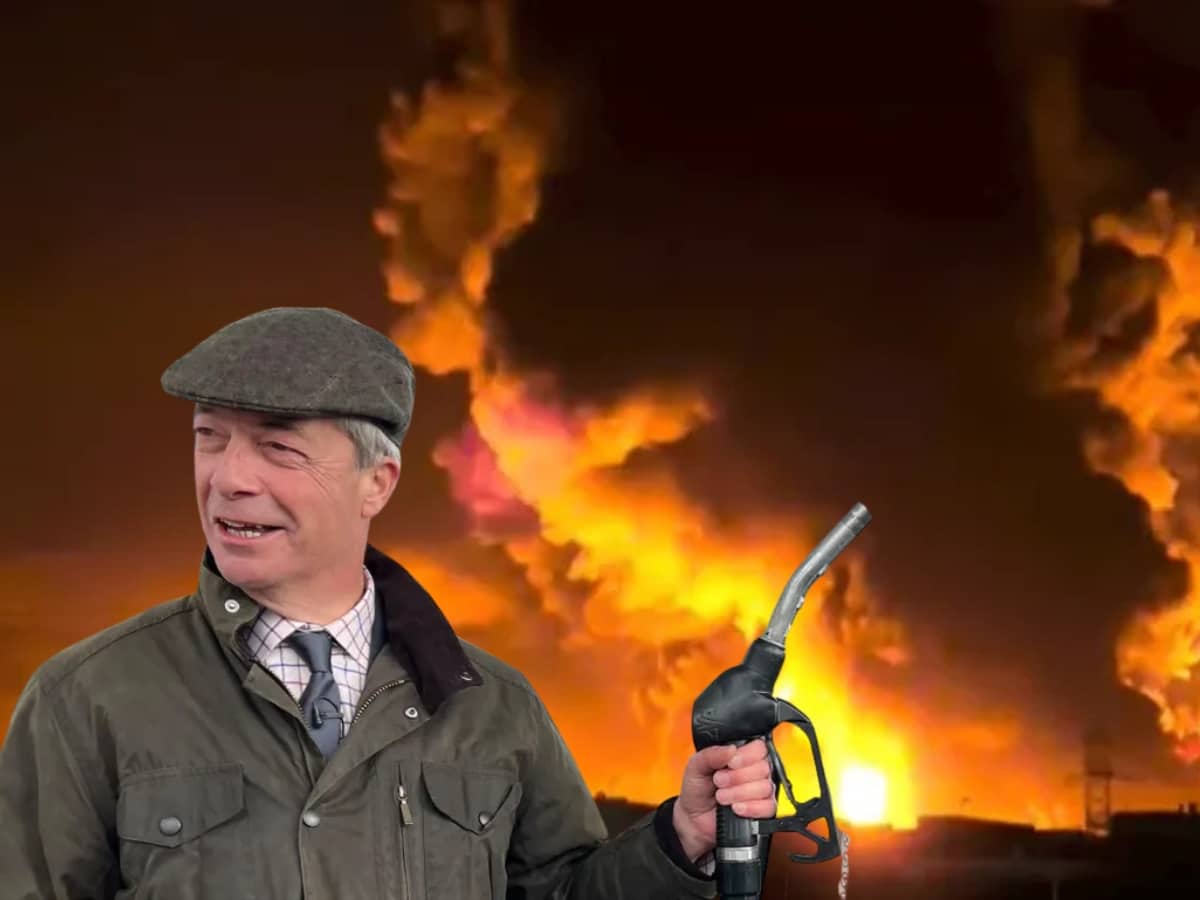
Meanwhile, the leadership of Reform staged a petrol station stunt promising cheaper fuel and energy bills. Avoiding warzones like Dubai or London, the party found a filling station in rural Derbyshire.
Like many such isolated stations, its prices are significantly higher than elsewhere. Reform’s answer to this was to subsidise the price for one day. Supposedly this indicates lower prices should the party make it into government.
They’d do this by attacking what they call “green levies”. These fund long-term heating and energy efficiency programmes. In other words, measures that can reduce household bills and make people in the UK less vulnerable to global price shocks.
As global gas prices surge following the conflict with Iran, what the stunt actually highlights is the UK’s continued dependence on oil and gas. This leaves households at the mercy of international wholesale markets.
A spokesperson for the End Fuel Poverty Coalition, which campaigns to lower home energy costs, said:
Scrapping support for heat pumps and energy efficiency programmes would lock the country into a continued cycle of high energy prices and fuel poverty.
The reason households are facing rising costs today is because the country remains heavily dependent on oil and gas whose prices are set on volatile global markets.
As the conflict in the Middle East shows, when tensions rise anywhere in the world the price of gas quickly follows. That is what pushes up energy bills, not investment in cleaner heating.
The real way to cut bills for working people is to reduce the amount of gas we burn through better insulated homes, expand homegrown renewable power and reform energy pricing so households are no longer exposed to constant gas price shocks.
Robert Palmer, deputy director of campaign group Uplift, added:
It’s clear that the only route to lower bills and secure energy is to free ourselves from oil and gas through homegrown renewable energy and upgrading homes, whether that’s with solar panels or heat pumps. This is just common sense in today’s world
New North Sea drilling will make no difference to UK energy bills and have no meaningful impact on the UK’s supply of gas.
As the Canary reported on 9 March, the Windfall Tax enjoys wide popularity in the UK. Polling in Scotland, before the attack on Iran, showed supporters of all political parties supported the measure.
Hitting the fossil fuel profiteers in the pocket can stabilise prices for consumers and hasten the move towards sustainable alternatives. A fatuous gimmick from the snake oil salesmen of Reform achieves nothing.
Featured image via the Canary

The Ministry of Defence has deployed HMS Dragon to help protect RAF Akrotiri in Cyprus.
HMS dragon leaving Portsmouth for the Mediterranean sea. pic.twitter.com/885WArWCQK
— Christopher Cope (@Christo73187918) March 11, 2026
It will take at least five days for the Type 45 destroyer to reach its destination.
Last week, the UK’s Ministry of Defence said it was sending the HMS Dragon to the eastern Mediterranean along with two Wildcat helicopters.
The decision followed an alleged drone attack on RAF Akrotiri in Cyprus. The attack caused no casualties.
Cyprus
As the Canary previously reported, Starmer initially refused to involve the UK. Hours later – under pressure from the US – he conceded that the US could use UK military bases – effectively bringing the UK into the war.
The Royal Navy website describes the Dragon as:
capable of an array of duties outside of her air defence role, from providing disaster relief to counter-narcotics boarding operations.
Having undergone a major upgrade to her weapons, IT, communications and marine engineering systems, HMS Dragon is currently undergoing sea trials in preparation for her third overseas deployment.
The HMS Dragon is fitted with a Sea Viper missile system. It can launch eight missiles in under 10 seconds and guide up to 16 missiles simultaneously. Wildcat helicopters from the 815 Naval Air Squadron, equipped with Martlet missiles capable of taking out drones, will assist it.
Last week, French President Emmanuel Macron also ordered France’s nuclear-powered aircraft carrier, the Charles de Gaulle, to move from the Baltic Sea to the Mediterranean. It’s an air wing, and medium-sized warships will escort it.
Meanwhile, the government has told RFA Lyme Bay to prepare to deploy. It is a:
Bay Class landing ship dock of the Royal Fleet Auxiliary. She is capable of delivering a significant fighting force anywhere in the world.
The vessel is equipped with an aviation platform and medical facilities. This enables it to support evacuations and medical treatment.
Sir Richard Dalton told Declassified UK that British assets in the region were now legitimate targets of Iran.
will not distinguish [between] attacks to its missiles and other wider attacks on its political, military and economic institutions and leaders.
They will say that these are attacks facilitated by Britain on Iran as part of the United States campaign to destroy the Islamic Republic.
Another illegal war
The UK claimed to stay out of Israel and the US’s illegal and unprovoked attacks on Iran. Starmer quickly changed his mind and is now allowing Trump to station US military planes at UK RAF bases. However, Starmer approved the “specific and limited defensive purpose” of destroying Iran’s missiles “at source”.
Despite this, only yesterday, March 11, a bystander spotted US military personnel and ground crew preparing “explosive ordnance” at RAF Fairford in Gloucestershire.
Starmer is making the UK a legitimate target.
If your bases launch operations, your runways become targets.”
This means:
If a country allows its military bases to be used for attacks, then the enemy will consider those bases legitimate targets.
So the base itself becomes part of the battlefield. https://t.co/JErt48O4ze
— Himanshu Jain (@HemanNamo) March 10, 2026
In a war that no one voted for.
Don’t think anyone voted for this https://t.co/jwA5L3Cc5w
— miss.andry (@L3m0nGr4bb) March 10, 2026
Starmer is inadvertently signing the UK up for an illegal war that no one has voted on. He is making the UK a target, whilst the US and Israel bomb thousands of civilians in Iran. Meanwhile, he is still allowing Israel to systematically carpet-bomb and starve Gazans.
But what’s one more illegal war for a country that is already up to its eyes in colonial shit? Starmer has no backbone – and civilians in the Middle East are going to pay the price for it.
Featured image via ITV News

German media company Axel Springer SE has just agreed to buy Telegraph Media Group Limited. And judging by its shilling for Israeli war criminals, the Telegraph seems likely to remain just as vile as ever.
8 things you need to know about Axel Springer
Axel Springer:
- Has a long record as “a bastion of conservatism“, with its founder insisting “It is the task of our generation to stand firmly by Israel’s side, even if this causes difficulties for our policies elsewhere… The country does not need encouragement, but advocacy, wherever and whenever it can be provided”.
- Is “Europe’s largest publisher” and owns “Germany’s biggest newspaper”, Bild.
- “Has long been a staunch supporter of Israel” and opponent of Palestinian freedom, even making its European employees sign a commitment to “the trans-Atlantic alliance and Israel”. It considers “Israel’s right to exist” to be something “non-negotiable“.
- Has functioned as a “direct pipeline for Israeli talking points“, enabling Israel’s assassination of journalists by publishing propaganda about them.
- Owns Aviv Group GmbH, which has an Israeli real estate website offering sale or rental of properties in occupied Palestinian and Syrian territories. A job ads portal, meanwhile, advertises posts for ‘security’ at “checkpoints and settlements in the occupied West Bank”.
- “Runs a journalism academy that requires its trainees to visit Israel during their training”.
- Acknowledged pro-Israel propagandist Dovid Efune “for his essential support and assistance” in the acquisition of the Telegraph.
- Reportedly told employees at news app Upday “to prioritize pro-Israel sentiment in their news curation and limit news about Palestinian deaths” at the start of Israel’s genocide in Gaza (which Axel Springer denies).
What you need to know about Axel Springer’s CEO
Axel Springer CEO Mathias Döpfner, meanwhile, is a gaslighting pro-Israel extremist who:
A neat fit for the Telegraph
The Telegraph has long shown itself to be a fervently right-wing, racist, pro-Israel, and anti-Muslim propaganda outlet. So it’s absolutely no surprise that Zionist extremists would be falling over themselves to take control of such an asset. And as all of the above information shows, Axel Springer’s takeover may well make things even worse.
Featured image via the Canary

A Whitehall memo has emerged, as Whitehall memos do from time to time. But this one, which Keir Starmer wrote to his ministers, has provoked a furious response from Welsh independence organisation YesCymru. Plaid Cymru obtained the memo and discussed it in the Welsh Senedd on 10 March.
In the memo, Starmer appears to suggest that UK ministers shouldn’t feel “deferential” in their dealings with the Senedd. In fact, they should feel able to impose their plans directly on the people of Wales, even if there’s local opposition.
YesCymru chair Phyl Griffiths said:
This leaked memo from Keir Starmer to Cabinet ministers is deeply worrying for democracy in Wales.
The people of Wales voted for devolution in a democratic referendum. The Senedd represents the democratic will of the Welsh people and enshrines Wales’ right to make decisions in areas entrusted to its own national institutions.
The Senedd was not given to Wales as a gift from Westminster, and any attempt to erode or sideline the Senedd or the Welsh Government would be an abuse of power.
But that is exactly what this memo appears to suggest Keir Starmer is doing.
It says ministers should not ‘cede our responsibilities, or channel our relationships solely through the devolved governments’. It also says they should act directly in Wales, ‘including through direct spending, even when devolved governments may oppose this’.
Those are extraordinary words. They suggest that Westminster is prepared to bypass Wales’s elected institutions and impose its own priorities, even in areas where the people of Wales voted to have decisions made here in Wales.
The timing makes this even more concerning. The memo says that ‘The importance of… elections in Scotland and Wales cannot be underestimated’ while calling for greater UK Government activity and visibility in the devolved nations.
People in Wales are entitled to ask why Westminster is discussing how to expand its role here ahead of a Welsh election, while also making clear that it is prepared to act directly when the Welsh Government disagrees.
This gets to the heart of the problem with devolution. It leaves Wales vulnerable to interference from Westminster whenever it suits the government of the day. Powers that are supposed to belong to the people of Wales can still be ignored or worked around from London.
Wales should not have to rely on the goodwill of Westminster governments in order to exercise control over matters that affect our communities, our economy, and our future. Wales and the Senedd should not be vulnerable to the changing political priorities of another parliament.
That is not real self-government.
This is why the case for independence is so powerful, obvious and undeniable. The only way to guarantee that decisions about Wales are made in Wales, by the Welsh people, is for Wales to have the powers of an independent nation.
Featured image via the Canary

Why Bitcoin Is Pumping Right Now!

Mum and dad both died of deadly, common cancer – you need to know the signs

iPhone Fold Reportedly Comes With New App Features, Side-by-Side Multitasking


-
Business6 days ago
Form 8K Entergy Mississippi LLC For: 6 March
-

 News Videos3 days ago
10th Algebra | Financial Planning | Question Bank Solution | Board Exam 2026
-

 Fashion6 days ago
Weekend Open Thread: Ann Taylor
-

 Crypto World3 days ago
Paradigm, a16z, Winklevoss Capital, Balaji Srinivasan among investors in ZODL
-
 Tech24 hours ago
A 1,300-Pound NASA Spacecraft To Re-Enter Earth’s Atmosphere
-
 Sports7 days ago
499 runs and 34 sixes later, India beat England to enter T20 World Cup final | Cricket News
-

 Politics6 days ago
Top Mamdani aide takes progressive project to the UK
-

 Business2 days ago
ExxonMobil seeks to move corporate registration from New Jersey to Texas
-

 Sports4 days ago
Braveheart Lakshya downs Lai in epic battle to enter All England Open final | Other Sports News
-

 Sports4 days ago
Three share 2-shot lead entering final round in Hong Kong
-

 NewsBeat13 hours ago
Residents reaction as Shildon murder probe enters second day
-

 NewsBeat7 days ago
Piccadilly Circus just unveiled ‘London’s newest tourist attraction’ and it only costs 80p to enter
-

 Entertainment5 days ago
Hailey Bieber Poses For Sexy Selfies In New Luscious Lip Thirst Traps
-

 Business4 days ago
Search for Nancy Guthrie Enters 37th Day as FBI Probes Wi-Fi Jammer Theory
-

 Business23 hours ago
Search Enters Sixth Week With New Leads in Tucson Abduction Case
-
 NewsBeat2 days ago
Pagazzi Lighting enters administration as 70 jobs lost and 11 stores close across Scotland
-

 Tech3 days ago
Despite challenges, Ireland sixth in EU for board gender diversity
-

 Tech7 days ago
ACIP To Discuss COVID ‘Vaccine Injuries’ Next Month, Despite That Not Being In Its Purview
-

 Tech2 days ago
ChatGPT will now generate interactive visuals to help you with math and science concepts
-

 Business2 days ago
Search Enters 39th Day with FBI Tip Line Developments and No Major Breakthroughs