A suspect has been charged with attempted murder following an incident outside Rihanna’s house in California last week.
On Monday, the Los Angeles Police Department confirmed that the Pon De Replay singer’s home had been targeted by a woman who fired numerous shots in the direction of the property from outside of it over the weekend.
Days later, 35-year-old Ivanna Lisette Ortiz was charged with attempted murder, as well as 10 felony counts of assault with a semiautomatic firearm and three felony counts of shooting at an inhabited dwelling or camper.
BBC News reported that her bail is set at $1.875 million (around £1.4 million), and that she is facing a potential life sentence.
Advertisement
“Opening fire in any populated neighbourhood is extremely dangerous, puts lives at risk and will be fully prosecuted,” the Los Angeles County District Attorney Nathan J. Hochman was quoted as saying.
“This careless violence will not be tolerated in our community. Such shooters will find their next destination to be our jails and prisons.”
After allegedly fleeing the scene, Ortiz’s white Tesla was found around eight miles from Rihanna’s property, after which she was arrested and detained.
It’s also been reported that Ortiz had previously shared a number of social media posts referencing Rihanna.
Advertisement
Rihanna and her partner A$AP Rocky are both believed to have been at their home at the time of the shooting.
In September of last year, the couple welcomed their third child, a baby girl who they named Rocky Irish Mayers.
They were already parents to two sons, three-year-old RZA and two-year-old Riot.
Best known for her hits like Umbrella, We Found Love and Work, Rihanna has pivoted away from music in the last decade to focus on her hugely successful makeup and lingerie businesses.
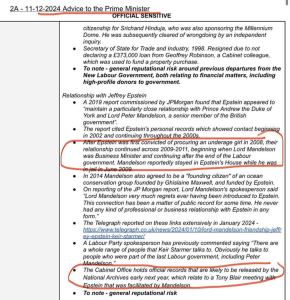
In a rational, decent world, Keir Starmer would already be toast — politically at least. Among the limited new files released, a briefing document reveals that Starmer knew about Mandelson’s Epstein ties, prior to his appointment as UK ambassador. Starmer knew. Furthermore, we have the receipts which challenge his sorry not sorry excuse of “having believed Mandelson’s lies.”
Starmer knew
He knew Mandelson was, and, had remained, “particularly close” to serial child-rapist Jeffrey Epstein long after Epstein’s conviction for paedophilia. He knew that Mandelson had set up a meeting between Epstein and Tony Blair. Moreover, he also knew that appointing Mandelson would be a disaster if it got out:
And it proves that Starmer flat-out lied when, after the renewed Mandelson scandal broke, that he “would never have appointed” Mandelson “had I known.”
In the public record
Of course, we knew he knew. The key facts about Mandelson and Epstein had been in the public domain long before the Epstein file release showed Mandelson leaking state information to his paedophile pal. These include:
Advertisement
• Mandelson and Epstein’s closeness began well over 20 years before Starmer got into Number 10 and appointed him. Notably, Mandelson immediately set up the Epstein-Blair meeting.
• Their contact continued years after Epstein’s 2008 conviction.
Starmer is not ‘teflon.’ He is widely loathed, and the cost of his dishonesty is the already threadbare legitimacy of the Labour party. Still, the political axe won’t swing until he’s outlived his usefulness to those driving the country toward fascism.
The High Court has ordered former footballer Joey Barton to pay TV sports pundit and former England footballer Eniola ‘Eni’ Aluko almost £340,000 in libel compensation and costs. A first instalment of £100,000 plus interest must be paid by 24 March, though the court gave him a week to apply for a ‘variation’ in the timing.
Aluko sued Barton over a flood of posts on the X social media platform in a “deliberately targeted public campaign of vilification [and] an attack on multiple aspects of her life and personality”. Barton accused Aluko of “cynically [seeking] to exploit her status as an alleged victim of racism and bullying”. Barton has now accepted that he mounted a harassment campaign against his victim.
Aluko said simply that she is “glad it’s the end.”
Barton has been convicted twice for violent crimes. He was also convicted in 2025 of six counts of malicious communications for his abusive messages concerning Aluko and others about TV host Jeremy Vine.
There are now more billionaires than ever before. And they’ve just got another big win, with the highly valuable ‘Lithium Triangle’ now passing fully into far-right hands.
The first year of Trump’s second administration also saw elections in both Bolivia and Chile give pro-billionaire results. The previous governments in both countries had been insisting on continuing state control of the lithium industry, and had been facing pressure from Trump.
Will Chile and Bolivia now follow Argentina’s extreme example?
The extraction of lithium has already lent itself to human rights abuses and environmental destruction. But now, as the Financial Times reports, Javier Milei and his two new counterparts (José Antonio Kast in Chile and Rodrigo Paz in Bolivia) look set to ramp this up further. Because they:
Advertisement
have vowed to entice foreign investment, and are turning to US President Donald Trump for bilateral deals.
And they are:
likely to fan the flames of local conflict over lithium
Milei has already shown what to expect from the latest generation of far-right leaders in South America. For example, the neoliberal extremist has:
After a year of unprecedented rates of coastal erosion, Matilda Martin visits a Suffolk village where she finds homeowners left liable for the costs of demolishing their own homes – but only after a bat survey
Advertisement
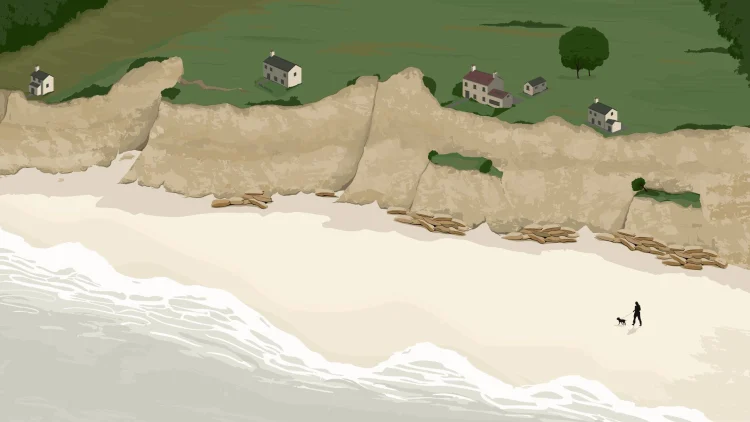
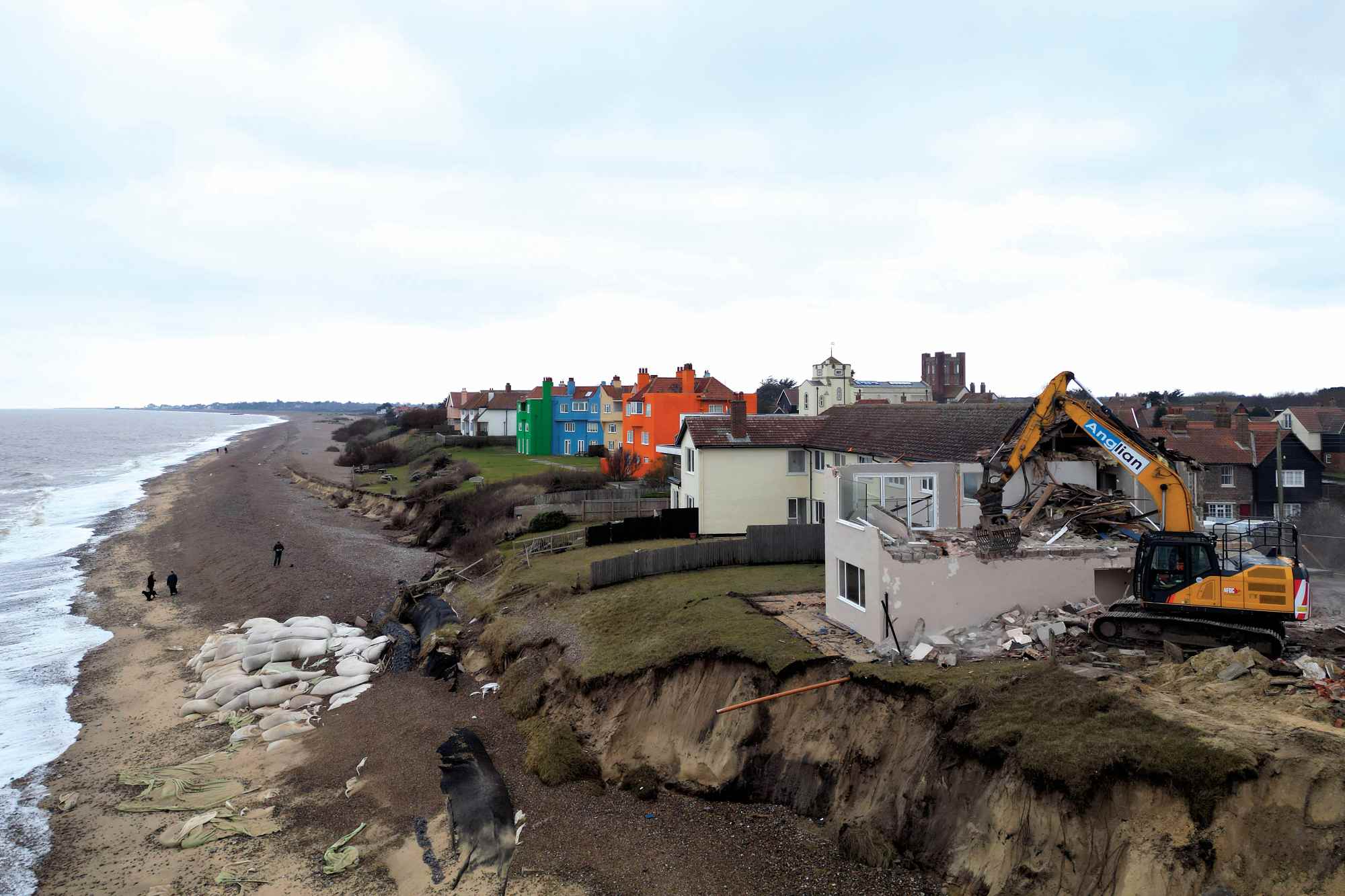
Steps hang from the cliff leading to nowhere; fencing, too, curves into thin air while the skewed foundations of what was once a house slide down a sandy slope to the Suffolk sea.
This is Thorpeness, or what is left of it. The village is being eaten by the waves at a far faster rate than anyone expected and becoming emblematic of the increasing challenge of coastal erosion.
“On New Year’s Eve, we were dancing on those rocks in the garden,” says Roger Hawkins, the owner of a home apparently doomed to follow its neighbours, pointing to shoreline rubble. “The next morning, we were literally watching them fall into the sea.”
Advertisement
Hawkins and others at the water’s edge face not only losing their uninsurable homes but liability for the costs of demolition – and even a requirement that they first conduct a bat survey.
Thorpeness is a genteel sort of a place, notable for a boating lake, proximity to a nuclear power station, and a history of having been developed into an elite holiday resort full of mock Tudor houses.
When local MP Jenny Riddell-Carpenter was first contacted by residents about coastal erosion, it was, she recalls, a relaxed conversation with everyone expecting five to 10 years to prepare for any damage.
Advertisement
Just eight months later, the local council is battling to save a second line of houses from falling into the sea. “The speed of it has been quite devastating,” Riddell-Carpenter says. In the last year, 28m of the cliff at Thorpeness has fallen away, forcing 10 properties – a mix of first and second homes – to be demolished in just four months. According to East Suffolk council (ESC), in some places as much as 16m of the shoreline has been lost in just the last four weeks.
Those working on the issue believe that the phenomenon should be a wake-up call for government. According to the Environment Agency, there are currently 3,500 homes at risk of coastal erosion across England in the period up to 2055. But that is not the full story. “The Environment Agency has told me the number will be much higher once there is a reassessment,” Riddell-Carpenter says. “People will need to be rehoused. We need to have an adaptive policy for rehousing these people. We need to prioritise that.”
Land loss due to climate change-accelerated coastal erosion is unavoidable
Advertisement
Experts blame a combination of rising sea levels and increased storm frequency – both attributed to climate change. “Climate-change accelerated coastal erosion will continue for centuries, increasing the rate and extent of landscape change,” says Larissa Naylor, professor of geomorphology and environmental geography at the University of Glasgow.
“Land loss due to climate change-accelerated coastal erosion is unavoidable,” she adds. The East Coast of England has been particularly affected in recent years, with easterly winds battering the coast.
The House has visited Thorpeness on a grey and windy day towards the end of February. Picking our way down the shingle beach with Riddell-Carpenter and Karen Thomas, the strategic lead for coastal management adaptation for ESC, we pass a sign on the shore, warning visitors: “Stay away. Beach closed.”
“We’ve got 250-60 properties at erosion risk according to the current risk map,” Thomas says. While government funding has recently been made available for adaptive measures, such as managed retreat or rerouting roads deemed at risk, Thomas argues there is still a policy-sized gap for those at risk of erosion.
Advertisement
Currently, the council has a duty to rehouse those who have lost their main home and have no ability to buy or rent another. Thomas explains that the council currently has a map of the most at-risk homes, but there is currently an 18-month waiting list for social housing across the whole East Suffolk council area.
While the pressure on social housing as a result of the erosion in Thorpeness has not been acute so far, the housing team is currently developing a new policy to give priority to those at very imminent erosion risk and embed planning for erosion. This would give the team the flexibility to be able to re-house people quickly if needed.
“Thorpeness is caught between the old way of doing the coast, which is you can keep putting stuff in front of things, and the new way of doing things, which is, if we can move people away from risk, that would be preferable.
“In the middle, there are a few communities that do not benefit from either of those two options, and the best that we could do as a council was offer them demolition,” Thomas says.
Advertisement
“You’re still going to have to incentivise people to move or take it seriously, because no one’s going to move until they absolutely have to, because no one’s offering them anything.”
A property is demolished on the clifftop at Thorpeness, Suffolk (Credit: PA Images / Alamy)
A Defra spokesperson told The House: “Coastal erosion is an extremely challenging impact from climate change, and we will always support coastal communities to adapt where the forces of nature make long-term defence impossible.
“This government is determined to make a difference and over the last two years more than £600m has been invested in protecting communities from sea and tidal flooding as well as coastal erosion.
“To help the communities that are most at risk, a £30m pilot scheme is underway to take further practical action including considering selective property purchases.”
One seemingly unfair aspect of the problem is how quickly your money can literally fall off a cliff. “There’s no compensation if you lose your home,” Riddell-Carpenter explains. Technically, homeowners actually need to cover the demolition of their home if it has been identified as high-risk. Thomas says the costs of demolition exceed the amount that can be claimed from Defra’s Coastal Assistance Grant (£6,000), therefore the majority of the bill must be footed by individuals or the council.
Advertisement
The House understands that the Environment Agency is looking at increasing the current figure after both Riddell-Carpenter and ESC raised concerns that the current compensation is inadequate.
For now, ESC has managed to fund the gap. But Thomas explains that Thorpeness is not an isolated incident. Just up the coast in Corton, Thomas says, there are a lot more houses at erosion risk. Thomas explains that council demolition costs are not sustainable for the number of homes at erosion risk, so it will be a challenge if there is no additional assistance from the government.
In Corton, Thomas and the council are already thinking about what the opportunities might be for new housing, or temporary housing. She also raises the possibility of renting the property out to those working on the nearby Sizewell site to make money before it is knocked down.
The costs for taking down a home extend beyond simple demolition. Utilities must be disconnected, and properties surveyed for asbestos, even bats. Thomas explains that the challenges have been exacerbated by the nearby construction work on a £40bn nuclear power plant at Sizewell C.
Advertisement
“There are challenges around trying to get someone to do a bat survey, it’s really difficult because there aren’t a lot of bat survey specialists, and they’re all tied up with Sizewell.”
The cost of demolition has also been pushed up by Sizewell – getting machinery to the site is more complicated because of the project. “We’ve just got the perfect storm of getting vehicles here, getting the right expertise in,” Thomas explains.
Riddell-Carpenter mentions that there is a question over whether those benefiting from the shoreline economically could have a role to play in contributing financially towards the council’s current work.
When The House visits Thorpeness, the council is trying to plan ahead, aiming for a natural cliff line with the second row of houses across the road remaining. Ultimately, the council wants to end up with a wide beach that will become a natural defence. With a good beach, Thomas explains, erosion will be close to one metre a year.
Advertisement
But it is just a temporary fix. “The houses on the other side of the road might have 15 to 30 years, but you might only have five, if we’re unable to manage this the way that we’d like to.”
After leaving the beach, The House visits resident Roger Hawkins’ home, after seeing it from the beach. Hawkins was one of those who contacted Riddell-Carpenter in May last year when the threat facing the homes on the front still seemed like a far-off worry.
Hawkins explains that the house, which he designed, is now 20 years old. It was originally a second home, but his wife has recently retired, and they had hoped to make it their permanent residence.
Hawkins is now spearheading several protective works to, as he puts it, “buy time” for both his property and around 24 others. In total, the works will cost £500,000, funded 50:50 with the council and privately. Hawkins hopes the move will buy two to five years, by which point the rate of erosion may have stabilised.
Advertisement
Under the current non-statutory Shoreline Management Plans, defences can be installed in a way that allows managed realignment of the coast, but cannot have any negative impact on communities elsewhere along the shoreline.
While Hawkins is facing a worst-case scenario, unable to insure the home he could lose, there is a sense that such resources and expertise would not be available to all communities.
After leaving Hawkins, The House walks down North End Avenue, where the houses on the frontline have been demolished and the second line on the other side of the road stands resolute, for now.
The avenue feels almost haunted by the ghosts of the now-demolished homes. Garden gates and walls remain standing, now marking the entrance to nothing but compact muddy earth, and the remnants of some garden paving.
Advertisement
On our return, Riddell-Carpenter says that she would like to see the government allow communities to be more agile in their response. “Have a pot of money, let the community access it, let us lead the adaptation,” she urges.
Our conversation pauses when the MP stops and points out two apparent “doom tourists” ignoring a “Road Closed” sign and heading down a forbidden path past demolition sites. “It’s really infuriating that people are travelling to this part of the country to have a look at what is going on. Let people have their dignity. Their home is being pulled down,” she bristles.
Thorpeness is the first in a long line of communities that are going to be affected
Advertisement
Another policy hole, as Riddell-Carpenter sees it, is the fact that there is “nothing in law” about not declaring a property as at risk of coastal erosion when it is sold. “People have tried to sell their homes and not too long ago some were bought. That needs to change,” she says, adding that this is something she is pushing the Ministry of Housing, Communities and Local Government on.
As The House says goodbye to Riddell-Carpenter, she reflects that Thorpeness “is the first in a long line of communities that are going to be affected” by coastal erosion.
“I think this has shone a light on [the fact that] we’re not getting away from climate change.
“The whole system needs to be relooked at, just to make sure, are we doing enough to support our communities? I would argue at the moment, we’re not. That’s because we weren’t expecting it to happen this fast. Where can we make lessons learned?”
Advertisement
Liberal Democrat MP Caroline Voaden is seeing a similar problem 352 miles away, in her constituency in South Devon. In the village of Torcross, intensifying storms and higher waves are buffeting the community. While there is an Environment Agency sea defence wall in place, Voaden says it “is clearly not enough to protect the homes now that the beach has eroded and dropped by several metres”.
Currently, around 20 homes are being affected, with several more directly behind those. “The houses are very badly damaged and it’s not clear whether people will be able to go back into them. The waves race up the wall and crash down on the top of the houses, blasting out windows and raining shingle down on the rooftops.”
Voaden says the incident raises difficult questions over who should be responsible. For some, their properties were bought when erosion “wasn’t even a conversation” and “for them to lose everything feels deeply unjust”. She says we need to start thinking seriously at a national government level about how coastal erosion is managed and who is responsible for what.
“The long term is still a big unknown, with climate change effects likely to intensify. But for now we need to bolster the defences we have, protect those homes and give people the time to make long-term decisions.”
Anand Menon argues that while the UK government speaks more freely about the economic impact of Brexit and its ambitions for closer ties to the EU, its red lines will limit what it is able to achieve.
Something is changing in the politics of Brexit. Not that long ago, open discussion of the economic impact of leaving the EU was frowned upon. More recently, the government has been significantly more forthright. Rachel Reeves has repeatedly emphasised the costs of Brexit. And now, rumours abound that she’s going to double down on that theme in her forthcoming Mais lecture.
Let’s be clear. Having a government that is willing to be honest about the impact of such a significant policy decision marks real progress. Whatever you think about Brexit, self-delusion over its implications is not what the country needs from its political leaders.
Equally, however, there is a curious disjuncture in government thinking on this. Simply put, their current position seems to consist of emphasising the significant costs that have been incurred thanks to our decision to leave the EU, whilst being equally forceful in ruling out the steps that would be needed to reduce these.
Advertisement
By this I of course mean the continued insistence by Ministers that their red lines – on the customs union, the single market and on freedom of movement – remain as fixed as they were when they were added to the Labour manifesto two years ago.
Let me place this in context. The OBR continues to argue that the medium-term impact of Brexit will be in the order of 4% of GDP, while a number of other economists propose a significantly higher figure. By way of contrast, John Springford of the Centre for European Reform has estimated the value of the deals currently being negotiated at around 0.1% of GDP. The government’s own figures suggest it might be of the order of 0.3%.
Putting two and two together, then, the government thinks it has found a way of doing something far more ambitious than the current reset while respecting its own red lines.
The chosen mechanism seems to be ‘alignment’. As Joël Reland expertly outlines, the tone with which this government has begun to discuss the prospect of dynamic alignment with EU rules marks a striking departure from anything we have heard post-Brexit. Keir Starmer’s government, it would seem, prioritises economic gain over the potential pitfalls inherent in being a rule taker.
Advertisement
The problem is that the EU is not as enthusiastic. Not because there is any principled objection to selective alignment. Supposed EU resistance to what it dubs ‘cherry picking’ was always something of a myth. Indeed, the UK-EU summit last May was a cherry picker’s dream. The EU agreed to start negotiations on selective UK participation in those bits of the single market relating to agriculture, emissions trading and electricity.
Selective alignment, in other words, is fine – as long as it suits the EU. And one crucial reason why these three areas are being prioritised is that they all help in addressing some of the thorny issues created by Northern Ireland’s unique status under the Protocol.
Beyond these sectors, however, things become far trickier. Of course the UK wants carve outs. Squaring the circle of the need for growth and the existence of those pesky red lines demands them. But on the EU side there is genuine concern about the UK enjoying too many of the benefits of the single market without accepting the obligations that come with membership. Equally, there is no shortage of EU firms that rather enjoy their UK competitors struggling to trade in the single market.
Over and above all this there is the politics. There is simply no incentive for EU leaders to help a country that has left the club flourish economically. Not least given that many of them face populist opponents who, whilst they may no longer call for exit from the EU, would certainly prefer it to be less intrusive. A Britain that serves as a salutary warning of the economic cost of being outside is no bad thing in this regard.
Advertisement
And a final issue is conjunctural. We’re negotiating with the EU at the very moment when the member states are embarking on what promise to be rather bad-tempered negotiations over the EU’s seven-year budget. If the fate of the negotiations over SAFE are anything to go by, one side-effect of this will be to encourage them to see the UK as a potential cash cow that might help smooth those internal discussions.
So, the problem the government faces is that the EU might not be too keen to give them what they want. One obvious solution would be to offer in return something the EU is keen to have. At the moment, however, it is hard to see what this might be (I can’t see Starmer and co offering freedom of movement any time soon). Trading security cooperation for economic concessions is a non-starter, not least because the member states know as well as we do that such cooperation is in our interest too.
So as Rachel Reeves stands up to speak, she should be wary of the danger of over promising and under delivering. Yes, Brexit has had a significant impact on our economy. But it is precisely those aspects of it that are causing the most harm to which the government is determined to cling that have exerted the largest impact. Some honesty is better than none. But there is a way to go.
By Anand Menon, Director, UK in a Changing Europe.
The wins for Palestine activists and advocates keep stacking up. Yesterday, the Westminster Magistrates’ Court threw out an appeal by British government which, again, has failed to criminalise Kneecap rapper Mo Chara for holding a bit of cloth. A final decision on whether Óg Ó hAnnaidh – the rapper’s real name – will stand trial on 26 September has not been reached.
Three-nil to Kneecap
“Three-nil to Kneecap,” the rapper announced to a crowd of supporters outside the court. This is the latest legal victory in a series of significant rulings issued in favour of Palestine Action, six of their activists, and BDS Belfast campaigners – against the British state.
The ‘controversial’ cloth the West Belfast man allegedly unfurled at a gig in 2024 was the flag of the proscribed group Hezbollah. A judge initially threw out the case against the Kneecap rapper in September 2025, based on a technical failure of the prosecution. For ‘summary only’ offences – namely minor crimes heard before a magistrate – the Crown Prosecution Service (CPS) must authorise cases to proceed within six months of the alleged offence – a deadline which had passed in this case.
However, since Britain is a country that doesn’t understand what free speech is, waving the wrong sort of flag can get you done under anti-terror laws. In such cases the Director of Public Prosecutions (DPP) and Attorney General must give their consent to proceed. The Attorney General didn’t do this within the six month timeframe. Consequently, the case was rendered null.
That resulted in Wednesday’s High Court ruling. Lord Justice Edis and Mr Justice Linden ruled that Chief Magistrate Paul Goldspring had been correct in his initial September 2025 decision. In their judgement, as they said:
It follows that no written charge was issued within 6 months of 21 September 2025 and the judge was right to hold that he had no jurisdiction to try any summary only offence alleged to have been committed on that date.
In other words, the government was too late to hand its homework in. The justices did not investigate why the government made this cock-up. Today’s ruling represents the third occasion in which Kneecap have defeated attempts by the war criminals of the Labour party to criminalise them.
In June 2025, the Metropolitan Police dropped their plans to charge Mo Chara for 2023 comments in which he called, in jest, for people to “kill your local MP”.
There wasn’t one prosecutor or one individual in that courtroom that thinks I’m a terrorist.
He asked:
What pressure is the British government being put under. From where? Is it from America, is it from Israeli lobbyists? Why are they pursuing this so hard?
Needless to say, these are rhetorical questions.
A ‘vassal’ of the US
Britain is a vassal state of the US empire, an already pseudo-democracy made even more so by the fact that its 70 million people have their will overridden by Washington.
These are the reasons why they’ve pursuedlawfare against those repulsed by British crimes. Crimes committed using British people’s taxes, then followed up with a legal assault using the same pool of money, which could be better spent on healthcare and education.
In response, the land thieves have engaged in further mass murder in Lebanon. They have killed over 500 people since the start of the Iran assault, and displaced 100,000.
It is this horror that the British government is backing, proving they are the real terrorists, no matter how many failed prosecutions they deploy to try and invert this truth.
We now know that students mourned the killing of Iran’s supreme leader, Ali Khamenei, at a total of 27 British universities. Ahlul-Bayt Islamic societies, student groups affiliated with Iran’s Shia muslims, shared social-media posts expressing sorrow for Khamenei’s ‘martyrdom’, with some going further and organising commemorative events or directing members to join vigils.
In response, education secretary Bridget Phillipson has announced a crackdown on extremism in higher education. English universities that allow the promotion of terrorism on campus, or give a platform to speakers who engage in illegal activity, she warned, may face sanctions and even closure. Announcing the government’s new strategy, Phillipson said: ‘Free speech is a core pillar of our society and our universities, but we must also be clear about where the line is drawn. There must be no place for hate crimes, intimidation or attempts to draw students into terrorism.’
Although it is shocking to see students at British universities grieving for a regime that brutally murders its citizens, it is not obvious what Phillipson’s statement is intended to achieve. Universities already have a legal duty to comply with Prevent, the government’s counter-extremism strategy. Phillipson’s latest crackdown simply reinforces a decade-old requirement.
Advertisement
Not that this requirement has done anything to stop the spread of Islamism on campuses. Indeed, even Muslim-majority countries such as the UAE have declared that they will no longer sponsor students to study in the UK because of fears that they will be radicalised by Islamist groups, such as the Muslim Brotherhood.
In fact, Prevent’s only measurable impact of monitoring ‘extremism’ on campus has been to limit free speech. It has done this by creating a climate where lecturers and students self-censor and avoid discussing Islamist extremism in any context, including the threats it may pose. The 2008 arrest of a student at the University of Nottingham for downloading an al-Qaida training manual as part of research for a dissertation had a chilling effect on academic freedom. The backlash to this wrongful arrest led to growing concern that Prevent is fuelling ‘Islamophobia’. For many working in British universities, this is far more troubling than students demonstrating support for terrorist organisations.
Advertisement
Launching the government’s new strategy, Phillipson said: ‘Universities should be places of rigorous debate and opportunity – but never places where people feel unsafe because of who they are or what they believe.’ Jewish students who have experienced a huge spike in anti-Semitism on campus over the past two years may consider such platitudes to be too little, too late. Meanwhile, the demand that no one should feel unsafe on campus is frequently used to justify restrictions on all kinds of speakers, from gender-critical feminists to the Israeli ambassador to the UK.
A 2023 government-commissioned review of Prevent, conducted by Sir William Shawcross, found that resources were disproportionately focussed on a vaguely defined threat from ‘right-wing extremism’, while ‘not doing enough to counter non-violent Islamist extremism’. This undoubtedly holds true on campus. Staff charged with implementing Prevent policies seem far more comfortable talking about the risks posed by vanishingly small groups of far-right activists than they do the far larger and more real group of Islamist extremists. All too often, it is criticism of Islamism that is restricted, not Islamism itself.
Advertisement
This situation seems unlikely to change any time soon. Despite Phillipson’s rhetoric about the importance of free speech, new measures to challenge the promotion of terrorism have been introduced at the same time as the government finalised its definition of ‘anti-Muslim hatred’. Hatred and discrimination against Muslims are already illegal under the Equality Act of 2010; having an official definition of anti-Muslim hatred creates special protections for just one faith.
Taken together, these new measures mean that universities are being given contradictory instructions: they must protect free speech while clamping down on hate and intimidation. And they must stop Islamist extremism while not allowing expression of anti-Muslim hostility. At a time when many academics are convinced that people have a gender identity that matters more than their sex, that students need protecting from words that wound, and that knowledge itself must be ‘decolonised’, we should not be surprised when universities put more emphasis on protecting Muslim students from offence, than on defending free speech.
Bridget Phillipson’s crackdown on campus extremism is not simply too little, too late. It woefully underestimates the scale of the problem engulfing our universities. We cannot simply ban our way out of the problem of students from supporting Islamist extremist organisations (although institutions should certainly not be offering them financial support). If anything, this will do more harm than good.
Advertisement
If we’re serious about fighting back against Islamist intolerance, and for Western Enlightenment values, we will need more free speech on campus, not less. We need to ensure the rights of students who want to protest against anti-Semitism and in defence of women’s sex-based rights. Rather than making academics and students fearful of expressing ‘anti-Muslim hostility’, Islamist groups mourning the death of Ali Khamanei need to be met with the mockery and derision they deserve.
My park’s paths are lined with daffodils and primroses at the moment, and I have to watch my step by the pond because of all the fluffy little goslings.
That can only mean one thing: spring is well and truly here. But where are the bluebells? And when, exactly, can we expect them to bloom in the UK?
When do bluebells bloom in the UK?
Advertisement
The Woodland Trust runs a Wildlife Calendar, which allows people across the UK to record the dates and locations they first notice signs of seasonal change, e.g., conkers falling or blossoms growing.
And according to that calendar, the average first bluebell flowers on 9 April.
Of course, this won’t be uniform in every part of the country. If you’re in the sunnier South, you’ll likely see your first bluebell sooner than someone in Scotland.
In general, bluebells bloom from the end of March to as late as the start of May – they’re one of the last spring flowers to appear.
Advertisement
Where can I see bluebells in the UK?
Generally, bluebells appear on the floors of older woodlands, like a violet carpet. They grow in the sun or the shade.
The more ancient the ground they’re on, the better they tend to do.
For that reason, the National Trust recommends visiting “historic estates” as well as your local woods if you want to get a good gawk at the beautiful blossom.
Advertisement
Per the Wildlife Trusts, some good bluebell forests in the UK include:
I love the seaside. I’ve never lived more than a few miles away from it and I feel its pull whether I’m at home or away.
Advertisement
My home village of Great Bentley was five miles from Brightlingsea, and I spent seven years at school in Clacton. I couldn’t wait to escape… to Brighton.
A few years after leaving Sussex University, I became leader of Brighton and Hove council – a job I loved and did for 13 years. In the 70s and 80s, like most UK seaside towns, Brighton had all the feel and reality of decline. Playwright Keith Waterhouse once characterised it as having “the air of a town that is perpetually helping the police with their inquiries”.
The struggles of coastal communities are linked to their peripheral nature and the erosion of Britain’s industrial base
Advertisement
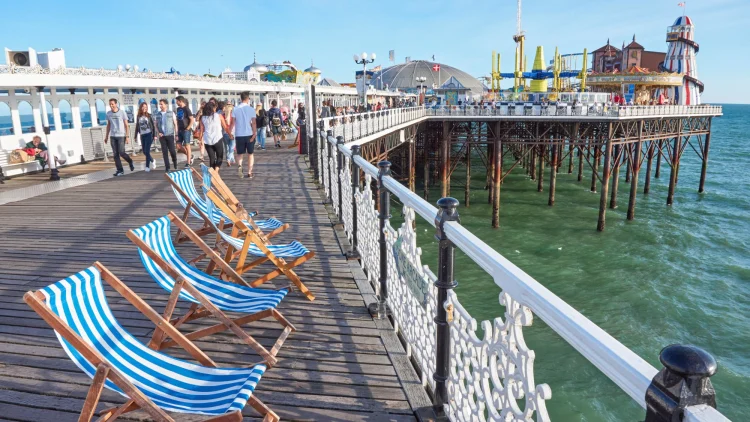
Today, Brighton is often held up as the UK’s most successful seaside city, one that others seek to copy. The sad truth is that few have succeeded in replicating its revival.
Back in 2019, I chaired a groundbreaking House of Lords inquiry, The Future of Seaside Towns. Our report found poor health outcomes, lower educational attainment, weak transport links and fragile digital connectivity. Business formation rates lagged behind national averages. Public and private investment were both thin on the ground. These communities also experienced the flight of the professional middle classes, which reduced the services of bankers, accountants, lawyers, doctors.
Advertisement
Broadly speaking, the struggles of coastal communities are linked to their peripheral nature and the erosion of Britain’s industrial base.
The attractiveness of the coast remains, of course, as does the love affair with seaside attractions. Nowhere in Britain is further than 70 miles away from the coast, and 36 per cent of us live within five kilometres of the sea.
So, what does a successful seaside look like? How do we restore pride and identity to these wonderful, quirky communities?
Brighton offers some pointers. In the 50s, it was a semi-industrial town with specialist engineering, a major locomotive works and a large factory-based workforce. Alongside that sat a thriving holiday trade: B&Bs, prestigious hotels and a reputation for the salty and saucy.
Advertisement
By the 1970s the factories had closed, the loco works were gone, and the holiday trade was shrinking. Brighton had the look of the seedy and rundown about it. Its recovery in the 80s and 90s was built around the knowledge economy, conferencing, the arts and latterly the digital economy. Today, its universities and colleges are home to 35,000 students, and the arts, cultural and digital economy has led to it having one of the highest business start-up rates outside London. Brighton now has the highest disposable income growth rate in the UK.
As a prescription, Brighton’s route to regeneration cannot be universal, but some of the elements are transferable. Margate, Bournemouth, Folkestone and parts of Cornwall have used this formula to renew and reinvent. Coastal communities should improve transport and digital connections, seek a mix of public and private investment, and put money into the arts. They should develop a learning culture, a knowledge economy (HE and FE) and make sure clear and decisive political leadership is built around a strong vision for place.
Our 2019 Lords report argued that government has a decisive role in shaping successful coastal futures. But we found a bewildering patchwork of funding streams and too little capital for long-term infrastructure renewal. When we revisited the issue in 2022, little had changed.
We argued then for a voice in government – a seaside or coastal minister – to focus Westminster’s thinking and produce a more coherent strategy for regeneration. That need has not gone away. Coupled with a strong devolution settlement, this would enable the left-behind places to tend the constant garden that is regeneration and renewal.
A drum ready to be disposed of at the Low Level Waste Repository
From decommissioning to enabling new-build, we are bringing together the UK’s expertise in radioactive waste management – reducing and recycling waste to save costs while protecting people and the environment
Advertisement
The UK has benefited from nuclear technologies for decades. Powering homes, supporting industry and enabling life‑saving medical and research applications. With those benefits comes a responsibility that Parliament rightly scrutinises: radioactive waste must be managed safely and securely, and in a way that represents value for the public purse over the long term.
That is the core purpose of Nuclear Waste Services (NWS). Created to bring together the UK’s leading radioactive waste management capabilities into a single organisation, NWS supports the safe treatment, transport and disposal of radioactive waste and helps ensure the UK has a credible, permanent “end point” for the most hazardous materials
NWS – providing solutions
NWS specialises in the management, treatment and disposal of radioactive waste produced by nuclear technologies in the UK. We are part of the Nuclear Decommissioning Authority (NDA) group, the public body responsible for cleaning up the UK’s historical nuclear sites.
Advertisement
Our goal is simple: to ensure all categories of the UK’s radioactive waste are managed safely, securely and sustainably.
We provide practical waste solutions – assessing, packaging, transporting and managing radioactive waste using innovative approaches that prioritise sustainable outcomes.
Our solutions include disposal through operating the existing Low Level Waste Repository in Cumbria to planning for a Geological Disposal Facility (GDF) for the most hazardous radioactive waste.
Advertisement
Since the mid-1980s we have worked with organisations across the UK that produce radioactive waste to help ensure that the waste being produced now is suitable for geological disposal
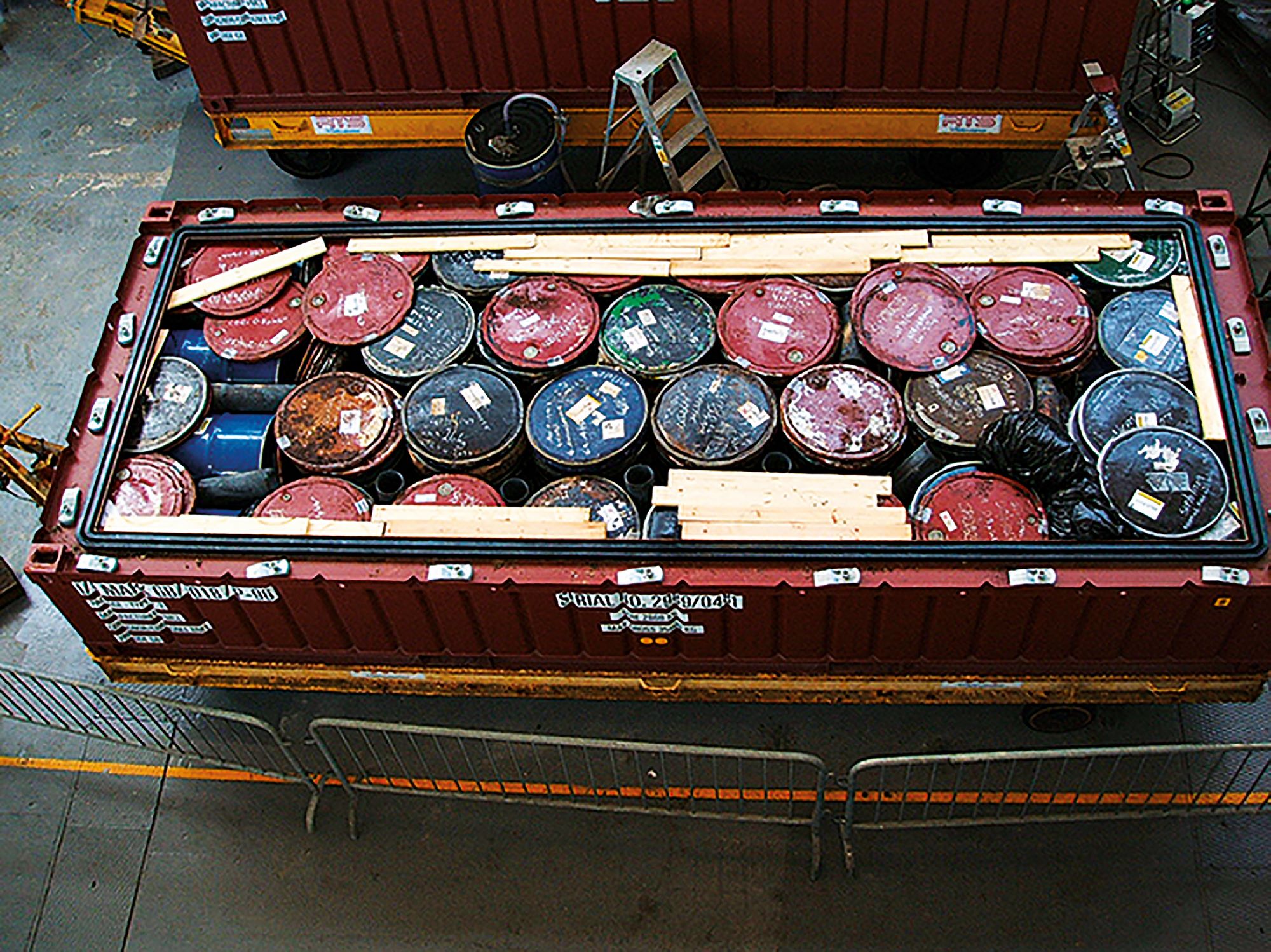
Supercompacted waste destined for disposal
From design to disposal
With new nuclear recognised by Government as essential to the UK’s low-carbon energy mix and energy security, the ability to manage radioactive waste safely – today and for future generations – has never been more important.
It is vital that new build reactor design consider decommissioning from the very outset. An assessment process has been put in place to scrutinise new nuclear power plant designs and assess their acceptability for use in Great Britain.
NWS – with a remit extending well beyond managing legacy waste – is playing a pivotal role ensuring that during plant design, construction and beyond, developers have clear and credible plans for the safe and permanent disposal of the waste their facilities will produce.
Advertisement
In addition to receiving the most hazardous legacy waste, the GDF will accept waste arising from new plants, so at NWS we must ensure it is compatible with final disposal in the facility.
Diverting waste from disposal
Our role spans the full waste lifecycle. We assess waste, advise on the most sustainable management route, and apply innovative treatments to reduce its volume or radioactivity wherever possible. Our partnership with the Chartered Institute of Waste Management increases trust and credibility of the solutions we provide.
Around 15 years ago, the default approach for low level waste was disposal at the Repository on the West Cumbrian coast. Waste was placed in expensive steel containers and permanently disposed of.
Advertisement
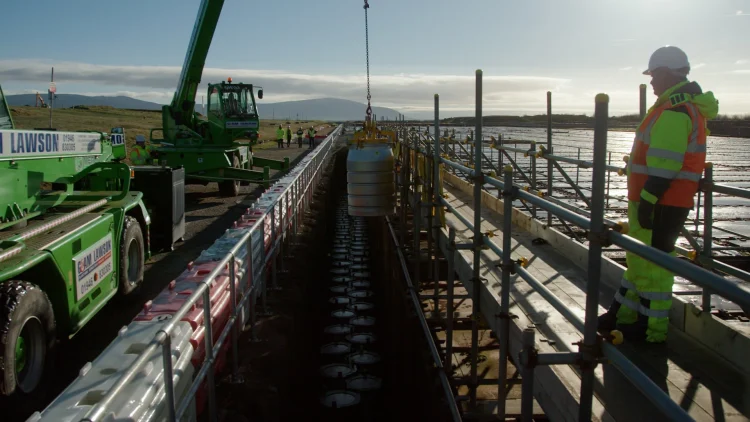
A view of the Low Level Waste Repository vaults
If that approach had continued, the UK would have needed a new low level waste repository at significant cost.
Instead, the NDA introduced a new strategy based on the waste hierarchy: avoid, reduce, reuse, recycle and only dispose as a last resort, delivered by a new centralised waste services capability.This work has been making significant savings to the taxpayer, made great efficiencies in our waste disposal management, avoided the unnecessary use of higher‑cost disposal facilities and helped speed up decommissioning.
A step change in how waste is managed across the nuclear sector now exists. Over the past decade, we have increasingly adopted alternative treatment routes such as incineration, permitted landfill for lower-activity waste, super-compaction, and metal decontamination for recycling.
These approaches deliver both environmental and economic benefits. Diversion is typically more cost-effective than disposal, and techniques such as surface treatment allow contaminated metals to be cleaned and safely reused.
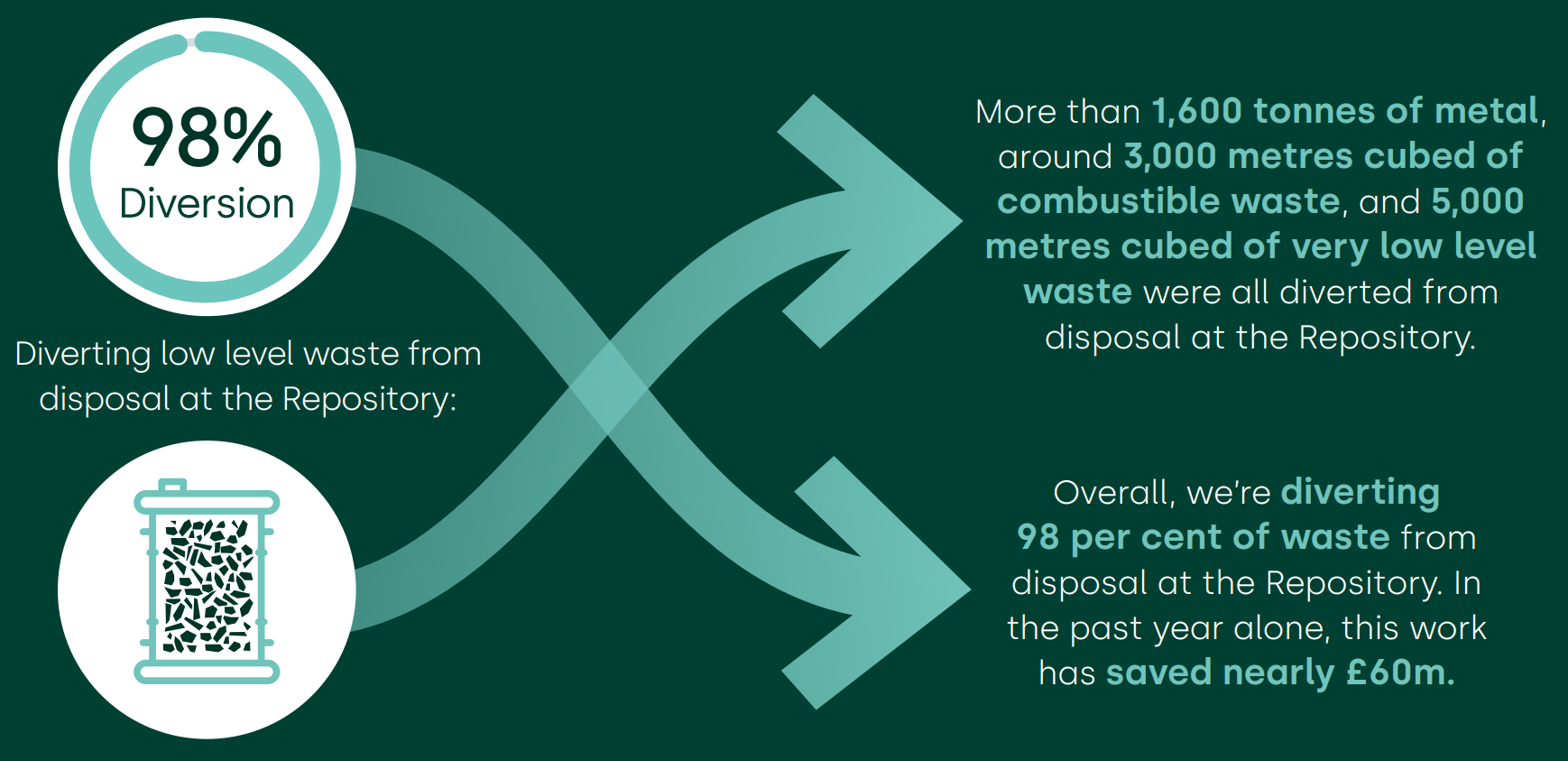
In practice, that means expanding the range of treatment routes used across the UK, so that suitable waste can be diverted away from disposal. By re‑using or recycling where possible, we now divert 98% of waste away from disposal at the Repository site. In the past year alone, this approach has saved nearly £60 million and more than £900 million over the past decade; money that can be redirected to hazard reduction and decommissioning priorities. Waste management is a lever that can accelerate clean‑up and reduce long‑term liabilities. When we avoid unnecessary disposal, we protect constrained national capacity, improve efficiency across the system and help ensure public money is spent once and spent well.
Advertisement
Going further
Building on our success in diverting lower activity waste from disposal, we are now exploring whether similar principles can be applied to some wastes currently in storage and destined for deep geological disposal in a GDF.
Through research and trials, we are examining whether innovative treatment methods could reduce the volume of certain lower activity wastes that would otherwise require disposal underground. These trials will inform decisions on the most sustainable techniques to apply in the future.
This work does not remove the need for a GDF. A GDF remains the safe, secure and long-term solution for the UK’s most hazardous radioactive waste. However, by reducing volumes where it is safe and appropriate to do so, we can maximise value and support delivery of the NDA mission.
Our work accelerates decommissioning while ensuring waste is managed in the most sustainable and cost-effective way possible.
Advertisement
Through collaboration with customers and the supply chain, and with a clear focus on innovation and delivery, we are making nuclear waste permanently safe, sooner.

















 Going further