

Crypto World
China’s tech firms feast on OpenClaw as companies race to deploy AI agents

A man wears a lobster hat that represent the OpenClaw logo, an open-source AI assistant at the Baidu headquarter in Beijing on March 11, 2026.
Adek Berry | Afp | Getty Images
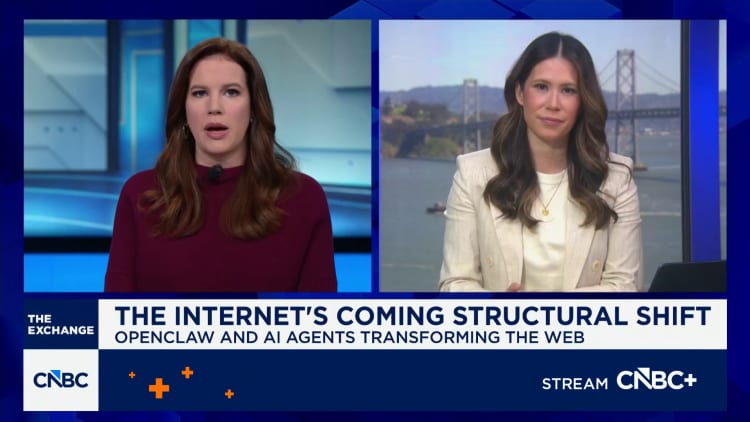
China is rapidly embracing the popular artificial intelligence tool OpenClaw, with major tech companies and even local governments rushing to expand access to the lobster-themed, open-source AI agent in recent weeks.
AI agents are digital assistants that can handle tasks such as sending emails, scheduling meetings and booking restaurant reservations with minimal human guidance. Unlike chatbots that simply respond to prompts, AI agents can take proactive actions, which often require broader access to data and systems and raise privacy and security concerns.
Chinese tech giant Tencent said Tuesday it had launched a full suite of easy-to-use AI products built on OpenClaw, which it dubbed “lobster special forces” and compatible with its popular superapp WeChat.
The same day, startup Zhipu AI launched its own local version of OpenClaw, offering an AI agent pre-installed with over 50 popular skills through “one-click installation.”
Similar moves by other Chinese companies have helped drive consumer interest, with usage of OpenClaw in China surpassing the U.S., according to American cybersecurity firm SecurityScorecard.
“In terms of adopting the new technologies, I think China definitely has a really large community that always wants to try what’s there, what’s new, and don’t want to be left behind,” said Jaylen He, CEO of Violoop, a Shenzhen-based startup building a device that claims to have similar features to OpenClaw but with lower security risks.
“I have friends who are not even in the tech industry … they are doing this, they are also running it,” he said.

As China’s economy continues to face headwinds, OpenClaw offers an opportunity that domestic tech companies, eager to attract paying users, are rushing to capture.
The nationwide OpenClaw craze has boosted the popularity of Chinese-developed large language models, said Winston Ma, adjunct professor at NYU School of Law.
Autonomous AI agents like OpenClaw are typically model-agnostic, which means they can be integrated with various large language models, such as OpenAI’s ChatGPT and Anthropic’s Claude.
According to OpenRouter, a startup offering developers access to AI models through a single interface, the top three tools used by OpenClaw users on its marketplace in the past month were all Chinese companies, with combined usage double that of the three most-used Google Gemini and Anthropic Claude models.
Chinese-made AI models released this year have increasingly narrowed the gap with their U.S. rivals, while offering AI capabilities at a fraction of the price.
That significantly lowers the bill for users running OpenClaw. First launched in November, the tool allows users to send requests through popular messaging apps such as Telegram and WhatsApp, enabling the AI agent to perform multiple tasks autonomously. The Austrian developer behind the tool, Peter Steinberger, joined OpenAI in mid-February.
Easing installation hurdles
While OpenClaw has surged in popularity in the tech world, experts have previously pointed out limitations to the AI agent’s mass adoption, including a complex installation process that’s challenging for nontechnical users.
Chinese technology companies are also trying to simplify installation for less technical users.
After an initial surge of interest last month, Chinese social media platforms have been flooded with posts about company-organized installation events. Some organizers have handed out red lobster plush toys, highlighting the project’s crustacean-themed branding.
Engineers (L) install and set OpenClaw, an open-source AI assistant for users at the Baidu headquarter in Beijing on March 11, 2026.
Adek Berry | Afp | Getty Images
TikTok owner ByteDance’s cloud unit Volcano Engine recently unveiled a version of OpenClaw called ‘ArkClaw,’ that can be used in a web browser, eliminating the need for complex local setup.
Meanwhile, some companies have even provided support to consumers in China who are looking to use OpenClaw with their tools.
Tencent held a free in-person OpenClaw setup session last week in the Chinese tech hub of Shenzhen, where it is headquartered, to help “hundreds” of people install the tool on TencentCloud.
JD.com on Tuesday launched a dedicated page where users can pay 399 yuan ($58) to get remote help from Lenovo’s information technology maintenance team, Baiying, to deploy the software. Meituan reportedly announced a similar partnership with Lenovo on Monday.
The growing interest in OpenClaw is changing how Chinese consumers pay for AI.
Engineers (front) install and set OpenClaw, an open-source AI assistant at the Baidu headquarter in Beijing on March 11, 2026.
Adek Berry | Afp | Getty Images
Violoop, which plans to launch its first device on Kickstarter in April at roughly $300 per unit and $30 a month for AI services, originally intended to focus on the U.S. and other overseas markets, CEO He said.
But now, the startup is focusing on a China launch instead.
“After 2026, after OpenClaw, I think we are seeing a significant rise, both in terms of [interest in] paying for good models and also that MiniMax and Kimi have released very capable models,” he said Wednesday. “I wouldn’t say that they can surpass maybe ChatGPT or Anthropic, but they are definitely approaching that and definitely are creating value for users. So this is a new change for us.”
The startup has already closed at least two rounds of initial funding this year, primarily to cover production costs.
Governments get involved
Despite official warnings published by China’s state media about OpenClaw’s security risks, several local governments have proposed incentives in the past week to encourage companies to develop applications using the AI tool.
Shenzhen’s Longgang district and Hefei’s high-tech development zone proposed equity financing support of up to 10 million yuan ($1.46 million), along with other direct subsidies aimed at “one-person companies” using OpenClaw. A district of Suzhou city said it would offer similar subsidies, along with 30 days of free office space, accommodation and meals.
The term “one-person company,” referring to one or a few individuals using AI to quickly build a business, has become increasingly popular in China, especially as Beijing this week wrapped up a meeting to formalize a five-year plan to spur domestic tech development.

Subscribe now
Increased Chinese participation in the OpenClaw craze is just adding to a global phenomenon. In a sign of its popularity, the AI agent project has gained more stars on the GitHub coding platform than Linux, a transformative open-source operating system that underpins modern computing.
“This is like the 2022 ChatGPT moment. This is like the 202[5] DeepSeek moment,” Violoop’s He said. “I think the craving, the desire, for a personal assistant that can really help the user, the desire has been there, and has been suppressed for a very long time.”
— CNBC’s Anniek Bao contributed to this report.
People queue to have their laptops install with OpenClaw, an open-source AI assistant at the Baidu headquarter in Beijing on March 11, 2026.
Adek Berry | Afp | Getty Images

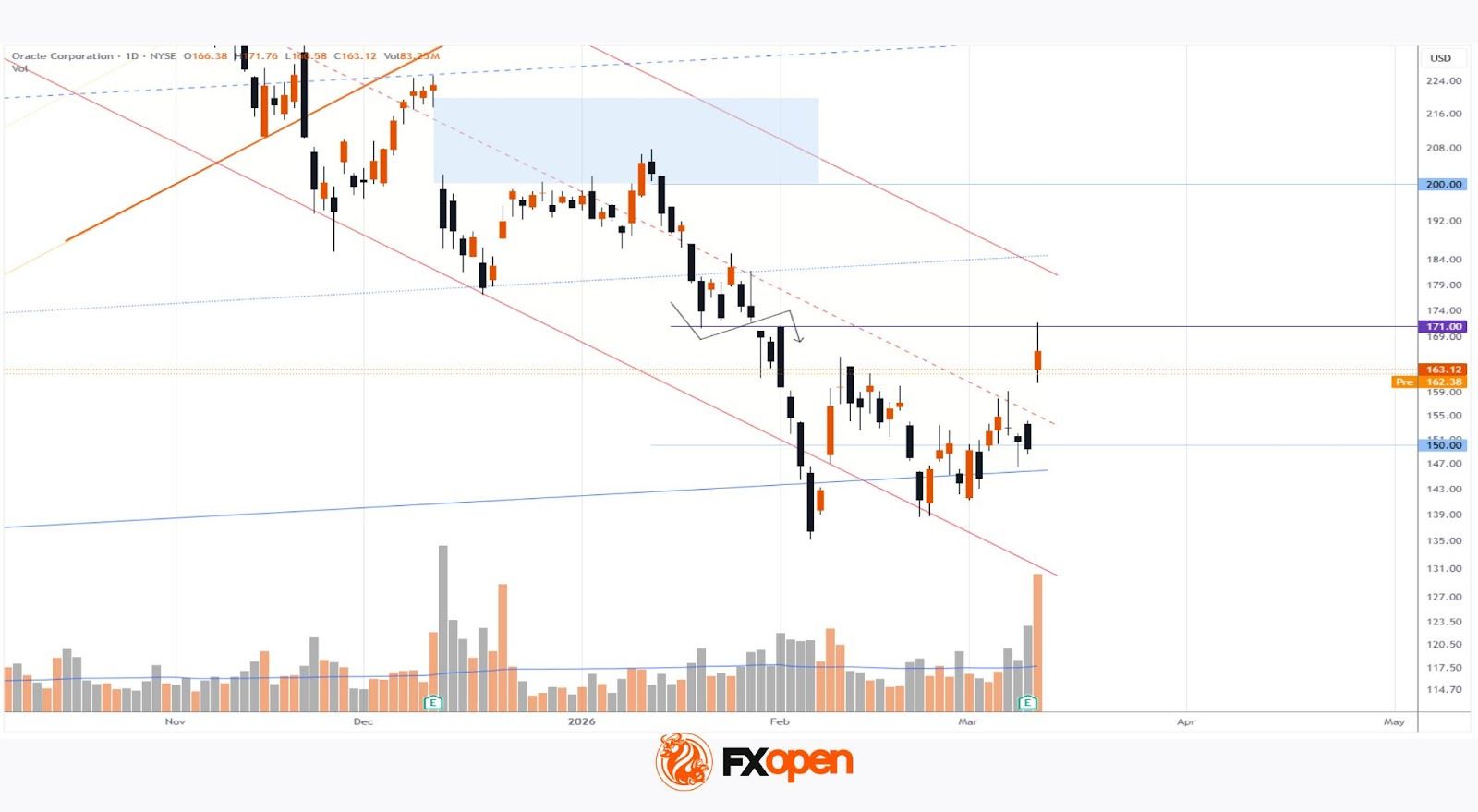
Following a strong earnings report, Oracle shares surged above $160, marking roughly a 1.5-month high:
→ Earnings per share: expected $1.70, actual $1.79;
→ Revenue: expected $16.7bn, actual $17.2bn.
This is the first quarter in 15 years in which both revenue and earnings rose by more than 20%. Additional optimism came from:
→ Cloud infrastructure revenue, which jumped 84% to $4.9bn;
→ Oracle confirming a five-year, $300bn deal with OpenAI (Project Stargate);
→ Total backlog (future revenue) surpassing $553bn.
These developments have the potential to significantly ease downward pressure on ORCL shares, which had been in a downtrend following a record high last autumn.
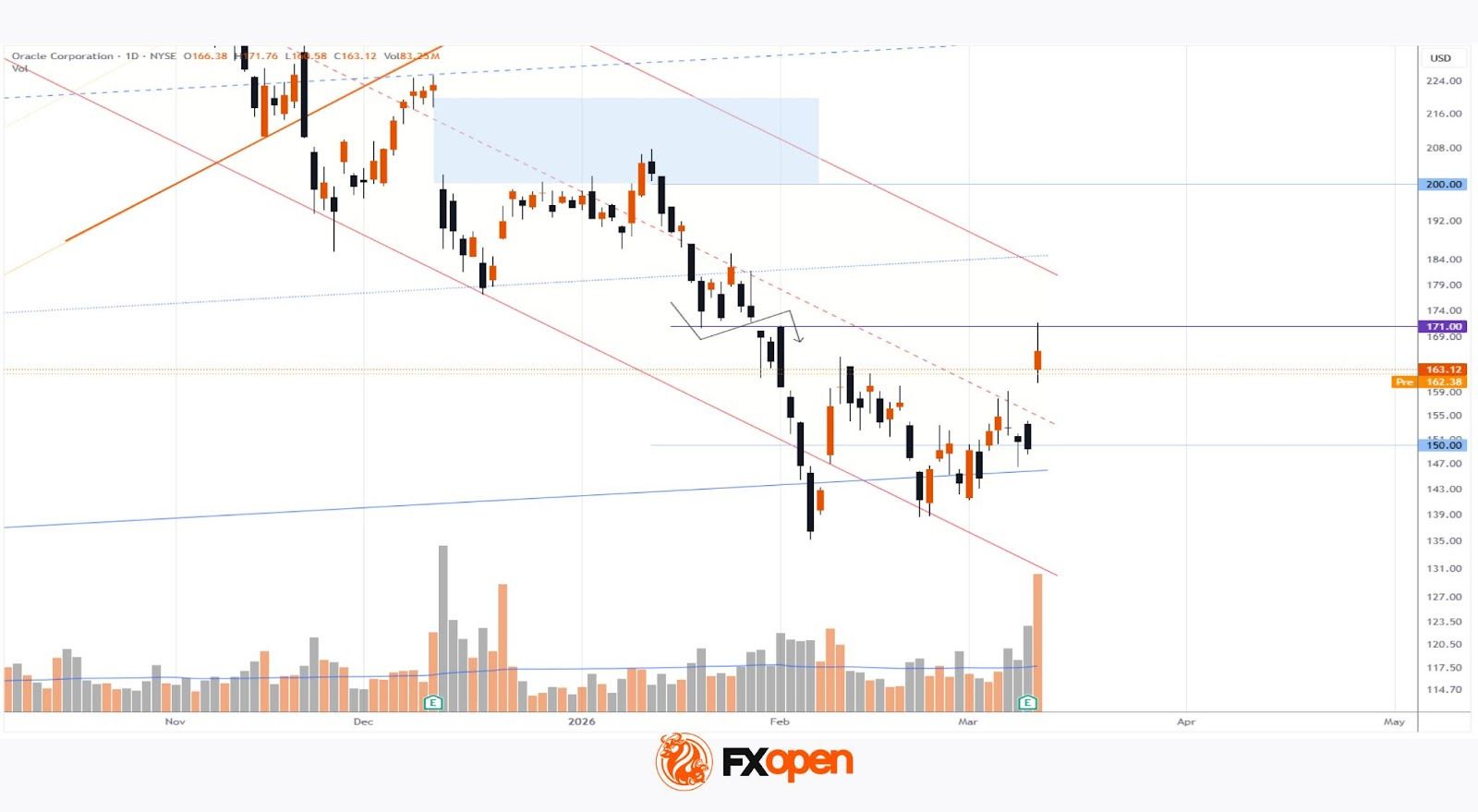
In our technical note of 5 February, the stock fell below $150, and we:
→ highlighted support levels that could halt further declines;
→ suggested that “smart money” might view prices below $150 as attractive.
That same day, ORCL shares formed a low from which they did not fall further.
Recent price action, including a bullish gap above $160, indicates that buyers are regaining control. However, they may need to exert substantial effort to confirm their strength, given that:
→ the $170 level, formerly support, now acts as resistance (indicated by an arrow);
→ the descending channel (shown in red) remains relevant.
Buy and sell stocks of the world’s biggest publicly-listed companies with CFDs on FXOpen’s trading platform. Open your FXOpen account now or learn more about trading share CFDs with FXOpen.
This article represents the opinion of the Companies operating under the FXOpen brand only. It is not to be construed as an offer, solicitation, or recommendation with respect to products and services provided by the Companies operating under the FXOpen brand, nor is it to be considered financial advice.
The global financial markets saw a notable shift as President Donald Trump declared the U.S. has effectively “won” the conflict with Iran, signaling a potential end to the 10-day military engagement known as Operation Epic Fury.
Summary
- The crypto market rebounded after President Donald Trump declared the U.S. had effectively “won” the conflict with Iran.
- Bitcoin surged over 5% to reclaim the $70,000 level as investors rotated back into risk assets.
- Analysts say a break above $72,500 could signal a broader crypto market rally if geopolitical tensions continue to cool.
The Geopolitical pivot: From “excursion” to victory
In a series of rapid-fire statements from Kentucky and Florida, President Trump characterized the war as a “short-term excursion” that achieved its primary objectives within the “first hour.” He claimed that roughly 80% of Iran’s missile launchers and much of its naval power have been neutralized.
For crypto markets, the rhetoric marks a critical transition.
While the President noted that forces would remain to ensure stability, the shift from active escalation to a “victory” narrative has triggered a classic “risk-on” rally.
Investors, who had previously fled to safe havens like gold and the U.S. Dollar, are now rotating back into high-growth assets as the threat of a prolonged energy chokepoint in the Strait of Hormuz appears to recede.
Crypto market rebounds “Peace Trade”
The crypto market acted as a primary barometer for this shifting sentiment. After sliding into the mid-$60,000 range earlier in the week due to war-induced panic, Bitcoin (BTC) staged a powerful recovery, jumping over 5% to reclaim the $70,000 psychological barrier.
Ethereum and major altcoins followed suit, with total crypto market capitalization rebounding to $2.45 trillion.
If the de-escalation holds, the “uncertainty overhang” that has suppressed prices since late February could vanish, potentially setting the stage for a run toward new all-time highs.
What the BTC chart says next
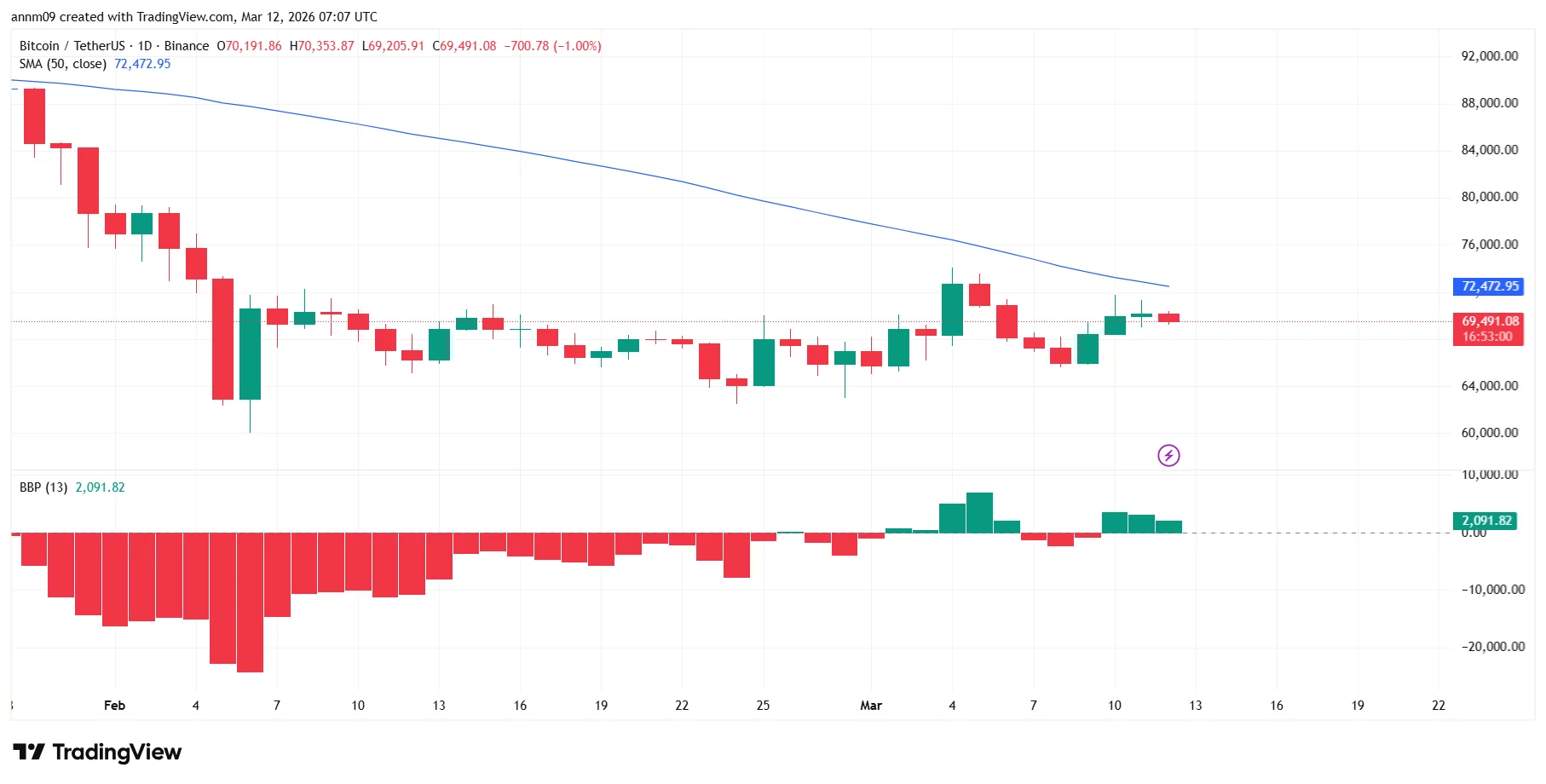
The BTC/USDT 1D chart highlights a significant technical tug-of-war. Despite the recent bounce, Bitcoin remains in a consolidation phase following its February peak.
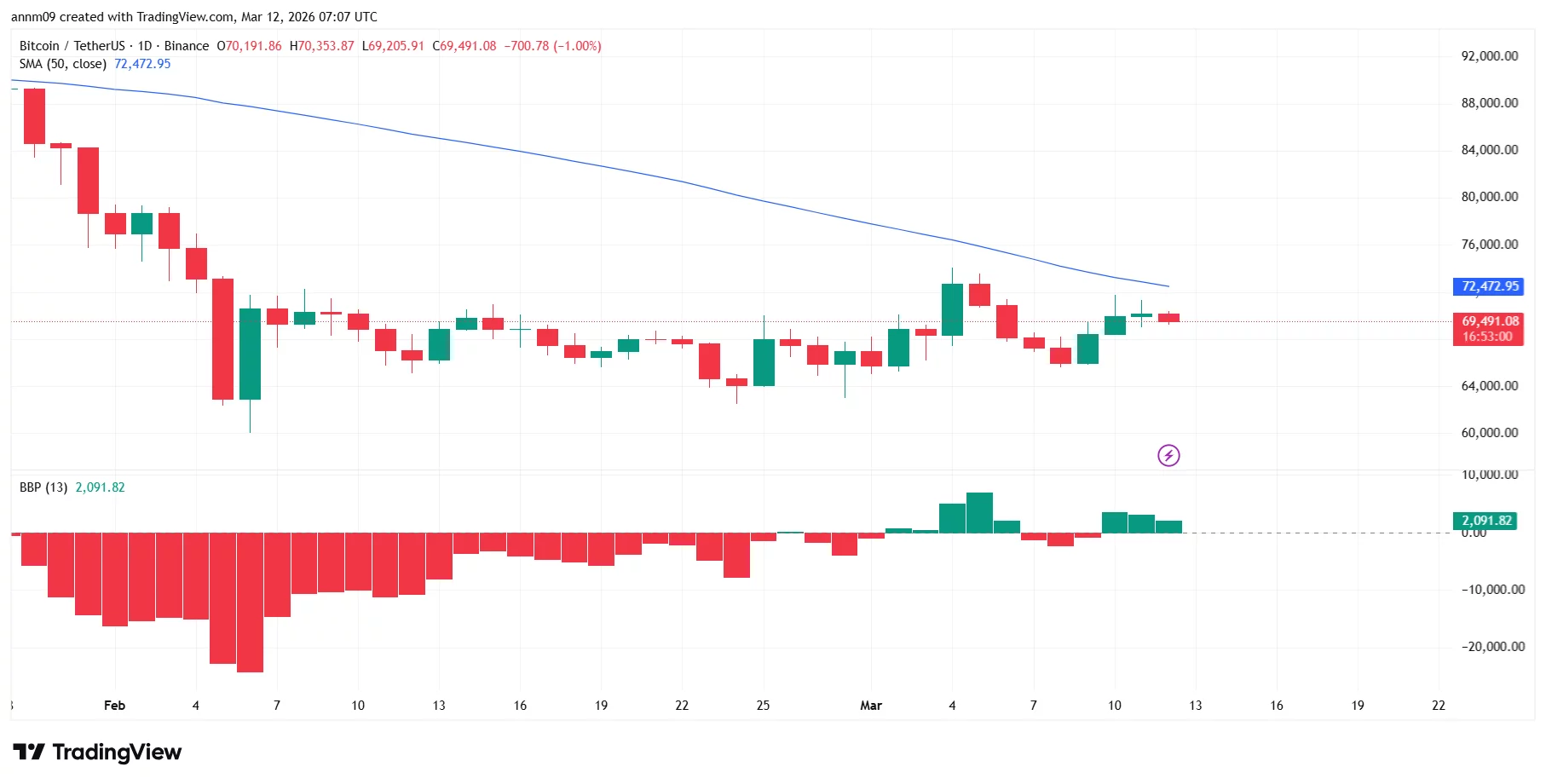
Immediate Resistance: The $72,500 level remains the “boss” of this range. A daily candle close above this mark, supported by high volume, would confirm a breakout.
Support Zones: The $67,500 to $68,000 zone has proven resilient. As long as BTC stays above this floor, the bullish structure remains intact.
The BBP Indicator: A close look at the BBP indicator at the bottom of the chart shows that the histogram has already flipped into green territory. This is a significant bullish signal, indicating that the “Bulls” have successfully overpowered the “Bears” for the time being.
While Trump’s declaration has provided the spark, the sustainability of this rally depends on whether the “victory” translates into a formal ceasefire and stabilized oil prices. If geopolitical tensions continue to cool, the “Trump Peace Trade” could be the catalyst that finally pushes Bitcoin into the elusive six-figure territory.
Analysis found that Bitcoin fell about 56% during midterm years on average, while moving closely with declines in US equities.
US midterm election cycles have historically been associated with increased volatility across financial markets, with the S&P 500 experiencing average peak-to-trough drawdowns of about 16%, according to a new report published by Binance Research.
It stated that midterm years have typically produced the weakest performance within the four-year US presidential cycle, as political uncertainty surrounding elections weighs on investor sentiment. In seven of the past ten midterm cycles, equity markets recorded corrections of more than 10% as political risk continued to influence market behavior.
Political Uncertainty Shakes Markets
Digital assets have shown a similar pattern during these periods. According to the analysis, Bitcoin has historically moved in close correlation with equities during midterm cycles. Since 2014, which the report considers the first meaningful cycle due to earlier liquidity limitations in crypto markets, BTC has recorded an average decline of about 56% during midterm election years across the three completed cycles.
Despite this historical weakness during such years, the research revealed that there is a consistent pattern of strong market performance once political uncertainty clears. Data cited in the report show that the 12 months following US midterm elections have produced positive returns for the S&P 500 in every instance since 1939. Over that period, the index has delivered an average gain of about 19% in the year following the vote.
Bitcoin has also recorded gains in all three post-midterm years on record, and the cryptocurrency delivered an average return of roughly 54% during those periods. The findings reveal that markets often recover once election outcomes become clear and investors gain greater visibility into the political and policy landscape.
The report frames the pattern as a recurring cycle in which election-year volatility is followed by a period of stronger performance for risk assets as uncertainty fades and capital returns to the market.
The analysis comes at a time when global markets are already facing major volatility driven by geopolitical tensions and macroeconomic concerns. Escalating developments in the Middle East, including disruptions linked to the Strait of Hormuz, have raised fears of supply shocks in global energy markets and contributed to sharp swings in oil prices.
You may also like:
Next Catalyst
At the same time, all eyes are on the upcoming US inflation indicators, including Consumer Price Index and Personal Consumption Expenditures data, which could influence expectations around future monetary policy decisions.
Binance Research said that the current market conditions are also shaped by elevated leverage among investors and negative gamma positioning among market makers in both equity and cryptocurrency markets. These factors can amplify price movements when markets react to geopolitical or macroeconomic developments.
While the near-term risks remain, periods of heightened political and macro uncertainty have often been followed by stronger performance once major sources of uncertainty are resolved.
Binance Free $600 (CryptoPotato Exclusive): Use this link to register a new account and receive $600 exclusive welcome offer on Binance (full details).
LIMITED OFFER for CryptoPotato readers at Bybit: Use this link to register and open a $500 FREE position on any coin!

Victims of a Chinese investment fraud are challenging a United Kingdom proposal to compensate them through a Chinese redress scheme, arguing the plan could leave British authorities holding much of the upside from roughly 61,000 Bitcoin seized in a money-laundering investigation.
According to the Financial Times, citing court documents, the dispute has moved into the UK High Court as groups representing victims seek to recover funds linked to the cryptocurrency seized by police in London. The Bitcoin (BTC) haul is now worth about 3.2 billion pounds ($4.3 billion) after rising sharply in value since the assets were confiscated.
Law firm Candey, which represents about 5,700 victims, said the proposed compensation arrangement may not guarantee fair restitution. The fraud scheme itself reportedly affected more than 128,000 investors in China, according to court documents cited by the FT.
The case highlights growing legal questions around crypto seizures, where digital assets can appreciate significantly between confiscation and restitution. The dispute stems from a Chinese investment fraud scheme that ran between 2014 and 2017 and defrauded investors before proceeds were converted into BTC and moved abroad.
Prosecutors say claims could exceed losses
Prosecutors reportedly argued that some of the legal claims could allow a subset of victims and litigation funders to recover sums exceeding their actual losses.
Martin Evans KC, representing the Director of Public Prosecutions, said in court submissions that the claims risk benefiting “a small subset of victims and their litigation funders” while excluding other victims and the Crown, according to the FT.
Related: UK elections: How crypto donation risks are dividing MPs
Candey defended the legal action, saying court proceedings give victims the best chance of securing proper compensation and noting that its legal fees are capped at 18% of any recovered funds.
A preliminary hearing is scheduled for July to determine whether English or Chinese law should govern the claims to the seized Bitcoin. The High Court has also set a May 22 deadline for claimants seeking recovery under Section 281.
Bitcoin seizure linked to London mansion purchase attempt
British authorities seized more than 61,000 BTC during a 2018 raid on a London property linked to Jian Wen, who was later convicted of money laundering, and Zhimin Qian, the mastermind of the scheme, who was sentenced by a UK court to over 11 years in prison in November 2025.
Wen attracted attention after attempting to buy a luxury London mansion using Bitcoin and failing to explain the origin of the funds.

In 2024, victims of the scheme sought assistance from Chinese authorities to recover the seized Bitcoin.
The seized Bitcoin has also drawn policy attention in Britain, with reports in 2025 that officials were exploring how and when such holdings could be sold.
Magazine: UK’s Orwellian AI murder prediction system, will AI take your job? AI Eye
Crypto World
BTC price looks resilient, but don’t ignore those $20,000 put options: Crypto Daybook Americas
By Omkar Godbole (All times ET unless indicated otherwise)
Ultra-bearish forecasts are getting no love from industry observers, and rightly so, with bitcoin holding resilient amid global market chaos. Yet options flows hint there may be merit to the bears’ dire warnings.
Bloomberg reiterated its prediction for the largest cryptocurrency to plunge to $10,000 — a level last seen in mid-2020. Industry observers dismissed it as silly.
Yet on Deribit, the biggest crypto options exchange, nearly $800 million in open interest is piled into the $20,000 put, a wager that the price will slide to below that level. It’s the fourth-most popular bearish bet on the platform.
It signals some traders are preparing for a meltdown. That said, not all are outright bets on a price crash, Deribit said.
“The majority of that positioning appears to be short puts rather than directional long hedges, said Sidrah Fariq, Deribit’s global head of retail sales. “Traders often sell very far OTM puts because the probability of hitting those levels is low.”
In the meantime, though, bitcoin is showing uncanny resilience, holding steady around $70,000 even as a renewed oil rally pushed crude benchmarks toward $100 early today and rattled traditional markets. Ether (ETH), XRP, and solana (SOL) are similarly firm, while Hyperliquid’s HYPE token steals the spotlight with gains of around 10% over 24 hours.
Analysts say excess leverage is flushing out of BTC, paving the way for upside.
“From a market structure perspective, this type of consolidation can be constructive because reducing leveraged positioning tends to create a more stable foundation for the next move once a clearer macro catalyst emerges,” Diana Pires, VP of sales at crypto platform sFOX, said in an email.
In traditional markets, oil volatility looks to be spilling over into bonds. The MOVE index, measuring the 30-day expected volatility in U.S. Treasury notes, which underpin global finance, has surged to 76 from under 60 in late February. This could lead to financial tightening worldwide, putting pressure on risk assets. Stay alert!
Read more: For analysis of today’s activity in altcoins and derivatives, see Crypto Markets Today
What to Watch
For a more comprehensive list of events this week, see CoinDesk’s “Crypto Week Ahead“.
- Crypto
- March 12: Polakdot’s economic upgrade to start rolling out, featuring a DOT supply cap, an emissions cut and unbonding reduction.
- March 12, 1 p.m.: MARA to host an X Spaces session with its CEO, CFO, and Chief Growth & Strategy Officer.
- March 12: BOB mainnet to undergo its Jovian hardfork.
- Macro
- March 12, 8:30 a.m.: U.S. initial jobless claims for week ending March 7 Est. 215K (Prev. 213K)
- March 12, 8:30 a.m.: U.S. balance of trade for January Est. -$66.6B (Prev. -$70.3B)
- March 12, 4:30 p.m.: Fed balance sheet for period ending March 11 (Prev. $6.63T)
- Earnings (Estimates based on FactSet data)
- March 12: Cango (CANG), post-market, -$0.34
Token Events
For a more comprehensive list of events this week, see CoinDesk’s “Crypto Week Ahead“.
- Governance votes & calls
- Arbitrum DAO is voting to establish an operational directive that automatically consolidates idle and surplus non-ARB funds from DAO initiatives directly into the Arbitrum Treasury Management Company (ATMC) portfolio. Voting ends March 12.
- Arbitrum DAO is voting to implement a delegated voting power (DVP) quorum model, update its constitution, and enable onchain proposal cancellation. Voting ends March 12.
- CoW DAO is voting on a swap affiliate program to reward affiliates who refer new retail traders and traders who reach qualifying volume milestones, with up to 500,000 USDC allocated over a six-month pilot. Voting ends March 12.
- World Liberty Financial DAO is voting to introduce a WLFI governance staking system requiring unlocked token holders to stake (minimum 180-day lock) to participate in governance. Voting ends March 12.
- Unlocks
- Token Launches
- March 12: ForU AI’s (FORU) token generation event occurs.
Conferences
For a more comprehensive list of events this week, see CoinDesk’s “Crypto Week Ahead“.
Market Movements
- BTC is up 0.12% from 4 p.m. ET Wednesday at $70,400.41. (24hrs: +1.11%)
- ETH is unchanged at $2,071.35 (24hrs: +2.21%)
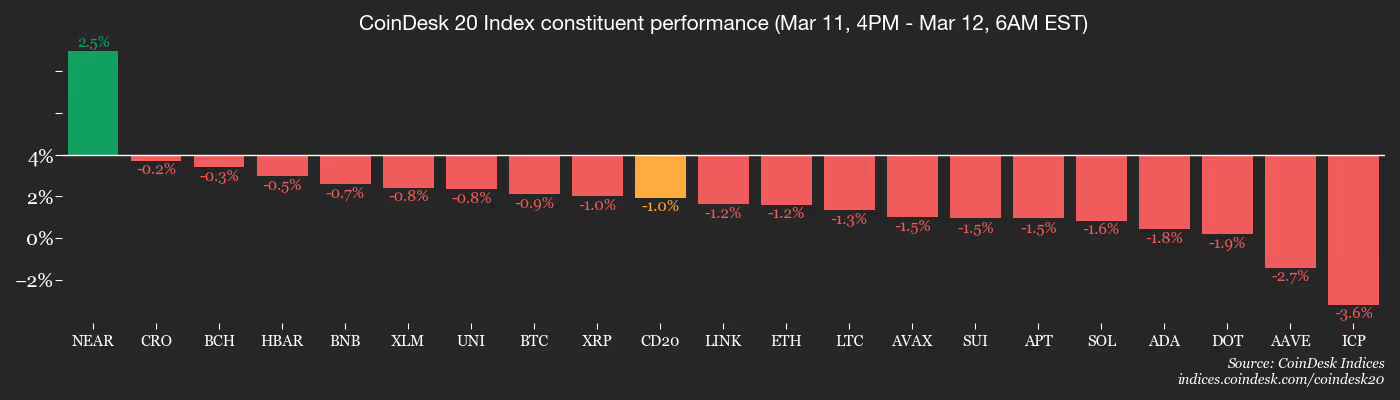
- CoinDesk 20 is down 0.4% at 2,008.02 (24hrs: +1.32%)
- Ether CESR Composite Staking Rate is down 1 bps at 2.79%
- BTC funding rate is at -0.0048% (-5.2188% annualized) on Binance

- DXY is unchanged at 99.36
- Gold futures are up 0.43% at $5,189.60
- Silver futures are up 2.38% at $87.09
- Nikkei 225 closed down 1.04% at 54,452.96
- Hang Seng closed down 0.70% at 25,716.76
- FTSE 100 is down 0.33% at 10,320.02
- Euro Stoxx 50 is down 0.43% at 5,769.83
- DJIA closed on Wednesday down 0.61% at 47,417.27
- S&P 500 closed unchanged at 6,775.80
- Nasdaq Composite closed unchanged at 22,716.13
- S&P/TSX Composite closed down 0.45% at 33,119.80
- S&P 40 Latin America closed unchanged at 7,501.64
- U.S. 10-Year Treasury rate is up 7 bps at 4.21%
- E-mini S&P 500 futures are down 0.38% at 6,753.75
- E-mini Nasdaq-100 futures are down 0.35% at 24,896.00
- E-mini Dow Jones Industrial Average futures are down 0.48% at 47,221.00
Bitcoin Stats
- BTC Dominance: 59.23% (-0.08%)
- Ether-bitcoin ratio: 0.02929 (0.2%)
- Hashrate (seven-day moving average): 1,020 EH/s
- Hashprice (spot): $30.46
- Total fees: 2.8 BTC / $196,480
- CME Futures Open Interest: 108,220 BTC
- BTC priced in gold: 13.5 oz.
- BTC vs gold market cap: 4.67%
Technical Analysis

- The chart shows XRP’s daily price swings in candlestick format with Bollinger bands, which are volatility bands placed two standard deviations above and below the 20-day average of price.
- The gap between Bollinger bands is now narrowest since early November 2024.
- The tighter the bands, the more explosive the eventual breakout. In other words, a big move (volatility) could be brewing in XRP.
Crypto Equities
- Coinbase Global (COIN): closed on Wednesday at $198.63 (+1.07%), –1.28% at $196.08 in pre-market
- Galaxy Digital (GLXY): closed at $21.46 (–1.69%), –0.75% at $21.30
- MARA Holdings (MARA): closed at $8.55 (–0.23%), –1.40% at $8.43
- Riot Platforms (RIOT): closed at $14.81 (+1.16%), –0.74% at $14.70
- Core Scientific (CORZ): closed at $16.54 (+6.99%), –1.45% at $16.30
- CleanSpark (CLSK): closed at $9.81 (+1.87%), –1.22% at $9.69
- Exodus Movement (EXOD): closed at $10.91 (–0.18%), +14.48% at $12.49
- CoinShares Bitcoin Mining ETF (WGMI): closed at $38.92 (+4.18%), –2.29% at $38.03
- Circle Internet Group (CRCL): closed at $112.81 (–4.47%), +0.30% at $113.15
- Bullish (BLSH): closed at $37.19 (+1.25%), –1.05% at $36.80
Crypto Treasury Companies
- Strategy (MSTR): closed at $138.33 (–0.09%), –0.56% at $137.55
- Strive Asset Management (ASST): closed at $9.23 (+2.78%)
- SharpLink (SBET): closed at $7.59 (+2.71%), –1.45% at $7.48
- Upexi (UPXI): closed at $1.03 (+9.46%), –1.94% at $1.01
- Lite Strategy (LITS): closed at $1.17 (+0.00%), –1.71% at $1.15
ETF Flows
Spot BTC ETFs
- Daily net flows: $115.2 million
- Cumulative net flows: $55.88 billion
- Total BTC holdings ~ 1.28 million
Spot ETH ETFs
- Daily net flows: $57 million
Cumulative net flows: $11.68 billion
Total ETH holdings ~ 5.65 million
Source: Farside Investors
While You Were Sleeping
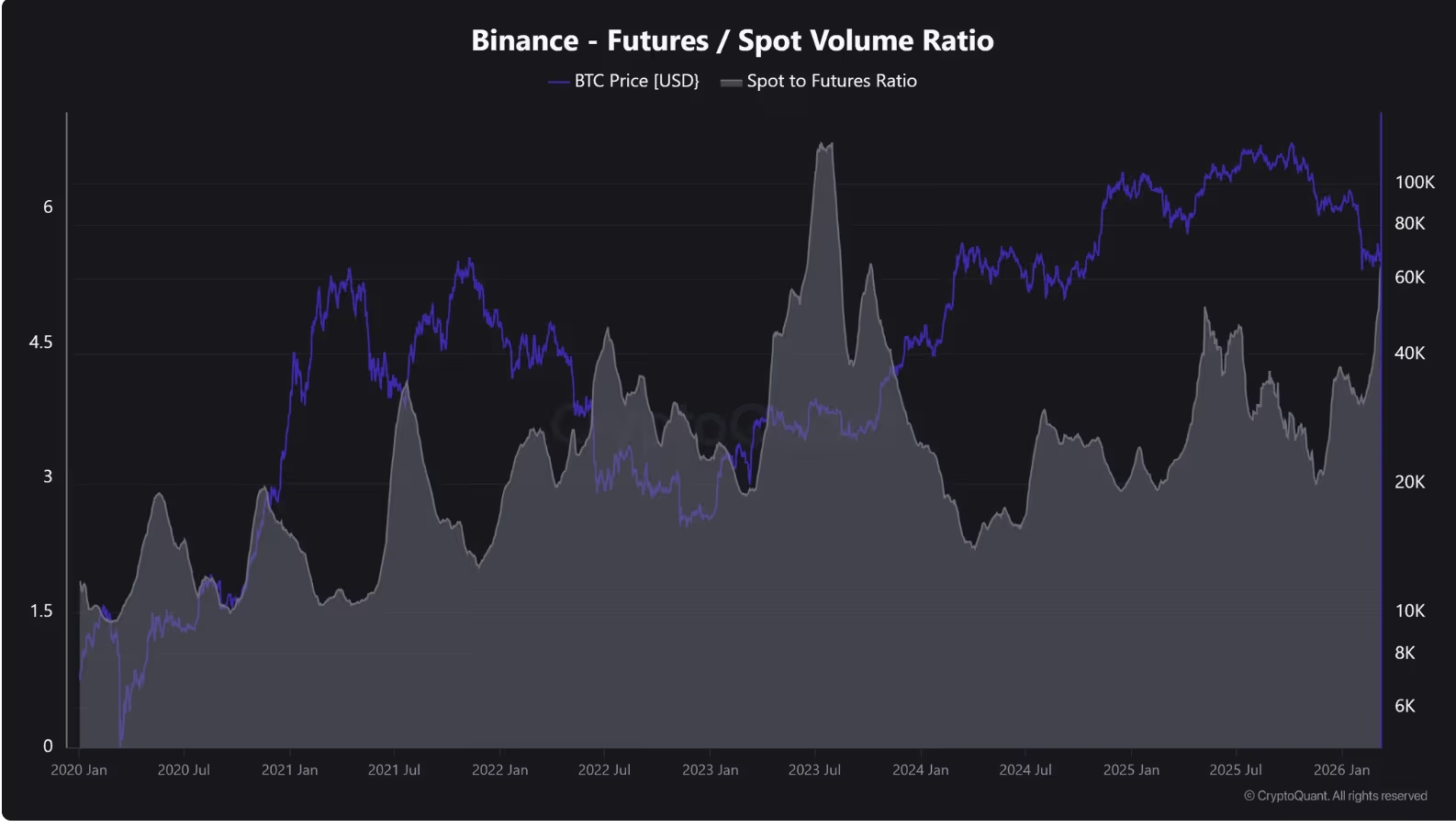
The derivatives market on leading digital assets exchange Binance is doing more than five times the business of spot, hinting at volatile market conditions.
The futures-to-spot volume ratio on the exchange has risen to approximately 5.1, its highest level since mid-2023, CryptoQuant data shows.
The ratio is an indicator of the type of market participants are trading in. When derivatives dominate at this scale, price discovery is increasingly driven by leveraged positioning rather than outright buying and selling. That doesn’t make the moves less real, but it does make them more reactive.
The result is a market that can see outsized volatility, often swinging wildly to end up exactly where it started, which is roughly what bitcoin has done for the past month.
Derivatives growth on Binance reflects broader industry maturation as more participants use perpetuals for hedging, basis trading, and directional exposure. But when the derivatives layer grows 20% while spot stays flat, the market’s sensitivity to liquidation events increases, which helps explain why recent moves have been large in size but short in duration.

The broader on-chain picture adds context. CryptoQuant data shows apparent demand remains negative at -30,800 BTC on a 30-day basis. Supply in loss is climbing toward levels that have historically preceded extended downturns rather than marking bottoms.
Data from earlier this month tracked by Santiment showed whales sold 66% of their war-week accumulation into the $74,000 rally while retail bought the dip below $70,000.
Bitcoin was trading at $69,400 on Thursday, down 0.7% over the past 24 hours and 4.3% on the week.
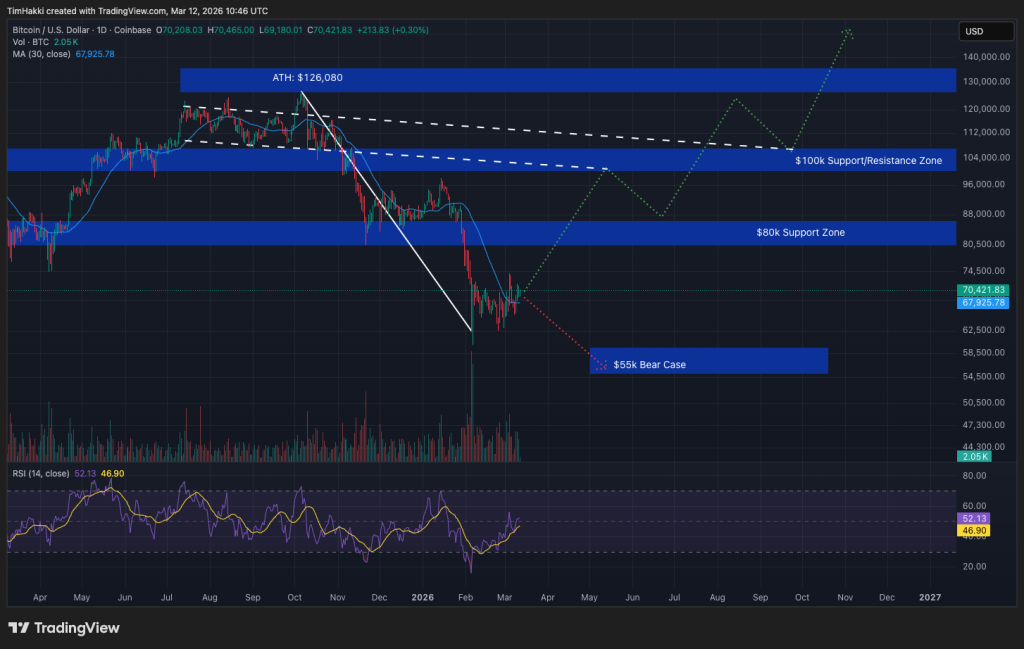
Bitcoin ($BTC) is banging against the $70,000 door, but the surging cost of oil in the macro environment just changed the locks.
With oil prices reaching dangerously close to $100 per barrel amidst escalating geopolitical tensions, the asset’s recovery rally is stalling out as risk assets feel the heat of renewed inflation fears.
While bulls are defending the lower bounds of the range, the path to a new all-time high has suddenly become steeper.
The correlation between energy markets and crypto risk appetite is tightening, creating a standoff between spot demand and macro anxiety. But one level keeps getting in the way.
Discover: The best pre-launch crypto sales
How Oil at $100 Is Changing the Risk Equation for Bitcoin
The mechanism choking the Bitcoin price recovery is straightforward but brutal. Rising crude oil prices feed directly into consumer costs, keeping inflation sticky.
When energy costs spiked this week, they effectively tied the hands of the Federal Reserve. Markets that were pricing in rate cuts are now forced to reconsider the FOMC stance for the upcoming March meeting, sending tremors through risk-on assets.
This macro friction is palpable across trading desks. As analysts noted regarding recent inflation reports, any sign of persistent CPI pressure gives the Fed license to keep rates higher for longer, a scenario that historically drains liquidity from crypto markets.
The fear isn’t just theoretical; it’s visible in the immediate “risk-off” rotation occurring in futures markets.
Traders are reacting in real-time. Recent data shows that Hyperliquid saw a jump in activity following an oil trading surge, highlighting how crypto natives are increasingly hedging their exposure to real-world commodities.
If oil breaches the psychological $100/bbl barrier, the resulting volatility could strip away the leverage needed to push BTC through overhead BTC resistance.
On-Chain Metrics Tell a Different Story
While macro economics paint a grim picture, on-chain data suggests a supply shock is silently building.
Long-term holder supply has ticked up to 14.58 million BTC, or approximately 73% of the circulating supply.
This indicates that while feeble hands are panic-selling the oil news, veterans are digging in.
More telling is the formation of a massive support cluster: about 8% of the circulating supply, or 1.558 million BTC, was acquired between $60,000 and $70,000, creating a concrete floor that makes a deep correction less likely than in previous cycles.
Institutional flows further complicate the bear case. Even as oil jitters rattled the S&P 500, Bitcoin has outperformed gold and stocks since the US/Iran war, signalling a potential decoupling where BTC is viewed as a distinct hedge rather than just a high-beta tech stock.
This aligns with Arthur Hayes’ strategy on net liquidity, suggesting that savvy capital is looking past the immediate volatility toward the inevitable monetary expansion that follows supply shocks.
The sell-side pressure is also thinning. Exchange reserves have hit multi-year lows, meaning there are fewer coins available for dumping if panic sets in. The weak hands have largely exited; what remains constitutes the conviction trade.
Discover: The very best meme coins
Bitcoin Price Prediction: Can BTC Break $71,600 With Oil This High?
The chart structure for Bitcoin is currently a battle of attrition within a tightening range. BTC is oscillating around the $70,000 psychological level, but the real line in the sand is slightly higher.
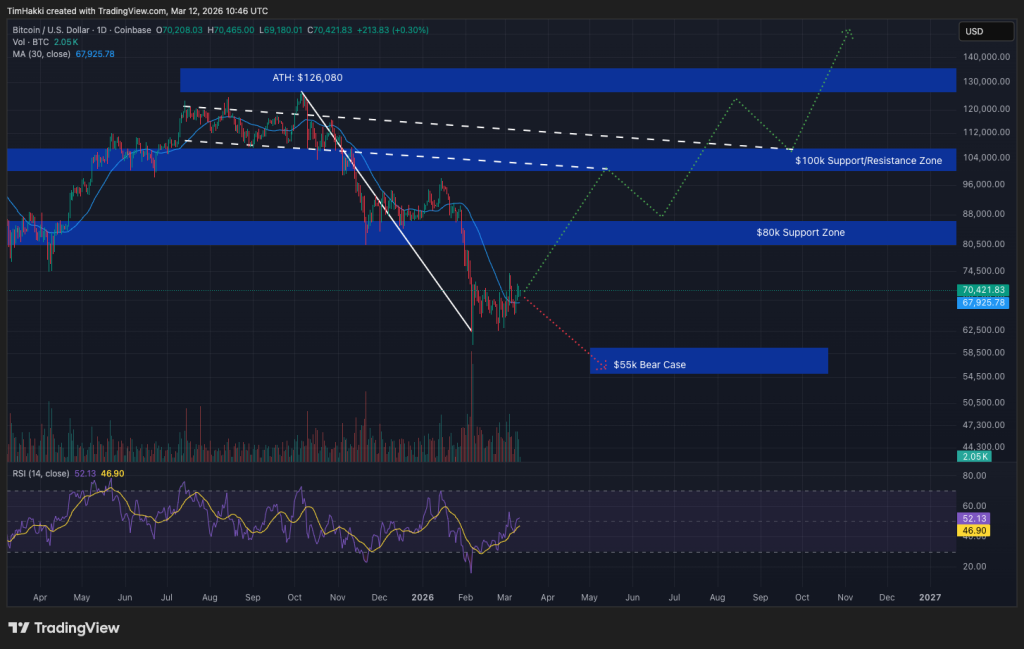
Bull Scenario: The key BTC resistance to watch is $71,600. If bulls can force a daily close above this level, it invalidates the short-term bearish divergence caused by the oil shock.
Bear Scenario: Conversely, if the macro headwinds prove too strong, failure to hold the $68,500 local support could be disastrous.
Losing this level would likely trigger a cascade of long liquidations, dragging the price down to $60,000 and seriously challenging the final local frontier for immediate support.
The post Oil Surges Near $100 Stalling Bitcoin Breakout appeared first on Cryptonews.
Market analysts say Bitcoin (BTC) is in a relief rally after its 17% recovery from multi-year lows below $60,000, but the $78,000 level is key to reversing the broader downtrend.
Key takeaways:
-
Bitcoin price is up 17% from sub-$60,000 lows as onchain data shows signs of returning demand.
-
BTC price resistance around $78,000 must be broken to end the downtrend.
Bitcoin buyers are returning
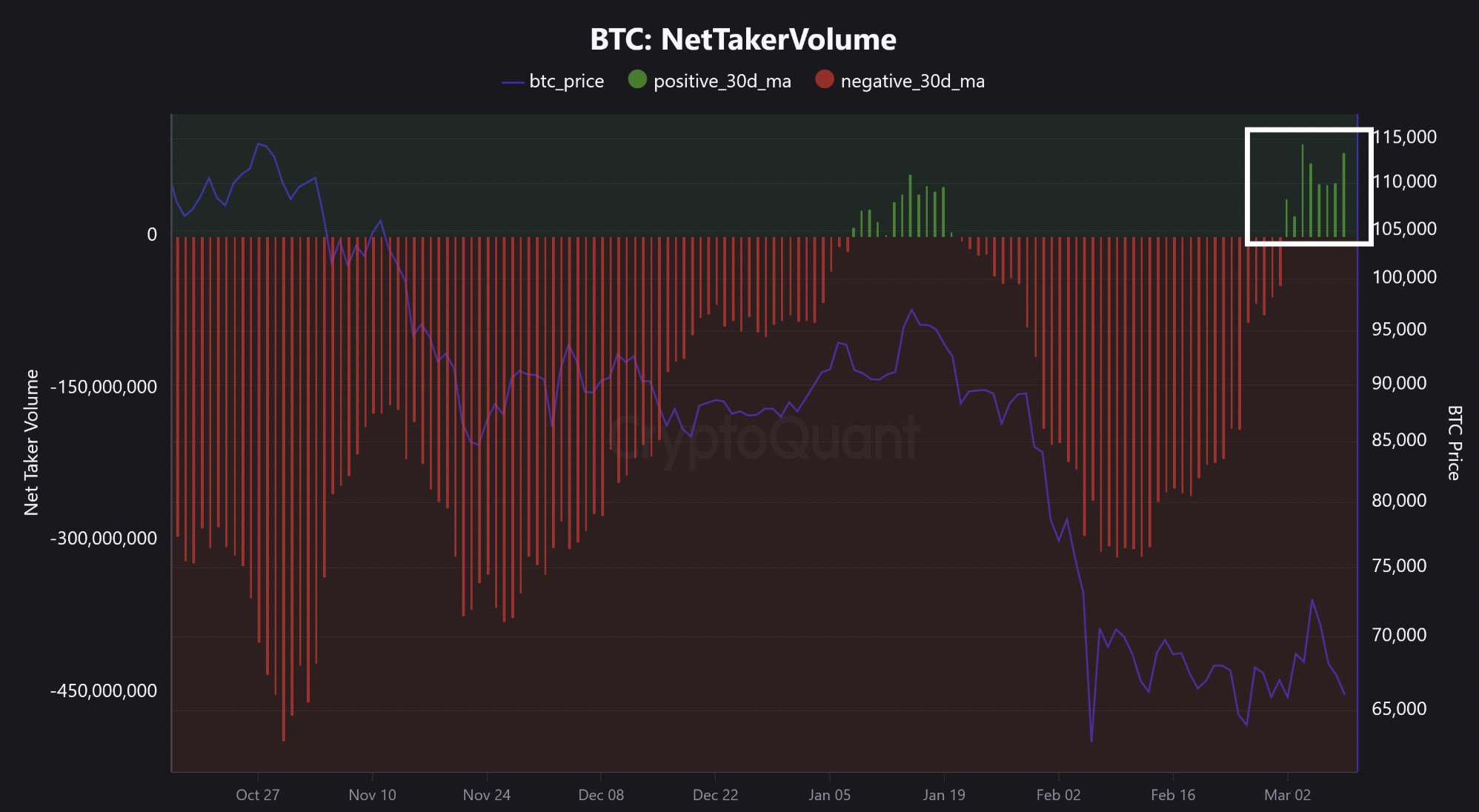
Bitcoin’s net taker volume suggests buyers are stepping in as demand for BTC derivatives returned, data from CryptoQuant shows.
Net taker volume, a metric that measures the imbalance between aggressive buyers and sellers in derivatives markets, has remained positive since the US and Israel-Iran war began.
Related: Three Bitcoin Binance charts reveal the setup behind the next big move
“Since the conflict broke out, net taker volume as measured by the 30-day moving average has been positive,” CEO at Coinbureau Nic Puckrin said in an X post on Wednesday.
This positive regime coincided with the recent BTC price recovery to $74,000, indicating that demand has returned across derivatives markets.
“This shows taker buy volume has outpaced sell volume,” Puckrin said, adding:
“Bitcoin buyers are in control.”

The bull score index, a metric that measures Bitcoin’s overall market health using a combination of fundamental and technical metrics, further reinforces this picture.
The metric has increased to 30 from 10 on March 6, the highest since late October 2025.
The bull score index phase has “switched from ‘extra bearish’ to ‘bearish,’” said CryptoQuant head of research Julio Moreno, adding:
“We are still in a bear market, but in a relief rally.”

Meanwhile, demand for spot Bitcoin exchange-traded funds (ETFs) continues, with these investment products recording three straight days of inflows, totalling $529.2 million.

BTC price must break $78,000 to end downtrend
Data from TradingView shows that Bitcoin has spent more than four weeks consolidating within a $62,000–$72,000 range, with multiple failed attempts to sustain a strong footing above $70,000.
Zooming out, the price remains sandwiched between the realized price (average acquisition cost of all circulating supply) at $54,400 and true market mean (the cost basis of actively transacted coins) at $78,000, Glassnode said in its latest Week On-chain newsletter, adding:
“In the absence of broader macro headwinds, this range could plausibly support a bear market relief rally capped by the true market mean.”

The chart above shows that the BTC price was within these two cost-basis levels for most of 2023, with relief rallies being repeatedly rejected at the true market mean. Ultimately, the price broke out in October 2023, with the announcement of US spot Bitcoin ETF approvals as the main catalyst.
Trader and analyst Titan of Crypto said a break above $78,000-$80,000 could signal a long-term trend change.

Yesterday, Cointelegraph reported that Bitcoin’s upside could be capped at $78,000, with derivatives traders pricing low odds for a BTC price breakout past this level in the near term.
In the meantime, Glassnode said repeated failures to hold above $70,000 “tilts the mid-term return distribution toward the downside,” with the realized price at $54,000 serving as the primary support level to watch.
Other areas of interest include the 200-week exponential moving average at $68,300, the $60,000-65,500 demand zone and the 200-week simple moving average at $58,800, which has historically provided the last line of defense in macro drawdowns.
This article does not contain investment advice or recommendations. Every investment and trading move involves risk, and readers should conduct their own research when making a decision. While we strive to provide accurate and timely information, Cointelegraph does not guarantee the accuracy, completeness, or reliability of any information in this article. This article may contain forward-looking statements that are subject to risks and uncertainties. Cointelegraph will not be liable for any loss or damage arising from your reliance on this information.
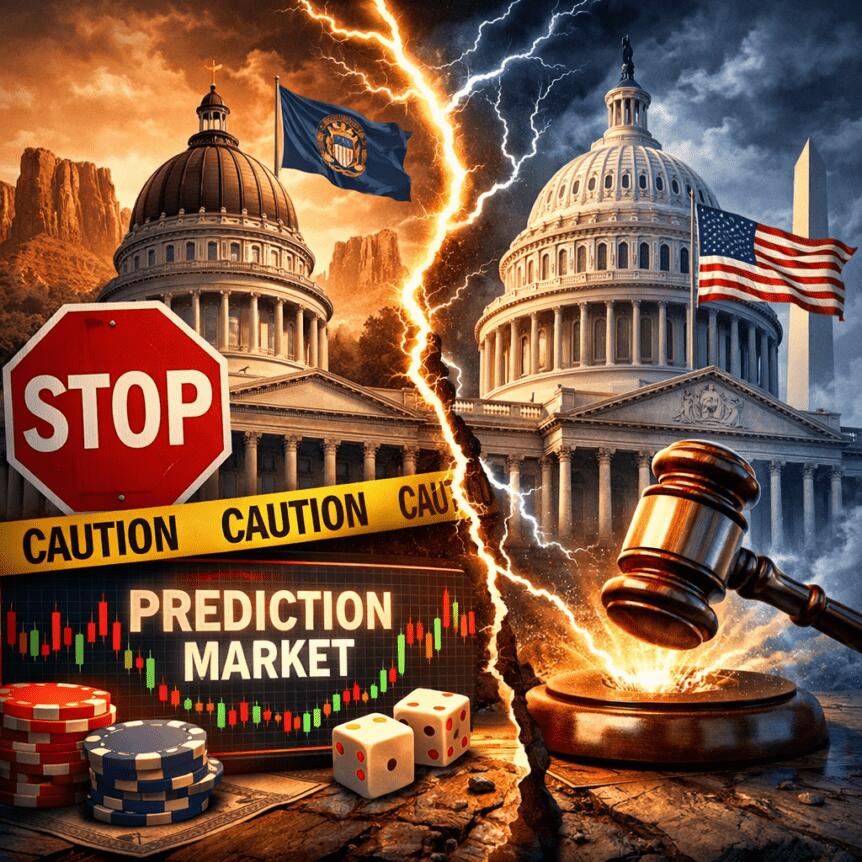
The state of Utah is moving to shut down prediction market platforms like Kalshi and Polymarket as part of a broader clash over how this evolving sector should be regulated. The legislative push, marked by HB243 (Gambling Revisions), would redefine “proposition betting” as gambling, aiming to bar platforms that host event-based bets—whether framed as prediction markets or sportsbooks—from operating in the state. The Utah House cleared the bill on February 10, followed by Senate approval on February 27, setting the stage for a gubernatorial signature. Governor Spencer Cox signaled his support, framing the move as a shield against what he described as risky, youth-targeting gaming products. The episode adds to a growing patchwork of state actions that intersect with federal authority over derivatives and fintech platforms.
Key takeaways
- Utah advances HB243, redefining proposition betting as gambling and barring platforms offering prediction-like services within the state.
- Kalshi has filed suit against Utah, contending its event contracts are federally regulated derivatives under the Commodity Exchange Act, not gambling.
- The Commodity Futures Trading Commission maintains that it has exclusive authority over prediction markets, framing them as potential conduits for information discovery, and indicating readiness to defend this stance in court.
- Similar clashes are unfolding in other states, including Iowa, and a series of federal court cases in Ohio have shaped the legal landscape around enforcement and jurisdiction.
- The regulatory tension highlights how crypto-adjacent markets—where prediction and derivatives intersect—could be affected by evolving governance and enforcement priorities.
Tickers mentioned:
Sentiment: Neutral
Market context: Regulatory scrutiny of prediction markets sits at the intersection of consumer protection, gambling law, and financial-market oversight, with federal authorities signaling a willingness to assert jurisdiction while states pursue their own legislative fixes.
Why it matters
Utah’s move crystallizes a broader narrative about how governments will treat platforms that blend prediction, gambling-style mechanics, and financial exposure. While proponents view prediction markets as tools for aggregating information—potentially offering more transparent signals than traditional polls—the regulatory approach in Utah treats these markets as gambling products subject to state-law restrictions. The dispute foregrounds a central question for the crypto and blockchain-adjacent economy: who should police event-based contracts that rely on real-money wagers and futures-style pricing? The CFTC’s stance that it retains exclusive federal oversight over such markets adds a layer of complexity for operators seeking a national framework that could preempt state bans or carveouts.
Kalshi’s legal strategy underscores the federal-versus-state tension at the heart of this debate. By insisting that its event contracts fall under federal derivatives regulation rather than gambling restrictions, the company is leveraging the Commodity Exchange Act to push back against Utah’s restrictions. That position aligns with prior CFTC positions that see these markets as subject to federal oversight, rather than states’ patchwork prohibitions. The unfolding cases, including Kalshi’s actions in Iowa and Ohio, illustrate how a chain of judicial decisions could shape not only the fate of prediction-market platforms but also broader efforts to innovate within the crypto and fintech ecosystems.
Beyond this particular dispute, observers are watching the implications for similar products—especially those that seek to tokenize or automate event-based bets with digital infrastructure. If courts uphold federal preemption for these contracts, it could unlock a more uniform regulatory path for platforms exploring cross-border and cross-state operations. Conversely, if states prevail, a mosaic of prohibitions could emerge, potentially dampening investment in related technologies and complicating compliance for operators seeking to scale. The debate is not just about Utah or Kalshi; it concerns the regulatory architecture that will govern the next wave of financial experimentation in the digital era.
In public remarks at a Florida industry conference, CFTC Chairman Michael Selig reminded attendees that the agency regards prediction markets as instruments with potential informational value, even calling them “truth machines” when priced and funded by participants who put real stake behind their views. He stressed that the CFTC would defend its authority in court if challenged, signaling that attempts to clamp down on such markets at the state level may be met with federal countermeasures. This framing dovetails with ongoing debates about how to regulate innovative financial products without stifling legitimate experimentation. The tone from Washington, D.C., and state capitals alike suggests a transitional period as policymakers weigh consumer protection, market integrity, and the demand for novel market signals.
What to watch next
- Governor Cox’s formal signature on HB243 and any subsequent regulatory guidance from Utah authorities.
- Federal court developments in Kalshi’s Utah and Iowa lawsuits, including any rulings on whether the CFTC’s authority can foreclose state bans.
- The Ohio federal court ruling on Kalshi’s attempt to block enforcement—whether it sets a precedent for other states’ actions against similar platforms.
- Additional state-level proposals targeting prediction markets or similar event-based contracts, and how courts interpret their scope vis-à-vis federal law.
- Responses from other market participants and lawmakers that could chart a broader regulatory framework for crypto-adjacent prediction markets.
Sources & verification
- Utah HB243 (Gambling Revisions) text and legislative history: https://le.utah.gov/~2026/bills/static/HB0243.html
- Associated Press report on Cox’s stance and the signing intent: https://apnews.com/article/utah-kalshi-polymarket-spencer-cox-mormon-gambling-c3fecd3e120b4d5be103bc9e1f4a5587
- Kalshi v. Utah: Kalshi’s lawsuit filing (Utah News Dispatch PDF): https://utahnewsdispatch.com/wp-content/uploads/2026/02/Kalshi_V_Utah.pdf
- Kalshi’s Iowa action (report reference): https://cointelegraph.com/news/kalshi-preemptively-sues-iowa-claiming-risk-of-enforcement-action
- Ohio court action on Kalshi’s sports-betting case: https://cointelegraph.com/news/kalshi-court-ohio-sports-betting-lawsuit
- CFTC Chair comments on prediction markets and enforcement stance: https://x.com/ChairmanSelig/status/2023744651216240966?s=20
- Related coverage on Kalshi’s Ohio case and broader regulatory actions: https://cointelegraph.com/news/kalshi-sued-khamenei-trade-carveout
Regulatory clash reshapes the landscape for prediction markets
Utah’s HB243 embodies a strategic attempt by a state to reframe the legal perimeter around prediction-based platforms, extending beyond traditional sports betting to what officials view as speculative markets that could attract vulnerable users. The bill would reclassify proposition betting—where wagers hinge on individual events within a game, rather than the final outcome—as gambling. In practical terms, that shift empowers Utah’s regulators to block operators from offering those services in the state, regardless of how the platforms label themselves. The legislature’s passage through both chambers, followed by the governor’s stated intent to sign, signals a strong intent to create a production-ready barrier against these services at the state level.
Kalshi’s legal response underscores a core proposition: federal law governs the structure and operation of event contracts. By contending that these are derivatives within the CFTC’s purview under the Commodity Exchange Act, Kalshi argues that Utah cannot selectively ban the contracts simply because they are framed as prediction markets. This argument hinges on questions of preemption and the reach of federal securities and commodities law into digital and financial-innovation spaces. The case mirrors a broader pattern in which states test the limits of their regulatory reach while federal agencies assert a uniform framework intended to maintain market integrity and protect participants.
As the federal regulator’s position gains resonance, Kalshi has pursued multi-front litigation. The company’s Utah suit targets the state’s enforcement actions, while an accompanying Iowa filing signals a broader strategy to secure a federal preemption shield. Meanwhile, a separate Ohio decision denying Kalshi’s bid to halt state enforcement actions demonstrates how courts are weighing the balance between state consumer protections and federal authority. Taken together, these movements sketch a regulatory arc: a fight over jurisdiction that could determine how prediction markets, crypto-linked or otherwise, can operate across the United States.
For market participants and observers, the outcome could influence investment, product development, and international competitiveness. If federal oversight becomes the default, operators may gain the ability to launch across multiple states with a consistent, preemptive framework. If, on the other hand, state restrictions proliferate, founders may face a fragmented landscape characterized by varying compliance costs and heightened legal risk. The CFTC’s characterization of prediction markets as “truth machines”—contingent on active participation and risk-bearing—adds a qualitative element to the regulatory debate: markets that are price-discovered and transparent can offer valuable signals, but only if designed and governed with appropriate safeguards.
What to watch next
- Fiscal and regulatory status of HB243 after gubernatorial action, including any rulemaking or enforcement guidelines from Utah’s gambling regulators.
- Upcoming court decisions in Kalshi’s Utah and Iowa cases that could clarify federal preemption in the context of state gambling prohibitions.
- Rulings in Ohio and other jurisdictions that could set precedent for how prediction-market operators navigate enforcement actions.
- Public statements from the CFTC and related federal agencies about the regulatory approach to crypto-adjacent prediction markets and their potential scope beyond traditional derivatives.
Crypto World
Intel (INTC) Stock Climbs 2.57% Following Panther Lake Announcement and Processor Launches

Key Takeaways
- Shares of Intel (INTC) climbed 2.57% to reach $47.98 on March 11, extending a three-session winning streak.
- The rally followed announcements regarding Panther Lake chip deployment and confirmation that Core Ultra 7 270K Plus and Core Ultra 5 250K Plus will ship on March 26.
- Industry sources indicate Intel is approaching “full capacity” as AI infrastructure requirements drive server processor demand.
- Wall Street maintains a “Reduce” consensus rating with a $45.74 average price target, though certain analysts have upgraded their outlook.
- Intel delivered stronger performance than NVIDIA, Broadcom, and Qualcomm during a session where broader indices declined.
Intel (INTC) finished Wednesday’s session at $47.98, posting a 2.57% advance while major benchmarks struggled. The S&P 500 dipped 0.08% and the Dow Jones Industrial Average declined 0.61%, highlighting Intel’s relative strength.
The chipmaker extended its winning streak to three trading days. Volume registered at 71.6 million shares, noticeably lighter than the 50-day average of 108.2 million, indicating the advance occurred without heavy participation from new market entrants.
Shares peaked at $48.83 during intraday trading before settling at the $47.98 close. The stock’s 52-week peak of $54.60 was established on January 22.
The upward movement partially stemmed from developments surrounding Intel’s Panther Lake processor roadmap. Chief Executive Lip-Bu Tan disclosed that external foundry clients are actively participating as the company advances its manufacturing-as-a-service initiative.
The company also verified shipping dates for its Core Ultra 7 270K Plus and Core Ultra 5 250K Plus processors, scheduled for March 26 availability. Suggested pricing is positioned at $299 and $199 respectively.
Earlier this week, the Arrow Lake Refresh unveiling and Core Series 2/Core Ultra product family introduction had already sparked investor enthusiasm. Market reactions included double-digit intraday price movements, demonstrating heightened attention to Intel’s processor portfolio.
Artificial Intelligence Infrastructure and Manufacturing Capacity
Industry reports indicate Intel is operating at approximately “full capacity” as artificial intelligence infrastructure customers increase server chip procurement. Limited supply availability in this segment can strengthen pricing dynamics for manufacturers capable of meeting delivery commitments.
Acer recently unveiled new TravelMate Copilot+ notebook computers powered by Intel Core Ultra Series 3 processors, demonstrating original equipment manufacturer adoption of Intel’s newest mobile AI silicon. Additionally, Intel and Infosys broadened a strategic artificial intelligence infrastructure collaboration, potentially channeling additional enterprise computing workloads to Intel-based systems.
Intel disclosed fourth quarter results on January 22, delivering earnings per share of $0.15, surpassing the $0.08 consensus forecast. Revenue totaled $13.67 billion, exceeding the $13.37 billion analyst projection, despite representing a 4.2% year-over-year decline.
The company’s first quarter 2026 EPS guidance stands at $0.00, while Wall Street analysts project an average of -$0.11 EPS for the complete fiscal year.
Wall Street Perspective
Analyst opinion remains divided. Tigress Financial maintains a “buy” recommendation with a $66 price objective. UBS projects a $51 target. Northland Securities established a $54 forecast. Conversely, Rosenblatt carries a “sell” rating with a $30 target, while Citi has highlighted macroeconomic and competitive headwinds.
In aggregate, 5 analysts recommend buying INTC, 26 suggest holding, and 6 advise selling. The overall consensus stands at “Reduce” with a mean price target of $45.74 — trailing Wednesday’s closing level.
Intel ranks among the most heavily shorted Dow components, introducing additional volatility dynamics to the current uptrend.
Regarding insider activity, Executive Vice President David Zinsner acquired 5,882 shares at $42.50 in late January. Executive Vice President April Miller divested 20,000 shares at $49.05 in early February.
Intel’s 50-day moving average stands at $45.84. The 200-day moving average is positioned at $38.55. Institutional ownership represents 64.53% of outstanding shares.


Legal team representing Chloe Mitchell murder accused withdraws from the case

Deutsche Post Has Been Solid, But Out For Now (Rating Downgrade)

Oracle (ORCL) Shares Jump Above $160


-
Business6 days ago
Form 8K Entergy Mississippi LLC For: 6 March
-

 News Videos3 days ago
10th Algebra | Financial Planning | Question Bank Solution | Board Exam 2026
-

 Fashion6 days ago
Weekend Open Thread: Ann Taylor
-

 Crypto World3 days ago
Paradigm, a16z, Winklevoss Capital, Balaji Srinivasan among investors in ZODL
-
 Tech1 day ago
A 1,300-Pound NASA Spacecraft To Re-Enter Earth’s Atmosphere
-
 Sports7 days ago
499 runs and 34 sixes later, India beat England to enter T20 World Cup final | Cricket News
-

 Politics6 days ago
Top Mamdani aide takes progressive project to the UK
-

 Business2 days ago
ExxonMobil seeks to move corporate registration from New Jersey to Texas
-

 Sports4 days ago
Braveheart Lakshya downs Lai in epic battle to enter All England Open final | Other Sports News
-

 Sports5 days ago
Three share 2-shot lead entering final round in Hong Kong
-

 Tech2 days ago
ChatGPT will now generate interactive visuals to help you with math and science concepts
-

 NewsBeat18 hours ago
Residents reaction as Shildon murder probe enters second day
-

 NewsBeat7 days ago
Piccadilly Circus just unveiled ‘London’s newest tourist attraction’ and it only costs 80p to enter
-

 Entertainment5 days ago
Hailey Bieber Poses For Sexy Selfies In New Luscious Lip Thirst Traps
-

 Business4 days ago
Search for Nancy Guthrie Enters 37th Day as FBI Probes Wi-Fi Jammer Theory
-

 Business1 day ago
Search Enters Sixth Week With New Leads in Tucson Abduction Case
-
 NewsBeat2 days ago
Pagazzi Lighting enters administration as 70 jobs lost and 11 stores close across Scotland
-

 Tech3 days ago
Despite challenges, Ireland sixth in EU for board gender diversity
-

 Business3 days ago
Search Enters 39th Day with FBI Tip Line Developments and No Major Breakthroughs
-

 NewsBeat22 hours ago
I Entered The Manosphere. Nothing Could Prepare Me For What I Found.