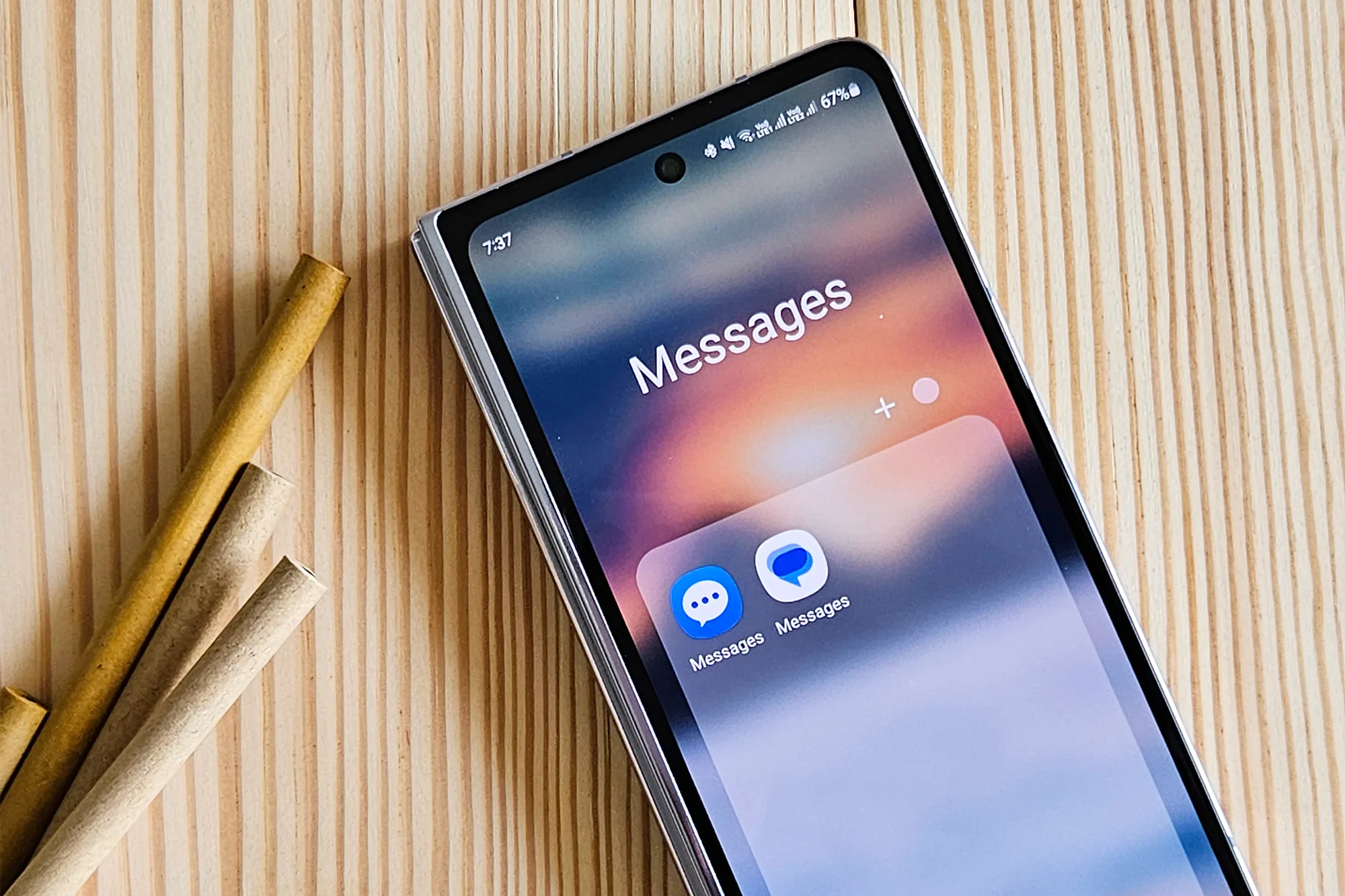
In 2022, Google first announced its Google Play Games on PC project, which allows Android users to play their favorite games on Windows PC. Since then, Google has released several updates to improve its service, with Google Play Games for PC officially exiting beta on September 23, 2025.
It’s one of the few Google projects that hasn’t been left to wither away, and now, Google Play is rolling out a handful of useful changes that could genuinely improve how you discover, buy, and play games, whether you’re on your phone or PC.
The timing seems intentional. Google made these announcements at GDC (Game Developers Conference), where Microsoft also announced Xbox mode, which allows players to get a console-like gaming experience on Windows 11 devices.
This year’s focus appears to be on improving the cross-device and cross-platform gaming experience.
Advertisement
Can we finally try games before paying for them?
My favorite part of the new announcements has to be how you pay for games. If you’ve ever felt burned by buying a game on your phone and then having to buy it again on PC, Google has got you covered. A new “Buy once, play anywhere” pricing model means that a single purchase on Google Play gives you access to both the mobile and PC versions.
Google
For those still on the fence about buying a paid game, Google is also introducing Game Trials, which let you jump into the full version of a paid game for free. If you like it, you buy it, and your progress carries over seamlessly.
What other improvements can you expect as a gamer?
Google is introducing a new PC section designed to improve the discoverability of games optimized for PC gaming. At the same time, it’s expanding the library with more paid titles and highlighting some of the most anticipated indie games.
Google
Beyond that, Google is doubling down on Play Games Sidekick, an in-game overlay that gives you AI-generated tips without forcing you to quit and search the web. Google is also making it easier to get tips from real players. Community Posts is now live in English for dozens of popular games, providing you with a dedicated space to ask questions and share tips with other players.
These updates don’t reinvent gaming, but they address real frustrations in ways that matter to gamers.
Wealthy Californian luxury car owners looking to avoid taxes have taken advantage of a loophole that allows them to register their cars in other states, with Montana being a particularly popular place to seek registrations. In response, Californian authorities are launching a new crackdown on the loophole. The state’s Department of Tax and Fee Administration has announced that it is examining every sale made by a Californian dealership that resulted in a car being given Montana plates since 2023, both to LLCs and to private customers.
In a statement, the DMV director Steve Gordon said he would “encourage all Californians to do the right thing,” and CDTFA director Trista Gonzalez noted that the state relies on sales tax “to support our schools, roads, public safety, and essential services that all Californians depend on.” So far, the DMV has opened 81 criminal investigations into the practice, including a recent felony complaint against 14 defendants. That complaint included 57 counts, including perjury, filing false sales tax returns, and conspiracy to commit sales tax evasion.
As well as luxury cars, RVs have reportedly been purchased using the “Montana loophole.” The loophole involves buyers setting up LLCs in Montana, allowing them to title the car within the state. They then falsely claim that the car is being shipped from California to Montana, which does not have a statewide sales tax. According to the CDTFA, this practice currently means that California loses out on around $10 million in sales tax revenue every year.
Advertisement
Beverly Hills dealers are particularly fond of the Montana loophole
Artas/Getty Images
Dealers in certain parts of California have exploited the loophole particularly frequently, with the CDTFA reporting that Beverly Hills saw the highest number of new car registrations with Montana purchasers. Costa Mesa wasn’t far behind, while Van Nuys also saw a particularly high number of Montana registrations.
Montana isn’t the only state that shady dealers have allegedly used to swerve taxes either: Oregon, Delaware, New Hampshire, and Alaska have also reportedly been used for similar avoidance schemes, since they’re also among the cheapest places to register new cars. Investigators have said that they are also looking to recover unpaid taxes from buyers fraudulently registering their cars in these states.
Advertisement
While driving around California in a car with a Montana registration isn’t going to make you a police magnet, any Californian residents who recently bought a new car with Montana license plates should be concerned about the latest enforcement initiative. Owners caught evading taxes can be hit with significant fines, while dealers using the loophole can expect more lawsuits to be filed in the near future.
Research out of Cornell Tech, published this week in Science Advances, found that AI-powered autocomplete suggestions don’t just change how you write — they nudge how you actually think. And you won’t even notice it happening.
Tushar Mehta / Digital Trends
What did the research actually find?
Researchers ran two large-scale experiments with over 2,500 participants, asking them to write short essays on spicy societal topics — think death penalty, fracking, GMOs, voting rights for felons.
Some participants got autocomplete suggestions secretly engineered to lean a certain direction, generated using a large language model from the GPT-3 and GPT-4 families. Others got nothing.
The result? People who wrote with the biased AI gradually warmed up to the AI’s positions. Not because they were convinced by arguments. Not because they read anything persuasive. Just because their phone kept finishing their thoughts for them.
Advertisement
Tushar Mehta / Digital Trends
Knowing the trick didn’t break the spell either
Now here’s the part that should make you put your phone down for a second. Researchers told some participants upfront the AI had a bias problem — a sort of “don’t say we didn’t warn you” disclaimer. Then they tried debriefing others afterward. In most misinformation studies, these approaches work like mental vaccines. This time, neither did a thing.
So next time your phone suggests you “totally support” something, maybe give that little blue word a second look. Your opinion might be one tap away from becoming someone else’s.
Emotiva’s new BasX TA2+ stereo receiver arrives at an interesting moment for two channel audio. While traditional receivers have lost some of their momentum with consumers in the age of network amplifiers and streaming focused systems, there is still a clear demand for a single component that can anchor a living room setup and handle both music and television duties without complexity.
For listeners who want solid amplification, modern connectivity, and straightforward usability in one box, the receiver still makes sense. The BasX TA2+ is Emotiva’s latest attempt to deliver that balance.
Tennessee-based Emotiva has built its reputation since 2003 by focusing on performance, solid engineering, and long term reliability rather than boutique pricing or cosmetic excess. The company’s track record has been consistent: deliver real world sound quality and robust build at prices that remain accessible to serious listeners.
Emotiva’s first product entry for 2026 was the Differential Reference Design Series Stack, a four component system that includes a streamer, DAC, stereo preamp, and power amplifier designed to work together as a single ecosystem. The BasX TA2+ now follows as the company’s second product launch of the year, offering a more traditional but still modern solution for two channel systems.
Advertisement
Inside the Emotiva BasX TA2+: A Modern Stereo Receiver for Music and TV
As Emotiva describes it, the BasX TA2+ combines a preamp, DAC, FM tuner, and integrated amplifier into a single chassis. In simple terms, it’s a two channel stereo receiver on steroids.
The BasX TA2+ is aimed at listeners who want a flexible centerpiece for a high performance two channel or 2.1 system that can handle both music listening and TV duties without the need for multiple components.
It replaces the now discontinued BasX TA2 and is designed to serve as the heart of a modern stereo system. The TA2+ incorporates an analog preamp stage with outputs for external amplification if desired, an Analog Devices AD1955 DAC supporting up to 24-bit/192 kHz audio, and a high current Class A/B amplifier section. Expanded input connectivity rounds out the package, giving users the flexibility to connect multiple sources while delivering the kind of sonic performance normally associated with far more expensive integrated amplifiers.
Add a source and a capable pair of speakers such as Emotiva’s LB12 floorstanders with their vintage inspired swagger, and the BasX TA2+ becomes a straightforward path to a powerful and versatile stereo system.
What’s New?
The new generation BasX TA2+ builds on the flexibility of the original TA2 but adds several key upgrades aimed at modern systems:
Advertisement
Balanced XLR analog inputs and outputs
Balanced subwoofer output
HDMI ARC for easier integration with TVs and improved audio performance
USB C connectivity for current computers and many portable devices
Improved analog bass management for more precise 2.1 system integration
Quieter phono stage
Metal remote control
Compatibility carried over from the previous TA2 includes three pairs of unbalanced RCA stereo analog line level inputs (the original TA2 offered four), along with one pair of stereo phono inputs that can be switched between moving coil and moving magnet cartridges.
Digital connectivity also continues from the TA2, including one coaxial S/PDIF input, two optical Toslink inputs, built-in Bluetooth, and an FM radio tuner.
Advertisement. Scroll to continue reading.
“The BasX TA2+ is the heart and soul of a high performance stereo system,” said Dan Laufman, President of Emotiva. “We designed it to be a simple, robust solution for anyone ready to improve their listening experience with the utmost flexibility, no matter what sources are connected. Typical of Emotiva, we accomplished this at a price that is a fraction of similar, significantly more expensive models.”
1 set – Home Theater Bypass inputs (front main channels plus subwoofer).
1 Tuner – FM (with external antenna input; 15 station presets).
Digital Inputs
1 – Digital coax (S/PDIF); stereo; 24-bit/192kHz
2 – Digital optical (Toslink); stereo; 24-bit/192kHz
Advertisement
1 – Digital USB (DAC input); stereo; 24-bit/192kHz
1 – Bluetooth receiver; Bluetooth 5, AptX, and AAC (antenna included).
1 – HDMI-ARC input; stereo (PCM 2.0)
1 – Digital coax (S/PDIF); 24-bit/192kHz
Advertisement
2 – Digital optical (Toslink); 24-bit/192kHz
1 – Digital USB (DAC input); 24-bit/192kHz
1 – Bluetooth receiver up to 96k (Bluetooth 5, with AptX, AptX HD, and AAC support, antenna included).
Preamp Outputs
1 pair – Unbalanced (RCA) stereo line level Preamp Outputs.
Advertisement
1 pair – Balanced (XLR) stereo line level Preamp Outputs.
Both outputs are fed by a switchable analog 12 dB/octave high-pass filter, whose cutoff frequency can be set to anywhere between 40 Hz and 200 Hz.
1 – Unbalanced (RCA) line level summed Subwoofer Output.
1 – Balanced (XLR) line level summed Subwoofer Output.
Advertisement
(Both outputs are fed by a switchable analog 12 dB/octave low-pass filter, whose cutoff frequency can be set to anywhere between 40 Hz and 200 Hz.)
1 – 1/8” (3.5mm) front panel stereo headphone output.
1 pair – Line level main outputs (can be configured to Full Range or Bass Managed; Bass Managed has a 12 dB/octave active analog high-pass filter with cutoff configurable between 40 Hz and 200 Hz.)
1 – Summed subwoofer output (can be configured to be Full Range or Bass Managed; Bass Managed has a 12 dB/octave active analog low-pass filter with cutoff configurable between 40 Hz and 200 Hz.)
Advertisement
1 – 1/8” (3.5mm) front panel stereo headphone output.
Speaker Outputs
1 pair – Audiophile-grade five-way binding posts which accept banana plugs, spade lugs, or bare wires.
1 pair – Speaker outputs (fed from the same audio signal as the line level main outputs – can be configured to be either Full Range or Bass Managed; Bass Managed has a 12 dB/octave active analog high-pass filter with cutoff configurable between 40 Hz and 200 Hz.)
Line Level Analog Performance
Maximum output level (balanced and unbalanced outputs): 4 VRMS.
Frequency response: 20 Hz to 50 kHz +/- 0.25 dB.
THD+noise: < 0.005% (A-weighted).
Advertisement
IMD: < 0.004% (SMPTE).
S/N ratio: > 120 dB.
Maximum output level: 4 VRMS.
Frequency response: 5 Hz to 50 kHz +/- 0.04 dB.
Advertisement
THD+noise: < 0.001% (A-weighted).
IMD: < 0.004% (SMPTE).
S/N ratio: > 120 dB.
Crosstalk: < 90 dB.
Advertisement
Phono Input Analog Performance
20 Hz to 20 kHz; ref standard RIAA curve (MM and MC)
The BasX TA2+ has a linear main power supply that accepts either 115 VAC or 230 VAC.
Linear power supply that automatically detects and configures itself for either 115 VAC or 230 VAC 50/60 Hz operation.
Dimensions
17” wide x 3-3/8” high (without feet) x 15-1/2” deep (without connectors)
Advertisement
17” wide x 4” high (including feet) x 15-1/2” deep (without connectors)
17” wide x 3-3/8” high x 15-1/2” deep (unboxed; without feet; without connectors)
17” wide x 4” high x 15-1/2” deep (unboxed; with feet; without connectors).
Weight
25 lbs
25 lbs
The Bottom Line
The Emotiva BasX TA2+ isn’t trying to be a streaming hub or a network amplifier. Instead, it doubles down on the classic stereo receiver formula and modernizes it with serious power, balanced connectivity, HDMI ARC, and a surprisingly capable MM and MC phono stage. With 135 watts per channel and both RCA and XLR inputs and outputs, it offers the kind of flexibility that many integrated amplifiers in this price range simply don’t.
What’s missing is just as important to understand. There’s no built in streaming, network control, or multiroom ecosystem, features that competitors from Onkyo, Integra, and Marantz often include at similar or even lower price points. If your system revolves around apps and wireless platforms, the TA2+ will feel a little old school.
Advertisement
But for listeners who prefer dedicated sources, turntables, and a powerful two channel centerpiece that can also integrate easily with a TV through HDMI ARC, the BasX TA2+ stands out. It’s a practical, high powered stereo receiver aimed squarely at music first listeners who want strong amplification, serious connectivity, and a straightforward path to a capable two channel or 2.1 system without spending several thousand dollars.
As the expected iPhone Fold should now be in production, a leaker claims to have details of its storage options — and its top price.
Render of a possible iPhone Fold design — image credit: AppleInsider
Despite all of the rumors, there is still doubt that there will be an iPhone Fold in September 2026 because of how few solid leaks there have been. Now, though, leaker Instant Digital claims to have both storage capacities and prices. In a post on the Chinese social media site Weibo, Instant Digital says that the configurations will be: Rumor Score: 🤔 Possible Continue Reading on AppleInsider | Discuss on our Forums
The 2018 Startup Battlefield winner is joining Zendesk as the race to own agentic customer service accelerates
When Forethought won the TechCrunch Startup Battlefield competition in 2018, ChatGPT was four years from existing. The company’s pitch, that AI could handle customer service conversations autonomously, was considered ambitious to the point of eccentricity.
The deal, expected to close by the end of March, carries an undisclosed price tag. Forethought had raised $115 million in total funding from backers including Blue Cloud Ventures, NEA, Industry Ventures, Neo, Village Global, and Sound Ventures, as well as angel investors including May Habib of Writer, Scott Wu of Cognition, and Karan Goel of Cartesia.
Forethought was co-founded by Deon Nicholas, who serves as executive chairman, and Sami Ghoche, who became CEO in 2024 after previously serving as CTO.
Advertisement
The pair founded the company when they were 24, and by 2025 the platform was handling more than a billion customer interactions per month for clients including Upwork, Grammarly, Airtable, and Datadog.
Zendesk, which has been privately held since its $10.2 billion acquisition by private equity firms Hellman & Friedman and Permira in November 2022, is making the move because it believes 2026 will be the year AI agents handle more customer service interactions than human agents.
The company says integrating Forethought’s technology will accelerate its product roadmap by more than a year.
The specific capability Zendesk is acquiring is what Forethought calls self-improving AI, agents that do not simply execute scripts but learn from each interaction, generate their own workflows, and adapt to new situations without requiring re-engineering. Zendesk intends to weave this into its Resolution Platform, which currently claims to handle more than 80% of customer interactions from start to finish for its clients.
Advertisement
“The era of simply managing conversations is over,” said Zendesk CEO Tom Eggemeier.
“The future of customer experience requires agentic capabilities built for definitive resolution. Forethought’s advanced capabilities perfectly align with our vision for agentic service.”
For Zendesk, the transaction continues a pattern of quiet consolidation. The company has made roughly a dozen acquisitions since its founding in 2007, though it has historically disclosed prices on only a handful, including $29.8 million for live-chat firm Zopim in 2014 and $45 million for analytics company BIME in 2015.
The Forethought deal follows its 2024 acquisition of Finnish service automation provider Ultimate, which set the groundwork for its current AI strategy.
Advertisement
The agentic AI market for customer service is becoming crowded quickly, with Salesforce, Intercom, and a wave of well-funded startups all pursuing similar ground. The question for Zendesk is whether acquiring the early pioneer gives it a durable lead, or whether the technology advantage closes faster than the deal does.
Tilly Norwood, a digital character from the UK studio Particle6, dropped her debut music video “Take the Lead” on March 10. The project is meant to be a playful response to the criticism she faced after her introduction in 2025. But instead of silencing the skeptics, the clip has become a fresh flashpoint in the conversation about whether artificial intelligence can produce good art.
The early reviews are pretty brutal. Critics have described the track as “copy-paste uplift” that reads like a corporate mission statement rather than pop music. The lyrics lean on jargon like “scale” and “next evolution.” Visually, the piece struggles with the uncanny valley, with moments like Norwood’s teeth blurring into a single block in earlier sketches.
How the video makes its case
The visuals in “Take the Lead” are chaotic on purpose. You get flamingos floating through clouds, dolphins flying through the air, and Norwood performing in packed stadiums. But the song’s message is dead serious. Its central hook argues that AI is not the enemy and frames the technology as a superpower for human creators.
Tilly Norwood
That message gets a weirdly self-aware visual aid. In one scene, Norwood tries and fails to complete a CAPTCHA test, a joke about her own digital nature. The track itself was generated using the AI platform Suno, giving it a polished but generic pop foundation.
Where the real work happened
Here is the part of the story that complicates things. While Norwood is a synthetic performer, she is not a solo act. A team of 18 people spent months bringing this project to life. The group included a director, a costume designer, and even a comedy writer. The vocals came from Suno, but real-world fingerprints are all over the final product.
But the heavy human involvement raises its own questions. If it took nearly 20 professionals months to make a three-minute clip that critics are calling hollow, what does that say about the limits of this technology?
How the industry is responding
The team behind Norwood is not slowing down. The video description teased a possible appearance at the 2026 Academy Awards on March 15, with a joke about valet parking for her flamingo.
The creators have bigger plans. They are building what they call the Tillyverse, a cloud-based space where interconnected AI characters can live and work. They want to create 40 more digital personalities, and Norwood has an official acting debut scheduled for later this year.
That puts the industry in an odd spot. The critics are loud, and the union opposition is clear. SAG-AFTRA has stated flatly that Norwood is not an actor. But the projects keep coming. Whether you see this video as a cautionary tune or a misunderstood trailblazer, the experiment is moving forward. The next test arrives whenever that acting debut drops.
From top left, clockwise: Makko CEO Jeremy Bird; Pipeshub CEO Rishabh Gupta; Flightline CEO Jesse Collins; AttorneyAide CEO Rohit Kundaji; and Liminary CEO Sarah Andrabi.
Our latest Startup Radar spotlight features founders from the Seattle region using AI to help automate the assessment of medical records, video game production, and much more.
Read on for brief descriptions of each company — along with pitch assessments from “Mean VC,” a GPT-powered critic offering a mix of encouragement and constructive feedback.
Check out past Startup Radar posts here, and email tips@geekwire.com to flag other companies and startup news.
The business: AI tool for personal injury law firms to automate the review of medical records. It ingests records and produces structured outputs like patient chronologies, expense summaries, and draft case narratives. The product launched publicly in February, with early users in small and mid-sized personal injury firms across the U.S.
Leadership: Founder Rohit Kundaji was an engineering leader at DoorDash and a software engineering manager at Facebook and OfferUp.
Advertisement
Mean VC: “Solid wedge — medical record review is brutal — but the bar for accuracy and traceability is high, and one confident mistake will get you tossed. Win by being obsessively verifiable (page-level citations, redlines, review workflow), integrate with case management, and price per matter so firms can justify it instantly.”
The business: Building a verification layer for financial decisions, starting with mortgages. Designed to help banks pressure-test decisions against documentation and rules or standards. The company is pre-launch and working with banks and independent mortgage lenders as design partners.
Leadership: Founder and CEO Jesse Collins previously co-founded Friday Harbor, a mortgage automation startup based in the Seattle region. He was also a senior engineer at Affirm and led engineering at the United States Senate Federal Credit Union.
Mean VC: “Mortgage underwriting is full of painful, expensive errors, but ‘verification layer’ can easily become a slow compliance tax that no one owns internally. Pick one must-fix point (doc-to-rule validation), make every decision fully auditable, and integrate directly into the Loan Origination System (LOS) so it saves time instead of adding steps.”
The business: AI-native storage and memory layer that automatically recalls material from various sources when they’re needed. Initially targeting independent strategy consultants. The company spun out of Madrona Venture Labs and has raised funding from Crosslink Capital, ex/ante, and two Seattle funds: Pack VC and TheFounderVC.
Leadership: CEO Sarah Andrabi previously was a head of engineering at Dropbox and a security engineer at Microsoft.
Mean VC: “The promise — pull the right snippets from all your sources at the right moment — is real, but consultants won’t adopt another tool unless it saves hours every week and never leaks or mis-cites. Make it obsessive about provenance (citations, permissions, versioning), and package it as a ‘client-ready brief generator’ that turns scattered material into something billable in under an hour.”
The business: Game development platform aimed at helping studios and indie creators make games faster and cheaper. Its AI tools accelerate production but is designed to let humans steer creative decisions. More than 3,000 people joined its beta that wrapped up last month.
Advertisement
Leadership: CEO and co-founder Jeremy Bird spent more than a decade at Amazon across gaming and Prime Video. Co-founder Tony Valcarcel previously led marketing at Seattle gaming startup Shrapnel and was a digital marketing director at Convoy, and co-founder Mike Fehlauer Hayes helped create Penny Arcade Expo (PAX) conference.
Mean VC: “The risk is you become a grab bag of features when studios really want one tool they can rely on every day. Build a couple opinionated, end-to-end workflows that output production-ready assets in a consistent style, then showcase creators who shipped and will publicly say you sped them up.”
The business: Open-source “workplace AI” that uses enterprise context graphs to enable search and Q&A for internal company information across existing software tools. It also lets users deploy AI agents that triage tickets, generate insights, and trigger workflows. Pipeshub is pre-revenue and recently relocated to Seattle from San Francisco after raising funding from the AI2 Incubator.
Leadership: CEO and co-founder Rishabh Gupta spent four years at Adobe working on cloud infrastructure. Co-founder Abhishek Gupta — Rishabh’s brother — was previously a vice president at Goldman Sachs leading global trading infrastructure.
Advertisement
Mean VC: “The space is crowded, and the quickest way to lose trust is confident answers built on stale or unauthorized data. Lean hard into permissions, citations, and freshness guarantees, then anchor adoption through an IT/helpdesk deployment with a managed option so it doesn’t turn into an internal maintenance project.”
While working on a project that involved super-thin prints, [Julius Curt] came up with selective ironing, a way to put designs on the top surface of a print without adding any height.
For those unfamiliar, ironing is a technique in filament-based 3D printing that uses the extruder to smooth out top surfaces after printing them. The hot nozzle makes additional passes across a top surface, extruding a tiny amount in the process, which smooths out imperfections and leaves a much cleaner surface. Selective ironing is nearly the same process, but applied only in a certain pattern instead of across an entire surface.
Selective Ironing can create patterns by defining the design in CAD, and using a post-processing script.
While conceptually simple, actually making it work was harder than expected. [Julius] settled on using a mixture of computer-aided design (CAD) work to define the pattern, combined with a post-processing script. More specifically, one models the desired pattern into the object in CAD as a one-layer-tall feature. The script then removes that layer from the model while applying the modified ironing pattern in its place. In this way, one can define the pattern in CAD without actually adding any height to the printed object. You can see it in action in the video, embedded below.
We’ve seen some interesting experiments in ironing 3D prints, including non-planar ironing and doing away with the ironing setting altogether by carefully tuning slicer settings so it is not needed. Selective Ironing is another creative angle, and we can imagine it being used to embed a logo or part number as easily as a pattern.
Advertisement
Selective Ironing is still experimental, but if you find yourself intrigued and would like to give it a try head over to the GitHub repository where you’ll find the script as well as examples to try out.
Images from the missile strike in southern Iran were more horrifying than any of the case studies Air Force combat veteran Wes J. Bryant had pored over in his mission to overhaul how the U.S. military safeguards civilian life.
Parents wept over their children’s bodies. Crushed desks and blood-stained backpacks poked through the rubble. The death toll from the attack on an elementary school in Minab climbed past 165, most of them under age 12, with nearly 100 others wounded, according to Iranian health officials. Photos of small coffins and rows of fresh graves went viral, a devastating emblem of Day 1 in the open-ended U.S.-Israeli war in Iran.
Advertisement
Bryant, a former special operations targeting specialist, said he couldn’t help but think of what-ifs as he monitored fallout from the Feb. 28 attack.
Just over a year ago, he had been a senior adviser in an ambitious new Defense Department program aimed at reducing civilian harm during operations. Finally, Bryant said, the military was getting serious about reforms. He worked out of a newly opened Civilian Protection Center of Excellence, where his supervisor was a veteran strike-team targeter who had served as a United Nations war crimes investigator.
Today, that momentum is gone. Bryant was forced out of government in cuts last spring. The civilian protection mission was dissolved as Defense Secretary Pete Hegseth made “lethality” a top priority. And the world has witnessed a tragedy in Minab that, if U.S. responsibility is confirmed, would be the most civilians killed by the military in a single attack in decades.
Dismantling the fledgling harm-reduction effort, defense analysts say, is among several ways the Trump administration has reorganized national security around two principles: more aggression, less accountability.
Advertisement
Trump and his aides lowered the authorization level for lethal force, broadened target categories, inflated threat assessments and fired inspectors general, according to more than a dozen current and former national security personnel. Nearly all spoke on condition of anonymity for fear of retaliation.
“We’re departing from the rules and norms that we’ve tried to establish as a global community since at least World War II,” Bryant said. “There’s zero accountability.”
Citing open-source intelligence and government officials, several news outlets have concluded that the strike in Minab most likely was carried out by the United States. President Donald Trump, without providing evidence, told reporters March 7 that it was “done by Iran.” Hegseth, standing next to the president aboard Air Force One, said the matter was under investigation.
The next day, the open-source research outfit Bellingcat said it had authenticated a video showing a Tomahawk missile strike next to the school in Minab. Iranian state media later showed fragments of a U.S.-made Tomahawk, as identified by Bellingcat and others, at the site. The United States is the only party to the conflict known to possess Tomahawks. U.N. human rights experts have called for an investigation into whether the attack violated international law.
Advertisement
The Department of Defense and White House did not respond to requests for comment.
Since the post-9/11 invasions of Afghanistan and Iraq, successive U.S. administrations have faced controversies over civilian deaths. Defense officials eager to shed the legacy of the “forever wars” have periodically called for better protections for civilians, but there was no standardized framework until 2022, when Biden-era leaders adopted a strategy rooted in work that had begun under the first Trump presidency.
Formalized in a 2022 action plan and in a Defense Department instruction, the initiatives are known collectively as Civilian Harm Mitigation and Response, a clunky name often shortened to CHMR and pronounced “chimmer.” Around 200 personnel were assigned to the mission, including roughly 30 at the Civilian Protection Center of Excellence, a coordination hub near the Pentagon.
The CHMR strategy calls for more in-depth planning before an attack, such as real-time mapping of the civilian presence in an area and in-depth analysis of the risks. After an operation, reports of harm to noncombatants would prompt an assessment or investigation to figure out what went wrong and then incorporate those lessons into training.
Advertisement
By the time Trump returned to power, harm-mitigation teams were embedded with regional commands and special operations leadership. During Senate confirmation hearings, several Trump nominees for top defense posts voiced support for the mission. Once in office, however, they stood by as the program was gutted, current and former national security officials said.
Around 90% of the CHMR mission is gone, former personnel said, with no more than a single adviser now at most commands. At Central Command, where a 10-person team was cut to one, “a handful” of the eliminated positions were backfilled to help with the Iran campaign. Defense officials can’t formally close the Civilian Protection Center of Excellence without congressional approval, but Bryant and others say it now exists mostly on paper.
“It has no mission or mandate or budget,” Bryant said.
Spike in Strikes
Global conflict monitors have since recorded a dramatic increase in deadly U.S. military operations. Even before the Iran campaign, the number of strikes worldwide since Trump returned to office had surpassed the total from all four years of Joe Biden’s presidency.
Advertisement
Had the Defense Department’s harm-reduction mission continued apace, current and former officials say, the policies almost certainly would’ve reduced the number of noncombatants harmed over the past year.
Beyond the moral considerations, they added, civilian casualties fuel militant recruiting and hinder intelligence-gathering. Retired Gen. Stanley McChrystal, who commanded U.S. and NATO forces in Afghanistan, explains the risk in an equation he calls “insurgent math”: For every innocent killed, at least 10 new enemies are created.
U.S.-Israeli strikes have already killed more than 1,200 civilians in Iran, including nearly 200 children, according to Human Rights Activists News Agency, a U.S.-based group that verifies casualties through a network in Iran. The group says hundreds more deaths are under review, a difficult process given Iran’s internet blackout and dangerous conditions.
Defense analysts say the civilian toll of the Iran campaign, on top of dozens of recent noncombatant casualties in Yemen and Somalia, reopens dark chapters from the “war on terror” that had prompted reforms in the first place.
Advertisement
“It’s a recipe for disaster,” a senior counterterrorism official who left the government a few months ago said of the Trump administration’s yearlong bombing spree. “It’s ‘Groundhog Day’ — every day we’re just killing people and making more enemies.”
In 2015, twodozen patients and 14 staff members were killed when a heavily armed U.S. gunship fired for over an hour on a Doctors Without Borders hospital in northern Afghanistan, a disaster that has become a cautionary tale for military planners.
“Our patients burned in their beds, our medical staff were decapitated or lost limbs. Others were shot from the air while they fled the burning building,” the international aid group said in a report about the destruction of its trauma center in Kunduz.
A U.S. military investigation found that multiple human and systems errors had resulted in the strike team mistaking the building for a Taliban target. The Obama administration apologized and offered payouts of $6,000 to families of the dead.
Advertisement
Human rights advocates had hoped the Kunduz debacle would force the U.S. military into taking concrete steps to protect civilians during U.S. combat operations. Within a couple years, however, the issue came roaring back with high civilian casualties in U.S.-led efforts to dislodge Islamic State extremists from strongholds in Syria and Iraq.
In a single week in March 2017, U.S. operations resulted in three incidents of mass civilian casualties: A drone attack on a mosque in Syria killed around 50; a strike in another part of Syria killed 40 in a school filled with displaced families; and bombing in the Iraqi city of Mosul led to a building collapse that killed more than 100 people taking shelter inside.
In heavy U.S. fighting to break Islamic State control over the Syrian city of Raqqa, “military leaders too often lacked a complete picture of conditions on the ground; too often waved off reports of civilian casualties; and too rarely learned any lessons from strikes gone wrong,” according to an analysis by the Pentagon-adjacent Rand Corp. think tank.
Released in 2019, the review Mattis launched was seen by some advocacy groups as narrow in scope but still a step in the right direction. Yet the issue soon dropped from national discourse, overshadowed by the coronavirus pandemic and landmark racial justice protests.
During the Biden administration’s chaotic withdrawal of U.S. forces from Afghanistan in August 2021, a missile strike in Kabul killed an aid worker and nine of his relatives, including seven children. Then-Defense Secretary Lloyd Austin apologized and said the department would “endeavor to learn from this horrible mistake.”
That incident, along with a New York Times investigative series into deaths from U.S. airstrikes, spurred the adoption of the Civilian Harm Mitigation and Response action plan in 2022. When they established the new Civilian Protection Center of Excellence the next year, defense officials tapped Michael McNerney — the lead author of the blunt RAND report — to be its director.
“The strike against the aid worker and his family in Kabul pushed Austin to say, ‘Do it right now,’” Bryant said.
Advertisement
The first harm-mitigation teams were assigned to leaders in charge of some of the military’s most sensitive counterterrorism and intelligence-gathering operations: Central Command at MacDill Air Force Base in Tampa, Florida; the Joint Special Operations Command at Fort Bragg, North Carolina; and Africa Command in Stuttgart, Germany.
A former CHMR adviser who joined in 2024 after a career in international conflict work said he was reassured to find a serious campaign with a $7 million budget and deep expertise. The adviser spoke on condition of anonymity for fear of retaliation.
Only a few years before, he recalled, he’d had to plead with the Pentagon to pay attention. “It was like a back-of-the-envelope thing — the cost of a Hellfire missile and the cost of hiring people to work on this.”
Bryant became the de facto liaison between the harm-mitigation team and special operations commanders. In December, he described the experience in detail in a private briefing for aides of Sen. Chris Van Hollen, D-Md., who had sought information on civilian casualty protocols involvingboat strikes in the Caribbean Sea.
Advertisement
Bryant’s notes from the briefing, reviewed by ProPublica, describe an embrace of the CHMR mission by Adm. Frank Bradley, who at the time was head of the Joint Special Operations Command. In October, Bradley was promoted to lead Special Operations Command.
At the end of 2024 and into early 2025, Bryant worked closely with the commander’s staff. The notes describe Bradley as “incredibly supportive” of the three-person CHMR team embedded in his command.
Bradley, Bryant wrote, directed “comprehensive lookbacks” on civilian casualties in errant strikes and used the findings to mandate changes. He also introduced training on how to integrate harm prevention and international law into operations against high-value targets. “We viewed Bradley as a model,” Bryant said.
Still, the military remained slow to offer compensation to victims and some of the new policies were difficult to independently monitor, according to a report by the Stimson Center, a foreign policy think tank. The CHMR program also faced opposition from critics who say civilian protections are already baked into laws of war and targeting protocols; the argument is that extra oversight “could have a chilling effect” on commanders’ abilities to quickly tailor operations.
Advertisement
To keep reforms on track, Bryant said, CHMR advisers would have to break through a culture of denial among leaders who pride themselves on precision and moral authority.
“The initial gut response of all commands,” Bryant said, “is: ‘No, we didn’t kill civilians.’”
Reforms Unraveled
As the Trump administration returned to the White House pledging deep cuts across the federal government, military and political leaders scrambled to preserve the Civilian Harm Mitigation and Response framework.
At first, CHMR advisers were heartened by Senate confirmation hearings where Trump’s nominees for senior defense posts affirmed support for civilian protections.
Advertisement
Gen. Dan Caine, chairman of the Joint Chiefs of Staff, wrote during his confirmation that commanders “see positive impacts from the program.” Elbridge Colby, undersecretary of defense for policy, wrote that it’s in the national interest to “seek to reduce civilian harm to the degree possible.”
When questioned about cuts to the CHMR mission at a hearing last summer, U.S. Navy Vice Adm. Brad Cooper, head of Central Command, said he was committed to integrating the ideas as “part of our culture.”
Despite the top-level support, current and former officials say, the CHMR mission didn’t stand a chance under Hegseth’s signature lethality doctrine.
The former Fox News personality, who served as an Army National Guard infantry officer in Iraq and Afghanistan, disdains rules of engagement and other guardrails as constraining to the “warrior ethos.” He has defended U.S. troops accused of war crimes, including a Navy SEAL charged with stabbing an imprisoned teenage militant to death and then posing for a photo with the corpse.
Advertisement
A month after taking charge, Hegseth fired the military’s top judge advocate generals, known as JAGs, who provide guidance to keep operations in line with U.S. or international law. Hegseth has described the attorneys as “roadblocks” and used the term “jagoff.”
At the Civilian Protection Center of Excellence, the staff tried in vain to save the program. At one point, Bryant said, he even floated the idea of renaming it the “Center for Precision Warfare” to put the mission in terms Hegseth wouldn’t consider “woke.”
By late February 2025, the CHMR mission was imploding, say current and former defense personnel.
Shortly before his job was eliminated, Bryant openly spoke out against the cuts in The Washington Post and Boston Globe, which he said landed him in deep trouble at the Pentagon. He was placed on leave in March, his security clearance at risk of revocation.
Advertisement
Bryant formally resigned in September and has since become a vocal critic of the administration’s defense policies. In columns and on TV, he warns that Hegseth’s cavalier attitude toward the rule of law and civilian protections is corroding military professionalism.
Bryant said it was hard to watch Bradley, the special operations commander and enthusiastic adopter of CHMR, defending a controversial “double-tap” on an alleged drug boat in which survivors of a first strike were killed in a follow-up hit. Legal experts have said such strikes could violate laws of warfare. Bradley did not respond to a request for comment.
“Everything else starts slipping when you have this culture of higher tolerance for civilian casualties,” Bryant said.
Concerns were renewed in early 2025 with the Trump administration’s revived counterterrorism campaign against Islamist militants regrouping in parts of Africa and the Middle East.
Advertisement
Last April, a U.S. air strike hit a migrant detention center in northwestern Yemen, killing at least 61 African migrants and injuring dozens of others in what Amnesty International says “qualifies as an indiscriminate attack and should be investigated as a war crime.”
Operations in Somalia also have become more lethal. In 2024, Biden’s last year in office, conflict monitors recorded 21 strikes in Somalia, with a combined death toll of 189. In year one of Trump’s second term, the U.S. carried out at least 125 strikes, with reported fatalities as high as 359, according to the New America think tank, which monitors counterterrorism operations.
“It is a strategy focused primarily on killing people,” said Alexander Palmer, a terrorism researcher at the Washington-based Center for Strategic and International Studies.
Last September, the U.S. military announced an attack in northeastern Somalia targeting a weapons dealer for the Islamist militia Al-Shabaab, a U.S.-designated terrorist group. On the ground, however, villagers said the missile strike incinerated Omar Abdullahi, a respected elder nicknamed “Omar Peacemaker” for his role as a clan mediator.
Advertisement
After the death, the U.S. military released no details, citing operational security.
“The U.S. killed an innocent man without proof or remorse,” Abdullahi’s brother, Ali, told Somali news outlets. “He preached peace, not war. Now his blood stains our soil.”
In Iran, former personnel say, the CHMR mission could have made a difference.
Under the scrapped harm-prevention framework, they said, plans for civilian protection would’ve begun months ago, when orders to draw up a potential Iran campaign likely came down from the White House and Pentagon.
Advertisement
CHMR personnel across commands would immediately begin a detailed mapping of what planners call “the civilian environment,” in this case a picture of the infrastructure and movements of ordinary Iranians. They would also check and update the “no-strike list,” which names civilian targets such as schools and hospitals that are strictly off-limits.
One key question is whether the school was on the no-strike list. It sits a few yards from a naval base for the Iranian Revolutionary Guard. The building was formerly part of the base, though it has been marked on maps as a school since at least 2013, according to visual forensics investigations.
“Whoever ‘hits the button’ on a Tomahawk — they’re part of a system,” the former adviser said. “What you want is for that person to feel really confident that when they hit that button, they’re not going to hit schoolchildren.”
If the guardrails failed and the Defense Department faced a disaster like the school strike, Bryant said, CHMR advisers would’ve jumped in to help with transparent public statements and an immediate inquiry.
Advertisement
Instead, he called the Trump administration’s response to the attack “shameful.”
“It’s back to where we were years ago,” Bryant said. If confirmed, “this will go down as one of the most egregious failures in targeting and civilian harm-mitigation in modern U.S. history.”
Who should be directly liable for online infringement – the entity that serves it up or a user who embeds a link to it? For almost two decades, most U.S. courts have held that the former is responsible, applying a rule called the server test. Under the server test, whomever controls the server that hosts a copyrighted work—and therefore determines who has access to what and how—can be directly liable if that content turns out to be infringing. Anyone else who merely links to it can be secondarily liable in some circumstances (for example, if that third party promotes the infringement), but isn’t on the hook under most circumstances.
The test just makes sense. In the analog world, a person is free to tell others where they may view a third party’s display of a copyrighted work, without being directly liable for infringement if that display turns out to be unlawful. The server test is the straightforward application of the same principle in the online context. A user that links to a picture, video, or article isn’t in charge of transmitting that content to the world, nor are they in a good position to know whether that content violates copyright. In fact, the user doesn’t even control what’s located on the other end of the link—the person that controls the server can change what’s on it at any time, such as swapping in different images, re-editing a video or rewriting an article.
But a news publisher, Emmerich Newspapers, wants the Fifth Circuit to reject the server test, arguing that the entity that embeds links to the content is responsible for “displaying” it and, therefore, can be directly liable if the content turns out to be infringing. If they are right, the common act of embedding is a legally fraught activity and a trap for the unwary.
The Court should decline, or risk destabilizing fundamental, and useful, online activities. As we explain in an amicus brief filed with several public interest and trade organizations, linking and embedding are not unusual, nefarious, or misleading practices. Rather, the ability to embed external content and code is a crucial design feature of internet architecture, responsible for many of the internet’s most useful functions. Millions of websites—including EFF’s—embed external content or code for everything from selecting fonts and streaming music to providing services like customer support and legal compliance. The server test provides legal certainty for internet users by assigning primary responsibility to the person with the best ability to prevent infringement. Emmerich’s approach, by contrast, invites legal chaos.
Advertisement
Emmerich also claims that altering a URL violates the Digital Millennium Copyright Act’s prohibition on changing or deleting copyright management information. If they are correct, using a link shortener could put users at risks of statutory penalties—an outcome Congress surely did not intend.
Both of these theories would make common internet activities legally risky and undermine copyright’s Constitutional purpose: to promote the creation of and access to knowledge. The district court recognized as much and we hope the appeals court agrees.