As the weather promises to get warmer, experts have compiled a list of the top beaches in the UK
Vita Molyneux Travel reporter
03:15, 13 Mar 2026
This article contains affiliate links, we will receive a commission on any sales we generate from it. Learn more
As the weather looks set to improve, thoughts turn to seaside excursions. There’s nothing quite like hearing the sound of crashing waves and feeling sand between your toes – but with so many wonderful locations across Wales and the UK, how do you decide where to visit?
For the ideal spring beach outing, you’ll want as much sunshine as possible, with mild weather and minimal rain – and that’s where the specialists at Go Outdoors can assist. They have put together a list of the finest beaches in the UK based on average spring temperatures, rainfall, sunshine hours and Google reviews to identify the very best and two on their list are in Wales.
Advertisement
Each beach on this list was given a score out of 10 based on its weather, rainfall and reviews.
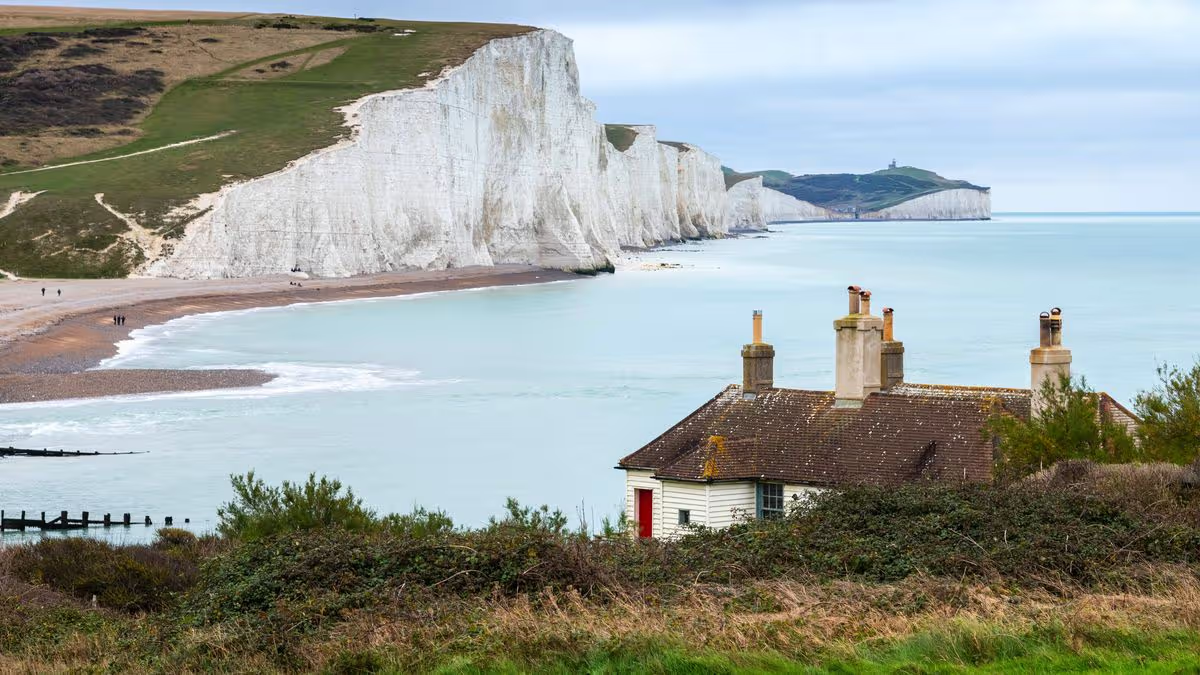
Taking first place is Cuckmere Haven with a score of 9.60. This breathtaking beach is situated in East Sussex and boasts a remarkable 7.8 hours of daily spring sunshine with just 52mm of rainfall per month.
Those visiting the beach can first take in a spectacular view of the Seven Sisters – England’s iconic white cliffs that overlook the channel – and then enjoy a picturesque walk along the Cuckmere River which winds towards the sea. Hear the cry of gulls above, and savour the fresh sea air on your face, reports the Express.
Advertisement
In second place is Southwold Beach with a score of 8.68 out of 10. This expanse of sand extends from the mouth of the River Blyth, past the Southwold Pier, which offers plenty to discover.
There are arcade games and numerous cafes and restaurants to pop into for a bite or a beverage. Securing third place, and boasting the highest Google review score amongst all the beaches, is Druridge Bay Beach.
The secluded Barafundle Bay Beach in Pembrokeshire and Rhossili Bay Beach with its three-mile stretch of golden sands in Gower also made the list, with only minor differences in the scores.
Google reviews rate this coastal spot at 4.9 out of five, while the Go Outdoors study awarded it an overall score of 8.53 out of 10.
Advertisement
The beach extends for seven miles, and the surrounding woodlands are teeming with wildlife including roe deer and red squirrels.
The home secretary has agreed to ban an Iran-linked march in central London, but a “static” protest is set to go ahead.
On her decision to ban the march, Shabana Mahmood said she was “satisfied doing so is necessary to prevent serious public disorder, due to the scale of the protest and multiple counter-protests, in the context of the ongoing conflict in the Middle East”.
It is the first time a protest march has been banned since 2012.
Labour MPs had asked the Home Secretary to ban the Al Quds Day march, claiming it is “a hate march” which platforms anti-semitism and extremism.
Advertisement
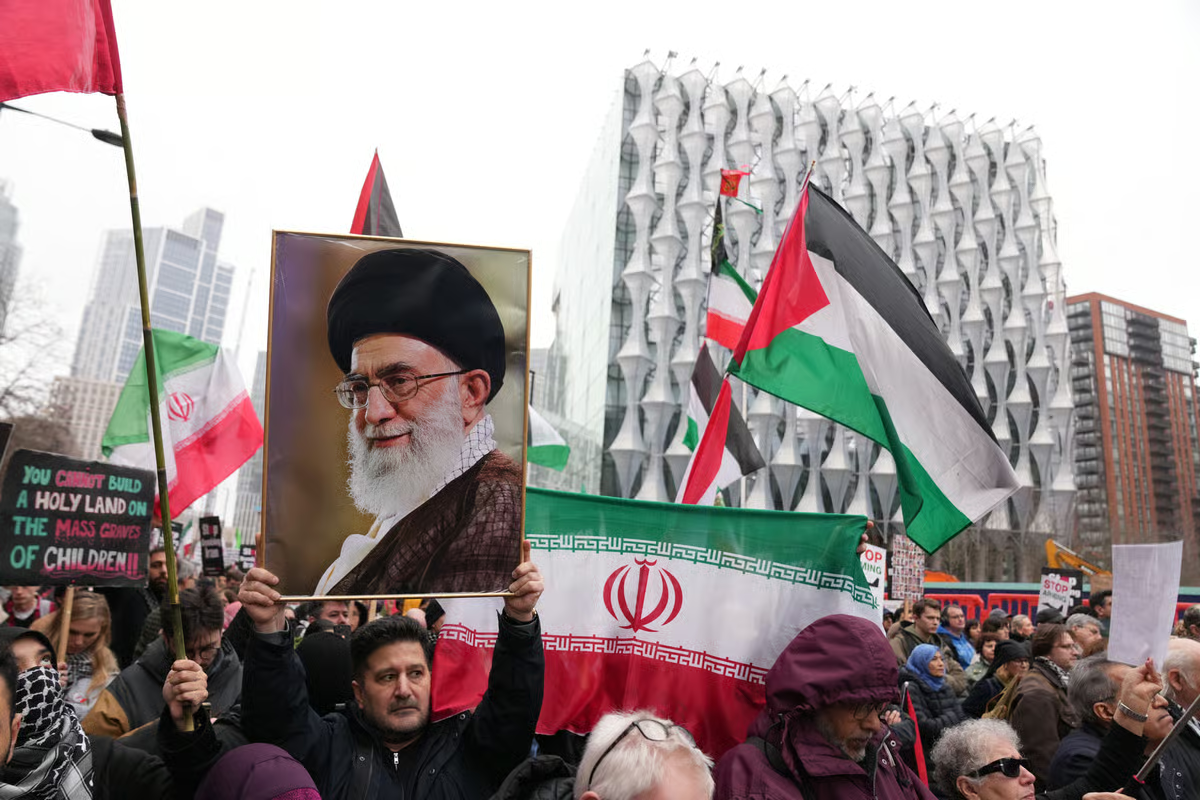
The protest, named after the Arabic word for Jerusalem, is held annually in London and is a part of a wider international event to express support for Palestine and opposition to Israel.
For more than a decade, the event has riled tensions between political groups, politicians and protesters in the capital, with many calling for a ban.
The event was first held in Iran in 1979 by former Iran Supreme leader Ruhollah Khomeini after the Iranian Revolution but has expanded across the world with rallies held in the US, the UK, and parts of Europe.
The Al Quds protest in March last year
Advertisement
Jonathan Brady/PA Wire
It comes as the conflict between Iran and the US and Israel rages across the Middle East.
Here is everything we know about the event:
When was the event meant to take place?
Advertisement
Thousands of protesters had planned to gather outside the Home Office before marching through central London.
Is a protest still going ahead?
IHRC have said that a “static protest” will go ahead on Sunday.
The group said in an Instagram story: “IHRC strongly condemns the decision by the Metropolitan Police to ban the Al Quds Day March.
Advertisement
“However a static Al Quds Day protest will still go ahead,” organisers wrote, adding: “We hope to see you on Sunday 15th March InshaAllah.”
Lord Walney said there was a “loophole” in legislation that restricts ministers from stopping rallies that remain in one location.
The former independent adviser on political violence told the Press Association: “It was the right decision to ban this due to the risk of serious disorder, but it’s not clear how that risk would be substantially lessened if they go ahead with a static protest.
“It is a loophole, and given the volatility of the situation which is already spilling over to British streets, I hope this is an issue that the Home Secretary will look at urgently.”
Advertisement
“So this does highlight the loophole in our public order legislation, which is well-intentioned due to the freedom of assembly.
“But that freedom is not absolute, and in exceptional cases like this, it makes sense for the police to be able to recommend that a large, static protest doesn’t go ahead either.
“It is a loophole, and given the volatility of the situation which is already spilling over to British streets, I hope this is an issue that the Home Secretary will look at urgently.”
Following the ban, Home Secretary Shabana Mahmood said: “Should a stationary demonstration proceed, the police will be able to apply strict conditions.
Advertisement
“I expect to see the full force of the law applied to anyone spreading hatred and division instead of exercising their right to peaceful protest.”
Have there been problems at previous rallies?
Yes, and there has always been a high police presence at the annual event.
It is feared that this year could be the biggest risk yet given the ongoing conflict.
Advertisement
Previous editions of the event have seen protesters carrying flags of Hezbollah, the Iranian-backed Lebanese terrorist group and shout chants such as, “Death to Israel. Death to America.”
Who called for the rally to be cancelled?
Labour MPs joined efforts to have the protest called off.
Lord Austin of Dudley, a former Labour MP, told The Times: “It is outrageous that supporters of Iran’s terror regime are allowed to march on Britain’s streets calling for the destruction of western democracy. I’m all for freedom of speech but this is a hate march by fans of an theocratic Islamist dictatorship that recently slaughtered 36,000 of its own citizens who dared to come out and protest against it.”
Advertisement
“Our police forces and the home secretary should exercise their powers and take decisive action to stop these marches from going ahead. Anyone who joins these marches and is not a British citizen should be deported immediately.”
Labour MP for North Durham Luke Akehurst said: “It’s completely inappropriate for supporters of the Iranian regime to be allowed to march through London while British forces are under attack from Iran, and risks serious public disorder.”
What have the event organisers said?
The IHRC has also been approached for comment, but in a statement online said: “The Al-Quds Day march and rally held in the UK for nearly 40 years, is a non-confessional, family oriented event that calls for justice for Palestinians. It is led by Muslim, Christian and Jewish organisations. Sadly it has been routinely demonised and targeted by Israel first politicians and media, often in totally untruthful ways.”
Advertisement
The group added: “Any ban on Al-Quds Day would destroy any remaining credibility that the UK has. When the world, including the vast majority of British people, are clamouring for justice for Palestine, it is perhaps best that the British government serve their interests, rather than that of a genocidal state currently unleashing further violence on Iran and Lebanon as well as Gaza.”
In a statement, the Met said: “The decision to ban it this year is purely based on a risk assessment of this specific protest and counter-protests – we do not police taste or decency or prefer one political view over another, but we will do everything we can to reduce violence and disorder.”
The force said the “uniquely complex” international situation and “severe” risks meant that putting restrictions on the protest “will not be sufficient to prevent it from resulting in serious public disorder”.
It added that it would out “strict conditions” on any static protest, which cannot be banned by the police or the government, but “given the tensions, we have to accept that confrontations could still take place”.
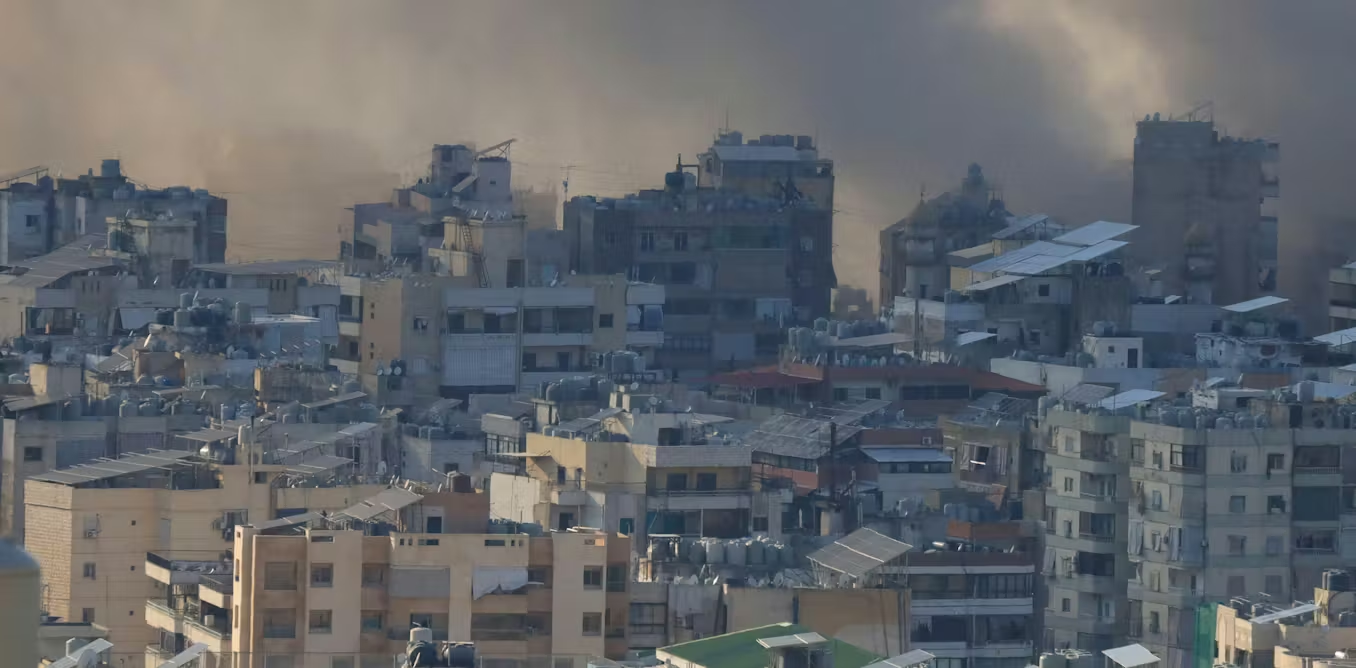
Now well into its second week, the US-Israeli war against Iran has gone beyond the “combat operation” the US president, Donald Trump, announced when it began on February 28. Civilians and infrastructure have been struck across the region from Lebanon, to the UAE, Saudi Arabia and Iraq. The conflict has spread rapidly across the Middle East. Now, with the strait of Hormuz effectively closed, oil prices have risen sharply threatening global economic chaos.
This is not an abstract strategic contest. It is unfolding in a region shaped by decades of conflict driven both by external intervention and by regional actors themselves. Israel’s overwhelming use of military force in recent years in Gaza, Lebanon and now against Iran has been a central factor in the current escalation, while Iran and allied armed movements such as Hezbollah, Hamas and the Houthis have pursued their own strategies of deterrence and retaliation.
The latest US-Israeli strikes and Tehran’s response therefore add another layer to an already volatile landscape in which multiple actors pursue security, influence or survival through force. The human cost is mounting. Meanwhile, the legal principles meant to constrain the use of force under the UN Charter have increasingly been overshadowed by power politics.
In this context, the meaning of the “America first” slogan on which Donald Trump campaigned in 2024 demands urgent reassessment. So does the manner in which American power operates.
Advertisement
US involvement in and response to the conflicts in Ukraine and the Middle East show a pattern of Washington enlisting regional partners to help realise its foreign policy aims. It is letting Europe bear the main burden in economic terms in the Ukraine conflict while in the Middle East, it has partnered with Israel. Meanwhile, it is happy to directly manage affairs in the Americas – in the Venezuela raid in January, for example, or the Cuba blockade.
When Barack Obama called it “leading from behind”, there was a furore on the American right. But now, this approach is central to maintaining America’s dominant global position.
One of this article’s authors, Inderjeet Parmar, has highlighted elsewhere how US policy seeks to combine realist power projection with liberal ideological framing, using the language of universal values such as human rights. This enables it to legitimise interventions, alliances and proxy arrangements that distribute burdens to partners and sustain America’s global position while helping avoid overextension. Washington’s approach masks self-interested expansionism as consensual leadership rather than the naked unilateralism it actually represents.
This approach reduces the risk of domestic backlash from costly direct engagements. It avoids the pitfalls of imperial overstretch that were seen in cases such as Iraq, while retaining ultimate control and benefits.
Advertisement
In his analysis of US actions, this article’s other author, Bamo Nouri, suggests that US foreign policy often serves corporate and elite interests under such guises as the promotion of democracy. Nouri portrays how Washington’s use of partners in foreign policy arenas in recent years has been a calculated tactic that sustains empire efficiently. But it risks partner fatigue, escalation, or blow-back when partners falter, fail to achieve their goals or where it leads to wider regional escalation.
But ultimately it underscores a consistent US strategy: using its networked power to get its way. In other words, leading from behind.
‘America first’ interrogated
The “America first” slogan that Trump has adopted (a 19th-century phrase used by nativists. It gained prominence in the US after the first world war when it became associated with the Ku Klux Klan and other far-right organisations) was framed by the president as a decisive break from the post-cold war bipartisan foreign policy consensus. Trump denounced regime change, criticised the Iraq war’s architects, and promised to end “forever wars”. That resonated with a weary American public lamenting costly interventions that destabilised the Middle East while achieving little.
America first was presented as a strategic correction: abandoning liberal interventionism, rejecting ideological crusades and restoring prudence to US statecraft. Intellectually, it appeared to prioritise realist recognition of limits, restraint and national interests over moral grandstanding.
Advertisement
Yet Trump 2.0 actions – with the raid on Venezuela, threats against Greenland and Canada and now the full-scale war against Iran – have cast serious doubts on that claim. Evidence suggests continuity in the pursuit of American primacy, but expressed now in more nationalist and unapologetic language. The rhetoric has shifted, but the structure of power and the willingness to employ force remain strikingly familiar.
US president, Donald Trump, with his chief of staff Susie Wiles, secretary of state Marco Rubio and other senior advisers in the White House situation room, March 2 2026. White House
To Trump’s base, the appeal of America first was partly due to its critique of liberal internationalism. For decades, both Republican and Democratic administrations justified US primacy through the language of promoting democracy, humanitarian intervention and multilateral order-building. Trump argued that these ventures drained American resources while delivering little tangible benefit. Indeed, both parties’ presidential candidates in 2020 stood on a platform of ending “forever wars”. But ultimately, America first was largely a branding exercise led by influential thinktanks.
The Washington-based conservative thinktank, the Heritage Foundation, played an important role in developing policy frameworks and identifying personnel for Trump’s second administration.
Advertisement
Heritage had historically championed a robust national defence and assertive US leadership. Under Trump, newer networks explicitly branded under the banner of America First Policy Institute emerged to provide intellectual support for the movement. These institutions promoted the idea that Trumpism represented a decisive shift toward state-centred realism, as opposed to liberal nation-building.
But realism, properly understood, is not simply a rhetoric of strength, but a doctrine of prudence. Classical realists, from the German-born scholar Hans Morgenthau onwards, have always stressed the dangers of ideological crusading, the unpredictability of military escalation and the limits of power. War was to be a last resort, not a way to demonstrate power and resolve.
But America first has not dismantled the core architecture of US global primacy. The US continues to rely on military superiority, sanctions regimes and alliance systems to maintain its position of global primacy. The difference lies in presentation. Liberal internationalists justified primacy through universalist ideals. America first recasts it in nationalist terms: sovereignty, strength, deterrence. But the underlying strategic objective remains constant – preventing the emergence of challengers and preserving US dominance.
The escalation with Iran underscores this continuity. It signals that when confronted with perceived threats to its authority or credibility, Washington will often consider the use of coercion, whether economic or other means, including force. In this sense, America first may represent not a rejection of primacy but its simplification, stripped of multilateral vocabulary and reframed as unapologetic power politics.
Advertisement
The costs of abandoning restraint
The consequences are profound. Domestically, America first promised a renewed focus on national reconstruction. But the gap between promise and practice risks deepening public cynicism about foreign policy and political leadership alike.
If Trump’s foreign policy “art of the deal” culminates in airstrikes, region-wide escalation and blowback, the claim that it represents a realist recalibration of US foreign policy becomes difficult to sustain. Rather than ending liberal interventionism, America first appears to have refashioned American primacy in starker, less apologetic terms, without the veneer of restraint.
The recent strikes are therefore more than tactical decisions for the Trump administration. They reveal how deeply embedded primacy politics remains in Washington, regardless of who is doing it. The rhetoric has shifted. The structural impulse to defend US dominance through force has not.
Warning: spoilers ahead for the first season of Scarpetta.
Advertisement
I’ll give it to you straight – Scarpetta is my most disappointing TV watch of the year so far.
I’m writing this review hours after finishing the last of the eight episodes. I hoped that the finale would deliver a payoff to make up for the discombobulation leading up to it.
Sadly, I was left feeling even more dissatisfied.
Scarpetta isn’t without its merits, so much so that I considered giving it a three-star rating, instead of two. The serial killer thriller – which is based on the book series by Patricia Cornwell – stars the formidable Nicole Kidman as Dr Kay Scarpetta, a forensic pathologist.
Advertisement
In the present day, Kay comes out of retirement to resume her post as chief medical examiner in Virginia to investigate a gruesome murder. The show then flits back to the past, when a younger version of Kay – played by British actress Rosy McEwen – is trying to track down a serial killer who’s killed several women in the most disturbing ways.
On paper, you would think that this would be enough for a gripping, edge-of-your-seat thriller. But there’s so much else going on. Needlessly, I might add.
Nicole Kidman plays the titular character Dr Kay Scarpetta, the protagonist of the novels written by Patricia Cornwell (Picture: Connie Chornuk/Prime)
Rosy McEwen is the highlight of the thriller as the younger version of Dr Kay (Picture: Connie Chornuk/Prime)
Key details for Scarpetta
What is Scarpetta about?
Scarpetta follows a forensic pathologist Dr Kay Scarpetta, who investigates murders using forensic technology. The show flits between the present day and the past, when a younger version of Dr Kay became the chief medical examiner in Virginia and was trying to track down a serial killer.
How many episodes are there?
There are eight episodes in total, all of which can be streamed on Amazon Prime Video.
Who’s in the cast?
The lead members of the cast include:
Advertisement
Nicole Kidman as Dr Kay Scarpetta
Rosy McEwen as the younger Dr Kay
Jamie Lee Curtis as Dorothy Scarpetta
Bobby Cannavale as Pete Marino
Jacob Lumet Cannavale (Bobby’s son) as the younger Pete
Simon Baker as Benton Wesley
Hunter Parrish as the younger Benton
Ariana DeBose as Lucy Farinelli-Watson
Savannah Lumar as the younger Lucy
Janet Montgomery as Janet
Will there be a season 2?
Yes, it’s already been confirmed that a second season is in the works.
Kay’s older sister, Dorothy (Jamie Lee Curtis), is an eccentric loose cannon whose sole purpose seems to be to highlight how straight-laced and serious the titular character is. I’ve admired Jamie as an actress my whole life, and Dorothy is clearly meant to provide comic relief in an otherwise horrifying story, but it just doesn’t work.
Elsewhere, Ariana DeBose plays Lucy, a tech whiz who’s Dorothy’s daughter and Kay’s niece. She recently suffered the death of her wife Janet (Janet Montgomery), and to deal with her grief, she’s created an AI version of her late partner, whom she talks to almost constantly every day.
Advertisement
This storyline in itself is interesting, and reminds me of the Black Mirror episode Be Right Back. As fascinating as this concept is (and pertinent for the times we’re living in), it feels as though it’s been squished into an already packed narrative.
I love Jamie Lee Curtis – but her eccentric portrayal of Kay’s sister Dorothy feels misplaced in this crime drama (Picture: Connie Chornuk/Prime)
Bobby Cannavale plays Peter, Dorothy’s husband and Kay’s colleague, while Ariana DeBose stars as Lucy, Dorothy’s daughter and Kay’s niece (Picture: Connie Chornuk/Prime)
That’s not all. We also have another element of the plot about a lab in space that crashes to Earth, where scientists were creating biosynthetic organs. I promise I’m not making this up.
Then there’s the dysfunctional family drama element of it all. Kay is married to FBI agent Benton Wesley (Simon Baker), whom she first met while investigating a serial killer in her younger years. Dorothy is married to former detective Peter Marino (Bobby Cannavale), who is also a longtime colleague of Kay’s.
Kay and Dorothy are always at each other’s throats. Dorothy, who was largely an absent mother to Lucy when she was growing up, is worried about her daughter’s dependency on an AI version of her late wife. Kay and Benton are keeping various secrets from each other. And their family ties complicate the murder case that they’re all involved in.
It’s all just a bit much.
Advertisement
For me, the saving grace for Scarpetta is the flashback scenes. As much as I love Nicole as a performer, I would have been very happy watching a version of this show set entirely in the past, with Rosy’s version of Kay working with her future husband and future brother-in-law to hunt down the serial killer brutalising and terrifying their neighbourhood.
The straight-laced sister versus the wild child has been done time and time again (Picture: Connie Chornuk/Prime)
Verdict on Scarpetta
Scarpetta had so much potential, and an incredible cast to boot. Unfortunately, this thriller’s downfall was trying to do too much.
When deciding how I would rate Scarpetta, I considered if this is a show that I would recommend to my friends. While I was invested to a certain degree, sadly the answer is no.
Advertisement
At times, it feels as though this drama doesn’t know what it’s trying to be. Is it a serial killer thriller? Is it a family drama? Is it a dark dystopian sci-fi? There’s nothing to say that a TV show can’t fall under several different genres, but Scarpetta spreads itself too thin by trying to be too much.
Given that the drama ends on a cliffhanger, it makes sense that season two is already in the works. At this moment, I don’t know whether my curiosity will get the better of me when the second season comes around. Right now, I think I’m going to let the dead rest.
If you’ve got a celebrity story, video or pictures get in touch with the Metro.co.uk entertainment team by emailing us celebtips@metro.co.uk, calling 020 3615 2145 or by visiting our Submit Stuff page – we’d love to hear from you.
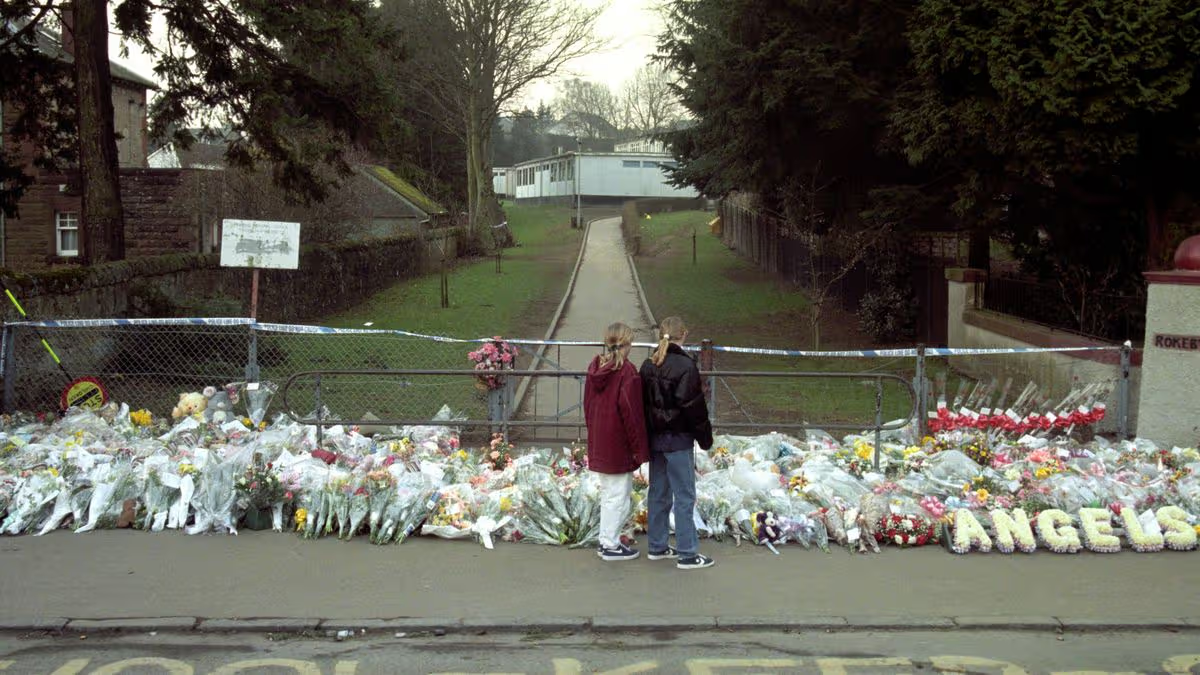
Dunblane Cathedral will be open until 8pm on Friday, March 12, the day of the anniversary of the school shooting, to allow for “quiet and respectful remembering”. Other churches in the area will also be open.
Some Dunblane residents will also be placing candles in their windows as a “quiet way to remember and pay their respects”.
The massacre in the Stirlingshire town, where 16 children and their teacher Gwen Mayor died, shocked the nation and led to the UK enforcing some of the strictest firearms legislation in the world.
The Church of Scotland also released some remarks from Rev Renwick, as well as a special prayer he will read at Dunblane Cathedral on Sunday March 15.
Advertisement
Rev Renwick said: “For those people whose lives were shattered by the tragic events in Dunblane on March 13 1996, remembering is not confined to particular anniversaries. There are still those who, every day, think of a child they lost.
“Each birthday, each Christmas, the marriage of a sibling or contemporary, and many other events, still bring times of poignant remembering and wishing things had been different.”
He continued: “The 16 children of Dunblane who died that day, and the teacher who died trying to protect them, will never be forgotten.
Advertisement
“Nor will people forget the determination and persistence of those who campaigned so hard to ensure that the gun laws in the United Kingdom were changed, making this country a safer place.
“Thirty years on, the people of Dunblane will, as they have always done, remember with quiet dignity and respect.
“It is important that people are given the space, opportunity and peace to remember and grieve in ways that are appropriate to them.”
Dunblane Cathedral contains a stone memorial to the victims of the tragedy.
Advertisement
Rev Renwick’s prayer includes a reference to the snowdrop campaign, which achieved a ban on UK private handgun ownership in the wake of the tragedy.
One part of the prayer reads: “As the fragile snowdrop breaks through the cold winter earth, and somehow endures the elements that buffet it,
“We give thanks for the resilience of many, and for the determination, arising out of tragedy, that this country should be a safer place than it used to be.”
Get more Daily Record exclusives by signing up for free to Google’s preferred sources. Click HERE
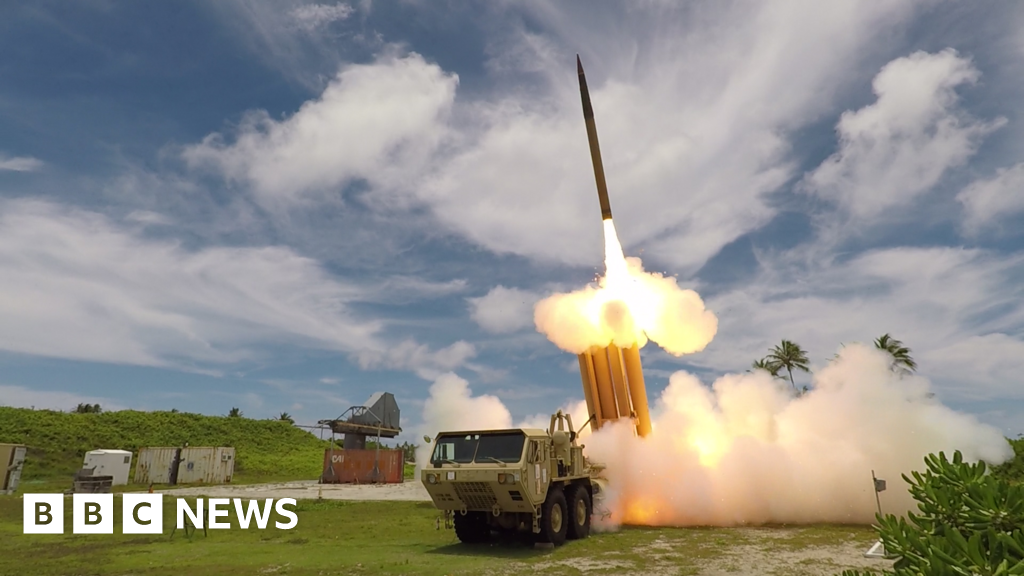
It can shoot down short and medium-range ballistic missiles, using hit-to-kill technology. That is, kinetic energy destroys the incoming warhead. It can do this at a high altitude, beyond even the Earth’s atmosphere, which was seen as especially useful in South Korea, because it could be used to intercept and destroy a nuclear warhead.
Ed Miliband has vowed that price gougers will face a crackdown by regulators if they take advantage of Brits’ pockets during the Iran War.
Advertisement
The Energy Secretary warned retailers who carry out unfair practices during the rising levels of oil prices will face a ‘range of powers’ from the government and industry regulator, the Competition and Markets Authority.
It comes after the price of petrol this week skyrocketed up to 140p a litre and diesel up to 158p a litre when the price of crude oil reached nearly $120 per barrel nearly two weeks after the US’ conflict with Iran.
Concerns have been raised about worldwide fuel reserves and markets have been growing since the start of the Iran war as oil tankers are effectively blocked from using the Strait of Hormuz.
Prices between petrol stations are currently varying from £1.27 per litre to £1.80, Chancellor Rachel Reeves said.
Advertisement
Speaking to Metro after the government received reports that some companies were hiking their prices, Miliband said: ‘The Chancellor and I will be meeting the petrol retailers, and we will be making clear that we will not tolerate unfair practises and price gouging.
Want to understand more about how politics affects your life?
Metro’s senior politics reporter Craig Munro breaks down all the chaos into easy to follow insight, in Metro‘s politics newsletter Alright, Gov? Sent every Wednesday. Sign up here.
Advertisement
‘The Competition and Markets Authority stands ready to act.
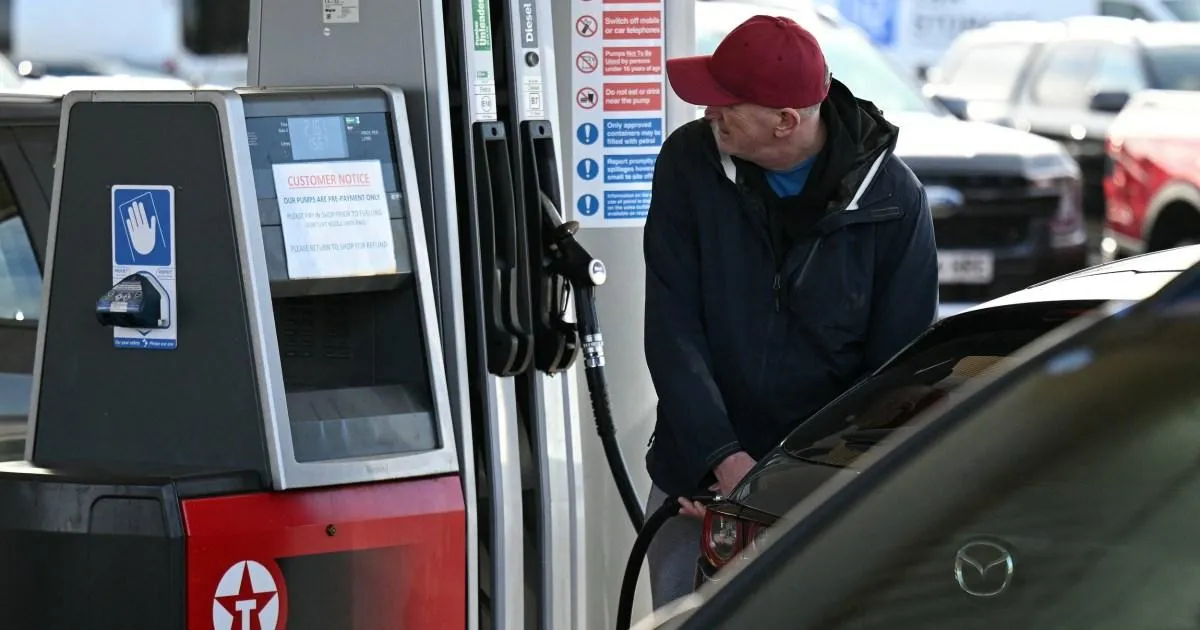
A man is seen filling up his car in Lutterworth, near Rugby in central England, as petrol prices have sky rocketed during the past two weeks. This is no suggestion that Texaco has been involved in price gouging (Picture: AFP)
The price of petrol and diesel has been creeping up since the start of the Iran war (Picture: AFP/Getty Images)
‘They have a whole range of powers to act, and companies, whether it’s in heating oil or in petrol, should be in no doubt the government will act if we find price gouging, unfair practises.
‘We are determined to make sure that consumers are not ripped off during this situation.’
The government has today launched a new tool called Fuel Finder, which allows drivers can use to find the cheapest petrol station nearby.
It is expected to lower fuel prices for consumers by encouraging competition between forecourts, and to have all major retailers sign up to it.
Advertisement
Meanwhile, almost two million households still rely on heating oil, and they have seen their prices, which are uncapped, skyrocket.
Talking about measures to help struggling families with heating bills, Miliband said the government will ‘do everything we can to fight people’s corner.’
That includes the latest energy price cap, which will reduce a typical household’s bills by around £117 between April and June.
When asked if Brits should follow residents in Denmark – who are being encourage by their Energy Secretary to use less to save money on bills, Miliband said: ‘Of course, if people want to save energy, to cut their bills, that’s a good thing to do, but we are absolutely confident about our security of supply and we have confidence in the price cap.’
Advertisement
Miliband, who faced criticism from the Conservatives over the price cap promise, continued: ‘People should know that if they’re on the energy price cap, their bills will be falling in April because of the actions the government has taken, and they’re guaranteed that until the end of June.
‘We have a diverse range of energy supplies in this country, and people should feel confident in that.’
Elon Musk’s Tesla granted licence to power British homes
Yesterday, as the conflict came towards the end of its second week, it was confirmed Elon Musk’s Tesla has been given the green light to start supplying electricity to households and businesses in Britain after being given the green light by Ofgem.
The company’s subsidiary, Tesla Energy Ventures, has been granted a licence after a seven-month review which looked into whether the company could safely and reliably run an energy business.
Advertisement
Tesla has been involved in the UK energy market since 2020, when it was granted a licence to be an electricity generator. It current supplies electricity in the US state of Texas.
Tesla, led by Musk, is set to start supplying energy to British homes, a decision Ed Miliband said was not made by the government (Picture: Getty/Shutterstock)
The move is likely to raise some eyebrows due to Musk’s controversial opinions and his vocal support of Donald Trump and right-wing figure Tommy Robinson.
Miliband has previously described Musk as a ‘dangerous person,’ and accused him of inciting violence on the streets.
Ofgem has stressed that it does not assess or grant licences to individuals.
When asked about Tesla and Musk’s links to the UK energy sector, he said: ‘Tesla already have a business in this country.
Advertisement
‘They applied for a licence.
Advertisement
‘This is a decision made by Ofgem, not by the government, and it’s arm’s length from government, and that’s the right thing to do.
‘Ofgem conduct what’s called a fit and proper person test for the company. They’ve reached their judgment, and I’m not going to comment further on that.’
Naomi Smith, chief executive of Best for Britain, said: ‘After more than 18,000 of our supporters wrote to Ofgem highlighting real public concern over Musk’s powergrab, Best for Britain are calling on the Energy Secretary to step in and urgently reverse Ofgem’s misguided decision. It’s not too late to do the right thing.’
Miliband has powers to veto applications for certain supply licences, but not the one that Tesla applied for.
Advertisement
‘Keir Starmer made the right decision with Iran War’
Last week, Miliband faced claims in The Spectator that he was behind a coalition of cabinet ministers who stopped Keir Starmer from allowing the US to use bases at Diego Garcia and RAF Fairford to launch the attacks on Iran.
Sir Keir initially tried to limit British involvement in the conflict and denied the US’ request to use the bases after it launched strikes on Iran on February 28th.
A day later, he decided the sites could be used by the US for ‘defensive’ strikes to protect countries being targeted by Tehran.
It led to spat between Trump and Starmer, with Trump saying the PM ‘was not Winston Churchill’. It’s believed the pair have since smoothed things over after speaking on the phone last week.
Advertisement
But The Spectator article claimed Starmer wanted to allow the US to use the sites, but was blocked from doing so by Miliband, Reeves and Home Secretary Yvette Cooper.
Responding to the article, Miliband told Metro: ”I’m not going to comment on those reports. What I will say is that it’s the Prime Minister who has led our country and made, the right decision, a decision the British people support, not to be involved in this conflict at the outset, because he didn’t believe that we should engage in the conflict without a clear thought through plan, but then to act, to support the US in defensive action, to support our allies who are being indiscriminately attacked by Iran and British citizens.
‘I think it’s the Prime Minister who’s shown important leadership and leadership the country supports.’
The 44-year-old has won six of his eight matches in charge and the club have moved from sixth to third in the Premier League.
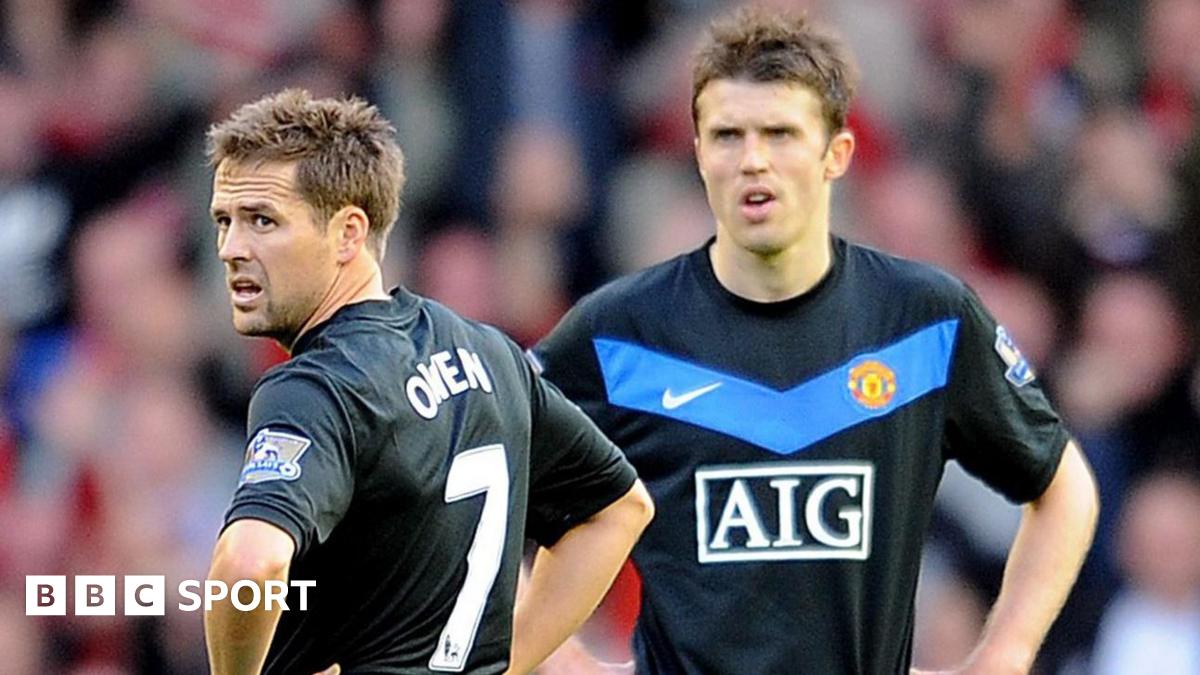
Former Manchester United and England striker Owen, who played with Carrick at Old Trafford between 2009 and 2012, believes he has “brought a calm back to the club”.
Advertisement
“I can’t believe people are questioning whether he should get the job,” Owen said on the latest edition of BBC podcast The Wayne Rooney Show.
“Manchester United have waited about 12 years – they’ve gone for proven, legends, everything since Sir Alex [Ferguson].
“And the one time they are starting to play well, get results, the fans are on board – you’re telling me at the end of the season if he gets third [place] they will say ‘thanks, but no thanks’. How is that possible?”
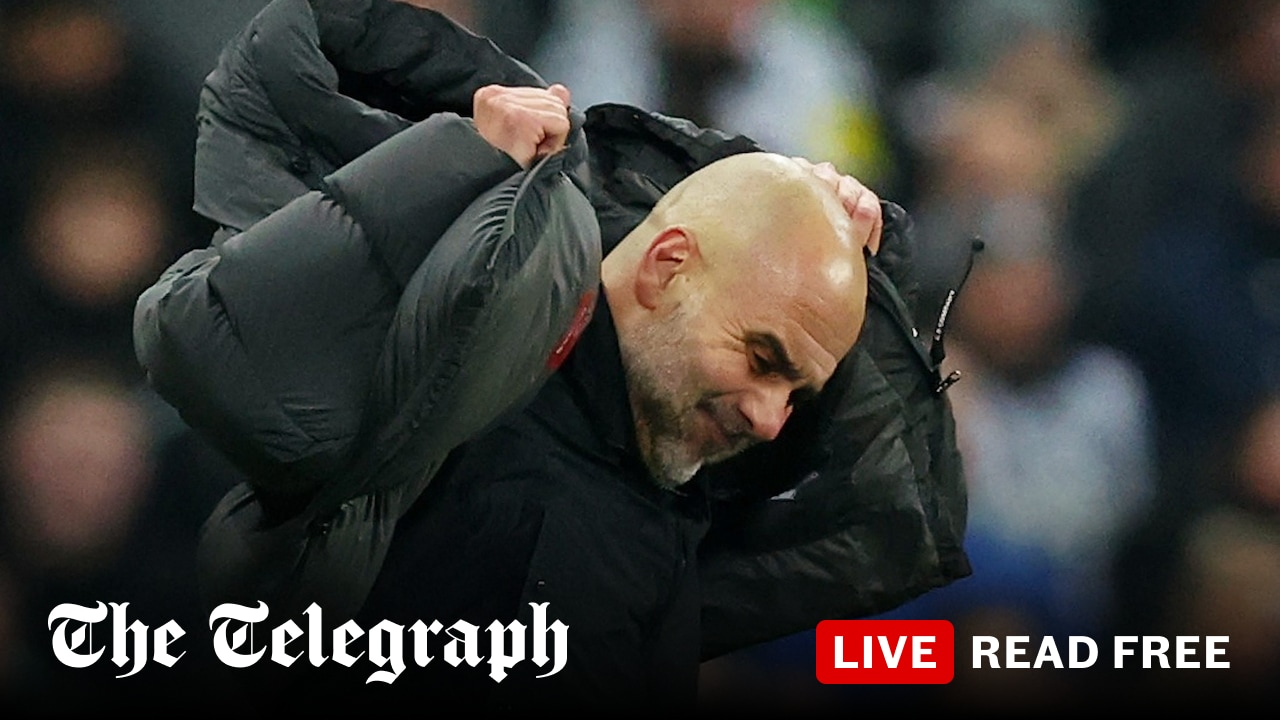
City have reached the semi-finals of the FA Cup every season since 2018. In the last four years their record in the competition is 19 wins in 21 games, with those two defeats coming in the final against Manchester United and Crystal Palace. It is not like anything we have seen before. Guardiola said he was extremely proud of that record, but still the perceived injustice gnawed away at him. He remained in a volatile mood. It was his sixth yellow card of the season, but none have provoked a reaction as strong or as perilously close to losing control as this.
Guardiola is a ferocious competitor and apparently no longer cares who he offends. Read into that what you will regarding his future beyond the end of this season. While the rest of English football complains about the fact the 115 charges against City for breaching PSR rules have still not been resolved, he seethes at a perceived injustice of a different kind.
Guardiola made his feelings clear. For all his success, for all the trophies he has won and the dominance of English football he has overseen, he believes it has been done despite dark forces conspiring against him and his players. It has become a recurring theme in his dealings with the media.
Advertisement
Asked what had annoyed him so much, Guardiola replied: “When Jeremy Doku dribbles [Kieran] Trippier and goes alone to the box and is being pulled from behind, I’m not asking for a yellow card but it’s a foul.
“I will defend my team. I will tell you something – we have all the records in this country, all of them, despite everything. We have the record of the manager with the most yellow cards.
“I want all records and now I have it. Two-game ban now and I will go on holidays the next two games. Oh my god. Oh my god. There are things after 10 years I cannot understand. Review the action. Of course I’m going to defend Doku and all my teams. They continue to do it…”
It all felt a little bizarre given the result. Despite falling behind in the first half to Harvey Barnes’ fine goal, which capped an excellent opening 20-minute spell, City moved through the gears and toyed with Newcastle after equalising through Savinho. The second half was one-way traffic as two goals from Marmoush hammered home City’s superiority.
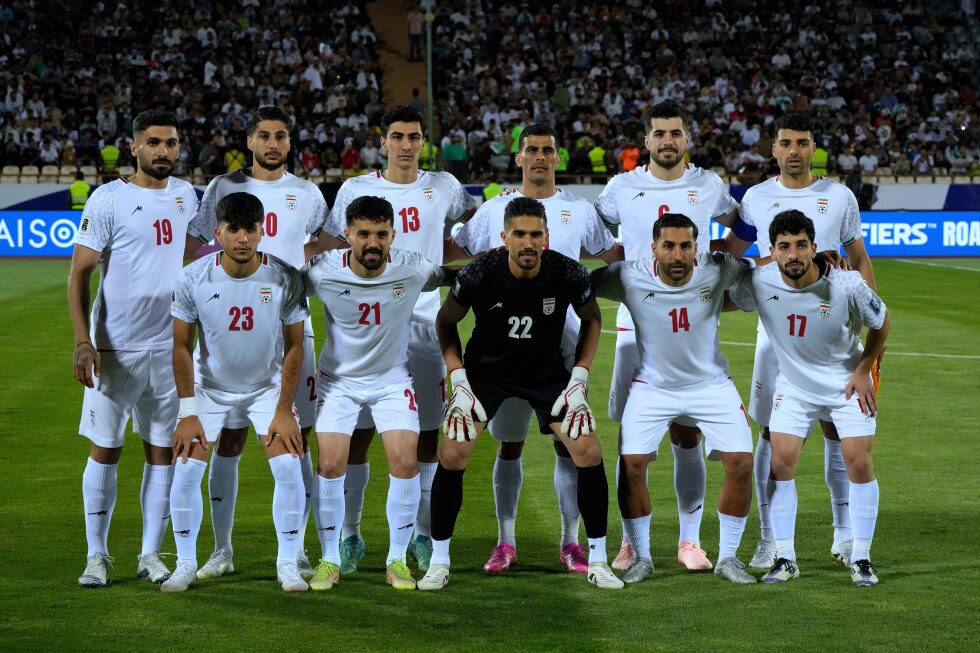
WASHINGTON (AP) — President Donald Trump said he did not think it would be “appropriate” for the Iranian soccer team to attend this year’s World Cup, co-hosted by the United States, and cited safety concerns as a reason on Thursday while the countries remained embroiled in a war.
“The Iran National Soccer Team is welcome to The World Cup,” Trump wrote on his social media site, “but I really don’t believe it is appropriate that they be there, for their own life and safety.”
Trump’s message appears to depart somewhat from what the Republican president relayed Tuesday at the White House to FIFA President Gianni Infantino, who later publicly said that Trump assured him the Iranian players and coaches would be welcome.
Advertisement
AP AUDIO: Trump discourages Iranian soccer team from attending the World Cup, citing safety concerns
Advertisement
AP Washington correspondent Sagar Meghani reports President Trump is discouraging Iran’s national soccer team from taking part in the World Cup.
A White House official, who insisted on anonymity to discuss private conversations, had confirmed Trump’s message to Infantino about Iran’s participation.
On Thursday, the White House did not immediately clarify what Trump meant by “their own life and safety,” such as whether he anticipated threats against them while in the United States after U.S. and Israeli strikes on Iran that began Feb. 28.
Iran, one of 48 teams in the tournament, is scheduled to play in Inglewood, California, against New Zealand on June 15 and Belgium on June 21 before finishing group play in Seattle against Egypt on June 26. The U.S. is hosting the tournament with Canada and Mexico from June 11 to July 19.
Advertisement
Iran’s soccer federation has planned to take the team in June to a tournament base camp in Arizona, at the Kino Sports Complex in Tucson.
Since June, Iran has been subject to a travel ban into the U.S. as part of the Trump administration’s immigration crackdown. But athletes and coaches from the target nations are exempt, which means the Iranian team would be allowed to enter the U.S.
But there are also likely fears from Iranian soccer players about playing in a tournament abroad where they could be feted by an anti-regime diaspora while their families face threats back home.
The Iranian women’s soccer team, which arrived in Australia to play at its Asian Cup tournament before the U.S. and Israeli bombing attacks on Iran started, did not sing the Iranian national anthem before its first game. That was widely interpreted as a gesture of protest or an act of mourning. Several members of the team stayed in Australia on humanitarian visas afterward.
Advertisement
At the 2022 men’s World Cup, played in Qatar, the Iranian team did not sing the anthem before a game against England and did not celebrate the two goals scored in a 6-2 loss. At that time, Iran was in turmoil several weeks after the death in police custody of 22-year-old Mahsa Amini, who had been detained for allegedly violating a strict Islamic dress code.
FIFA’s own evaluation was “low risk” for World Cup safety and security plans proposed by the U.S., Canada and Mexico soccer federations, which are guaranteed by their governments. Trump has often taken credit for “winning” the World Cup hosting rights in 2018, when the three neighbors easily beat Morocco in a vote by FIFA member federations.
“All parties have experience of hosting major sports events on a regular basis and established arrangements are in place for managing security and safety at stadiums and for high-profile individuals,” FIFA’s in-house inspection team wrote eight years ago.
Iranian athletes who previously defied the Islamic regime have left the country to continue their careers.
Advertisement
Iran’s first female athlete to win an Olympic medal, Kimia Alizadeh, a bronze medalist at the 2016 Rio de Janeiro Games in taekwondo, criticized wearing the mandatory hijab headscarf. She competed for the Olympic refugee team at Tokyo in 2021 and for Bulgaria at the 2024 Paris Olympics.
Judoka Saeid Mollaei went into hiding in Germany after a dispute with Iranian team officials at the 2019 world championships. Mollaei, the defending champion, said he was ordered to lose a bout to avoid a potential gold medal match against an Israeli opponent. He got Mongolian citizenship and took silver at the 2020 Tokyo Olympics.
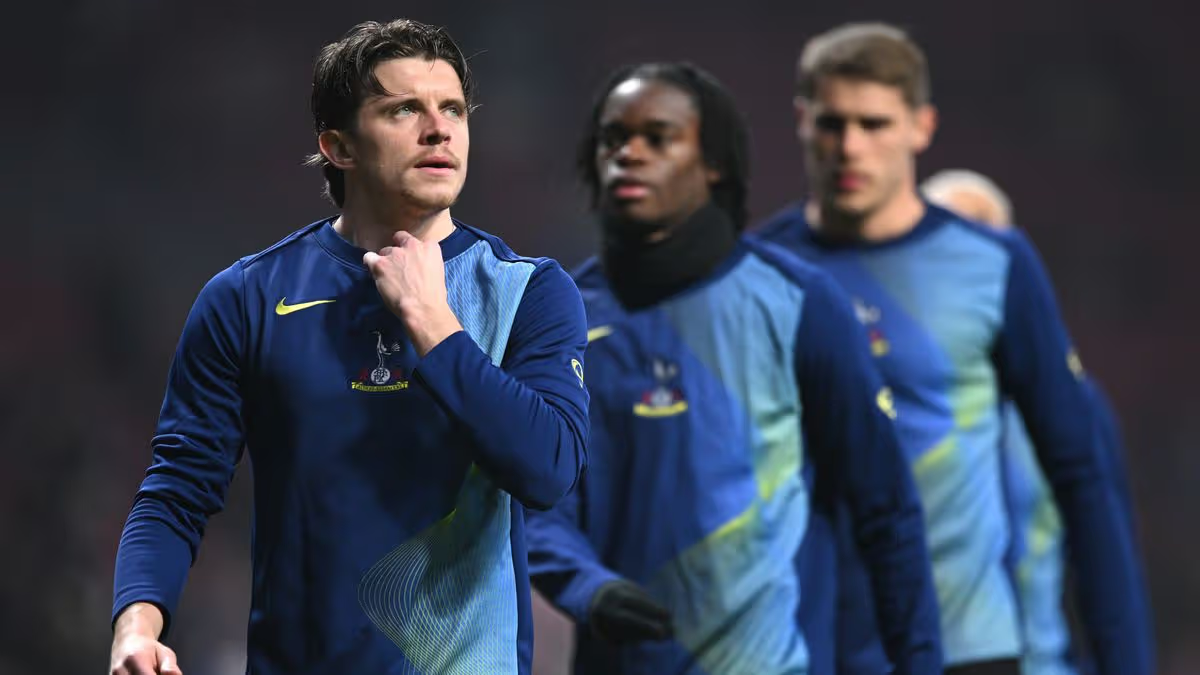
Igor Tudor‘s disastrous start as Spurs boss took another nightmarish turn on Tuesday following a 5-2 loss at Atletico Madrid in the Champions League. The north Londoners are now on the verge of exiting Europe’s premier tournament at the round of 16 unless they can pull off a miracle in the second leg.
Lescott, 43, appeared on the latest episode of the All Out Football podcast alongside Mirror Sport‘s Andy Dunn and gave a dim assessment of Spurs’ prospects between now and May. And after conceding four goals in the opening 22 minutes at Atletico, it appears a drought in confidence could signal a historic period in the club’s history.
“Honestly, in terms of form, yeah,” said the former Manchester City and England defender. “Because again, speaking about experience, none of their players have experienced this fight.
“I know last season was bad but they had a positive or a bonus of a distraction [winning the Europa League], like Europe was their kind of shining light in that season. Whereas this season now, we’re talking about players and fans that don’t know what it feels like to be in this fight.
“Like if you’re saying you’re a Forest or a West Ham, they go behind, their fans still support their team because they know they’re likely going to go behind. Now we have to get behind them to get in front and stuff and fight behind that.
“Whereas Spurs fans now are like, ‘Oh, this is nerve wracking’. And then players are like, ‘Oh, I don’t want that pass. I don’t want to show for the ball there’. But it becomes very edgy potentially.”
Advertisement
Lescott cited his own experience of being relegated with Aston Villa in 2016 and how “players go missing all of a sudden.” And he spoke about the increased role pressure plays in how certain players make their decisions, potentially hoping to save their own reputations.
“Say a forward where he’s taken a shot when he’s full of confidence, now it needs to be perfect,” added Lescott. “Now I need to see the whole goal rather than half of the goal.
“And then as a defender, say for me, you’re thinking, ‘I don’t want to play that ball into midfield in case it doesn’t get there, and I’ll go wide’, but now the opportunity is gone. So there’s so many elements that you probably don’t realise when you’re down there.”
Advertisement
Content cannot be displayed without consent
Tuesday’s defeat to Atletico was but the latest indictment on Spurs’ season, and by extension Tudor’s still-budding tenure. The Croat has lost four times in as many games in charge, two of which were London derbies fans would have hoped to win (against Fulham and Crystal Palace).
Injuries have played an unfortunate role in hampering Tottenham’s chances, but the club has spent enough in recent years to suggest they have the depth necessary to mount a much better challenge than what’s been witnessed. And Lescott is among those convinced the unthinkable could happen come May as the spectre of relegation grows larger.
ANDY DUNN EPISODE ON YOUTUBE: Subscribe now to be the first to watch the latest episodes of In The Mixer and other original shows, brought to you by Sky Bet. Watch All Out Football’s episode with Andy Dunn here.