

Politics
How Sleeping On Sofa Can Harm Sleep Quality


Falling asleep on the sofa can feel like an easy way to unwind after a long day. As mental fatigue sets in, dozing off there can feel effortless and comforting.
But sleep experts warn that regularly drifting off outside the bedroom can undermine sleep health over time.
“Good sleep quality isn’t just about getting enough hours. It depends on adequate duration, typically seven to nine hours for most adults, intact sleep architecture, and proper circadian alignment – meaning your sleep occurs at the biologically appropriate time for your internal clock,” said Dr. Saema Tahir, an adult and paediatric sleep specialist, and adolescent and adult pulmonary disease specialist.
And sofa sleep could be throwing that out of whack.
Most adults cycle through four distinct sleep stages, including light sleep, deeper light sleep, deep sleep and REM (rapid eye movement) sleep, ideally about four to six times per night in repeating cycles, according to Tahir.
Each stage plays a specific role. While deep sleep supports physical repair, immune support and metabolic regulation, REM sleep is critical for memory consolidation and emotional regulation.
“When sleep is shortened, fragmented or misaligned with your circadian rhythm, you lose restorative stages – and that directly translates into poorer concentration, slower reaction time, increased irritability, higher stress hormones and impaired glucose regulation the next day,” Tahir said.
When you’re on your sofa, your “cognitive control is lower, and the nervous system is winding down,” said Annie Miller, therapist and founder at DC Metro Therapy, who specialises in working with sleep disorders, chronic pain and trauma. “People are no longer trying to sleep. They’re watching TV, scrolling or relaxing. Sleep happens naturally and without pressure.”
For those who struggle with insomnia, the bedroom can carry its own pressure and a sense that you should be sleeping, which can trigger frustration. “The couch, in contrast, is associated with relaxation and distraction. Sleep happens there accidentally, which often feels easier and less stressful,” Miller said.
But once you’ve drifted off, moving from the sofa to bed can be surprisingly difficult. “Biologically, once someone has started a sleep cycle, waking up to move interrupts that process,” according to Miller. “When they get into bed, their sleep pressure has already been partially relieved, so falling back asleep may be harder.”
There’s a behavioural component, too. If falling asleep on the sofa becomes habitual, your brain starts associating it with successful sleep. “Moving to the bed can feel like switching environments from ‘safe and sleepy’ to ‘effortful and uncertain,’” Miller explained.
Other ways your sofa and living room mess with your sleep
Falling asleep on the sofa might feel harmless in the moment, but both posture and environment impact how well you move through the sleep stages your body needs.
“Poor neck and spinal alignment can increase awakenings, worsen snoring and sleep apnea, reduce time spent in restorative deep sleep and REM sleep,” Tahir said.
The setting matters, too. Living rooms are often brighter and noisier than bedrooms, which can further disrupt deep sleep and REM. Unexpected or intermittent noise, like passing traffic or fluctuating TV volume, can also activate the body’s stress response. Even if you don’t fully wake, nighttime noise can trigger small spikes in heart rate and sympathetic nervous system activity.
Over time, this low-level activation interferes with restorative sleep. Light exposure adds another challenge, disrupting circadian timing and suppressing melatonin production, leading to lighter, more fragmented sleep. “That combination means less deep sleep, less REM and poorer next-day focus, mood, and physical recovery,” Tahir said.
Beyond contributing to insomnia, sofa dozing may also carry long-term health risks. “Chronic circadian misalignment is associated with increased risk of metabolic dysfunction, mood disorders and cardiovascular disease,” Tahir noted.

fcafotodigital via Getty Images
How to break the habit
“Occasional couch dozing is completely normal and not harmful,” Miller said.
It becomes more concerning when it happens most nights, when going to bed feels stressful, when nighttime sleep worsens after sofa dozing or when you feel you sleep better on the couch than in your bed. “When this pattern shows up, it usually means the brain has started associating sleep with the couch instead of the bed,” she added.
The good news is that this is a learned pattern, which means it can be unlearned with the right strategies.
“The most important thing is to rebuild your brain’s association with your bed and sleep,” said Dr. Shelby Harris, a sleep specialist at BetterSleep, pointing to the first step in breaking the habit. “Start getting into bed before you get tired. If you do happen to fall asleep on the couch, it’s important to relocate to the bed rather than staying on the couch.”
Creating a smooth transition from evening relaxation to bedtime helps, too. “Some people might try to shut things down too quickly, jumping from a show or movie straight to bed,” Harris noted. “Instead, they can try a nighttime ritual that helps them wind down for 10 to 20 minutes before trying to fall asleep.”
That ritual could be as simple as dimming the lights, changing into sleepwear, and switching to a low-stimulation, predictable audio cue or soundtrack in the bedroom, rather than random TV or music in the living room.
Harris also recommended setting a bedtime alarm to signal when it’s time to move from the sofa to the bed. “This helps make sure your brain associates sleep with the bedroom, not somewhere else in your home,” she explained.
Gradually dimming smart lights at night or brightening them in the morning can also support your circadian rhythm. “That way, you can cue your body to get up out of bed, or get ready for bed at the appropriate time,” Harris said.
With a few intentional shifts, your bed can reclaim its role as the place for quality sleep.


Kay Burley said Keir Starmer should not resign over the Peter Mandelson scandal, despite admitting to not being a supporter of the prime minister.
The government released its first tranche of documents related to the appointment of the ex-Labour peer as the UK’s ambassador to the US this week.
The files reveal Starmer was repeatedly warned about the “reputational risk” that came with hiring Mandelson, because of his friendship with the late paedophile Jeffrey Epstein.
Pressure has subsequently grown on the prime minister to resign. He has taken full responsibility over the appointment, and expressed his regret over hiring Mandelson.
Asked if Starmer should quit on BBC Question Time, Burley immediately said: “No, he shouldn’t.
“He’s a bit busy trying to keep us out of World War 3 at the moment.”
She was referring to the PM’s attempts to distance Britain from Donald Trump’s attacks on Iran.
Despite intense pressure from the States, Starmer has refused to let the US use British military bases to target Iran unless for “defensive” and “limited” strikes.
Burley said: “Yes it’s embarrassing for him, yes on balance he should have been more cautious and asked more questions.
“I can see why Mandelson would have been chosen, if not at random. He is a Trump whisperer, he’s very good at his job.
“But as it became more and more apparent that he was still involved with a wrong’un, then absolutely he was the wrong person for the job.”
She added: “I’m not a supporter of Starmer, I think he has done lots of things which have not been very supportive for the country, I think he flip-flops a lot, but I don’t think he should resign.”
Times columnist Fraser Nelson also told Question Time: “Getting rid of Keir Starmer right now would destabilise the country even more.
“I think we’ve had enough of this constant rotation of prime ministers and just once I would love the electorate the chance to make that choice.”
Meanwhile, Conservative MP Harriet Baldwin said he should quit, saying: “He himself has apologised but not really said anything more than that or taken full responsibility.
“The way people take full responsibility in our democracy is they resign.”
She also questioned the £75,000 severance pay Mandelson received, saying Starmer should not have used public money to avoid further embarrassment from the ex-ambassador.
Green Party MP Sian Berry called for Starmer to resign too.
She said: “He chose to overlook those victims, overlook that fact, freely chose Mandelson as the ambassador. To me, that is a very big moral failing.”


Sanofi is working with the transplant community to support improved outcomes in GvHD
With the NHS in a critical period of change,1 there is an opportunity to look at where system reform can support necessary improvements in care. We believe one such area in need of review is the post-transplant care pathway.
For many people, a stem cell transplant can be lifesaving.2 Yet for up to 30–40 per cent of transplant recipients, graft-versus-host disease (GvHD) presents a new set of challenges.2 GvHD is caused by an immune response following a stem cell or bone marrow transplant, where the immune cells from the graft attack the host cells.3
The symptoms of GvHD are wide-ranging and affect each individual differently – but its impact can be life-changing.3 It can affect nearly any organ in the body, with symptoms ranging from rashes and skin dryness, painful joints and muscles, nausea and vomiting, and shortness of breath.3 These symptoms can have a significant impact on mobility, independence and quality of life.4
GvHD also has an economic impact. In 2022, Sanofi commissioned a survey with the help of Anthony Nolan of 27 participants to understand the physical, psychological, and social/economic impact of chronic GvHD (cGvHD).4 More than half of respondents cited a high impact on their ability to work, exercise, enjoy life and plan for the future.4
*Please note, symptoms are not exhaustive and patient experiences may differ.
Bringing the community together to map out priorities for change
To better understand the challenges and identify opportunities for meaningful improvement, a group of leading voices from across the transplant clinical and patient community came together for a roundtable discussion – organised and funded by Sanofi – in September 2025.
Among these voices was Steve, who developed severe GvHD following treatment for acute myeloid leukaemia. Over the course of his illness, he was admitted to hospital dozens of times, saw more than 160 clinicians and experienced complications ranging from sepsis to steroid-induced diabetes.
Leukaemia was one thing, but the aftermath of the transplant was a huge thing to deal with. – Steve
The group agreed there was a need to develop a robust set of recommendations for change within the post-transplant care pathway.
Health system reform offers a window of opportunity
The healthcare system offers significant potential to deliver change for people impacted by this condition. Discussions at the roundtable showed that by harnessing emerging technologies, better utilising data and adopting more effective models of care, improved care is within reach.
Further to the publication of the Government’s 10 Year Health Plan, the NHS is undergoing considerable reform nationally and locally – including shifting care from hospital into the community and the establishment of a Neighbourhood Health Service.1
NHS reform provides an opportunity to transform GvHD care – demonstrating the Government’s commitment to supporting the transplant community and ensuring that the needs of the GvHD patient and carer community are not overlooked.
A vision for change
Based on insights gathered from key stakeholders in the transplant community, action is needed on the following priorities to drive change in the GvHD care pathway:
- Improving access to multidisciplinary team care, to improve patient experiences and outcomes: post-transplant care should be integrated into emerging Neighbourhood Health Services, enabling patients to receive different services closer to home and avoid unnecessary hospital admissions. Mental health support must also become a core component of consistent, high-quality post-transplant care.
- Utilising data and research to identify, and reduce, the risk and severity of GvHD: better use of data and investment in research can help to improve donor matching and predict, prevent and personalise GvHD care. This should include reviewing existing registries to enhance data quality and usability.
- Harnessing technology, to support holistic, patient-centred follow-up care: digital infrastructure should be set up to enable transplant recipients to manage their ongoing care, for example through the NHS App or a dedicated post-transplant tool – including symptom monitoring and rapid access to advice. Patient data should also be fully interoperable across settings so that all healthcare professionals, including GPs, can support a transplant recipient across their care journey.
At its heart, this vision is about coordination and continuity. It is focused on ensuring that people feel they are receiving the best care following a transplant.
Taking these calls forward
GvHD may be a complication of transplant, but the gaps in care witnessed by these stakeholders are not inevitable. We believe, through collaboration between policymakers, clinicians, patient organisations and industry, meaningful change is within reach – and that we have a window of opportunity with current system reform to act on it.
As a parliamentarian, you have an opportunity to champion these calls in Parliament and raise them with the Government – helping to deliver improvements for the GvHD and transplant community.
Stem cell transplantation saves lives. Our shared ambition must now be to ensure that those lives are supported with high-quality, equitable and joined-up care — before, during and after transplant.

A Vision for Change in GvHD care
If you have any questions, please contact Sanofi via Laura Wetherly at [email protected].
MAT-XU-2600469 V1.0 February 2026
- Department of Health and Social Care (2025). 10 Year Health Plan for England: fit for the future. Available at: https://www.gov.uk/government/publications/10-year-health-plan-for-england-fit-for-the-future [Accessed February 2026]
- Anthony Nolan. 2021. Analysis of hospital activity and costs following allogeneic stem cell transplantation in England. Available at: https://www.anthonynolan.org/sites/default/files/2021-03/analysis-of-hospital-activity-and-costs.pdf [Accessed February 2026]
- Anthony Nolan. 2021. An essential guide to graft versus host disease (GvHD). Available at: 2630PA Essential Guide to GvHD_Website.pdf [Accessed February 2026]
- Hart D, et al. 2022. Investigating the Impact of Chronic Graft-Versus-Host Disease on Patient and Carer Health-Related Quality of Life: A Quantitative Study.

Donald Trump has shown an “alarming lack of knowledge” about Iran despite attacking the Middle Eastern country, according to a BBC expert.
Jeremy Bowen, the corporation’s international editor, has said there is no evidence the Iranian regime is crumbling after more than two weeks of strikes from the US and Israel.
Speaking to BBC Radio 4′s Today programme, Bowen said: “I think there was an expectation – from reports coming out of Washington and conversations and so on that I’ve had – seem to suggest that the Americans thought that was once the supreme leader was killed on the first day of the war, that there would be a fairly rapid disintegration after that.”
Trump himself suggested this week that the Iran war would end “soon”, and that the conflict “is very complete, pretty much”.
However, days before that he also claimed he would not stop the war until Iran’s “unconditional surrender”.
Bowen said: “Trump is a man who believes in strong leadership and if the leader goes, then maybe his theory was the regime would go, or there would be a Venezuela-style event where the top guy goes and then other people within the regime decide to effectively capitulate and do as the Americans say.
“If they really did believe all of that, it shows an alarming lack of knowledge about the way the regime is structured and the ideological nature of it.”
The White House kidnapped the Venezuela president Nicolas Maduro in January.
His replacement, Delcy Rodriguez, is hanging onto the US support in the meantime by abiding by their demands.
But, as Bowen noted, the Iran’s regime’s DNA is made up of “defiance and hatred” against the US.
While Supreme Leader Ayatollah Ali Khamenei was killed, his son – Mojtaba Khamenei – has already been announced as his replacement.
He has sworn to retaliate against the US and Israel, saying: “We will not refrain from avenging the blood of your martyrs.”
Bowen also pointed out that neighbouring Gulf countries could be left with a “terrible mess” to clear up in the region as the US are unlikely to commit to nation-building after the war.
“That particularly means Gulf countries are looking at all their strategy,” he said. “Their strategy was to be close to the Americans, and that will continue, but now they’re thinking they need to diversify a little bit.”

We couldn’t help but wonder… was Zendaya feeling the Carrie Bradshaw fantasy during her most recent red carpet appearance?
On Thursday evening, the Euphoria star was among the A-list guests at Essence magazine’s Black Women In Hollywood Awards, making her way into the event in a short white dress with an enormous flower dress.
And if you’re a Sex And The City fan, you might just recognise the red carpet look, as it was first worn by Sarah Jessica Parker in the opening scenes of the TV show’s first spin-off movie in the late 2000s.
Zendaya’s long-time publicist Law Roach confirmed that the homage was intentional in an Instagram post he shared shortly after the ceremony.
“And just like that… I found it!” the RuPaul’s Drag Race regular enthused, praising his client for sporting one of “the most iconic dresses in movie history”.
US broadcaster HBO – who helped bring Sex And The City to the masses in the 1990s – also commented on the post, writing: “And just like that, you found the perfect dress.”
Asked about Zendaya and Tom’s nuptials on a red carpet last week, Law appeared to let the cat out of the bag when he quipped to reporters: “The wedding has already happened. You missed it!”

The Trump administration’s love of stealing intellectual property to make cringe-inducing war propaganda continues unabated.
Having already used clips from “Transformers,” “Star Wars,” “Breaking Bad,” “Tropic Thunder,” the NFL, MLB, and celebrities like Sabrina Carpenter, Ben Stiller, Kesha and others without their consent, they’re now onto Nintendo.
A new propaganda video shared on social media Thursday borrows liberally from Nintendo’s Wii Sports, splicing videos of Wii characters hitting balls at targets with footage of US military strikes killing people, all set to Nintendo’s iconic music.
By midday, the post had racked up 11.7 million views on X and more than 8,000 comments — almost none of them positive.
Earlier this week, the White House ticked off Steve Downes, the voice behind the soldier Master Chief from the Halo video game franchise, by using his likeness without his consent.
They’ve also used clips from Pokémon, Call of Duty, and Grand Theft Auto.
Nintendo didn’t immediately respond to a request for comment.
Given Nintendo’s reputation for vigorously defending its intellectual property, though, the company likely isn’t thrilled to be unwittingly running interference for war crimes.
Nintendo is already suing the Trump administration over its unlawful tariffs, which forced the company to delay pre-orders for the highly anticipated Switch 2 to reevaluate pricing.
The company is asking for a refund of all the duties it was forced to pay, plus interest.

Nicole Kidman is shrugging off the debate around whether or not she deserved the Oscar she won more than two decades ago.
In 2003, the Australian star picked up the Best Actress prize at the Academy Awards for her performance as Virginia Wolf in the star-studded movie The Hours.
Ever since, there’s been a lot of debate about this win, with some claiming much of the acclaim for Nicole’s role in The Hours centred around the transformative prosthetic she wore, rather than her actual acting performance.
During a recent interview with Variety, Nicole was asked about the suggestion that the Oscar win was her “being rewarded for being a beautiful woman who made herself less so for her art”.
“Whatever,” Nicole responded. “People are always going to say whatever.”
She insisted: “The performance was there. [Costume designer] Ann Roth, [director] Stephen Daldry and [screenwriter] David Hare all agreed they wanted Virginia to have a different profile than mine.
“My profile is very distinct, and it needed to be different. I have a very particular nose. I like when I’m able to change up my appearance, as someone trained to be a character actor.
“Some people are employed to look and be exactly themselves. I’ve been trained as a character actor, so therefore when I’m working, I’m not here to be Nicole. On a talk show, I am, but not in a film or play or TV show. If that means changing my physical appearance? Of course. You have to walk differently, breathe differently, talk differently. The timbre of your voice has to change. All of the internal mechanisms affect the external.”
Nicole has five Oscar nominations to her name, three of which came after her win for The Hours.
In 2011, she was nominated for her work in John Cameron Mitchell’s Rabbit Hole, followed by nods for her performances in Lion and Being The Ricardos in 2017 and 2022, respectively.
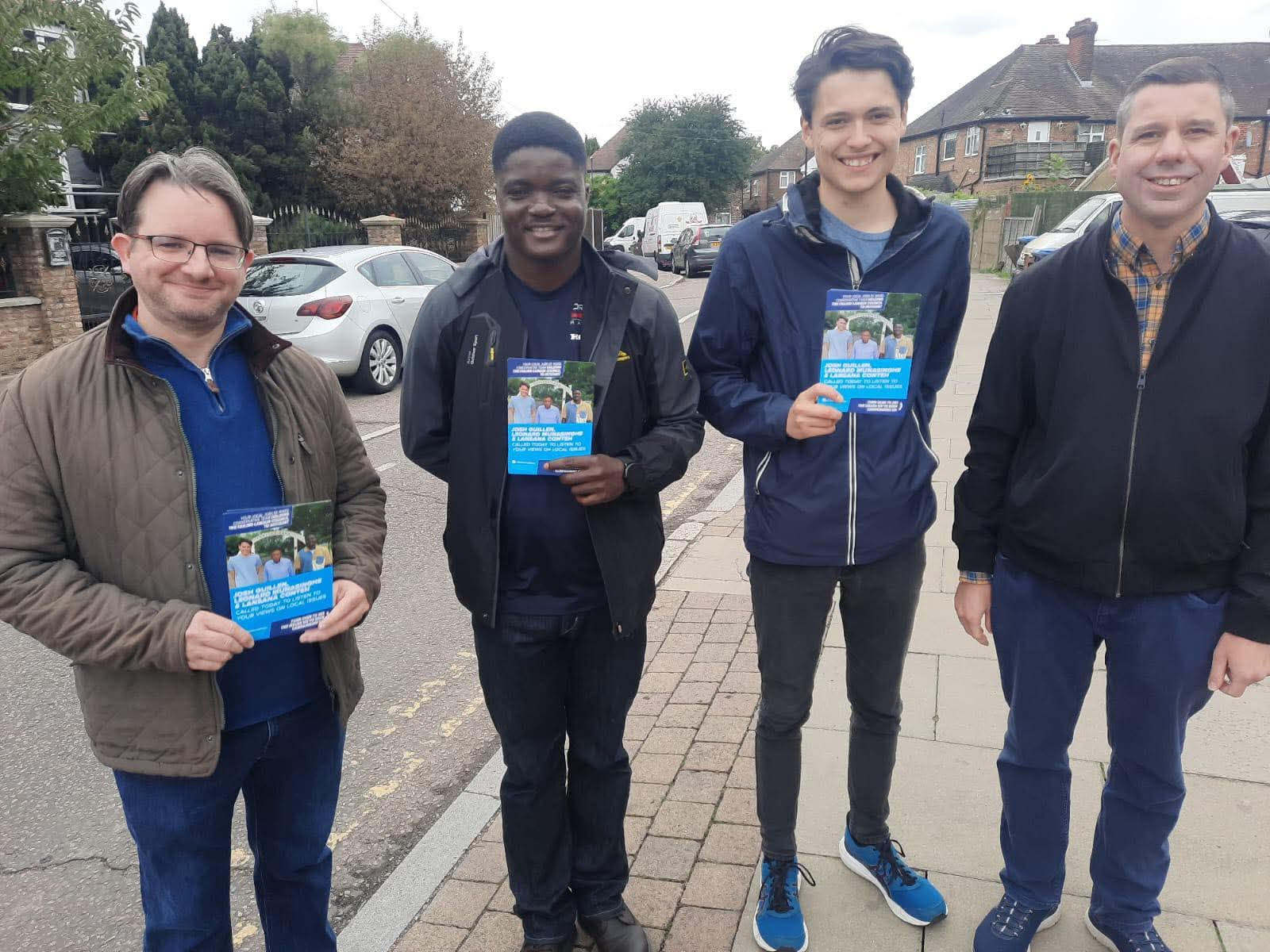
Joshua Guillen is a Conservative candidate in the Jubilee Ward for the Enfield Council elections in May.
The local elections in May are widely expected to be damaging for the Conservatives, with both the centre-left and the right – in the form of the Liberal Democrats and Reform UK – set to be the ultimate beneficiaries in areas historically well-rehearsed at returning blue councils. Yet despite this, here in bright red Enfield, there is life in the old Tory dog yet thanks to the complacency of our local Labour council.
While it would be foolhardy to assume that Labour are guaranteed to lose control of a borough they have governed since 2010, they will inevitably benefit from a handsomely-funded ground game – some forecasts have predicted them to be defeated for the first time in over a decade and a half.
To understand why, take the example of Jubilee Ward, where I am a Conservative candidate. Habitually red, it was, until recently, considered to be safe enough for the former Leader of Enfield Council, Nesil Caliskan, to be a councillor. Yet, upon vacating her seat for the House of Commons, the subsequent by-election in October 2024 saw us get our highest ward share since 2006, which represented a swing of just over ten per cent. Other than the local picture, which was characterised by decaying public services and an ever-increasing debt-burden, to compete with Labour so soon after they had won a landslide in Westminster was a shock.
Yet it is precisely because of the council’s record of delivery, or more accurately, lack thereof, that has boosted our competitiveness in the Ward – and has made the May elections a referendum on the viability of Enfield Labour. Consider first that the London Borough of Enfield is currently indebted to the tune of £1.23 billion, and was forecast to hit £1.5 billion by the end of this financial year. Such financial distress corrodes public services, weakens the council’s fiscal resilience and creates a race to the bottom for services deemed to be discretionary or of limited importance.
While there have been many suspect decisions in this genre, the gutting of weekly household bin collections remains top of the Labour chargesheet. Nominally inexpensive and a genuine public good, their decision to remove weekly waste removals has hastened fly-tipping and made streets less pleasant. Despite barbs to the contrary, we take no pleasure in pointing this out across our campaign; we want to live in a London Borough that is clean and rubbish-free. We have made the case that having pride in place is a prerequisite to a tolerant and prosperous neighbourhood. That is why we have committed to bringing them back. Yet the reality is inescapable: Labour has made Enfield less clean, and the days of spendthrift decision-making must end.
The point I am getting at here is not necessarily one about hyper-local service provision – however crucial that is – but instead one about fairness. Enfield was recently ranked as the sixth most deprived Local Authority in England, with 37.7 per cent of the population living in a deprived household, and the Jubilee Ward itself placed among the most deprived 20 per cent in the country. So, when I hear on the doors that residents feel let down by consecutive Labour administrations, the Conservative principles upon which we campaign become more apparent. Hence, when Enfield Labour refuse to substantively address the Borough’s spiralling fly tipping crisis, it is important we call it out for what it is: a cynical assumption that people will not vote differently, no matter how bad things become. To my mind, and to those of my campaign colleagues, such an indifference implies that proper waste services are the preserve of the wealthy – and that dirty streets in the N9 postcode aren’t actually all that bad.
The same attitude persists with the top-down imposition of Low Traffic Neighbourhoods (LTNs) – or, as Labour insists on calling them, “Quieter Neighbourhoods” (they promise they’re different). Purportedly designed to create “safer, greener and more inclusive streets”, these definitely-not-LTNs merely serve to push congestion into avenues, by-roads and highways predominantly occupied by poorer neighbourhoods. In essence, gridlocked traffic is now the new normal.
But my contention – and this is something I have heard on the doorstep – is that is goes beyond that: it is a foul injustice. Cars are crucial to an outer London borough like ours, and are often a prerequisite for people earning a living. Even to those who may not afford to drive, busier roads lead to slower buses, in turn depriving people of an ability to earn and gain a sense of independence. Both us and TfL know LTNs lead to disruption. That Labour cannot compute this – local grandstanding aside – and refuse to acknowledge this reality, goes some way in demonstrating why they are in for one hell of a fight this May.
The fact is, Jubilee Ward, alongside other parts of Enfield, are competitive for the first time in my adult life, showing that the Conservative principles of fairness, autonomy and sound money are still in vogue. After all, stranger things have happened – and Enfield may just be the blueprint for a Tory revival.
It’s not often you write something about a politician and a party where you are confidant, yourself, it’s correct, and then the Prime Minister gives you, publicly and gratis, every proof it was.
Starmer’s dogged refusal to answer a single question on fuel duty at PMQs but to keep trying to paint Badenoch and Farage as – and he actually used the word – ‘war mongers’ was the clearest sign of the very co-ordinated narrative he and his party want to spin to discredit his opponents and buy himself back some badly needed credibility
The House of Commons has long had a proscription about using the term ‘liar’ towards another member of the house, so it takes some anger for a Tory front bencher to shout the term at the PM. The Speaker rebuked them for it, as they always have, but there was a real anger on Tory benches at the corkscrew logic Starmer applied – whilst dodging the question – to make him look sensible and statesman-like whilst covering up his flatfooted response, diplomatic fence sitting, and the fact his decision making has been largely guided by domestic political considerations including his own survival.
His one time image of being an unlikely but seemingly effective ‘bridge to Trump’ is in tatters. And 24 hours after his weekly – weakly – PMQs exchange it was his decision to appoint Peter Mandelson as his official ‘bridge to Trump’ that he was having to answer for.
His answer given to reporters was that the decision was his ‘mistake’, and again apologised to the victims of the world’s most infamous paedophile, Jeffrey Epstein.
It is in keeping with previous problems the PM has faced, that: on Iran Number 10 briefed against the Chief of the Defence staff that a ‘lack of planning’ was more his fault and on Mandelson the minister sent out to ‘defend the indefensible’ on the media yesterday said the topic of Mandelson should really be dropped as raking over it was re-traumatising Eptein’s victims.
Hiding behind, has become a habit. A Chief of Staff, a deputy National Security Advisor, the Head of the Defence staff, it’s a bad pattern but hiding behind trafficked victims of a paedophile is a real low.
The Times reports that Mandelson brokered a meeting in Downing street for Tony Blair and Jeffrey Epstein where they ‘discussed religion and world conflicts’ in 2002, that’s of course 23 years before Mandelson was appointed UK Ambassador to Washington. The general media response to the first file release of what the PM knew before he appointed Mandelson was that they were very awkward for Starmer but no ‘smoking gun’. It is however very clear that he knew enough, for the man who made such play of his moral compass before he was PM to reconsider the appointment as the PM.
The release also shows his claim, to the House of Commons, that a full process had been gone through was at best disingenuous, and that that process was not the standard operation most have to go through. I have seldom seen or faced LBC’s veteran inquisitor Nick Ferrari in such obviously genuine frustration and anger. It’s worth a watch.
Starmer is in Downing Street, partly because he repeatedly suggested, he’d be different. Country before party, service before self-service, a new standard in public life across his government. He and a number of his ministers and aides have spent the last 20 months repeatedly trashing that claim. If on this slate alone, he was ‘the change’, he was a change for the worse.
No, Conservatives can’t remotely pretend to have been squeaky clean in the past, and Reform have been dogged by accusations since they entered Parliament. The Lib Dems have been quietly trying to handle a longstanding issue with a senior member of their party, and Zack Polanski has his – for want of a better phrase – his weird ‘boob thing’.
It takes me back to a line widely picked up in the 2024 conference leadership speech made by my old boss Sir James Cleverly urging the Tories to ‘be more normal’.
If the whole party, indeed all our political parties could take that to heart we might, just might, find that the public didn’t retain quite such an intense distrust of politics as a whole and politicians as a species. Remember when “MPs expenses” was supposed to be the watershed moment?
The losses the Conservative’s sustained in 2024 were numerically appalling for them, but some of those who lost their seats were loses equivalent to a ‘cleansing‘. A few MPs who were dismissed by the electorate were embroiled, in the brutal words used to me by one party Chairman, “in some pretty dark shit”.
In October last year Kemi Badenoch gave a very sensible response when I asked her about standards for candidates and MPs, and the risks of doing opposition the halo-polishing way Starmer had.
It was partly to highlight, as is her job, that it had massively backfired on him and Labour within a year, but she went on to say:
“You know we want everybody to be working to the highest possible standards… I’m sure once in a while, there’ll be some people who fall short. But what I’m not doing is pretending the Conservative MPs are perfect. We’re not. What we are, are people who recognise that people are flawed, make allowances for that, and we don’t want to be a country where the people who are in there [government] are neither competent nor honest. We’ve got to make sure that we bring honesty and competency through and that’s one of the things that I’m focused on. “
Every politician, like every individual has flaws. A year ago a number of Conservatives, some no longer Conservatives were more than happy to tell me hers, whilst glossing over their own. No body needs saints or sinners in their ranks, but competent, honest people who are ‘normal’ would be a massive plus.
Ignoring a man’s relationship with a convicted paedophile to give him one of the highest and most important diplomatic position this country can confer, is, I’d suggest, worse than a man who broke his own rules to eat a cake, and was hounded by the party now defending their PM – but in the real world neither is a good look.
Starmer is still on borrowed time, for all his self-congratulation about his own leadership skills and his loud denigration of others’. His premiership is so riddled with holes by now you could market him as a Swiss cheese. He ‘was the future once’
It’s the politicians coming forward, the candidates and MPs with a future I’m thinking about.
If we can all find a way to choose candidates and foster MPs who are just a bit more normal to a majority of the electorate, we wouldn’t be doing ourselves a favour.
We’d be doing everyone a favour.
Politics
George Beglan: Britain’s political class has confused legal performance with strategic thinking – again

George Beglan holds an LLM (Distinction) from Durham and read Jurisprudence at Oxford; he has published on law reform in the Cambridge Law Review
A fortnight ago, the United States and Israel killed Ayatollah Khamenei, destroyed significant portions of Iran’s nuclear and missile infrastructure, and triggered a regional counterstrike that hit Gulf civilian infrastructure, closed major airspace, and set the Middle East on the edge of a wider war. The British government lent its bases for ‘defensive’ strikes, scrambled RAF aircraft to intercept Iranian missiles over the Gulf, and announced, with apparent sincerity, that it did not want to see further escalation.
The British commentariat’s response was, broadly, to reach for international law. Was the strike legal? Was it sanctioned? Did it violate the UN Charter’s prohibition on aggression? The SNP invoked Article 2(4). The Greens called it illegal. Academics queued to explain the self-defence thresholds under Article 51. It was, as the same conversation was in January over Venezuela, a performance of legal seriousness that served primarily to avoid the actual question.
The actual question is simpler: was it strategically justified, and what should Britain do now?
I argued elsewhere in January, writing about Venezuela, that international law in military matters has always been more facade than framework: that it lacks enforcement mechanisms, that it derives its apparent authority from hegemonic sponsorship, and that appealing to it not only fails to constrain great power behaviour but obscures the real debate. The intervening weeks, culminating in Operation Epic Fury, have provided a rather emphatic real-world test of that thesis.
The Legal Debate Is Not the Debate
The legal arguments are real, in a technical sense. The US-Israel strikes almost certainly do not satisfy the imminence threshold for Article 51 self-defence as it is generally understood. Iran had not launched an armed attack immediately preceding the operation. The 2025 US intelligence assessment judged that Iran was not actively building a nuclear weapon. The Security Council was not consulted. On a strict reading of the UN Charter, this is legally difficult territory.
None of this matters, in any practical sense, and the reason it does not matter is the reason it never mattered: the UN Security Council exists primarily to formalise great power disagreement, not to constrain great power behaviour. Russia and China have condemned the strikes. They condemned the Libya intervention in 2011. They condemn Israeli operations with metronomic regularity. The condemning party and the acting party have simply traded positions depending on convenience, and the ‘law’ in each case is invoked to legitimise the position already held.
What the legal framing does, more damagingly, is replace a tractable question with an intractable one. Whether the US-Israel strikes were strategically wise, what their likely consequences for regional order are, what Britain’s interests actually are in the outcome, whether a destabilised or collapsed Iranian state serves Western interests better than a constrained one: these are questions that can, with difficulty, be analysed and answered. Whether the strikes violated Article 51 is a question that, in the absence of any enforcement mechanism, generates argument without resolution and virtue-signalling without consequence.
The legal framing replaces a tractable question with an intractable one. Whether the strikes were strategically wise is analysable. Whether they violated Article 51, in a world with no enforcement, generates argument without resolution.
Britain’s Position Is Incoherent
The British government’s own position illustrates the confusion perfectly. We did not participate in the strikes. We do not want escalation. We have, however, lent our bases for what the Prime Minister called ‘a specific and limited defensive purpose,’ and we have RAF aircraft actively intercepting Iranian missiles in the Gulf. The legal architecture being invoked by our opposition politicians would, if applied consistently, render Britain a co-belligerent. The government has chosen to say nothing about this, presumably because acknowledging it requires engaging with the strategic question directly.
This is not a criticism of the operational decision. The case for lending bases and providing defensive air cover is defensible on national interest grounds: British personnel and bases were directly at risk from Iranian strikes, Gulf stability is a British economic and strategic interest, and the alternative was to watch from the sidelines while America conducted the operation without us, sacrificing influence over its conduct and aftermath. These are real considerations. The problem is that the government is unwilling to make them publicly, because making them publicly requires abandoning the international law frame and admitting that British policy is being made on the basis of interests and judgements, not legal obligation.
Conservatives should find this uncomfortable, because the clarity they routinely demand of others on national sovereignty and the rejection of supranational constraint does not appear to extend to military matters when the politics are difficult. A conservatism that invokes sovereignty against Strasbourg and Brussels but retreats to UN Charter language when asked about Tehran is not a coherent position. It is convenience dressed as principle.
What the Strategic Questions Actually Are
Set the legal framing aside and several genuinely difficult questions emerge, to which honest answers are available.
Was the operation strategically justified?
The strategic case rests on the combination of Iran’s nuclear trajectory, its missile programme development timeline, and the judgement that the window for military prevention was closing. Contra the 2025 intelligence assessment’s headline conclusion, Iran’s enrichment levels were well above civilian requirements and its ICBM development timeline was being actively compressed.
Quite pithily, in order for Iran’s pacifist claims to be true, they would be the first and only country in the world to enrich Uranium to 60% for peaceful purposes. The pacifist claim requires not just that the late Ayatollah was peace-minded, but that he and his many associates were nuclear pacifists unprecedented in history. A high bar for the claimant to clear, I’m sure you’ll agree.
Against this, Iran was in active diplomatic negotiations when the strikes occurred, which is either evidence that diplomacy was viable and was therefore prematurely abandoned, or evidence that Iran was using negotiations as cover whilst continuing to develop capability. Which reading is correct matters enormously for the strategic assessment, and the British media has largely not tried to find out.
What are the likely consequences for regional order?
The killing of Khamenei and significant IRGC leadership creates a succession vacuum of unpredictable dimensions. CIA assessments before the strikes identified potential successors, many of whom appear to have been killed in the operation. A weakened, internally fractured Iran may be less capable of projecting force through proxies; it may also be less capable of the kind of centralised rational calculation that made deterrence work. The history of Western-induced regime instability, Libya being the obvious comparator, suggests the second risk is the more serious one, and it deserves more serious treatment than it has received.
What are Britain’s actual interests here?
They are not primarily legal. They are: the security of British personnel and bases in the region; Gulf economic stability and energy prices; the prevention of a nuclear-armed Iran; the avoidance of a regional war that would generate refugee flows and further terrorism; alongside the maintenance of influence with Washington over the shape of whatever post-conflict settlement emerges. A British government willing to articulate these interests clearly would be in a better position to advance them. A British government hiding behind ‘we don’t want escalation’ is in a position to advance none of them.
What Conservatives Should Say
A coherent Conservative position would acknowledge the following. First, that the legal framing is largely performative and that the real question is strategic. Second, that the strategic case for the operation has genuine weight, even if the execution and timing can be questioned, and that pretending otherwise for the sake of appearing principled is neither honest nor useful. Third, that Britain’s interests in the outcome are substantial and specific, and that maximising influence over the post-conflict settlement requires engaging with Washington directly and credibly rather than signalling disapproval from the sidelines. Fourth, that the risk of an ungoverned Iranian state is at least as serious as the risk of a nuclear-armed one, and that any coherent policy towards Iran must now address both.
Thatcher did not discuss the Falklands primarily through the lens of UN Security Council resolutions, though she engaged with them. She discussed it through the lens of British interests, British principle, and British will. The clarity that served British foreign policy well in that conflict is the clarity that is missing now, and its absence is not a symptom of excessive legalism. It is a symptom of a political class that has forgotten how to think about power.
The legal framing is not neutrality. It is the avoidance of accountability for strategic judgements that need to be made. Britain has interests in Iran’s outcome. We should say what they are.
The death of international law, as a meaningful constraint on great power military behaviour, is not new news. It has been dying since at least 2003, and arguably never fully lived. What Iran has done is make the body impossible to ignore. The question for British Conservatives is not whether to mourn it, but whether to develop a foreign policy capable of operating honestly in the world that remains.

This article features advice from Dr Mukesh Kripalani, a consultant psychiatrist at The ADHD Centre, and Tarryn Poulton, an occupational therapist and founder of Nurture ADHD.
If homework battles are a regular occurrence for you and your child with ADHD, it might be the order in which you’re doing things after school that could be setting you up for failure.
That’s according to Tarryn Poulton, an occupational therapist and founder of Nurture ADHD, who shared on social media that doing homework first “always backfires” with ADHD kids.
Typically, the hour after school is hard for a lot of parents as children can experience something called ‘after-school restraint collapse’ (where they basically become mini emotional volcanoes).
But for neurodivergent children and their families, this hour can be even more intense. You might experience meltdowns, refusal, tears and intense explosions of emotion over seemingly nothing.
Getting them to do homework then, even if it’s a simple or quick task, can feel nothing short of impossible.
Why does this happen?
Dr Mukesh Kripalani, a consultant psychiatrist at The ADHD Centre, tells HuffPost UK: “School already demands hours of self‑control (sitting still, following rules, masking impulsivity), which is mentally and physically exhausting for kids with ADHD.
“After sustained effort, their ability to inhibit behaviour (hyperactivity and impulsivity) and pay attention is depleted, so extra demands like homework can lead to meltdowns, oppositional behaviour, or shutdowns.”
On top of this, children with rejection‑sensitive dysphoria (RSD) tend to feel criticism or perceived failure as intensely painful and “difficult to bear”.
So, if a child has spent the whole day at school fearing criticism, being corrected, or trying to avoid embarrassment, “one more demand or bit of negative feedback over homework can trigger disproportionate anger, refusal, or despair,” says the psychiatrist.
“This can look like ‘sudden’ oppositional behaviour, but it’s often the overflow of accumulated emotional strain and masking.”
And then there’s fatigue and (sometimes) hunger feeding into all of this. “ADHD brains work harder to manage working memory, time management, and sustained attention, so schoolwork and homework are unusually draining,” says Dr Kripalani.
“When we add immediate homework to that fatigue; stress spikes, and inattention, avoidance, and task paralysis become more severe.”
In short: you’re going to be fighting a losing battle. They have nothing left to give at this point.
“For many children with ADHD, pushing straight into homework after a full school day can increase stress, trigger emotional overload, and worsen behaviour rather than build good habits,” adds Dr Kripalani.
What to do instead of asking for homework first
Poulton suggests children need to “decompress” before they do anything else.
She suggests creating a “landing zone” so the moment your child walks in the door, they get a snack; a calm, low-demand space; and a parent who is present, but not asking questions or trying to get them to do something.
She advises giving them 20 minutes before asking for anything so they can regulate their nervous system.
After this point, she recommends providing opportunities for movement, whether it’s a walk or kicking a ball about; and then connection with you – give them your attention, listen to what they want to tell you, and signal safety.
And now, time for homework!
The key here is keeping it “short, clear and specific” – breaking it down into chunks, and taking planned mini-breaks. Dr Kripalani recommends giving immediate positive feedback after each ‘chunk’ and rewarding them.
“Children with ADHD respond particularly well to immediate and frequent rewards; quick positive reinforcement works better than delayed or purely punitive approaches,” he says.
“Reward systems (praise, tokens, small privileges) that are tied to effort and broken‑down steps can make homework feel achievable and more motivating.”

Adobe shares drop after CEO exit adds to AI-disruption concerns

U.S. sanctions network tied to DPRK IT jobs and crypto laundering operation
Which Aren’t Renewed for More Seasons?

Smart energy pays enters the US market, targeting scalable financial infrastructure

Why Israel is blocking foreign journalists from entering

Bitcoin: We’re Entering The Most Dangerous Phase

Intercepted Drone Debris Hits Central Dubai Building; Iran Claims Strike Targeted Financial Hub

Weekly Pay Quiz: Can You Solve This Math Riddle? #quiz #finance #shorts

OMG SCARY Cardano Founder: Worst Crypto Era in History #crypto #cryptocurrency #xrp #finance #oil
-
Business7 days ago
Form 8K Entergy Mississippi LLC For: 6 March
-

 News Videos4 days ago
10th Algebra | Financial Planning | Question Bank Solution | Board Exam 2026
-

 Fashion7 days ago
Weekend Open Thread: Ann Taylor
-

 Crypto World4 days ago
Paradigm, a16z, Winklevoss Capital, Balaji Srinivasan among investors in ZODL
-
 Tech2 days ago
A 1,300-Pound NASA Spacecraft To Re-Enter Earth’s Atmosphere
-

 Tech3 days ago
ChatGPT will now generate interactive visuals to help you with math and science concepts
-

 Politics7 days ago
Top Mamdani aide takes progressive project to the UK
-

 Business3 days ago
ExxonMobil seeks to move corporate registration from New Jersey to Texas
-

 Sports6 days ago
Three share 2-shot lead entering final round in Hong Kong
-

 Sports5 days ago
Braveheart Lakshya downs Lai in epic battle to enter All England Open final | Other Sports News
-

 NewsBeat2 days ago
Residents reaction as Shildon murder probe enters second day
-

 Entertainment6 days ago
Hailey Bieber Poses For Sexy Selfies In New Luscious Lip Thirst Traps
-

 Business5 days ago
Search for Nancy Guthrie Enters 37th Day as FBI Probes Wi-Fi Jammer Theory
-

 Business2 days ago
Search Enters Sixth Week With New Leads in Tucson Abduction Case
-
 NewsBeat3 days ago
Pagazzi Lighting enters administration as 70 jobs lost and 11 stores close across Scotland
-

 Tech4 days ago
Despite challenges, Ireland sixth in EU for board gender diversity
-

 Business4 days ago
Search Enters 39th Day with FBI Tip Line Developments and No Major Breakthroughs
-

 NewsBeat2 days ago
I Entered The Manosphere. Nothing Could Prepare Me For What I Found.
-

 Business6 days ago
Iran war enters second week as Trump demands ’unconditional surrender’
-

 Sports4 days ago
Skateboarding World Championships: Britain’s Sky Brown wins park gold