

Crypto World
Vitalik Buterin Withdraws Support From Future of Life Institute Following $500M SHIB Donation Controversy


Key Points
- Buterin withdraws support from FLI following shift toward AI policy lobbying
- 2021 SHIB donation unexpectedly surged beyond $1B during memecoin rally
- FLI and CryptoRelief successfully liquidated approximately $500M despite market constraints
- Buterin cautions that heavy-handed AI policy approaches could backfire
- Advocates for technological solutions including cybersecurity and biosurveillance systems
The co-creator of Ethereum has publicly clarified his stance on the Future of Life Institute following strategic changes that emerged after his substantial 2021 cryptocurrency donation. The gift consisted of massive quantities of Shiba Inu tokens that experienced dramatic value appreciation. Buterin currently maintains that the organization’s trajectory has diverged from the initial vision that informed his philanthropic decision.
Ethereum Founder Challenges Path of SHIB-Backed Organization
Buterin transferred substantial volumes of Shiba Inu tokens to the Future of Life Institute amid the 2021 memecoin frenzy. During that period, Buterin endorsed a comprehensive research framework addressing catastrophic global risks. This framework encompassed concerns about advanced artificial intelligence, biotechnology hazards, and nuclear threat awareness.
Buterin currently asserts that the institute progressively pivoted its focus toward legislative advocacy centered on artificial intelligence regulation. In Buterin’s assessment, this transformation represents a departure from the original science-based and educational blueprint outlined when the donation occurred. Buterin clarified that this strategic evolution has generated a disconnect between his initial intentions and the institute’s current operations.
Buterin additionally voiced apprehension regarding massively funded, coordinated advocacy initiatives. He cautioned that forceful policy interventions might produce counterproductive results and public resistance. Consequently, Buterin stressed that technology-driven resilience strategies could deliver more durable protection against existential dangers.
Shiba Inu Gift Exceeds Anticipated Value
The contribution stemmed from enormous quantities of canine-themed cryptocurrencies delivered to Buterin by token creators throughout the 2021 memecoin explosion. Numerous developers deposited tokens directly into Buterin’s publicly visible wallet as a marketing strategy. Consequently, Buterin found himself holding substantial reserves of Shiba Inu tokens.
Throughout the price surge, the aggregate valuation of these holdings climbed past $1 billion at market peak. Buterin acted swiftly to retrieve assets from secure storage and transformed portions of the holdings into Ethereum. Following this conversion, Buterin allocated the resources to charitable causes and scientific research entities.
Buterin anticipated constrained liquidity conditions within the Shiba Inu marketplace during that timeframe. He projected organizations would successfully convert merely ten to twenty-five million dollars. Contrary to these expectations, both the Future of Life Institute and India’s CryptoRelief successfully liquidated approximately $500 million worth of tokens.
Ethereum Creator Champions Tech-Centric AI Safety Approach
Buterin maintains acknowledgment of the institute’s objective to confront severe technological hazards. The organization advances policies designed to ensure artificial intelligence advancement serves collective human interests. Nevertheless, Buterin expresses disagreement with certain proposals restricting AI capabilities and biosynthesis equipment.
The institute has deployed protective measures preventing dangerous outputs from sophisticated models and research apparatus. Buterin contends that these restrictions prove insufficient because determined adversaries can circumvent them. Buterin maintains that depending exclusively on stringent output limitations cannot deliver enduring security.
Alternatively, Buterin champions accessible technological interventions that bolster defenses against existential threats. Such interventions encompass improved cybersecurity frameworks, trustworthy computing infrastructure, and sophisticated pandemic-surveillance mechanisms. Utilizing this methodology, Buterin contends societies can minimize catastrophic vulnerabilities without depending on intensive political mobilization.
Buterin further cautioned that artificial intelligence safety discourse risks losing legitimacy if perceived as connected to geopolitical rivalry. Per Buterin’s assessment, worldwide confidence remains crucial for productive coordination on breakthrough technologies. Accordingly, Buterin encouraged decision-makers and scientists to emphasize transparent and cooperative methodologies.



Editor’s note: This editorial previews the joint effort by AMC Robotics and HIVE to push AI-driven robotics compute infrastructure. The partners say the collaboration will use HIVE’s GPU AI Cloud resources to back AMC’s Kyro platform as it scales from lab testing toward real-world deployment, with demonstrations of autonomous navigation and heat detection highlighted in Tokyo. Beyond immediate compute needs, the companies are exploring broader cooperation in AI optimization, data processing, and scalable infrastructure to support future product initiatives.
As we continue to expand our AI-driven robotics solutions, access to reliable and scalable infrastructure is increasingly important.
Key points
- AMC Robotics and HIVE are collaborating to advance AI-driven robotics compute infrastructure.
- AMC will use HIVE’s GPU AI Cloud compute resources to support development, testing, and deployment of Kyro and related robotics solutions.
- Kyro demonstrated autonomous navigation, abnormal heat detection, and remote operation at the Tokyo Security Show 2026.
- The collaboration may expand to AI optimization, data processing, and infrastructure scalability with future arrangements subject to mutual terms.
Why this matters
The partnership signals growing demand for scalable AI compute as robotics move toward real-time edge applications. By combining Kyro’s autonomous platform with HIVE’s GPU AI Cloud, AMC and HIVE aim to improve performance, flexibility, and scalability, accelerating innovation at the AI-robotics frontier and enabling real-time video processing and navigation in challenging environments.
What to watch next
- Further collaboration across AI optimization, data processing, and infrastructure scalability as opportunities emerge.
- Progress of Kyro from lab demonstrations to real-world deployment with scalable compute resources.
- Expansion of HIVE’s BUZZ GPU AI Cloud infrastructure to support robotics workloads globally.
Disclosure: The content below is a press release provided by the company/PR representative. It is published for informational purposes.
AMC ROBOTICS AND HIVE ANNOUNCE COLLABORATION TO ADVANCE AI-DRIVEN ROBOTICS COMPUTE INFRASTRUCTURE
12 Mar 2026
AMC Robotics and HIVE Announce Collaboration to Advance AI-Driven Robotics Compute InfrastructureThis news release constitutes a “designated news release” for the purposes of the Company’s prospectus supplement dated November 25, 2025 to its short form base shelf prospectus dated October 31, 2025. San Antonio, TX, March 13, 2026 — AMC Robotics Corporation (Nasdaq: AMCI) (“AMC Robotics” or the “Company”), an AI-driven robotics solutions provider, and HIVE Digital Technologies (“HIVE”) (TSX.V: HIVE) (Nasdaq: HIVE) (FSE: YO0) (BVC: HIVECO), a global leader in sustainable digital infrastructure and AI compute, today jointly announced a strategic collaboration focused on advancing next-generation AI-driven robotics applications and scalable infrastructure capabilities.
Through this collaboration, AMC Robotics has begun utilizing HIVE’s GPU AI compute infrastructure and related services to support the Company’s expanding development, testing, and deployment needs. In parallel, the two companies are actively exploring broader areas of cooperation, including potential collaboration across AI optimization, data processing, and infrastructure scalability to support future product initiatives.
AMC Robotics recently featured its AI-powered quadruped robot Kyro™ at the Tokyo Security Show 2026, as an active demonstration of autonomous security technology. The robot serves as a mobile AI edge computing platform, capable of operating independently in complex environments and supporting real-time monitoring and inspection. During the exhibition, Kyro™ performed live demonstrations of autonomous navigation, abnormal heat detection, and remote operation, showcasing how robotics can support security and inspection tasks in challenging environments.
A video demonstration of AMC Robotics’ Kyro™ platform in action is available at https://amc-media.amcx.ai/rebotdog.mp4. Additional information on AMC’s robotic solutions can be found at https://amcx.ai/solutions/robotic-dogs/.
As AMC Robotics continues advancing AI-driven robotics applications, particularly for real-time video processing and navigation, access to scalable GPU computing infrastructure becomes increasingly critical. HIVE has been expanding its GPU AI Cloud infrastructure globally through its BUZZ HPC subsidiary, servicing growing enterprise demand across AI training, inference, and now robotics workloads, where it will provide AMC Robotics with the compute resources needed to support its growing development and deployment activities.
The collaboration reflects a shared vision between AMC Robotics and HIVE to accelerate innovation at the intersection of artificial intelligence, robotics, and intelligent infrastructure. By leveraging HIVE’s technical capabilities and AMC Robotics’ application-driven robotics platform, the parties aim to enhance performance efficiency, development flexibility, and long-term scalability.
“As we continue to expand our AI-driven robotics solutions, access to reliable and scalable infrastructure is increasingly important,” said Sean Da, CEO of AMC Robotics. “Our collaboration with HIVE supports our current operational needs while also opening the door to potential deeper collaboration as we look ahead.”
Frank Holmes, Co-Founder & Executive Chairman of HIVE, stated, “We are seeing the next turn of the AI industrial revolution with the advent of robotics, for security, for logistics, and many new novel applications in manufacturing. This is accelerating as the autonomy, stability, and accuracy of AI-enabled robots evolve. These machines will take on the dangerous, the dull, and the impossible, and the companies building the infrastructure behind them will define the next decade. We are seeing massive investment from the most valuable companies in the world into AI robotics (notably Tesla’s Optimus robots), and the HIVE and AMC Robotics strategic collaboration positions our firms right in the center of these growing markets.”
Aydin Kilic, President & CEO of HIVE, said, “We believe robotics applications may represent a growing area of demand for AI compute infrastructure. As our GPU AI Cloud platform expands globally to service growing AI demand and broad industrial use cases, we see meaningful opportunities to work with AMC Robotics as it advances intelligent robotics applications across a growing range of use cases. As innovators in our respective fields, HIVE’s BUZZ GPU AI Cloud will provide scalable and high-performance compute for AMC Robotics’ ramp from lab to real-world deployment at scale.”
The companies emphasized that the collaboration is expected to evolve over time as HIVE scales its global infrastructure and AMC Robotics moves toward production deployment. Any future arrangements would be subject to further evaluation and mutually agreed terms.
About AMC Robotics Corporation
AMC Robotics (Nasdaq: AMCI) is an AI-driven robotics company focused on developing intelligent, scalable hardware and software solutions. The Company’s quadruped robotic platform, Kyro™, enables industries to automate inspection, security, and operational tasks through autonomous mobility and AI-powered perception. For more information, please visit www.amcx.ai.
About HIVE Digital Technologies Ltd.
Founded in 2017, HIVE Digital Technologies Ltd. is the first publicly listed company to mine digital assets powered by green energy. Today, HIVE builds and operates next-generation Tier-I and Tier-III data centers across Canada, Sweden, and Paraguay, serving both Bitcoin and high-performance computing clients. HIVE’s twin-turbo engine infrastructure-driven by hashrate services and GPU-accelerated AI computing-delivers scalable, environmentally responsible solutions for the digital economy.
For more information, visit hivedigitaltech.com, or connect with us on:
X: https://x.com/HIVEDigitalTech
YouTube: https://www.youtube.com/@HIVEDigitalTech
Instagram: https://www.instagram.com/hivedigitaltechnologies/
LinkedIn: https://linkedin.com/company/hiveblockchain
On Behalf of HIVE Digital Technologies Ltd.
“Frank Holmes”
Executive Chairman
For further information, please contact:
Nathan Fast, Director of Marketing and Branding
Frank Holmes, Executive Chairman
Aydin Kilic, President & CEO
Tel: (604) 664-1078
Craig Mychajluk, Managing Director – Investor Relations, Alliance Advisors IR
E: AMCRoboticsIR@allianceadvisors.com
Neither the TSX Venture Exchange nor its Regulation Services Provider (as that term is defined in policies of the TSX Venture Exchange) accepts responsibility for the adequacy or accuracy of this news release.
Cautionary Note Regarding Forward Looking Statements
This press release may contain statements that constitute “forward-looking statements” as defined in the Private Securities Litigation Reform Act of 1995. Forward-looking statements include information concerning the Company’s possible or assumed future results of operations, business strategies, debt levels, competitive position, industry environment, potential growth opportunities, and the effects of regulation. These forward-looking statements are based on the Company’s management’s current expectations, projections, and beliefs, as well as a number of assumptions concerning future events. When used in this communication, the words “estimates,” “projected,” “expects,” “anticipates,” “forecasts,” “plans,” “intends,” “believes,” “seeks,” “may,” “will,” “should,” “future,” “propose,” and variations of these words or similar expressions (or the negative versions of such words or expressions) are intended to identify forward-looking statements.
These forward-looking statements are not guarantees of future performance, conditions, or results, and involve a number of known and unknown risks, uncertainties, assumptions, and other important factors, many of which are outside of the Company’s control, that could cause actual results to differ materially from the results discussed in the forward-looking statements. These risks, uncertainties, assumptions, and other important factors include, but are not limited to: (a) challenges in opening operations in new jurisdictions, including but not limited to compliance with local ordinances, obtaining any necessary permits and regulatory oversight; (b) the ability to recognize the anticipated benefits of the new operations; (c) the outcome of any legal proceedings that may be instituted against the Company; (d) the ability to continue to meet the applicable stock exchange listing standards; (e) the effect of the Company’s recently completed business combination with AlphaVest Acquisition Corp (“AlphaVest”) on the Company’s business relationships, performance, and business generally and the risk that such transaction further disrupts current plans and operations of the Company or its subsidiaries; (f) the ability to recognize the anticipated benefits of the transaction with AlphaVest, which may be affected by, among other things, competition, the ability of the Company to grow and manage growth profitably, maintain relationships with customers and suppliers and retain its management and key employees; (g) changes in applicable laws or regulations, including legal or regulatory developments (including, without limitation, accounting considerations); (h) the possibility that AMC Robotics may be adversely affected by other economic, business, and/or competitive factors; (i) AMC Robotics’ estimates of expenses and profitability; and (j) other risks and uncertainties indicated under “Risk Factors” contained in the definitive proxy statement/prospectus for the transaction with AlphaVest, and other documents filed or to be filed with the SEC by AMC Robotics. Copies are available on the SEC’s website, www.sec.gov. You are cautioned not to place undue reliance upon any forward-looking statements, which speak only as of the date made.
The Company assumes no obligation and, except as required by law, does not intend to update or revise these forward-looking statements, whether as a result of new information, future events, or otherwise. The Company gives no assurance that it will achieve its expectations.
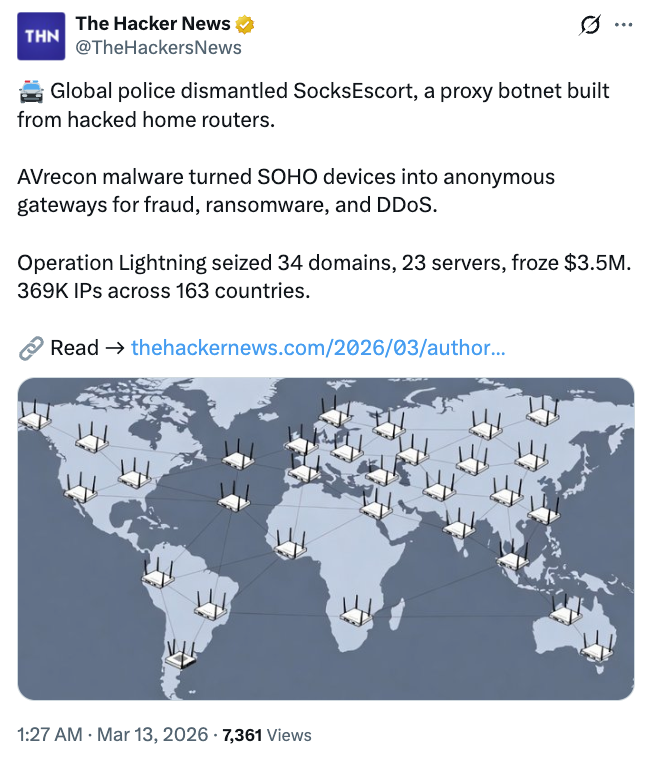
US and European authorities said Thursday they had disrupted SocksEscort, a malicious proxy service used by cybercriminals to hide their identities while carrying out fraud, including cryptocurrency account takeovers.
The DOJ said the service compromised at least 369,000 routers and other internet-connected devices in 163 countries, giving cybercriminals control over proxies that hid their true IP addresses.
The platform reportedly enabled crimes, including bank fraud and cryptocurrency account takeovers, since 2020. In one case cited by prosecutors, a victim in New York lost roughly $1 million in cryptocurrency.
Authorities said they seized 34 domains, disrupted about two dozen servers across seven countries and froze about $3.5 million in cryptocurrency linked to the operation.
The network received at least $5.7 million from users
To access the proxy service, customers used a payment platform that allowed them to purchase it anonymously with cryptocurrency, according to a statement by Europol.
Investigators estimate that SocksEscort received at least 5 million euros ($5.7 million) from its users.
“Proxy services like ‘SocksEscort’ provide criminals with the digital cover they need to launch attacks, distribute illegal content and evade detection,” Europol Executive Director Catherine De Bolle said.

“Operations like this show that when investigators connect the dots internationally, the infrastructure behind cybercrime can be exposed and shut down,” she added.
The operation involved agencies from multiple countries
The takedown was part of a coordinated international effort that included law enforcement agencies from Austria, France, the Netherlands, Germany, Hungary, Romania and the US.
The FBI Sacramento Field Office, the Department of Defense Office of Inspector General’s Defense Criminal Investigative Service, and IRS Criminal Investigation Oakland Field Office were among the US agencies involved. Europol and Eurojust provided investigative and operational support for the cross-border operation.
Related: Sweden probes reported leak of e-government platform source code
The DOJ also acknowledged the assistance of Black Lotus Labs, the threat intelligence unit of the US telecom company Lumen Technologies, and the nonprofit organization Shadowserver Foundation, which provided technical intelligence during the investigation.
According to The Hacker News, SocksEscort relied on malware known as AVrecon, details of which were publicly documented by Black Lotus Labs in July 2023.
Magazine: All 21 million Bitcoin is at risk from quantum computers

The Bank of England’s (BOE) position on stablecoins is evolving to a more friendly stance, but according to the bank’s deputy governor, constructive dialogue with the industry is still lacking.
The UK’s central bank launched a consultation on stablecoins in November last year. Some of the proposed requirements drew the ire of crypto industry representatives, who claimed they could stifle innovation.
Over the past few months, the bank has been working with industry groups to develop its stance on stablecoins. These include revising backing requirements and rethinking account limits.
Some industry observers believe that the bank is coming around on stablecoins, but there is still work to be done.
Bank of England open to feedback on stablecoin risk
On Nov. 10, 2025, the BOE released a document outlining its vision for a stablecoin regulatory regime. This came two years after an initial discussion paper which, according to the bank, included the perspectives of “banks, non-bank payment service providers, payment system operators, trade associations, academia, and individuals.”
At the time, industry observers told Cointelegraph that BOE was overstating the perceived risks that stablecoins pose to the UK economy. Tom Rhodes, chief legal officer at UK-based stablecoin issuer Agant, said at the time that the bank was “disproportionately cautious and restrictive.”
One of the more controversial measures was stablecoin holdings limits, namely 20,000 pounds for individuals and 10 million pounds for businesses that accept it as a form of payment.
Now, it appears that the bank is coming around. Speaking before the House of Lords Financial Services Regulation Committee on Wednesday, BOE Deputy Governor Sarah Breeden told MPs that it is open to reconsidering those limits.

Breeden said that the proposed limits were to mitigate the risk of a large migration of deposits to stablecoins, which has the potential to destabilize banks.
“We proposed holding limits as a way of managing that risk. We are open to feedback on other ways of achieving it,” she said.
However, feedback itself also seems to be an issue, at least according to Breeden. She said, “The pressure from the industry to do it in a different way is very real. What we’ve been a bit disappointed with, is nobody said, ‘Why not do it this way?’”
“I don’t think we’ve yet had constructive engagement on a different way to solve the problem that I might have hoped for. Instead, what we’ve had is ‘don’t do this,’ and ‘I understand why you want to do something’ as opposed to filling the gap.”
Rhodes told Cointelegraph on Thursday that this isn’t necessarily the case. “Over the past two years we have reviewed thousands of pages of consultations from the FCA and the Bank, attended numerous roundtable meetings, and submitted hundreds of pages of input both ourselves and as part of trade associations.”
He said that the main challenge for the industry and regulators is that they are making a “comprehensive regulatory regime for a market that has yet to develop.”
Rhodes explained:
“It’s not possible to provide concrete data in the circumstances, which is why lighter touch principles-based regimes are appropriate at this nascent stage.”
Nick Jones, the founder and CEO of UK-based digital assets platform Zumo, said, “Industry groups have been working hard, and to tight deadlines, to make tangible recommendations.”
He said the feedback could be more constructive if the bank followed the Financial Conduct Authority’s (FCA) Spring model. These time-boxed workshops focus on practical applications of the technology to answer regulators’ questions.
The ‘multi-moneyverse’ and what’s next for stablecoins in the UK
Breeden opened her remarks with assurances that at the bank, “we do want to see tokenized money issued by non-banks.”
“We can have what I call a ‘multi-moneyverse’ with greater choice and competition today.”
Such a system, she said in a September speech, is “characterised by choice across different forms of money and payment; with technology driving faster, cheaper, and more innovative payments for the benefit of business, households, and users of financial markets; and — critically — with the whole system underpinned by trust in money itself.”
Inter-monetary competition and its purported benefits have been a core argument from the crypto industry. Rhodes said, “Stablecoins being part of a competitive multi-moneyverse represents a substantial and positive evolution in the Bank’s thinking.”
Related: UK dodges ‘US malaise’ as regulator finalizes crypto rules
However, Rhodes noted that this was in “sharp contrast” to BOE Governor Andrew Bailey’s statements, where “he doesn’t see stablecoins as a substitute for commercial bank money.”
Jones said, “Over time, we’ve seen the Bank of England’s scepticism towards digital assets start to dissipate.” It’s “encouraging” that the central bank is more receptive to competing forms of money and that pound sterling-backed stablecoins can co-exist with fiat money.
“It’s clear that different emerging types will fit different use cases — for example, large institutional capital is more comfortable with tokenised deposits while smaller retail payments companies can tap into the network effect of stablecoins,” he said.
The next step, per Rhodes, is a final policy position from the BOE, but revisions are still possible.

The industry is still pushing to remove the holding caps and scrap bank-like capital rules for issuers. Jones said that the latter “are inappropriate for fully-backed issuers, and should be replaced with oversight focused on reserve quality and transparency.”
They also want a reconsideration of reserves. So far, BOE requires issuers to hold 40% of reserve assets in unremunerated Bank of England deposits and up to 60% in high-quality, short-term UK government debt.
This is based on past runs like the Silicon Valley Bank collapse in 2023 which resulted in the USDC stablecoin losing its peg. Breeden told Reuters, “Those numbers are broadly in line with that. That’s why we’re proposing 40% rather than a smaller number.”
“Regulators should perhaps consider remunerating a portion of the 40% held at the Bank of England to help maintain commercial viability,” said Jones.
“The UK can be one of the leaders in stablecoins, but only if regulation is proportionate and competitive.”
Magazine: All 21 million Bitcoin is at risk from quantum computers
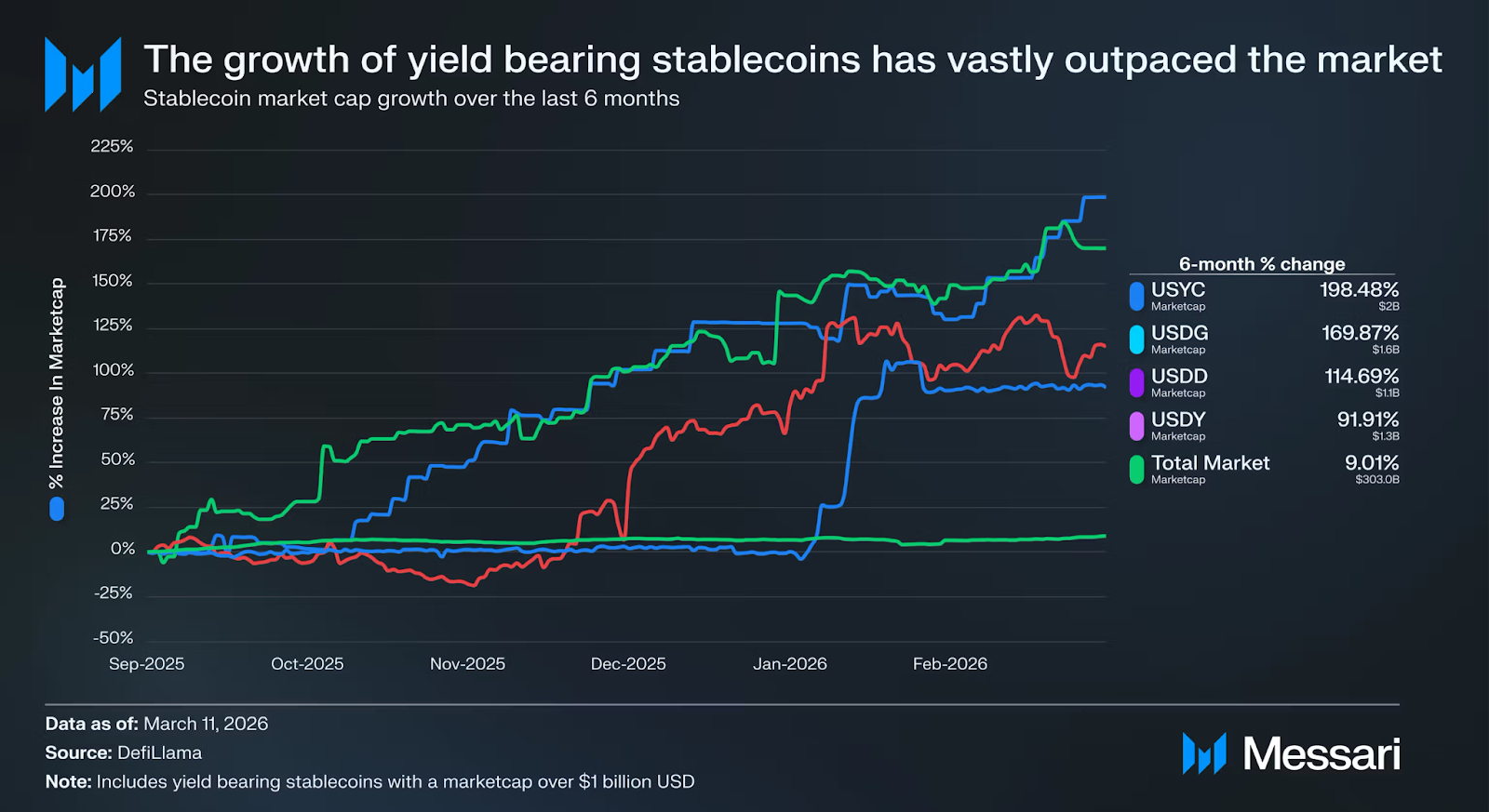
Yield-bearing stablecoins are growing faster than the broader stablecoin market, according to Messari, as Washington remains divided over how crypto-linked yield should be treated under US law.
Yield-bearing stablecoins have outpaced the growth of the broader stablecoin market 15-fold over the past six months, according to a Messari research report published on Thursday.
The increase was driven by a 198% rise in the market cap of Circle’s USYC (USYC), a 169% increase in Paxos’ Global Dollar (USDG), a 114% rise in the value of the Tron DAO-linked Decentralized USD (USDD), and a 91% rise in Ondo Finance’s Ondo US Dollar Yield (USDY). The overall stablecoin market capitalization rose 9%.
Messari said the largest yield-bearing stablecoins are starting to function more akin to money market funds or bank deposits. “The winners don’t do payments,” Messari said, adding that the largest issuers focus their offer on a single asset, rather than payment-related use cases.
Yield-bearing stablecoins started outpacing the growth of the stablecoin supply in mid October 2025, Messari said. The trend suggests rising demand for blockchain-based US dollar products that offer yield without direct exposure to broader crypto volatility.
Yield stablecoins are currently worth a cumulative $22.7 billion, after their market capitalization rose 11% over the past 30 days, according to Stablewatch data.

While this marks a two-fold increase overthe $11 billion market capitalization reached in May 2025, the $22.7 billion value of yield-bearing stablecoins only accounts for about 7.4% of the total $303 billion stablecoin market capitalization, up from 4.5% in May last year.

Among the largest yield-bearing stablecoins by value are Sky’s (sUSDS), Ethena’s (sUSDe) and Maple’s Syrup USDC, according to DefiLlama.

In terms of yield, Maple’s Syrup USDC led this week with a 4.54% annual percentage yield, followed by Maple USDT with a 4.17% APY, Sky Lending’s SUSDS with a $3.75% APY in third place and Ethena’s USDe with 3.49% APY, according to Messari.
Related: Stablecoin payments startup Kast raises $80M at $600M valuation: Report
Lawmakers at odds over stablecoin yield regulations
Despite the growing demand, US lawmakers remain at odds over the market structure bill’s provisions related to yield-bearing stablecoins.
On Thursday, US Senator Majority Leader John Thune reportedly said he doesn’t expect the chamber to move forward with the crypto market structure bill before April.
Yield-bearing stablecoins have become a key sticking point in the debate, with banking groups warning they could create a loophole that pulls deposits away from traditional banks.
The Senate Banking Committee postponed its markup in mid-January as bipartisan negotiations continued, drawing criticism from US President Donald Trump for delaying the bill.
Related: Stablecoin inflows rebound to $1.7B as Washington battles over yield rules
The Digital Asset Market Structure Clarity Act, known as the CLARITY Act, is designed to provide a clear regulatory framework for digital assets. The House of Representatives passed the measure on July 17, 2025, and it has been under debate in the Senate since.
The US’s federal stablecoin framework, the GENIUS Act, prohibits issuers from paying interest or yield for holding a payment stablecoin, but still allows third-party platforms to offer reward programs tied to stablecoin holdings. The act was signed into law on July 18, 2025.
Magazine: How crypto laws changed in 2025 — and how they’ll change in 2026
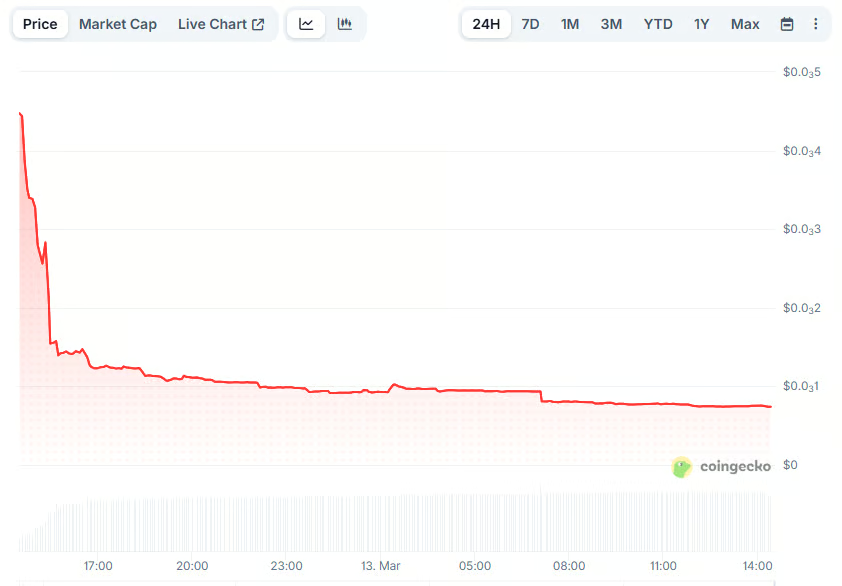
Some of the involved cryptocurrencies nosedived by over 80% after the disclosure.
The world’s largest cryptocurrency exchange announced a major delisting, following which most affected cryptocurrencies collapsed by double digits.
Prior to that, the firm temporarily suspended certain withdrawals and deposits and implemented additional amendments to its platform.
The Binance Effect
Binance Alpha (a dedicated platform inside the exchange’s ecosystem that showcases early-stage crypto projects) removed 21 altcoins, including WorldShards (SHARD), FreeStyle Classic (FST), Alliance Games (COA), BNB Card (BNB Card), MilkyWay (MILK), Hyperbot (BOT), and many more.
The company clarified that the sale of the impacted tokens will still be allowed after the removal. At the same time, it warned users to conduct proper research before trading the aforementioned coins to avoid any scams and protect their funds.
As is typically the case, many of the delisted digital assets headed south shortly after the disclosure. After all, Binance is the largest crypto exchange, and withdrawing support usually results in reduced liquidity, diminished availability, and a damaged reputation. MILK and SHARD fell by 6-7% daily, whereas FST and BNB Card nosedived by 70-80%.
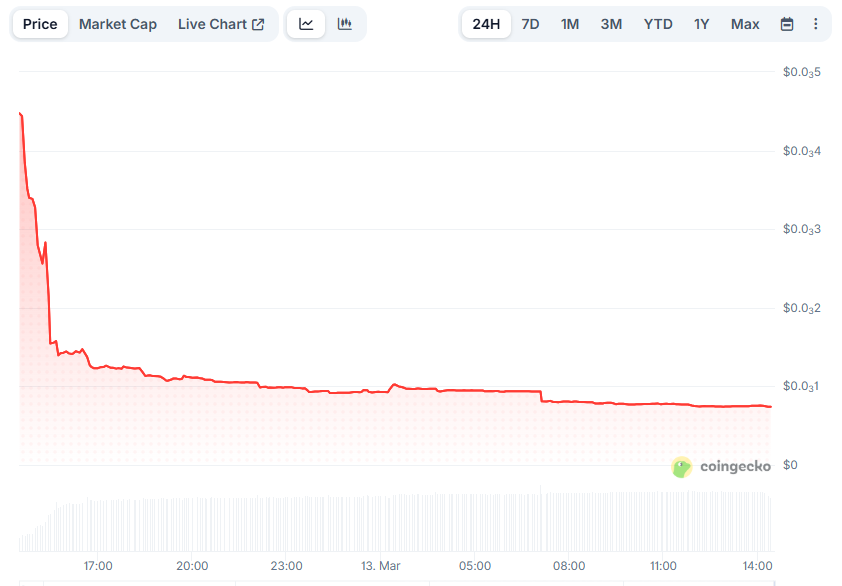
A similar reaction was observed in late 2025 when Binance disallowed all services with Kadena (KDA), Flamingo (FLM), and Perpetual Protocol (PERP). Similar to FST and BNB Card, the involved altcoins crashed by double-digit percentages immediately after the news broke.
Other Recent Efforts
Earlier this week, the exchange supported an upgrade and temporarily paused withdrawals and deposits on the Ethereum network. The process was expected to take about an hour, after which operations were supposed to resume smoothly.
You may also like:
This is a routine procedure that Binance has executed flawlessly many times before. Over the years, it has taken similar measures to support upgrades across various ecosystems, including Cardano, BNB Smart Chain, and others.
Prior to that, Binance issued numerous listing announcements focused on U (United Stables) – a stablecoin launched last year and pegged to the American dollar. In January, it expanded the list of trading choices offered on its Spot section with the BNB/U, ETH/U, KGST/U, and SOL/U pairs.
In February, it added XRP/U, SUI/U, ASTER/U, and PAXG/U, while earlier this month it opened trading for AVAX/U, LINK/U, LTC/U, PAXG/U, and ZEC/U.
Binance Free $600 (CryptoPotato Exclusive): Use this link to register a new account and receive $600 exclusive welcome offer on Binance (full details).
LIMITED OFFER for CryptoPotato readers at Bybit: Use this link to register and open a $500 FREE position on any coin!
Key Takeaways
- Year-over-year core PCE inflation registered 3.1% in January, exceeding the Federal Reserve’s 2% objective
- On a monthly basis, core PCE increased 0.4%, matching analyst forecasts
- Overall PCE recorded 2.8% annual growth, marginally lower than the anticipated 2.9%
- Financial markets broadly anticipate the Federal Reserve will maintain interest rates between 3.5%–3.75% during the upcoming policy meeting
- These figures predate the Iran military engagement, which has elevated crude oil costs and introduces uncertainty to future inflation trends
On March 13, 2026, the Bureau of Economic Analysis published its personal consumption expenditures (PCE) report for January. This metric serves as the Federal Reserve’s primary gauge for measuring inflationary pressures.
The core PCE measure, which excludes volatile food and energy components, climbed 3.1% on an annual basis in January. This figure aligned with expert predictions but represented an acceleration from December’s 3.0% reading. Monthly core PCE advanced 0.4%, consistent with projections.
The overall PCE measurement — encompassing all consumer goods and services — expanded 2.8% annually. This result fell marginally short of the 2.9% consensus estimate and represented a deceleration from the previous month’s velocity.
On a month-to-month basis, overall PCE increased 0.3%, in line with market expectations.
The Federal Reserve maintains an inflation target of 2%. With core PCE currently positioned at 3.1%, consumer prices continue running significantly above the central bank’s desired threshold.
Markets are pricing in that the Fed will maintain its current rate range of 3.5% to 3.75% during next week’s policy deliberations. Given the stubborn inflation readings, interest rate reductions appear unlikely in the near term.
The PCE measure has been registering higher readings compared to the Labor Department’s Consumer Price Index. This divergence primarily stems from varying methodologies for weighing housing and healthcare expenditures. PCE assigns reduced importance to shelter expenses, which have been moderating, while giving greater emphasis to medical costs, which have been climbing.
February’s CPI registered 2.4% year-over-year — a considerably more subdued figure.
What These Numbers Miss
The January data captures economic circumstances from over a month in the past. It fails to incorporate consequences from the Iran military conflict, which commenced following U.S. and Israeli aerial operations in late February.
Oil prices have surged substantially since hostilities began. Elevated crude costs typically translate to higher inflation in subsequent months.
The economic landscape faces additional complexity from broad-based tariff implementations and substantial corporate capital allocation toward artificial intelligence initiatives. Both factors are already influencing economic conditions but remain challenging to measure accurately in real time.
Paul Ashworth, Chief North America Economist at Capital Economics, observed that America’s status as a net petroleum exporter may cushion the impact of rising oil valuations. He acknowledged that while increased energy expenses could initially diminish consumer purchasing capacity, any corresponding investment gains would require time to materialize throughout the economy.
Personal consumption expenditures rose 0.4% in January compared to the previous month, surpassing forecasts. Personal income expansion, conversely, experienced modest deceleration.
Looking Forward
Fourth-quarter 2025 GDP expansion underwent substantial downward revision to merely 0.7%.
Ashworth anticipates economic recovery during the first quarter of 2026, attributable in part to diminishing headwinds from a government shutdown that occurred in late 2025.
The Federal Reserve’s upcoming interest rate determination will follow a two-day policy meeting next week. Current market indicators suggest rates will remain unchanged.
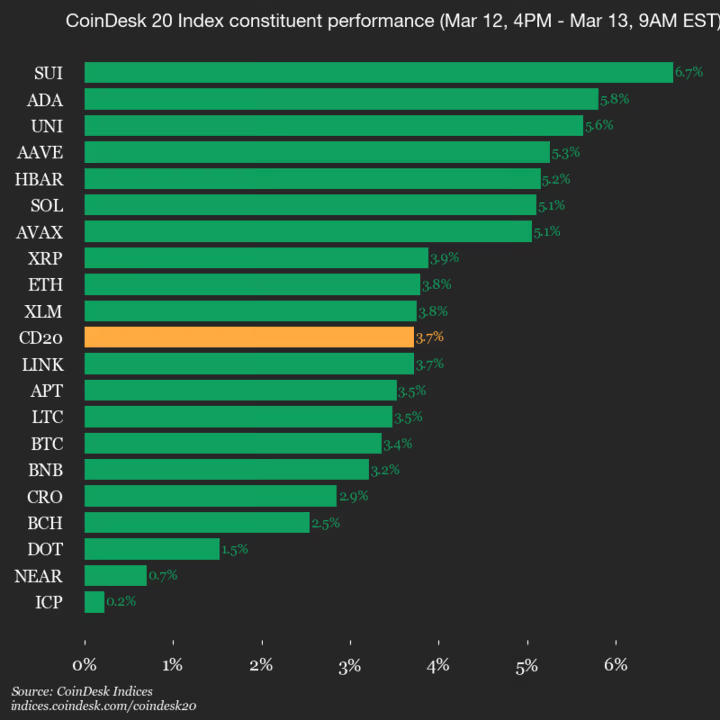
CoinDesk Indices presents its daily market update, highlighting the performance of leaders and laggards in the CoinDesk 20 Index.
The CoinDesk 20 is currently trading at 2077.68, up 3.7% (+74.61) since 4 p.m. ET on Thursday.
All 20 assets are trading higher.

Leaders: SUI (+6.7%) and ADA (+5.8%).
Laggards: ICP (+0.2%) and NEAR (+0.7%).
The CoinDesk 20 is a broad-based index traded on multiple platforms in several regions globally.


The price of oil has more than doubled in just two weeks, driving crypto platforms into a speculative frenzy that saw them list leveraged oil derivatives for overnight commodities futures experts willing to risk it all on-chain.
The results were predictable.
Tokenized crude oil perpetuals on Hyperliquid, a platform that earned initial fame from hedge fund-like copytrading and a leaderboard of leveraged degeneracy, have generated multiple, billion-dollar trading days this week.
Oil has suddenly become Hyperliquid’s second-most popular market behind only bitcoin (BTC) itself.
Open interest on Hyperliquid’s CL-USDC, a West Texas Intermediate crude futures-linked contract, exceeded $169 million. Trailing 24-hour volume still exceeded $1.2 billion at time of writing.
When crude spiked more than 30% to nearly $120 a barrel on March 9, oil short-sellers on Hyperliquid, across a 12-hour period, experienced $36.9 million in liquidations relative to just $2.1 million in long liquidations.
The largest single victim held 72,178 CL shorts worth around $7.7 million. The platform liquidated every one of them.
Not that anyone should feel particularly sorry about the loss, given the choice of venue and size in the first place. Indeed, the obviously well-capitalized trader re-opened short positions almost immediately.
Two other million-figure shorts were liquidated near the very top for oil at $120 per barrel. Another trader, rather embarrassingly, started shorting when barrels were in the $70s.
When oil hit $108 on the morning of March 9, they wiped out.
Another trader decided to label their wallet “Oil Bear” on the Hyperliquid leaderboard, turning the dangerous trade into something of an identity. The account has used multiple tens of millions of dollars worth of leverage to gamble on the commodity.
Of course, in highly volatile commodities markets, it can be just as dangerous to bet on the upside as the downside, depending on the moment. On March 11, a $6 million liquidation occurred when oil fell below $87.
Read more: Bitcoin up, Dubai real estate down since Iran war began
Hyperliquid isn’t the only venue offering crypto oil. Aster, a perpetual futures exchange on BNB Chain, launched its own CL-USDT crude oil perpetuals on March 2.
The exchange, which has earned praise from Binance founder Changpeng Zhao, ran a $10,000 oil trading competition. Binance Wallet also launched its own crude oil perpetual contract, CL-USDT, on March 7 with 0% maker fees and 1.2x Aster airdrop points.
As individual traders make and lose millions, leveraged positions can suffer liquidations within minutes. Oil perpetuals didn’t exist on these platforms a few weeks ago. Yet when the Iran war created the demand, Hyperliquid, Aster, and Binance Wallet rushed to supply it.
At $95.57 per barrel, crude oil has rallied 66% year-to-date. It was at $120 per barrel as recently as Monday.
Got a tip? Send us an email securely via Protos Leaks. For more informed news, follow us on X, Bluesky, and Google News, or subscribe to our YouTube channel.

Prediction markets have shed their experimental veneer and matured into a durable layer of crypto finance. New research shows a dramatic uptick in activity, with monthly notional volumes surpassing $13 billion by late 2025, up from under $100 million in early 2024. The growth isn’t just about more traders; it reflects broader participation across verticals and a shift in product design toward trustworthy settlement and deterministic outcomes. Even as regulators scrutinize the space, trading volume continues to rise, underscoring a persistent demand for markets that reveal information about future events. This piece examines how the industry’s next leap hinges on resolution infrastructure—how outcomes are determined, verified, and settled—as much as on liquidity or incentives. The analysis draws on a joint research effort from Dune and Keyrock that maps the trajectory of prediction markets and their evolving architecture.
Key takeaways
- Prediction-market activity has moved beyond the initial breakout phase, reaching more than $13 billion in monthly notional volume by late 2025, with diversification across sports, politics, macro indicators, and other domains.
- Trust in resolution—how an outcome is determined and settled—emerges as the central bottleneck as the market footprint expands and disputes become more common.
- Resolution architecture, including bond-based dispute mechanisms, challenge windows, and arbitration paths, is increasingly treated as infrastructure rather than a product feature.
- Industry players point to explicit, auditable resolution rules as a prerequisite for institutional participation and scalable growth.
- Despite regulatory pressure, the sector’s growth persists, indicating a mature demand for on-chain information markets backed by robust settlement guarantees.
Sentiment: Neutral
Market context: The momentum in prediction markets aligns with a broader shift toward information-centric crypto infrastructure, where reliability of resolution and governance increasingly shapes user trust and capital allocation.
Why it matters
As prediction markets scale, the quality of their resolution mechanisms becomes a practical measure of reliability. Traders buy conditional claims on future events, and the system must convert those claims into redeemable value once an outcome is determined. When resolution is slow, ambiguous, or discretionary, traders price in risk, which dampens liquidity and narrows participation to a few trusted markets. The industry is learning that resolution is not a cosmetic feature but a core component of financial infrastructure—analogous to how custody, execution, and liquidation became baseline expectations in centralized finance years ago.
The push toward explicit, auditable resolution rules has practical implications for builders and users. Platforms are redesigning governance and protocol logic to preempt disputes rather than resolve them retroactively. Bond sizes, dispute windows, and arbitration pathways are being calibrated to scale with open interest, ensuring that the cost of manipulation grows alongside demand. In this sense, resolution architecture is not just about ending a disagreement; it is about creating a predictable settlement environment that institutions can rely on and integrate into broader risk management frameworks.
These shifts echo a broader trend in crypto: moving from product features that attract early adopters to system properties that institutions expect as standard. Just as custody and execution transitioned from optional features to fundamental expectations, resolution is trending toward becoming a durable layer of the prediction-market stack. That transformation—where resolution becomes infrastructure—could unlock a wider spectrum of use cases, from hedging macro surprises to funding governance experiments with verifiable outcomes.
In this evolving landscape, the industry’s focus on resolution is underscored by concrete design choices. Optimistic oracle designs—where an answer is presumed correct unless challenged—are paired with financial incentives to deter false reporting. A fixed challenge window opens after an event, inviting disputes through post-event bonding. The more significant disputes become, the larger the bond requirement, raising the economic cost of manipulation. When disputes are unresolved, arbitration by decentralized jurors can determine the outcome and enforce it back into the oracle state. This framework, and the mechanisms that support it, are increasingly viewed as essential public goods for a robust, scalable prediction market ecosystem.
Some projects are already codifying these ideas into formal infrastructure. For example, Seer Resolution Infrastructure represents a blueprint for how resolution paths and arbitrage channels can be standardized across prediction markets. See the evolving documentation and diagrams that illustrate how resolution interacts with market creation, oracle questions, and final settlement. Such references help align market design with practical execution, reducing ambiguity at the moment of settlement and enabling more reliable capital formation around information events.
Beyond the technical specifics, the market’s appetite for reliable resolution is evident in historic patterns. The industry has observed sustained post-event activity even as high-profile regulatory actions target the space. The growth of prediction-market volumes has persisted, suggesting that traders are not simply chasing novelty but seeking durable informational endpoints and transactable risk. In parallel, classic industry players and new entrants alike are exploring standalone platforms and interoperability approaches that place resolution at the center of product strategy, rather than as an afterthought when a dispute arises.
In practical terms, the industry’s trajectory signals a shift from “product feature” to “infrastructure as a standard.” This reorientation implies a higher bar for market design: markets must be live with explicit resolution definitions, markets must scale their bonds and arbitrage paths to accommodate growing open interest, and arbitration processes should be predictable and enforceable across jurisdictions and platforms. When these properties are embedded in the protocol from day one, prediction markets begin to function more like traditional financial systems—reliable venues for price discovery and risk transfer in the realm of future events.
The broader takeaway is clear: resolution is becoming the backbone of prediction-market growth. Platforms that bake clear, verifiable rules into their core architecture are more likely to attract participants, liquidity providers, and institutional capital. The industry’s push toward resolution-focused design—from explicit outcome criteria to auditable settlement workflows—frames the next phase of growth as a maturation of financial infrastructure, rather than a series of isolated product launches.
As one senior analyst noted in the industry discourse, “Resolution is undergoing the same transition as custody and execution did years ago—no longer a differentiator but a baseline expectation.” This shift matters for anyone who uses prediction markets for information signals, hedging, or governance experiments. The promise is not merely more bets; it is more trustworthy outcomes, settled with speed and clarity that participants can rely on for financial planning and decision-making.
Analysts and builders continue to monitor the ongoing development of the resolution layer, including the interplay between optimistic finalization, bond economics, and dispute arbitrage. The goal is an ecosystem where outcomes can be deterministically converted into value in a timely, auditable manner—an essential criterion for widespread adoption and durable liquidity.
Opinion by: David Azubike, lead analyst at Blocksquare
Further reading and contextual links to ongoing research and architecture diagrams can be found in related documentation and coverage cited in the references.
What to watch next
- Publishments and updates detailing explicit resolution rules for ongoing prediction markets, including changes to bonding and challenge windows.
- Arbitration pathway enhancements and standardization across platforms to ensure enforceability of settlements.
- Governance votes or protocol upgrades that affect how final outcomes are proposed and validated by oracles.
- New platform launches and interoperability efforts that emphasize resolution as a core infrastructure layer.
- Regulatory developments and compliance guidance affecting the legality and structure of prediction-market platforms.
Sources & verification
- Data dashboards and metrics on prediction markets via Dune.
- Joint research context from Keyrock detailing market growth and architecture.
- Historical volumes and coverage related to prediction-market activity, including articles such as Prediction market trading volumes hit new high.
- Industry reference: Crypto.com’s standalone prediction market platform launch, discussed in coverage linked within the source material.
- Seer Resolution Infrastructure documentation outlining architecture and interaction with the prediction market stack.
What the article topic changes
Resolution-centric design is redefining how prediction markets communicate risk, resolve disputes, and settle funds. The shift toward auditable, enforceable outcomes promises more stable liquidity and broader inclusion of market participants, including institutions that require transparent settlement processes. The industry’s evolution suggests that prediction markets will increasingly function as information infrastructure—supporting decision-making and risk management in a way that mirrors traditional financial markets, but tailored to the unique demands of forecasting future events.

Key Takeaways
- Shares of Robinhood declined approximately 2% during after-hours trading following the March 12 release of February performance data.
- February equity trading volumes reached $194.4 billion, representing a 14% sequential decline but a 36% improvement versus the prior year.
- Options contract volume totaled 180.3 million for the month, reflecting a 10% decrease compared to January.
- Cryptocurrency trading emerged as a standout performer — $25 billion in monthly volume, climbing 9% sequentially and surging 74% annually.
- Platform assets under management reached $314 billion at February’s close, slipping 3% from the prior month while jumping 68% year-over-year.
The popular trading platform released its February performance metrics on March 12, triggering a roughly 2% decline in shares during extended trading hours. The data painted a nuanced picture of activity across the company’s various trading segments.
Equity volumes totaled $194.4 billion throughout February. This represented a sequential decline of 14% compared to January’s figures, although the number still exceeded last February’s volume by 36%. On an average daily basis, equity trading volumes measured $10.2 billion, declining 11% month-over-month while maintaining a 36% year-over-year increase.
The Robinhood mobile application experienced more pronounced weakness. App-specific average daily volumes plummeted 35% annually to $336 million, creating a notable contrast with the overall platform’s healthier year-over-year comparison.
Options activity similarly disappointed. February saw 180.3 million options contracts change hands across the platform, representing a 10% monthly decrease. Daily average options volume registered at 9.5 million contracts, falling 5% sequentially despite posting a 9% annual gain.
Event contracts suffered the steepest decline. Monthly volume contracted 29% from January to 2.4 billion contracts, while average daily volume retreated 22% month-over-month to 86 million contracts.
Cryptocurrency Trading Shines
Digital asset trading provided the month’s positive highlight. Robinhood recorded $25 billion in cryptocurrency trading volume during February — advancing 9% sequentially and soaring 74% compared to the year-ago period. Bitcoin’s resilience, despite experiencing a significant mid-month correction, contributed to sustained elevated activity levels.
The mobile app platform generated $9.4 billion of the total crypto volume, representing an 8% monthly increase. However, app-level cryptocurrency average daily volumes remain 35% below their year-ago benchmark.
Cash and customer deposits concluded February at $16.5 billion, surging 67% year-over-year. During the month, the company modified its brokerage High-Yield Cash offering to facilitate margin lending expansion. This strategic adjustment moved more than $6 billion from Cash Sweep balances into free credit balances.
Account Growth Maintains Momentum
The platform’s customer base continued expanding. Robinhood closed February with 27.4 million funded customer accounts, extending its consistent growth trajectory.
Total assets held on the platform measured $314 billion at month-end, declining 3% from January 2026 levels but climbing 68% versus February 2025. The sequential monthly decrease mirrors both reduced trading activity and prevailing market dynamics during the period.
Analyst sentiment toward the stock remains predominantly positive. Current consensus ratings show Strong Buy, derived from 14 Buy recommendations, two Hold ratings, and zero Sell ratings issued during the last three months. The mean analyst price target stands at $125.77.

Microsoft latest in the Big Tech race for AI health tools

12 ASDA Buys That Prove George Home Is Winning The Interior Game In 2026

ATI: Aerospace Supercycle Meets Material Scarcity

Smart energy pays enters the US market, targeting scalable financial infrastructure

Why Israel is blocking foreign journalists from entering

Bitcoin: We’re Entering The Most Dangerous Phase

Bitcoin Just Flashed a Signal Nobody Is Ready For – Arthur Hayes

Nick Cannon and Mariah Carey: Love tested by financial pressures #nickcannon #mariahcarey

URGENT ANOTHER 2008 BANKING COLLAPSE HAPPENING NOW?! #crypto #cryptocurrency #xrp #bitcoin #finance
-
Business7 days ago
Form 8K Entergy Mississippi LLC For: 6 March
-

 News Videos4 days ago
10th Algebra | Financial Planning | Question Bank Solution | Board Exam 2026
-

 Fashion7 days ago
Weekend Open Thread: Ann Taylor
-
 Tech2 days ago
A 1,300-Pound NASA Spacecraft To Re-Enter Earth’s Atmosphere
-

 Crypto World4 days ago
Paradigm, a16z, Winklevoss Capital, Balaji Srinivasan among investors in ZODL
-

 Tech3 days ago
ChatGPT will now generate interactive visuals to help you with math and science concepts
-

 Business3 days ago
ExxonMobil seeks to move corporate registration from New Jersey to Texas
-

 Sports6 days ago
Three share 2-shot lead entering final round in Hong Kong
-

 Sports5 days ago
Braveheart Lakshya downs Lai in epic battle to enter All England Open final | Other Sports News
-

 NewsBeat2 days ago
Residents reaction as Shildon murder probe enters second day
-

 Entertainment6 days ago
Hailey Bieber Poses For Sexy Selfies In New Luscious Lip Thirst Traps
-

 Business5 days ago
Search for Nancy Guthrie Enters 37th Day as FBI Probes Wi-Fi Jammer Theory
-

 Business2 days ago
Search Enters Sixth Week With New Leads in Tucson Abduction Case
-
 NewsBeat4 days ago
Pagazzi Lighting enters administration as 70 jobs lost and 11 stores close across Scotland
-

 Tech4 days ago
Despite challenges, Ireland sixth in EU for board gender diversity
-

 NewsBeat2 days ago
I Entered The Manosphere. Nothing Could Prepare Me For What I Found.
-

 Business4 days ago
Search Enters 39th Day with FBI Tip Line Developments and No Major Breakthroughs
-

 Business6 days ago
Iran war enters second week as Trump demands ’unconditional surrender’
-

 Sports4 days ago
Skateboarding World Championships: Britain’s Sky Brown wins park gold
-
 Crypto World3 days ago
Will Chainlink price reclaim $10 amid volatility squeeze?