Connect with us

NewsBeat

Laurence Llewelyn-Bowen says he ‘has to die by 81’ as he shares financial fears

Published

on

Manchester Evening News

The Changing Rooms star says financial advisers told him they can guarantee his lifestyle for 20 years

As he celebrates his 61st birthday this month, interior design guru Laurence Llewelyn-Bowen acknowledges he’s “on a bit of a countdown clock”. Despite amassing substantial wealth through his appearances on programmes including Changing Rooms, DIY SOS and Celebrity Bear Hunt, Laurence concedes that financial concerns are beginning to creep in.

Advertisement

Laurence revealed: “There’s a moment when you sit down with all these financial advisers and they say: we can guarantee the kind of lifestyle you’ve got for 20 years. So basically, I’ve got to die at 81 or else I’m going to be in total Jane Austen penury.”

He looks back with nostalgia on the era when he would stroll through London’s exclusive Burlington Arcade following “a good lunch” and splash out freely on whatever took his fancy. Thankfully, Laurence notes, he “knocked off the shopping addiction in lockdown”.

Laurence acknowledges he’s historically been rather extravagant, investing “about a grand” in each of his tailored suits and purchasing his wife a hat from prestigious milliner Stephen Jones “just because it was Tuesday”.

Educated as a fine artist, Laurence held various positions at upmarket retailers including Liberty, Harvey Nichols and Harrods – where he “sold Monty Don’s jewellery before he reincarnated himself as a gardener”. However, Laurence reveals his talent for interior design then paved the way for a profitable career “doing the most extraordinarily intricate things to very wealthy ladies’ boudoirs in Knightsbridge”

Advertisement

In 1996, his rising reputation as an interior designer resulted in an offer from the BBC and Laurence unexpectedly became a television personality.

Whilst Laurence and Changing Rooms co-stars Carol Smillie and “Handy” Andy Kane became recognisable television faces throughout the show’s eight-year run, they discovered that fame and fortune don’t necessarily go hand in hand. He told The Times: “My earnings went through the floor. You got paid virtually nothing and were put in a minicab after making the most-watched programme on BBC1.”

Simultaneously, he notes, commissions for his interior design business started to diminish because his aristocratic clients didn’t want to be linked with a television reality show.

Advertisement

Shrewd property investments have supported Laurence and his wife Jackie over the years and they now reside in a 17th-century manor house in the Cotswolds with their daughters, Cecile and Hermione, and four grandchildren.

An inheritance enabled Laurence to get onto the property ladder when he was 24 but, he acknowledges, he made a net loss when he sold his first flat.

The second property he purchased with Jackie, an “ugly” bungalow in South-east London generated them a substantial profit of over £270,000 when they sold it, as did their subsequent investment in Greenwich. The Gloucestershire property has more than doubled in value since Laurence and Jackie took up residence, and their second home in Cornwall has also experienced a significant appreciation since they purchased it.

Advertisement

However, Laurence concedes that the era of substantial property profits is over, stating: “We’re the last generation to be able to say that. Nobody else is going to be able to make those enormous leaps in the property market.”

Source link

Continue Reading
Click to comment

Leave a Reply

Your email address will not be published. Required fields are marked *

NewsBeat

Ex-prince Andrew, Mandelson and Epstein pictured together ‘for first time’ in photo

Published

on

Manchester Evening News

The image is similar to another image from Epstein’s “birthday book” made public last year

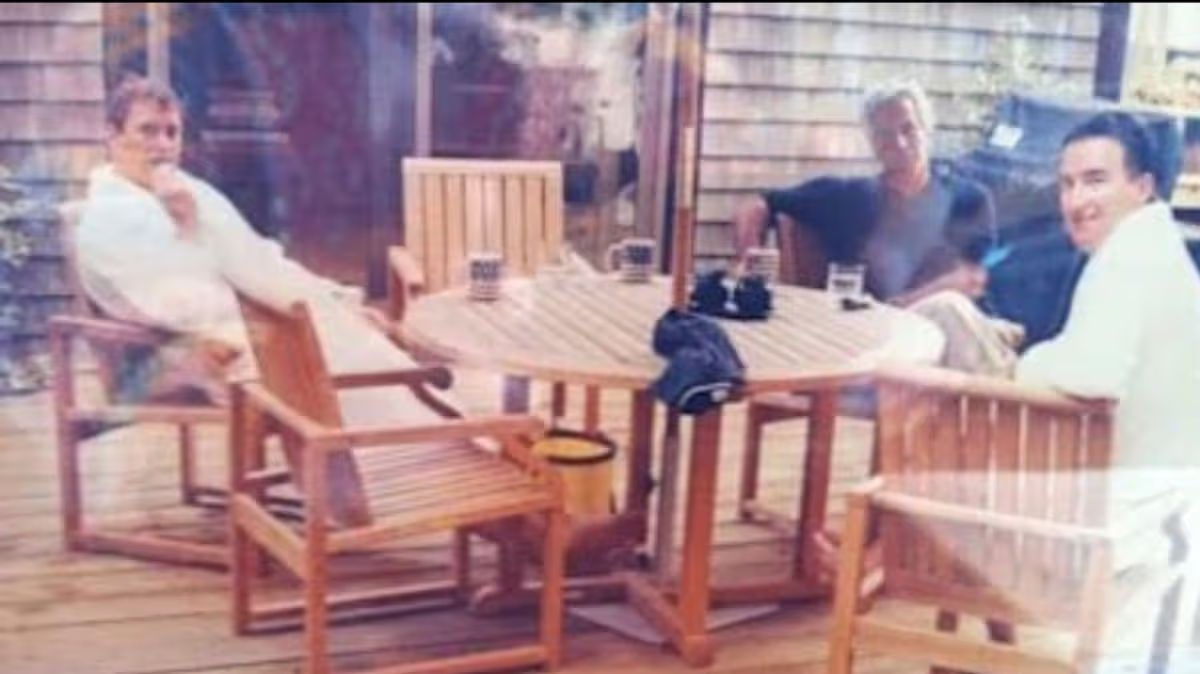
A photo showing Andrew Mountbatten-Windsor, Peter Mandelson and Jeffrey Epstein together has been released by the Department of Justice. The image is reportedly the first confirmed photograph showing all three men together, the Express reports, released as part of the newest tranche of Epstein files.

The trio are seen sitting around a wooden table on an outdoor deck, drinking from mugs decorated with the US flag during what looks like a meeting in Martha’s Vineyard. Although the photo has no timestamp, it is similar to another image from Epstein’s “birthday book” made public last year.

Advertisement

That book also showed Mandelson, again wearing a bathrobe, alongside Epstein suggesting it may have been taken around the same period. Inside the book, the former UK ambassador to the US is said to have written a note to Epstein calling him his “best pal”.

The release of these documents has added new detail to the connections both Mandelson and Andrew had with the convicted sex offender. However, Andrew has consistently denied any wrongdoing.

The Epstein files add more detail about the former Duke of York’s dealings with Epstein, including claims that Andrew’s team sought his help in responding to sexual‑assault allegations made by Virginia Giuffre. This was despite Andrew having said he cut ties with Epstein more than four years earlier.

Emails from 2010 to 2018 also appear to show that Andrew was exploring a potential business partnership with Epstein during his time serving as the UK’s trade envoy.

Advertisement

Being named or pictured in the Epstein files is not an indication of wrongdoing.

Ensure our latest headlines always appear at the top of your Google Search by making us a Preferred Source. Click here to activate or add us as Preferred Source.

Source link

Advertisement
Continue Reading

NewsBeat

Serbia buys Chinese supersonic missiles | World News

Published

on

A CM-400AKG air-to-ground missile on display in Zhuhai, China. File pic: Getty Images

Serbia, a NATO partner and candidate for EU membership, has bought Chinese missiles for its air force.

The Balkan state is now the first European power armed with Chinese CM-400AKG missiles, Serbian President Aleksandar Vucic said on Thursday.

“We have a significant number of those missiles, and we will have even more,” he said during a live appearance on state broadcaster RTS TV.

He made the announcement after images of the missiles mounted on Serbian warplanes were leaked online, according to Sky’s US partner network NBC News.

Advertisement

Mr Vucic said the country’s air force had adapted its Soviet-made MiG-29 fighter jets to carry the air-to-surface missiles.

He declined to say how much Serbia paid, only it had received a “slight discount”.

Image:
A MiG-29 jet of the Serbian Air Force. File pic: Michael Kappeler/picture-alliance/dpa/AP

Despite being a traditional ally of Russia, Serbia is a candidate for EU membership and participates in a partnership scheme with NATO.

Its purchase of the missiles is already causing friction with EU and NATO neighbours.

Advertisement

Croatia – which fought Serbia in the Yugoslav Wars of the 1990s – called the missiles a threat to regional stability, an attempt to alter the military balance, and a sign of a growing arms race in the Balkans.

Read more from Sky News:
Husband of Labour MP arrested on suspicion of spying for China
Call to make NATO ‘more European’ at alliance summit

Manufactured by China Aerospace Science and Industry Corporation (CASIC), the supersonic CM-400AKG has a range of up to 248 miles (400km) and can carry either a 150kg blast warhead or a 200kg penetrator warhead.

Its first combat use came during the 2025 India-Pakistan conflict, when it was used by Pakistan.

Advertisement

Source link

Continue Reading

NewsBeat

Russia’s relentless interference since start of Ukraine war has failed to break Moldova

Published

on

Russia’s relentless interference since start of Ukraine war has failed to break Moldova

When Russia launched its full-scale invasion of Ukraine in February 2022, the prospects for Moldova did not look good. But four years have now passed and, despite a relentless Russian campaign to destabilise the country, Moldova has survived and made significant progress.

It has, for example, progressed on its path to EU membership. Moldova transitioned from applicant to candidate status several months after the outbreak of the war and formally opened accession negotiations two years later. The government is now carrying out reforms to align with EU standards.

Such progress was not a foregone conclusion given the many challenges Moldova has faced as a result of the war in Ukraine. The country was an early destination for Ukrainian refugees, which put significant pressure on already stretched public services and resources.

With a decades-old foothold in Transnistria, a breakaway region in eastern Moldova, Russia also seemed to have a springboard for conflict escalation in Ukraine’s rear. This foothold gave Moscow a possible destination to push westwards along the Black Sea coast, too.

Advertisement

Russian false-flag operations in April 2022 seemingly provided further evidence that Moscow planned to destabilise Moldova. And one year later, the so-called soccer plot underscored Moscow’s intention to continue its efforts against Moldova. This was a Russian-planned and sponsored attempt to infiltrate Moldova with saboteurs from Russia, Montenegro, Belarus and Serbia.

Transnistria, which is home to around 450,000 people, declared its independence from Moldova in 1990.
Peter Hermes Furian / Shutterstock

Perhaps the most serious challenge for Moldova came in January 2025, when Ukraine stopped the transit of Russian gas through its territory. Transnistria, which had for decades been kept completely dependent by Moscow on Russian gas supplies, was plunged into an immediate crisis.

The authorities there cut off central heating and hot water to all residential buildings. They also ordered the closure of industrial enterprises not involved in making critical food products. The impending humanitarian disaster and ensuing information war between Russia, Moldova, Transnistria and the EU over who was to blame posed a serious threat to stability in Moldova yet again.

Advertisement

In addition, two Moldovan elections in recent years presented the Kremlin with an opportunity for interference. Yet, despite Russian meddling, Moldova’s incumbent pro-Europe president, Maia Sandu, secured a second term in 2024. Her party then won another absolute majority in parliamentary elections the following year.

So, how has a small country wedged between Ukraine and Romania with a decades-old conflict of its own managed to withstand Russian pressure?

Countering Russian destabilisation

Early in the war, the most serious danger for Moldova was an escalation of the conflict in Transnistria. While this may have served Moscow’s interests, politicians in Moldova and Transnistria were keen to preserve stability in their relations.

On the Transnistrian side, this was mainly driven by economic interests. The region has been part of the deep and comprehensive free trade area between Moldova and the EU since 2016, and 80% of all exports from Transnistria now go to EU countries.

Advertisement

Economic stability also helps ensure the continuation of the ruling Transnistrian regime. Business and political interests there are often one and the same, embodied in the all-dominant Sheriff conglomerate.

Sheriff dominates Transnistria’s economy, operating a network of supermarkets, gas stations, construction companies, hotels, radio and TV stations and a mobile phone network. It also controls the Obnovlenie political party that runs the government in the regional capital, Tiraspol.

At the same time, stability reduces the risk of a humanitarian crisis and a refugee wave that could destabilise Moldova. Maintaining the relatively substantial levels of confidence that has been built between the two sides was therefore high on the agenda of politicians in Chișinău and Tiraspol.

The ability of Moldovan and Transnistrian politicians (helped by EU assistance) to avoid a major escalation of the energy crisis in 2025, as well as keeping relations generally stable and predictable over the past four years despite Russian disruption efforts, bodes well for the future.

Advertisement

The Moldovan state budget continues to earmark resources for joint projects involving communities on both banks of the Nistru River, which separates Moldova and Transnistria. This included €1.5 million (£1.3 million) for 30 projects in 2025, bringing the total investment to over €11 million across more than 600 projects since 2011.

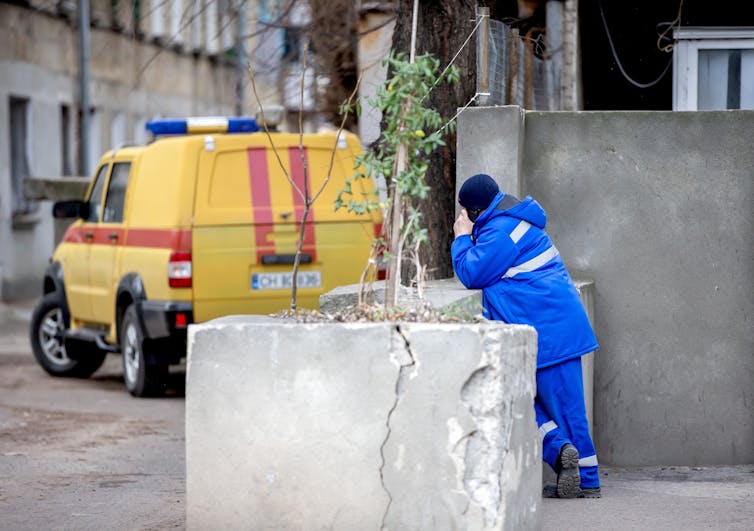
A gas worker in Chișinău, Moldova, stands next to his van on his phone.
A gas worker on duty in Chișinău during the January 2025 energy crisis.
Dumitru Doru / EPA

However, while Moldova has weathered storms over recent years effectively, there are still threats to its stability. For example, challenges to the reintegration of Transnistria into Moldova remain. After more than three decades of separation, there are significant social, political, economic and legal hurdles to overcome.

On the one hand, the fact that chief negotiators from both sides met again face-to-face in late February after a 15-month hiatus indicates their commitment to making progress and resolving their differences peacefully and through dialogue. But, on the other hand, there are some signs that trust between the two sides remains fragile.

On the eve of the meeting, Sandu signed a decree revoking the Moldovan citizenship of nine people who serve in the governmental structures of Transnistria. Two of them had also fought against Moldova during the brief civil war in 1992 that created Transnistria. The timing of the decree was condemned by the Transnistrian side as putting undue pressure on Tiraspol.

As Sandu acknowledged recently on the anniversary of Russia’s full-scale invasion of Ukraine, her country’s survival is due to the heroism of Ukrainians in defending their country and thereby keeping Russia away from Moldova. But beyond simple survival, Moldova seems to have emerged stronger from the challenges it has faced.

Advertisement

At a time when the narrative of inevitable Russian victory against Ukraine is beginning to crumble, it is important to remember the limits of the Kremlin’s power. Russia’s neighbours, through their own efforts and with support from their European partners, are not the helpless pawns that Moscow wishes them to be.

Source link

Advertisement
Continue Reading

NewsBeat

Chicken pilaf with cardamom, carrot and orange

Published

on

Chicken pilaf with cardamom, carrot and orange

This Middle Eastern dish is scented, a little sweet and very pretty. In the original, the orange zest, cooked in sugar syrup, ends up a lot sweeter. I’ve toned it down, partly for ease, partly for health reasons. It’s still a gorgeous dish.

It can be made grander with saffron butter. Soak a pinch of saffron strands in 1½ tbsp boiling water for 20 minutes, melt some butter and add the saffron water. Pour this on before serving.

If you can get on top of making pilafs, you can do them with lots of different ingredients. I often make them with what I have – the remains of a roast leg of lamb, toasted almonds and dried sour cherries, for example – so I’m always stocked up with long-grain rice and dried fruit and nuts.

Advertisement

Some pilaf recipes suggest soaking the rice in water, but if you’re making this last minute, just wash it in a sieve.

Source link

Continue Reading

NewsBeat

12 ASDA Buys That Prove George Home Is Winning The Interior Game In 2026

Published

on

12 ASDA Buys That Prove George Home Is Winning The Interior Game In 2026

We hope you love the products we recommend! All of them were independently selected by our editors. Just so you know, HuffPost UK may collect a share of sales or other compensation from the links on this page if you decide to shop from them. Oh, and FYI prices are accurate and items in stock as of time of publication.

The supermarket aisles are really packing a punch these days.

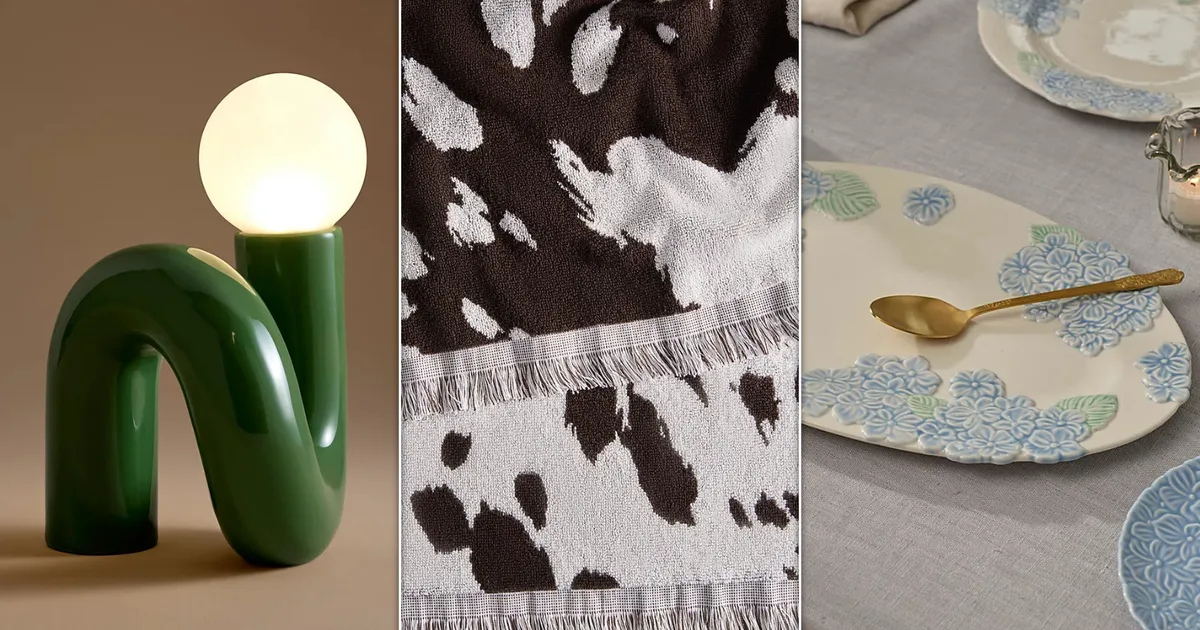
First, the fashion over at M&S took over our everyday wardrobes. Now, George Home at ASDA has entered the chat in a big way.

It’s a maximalist dreamscape that shoppers are accusing of being so good that they’re breaking up with Oliver Bonas.

Advertisement

Don’t believe me? Here’s a list of some of the best bits to buy before they’re gone.

Source link

Advertisement
Continue Reading

NewsBeat

UK urges allies to keep up pressure on Russia as US eases sanctions

Published

on

UK urges allies to keep up pressure on Russia as US eases sanctions

Asked whether the prime minister was disappointed by the US move to ease sanctions on Russian oil already in transit, his official spokesman said: “Ultimately, it’s obviously a decision for the US, but our position is clear. All partners should maintain pressure on Russia and its war chest.

Source link

Continue Reading

NewsBeat

Woman adopts ‘chihuahua’ but something unusual happens weeks later

Published

on

Daily Mirror

A woman has shared her shock after adopting a chihuahua – but after spending a few weeks with her new pet, she soon came to realise something wasn’t quite right

A woman got the shock of her life after bringing home what she believed was a tiny chihuahua, only to realise she had adopted something completely different. Madison Austin explained how she adopted a puppy during the pandemic after researching “small apartment-friendly dogs“, knowing the pup would be growing up in New York.

Advertisement

After spending hours looking into different breeds, she came across Henry online and quickly got in touch with the seller. She said: “They advertised him as a four-pound male chihuahua. But from the moment we got him, we thought, ‘Hmm… his paws definitely look big.’”

Just weeks after welcoming him into her home, Madison realised the puppy was getting bigger and bigger each day.

She added: “We still thought he was at least part chihuahua.

“I remember talking to my husband about whether or not his ears were eventually going to stand up.”

Advertisement

But Henry soon went through a rapid growth spurt and quickly grew past what would be considered a “large chihuahua”.

She said: “He started gaining two or three pounds a week, and then it went up to five pounds a week. Within two months, our vet had to say, ‘Sorry to break it to you, but this dog is definitely not a chihuahua!’

“We had bought an expensive electronic pee pad, thinking we were going to train him on that. That didn’t work very well! And then, of course, we ended up spending a whole lot more money on dog food than we planned.”

Thankfully, the couple eventually moved house and later welcomed two children.

Advertisement
Content cannot be displayed without consent

Now, Henry tips the scales at around 95 pounds – and his breed has been revealed to be a Labrador retriever.

Madison added: “We thought we wanted a small pup because of our lifestyle, but we are so happy he ended up being so big.

“We have so much fun with him and he’s got a heart of gold. He was definitely meant to be ours.

“Sometimes we don’t even know what we need in our lives until it finds us. I have no doubt Henry was meant to be ours, and I can’t imagine life without him in our family.”

Advertisement

Commenting on her Instagram page, where she shares updates about Henry, one user joked: “Girl, I mean this in the nicest way, but have you ever seen a chihuahua?”

Another added: “Little Henry wasn’t even little. What were you thinking?”

A third user wrote: “Ma’am, I have bad news. I don’t think that’s a Labrador either… mix, sure, but pure? No.”

One more user added: “Seems like someone could’ve handed you a raccoon and you would’ve thought it was a chihuahua. That dog didn’t ever look like one.”

Advertisement

A final user commented: “Little Henry looks like every Lab-pit mix I’ve ever met.”

Source link

Continue Reading

NewsBeat

Residents of Iran’s capital gripped by anxiety and sleeplessness

Published

on

Residents of Iran's capital gripped by anxiety and sleeplessness

CAIRO (AP) — An engineer crouches under a park bench as fighter jets roar overhead. An athlete wracked by anxiety can’t sleep as explosions go off. With the internet shut down, families and friends rely on each other for news about the war and the latest damage caused by airstrikes.

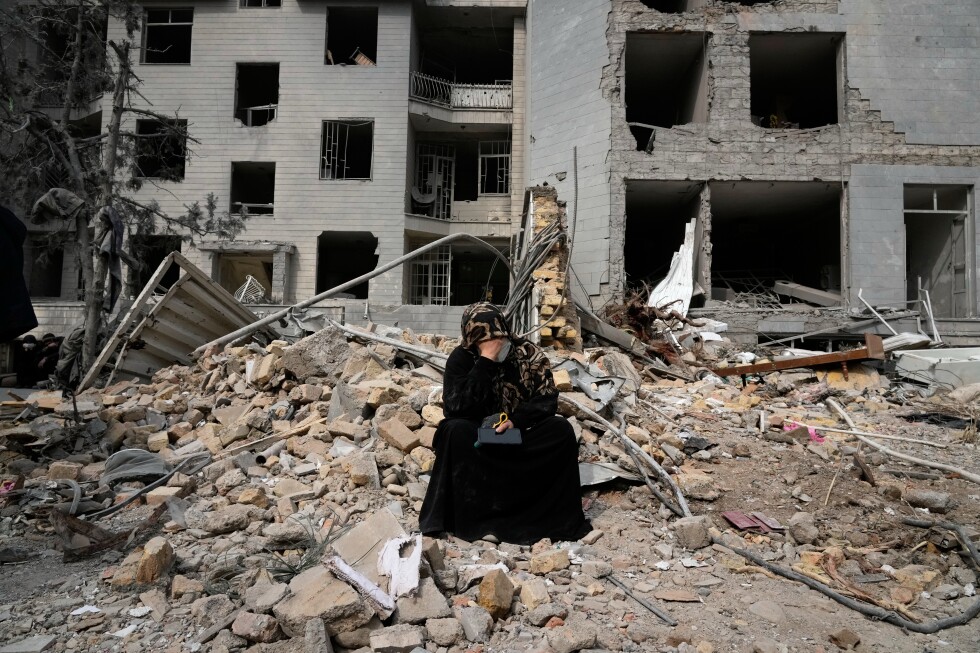
Fierce U.S.-Israeli bombardment of Iran’s capital, Tehran, now at the end of its second week, has left residents in a state of shock. From central historic quarters to upscale northern areas, bombs are shaking the city day and night, with no sirens or warning systems to alert the public.

“The psychological pressure is real,” said the athlete, who lives in a northern area of the capital. He was among a half dozen Tehran residents reached by The Associated Press, all of whom spoke on condition of anonymity out of fear for their safety.

Widely respected national symbols have been threatened. The monumental archway of Azadi Square, often seen as the capital’s modern emblem, was enveloped by smoke after strikes nearby, while the 19th-century Golestan Palace, a landmark of historic pride, had its windows blasted out. At the same time, security forces have increased their presence in the streets to prevent any shows of dissent.

Advertisement

Israeli strikes on oil depots in Tehran last weekend had a particularly profound impact on residents’ psyches. After the blasts, giant fires raged, and toxic, black smoke filled the air — partially eased by rains in the following days.

“I could barely breathe and had to go buy an inhaler,” a 54-year-old Tehran resident who is a human-rights activist said. “People are worried it will affect their drinking water.” As she spoke to AP, a blast went off in the background.

In a later voice note on Tuesday, the activist said, “Last night the situation was really bad. Fighters as well as drones had taken over the whole sky. East, west, they hit everywhere they could. Today you see a lot of residential places that were damaged. It’s really painful.”

The war is fraying nerves across the region, as Iran fires waves of missiles and drones at Israel, U.S. military bases and its Persian Gulf neighbors.

Advertisement

‘Severe bombardment’

The U.S.-Israeli air campaign has struck thousands of sites across Iran, most belonging to the military and the paramilitary Revolutionary Guard. The Iranian Red Crescent says thousands of civilian sites have been damaged, including hospitals, schools, universities and homes. Iran has not publicly updated its death toll from the over 1,200 previously reported.

A 33-year-old engineer described the aftermath of the oil depot strikes as an “end-of-times scene.”

Iranians are finding it difficult to follow news of the war, he said, with internet access largely shut down since the first strikes on Feb. 28. Only a sliver of the public has limited access with virtual private networks, the engineer estimated.

He said he phones friends for news of where bombs are landing. Other residents said family and friends trade reports of strikes at anxious gatherings in homes and cafes.

Advertisement

Almost total Israeli and U.S. air superiority has opened up the capital to attack at any moment. The engineer said he was on his street when he heard fighter jets, then a strike nearby. He ducked under a park bench.

A university student said fear of attacks is rising even among those who do not live near clearly marked government and military targets.

“Every moment, without any warning sirens or announcement, some part of the city is under attack,” he said, describing some streets as full of broken glass from surrounding buildings.

Hit without warning

Normally a vibrant city of over 9 million people, Tehran’s streets — in between airstrikes — are now eerily quiet. Many shops and supermarkets are open. But the traditional bazaar is closed, and many streets are empty as people hunker down at home. Families tape windows to prevent flying glass and they shelter in interior rooms when they hear the roar of strikes.

Advertisement

A teacher who lives in the northern Tehran district of Vanak said the home of a friend in eastern Tehran was damaged by a nearby strike that blew windows out of the frames, broke the sink and wrenched the door of the building’s garage out of place. When the friend called to tell her the news, “I was in a very bad shock,” the teacher said.

The teacher said she spends most of her time at home, hosting family members who fled another part of Tehran because they live near positions of the Basij, the feared all-volunteer wing of the Guard. She paces and spends a lot of time trying to get on the internet.

“I try to keep myself calm and tell myself, ‘This is the price we have to pay for getting rid of the Islamic Republic,’” she said.

U.S.-Israeli strikes have heavily targeted positions of the Guard, Basij and police forces, the main enforcers of the Islamic Republic that suppressed protests earlier this year, killing thousands and arresting tens of thousands. This week, strikes turned to roadblocks and checkpoints set up by the Basij, with at least 18 hit on Wednesday, mostly in Tehran, according to Armed Conflict Location and Event Data, a U.S.-based monitoring group.

Advertisement

On Friday, a large explosion hit a main Tehran square as government supporters held a large demonstration there.

So far, authorities appear to have been able to maintain their grip. Residents described a heightened presence of security forces and Basij on the streets One resident sent the AP video she took of a procession of Basij on motorcycles and cars waving flags on her street in a northern Tehran neighborhood. Mosques blared pro-government slogans, she said.

On state TV Monday night, Ahmad-Reza Radan, the commander-in-chief of the Islamic Republic’s security forces, warned that anyone taking to the streets in protests will be seen “as enemies, and we will deal with them as we would with the enemy. All our guys are ready to fire.”

The government has also encouraged its supporters to gather in street demonstrations, especially following the announcement of the new supreme leader, Ayatollah Mojtaba Khamenei. He succeeds his father, Ayatollah Ali Khamenei, who was killed by Israel’s opening strikes in the war.

Advertisement

The younger Khamenei’s selection is widely seen as a further sign that hard-liners are keeping a close grip on power. He issued his first statement Thursday, but has not appeared in public.

‘A scorched country’

As the war rages, many Iranians are still reeling from the crackdown after the massive anti-government protests in January.

A 27-year-old nurse said the surgery unit where she works in a Tehran hospital was still treating protesters with serious wounds.

She described the U.S. and Israeli targeting of Iran’s leadership and security forces as “revenge” for the killings of protesters and said she was happy to see the security forces hit.

Advertisement

But the damage from the air campaign is worrying some of those who want to see the Islamic Republic fall.

“It’s no longer about weakening the government. It’s gone toward weakening the people of Iran,” said the activist, who has been imprisoned in the past. “Do you really want to turn us into a scorched country, something the Islamic Republic couldn’t do itself?”

__

El Deeb reported from Beirut. Associated Press writer Shirin Hakim in New York City contributed to this report.

Advertisement

Source link

Advertisement
Continue Reading

NewsBeat

US Postal Service unveils new stamps celebrating lowrider car culture

Published

on

US Postal Service unveils new stamps celebrating lowrider car culture

ALBUQUERQUE, N.M. (AP) — From Mexican American and Chicano barrios in the American Southwest to the halls of the Smithsonian on the National Mall and even the streets of Japan, lowrider culture has become part of mainstream car culture around the globe.

The U.S. Postal Service is joining the club with a new series of stamps dedicated to the low and slow rolling works of art. The stamps — complete with pinstriping — are being unveiled Friday during a celebration in San Diego.

For the lowrider community, it’s validation of the vibrant artistic expression that blossomed in the 1940s in the working-class communities of Southern California, Arizona, New Mexico and Texas as everyday cars were transformed into one-of-a-kind masterpieces.

Lowriders are known for their dazzling paint schemes, glistening chrome, luxurious interiors and gravity-defying hydraulic systems. They’re symbols of creativity, craftsmanship, pride and identity.

Advertisement

Making history

Antonio Alcalá grew up in San Diego admiring the cars from afar, so it was an honor for him to design the stamps. The challenge was finding the right mix of cars and colors to represent the lowrider world.

He pored over tons of photographs before whittling it down to five: a 1946 Chevy Fleetline, three classic Chevy Impalas and a 1987 Oldsmobile Cutlass Supreme. Each brings its own flare, from curvaceous body lines and low stances to a hint of the mechanics that make the cars hop.

“It’s a real thrill,” said Alcalá, the postal service’s art director. “The postage stamps are supposed to represent the best of America. They’re kind of a way that the United States signals to the rest of the world these are things that we find important about our people, our accomplishments, our culture, etc. So to have it commemorated on a stamp is a big deal.”

Alcalá watched a video of Danny Alvarado pinstriping a car, and his heart stopped as the brush effortlessly glided over the metal flake paint leaving behind intricate swirls. He knew that would be the final touch for the corner of each stamp.

Alvarado, an illustrator and sculptor, has spent about 50 years perfecting his craft and is now teaching others how to spin the brush just right. For him, the stamp project has special meaning — his father worked as a mail carrier for more than 20 years and it marks another corner turned as lowrider culture gains new fans and more respect.

Advertisement

Cruising ahead

In the 1980s, some cities imposed anti-cruising laws and height restrictions, often seen as targeting Chicano youth and associating lowriders with gangs despite the community’s emphasis on artistry and family.

But with the Hispanic U.S. population increasing and lowriding becoming more popular, restrictions have been rolled back in recent years. California repealed cruising bans in 2024, and just last year New Mexico lawmakers celebrated Lowrider Day at the state capitol, even though a proposal to enshrine the lowrider as New Mexico’s state vehicle didn’t gain enough traction.

Founder and president of the San Francisco Lowrider Council, Roberto Hernández began cruising in the late ‘70s when cruising was banned in California. With the stamp unveiling, Hernández feels “like we got the final stamp of approval as lowriders.”

Alvarado agrees, adding that widespread recognition of the positive aspects of lowriding has been a long time coming.

“It’s a big hit. I mean the lowriding community is so excited about these stamps,” Alvarado said from his home in Monrovia, California. “Everybody I’ve talked to already knows about them, so they just can’t wait till they come out.”

Advertisement

Melting pot

Alvarado mentioned car clubs in Las Vegas, Albuquerque, Chicago, Dallas, New York and the ones that are popping up overseas — from London to Hungary, New Zealand, Australia and Japan.

Humberto “Beto” Mendoza, whose photographs were used as the basis of three of the stamps, ticked off his own list, describing lowrider culture as both a family affair and a big melting pot.

He has traveled far and wide photographing many of the iconic masterpieces that have graced magazine covers. That includes “El Rey,” a red 1963 Chevrolet Impala that is featured on one of the stamps and is on display at the National Museum of American History.

Mendoza was a fan of lowriders long before he built a career photographing them for a living. When he was a boy, his father, a Mexican immigrant, taught him how to frame images with a point-and-shoot and then eventually bought him his first real camera. From there, Mendoza hustled, carrying with him a photo album of his work as he persuaded more lowriders to document their fancy rides.

The stamp project was unexpected, Mendoza said, noting that it couldn’t have come at a better time. He had just suffered a stroke in 2022 and was in a dark place. The project was a ray of light for him and for the wider lowrider community.

Advertisement

“We’re usually outcasted, you know, so them acknowledging us in this community is historic,” he said. “We feel accepted now.”

___

Associated Press reporter Fernanda Figueroa in Austin, Texas, contributed to this report.
Advertisement

Source link

Continue Reading

NewsBeat

Closely followed inflation measure worsened to start the year

Published

on

Closely followed inflation measure worsened to start the year

WASHINGTON (AP) — An inflation gauge closely monitored by the Federal Reserve moved higher in January in the latest sign that prices were persistently elevated even before the Iran war caused spikes in oil and gas costs.

Prices rose 2.8% in January compared with a year earlier, the Commerce Department said Friday, slightly below December’s increase in a report that was delayed by last fall’s six-week government shutdown. The shutdown created a backlog of data that is nearly cleared.

Yet excluding the volatile food and energy categories — which the Fed pays closer attention to — core prices rose 3.1%, up from 3% in the prior month and the highest in nearly two years.

On a monthly basis, prices rose 0.3% in January, while core prices jumped 0.4% for the second straight month, a pace that if sustained would lift inflation far above the 2% annual target set by the Fed.

Advertisement

The data has since been overtaken by the war with Iran, which began Feb. 28 and has shut down the Strait of Hormuz, cutting off one-fifth of the world’s oil supply. Oil prices have soared more than 40% since the war began and gas prices have jumped to $3.60 a gallon from just under $3 a month earlier, according to AAA. Those figures will likely cause inflation to spike in March and potentially April, economists forecast.

The inflation-fighters at the Fed have kept their key interest rate elevated to slow borrowing, spending, and growth in an effort to cool inflation further. Fed policymakers meet next week and are widely expected to keep their rate unchanged given that the conflict in the Middle East will raise inflation, at least in the short run.

The report also showed that consumers lifted their spending at a solid 0.4% pace in January, matching December’s rise and a sign that Americans are still able to drive steady growth. Consumer spending powers about two-thirds of the economy.

Incomes also rose 0.4%, a positive sign that consumers didn’t have to dip into savings to propel spending in January. After-tax incomes jumped 0.9%, fueled by a large increase in Social Security benefit payments after a large cost of living adjustment took effect at the start of the year.

Advertisement

Friday’s report includes the personal consumption expenditures price index, which is separate from the more widely-followed consumer price index, which was reported on Wednesday. The PCE index is running hotter than the CPI, largely because it puts much less weight on rental costs, which have been cooling steadily in recent months.

The PCE index typically runs below the CPI, but has pulled ahead of it just in the past few months.

Advertisement

Source link

Continue Reading

Trending

Copyright © 2025