Connect with us

Business

Savills buys Eastdil Secured in $1bn deal to expand US real estate investment banking

Published

on

Savills buys Eastdil Secured in $1bn deal to expand US real estate investment banking

Savills has agreed a deal worth close to $1 billion to acquire US property investment bank Eastdil Secured, marking a significant strategic move aimed at strengthening the British real estate group’s presence in the lucrative American market.

The London-listed property adviser will pay approximately $921 million for the business in a transaction combining both cash and shares. Around $553 million will be paid in cash, while roughly $369 million will be settled in Savills shares issued to existing Eastdil investors, including Singapore’s sovereign wealth fund Temasek, Guggenheim Partners and a group of senior staff shareholders.

The acquisition represents the first major deal under Savills’ new chief executive Simon Shaw, who took over from Mark Ridley at the start of 2026. Shaw described the combination as a “marriage made in heaven”, highlighting the longstanding relationship between the two companies in global real estate transactions.

Eastdil Secured is widely regarded as one of the most influential advisers in the global property capital markets sector. The firm specialises in advising major landlords, developers and institutional investors on high-value property sales, financing arrangements and complex investment transactions. Its client base includes some of the largest global real estate investors and private equity firms.

By bringing Eastdil into the group, Savills aims to significantly deepen its foothold in the United States, the world’s largest property investment market, where the company has historically had a more limited presence compared with Europe and Asia.

Advertisement

Shaw said the acquisition fills a strategic gap in Savills’ global platform. While the firm enjoys strong market positions across many international property markets, the US had remained the most significant region where its capabilities were comparatively underdeveloped.

He said: “We’ve got great market share in many parts of the world, but the one hole in our network has been the US. Eastdil is the leading capital markets operator in the largest real estate investment market in the world and provides direct access to the deepest pools of capital.”

Savills believes the combined organisation will enable it to compete more aggressively for high-value real estate advisory mandates, including mergers and acquisitions involving property portfolios, large-scale financing deals and global investment transactions.

The acquisition was announced alongside Savills’ latest financial results, which showed the company continuing to grow despite a challenging global economic environment marked by geopolitical tensions, tariffs and macroeconomic uncertainty.

Advertisement

For the year ending December 2025, Savills reported revenue of £2.55 billion, up from £2.40 billion the previous year, representing growth of 6 per cent.

Pre-tax profits rose by 14 per cent to £101 million, compared with £88.3 million in 2024. The company attributed the increase partly to stronger demand for its non-transactional services, including investment management, consultancy and property management.

These divisions now account for the majority of Savills’ earnings, reflecting a broader industry shift away from reliance solely on property transactions toward advisory and asset-management services that provide more stable revenue streams.

Income from these less transactional activities increased by 8 per cent over the year, while revenues linked directly to property transactions rose by 4 per cent.

Advertisement

Savills said the middle part of 2025 had been particularly challenging for deal activity as investors delayed decisions amid global tariff disputes and uncertainty surrounding fiscal policy ahead of the UK government’s autumn budget.

However, the company experienced a sharp rebound in activity toward the end of the year. Shaw described December as “astonishing”, suggesting that many investors returned to the market once political uncertainty had eased and the budget had been delivered.

He said investors were increasingly adjusting to a world characterised by geopolitical tension and economic volatility.

“Both occupiers and investors have started to accept that geopolitical change is now a constant,” Shaw said. “There comes a moment where you simply have to continue investing and doing business despite that backdrop.”

Advertisement

Savills also reported that the stronger momentum seen late in 2025 had continued into the opening months of 2026. Although the firm acknowledged that it remains difficult to assess the full impact of the ongoing conflict in the Middle East, it said there had been little immediate disruption to global property investment activity.

According to Shaw, London could potentially benefit from increased investor interest if global instability persists, as capital historically flows toward markets perceived as stable and secure.

“I think there is a likelihood that capital will tilt slightly towards traditional safe havens,” he said. “It would be logical that investors feel more comfortable placing money in markets where legal systems and institutions are well established.”

Savills’ board has also approved a higher shareholder payout following the improved financial performance. The company increased its final dividend by 8 per cent to 15.7p per share, payable in May, while also announcing a supplemental dividend of 10.7p per share.

Advertisement

Despite the strategic rationale for the Eastdil acquisition, investors initially reacted cautiously to the announcement. Savills shares fell 7.2 per cent, closing down 72p at 930p on the day the deal was unveiled.

Founded in 1855 by surveyor Alfred Savill, the company has evolved from a traditional land agency serving wealthy landowners into one of the world’s largest property advisory groups.

Although widely recognised by the public as a residential estate agent, the residential business accounts for only about a tenth of Savills’ overall operations. The majority of its income now comes from commercial real estate services such as advising investors, leasing office space, managing buildings and providing consultancy to institutional clients.

Savills has expanded internationally through a series of acquisitions over the past three decades, establishing operations across Europe, Asia, the Middle East and Australia. However, the United States has remained the final major real estate market where its presence lagged behind competitors.

Advertisement

The purchase of Eastdil Secured is therefore expected to play a central role in Savills’ long-term strategy of building a truly global real estate advisory platform capable of competing with the largest property consultancies and investment banks in the sector.


Jamie Young

Jamie Young

Jamie is Senior Reporter at Business Matters, bringing over a decade of experience in UK SME business reporting.
Jamie holds a degree in Business Administration and regularly participates in industry conferences and workshops.

When not reporting on the latest business developments, Jamie is passionate about mentoring up-and-coming journalists and entrepreneurs to inspire the next generation of business leaders.

Advertisement
Continue Reading
Click to comment

Leave a Reply

Your email address will not be published. Required fields are marked *

Business

Cardiff could become first part of Wales to introduce a visitor levy

Published

on

Business Live

A survey from Cardiff Council shows strong support for a visitor levy

WALES Elevated view of the Centre of Cardiff with Millennium stadium with the River Taff

Cardiff.(Image: Getty Images)

Cardiff could become the first place in Wales to charge visitors to stay in the city after a 12-week consultation showed most people in the city approved of a proposal to introduce a visitor levy.

The levy proposed by the council would see anyone staying in the Welsh capital for 31 nights or fewer, including in hotels, guesthouses, hostels, Airbnbs, campsites and temporary event accommodation pay a fee.

More than 1,500 people responded to the consultation from Cardiff Council that began on December 1, with the results showing support for the proposed levy, with 62% in favour, 33% opposed and 4% neutral.

If approved, the fee will be £1.30 per person per night for most accommodation types or 75p per person per night for campsites and shared rooms such as hostels.

Advertisement

READ MORE: Welsh Government invests £8m in deep water turbine platform firmREAD MORE: Explosive minutes of Ospreys meeting released for first time as WRU accused

Cardiff council’s cabinet will meet on Thursday to consider the recommendations contained in the report. It is estimated £3.5m will be raised annually through charging visitors to stay in Cardiff.

There will be exemptions for people under 18 staying on campsites or in shared rooms, people staying more than 31 nights in a single booking, and those in emergency or temporary accommodation arranged by the council.

While positive feedback was given by residents who believed that a modest charge could help support tourism in Cardiff, some respondents raised concerns.

Advertisement

Issues included the potential impact on visitor numbers, the risk of revenue being absorbed by administrative or unrelated budgets, and the additional burden on accommodation providers.

A statement from Cardiff council reads: “Across all the responses there was a strong call to ring-fence the income raised, with clear accountability, so the revenue from the levy is visibly reinvested to improve Cardiff as a tourist destination, as well as address any impacts of increased visitor numbers.

“The areas attracting the strongest support for investment include the promotion and marketing of the city, visitor infrastructure and making the city welcoming for visitors.

“The money raised, estimated at £3.5m each year, would be paid to the Welsh Revenue Authority which would then pass the levy on to local authorities. The funding would be used to support Cardiff’s visitor economy, with a new visitor levy partnership forum established to advise on how the funds would be used.”

Advertisement

Councillor Russell Goodway, Cardiff council’s cabinet member for investment and development, said: “The responses to the consultation on the proposed visitor levy are very helpful as they clearly set out what businesses and residents want us to focus on.

“If the proposal is approved by both cabinet and full council, a memorandum of understanding will be agreed and signed between Cardiff council and UKHospitality and a visitor levy partnership forum will be set up to advise on how the funds are used and help shape Cardiff’s tourism strategy.

“This income would bring additionality to the services and promotions we can provide, improving the experience for visitors and residents alike. The proposed charge, set out in legislation, is significantly lower than the typical charge seen across Europe.”

Advertisement
Continue Reading

Business

Invesco Rising Dividends Fund Q4 2025 Portfolio Activity

Published

on

Invesco Rising Dividends Fund Q4 2025 Portfolio Activity

Invesco is an independent investment management firm dedicated to delivering an investment experience that helps people get more out of life.Be the first to know! Sign up for Invesco US Blog and get expert investment views as they post.Disclosure for all Invesco US articles: Before investing, carefully read the prospectus and/or summary prospectus and carefully consider the investment objectives, risks, charges and expenses. The information provided is for educational purposes only and does not constitute a recommendation of the suitability of any investment strategy for a particular investor. Invesco does not provide tax advice. The tax information contained herein is general and is not exhaustive by nature. Federal and state tax laws are complex and constantly changing. Investors should always consult their own legal or tax professional for information concerning their individual situation. The opinions expressed are those of the authors, are based on current market conditions and are subject to change without notice. These opinions may differ from those of other Invesco investment professionals. NOT FDIC INSURED MAY LOSE VALUE NO BANK GUARANTEE All data provided by Invesco unless otherwise noted. Invesco Distributors, Inc. is the US distributor for Invesco Ltd.’s retail products and collective trust funds. Invesco Advisers, Inc. and other affiliated investment advisers mentioned provide investment advisory services and do not sell securities. Invesco Unit Investment Trusts are distributed by the sponsor, Invesco Capital Markets, Inc., and broker-dealers including Invesco Distributors, Inc. PowerShares® is a registered trademark of Invesco PowerShares Capital Management LLC (Invesco PowerShares). Each entity is an indirect, wholly owned subsidiary of Invesco Ltd. ©2015 Invesco Ltd. All rights reserved.

Continue Reading

Business

Why both partners need to be across a couple's money

Published

on

Why both partners need to be across a couple's money

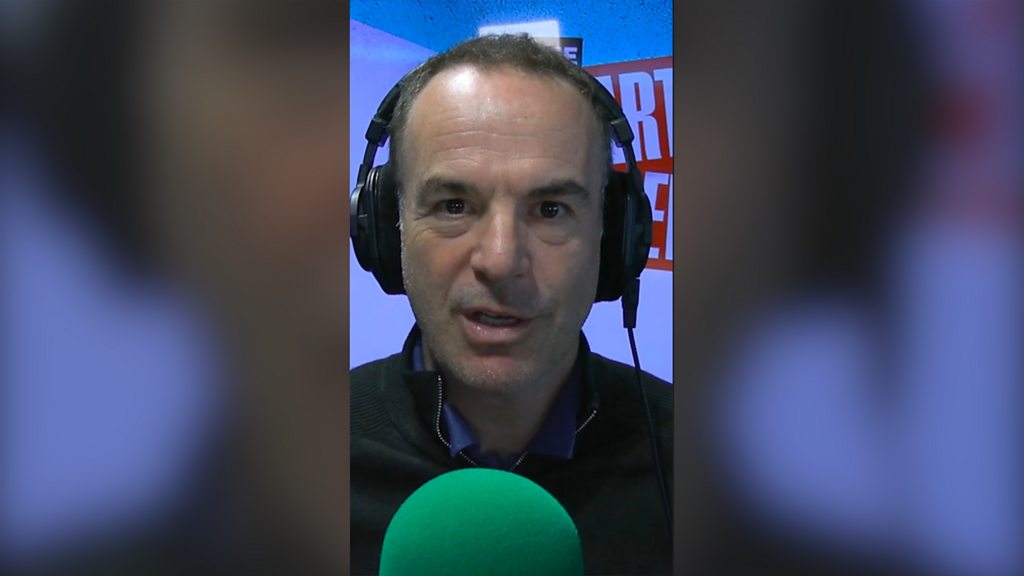
Martin Lewis explains why both partners in a relationship need to know what financial products they hold.

Continue Reading

Business

Invesco Rising Dividends Fund Q4 2025 Commentary (Mutual Fund:OARDX)

Published

on

Invesco Rising Dividends Fund Q4 2025 Commentary (Mutual Fund:OARDX)

Invesco is an independent investment management firm dedicated to delivering an investment experience that helps people get more out of life.Be the first to know! Sign up for Invesco US Blog and get expert investment views as they post.Disclosure for all Invesco US articles: Before investing, carefully read the prospectus and/or summary prospectus and carefully consider the investment objectives, risks, charges and expenses. The information provided is for educational purposes only and does not constitute a recommendation of the suitability of any investment strategy for a particular investor. Invesco does not provide tax advice. The tax information contained herein is general and is not exhaustive by nature. Federal and state tax laws are complex and constantly changing. Investors should always consult their own legal or tax professional for information concerning their individual situation. The opinions expressed are those of the authors, are based on current market conditions and are subject to change without notice. These opinions may differ from those of other Invesco investment professionals. NOT FDIC INSURED MAY LOSE VALUE NO BANK GUARANTEE All data provided by Invesco unless otherwise noted. Invesco Distributors, Inc. is the US distributor for Invesco Ltd.’s retail products and collective trust funds. Invesco Advisers, Inc. and other affiliated investment advisers mentioned provide investment advisory services and do not sell securities. Invesco Unit Investment Trusts are distributed by the sponsor, Invesco Capital Markets, Inc., and broker-dealers including Invesco Distributors, Inc. PowerShares® is a registered trademark of Invesco PowerShares Capital Management LLC (Invesco PowerShares). Each entity is an indirect, wholly owned subsidiary of Invesco Ltd. ©2015 Invesco Ltd. All rights reserved.

Continue Reading

Business

Form 8K Trinseo SA For: 13 March

Published

on


Form 8K Trinseo SA For: 13 March

Continue Reading

Business

Sebi sets new conditions for intraday borrowing by mutual funds from April 1

Published

on

Sebi sets new conditions for intraday borrowing by mutual funds from April 1
Capital markets regulator Sebi on Friday issued new conditions for intraday borrowing by mutual funds to address temporary liquidity mismatches while putting in place safeguards to ensure investor protection. The new framework will come into effect from April 1.

Sebi said mutual funds often face intraday timing mismatches between redemption payouts and inflows from investments. Typically, redemption payments to investors are processed during the morning hours of the settlement day (T+1), while funds from instruments such as TREPS and reverse repo transactions are received later in the evening.

To bridge this temporary funding gap, mutual fund schemes sometimes rely on short-term borrowing arrangements from banks or other financial institutions. The regulator said the new rules formally recognise this practice while placing clear limits and operational conditions.

Mutual funds are generally allowed to borrow up to 20% of the net assets of a scheme for a maximum period of six months for purposes such as meeting redemption requests, paying income distribution or settling certain trades. However, this 20% cap will not apply to intraday borrowings, provided they meet specific conditions laid out by the regulator.

Sebi clarified that intraday borrowing can be used only to facilitate repurchase or redemption of units, interest payments or income distribution payouts to unitholders.

Advertisement


The regulator also capped the quantum of intraday borrowing. The amount borrowed cannot exceed receivables guaranteed on the same day from institutions such as the Government of India, the Reserve Bank of India, and the Clearing Corporation of India.
Eligible receivables include maturity proceeds from TREPS, reverse repo transactions, government securities, treasury bills, state development loans, STRIPS, as well as interest payments and sale proceeds from these instruments.To strengthen oversight, Sebi has mandated that each asset management company’s board and trustees must approve a formal policy governing the use of intraday borrowing facilities, which must also be disclosed on the AMC’s website.

The regulator further said that any cost associated with intraday borrowing must be borne by the asset management company, not by the mutual fund scheme or its investors. Similarly, any losses arising from delays or unforeseen issues in receiving expected funds must also be absorbed by the AMC.

Sebi also addressed borrowing by equity-oriented index funds and exchange-traded funds (ETFs). Such funds will be allowed to borrow funds in cases where sell trades are not executed on time, but only to facilitate participation in the closing auction session of stock exchanges, which will become effective from August 3.

Add ET Logo as a Reliable and Trusted News Source

Continue Reading

Business

Retail prices could rise after Strait of Hormuz closure

Published

on

Retail prices could rise after Strait of Hormuz closure

The Iran war could soon mean higher prices on store shelves for consumers.

Iran’s effective closure of the Strait of Hormuz passage has significantly disrupted the global supply chain, affecting goods from fertilizers to metals to gas and fuel. The passage is a critical point, funneling tens of millions of barrels of oil daily along with other exports as one of the world’s most important shipping routes.

And the tensions with the strait are showing no signs of changing. On Thursday, Iran’s new supreme leader, Mojtaba Khamenei, said the closure should be continued as a “tool to pressure the enemy” in his first public statement since being appointed. Defense Secretary Pete Hegseth on Friday downplayed concerns about the strait, saying at a Pentagon press briefing, “We have been dealing with it, and don’t need to worry about it.”

Though it’s still early to determine what the exact impact on retail may be, Coresight Research President Max Kahn said the disruption to the global supply chain may already be pushing the industry near its limits.

Advertisement

“Retailers have become much better at building flexibility in their supply chains, and that got accelerated a lot last year with tariffs,” Kahn told CNBC. “The bigger worry is if this continues to last.”

Prices at the grocery store may be hit first, Kahn said, since food items tend to have less flexible supply chains, while apparel retailers can likely afford to slow production and bulk it up again later without disrupting inventory.

As retailers navigate the geopolitical landscape, Kahn said they’ll likely be facing two factors: input cost pressure and demand pressure.

“Retailers are going to have to play that,” he said. “One of the reasons how retail stayed resilient in 2022 and 2023 was they were able to raise prices, and that raising of prices sort of offset some weakening in units, so our sense would be that that could be very similar this time around.”

Advertisement

Retail hasn’t just been affected by shipping changes, either. Shipments of garments for Zara owner Inditex, along with other clothing retailers, were stranded last week as flights in the Middle East were canceled, according to Reuters.

Kahn said retailers’ potential struggles could have broader economic implications, too. Though companies have learned to be somewhat adaptable to the changing macroeconomic environment over the past few years, he noted that the overall growth for retail has been “so-so,” and while the industry continues to navigate the war, that uncertainty will also begin to affect GDP growth.

Still, as the chaos persists, Kahn said he expects value retailers like Walmart and Kroger and dollar stores like Dollar General and Dollar Tree to have an easier time because shoppers will be looking for more value-priced items.

In addition to impacting the global supply chain, consumer confidence is already taking a hit from the war. Though Wednesday’s consumer price index came in as expected, industry experts have said higher gas prices will likely affect discretionary spending as consumers pull back to cover costs at the pump, affecting the retailers that may already be reeling from supply chain impacts.

Advertisement

In a Sunday note, Wolfe Research analysts wrote that discretionary-heavy retailers are likely to be among the largest losers from the war.

“Retailers with a bigger discretionary mix, like Five Below and Target, also face headwinds as consumer confidence comes under pressure and they mix down,” they wrote.

Still, some retailers may have other factors helping them out of the war fallout. Retailers that appeal to higher-income consumers or who have specialty offerings, like Costco, may be able to escape the squeeze.

“Costco should benefit as their price leadership on gas becomes more important, and consumers are more willing to wait 20+ minutes for gas,” the analysts added.

Advertisement

UBS analysts wrote in a Monday note that the war is adding uncertainty to an already weakened consumer dealing with the changing macroenvironment and the K-shaped economy, where those at the high end continue to do well while lower-income consumers struggle.

“The rise in oil prices should add a meaningful burden to household budgets and intensify strains already visible across the consumer landscape,” they wrote.

While some retailers like Ulta and Costco have historically seen same store sales increase alongside oil inflation, companies that serve lower-income shoppers like Ollie’s Bargain Outlet and Dollar General are likely to see sales decrease as consumers face budget restraints, the UBS analysts said.

“All in, the rise in oil prices could create a layered and persistent drag on consumer health,” they wrote. “It increases fixed household expenditures, puts upward pressure on grocery prices, reshapes retail traffic patterns and introduces operational challenges for retailers across multiple segments.”

Advertisement
Continue Reading

Business

Why has Trump eased sanctions on Russian oil – and will it help Putin?

Published

on

Why has Trump eased sanctions on Russian oil - and will it help Putin?

The US said easing sanctions on Russian oil would provide only a limited financial boost to Putin.

Continue Reading

Business

Big Tech Stocks Have a Free Cash Flow Problem

Published

on

Big Tech Stocks Have a Free Cash Flow Problem

Big Tech Stocks Have a Free Cash Flow Problem

Continue Reading

Business

Sebi imposes Rs 10 lakh fine on Anand Rathi for violation of stock brokers’ norms

Published

on

Sebi imposes Rs 10 lakh fine on Anand Rathi for violation of stock brokers' norms
Market regulator Securities and Exchange Board of India (Sebi) on Friday imposed a fine of Rs 10 lakh on Anand Rathi Share and Stock Brokers Limited after finding the company in violation of its stock brokers regulation.

In its investigation launched on June 17, 2025, the market watchdog found the brokerage lacking in compliance related to several stock brokers’ regulations. The inspection was conducted for the period between April 1, 2023 and August 31, 2024.

In a 42-page order, Sebi held that Anand Rathi failed in reporting technical glitches that occurred on May 21, 2024 within the stipulated time.

The company in its defence, said that it had intimated the exchanges about the glitch with an hour of the incident while submitting the preliminary report on the next day. However, it admitted the delay in the submission of Root Cause Analysis (RCA).

Advertisement

The order also noted that Anand Rathi breached the capacity utilization threshold limit by setting it at 85% & 95%, going beyond 70 % of installed capacity.


The brokerage firm was also found to be in violation of patch management norms.
Among other things, Anand Rathi violated provisions related to the password policy.Sebi also found that Anand Rathi did not have adequate data leakage prevention (DLP) systems in place during the inspection period, as required under Securities and Exchange Board of India regulations and National Stock Exchange of India guidelines.

Although the broker claimed it had earlier deployed a McAfee solution in 2020 and later implemented Zscaler, Sebi noted that the McAfee subscription had expired in December 2021 and there was no proof of renewal or active use during the inspection period. Evidence provided for the Zscaler system showed implementation only after the inspection.

Accordingly, SEBI concluded that the broker had violated data security provisions requiring deployment of tools to detect and prevent data leakage.

(Disclaimer: The recommendations, suggestions, views, and opinions given by the experts are their own. These do not represent the views of The Economic Times.)

Advertisement
Continue Reading

Trending

Copyright © 2025