

Crypto World
XRP Ledger Validators Weigh Two Amendments as Votes Lag

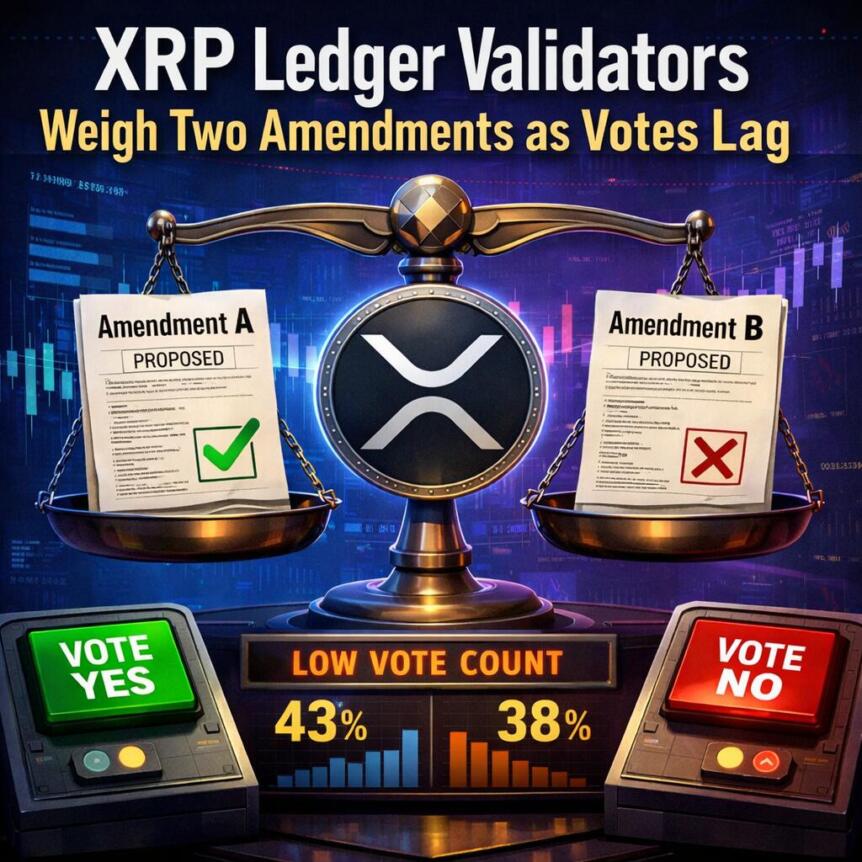
The XRP Ledger is reviewing two proposed amendments that could expand lending functions and strengthen vault infrastructure. Validators have begun voting, yet early participation remains limited. Current results suggest the proposals still face significant hurdles before reaching activation requirements.
Data from XRPScan shows that validators have submitted only a small portion of the required votes. The network requires a strong consensus before any protocol change becomes active. Consequently, both amendments remain far from the necessary approval threshold.
The proposed changes target deeper financial functionality across the XRP ecosystem. Developers designed them to enhance lending capabilities and asset management tools. However, the current voting pace indicates that activation may take longer than expected.
SingleAssetVault Amendment
Validators are currently assessing the v3.1.0 SingleAssetVault amendment across the network. The proposal introduces vault mechanisms designed for single asset management within decentralized environments. As a result, developers expect stronger custody options for on-chain financial applications.
So far, only eight validators have recorded votes supporting the proposal. This number remains well below the required activation threshold. Therefore, the amendment currently shows limited progress toward implementation.
The XRP Ledger requires at least 28 validator approvals to activate protocol changes. This requirement represents roughly 80 percent of the network’s validator set. Without that support, the activation process automatically resets after the voting period ends.
Lending Protocol Amendment
Validators are also reviewing the v3.1.0 Lending Protocol amendment during the same voting cycle. This proposal introduces infrastructure for native lending services within the XRP Ledger ecosystem. Consequently, developers aim to expand decentralized finance capabilities directly on the network.
The amendment has gathered only six validator votes so far. That participation rate equals about 17% of the total validator pool. Therefore, the proposal remains far below the required approval threshold.
If voting participation does not accelerate, the activation timer will expire. When that happens, the amendment returns to a pending state. Validators may then reconsider the proposal during a future voting round.
Amendment Oversight and Security Context
Protocol amendments carry major consequences because they directly modify core blockchain functionality. Developers, therefore, apply strict governance rules before enabling any change. The XRP Ledger uses extended validator voting periods to confirm broad consensus.
A recent example demonstrated why careful review remains essential. Security researchers discovered a vulnerability in the proposed Batch amendment, known as XLS-56. That issue appeared during its voting phase and never reached activation.
The flaw could have allowed attackers to withdraw funds from user wallets. Notably, the exploit did not require access to private keys. Early detection prevented potential damage and reinforced the network’s review process.
Such events highlight the importance of gradual amendment adoption. Validators must carefully examine technical risks before approving protocol upgrades. Consequently, the slow progress of current proposals reflects the network’s cautious governance approach.

Crypto World
BlockDAG News: As JPMorgan Gets Dragged Into a $328M Crypto Mess, Traders Dump BDAG & Pepeto and Pour $2.1M Into DeepSnitch AI For 100x

JPMorgan just got sued for allegedly letting $328 million in crypto fraud flow straight through its accounts, and it knew. That’s the allegation at the heart of a class action that names one of the world’s most powerful banks as a knowing participant in a Ponzi scheme.
Goliath Ventures ran for three years, funds landed directly in Coinbase wallets, and prosecutors say the red flags were there the entire time. If the case holds, it rewrites the liability rules for every traditional bank servicing crypto businesses.
That case is a reminder that risk in financial markets never fully goes away, and that the demand for real verification tools has never been higher. Over $2.1M has flowed into DeepSnitch AI’s presale from investors who understand that.
The platform is live today, contract analysis tools are already accessible, and the TGE hits Uniswap on March 31st. While JPMorgan’s KYC processes allegedly missed $328 million in red flags, DSNT is built to catch them before a single dollar moves.
JPMorgan sued over a crypto Ponzi scheme
Investors have filed a class action against JPMorgan, alleging the bank ignored suspicious transactions and allowed Goliath Ventures to funnel $328 million in fraudulent investor funds through its accounts.
A parallel federal criminal case targets Goliath CEO Christopher Delgado, who faces up to 30 years in prison. Prosecutors allege the scheme ran from January 2023 through January 2026, with funds flowing through JPMorgan, Bank of America, and directly into Coinbase wallets.
The lawsuit’s core argument, that JPMorgan’s own KYC processes gave it knowledge of Goliath’s unlicensed operations, sets up a significant legal test for how far traditional banks can be held liable for servicing crypto businesses later exposed as fraudulent.
The case reinforces two persistent headwinds: reputational risk from high-profile fraud and the regulatory scrutiny that follows. It also puts pressure on exchanges like Coinbase, which received funds directly, to demonstrate increasingly rigorous onboarding and transaction monitoring standards.
Top 3 crypto presales to buy in 2026: DeepSnitch AI, BlockDAG and Pepeto
DeepSnitch AI price prediction: DeepSnitch AI’s utility bid is running hot ahead of launch
The JPMorgan class action alleging the bank overlooked $328 million in fraudulent transactions is a reminder that risk in financial markets never fully goes away. Crypto is no different: rug pulls get worse in sideways conditions and bad contracts slip through when attention drifts, regardless of what narrative is dominating at the time.
DeepSnitch AI sits right at that verification layer, and it’s already live. The dashboards and contract analysis tools are accessible today, which means you’re buying into a working product before it gets broader exchange exposure.
The traction speaks for itself. Over $2.1 million raised, with more than 42 million tokens already staked. That staked supply reduces sell pressure and signals that early holders are here for the long run, not a quick exit.
At $0.04399 with nearly 190% presale growth already on the board, DeepSnitch AI has real momentum before it even lists, while competitors like Pepeto are still selling roadmap promises.
As on-chain activity keeps growing, contract verification only becomes more valuable. That’s the real asymmetry here: demand built on utility, not trend cycles.
BlockDAG news: Can BDAG win the L1 competition?
The latest BlockDAG news shows that BDAG crosses into live trading. Tokens airdropped on March 3, exchange liquidity launched March 4 at $0.05. The presale chapter closes. A harder one opens.
Early predictions target $0.08–$0.10 within months, a potential 60–100% gain from listing. Presale momentum makes that range credible. The pitch holds up too: parallel processing and high transaction throughput address real infrastructure demand, not manufactured narrative.
But open markets apply a different standard. Fundraising milestones, or bullish BlockDAG news, don’t move prices here. Developer adoption does. Live dApps do. Real network usage does.
What happens on-chain in the weeks after launch carries more signal than a hundred positive BlockDAG news. That’s where BlockDAG proves itself, or doesn’t.
Pepeto price prediction: Will frog memes make a comeback in 2026?
Pepeto targets cross-chain friction with a unified interface for all things DeFi. Presale price: $0.000000186. Staking yields reach 209% APY. Early yield-seekers arrive before any listing date exists.
The credibility layer is genuine. Dual audits from SolidProof and Coinsult cover the ground most early-stage projects skip. Token value tied to DEX volume creates a logical, legible growth story.
But the meme coin label is the ceiling as speculative capital chases the next opportunity. Sustaining 209% APY demands real users returning because the product works. Pepeto built something credible, but real adoption determines how far that credibility travels.
The closing thoughts
BDAG raised millions and now has to prove its blockchain was worth it beyond speculative BlockDAG news. Pepeto has the structure but not yet the users.
DeepSnitch AI already has a live product and holders who won’t stop talking about it. At $0.04399, with 190% presale gains and $2.1M raised, the fundamentals are in place before a single exchange candle prints.
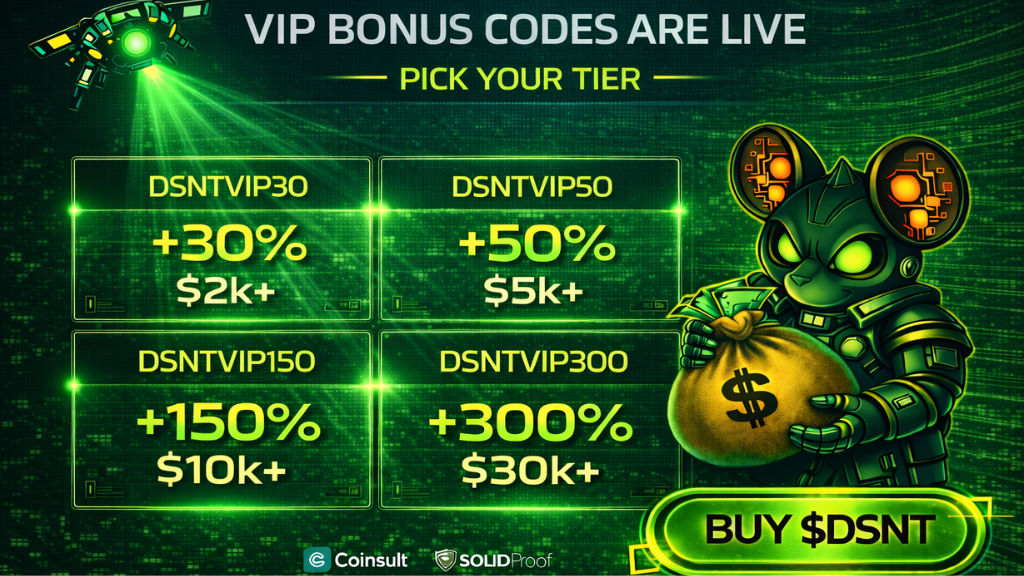
Use code DSNTVIP300 to turn $30,000 into $90,000 in tokens, and if those 100x projections land, that math gets very interesting very fast.
Visit the official website for more information, and join X and Telegram for community updates.
FAQs
What is the latest BlockDAG news following its exchange listing on March 4th?
Presale tokens were airdropped on March 3rd, and exchange liquidity launched on March 4th at $0.05. The presale chapter now closes, and open market trading begins. Early price targets sit at $0.08–$0.10 within months, contingent on real developer adoption and live dApp deployment.
What do BlockDAG’s post-listing updates say about its price potential?
The early price target of $0.08–$0.10 represents a 60–100% gain from listing, credible if network usage follows. But open markets care about developer activity and live dApps, not presale momentum. Those metrics write the price story from here.
How does BlockDAG compare to DeepSnitch AI right now?
BlockDAG is transitioning from presale to open market, still unproven post-listing. DeepSnitch AI has a live platform, $2.1M+ raised, 190% presale gains, and a confirmed March 31st Uniswap launch. BlockDAG’s best case is a double. DSNT’s starting conversation is 100x.
Disclaimer: This is a Press Release provided by a third party who is responsible for the content. Please conduct your own research before taking any action based on the content.

Crypto World
Crypto Derivatives Surge as Institutions Turn to Options to Hedge Massive Bitcoin Positions


DeFi platforms like Hyperliquid are demonstrating that decentralized exchanges can rival centralized venues in execution speed and transparency, according to Delphi Digital.
The cryptocurrency options market is expanding rapidly as institutional investors increasingly rely on instruments that allow them to define risk when managing large digital asset positions.
According to the crypto research firm Delphi Digital, trading activity in crypto derivatives has accelerated significantly. In fact, volumes on the Chicago Mercantile Exchange are currently running about 46% above the pace recorded during the exchange’s previous record year.
Crypto Options Market Expands
Delphi Digital said this growth indicates rising institutional participation, as funds and asset managers prefer options contracts because they allow investors to hedge large exposures while limiting downside risk to the premium paid. The firm noted that the move toward defined-risk instruments became more evident in mid-2025, when aggregate open interest in Bitcoin options reached $65 billion and exceeded Bitcoin futures open interest for the first time.
While futures are commonly used to gain leveraged exposure, options allow traders to cap potential losses on large positions, such as a $500 million Bitcoin allocation, while maintaining upside exposure. Delphi Digital explained that most of the current options activity is concentrated on a small number of centralized venues. For several years, the primary platform for crypto options trading has been Deribit, which gained additional institutional backing after being acquired in 2025 by Coinbase in a deal valued at $2.9 billion.
At the same time, options linked to the spot Bitcoin exchange-traded fund issued by BlackRock under the ticker IBIT introduced a new source of activity from traditional financial market participants after launching in late 2024. In addition to the rapid growth of centralized platforms, Delphi Digital said decentralized derivatives markets have also expanded, as their market share increased from about 2% to more than 10% over the past two years.
The firm pointed to the success of the decentralized trading platform Hyperliquid in demonstrating that decentralized exchanges can achieve performance levels similar to centralized venues in terms of execution speed and transparency.
However, it said that on-chain options trading has not yet experienced the same level of adoption. Among decentralized options platforms, Delphi Digital identified Derive as the largest protocol currently operating in the sector, which reported more than $700 million in notional options volume over the past 30 days. The platform originally launched as Lyra in 2021 and later rebuilt its infrastructure in 2023 using a gasless central limit order book on its own OP Stack layer-2 network, which allowed market makers to quote directly on the order book and enabled traders to execute transactions without paying gas fees.
You may also like:
Another project developing similar capabilities is Kyan Exchange, which is currently operating in beta on the Arbitrum network and is preparing for a mainnet launch.
The research firm said demand for options is also tied to the growth of structured financial products used by asset managers, which rely on derivatives to generate yield while maintaining defined risk profiles. It pointed to income-focused strategies such as covered-call products used in traditional markets and noted that derivative income funds collectively manage more than $100 billion in assets.
Regulation Side of Things
Delphi Digital added that the regulatory environment surrounding crypto derivatives may also be beginning to change, citing a joint statement issued in September 2025 by the US Securities and Exchange Commission (SEC) and the Commodity Futures Trading Commission (CFTC) that enabled spot crypto asset trading on regulated exchanges.
Meanwhile, the Clarity Act bill, which aims to create clear regulations that should help promote cryptocurrency adoption, has hit an impasse. But if the legislation ultimately moves forward, it would represent a significant milestone for the industry.
Binance Free $600 (CryptoPotato Exclusive): Use this link to register a new account and receive $600 exclusive welcome offer on Binance (full details).
LIMITED OFFER for CryptoPotato readers at Bybit: Use this link to register and open a $500 FREE position on any coin!


Summary
- Token2049 Dubai has been postponed to April 21–22, 2027 due to regional tensions impacting safety, travel, and logistics.
- The move follows the cancellation of the TON Gateway in Dubai by The Open Network.
- Ticket holders can transfer passes to the Singapore event or use them in 2027, while refund eligibility has not yet been clarified.
The Dubai edition of Token2049 has been postponed until 2027 after organizers cited safety concerns linked to rising geopolitical tensions due to the Iran-Isreal-US war. The decision follows the cancellation of another major industry gathering, the TON Gateway event, which had also been scheduled to take place in Dubai.
Token2049 Dubai event postponed to 2027
In a statement posted on X, organizers of Token2049 said the event would not take place this year and would instead return in April 2027. “In collaboration with our partners and stakeholders, and in light of the ongoing uncertainty in the region and its impact on safety, international travel, and logistics, Token2049 Dubai will be postponed to 21–22 April 2027,” the event organizers wrote in an announcement.
The announcement came a day after TON revealed it would completely cancel its Gateway conference in the city. The Telegram-linked project indicated that while the planned gathering would not proceed, the team hopes to introduce an alternative format later this year.
For participants who had already purchased passes to Token2049 Dubai, organizers said tickets will remain valid for the rescheduled event in 2027.
Attendees may also choose to transfer their passes to the Singapore edition of the conference scheduled to take place later this year. Pricing for the Dubai event had ranged widely depending on ticket tier. Early bird access began at $699, while standard passes reached $1,499.
Premium packages offering VIP perks such as exclusive lounges and priority access were listed at $5,999 on the conference’s ticketing page, which remains active on the website. It remains unclear whether participants who prefer not to attend the future event will be eligible for refunds. Organizers have not yet clarified that policy publicly.
The statement from Token2049 also addressed attendees who had already arranged travel to Dubai for the conference, which had originally been planned for April 29–30. Organizers advised participants to contact airlines and hotels directly to adjust their bookings where possible.
“We know this is disappointing news for many of you who have already made plans, and we don’t take that lightly,” the organizers wrote on the conference website. “Preparations for the event were progressing strongly. However, ensuring the global crypto industry can gather safely, and at the scale and quality that define Token2049, remains our top priority,” they added.
Before the postponement, the Dubai conference had been expected to feature prominent figures from across the digital asset industry, including Shayne Coplan, Tether CEO Paolo Ardoino, and Jeremy Allaire.
Meanwhile, attendees of the canceled TON Gateway event have been informed that ticket refunds will be processed within approximately two weeks. Organizers said further details about a replacement event format may be announced later in the year.


As the conflict involving Iran drags on and global energy supplies risk prolonged disruption, most financial assets are likely to behave like risk assets, according to Bloomberg Intelligence strategist Mike McGlone in a recent interview with Cointelegraph.
Despite major price swings across commodities, stock market volatility has remained relatively low, a divergence McGlone considers unsustainable. Historically, such imbalances tend to resolve through increased volatility in equities — often during broader market corrections.
That unusual volatility dynamic is also showing up in gold, a market traditionally viewed as a safe haven.
“Right now, 180-day volatility on gold is almost 2.5 times that of the S&P 500,” McGlone said. “So it’s no longer a store of value.”
In the interview, McGlone also discusses why Bitcoin (BTC) and the broader crypto market may be acting as a leading indicator for global risk assets. With the Bloomberg Galaxy Crypto Index already significantly down from its peak, he argues that crypto could be signaling a potential downturn in traditional markets.
The macro backdrop, he suggests, increasingly resembles past periods of stress, including the lead-up to the 2008 financial crisis, when energy prices spiked before sharply reversing during a global economic slowdown.
McGlone also shares his outlook on oil prices, interest rates, and the role of US Treasuries, which he still views as one of the few assets that could benefit if volatility rises and economic growth slows.
Could the current oil shock trigger a broader market correction? And what does it mean for Bitcoin, stocks, and the global economy?
Watch the full interview with Mike McGlone to hear his full macro outlook and market predictions.
This interview has been edited and condensed for clarity.
A selloff in both Wall Street and crypto markets hasn’t slowed Circle’s relentless rise. The stablecoin issuer’s stock has more than doubled since early February, with Bernstein analysts expecting further gains as stablecoins continue expanding beyond crypto’s more speculative use cases.
The technology is already moving deeper into traditional finance. UK insurance giant Aon recently piloted stablecoin payments for insurance premiums with Coinbase and Paxos, a move that could make cross-border premium payments faster and more efficient.
Elsewhere, Bitcoin (BTC) miner Canaan is taking a contrarian approach to treasury management, increasing its BTC holdings even as many competitors sell. And in traditional finance, Wells Fargo has filed a trademark for crypto-related services, suggesting large banks are still quietly preparing for deeper involvement in digital assets.
Circle stock surges on stablecoin tailwinds
Shares of stablecoin issuer Circle are rallying sharply in 2026 as Wall Street warms to the long-term growth story behind digital dollars. Analysts at Bernstein recently reiterated an “Outperform” rating on the stock, setting a $190 price target — roughly 60% above current levels.
Circle’s stock price has already more than doubled since early February and is up roughly 49% year-to-date, outperforming both the S&P 500 index and Nasdaq 100 index during the same period.
Bernstein’s bullish outlook hinges on accelerating stablecoin adoption across payments, financial infrastructure and onchain settlement. As the issuer of USDC (USDC), the world’s second-largest US dollar-pegged stablecoin, Circle is increasingly viewed as a key beneficiary of the industry’s push into mainstream finance.

Canaan boosts Bitcoin reserves while other miners sell
Bitcoin miner Canaan is expanding its BTC treasury amid a market downturn, while many rival public mining companies are reducing their holdings.
The company mined 86 BTC in February, increasing its total Bitcoin holdings to 1,793 BTC. Canaan also reported holding 3,952 Ether (ETH), bringing its total crypto reserves to record levels.
The accumulation trend stands in contrast to much of the mining sector. Several publicly traded miners have sold significant portions of their Bitcoin reserves over the past several months as tighter margins and post-halving economics put pressure on balance sheets.
Canaan, meanwhile, continues to expand its mining footprint, including operations in Texas — one of the largest mining hubs in the United States.

Aon pilots stablecoin payments for insurance premiums
Global insurance broker Aon is exploring the use of stablecoins to settle insurance premiums, working with crypto companies Paxos and Coinbase on the initiative.
The goal is to streamline cross-border payments, which often involve multiple banks, currency conversions and settlement delays. Stablecoins could allow insurers and clients to move funds more quickly while reducing costs and processing time.
For the insurance industry, faster settlement could simplify premium collection, improve cash flow management and reduce the administrative work tied to international payments. It may also make it easier to handle large cross-border policies and reinsurance transactions.
The pilot reflects a broader trend of stablecoins use expanding beyond crypto trading into real-world financial use cases, particularly in areas where global payments remain slow and expensive.
Wells Fargo files trademark for crypto services
US banking giant Wells Fargo has filed a US trademark application for “WFUSD,” signaling potential plans to expand deeper into crypto services.
The filing covers a range of blockchain-related offerings, including crypto trading, payments, digital wallet services and software for staking and custody. It also references financial services built on distributed ledger technology.
The trademark is significant because Wells Fargo is the fourth-largest US bank, with about $1.95 trillion in assets as of Q3 2025, according to S&P Global Market Intelligence.
Trademark filings don’t necessarily guarantee a product launch, but they often indicate areas companies are exploring. In this case, the scope suggests Wells Fargo may be evaluating crypto-based payments or a tokenized dollar product under the WFUSD name.

Crypto Biz is your weekly pulse on the business behind blockchain and crypto, delivered directly to your inbox every Thursday.
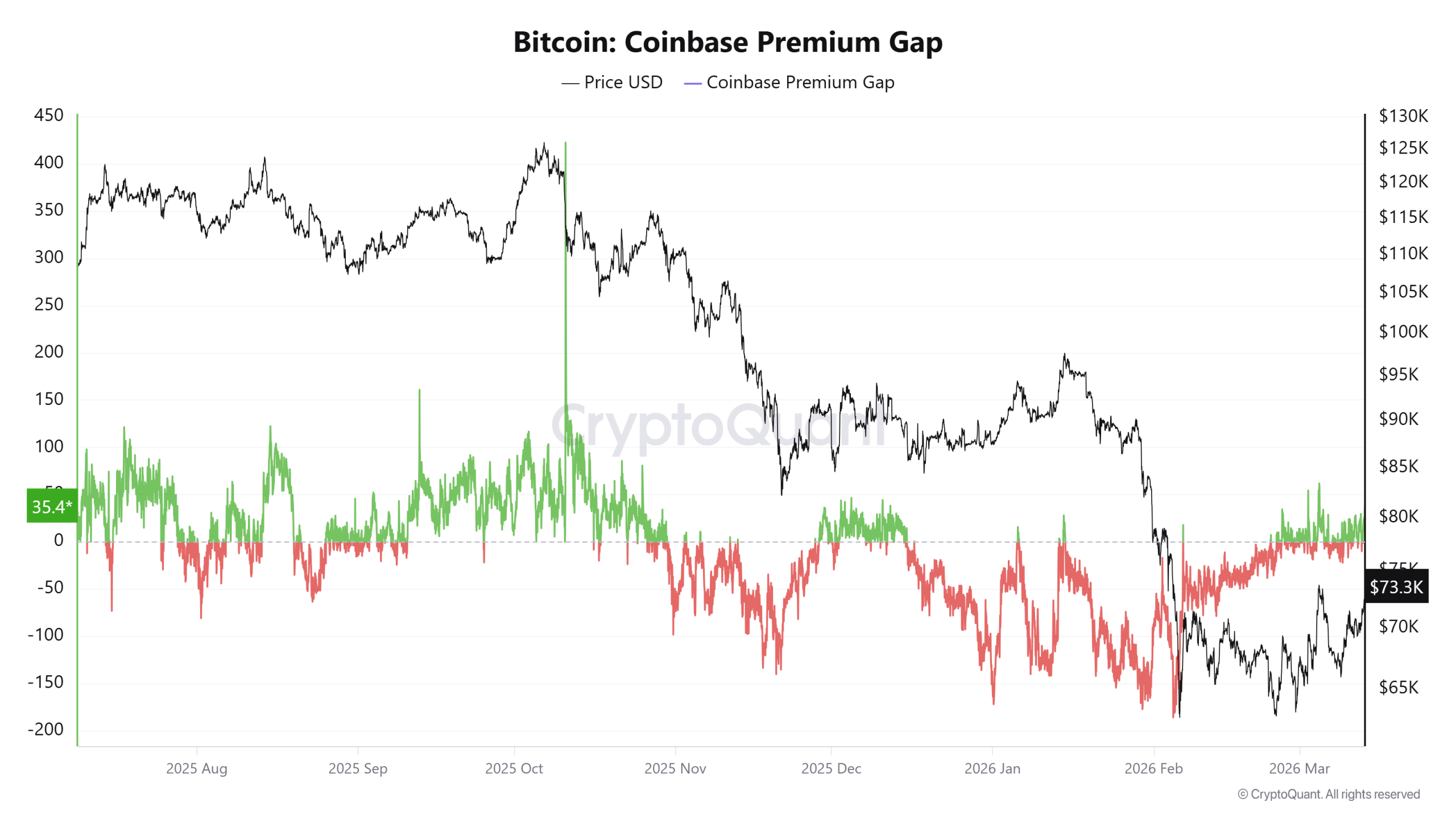
Bitcoin (BTC) price rallied close to a monthly high near $74,000, posting a 10.42% weekly gain, its strongest seven-day return since September 2025.
The spot market activity, exchange-traded fund (ETF) flows, and corporate-level BTC accumulation suggest a positive shift in demand, as analysts monitor whether the renewed buying pressure can support a rally to higher price levels.
Bitcoin Coinbase premium gap flips after 10 weeks
Crypto analyst IT Tech noted that the Coinbase premium gap, which measures the price difference between Bitcoin on Coinbase and global exchanges, currently reads +35.4, marking its first positive print in nearly ten weeks.
The metric previously dropped to –175 on Feb. 2, when Bitcoin traded near $78,000. That period marked the deepest negative reading during the correction that pushed BTC toward $60,000.

The premium has remained in negative territory for the majority of 2026, reflecting persistent selling pressure from the US spot traders. A positive premium signals buying pressure, coinciding with BTC’s rally.
Spot BTC ETF flows have also improved over the past three weeks. The net inflows now exceed $1.9 billion, in line with the recent recovery and rising institutional activity.
The additional demand came from corporate buys. Strategy acquired 11,042 BTC this week through its STRC financing program, adding to the steady bid supporting Bitcoin’s sharp rise since Monday.

Related: STRC may help Strategy reach 1M Bitcoin milestone before BlackRock
BTC liquidity clusters sit above $75,000
Bitcoin is currently attempting to reclaim its 100-day moving average on the daily chart, marking the first major retest of this level since it flipped into resistance on Jan. 20.

If Bitcoin stabilizes above $74,000, the price re-enters a zone with dense liquidity. The liquidation map shows roughly $1.9 billion in leveraged long positions clustered just above $75,000, which can attract the price as BTC seeks higher liquidity zones.
Above $75,000, nearly $2 billion in sell-side liquidity sits between $76,000 and $80,000, although it is distributed across a $4,000 range.

If BTC pushes through this region, the next nearby technical range sits between $79,400 and $81,400, where a one-hour fair value gap (FVG) formed during the previous decline. These imbalances between buyers and sellers often act as key inflection points for continuation.
Speaking on the potential retest of $74,000, crypto trader Ardi said Bitcoin needs to flip this level into support and reclaim the $85,000 region to rebuild a higher-time frame (HTF) bullish trend.

Meanwhile, MN Capital founder Michaël van de Poppe identified $76,000–$79,000 as a resistance band where additional momentum may spill into altcoin markets.
A move into that region exhibits a monthly engulfing candle pattern, effectively erasing February’s correction for BTC. A bullish engulfing pattern on the monthly chart may invite more buying pressure from traders, as it marks a positive shift on an HTF chart.
Related: Bitcoin catching up to gold hints at an ‘opportunity within risk’
This article does not contain investment advice or recommendations. Every investment and trading move involves risk, and readers should conduct their own research when making a decision. While we strive to provide accurate and timely information, Cointelegraph does not guarantee the accuracy, completeness, or reliability of any information in this article. This article may contain forward-looking statements that are subject to risks and uncertainties. Cointelegraph will not be liable for any loss or damage arising from your reliance on this information.
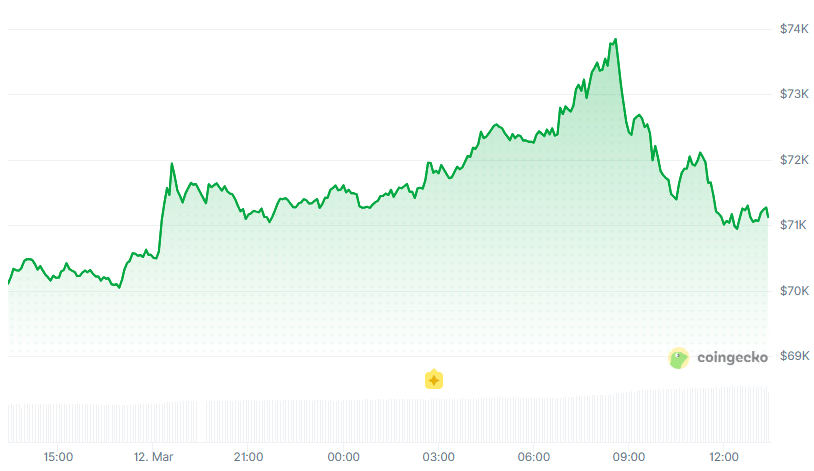
Bitcoin is trading around $71,000 after reaching $74,000 earlier today.
Crypto markets started Friday firmly in the green, but erased most of their gains after The Wall Street Journal reported that the Pentagon is moving more troops and warships to the Middle East, signaling a potential escalation in the ongoing conflict.
Bitcoin (BTC) is trading at around $71,200, up 2% over the past 24 hours. The world’s largest cryptocurrency touched $74,000 before reversing. Meanwhile, ETH is up 2.2% to $2,100, and SOL is up 3% to $89.

The overall crypto market capitalization climbed 1.1% to $2.51 trillion, according to Coingecko.
The S&P 500 and the Nasdaq posted minor losses, while oil held steady around $95 and precious metals dropped.
Most of the Top 100 digital assets posted gains over the last 24 hours, with AI-linked tokens leading the charge.
Today’s top gainers are TRUMP, which surged 30%, followed by RENDER, which climbed another 14%, pushing its weekly gains to 36%.
Pi Network (PI) and MORPHO are the biggest losers.
Around 107,000 leveraged traders were liquidated for $448 million in the past 24 hours, according to CoinGlass, with short positions dominating. Bitcoin accounted for $203 million, while ETH positions made up $128 million.
Bitcoin exchange-traded funds (ETFs) recorded inflows of $54 million on Thursday, marking a fourth straight day of gains.
The fast-growing market for tokenized U.S. Treasuries has a new leader.
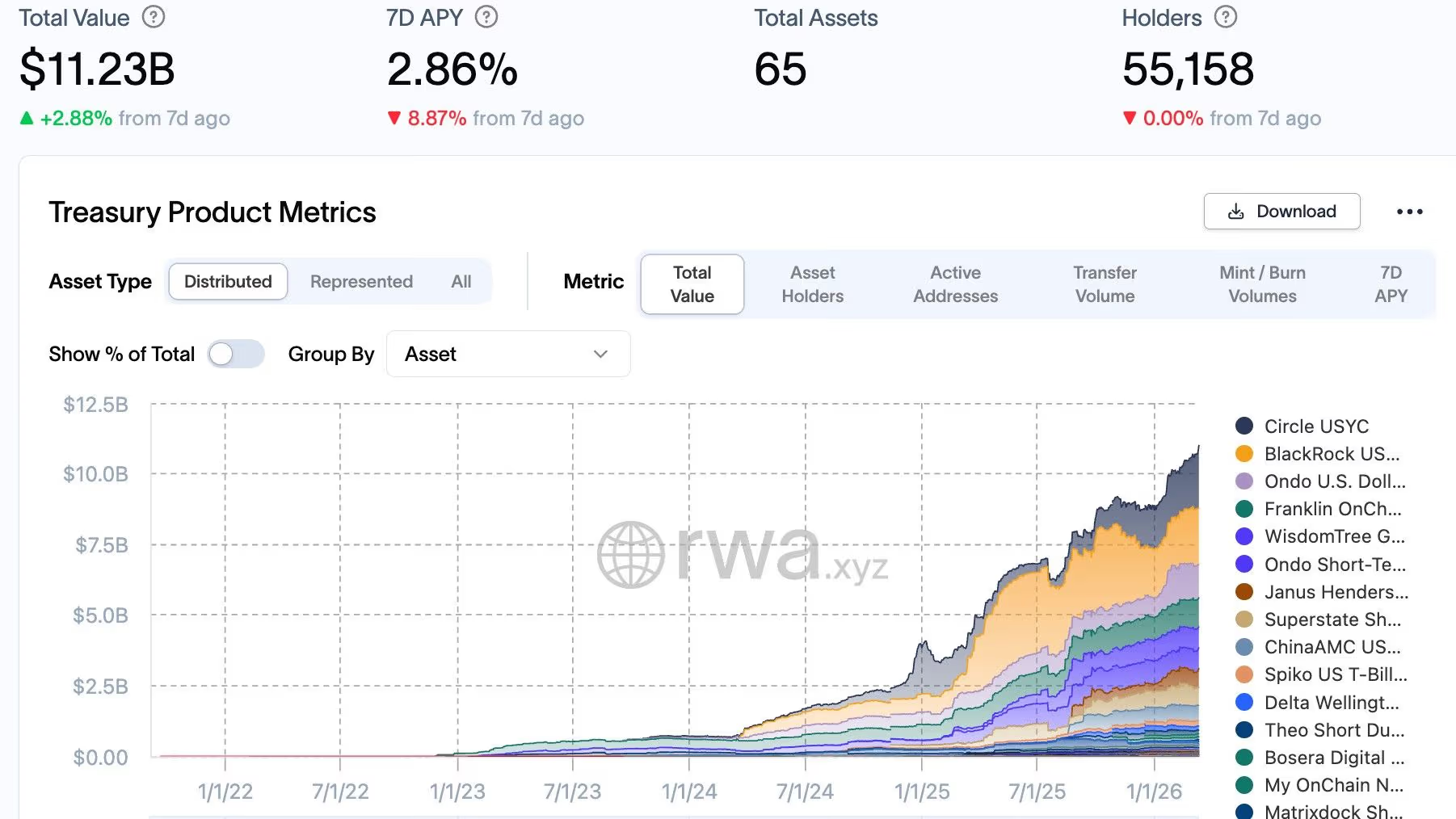
Circle (CRCL), best known as the issuer of the USDC (USDC) stablecoin, has become the largest provider of tokenized Treasury exposure after its USYC token expanded to about $2.2 billion in supply, according to RWA.xyz data.
That growth pushed USYC past BlackRock’s USD Institutional Digital Liquidity Fund (BUIDL) – issued with tokenization specialist Securitize – which currently holds around $2 billion in assets. BUIDL’s market share shrank to 18% from a 46% peak in May as competition increased with new entrants.

Tokenized real-world assets such as Treasury bills and money-market funds are gaining traction among crypto traders and institutional investors as yield-generating collateral and a tool to park onchain cash. Unlike traditional financial infrastructure, blockchain-based tokens allow near-instant settlement, transparent reserves and round-the-clock access.
Treasury-backed tokens also offer an additional advantage: they allow investors to earn interest while using the assets as collateral in trading strategies, potentially improving capital efficiency compared with holding stablecoins or cash.
Circle entered the tokenized fund market after acquiring Hashnote, the issuer of USYC, in early 2025.
BUIDL issuer Securitize did not return a request for comment by press time.
A booming market
A deeper dive into the data shows that much of USYC’s recent expansion appears to be linked to activity on BNB Chain, where crypto exchange giant Binance introduced the token as off-exchange collateral for institutional derivatives trading.
Under the structure, USYC can be held with partner banks through Binance Banking Triparty or with Ceffu, Binance’s institutional custody platform.
Since the launch in July, USYC supply on BNB swelled to $1.84 billion, data shows.
“Tokenized treasuries and repo as collateral is a major emerging use case and we are proud of how quickly this has grown,” Circle CEO Jeremy Allaire said Friday in a post on X.
The broader tokenized Treasury market is also booming, hitting a fresh record high of over $11 billion, according to data from RWA.xyz. The sector added roughly $2.5 billion in market value, some 27%, since the start of the year.
The growth accelerated during January’s crypto market downturn, suggesting some investors may be parking capital in tokenized Treasuries to earn a steady yield while waiting for opportunities to redeploy funds into digital assets.


STRC trading volume jumped 471%, generating capital for roughly 4,000 BTC, according to BitcoinTreasuries.
On March 12, Strategy’s STRC preferred stock program set a single-day record, generating enough capital to fund the purchase of 4,000 BTC.
According to data from BitcoinTreasuries, the week’s total was already enough to buy more than 10,000 BTC, a pace that is drawing the attention of investors who are watching how aggressively the world’s largest corporate Bitcoin holder is building its treasury.
Record Trading Volume for STRC
In a post on X, BitcoinTreasuries revealed that there were about 7.3 million shares traded during the March 12 session, a figure 471% higher than the stock’s average daily volume.
The platform uses a model that analyzes 1-minute STRC candles during the entire trading day, including pre-market and after-hours sessions. For any bar that closed at or above $99.92, considering STRC’s $100 par value, the model attributed 40% of the volume to at-the-market (ATM) issuance. It then subtracted a 2.5% underwriter commission and divided the net proceeds by the session-average Bitcoin price to get an estimated BTC total.
March 12th’s 7.3 million share volume yielded just over $283 million in net proceeds using the formula, and when divided by Bitcoin’s average price near $70,000, it was found that the money could buy 4,000 BTC, which was a first in the program’s history.
The amount of trading reached an estimated $743 million, exciting observers enough that one of them, Mark Harvey, suggested that the day could become STRC’s first $1 billion trading day, given that at the time there were still two hours left before the market closed.
Stock Structure Draws Attention
STRC pays a variable monthly dividend currently annualized at 11.5%, and it has built-in rate adjustments designed to keep the stock trading near par. The instrument channels investor capital directly into Bitcoin purchases while providing a yield-focused product that tends to move less than Strategy’s common MSTR stock.
You may also like:
Essentially, the fixed dividend remains perpetual with no principal repayment required, unlike debt. Harvey recently gave an example of how it works, using a hypothetical scenario where the company issues $100,000 of STRC at the stated 11.5% yield to buy BTC.
According to him, it would create a yearly dividend obligation of $11,500, which would be fixed, meaning that even if BTC’s value were to shoot up 10 times in five years, Strategy’s dividend obligation would be just $57,500, while its BTC holding grows by $1,000,000, delivering a net $842,500 gain to shareholders.
As of its most recent filing dated March 9, Strategy held 738,731 BTC, boosted by recent purchases, including 3,015 BTC bought on March 2 and a bigger announcement of 17,994 BTC on March 9 acquired for $1.28 billion.
At current prices, the stash is valued at about $53.1 billion, with the company having acquired it for just over $56 billion.
Binance Free $600 (CryptoPotato Exclusive): Use this link to register a new account and receive $600 exclusive welcome offer on Binance (full details).
LIMITED OFFER for CryptoPotato readers at Bybit: Use this link to register and open a $500 FREE position on any coin!


The crypto market has yet to react even as stablecoin supply reaches a new milestone.
Summary
- Stablecoin market cap surpassed $315 billion, reaching a new all-time high.
- Crypto market remains range-bound as stablecoin flows to exchanges stay weak.
- Analysts say growing stablecoin liquidity could fuel a future rally if inflows return.
Data from DeFiLlama shows the total market capitalization of stablecoins has surpassed $315 billion, setting a new all-time high. The figure increased by about $2.48 billion, or 0.79%, over the past seven days, highlighting steady growth in on-chain liquidity.
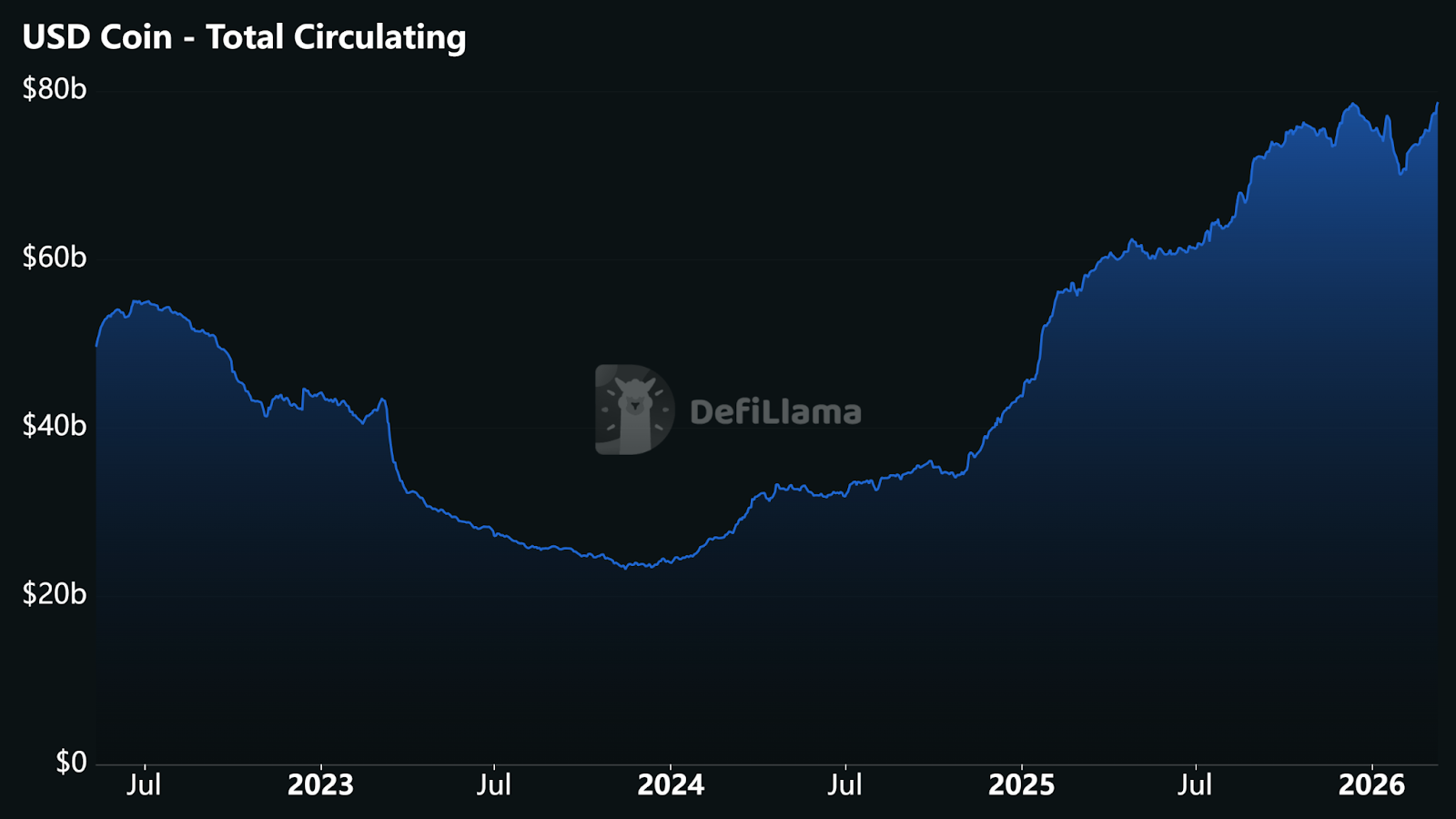
Among the largest issuers, Tether (USDT) leads with a market cap of $183.93 billion, representing about 58% of the sector. USD Coin (USDC) follows with roughly $78.8 billion, while USDS holds close to $8 billion.
Historically, such expansion has often preceded rallies across the crypto market. Stablecoins usually function as liquidity waiting to be deployed, giving traders a way to move capital quickly into assets like Bitcoin, Ethereum, or decentralized finance protocols.
During the 2020–2021 bull cycle, stablecoin supply grew from around $20 billion to more than $120 billion. That growth came shortly before Bitcoin surged from roughly $10,000 to nearly $69,000.
A similar trend appeared during the 2024–2025 recovery, when rising stablecoin issuance led to renewed demand across digital assets.
Stablecoin supply rises, but trading demand stays muted
Despite the record supply, the broader crypto market has remained relatively quiet.
Exchange flow data shows that stablecoins have not been moving into trading platforms in large numbers. On the contrary, some exchanges have recorded consistent outflows this year.
For example, Binance has reportedly seen around $2 billion in monthly stablecoin outflows, while Bitfinex has recorded roughly $336 million leaving the platform.
This pattern suggests that new stablecoin liquidity is not immediately being used for speculative trading. As a result, prices across major cryptocurrencies have remained range-bound, with Bitcoin hovering near the $70,000 level in recent weeks.
Why stablecoins may be bypassing the crypto market
One explanation is that stablecoins are no longer used only as trading tools. Their role in the digital economy has expanded significantly.
Today, stablecoins are widely used for cross-border payments, remittances, and online settlements. For many users in emerging markets, they also serve as a practical alternative to volatile local currencies.
Major payment and crypto firms are also building infrastructure around these assets. Companies such as Circle and Stripe have explored systems that allow stablecoins to support new financial services, including automated payments and tokenized assets.
Because of this shift, a growing share of stablecoin activity now occurs outside traditional crypto trading. Liquidity may still be entering the ecosystem, but it is not immediately flowing into exchanges or spot markets.
For the crypto market, that leaves a mixed outlook. In the short term, prices could continue to move sideways as traders wait for stronger inflows.
Over a longer horizon, however, the expanding stablecoin supply may still provide the foundation for the next major rally, if that liquidity eventually returns to crypto markets.

Lightwater Valley’s new look as it prepares for 2026 opening

Farm bill draft heads to House of Representatives

BlockDAG News: As JPMorgan Gets Dragged Into a $328M Crypto Mess, Traders Dump BDAG & Pepeto and Pour $2.1M Into DeepSnitch AI For 100x


-

 News Videos4 days ago
10th Algebra | Financial Planning | Question Bank Solution | Board Exam 2026
-
 Tech3 days ago
A 1,300-Pound NASA Spacecraft To Re-Enter Earth’s Atmosphere
-

 Crypto World4 days ago
Paradigm, a16z, Winklevoss Capital, Balaji Srinivasan among investors in ZODL
-

 Business3 days ago
ExxonMobil seeks to move corporate registration from New Jersey to Texas
-

 Tech3 days ago
ChatGPT will now generate interactive visuals to help you with math and science concepts
-

 Sports6 days ago
Three share 2-shot lead entering final round in Hong Kong
-

 Sports6 days ago
Braveheart Lakshya downs Lai in epic battle to enter All England Open final | Other Sports News
-

 NewsBeat2 days ago
Residents reaction as Shildon murder probe enters second day
-

 Entertainment7 days ago
Hailey Bieber Poses For Sexy Selfies In New Luscious Lip Thirst Traps
-

 Business3 days ago
Search Enters Sixth Week With New Leads in Tucson Abduction Case
-

 Business5 days ago
Search for Nancy Guthrie Enters 37th Day as FBI Probes Wi-Fi Jammer Theory
-
 NewsBeat4 days ago
Pagazzi Lighting enters administration as 70 jobs lost and 11 stores close across Scotland
-

 Tech4 days ago
Despite challenges, Ireland sixth in EU for board gender diversity
-

 Fashion3 hours ago
Weekend Open Thread: Addict Lip Glow
-

 Business4 days ago
Search Enters 39th Day with FBI Tip Line Developments and No Major Breakthroughs
-

 NewsBeat2 days ago
I Entered The Manosphere. Nothing Could Prepare Me For What I Found.
-

 Business7 days ago
Iran war enters second week as Trump demands ’unconditional surrender’
-

 Sports4 days ago
Skateboarding World Championships: Britain’s Sky Brown wins park gold
-
 Crypto World3 days ago
Will Chainlink price reclaim $10 amid volatility squeeze?
-

 Sports5 days ago
Tomorrow’s Top 25 Today: Florida jumps to No. 4; Louisville, Wisconsin enter projected rankings