

Business
Designing a Multi-Chain Payment Strategy: Why Network Choice Matters


Over the past decade, blockchain payments have evolved from a niche interest to a financial infrastructure widely used by businesses of all kinds. Early crypto payment systems usually used only one network, such as Bitcoin or Ethereum.
This approach was simple and straightforward, but it had many limitations, such as scalability, cost, and user accessibility.
Today, most companies rely on a multi-chain payment strategy. These include Bitcoin, the biggest crypto, and Ethereum, the biggest altcoin, as well as many smaller altcoins and an increasing number of stablecoins.
Companies have designed infrastructure to support a growing number of networks, as users invest in a variety of cryptos and often chase trends with new and popular altcoins and meme coins. This allows them to optimize transaction costs, improve payment speeds, and serve users who prefer different ecosystems.
Each network has its strengths and weaknesses, and businesses should be aware of these and plan their payment strategy accordingly, keeping their users’ and customers’ needs in mind. It can improve performance and make the business more reliable.
What Is a Multi-Chain Payment Strategy?
A multi-chain payment strategy is a payment infrastructure that enables a business to accept, process, and settle transactions across multiple blockchain networks. For a while, businesses have relied on a single payment strategy, typically allowing payments via the most popular network.
The very nature of the crypto ecosystem has changed and fragmented in recent years, and the new payment approach reflects that. There are thousands of crypto options available right now, and a few dozen are the heavyweights, worth more than hundreds of millions of dollars.
The crypto user base has changed as well. It used to be an interest of a few niche tech enthusiasts and financial experts, but now it’s widely used, and everyday investors dabble in cryptos. Investing through crypto exchanges has become much easier and safer than before, and more regulations are in place to protect end users.
Another key element is making the business payment options compatible with stablecoin. These digital currencies have all the features of cryptocurrencies, but their value is tied to fiat currencies, and therefore, they are not volatile. For some, this is the best of both worlds, and for others, it represents too much government interference in crypto.
Multi-chain payment networks are more difficult to set up and maintain, and are therefore more costly for the business offering the service. However, the extra expense is worth it if it accommodates the users.
Why Network Choice Matters in Payment Design
Experts such as those at CCN point out that choosing the right payment network is the most important decision in payment design. Each network operates under different technical rules and economic structures, which will affect both the businesses providing the services and the end users.
One of the most visible differences is the transaction fees. Blockchain transactions require users to pay network fees, commonly known as gas fees. On some networks, these are very low, and it’s the main attraction of the network. For others, fees can rise significantly, especially if there’s a large volume of transactions.
Transaction speed is another very important factor to consider. Payment systems benefit from fast confirmation times, especially when merchants need to verify transactions quickly. Networks that operate slowly or delay confirmation quickly are usually avoided by end users and are often seen as untrustworthy. However, they may be less costly than the alternatives.
Liquidity and ecosystem support are equally important. A blockchain network with strong adoption will have better wallet support and deeper liquidity pools. This makes it easier for businesses to process payments and manage funds. It also shows that the network has real, active users and is trusted.
User experience is essential. If customers are already using a particular network, supporting that network can reduce friction and increase adoption. A well-designed multi-chain strategy takes into account all the benefits we mentioned and strives for a balance among them, given that user experience is the essential feature in the end.
Comparing Major Blockchain Networks for Payments
Ethereum
Ethereum is one of the most influential networks in the crypto system. It introduced the use of smart contracts, therefore allowing decentralized applications, DeFi protocols, and tokenized assets. These are used across different industries, allowing for smooth and safe transfer of funds. As a result, Ethereum is the most used crypto for digital finance.
It’s safe and decentralized, which are the most important qualities of a cryptocurrency. The network is supported by thousands of nodes and validators around the world, making it highly resilient against attacks. Ethereum’s ecosystem also supports a variety of different stablecoins.
The biggest downside of this network comes from the fact that it struggles with scalability. That can be a big problem if a business wants to grow quickly and reach a large user base. During periods of high network activity, transaction fees can rise significantly. It means it’s not suited for small payments and businesses.
Solana
Solana is a high-performance blockchain designed to support extremely fast transaction processing. It uses a unique combination of consensus mechanisms that allow it to handle thousands of transactions per second. The most attractive feature of this network is its very low transfer fees.
For an average payment, Solana takes a fraction of a cent in fees. It’s therefore best suited for businesses with a high volume of small payments, which most online businesses have. The confirmation of these payments is almost instant. It’s the quality that the end users are looking for the most.
Solana first gained traction among developers building applications in gaming, NFTs, and decentralized finance. Platforms that require frequent transactions are therefore the first ones to adopt it.
Over the years, the network has experienced a couple of outages during which it didn’t provide any services. It’s a major problem for businesses that work with customers daily. The businesses need to decide between performance and stability.
Polygon (Layer-2 Scaling Network)
Polygon was created to scale Ethereum and improve its performance. However, it didn’t replace Ethereum; it became a complementary network that offers faster, cheaper transactions while maintaining compatibility with Ethereum’s ecosystem.
The biggest advantage of Polygon is that the transactions are very inexpensive. The fees are much lower than with Ethereum. It makes it the best option for small and frequent transactions.
Another important benefit is that it’s compatible with smart contracts. These apps allow users to automate payments once the conditions set in the code are met. That way, businesses can guarantee that the payments will go through as soon as they provide their service. Developers can build applications using familiar frameworks while benefiting from improved scalability.
The connections with Ethereum can also be a downside. It also means that Polygon’s liquidity and infrastructure are often tied to Ethereum’s overall development.
Bitcoin and the Lightning Network
Bitcoin is the oldest and most widely recognized cryptocurrency network. It’s secure and reliable, which are the qualities most users are looking for. The network has been operational for over a decade, and even though some have had doubts, Bitcoin remains the most important crypto.
However, it’s not made for fast payments. Transactions sometimes take minutes to confirm, which can be a problem for some users. The network’s throughput is relatively limited compared to newer blockchains. To address these problems, the developers created the Lightning Network, a second-layer solution built on top of Bitcoin. It allows users to create payment channels that enable near-instant transactions with extremely low fees.
Bitcoin and Lightning can provide access to a large, established user base while improving payment efficiency through second-layer technology.
Infrastructure Requirements for Multi-Chain Payments
Building a multi-chain payment infrastructure requires investing in several key technical features. The first one to tackle is wallet architecture. Businesses must manage wallet addresses across multiple chains, all while ensuring private keys remain secure. Platforms usually use hot wallets for transfers and cold ones for storage.
Systems for monitoring transactions are equally important. Payment platforms need to track all blockchain activity and verify transfer confirmations. There are specialized indexing services made to monitor network activity in real time.
Platforms also need to set up a system for stablecoin payments. Businesses prefer stablecoins as a payment option because they’re less volatile than cryptos, and the amount they receive is the same regardless of when they cash out. The value of stablecoins is usually tied to the value of the US dollar.
Cross-chain bridging technology is another common one. Businesses that use these have an easier time consolidating assets and remaining liquid, even when receiving payments from different networks. For example, a payment received on one blockchain might later be transferred to another network where the company manages its treasury.
Developer tools and APIs are equally important. Many payment platforms offer developer kits that can be used to integrate payment functionality into websites or applications. The tools can be used to simplify tasks such as generating wallet addresses, monitoring transactions, and initiating transfers. Outside tools could also be used, but these require more skilled developers.
In the end, payment platforms need to invest in security measures. Multi-chain systems increase the number of potential vulnerabilities and the number of platforms that invest in security to build their own reputations with clients and customers. The security should also include: regular security audits, secure key management, and careful monitoring of the smart contract.
Key Challenges in Multi-Chain Payment Systems
Even though using a multi-chain payment system has many advantages, it also presents challenges. The most important of these is security. Cross-chain bridges, which enable assets to move between networks, have historically been targeted by hackers. These systems usually hold large assets, which could make them vulnerable.
Another issue comes from liquidity fragmentation. Since different networks use different systems and coins, liquidity can be scattered across them. Managing this fragmentation requires careful treasury management and efficient bridging solutions. In some cases, it may even mean that a business can’t access the funds as they need them.
Operational complexity is another issue that’s especially difficult for small businesses. Each blockchain network has its own transaction format, fee structure, and technical infrastructure. If a business receives payments through all of these, it needs to adapt to all of them.
Maintaining such a payment system can be costly, and in the end, the cost is transferred to the end users, meaning those making payments via the system. It means that a business that accepts payments via a variety of channels may be too expensive for small transactions. Multi-chain systems require ongoing monitoring, software updates, and security audits. All of these would add to the end cost.
Regulatory considerations may also complicate multi-chain payment systems. Companies that operate globally must comply with regulations across multiple countries and jurisdictions, further complicating the process. Cryptos are still new, and many regulatory bodies are experimenting with different rules.
Despite these challenges, it’s still worth setting up a multi-channel payment network, as it allows users to make payments across different networks. It attracts new users and broadens the potential base, while allowing for new streams of revenue to come in. Even though it requires extra payments, the return on this investment is substantial.
Best Practices for Designing a Multi-Chain Payment Strategy
Setting up a multi-chain payment system requires a thoughtful approach that balances flexibility with operational efficiency. The first thing to keep in mind is that it’s best to start with a small number of networks and not overextend yourself right away. If the change goes smoothly, it’s easy enough to add more networks as client and user needs change.
It’s also useful to include stablecoins as soon as possible. They are, in many ways, a preferable option to cryptos from a business perspective, as they’re not volatile and their value remains tied to the dollar. It will allow businesses to keep predictable revenue while providing all the useful features of digital currencies.
Smart transaction routing can further improve efficiency. Some payment services select the most cost-effective network based on current transaction fees and congestion levels. That way, payments are always processed in the most efficient way. It’s an additional feature to install and maintain, but it’s worth it in the long run.
Security should be a priority for businesses accepting crypto payments via multiple networks. A breach of security can cost you both your assets and your reputation with future customers. Companies should rely on audited smart contracts, secure wallet infrastructure, and trusted interoperability tools. It’s also useful to monitor the transactions and spot the suspicious activity as it happens.
In the end, the process should remain as simple as possible for the end users, regardless of how complex it is on the backend. Payment interfaces should clearly display supported networks and guide users through the process.
The Future of Multi-Chain Payments
The multi-chain network continues to evolve, with new chains being added as developers work to improve interoperability. The crypto landscape is growing and becoming more complex, and businesses are trying to catch up by understanding their users’ needs.
The developers are also working on the introduction of the omnichain. These systems aim to reduce the complexity associated with cross-chain transactions and liquidity management. It would allow the users to operate seamlessly across many chains.
Stablecoins will play a bigger role in the years to come, especially now that there’s more government backing than ever before. Because they already operate on several blockchains, they provide a practical foundation for a global payment system.
Payment providers will also implement an automated routing system that selects the best network for each transaction in real time.
Conclusion
Multi-chain payment strategies are an important step in the evolution of blockchain-based payments. They support multiple networks, allowing users to pay across different blockchain ecosystems while making payments faster, smoother, and less costly.
Choosing which networks to use is no small decision. Each network has different advantages in terms of fees, scalability, security, and liquidity, as well as downsides that often affect either costs or the user experience.


3 Food Stocks With Big Dividend Yields That Wells Fargo Just Downgraded
Business
FAA lifts ground stops at Reagan National, other D.C.-area airports after chemical smell disrupts controllers

The Federal Aviation Administration lifted ground stops Friday evening at Ronald Reagan Washington National Airport and other major airports serving the Washington, D.C., region after a strong chemical smell at a key air traffic control facility forced a temporary halt to operations.

The disruptions began around 4:50 p.m. when the FAA issued ground stops at Reagan National (DCA), Washington Dulles International (IAD) and Baltimore-Washington International Thurgood Marshall (BWI) airports. The agency cited a “strong chemical smell” at the Potomac Consolidated Terminal Radar Approach Control (TRACON) facility in Warrenton, Virginia, about 50 miles west of the capital, that was impacting some air traffic controllers.
The Potomac TRACON manages approach and departure traffic for the busy airspace covering the D.C. metropolitan area, as well as Richmond International Airport (RIC) in Virginia, which also fell under a ground stop. Additional airports in the facility’s coverage area, including Charlottesville-Albemarle Airport and Manassas Regional Airport, experienced similar restrictions. Philadelphia International Airport (PHL) faced ground delays tied to the regional ripple effects.
FAA officials initially described the issue as an “equipment outage” on their status page, but later clarified in statements that the odor was the primary cause, affecting controller operations. The agency did not immediately identify the source of the smell or confirm whether it posed a health risk, though no injuries or evacuations were reported at the TRACON facility.
Transportation Secretary Sean Duffy addressed the situation on social media, stating that the FAA was actively investigating the odor and working to resolve it. “The FAA is investigating a strong odor coming from Potomac TRACON,” Duffy posted. In follow-up updates, officials emphasized efforts to “address the source of the strong odor.”
By approximately 7:45 p.m., the FAA lifted the full ground stops at DCA, IAD and BWI. Flights resumed under ground delay programs, with some departures facing waits of up to three hours or more into the overnight period Friday into Saturday. Dulles reported departure delays climbing to 90 minutes and increasing during the peak of the disruption.
Passengers at the affected airports reported long lines and uncertainty as airlines scrambled to manage the backlog. At Reagan National, located along the Potomac River just minutes from downtown Washington, travelers posted photos of crowded terminals and gates with delayed or canceled flights. Similar scenes unfolded at Dulles, the region’s main international gateway, and BWI, which serves as a major hub for Southwest Airlines.
The incident highlights the vulnerability of the nation’s air traffic system to even localized issues at control facilities. The Potomac TRACON handles thousands of flights daily in one of the country’s most congested airspaces, where military operations, commercial traffic and presidential movements frequently overlap.
FAA spokesperson Donnell Evans confirmed in an email that the smell directly affected controllers, prompting the precautionary halt to prevent safety risks. “The FAA has temporarily stopped traffic … because of a strong chemical smell at the Potomac TRACON that is impacting some air traffic controllers,” Evans said.
Authorities have not released details on what caused the odor, though some social media speculation from aviation observers suggested possible HVAC issues, maintenance chemicals or an environmental factor at the facility. The FAA said investigations were ongoing, with no immediate indication of foul play or a hazardous materials incident requiring broader emergency response.
As operations normalized, airlines began issuing waivers for rebooking and changes without fees. Travelers were advised to check flight status directly with carriers or through the FAA’s flight status tools.
The ground stop lasted roughly three hours at its peak, a relatively short duration compared to past major disruptions but enough to create cascading delays across the East Coast. By late Friday evening, the focus shifted to recovery, with controllers reportedly back online after the facility addressed the immediate concerns.
The FAA urged passengers to monitor fly.faa.gov for real-time updates. No further ground stops were anticipated as of late Friday, though residual delays were expected to persist into Saturday morning.
This incident marks another reminder of how sensitive the aviation network is to issues beyond weather or mechanical problems at individual airports. Officials have not indicated any long-term impact on operations.

Port of Tauranga Limited (PTAUY) Analyst/Investor Day – Slideshow

Worawith Ounpeng/iStock via Getty Images

By Jennifer Nash
U.S. economic growth cooled more than expected in Q4 2025, according to the BEA’s latest estimate. Real GDP rose at just a 0.7% annual rate, falling well short of the 1.4% forecast and marking a steep drop-off
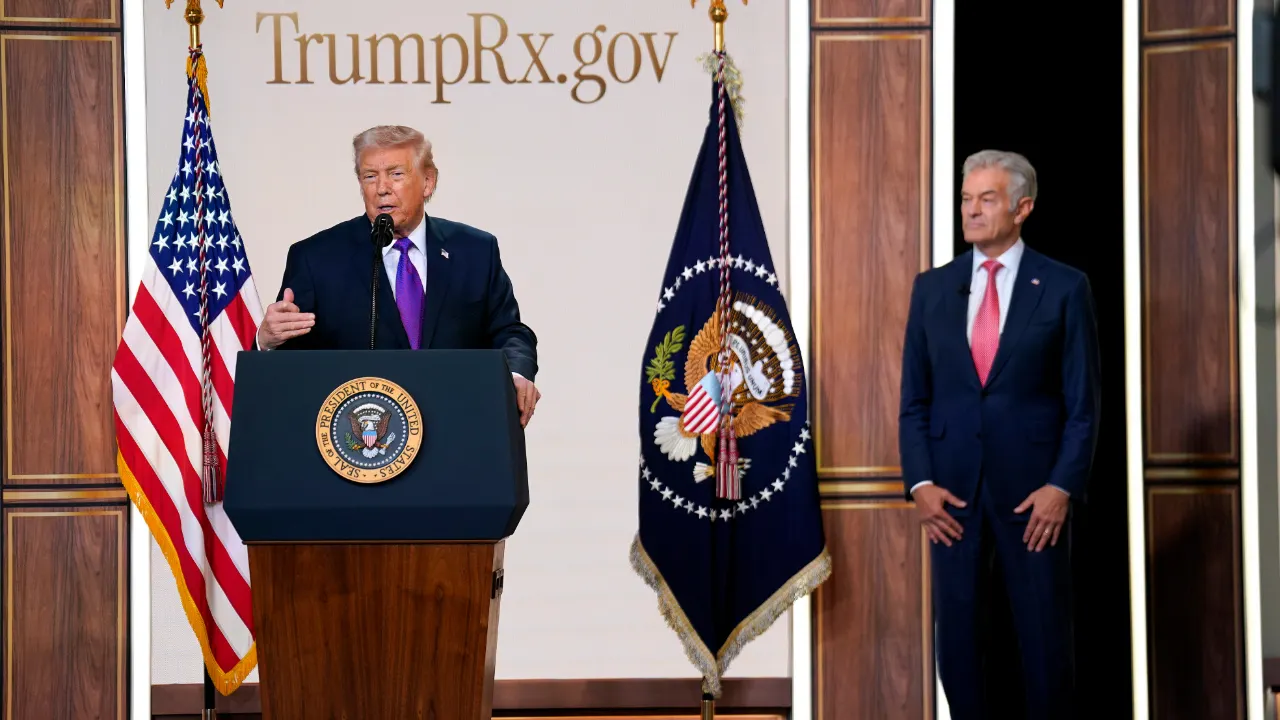
Fox News senior medical analyst Dr. Marc Siegel has the latest on the discounted products under President Donald Trump’s plan on ‘The Bottom Line.’
EXCLUSIVE: The White House is expecting to announce an expansion of drugmakers offering discounts on TrumpRx.gov, FOX Business has learned.
As early as today, Amgen and GSK will be added to the list of prescription drug manufacturers offering discounts on the government website. That makes a total of 54 prescription medications from six pharmaceutical companies that have signed on to the most-favored-nation pricing under pressure from President Donald Trump and the threat of tariffs.
Amgen will offer medication on the website that cuts 80% off the retail price. Amjevita has an original price of $1,484, but will be available on TrumpRx.gov for $299. The medication treats rheumatoid arthritis, psoriasis and ulcerative colitis.
FOX NEWS POLL: VOTERS SOUND ALARM ON HEALTHCARE COSTS
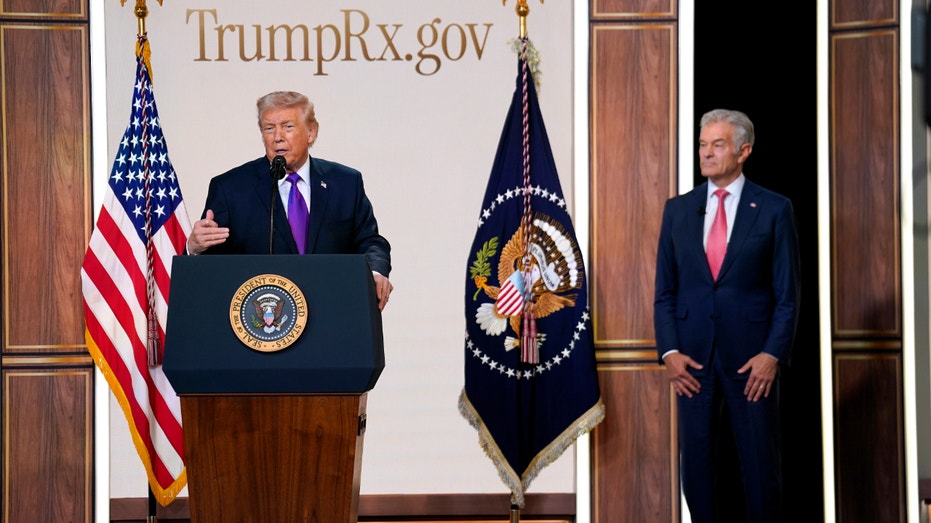
President Donald Trump speaks as Administrator for the Centers for Medicare & Medicaid Services Mehmet Oz looks on during an event on drug pricing in the South Court Auditorium on the White House campus Feb. 5, 2026, in Washington, D.C. (Nathan Howard/Getty Images)
The company plans to list Aimovig and Repatha for discounts of 62%.
GSK will discount Incruse at 55% of the retail price. The drug treats COPD and will be listed at $159.
GSK also plans to list Arnuity, Relenza and Anoro at discounts ranging from 10% to 51%.
| Ticker | Security | Last | Change | Change % |
|---|---|---|---|---|
| AMGN | AMGEN INC. | 366.21 | -1.58 | -0.43% |
| GSK | GSK PLC | 53.39 | -0.89 | -1.64% |
“GSK and Amgen connecting with TrumpRx.gov to offer prescription drugs directly to consumers at most-favored-nations pricing marks another milestone for President Trump’s affordability push,” White House spokesman Kush Desai told FOX Business.
“TrumpRx.gov is just the beginning, however, as Americans are set to (receive) even greater drug pricing discounts, lower insurance premiums and more transparency when Congress passes President Trump’s Great Healthcare Plan.”

Amgen will offer medication on the website that cuts 80% off the retail price. (George Frey/Bloomberg via Getty Images)
The Pharmaceutical Research and Manufacturers of America represents major drug companies.
CEO Stephen Ubl believes “Government-imposed most-favored-nation policies would undermine U.S. competitiveness while doing nothing to address insurance practices that deny care and raise costs for patients.
HOUSE GOP SEEKS OFF-RAMP TO SKY-HIGH HEALTH INSURANCE COSTS FOR MILLIONS OF AMERICANS
“These policies would siphon billions from American R&D, slow the pace of cures and increase reliance on China for future innovation.”

GSK will discount Incruse at 55% of the retail price. (Jeffrey Greenberg/Universal Images Group via Getty Images)
The White House is pushing ahead with announcements to TrumpRx.gov as Americans look for ways to cut medical costs.
GET FOX BUSINESS ON THE GO BY CLICKING HERE
Under the Biden administration, Bureau of Labor Statistics data shows, prescription drug costs increased 10.4% from January 2021 to January 2025. Under the Trump administration, prescription drug prices increased 0.2% from January 2025 through the latest data from February 2026.

Form 13D/A Health Catalyst For: 13 March
Business
Amphastar Pharmaceuticals, Inc. (AMPH) Presents at Barclays 28th Annual Global Healthcare Conference – Slideshow
Amphastar Pharmaceuticals, Inc. (AMPH) Presents at Barclays 28th Annual Global Healthcare Conference – Slideshow
Operator
Greetings, and welcome to Vaxart’s Stockholder Fireside Chat Conference Call. [Operator Instructions] As a reminder, this conference is being recorded.
I would now like to turn the webcast over to David Carey, Finn Partners.
David Carey
Finn Partners, Inc.
Good afternoon, and welcome to today’s call. Joining us from Vaxart are Steve Lo, Chief Executive Officer; Dr. Sean Tucker, Founder and Chief Scientific Officer; Dr. James S. Cummings, Chief Medical Officer; Jeroen Grasman, Chief Financial Officer; and Ed Berg, Senior Vice President and General Counsel.
Before we begin, I would like to remind everyone that during this conference call, Vaxart may make forward-looking statements, including statements about the company’s financial results, financial guidance, its future business strategies and operations, any partnerships with third parties, timing of any anticipated regulatory approvals or that any such approval will be obtained, the company’s future cash runway, ability to regain compliance with NASDAQ listing standards or raise capital if such listing is regained, and its product development and regulatory progress, including statements about its ongoing or planned clinical trials.
Actual results could materially differ from those discussed in these forward-looking statements due to a number of important factors, including uncertainty inherent in the clinical development and regulatory process and other risks described in the Risk Factors section of Vaxart’s most recently filed annual report on Form 10-K and also on other periodic reports filed with the SEC. Vaxart undertakes no obligation to update

Dan Ives Is Stepping Down as Eightco Chairman
Business
Thomson Reuters Files Documents for Proposed Return of Capital and Share Consolidation Transactions

The transactions consists of a special cash distribution of
The proposed return of capital is intended to distribute cash on a basis that is generally expected to be tax-free for Canadian tax purposes. Shareholders who are taxable in a jurisdiction outside of
Details of the transaction (including information regarding the opt-out right) are described in the management proxy circular and related materials, which are available on thomsonreuters.com in the “Investor Relations” section. The documents were filed with the Canadian securities regulatory authorities on SEDAR+ and are available at www.sedarplus.com. The documents will also be furnished to the
The special meeting of shareholders will be held on
Registered shareholders who have questions or need assistance voting their shares may contact
About
SPECIAL NOTE REGARDING FORWARD-LOOKING STATEMENTS
Certain statements in this news release are forward-looking within the meaning of applicable Canadian and
CONTACTS
MEDIA
+1 647 202 8948
zoe.zanettos@thomsonreuters.com
INVESTORS
Head of Investor Relations
+1 646 540 3249
gary.bisbee@thomsonreuters.com
 View original content to download multimedia:https://www.prnewswire.com/news-releases/thomson-reuters-files-documents-for-proposed-return-of-capital-and-share-consolidation-transactions-302713835.html
SOURCE Thomson Reuters

Ryan Reynolds makes Wrexham stadium promise with Premier League dream on horizon
3 Food Stocks With Big Dividend Yields That Wells Fargo Just Downgraded

US CLARITY Act Unlikely to Pass Senate Banking Committee Before April: Senator John Thune


-

 News Videos5 days ago
10th Algebra | Financial Planning | Question Bank Solution | Board Exam 2026
-
 Tech3 days ago
A 1,300-Pound NASA Spacecraft To Re-Enter Earth’s Atmosphere
-

 Crypto World4 days ago
Paradigm, a16z, Winklevoss Capital, Balaji Srinivasan among investors in ZODL
-

 Business3 days ago
ExxonMobil seeks to move corporate registration from New Jersey to Texas
-

 Tech3 days ago
ChatGPT will now generate interactive visuals to help you with math and science concepts
-

 Fashion8 hours ago
Weekend Open Thread: Addict Lip Glow
-

 Sports6 days ago
Three share 2-shot lead entering final round in Hong Kong
-

 Sports6 days ago
Braveheart Lakshya downs Lai in epic battle to enter All England Open final | Other Sports News
-

 NewsBeat2 days ago
Residents reaction as Shildon murder probe enters second day
-

 Entertainment7 days ago
Hailey Bieber Poses For Sexy Selfies In New Luscious Lip Thirst Traps
-

 Business5 days ago
Search for Nancy Guthrie Enters 37th Day as FBI Probes Wi-Fi Jammer Theory
-

 Business3 days ago
Search Enters Sixth Week With New Leads in Tucson Abduction Case
-
 NewsBeat4 days ago
Pagazzi Lighting enters administration as 70 jobs lost and 11 stores close across Scotland
-

 Tech4 days ago
Despite challenges, Ireland sixth in EU for board gender diversity
-

 Business4 days ago
Search Enters 39th Day with FBI Tip Line Developments and No Major Breakthroughs
-

 NewsBeat2 days ago
I Entered The Manosphere. Nothing Could Prepare Me For What I Found.
-

 Business7 days ago
Iran war enters second week as Trump demands ’unconditional surrender’
-

 Sports5 days ago
Skateboarding World Championships: Britain’s Sky Brown wins park gold
-
 Crypto World3 days ago
Will Chainlink price reclaim $10 amid volatility squeeze?
-

 Sports5 days ago
Tomorrow’s Top 25 Today: Florida jumps to No. 4; Louisville, Wisconsin enter projected rankings