

Business
Winners and Losers of the Fertilizer-Price Surge


The Market Is Down, but People Are Still Buying Stocks. Here’s What They’re Loading Up On.

Egilshay/iStock via Getty Images

By Debbie Carlson
As grain farmers prepare for spring planting, any optimism for the coming season is being tempered by the economic reality that they may face another money-losing year. This was looking to be the case even before the conflict began in Iran, which triggered a surge in fertilizer prices.
Input costs skyrocketed in 2022 after the start of the Russia-Ukraine war and remain elevated, while commodity prices sit under production costs. The American Farm Bureau says many row-crop farmers are looking at four or five straight years of operational losses, even after accounting for crop insurance payments and ad-hoc assistance.
Philip Nelson, a fourth-generation farmer in LaSalle County, Illinois, who was recently elected as Illinois Farm Bureau president, says the profits farmers made when crop prices were high a few years ago have eroded and balance sheets are tight.
“If you adjust for inflation, we’ve got the same commodity prices we had in 1974, and at the same time, the input costs have quadrupled,” Nelson says.
Input costs aren’t the only issue clouding farmers’ outlooks for spring planting. Last year, the U.S. harvested a record corn crop of roughly 18 billion bushels, and that heavy supply continues to weigh on the market, says Sean Lusk, vice president, commercial hedging division for Walsh Trading. In addition, the outlook for soybeans remains mixed as farmers wait on the Trump administration to decide on a potential expansion of the biomass-based diesel program that could offset some of the lost export market share to China amid recent trade tensions.
In a challenging year, risk management tools and fine-tuning marketing plans take on added importance.
Shifting Farmer Sentiment
The Purdue University-CME Group Ag Economy Barometer weakened in December, reflecting farmers’ declining long-term outlook about U.S. soybean export prospects as competition from Brazil increases. More recently, the focus has shifted to tensions between current conditions and future expectations, with farmers more optimistic about the former than the latter.
The U.S. Department of Agriculture’s (USDA) Economic Research Service forecasts net farm income to fall by 2.6% year-over-year in inflation-adjusted terms. The decline is mitigated in part by the Farmer Bridge Assistance Program and the Emergency Commodity Assistance Program, USDA’s aid packages for farmers to offset losses because of the trade environment. However, the American Farm Bureau says most producers likely will still lose money.
University of Illinois agricultural researchers forecast crop prices to be marginally higher in 2026. As of early March, CME Group September 2026 Corn and Soybean futures are trading around $4.55 and $11.32 per bushel, respectively.
Price gains compared to last year will likely be offset by small increases in overall costs with yields at trend levels. Break-even prices to cover all costs without government support are in the $4.70-$4.90 range for corn and $10.80-$11.25 range for soybeans, close to or above current market prices and pricing opportunities for the 2026 crop.
David Iserman, a fifth-generation farmer based in Streator, Illinois, is sanguine about the growing season, based on those figures. “We’re definitely either breaking even, if we’re lucky, or losing money,” he says.
Cost-Cutting Measures
Annual inputs, such as seed, fertilizer and chemicals, are higher than last year. Corn consumes more inputs than soybeans, and that may factor into what U.S. farmers plant this spring – though markets won’t know for sure until the 2026 Prospective Plantings report is released on March 31. However, many farmers typically still stick with a traditional 50/50 corn and soybean rotation for agronomic reasons, which is what Iserman and Nelson plan to do.
Both producers have experienced lean times before and are looking at ways to cut costs. Iserman says fertilizer is his number one cost. He practices no-till farming on his soybeans and strip-till for corn. In strip-till farming, producers till a narrow strip of soil for fertilizer on the corn, which minimizes loss.
Iserman may tweak how much he uses and is studying the cost, using software to gauge his returns on his fertilizer use.
“We’re looking at all of our fertilizer inputs from the standpoint of not yield, but profit. For every dollar I put in, I want to get $1 back. I don’t care about winning a yield contest. I care about return,” he says.
Nelson also says he might cut back slightly on fertilizer use because he has built it up in the soil, giving him an option to cut costs.
Fertilizer Prices Stay High
Fertilizer remains the most volatile and significant non-land cost, often accounting for 20% to 30% of total production expenses, according to USDA data.
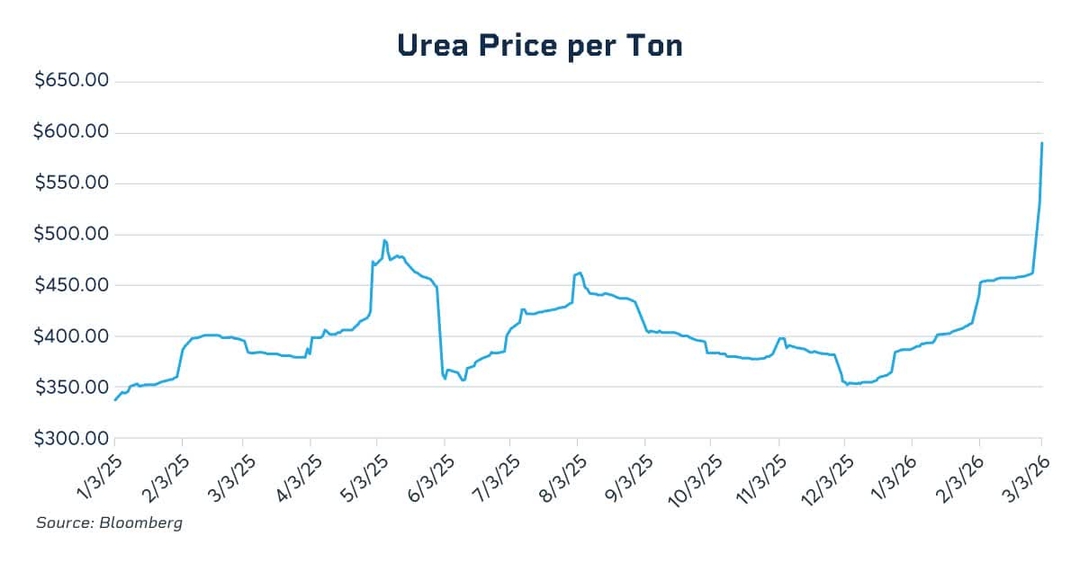
Josh Linville, vice president of fertilizer at StoneX, says prices remain significantly higher than a year ago. In early 2026, a barge of urea at the port of New Orleans traded around $450 per ton, compared to $389 per ton in early 2025. Nitrogen prices are also higher versus a year ago.
Three global factors drive this inflation, Linville says. China, a major global supplier, has indicated it may not export urea until August 2026, removing millions of tons from the global market. In Europe, persistent high natural gas costs have limited nitrogen production to about 75% of normal since the second half of 2022 because of the Russia-Ukraine war. In the Middle East, the Strait of Hormuz is a critical choke point through which three of the top 10 urea exporters must ship their product. As of early March, the Strait of Hormuz is facing a blockade.
To better understand fertilizer costs, some farmers look at the corn-urea and soybean-urea ratio. These ratios position fertilizer costs within the context of crop costs, calculating how many bushels of grain are required to purchase one ton of nutrients.
A lower ratio signals a more favorable time to lock in costs. Currently, with low corn prices and high urea prices, the corn-urea ratio sits near 87 to 90 bushels per ton, a five-year high. To manage this, some farmers are using CME Group’s 10-Ton Urea U.S. Gulf futures contract. Launched last year, this tool allows individual producers to hedge their fertilizer risk in increments more suited to their actual field needs, and options can help limit price risk to the upside. While fertilizer costs were elevated in January, those levels now appear relatively attractive by comparison.
A Changing Approach
“Frankly speaking, we don’t sell all of our grain in one decision. We should be looking at doing the same thing with fertilizer,” Linville says.
He notes that traditionally farmers have looked at their fertilizer purchases annually, but watching prices throughout the year may help them make smarter operational decisions.
Farmers interested in adding the fertilizer ratios as part of their risk management toolkit can start by talking to their local grain elevator, which may give them data stretching back a few years to help them plot trends, he says. With this information, farmers may be able to act on price changes and lock in better prices.

Weekly Gold Forecast: 3% Slide To $5000/Oz As Rate Cut Bets Tumble, FOMC Up Next

Operator
Please welcome Vice President, Investor Relations, Mark Haden.
Mark Haden
VP of Investor Relations
Well, good morning, everyone, and thank you for joining us today for Bunge’s Investor Day. We’re pleased to have you with us. I’m Mark Haden, Head of Investor Relations for Bunge.
Before I introduce our first presenter, I’d like to cover a few brief but important items. Today’s presentation includes forward-looking statements that reflect Bunge’s current views regarding future events, financial performance and industry conditions. These statements are subject to a number of risks and uncertainties that could cause actual results to differ materially. We encourage you to review the detailed discussion of these risk factors in our reports filed with the SEC.
Second, a brief safety and orientation reminder. In the event of emergency, please follow the posted exit signage here and then in the rear of the room and the instructions of on-site staff.
Let me now walk you through today’s agenda. Greg Heckman, our Chief Executive Officer, will begin with a company overview and strategy update. Julio Garros, our COO, will then discuss our operations and value chains. And
Business
China’s Cautious Stance on the Iran War Reflects Beijing’s Fragile Role as a Watchful Observer
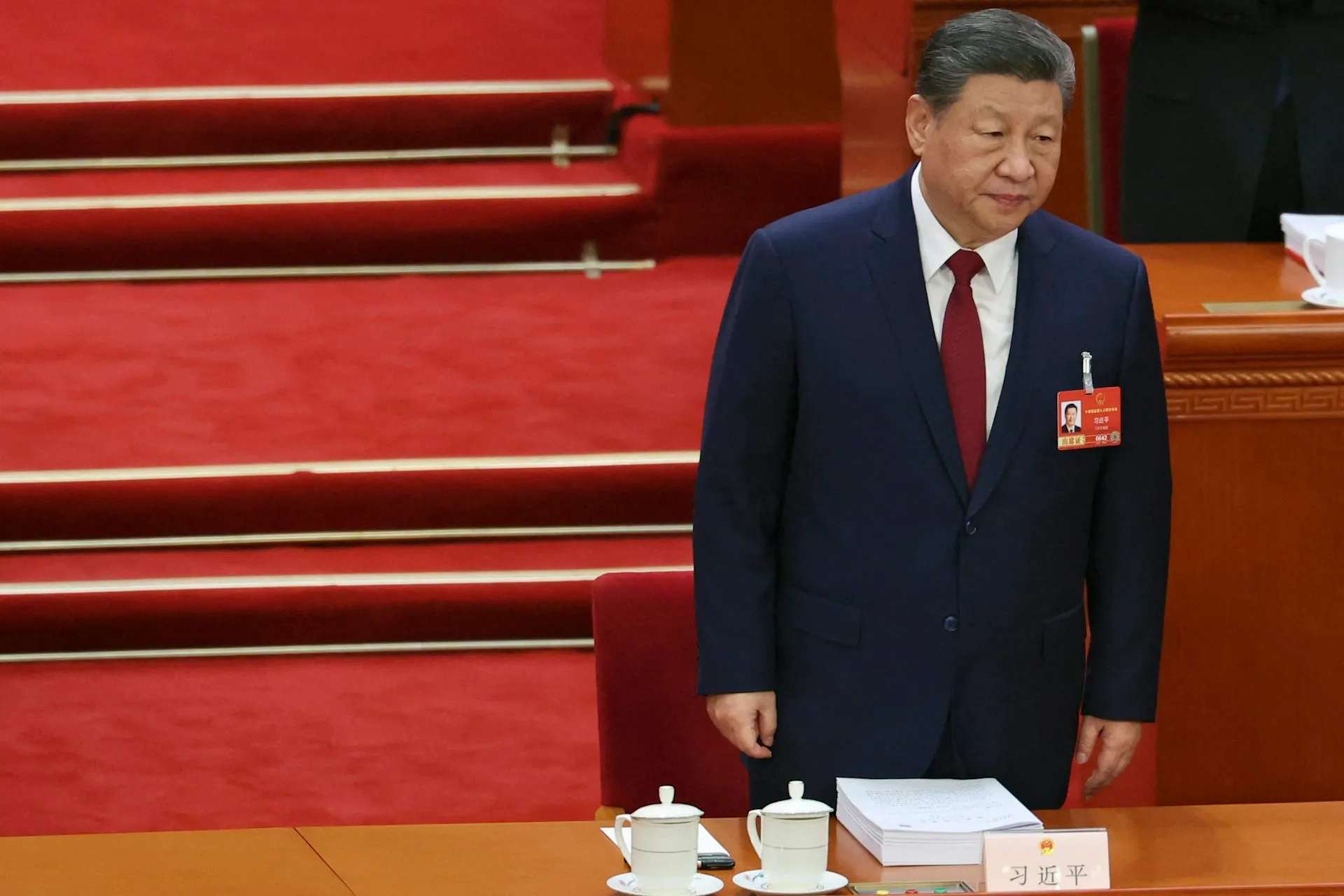
China, closely monitoring the escalating Middle East conflict, balances its interests while opposing foreign intervention, emphasizing risk mitigation over resolution due to its limited influence and strategic concerns.
Key Points
- China observes the escalating Middle East conflict, prioritizing risk management over resolution, while opposing foreign intervention and tracking U.S.-Israeli actions affecting its interests.
- Though physically distant at 4,200 miles, China finds itself in a strategically uncomfortable position regarding the U.S. campaign, which challenges its energy security and commercial goals.
- Beijing’s muted response reflects its limited leverage and transactional relationship with Iran, emphasizing its opposition to regime change and its focus on preserving national sovereignty while preparing for potential escalation.
As the conflict in the Middle East intensifies, China adopts the role of a concerned observer, attempting to balance its strategic interests with a limited ability to influence events. Situated approximately 4,200 miles from the conflict, Beijing has more room to navigate the implications of the U.S.-Israeli military operations against Iran, which present a challenge to China’s energy security and economic ambitions in a region of crucial significance. The recent escalation is particularly discomforting for China, given that it represents the most substantial military engagement by its primary geopolitical rival, the United States, since the Iraq War.
China’s response has been notably restrained, reflecting its limited leverage over unfolding events and the transactional nature of its relations with Iran. Historically, China opposes foreign intervention, particularly actions like regime change that challenge national sovereignty—a principle that not only shapes its foreign policy but also resonates with its own territorial sensitivities. This fundamental stance underpinned China’s initial reactions to the conflict, as it joined Russia in requesting an emergency session of the United Nations Security Council shortly after the military escalation commenced. During this session, China expressed deep concern over the missile strikes, emphasizing the importance of respecting Iran’s territorial integrity and the need to cease hostilities.
Although Beijing publicly condemned the U.S.-Israeli strikes, its swift focus on risk mitigation suggests a prioritization of preparations for potential escalation over active conflict resolution. This duality underscores China’s dilemmas in responding to the volatile situation, where it must navigate its commitments to sovereignty while safeguarding its substantial economic interests in the region. As a result, China’s approach reflects a broader strategy centered on maintaining stability and controlling risks rather than directly engaging in mediation or seeking immediate resolutions. In essence, while China remains vocal against foreign intervention, its actions indicate a careful calculus aimed at minimizing potential fallout and preserving its interests amidst the upheaval in the Middle East.
Read the original article : China’s muted response over war in Iran reflects Beijing’s delicate calculus as a concerned onlooker
Other People are Reading
Business
Pangaea Logistics Solutions: Disappointing Quarter And Uncertain Outlook – Hold (Rating Downgrade)

Pangaea Logistics Solutions: Disappointing Quarter And Uncertain Outlook – Hold (Rating Downgrade)

Form 4 Bank of America Corp For: 14 March


US, Japan agree on their roles in potential nuclear power project, Westinghouse says


Carnival Cruise Line members were caught on camera denying entry to Australian government and union officials to the ship Adventure.
The officials were trying to enter the ship, which was docked in Sydney, to investigate reports of “seafarer health and safety issues.”
Carnival Crew Members Refused Entry to Officials
According to CruiseHive, the video, which has been shared on social media, showed officials showing their IDs and insisting that they be allowed to board the ship.
These officials are from SafeWork NSW and the Maritime Union of Australia (MUA).
“That’s my badge, I’m a government official,” a SafeWork employee was caught on camera explaining.
The man behind the camera was also caught saying, “So, you’re refusing the government official’s access.”
Will Carnival Be Fined for Refusing Entry?
TravelPulse notes that the cruise line could be fined if it is found liable for rejecting a lawful inspection.
Officials from SafeWork and MUA have insisted that they had the necessary permits to conduct investigations.
According to TravelPulse, Carnival pushed back on this claim and told local news outlets that only the Australian Maritime Safety Authority had permission to board.
Form 4 CoreWeave Inc For: 13 March
Which Selling Sunset Stars Will And Won’t Return for Season 10?

Dental Gold #money #gold

NI gender pay gap widens with lowest female workforce participation in UK


-

 News Videos5 days ago
10th Algebra | Financial Planning | Question Bank Solution | Board Exam 2026
-
 Tech3 days ago
A 1,300-Pound NASA Spacecraft To Re-Enter Earth’s Atmosphere
-

 Crypto World5 days ago
Paradigm, a16z, Winklevoss Capital, Balaji Srinivasan among investors in ZODL
-

 Business4 days ago
ExxonMobil seeks to move corporate registration from New Jersey to Texas
-

 Tech3 days ago
ChatGPT will now generate interactive visuals to help you with math and science concepts
-

 Fashion11 hours ago
Weekend Open Thread: Addict Lip Glow
-

 Sports6 days ago
Three share 2-shot lead entering final round in Hong Kong
-

 Sports6 days ago
Braveheart Lakshya downs Lai in epic battle to enter All England Open final | Other Sports News
-

 NewsBeat2 days ago
Residents reaction as Shildon murder probe enters second day
-

 Business5 days ago
Search for Nancy Guthrie Enters 37th Day as FBI Probes Wi-Fi Jammer Theory
-

 Business3 days ago
Search Enters Sixth Week With New Leads in Tucson Abduction Case
-
 NewsBeat4 days ago
Pagazzi Lighting enters administration as 70 jobs lost and 11 stores close across Scotland
-

 Tech5 days ago
Despite challenges, Ireland sixth in EU for board gender diversity
-

 Business4 days ago
Search Enters 39th Day with FBI Tip Line Developments and No Major Breakthroughs
-

 NewsBeat3 days ago
I Entered The Manosphere. Nothing Could Prepare Me For What I Found.
-

 Sports5 days ago
Skateboarding World Championships: Britain’s Sky Brown wins park gold
-
 Crypto World36 minutes ago
HYPE Token Enters Net Deflation as HyperCore Buybacks Outpace Staking Rewards
-
 Crypto World4 days ago
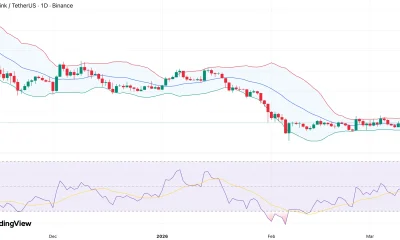
Will Chainlink price reclaim $10 amid volatility squeeze?
-

 Sports5 days ago
Tomorrow’s Top 25 Today: Florida jumps to No. 4; Louisville, Wisconsin enter projected rankings
-

 Sports2 days ago
PWHL, Senators discussing plan to keep Charge in Ottawa