Every callback costs twice: labour and reputation. One loose lug or overheated backstab can turn a profitable job into a margin killer. On a $6,000 service upgrade, a single half-day callback can erase 25–40% of projected profit.
That’s not theory. That’s payroll.
When margins are tight, tool selection becomes a productivity strategy – not a shopping trip.
The right pliers save 3–5 seconds per splice.
The wrong cutter increases grip force by 10–15%.
Multiply that across hundreds of daily repetitions, and the workload compounds fast.
This isn’t about catalogues. It’s about geometry, metallurgy, ergonomics, and insulation ratings – the things that quietly decide whether you feel steady or fried by Thursday.
Best Lineman’s Pliers for Daily Rough-In Speed and Leverage
You’re twisting three #12 conductors in a cramped box, on a ladder, shoulder already tight. That’s where pliers either help—or start charging interest.
Forged Cr-V or Cr-Mo steel (800–1,000 MPa tensile strength)
Fish-tape grip (200–400 lb pull strength)
Tether-ready (10–15 lb dynamic load)
Weight: 16–18 oz (20–35% more cutting power)
Why These Specs Matter
Pivot shift: Moving the pivot 3–5 mm closer to the edge yields 15–30% force reduction on 12 AWG copper.
Harder edges: 58–64 HRC maintains sharpness for 10,000+ copper cuts.
Handle spread: Look for 2.75–3″ open spread to avoid hand overextension.
Recommendation
If rough-ins dominate your week, choose high-leverage, induction-hardened, 9″ pliers. Smaller hands? Avoid oversized cushion grips.
Best Long Nose Parallel Pliers for Precision Bending and Terminal Control
If you ever form a shepherd’s hook and feel the jaws flex—you know the difference between “fine” and proper.
What Sets Parallel Pliers Apart
Core comparison:
Parallel-jaw long nose (1.5–2.5″ jaws)
Box-joint construction
58+ HRC hardened jaws
18–22 oz
10+ year lifespan
Standard needle-nose (14–16 oz)
May develop 0.5–1 mm pivot play
Insulated long-reach (8–11″)
Smooth-jaw forming pliers
Why Parallel Jaws Are Better
Under 70–100 lb squeeze force:
Parallel jaws = even pressure across the full conductor surface
Scissor jaws = point pressure, deforming strands
Under 70-100 lb squeeze force, pressure distributes across 100% of the contact area. Standard scissor-style jaws concentrate force at points. That difference shows up in strand deformation.
When you torque device terminals to 12-20 in-lb, you want full-surface contact. Uneven hooks create partial contact points. Partial contact increases resistance. Resistance increases localized heat.
If build quality matters to you, Maun Industries makes long nose parallel pliers with box-joint construction and hardened jaws rated above 58 HRC. That box joint reduces lateral play to fractions of a millimetre compared to riveted pivots that drift to 0.5-1 mm. Less play equals cleaner bends over tens of thousands of cycles.
Advertisement
Yes, they weigh 18-22 ounces. Yes, they cost 30-60% more upfront. But lifespan can exceed 10 years in professional use.
If you mostly grip and pull, standard needle-nose is fine. If you form terminals all day, parallel jaws feel different – steadier.
You cut more than you think. That’s next.
Best Wire Strippers for Clean Copper and Zero Callbacks
Stripping should feel automatic. Clean. Almost boring.
Advertisement
A 0.005-0.010 inch nick in solid copper reduces cross-sectional area by 3-7%. That’s resistance. That’s heat. Especially when circuits run near ampacity.
Here’s the actual fork in the road:
Fixed-gauge manual 10-18 AWG strippers (+/-0.001-0.002 inch machining tolerance), versus self-adjusting automatic 10-24 AWG strippers saving 1-2 seconds per strip but drifting after 20,000-30,000 cycles, versus combination stripper/crimpers rated 10-22 AWG, versus 1000V insulated strippers dielectric tested to 10,000V under IEC 60900.
Manual fixed-gauge tools give tactile feedback. When stripping #12 solid copper, you feel insulation shear without exceeding copper yield strength (around 33,000 psi for annealed copper). That control is what prevents scoring.
Automatic strippers cut strip time from ~3 seconds to ~1 second per conductor. In mixed-gauge work, that’s real speed. But springs and sliding dies lose calibration after 20,000-30,000 cycles. Calibration drift equals uneven insulation removal. Uneven removal equals fine scoring lines.
Look at stripped copper. Smooth circumference means clean cut. Fine scoring lines are stress risers. Now torque that termination to 20-25 in-lb and that weak point becomes the potential failure.
Advertisement
Also – box fill. NEC requires 2.0 cubic inches per #14 conductor, 2.25 cubic inches per #12. Sloppy stripping adds exposed copper and complicates arrangement. Crowded boxes increase arc risk.
Manual forged designs can last 5-10 years under heavy use. Automatic models trade durability for speed.
If installs are your bread and butter and conductor integrity matters most, fixed-gauge manual wins. If you’re in and out of service vans all day chasing mixed gauges, automatic tools pay back in time saved.
Once copper is clean, shaping it right decides whether torque holds.
Advertisement
Best Diagonal Cutting Pliers for Clean Cuts Without Wrist Fatigue
Diagonal cutters seem simple. They’re not.
Here’s the real comparison:
High-leverage cutters with 15-30% force reduction on 12 AWG copper and 60-64 HRC hardened edges.
Angled-head versions at 12-21 degrees reducing wrist deviation by 5-10 degrees, flush-cut precision cutters for soft copper and nylon ties under 50 lb tensile strength but dulling 2-3x faster on hardened materials
Heavy-duty cutters rated for hardened wire up to 2.0 mm diameter and cable ties over 120 lb tensile rating, weighing 10-15% more.
Edge angles around 15-25 degrees determine cutting behaviour. Hardened edges at 60-64 HRC resist deformation. Flush cutters leave minimal protrusion – that saves knuckles later – but thin edges dull faster if misused.
Angled heads improve visibility and reduce wrist deviation by 5-10 degrees inside tight panels. That reduction compounds over 500 cuts.
Best Insulated Screwdrivers for Torque Control and Code Compliance
Loose terminations heat. Over-torque deforms lugs. Both are measurable.
Here’s the decision framework:
1000V VDE-rated screwdrivers individually tested at 10,000V under IEC 60900, torque-limiting insulated drivers adjustable 5-80 in-lb with +/-6% accuracy requiring annual or 5,000-cycle recalibration, multi-bit insulated drivers trading torque precision for compactness, and cabinet-tip drivers under 4 mm blade diameter for recessed terminals.
Branch breakers commonly specify 20-45 in-lb torque. Larger lugs can hit 250 in-lb. Under-torque by 5-10 in-lb and thermal cycling loosens it. Over-torque aluminium conductors and you reduce effective cross-section.
Insulation thickness of 2-3 mm dielectric layer increases handle diameter but protects up to 1,000V working voltage.
Advertisement
Torque-limiting drivers cost 2-4x more than standard insulated drivers. They also require recalibration. But they prevent inspection failures and reduce fire risk.
Panel installs and critical terminations? Torque-limiting. Device trim-outs? Standard insulated is fine.
After torque, you verify.
Best Voltage Testers and Multimetres for Fast, Reliable Diagnostics
That split-second pause before touching a conductor… that’s not drama. That’s instinct.
Advertisement
The real decision:
NCVT detecting 50-1,000V AC with sub-1-second response, True RMS multimetres accurate +/-0.5-1% with CAT III 600V or CAT IV 600V safety ratings, clamp meters measuring 400-1,000A without disconnecting, and solenoid testers resistant to transient spikes.
True RMS meters handle non-linear loads like VFD-driven systems. Averaging meters can misread distorted waveforms by 10-30%. That’s not small.
Clamp meters improve safety by avoiding disconnects. CAT III and CAT IV ratings indicate transient overvoltage tolerance in commercial panels.
Advanced meters cost 2-3x more than basic testers. Misdiagnosis costs more.
Commercial? True RMS. NCVT is preliminary only.
Advertisement
Tools don’t help if they’re buried.
Best Tool Bags and Pouches for Crew Efficiency and Reduced Fatigue
Dragging a 40-pound bag across concrete before you even start drains energy.
The core choice looks like this:
Open-top structured totes 14-18 inches wide holding 20-30 tools visibly, compact electrician pouches weighing 3-5 lb unloaded for ladder work, backpack tool bags rated 50 lb load distributing weight bilaterally to reduce spinal torque, and modular stackable systems rated 75-100 lb per unit improving truck organization but reducing remodel agility.
Backpacks distribute 30-40 lb across both shoulders instead of one. Bilateral load reduces spinal torque compared to single-strap systems (source). Structured totes save 5-10 seconds per retrieval. Multiply that across dozens of grabs daily.
Service days? Backpack. Controlled installs? Structured tote.
Advertisement
Quick Reference: Choosing the Right Electrical Hand Tool Archetype
Goal
Best Product Type
Strength
Caution
Faster rough-ins
High-leverage lineman’s pliers
20-35% force reduction
Slight weight increase (2 oz)
Clean conductor prep
Fixed-gauge wire strippers
+/-0.002 in precision stripping
Requires gauge awareness
Precision terminal bends
Long nose parallel pliers
Even pressure, reduced strand deformation
30-60% higher upfront cost
Clean trimming
Angled high-leverage cutters
15-30% force reduction
Flush edges dull faster
Code-compliant torque
Torque-limiting insulated screwdrivers
+/-6% torque accuracy
Annual calibration required
Accurate diagnostics
True RMS multimetre
+/-0.5-1% measurement accuracy
Higher upfront cost
Reduced physical strain
Backpack tool bag
Balanced load up to 50 lb
Larger footprint
Every tool choice compounds something – strain or efficiency. Frustration or control. By Friday afternoon, you feel which direction you chose.
European shares extended their declines on Friday and marked their second consecutive weekly loss, as the escalating conflict in the Middle East and inflation worries dented risk appetite.
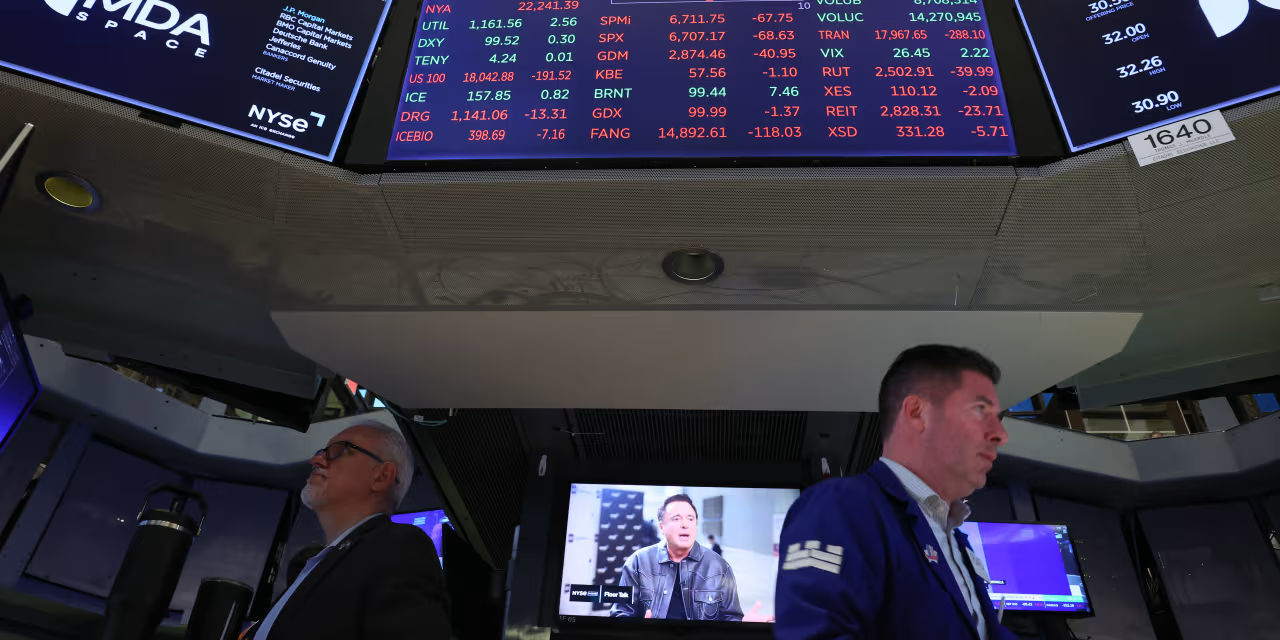
The pan-European benchmark STOXX 600 closed 0.5% lower. All major regional bourses were in the red, posting marginal weekly falls.
Industrial stocks were the biggest drags on the index, down 1.8%, with Siemens Energy down 5.7% and Rolls-Royce off 5.3%.
Miners experienced the biggest percentage loss, down 3.3%, as prices of silver tumbled over 3%, copper fell over 1% and gold prices also ticked lower.
Advertisement
Global markets extended declines this week as the U.S.-Israeli war on Iran approached the two-week mark. U.S. President Donald Trump said the U.S. was going to be hitting Iran “very hard over the next week”, prompting markets to brace for a drawn-out conflict and reassess interest-rate expectations as energy-driven inflation concerns resurfaced.
Live Events
Pascal Koeppel, chief investment officer at Vontobel SFA Investment Management, said that both Iran and the U.S. had interests in stopping the war. Iran’s interest is in re-opening the Strait of Hormuz, he said, while for the U.S. a priority is reining in mounting defence costs before the midterm elections in November. “It’s short term in nature and the impact on inflation and rates is not as big as market fear. But at the moment, the fear is larger so the European markets are correcting,” he said. Markets have priced in one quarter-point interest-rate hike by the European Central Bank by the end of the year and see a nearly 75% chance of another similar-sized move, per data compiled by LSEG. This contrasts with expectations earlier in the year that a rate cut was coming.
Oil prices were about 1% higher on Friday, as it became clear that the Strait of Hormuz remained closed.
Energy stocks far outperformed others this week with a gain of nearly 5%. Economically sensitive banks fell again, dropping 1.2%. Standard Chartered and HSBC, the two global banks most exposed to the war with Iran according to Reuters analysis, extended their monthly declines to over 15% each. Data showed harmonised inflation in France rose 1.1% year-on-year in February, while the British economy grew by 0.2% in the three months to January, below expectations. Among individual moves, BE Semiconductor Industries shares jumped 5.6% after the chip-equipment maker fielded takeover interest, Reuters reported. Berkeley Group cautioned that the conflict in the Middle East was weighing on risk sentiment, while reaffirming its annual profit outlook, sending shares of the home builder 1.5% lower.
Zalando climbed about 7% after Bernstein upgraded the online fashion retailer to “market perform” from “underperform.”
Cryptocurrency staking is a way for people to help maintain a blockchain network and potentially earn rewards for doing so. Staking plays a crucial role in how transactions
I’ve been researching companies in-depth for over a decade, from commodities like oil, natural gas, gold and copper to tech like Google or Nokia and many emerging market stocks, which I believe could help me provide useful content for readers. After writing my own blog for about 3 years, I decided to switch to a value investing-focused YouTube channel, where I researched hundreds of different companies so far. I would say my favorite type of company to cover are metals and mining stocks, but I am comfortable with several other industries, such as consumer discretionary/staples, REITs and utilities.
Analyst’s Disclosure: I/we have no stock, option or similar derivative position in any of the companies mentioned, but may initiate a beneficial Long position through a purchase of the stock, or the purchase of call options or similar derivatives in CUBE over the next 72 hours. I wrote this article myself, and it expresses my own opinions. I am not receiving compensation for it (other than from Seeking Alpha). I have no business relationship with any company whose stock is mentioned in this article.
Seeking Alpha’s Disclosure: Past performance is no guarantee of future results. No recommendation or advice is being given as to whether any investment is suitable for a particular investor. Any views or opinions expressed above may not reflect those of Seeking Alpha as a whole. Seeking Alpha is not a licensed securities dealer, broker or US investment adviser or investment bank. Our analysts are third party authors that include both professional investors and individual investors who may not be licensed or certified by any institute or regulatory body.
Those who have been waiting for Randy Orton to turn heel, the term used for villains in the WWE, got what they have been waiting for.
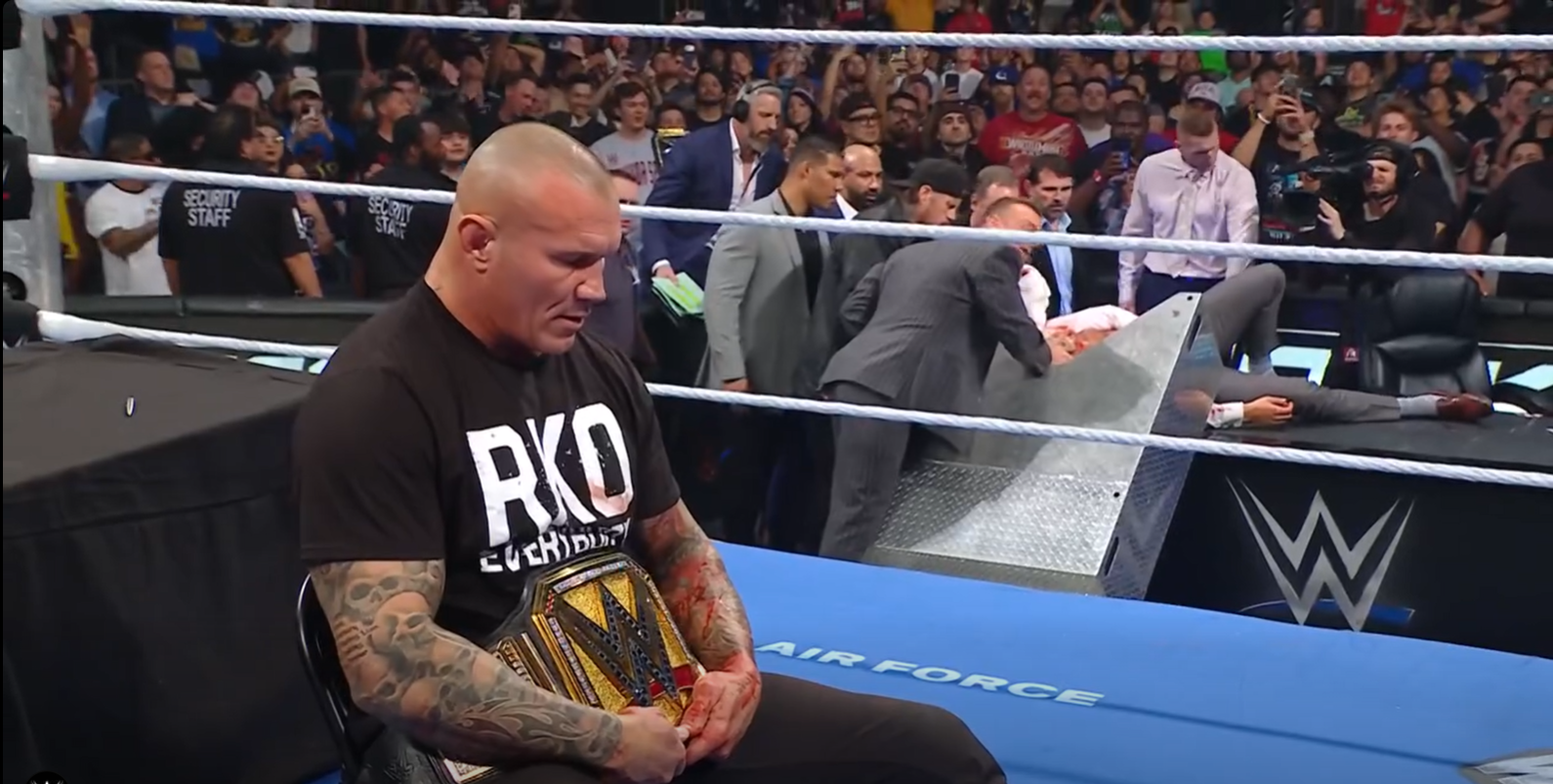
On the March 13 edition of Friday Night SmackDown, Orton turned heel and viciously attacked Cody Rhodes.
Randy Orton Turns Heel
The heel turn took place during the contract signing between Orton and Rhodes. The two WWE superstars are set to compete in a match for the Undisputed WWE Championship at WrestleMania 42 next month.
While initially looking like they were to remain friends despite going against one another, Orton soon changed his tune and attacked Rhodes.
Orton hit his old friend with the steel steps at some point, busting the latter wide open. While officials came out to try and control the situation, Orton eventually had the opportunity to hit Rhodes with the steel chair while his head was lying against the steel steps.
Advertisement
Will Orton Get His 15th World Championship?
Ever since it became clear that it would be Rhodes versus Orton for WrestleMania 42, fans have been speculating which of the two will turn heel.
Leading up to the March 13 edition of SmackDown, both characters have been faces, the term used for the good guys in wrestling.
It should be noted that despite the vicious attack, the live crowd was clearly behind Orton, chanting his name despite him clearly becoming the bad guy.
Should Orton win at WrestleMania 42, it will be his 15th world championship with WWE. He’s currently tied at 14 world title reigns with Paul “Triple H” Levesque.
Get ready for an exciting investment opportunity! Muthoot FinCorp is rolling out a bond issue, aiming to gather as much as ₹600 crore to bolster business expansion and fulfill corporate goals. With appealing yields and flexible tenure options, these bonds are perfect for retail investors looking to dive in before March 23.
The base issue size is ₹200 crore, with a greenshoe option to retain oversubscription of up to ₹400 crore, the company said. “This offering is intended to support onward lending and financing activities, repay/prepay interest and principal on existing debt, and meet general corporate needs,” the company said.
Live Events
The bonds are rated ‘AA-/positive’ by Crisil Ratings and ‘AA/stable’ by Brickwork Ratings India, indicating a high degree of safety for the timely servicing of financial obligations. Muthoot FinCorp, which is not publicly listed, had standalone assets under management of ₹48,122 crore at the end of December, up 63% from the same period a year earlier, driven largely by demand for gold loans.
KLA Corporation (KLAC) Analyst/Investor Day March 12, 2026 9:00 AM EDT
Company Participants
Bren Higgins – Executive VP & CFO Richard Wallace – President, CEO & Executive Director Ahmad Khan – President of Semiconductor Products & Customers Brian Lorig – Executive Vice President of KLA Global Services
Conference Call Participants
Advertisement
Atif Malik – Citigroup Inc., Research Division Stacy Rasgon – Bernstein Institutional Services LLC, Research Division Joseph Quatrochi – Wells Fargo Securities, LLC, Research Division Christopher Caso – Wolfe Research, LLC Harlan Sur – JPMorgan Chase & Co, Research Division Sreekrishnan Sankarnarayanan – TD Cowen, Research Division Vivek Arya – BofA Securities, Research Division Christopher Muse – Cantor Fitzgerald & Co., Research Division Shane Brett – Morgan Stanley, Research Division Yu Shi – Needham & Company, LLC, Research Division Melissa Weathers – Deutsche Bank AG, Research Division
Presentation
Unknown Attendee
Advertisement
Please welcome KLA EVP, CFO and Global Operations, Bren Higgins.
Bren Higgins Executive VP & CFO
Good morning. Thank you for being here for our 2026 KLA Investor Day. It’s great to be back in New York. I’m going to make a few comments. First, I’m going to walk through the agenda overall. So I’ll make a few comments, and then I’ll transition to our President and CEO, Rick Wallace, who will talk about compounding sustainable outperformance of the company, where we’ve been and where we’re going, some of the dynamics that are driving the ecosystem and how that plays through to opportunities for KLA relevance.
Advertisement
Ahmad Khan, who’s the President of our Semiconductor Products and Customers business, will then stand up and talk about process control in the AI era, some of the dynamics that are driving our business, how we’re collaborating and engaging with customers that drives our innovation model and ultimately, how we execute. And our strategy is to take advantage of what looks like a very exciting business environment moving forward.
As grain farmers prepare for spring planting, any optimism for the coming season is being tempered by the economic reality that they may face another money-losing year. This was looking to be the case even before the conflict began in Iran, which triggered a surge in fertilizer prices.
Input costs skyrocketed in 2022 after the start of the Russia-Ukraine war and remain elevated, while commodity prices sit under production costs. The American Farm Bureau says many row-crop farmers are looking at four or five straight years of operational losses, even after accounting for crop insurance payments and ad-hoc assistance.
Advertisement
Philip Nelson, a fourth-generation farmer in LaSalle County, Illinois, who was recently elected as Illinois Farm Bureau president, says the profits farmers made when crop prices were high a few years ago have eroded and balance sheets are tight.
“If you adjust for inflation, we’ve got the same commodity prices we had in 1974, and at the same time, the input costs have quadrupled,” Nelson says.
Input costs aren’t the only issue clouding farmers’ outlooks for spring planting. Last year, the U.S. harvested a record corn crop of roughly 18 billion bushels, and that heavy supply continues to weigh on the market, says Sean Lusk, vice president, commercial hedging division for Walsh Trading. In addition, the outlook for soybeans remains mixed as farmers wait on the Trump administration to decide on a potential expansion of the biomass-based diesel program that could offset some of the lost export market share to China amid recent trade tensions.
In a challenging year, risk management tools and fine-tuning marketing plans take on added importance.
Advertisement
Shifting Farmer Sentiment
The Purdue University-CME Group Ag Economy Barometer weakened in December, reflecting farmers’ declining long-term outlook about U.S. soybean export prospects as competition from Brazil increases. More recently, the focus has shifted to tensions between current conditions and future expectations, with farmers more optimistic about the former than the latter.
The U.S. Department of Agriculture’s (USDA) Economic Research Service forecasts net farm income to fall by 2.6% year-over-year in inflation-adjusted terms. The decline is mitigated in part by the Farmer Bridge Assistance Program and the Emergency Commodity Assistance Program, USDA’s aid packages for farmers to offset losses because of the trade environment. However, the American Farm Bureau says most producers likely will still lose money.
University of Illinois agricultural researchers forecast crop prices to be marginally higher in 2026. As of early March, CME Group September 2026 Corn and Soybean futures are trading around $4.55 and $11.32 per bushel, respectively.
Price gains compared to last year will likely be offset by small increases in overall costs with yields at trend levels. Break-even prices to cover all costs without government support are in the $4.70-$4.90 range for corn and $10.80-$11.25 range for soybeans, close to or above current market prices and pricing opportunities for the 2026 crop.
Advertisement
David Iserman, a fifth-generation farmer based in Streator, Illinois, is sanguine about the growing season, based on those figures. “We’re definitely either breaking even, if we’re lucky, or losing money,” he says.
Cost-Cutting Measures
Annual inputs, such as seed, fertilizer and chemicals, are higher than last year. Corn consumes more inputs than soybeans, and that may factor into what U.S. farmers plant this spring – though markets won’t know for sure until the 2026 Prospective Plantings report is released on March 31. However, many farmers typically still stick with a traditional 50/50 corn and soybean rotation for agronomic reasons, which is what Iserman and Nelson plan to do.
Both producers have experienced lean times before and are looking at ways to cut costs. Iserman says fertilizer is his number one cost. He practices no-till farming on his soybeans and strip-till for corn. In strip-till farming, producers till a narrow strip of soil for fertilizer on the corn, which minimizes loss.
Iserman may tweak how much he uses and is studying the cost, using software to gauge his returns on his fertilizer use.
Advertisement
“We’re looking at all of our fertilizer inputs from the standpoint of not yield, but profit. For every dollar I put in, I want to get $1 back. I don’t care about winning a yield contest. I care about return,” he says.
Nelson also says he might cut back slightly on fertilizer use because he has built it up in the soil, giving him an option to cut costs.
Fertilizer Prices Stay High
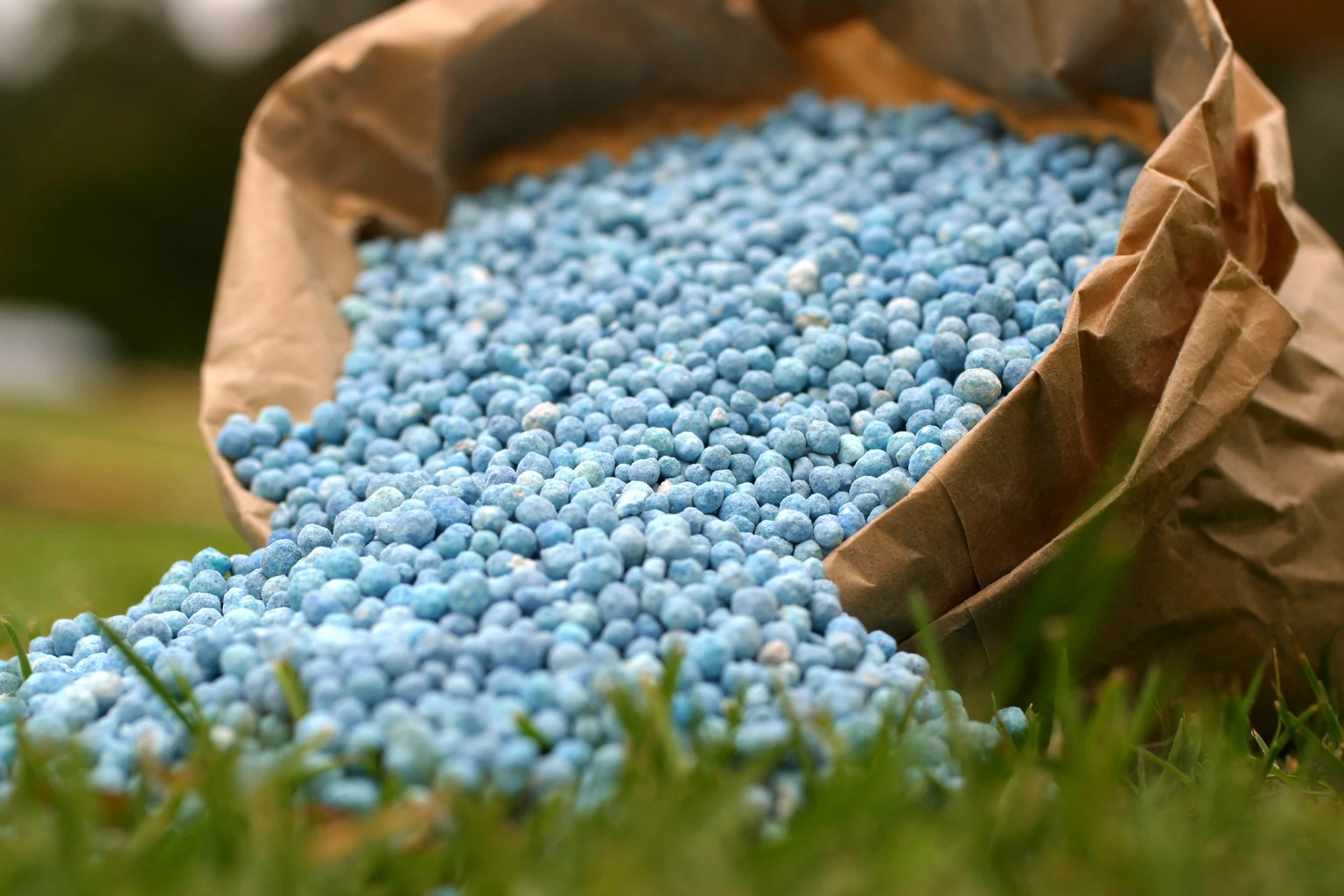
Fertilizer remains the most volatile and significant non-land cost, often accounting for 20% to 30% of total production expenses, according to USDA data.
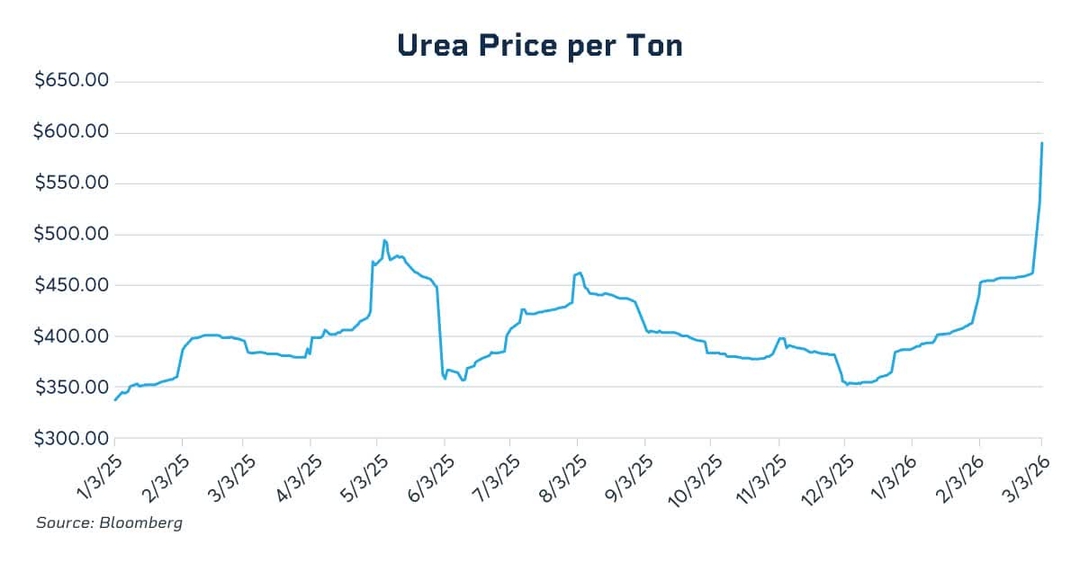
Josh Linville, vice president of fertilizer at StoneX, says prices remain significantly higher than a year ago. In early 2026, a barge of urea at the port of New Orleans traded around $450 per ton, compared to $389 per ton in early 2025. Nitrogen prices are also higher versus a year ago.
Advertisement
Three global factors drive this inflation, Linville says. China, a major global supplier, has indicated it may not export urea until August 2026, removing millions of tons from the global market. In Europe, persistent high natural gas costs have limited nitrogen production to about 75% of normal since the second half of 2022 because of the Russia-Ukraine war. In the Middle East, the Strait of Hormuz is a critical choke point through which three of the top 10 urea exporters must ship their product. As of early March, the Strait of Hormuz is facing a blockade.
To better understand fertilizer costs, some farmers look at the corn-urea and soybean-urea ratio. These ratios position fertilizer costs within the context of crop costs, calculating how many bushels of grain are required to purchase one ton of nutrients.
A lower ratio signals a more favorable time to lock in costs. Currently, with low corn prices and high urea prices, the corn-urea ratio sits near 87 to 90 bushels per ton, a five-year high. To manage this, some farmers are using CME Group’s 10-Ton Urea U.S. Gulf futures contract. Launched last year, this tool allows individual producers to hedge their fertilizer risk in increments more suited to their actual field needs, and options can help limit price risk to the upside. While fertilizer costs were elevated in January, those levels now appear relatively attractive by comparison.
A Changing Approach
“Frankly speaking, we don’t sell all of our grain in one decision. We should be looking at doing the same thing with fertilizer,” Linville says.
Advertisement
He notes that traditionally farmers have looked at their fertilizer purchases annually, but watching prices throughout the year may help them make smarter operational decisions.
Farmers interested in adding the fertilizer ratios as part of their risk management toolkit can start by talking to their local grain elevator, which may give them data stretching back a few years to help them plot trends, he says. With this information, farmers may be able to act on price changes and lock in better prices.