We all know cats represent a major threat to native animals and birds. Australia’s 5.3 million domestic cats kill a total of 546 million animals each year in Australia. What’s less well known is that allowing your domestic cat to roam outside exposes them to considerable danger – and the risk of a short life.
About two-thirds of all Australian cat owners have had a cat die while out roaming. The top risks are road traffic accidents, fighting and falls.
Our recent research review found keeping your cat at home at all times isn’t just good for wildlife – it’s much safer for your cat.
Losing a cat is tragic. But there are other risks too. Many owners rack up large veterinary bills while their cats are left with lifelong health conditions. Our review also found this situation is not unique to Australia, but reflects the global risk faced by free-roaming cats.
Advertisement
What are the risks?
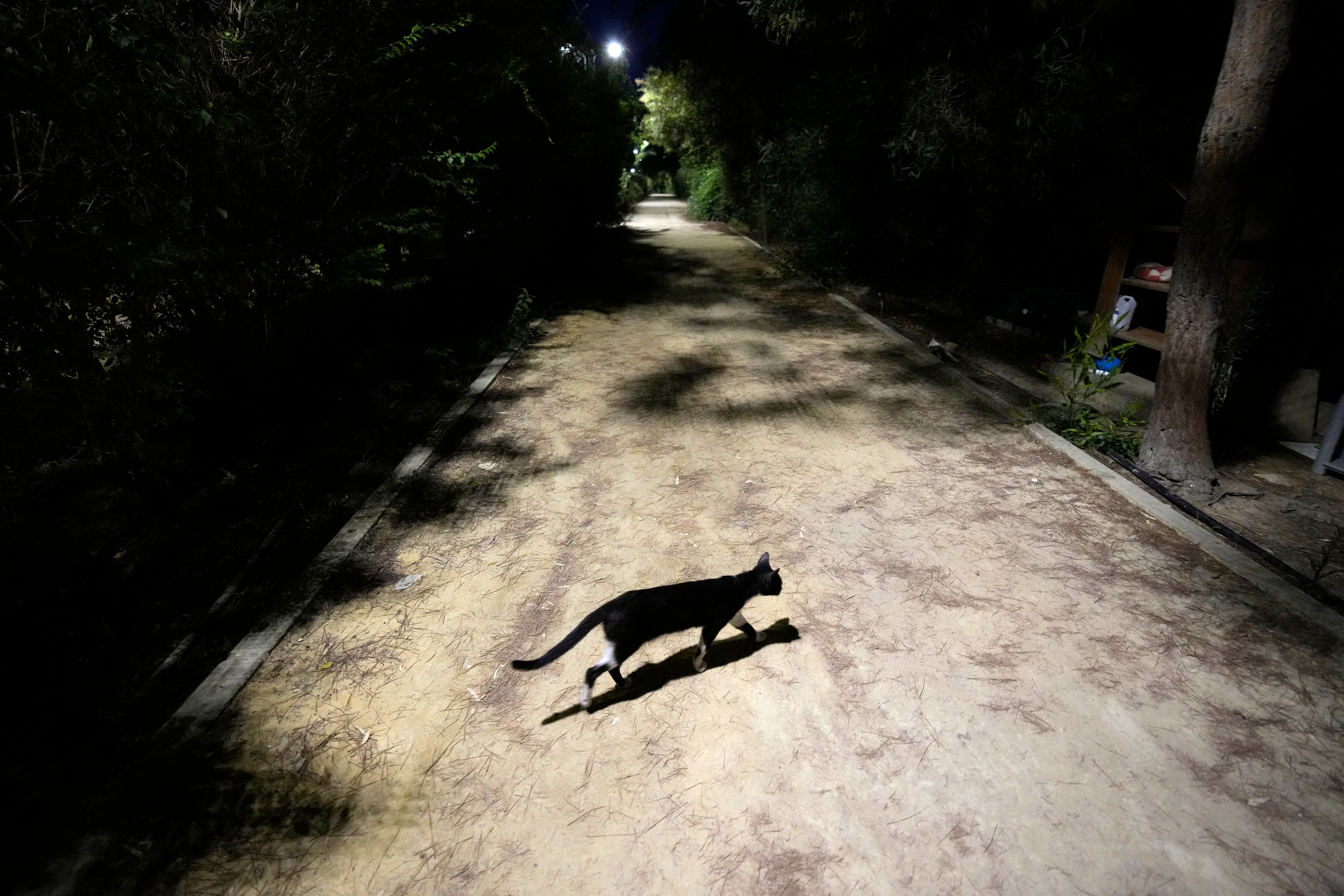
Cameras mounted on collars provide a cat’s-eye view of the hazards roaming cats face. In one study of 55 free-roaming felines in the United States, 25% risked poisoning by eating or drinking while away from home – any substance could be hazardous. Nearly half (45%) crossed roads, 25% encountered other cats, 20% crawled under houses and 20% explored storm drains.
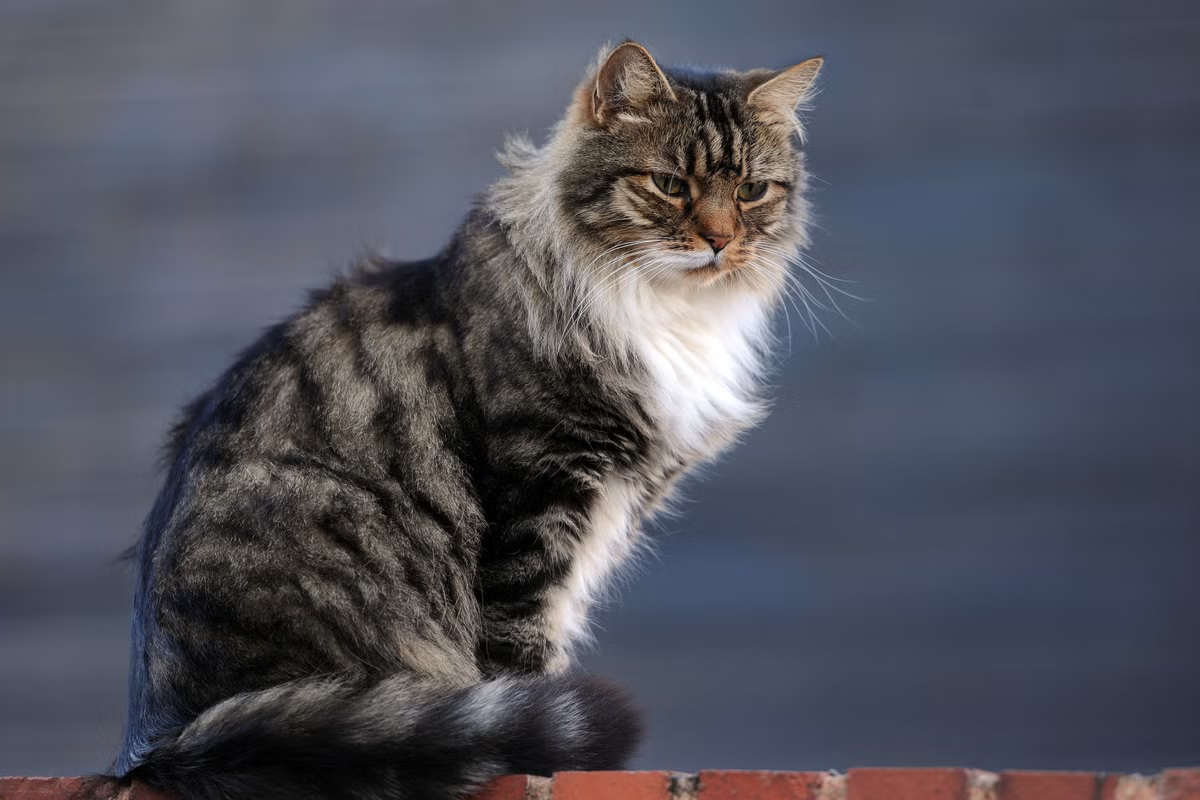
A research review found that keeping your cat at home is much safer for your cat (Getty)
This isn’t just American feline bravado. When cameras were fitted to 37 cats in New Zealand, 59% drank away from home, 40% ate away from home, 32% crossed roads and 21% risked falling by climbing onto roofs.
Advertisement
Australian cats are no exception. In one study, 428 radio-tracked cats averaged 4.8 road crossings per day.
What are the outcomes?
If you’re a fan of The Simpsons you might recall the fate of their family cats: Snowball I and Snowball II died on the road, Snowball III drowned, Coltrane (AKA Snowball IV) fell to his death, and Snowball V is still with us. The reality is uncomfortably similar. Our review found that trauma – mainly road traffic accidents, fighting and falls – kills or injures many free-roaming cats globally.
In a recent UK study, road traffic accidents were the leading cause of death for cats aged less than one year old all the way to eight-year-old cats.
Advertisement
This aligns with European estimates, which suggest 18–24% of cats are struck by a car during their lifetime, with around 70% of those incidents proving fatal. Victims are often under five years old and predominantly male. Risks are higher for those not desexed, as they tend to roam wider and more frequently.
Love and status offer no protection. Former New Zealand Prime Minister Jacinda Ardern’s cat, Paddles, colloquially known as New Zealand’s first cat, died after being hit by a car in 2017.
In a recent UK study, road traffic accidents were the leading cause of death for cats aged less than one year old (AP)
The dangers extend well beyond road accidents. Roaming pet cats face serious infectious diseases, such as Feline Immunodeficiency Virus (FIV), and frequently engage in fights, often developing abscesses that can kill and require expensive veterinary treatment.
Advertisement
While it’s hard to quantify the instances of deliberate human cruelty to cats, there is global evidence for deliberate poisoning and injury to roaming cats, many of which die before receiving medical intervention.
In one study tracking 55 roaming cats in Western Australia over just eight months, two were poisoned, one lost a front leg in a traffic accident, one fractured two canine teeth in a fall, and two required veterinary treatment for fight-related injuries.
Drawing all these factors together, we estimated outdoor pet cats have lives at least 2–3 years shorter than the population of contained pet cats. Those that survive accidents or disease may have lifelong disabilities.
How can you reduce the risks?
Advertisement
The simplest way to protect your cats is to contain them on your property, just as Australians do with other domestic animals. Extensive advice is available on how to keep cats happy and healthy while contained.
Importantly, containment doesn’t mean keeping your cat indoors at all times. Backyards can be modified with fence-top rollers to prevent escape. Some owners enclose part of the yard to create a “catio” – an outdoor cat enclosure – allowing their cats to enjoy fresh air and sunshine while remaining secure.
About the authors
Mike Calver is an Associate Professor in Biological Sciences at Murdoch University. Heather M. Crawford is an assistant researcher at Murdoch University and Trish Fleming is a Professor at Murdoch University.
Many cats can also be trained to walk on a harness or leash, making it possible to take them for supervised outings. A recent report from Norway found providing controlled outdoor access is often important for maintaining cat wellbeing.
Cats need to be entertained when in the house. They enjoy outside views, toys, scratching surfaces, above-ground climbing and sitting spaces, and opportunities for play. They are naturally solitary animals, so places to hide are useful.
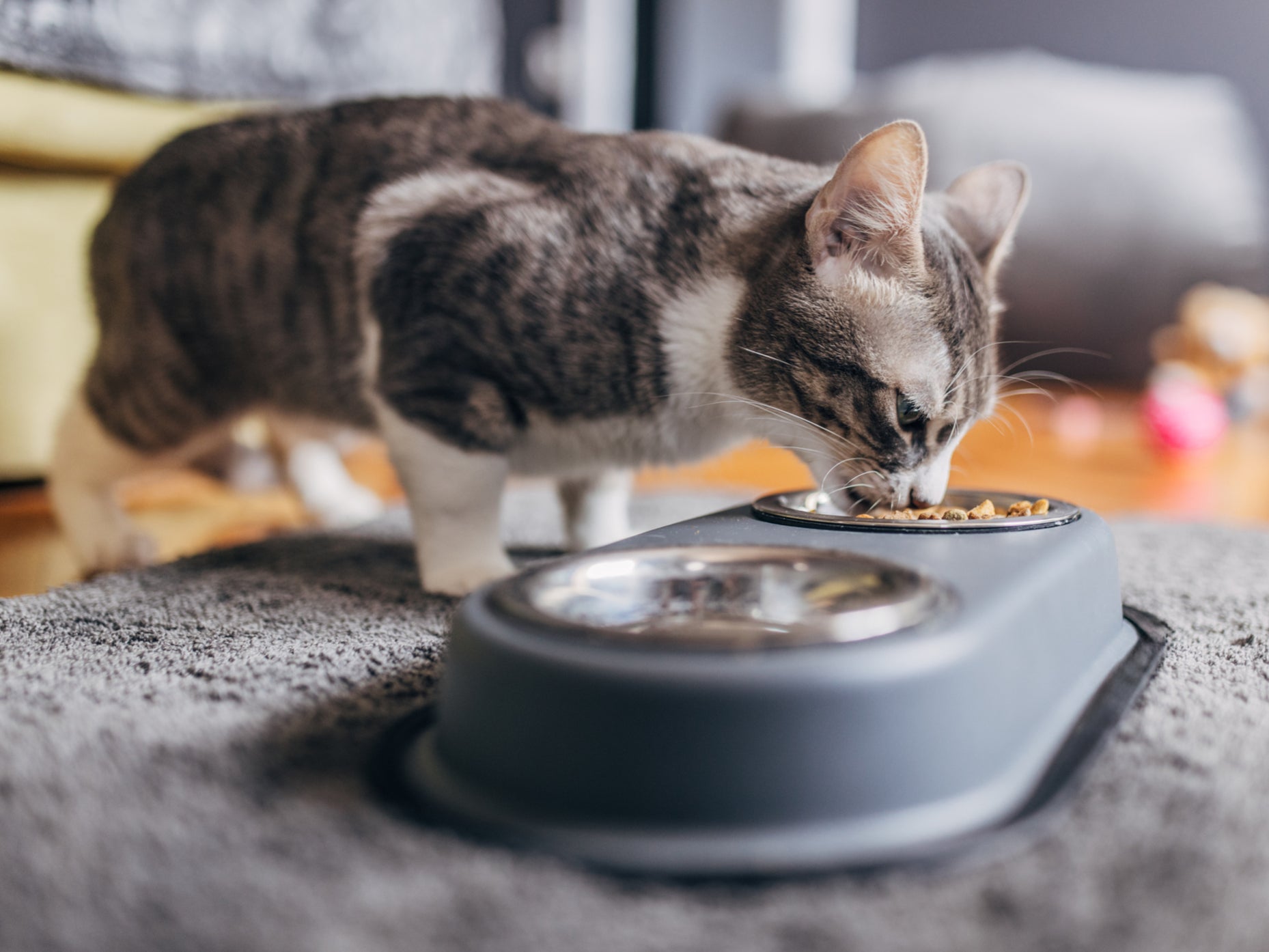
If cats can’t go outside to toilet, they will need two indoor litter trays. Because cats are fastidious, trays must be cleaned frequently. In multi-cat households, provide one litter tray per cat, plus an extra. Place the trays in separate, quiet locations, and never beside the food bowl.
Responsible cat ownership
Advertisement
Australians love their cats. In 2019, roughly a quarter of Australian households owned a cat. By 2025, that figure had risen to a third. Over the same period, households reporting they kept their cats indoors rose from 36% to 48%.
Perhaps we are finally valuing our cats as we do our dogs and listening to Aussie songwriter and singer Eric Bogle’s sage advice: “Oh you who love your pussy be sure to keep him in. Don’t let him argue with a truck, the truck is bound to win. And upon the busy road don’t let him play or frolic. If you do I’m warning you it could be CAT-astrophic.”
Residents are being encouraged to share their thoughts
Residents of Hampton Beach in Peterborough are being encouraged to have their say on council proposals to establish parking restrictions across the neighbourhood.
Advertisement
Peterborough City Council has announced it intends to install parking restrictions along 15 roads located around the area.
However, the council is welcoming input from local residents who would like to have their say on the matter.
These are the roads that will be affected by the new restrictions:
Adlington Close
Benington Close
Berrington View
Brodie Place
Chalice Close
Clovelly Drive
Emmetts Grove
Florence Road
Harmony Grove
Hartland Avenue
Kentwell Road
Rosewood Way
Waterhouse Way
Westbury Drive
Stockwood Close
Copies of the proposals, along with a statement of the council’s reasons for making them, can be requested by contacting Peterborough City Council’s Traffic Regulation department on 01733 747474.
Anyone who would like to object to the proposals must submit their opposition by April 2, clearly stating their reasons for objecting.
In short, if you don’t understand the HMRC tax rules, you could pay more than you need to.
This guide breaks down how State and private pensions are taxed, when you can take money tax-free, and what happens if you live abroad or pass your pension on.
What income counts for Pension Tax?
Question: Which pensions and income are taxed? Answer: “You pay tax if your total annual income adds up to more than your Personal Allowance, says gov.uk.
Advertisement
This includes:
State Pension (basic or new)
Additional State Pension
Private pensions (workplace or personal) — some tax-free
Employment or self-employment earnings
Taxable benefits
Other income such as investments, property, or savings
Your Personal Allowance is usually £12,570. Income below this is normally tax-free.
Can I take any of my pension tax-free?
Question: What pension income is tax-free? Answer:
You do not usually pay tax if your total income is below your Personal Allowance.
Up to 25% of any pension pot can be taken as a tax-free lump sum, with a maximum of £268,275.
Example: “Your whole pension is worth £60,000. You take £15,000 tax-free. Your pension provider will then take off the tax from the remaining £45,000.”
Special cases:
Small pots: Up to £10,000 lump sum — 25% tax-free.
Trivial commutation: Total private pensions £30,000 or less, take it all — 25% tax-free.
Serious illness: Life expectancy under one year, may take the whole pot tax-free if under 75 and within allowance.
Question: Who takes the tax? Answer: “Your private pension provider will usually take off any tax you owe before they pay you,” says gov.uk.
Advertisement
State Pension only: HMRC may send a Simple Assessment.
Pension plus working income: Tax usually handled via payroll.
Other untaxed income: You may need Self Assessment.
Recommended reading:
What happens if I live abroad?
Question: Will my pension be taxed if I retire abroad? Answer: It depends on your residency and any double taxation treaties with the country you move to.
Matthew Rawcliffe, 40, of Union Terrace, York, pleaded guilty to theft of seven cans of alcohol, theft of chocolates and sweets worth £246.60, theft of chicken and Easter eggs worth £43.95, theft of chocolate and sweets worth £159.75 and theft of chocolate and sweets worth £142.25, all from Tesco Express in Gillygate on different occasions.
He was given a 12-month community order with 20 days’ rehabilitative activities and 100 hours’ unpaid work and banned from the Tesco store for 12 months.
Christopher Bullivant, 42, of Fishergate, York, pleaded guilty to theft of a mattress worth £179.99 from The Range on Jockey Lane and theft of gin worth £48.50 from Waitrose in York.
Advertisement
He was given a 24-week prison sentence suspended for 12 months. He must pay £48.50 compensation.
Craig Spurr, 47, of no fixed address, pleaded guilty to theft of Lego from B&M Home Bargains in Clifton Moor, obstructing police, theft of £50 meat from Tesco’s Goodramgate store, theft of meat from a M&S BP Garage, theft of butter and meat worth £39.68 from Sainsbury’s in Burtonstone Lane, Clifton, theft of meat worth £280.60 from Sainsbury’s in Haxby and possessing amphetamine.
He was given a 24-week prison sentence suspended for 12 months and must pay £39.68 compensation.
Donna Ward, 54, of Burtonstone Lane, Clifton, pleaded guilty to stealing food worth £245 from Marks and Spencer in Parliament Street, York, food worth £131.90 from the Co-op store in Tang Hall Lane, and food worth £92.55 from Morrisons in Crichton Avenue, Clifton.
Advertisement
She was given a 12-month community order with 15 days’ rehabilitative activities and must pay £100 compensation.
Neil Friar, 43, of St Matthias Street, Burley, pleaded guilty to stealing electric toothbrush heads worth £98.88 from B&M in Selby and failure to attend court.
He was jailed for eight weeks and ordered to pay £98.88 compensation.
Love taking personality tests, reading about pop psychology and learning more about yourself? You might have heard about “otroverts”. If not, no worries: we’ll catch you up to speed.
Psychiatrist Dr Rami Kaminski coined the term in his 2025 book, The Gift of Not Belonging. Otroverts are essentially people who look and act like extroverts, but need their “introvert time.” They often feel “othered” (“otro” means “other”).
If that description sounds like you or a loved one, you might want some insight into common otrovert struggles and therapists’ advice. If that’s the case, read on as therapists share common concerns they hear from otroverted clients, plus their expert-backed responses.
Common therapy topics among ‘otrovert’ clients
Advertisement
SDI Productions via Getty Images
Otroverts struggle with figuring out their energy levels, social pressures and more.
Confusion about their energy levels
Otroverts want to be social and relationally oriented, but it drains their nervous system. Those energy levels can cause them to feel confused and frustrated.
“They’ll say things like, ‘I can spend the whole night with friends and feel totally drained the next day,’ and feel bad about it,” said Claudia Johnson, a therapist and the owner and clinical director at PNW Sex Therapy Collective.
Advertisement
The confusion makes sense. They may wonder, if they’re “people-people,” why are social interactions so draining? And if they recharge with alone time, what makes them feel so guilty and anxious about doing it?
How their energy levels affect their relationships
Those experiences and feelings can also confuse or upset their loved ones.
“Many describe difficulty navigating relationships where partners or loved ones expect a consistent level of availability, because at times, they can show up fully,” said Amelia Kelley, a trauma-informed therapist, author, podcaster and researcher. “When their capacity shifts, their needs change, and this is often misunderstood.”
Advertisement
Over time, she continued, they begin to mask their limits and push through exhaustion, feeling shame and depletion. It’s a rough cycle.
Worrying about how others perceive them
Speaking of otroverts in relationships, another concern is feeling misunderstood or not seen (which comes back to “otro” meaning “other”). That can influence how they interact in and experience relationships.
“This can cause anxiety, worries of not being liked and patterns of people-pleasing,” said Jessica Steinman, a licensed psychotherapist. “Also, otroverts may have some past traumas or issues with ‘being othered,’ which causes the ‘extroverted need’ to be seen and fit in.”
Advertisement
Struggling in social settings and after social events
Otroverts may feel like “outsiders” since they don’t quite identify as an introvert or extrovert.
“Often, otroverts appear to be totally enmeshed in a social setting, sometimes even acting as the centre of attention, yet express feeling a sense of disconnection or loneliness afterwards,” said Allyssa Powers, a therapist, educator and YouTuber.
They may struggle both during and after the social gathering. “Further, these clients can describe feeling like they’re ‘too much’ in some settings and ‘not enough’ in others,” said Hallie Kritsas, a licensed mental health counsellor with Thriveworks in Jacksonville, Florida. “They can then struggle with navigating social energy, as they want connection, but need depth during the interactions and recovery time after.”
Advertisement
Overfunctioning in social settings (and secretly feeling exhausted after)
“Doing the most” is another big theme for otroverts in therapy.
“These clients may seem extroverted and cool on the job, but then they feel a cavernous internal processing and exhaustion,” said Vickery Rendall, a licensed clinical social worker and owner at Paper Birch Therapy, PLLC in Oregon. “The main presenting problem in therapy is emotional numbing or being easily annoyed with loved ones.”
Courtney Morgan, a licensed therapist and co-founder of TherapyList, also noticed that feeling burned out and almost resentful is “the biggest theme” with otroverts. That could be based on their interpretation of their “social role”.
Advertisement
“They tend to be the ones orchestrating everything … They spend their time in a group setting playing the role of an extrovert and also tracking how everyone else is responding,” she said. “Even though they perform well in social settings, they rarely feel fulfilled by them.”
After days like that, they may say something like this in therapy sessions: “Everyone thinks I’m confident, bubbly and social, but I’m exhausted, overwhelmed and don’t feel fully seen,” said Alyssa Kushner, LCSW, a licensed therapist and the owner of AK Psychotherapy in New York City and Washington, DC. She added how otroverts crave connection but don’t always feel anchored to it — which comes back to that common feeling of confusion.
Feeling like something is “wrong” with them
All the concerns mentioned above can cause otroverts to feel like they’re inadequate in some way.
Advertisement
“My otroverted clients come into therapy because they feel that they’re too sensitive, too quiet, get too socially drained when their peers don’t and feel like they’re somehow deficient because they don’t operate the same way louder and more externally expressive people around them do,” said Cristina Billingsley, a trauma and anxiety therapist and the clinical director of Sierra Center for Wellness in California.
She added: “My clients report feeling chronically overstimulated, that they’re the only ones who feel this way, that no one gets them or that they have to perform and match the energy and intensity of their colleagues and friends.”
How therapists respond to those common concerns
Noko LTD via Getty Images
Setting boundaries and learning to be OK with your needs will help ortroverts not feel so torn or guilty.
Normalise the experience
Advertisement
It’s OK to want to connect with people sometimes and to need space from them other times. That doesn’t mean something is “wrong” with you, or that you’re “actually” an introvert or extrovert. In fact, several of these therapists identify as otroverts. They encourage you to think about what you need in each moment and respect it.
“I work with them on unmasking so they can notice when they are pushing past their limits and start honouring their actual capacity instead of the version others expect,” Kelley said. “I remind them that they are allowed to have changing needs, and that needing space or adjustment does not mean they are inconsistent, unreliable or letting anyone down.”
Encourage self-compassion
As mentioned, understanding your needs and giving yourself grace is key. Jacov encouraged his otroverted clients to honour both their social side and their solidarity side, hoping they can learn to navigate social obligations with feelings of self-assurance and safety.
Advertisement
“We learn to tune into the body to recognise what level of energy is actually available,” he said. “We build compassion and even appreciation for having these two opposing parts.”
Cognitive reframes can help. For example, Billingsley suggested saying that the temperament is a strength rather than a flaw.
Help with boundary-setting
The focus, Steinman said, is ensuring these clients get their needs met and can assertively set boundaries. That may mean saying “no” to a friend’s invitation, or even saying “no” to themselves.
Advertisement
“We also look at how someone can take a step back and know when they need to get their ‘cup refilled,’ have self-care and tolerate any uncomfortable thoughts or feelings when they want to lean into their introverted side,” she said.
Adjust unhelpful thoughts
Rendall reminded her clients that they are worthy people outside their titles and social roles. They don’t need to constantly “perform” to be valuable.
Realising which self-expectations are unrealistic can help with that, according to Morgan. She reminded her otrovert clients that they don’t have to do it all. “We practice letting silence exist, energy dip and letting someone else manage small hiccups,” she said.
Advertisement
It takes practice, but it can be effective. Ultimately, focus on what feels good for you in the moment.
“The ultimate goal here isn’t to become more introverted or more extroverted,” Kushner said. “It’s to feel regulated and authentic in both modes, and to be selective with who and what you give your precious energy to.”
After the sensational reception of her novel Butter (2017, translated into English in 2024), Asako Yuzuki is back with Hooked (translated by Polly Barton) – a novel about loneliness and the sometimes twisted and complicated relationships between women.
The book revolves around two very different women in their 30s in Tokyo. Eriko is a career-driven woman with a stable income in a trading company, born and raised in Tokyo. Shōko is a housewife and blogger who writes about her daily life with her husband.
Despite having taken such different life courses, what they have in common is a sense of loneliness and a struggle to create meaningful connections with other women. When the pair form an unlikely and intense friendship, they experience a brief euphoric connection, feeling like they have become “an invincible duo” for a while.
Japanese fiction in translation, especially contemporary women’s writing, is on the rise. Bestselling translated fiction from Japan – from Sayaka Murata’s Convenience Store Woman (2018) to Emi Yagi’s Diary of a Void (2024) – often focus on single women in Tokyo. Not necessarily career-driven or looking for success in a corporate world, they also typically have no intimate partners or children.
Advertisement
To some extent, the main characters in these novels are not conventional heroines. They don’t need or want to be rescued by Prince Charming; instead, they navigate the expectations placed on them to offer care in other forms. Such pressure comes from their families, workplaces and, more broadly, from society. Amid all of this, they feel a profound sense of loneliness which mirrors growing concerns in Japan.
Japan has long grappled with the issue of severe social isolation. Often, the focus of this loneliness epidemic has been on young men; however, women are starting to feature more in such conversations.
The number of women referred to as hikikomori (extreme social recluses) is increasing. In a 2023 survey by the Japanese government, women represented 45% of hikikomori between the ages of 15 and 39, and 52% of those between 40 and 64. The survey found such social withdrawal was driven by a range of reasons, from domestic violence and abuse to financial hardship and job loss.
In Hooked, as the title suggests, female loneliness is explored through how it can give way to intense female friendships and the dangers of obsession.
Advertisement
Eriko appears to be the epitome of a modern city girl, raised by a happy family and holding a high-earning job. Yet her achilles heel is that she has never had close friendships with other women.
Infatuated with Shōko after their encounter, Eriko advances from being a fan of Shōko’s blog to first being her friend and then her stalker. Shōko, despite also feeling a sense of inferiority about not having female friends, is shocked by Eriko’s obsessive behaviour and rejects her suffocating approach. Their fallout leads to secrets, blackmail and coercion.
The Japanese title, Nairupāchi no Joshikai (Nile perch’s ladies night out), is indicative of the murkier elements in women’s relationships with each other. A Nile perch is a carnivorous fish that grows up to two metres long and weighs up to 200 kilos. Their literal involvement in the story comes from Eriko’s work: she has been preparing to reopen a trade route from Tanzania to distribute them to places like sushi restaurants.
Eriko’s fascination with the fish is not only for their business value, but also their ferocity. She admires how the Nile perch totally desecrates any surrounding ecosystem it enters:
Advertisement
Even in waters across Japan, ecosystems are being destroyed by the unregulated influx of invasive species. The creatures have to compete for food, ecosystems and mates. It doesn’t end until one of the species is wiped out. The result? The creation of a monster.
The Japanese title puts these monstrous fish into a joshikai, which translates as a meeting or gathering (会) of girls or women(女子). This is usually where women gather to eat, drink, chat, console each other and have fun. It is (hopefully) a place for them to support each other.
However, considering the ferocity and vitality of Nile perch, this novel recasts a joshikai as a site of intense competition for survival. As Eriko says to Shōko:
The reason that women’s competitiveness over minor issues like marriage, kids or looks stops them from getting along, even now, isn’t through any desire of their own. It’s because society foists all these standards on us. The world we live in is specifically designed to make us compete.
Yuzuki’s intense and obsessive novel explores the tensions of female solidarity through women seeking the hope and possibility of connection, in a quest to feel less lonely. It interrogates the difficulties that obstruct these connections and how they are rooted in gender inequalities, class differences and precarious employment.
What is fascinating about Hooked is how Yuzuki allows moments of madness to erupt into daily life. At times, the intensity of the characters can make it hard to keep engaging with the book, yet readers will find themselves drawn back to the lives of Eriko and Shōko. These characters are well-rounded figures, powerfully relatable for anyone navigating the complicated dynamics of gendered issues.
Phil Woolas, a former Labour minister and MP, has died at the age of 66, his family and close friends have announced.
Mr Woolas, who died in the early hours of Saturday, served as a minister in both the Blair and Brown governments, and as MP for Oldham East and Saddleworth between 1997 and 2010.
A statement attributed to his family and close friends announcing his death said he had been battling bran cancer for more than a year.
“Phil Woolas, former Labour MP and minister, has died aged 66”, the statement said.
Advertisement
“For more than a year he battled the brain cancer, glioblastoma. He leaves his wife Tracey, his sons Josh and Jed and a new grandson, and many friends and former colleagues who will all miss him greatly.
“Before entering Parliament, Phil was NUS president, TV producer and GMB union communications director.
“He served as MP for Oldham East and Saddleworth from 1997 to 2010, and a minister in both Tony Blair and Gordon Brown’s governments – appointed successively: whip, deputy leader of the Commons, local government minister, environment minister and immigration minister.”
The statement from his friends and family added: “From 2011 onwards, Phil set up and ran his own political and risk consultancy.
Advertisement
“For more than 25 years, Phil was the chair of The Ace Centre, an Oldham charity helping people with communication difficulties, that he led to become a national charity leader in assistive technology for severely disabled people.”
Th Love Island winner has carved out an incredible career on stage staring in several award-winning West End shows, but was forced to take a break from her latest stage show this week
Eve Wagstaff Social Newsdesk Reporter
09:18, 14 Mar 2026
Amber Davies has broken her silence after being forced to pull out of Legally Blonde, shutting down rumours of backstage drama and doubling down on the reason behind her absence.
The former Love Island winner, who is currently playing Elle Woods in the hit stage show, took to Instagram to address speculation after a wave of reports suggested there could be tension surrounding her time away from the production. The 29-year-old revealed she has been battling a chest infection for more than a month and is currently finishing a course of antibiotics, making clear that her absence is down to illness rather than any fallout with the cast.
Advertisement
In a candid message to fans, she wrote: “Just to clear things up, I’m not leaving Legally, I’m not taking a break & there is no feud… I’m simply just finishing off a set of antibiotics for a chest infection that’s been lingering for over a month.
**Ensure our latest headlines always appear at the top of your Google Search by making us a Preferred Source. **Click here to activate** or add us as your Preferred Source in your Google search settings.**
Advertisement
“What we love and choose to do as a career is so unbelievably taxing on the body, and we are very much not invincible. Sickness happens, we are human. And disappointed to see a narrative ran on women who work their A***S OFF.” Amber went on to reassure theatre fans that she has no plans to walk away from the role for good and is hoping to get back on stage as soon as possible.
She added: “I will be back on stage as soon as I possibly can. I love my @legallyblondeshow company so much and very grateful to have such a supportive team especially @hannahlowther.” The star continued to say she hopes she’s now cleared speculation up before ending her message with: “See you all for a good ol’d bend and snap ASAP.”
Her post got the backing from her understudy Hannah, who replied, “WE GOT EACH OTHER.” Amber’s post comes after recent reports suggested there had been friction surrounding her absence from the show, with understudy Hannah Lowther stepping in to play Elle Woods.
Sources claimed to the Daily Mail that “tension” had developed backstage after audiences seemed to be preferring Hannah’s portrayal of Elle over Amber’s. A source said: “When Hannah goes on, the energy is completely different.
“She gives it ten times more energy than Amber ever has, and just has that sparkle that Amber lacks. Everyone backstage is professional, but it would be fair to say the atmosphere between the two girls can be a bit tense at times.”
Amber previously spoke openly about the toll the illness had taken on her in a previous update, admitting she had tried to carry on performing while recovering, but that it had only made things worse. She shared earlier this week: “Ok update: after talking to my DR, being on antibiotics and trying to recover whilst doing shows is getting me and my health NOWHERE. Been working on this lingering illness for a month now so I’ll be off again from my beautiful Elle Woods.
“This is the last thing I want but there’s no other way. I fear if I keep ‘pushing through’ I will be battling with this for longer than I need to be. I can’t wait to be back on stage and feel like me again!!!” Amber also previously reflected on just how demanding the last few months have been, after going from one intense project straight into another.
Advertisement
She said: “Also I keep having to remind myself I went from Gatsby, to a last min Strictly, then to Elle so my body’s evidently fighting for its life.” The star added: “I also keep reminding myself that it’s ok to be poorly, we are human. Just a reminder there’s absolutely never a right time to be poorly in a musical theatre schedule so you must, for your own sanity, go with the flow!”
But one driving instructor has revealed the one thing you need to do in order to nail parallel parking in seconds.
Parallel parking involves parking your car parallel to the curb, and often has to be carried out while parking in between two stationary vehicles.
The wheel needs to be turned at exactly the right moment, in order to avoid hitting the parked cars, as well as the curb.
Advertisement
Top Tips for Learning to Drive in the UK
Francis Noakes, an online driving instructor has revealed the one hack you need in order to nail the tricky manoeuvre in seconds.
In a clip shared on TikTok the driving instructor behind Driving School TV shared a minute-long video revealing exactly how to do it.
The first step is to line up your vehicle with the car you want to park behind, while checking all of the mirrors for oncoming traffic and pedestrians, before slowly starting to reverse slowly.
Francis reveals that you will know when to start turning the wheel by looking at the wing mirrors.
Advertisement
The next crucial step in order to ensure that your car ends up perfectly parallel with the curb is to check your wing mirrors for dangers.
At this point, Francis turns the wheel twice towards the curb, before turning it back towards the road so that the car is parked parallel with the curb.
He then proceeds to bring the car to a stop and put it in neutral with the handbrake on.
Francis said: “I’m reserving until I can see the back of my car in the back passenger window.
Advertisement
“There it is, I’m going to take one nice gentle turn to the left, keeping up my observations.
“Then what I’m looking for is for the back of the car to hit the curb in the [wing] mirror.
“It looks like the back of the car is touching the curb.”
Road signs many drivers don’t know
Advertisement
The RAC advises that parallel parking is a great skill because it allows you to park in a smaller space than would be possible if you were driving forward into it.
By reversing in, a driver can take advantage of a single empty space, not too much longer than the car.
Parallel parking might also be the only option to get a space in town and city centres where space is a premium.
Jazza Dickens’ WBA World super-featherweight title will be on the line in Dublin
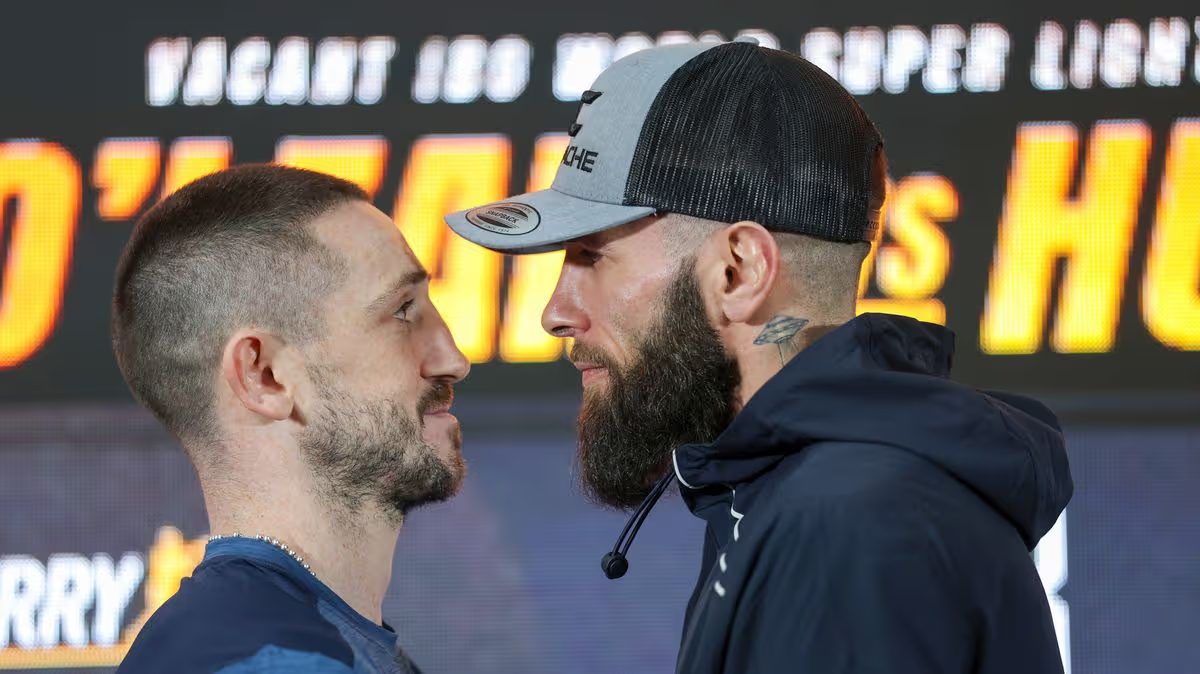
Frank Warren and Queensbury bring a stacked card to the 3Arena on Saturday night, with Belfast’s Anthony Cacace topping the bill as he aims to become a three-time World Champion when he takes on Liverpool’s Jazza Dickens for the WBA Super-featherweight title.
Advertisement
It’s a card that could go down in Irish boxing history, with Dubliner Pierce O’Leary in the role as hometown favourite as he takes on Maxi Hughes for the vacant IBO Super-Lightweight title.
O’Leary had been due to face Mark Chamberlain, who was struck down by an illness and hasn’t recovered in time for Saturday’s contest.
Up until a few years ago, it looked as though Cacace’s career was set to peter out. However, as if a switch has been flicked, the 37-year-old has taken his game to a whole new level in recent times, knocking off the likes of Joe Cordina, Josh Warrington and Leigh Wood in extremely impressive fashion.
On Saturday night, he takes on Jazza Dickens in front of what should be a raucous crowd at Dublin’s 3Arena.
Advertisement
Here is everything you need to know about the fight:
When and where is the fight?
Cacace vs Dickens is at the 3Arena in Dublin on Saturday, March 14.
What time is the main event?
The main card starts at 7pm with the main event expected at approx 10pm.
Is the fight on TV?
Yes, the fight is being screened by DAZN.
Advertisement
Is there a stream available?
Yes, the full card is being shown on streaming service DAZN.
Any other coverage?
Belfast Live will have a live blog on the action from the 3Arena
Fight card
(Subject to change)
Jazza Dickens v Anthony Cacace – WBA world super-featherweight title
Advertisement
Pierce O’Leary v Maxi Hughes – vacant IBO light-welterweight title
Jono Carroll v Colm Murphy – vacant IBO super-featherweight title
Steven Cairns v Arnie Dawson – lightweight
Eoghan Lavin v Liam Walsh – middleweight
Advertisement
Ryan Garner v TBA – super-featherweight
Barry McReynolds v Jonatas Rodrigo Gomes de Oliveira – light-welterweight
Davey Joyce v TBA – super-featherweight
Adam Olaniyan v TBA – heavyweight
Advertisement
Gary Cully v Benito Sanchez Garcia – light-welterweight
Thomas Carty v German Skobenko – heavyweight
Bobbi Flood v Bela Istvan Orban – middleweight
Eugene McKeever v TBA – light-middleweight
Advertisement
Betting odds
Cacace 4/11
Dickens 11/5
Draw 16/1
Want to see more of the stories you love from Belfast Live?Making us your preferred source on Googlemeans you’ll get more of our exclusives, top stories and must-read content straight away. To add Belfast Live as a preferred source, simplyclick here.
“There has to be a big stick and a big carrot here,” he argues. “If these buildings aren’t fully in use, then why not? You should encourage people to either develop them, or, if they’re not in a financial situation then sell or give them to people who can. Maybe that means an enormous empty buildings tax.”