

Business
Smallcaps cheaper but not cheap yet: Sonam Srivastava urges selective investing


In this interaction, she explains why caution is still warranted in the smallcap space, outlines sectors offering better opportunities, and discusses portfolio strategies amid geopolitical uncertainty and volatile markets.
Edited excerpts from a chat:
Equity investors are now worried about the impact of the Iran war, which comes at a time when the market hasn’t provided any return in the last 18 months. What is the best solution to navigate this crisis, besides continuing SIPs?
Geopolitical events like the Iran conflict create short-term volatility but rarely alter long-term earnings trajectories. The real concern here is that flat 18-month returns have tested investor patience precisely when resilience matters most. Beyond SIPs, the best navigation strategy is tactical asset allocation, where you incrementally deploy idle cash into quality large-caps during sharp drawdowns rather than waiting for certainty.
Avoid panic-driven rebalancing. If your portfolio has drifted equity-heavy due to prior rallies, partial reallocation to short-duration debt provides both stability and dry powder. Geopolitical crises compress valuations temporarily but rarely compress earnings permanently. Investors who stayed disciplined through COVID, the Russia-Ukraine war, and rate hike cycles were rewarded. Volatility is the price of equity returns and not necessarily a signal to exit.

How are you deploying cash across portfolios amid the decline in share prices? Which sectors are increasingly looking attractive from both growth and valuation perspectives for FY27?
The approach should be staggered and conviction-weighted. Rather than deploying cash in one tranche, spread it across 3–4 tranches over 6–8 weeks, prioritising sectors where earnings visibility remains intact.
Currently, large-cap private banks, select capital goods names, and pharma offer reasonable entry points. Avoid bottom-fishing in beaten-down small-caps without earnings support.
For FY27, sectors increasingly attractive on both growth and valuation include:
- private sector banking, which has seen credit growth recovery, NIM stabilisation
- healthcare/pharma with domestic formulations & US generics tailwinds
- infrastructure-linked capital goods with order book visibility
- Select IT services where AI-driven deal ramp-ups have occurred post a weak FY25
- Consumer discretionary also looks selectively interesting as rural demand recovers with a good rabi crop and potential tax relief transmission.
Overall, how cheap is the market considering that the Q3 numbers had a one-time impact from the Labour Code as well?
The Q3 earnings season was distorted. The Labour Code provisions created a one-time drag that artificially suppressed PAT margins across sectors like retail, hospitality, and manufacturing.
Stripping that out, underlying earnings were broadly in line. On a cleaned-up basis, Nifty trades at roughly 18–19x FY27 estimated earnings, which is close to long-term averages and not screaming cheap, but meaningfully off the frothy 22–23x seen in late 2024.
The broader market (mid and small-cap indices) has corrected 20–30% from peaks, bringing pockets of genuine value. The market isn’t dirt cheap, but it’s no longer pricing in perfection. For patient 3-year investors, current levels offer a reasonable margin of safety, particularly in financials and capex-linked themes where FY27 earnings recovery looks more credible.
How comfortable are you now regarding valuations in the small-cap space?
Comfort has improved meaningfully, but caution remains warranted. The small-cap index has corrected ~25–30% from its peak, compressing valuations from clearly excessive levels to something more reasonable.
However, “less expensive” is not the same as “cheap.” Many small-caps still trade at premium multiples relative to their earnings quality and growth predictability. Liquidity risk also remains elevated, and in a risk-off environment, small-caps face sharper drawdowns due to lower institutional float. We need to be selective rather than broadly bullish.
Focus on small-caps with strong balance sheets, consistent free cash flow generation, and identifiable earnings catalysts for FY27. Avoid names that rallied purely on momentum without fundamental backing. A 15–20% allocation to quality small-caps in a diversified portfolio is reasonable at current levels — not more.
What is your reading of sectoral rotation at this stage of the cycle, particularly across banking and financials, capital goods, manufacturing, IT services and consumption?
We appear to be in a mid-cycle transition, and rotation is becoming more nuanced:
- Banking & Financials: After underperforming for 12–18 months, it is improving. Valuations are attractive, credit costs are peaking, and rate cuts will support NIMs over FY26–27. Private banks look better positioned than PSUs at this stage.
- Capital Goods & Manufacturing: Still structurally in favour, but valuations remain elevated. Stock-specific rather than broad sector bets make sense. Order inflow data will be the key monitorable.
- IT Services: Early signs of deal momentum recovering, particularly in BFSI verticals. AI integration is shifting from a threat narrative to an opportunity narrative. Largecaps preferred over midcap IT.
- Consumption: Rural is recovering; urban is moderating. FMCG looks fairly valued. Discretionary is more interesting on dips.
Rotation favours financials and IT over capital goods at current relative valuations.
What is your view on precious metals? Does it make sense to keep buying gold? If you have Rs 10 lakh to invest, how would you divide it among gold and silver, equity and debt considering a 4-5 year horizon and medium risk appetite?
Gold’s rally is structurally supported with central bank buying, de-dollarisation trends, geopolitical risk premiums, and real rate uncertainty all remain tailwinds. We are seeing a regime shift in how gold is being valued globally. Silver has additional industrial demand drivers (solar panels, EVs) making it a higher-beta precious metals play.
For Rs 10 lakh over 4–5 years with medium risk appetite:
This balances growth with downside protection. Rebalance equities faster and other asset classes annually.

Business
Quant Small Cap Fund : HDFC Bank and Jio Financial Services among stocks bought and sold in February

Quant Small Cap Fund added HDFC Bank and others, trimmed Jio Financial, and exited Stanley Lifestyles in February.

REITs May Be The Biggest Winner Of The Coming Market Shift

How Ecovyst’s 60% surge validated InvestingPro’s Fair Value analysis

Tesla Has Just Shared Game-Changing News (Rating Upgrade)
Business
F&O Talk | Nifty breaches crucial Fibonacci retracement level; Sudeep Shah on Adani Total and 5 top weekly movers

Global cues remain negative with no clarity on the longevity of the war. The energy crisis could lead to a further downside amid high volatility.
Fear index India VIX is up 120% over a three-month period and is now hovering around 22.65.
Analyst Sudeep Shah, Vice President and Head of Technical & Derivatives Research at SBI Securities, interacted with ETMarkets regarding the outlook for the Nifty and Bank Nifty, as well as an index strategy for the upcoming week. The following are the edited excerpts from his chat:
Q: Nifty ended sharply lower at 23,151.10, dropping 5.3% on a weekly basis. Do Nifty charts suggest more bloodbath next week?
The bloodbath on Dalal Street continued for the third consecutive week, as the prolonged escalation of geopolitical tensions between the US and Iran dented investor sentiment. The intensity of the correction increased significantly during the last three trading sessions, with the benchmark Nifty index correcting over 5% during the week, marking its sharpest weekly fall since June 2022. The Automobile and Banking stocks were the major contributors to the decline, dragging the index lower. However, the bigger trigger behind this sharp sell-off may not be just geopolitical tensions alone.
One of the key factors weighing on the market has been the sharp volatility in crude oil prices. Last week, Brent crude cooled off and touched a low near $80.29, offering some temporary relief to the markets. However, prices soon resumed their upward trajectory and are now quoting close to $100, which has again dented investor sentiment. Additionally, concerns over gas shortages and supply disruptions following the Strait of Hormuz squeeze have added to uncertainty across several industries. But the real concern for the market becomes clearer when we look at the technical structure of the index.
Also read: FIIs sell Indian equities worth Rs 52,704 crore in March, so far; Friday records its highest single-day outflow in 2026
From a technical perspective, the index remains in a strong downtrend, with the pace of the fall turning sharper in recent sessions. Over the last 27 trading sessions, Nifty has corrected more than 12%, making it one of the sharpest declines in the recent past. Notably, the index has been forming weekly candles with long upper shadows over the last two weeks, indicating that every pullback is witnessing selling pressure. This pattern suggests that market participants are using every rise as an opportunity to exit positions.
Further, the index has now closed below the crucial 61.8% Fibonacci retracement level of its prior rally from 21,743 to the all-time high of 26,373, suggesting a weakening technical structure. Such a breach of a key retracement level often signals that the market may need more time before finding a meaningful bottom. Momentum indicators are also reflecting strong bearish momentum. The weekly RSI has slipped to 30.43, its lowest level since the COVID-19 market fall. This raises an important question — how much further can the correction extend from here?
Going ahead, the 22,850–22,800 zone will act as immediate support for the index. A sustainable move below 22800 could lead to further correction towards 22,500. On the upside, 23,450–23,500 will act as immediate resistance.
Q: What does the F&O data suggest about Bank Nifty which was among the worst-performing indices, sliding 7% WoW?
The banking benchmark index, Bank Nifty, has also witnessed a sharp correction in recent sessions and has significantly underperformed the frontline indices, reflecting sustained selling pressure in banking heavyweights. Over the last week alone, the index has declined by nearly 7%, and notably, it has broken down from its rising channel on the weekly chart, signalling a clear shift in the medium‑term trend from consolidation to weakness.
From its recent peak of 61,678, Bank Nifty has corrected by nearly 13% within just 15 trading sessions, highlighting the intensity and speed of the ongoing decline. Such a sharp fall over a short span typically indicates aggressive unwinding of positions and heightened risk aversion within the banking space.
From a technical standpoint, the setup remains decisively bearish. All key moving averages and momentum‑based indicators are aligned on the downside, confirming the prevailing negative trend. The weekly RSI is currently placed around 34.56, which marks its lowest level in recent years, suggesting persistent weakness and lack of meaningful buying interest despite the sharp correction.
Looking ahead, the 53,400–53,200 zone is expected to act as an important support area for the index, as a horizontal trendline support is placed in this region. However, any sustained breakdown below the 53,200 level could further aggravate selling pressure and open the downside towards 52,500, followed by 51,800 in the short term. On the upside, any pullback or relief rally is likely to face strong resistance in the 54500–54600 zone, which is expected to act as an immediate hurdle and may attract fresh selling interest.
Q: India VIX has shot up above the 22 mark, rising 13% this week. Which sectors can help investors ride this volatility?
India VIX has surged above 22, signalling heightened market volatility and investor caution. Historically, VIX moves inversely with the Nifty, so rising VIX often coincides with falling equity markets. In such phases, defensive sectors tend to outperform, while cyclical sectors lag. Investors looking to navigate this volatility can focus on FMCG, Pharma, CPSE & PSE, which offer stable earnings and resilience against market swings. Gold can also provide a hedge, either through ETFs. Conversely, Financials, Consumer Discretionary, and Auto sectors typically underperform during high VIX periods. An actionable approach is sector rotation: reduce exposure to high-beta sectors and increase allocation to defensive ones, balancing risk while participating in potential rebounds.
Q: What should investors do with auto stocks (Nifty Auto down 11% WoW), which have been at the receiving end of investors’ ire?
Nifty Auto has corrected sharply, down nearly 10% in just three days, with key stocks like TVS Motor, Bajaj Auto, Maruti, M&M, Eicher Motors, and Hero MotoCorp slipping below their 200-day EMA, a critical long-term support. Technical indicators point to bearish momentum: RSI for most stocks is below 40 and falling, while ADX is rising, signalling strengthening downside. The Relative Rotation Graph (RRG) places Nifty Auto in the weakening quadrant, highlighting a lack of counter-momentum. In this environment, it is advisable not to bottom fish. Investors should wait for signs of stabilisation, such as RSI recovery above 40 or prices holding above key support levels, before considering fresh exposure. Patience remains crucial during this bearish phase.
Q: Another concern that engulfs Indian markets is rupee weakness, and as the dollar has hit a 4-month high, it looks like a double whammy. What range do you see for the rupee?
USDINR has broken above its previous swing high of 92.10–92.20 and closed higher, signalling continued dollar strength. Rising crude oil prices are a key driver, as higher crude invoicing in dollars increases demand for the currency, putting additional pressure on the rupee. A stronger dollar also impacts foreign exchange reserves and can deter FII inflows, as it erodes the value of their investments in India. The immediate support for USDINR is at 91.70–91.60, and as long as the pair trades above this zone, the rupee is likely to remain under pressure. Investors should monitor crude oil trends closely, as sustained high prices could keep the rupee weak in the near term.
Q: FACT, ATGL and Happiest Minds have been star performers this week, while Amber Enterprises, PG Electroplast and Sapphire have been big losers. What should investors do with them?
This week’s outperformers, FACT, ATGL, and Happiest Minds have shown sharp rebounds but face key resistance levels. FACT bounced from 652 but faces resistance at 910–920; a sustained move above this could extend the pullback. ATGL rose from 463 and briefly crossed its 200-day EMA, with 640–650 acting as strong resistance; upside momentum may pick up once this zone is breached. Happiest Minds recovered from 330 but stalled at its 100-day EMA, with 440–450 as the critical resistance level.
Among laggards, Amber Enterprises has corrected nearly 21% from its Feb high, with RSI below 40; as long as it trades below 6700–6800, the trend remains bearish. PG Electroplast hovers near support at 506–496, and a breakdown could extend weakness. Sapphire continues a lower-low, lower-high pattern, with rising ADX signalling trend strength; below 185–190, bearish bias persists. Investors should monitor resistance and support levels before taking positions.
(Disclaimer: The recommendations, suggestions, views, and opinions given by the experts are their own. These do not represent the views of The Economic Times.)
Business
War fears spark market panic, but correction may be opening buying opportunities: Sunny Agrawal

Speaking to ET Now, SBI Cap Securities’ Sunny Agrawal said the recent selloff in several large-cap names appears to be driven more by panic and worst-case assumptions rather than a deterioration in business fundamentals.
One example is the reaction to companies with exposure to the Middle East, where investors are factoring in a prolonged disruption to projects and economic activity. “There is an absolute panic in the stock basis that the company has got 25% to 30% exposure to the Middle East, and the market is discounting that the entire order book of 25% to 30% exposure that may not get executed over the period of the next 6 to 24 months,” he said.
However, Agrawal believes the market may be extrapolating an extreme scenario. If geopolitical tensions ease in the coming months, investors may return to more normal assumptions about project execution timelines and business growth.
He pointed out that the underlying order pipeline for some companies remains strong despite the recent volatility. “Looking at a very robust order book of closer to Rs 4.3 trillion and within that also closer to 30% contribution is from the private sector, which clearly indicates that even private sector capex is picking up,” he said.
With valuations correcting sharply alongside the broader market, the risk-reward for long-term investors is beginning to improve. “Post correction, now valuations have even turned comfortable… we feel the fair value of the business is closer to Rs 4,000-4,200. So, any dip currently is a good buying opportunity for a long-term investor,” Agrawal said.
In the consumer internet space as well, rising competition and temporary disruptions have weighed on sentiment, but the broader growth story remains intact. “Post correction, even there we feel that the risk-reward is turning favourable. In fact, both these stocks, Eternal as well as Swiggy looks pretty attractive as the long-term growth opportunity is pretty intact,” he said.At the macro level, crude oil remains the key variable for India’s economic outlook. Elevated energy prices could trigger inflationary pressures across the economy if they persist for several months. “In case the crude continues to trade above $90 and in the band of 90 to 110 for a pretty long period of time, three to six months, then definitely it will have an inflationary impact across the value chain, first for the manufacturer and then for the consumer,” Agrawal said.
Still, he noted that India has been experiencing relatively low inflation over the past year, which could provide some cushion if energy prices remain volatile.
In banking, Agrawal said valuations have also become reasonable after the recent correction. “Post correction, now most of the private banks are trading at a pretty reasonable valuation,” he said, adding that a mix of private and well-diversified public sector banks could help investors navigate the current environment.
As markets digest geopolitical risks and commodity volatility, Agrawal believes the current phase of panic could gradually give way to selective opportunities for investors willing to take a longer-term view.
opinion
Private Credit Takes the Pressure off Regular Banks

The U.S. dollar strengthened to its highest level in more than three months against a basket of currencies Friday as investors sought safe-haven assets and energy prices rose due to the widening Middle East conflict.
“We cannot see investors wanting to fight this dollar rally, given there is so little certainty as to when this crisis will end,” ING’s global head of markets, Chris Turner, said in a note.
Copyright ©2026 Dow Jones & Company, Inc. All Rights Reserved. 87990cbe856818d5eddac44c7b1cdeb8

Paramount Skydance CEO David Ellison speaks during the Bloomberg Screentime conference in Los Angeles on October 9, 2025.
Patrick T. Fallon | Afp | Getty Images
Hollywood could soon have a new king of the box office.
With Paramount Skydance set to take over Warner Bros. Discovery, the combined film studios could dominate the theatrical slate.
Paramount CEO David Ellison has repeatedly promised not to pull back on production from either studio, with the goal of making 30 movies a year — 15 from Paramount and 15 from Warner Bros. The pending transaction, with an enterprise value of $111 billion, must still win regulatory approval both in the U.S. and in Europe.
As the current 2027 slate stands, the combination of WBD and Paramount would result in 26 theatrical releases. However, additions to that calendar could come as soon as April at the annual CinemaCon conference in Las Vegas.
This behemoth of a slate is dominated by Warner Bros. titles, and it’s likely that those films would account for the bulk of ticket sales.
The studio is set to release films from major franchises including Godzilla-Kong, Superman, Batman, Minecraft, The Conjuring universe, Gremlins and Lord of the Rings.
Meanwhile, Paramount will have new entries for Sonic the Hedgehog, Paranormal Activity, A Quiet Place and its animated Teenage Mutant Ninja Turtles franchises.
Still from Paramount’s “Sonic the Hedgehog 2.”
Paramount
While Paramount’s franchises are popular and have generated solid ticket sales at the box office, its major releases in 2027 are smaller budget features. In fact, no film in any of those four franchises has generated more than $350 million globally, according to data from Comscore. But with smaller budgets, they don’t have to in order to be profitable.
Warner Bros.’ part of the slate, on the other hand, has bigger budget features that in the past have generated bigger box office returns. The most recent Godzilla-Kong film generated $572 million globally, 2025’s “The Conjuring: Last Rites” tallied nearly $500 million, “The Batman” took in $772 million and “A Minecraft Movie” nearly hit $1 billion.
“When you look at the films on the horizon from the PAR/WBD combo it is most impressive,” Paul Dergarabedian, head of marketplace trends at Comscore, told CNBC. “And it may not be an overstatement to say that that slate could indeed have the potential to generate the biggest single studio box office in 2027.”
The Warner Bros. movie studio is a big part of why Ellison was so committed to winning over WBD’s board and its shareholders in a bidding war against Comcast and Netflix. Last year, Warner Bros. was the second-highest grossing studio at the domestic and global box office. Paramount was fifth.
Disney has long held the box office heavyweight title, although it was briefly overthrown in 2023 by Universal. Warner and Universal have jockeyed between second and third position, with Sony, Lionsgate and Paramount falling in line behind them.
A tricky feat
“Doubling up two major slates adds to the potential for a very strong 2027, but nothing is ever certain when it comes to assuming a potential annual box office winner among studios,” said Shawn Robbins, director of analytics at Fandango and founder of Box Office Theory. “That’s especially true when the likes of Disney and Universal will each bring out their own heavy-hitters next year.”
Disney, in particular, has franchises like Ice Age, Star Wars, Frozen and Avengers on the docket for 2027.
Of course, franchise tentpoles are not always guaranteed to succeed at the box office, but the combined efforts of Paramount and Warner Bros. is a compelling offering for an industry that has been shrinking dramatically over the last decade.
“The notion of two major studio slates under one large umbrella in 2027 makes for an intriguing prospect while raising some fair speculation,” said Robbins. “We’ve seen the decline in theatrical output in the years following Disney’s acquisition of Fox, although caveats such as the pandemic and streaming explosion somewhat skew that comparison.”
A combined Paramount and Warner Bros. slate also faces some logistic issues. There are only 52 weekends on the calendar, and with 30 movies, the studio would need to strategically place its releases as not to cannibalize its own ticket sales.
David Corenswet stars are Superman in Warner Bros.’ “Superman.”
Warner Bros. Discovery
Robbins noted that rival studios typically only go head-to-head on the same weekend or on back-to-back weekends if they are certain there isn’t a major overlap in audience demographics. It’s why there is often a horror movie set for release at the same time as a family-friendly animated feature, for example.
In contrast, Robbins noted, Paramount is scheduled to release “Sonic the Hedgehog 4” just one week ahead of Warner Bros.’ “Godzilla X Kong: Supernova.”
“It wouldn’t be a shock to see one of those shifted earlier or later on the calendar since the parent studio will want to minimize risk and do what’s best for the financial bottom line while remaining competitive,” he said.
And while Ellison has touted a 30-movie slate in the years after 2027, it’s unclear if that future is feasible.
Traditionally, when two major studios merge, the number of films released declines and there is a major wave of layoffs as consolidation weeds out redundancies. Not to mention, the marketing costs of big-budget films can be prohibitive.
“What will actually become normal for the newly unified house of Paramount and Warner remains to be seen,” Robbins said. “The longevity of such a slate in the years after 2027 will be challenging to produce, but never say never.”
Disclosure: Versant is the parent company of CNBC and Fandango.
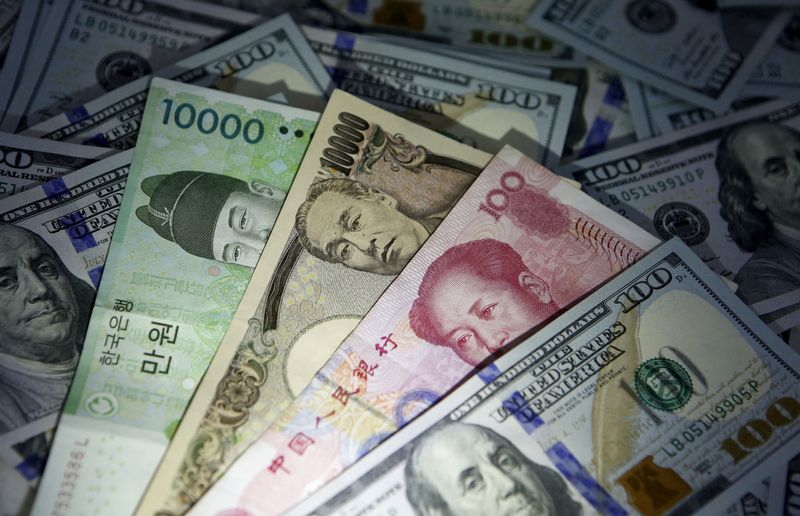

Japan, South Korea ready to act against FX volatility, ministers say

New CCTV images released of Glasgow man with limp missing for nearly two weeks
Quant Small Cap Fund : HDFC Bank and Jio Financial Services among stocks bought and sold in February

XRP transactions triple but price remains muted


-
 Tech3 days ago
A 1,300-Pound NASA Spacecraft To Re-Enter Earth’s Atmosphere
-

 News Videos5 days ago
10th Algebra | Financial Planning | Question Bank Solution | Board Exam 2026
-

 Crypto World5 days ago
Paradigm, a16z, Winklevoss Capital, Balaji Srinivasan among investors in ZODL
-

 Business4 days ago
ExxonMobil seeks to move corporate registration from New Jersey to Texas
-
 Crypto World8 hours ago
HYPE Token Enters Net Deflation as HyperCore Buybacks Outpace Staking Rewards
-

 Fashion18 hours ago
Weekend Open Thread: Addict Lip Glow
-

 Tech4 days ago
ChatGPT will now generate interactive visuals to help you with math and science concepts
-

 Sports7 days ago
Three share 2-shot lead entering final round in Hong Kong
-

 Sports6 days ago
Braveheart Lakshya downs Lai in epic battle to enter All England Open final | Other Sports News
-

 NewsBeat3 days ago
Residents reaction as Shildon murder probe enters second day
-

 Business6 days ago
Search for Nancy Guthrie Enters 37th Day as FBI Probes Wi-Fi Jammer Theory
-

 Business3 days ago
Search Enters Sixth Week With New Leads in Tucson Abduction Case
-
 NewsBeat4 days ago
Pagazzi Lighting enters administration as 70 jobs lost and 11 stores close across Scotland
-

 Tech5 days ago
Despite challenges, Ireland sixth in EU for board gender diversity
-

 Business5 days ago
Search Enters 39th Day with FBI Tip Line Developments and No Major Breakthroughs
-

 NewsBeat3 days ago
I Entered The Manosphere. Nothing Could Prepare Me For What I Found.
-

 Sports5 days ago
Skateboarding World Championships: Britain’s Sky Brown wins park gold
-
 Crypto World4 days ago
Will Chainlink price reclaim $10 amid volatility squeeze?
-

 Sports5 days ago
Tomorrow’s Top 25 Today: Florida jumps to No. 4; Louisville, Wisconsin enter projected rankings
-

 Politics3 days ago
Trump Says Middle East Is ‘Very Lucky’ That He’s President