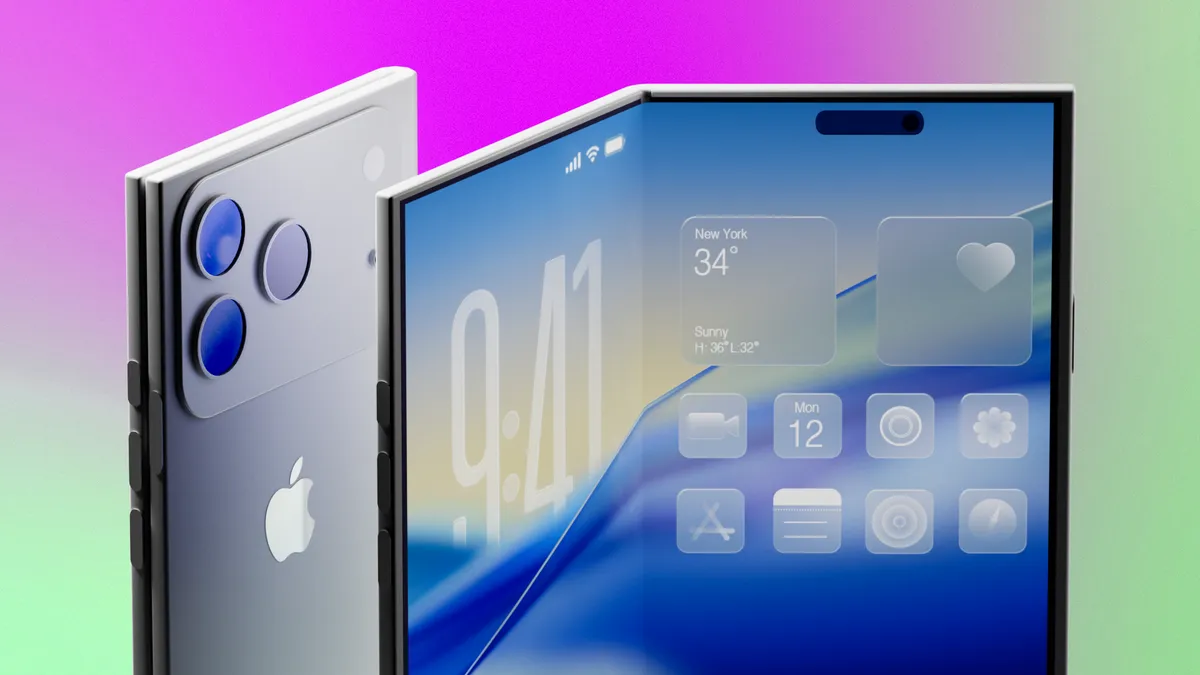
For years, rumors have swirled that Apple has been toiling away on a foldable iPhone, nicknamed the iPhone Fold. Over the last year, numerous leaks have suggested that it could actually be released in 2026. The latest rumor, from a leaker on Weibo, suggests that Apple’s first foldable will have a 5,500-mAh battery, which would make it the largest on any iPhone, surpassing the 5,088-mAh capacity on the iPhone 17 Pro Max.
But most of the curiosity has been around how Apple’s mystery foldable will look. Recently, an Apple fan made a 3D-printed mock-up for an Apple book-style foldable’s possible design, looking more like a Microsoft Surface Duo merged with an iPhone 17 Pro than the Galaxy Z Fold 7 or Pixel 10 Pro Fold. In other words, a vision of two separate iPhone screens linked together rather than a continuous, folding display.
That’s an interesting proposition considering rumors have spoken of Apple’s efforts to reduce the seam where a foldable screen bends. The one on the iPhone Fold is rumored to have little or no crease, according to a recent report by the Chinese publication UDN. Screen creases, especially on early foldable phones, have long annoyed some consumers and critics. And while the crease on more recent foldables looks a lot less deep, it’s still there. Samsung’s new Galaxy Z TriFold has two screen creases, one for each of its hinges. It would be a major breakthrough if Apple has indeed found a way to fold a screen in half without leaving a crease.
Advertisement
We’ve yet to hear any official word on a foldable iPhone from Apple.
Mock-ups of potential iPhone foldables, including a clamshell “iPhone Flip” on the left and book-style foldable on the right, along with a flat iPhone for comparison on the bottom.
Zain bin Awais/CNET
Foldable phones represent a tiny fraction of all phones sold globally. CNET found that 64% of people surveyed said they don’t want a foldable phone. But those numbers could change if Apple were to sell a foldable iPhone. Analysts at IDC forecast a 30% year-over-year growth if Apple were to launch a foldable iPhone in 2026.
Advertisement
Apple launched the iPhone 17 series along with the new super-thin iPhone Air in September. Given all the engineering it took to cram cameras and components into the top half of the Air, some have theorized that the device is a stepping stone to a foldable, which could take advantage of the Air’s internal design.
A lot of hope and expectation has been placed on Apple to release one, and if rumors are correct, we won’t have to wait much longer for the company to do so.
Watch this: iPhone Flip: What Apple’s Foldable Future Could Look Like
iPhone Fold history
Advertisement
Mock-ups of what the iPhone foldables could look like.
Zain bin Awais/CNET
Rumors suggest Apple is developing a book-style foldable like the Galaxy Z Fold 7. Years ago, in 2017, folks predicted that a foldable iPhone could launch in the then-near future of 2020 — which didn’t happen. Analysts and leakers have been kicking the release date down the road ever since, and rumors and wish lists have lingered as phone fans keep their hopes alive. Absent any confirmed details from Apple, here’s everything we know so far about the company’s future foray into foldables.
A new patent granted to Apple in July 2024, which was applied for years ago, shows how long the company has been working on a folding iPhone. Kuo’s report in early March said that an Apple foldable could launch at the end of 2026, with a 7.8-inch crease-free inner display and a 5.5-inch outer display.
Advertisement
Accordingly, Kuo believes the price would match that of other similar folding devices, at $2,000 to $2,500. Despite the high price tag, he says projected shipments are 3 to 5 million devices, which is a confident estimate given only 19.3 foldables were sold in 2024, market research firm IDC reported.
Although many reports have focused on the company’s struggles to eliminate the crease within the internal folding display, Apple’s patent indicates that the development has been ongoing for some time. Creases have plagued foldable phones since their introduction in 2020, and although the most recent Samsung Galaxy Z Fold 7 and Samsung Galaxy Z Flip 7 have reduced the crease, it is still visible and noticeable.
By mid-2024, market analysts at TrendForce estimated that display crease issues might push back an Apple foldable until 2027, according to 9to5Mac. Prior rumors said Apple may not launch its own flexible screen device until 2025, and Samsung hasn’t let phone fans forget it by releasing an app that will let Apple phone owners experience a Z Fold-esque experience by placing two iPhones side-by-side.
CNET’s Jeffrey Hazelwood created these custom renders of what an iPhone 18 Pro might look like.
Jeffrey Hazelwood/CNET
There’s no guarantee about which phones Apple will release during its usual September window, but the safest bet is on another series of flat phones, which we expect to be the iPhone 18 series. But what else could be coming alongside the usual lineup?
There could be an iPhone Air 2, though rumors conflict on whether to expect one next year or not. There’s been a lot more evidence for an iPhone Fold, though whether it comes out in 2026 or in later years is still uncertain. If the iPhone Fold does launch next year, more rumors have suggested a clamshell device has been prioritized and may come first — given reports of Apple researching a book-style foldable, we could get one of those as well.
Advertisement
In mid-January, MacRumors reportedly saw a research note from analyst Jeff Pu suggesting that the iPhone Fold will pack 12GB of memory — as will the entire iPhone 18 line. Apple never discloses how much RAM is included in its phones, but specs sites like GSMArena have reported that the standard iPhone 17 has 8GB of RAM, while the rest of the series (iPhone Air, 17 Pro and Pro Max) all have 12GB. If correct, that means Apple doesn’t think its foldable will need more memory than its standard flat phones — it’ll have more screen area, but potentially no better hardware than its iPhone 18 siblings.
It’s also interesting to see the standard iPhone 18 packing 12GB of memory, as the RAM shortage is predicted to hike prices on phones released in 2026. Apple may be willing to pay the price for a more capable basic model of iPhone 18, or perhaps it’ll pass those costs on to the consumer with a price hike.
iPhone Fold or iPhone Air 2?
Here is a mock-up that CNET designer Zooey Liao made showing what an iPhone Air 2 with dual-rear cameras might look like.
Advertisement
Zooey Liao/CNET
There’s the chance that we get an iPhone Fold next year, which rumors have said could launch in 2026 at the earliest, though it could also come out in 2027 or later. It should be noted that analysts and rumors had predicted a foldable iPhone release from as far back as 2022, so the rolling prospective launch windows don’t lend confidence that we’ll necessarily see the device come out next year. Given Samsung’s six-year head start on making foldables, Apple seems to be in no rush to get one out.
While the iPhone Air came out with the iPhone 17 handsets, there are conflicting rumors on whether we’ll see an iPhone Air 2 in 2026. A recent report from The Information says that Apple is delaying the release of the next version of the iPhone, citing people familiar with the matter. This follows rumors that disappointing iPhone Air sales after launch led Apple to dial back production, though even that claim was denounced by TD Cowen, according to a note from the investment research firm that was seen by AppleInsider that asserted the company would continue producing the thin phone. The Information’s story was amended to say that the delay could be caused by engineers who are re-considering the Air’s design so that it could support a second rear camera.
All of which casts doubt on whether we’ll get an iPhone Air 2 next year, but there’s not enough evidence yet to roundly dismiss the possibility.
iPhone Fold specs
Advertisement
A mock-up of a possible book-style foldable iPhone design.
Zain bin Awais
There are no confirmed specs for the iPhone Fold, because Apple hasn’t even confirmed one exists or is coming out. Given we don’t have a year of expected release, we can’t much predict what kind of internal specs the iPhone Fold will have — presumably, Apple will want its most powerful A-series chip to run it, along with enough RAM to handle two or three displays (depending on whether it folds inward or outward and needs a dedicated outer screen).
We do have some predictions for other specs, though only for the book-style Fold (not the clamshell). In March, analyst Kuo predicted the larger Fold could have a 5.5-inch outer screen and 7.8-inch inner display. When folded up, it will be 9-9.5mm thick and 4.5-4.8mm when unfolded. A front-facing camera will be available whether the phone is folded or unfolded, while it will also have two rear cameras.
Kuo predicted that the device will use the same high-density battery cells as used in what he referred to then as the “ultra-thin iPhone 17” which is presumably the iPhone Air. But that trim thickness means the foldable may forgo Face ID, so the device may use Touch ID in a side button.
Advertisement
Some rumors about hardware have emerged. In January, an analyst note seen by MacRumors suggests Apple’s foldable could launch with 12GB of RAM, the same amount in the Galaxy Z Fold 7‘s starting configuration. That could mean Apple doesn’t need a lot of memory to handle multiple screens or that it isn’t banking on big AI features that can take up a lot of RAM.
We finally have a prediction on the iPhone Fold’s battery, with Weibo leaker Fixed Focus Digital posting that it will have a 5,500-mAh capacity, as 9to5Mac first reported. That’s substantially larger than batteries on some other foldables — for example, the Galaxy Z Fold 7 has a 4,400-mAh capacity — but Samsung has been in the foldable game for so many years that it’s bound to have increased efficiency, likely in an effort to slim down the thickness of its devices. Yet if the Weibo leak is true, this will be the largest battery ever on an Apple handset. The iPhone 17 Pro Max has a 5,088-mAh battery.
iPhone Fold release date
Two cross-sectional illustrations of potential displays that fold around a recess where a hinge would go, in Apple’s patent (No. 12,041,738).
Advertisement
USPTO
Apple has neither confirmed the iPhone Fold nor announced a proper release date. Analysts and rumors have predicted that the foldable could come out in 2026 or be pushed until next year.
As for timing, since the iPhone Air was released alongside the iPhone 17 models, the Fold could come alongside the iPhone 18 series. But since Apple released the iPhone 16E early this year, far before the September window for its main iPhone release, the company could do the same with the iPhone 17E in 2026. Apple could even delay the launch of the standard iPhone 18 to the spring of 2027 to make room for the iPhone Fold in Apple’s Sept. 2026 launch, according to an ET News report. Given that Samsung offsets its standard and foldable phone releases at Unpacked events months apart from each other, Apple could do the same.
What Apple’s new patent says about the iPhone Flip
Here is a mock-up of a Galaxy Z Flip running iOS to gives us some idea of what an iPhone FLip could possibly look like.
Advertisement
Justin Reynoso/CNET
After years of rumors that Apple was working on foldable phones, a patent was finally granted to the company, confirming that it has been working toward a folding iPhone. The 22-page patent (PDF), simply titled “Electronic Devices With Durable Folding Displays,” was filed in November 2021 and granted on July 16, 2024.
Sadly for folding iPhone hopefuls, the patent doesn’t offer much illumination of what an iPhone Flip might look like. Most of the pages show figures depicting cross-sections of potential displays that fold about a hinge but not the device they’re folding around.
There are some tidbits deeper into the text of the patent that hint at potential design choices Apple might make, like a hinge that holds the display flat when unfolded but which would let the display “slightly fold about the bend axis when the electronic device is jolted during the drop event” — in other words, if dropped, the device would fold inward slightly so that it lands on its edges to protect the inner display.
It’s important to note that all evidence shows Apple working on a foldable iPhone, but the patent broadly applies to folding displays in general — to wit, some figure schematics describe a device that “may be a cellular telephone, tablet computer, laptop computer, wristwatch device or other wearable device, a television, a stand-alone computer display or other monitor” or screens as far-ranging as on vehicles, in kiosks, in media players or other electronic equipment.
Advertisement
The rest of the patent describes what an Apple device with a folding display may have and categorically lists things like batteries and wireless charging, Bluetooth and Wi-Fi connectivity, LED or LCD displays, microphones and capacitive sensors, haptics and so on. There’s explicit mention of a display folding 180 degrees, or fully flat, which follows most other foldables — presumably, Apple isn’t going to leapfrog the competition in following Samsung’s concept displays we saw at CES that unfold nearly 360 degrees.
Two foldable iPhone Flips?
Foldable iPhone hopefuls will at least be encouraged that Apple seemingly continues to tinker with an iPhone Flip design. The company is said to be working on two sizes of folding iPhones: a book-style and a clamshell-style, according to an older report by The Information, although this may be contradicted by a newer report by the same site suggesting Apple had settled on the latter for a smaller device. This aligns with prior rumors hinting the iPhone Flip will be in the clamshell format similar to the Samsung Galaxy Z Flip series or Motorola Razr Ultra.
It sounds like Apple’s been struggling to meet its high expectations: The company’s design team wants the iPhone Flip to be half as thin as current iPhone models and to have displays on the outside that are visible when the device is folded shut, according to the report.
Development on the iPhone Flip was halted around 2020, the older report noted, in order to focus on a new project, a folding iPad. This device would have an 8-inch display, around the size of the iPad Mini. The foldable tablet supposedly had less strict durability and thickness requirements, as it wouldn’t need to fit in pockets like an iPhone Flip. Apple was still working on ways to reduce the crease in the middle of the folding display and get the iPad to lie fully flat.
Advertisement
Release date: The iPhone Flip could launch in 2027
The logo for Apple’s fall 2025 event invitation is interactive: a heat signature stays where you touch or click and hold.
Screenshot by Jeff Carlson/CNET
The latest indications of an iPhone Flip release date came back in June, when analyst Kuo suggested production could kick off in 2026 with phones coming out that year. This follows Kuo’s earlier prediction in March that the company could release a crease-free foldable by the end of 2026. Furthermore, this would likely be a book-style foldable with a 7.8-inch internal display and 5.5-inch external screen, which is counter to other predictions anticipating a clamshell-style foldable.
It’s possible that these timeline predictions apply to one or the other or, due to the vague nature of rumors, even both — that is, Apple could be working on both a book-style and clamshell style foldable, though it’s less clear if release date expectations would be interchangeable or if Apple would stagger their release.
Advertisement
It’s been an open secret for years that Apple is working toward a foldable iPhone. The company has beenregisteringpatents for foldable technologies for almost a decade, and while there’s no guarantee that one will come out even after all that research (remember AirPower?), there’s still been buzz and possible release dates floated for years — though still not one solid enough to get excited about.
Early rumors pointed as far back as 2021 as a potential target date, but the year passed with no foldable iPhone in sight. A March 2021 report from longtime analyst Kuo (via MacRumors) suggested 2023 might be more realistic (though that year has come and gone). According to Kuo, Apple still needs to figure out technology and mass production issues before bringing a device like this to market, hence the wait. Speculation later in 2021 from Bloomberg’s Mark Gurman aligned with Kuo’s predictions: In his Power On Newsletter, Gurman said that the foldable iPhone may not arrive for another two to three years.
Since then, new rumors have pointed to an even later release. Reliable display analyst Ross Young said in February 2024 that the foldable iPhone had been pushed back to 2025, and Kuo reaffirmed his predicted release window in a tweet in April 2022.
“Apple may launch its first foldable product in 2025 at the earliest, which may be a foldable iPad or a hybrid of iPad and iPhone,” Kuo wrote in the tweet.
Advertisement
Another rumor, first noticed by MacRumors in February of 2024 by Weibo-based blogger Fixed Focus Digital, suggested that the foldable iPhone project is delayed for the foreseeable future. The problem? Apple, which is rumored to be using Samsung folding panels for its iPhone Flip’s display, was dissatisfied with the screens’ performance after they broke down a few days into testing.
That’s echoed by the most recent estimate by TrendForce market analysts, reported in 9to5Mac, which predicted that an Apple foldable might not be released until 2027 at the earliest. Why? Apple’s strict requirements for reliability and the phone display’s crease. But Kuo’s more recent March 2025 predictions explicitly noted a crease-free foldable display, suggesting Apple might have moved past this roadblock — if all these rumors are to be believed, of course.
Watch this: Foldable Phones May Be the Future. In South Korea, They’re the Present
Design: What will the foldable iPhone look like?
This illustration, according to Apple’s patent filing, shows a “device that bends along a flexible portion such as a flexible seam associated with a hinge.”
Apple/US Patent and Trademark Office
A 2021 report from Bloomberg indicated Apple already had a working prototype of a foldable iPhone display. While it wasn’t a working model, it was a step up from a patent — which, until then, was all we had seen.
Apple seems to have taken out every patent under the sun when it comes to foldable displays, including an origami-style folding display, a flip-up display and even a wraparound display. We don’t know which one will make the final cut, but both Kuo and Bloomberg seem to agree that the current prototype is more of a traditional fold-out design.
Advertisement
Unlike Microsoft’s Surface Duo, which has hinges on the exterior, Apple’s would have one continuous display with a hidden hinge mechanism like the Galaxy Fold.
YouTuber ConceptsiPhone also gave us a glimpse into what the iPhone Flip could look with concept art of the foldable iPhone in the colors blue, red, gold and green.
In March 2025, analyst Kuo had some very specific but non-clamshell predictions: that Apple would release a book-style foldable with a 5.5-inch outer screen that unfolded to have a 7.8-inch internal screen, and be 4.5-4.8mm when unfolded but 9-9.5mm thick. It would have the same high-density battery cells as the “ultra-thin iPhone 17” and a hinge with stainless steel and titanium alloy (a favorite material of Apple’s iPhone 16 Pro and Pro Max as well as the Apple Watch Ultra 2).
Advertisement
Per Kuo’s predictions, the foldable will have two rear cameras and a front-facing camera on both the external and internal displays. Most interestingly, Kuo also expects that Apple’s book-style foldable will see the return of Touch ID as a side button, as Face ID might be left out due to space constraints — presumably for the array of depth-of-field sensors and cameras needed for the tech.
Roadblocks: What still stands in Apple’s way?
CNET’s Vanessa Hand Orellana is testing the flexibility of a Corning glass display.
CNET
Samsung and others have been testing the waters, but Apple has been learning from the pain points of their foldable devices and figuring out how they’d be used.
Advertisement
One of these pain points is the crease. A lot of the current cover materials, including the glass and plastic mix that Samsung uses for the Z Fold and Z Flip, show a visible crease when folded out to full screen. To avoid it, Apple would likely have to wait for Corning, Apple’s glass provider, to create some kind of bendable version of its Ceramic Shield screen. The company is already working on a bendable glass but hasn’t announced a launch date for it.
Price is another major problem for these types of devices. Although Samsung still has the most affordable folding phone with the clamshell Motorola Razr at $700, most others in the category are book-style foldables like the Galaxy Z Fold 7 and the Pixel 9 Pro Fold, which are around twice the price of most flagship phones. We wouldn’t expect a foldable iPhone to be cheaper than its rivals. Apple’s foldable needs to be in line with current foldable and nonfoldable models to be able to compete against other brands and entice iPhone users to ditch their single-screen devices and pay more for a foldable.
Analyst Kuo predicted that a book-style iPhone foldable coming in 2026 could be priced anywhere from $2,000 to $2,500 as it’s “expected to generate strong replacement demand-despite the premium price-provided quality meets expectations.”
Advertisement
A report last year found that half of American consumers are interested in buying a foldable phone, though Apple customers are slightly less willing to make the leap than Samsung or LG users. Perhaps the “Apple effect” will change those stats if and when a foldable iPhone ever becomes a reality.
Last election season, you might recall how the Trump campaign lied to everyone repeatedly about how his second administration would “rein in big tech,” and be a natural extension of the Lina Khan antitrust movement. As we noted at the time, that was always an obvious fake populist lie, but it was propped up anyway by a lazy press and a long line of useful idiots (including some purported “antitrust experts“.)
Trump’s latest betrayal to the the MAGA antitrust movement (that never really existed outside the skulls of rubes) is his DOJ’s surprise blindsiding of states by striking a pathetic settlement with Ticketmaster that doesn’t really fix the actual problem: monopoly.
The Biden DOJ and most US states sued Live Nation and its Ticketmaster subsidiary back in 2024, alleging that Live Nation has a monopoly on “the delivery of nearly all live music in America today.”
Advertisement
But while a new Trump settlement with the company requires $280 million in civil penalties and a 15% cap on service fees for people who want to use their amphitheaters, it backs off any attempt to pursue a break up of Live Nation and Ticketmaster, the one move that would actually (more permanently) help protect consumers, artists, and the live music market from predatory behavior.
“The case went to trial, and testimony began last week in US District Court for the Southern District of New York. But the US and Live Nation informed the court of a proposed settlement on March 8, taking state attorneys general by surprise. The judge presiding over the case reportedly said in court today that the way the settlement was announced “is absolutely unacceptable.
States reserving the right to continue litigation filed a motion for mistrial, saying they need time to prepare for a new trial and evaluate the terms of the settlement between the US and Live Nation. The “sudden disappearance” of the US from the case will likely give the jury the incorrect impression that Live Nation’s “antitrust violations have been cured or resolved, or that Proceeding Plaintiff States’ claims lack merit,” the states said.”
Advertisement
This was always going to be the outcome. There were constant signs. Trump is an autocrat, fascist, and opportunist who believes in nothing beyond his own pursuit of power and wealth. The corruption and autocracy was always going to dominate any serious Republican interest in antitrust (which, let’s be honest, even among Gail Slater types was historically inconsistent at best).
The U.S. press also played a giant role here. They spent years propping up Trump’s false claims he “wanted to rein in big tech,” when what the authoritarians really wanted was to abuse government power to scare (quite successfully as it turned out) tech companies away from doing even the most basic content moderation of right wing race-baiting propaganda online.
Now, unsurprisingly, here we are, staring down the barrel of democracy demolishing authoritarianism, with unchecked corporate power in full alignment with the effort.
Happy Pi Day! March 14 is the date that otherwise rational people celebrate this irrational number, because 3/14 contains the first three digits of pi. And hey, pi deserves a day. By definition, it’s the ratio of the circumference and diameter of a circle, but it shows up in all kinds of places that seem to have nothing to do with circles, from music to quantum mechanics.
Pi is an infinitely long decimal number that never repeats. How do we know? Well, humans have calculated it to 314 trillion decimal places and didn’t reach the end. At that point, I’m inclined to accept it. I mean, NASA uses only the first 15 decimal places for navigating spacecraft, and that’s more than enough for earthly applications.
The coolest thing, for me, is that there are many ways to approximate that value, which I’ve written about in the past. For instance, you can do it by oscillating a mass on a spring. But maybe the craziest method of all was proven in 1777 by George Louis Leclerc, Comte de Buffon.
Decades earlier, Buffon had posed this as a probability question in geometry: Imagine you have a floor with parallel lines separated by a distance d. Onto this floor, you drop a bunch of needles with length L. What is the probability that a needle will cross one of the parallel lines?
Advertisement
A picture will help you understand what’s happening. Let’s say I drop just two needles on the floor (feel free to replace the needles with something safer, like toothpicks). Also, just to make things easier later, we can say that the needle length and line spacing are equal (d = L).
You can see that one of the needles crosses a line and the other doesn’t. OK, but what are the chances? This is not the most trivial problem, but let’s think about just one dropped needle. We only care about two values—the distance (x) from the farther end of the needle to a line, and the angle of the needle (θ) with respect to a perpendicular (see the diagram below). If x is less than half the spacing between lines, we get a needle-crossing. As you can see, you’d get a higher probability with a smaller x or a smaller θ.
Apple’s 2026 may have gotten off to a new-product-filled start, but it’s far from done. There are plenty more iPhone and other announcements to come before the year’s end.
There’s still a lot to come from Apple in 2026
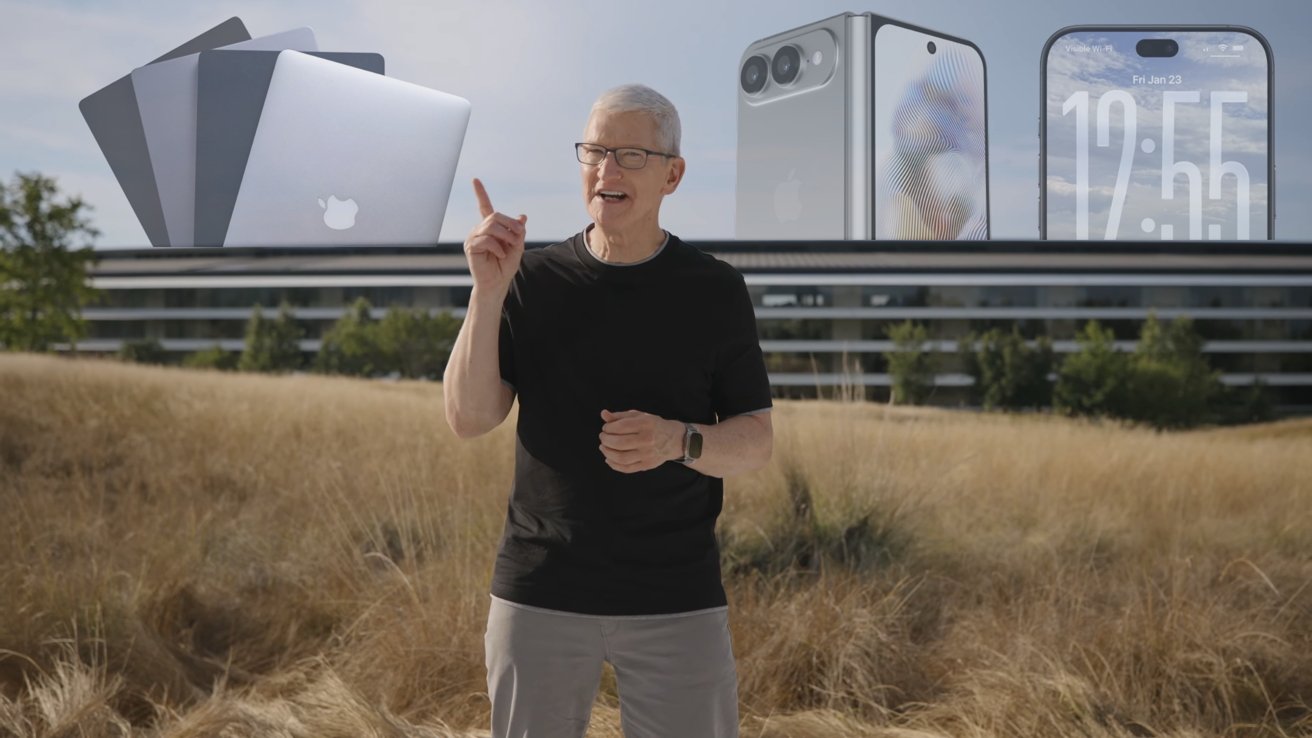
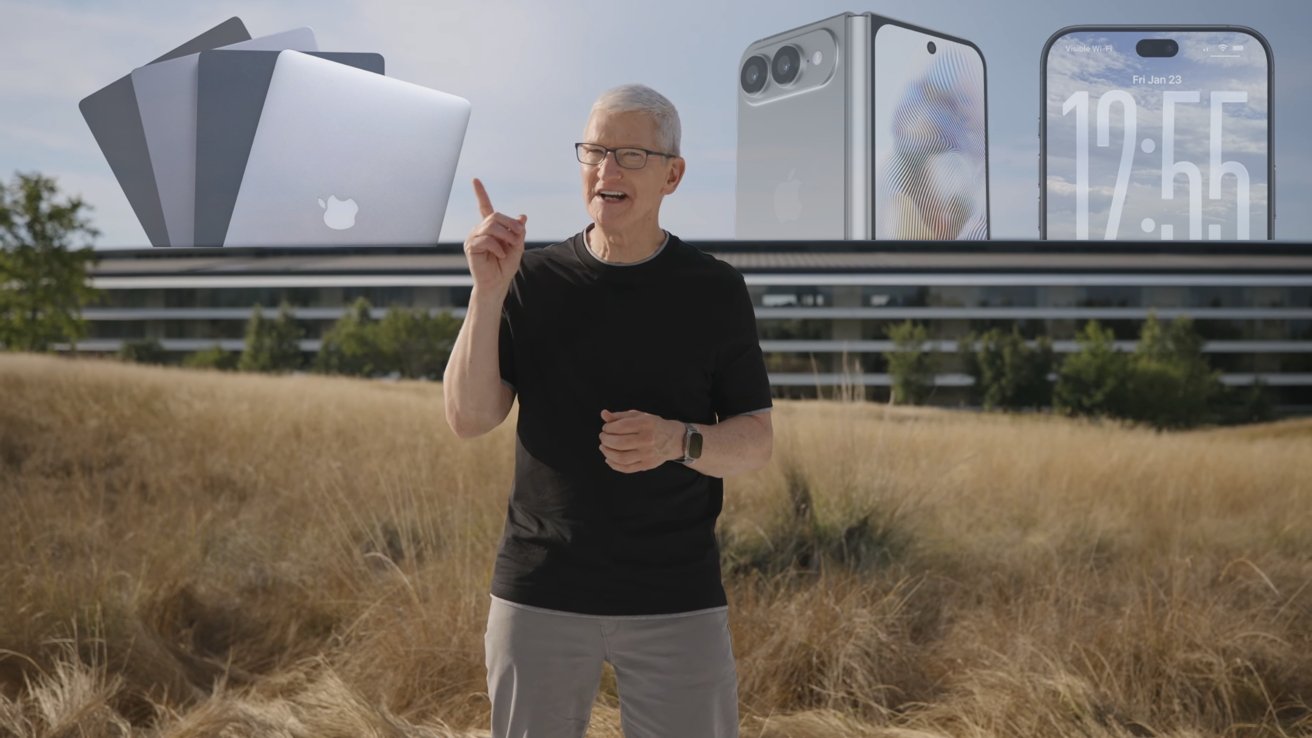
Between the launch of the M5 MacBook Air, MacBook Neo, iPhone 17e, and M5 Pro/Max MacBook Pros, Apple has made a solid start to the year. But with the annual WWDC event still to come, not to mention likely hardware announcements this fall, there is still plenty to look forward to. Apple is still expected to unveil a raft of software and hardware in the coming months, including some all-new products. Rumors of the company’s first-ever foldable iPhone continue to gather pace, and that’s just the beginning. Continue Reading on AppleInsider | Discuss on our Forums
Baidu, ByteDance, Tencent and MiniMax have all released OpenClaw-powered apps in recent weeks.
Alibaba is the latest Chinese tech giant to launch an OpenClaw-powered app, as state officials in the country move to curb usage of such apps amid growing cybersecurity concerns.
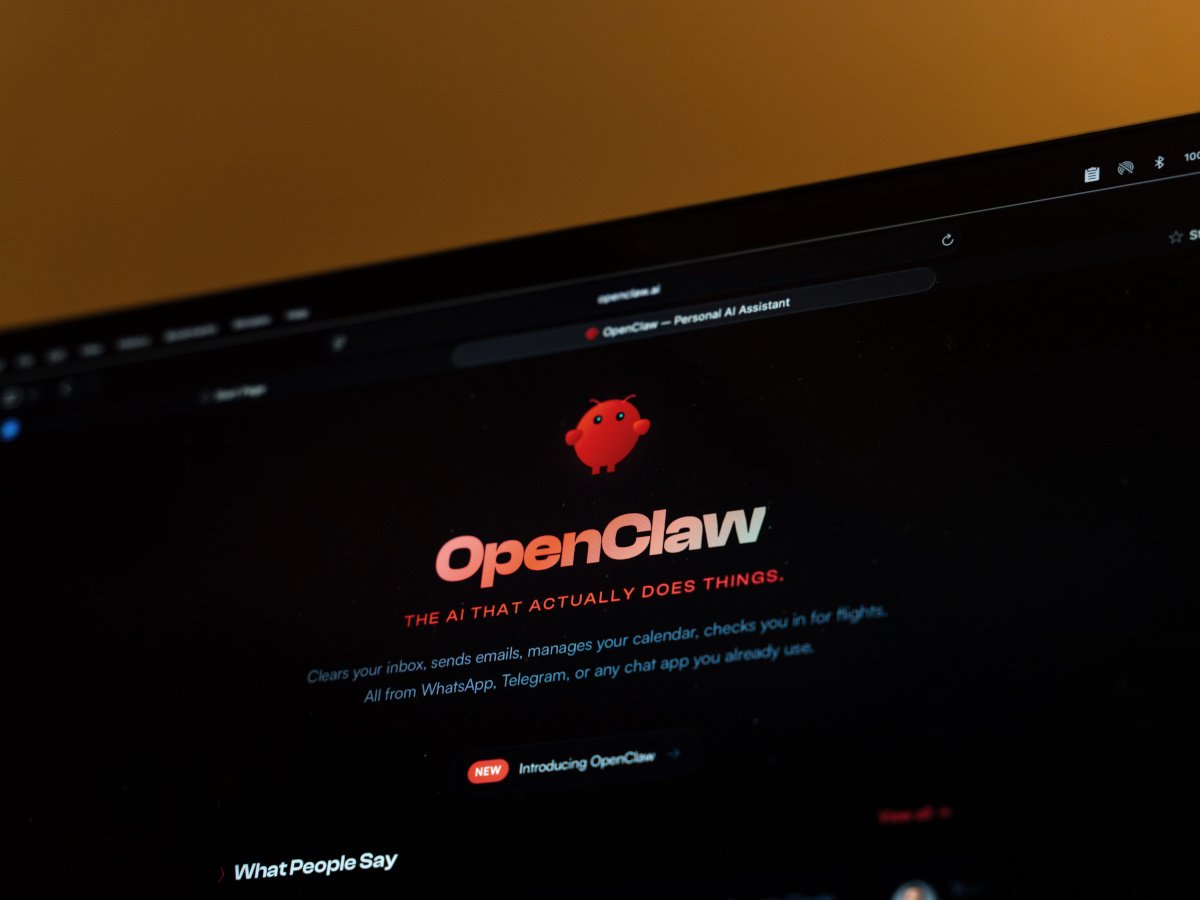
Since launching last November, OpenClaw has found itself a large and growing fanbase worldwide. The open-source AI model is easy to use, with simple use cases such as running communication apps, clearing inboxes, sending emails and managing calendars.
Latest figures show that the project has crossed more than 300,000 GitHub stars, becoming the most starred non-aggregator software project ever on the platform in just four months.
Advertisement
The low barrier to entry to use OpenClaw has made it a darling in China, pushing people to experiment with agentic AI. Dubbed ‘raising lobsters’, the agentic AI frenzy is pushing businesses in the country to launch new products built using OpenClaw.
Alibaba has just debuted ‘JVS Claw’, a mobile app that helps Android and iOS users without coding knowledge to install and deploy OpenClaw in minutes. The company’s enterprise mobile office platform is also integrated with the open-source project.
Earlier this week, Baidu released its own workspace management plug-in tool with OpenClaw called ‘DuClaw’. Last month, the company launched a program to allow developers to deploy OpenClaw on Baidu’s AI cloud infrastructure.
Meanwhile, Tencent launched ‘WorkBuddy’, an AI agent for workplace tasks powered with OpenClaw, and MiniMax, Zhipu and ByteDance each launched their own integrated products.
Advertisement
China has a market hungry for agentic AI, especially as enterprises lead its uptake and consumers experiment with the technology. US AI giants such as Anthropic, with its Cowork offering, and OpenAI don’t provide their services commercially in China, leaving even more space for Chinese companies attempting to take advantage of the interest.
The strong agentic AI uptake has moved authorities in Beijing to restrict state-run enterprises and government agencies from running OpenClaw apps on office computers, fearing potential cybersecurity risks.
However, the fears are not widespread, with some municipalities offering subsidies for deploying the AI platform, according to Bloomberg.
Meanwhile, Meta has bought Moltbook, a Reddit-style social media network created with OpenClaw where only AI agents can post, and humans can observe. The platform went viral after observers watched as AI agents generated a new religion.
Don’t miss out on the knowledge you need to succeed. Sign up for the Daily Brief, Silicon Republic’s digest of need-to-know sci-tech news.
It’s been a little while since we last wrote about California’s deeply problematic “Age Appropriate Design Code,” which tried to force internet companies into taking blatantly unconstitutional steps to pressure companies into magically preventing all “harms” to kids. The law has bounced between the district court and the Ninth Circuit multiple times — and yesterday, once again, most of the law was deemed effectively unconstitutional and tossed out. The ruling is procedurally messy in annoying ways, but most of that we can blame on the Supreme Court. But we’ll get to that.
The bill, in somewhat troubling fashion, was drafted and heavily pushed for by a British Baronness/Hollywood director who made a documentary about kids and smartphones and got so freaked out by her own documentary, that she decided that she would single-handedly destroy the open internet for children, First Amendment be damned. Trade association NetChoice challenged the law (as it has challenged many state laws) and has been mostly successful.
As I explained to a court myself, the law was both impossible to comply with and a clear attack on free expression. The court agreed and threw out the law as unconstitutional. It went to the Ninth Circuit which mostly agreed that the law was unconstitutional. Unfortunately, right before the Ninth Circuit ruled, the Supreme Court’s Moody decision made a mess of things. While that ruling effectively killed unconstitutional bills in Florida and Texas that sought to regulate social media, the ruling went deep into the silly weeds, arguing that challenging an entire law as unconstitutional on its face (a “facial challenge”) required a nearly impossible set of standards to meet, preferring parties challenge the law “as applied” (i.e., once it actually violating people’s rights directly).
Because of that, part of the law was sent back to the lower court, where it was again deemed unconstitutional and blocked by injunction. And then that ruling was appealed again, leading to this Ninth Circuit ruling, which lifts part of the injunction, sending the case back down to the lower court yet again. But it effectively wipes out large parts of the Age Appropriate Design Code as clearly unconstitutional. Basically, all the parts in the law that actually do things are dead, because they pretty clearly regulate speech in violation of the First Amendment. The case — and what remains of the law — lives on as a procedural zombie, still technically breathing but stripped of its real teeth.
Advertisement
It’s a good ruling, though made slightly annoying by the procedural situation created by the Supreme Court’s Moody ruling.
Digging in: the court struck down most of the scary problematic provisions of the law, rightly noting that they violated the First Amendment on vagueness grounds. First up, there were provisions that tried to limit how websites could handle a child’s personal information, but this was a smokescreen. While it was dressed up to look like a “privacy” bill, the law really sought to impact what content kids could read, saying you couldn’t use data in a way that harmed the “well-being” of a child, and that the use had to be in the “best interests” of the child. There was also a provision regarding whether or not the data was used in way that was “materially detrimental” to the child. These are all super vague terms that were clearly really meant to be “don’t show kids content that might make them sad.”
The court said this is a problem:
NetChoice persuasively argues that the risk of subjective enforcement is particularly high because, as it contemplates “material detriment” to “a child,” the provision must be assessed as to any single child whose personal information is accessed by a covered online practice.
California argued there was no problem with requiring sites to create systems in the “best interests” of children, but the court rightly notes that you can’t just create general rules that accomplish that:
Advertisement
When evaluating the “best interests of the child” in family law proceedings, California courts recognize that “bright line rules in this area are inappropriate” and that “each case must be evaluated on its own unique facts.” In re Marriage of LaMusga, 88 P.3d 81, 91 (Cal. 2004) (citation modified). The standard operates through a specific child’s circumstances and factual record. See id. The data use restrictions ask something categorically different: covered businesses must determine prospectively whether a given practice is in “the best interests of” not any one child but “children”—a class of users that includes every child anywhere who can access a covered online practice. Cal. Civ. Code § 1798.99.31(b)(1)–(4) (emphasis added). Then covered businesses must tailor their practice accordingly. Applied at that scale, without the individualized, highly specific factual record giving the standard meaning in contexts such as a family law case, “best interests of children” cannot provide “sufficient notice of what is proscribed,”
Then there’s the issue of “dark patterns,” which is one of my least favorite terms that has become popular over the last few years. In practice it’s become a catch-all for ‘anything on any website that makes people do things I don’t like,’ and it’s not remotely well-defined. And that’s a problem when you have to get past the “vagueness” bar to be acceptable under the First Amendment:
As with the data use restrictions, the State’s plain-meaning argument is unconvincing where the range of harms that could plausibly qualify as “materially detrimental” is vast, spanning everything from financial exploitation to sleep loss, distraction, or hurt feelings. The fact that “dark pattern” is a defined term in the CAADCA does not help a covered business distinguish between these harms. And the prohibition’s use of the singular “child,” like in the data use restrictions, suggests that it is actionable based on a single child’s response to an online interface, meaning that a business designing a product accessed by millions of child users could face liability whenever any one of them experiences a harm that a regulator deems “material.”
So that’s gone too.
The court also highlights how the state does a lot of fear-mongering on edge cases that would clearly and somewhat obviously lead to mass censorship to avoid potential liability:
The State cites examples like “using a child’s information to connect them to a person that seeks to abuse the child, such as through sexploitation,” or “[u]sing a child’s information to recommend illegal products such as tobacco, alcohol, or gambling[.]” But these are extreme examples at the margins of what might be materially detrimental to a child’s well-being. The more difficult questions arise with examples like sleep loss, distraction, or hurt feelings. As the district court reasoned, and NetChoice argues on appeal, the CAADCA does not provide any guidance as to the breadth of conduct that “material[] detriment[] to the physical health, mental health, or wellbeing of a child” may reach.
This is what happens when headline-chasing regulators write laws based on moral panics and feel-good concepts like ‘well-being of children,’ assuming that either websites will nerd harder and somehow make it work, or the courts will sort it out on the back end.
Advertisement
But that’s not how the First Amendment works. There’s a reason why there’s a vagueness doctrine that is used to throw out laws that try to tapdance around it this way.
That said, not all of the ruling goes NetChoice’s way. Indeed, early on, the ruling gives a bit of a benchslap to NetChoice for continuing to challenge this law “facially” without meeting the near impossible standard setup by the Supreme Court in Moody:
NetChoice has been a party to many such cases—several before our court and the Supreme Court—and is presumably aware of the expectations for a facial challenge. At the risk of repetition, we offer similar guidance to NetChoice today.
The Moody ruling basically said that if you’re doing a facial challenge, you need to detail every possible application of the law and then show that a “substantial majority” are unconstitutional. That’s effectively impossible, especially since the law is written so broadly as to encompass things that go beyond just speech. That means, because the law also applies to commerce and other things, the facial challenge parts fail:
First, the State persuasively argues that whether “it is reasonable to expect” that a business’s “online service, product, or feature would be accessed by children,” … “says nothing about the nature of the business providing that service, product, or feature.” Indeed, as the State proffers, children “are capable of using ride sharing service[s] like Lyft or Waymo, electronic ticketing services such as StubHub or Ticketmaster, financial transaction services such as Paypal or Venmo, fitness products such as NFL Play 60 or Peloton, health-related services such as iHealth, or education-related products such as Wolfram Mathematica.” The CAADCA’s substantive requirements would “appl[y] evenhandedly” to any of these businesses if they are likely to be accessed by children, regardless of the content available through their online service.
This seems silly, but it’s what the Supreme Court now requires. Send your complaints to them, not the Ninth Circuit. The court effectively admits that the Supreme Court set an impossible standard in Moody:
Advertisement
To be sure, as we observed in NetChoice SB 976, “[d]oing so would entail the ‘daunting, if not impossible’ task of canvassing how the Act applies to an ‘ever-growing number of apps, services, functionalities, and methods for communication and connection.’” Id. at 1021 (first quoting Moody, 603 U.S. at 745 (Barrett, J., concurring); and then quoting Moody, 603 U.S at 725 (majority opinion)). We recognized that “such a showing” might be “unrealistic.” Id. But we nevertheless stated then, and maintain now, that “[i]t is a mystery how NetChoice could expect to prevail on a facial challenge without candidly disclosing the platforms that it thinks the challenged laws reach” and whether the coverage definition unduly burdens those platforms’ expression.
There is, also, a separate question of how a facial challenge to a law like this could even be possible with the sort of page limits courts require.
What this means, in practice, is that for states to survive a facial challenge, just make laws as crazily broad as possible, meaning it would be impossible to catalog all the many, many ways it might be enforced. That seems really bad. But, thanks to this Supreme Court, it’s what we’ve got.
The court does send the “age estimation” part back to the lower court, mostly because they say the record isn’t well enough developed (meaning we get to go through all of this yet again). There is some troubling language regarding last year’s ruling in FSC v. Paxton regarding age verification. As you’ll recall, the very prude conservative wing of the Supreme Court effectively overturned a couple decades worth of precedent to say “age verification online is fine for porn because porn is not protected by the First Amendment when kids see it.”
Many people insisted that this ruling was okay because it was limited to adult content, but so far we’ve seen state after state — and a few courts — suggest that it’s now “open season” on age verification laws. The language that shows up here is at least worrisome that the Ninth Circuit is open to a broad reading of the Supreme Court’s ruling:
Advertisement
NetChoice’s reading of Free Speech Coalition v. Paxton, 606 U.S. 461 (2025), also does not persuade. Free Speech Coalition considered a statute that required covered entities to make adult website visitors submit to an age verification system using either “government-issued identification” or “a commercially reasonable method that relies on public or private transactional data.” Id. at 467 (quoting Tex. Civ. Prac. & Rem. Code § 129B.003(b)(2)). The Supreme Court observed only that, with respect to that system, there is an “incidental burden that age verification necessarily has on an adult’s First Amendment right to access speech that is obscene only to minors.” Id. at 495. The Court said nothing about the effect of age estimation on First Amendment burdens generally, especially where age estimation is not required as a precondition to access content. To the contrary, the Court observed that “adults have no First Amendment right to avoid age verification, and the [challenged law] can readily be understood as an effort to restrict minors’ access.”
To the extent NetChoice argues that the age estimation requirement “require[s] consideration of content or proxies for content,” see NetChoice I, 113 F.4th at 1118, the age estimation requirement may impliedly regulate speech—but we cannot confidently draw that conclusion on this record, either.
More and more for the courts to argue about, I guess.
There’s also another bit of the lawsuit that has been revived, regarding “severability,” specifically regarding whether or not you can keep some parts of the law even as the bigger parts are struck down as unconstitutional. It’s another bit for them to argue about in more detail at the lower court, but not really the main point of all of this. The specifics here are that the law has a “notice-and-cure” provision if the Attorney General found a website to be violating the law. So there’s a question of whether or not that specific provision can be left alive, though I’m unsure what good it does if the rest of the law is found to be unconstitutional. But also, as the appeals court notes, this is basically all just on an underdeveloped record, so they’re sending it back to the lower court for more.
Either way, the key elements of California’s AADC have now been struck down as unconstitutional at the Ninth Circuit — for the second time — after two prior rejections at the district court level. The data use provisions and the dark patterns nonsense are gone on vagueness grounds. In some ways, that’s actually a stronger outcome than if the initial facial challenge had succeeded: there’s now clear appellate language explaining why this kind of vague “well-being” language can’t survive First Amendment scrutiny. California could theoretically go back and try to define things more narrowly, but chances are they’d find themselves right back at the First Amendment wall, because their ultimate goal has always been censorship dressed up as child safety.
Advertisement
The annoying part is the procedural mess the Supreme Court’s Moody decision created. We’re heading into round three at the district court, burning more time and resources on a law that should have been dead on arrival. This is exactly what we warned Governor Gavin Newsom and Attorney General Rob Bonta would happen when they first backed this law. They got the political headlines. Everyone else got years of litigation. And the law they championed is now a procedural zombie — technically still breathing, but stripped of everything that made it dangerous in the first place.
Even better, because it’s integrated, you can customize when the Privacy Display turns on through the software. Mine activates automatically with select messaging apps, banking apps, and for notifications, and there’s no visual indication when looking at the phone straight on that the Privacy Display is enabled or not (unless you tilt the screen slightly).
You can still see the screen from the sides with Privacy Display enabled, it’s just much dimmer and harder to make out the content. For maximum effect, you can turn on Max Privacy Protection via the quick settings menu, which makes it near impossible to read the screen from the sides. You don’t want to use that mode all the time because the screen looks washed out, but it’s good for when you want to be extra private. Oddly, Samsung doesn’t let you configure this extra layer to automatically turn on with specific apps—it’s a manual toggle every time.
I’ve seen some complaints online about the Privacy Display affecting the screen quality, but I have to disagree. Then again, the first thing I did when setting up the phone was max out the screen resolution to Quad HD+ and also set the colors to Vivid. I haven’t seen any fuzzy text, and brightness hasn’t been a problem for me either.
Advertisement
Yes, you can buy a cheap privacy screen protector and add it to any phone, but sometimes you do want the person next to you—be it a friend or family member—to be able to read the screen alongside you. Or maybe the phone is on a table, and you want to lazily scroll TikTok while trying to keep an eye on work. That’s where a standard privacy screen protector won’t help, as it blocks you from seeing your own screen, but Samsung’s solution gets around that. Now, I wish every smartphone had a privacy screen.
You don’t need to be doing anything illicit or extremely sensitive to justify having this feature. Maybe you want your conversation with a loved one to be private. Maybe you’re authenticating a login and don’t want anyone else to see the code. Or you’re opening your banking app, and don’t want anyone snooping at your checking account. It’s just nice to have privacy.
The Phone
Photograph: Julian Chokkattu
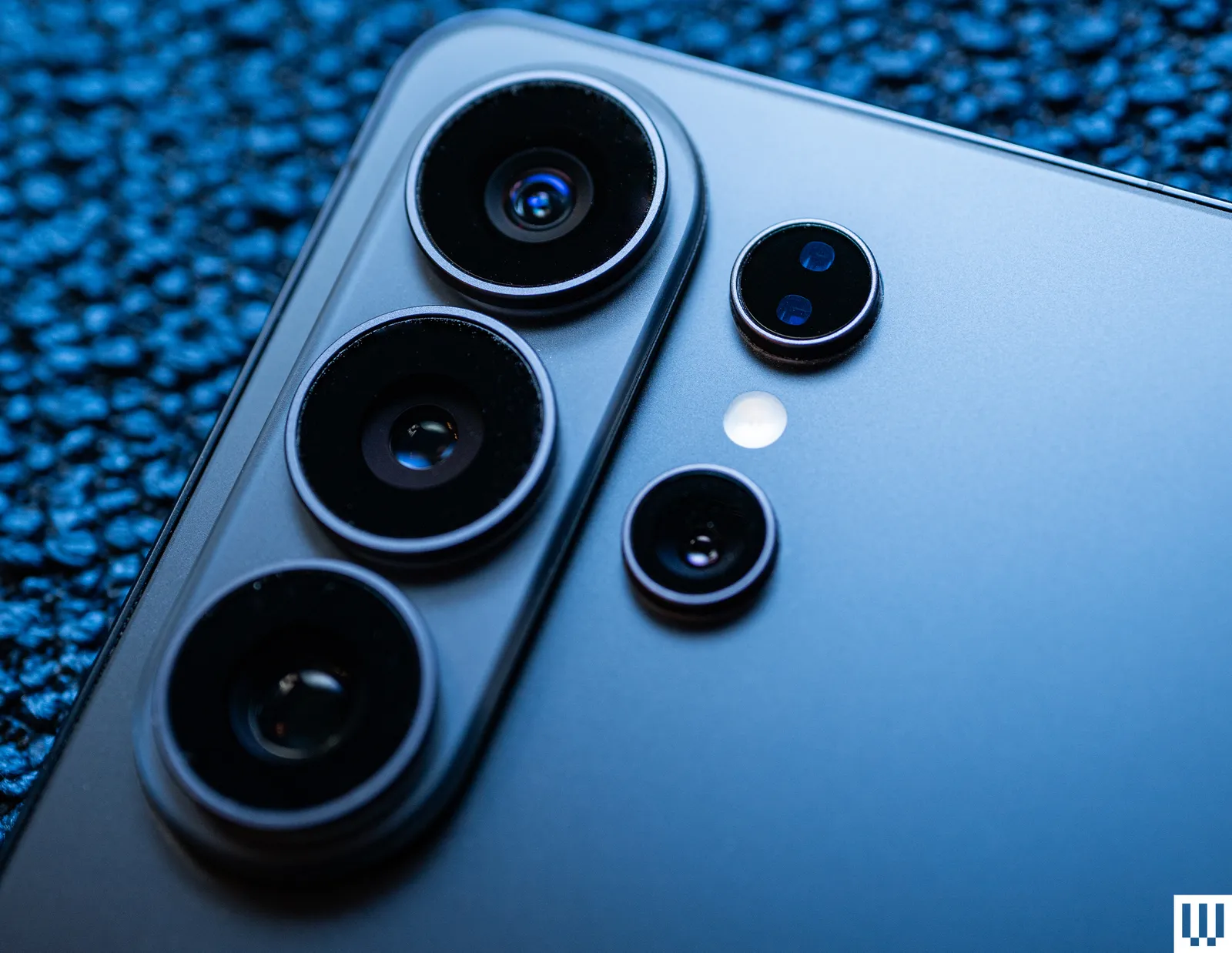
Samsung has made its Ultra smartphone more like the standard Galaxy S26 and S26+, with rounded corners instead of the boxy look of its predecessors. (It’s still the only one of the lot with the integrated S Pen stylus.) The overall design language is still quite dull, and the phone’s muted colors aren’t exciting (you can buy an iPhone 17 Pro in orange for crying out loud!).
Independent testing has recently uncovered what it describes as a potential CPU mislabeling issue affecting multiple Chuwi laptops. In its latest report, Notebookcheck found that the Chuwi CoreBook Plus, which is marketed as using an AMD Ryzen 5 7430U, actually shipped with the older Ryzen 5 5500U processor instead.
Bill Roberson / Digital Trends
What makes the situation more unusual is that the laptop’s packaging, product pages, BIOS, and even Windows system tools reportedly identify the chip as a Ryzen 5 7430U, making it difficult for buyers to detect the discrepancy without deeper inspection. The discovery has raised concerns about transparency in the budget laptop market, especially since this isn’t the first time such a mismatch has been reported.
What exactly is the CPU controversy about?
According to Notebookcheck’s investigation, the CoreBook Plus is actively marketed with the Ryzen 5 7430U, a newer Zen 3 processor launched in 2023. However, after purchasing and opening a retail unit, the reviewers discovered the laptop actually contained the Ryzen 5 5500U, an older Zen 2 chip released in 2021.
Notebookcheck
The difference may not sound huge on paper, but the newer processor has a higher boost clock and double the L3 cache (16 MB vs 8 MB), which can translate to better performance in certain workloads. In other words, buyers may believe they are getting a newer chip typically found in laptops priced €100–€200 higher, potentially making the system appear like a better bargain than it actually is. Even more surprising is the fact that the laptop’s firmware and software identifiers were configured so that system utilities still report the CPU as a Ryzen 5 7430U, masking the true hardware unless the device is physically opened.
Is this an isolated case or something bigger?
Unfortunately, the CoreBook Plus may not be the only device involved. Earlier testing found a similar issue with another model, the Chuwi CoreBook X, which was also advertised with a Ryzen 5 7430U but reportedly shipped with the same Ryzen 5 5500U chip instead. With two separate laptop models showing the same mismatch, investigators say the issue appears unlikely to be a simple labeling mistake.
CoreBook X / CHUWI
Chuwi has reportedly responded to inquiries by saying it is investigating the matter internally. However, Notebookcheck says the company also repeatedly asked the publication to take down its earlier reports, warning of potential legal action due to alleged reputational damage, which ultimately prompted the outlet to dig deeper into the issue.
For consumers, the takeaway is fairly simple: always verify specs, the best you can. If a laptop deal looks unusually good, it might be worth taking a closer look.

[idealdealy] had a problem. GNU Radio Companion was proving to be a powerful tool, but it just didn’t look… cool enough. The solution? A custom bit of software called PimpMyGRC, designed to jazz things up a bit in everyone’s favorite open-source SDR package.
In the creator’s own words, PimpMyGRC solves the problem nobody had with GNU Radio. It stemmed from [idealdealy]’s desire to have a plain black background in the software to ease eye strain during late night debug sessions. From there, it developed into a full theming package coded in Python, complete with all kinds of fun color schemes.
You can go with “arctic” if you’re somewhere cold, “bubblegum” if you’re feeling young and fun, or “neon hacker” if you’re still obsessed with early 90s movies with terrible plot holes around computers.
Advertisement
None of these themes will help you work faster, but they’ll probably make your friends jealous that your setup looks a little bit cooler than theirs. Plus, there are some really fun animated effects to catch your eye if your attention is fading. You might get flames dancing on the bottom of the screen, or binary digits falling through the display in a manner vaguely akin to terminals from The Matrix.
In recent years, people have been increasingly looking for new ways to form platonic connections, as loneliness and social isolation have become more prevalent.
In 2023, the U.S. Surgeon General went so far as to label this issue a public health crisis. Remote workers, who miss the everyday interactions found in an office, and younger individuals eager to create their adult social circles based on shared interests and hobbies, are among those seeking meaningful friendships.
Thanks to online dating apps, the stigma associated with finding connections online has largely faded away. This has welcomed a new wave of apps focused on fostering friendships and building local communities.
According to estimates from Appfigures, over a dozen local-focused friendship apps have collectively generated approximately $16 million in consumer spending in the U.S. so far this year. Some notable examples include Timeleft, Meet5, and Bumble’s BFF. Additionally, these apps have garnered approximately 4.3 million downloads thus far in 2025.
Advertisement
The apps aim to provide a less awkward solution than, for instance, approaching a stranger at the gym or local café and trying to strike up a conversation. These platforms clearly indicate that everyone using the app is looking for the same thing — friendship, not romance — making it much less intimidating to initiate conversations.
From major players like Meetup to newer ones like 222, there are plenty of apps that cater to the growing demand for meaningful friendships. We’ve compiled a list of them for you to try out.
222
Image Credits:222 (screenshot)
The app 222 is an iOS-only social events platform that facilitates in-person meetups by pairing a group of strangers based on their personality test results. The app sends invitations to nearby public social events, such as wine bars and comedy clubs. There is then a vetting process, and selected participants are notified on the day of the event. A bonus for those who feel socially anxious: You’re allowed to bring a plus-one.
Techcrunch event
San Francisco, CA | October 13-15, 2026
Advertisement
The service charges a $22.22 curation fee or a monthly subscription for the same price.
BFF
Image Credits:Bumble
Dating giant Bumble is among the more established players to enter the friendship space, launching its friend-finding feature in 2016, which then spun out into a stand-alone app in 2023. The friend-making app has recently undergone a significant redesign, with an increased emphasis on facilitating group meetups, catering to users’ desires to grow their social circles.
BFF is available for free download on iOS and Android devices.
Advertisement
Clyx
Image Credits:Clyx
Clyx is another emerging app in the group-based social networking landscape, with a strong focus on discovering local events. The social platform helps users find community events by integrating data from platforms like Ticketmaster and TikTok. Additionally, Clyx allows users to upload their contact lists, helping them see which events their friends plan to attend. The app also includes a feature that recommends other users to connect with at these events.
As of now, Clyx operates exclusively in two cities: Miami and London. However, it has plans to expand to additional areas in the near future, with New York City and São Paulo at the top of the list. The app is available on the App Store and Google Play Store.
Les Amís
Image Credits:Les Amis
Les Amís is a friendship app tailored for women, transgender, and LGBTQ+ individuals that leverages AI to match users based on similar interests and encourages participation in local events, such as pottery classes, book clubs, and wine tastings. Matches are made every Monday, allowing users to chat and plan meetups later in the week.
Available on iOS and Android, Les Amís serves cities across Europe, including Amsterdam, Barcelona, Berlin, Madrid, Paris, and Stockholm. In the U.S., the app is available in Austin and New York, with plans to expand to Boston, Miami, and Los Angeles.
The app uses a paid membership model that varies by city, with fees of $70 in New York and €55 in Amsterdam.
Meetup
Image Credits:Meetup
The local event-discovery platform has been around since 2002, helping millions of users connect with others who share similar interests. Users can RSVP to events; join groups that cater to a variety of hobbies, professions, or social causes; and create their own groups and events. They can also chat with group members and post updates and photos from gatherings.
Meet5
Image Credits:Meet5
This European community-building app recently launched in the U.S., targeting users over 40 who want to meet new people in their area and participate in group activities such as picnics, concerts, and hiking. Notably, in a short time, there have been around 777,000 U.S. downloads so far across the App Store and Google Play Store, according to Appfigures estimates.
Pie
Image Credits:Pie
Pie is another one of the newer social apps on the market. It features an AI-driven quiz designed to predict which users are most likely to be compatible with each other. Each person who RSVPs to a Pie event takes a brief personality assessment, and the algorithm organizes attendees into groups of six, who are then added to a group chat within the Pie app, allowing them to interact with each other before the event.
Currently, the app is only available in Austin, Chicago, and San Francisco. Users can download Pie from the App Store and Google Play Store.
Advertisement
Timeleft
Image Credits:Timeleft
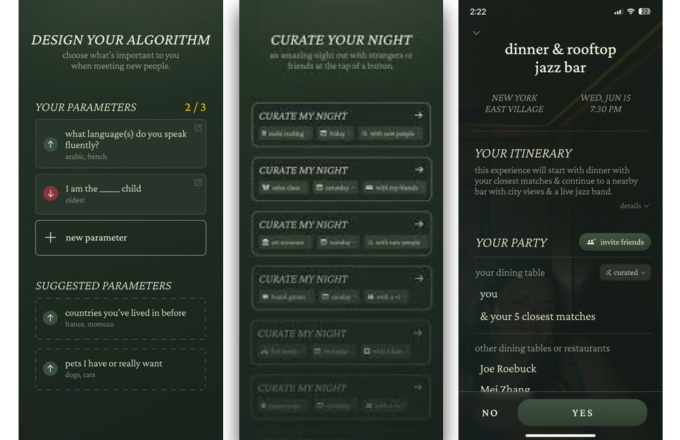
Timeleft is a relatively new platform that helps you organize weekly dinner dates with groups of strangers. The app uses a special algorithm to match you with others, taking into account your age, gender, and personality. Users are matched with four other people, but they only learn minor details about them the night before, including their occupations and zodiac signs.
Dinners take place at a selected restaurant on Wednesday evenings at 7:00 p.m. To help everyone break the ice, the app offers a game with conversation starters. After dinner, there is an after-party at a local bar.
Users can book dinners online or through the app. In terms of pricing, it varies depending on the country and restaurant. Users pay for a ticket up front and are responsible for covering their own dinner and drinks.
Washed Up
Image Credits:Washed Up
Washed Up is a social event discovery app that launched in early 2026, designed for people in the Los Angeles area who want an easier way to find things to do and meet new people.
The app helps users discover local events, such as concerts, trivia nights, and comedy shows, while also giving them a built-in way to connect with others who plan to attend. Instead of going to events alone, users can create or join “plans,” which are small group meetups tied to specific events. Users can browse these plans and request to join, chat with the group, and add new friends, making it easier to show up to events with people rather than by themselves.
Wyzr Friends is an activity-based friendship app designed for adults 40 and older, catering to empty nesters, those who are divorced, and other users seeking to connect with like-minded individuals. Users can thumbs up or down potential friends and arrange in-person activities based on shared interests, such as going to the movies or hiking.
It’s available on iOS and Android devices in the U.S., Canada, Australia, Ireland, the Philippines, Singapore, and Mexico.
Mmotion
Image Credits:Mmotion (Image has been modified)
Mmotion is a newly launched friendship app that blends location tracking with social discovery to help users connect with people nearby and explore new bars and restaurants in their area. Upon joining, users can participate in interest-based groups — such as hiking, basketball, or art — view a map of active users, and send messages to those nearby. The app also highlights new places on the map, making it easy to find a restaurant or venue to try.
Mmotion is currently only available to users in New York City on iOS and Android devices. Users must first submit an application to be considered.
It’s America’s first large-scale offshore wind project, reports WBUR — enough clean energy to power 400,000 homes in Massachusetts from 62 offshore wind turbines generating 800 megawatts.
But it took a while… The plant’s first construction delay happened back in 2019, they point out — and then “Just three months ago, when the project was 95% complete, the U.S. Interior Department issued a stop-work order.” But after successfully challenging that order in court, and “with a stretch of good weather offshore, the developers behind the $4.5 billion project managed to get over the finish line.”
The Associated Press notes it was “one of five major East Coast offshore wind projects the Trump administration halted construction on days before Christmas, citing national security concerns.”
Developers and states sued, and federal judges allowed all five to resume construction, essentially concluding that the government did not show that the national security risk was so imminent that construction must halt. Another one of the five, Revolution Wind, began sending power for the first time to New England’s electric grid on Friday and will scale up in the weeks ahead until it is fully operational. “That project is nearly complete as well,” notes WBUR, “and will eventually be capable of powering up to 350,000 homes.”








.jpg)