Connect with us

Tech

Windows 11 is readying support for 1,000+ Hz monitors, assuming you got one

Published

on

Microsoft is quietly preparing Windows 11 for a new class of ultra-fast gaming monitors, even if most gamers won’t see them anytime soon. According to a recent Windows Insider blog post, new Release Preview builds 26100.8106 and 26200.8106 introduce support for monitors that report refresh rates higher than 1,000Hz. The change effectively removes a previous limitation in Windows’ display stack that prevented the operating system from properly recognizing extremely high refresh-rate panels.

Microsoft appears to be future-proofing Windows as monitor manufacturers push refresh rates beyond current limits. While displays this fast are still rare, the software groundwork suggests Microsoft expects the hardware to arrive sooner rather than later.

Why is Windows suddenly supporting 1,000Hz monitors?

The update is largely about keeping Windows aligned with the rapid pace of display technology. Gaming monitors have steadily progressed from 144Hz to 240Hz, then 360Hz, to 500Hz, and even 720Hz in recent years. Now, manufacturers are experimenting with panels that can reach 1,000Hz refresh rates, sometimes by lowering resolution or using dual-mode designs.

Until now, Windows has had an internal refresh-rate ceiling that made it difficult for the OS to properly detect displays exceeding that threshold. The latest Insider builds remove that limitation, allowing monitors to report refresh rates above 1kHz through the Windows graphics stack. Interestingly, Blur Busters says a Microsoft contact hinted that the limit could eventually be raised to 5,000Hz. While that number sounds extreme today, it highlights just how aggressively display makers are pushing refresh-rate technology.

Are 1,000Hz gaming monitors already here?

While they’re far from mainstream, a few ultra-high refresh rate monitors are already starting to appear. Acer recently introduced the Predator XB273U F6, which can hit 1,000Hz at 720p, while the Samsung Odyssey G6 reportedly supports 600Hz at QHD and up to 1,040Hz at HD. Meanwhile, the HKC Antgamer MAX pushes a 540Hz native refresh rate at 2K and up to 1,080Hz at 720p. Displays like these are largely aimed at competitive gaming, where extremely high refresh rates can reduce motion blur and input lag when paired with powerful GPUs capable of producing very high frame rates.

By lifting its refresh-rate ceiling now, Microsoft is essentially future-proofing Windows for the next wave of display technology. Even if most gamers won’t see a 1,000Hz monitor on their desks anytime soon, removing the software limitation ensures the operating system won’t hold back the hardware as display makers continue pushing refresh rates to new extremes.

Advertisement

Source link

Continue Reading
Click to comment

Leave a Reply

Your email address will not be published. Required fields are marked *

Tech

Take Pi For A Spin In This Orbital Simulator

Published

on

It’s Pi Day, and while we know that many of you celebrate privately, those that take a moment to put aside their contemplation of all things circular and join us on this mathematically-significant day will likely know the name [Cristiano Monteiro]. Since 2022 he’s made it a yearly tradition to put together a themed project every March 14th, and he’s just put the finishing touches on the 2026 edition.

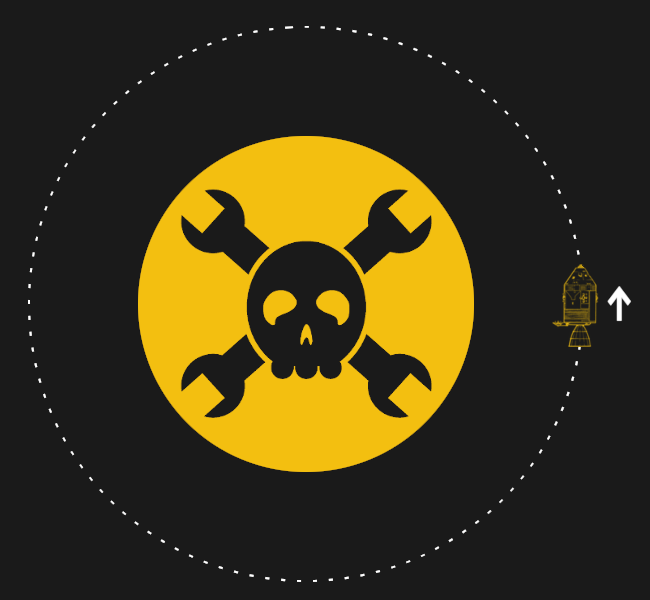
Generally, [Cristiano] sends in some interesting hardware device that visualizes the calculation of pi, but this year he surprised us a bit by delivering a software project. His Orbital Pi Simulator allows you to see what would happen to an orbiting spacecraft if it’s navigation system suddenly believed the value of pi was something different.

In broad strokes, we can imagine what would happen. If you plug in something significantly higher than 3.14, the orbit becomes elliptical to the point that the craft can fly off into deep space. Drop the value down, and the orbit will intersect with the Earth — a guaranteed recipe for a bad time.

The Kerbal Space Program players in the audience will no doubt point out that in the absence of drag a spacecraft in a stable orbit would more or less stay on that same trajectory indefinitely and not need to manually adjust its velocity in the first place. Further, they would argue that said spacecraft suddenly firing its thrusters retrograde because a flipped bit in its computer resulted in the value of pi suddenly being 1.2 isn’t very realistic. Those people would be correct, but they would also be no fun at parties.

Advertisement

Fans of math and/or circles will no doubt be interested in the previous devices [Cristiano] has built to mark this date. Last year he put together a robotic hand that counted out pi with its 3D printed fingers, and in 2024 he used the Pepper’s Ghost illusion to great effect. For those wondering, not everything he does is pi-related. The portable GPS time server he sent out way in 2021 was a particularly slick piece of hardware.

Source link

Advertisement
Continue Reading

Tech

8Today’s NYT Strands Hints, Answer and Help for March 15 #742

Published

on

Looking for the most recent Strands answer? Click here for our daily Strands hints, as well as our daily answers and hints for The New York Times Mini Crossword, Wordle, Connections and Connections: Sports Edition puzzles.


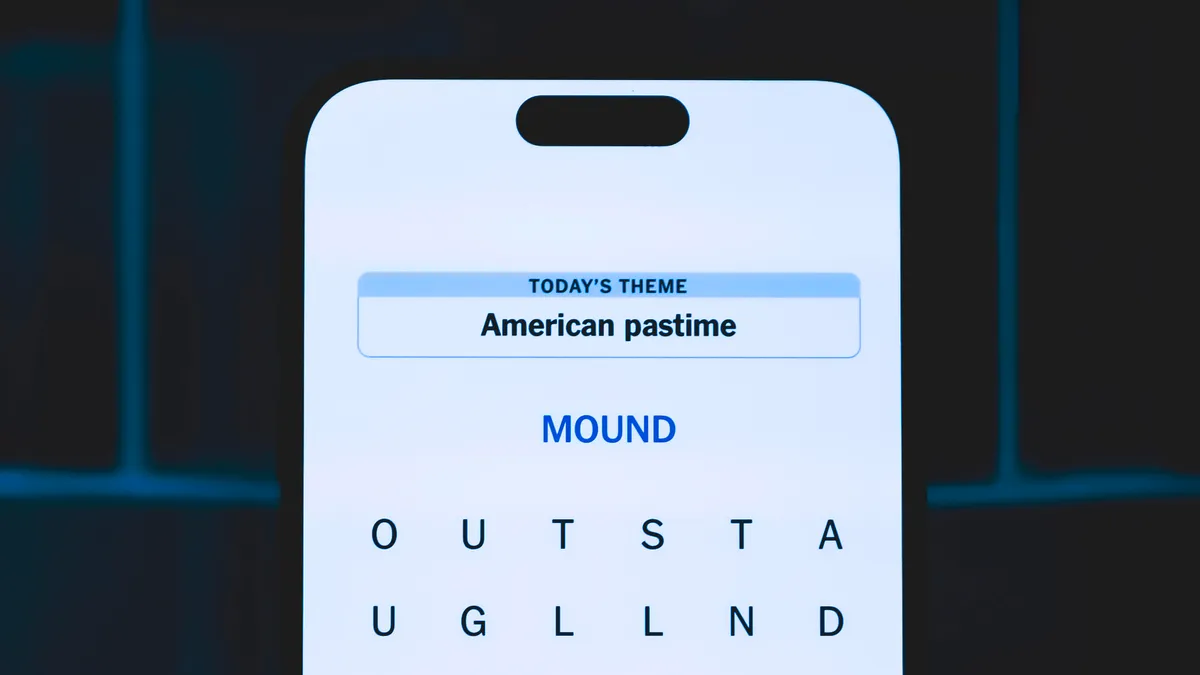
Today’s NYT Strands puzzle is fun and timely, relating to a certain big ceremony held this weekend. Some of the answers are difficult to unscramble, so if you need hints and answers, read on.

I go into depth about the rules for Strands in this story

Advertisement

If you’re looking for today’s Wordle, Connections and Mini Crossword answers, you can visit CNET’s NYT puzzle hints page.

Read more: NYT Connections Turns 1: These Are the 5 Toughest Puzzles So Far

Hint for today’s Strands puzzle

Today’s Strands theme is: Best of all

Advertisement

If that doesn’t help you, here’s a clue: The envelope, please.

Clue words to unlock in-game hints

Your goal is to find hidden words that fit the puzzle’s theme. If you’re stuck, find any words you can. Every time you find three words of four letters or more, Strands will reveal one of the theme words. These are the words I used to get those hints but any words of four or more letters that you find will work:

  • RATE, RATED, DATE, DOTE, DATED, DOTED, GATE, GATES, TROD, TRODS

Answers for today’s Strands puzzle

These are the answers that tie into the theme. The goal of the puzzle is to find them all, including the spangram, a theme word that reaches from one side of the puzzle to the other. When you have all of them (I originally thought there were always eight but learned that the number can vary), every letter on the board will be used. Here are the nonspangram answers:

  • SONG, ACTOR, ACTRESS, SOUND, DIRECTOR, PICTURE

Today’s Strands spangram

completed NYT Strands puzzle for March 15, 2026

The completed NYT Strands puzzle for March 15, 2026.

NYT/Screenshot by CNET

Today’s Strands spangram is ACADEMYAWARD. To find it, start with the A that’s five letters down on the farthest-left row, and wind over and up.

Advertisement

Source link

Continue Reading

Tech

This Printed Zipper Repair Requires No Unsewing

Published

on

If a zipper breaks, a 3D printer might not be the first tool one reaches for — but it’s more feasible than one might think. [MisterJ]’s zipper slider replacement is the kind of 3D print that used to be the domain of well-tuned printers only, but most hobbyist printers should be able to handle it nowadays.

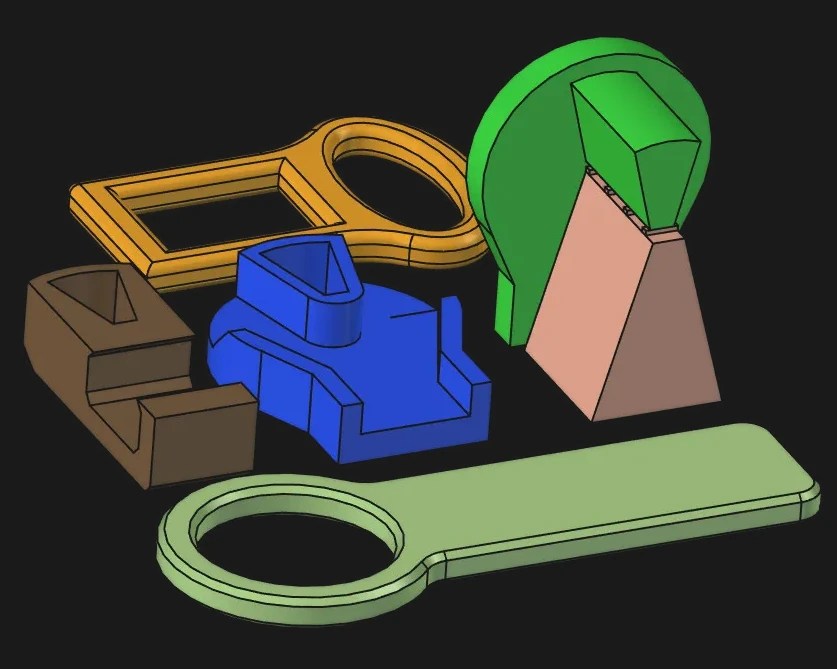
The two-part design allows installation without unsewing the zipper ends. Note the print orientation of the green part, which maximizes the strength of the peg by making the layer lines perpendicular to the load.

What really sets this design apart from other printed versions is its split construction. Putting a new slider onto a zipper usually requires one to free the ends of the zipper by unsewing them. [MisterJ]’s two-part design instead allows the slider to be assembled directly onto the zipper, without the hassle of unsewing and re-sewing anything. That’s a pretty significant improvement in accessibility.

Want to make some adjustments? Good news, because the files are in STEP format which any CAD program will readily understand. We remember when PrusaSlicer first gained native STEP support and we’re delighted that it’s now a common feature in 3D printer software.

[MisterJ]’s zipper slider design is available in a variety of common sizes, in both standard (zipper teeth face outward) and reverse (zipper teeth face inward) configurations. Naturally a metal slider is more durable than a plastic one, but being able to replace broken parts of a zipper with a 3D printer is a pretty handy thing. Speaking of which, you can also 3D print a zipper box replacement should the squarish bit on the bottom get somehow wrecked or lost.

Advertisement

Source link

Advertisement
Continue Reading

Tech

Trump DOJ Wimps Out On Ticketmaster, Again Revealing Hollowness Of MAGA ‘Antitrust’

Published

on

from the giant-heaping-pile-of-bullshit dept

Last election season, you might recall how the Trump campaign lied to everyone repeatedly about how his second administration would “rein in big tech,” and be a natural extension of the Lina Khan antitrust movement. As we noted at the time, that was always an obvious fake populist lie, but it was propped up anyway by a lazy press and a long line of useful idiots (including some purported “antitrust experts“.)

This last year has truly revealed the con: Trump not only has demolished regulatory independence, media consolidation rules, and consumer protection standards, he’s rubber stamped every shitty merger his administration has come into contact with (provided companies promise to be more racist), and fired the few Republicans in his administration that even vaguely cared about antitrust.

Trump’s latest betrayal to the the MAGA antitrust movement (that never really existed outside the skulls of rubes) is his DOJ’s surprise blindsiding of states by striking a pathetic settlement with Ticketmaster that doesn’t really fix the actual problem: monopoly.

The Biden DOJ and most US states sued Live Nation and its Ticketmaster subsidiary back in 2024, alleging that Live Nation has a monopoly on “the delivery of nearly all live music in America today.”

Advertisement

But while a new Trump settlement with the company requires $280 million in civil penalties and a 15% cap on service fees for people who want to use their amphitheaters, it backs off any attempt to pursue a break up of Live Nation and Ticketmaster, the one move that would actually (more permanently) help protect consumers, artists, and the live music market from predatory behavior.

The Trump DOJ and pedophile protector Pam Bondi struck the deal behind closed doors and didn’t bother to tell any of the 27 states (including many Republican ones) currently fighting Ticketmaster in court. It’s another win for Bondi loyalists (whose function is to blindly serve our mad idiot king) and the final middle finger to Gail Slater and Mark Hamer types that at least sometimes cared about antitrust.

States are, you may be unsurprised to learn, pissed off and planning to continue the fight alone, though they say the Trump DOJ has caused potentially irreparable harm:

“The case went to trial, and testimony began last week in US District Court for the Southern District of New York. But the US and Live Nation informed the court of a proposed settlement on March 8, taking state attorneys general by surprise. The judge presiding over the case reportedly said in court today that the way the settlement was announced “is absolutely unacceptable.

States reserving the right to continue litigation filed a motion for mistrial, saying they need time to prepare for a new trial and evaluate the terms of the settlement between the US and Live Nation. The “sudden disappearance” of the US from the case will likely give the jury the incorrect impression that Live Nation’s “antitrust violations have been cured or resolved, or that Proceeding Plaintiff States’ claims lack merit,” the states said.”

Advertisement

This was always going to be the outcome. There were constant signs. Trump is an autocrat, fascist, and opportunist who believes in nothing beyond his own pursuit of power and wealth. The corruption and autocracy was always going to dominate any serious Republican interest in antitrust (which, let’s be honest, even among Gail Slater types was historically inconsistent at best).

The MAGA base belief in this line of bullshit was one thing, but Trump’s antitrust bona fides were also propped up by folks like purported progressive antitrust expert Matt Stoller, who praised guys like JD Vance and Josh Hawley for being serious anti-corporatists, when the entire thing was always a con designed to give phony populist credibility to autocrats who never had to actually earn it.

The U.S. press also played a giant role here. They spent years propping up Trump’s false claims he “wanted to rein in big tech,” when what the authoritarians really wanted was to abuse government power to scare (quite successfully as it turned out) tech companies away from doing even the most basic content moderation of right wing race-baiting propaganda online.

Now, unsurprisingly, here we are, staring down the barrel of democracy demolishing authoritarianism, with unchecked corporate power in full alignment with the effort.

Advertisement

Filed Under: antitrust, concerts, consolidation, donald trump, gail slater, maga, matt stoller, monopoly

Companies: live nation, ticketmaster

Source link

Advertisement
Continue Reading

Tech

You Can Approximate Pi by Dropping Needles on the Floor

Published

on

Happy Pi Day! March 14 is the date that otherwise rational people celebrate this irrational number, because 3/14 contains the first three digits of pi. And hey, pi deserves a day. By definition, it’s the ratio of the circumference and diameter of a circle, but it shows up in all kinds of places that seem to have nothing to do with circles, from music to quantum mechanics.

Pi is an infinitely long decimal number that never repeats. How do we know? Well, humans have calculated it to 314 trillion decimal places and didn’t reach the end. At that point, I’m inclined to accept it. I mean, NASA uses only the first 15 decimal places for navigating spacecraft, and that’s more than enough for earthly applications.

The coolest thing, for me, is that there are many ways to approximate that value, which I’ve written about in the past. For instance, you can do it by oscillating a mass on a spring. But maybe the craziest method of all was proven in 1777 by George Louis Leclerc, Comte de Buffon.

Decades earlier, Buffon had posed this as a probability question in geometry: Imagine you have a floor with parallel lines separated by a distance d. Onto this floor, you drop a bunch of needles with length L. What is the probability that a needle will cross one of the parallel lines?

Advertisement

A picture will help you understand what’s happening. Let’s say I drop just two needles on the floor (feel free to replace the needles with something safer, like toothpicks). Also, just to make things easier later, we can say that the needle length and line spacing are equal (d = L).

Image may contain Bow Weapon Blade Dagger and Knife

You can see that one of the needles crosses a line and the other doesn’t. OK, but what are the chances? This is not the most trivial problem, but let’s think about just one dropped needle. We only care about two values—the distance (x) from the farther end of the needle to a line, and the angle of the needle (θ) with respect to a perpendicular (see the diagram below). If x is less than half the spacing between lines, we get a needle-crossing. As you can see, you’d get a higher probability with a smaller x or a smaller θ.

Source link

Continue Reading

Tech

iPhone Fold, Mac Studio, OLED MacBook Pro: What to expect from Apple for the rest of 2026

Published

on

Apple’s 2026 may have gotten off to a new-product-filled start, but it’s far from done. There are plenty more iPhone and other announcements to come before the year’s end.

Man in black shirt presenting outdoors before Apple Park, with large floating graphics of MacBooks and iPhones behind him under a clear sky
There’s still a lot to come from Apple in 2026

Between the launch of the M5 MacBook Air, MacBook Neo, iPhone 17e, and M5 Pro/Max MacBook Pros, Apple has made a solid start to the year. But with the annual WWDC event still to come, not to mention likely hardware announcements this fall, there is still plenty to look forward to.
Apple is still expected to unveil a raft of software and hardware in the coming months, including some all-new products. Rumors of the company’s first-ever foldable iPhone continue to gather pace, and that’s just the beginning.
Continue Reading on AppleInsider | Discuss on our Forums

Source link

Continue Reading

Tech

Alibaba latest to take advantage of China’s OpenClaw frenzy

Published

on

Baidu, ByteDance, Tencent and MiniMax have all released OpenClaw-powered apps in recent weeks.

Alibaba is the latest Chinese tech giant to launch an OpenClaw-powered app, as state officials in the country move to curb usage of such apps amid growing cybersecurity concerns.

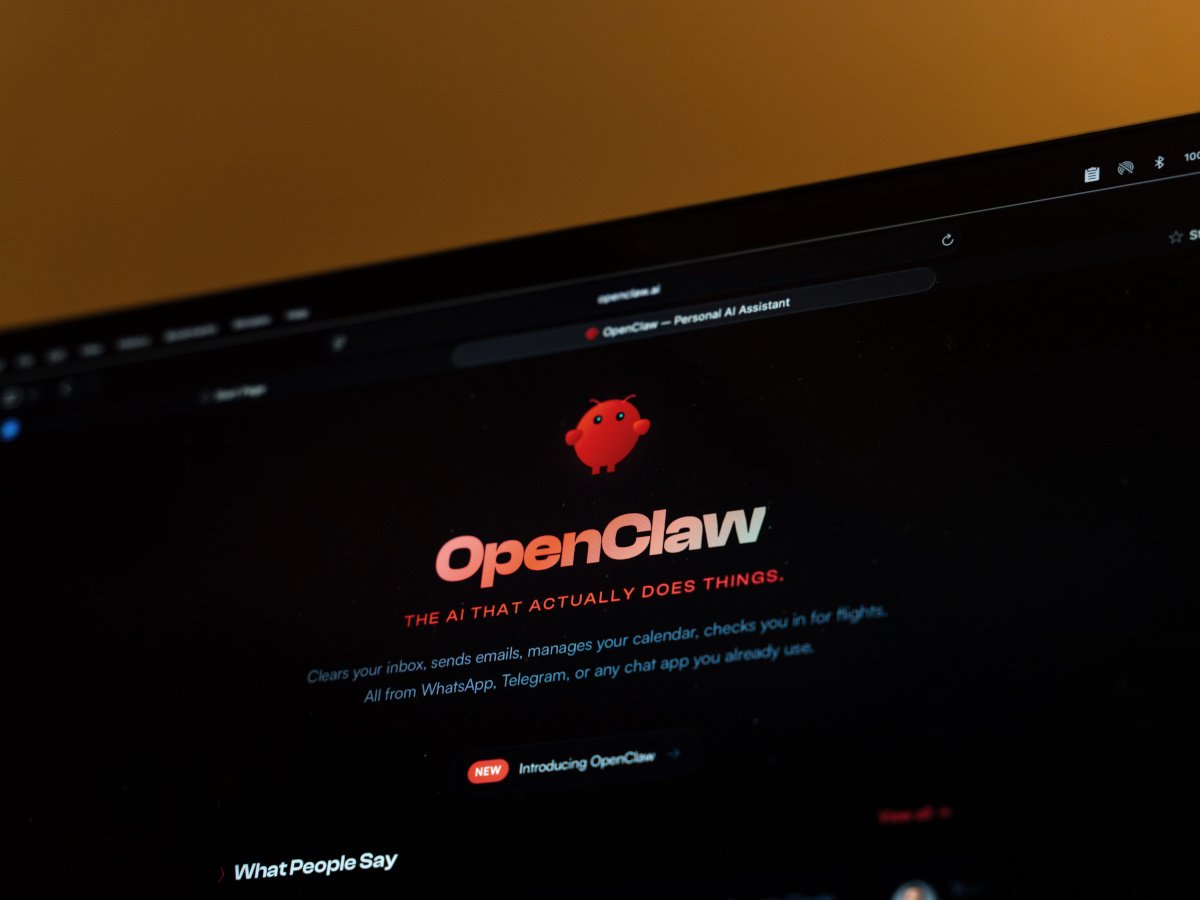
Since launching last November, OpenClaw has found itself a large and growing fanbase worldwide. The open-source AI model is easy to use, with simple use cases such as running communication apps, clearing inboxes, sending emails and managing calendars.

Latest figures show that the project has crossed more than 300,000 GitHub stars, becoming the most starred non-aggregator software project ever on the platform in just four months.

Advertisement

The low barrier to entry to use OpenClaw has made it a darling in China, pushing people to experiment with agentic AI. Dubbed ‘raising lobsters’, the agentic AI frenzy is pushing businesses in the country to launch new products built using OpenClaw.

Alibaba has just debuted ‘JVS Claw’, a mobile app that helps Android and iOS users without coding knowledge to install and deploy OpenClaw in minutes. The company’s enterprise mobile office platform is also integrated with the open-source project.

Earlier this week, Baidu released its own workspace management plug-in tool with OpenClaw called ‘DuClaw’. Last month, the company launched a program to allow developers to deploy OpenClaw on Baidu’s AI cloud infrastructure.

Meanwhile, Tencent launched ‘WorkBuddy’, an AI agent for workplace tasks powered with OpenClaw, and MiniMax, Zhipu and ByteDance each launched their own integrated products.

Advertisement

China has a market hungry for agentic AI, especially as enterprises lead its uptake and consumers experiment with the technology. US AI giants such as Anthropic, with its Cowork offering, and OpenAI don’t provide their services commercially in China, leaving even more space for Chinese companies attempting to take advantage of the interest.

The strong agentic AI uptake has moved authorities in Beijing to restrict state-run enterprises and government agencies from running OpenClaw apps on office computers, fearing potential cybersecurity risks.

However, the fears are not widespread, with some municipalities offering subsidies for deploying the AI platform, according to Bloomberg.

OpenClaw has even garnered US Big Tech attention, with OpenAI poaching the project founder Peter Steinberger to help with its personal agents.

Advertisement

Meanwhile, Meta has bought Moltbook, a Reddit-style social media network created with OpenClaw where only AI agents can post, and humans can observe. The platform went viral after observers watched as AI agents generated a new religion.

Don’t miss out on the knowledge you need to succeed. Sign up for the Daily Brief, Silicon Republic’s digest of need-to-know sci-tech news.

Source link

Advertisement
Continue Reading

Tech

Ninth Circuit Guts California’s Kids Code Once Again

Published

on

from the another-one-bites-the-dust dept

It’s been a little while since we last wrote about California’s deeply problematic “Age Appropriate Design Code,” which tried to force internet companies into taking blatantly unconstitutional steps to pressure companies into magically preventing all “harms” to kids. The law has bounced between the district court and the Ninth Circuit multiple times — and yesterday, once again, most of the law was deemed effectively unconstitutional and tossed out. The ruling is procedurally messy in annoying ways, but most of that we can blame on the Supreme Court. But we’ll get to that.

The bill, in somewhat troubling fashion, was drafted and heavily pushed for by a British Baronness/Hollywood director who made a documentary about kids and smartphones and got so freaked out by her own documentary, that she decided that she would single-handedly destroy the open internet for children, First Amendment be damned. Trade association NetChoice challenged the law (as it has challenged many state laws) and has been mostly successful.

As I explained to a court myself, the law was both impossible to comply with and a clear attack on free expression. The court agreed and threw out the law as unconstitutional. It went to the Ninth Circuit which mostly agreed that the law was unconstitutional. Unfortunately, right before the Ninth Circuit ruled, the Supreme Court’s Moody decision made a mess of things. While that ruling effectively killed unconstitutional bills in Florida and Texas that sought to regulate social media, the ruling went deep into the silly weeds, arguing that challenging an entire law as unconstitutional on its face (a “facial challenge”) required a nearly impossible set of standards to meet, preferring parties challenge the law “as applied” (i.e., once it actually violating people’s rights directly).

Because of that, part of the law was sent back to the lower court, where it was again deemed unconstitutional and blocked by injunction. And then that ruling was appealed again, leading to this Ninth Circuit ruling, which lifts part of the injunction, sending the case back down to the lower court yet again. But it effectively wipes out large parts of the Age Appropriate Design Code as clearly unconstitutional. Basically, all the parts in the law that actually do things are dead, because they pretty clearly regulate speech in violation of the First Amendment. The case — and what remains of the law — lives on as a procedural zombie, still technically breathing but stripped of its real teeth.

Advertisement

It’s a good ruling, though made slightly annoying by the procedural situation created by the Supreme Court’s Moody ruling.

Digging in: the court struck down most of the scary problematic provisions of the law, rightly noting that they violated the First Amendment on vagueness grounds. First up, there were provisions that tried to limit how websites could handle a child’s personal information, but this was a smokescreen. While it was dressed up to look like a “privacy” bill, the law really sought to impact what content kids could read, saying you couldn’t use data in a way that harmed the “well-being” of a child, and that the use had to be in the “best interests” of the child. There was also a provision regarding whether or not the data was used in way that was “materially detrimental” to the child. These are all super vague terms that were clearly really meant to be “don’t show kids content that might make them sad.”

The court said this is a problem:

NetChoice persuasively argues that the risk of subjective enforcement is particularly high because, as it contemplates “material detriment” to “a child,” the provision must be assessed as to any single child whose personal information is accessed by a covered online practice.

California argued there was no problem with requiring sites to create systems in the “best interests” of children, but the court rightly notes that you can’t just create general rules that accomplish that:

Advertisement

When evaluating the “best interests of the child” in family law proceedings, California courts recognize that “bright line rules in this area are inappropriate” and that “each case must be evaluated on its own unique facts.” In re Marriage of LaMusga, 88 P.3d 81, 91 (Cal. 2004) (citation modified). The standard operates through a specific child’s circumstances and factual record. See id. The data use restrictions ask something categorically different: covered businesses must determine prospectively whether a given practice is in “the best interests of” not any one child but “children”—a class of users that includes every child anywhere who can access a covered online practice. Cal. Civ. Code § 1798.99.31(b)(1)⁠–⁠(4) (emphasis added). Then covered businesses must tailor their practice accordingly. Applied at that scale, without the individualized, highly specific factual record giving the standard meaning in contexts such as a family law case, “best interests of children” cannot provide “sufficient notice of what is proscribed,”

Then there’s the issue of “dark patterns,” which is one of my least favorite terms that has become popular over the last few years. In practice it’s become a catch-all for ‘anything on any website that makes people do things I don’t like,’ and it’s not remotely well-defined. And that’s a problem when you have to get past the “vagueness” bar to be acceptable under the First Amendment:

As with the data use restrictions, the State’s plain-meaning argument is unconvincing where the range of harms that could plausibly qualify as “materially detrimental” is vast, spanning everything from financial exploitation to sleep loss, distraction, or hurt feelings. The fact that “dark pattern” is a defined term in the CAADCA does not help a covered business distinguish between these harms. And the prohibition’s use of the singular “child,” like in the data use restrictions, suggests that it is actionable based on a single child’s response to an online interface, meaning that a business designing a product accessed by millions of child users could face liability whenever any one of them experiences a harm that a regulator deems “material.”

So that’s gone too.

The court also highlights how the state does a lot of fear-mongering on edge cases that would clearly and somewhat obviously lead to mass censorship to avoid potential liability:

The State cites examples like “using a child’s information to connect them to a person that seeks to abuse the child, such as through sexploitation,” or “[u]sing a child’s information to recommend illegal products such as tobacco, alcohol, or gambling[.]” But these are extreme examples at the margins of what might be materially detrimental to a child’s well-being. The more difficult questions arise with examples like sleep loss, distraction, or hurt feelings. As the district court reasoned, and NetChoice argues on appeal, the CAADCA does not provide any guidance as to the breadth of conduct that “material[] detriment[] to the physical health, mental health, or wellbeing of a child” may reach.

This is what happens when headline-chasing regulators write laws based on moral panics and feel-good concepts like ‘well-being of children,’ assuming that either websites will nerd harder and somehow make it work, or the courts will sort it out on the back end.

Advertisement

But that’s not how the First Amendment works. There’s a reason why there’s a vagueness doctrine that is used to throw out laws that try to tapdance around it this way.

That said, not all of the ruling goes NetChoice’s way. Indeed, early on, the ruling gives a bit of a benchslap to NetChoice for continuing to challenge this law “facially” without meeting the near impossible standard setup by the Supreme Court in Moody:

NetChoice has been a party to many such cases—several before our court and the Supreme Court—and is presumably aware of the expectations for a facial challenge. At the risk of repetition, we offer similar guidance to NetChoice today.

The Moody ruling basically said that if you’re doing a facial challenge, you need to detail every possible application of the law and then show that a “substantial majority” are unconstitutional. That’s effectively impossible, especially since the law is written so broadly as to encompass things that go beyond just speech. That means, because the law also applies to commerce and other things, the facial challenge parts fail:

First, the State persuasively argues that whether “it is reasonable to expect” that a business’s “online service, product, or feature would be accessed by children,” … “says nothing about the nature of the business providing that service, product, or feature.” Indeed, as the State proffers, children “are capable of using ride sharing service[s] like Lyft or Waymo, electronic ticketing services such as StubHub or Ticketmaster, financial transaction services such as Paypal or Venmo, fitness products such as NFL Play 60 or Peloton, health-related services such as iHealth, or education-related products such as Wolfram Mathematica.” The CAADCA’s substantive requirements would “appl[y] evenhandedly” to any of these businesses if they are likely to be accessed by children, regardless of the content available through their online service.

This seems silly, but it’s what the Supreme Court now requires. Send your complaints to them, not the Ninth Circuit. The court effectively admits that the Supreme Court set an impossible standard in Moody:

Advertisement

To be sure, as we observed in NetChoice SB 976, “[d]oing so would entail the ‘daunting, if not impossible’ task of canvassing how the Act applies to an ‘ever-growing number of apps, services, functionalities, and methods for communication and connection.’” Id. at 1021 (first quoting Moody, 603 U.S. at 745 (Barrett, J., concurring); and then quoting Moody, 603 U.S at 725 (majority opinion)). We recognized that “such a showing” might be “unrealistic.” Id. But we nevertheless stated then, and maintain now, that “[i]t is a mystery how NetChoice could expect to prevail on a facial challenge without candidly disclosing the platforms that it thinks the challenged laws reach” and whether the coverage definition unduly burdens those platforms’ expression.

There is, also, a separate question of how a facial challenge to a law like this could even be possible with the sort of page limits courts require.

What this means, in practice, is that for states to survive a facial challenge, just make laws as crazily broad as possible, meaning it would be impossible to catalog all the many, many ways it might be enforced. That seems really bad. But, thanks to this Supreme Court, it’s what we’ve got.

The court does send the “age estimation” part back to the lower court, mostly because they say the record isn’t well enough developed (meaning we get to go through all of this yet again). There is some troubling language regarding last year’s ruling in FSC v. Paxton regarding age verification. As you’ll recall, the very prude conservative wing of the Supreme Court effectively overturned a couple decades worth of precedent to say “age verification online is fine for porn because porn is not protected by the First Amendment when kids see it.”

Many people insisted that this ruling was okay because it was limited to adult content, but so far we’ve seen state after state — and a few courts — suggest that it’s now “open season” on age verification laws. The language that shows up here is at least worrisome that the Ninth Circuit is open to a broad reading of the Supreme Court’s ruling:

Advertisement

NetChoice’s reading of Free Speech Coalition v. Paxton, 606 U.S. 461 (2025), also does not persuade. Free Speech Coalition considered a statute that required covered entities to make adult website visitors submit to an age verification system using either “government-issued identification” or “a commercially reasonable method that relies on public or private transactional data.” Id. at 467 (quoting Tex. Civ. Prac. & Rem. Code § 129B.003(b)(2)). The Supreme Court observed only that, with respect to that system, there is an “incidental burden that age verification necessarily has on an adult’s First Amendment right to access speech that is obscene only to minors.” Id. at 495. The Court said nothing about the effect of age estimation on First Amendment burdens generally, especially where age estimation is not required as a precondition to access content. To the contrary, the Court observed that “adults have no First Amendment right to avoid age verification, and the [challenged law] can readily be understood as an effort to restrict minors’ access.”

To the extent NetChoice argues that the age estimation requirement “require[s] consideration of content or proxies for content,” see NetChoice I, 113 F.4th at 1118, the age estimation requirement may impliedly regulate speech—but we cannot confidently draw that conclusion on this record, either.

More and more for the courts to argue about, I guess.

There’s also another bit of the lawsuit that has been revived, regarding “severability,” specifically regarding whether or not you can keep some parts of the law even as the bigger parts are struck down as unconstitutional. It’s another bit for them to argue about in more detail at the lower court, but not really the main point of all of this. The specifics here are that the law has a “notice-and-cure” provision if the Attorney General found a website to be violating the law. So there’s a question of whether or not that specific provision can be left alive, though I’m unsure what good it does if the rest of the law is found to be unconstitutional. But also, as the appeals court notes, this is basically all just on an underdeveloped record, so they’re sending it back to the lower court for more.

Either way, the key elements of California’s AADC have now been struck down as unconstitutional at the Ninth Circuit — for the second time — after two prior rejections at the district court level. The data use provisions and the dark patterns nonsense are gone on vagueness grounds. In some ways, that’s actually a stronger outcome than if the initial facial challenge had succeeded: there’s now clear appellate language explaining why this kind of vague “well-being” language can’t survive First Amendment scrutiny. California could theoretically go back and try to define things more narrowly, but chances are they’d find themselves right back at the First Amendment wall, because their ultimate goal has always been censorship dressed up as child safety.

Advertisement

The annoying part is the procedural mess the Supreme Court’s Moody decision created. We’re heading into round three at the district court, burning more time and resources on a law that should have been dead on arrival. This is exactly what we warned Governor Gavin Newsom and Attorney General Rob Bonta would happen when they first backed this law. They got the political headlines. Everyone else got years of litigation. And the law they championed is now a procedural zombie — technically still breathing, but stripped of everything that made it dangerous in the first place.

Filed Under: 1st amendment, 9th circuit, aadc, ab 2273, age verification, baroness beeban kidron, best interests, california, censorship, dark patterns, data use, facial challenge, free speech, gavin newsom, kids code, moody, protect the children, vagueness

Companies: netchoice

Advertisement

Source link

Continue Reading

Tech

Samsung Galaxy S26 Ultra Review: The Privacy Screen

Published

on

Even better, because it’s integrated, you can customize when the Privacy Display turns on through the software. Mine activates automatically with select messaging apps, banking apps, and for notifications, and there’s no visual indication when looking at the phone straight on that the Privacy Display is enabled or not (unless you tilt the screen slightly).

You can still see the screen from the sides with Privacy Display enabled, it’s just much dimmer and harder to make out the content. For maximum effect, you can turn on Max Privacy Protection via the quick settings menu, which makes it near impossible to read the screen from the sides. You don’t want to use that mode all the time because the screen looks washed out, but it’s good for when you want to be extra private. Oddly, Samsung doesn’t let you configure this extra layer to automatically turn on with specific apps—it’s a manual toggle every time.

I’ve seen some complaints online about the Privacy Display affecting the screen quality, but I have to disagree. Then again, the first thing I did when setting up the phone was max out the screen resolution to Quad HD+ and also set the colors to Vivid. I haven’t seen any fuzzy text, and brightness hasn’t been a problem for me either.

Advertisement

Yes, you can buy a cheap privacy screen protector and add it to any phone, but sometimes you do want the person next to you—be it a friend or family member—to be able to read the screen alongside you. Or maybe the phone is on a table, and you want to lazily scroll TikTok while trying to keep an eye on work. That’s where a standard privacy screen protector won’t help, as it blocks you from seeing your own screen, but Samsung’s solution gets around that. Now, I wish every smartphone had a privacy screen.

You don’t need to be doing anything illicit or extremely sensitive to justify having this feature. Maybe you want your conversation with a loved one to be private. Maybe you’re authenticating a login and don’t want anyone else to see the code. Or you’re opening your banking app, and don’t want anyone snooping at your checking account. It’s just nice to have privacy.

The Phone

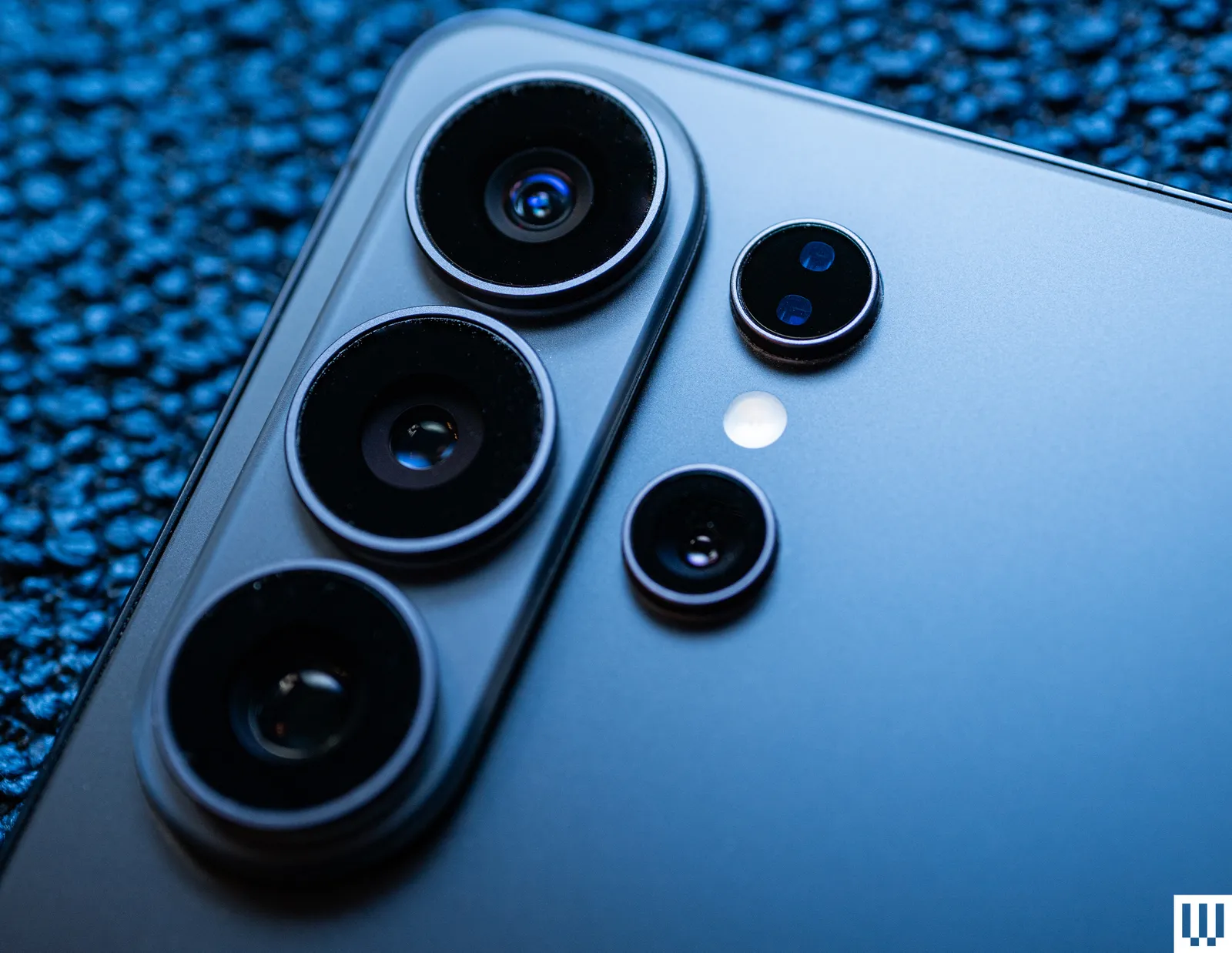
Image may contain Electronics and Camera Lens

Photograph: Julian Chokkattu

Samsung has made its Ultra smartphone more like the standard Galaxy S26 and S26+, with rounded corners instead of the boxy look of its predecessors. (It’s still the only one of the lot with the integrated S Pen stylus.) The overall design language is still quite dull, and the phone’s muted colors aren’t exciting (you can buy an iPhone 17 Pro in orange for crying out loud!).

Advertisement

Source link

Continue Reading

Tech

You might want to double-check before buying laptops from this Chinese brand

Published

on

Independent testing has recently uncovered what it describes as a potential CPU mislabeling issue affecting multiple Chuwi laptops. In its latest report, Notebookcheck found that the Chuwi CoreBook Plus, which is marketed as using an AMD Ryzen 5 7430U, actually shipped with the older Ryzen 5 5500U processor instead.

What makes the situation more unusual is that the laptop’s packaging, product pages, BIOS, and even Windows system tools reportedly identify the chip as a Ryzen 5 7430U, making it difficult for buyers to detect the discrepancy without deeper inspection. The discovery has raised concerns about transparency in the budget laptop market, especially since this isn’t the first time such a mismatch has been reported.

What exactly is the CPU controversy about?

According to Notebookcheck’s investigation, the CoreBook Plus is actively marketed with the Ryzen 5 7430U, a newer Zen 3 processor launched in 2023. However, after purchasing and opening a retail unit, the reviewers discovered the laptop actually contained the Ryzen 5 5500U, an older Zen 2 chip released in 2021.

The difference may not sound huge on paper, but the newer processor has a higher boost clock and double the L3 cache (16 MB vs 8 MB), which can translate to better performance in certain workloads. In other words, buyers may believe they are getting a newer chip typically found in laptops priced €100–€200 higher, potentially making the system appear like a better bargain than it actually is. Even more surprising is the fact that the laptop’s firmware and software identifiers were configured so that system utilities still report the CPU as a Ryzen 5 7430U, masking the true hardware unless the device is physically opened.

Is this an isolated case or something bigger?

Unfortunately, the CoreBook Plus may not be the only device involved. Earlier testing found a similar issue with another model, the Chuwi CoreBook X, which was also advertised with a Ryzen 5 7430U but reportedly shipped with the same Ryzen 5 5500U chip instead. With two separate laptop models showing the same mismatch, investigators say the issue appears unlikely to be a simple labeling mistake.

Chuwi has reportedly responded to inquiries by saying it is investigating the matter internally. However, Notebookcheck says the company also repeatedly asked the publication to take down its earlier reports, warning of potential legal action due to alleged reputational damage, which ultimately prompted the outlet to dig deeper into the issue.

For consumers, the takeaway is fairly simple: always verify specs, the best you can. If a laptop deal looks unusually good, it might be worth taking a closer look.

Advertisement

Source link

Continue Reading

Trending

Copyright © 2025