In recent years, people have been increasingly looking for new ways to form platonic connections, as loneliness and social isolation have become more prevalent.
In 2023, the U.S. Surgeon General went so far as to label this issue a public health crisis. Remote workers, who miss the everyday interactions found in an office, and younger individuals eager to create their adult social circles based on shared interests and hobbies, are among those seeking meaningful friendships.
Thanks to online dating apps, the stigma associated with finding connections online has largely faded away. This has welcomed a new wave of apps focused on fostering friendships and building local communities.
According to estimates from Appfigures, over a dozen local-focused friendship apps have collectively generated approximately $16 million in consumer spending in the U.S. so far this year. Some notable examples include Timeleft, Meet5, and Bumble’s BFF. Additionally, these apps have garnered approximately 4.3 million downloads thus far in 2025.
Advertisement
The apps aim to provide a less awkward solution than, for instance, approaching a stranger at the gym or local café and trying to strike up a conversation. These platforms clearly indicate that everyone using the app is looking for the same thing — friendship, not romance — making it much less intimidating to initiate conversations.
From major players like Meetup to newer ones like 222, there are plenty of apps that cater to the growing demand for meaningful friendships. We’ve compiled a list of them for you to try out.
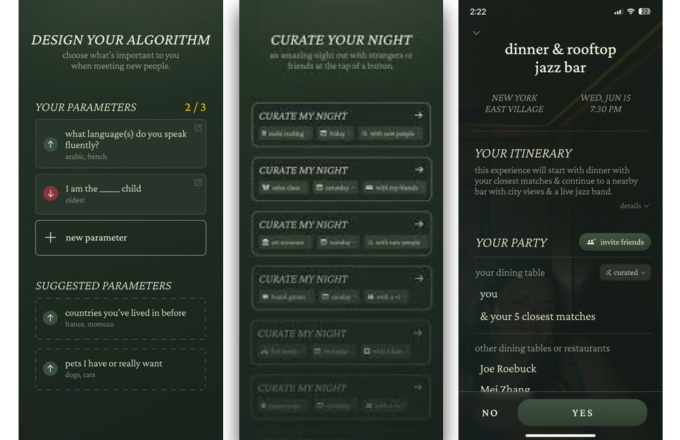
222
Image Credits:222 (screenshot)
The app 222 is an iOS-only social events platform that facilitates in-person meetups by pairing a group of strangers based on their personality test results. The app sends invitations to nearby public social events, such as wine bars and comedy clubs. There is then a vetting process, and selected participants are notified on the day of the event. A bonus for those who feel socially anxious: You’re allowed to bring a plus-one.
Techcrunch event
San Francisco, CA | October 13-15, 2026
Advertisement
The service charges a $22.22 curation fee or a monthly subscription for the same price.
BFF
Image Credits:Bumble
Dating giant Bumble is among the more established players to enter the friendship space, launching its friend-finding feature in 2016, which then spun out into a stand-alone app in 2023. The friend-making app has recently undergone a significant redesign, with an increased emphasis on facilitating group meetups, catering to users’ desires to grow their social circles.
BFF is available for free download on iOS and Android devices.
Advertisement
Clyx
Image Credits:Clyx
Clyx is another emerging app in the group-based social networking landscape, with a strong focus on discovering local events. The social platform helps users find community events by integrating data from platforms like Ticketmaster and TikTok. Additionally, Clyx allows users to upload their contact lists, helping them see which events their friends plan to attend. The app also includes a feature that recommends other users to connect with at these events.
As of now, Clyx operates exclusively in two cities: Miami and London. However, it has plans to expand to additional areas in the near future, with New York City and São Paulo at the top of the list. The app is available on the App Store and Google Play Store.
Les Amís
Image Credits:Les Amis
Les Amís is a friendship app tailored for women, transgender, and LGBTQ+ individuals that leverages AI to match users based on similar interests and encourages participation in local events, such as pottery classes, book clubs, and wine tastings. Matches are made every Monday, allowing users to chat and plan meetups later in the week.
Available on iOS and Android, Les Amís serves cities across Europe, including Amsterdam, Barcelona, Berlin, Madrid, Paris, and Stockholm. In the U.S., the app is available in Austin and New York, with plans to expand to Boston, Miami, and Los Angeles.
The app uses a paid membership model that varies by city, with fees of $70 in New York and €55 in Amsterdam.
Meetup
Image Credits:Meetup
The local event-discovery platform has been around since 2002, helping millions of users connect with others who share similar interests. Users can RSVP to events; join groups that cater to a variety of hobbies, professions, or social causes; and create their own groups and events. They can also chat with group members and post updates and photos from gatherings.
Meet5
Image Credits:Meet5
This European community-building app recently launched in the U.S., targeting users over 40 who want to meet new people in their area and participate in group activities such as picnics, concerts, and hiking. Notably, in a short time, there have been around 777,000 U.S. downloads so far across the App Store and Google Play Store, according to Appfigures estimates.
Pie
Image Credits:Pie
Pie is another one of the newer social apps on the market. It features an AI-driven quiz designed to predict which users are most likely to be compatible with each other. Each person who RSVPs to a Pie event takes a brief personality assessment, and the algorithm organizes attendees into groups of six, who are then added to a group chat within the Pie app, allowing them to interact with each other before the event.
Currently, the app is only available in Austin, Chicago, and San Francisco. Users can download Pie from the App Store and Google Play Store.
Advertisement
Timeleft
Image Credits:Timeleft
Timeleft is a relatively new platform that helps you organize weekly dinner dates with groups of strangers. The app uses a special algorithm to match you with others, taking into account your age, gender, and personality. Users are matched with four other people, but they only learn minor details about them the night before, including their occupations and zodiac signs.
Dinners take place at a selected restaurant on Wednesday evenings at 7:00 p.m. To help everyone break the ice, the app offers a game with conversation starters. After dinner, there is an after-party at a local bar.
Users can book dinners online or through the app. In terms of pricing, it varies depending on the country and restaurant. Users pay for a ticket up front and are responsible for covering their own dinner and drinks.
Washed Up
Image Credits:Washed Up
Washed Up is a social event discovery app that launched in early 2026, designed for people in the Los Angeles area who want an easier way to find things to do and meet new people.
The app helps users discover local events, such as concerts, trivia nights, and comedy shows, while also giving them a built-in way to connect with others who plan to attend. Instead of going to events alone, users can create or join “plans,” which are small group meetups tied to specific events. Users can browse these plans and request to join, chat with the group, and add new friends, making it easier to show up to events with people rather than by themselves.
Wyzr Friends is an activity-based friendship app designed for adults 40 and older, catering to empty nesters, those who are divorced, and other users seeking to connect with like-minded individuals. Users can thumbs up or down potential friends and arrange in-person activities based on shared interests, such as going to the movies or hiking.
It’s available on iOS and Android devices in the U.S., Canada, Australia, Ireland, the Philippines, Singapore, and Mexico.
Mmotion
Image Credits:Mmotion (Image has been modified)
Mmotion is a newly launched friendship app that blends location tracking with social discovery to help users connect with people nearby and explore new bars and restaurants in their area. Upon joining, users can participate in interest-based groups — such as hiking, basketball, or art — view a map of active users, and send messages to those nearby. The app also highlights new places on the map, making it easy to find a restaurant or venue to try.
Mmotion is currently only available to users in New York City on iOS and Android devices. Users must first submit an application to be considered.
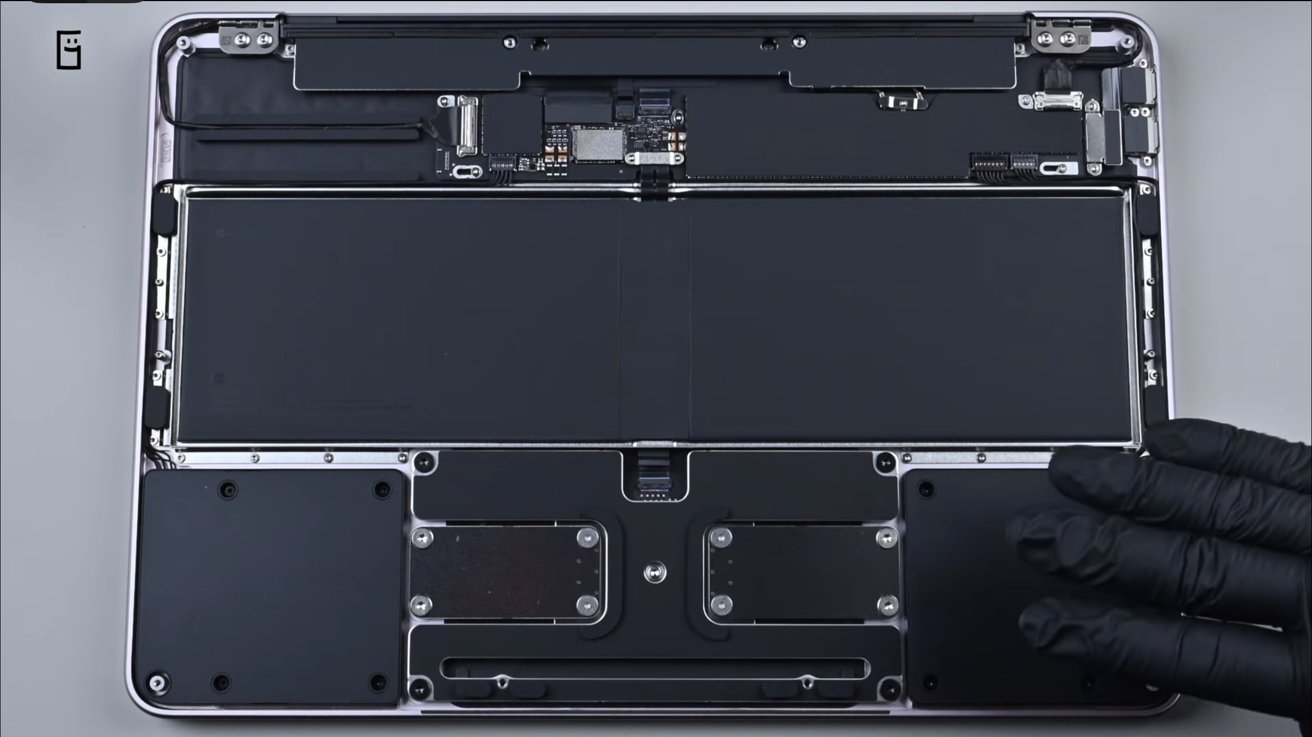
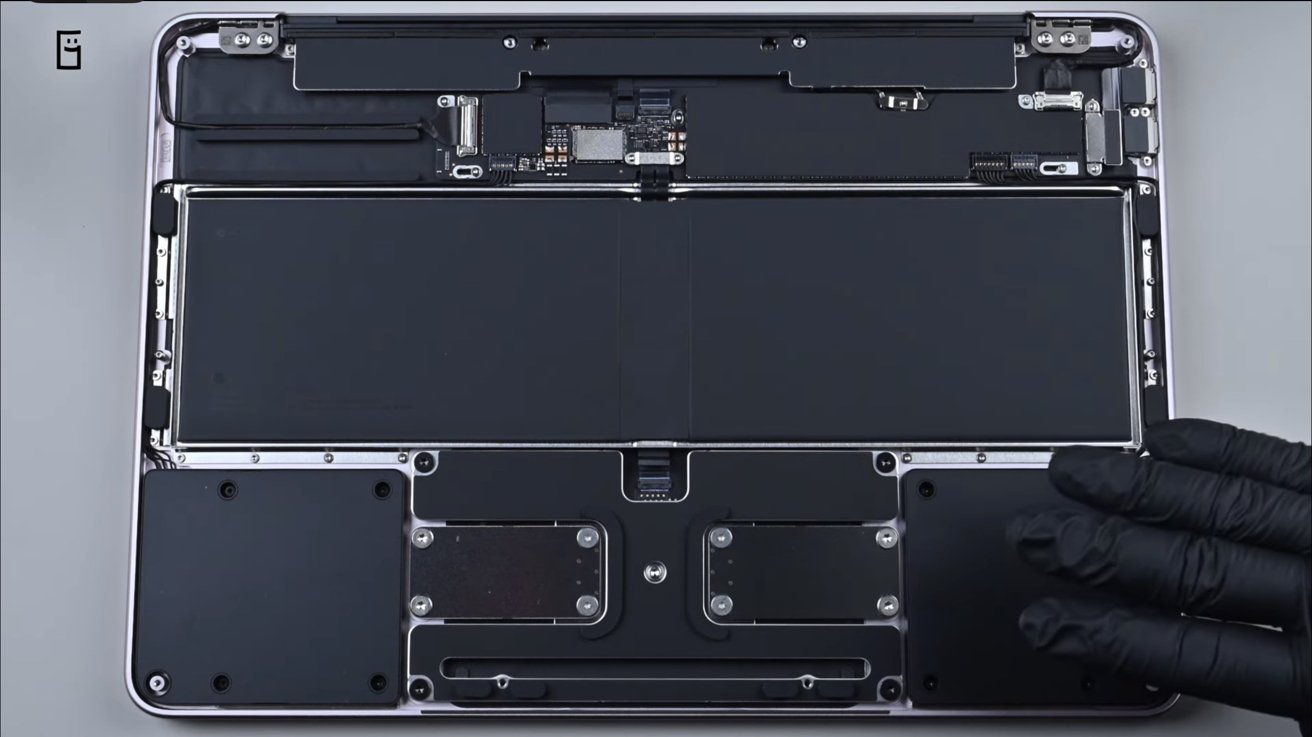
Getting 1TB of storage on the MacBook Neo is possible, assuming you have skill in micro soldering, the ability to remove the chip, and disdain for Apple’s warranty.
MacBook Neo teardown. Image credit: DirectorFeng
Apple introduced MacBook Neo on March 4 as its most affordable notebook, starting at $599 with 256GB of storage. It uses the same A18 Pro chip found in the iPhone 16 Pro models and includes 8GB of unified memory. The company offers the 13-inch system with either 256GB or 512GB of storage. And that’s it. There aren’t any larger options, and the chip is not socketed like it is in the Mac mini or Mac Studio. Continue Reading on AppleInsider | Discuss on our Forums
There may have been some extra incentive for the Trump administration to get the TikTok US deal done. According to a report from The Wall Street Journal, the Trump administration is set to receive a total of $10 billion in the deal that allowed TikTok to remain in the US. The new investors who acquired stakes in the US entity of TikTok already paid a $2.5 billion fee to the administration when the deal closed in January, but WSJ‘s latest report noted that the group of investors would continue to make payments until the total hits $10 billion.
After a group of investors, which includes Oracle along with the Silver Lake and MGX investment firms, acquired stakes in the US-based TikTok entity called TikTok USDS Joint Venture, the WSJ previously reported that the administration would receive a “multibillion-dollar fee” for its work on the deal. To better contextualize the recently-revealed $10 billion fee the Trump administration is receiving, the US entity of TikTok was valued at $14 billion by Vice President JD Vance.
The Trump administration has previously involved itself in major deals with other US corporations. Last year, the administration invested $8.9 billion into Intel and received a nearly 9 percent equity stake. In terms of unprecedented windfalls, the Trump administration also received a Boeing 747-8 as a gift from the Qatari government in May.
Long-timetechjournalistCliveThompson interviewed over 70 software developers at Google, Amazon, Microsoft and start-ups for a new article on AI-assisted programming. It’s title?
Published in the prestigious New York Times Magazine, the article even cites long-timeprogrammingguruKent Beck saying LLMs got him going again and he’s now finishing more projects than ever, calling AI’s unpredictability “addictive, in a slot-machine way.”
In fact, the article concludes “many Silicon Valley programmers are now barely programming. Instead, what they’re doing is deeply, deeply weird…”
Advertisement
Brennan-Burke chimed in: “You remember seeing the research that showed the more rude you were to models, the better they performed?” They chuckled. Computer programming has been through many changes in its 80-year history. But this may be the strangest one yet: It is now becoming a conversation, a back-and-forth talk fest between software developers and their bots…
For decades, being a software developer meant mastering coding languages, but now a language technology itself is upending the very nature of the job… A coder is now more like an architect than a construction worker… Several programmers told me they felt a bit like Steve Jobs, who famously had his staffers churn out prototypes so he could handle lots of them and settle on what felt right. The work of a developer is now more judging than creating…
If you want to put a number on how much more productive A.I. is making the programmers at mature tech firms like Google, it’s 10 percent, Sundar Pichai, Google’s chief executive, has said. That’s the bump that Google has seen in “engineering velocity” — how much faster its more than 100,000 software developers are able to work. And that 10 percent is the average inside the company, Ryan Salva, a senior director of product at the company, told me. Some work, like writing a simple test, is now tens of times faster. Major changes are slower. At the start-ups whose founders I spoke to, closer to 100 percent of their code is being written by A.I., but at Google it is not quite 50 percent. The article cites a senior principal engineer at Amazon who says “Things I’ve always wanted to do now only take a six-minute conversation and a ‘Go do that.” Another programmer described their army of Claude agents as “an alien intelligence that we’re learning to work with.” Although “A.I. being A.I., things occasionally go haywire,” the article acknowledges — and after relying on AI, “Some new developers told me they can feel their skills weakening.”
Still, “I was surprised by how many software developers told me they were happy to no longer write code by hand. Most said they still feel the jolt of success, even with A.I. writing the lines… ”
Advertisement
A few programmers did say that they lamented the demise of hand-crafting their work. “I believe that it can be fun and fulfilling and engaging, and having the computer do it for you strips you of that,” one Apple engineer told me. (He asked to remain unnamed so he wouldn’t get in trouble for criticizing Apple’s embrace of A.I.) He went on: “I didn’t do it to make a lot of money and to excel in the career ladder. I did it because it’s my passion. I don’t want to outsource that passion”… But only a few people at Apple openly share his dimmer views, he said.
The coders who still actively avoid A.I. may be in the minority, but their opposition is intense. Some dislike how much energy it takes to train and deploy the models, and others object to how they were trained by tech firms pillaging copyrighted works. There is suspicion that the sheer speed of A.I.’s output means firms will wind up with mountains of flabbily written code that won’t perform well. The tech bosses might use agents as a cudgel: Don’t get uppity at work — we could replace you with a bot. And critics think it is a terrible idea for developers to become reliant on A.I. produced by a small coterie of tech giants.
Thomas Ptacek, a Chicago-based developer and a co-founder of the tech firm Fly.io… thinks the refuseniks are deluding themselves when they claim that A.I. doesn’t work well and that it can’t work well… The holdouts are in the minority, and “you can watch the five stages of grief playing out.” “How things will shake out for professional coders themselves isn’t yet clear,” the article concludes. “But their mix of exhilaration and anxiety may be a preview for workers in other fields… Abstraction may be coming for us all.”
It’s Pi Day, and while we know that many of you celebrate privately, those that take a moment to put aside their contemplation of all things circular and join us on this mathematically-significant day will likely know the name [Cristiano Monteiro]. Since 2022 he’s made it a yearly tradition to put together a themed project every March 14th, and he’s just put the finishing touches on the 2026 edition.
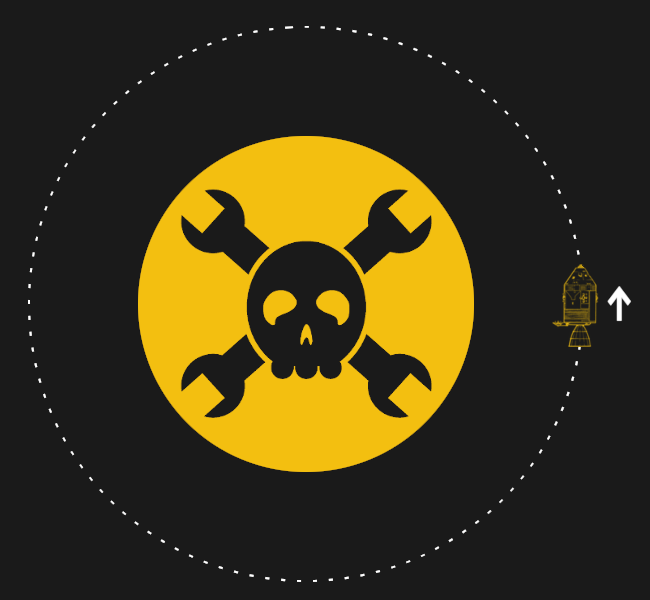
Generally, [Cristiano] sends in some interesting hardware device that visualizes the calculation of pi, but this year he surprised us a bit by delivering a software project. His Orbital Pi Simulator allows you to see what would happen to an orbiting spacecraft if it’s navigation system suddenly believed the value of pi was something different.
In broad strokes, we can imagine what would happen. If you plug in something significantly higher than 3.14, the orbit becomes elliptical to the point that the craft can fly off into deep space. Drop the value down, and the orbit will intersect with the Earth — a guaranteed recipe for a bad time.
The Kerbal Space Program players in the audience will no doubt point out that in the absence of drag a spacecraft in a stable orbit would more or less stay on that same trajectory indefinitely and not need to manually adjust its velocity in the first place. Further, they would argue that said spacecraft suddenly firing its thrusters retrograde because a flipped bit in its computer resulted in the value of pi suddenly being 1.2 isn’t very realistic. Those people would be correct, but they would also be no fun at parties.
Looking for the most recent Strands answer? Click here for our daily Strands hints, as well as our daily answers and hints for The New York Times Mini Crossword, Wordle, Connections and Connections: Sports Edition puzzles.
Today’s NYT Strands puzzle is fun and timely, relating to a certain big ceremony held this weekend. Some of the answers are difficult to unscramble, so if you need hints and answers, read on.
If that doesn’t help you, here’s a clue: The envelope, please.
Clue words to unlock in-game hints
Your goal is to find hidden words that fit the puzzle’s theme. If you’re stuck, find any words you can. Every time you find three words of four letters or more, Strands will reveal one of the theme words. These are the words I used to get those hints but any words of four or more letters that you find will work:
RATE, RATED, DATE, DOTE, DATED, DOTED, GATE, GATES, TROD, TRODS
Answers for today’s Strands puzzle
These are the answers that tie into the theme. The goal of the puzzle is to find them all, including the spangram, a theme word that reaches from one side of the puzzle to the other. When you have all of them (I originally thought there were always eight but learned that the number can vary), every letter on the board will be used. Here are the nonspangram answers:
SONG, ACTOR, ACTRESS, SOUND, DIRECTOR, PICTURE
Today’s Strands spangram
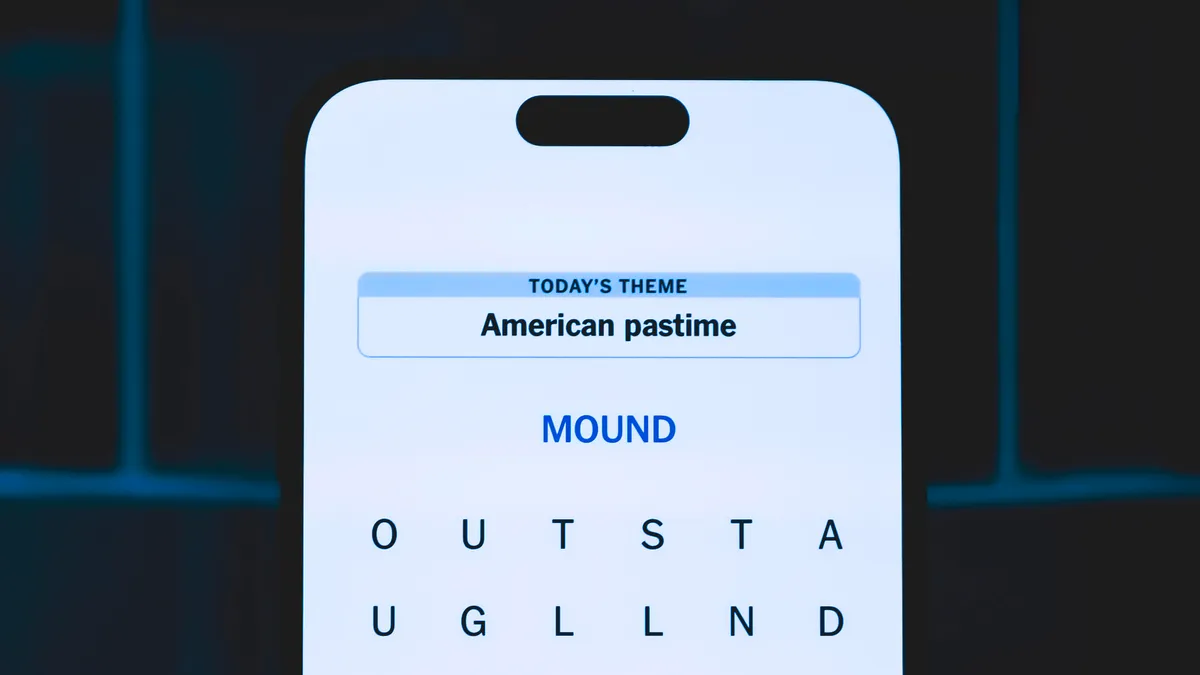
The completed NYT Strands puzzle for March 15, 2026.
NYT/Screenshot by CNET
Today’s Strands spangram is ACADEMYAWARD. To find it, start with the A that’s five letters down on the farthest-left row, and wind over and up.
If a zipper breaks, a 3D printer might not be the first tool one reaches for — but it’s more feasible than one might think. [MisterJ]’s zipper slider replacement is the kind of 3D print that used to be the domain of well-tuned printers only, but most hobbyist printers should be able to handle it nowadays.
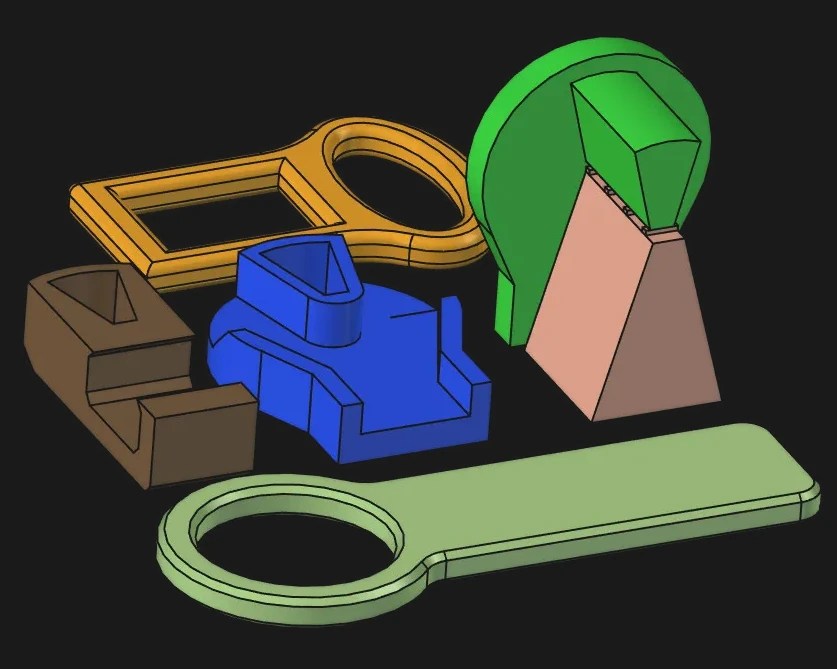
The two-part design allows installation without unsewing the zipper ends. Note the print orientation of the green part, which maximizes the strength of the peg by making the layer lines perpendicular to the load.
What really sets this design apart from other printed versions is its split construction. Putting a new slider onto a zipper usually requires one to free the ends of the zipper by unsewing them. [MisterJ]’s two-part design instead allows the slider to be assembled directly onto the zipper, without the hassle of unsewing and re-sewing anything. That’s a pretty significant improvement in accessibility.
Want to make some adjustments? Good news, because the files are in STEP format which any CAD program will readily understand. We remember when PrusaSlicer first gained native STEP support and we’re delighted that it’s now a common feature in 3D printer software.
[MisterJ]’s zipper slider design is available in a variety of common sizes, in both standard (zipper teeth face outward) and reverse (zipper teeth face inward) configurations. Naturally a metal slider is more durable than a plastic one, but being able to replace broken parts of a zipper with a 3D printer is a pretty handy thing. Speaking of which, you can also 3D print a zipper box replacement should the squarish bit on the bottom get somehow wrecked or lost.
Last election season, you might recall how the Trump campaign lied to everyone repeatedly about how his second administration would “rein in big tech,” and be a natural extension of the Lina Khan antitrust movement. As we noted at the time, that was always an obvious fake populist lie, but it was propped up anyway by a lazy press and a long line of useful idiots (including some purported “antitrust experts“.)
Trump’s latest betrayal to the the MAGA antitrust movement (that never really existed outside the skulls of rubes) is his DOJ’s surprise blindsiding of states by striking a pathetic settlement with Ticketmaster that doesn’t really fix the actual problem: monopoly.
The Biden DOJ and most US states sued Live Nation and its Ticketmaster subsidiary back in 2024, alleging that Live Nation has a monopoly on “the delivery of nearly all live music in America today.”
Advertisement
But while a new Trump settlement with the company requires $280 million in civil penalties and a 15% cap on service fees for people who want to use their amphitheaters, it backs off any attempt to pursue a break up of Live Nation and Ticketmaster, the one move that would actually (more permanently) help protect consumers, artists, and the live music market from predatory behavior.
“The case went to trial, and testimony began last week in US District Court for the Southern District of New York. But the US and Live Nation informed the court of a proposed settlement on March 8, taking state attorneys general by surprise. The judge presiding over the case reportedly said in court today that the way the settlement was announced “is absolutely unacceptable.
States reserving the right to continue litigation filed a motion for mistrial, saying they need time to prepare for a new trial and evaluate the terms of the settlement between the US and Live Nation. The “sudden disappearance” of the US from the case will likely give the jury the incorrect impression that Live Nation’s “antitrust violations have been cured or resolved, or that Proceeding Plaintiff States’ claims lack merit,” the states said.”
Advertisement
This was always going to be the outcome. There were constant signs. Trump is an autocrat, fascist, and opportunist who believes in nothing beyond his own pursuit of power and wealth. The corruption and autocracy was always going to dominate any serious Republican interest in antitrust (which, let’s be honest, even among Gail Slater types was historically inconsistent at best).
The U.S. press also played a giant role here. They spent years propping up Trump’s false claims he “wanted to rein in big tech,” when what the authoritarians really wanted was to abuse government power to scare (quite successfully as it turned out) tech companies away from doing even the most basic content moderation of right wing race-baiting propaganda online.
Now, unsurprisingly, here we are, staring down the barrel of democracy demolishing authoritarianism, with unchecked corporate power in full alignment with the effort.
Happy Pi Day! March 14 is the date that otherwise rational people celebrate this irrational number, because 3/14 contains the first three digits of pi. And hey, pi deserves a day. By definition, it’s the ratio of the circumference and diameter of a circle, but it shows up in all kinds of places that seem to have nothing to do with circles, from music to quantum mechanics.
Pi is an infinitely long decimal number that never repeats. How do we know? Well, humans have calculated it to 314 trillion decimal places and didn’t reach the end. At that point, I’m inclined to accept it. I mean, NASA uses only the first 15 decimal places for navigating spacecraft, and that’s more than enough for earthly applications.
The coolest thing, for me, is that there are many ways to approximate that value, which I’ve written about in the past. For instance, you can do it by oscillating a mass on a spring. But maybe the craziest method of all was proven in 1777 by George Louis Leclerc, Comte de Buffon.
Decades earlier, Buffon had posed this as a probability question in geometry: Imagine you have a floor with parallel lines separated by a distance d. Onto this floor, you drop a bunch of needles with length L. What is the probability that a needle will cross one of the parallel lines?
Advertisement
A picture will help you understand what’s happening. Let’s say I drop just two needles on the floor (feel free to replace the needles with something safer, like toothpicks). Also, just to make things easier later, we can say that the needle length and line spacing are equal (d = L).
You can see that one of the needles crosses a line and the other doesn’t. OK, but what are the chances? This is not the most trivial problem, but let’s think about just one dropped needle. We only care about two values—the distance (x) from the farther end of the needle to a line, and the angle of the needle (θ) with respect to a perpendicular (see the diagram below). If x is less than half the spacing between lines, we get a needle-crossing. As you can see, you’d get a higher probability with a smaller x or a smaller θ.
Apple’s 2026 may have gotten off to a new-product-filled start, but it’s far from done. There are plenty more iPhone and other announcements to come before the year’s end.
There’s still a lot to come from Apple in 2026
Between the launch of the M5 MacBook Air, MacBook Neo, iPhone 17e, and M5 Pro/Max MacBook Pros, Apple has made a solid start to the year. But with the annual WWDC event still to come, not to mention likely hardware announcements this fall, there is still plenty to look forward to. Apple is still expected to unveil a raft of software and hardware in the coming months, including some all-new products. Rumors of the company’s first-ever foldable iPhone continue to gather pace, and that’s just the beginning. Continue Reading on AppleInsider | Discuss on our Forums
Baidu, ByteDance, Tencent and MiniMax have all released OpenClaw-powered apps in recent weeks.
Alibaba is the latest Chinese tech giant to launch an OpenClaw-powered app, as state officials in the country move to curb usage of such apps amid growing cybersecurity concerns.
Since launching last November, OpenClaw has found itself a large and growing fanbase worldwide. The open-source AI model is easy to use, with simple use cases such as running communication apps, clearing inboxes, sending emails and managing calendars.
Latest figures show that the project has crossed more than 300,000 GitHub stars, becoming the most starred non-aggregator software project ever on the platform in just four months.
Advertisement
The low barrier to entry to use OpenClaw has made it a darling in China, pushing people to experiment with agentic AI. Dubbed ‘raising lobsters’, the agentic AI frenzy is pushing businesses in the country to launch new products built using OpenClaw.
Alibaba has just debuted ‘JVS Claw’, a mobile app that helps Android and iOS users without coding knowledge to install and deploy OpenClaw in minutes. The company’s enterprise mobile office platform is also integrated with the open-source project.
Earlier this week, Baidu released its own workspace management plug-in tool with OpenClaw called ‘DuClaw’. Last month, the company launched a program to allow developers to deploy OpenClaw on Baidu’s AI cloud infrastructure.
Meanwhile, Tencent launched ‘WorkBuddy’, an AI agent for workplace tasks powered with OpenClaw, and MiniMax, Zhipu and ByteDance each launched their own integrated products.
Advertisement
China has a market hungry for agentic AI, especially as enterprises lead its uptake and consumers experiment with the technology. US AI giants such as Anthropic, with its Cowork offering, and OpenAI don’t provide their services commercially in China, leaving even more space for Chinese companies attempting to take advantage of the interest.
The strong agentic AI uptake has moved authorities in Beijing to restrict state-run enterprises and government agencies from running OpenClaw apps on office computers, fearing potential cybersecurity risks.
However, the fears are not widespread, with some municipalities offering subsidies for deploying the AI platform, according to Bloomberg.
Meanwhile, Meta has bought Moltbook, a Reddit-style social media network created with OpenClaw where only AI agents can post, and humans can observe. The platform went viral after observers watched as AI agents generated a new religion.
Don’t miss out on the knowledge you need to succeed. Sign up for the Daily Brief, Silicon Republic’s digest of need-to-know sci-tech news.







 In broad strokes, we can imagine what would happen. If you plug in something significantly higher than 3.14, the orbit becomes elliptical to the point that the craft can fly off into deep space. Drop the value down, and the orbit will intersect with the Earth — a guaranteed recipe for a bad time.