Eight years ago, Beadnell in Northumberland introduced a rule requiring all homes built on new sites to be used as permanent residences – preventing second homes and holiday lets.
The move came as the scale of the problem became stark – according to the 2021 census, around 61 per cent of the roughly 750 homes in the village were second homes or holiday lets.
Now, locals say the restriction has helped bring more year-round residents into the village and strengthened the community.
![]() Beadnell, Northumberland, has banned second homes. (Image: Katielee Arrowsmith / SWNS)
Beadnell, Northumberland, has banned second homes. (Image: Katielee Arrowsmith / SWNS)
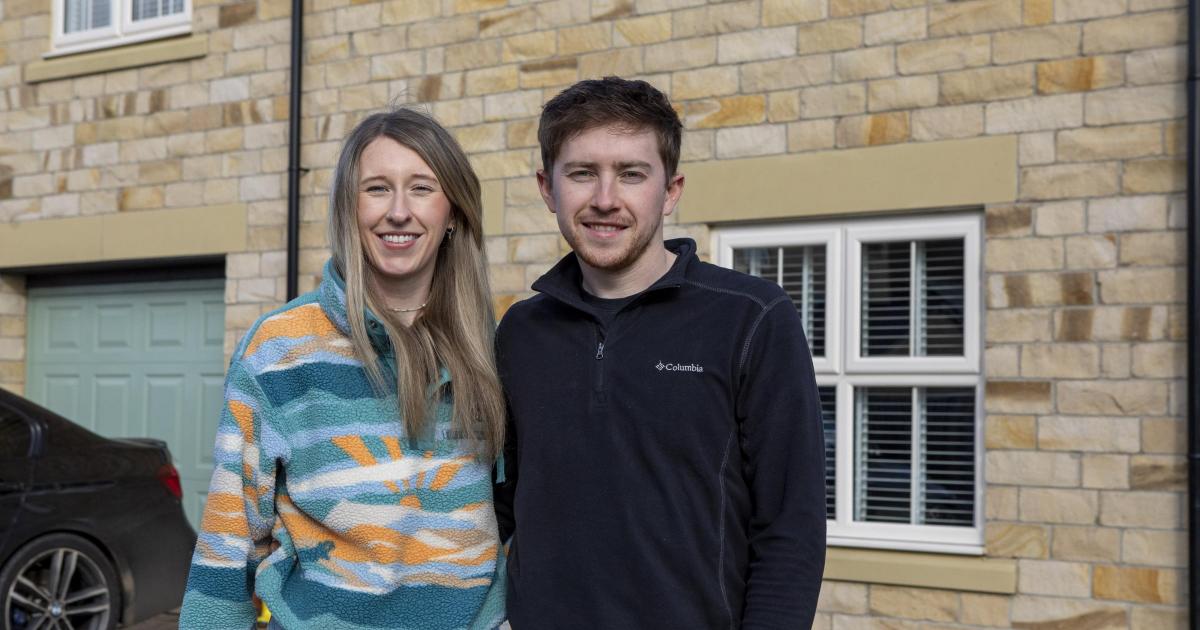
Chris, 34, moved to Beadnell with partner Olivia Coyle, 30, eight months ago after spending childhood holidays there.
![]() Olivia Coyle and Chris Dobson with Ralf the samoyed, homeowners in The Kilns estate which can only be lived in as permanent residences. (Image: Katielee Arrowsmith / SWNS)
Olivia Coyle and Chris Dobson with Ralf the samoyed, homeowners in The Kilns estate which can only be lived in as permanent residences. (Image: Katielee Arrowsmith / SWNS)
He said: “There’s certainly more in terms of entertainment, pubs, cafes and that sort of thing compared to how it used to be.”
Olivia added: “One of the main reasons we wanted to buy here was because we didn’t want to be living next door to empty homes.”
Chris said the village still quietens down outside peak tourist months – but no longer feels deserted.
The Northumberland village was among the first communities to act against the explosion of second homes.
![]() Beadnell, Northumberland. (Image: Katielee Arrowsmith / SWNS)
Beadnell, Northumberland. (Image: Katielee Arrowsmith / SWNS)
It followed the example of places such as St Ives in Cornwall, where residents voted in 2016 to ensure new houses could only be used as a principal residence.
Norfolk coastal communities, including Burnham Market, have also adopted similar restrictions.
But the coastal beauty spot is still heavily dominated by holiday properties.
![]() The Kilns estate which can only be lived in as permanent residences. (Image: Katielee Arrowsmith / SWNS)
The Kilns estate which can only be lived in as permanent residences. (Image: Katielee Arrowsmith / SWNS)
Jennifer Hall, 75, whose family has lived in the village for centuries, said: “In the summer, the place is packed out – you can’t get into a bar or book a table in a restaurant.
“Every place is crowded.”
But she explained that it is still quieter in the winter, adding: “There’s no lights in any of the windows.
“If you’re the only elderly person living on a particularly street, it can be lonely.”
Mrs Hall, whose ancestors arrived in the village in the 1600s, said tourism has long been part of Beadnell’s history.
![]() Jennifer Hall’s family has lived in Beadnell since the 1680’s. (Image: Katielee Arrowsmith / SWNS)
Jennifer Hall’s family has lived in Beadnell since the 1680’s. (Image: Katielee Arrowsmith / SWNS)
Her great-grandmother even built the village’s first hotel after marrying into a local fishing family.
She said: “It’s still a wonderful place and a lovely community, but it’s different.
“It was not until the early 2000s that we started having these commercial lets. They were built as investments.
“They’re also little tourist factories, if you like.”
Mrs Hall said soaring property prices have made it increasingly difficult for young locals to stay in the area.
She said: “Young people – perhaps working in the tourist industry and not particularly well paid – can’t afford to buy the types of houses that they’re cleaning.
“They can’t get private lets either, because the owners evict tenants and turn them into holiday lets.”
Others say second-home owners still play a vital role in the village economy.
Val Graham, 62, who runs Beadnell’s village shop, warned businesses rely heavily on visiting homeowners.
She said: “Without second homes and holiday lets, small businesses in Beadnell wouldn’t survive.
“Most of these second home owners and families support the small local businesses throughout the year, not just during holiday season.”
The debate has intensified since councils were given powers last year to double council tax on second homes.
Christopher Brown, a retired solicitor who bought a holiday flat in Beadnell in 2000 before moving there permanently, says the restrictions on new homes are understandable.
![]() Christopher Brown, Home owner and holiday let owner Beadnell, Northumberland, who have banned second homes. (Image: Katielee Arrowsmith / SWNS)
Christopher Brown, Home owner and holiday let owner Beadnell, Northumberland, who have banned second homes. (Image: Katielee Arrowsmith / SWNS)
He said: “I think it’s a fair-minded thing, because it can then begin to build and strengthen the actual community and increase the size of it.”
But he questioned whether the council tax crackdown was the right approach, as less could be spent in local pubs and restaurants.
Mr Brown: “The double council tax is a bit of a blunt tool to extract money from people.
“You’re going from paying £2,500 up to £5,000 – that is £2,500 that could be spent in local restaurants and other businesses.”