

Business
What Would It Take to Tip the Economy into Recession?



Julian Lin is a financial analyst. He finds undervalued companies with secular growth that appreciate over time. His approach is to look for companies with strong balance sheets and management teams in sectors with long growth runways.
Julian is the leader of the investing group Best Of Breed Growth Stocks where he only shares positions in stocks which have a large probability of delivering large alpha relative to the S&P 500. He also combines growth-oriented principles with strict valuation hurdles to add an additional layer to the conventional margin of safety. Features include: exclusive access to Julian’s highest conviction picks, full stock research reports, real-time trade alerts, macro market analysis, individual industry reports, a filtered watchlist, and community chat with access to Julian 24/7. Learn more.
Analyst’s Disclosure: I/we have a beneficial long position in the shares of U, GOOGL, ADBE either through stock ownership, options, or other derivatives. I wrote this article myself, and it expresses my own opinions. I am not receiving compensation for it (other than from Seeking Alpha). I have no business relationship with any company whose stock is mentioned in this article.
Seeking Alpha’s Disclosure: Past performance is no guarantee of future results. No recommendation or advice is being given as to whether any investment is suitable for a particular investor. Any views or opinions expressed above may not reflect those of Seeking Alpha as a whole. Seeking Alpha is not a licensed securities dealer, broker or US investment adviser or investment bank. Our analysts are third party authors that include both professional investors and individual investors who may not be licensed or certified by any institute or regulatory body.
Business
Thomas Friedman Warns of Perils in Trump’s Iran War, Questions Path to Endgame in Latest Columns
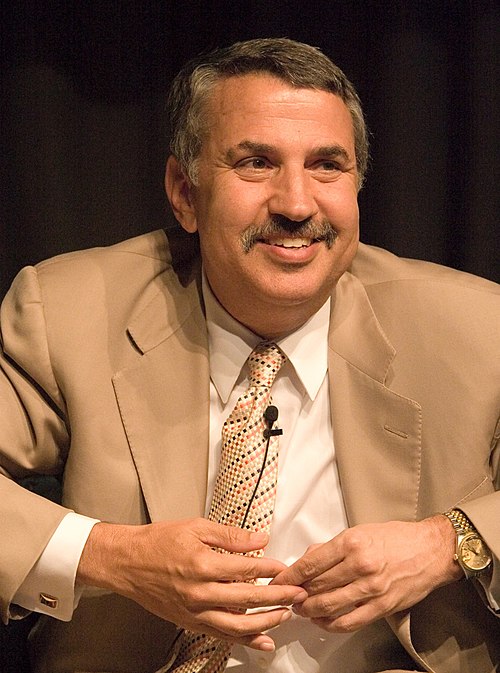
Pulitzer Prize-winning New York Times columnist Thomas L. Friedman has emerged as one of the most prominent voices scrutinizing the ongoing U.S.-led military campaign against Iran, warning that President Donald Trump’s administration lacks a viable strategy to conclude the conflict and rebuild stability in the region.

In his most recent opinion piece published March 9, 2026, titled “Trump Has No Idea How to End the War With Iran,” Friedman expressed deep concern over the escalation that began with joint U.S.-Israeli strikes in early March. The column, which has garnered widespread attention, argues that while the military phase may have achieved initial objectives, the absence of a clear postwar plan risks prolonged instability.
Friedman, a three-time Pulitzer winner known for his decades of Middle East reporting and analysis, wrote that the war—launched in coordination with Israeli Prime Minister Benjamin Netanyahu—has entered its second week without resolution. He posed a stark question: “What if the necessary is impossible?” referring to the challenge of toppling Iran’s regime while avoiding a power vacuum or broader regional chaos.
The piece builds on Friedman’s earlier March 2 column, “How to Think About Trump’s War With Iran,” where he urged readers to embrace complexity rather than seek simplistic narratives. “To think clearly about Middle East wars, you need to hold multiple thoughts in your head at the same time,” he wrote. He described Iran’s approach as a “strategy of out-crazy,” suggesting Tehran deliberately escalates unpredictably to deter adversaries and test U.S. resolve.
Friedman’s analysis comes amid fresh developments. In an exclusive interview on NBC’s “Meet the Press” aired March 15, 2026, he elaborated on Iran’s tactics, explaining how the regime uses asymmetric warfare and proxy forces to prolong conflict. He emphasized the critical “morning after the morning after”—the long-term aftermath—will determine whether Iran’s leadership survives or collapses.
The columnist appeared on MSNBC’s “Morning Joe” earlier in March to discuss U.S. strikes, describing the current foreign policy team as “not the A-Team of American foreign policy.” He voiced worries about key figures in the administration and their approach to the crisis.
Friedman’s commentary reflects his long-standing expertise on Iran and the broader Middle East. Having covered the region since the 1980s, including stints as Beirut and Jerusalem bureau chief for The Times, he has authored influential books such as “From Beirut to Jerusalem” and “The Lexus and the Olive Tree.” His columns often blend personal reporting with geopolitical insight.
The Iran conflict intensified following a series of provocations, including alleged Iranian-backed attacks on U.S. interests. Trump, in a recent phone interview with “Meet the Press,” claimed Iran had been “defeated militarily” and was open to negotiations, though he added the terms were “not good enough yet.” He declined to specify demands.
Friedman has critiqued this optimism, noting historical patterns where military victories fail to translate into political solutions. In his March 9 piece, he referenced past U.S. interventions, warning against assuming bombing alone can foster democracy or stability. “Bombing Iran to rubble won’t give it life,” he wrote in a related commentary syndicated March 12.
The columns have sparked debate. Some conservative outlets praised Trump’s decisiveness, while others echoed Friedman’s caution about unintended consequences. A March 15 piece in the Star Tribune republished his views under the headline “Thomas Friedman: Bombing Iran to rubble won’t give it life,” amplifying concerns about reconstruction and humanitarian fallout.
Friedman’s writing extends beyond Iran. In February, he critiqued Netanyahu’s influence on U.S. policy and addressed domestic issues, such as a February 2 column on Texas voters emphasizing neighborly relations over division. His January pieces examined immigration enforcement in Minneapolis—his hometown—and broader threats to democracy.
Yet the Iran war dominates recent output. On March 15, Friedman published “How Minnesota Beat Trump,” reflecting on local resilience amid national polarization, but foreign affairs remain central.
Observers note Friedman’s style: accessible yet layered, urging nuance in polarized times. He often draws from personal experience, having visited Tehran in 1996 and tracked Iran’s evolution.
As the conflict evolves, Friedman continues advocating for strategic clarity. He has suggested potential diplomatic off-ramps, though he remains skeptical of quick resolutions under current leadership.
The columnist’s platform—appearing Sundays and Wednesdays in The Times—ensures wide reach. His X account (@tomfriedman) shares updates, with followers engaging actively on the Iran pieces.
Friedman’s warnings resonate amid reports of civilian casualties, oil market volatility and allied concerns over escalation. European leaders have called for de-escalation, while domestic polls show divided American opinion on the war.
For Friedman, the stakes transcend immediate battles. He frames the conflict as a test of U.S. leadership in a multipolar world, where alliances fray and adversaries exploit divisions.
Whether his counsel influences policy remains uncertain. Trump has dismissed much media criticism, focusing on strength and deal-making.
Still, Friedman’s voice—rooted in decades of on-the-ground reporting—continues shaping discourse. As the war enters its next phase, his insistence on holding “everything—and its opposite—at the same time” offers a framework for grappling with uncertainty.
The coming weeks may prove pivotal. If negotiations emerge, Friedman’s analysis of Iran’s “out-crazy” playbook could inform approaches. If fighting persists, his endgame concerns may prove prescient.
At 72, Friedman shows no sign of slowing. His columns remain essential reading for understanding one of the most consequential foreign policy challenges of the era.
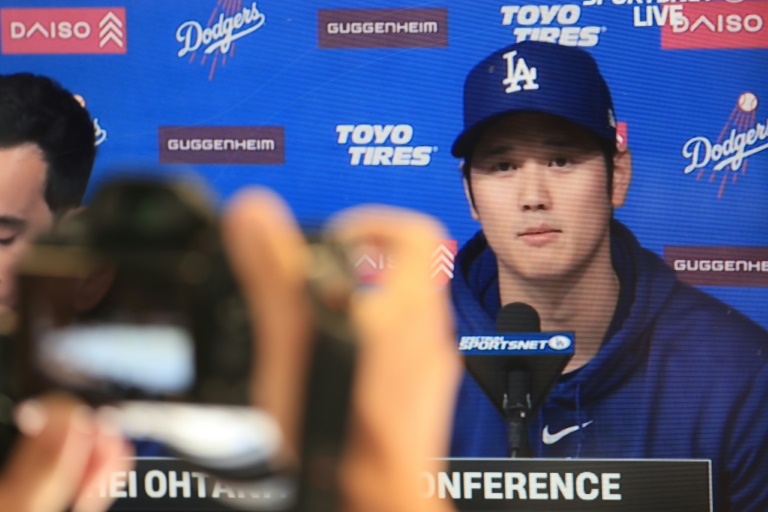
Miami, Florida — Shohei Ohtani delivered yet another signature moment on the international stage, crushing a 427-foot leadoff home run to right field in the bottom of the first inning during Japan’s World Baseball Classic quarterfinal clash against Venezuela on March 14, 2026. The blast, clocked at an exit velocity of 113.6 mph off a slider, tied the game at 1-1 early and showcased the Los Angeles Dodgers superstar’s continued offensive dominance.
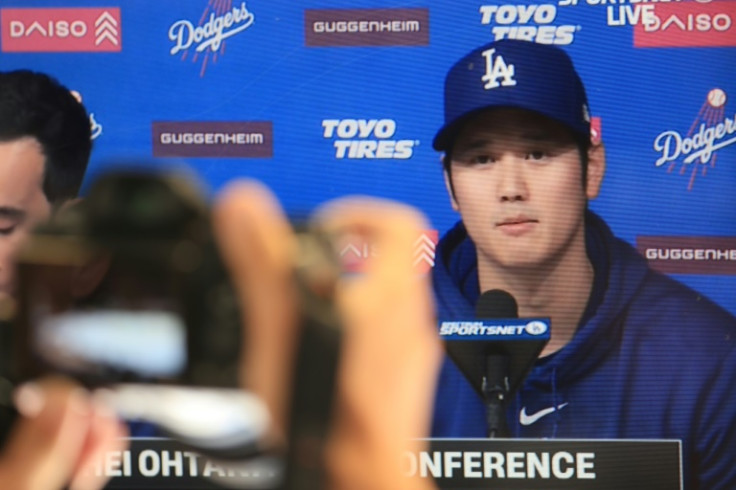
Despite Ohtani’s heroics, Japan fell to Venezuela 8-5, ending their title defense and marking their first WBC loss since 2017. Venezuela advanced to the semifinals with a barrage of three home runs and resilient relief pitching that silenced much of Japan’s potent lineup.
Ohtani, playing as Japan’s designated hitter and not expected to pitch in the tournament, finished the WBC with impressive numbers: a .462 batting average, .611 on-base percentage, seven RBIs, three home runs and a 1.842 OPS. His performance included a grand slam in an earlier rout of Taiwan and consistent production that kept Japan competitive throughout the tournament.
The leadoff homer answered Venezuela’s own first-pitch blast from Ronald Acuña Jr., setting up a high-stakes duel between two of baseball’s brightest stars. Ohtani’s shot traveled 426 feet according to Statcast, underlining his elite power even in a format where he has focused solely on hitting while managing his pitching recovery.
Ohtani has been ramping up his throwing program during the WBC to prepare for his return to the mound with the Dodgers. On March 12, he threw a simulated four-inning live batting-practice session against Team Japan hitters, tossing 59 pitches and striking out seven of 18 batters faced. Dodgers officials have monitored his progress closely from afar, with reports indicating he remains on track to join the Opening Day rotation despite the break from game action.
The two-way phenom underwent elbow surgery following the 2023 season and has gradually rebuilt his pitching workload. In limited mound time during the 2025 regular season, he posted a 2.87 ERA over 47 innings with 62 strikeouts and a 1.04 WHIP in 14 appearances. His offensive output remained elite, contributing to the Dodgers’ continued success, including multiple World Series appearances since his blockbuster signing.
Ohtani’s participation in the WBC has provided valuable at-bats and a controlled environment to build arm strength without the pressures of MLB regular-season innings limits. While he reiterated there was “no chance” of pitching for Japan unless injuries necessitated it, his live BP session demonstrated progress toward full two-way play in 2026.
The loss to Venezuela stung for Japan, a team loaded with talent including Seiya Suzuki and Masataka Yoshida. Venezuela’s victory highlighted the growing depth of international baseball, as their lineup neutralized threats and capitalized on opportunities.
For Ohtani, the tournament served as a bridge between spring training and the MLB season. The Dodgers, fresh off strong campaigns, expect their $700 million investment to continue paying dividends as he resumes dual roles. His presence has already transformed the franchise, drawing global attention and bolstering a roster featuring other high-profile talents.
As Ohtani prepares to rejoin the Dodgers—potentially heading stateside soon after the elimination—focus shifts to his integration into the rotation and lineup. Early reports suggest minimal adjustments needed for pitch counts early in the year, with the organization confident in his readiness.
Ohtani’s WBC farewell included lighthearted moments, such as joking with Venezuela’s dugout after an intentional walk, underscoring his competitive yet affable demeanor. Fans worldwide celebrated his contributions, with social media buzzing over the leadoff homer and overall tournament impact.
Baseball enthusiasts now await Ohtani’s return to Dodger Stadium, where his unique skill set could propel Los Angeles toward another deep postseason run. At 31, the four-time MVP shows no signs of slowing, blending power hitting with pitching prowess that continues to redefine the sport.
The 2026 season promises more milestones for Ohtani, whether crushing home runs, baffling hitters on the mound or inspiring a new generation of players. His latest chapter in Miami reminded everyone why he remains one of baseball’s most captivating figures.


Small deep value individual investor, with a modest private investment portfolio, split approx. 50%-50% between shares and call options. I have a B.Sc. in aeronautical engineering and over 6 years of experience as an engineering consultant in the aerospace sector. The latter statement is not relevant in any way whatsoever to my investment style, but I thought to add it for self-indulgent purposes. I have a contrarian investment style, highly risky, and often dealing with illiquid options. How illiquid? Well, you can land a Jumbo on the spread and still have clearance for take-off. From time to time, I buy shares, mostly to not be categorized as a degen by my fellow investor friends, therefore the 50%-50% allocation. My timeframe tends to be between 3-24 months.I like stocks that have experienced a recent sell-off due to non-recurrent events, particularly when insiders are buying shares at the new lower price. This is how I often screen through thousands of stocks, mainly in the US, although I may own shares in banana republics. I use fundamental analysis to check the health of companies that pass through my screening process, their leverage, and then compare their financial ratios with the sector, and industry median and average. I also do professional background checks of each insider who purchased shares after the recent sell-off. I use technical analysis to optimize the entry and exit points of my positions. I mainly use multicolor lines for support and resistance levels on weekly charts. From time to time I draw trend lines, taken for granted, in multicolor patterns. Note: I tried to keep my introduction as real, and authentic as possible. I dislike empty suits, high-level BS, deep-level BS, unnecessary jargon, and self-indulgent, third-person written introductions with an air of superiority.Thanks for reading my introduction!
Analyst’s Disclosure: I/we have no stock, option or similar derivative position in any of the companies mentioned, and no plans to initiate any such positions within the next 72 hours. I wrote this article myself, and it expresses my own opinions. I am not receiving compensation for it (other than from Seeking Alpha). I have no business relationship with any company whose stock is mentioned in this article.
Seeking Alpha’s Disclosure: Past performance is no guarantee of future results. No recommendation or advice is being given as to whether any investment is suitable for a particular investor. Any views or opinions expressed above may not reflect those of Seeking Alpha as a whole. Seeking Alpha is not a licensed securities dealer, broker or US investment adviser or investment bank. Our analysts are third party authors that include both professional investors and individual investors who may not be licensed or certified by any institute or regulatory body.
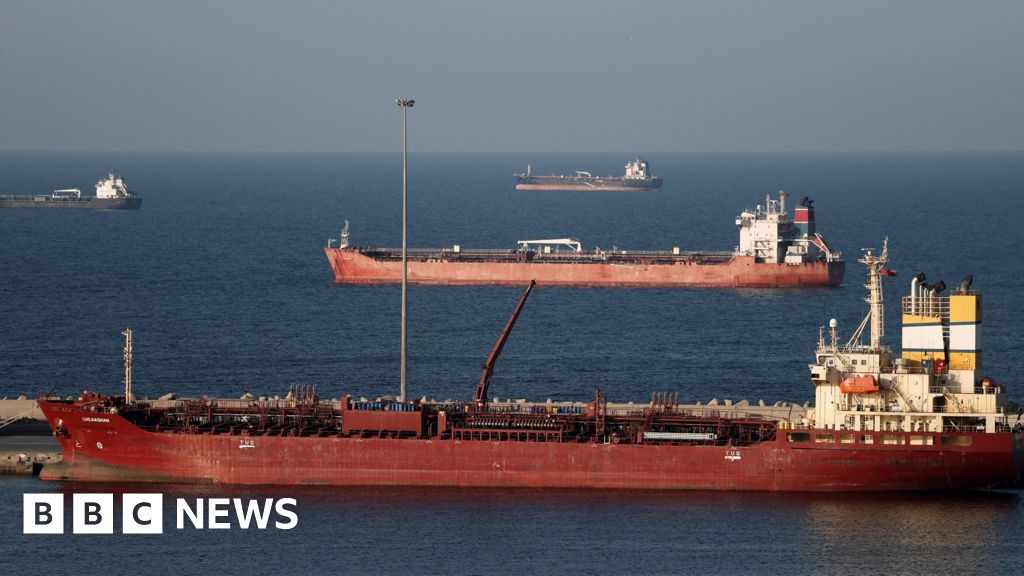
The energy secretary also hinted at the possibility of sending minesweeping drones to the region.


Rida Morwa is a former investment and commercial Banker, with over 35 years of experience. He has been advising individual and institutional clients on high-yield investment strategies since 1991. Rida Morwa leads the Investing Group High Dividend Opportunities where he teams up with some of Seeking Alpha’s top income investing analysts. The service focuses on sustainable income through a variety of high yield investments with a targeted safe +9% yield. Features include: model portfolio with buy/sell alerts, preferred and baby bond portfolios for more conservative investors, vibrant and active chat with access to the service’s leaders, dividend and portfolio trackers, and regular market updates. The service philosophy focuses on community, education, and the belief that nobody should invest alone. Learn More.
Analyst’s Disclosure: I/we have a beneficial long position in the shares of TPVG either through stock ownership, options, or other derivatives. I wrote this article myself, and it expresses my own opinions. I am not receiving compensation for it (other than from Seeking Alpha). I have no business relationship with any company whose stock is mentioned in this article.
Beyond Saving, Philip Mause, and Hidden Opportunities, all are supporting contributors for High Dividend Opportunities. Any recommendation posted in this article is not indefinite. We closely monitor all of our positions. We issue Buy and Sell alerts on our recommendations, which are exclusive to our members.
Seeking Alpha’s Disclosure: Past performance is no guarantee of future results. No recommendation or advice is being given as to whether any investment is suitable for a particular investor. Any views or opinions expressed above may not reflect those of Seeking Alpha as a whole. Seeking Alpha is not a licensed securities dealer, broker or US investment adviser or investment bank. Our analysts are third party authors that include both professional investors and individual investors who may not be licensed or certified by any institute or regulatory body.

The Investment Doctor is a financial writer, highlighting European small-caps with a 5-7 year investment horizon. He strongly believes a portfolio should consist of a mixture of dividend and growth stocks.
He is the leader of the investment group European Small Cap Ideas which offers exclusive access to actionable research on appealing Europe-focused investment opportunities not found elsewhere. The a focus is on high-quality ideas in the small-cap space, with emphasis on capital gains and dividend income for continuous cash flow. Features include: two model portfolios – the European Small Cap Ideas portfolio and the European REIT Portfolio, weekly updates, educational content to learn more about the European investing opportunities, and an active chat room to discuss the latest developments of the portfolio holdings. Learn more.
Analyst’s Disclosure: I/we have no stock, option or similar derivative position in any of the companies mentioned, and no plans to initiate any such positions within the next 72 hours. I wrote this article myself, and it expresses my own opinions. I am not receiving compensation for it (other than from Seeking Alpha). I have no business relationship with any company whose stock is mentioned in this article.
Seeking Alpha’s Disclosure: Past performance is no guarantee of future results. No recommendation or advice is being given as to whether any investment is suitable for a particular investor. Any views or opinions expressed above may not reflect those of Seeking Alpha as a whole. Seeking Alpha is not a licensed securities dealer, broker or US investment adviser or investment bank. Our analysts are third party authors that include both professional investors and individual investors who may not be licensed or certified by any institute or regulatory body.
Business
Lionel Messi vs. Lamine Yamal Showdown Scrapped as 2026 Finalissima Between Argentina and Spain Cancelled
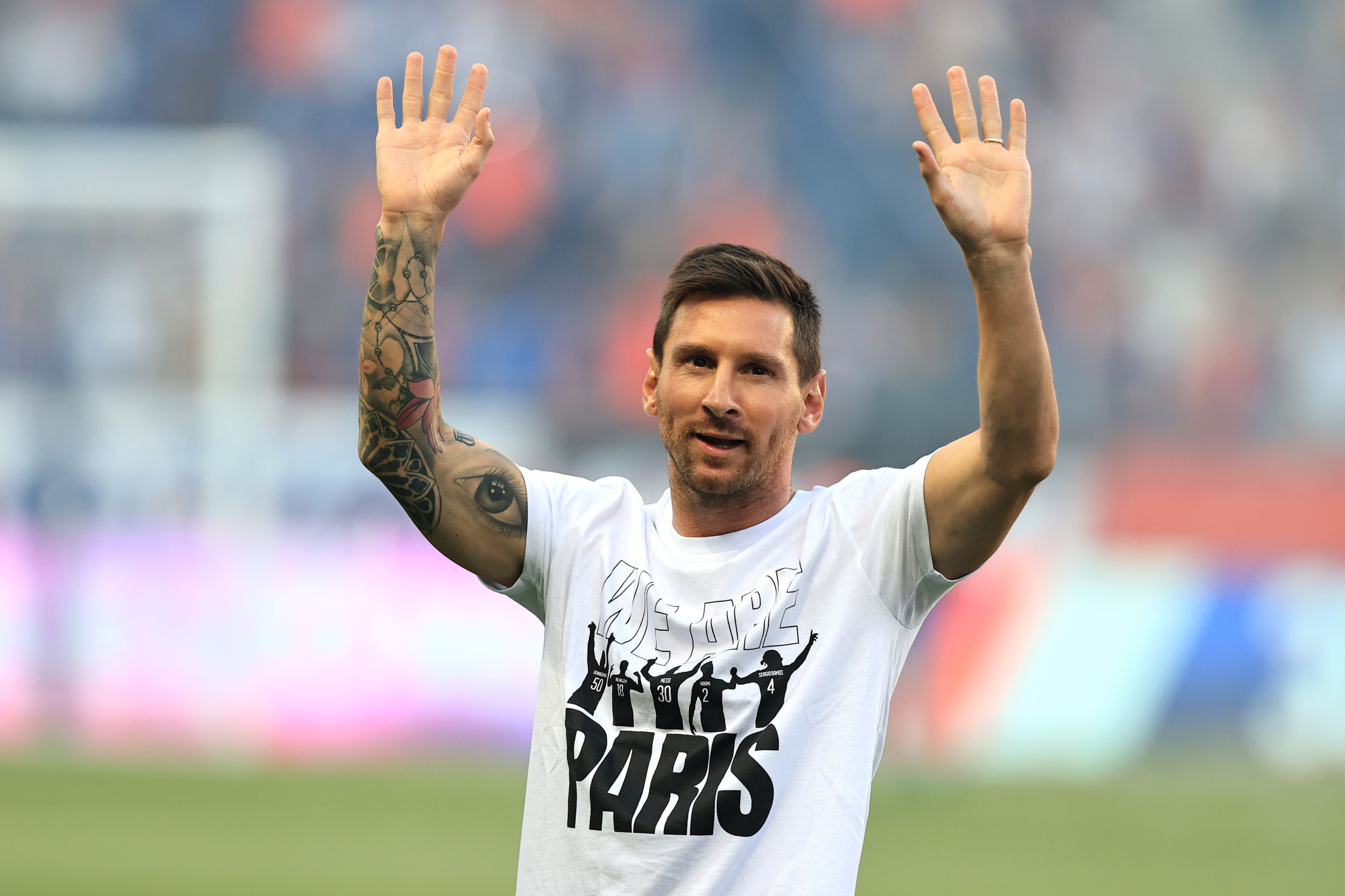
ZURICH — The much-anticipated 2026 Finalissima between Argentina and Spain has been officially cancelled, dashing hopes of a generational clash between Lionel Messi and teenage sensation Lamine Yamal.
UEFA announced the decision Sunday, March 15, 2026, citing the “current political situation in the region” that made it impossible to stage the match as planned in Qatar on March 27. The governing body expressed regret over the cancellation after failed attempts to relocate the game, thanking Real Madrid and Qatari authorities for their cooperation in exploring alternatives.

The Finalissima, pitting the winners of UEFA EURO 2024 (Spain) against CONMEBOL Copa América 2024 champions (Argentina), was set for Lusail Stadium in Doha — the same venue that hosted the 2022 World Cup final where Messi led Argentina to victory. The matchup promised fireworks: Messi, the 38-year-old icon still starring for Inter Miami and Argentina, against Yamal, the 18-year-old Barcelona winger who dazzled at EURO 2024 and has emerged as one of Europe’s brightest talents.
Fan excitement had built around the “Messi vs. Yamal” narrative, with social media buzzing over a potential first meeting between the veteran maestro and the young star often dubbed his heir apparent. The game would have tested Argentina’s veteran core against Spain’s dynamic, youthful squad under coach Luis de la Fuente.
The cancellation stems from escalating conflict in the Middle East, including U.S.-Israel strikes on Iran and regional instability that prompted Qatar to suspend domestic leagues and reconsider hosting international events. UEFA stated that despite “strong determination to save the important fixture,” relocation proved unfeasible at short notice.
Proposals included shifting the match to Real Madrid’s Santiago Bernabéu with a 50-50 fan split, but Argentina’s Football Association (AFA) rejected it, citing home advantage concerns for Spain. Other ideas — a two-legged tie in Madrid and Buenos Aires, or neutral European venues — also failed to gain acceptance. Argentina reportedly countered with post-World Cup scheduling or different sites, but Spain cited calendar constraints and no available dates.
UEFA emphasized that each alternative “ultimately proved unacceptable to the Argentinian Football Association.” The AFA has not issued a detailed public response, though sources indicate frustration over leaked Bernabéu proposals and perceived bias toward European interests.
The decision leaves both federations to arrange separate international friendlies in the March window. Argentina, fresh off Copa América success, may seek matches in the U.S. or elsewhere to maintain momentum ahead of World Cup qualifying. Spain, riding high from EURO triumph, could face other European sides or South American opponents.
The Finalissima’s fate highlights challenges in intercontinental scheduling amid geopolitical tensions. The event, revived in 2022 when Argentina thrashed Italy 3-0 at Wembley, aimed to bridge UEFA and CONMEBOL while providing a prestigious one-off trophy. The inaugural modern edition drew massive viewership, but logistical hurdles and external factors have plagued subsequent editions.
Messi’s participation would have been a highlight in what he has hinted could be a winding-down phase of his international career. At 38, he remains Argentina’s talisman, though injury and club demands have limited recent appearances. Yamal, meanwhile, has exploded onto the scene with Barcelona and Spain, scoring crucial goals and earning praise for maturity beyond his years.
Fans expressed disappointment online, with many lamenting the lost opportunity for Messi and Yamal to share the pitch. Some speculated a World Cup 2026 meeting remains possible if both nations advance deep in the tournament co-hosted by the U.S., Mexico and Canada — though Messi’s age makes his involvement uncertain.
UEFA and CONMEBOL expressed commitment to future collaborations but offered no timeline for reviving the Finalissima format. The cancellation marks a setback for international football’s efforts to create marquee cross-continental spectacles outside major tournaments.
As the dust settles, attention shifts to club commitments and national team preparations. Messi continues his MLS campaign with Inter Miami, while Yamal pushes Barcelona’s La Liga title bid. The scrapped Finalissima leaves an asterisk on what could have been a memorable chapter in both players’ legacies.
Business
Cristiano Ronaldo’s Hamstring Injury Raises Concerns Ahead of 2026 World Cup, But Return Expected in April
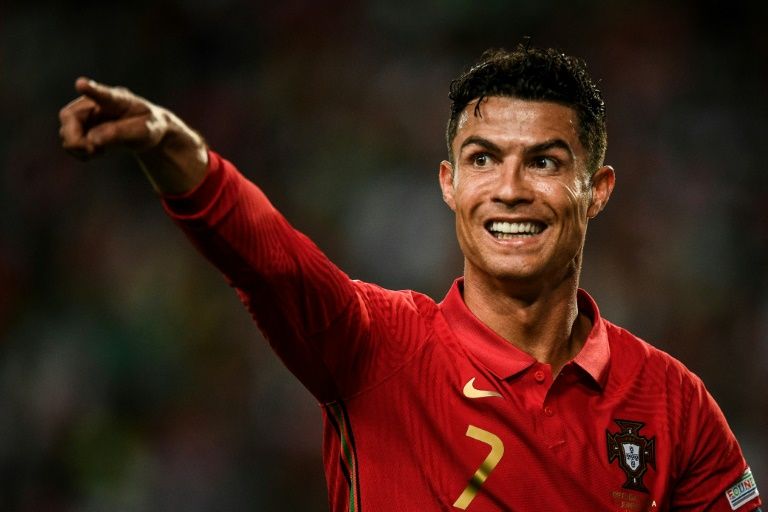
RIYADH, Saudi Arabia — Cristiano Ronaldo remains sidelined with a hamstring injury sustained late February, prompting Al Nassr to send the 41-year-old superstar to Madrid for specialized rehabilitation. As the 2026 FIFA World Cup approaches in June, the setback has sparked questions about his fitness, though medical timelines suggest he should return to action well before the tournament begins.
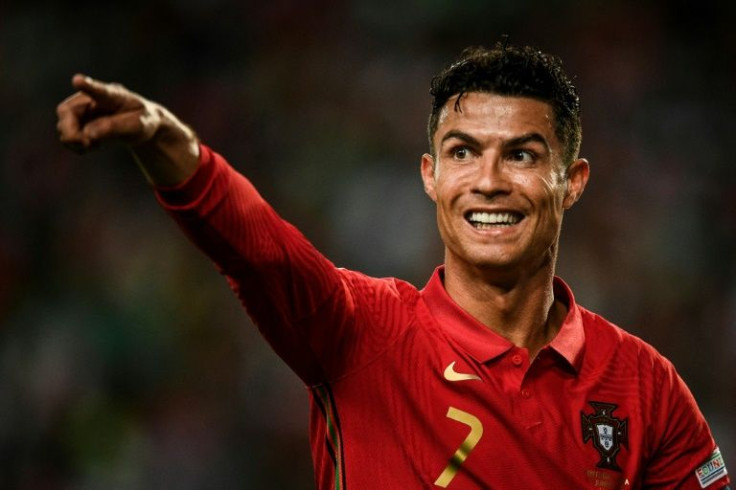
Ronaldo limped off in the 81st minute of Al Nassr’s 3-1 Saudi Pro League victory over Al Fayha on February 28, 2026. Initial assessments described the issue as muscular fatigue, but further tests revealed it was “more serious than expected,” according to Al Nassr coach Jorge Jesus. The club confirmed a right hamstring injury in an official statement, noting Ronaldo had begun a rehabilitation program with daily evaluations.
Jesus elaborated during a March 6 press conference that Ronaldo required rest and advanced treatment unavailable in Saudi Arabia. “After the tests he underwent, it became clear that it is a more serious injury than we were expecting,” Jesus said. “He will need rest and recovery. Cristiano will travel to Spain for treatment, as will other players who were injured.” Ronaldo has since been working with his personal physiotherapist in Madrid, incorporating methods like pressotherapy and high-tech recovery devices to accelerate healing.
Reports from Saudi outlet Al-Sharq Al-Awsat indicate Ronaldo is expected to return to Saudi Arabia by the end of March, positioning him for a potential comeback on April 3 against Al-Najma, the league’s bottom team. That timeline aligns with estimates of two to four weeks sidelined, depending on the injury’s grade. A mild grade-one strain typically heals in one to three weeks, while a grade-two partial tear could extend to four to eight weeks. Al Nassr has not classified the severity publicly, but the club emphasized day-by-day monitoring and Ronaldo’s determination to return quickly.
The injury has already caused Ronaldo to miss multiple matches, including league games against Neom SC and Al Khaleej, as well as any rescheduled fixtures. He has scored 21 goals in 22 Saudi Pro League appearances this season, underscoring his continued elite output despite his age. The setback follows a period of heavy workload — Ronaldo started 11 games in early 2026 — raising questions about managing his minutes as he prepares for what he has called his likely final major international tournament.
Ronaldo has repeatedly stated that the 2026 World Cup, co-hosted by the United States, Mexico and Canada, will probably be his last. Speaking in late 2025, he told CNN, “Definitely, yes, because I will be 41 years old.” He emphasized feeling “very good” physically, still sharp and capable of scoring, but acknowledged retirement looms within one or two years. At the World Cup, Ronaldo would become one of the oldest outfield players in tournament history if selected, aiming for a record sixth appearance and chasing his first World Cup title after near-misses in 2006, 2010, 2014, 2018 and 2022.
Portugal coach Roberto Martinez has yet to comment specifically on the injury’s impact on national team preparations, but the timing is delicate. Portugal has friendlies scheduled against Mexico and the United States in late March — key tune-ups for World Cup qualifying and final roster decisions. Some reports suggest Ronaldo risks missing those matches if recovery lags, though his targeted April return would allow ample time to regain match fitness before June’s tournament opener.
Experts remain optimistic about Ronaldo’s participation. His rigorous training regimen, access to top medical care and history of overcoming setbacks support a strong chance of featuring in North America. At 41, questions about speed and durability persist, but Ronaldo’s goal-scoring consistency — he remains Portugal’s all-time leading scorer — and leadership role make him a near-certainty for inclusion if fit. Former teammates and analysts note his mental drive often accelerates recovery.
The injury has also drawn attention to broader concerns for veteran players in high-stakes environments. Ronaldo’s move to Al Nassr in 2023 allowed him to maintain competitive minutes in a less physically demanding league compared to Europe, aiding longevity. Yet the current hamstring issue highlights the challenges of sustaining peak performance into the early 40s.
Fans and media continue monitoring updates from Madrid, where Ronaldo has shared occasional social media glimpses of his rehab without revealing specifics. Al Nassr and Portugal both prioritize his long-term health, balancing immediate club needs with World Cup ambitions.
As March progresses, the focus shifts to Ronaldo’s progress in Spain. A smooth recovery would see him back on the pitch by early April, positioning him ideally for Portugal’s World Cup campaign. While the injury introduces uncertainty, Ronaldo’s track record suggests he remains a formidable force capable of defying age once more on the global stage.
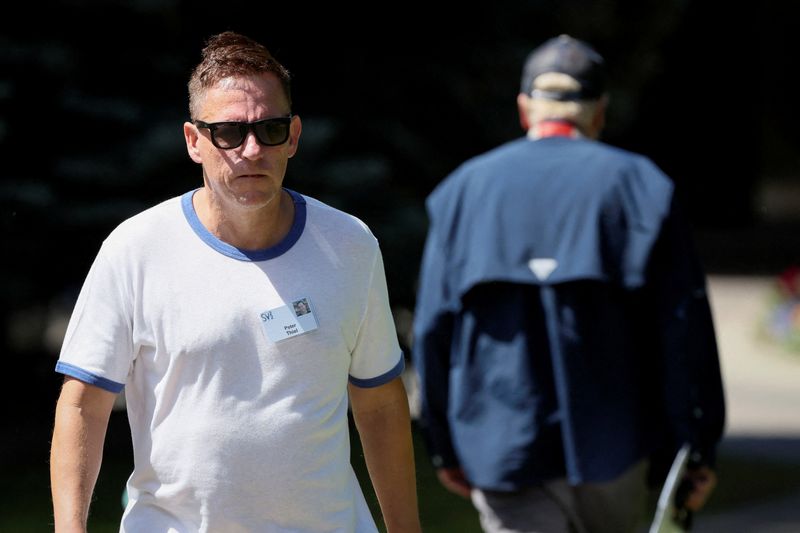

Thiel’s secretive Rome conference draws Church attention

Unity Software: The Valuation Reset I’ve Been Waiting For (NYSE:U)

10 Years Later, Netflix Removes the Most Ruthlessly Review-Bombed Movie Ever

Bitcoin (BTC): What Happens Next Will Surprise Most!! You NEED To Be Ready!


-
 Tech4 days ago
A 1,300-Pound NASA Spacecraft To Re-Enter Earth’s Atmosphere
-
 Crypto World1 day ago
HYPE Token Enters Net Deflation as HyperCore Buybacks Outpace Staking Rewards
-

 News Videos6 days ago
10th Algebra | Financial Planning | Question Bank Solution | Board Exam 2026
-

 Business5 days ago
ExxonMobil seeks to move corporate registration from New Jersey to Texas
-

 Crypto World6 days ago
Paradigm, a16z, Winklevoss Capital, Balaji Srinivasan among investors in ZODL
-

 Fashion2 days ago
Weekend Open Thread: Addict Lip Glow
-

 Tech5 days ago
ChatGPT will now generate interactive visuals to help you with math and science concepts
-
Sports1 day ago
Why Duke and Michigan Are Dead Even Entering Selection Sunday
-

 NewsBeat4 days ago
Residents reaction as Shildon murder probe enters second day
-

 Business7 days ago
Search for Nancy Guthrie Enters 37th Day as FBI Probes Wi-Fi Jammer Theory
-

 Business4 days ago
Search Enters Sixth Week With New Leads in Tucson Abduction Case
-
 NewsBeat6 days ago
Pagazzi Lighting enters administration as 70 jobs lost and 11 stores close across Scotland
-

 Tech6 days ago
Despite challenges, Ireland sixth in EU for board gender diversity
-

 Business1 day ago
US Airports Launch Donation Drives for Unpaid TSA Workers as Partial Government Shutdown Enters Fifth Week
-

 NewsBeat4 days ago
I Entered The Manosphere. Nothing Could Prepare Me For What I Found.
-
Crypto World22 hours ago
Coinbase and Bybit in Investment Talks: Could Bybit Finally Enter the US Crypto Market?
-

 Business6 days ago
Search Enters 39th Day with FBI Tip Line Developments and No Major Breakthroughs
-

 Sports6 days ago
Skateboarding World Championships: Britain’s Sky Brown wins park gold
-

 Business1 day ago
Country star Brantley Gilbert enters growing non-alcoholic beer market
-
 Crypto World5 days ago
Will Chainlink price reclaim $10 amid volatility squeeze?

