

Politics
Oscar Nominations 2026: Full List Of Films And Actors Up For Academy Awards


This year’s awards season has already been full of surprises and headline-grabbing moments, and it’s now time to get ready for the big one.
Yes, the 2026 Oscars are mere hours away, with some of the biggest names in Hollywood getting ready for Sunday night’s ceremony.

Ryan Coogler’s Sinners is leading the way this year with a record-breaking whopping 16 nominations, the most of any movie in history.
These include acting nods for cast members Michael B Jordan, Wunmi Mosaku and Delroy Lindo, as well as recognition in the the Best Picture, Best Director and – newly-added for 2026 – Best Casting categories.
Hot on its heels is One Battle After Another with a hefty 13 nods, while Sentimental Value, Hamnet, Frankenstein and Marty Supreme are among the films with the most Oscars recognition in 2026.
Which stars and films have been nominated for Oscars in 2026?
The full list of nominees is as follows…
Rose Byrne (If I Had Legs I’d Kick You)
Kate Hudson (Song Sung Blue)
Renata Reinsve (Sentimental Value)
Timothée Chalamet (Marty Supreme)
Leonardo DiCaprio (One Battle After Another)
Michael B Jordan (Sinners)
Wagner Moura (The Secret Agent)
Elle Fanning (Sentimental Value)
Inga Ibsdotter Lilleaas (Sentimental Value)
Amy Madigan Weapons (Weapons)
Teyana Taylor (One Battle After Another)
Benicio Del Toro (One Battle After Another)
Jacob Elordi (Frankenstein)
Sean Penn (One Battle After Another)
Stellan Skarsgård (Sentimental Value)
Josh Safdie (Marty Supreme)
Paul Thomas Anderson (One Battle After Another)
Joachim Trier (Sentimental Value)
Golden (KPop Demon Hunters)
Sweet Dreams Of Joy (Viva Verdi!)
Train Dreams (Train Dreams)
Best Makeup And Hairstyling
Little Amélie Or The Character Of Rain
Best International Feature
The Secret Agent (Brazil)
It Was Just An Accident (France)
Sentimental Value (Norway)
The Voice Of Hind Rajab (Tunisia)
Come See Me In The Good Light
Best Documentary Short Film
Armed Only With A Camera: The Life And Death Of Brent Renaud
Children No More: Were And Are Gone
Best Live-Action Short Film
Jane Austen’s Period Drama
Two People Exchanging Saliva
The Girl Who Cried Pearls
The 2026 Oscars will air on ITV1 on Sunday night.

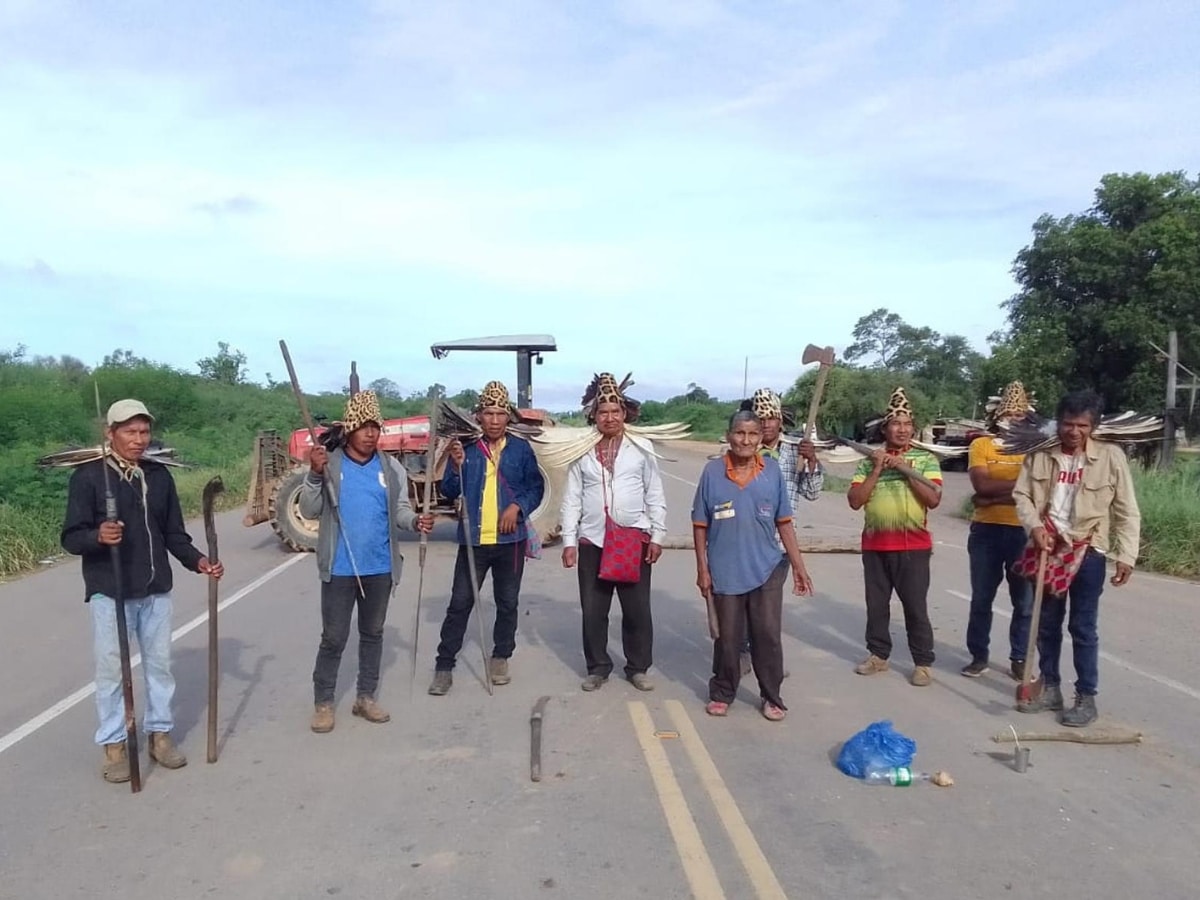
More than 100 Indigenous Ayoreo-Totobiegosode people, most of whom were forcibly contacted between 1979 and 2004, have blockaded a major Paraguayan highway in the heart of South America. They’re trying to stop the destruction of the forest where their uncontacted relatives still live.
Porai Picanerai, one of the Ayoreo leaders, said:
After forced contact, we have been abandoned by our government, which ignores our rights while allowing big companies to destroy our forest. Our uncontacted relatives depend on the forest. We also depend on the forest. But it’s being destroyed by bulldozers and fires. Others make money from our forest while we are left with nothing, and our needs and rights are ignored.
The uncontacted Ayoreo live in a rapidly shrinking island of forest surrounded by devastation. They’re the last uncontacted Indigenous people in South America outside the Amazon. Their forest is being chopped down, stolen and occupied by farms. The rate of destruction is one of the fastest in the world. And it’s leaving the Indigenous owners of the land facing drought and famine.
The contacted Ayoreo-Totobiegosode, having been forced out of the forest in recent decades, live in two communities on the forest edge. They are blockading one of the area’s major highways in protest at:
- The continuing destruction of their ancestral territory by cattle ranchers and agribusiness. Legally, the forest should have protection.
- Neglect by the state that forced them out of their nomadic and self-sufficient life in the forest. It’s left them stranded in two inaccessible, remote communities without proper healthcare or access to water or food.
- The government continuing to refuse to title the land to them. This is despite the Interamerican Commission on Human Rights ordering it to do so.
Survival International’s Director Caroline Pearce said:
The satellite photos of western Paraguay paint a harrowing picture: just a few decades ago this was a vast area of Indigenous forest – now it’s a wasteland of destruction. The uncontacted Ayoreo are trapped in a forest island that’s being destroyed by the day.
All this destruction is illegal: this is the Ayoreo’s home, which should have been recognized as Indigenous territory and titled to them. The Ayoreo who were forced out of the forest are deeply worried for their uncontacted relatives who are somehow managing to survive, but must be fleeing from one corner of the forest to another.
As Survival’s recent report on uncontacted peoples made clear, they are resisting this brutal colonization but their survival absolutely depends on their land being protected. Paraguay’s authorities must finally do the right thing, by expelling the ranchers and upholding the Ayoreo’s rights to their land.
Featured image via Survival International
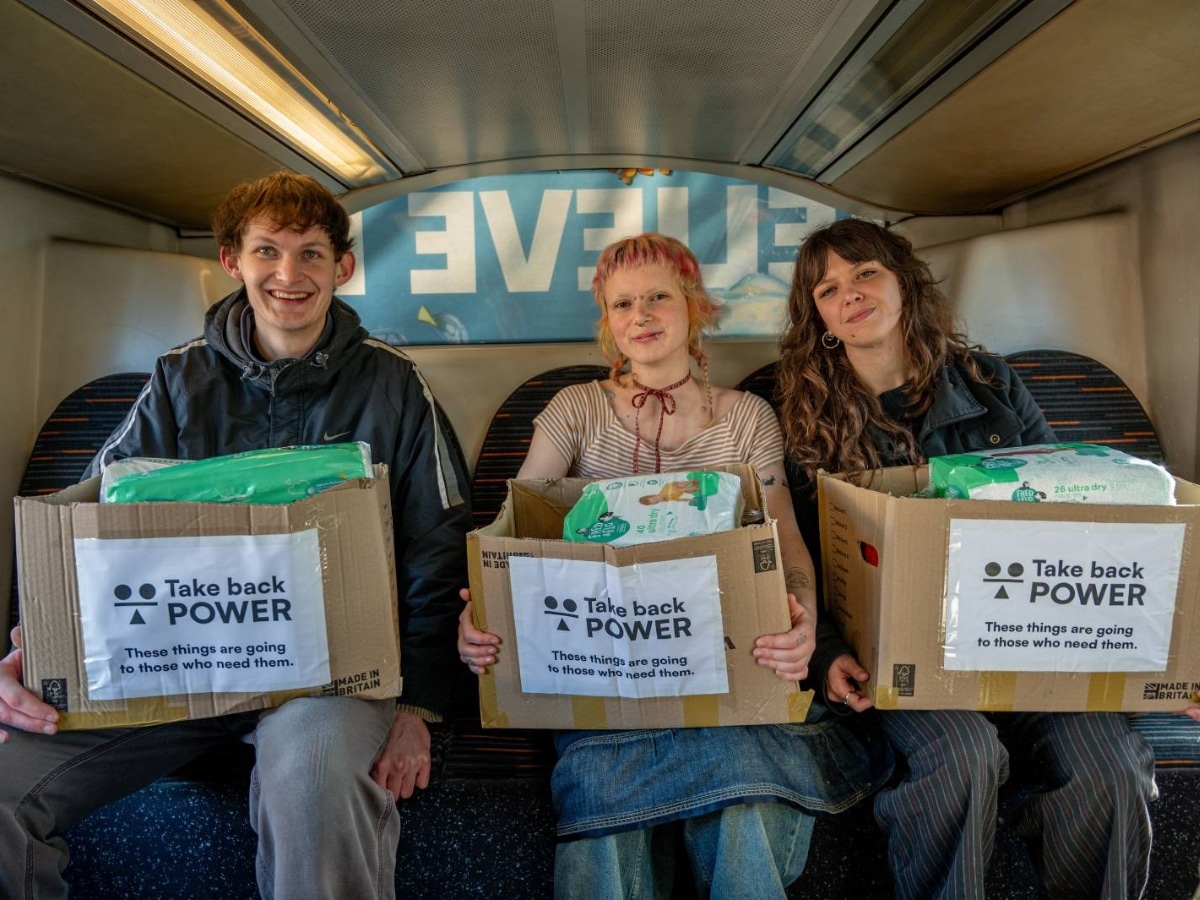
Take Back Power supporters have been redistributing food from supermarkets to local foodbanks across the country this morning. Take Back Power is a nonviolent civil-resistance group, demanding that the UK government establish a ‘House of the People’. This is a permanent citizen-led assembly with the power to tax extreme wealth.
From around 8.30am on 14 March, teams across four UK cities – Manchester, London, Exeter and Truro – entered supermarkets. They began putting food and necessities into boxes emblazoned with:
These things are going to those who need them.
The Take Back Power supporters left the shops without paying for the produce and then redistributed these items to local foodbank drop off points.
In Exeter, a team of five supporters took five boxes of produce from Morrison’s supermarket in Prince Charles Road. However security stopped them and took away two of the five boxes. The remaining three boxes were successfully liberated and taken to a local foodbank drop-off point.
From 9am, in London, on liberating boxes of food, two supporters set up a stall outside Sainsburys in the Lewisham centre, to give the food back to the local community. Security staff arrived by around 9.40 and police arrived onsite at around 9.50. There were no arrests and the supporters left at around 10am.
In Manchester, three action takers filled boxes with food from Tesco, on Pars Wood Lane in Didsbury. All three left the store without incident and redistributed the food to a foodbank drop-off point at a local Aldi.
In Truro, two supporters loaded boxes from the Sainsburys on Treyew Rd. They left the produce at the foodbank drop-off point in the same store.
6.5 million people using UK foodbanks
A spokesperson for Take Back Power said:
It is sickening that 6.5 million people in the UK are forced to turn to foodbanks every year and a third of children under five are living in homes where there is insufficient access to nutritious food.
This is because our country is in crisis, with billionaires hoarding wealth, whilst ordinary people suffer. We need to tax extreme wealth to fix Britain, and we need ordinary people to decide how.
One of those taking action was Eve Middleton 25, from Manchester, who said:
I refuse to sit by while billionaires hoard wealth and capture our democracy. We can all see the impacts of inequality on our streets, in our schools and hospitals and in our own homes.
Taxing the super rich is the first simple step to solving these crises. Yet our political system will not deliver a wealth tax, as it is rigged to benefit parasitic billionaires instead of the masses.
It’s time for ordinary people to be put at the heart of decision making, through a House of the People with powers to tax the rich and fix Britain.
Also taking action is Ruth Cook, 74, a company director from Somerset, who said:
I’m taking this action and risking arrest because we have a terrible situation in this country. Families are struggling and children are going hungry, while the profits some companies make are obscene.
The answer is to tax the super-rich. I’m taking this food and delivering it to a foodbank collection point because we need to do something about this. We need to tax the super rich and give ordinary people a say in how our taxes are spent. Join us at takebackpower.net.
Today’s action comes in the wake of the raid of a Quaker meeting house and the arrest of 15 people during a nonviolence training. Police arrested one other at their home later and raided the houses of seven supporters in connection with these actions so far.
This occurs as the UK remains in crisis. Last year, 14 million people in the UK faced the prospect of going hungry due to a lack of money. Whilst in 2024, 6.5 million people turned to foodbanks.
Take Back Power is demanding that the UK government establish a permanent House of the People. This is a citizen’s assembly chosen by democratic lottery, that has the power to tax extreme wealth and fix Britain.
Until the government makes a meaningful statement in response to its demand, the group says it will undertake nonviolent action to resist the super-rich, who are driving us towards social collapse. Donate or sign up to take action at TakeBackPower.net.
Featured image via the Canary
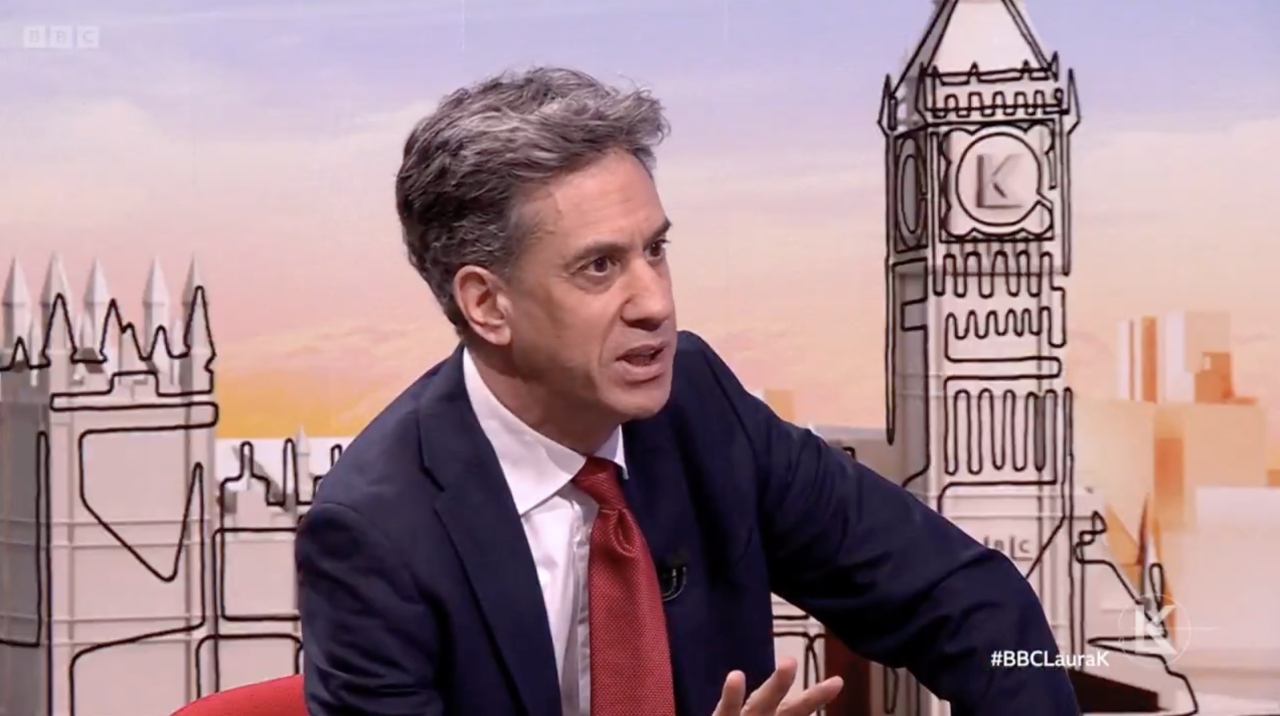
Miliband: We Will Intervene on Energy Bills if Necessary
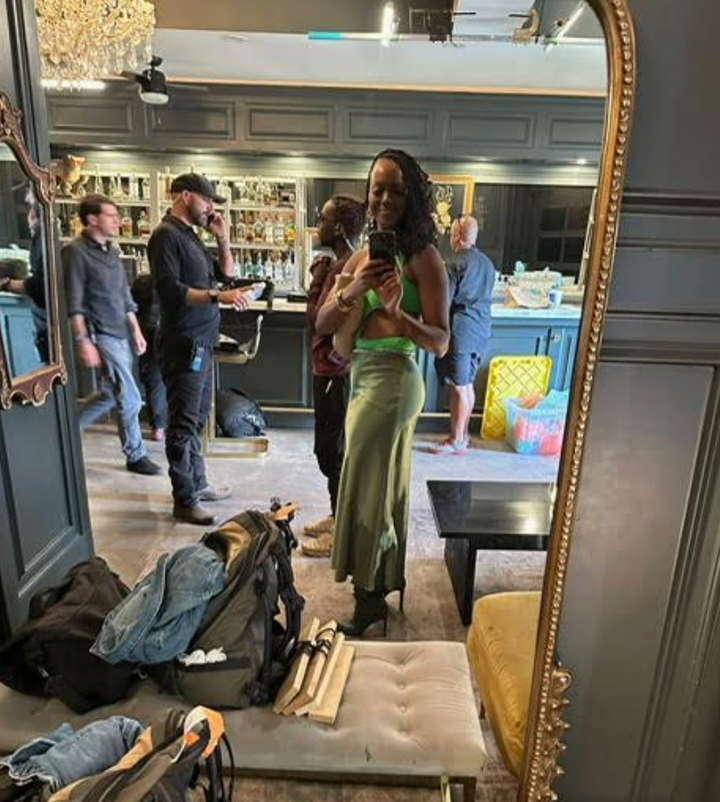
I never imagined that finding love in my 40s would lead me to reality television. Yet there I was, staring at an Instagram DM from a friend that read: “This show sounds perfect for you 👀.” She’d tagged me in a casting call for Kings Court, a new show set to premiere on Bravo TV and Peacock.
My first instinct was to laugh. I’m a doctor. I’m used to saving lives, not competing for declarations of love on prime-time television.
But after years of long hospital shifts, well-meaning advice from friends and dating apps that felt more like an obstacle course than a love story, I had to face a quieter truth: success hadn’t made dating easier. It had made it lonelier. So, I didn’t delete the message. I sat with it. And eventually, I clicked on the link.
Dating in my 40s as a successful Black woman isn’t what people might imagine. From the outside, it looks like options. On the inside, it often feels like silence.
Between 12-hour workdays, raising my son, and building a life I’m deeply proud of, my time and energy were stretched thin. But what surprised me wasn’t just the lack of time, it was how my success seemed to narrow the dating pool.
As a girl, I grew up with the pressure to perform. This isn’t unique to me – it’s the reality for many Black and brown girls. I understood early that who I was didn’t just reflect on me, it reflected on my household, my community and the generations who came before me.
Excellence wasn’t optional; it was expected. And beneath that expectation, an unspoken question took root: if I have to be twice as good to be seen, what will it take to be chosen?
I grew up watching so many of my aunties, elders and mother figures navigate life on their own – strong, brilliant, resilient, unchosen. If no one was choosing these extraordinary women, what did that mean for me? Even though I was raised to believe that no matter what adversity I faced, God loved me and I was already chosen, I still internalised another message: I had to earn love and acceptance.
I wasn’t searching for someone to complete me. I wanted someone who could meet me. Someone who could stand beside me without needing me to shrink. Someone who understood that being loved shouldn’t require diminishing who you are to fit someone else’s comfort.

Courtesy of Khaliah Johnson
So, when I walked onto that reality show set for the first time, I was nervous in a way that surprised me. This was all new: being on camera, sharing myself in an intimate way while millions might eventually watch. My faith in God and the confidence I have in my unique story and all I bring to the table grounded me.
I gravitated toward kindness – the production team was incredibly supportive, and several of the women in the cast were true “girls’ girls”. We had so much fun behind and in front of the camera, cheering one another on and steering clear of drama.
As the cameras rolled, I found myself … just being me. I didn’t feel I had anything to hide, but I did have something to protect: my heart and my sense of worth. I allowed my emotions to unfold in real time.
As I got to know my love interest, there were moments that frustrated and confused me, and viewers saw that on-screen. There were also ooey-gooey moments, deep conversations about our lives, and dreaming out loud about what a future together might look like.
All the ups and downs I’ve experienced over years of dating were compressed into a very intense three-week journey. When you’re living with someone 24/7, you get to learn important aspects of who they are quickly. I was blown away by how much I loved being on camera – not for the attention, but for the rush of creativity. The storytelling, the reflection, the awareness of watching your own life from a new angle – all of it lit something in me. I left the show with a genuine interest in the film world that excites me to this day.
I entered Kings Court in the final round of introductions of bachelorettes as my love interest’s “perfect match,” according to a professional matchmaker. The stakes felt high. But honestly, once I felt a connection forming, everyone else faded into the background. I wasn’t thinking about competition. I believed that if something was meant to be, we would leave together.
There were also surprises in the process that weren’t particularly romantic or exhilarating. It was hard living in a house with 15 other women and three bachelors. We were all established adults, used to our own space and rhythms. Sharing bathrooms, squeezing in sleep, getting dressed up for dates with dozens of eyes and ears nearby – it was a lot. But I leaned into the absurdity. When in life would I get to do something like this again?
Something shifted in me as filming went on: I realised I had nothing to lose by being honest. If I was truthful and vulnerable, my potential match would see me, and if he chose me, it would be with eyes wide open. And if he didn’t, that told its own story.
I let him see my world: my life as a single mum, the intensity of my career in medicine, the pain and healing that followed intimate partner violence. I wasn’t afraid to have fun or let my guard down either. I showed up more fully than I had before in my dating life, and that alone made the experience worthwhile.

Courtesy of Khaliah Johnson
There was one moment that especially stands out for me, when he said I seemed “too polished,” like he wasn’t seeing the real me. I told him gently but firmly, “This is me.” Reality TV or not, I knew I didn’t need to perform to be chosen. I’m not everyone’s cup of tea. But the right person will love my aroma, temperature and flavour without trying to add anything to or take anything away from me.
Before the show, I mostly rolled my eyes at reality dating series. But I’m also a hopeless romantic! I’m a sucker for the kind of stories that leave you warm inside, like Lauren and Cameron on Love Is Blind Season 1. Their vulnerability and willingness to fall for someone without playing by the conventional rules truly resonated with me. I wanted a love narrative that freed me from expectations too.
Prior to this process, I was both skeptical and curious. But I’m in a season of life where I’m willing to try new things, stretch myself and take risks. My career caring for children with serious illness has taught me that life is short. I don’t want to miss anything that’s for me, even if it comes in an unusual package.
The reality dating show experience wasn’t perfect. There were catty dynamics with some women that don’t align with how I show up in friendships. I didn’t let those interactions define my experience; they were growth moments. I let that energy roll off me like water off a duck’s back. Overall, being on the show exceeded every expectation. I had fun. I was proud of how I carried myself and how I was portrayed. I walked away with clarity about what I need and deserve in partnership. I grew in self-esteem, in my ability to prioritise my heart’s desires amidst a demanding life, and in my sense of worthiness in romantic love.
My friends and family were so excited for me. They’ve seen the highs and lows of my dating journey and want me to win. Those who are fans of reality TV warned me about the public commentary, but nothing could have prepared me for that. What I have learned on the other side of it all is simple: not everyone will like you, and people will always create their own narratives. Let them talk. None of that determines who you are or what you will achieve. I’m grateful for the thicker skin I’ve developed as a result and the steadier sense of self.
And, yes, I formed a powerful love connection that was meant to be at the time. I let myself be seen, and someone saw me. And sometimes, that alone is enough to change you.
I didn’t walk away with a fairytale ending, I left with something more honest – a reminder that love at this stage of life isn’t about fixing what’s missing. It’s about being fully seen, even when the world believes it already knows who you are.

Courtesy of Khaliah Johnson
For much of my life, I waited to be chosen. I carried that quiet ache – the one passed down through generations of women who carried everything except the certainty of romantic partnership. But somewhere along this journey, I realised something radical: I can choose myself.
I’ve spent years caring for others, building a career, and showing up strong. Saying yes to dating on a reality show was my way of choosing softness too. And whether love finds me on national television or over a quiet cup of coffee, I now know it will find me exactly as I am – whole, grounded and chosen by me first.
Khaliah Johnson, MD, was born and raised in Brooklyn, New York, and currently resides in Atlanta, Georgia. She is a practicing paediatric palliative care physician and health care advocate who leverages her skills in medical education, writing, and media to promote health equity. Khaliah is the mother to an incredible 10-year-old boy and two Frenchie puppies. In her downtime, she is an avid aerial artist, lover of food and wine, and a travel adventurer.
Do you have a compelling personal story you’d like to see published on HuffPost? Find out what we’re looking for here and send us a pitch at pitch@huffpost.com.
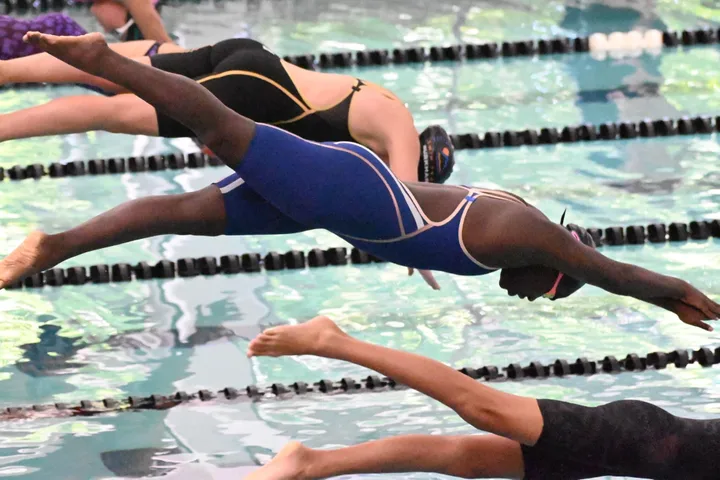
My grandmother never stepped foot in a swimming pool. The closest she ever came was the afternoon I held my phone in front of her face, tilting the tiny glowing screen so she could see her great-granddaughters slicing through bright blue water at a swim meet. They were still little then, just beginning to race. Her eyes were tired but sharp.
“Shana,” she said, squinting at the screen, “what is that girl doing in that water?!” There was real fear in her voice; the kind that doesn’t come from ignorance, but from history.
“She’s racing, Grandma,” I told her. “That’s Zuri. Don’t worry – she’s safe.”
She leaned closer, watching those small arms churn. “Do they like swimming?”
She nodded slowly, and looked on. “I never did learn to swim, baby. Never even been in a pool.” I squeezed her hand. “I know. But we aim to change all that with Zuri and Amara.”
What I didn’t say was that this wasn’t just about safety. It was about rewriting something.
My grandmother never learned to swim, but my mother did. In her childhood, sparkling public pools were not invitations. They were exclusions.
During segregation, Black families had been barred from entry. When desegregation came, many towns chose to close pools rather than integrate them. Access to water – something so innocent and basic – became a quiet marker of who belonged.
The effects are still visible today. According to the Centers for Disease Control and Prevention, Black Americans drown at rates about 1.5 times higher than white Americans, and the disparity is especially stark for children. In swimming pools, Black children ages 10–14 drown at rates 7.6 times higher than white children. Public health researchers have linked these disparities in part to generations of unequal access to pools and swim instruction.
But in the late ’70s, my mama stepped into the water anyway. Two months after she gave birth to me – the first of her seven children – she signed up for swim lessons. If she learned, her children would not inherit fear as instinct.
When we were little, she made sure every one of us took lessons. We grew up in Charleston, where sometimes it feels like there is more water than land. Rivers stretch wide. Marshes wind through neighbourhoods. The ocean is never far. Every summer, we went to W.L. Stephens pool. The smell of chlorine. The echo of whistles. The sting of sun on wet shoulders.
Each year, we grew stronger. My brother and I kept up our lessons into high school – we were not racers, but continued swim education for safety: yardage, endurance, treading water until our legs shook. In our family, swimming was non-negotiable.
But “basic” has not always meant “accessible”. Many of our Black and brown friends didn’t take lessons. They came to the pool, yes, but they stayed close to the sides, where the waves slipped gently into the gutters and onto the deck. My siblings and I could go much farther out – not recklessly, but confidently. The water was our friend, not a stranger.

Photo By James Singletary
Years later, I found myself sitting in the bleachers at that very same pool – W.L. Stephens – but this time as a mother. Zuri was seven. It was her first swim meet. She stepped up for the 25-yard freestyle – tiny, serious, goggles slightly crooked. The buzzer sounded. She dove. She touched the wall first.
Her coach ran up to me, wide-eyed: “Looks like her time was one of the fastest in the state for her age group.”
One of the fastest in the state. In the same pool where I learned to tread water. In the same water my mother insisted we master. I felt the past and future colliding in chlorinated air.
What I did not expect was that Zuri would fall in love with racing. At eight, she swam anchor at the 8 & Under State Championships. Her team was seeded low. The role of anchor, or the last team member to swim in a relay, is often filled by the fastest or most experienced swimmer. She dove and touched first. The tiny swimmers took first in the state.
“I covered my mouth before I realized I was crying. It was not just her time. It was the inheritance, interrupted.”
Years later, at her final Age Group State Championship, she stood on the blocks again as anchor. Same pool, but she was older, stronger. The natatorium hummed. The starter beeped. She dove with quiet poise and remarkable strength. I didn’t breathe. When she touched the wall, the scoreboard flashed: 24.91.
Under 25. On a relay. At 14 years old.
Three other girls had already poured everything into that water before she dove in. Four bodies. One finish. They broke their team record and placed third in the state – less than a second from first.
I covered my mouth before I realised I was crying. It was not just her time. It was the inheritance, interrupted.
There were not many girls who looked like her in that heat. USA Swimming reports roughly 2% of its membership is Black. Two percent. Better than my grandmother’s day. Better than my mother’s. Still small enough to notice.
I do not let Zuri carry that weight. From me, she gets steadiness. Her dream is hers.
My grandmother passed away in March 2024. She never stepped into a pool. But she empowered the next three generations to step forward anyway.
In just four generations, a grandmother was barred from entry, a mother stepped in anyway and a daughter made swimming non-negotiable. Now a great-granddaughter anchors relays and breaks swimming records with her teammates. Four generations of unconditional love. Lifetimes of growth and development.
I miss my grandmother. But she saw the beginning of this change, and that matters more than I can fully explain. Water once represented exclusion. Now, in our family, it represents possibility. And that feels like victory.
Do you have a compelling personal story you’d like to see published on HuffPost? Find out what we’re looking for here and send us a pitch at pitch@huffpost.com.
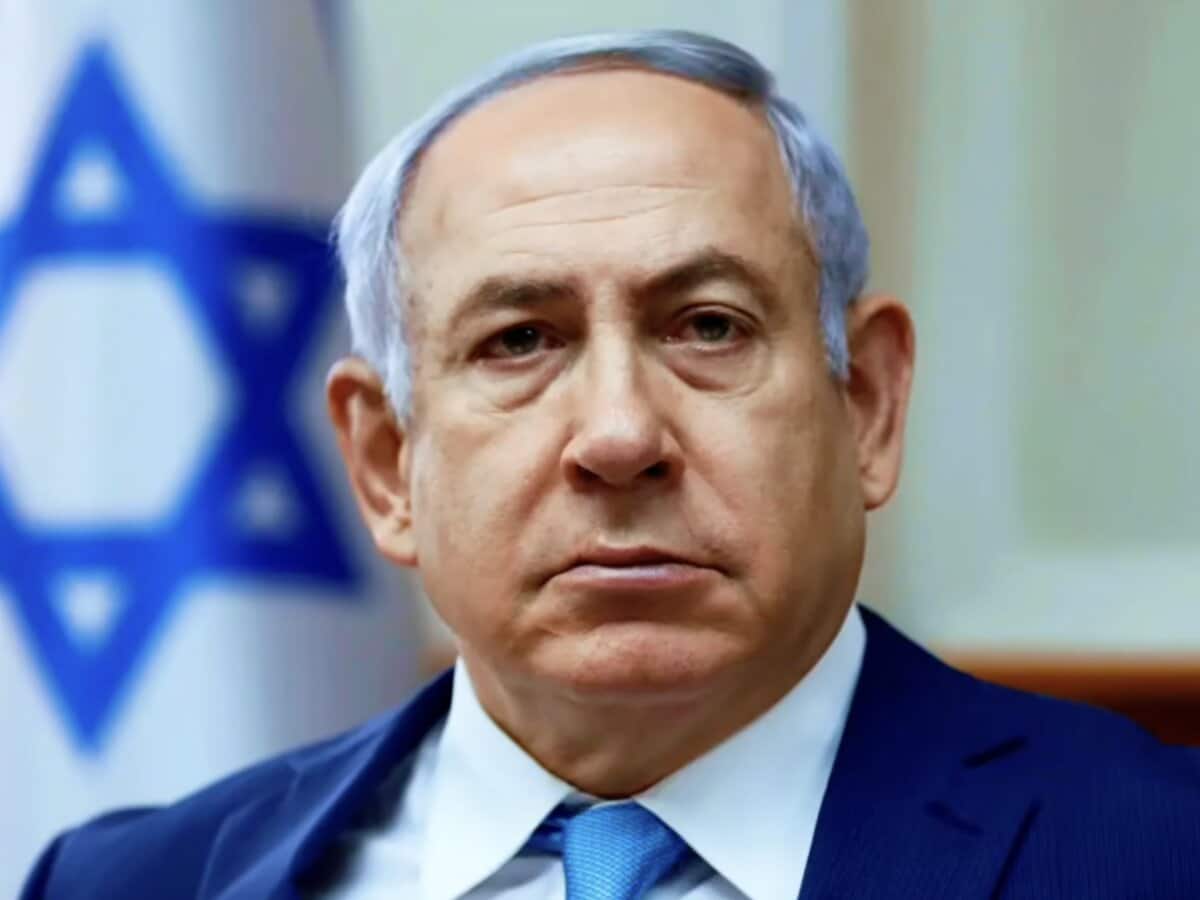
Iran’s Revolutionary Guards (IRGC) have threatened to continue targeting Benjamin Netanyahu if he’s still alive.
In a statement, the IRCG said:
The unknown fate of the criminal Zionist Prime Minister and the possibility of his death or escape with his family from the occupied territories reveals the crisis and instability of the Zionists. If this child-killing criminal is alive, we will continue to pursue and kill him with power.
Rumours have been circulating on social media over the last week about Netanyahu’s whereabouts.
Ok I have been skeptical of these rumors that “Netanyahu is dead” and wanting confirmation, but here is Israel’s security briefing today and Netanyahu is absent. He is either in hiding, injured, or dead. pic.twitter.com/RiM2Ic02SJ
— Power to the People ☭🕊 (@ProudSocialist) March 14, 2026
Whilst he was missing from an important security briefing, the rumours are, at present, nothing but conspiracy theories.
Did anyone actually expect Netanyahu to start an illegal war with Iran and then stay in Israel? He’s probably drinking tea in Poland — his ancestral land and hiding like the spineless rat he is.
Previously, he dodged a corruption court date because he had ‘non-serious’ bronchitis.
Most likely dodging a court date, possibly at the dermatologist. pic.twitter.com/LS3oO6A51X
— Selfie Monkey (@selfie_monkey) March 14, 2026
So maybe he’s getting a BBL?
Of course, his office has said he ‘is fine’, and the rumours are ‘fake news’.
No one with even half a brain thinks Netanyahu deserves any more oxygen to be wasted on him.
But can you imagine the absolute hell that Israel will rain down on Palestine, Iran, Lebanon, Syria, and who the hell knows where else if Iran kills Netanyahu? It will pinball all around the region like a deflating balloon.
We would have said Netanyahu, along with Trump and every other Israeli politician, belong in the Hague — but then again that would assume international law is alive and well, and works for everybody equally. So props to those defending themselves and resisting Empire.
Feature image via Global Military Update/ YouTube
After an especially busy awards season that’s already gifted us all kinds of memorable moments, it’s time for the mother of them all, the Oscars.
Over the last 98 years, the annual Academy Awards ceremony has been the site of countless iconic scenes – although not every instance of the Oscars making headlines has been for the reasons organisers might have hoped for.
As we gear up for the 2026 ceremony, here are just some of the highs and lows that have defined the Oscars over the last century…
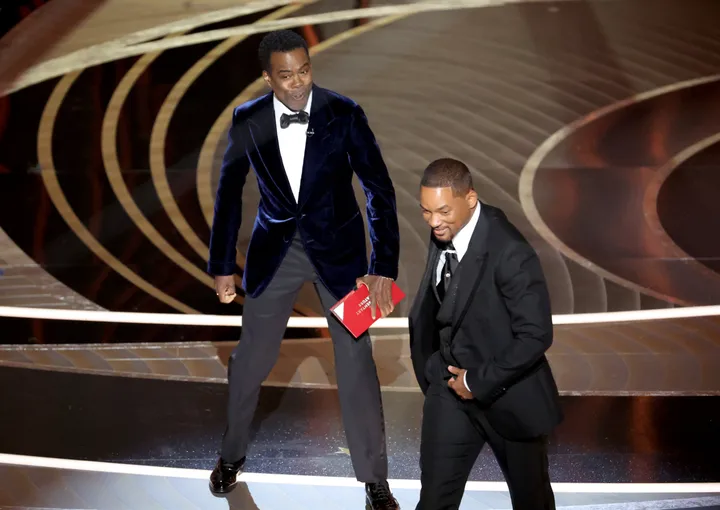
Will Smith slaps Chris Rock after the comedian jokes about Jada Pinkett Smith’s hair (2022)

Myung Chun via Getty Images
For those who were living under a rock in 2022, here’s what went down at that year’s Oscars.
Comedian Chris Rock presented one of the night’s big awards, during which he made an impromptu joke about Jada Pinkett Smith’s buzzcut after spotting her in the audience, comparing her to “GI Jane”.
Jada had previously spoken about her experiences of living with alopecia, which inspired her to shave her head.
Unimpressed with the comic’s remarks, Jada’s husband Will Smith walked up to the comedian and slapped him in the middle of the broadcast, urging Chris to “keep my wife’s name out of your fucking mouth” upon returning to his seat.
What ensued was months of unescapable media furore and discourse, and although Will won his first ever Oscar just a few moments after the slap for his performance in the film King Richard, he eventually made the decision to resign from the Film Academy, and was later banned from the ceremony for a decade.
John Travolta struggles with Idina Menzel’s name (2014)
During the live broadcast in 2014, HuffPost fave John Travolta was recruited to welcome Frozen star Idina Menzel to the stage, so she could perform her character’s signature tune Let It Go.
Unfortunately, due to John’s apparent struggles reading from an autocue, he instead introduced “the wickedly talented, one and only Adele Dazeem” – a moment he’s still struggling to live down more than a decade later.
Jennifer Lawrence trips up the stairs while collecting her Oscar… (2013)

Kevin Winter via Getty Images
In a moment that saw the whole world holding its breath in unison, Jennifer Lawrence took a tumble as she went to accept her Best Actress prize, for her performance in Silver Linings Playbook.
After getting a standing ovation, she joked: “You guys are just standing up ’cos you feel bad that I fell, which is embarrassing, but thank you.”
…and then does the same thing a year later (2014)

A year later, Jennifer returned to the Oscars, where she was nominated again, this time for her role in American Hustle.
While she didn’t pull off the Oscars double, she did pull off the falling-over-at-the-Oscars double on the red carpet as she made her way into the event, which… is still something.
The legendary Joan Crawford accepts her award from bed (1946)

Silver Screen Collection via Getty Images
The story goes that Joan Crawford wasn’t feeling very well before the Oscars in 1946 and, perhaps sensing that she wasn’t going to win her category, decided to forego attending entirely.
Imagine her surprise, then, when she heard her name being read out as the Best Actress recipient on the radio for her performance in Mildred Pierce.
What followed was an impromptu press conference from the screen icon’s bed, where she was presented with her awards statuette in person (in full beat, naturally).
Sally Field gives a very passionate speech (1985)
“You like me, you really, really like me,” is an oft-quoted awards show line, but as it turns out, that’s not what Sally Field actually said.
“I want to say thank you to you,” she told the audience at the 1985 Oscars. “I haven’t had an orthodox career, and I’ve wanted more than anything to have your respect.
“The first time [I won an Oscar], I didn’t feel it. But this time I feel it. And I can’t deny the fact that you like me! Right now! You like me!”
What’s also often overlooked is the fact she did actually make the crowd laugh along with her speech, even if audiences at home were seemingly less impressed.
…and so does Gwyneth Paltrow (1999)
After appearing in around 20 films, Gwyneth finally picked up an Oscar in 1999, for her performance in Shakespeare In Love, and struggled to get her words out through her tears.
Interestingly, this would prove to be Gwyneth’s only Academy Award nomination (so far!), but at least she managed to get the Oscar on her first try.
Olivia Colman has everyone howling with her Oscars speech (2019)
It’s fair to say Olivia Colman had not been expecting to beat her peers in the Best Actress category that year, judging from that acceptance speech – which showcased all of her signature charm and a fan-girl moment over Lady Gaga.
Let’s talk about this bizarre opening number (1989)

Reed Saxon/AP/Shutterstock
The 1989 Academy Awards went down in the history books for cooking up a chaotic opening number that felt like a bit of a fever dream. The performance saw Rob Lowe duetting with Snow White, as well as featuring appearances from stars as varied as Lily Tomlin and Vincent Price.
Without a host, the routine served in place of an opening monologue, but it went down so badly it would be a full 30 years before the Oscars would go ahead without a host.
Kermit The Frog brings the house down (1980)
After Miss Piggy warmed up the crowd (seriously, what an intro), there wasn’t a dry eye in the house when Kermit The Frog performed Rainbow Connection in 1980.
The Muppet Movie’s opening number had been nominated for Best Original Song, but lost out to It Goes Like It Goes from Norma Rae, a decision which was rubbished by many critics at the time.
Eventually, Kermit and co did finally win an Oscar, although it took more than 40 years, when Man Or Muppet scooped Best Original Song in 2011.
Lady Gaga and Bradley Cooper perform Shallow (2019)
It was the performance the world had been waiting for when Bradley Cooper and Lady Gaga finally sang Shallow from the A Star Is Born soundtrack together.
The pair had actually only performed the track live together once prior to the Oscars (when Bradley was a surprise guest at one of Gaga’s Las Vegas shows), but you wouldn’t know that from the sheer chemistry between the two of them while they sang to one another.
Angelina Jolie and brother James Haven make an entrance (2000)

Mirek Towski via Getty Images
Back in 2000, Angelina won her first Oscar for her role in the film adaptation of Girl, Interrupted.
Her win was somewhat overshadowed on the night by her red carpet appearance with brother James Haven, who she kissed on the lips and declared she was “so in love with”.
Years later, she admitted she was “disappointed” with the “circus” that surrounded the incident, explaining that she and James had always relied on one another as the children of divorced parents.
Sacha Baron Cohen (as The Dictator) covers Ryan Seacrest in ‘ashes’ (2012)
Yeah, Ryan Seacrest really wasn’t loving this, was he?
Hattie McDaniel makes history with her Oscars win (1940)

Bettmann via Getty Images
Gone With The Wind star Hattie McDaniel’s Best Supporting Actress win at the 12th Academy Awards was a particularly important one, as she became the first African American performer to take home an Oscar.
While this is often referred to as a progressive moment in Oscars history, it should be noted that Hattie’s win came at a time when segregation was still in place. This meant she was not permitted to sit with her Gone With The Wind co-stars during the ceremony, with film producer David O. Selznick having to call in a favour for her to be allowed to attend at all.
Precious actor Mo’nique paid homage to Hattie McDaniel when she picked up the same award 70 years later, sporting a similar ensemble to the Gone With The Wind star.
Halle Berry becomes the first Black woman to win Best Actress (2002)
“This moment is so much bigger than me,” Halle Berry began in her acceptance speech, before listing off the names of the Black women in the acting industry who had come before her, including Dorothy Dandridge, Lena Horne, Diahann Carroll, as well as her peers, Jada Pinkett, Angela Bassett and Vivica Fox.
She said she hoped her win might represent “a chance” for “every nameless, faceless woman of colour”.
Halle’s victory came 39 years after Sidney Poitier became the first Black winner in the Best Actor category. His successors have included Forest Whitaker, Jamie Foxx and Denzel Washington.
Sadly, the Monster’s Ball star remains in 2026 the only Black woman to have been been given the Best Actress title, lamenting 15 years later that she felt her win “meant nothing”, as so little had changed in the time that followed.
Michelle Yeoh also breaks new ground with her own Best Actress win (2023)
In 2023, Michelle Yeoh became only the second woman of colour in history to receive the Best Actress award – which was poignantly presented to her by its past recipient, Halle herself.
The Everything Everywhere All At Once star made history as the first Asian performer to win the award, and enthused during her speech: “For all the little boys and girls who look like me watching tonight, this is a beacon of hope and possibilities. It’s proof – dream big, and dreams do come true.”
“And ladies, don’t let anybody tell you you are ever past your prime,” she added. “Never give up.”
Kathryn Bigelow becomes the first woman to win Best Director (2010)

Steve Granitz via Getty Images
Kathryn’s efforts at the helm of The Hurt Locker, which also landed Best Picture that year, made her the only woman to have won in the Best Director category at that time.
In the years that have followed, only six more women – Greta Gerwig, Chloé Zhao, Emerald Fennell, Jane Campion, Justine Triet and Coralie Fargeat – have been nominated in this category.
Chloé became the second woman, and first woman of colour, to accept the accolade in 2021, while Jane became the third the following year.
Ahead of this year’s ceremony, Chloé is in the running once again for her work as the director of Hamnet.
Marlon Brando declines to turn up to collect his Oscar (1973)

Michael Ochs Archives via Getty Images
Marlon Brando’s win for The Godfather was, without doubt, a Big Deal, so when he refused to show up to collect his award, it raised a lot of eyebrows.
Instead, the acting legend had Native American performer Sacheen Littlefeather collect the award on his behalf, explaining that he wasn’t present in protest of Hollywood’s portrayal of Native Americans on the big screen.
An especially chatty Adrien Brody sets a new record for the longest Oscars acceptance speech ever (2025)
Who could forget him chucking his chewing gum in his partner’s direction on his way up to the stage, too?
Björk debuts the most iconic dress in Oscars history (2001)

Vinnie Zuffante via Getty Images
Well, she was never going to pass by unnoticed, was she?
Björk was nominated for an Oscar in 2001, for her contribution to the Dancer In The Dark soundtrack.
As she made her way into the event that year, the Hyper-Ballad singer made headlines for her swan-inspired dress, leaning into her attire by dropping eggs along the red carpet.
Wait, did someone say ‘iconic Oscars dress’? (2019)

Dan MacMedan via Getty Images
We love when a star really knows how to turn heads, and that’s exactly what Pose actor Billy Porter did on the red carpet in 2019.
On the subject of his much-discussed tuxedo dress, Billy told Vogue that year: “We wanted to play between the masculine and the feminine. This look was interesting because it’s not drag. I’m not a drag queen, I’m a man in a dress.
“My aunt Dorothy used to always say, ‘Dress for the job you want, not the job you have.’ That’s why I look good every time I leave the house. I want to run shit. From this [Oscars] moment, I want people to understand that you don’t have to understand or even agree with other people’s authenticity or truths, but we must all respect each other.
“People are going to be really uncomfortable with my Black ass in a ball gown—but it’s not anybody’s business but mine.”
Angelina Jolie leg-bombs for her life (2012)

Dan MacMedan via Getty Images
In hindsight, the reaction to Angelina Jolie’s so-called “leg-bomb” might have been a little OTT.
Back in 2012, though, her errant right leg really felt like a moment, inspiring countless memes in those halcyon early days of Twitter (as it was still known in those days).
Remember the Oscars selfie? (2014)
There’s Angelina again, this time in a huge selfie with a star-studded cast including Meryl Streep, Lupita Nyong’o and Bradley Cooper (alongside some somewhat more regrettable inclusions).
The photo – shared on host Ellen Degeneres’ Twitter page – quickly broke records as the most retweeted image in the site’s history, beating an image previously shared by then-President Barack Obama.
Remember, even the word “selfie” was quite a new thing back in 2014, let alone the act of taking a group shot like this, so while the furore around this photo might seem a bit silly almost a decade later, we promise it genuinely was a big deal at the time.
An actual streaker storms the stage (1974)
In 2001, this unexpected shocker was voted the “most memorable” moment in Oscars history.
We’re particularly fond of host David Niven’s quick-thinking response, as he declared: “The only laugh that man will ever get in his life is by stripping off and showing his shortcomings.”
Sam Smith gets their wires a little crossed (2016)
British singer-songwriter Sam Smith made a huge blunder during their Academy Awards acceptance speech, erroneously describing themself as the “first openly gay man to win an Oscar” (they came out as non-binary a few years later).
Sam’s comments sparked a huge backlash, particularly from members of the LGBTQ+ community, including past Oscar-winning screenwriter Dustin Lance Black.
Many at the time called for the star to learn their LGBTQ+ history before speaking out on such a public platform – and to Sam’s credit, they’ve since proved they have done their homework on queer trailblazers.
And speaking of awkward Oscars moments… (2023)
No one could quite agree back in 2023 whether Hugh Grant was being outwardly rude or just a bit awkward when this exchange with Ashley Graham on the red carpet went viral.
Hugh did sort of make up for it during the ceremony, though, when he had the room howling by comparing his face to a “scrotum” while presenting an award with one-time co-star Andie MacDowell.
Brie Larson refuses to applaud for Best Actor winner Casey Affleck (2017)
Many picked up on the fact that when presenting Casey Affleck with his Oscar in 2017, Brie Larson did not applaud for the actor, which many took as a response to the accusations of workplace sexual harassment that he’d faced years earlier.
She later told Vanity Fair: “I think that whatever it was that I did onstage kind of spoke for itself. I’ve said all that I have to say on that topic.”
All that confusion over who won Best Picture (2017)
Spoiler alert: It wasn’t La La Land.
Ryan Gosling brings I’m Just Ken to life (2024)

Chris Pizzello/Invision/AP
Fancy watching it again? Oh, go on then…

Iran’s military has destroyed five further KC-135 refuelling aircraft in an attack on the Prince Sultan US base in Saudi Arabia. The destruction comes a day after all six crew members were killed in a KC-135 crash in Iraq. The Pentagon has claimed the crash resulted from an accident, but pro-Iran resistance groups claimed credit for shooting it down before the crash had been officially confirmed.
❗️Five US Air Force KC-135 Stratotanker aerial refueling aircraft were damaged as a result of an Iranian ballistic missile strike on Prince Sultan Air Base in Saudi Arabia, according to the Wall Street Journal.
“The tankers were damaged during the strike in recent days. They… pic.twitter.com/XUkIEmYrwy
— 🪖MilitaryNewsUA🇺🇦 (@front_ukrainian) March 14, 2026
The attack came in retaliation for the US bombing attack on Iran’s Kharg Island oil terminal. The US has admitted losing thirteen military personnel during its war of aggression so far, plus around 200 wounded. However, some sources say the number is far higher.
Featured image via Aerospace Global News
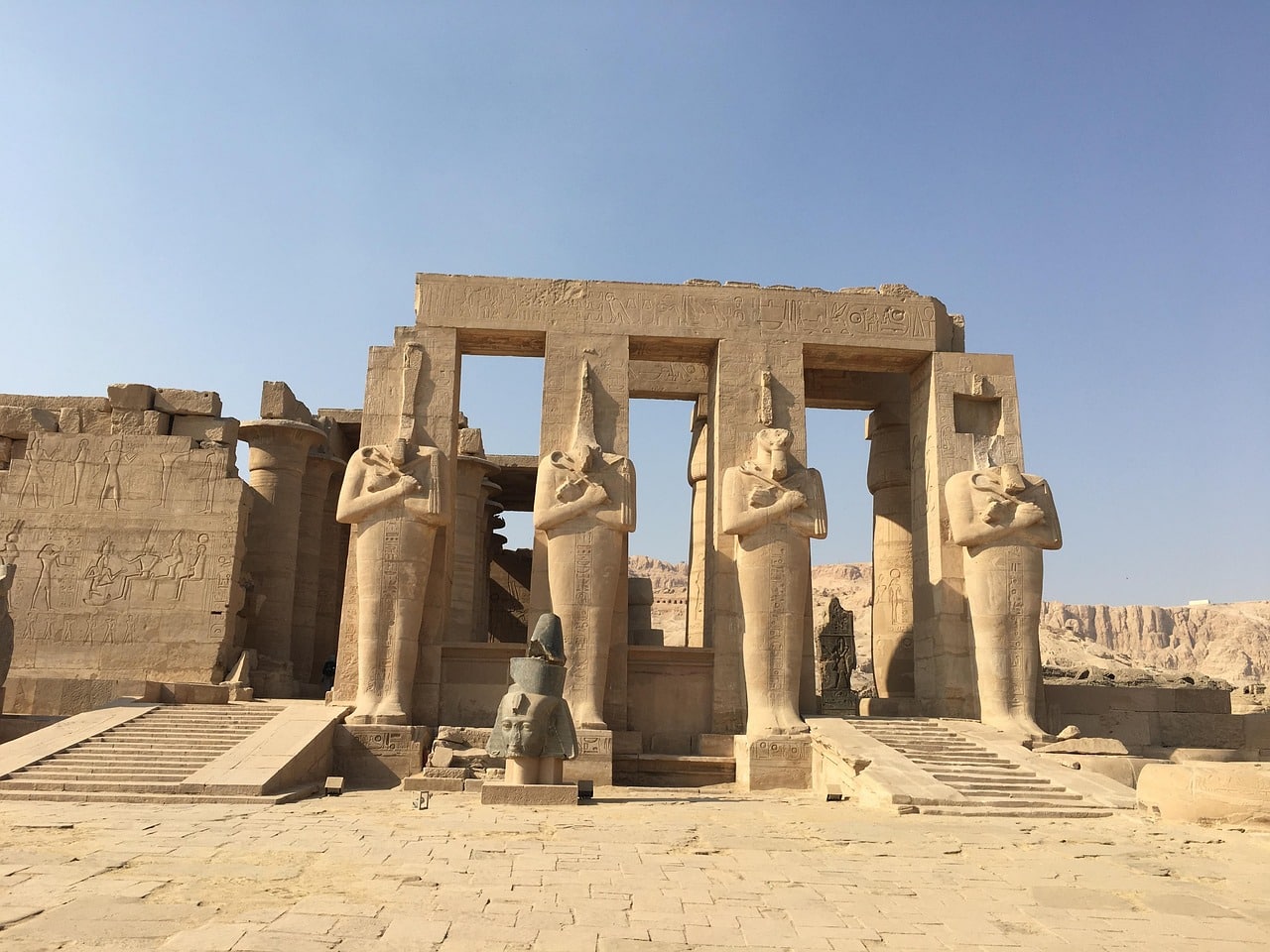
Egypt is one of the most rewarding destinations on the planet. Ancient temples, golden deserts, the legendary River Nile, and some of the world’s oldest monuments all wait for you in one country. But if you plan to go alone, you probably have one big question: is it safe?
The short answer is yes, with the right preparation. Well-planned Egypt tour packages from trusted operators like Memphis Tours can take away much of the stress, especially for first-time visitors. Whether you travel independently or with a guided group, knowing what to expect makes all the difference.
Is Egypt Safe for Solo Travelers?
Egypt is generally safe for solo travelers. The government has made significant investments in tourist security over the years. You will notice tourist police at almost every major site, from the Giza Pyramids to the temples of Luxor and Karnak. The US State Department currently lists Egypt as a Level 2 country, which means travelers should exercise increased caution. This does not mean danger at every corner. It means being on the alert, avoiding traveling to certain areas near conflict areas, and using common sense during your trip.
Scams, petty theft, and minor harassment are the most common problems tourists face, rather than violence. Something to keep in mind when you come across apocalyptic travel advisories on the Internet. Stick to the main tourist corridor of Cairo, Luxor, Aswan, and the Red Sea resorts, and you will find a welcoming country full of history. Areas to avoid:
- North Sinai Governorate
- Areas within 20 km of the Libya border
- The Western Desert without a licensed tour company
- Remote border areas near Sudan
Best Time to Visit Egypt
October to April is the best window for most travelers. Temperatures are mild, the skies are clear, and outdoor sites like the Pyramids and Valley of the Kings are pleasant to explore. December through February brings cool evenings in Cairo and Luxor, so pack a light jacket. June to August brings intense heat that can exceed 40 degrees Celsius (104 degrees Fahrenheit). Try to start your sightseeing in the morning, take a break during the middle of the day, and then start again in the late afternoon to avoid the heat.
Visa and Entry Requirements
Visa on arrival is available for nationals from various countries, including those from the UK, US, EU countries, Canada, and Australia. These include Cairo, Luxor, and Hurghada airports. The cost is $25 USD for a single entry visa valid for 30 days. Please ensure you bring crisp US dollars to avoid any hassle during your arrival.
Visas can be obtained online through Egypt’s official e-visa website: visa2egypt.gov. This is recommended to avoid any last-minute hassles during your arrival. Please ensure your passport is valid for at least six months from your entry date into Egypt.
Getting Around Egypt Safely
The safest and most reliable means of transportation is Uber or Careem. The cost is agreed upon before traveling. This eliminates the possibility of overcharging. However, it is not advisable to use street taxis unless the cost is agreed upon before boarding. Domestic flights are the quickest means of transportation between cities. The flight from Cairo to Luxor or Aswan is a time-saver and affordable if booked in advance.
Trains are a comfortable means of transportation from Luxor to Aswan. The overnight train from Cairo to Luxor is a popular means of transportation for tourists and is reliable. Nile cruises between Luxor and Aswan are one of the most relaxing ways to see southern Egypt. Meals, guides, and transport to temple sites are all arranged for you.
Money, Tipping, and Scam Awareness
The local currency is the Egyptian Pound (EGP). ATMs are also available in major cities/tourist destinations. It is recommended to use ATMs located in major banks such as Banque Misr or CIB, as there is a small chance of card skimming. Credit cards are accepted in some hotel/restaurant destinations, but not from street vendors. Small denomination notes are required for tips and daily expenses.
Tipping, or baksheesh, is a normal part of Egyptian culture. Guides, drivers, hotel staff, and temple guards often expect a small tip. Keep a supply of 5 to 20 EGP notes handy at all times. Common scams to watch out for:
- A taxi driver says that his/her taxi’s meter is not working. Agree on a price first, or use Uber.
- A person offers something for free, like a photo opportunity, and then expects you to pay.
- A local tells you a museum is closed and offers to take you somewhere else. Check directly with official staff.
- A camel ride operator quotes one price, then demands more at the end. Agree on the full price before you start.
A calm, firm “La, shukran” (No, thank you) repeated without engagement is the most effective response to persistent touts.
Cultural Respect and Dress Code
Egypt is a Muslim majority country with conservative social norms. Cover your shoulders and knees in cities, markets, and religious sites. Light, loose fabrics work well in the heat and respect the dress code at the same time. Always carry a scarf for mosque entry. Avoid public displays of affection and do not photograph police stations, military buildings, or soldiers, as this is illegal and can lead to serious trouble.
Safety Tips for Solo Female Travelers
Women travel solo in Egypt every year and have wonderful experiences. However, female travelers may get more unwarranted attention in public places in cities. Preparation, not fear, is the answer. Some tips that may help:
- Wear modest clothing in cities and holy places
- Walk confidently and avoid eye contact with people
- Pre-book transport rather than hailing a taxi on the street
- Stay in a central and high-rated hotel
- Let someone at home know about your itinerary
Be aware of your own comfort level. Remove yourself from the situation and go into a shop or hotel lobby. Do not feel obligated to be nice about it.
Should You Book a Tour?
Yes, solo travel in Egypt is absolutely possible on your own. But a guided tour, especially for first-time visitors, removes a significant amount of daily friction. A good guide brings historical context to sites that otherwise offer very little in the way of signage or explanation.
Consider well-planned Egypt tour packages if you want the peace of mind of having transport, accommodation, and expert guidance arranged in advance. It is particularly valuable for out-of-the-way places such as Abu Simbel, the Valley of the Kings, and the temples at Philae.
Final Thoughts
Egypt is a rewarding destination for the curious and well-prepared traveler. The country holds more UNESCO World Heritage Sites than almost any other nation. The people are friendly, the food is great, and the history is just unbeatable. Sure, there are things to look out for. But millions of visitors — including solo travelers — return from Egypt with nothing but remarkable memories. Know the rules, respect the culture, stay alert, and you will find that Egypt is not only safe but genuinely unforgettable. The Pyramids have been waiting for 4,500 years. It is time to go.
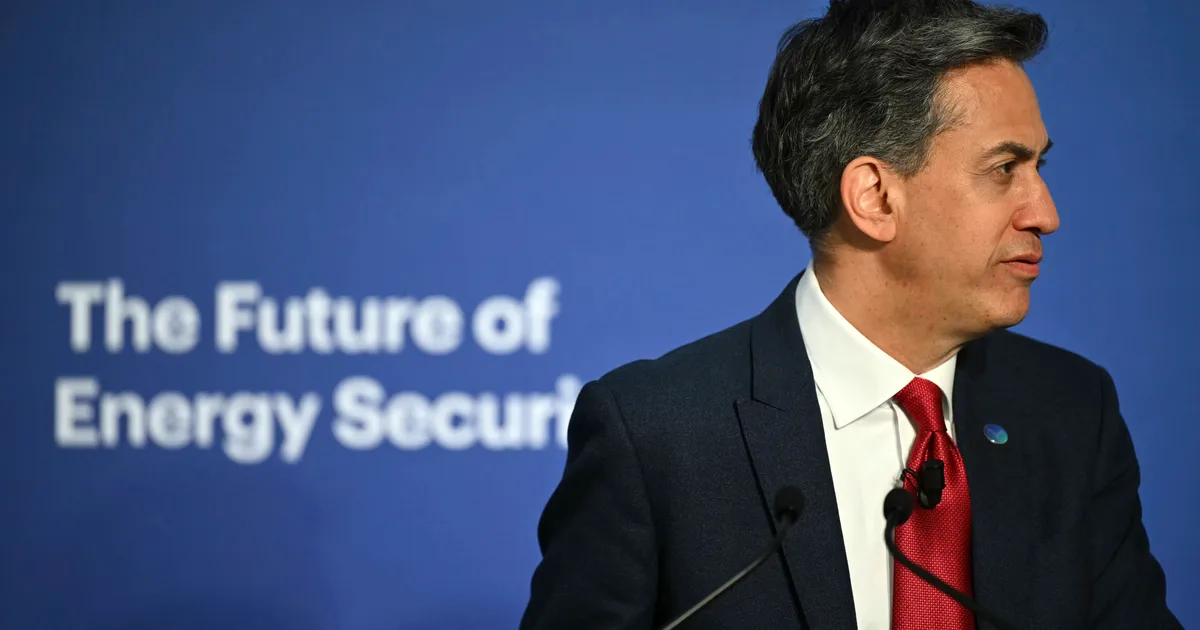
Energy security secretary Ed Miliband has refused to outline any clear details about potential support if bills start to rise.
But the senior minister told broadcasters that “if it’s necessary to intervene we will”, depending on how long Donald Trump’s war in Iran rumbles on for.
He insisted his Labour government would not let the energy bills reach £3,500 a year on average again, a shocking high seen during Liz Truss’s time in government.
The former Tory prime minister then spent taxpayers’ money to cap it at £2,500 a year to mitigate the effects of Russia’s invasion of Ukraine and a rise in global wholesale gas prices.
It remains unclear if the current Labour government would offer the same universal support were the Iran conflict to continue.
The war in the Middle East has already pushed the cost of oil to over $100 a barrel as the Iranian regime has effectively closed one of the world’s most important shipping lanes, the Strait of Hormuz.
Bills are expected to come down in the short-term because the energy price cap has already been set for April through to July.
However, regulator Ofgem may end up hiking them after that to reflect the turbulence around oil pricing.
Miliband told the BBC’s Laura Kuenssberg: “We took action in the Budget to cut bills because we know the cost of living crisis is the number one issue facing the British people.”
He continued: “We are preparing for all eventualities. It’s right we do that preparatory work, learning the lessons of the last crisis when Russia invaded Ukraine and – the best I can say, Laura – is if it’s necessary to intervene, we will.
“As the regulator said, we don’t know what will happen to the energy price cap in July.”
Miliband did meet with energy firms this week over how the government could help with bills.
The government is trying to discourage fuel retailers from hiking prices, without directly responding to markets.
Chancellor Rachel Reeves said earlier this week: “We are working on different ways to protect people, including more targeted support.”

‘Crash Accelerates,’ Says Robert Kiyosaki as He Continues Buying BTC, ETH, and More

Angel Reese calls out fake quote

DR-DOS Is Back, But Not Quite As We Knew It

Smart energy pays enters the US market, targeting scalable financial infrastructure

Why Israel is blocking foreign journalists from entering

Bitcoin: We’re Entering The Most Dangerous Phase

Bitcoin $37,800: The Crash Is Coming.

SBI CBO 2026 Banking & Financial Awareness | Banking & Financial Awareness Rapid Fire | By Veer Sir

All Wedding Gifts And Sprayed Money Belongs To The Bride – Nigerian Woman Lectures Men
-
 Tech4 days ago
A 1,300-Pound NASA Spacecraft To Re-Enter Earth’s Atmosphere
-
 Crypto World1 day ago
HYPE Token Enters Net Deflation as HyperCore Buybacks Outpace Staking Rewards
-

 News Videos6 days ago
10th Algebra | Financial Planning | Question Bank Solution | Board Exam 2026
-

 Business5 days ago
ExxonMobil seeks to move corporate registration from New Jersey to Texas
-

 Crypto World6 days ago
Paradigm, a16z, Winklevoss Capital, Balaji Srinivasan among investors in ZODL
-

 Fashion2 days ago
Weekend Open Thread: Addict Lip Glow
-

 Tech5 days ago
ChatGPT will now generate interactive visuals to help you with math and science concepts
-
Sports1 day ago
Why Duke and Michigan Are Dead Even Entering Selection Sunday
-

 NewsBeat4 days ago
Residents reaction as Shildon murder probe enters second day
-

 Business7 days ago
Search for Nancy Guthrie Enters 37th Day as FBI Probes Wi-Fi Jammer Theory
-

 Business4 days ago
Search Enters Sixth Week With New Leads in Tucson Abduction Case
-
 NewsBeat6 days ago
Pagazzi Lighting enters administration as 70 jobs lost and 11 stores close across Scotland
-

 Tech6 days ago
Despite challenges, Ireland sixth in EU for board gender diversity
-

 Business1 day ago
US Airports Launch Donation Drives for Unpaid TSA Workers as Partial Government Shutdown Enters Fifth Week
-

 NewsBeat4 days ago
I Entered The Manosphere. Nothing Could Prepare Me For What I Found.
-
Crypto World22 hours ago
Coinbase and Bybit in Investment Talks: Could Bybit Finally Enter the US Crypto Market?
-

 Business6 days ago
Search Enters 39th Day with FBI Tip Line Developments and No Major Breakthroughs
-
 Sports6 days ago
Skateboarding World Championships: Britain’s Sky Brown wins park gold
-

 Business1 day ago
Country star Brantley Gilbert enters growing non-alcoholic beer market
-
 Crypto World5 days ago
Will Chainlink price reclaim $10 amid volatility squeeze?

