

Business
Winter blizzards cancel 2,000 flights across Midwest airports nationwide Sunday

Check out what’s clicking on FoxBusiness.com.
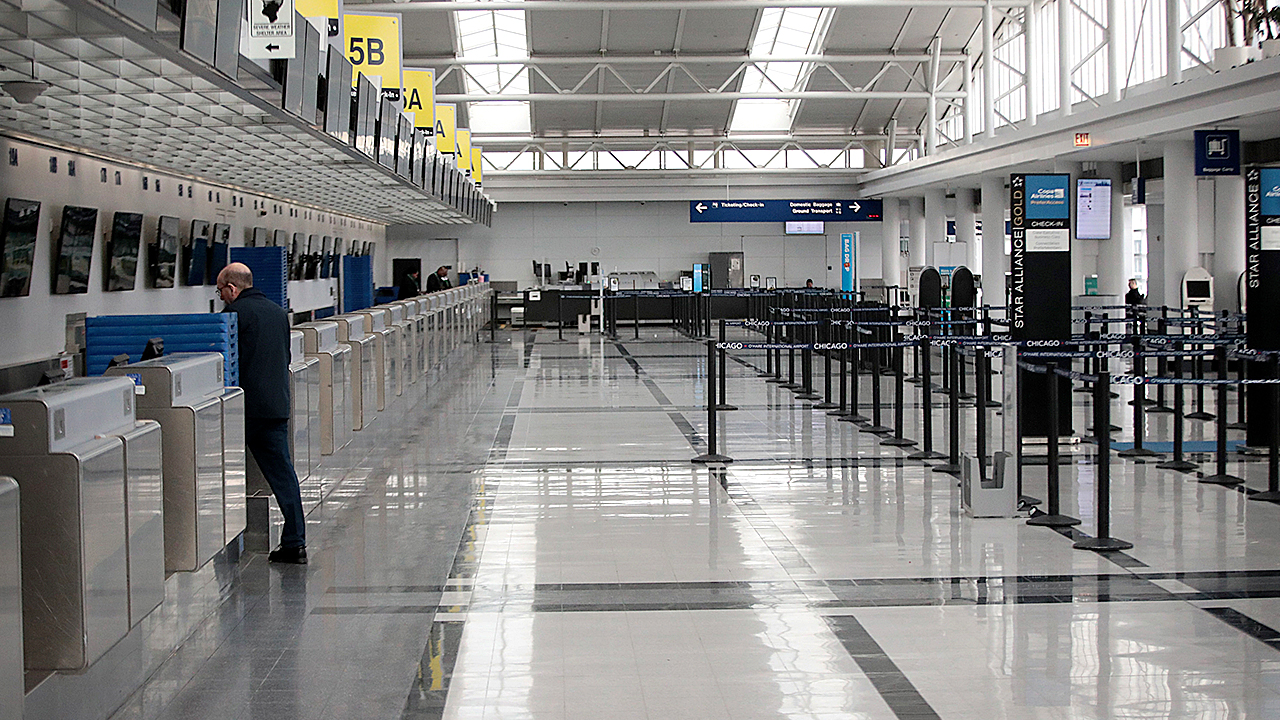
At least 2,000 flights were canceled Sunday as winter blizzards continue to batter the Upper Midwest, turning at least one normally bustling airport into a virtual ghost town.
According to the latest data from FlightAware, U.S. flight cancellations Sunday accounted for roughly 78% of all canceled flights worldwide, with at least 2,216 flights grounded out of roughly 2,842 global cancellations.
Meanwhile, an additional 6,826 delays have reportedly rippled across the national air network, further straining travel schedules across the world.
Many airlines have since issued guidelines allowing passengers to change their flights without major fees, providing flexibility for travelers affected by the winter storms.
AUSTIN AIRPORT GRIDLOCK: SECURITY LINES STRETCH OUTDOORS AS DHS SHUTDOWN HITS ONE-MONTH MARK
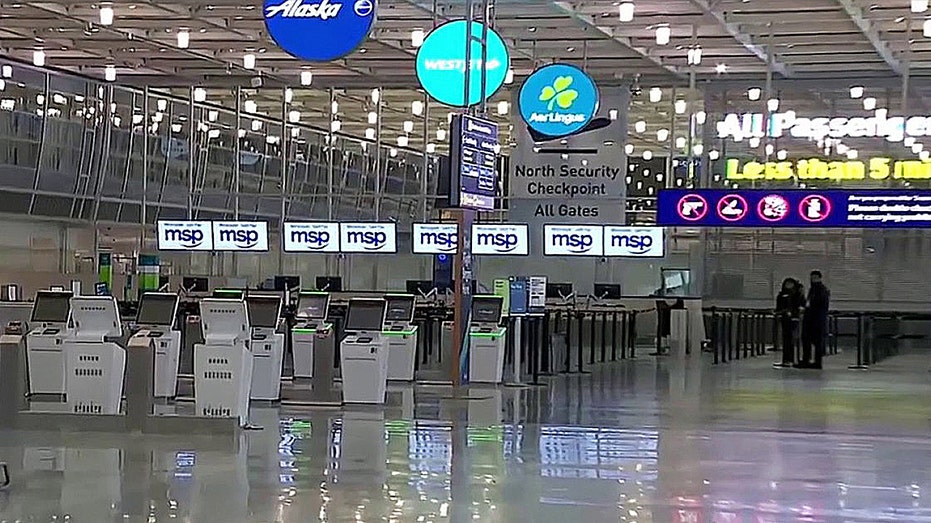
Minneapolis-St. Paul International Airport resembled a ghost town on March 15, 2026. (Fox 9 Minneapolis-St. Paul / Fox News)
The epicenter of the disruptions remains in the Midwest, with the heaviest impact centered on Chicago, followed by Minneapolis. The fallout has created noticeable ripple effects at other major U.S. airports, including Atlanta and Denver.
The airport seeing the largest impact by sheer volume is Chicago’s O’Hare International Airport, with a reported 790 flights affected, according to FlyChicago.
At least 27% of its departing flights have been canceled, while another 29% of incoming flights have also been scrapped, according to FlightAware.
Another 839 flights, both incoming and outgoing, have been delayed, with average wait times of 82 minutes, according to FlyChicago.
SPRING BREAK FLYERS WARNED OF MASSIVE TSA LINES AS SHUTDOWN DRAINS AIRPORT STAFF
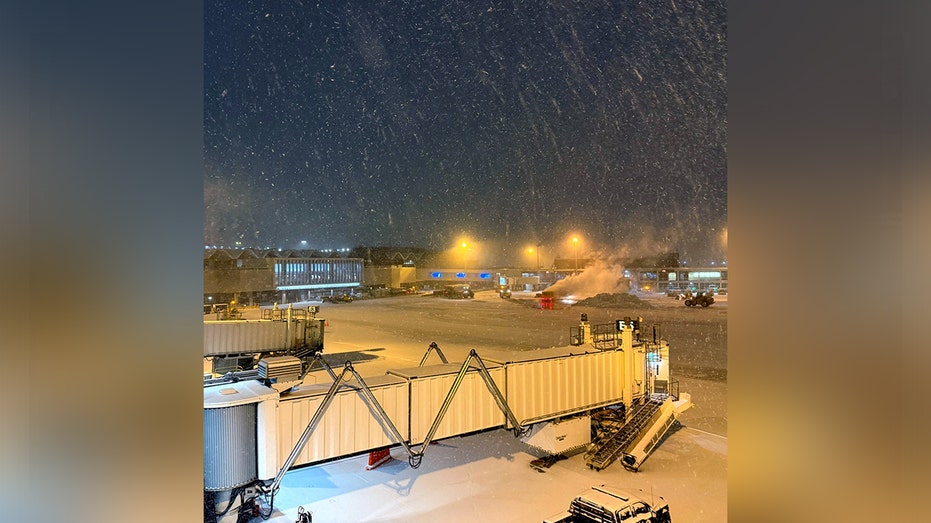
A fierce snow blizzard lashes the exterior of the airport, grounding flights and disrupting travel at MSP. (MSP Airport/Fox 9 Minneapolis-St. Paul / Fox News)
The major airport with the highest percentage of affected flights is Minneapolis-St. Paul International (MSP), where 73% of departing flights and 64% of arriving flights have reportedly been canceled, FlightAware reported.
MSP Airport noted a total of 726 canceled flights and 177 on-time departures, while Fox 9 Minneapolis-St. Paul observed Sunday that the terminals virtually resembled a ghost town, with minimal staff on site.
The airport released a statement on their social media Sunday morning, highlighting the severity of the winter storms that disrupted operations at the airport.
“Fake spring came to an end as snow arrived at MSP Saturday evening,” it said. “Airlines have canceled more than 450 flights to and from MSP on Sunday. Please check with your airline for the latest flight information. Stay safe!”
Hartsfield-Jackson Atlanta International (ATL), another major hub connecting to Chicago and Minneapolis, reportedly experienced significant disruptions as well, with at least 227 total flights delayed and another 87 canceled.
Similarly, Denver International (DEN) saw 466 delays and 60 total cancellations.
TRAVEL EXPERT WARNS AMERICANS TO ‘BOOK NOW’ AS OIL PRICES THREATEN HIGHER AIRFARES
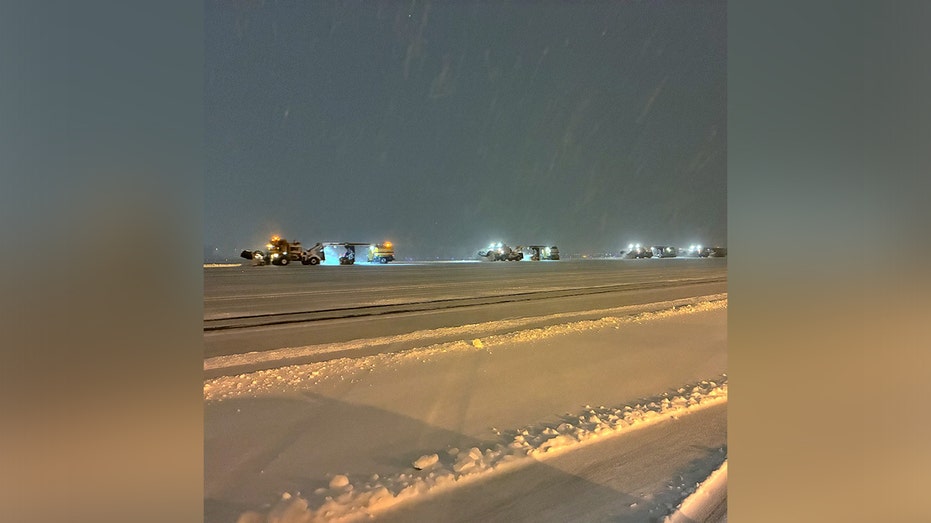
Snow blankets the tarmac at Minneapolis-St. Paul International Airport, highlighting the storm’s impact on flights. (MSP Airport/Fox 9 Minneapolis-St. Paul / Fox News)
Most major carriers have issued travel waivers, allowing passengers to rebook flights as the storm continues to rage. Officials suggest checking airline websites frequently for any updates.
United Airlines issued notices allowing passengers with affected flights from the Upper Midwest and Great Lakes region to reschedule their trips with minimal fee changes.
“You can reschedule your trip and we’ll waive change fees and fare differences,” the site said. “But, your new flight must be a United flight departing between March 12, 2026 and March 20, 2026. Tickets must be in the same cabin and between the same cities as originally booked.”
| Ticker | Security | Last | Change | Change % |
|---|---|---|---|---|
| UAL | UNITED AIRLINES HOLDINGS INC. | 86.60 | +0.07 | +0.08% |
CLICK HERE TO GET FOX BUSINESS ON THE GO
While Delta Air Lines had previously set a March 22 deadline for ticket reissuance, passengers can now extend this deadline to March 24, 2026.
American Airlines also announced that passengers can change their trips with no change fee, provided the new bookings are made by March 26, 2026.


Prudential plc has released a landmark regional study showing that financial confidence among Asian adults is highest in youth and declines steadily with age, raising urgent questions about retirement readiness and insurance coverage gaps.
Key takeaways
- Financial confidence declines with age. Asian adults aged 18 to 35 report the highest financial well-being scores, but confidence drops steadily as responsibilities and long-term uncertainties grow with age.
- Retirement readiness remains critically low. Only 22% of middle-class consumers feel confident about their retirement plans, with nearly 7 in 10 expecting to work beyond traditional retirement age out of financial necessity.
- Awareness of financial solutions lags behind need. Over 61% of middle-class respondents have never heard of family insurance plans, and only 18% feel they have the right financial tools to achieve long-term success.
Prudential’s inaugural Financial Wellbeing Index, which surveyed 7,707 adults aged 18 to 60 across eight Asian markets, including Hong Kong, Indonesia, Malaysia, the Philippines, Singapore, Taiwan, Thailand, and Vietnam, found that adults aged 18 to 35 recorded the highest composite financial wellbeing score at 59.8 out of 100. Respondents aged 36 to 49 scored 58.2, while those aged 50 to 60 scored 57.7, marking a gradual but consistent decline across life stages.
The regional average stood at 58.9, underscoring a troubling divergence between perceived comfort and actual financial preparedness.
Short-Term Stability Masks Long-Term Anxiety
The index, conducted from September to December 2025, measures four key dimensions: present financial security, future financial security, present financial freedom, and future financial freedom. While respondents rated their present financial security at an average of 61.7, their confidence in future financial freedom dropped noticeably to 55.2, revealing a gap between managing today’s expenses and securing tomorrow’s independence.
The data paints a sobering picture. Only 34% of respondents said they would not need to continue earning income in retirement. Fewer than half, at 47%, felt secure about their financial future. Meanwhile, just 45% believed they could absorb a major unexpected expense without significant hardship.
Concerns also shift meaningfully by age. Younger adults aged 18 to 35 lean toward worries about job stability and family health risks, while those aged 50 to 60 are more preoccupied with deteriorating health and the spiralling cost of everyday essentials including food, utilities, and transport.
A Region Divided: Vietnam Leads, Hong Kong Lags
Across the eight surveyed markets, stark disparities in financial well-being and access to financial services are evident.
Vietnam posted the highest overall score at 65.1, with 66% of respondents agreeing they have access to financial services and products that support long-term planning. Indonesia (62.0) and Thailand (60.4) also outperformed the regional average, with residents reporting stronger levels of financial knowledge and planning activity.
At the other end of the spectrum, Hong Kong registered the lowest financial well-being score at 52.5, with residents least satisfied with their access to financial products and services. Across all eight markets, a particularly stark finding stood out: only 18% of respondents strongly agreed they possess the financial tools needed to achieve long-term financial success, a signal of a deep and persistent gap between financial awareness and actionable solutions.
Middle-Class Anxiety and the Retirement Divide
Parallel research from FWD Group and Sun Life reinforces the concerns raised by Prudential’s index, pointing to a widening retirement divide within Asia’s middle class.
Nearly 71% of middle-class respondents reported significant anxiety about their overall financial well-being, driven predominantly by the rising cost of daily living. FWD’s findings highlight healthcare expenses and sudden job loss as the most acute vulnerabilities, pushing many households to prioritise short-term financial targets over comprehensive, long-horizon retirement strategies.
Sun Life’s research draws a sharper distinction, identifying two divergent consumer profiles. “Gold Star Planners” are those who retire by choice, while “Stalled Starters” are those who delay retirement due to financial pressure. Approximately seven in 10 middle-class consumers expect to work beyond the traditional retirement age, with around 60% citing income necessity rather than personal fulfilment as the primary reason they remain in the workforce. Only 22% of middle-class consumers said they feel very confident in their retirement plans.
Generational Squeeze: Gen X, Gen Y, and Gen Z Under Pressure
The research highlights how each generation faces its own distinct financial strain, compounding the broader retirement challenge.
Generation X is most acutely caught between obligation and aspiration, reporting the dual burden of funding children’s education while simultaneously building retirement savings in a persistently inflationary environment. Among this group, 62% worry their savings will not keep pace with inflation, and more than half rank guaranteed lifelong income as their top retirement priority.
Generation Y (Millennials) face what researchers describe as the “sandwich generation” challenge, with 85% of respondents supporting their parents while also raising children. Nearly half say they are unsure whether they can accumulate sufficient retirement savings while meeting these multi-directional obligations.
Generation Z is encountering financial strain earlier than any preceding cohort, with 53% expecting significant financial difficulties within the next five to ten years due to rising day-to-day expenses. Despite this, 81% of respondents stated that retirement should be a personal choice rather than tied to a mandatory age, reflecting a generational shift in how work and retirement are perceived.
Advice Gaps and the Rise of AI-Driven Guidance
The surveys also highlight limited awareness of key insurance and wealth solutions across the region. More than 61% of middle-class respondents said they have never heard of family insurance plans, despite expressing strong interest in integrated, family-wide coverage options.
Advice-seeking behaviour is also changing in notable ways. One in five planners has used generative AI for retirement advice, double the share recorded the previous year. This rapid uptake signals growing demand for more accessible forms of financial guidance, alongside traditional advisory channels such as agents, bancassurance partners, and licensed financial planners.
Insurers Respond with Education and Long-Term Planning Initiatives
Against this backdrop, Prudential and its peers are expanding financial education, advisory services, and long-term planning initiatives across the region.
Angel Ng, Regional CEO for Greater China and Group Customer, Wealth and Product at Prudential plc, said: “Longer lifespans across Asia are transforming expectations around financial wellbeing. Customers today are looking beyond financial products. They want confidence, clarity, and a partner who would guide them towards a future that they can genuinely look forward to.”
She added, “At Prudential, we believe financial planning is not just about preparing for later years. It is about enabling well-being at every stage of life. We are committed to empowering our customers and communities with the knowledge, advice, and protection to help them build resilience early, safeguard what matters through life’s transitions, and enjoy healthy, fulfilling, and financially confident longevity.”
Prudential’s Cha-Ching financial literacy programme, operating under the Prudence Foundation and targeting children aged 7 to 12, has reached more than 3.9 million students and teachers across Asia and Africa as it marks its 10th anniversary. The company is also developing a digital-first financial literacy programme for adults, aimed at broadening financial security and freedom across the region.
As financial pressures build across generations, insurers across Asia are moving beyond a narrow focus on risk transfer toward a wider role encompassing retirement income planning, decumulation strategies, and multi-generational financial support. The survey findings collectively suggest that this shift is not only commercially strategic but increasingly essential to the financial well-being of millions of households across the region.
Other People are Reading

Huntington Ingalls Industries: High Customer Demand, But Valuation Is High


Dollar steady as markets brace for busy central bank week amid Mideast war

PWV: Value's Outperformance Is Unlikely To Persist
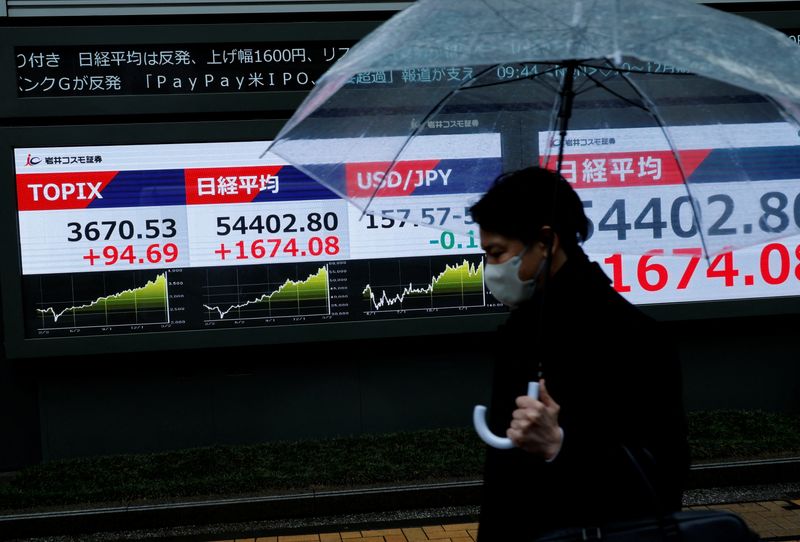

Asia shares wary, oil volatile as war drags on

US, China seek to wrap Paris talks on managed trade, agriculture deals for Xi-Trump summit

Qatar’s closure of a major liquefied natural gas plant after an Iranian drone attack has taken about a third of global helium production offline, Bloomberg Economics estimates. That’s a hit to chipmakers since it’s an essential component of production and there’s no substitute.
Surging energy prices also threaten to dampen demand for semiconductors by driving up the operational costs of AI data centers.
Food and Stoves
Supply disruptions in West Asia, where India sources most of its gas, have created acute shortages in its cooking gas market. That has pummeled shares of Eternal Ltd and Swiggy Ltd as well as restaurant operator Jubilant Foodworks Ltd.

Fears of an extended cooking-gas shortage have boosted shares of manufacturers of electric cook-tops, such as TTK Prestige Ltd and Stove Kraft Ltd, as consumers look for alternatives to gas.
Automakers
Car makers may also suffer as higher oil prices threaten to stifle consumer demand. Ford Motor Co is the most vulnerable because of the disproportionate amount of its revenue that comes from oil-guzzling cars.
Toyota Motor Corp and Hyundai Motor Co may face the most impact from the decrease in East Asia sales, as the region accounts for 17% and 10% of their total sales, respectively, according to Bernstein analysts including Eunice Lee. Hyundai shares have plummeted 23% this month, with Toyota down 12%.
Retailers
Rising oil prices drive up distribution costs while also draining the discretionary spending power of consumers at the pump.
Shares of US-listed apparel brands and retailers have slid, with Lululemon Athletica Inc, Nike Inc, Macy’s Inc and RH all seeing double-digit drops this month.
Clothing suppliers in China are also bracing for higher input costs, with chemical fibers (oil-derived) such as polyester and acrylic widely used in garment manufacturing.
Fertilizers
As much as 35% of global fertilizer raw materials pass through the Strait of Hormuz, according to Morningstar DBRS analyst Andrea Petroczi-Urban. This bottleneck is expected to drive North American fertilizer prices higher as global demand intensifies. In anticipation of tightened supply, producers like Nutrien Ltd and The Mosaic Co have seen their stock prices climb.
The outlook is more somber across the Asia-Pacific region, which relies heavily on West Asian imports. Morgan Stanley economists note that Australia is particularly exposed. Stock of Dyno Nobel Ltd has fallen 9% this month, while Nufarm Ltd’s shares have declined 4%.
In India, officials have asked China to allow the sale of some urea cargoes as the war curtails the nation’s gas supplies, threatening fertilizer production in the country. Stocks including Rashtriya Chemicals & Fertilizers have dropped.
A 47-year-old man has died at South32’s Worsley alumina refinery after a workplace incident.


Trump says talks with Cuba ongoing, action possible after Iran

Ambitious tax reform is being flagged by the federal treasurer as the Middle East conflict hits the economy and home owners brace for an interest rate hike.

The X-Files Episode Secretly Inspired By A Real-Life Serial Killer

Financial Confidence Peaks Early, Then Fades: Asia’s Growing Retirement Divide

Aave Unveils Aave Shield After $50M Token Swap Mishap


-
 Tech5 days ago
A 1,300-Pound NASA Spacecraft To Re-Enter Earth’s Atmosphere
-
 Crypto World2 days ago
HYPE Token Enters Net Deflation as HyperCore Buybacks Outpace Staking Rewards
-

 News Videos7 days ago
10th Algebra | Financial Planning | Question Bank Solution | Board Exam 2026
-

 Business5 days ago
ExxonMobil seeks to move corporate registration from New Jersey to Texas
-

 Crypto World6 days ago
Paradigm, a16z, Winklevoss Capital, Balaji Srinivasan among investors in ZODL
-

 Fashion2 days ago
Weekend Open Thread: Addict Lip Glow
-

 Tech5 days ago
ChatGPT will now generate interactive visuals to help you with math and science concepts
-
Sports1 day ago
Why Duke and Michigan Are Dead Even Entering Selection Sunday
-

 NewsBeat4 days ago
Residents reaction as Shildon murder probe enters second day
-

 Business5 days ago
Search Enters Sixth Week With New Leads in Tucson Abduction Case
-
 NewsBeat6 days ago
Pagazzi Lighting enters administration as 70 jobs lost and 11 stores close across Scotland
-

 Business7 hours ago
Search for Savannah Guthrie’s Mother Enters Seventh Week with No Arrests
-

 Tech6 days ago
Despite challenges, Ireland sixth in EU for board gender diversity
-

 Business2 days ago
US Airports Launch Donation Drives for Unpaid TSA Workers as Partial Government Shutdown Enters Fifth Week
-
Crypto World1 day ago
Coinbase and Bybit in Investment Talks: Could Bybit Finally Enter the US Crypto Market?
-

 NewsBeat4 days ago
I Entered The Manosphere. Nothing Could Prepare Me For What I Found.
-

 Business6 days ago
Search Enters 39th Day with FBI Tip Line Developments and No Major Breakthroughs
-

 Business2 days ago
Country star Brantley Gilbert enters growing non-alcoholic beer market
-

 Sports7 days ago
Skateboarding World Championships: Britain’s Sky Brown wins park gold
-

 Crypto World5 days ago
Will Chainlink price reclaim $10 amid volatility squeeze?

