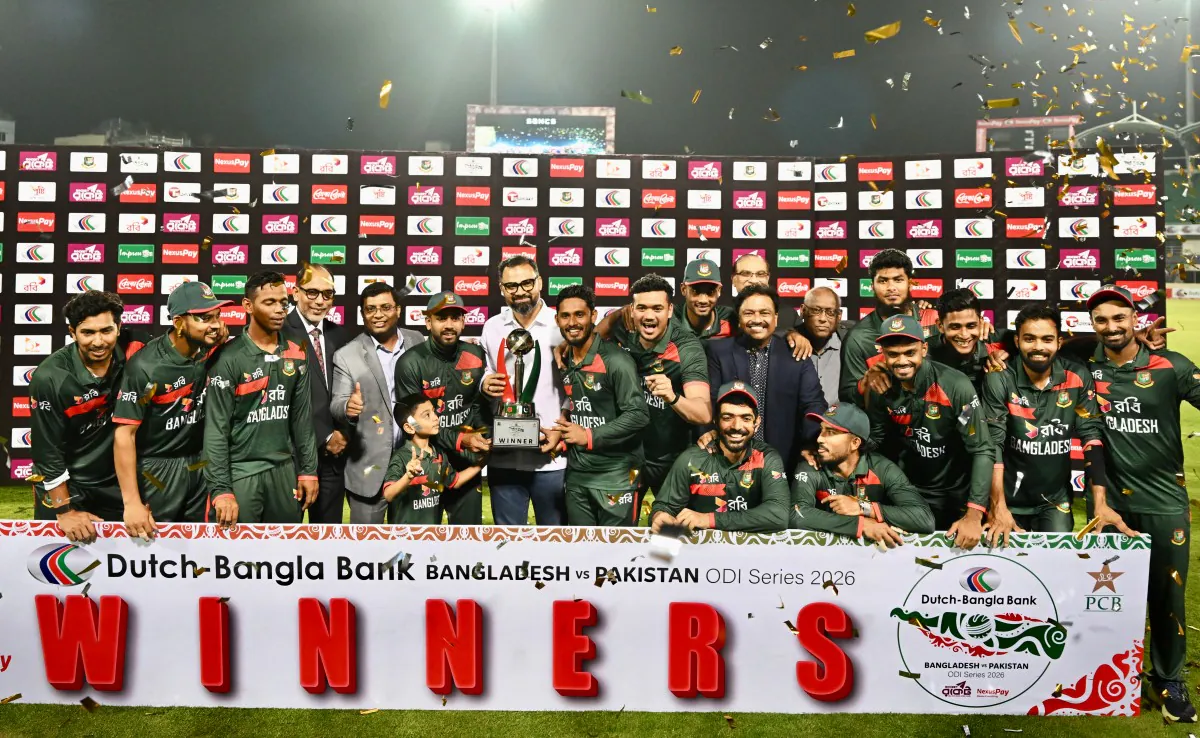
Bangladesh defeated Pakistan by 11 runs in a thrilling third ODI at the Sher-e-Bangla National Stadium on Sunday, securing the three-match series 2-1. Batting first, Bangladesh posted a competitive total of 290/5 in their allotted 50 overs. The innings was anchored by a brilliant century from Tanzid Hasan Tamim, whose elegant strokeplay set the tone for the innings. Litton Das provided a steady 41, while Towhid Hridoy contributed a vital 48, ensuring Bangladesh maintained momentum through the middle overs. The partnership efforts and timely acceleration in the final overs helped Bangladesh set a challenging target for Pakistan. In reply, Pakistan showed resilience, with Salman Agha producing a fighting century to keep his team in contention. Saad Masood (38) and Shaheen Afridi (37) also added crucial runs, but the chase fell short as Bangladesh bowlers struck at critical junctures.
Taskin Ahmed led the bowling attack with composure, scalping four wickets, while Mustafizur Rahman also chipped in with three wickets, restricting Pakistan to 279 and securing a thrilling 11-run victory. Bangladesh hold their nerve to seal the series. A cracker of a game after two one-sided ones before.
Bangladesh captain Mehidy Hasan Miraz, after the match, said, “Definitely, it was an excellent match. And yes, sometimes I was also afraid, like, you know, the boys played really well in the last over, 14 runs. Everybody is afraid. (on their score) Definitely. I think it was an excellent wicket. If we could get 300, it would definitely be better. But it’s still well. We’re playing well, especially with Amim, the way he batted. And definitely, they played really, really well. And then the little dash and Shankal and Tawhid, they played really well.”
Dallas Goedert will remain in the City of Brotherly Love for a ninth straight season.
On Sunday, the Philadelphia Eagles were reported to have re-signed the veteran tight end to a one-year, $7-million contract:
Thanks for the submission!
Advertisement
Sources: Tight end Dallas Goedert reached agreement today on a one-year deal to return to the Eagles for his ninth season in Philadelphia.
Advertisement
•
Reaction to it, however, was skeptical:
Advertisement
Looking to predict NFL playoff Scenarios? Try our NFL Playoff Predictor for real-time simulations and stay ahead of the game!
@AdamSchefter This means AJ Brown is gone
@AdamSchefter They just refuse to do a rebuild
@AdamSchefter One year deal? Either Dallas Goedert isn’t confident in his future, or the Eagles don’t trust him long term.
Advertisement
@AdamSchefter Damn I was hoping he would get signed somewhere else
@AdamSchefter Ok, but I want that TE from Oregon in the draft.
@AdamSchefter ANOTHER AWFUL SIGNING FOR THE EAGLES LMAOO. NFL RECORD FOR THE WORST SIGNINGS IN FREE AGENT HISTORY LMAOO😭😭🤣🤣🤣
The move ensures some continuity for an offense that is still undecided on whether to trade away AJ Brown. The star wideout had been very vocal about wanting out of the Eagles throughout the 2025 season as he struggled under Kevin Patullo’s system.
Advertisement
Amidst all that, Goedert emerged as an unlikely scoring threat, catching a team- and career-high 11 touchdowns in 15 regular-season games. In the Eagles’ wild-card loss to the San Francisco 49ers, he became the first tight end in NFL history to rush for a touchdown in a playoff game (he also caught another).
Insider shared thoughts on what Dallas Goedert staying with Eagles would mean for AJ Brown
During a recent appearance on Anthony Gargano’s eponymous show, Mike Garafolo posited that Dallas Goedert‘s and AJ Brown’s futures in Philadelphia were “interconnected” and that they could afford to lose one or the other, but not both:
Advertisement
“They’re going to have to (make a decision), one way or another. Now, the Goedert window being moved back was not just for Goedert, that was for A.J. as well … If you lose Goedert, you take a huge cap hit. If you trade A.J., you take a huge cap hit. So there’s not going to be an A.J. trade and a Goedert release. It’s going to be one or the other.”
Later that day on the NFL Network’s The Insiders, he further explained:
“The Eagles can’t pay Goedert if they’re keeping Brown. … But I’m sure Howie’s going to continue to have conversations …about A.J. Brown over the weekend. We’ll see. He’s still an Eagle right now. Will he be? At this point, I don’t know. I’m tired of guessing. We’ll let you know.”
Brown is entering the final year of a $100-million extension that he signed in 2022 upon being traded from the Tennessee Titans. After 2026, he will begin another extension, this time lasting three seasons and costing $96 million.
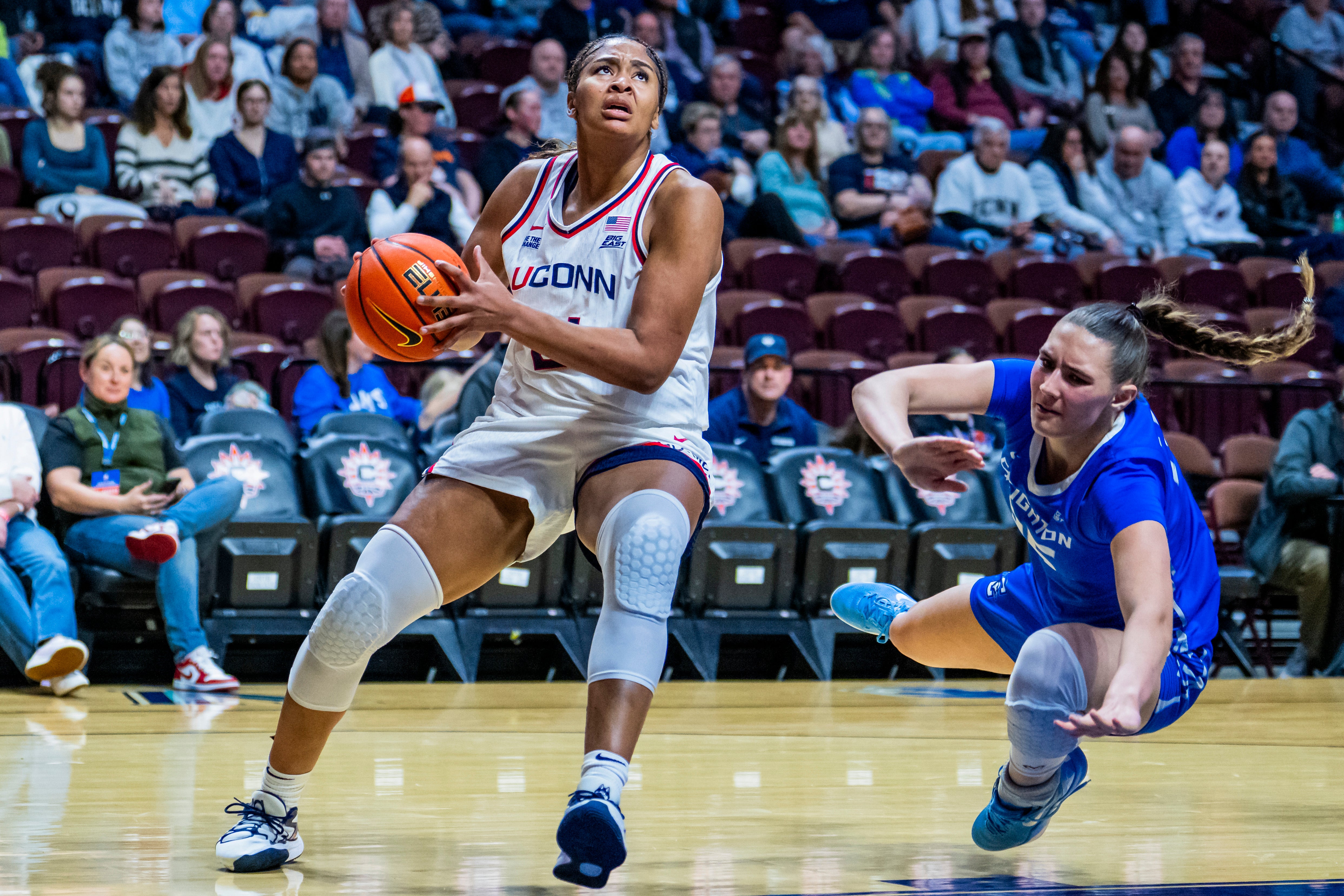
The 2026 women’s March Madness bracket has been revealed and many familiar teams are back in the tournament. UConn was awarded the No. 1 overall seed in the women’s NCAA Tournament on Sunday and enters March Madness needing six more victories to complete the seventh undefeated season in school history.
The Huskies (34-0) are looking for their 13th national title and becoming the first team to repeat as champions since the Huskies won four in a row from 2013-16. They are joined by UCLA, Texas and South Carolina as the other No. 1 seeds.
UConn, which is led by stars Sarah Strong and Azzi Fudd, opens the tournament at home against 16th-seeded UTSA and will play in the Fort Worth Regional. If seeds hold, the Huskies could face No. 2 Vanderbilt, which is coached by former UConn great Shea Ralph.
Advertisement
UConn was named the top overall seed as the 2026 women’s college basketball bracket has been revealed (Getty Images)
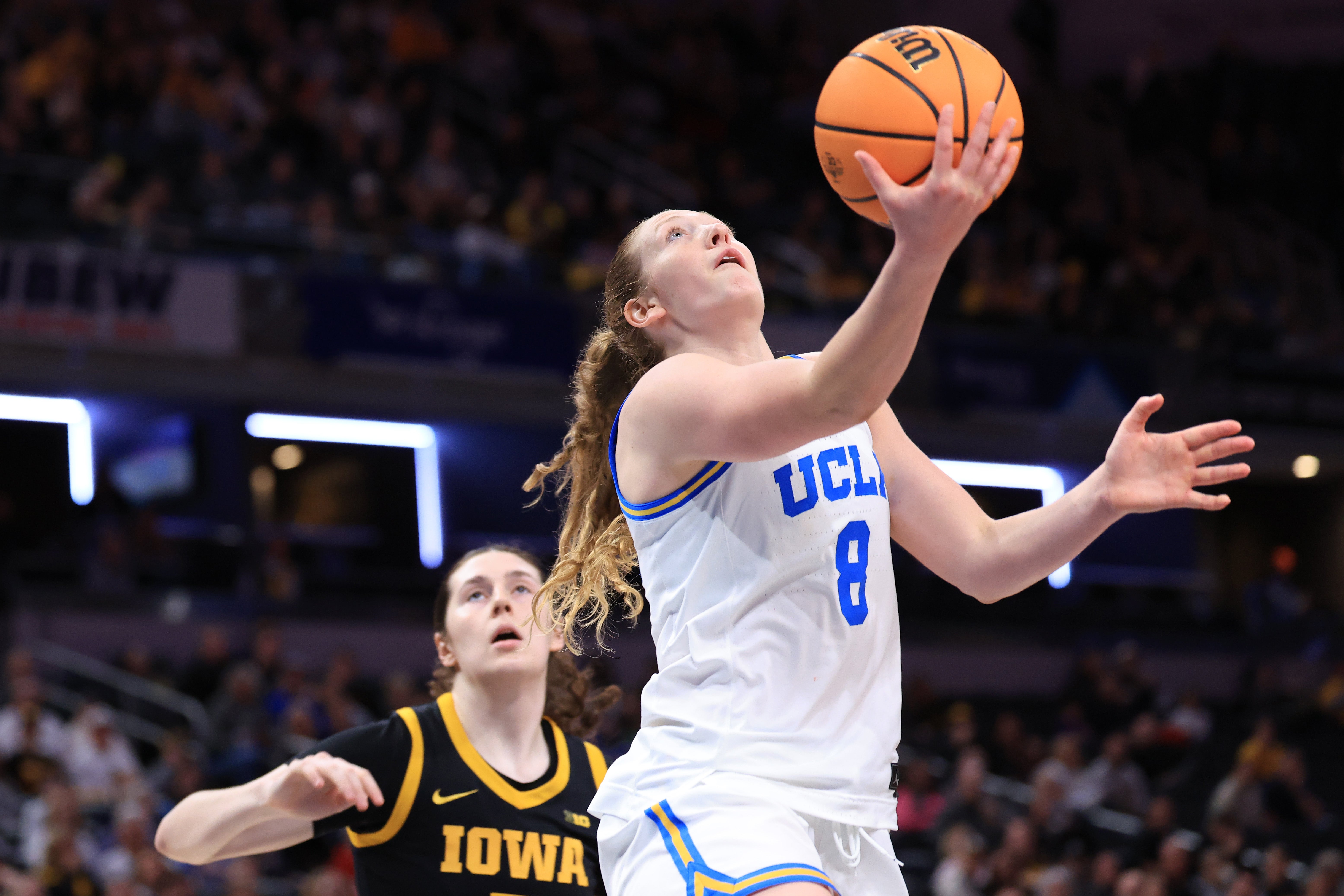
UCLA (31-1) was just behind the Huskies as the second overall seed in the tournament. The Bruins have won 25 straight games in dominant fashion with the lone loss this season coming against Texas on a neutral court.
UCLA reached the Final Four last year before losing to UConn. Cori Close’s team ran through the Big Ten and has an experienced group led by center Lauren Betts looking to win the school’s first NCAA championship.
The Bruins will try to win the first women’s national championship for the Big Ten Conference since 1999. The Bruins are one of 12 Big Ten teams in the field. That matches the record they set last season for most teams in the tournament. The SEC has 10, the ACC nine and Big 12 eight.
Other tops teams in UCLA’s region are No. 2 LSU, No. 3 Duke and No. 4 Minnesota.
Advertisement
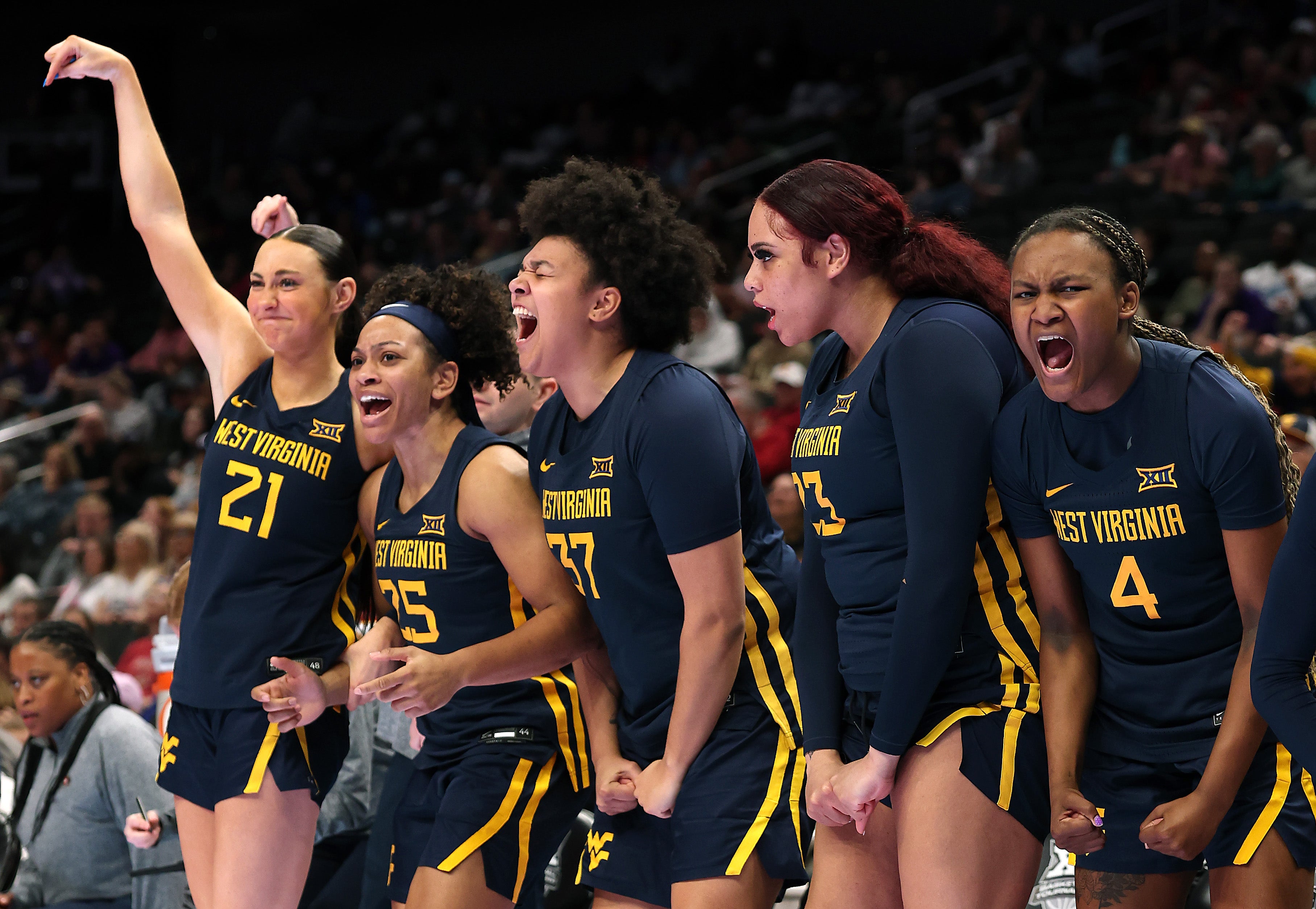
The Longhorns (31-3) earned the third No. 1 seed after winning the SEC Tournament title. They beat South Carolina in two of the three meetings this season. Texas will play in Fort Worth Regional 3. Other top teams in Texas’ region are No. 2 Michigan, No. 3 Louisville and No. 4 West Virginia.
The Gamecocks(31-3) are the No. 1 seed in Sacramento Regional 4 and have been a No. 1 seed for six consecutive seasons now. They will be joined by No. 2 Iowa, No. 3 TCU and No, 4 Oklahoma.
UCLA reached the Final Four last year before losing to UConn and both teams are back in the tournament in 2026 (Getty Images)
The College of Charleston won the Colonial Athletic Association to make the tournament field for the first time in school history. The Cougars are a 14-seed and are the lone first time entry in the field. Last season, there were six newcomers.
Advertisement
Financial compensation
For the second consecutive year, teams in the women’s tournament will be financially compensated, in a similar fashion to the men’s field, for each round they play. “Units” are what the NCAA calls its tally of wins, automatic qualifiers and at-large bids that determine how much conferences are paid. A unit is money paid to conferences when one of its teams appears in the NCAA Tournament.
This year, the NCAA is giving teams that reach the championship game and the one that wins the title extra units. That extra compensation was added to the overall pool and doesn’t decrease the overall value of the units.
Tournament sites
Advertisement
The top 16 seeds in the 68-team field will host first- and second-round games, with the regional rounds being played at two neutral sites for the fourth straight year. Fort Worth, Texas, will host half of the Sweet 16 and Sacramento, California, will host the other eight teams.
The Final Four for the women is set to begin on April 3 (Getty Images)
The Final Four will be played in Phoenix on April 3 and the championship game is two days later.
For the first time the NCAA revealed the 16 host schools a day early. It gave schools an extra day to sell tickets, broadcast partner ESPN a head start to move its equipment to the locations and the NCAA more time to get its marketing materials to sites.
Advertisement
Tennessee streaking
Tennessee kept its streak alive of reaching every NCAA Tournament since the first one in 1982. The 10th-seeded Lady Vols, who have lost seven consecutive games, only had 16 wins this season, the fewest for an at-large team since Oklahoma also had 16 in 2018. The seed is the lowest for the storied program since Tennessee was an 11-seed in 2019.
Those are about the same odds the NCAA men’s basketball selection committee has to unveil a new bracket without any nitpicking.
Advertisement
This year’s committee did an unusually good job overall, nailing which teams belonged on the No. 1 seed line and including the 68 most deserving teams in the field. The loudest complaints mostly target questionable seeding decisions or imbalanced regions.
Here’s a closer look at what the committee got right and wrong:
What the committee got right: Valuing the Sunday conference tournament games
For years, the selection committee has faced criticism for ignoring the seeding ramifications of Sunday conference tournament games. Tournament champions from the SEC and Big Ten in particular have long complained that the committee doesn’t account for those games and their victories haven’t resulted in the expected seeding bump.
Advertisement
Advertisement
That certainly seemed to be a complaint that this year’s committee was determined to address. Committee chairman Keith Gill said that he and his colleagues elevated Purdue from the No. 11 overall team on its seed list to No. 8 after the Boilermakers upset Michigan in Sunday’s Big Ten title game. That allowed Purdue to deservingly leapfrog Michigan State for the final No. 2 seed.
That wasn’t the only tweak the committee made to the bracket after the Big Ten title game went final. It also flip-flopped Michigan and Arizona on the overall seed list, elevating the Wildcats to the No. 2 overall 1 seed and dropping the Wolverines to the No. 3.
Further down the bracket, the committee also clearly accounted for Penn’s surprise victory over Yale in the Ivy League title game. Rather than just slot the Quakers into Yale’s projected No. 12 or 13 seed, the committee properly moved other teams up and slotted Penn as a No. 14.
This is an encouraging development and a long overdue one. These Sunday conference tournament games can’t just exist so the major TV networks have a way of leading into their selection shows. They also have to matter.
Advertisement
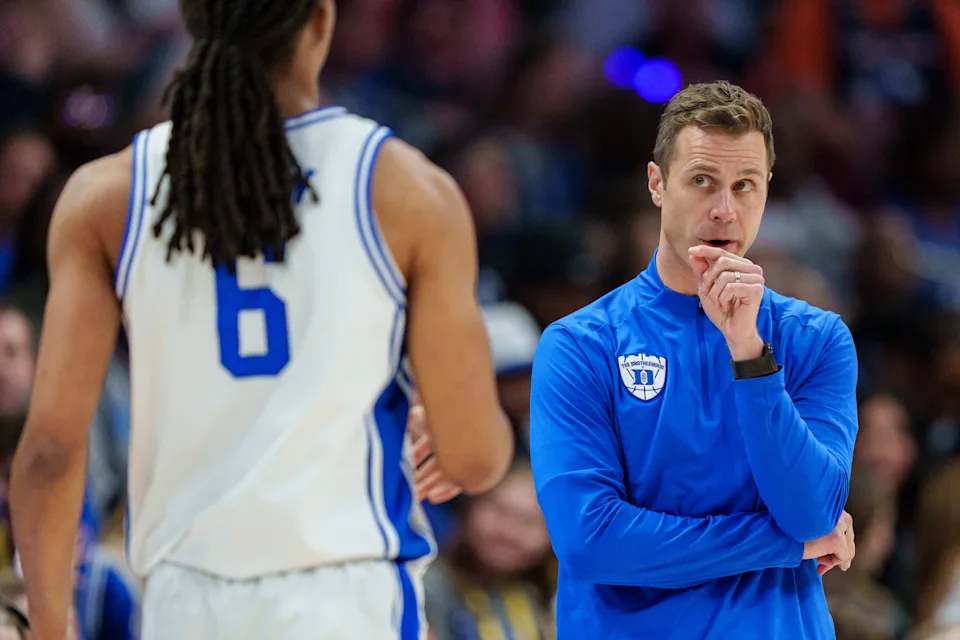
Jon Scheyer and the Duke Blue Devils got the No. 1 overall seed in the NCAA tournament, but they didn’t get the easiest draw. (Jacob Kupferman/Getty Images)
(Jacob Kupferman via Getty Images)
What the committee got wrong: The No. 1 overall seed getting the toughest region
So much for the narrative that Duke always gets a favorable draw.
Advertisement
This year’s committee rightfully awarded the Blue Devils with the No. 1 overall seed and then foisted upon them the most challenging path to the Final Four of any team on the top seed line.
It starts with the quality of the East Region’s other top teams. UConn was the strongest No. 2 seed that the Blue Devils could have drawn since the committee’s bracketing principles prevent them from placing the overall No. 1 seed and the highest-rated No. 2 (Houston) in the same region. Michigan State was the committee’s highest-rated No. 3 seed. Kansas is an inconsistent but dangerous No. 4 seed. And reigning Big East regular season and tournament champion St. John’s is underseeded as the East’s No 5.
Advertisement
Heck, even Duke’s potential second-round matchup against eighth-seeded Ohio State is far from a cakewalk. The Buckeyes are a borderline Top 25 team in the major predictive metrics and are peaking entering the NCAA tournament.
As if the quality of the teams isn’t proof alone that the East is the toughest region, consider the pedigree of the coaches. Jon Scheyer will match wits against former national champions Dan Hurley, Tom Izzo, Rick Pitino and Bill Self.
Advertisement
That is a gauntlet.
Advertisement
If you caught him in an honest moment off-camera, how much do you want to bet that Scheyer would trade paths with Michigan or Arizona right now?
What the committee got right: The 68 most deserving teams made the field
Sorry, Bruce Pearl.
No matter how incessantly you stump for your son’s Auburn team, the committee was correct to leave the Tigers out.
Never before has an at-large bid been awarded to a team with 16 or more total losses or to a team that is just a single game over .500. Auburn didn’t accomplish enough to persuade this year’s committee to break with either precedent.
Advertisement
Advertisement
The case for Auburn was that the Tigers have played the nation’s second-toughest schedule and showed the ability to defeat elite teams. They boasted marquee wins over Florida, St. John’s, Arkansas and Kentucky, as well as victories over fellow bubble teams NC State and Texas.
The problem is that Auburn simply didn’t win enough games. The Tigers went 4-13 in Quadrant 1 games and 11-16 against the top three Quadrants. Yes, they played a lot of good teams, but they lost to most of them.
NC State, Texas, SMU and Miami (Ohio) were the committee’s lowest-ranked at-large teams in the field and will battle it out in the First Four to advance to the main draw. Oklahoma, Auburn, San Diego State and Indiana were the first four teams left out.
Advertisement
It’s hard to argue with any of that. Even NC State’s surprise demotion to the First Four was the proper call. Eleven Quadrant 1 and 2 wins was impressive, but the North Carolina win came without Caleb Wilson and Henri Veesaar, the Clemson and SMU wins depreciated in value and none of the others came against top-40 teams in the NET.
Advertisement
What the committee got wrong: Vanderbilt as a No. 5 seed
Vanderbilt has more reason to complain about its seeding than any other team in the NCAA tournament field.
How did the Commodores get stuck with a No. 5 seed when their resume appeared strong enough to give them an outside chance at the last No. 3?
Advertisement
Start with Vanderbilt’s team-sheet metrics. The Commodores ranked between 7th and ninth in the results-based metrics and between 10th and 14th in the predictive ones. In other words, not a single metric deemed Vanderbilt worse than a No. 4 seed and some had Mark Byington’s team higher than that.
Vanderbilt’s 17-8 record against the top two quadrants is also impressive. In non-league play, Vanderbilt announced itself as a team to watch by going undefeated and by taking down NCAA tournament-bound Saint Mary’s, UCF, VCU and SMU. The Commodores then finished tied for fourth in the SEC in the regular season and advanced to Sunday’s conference tournament title game, ousting Tennessee and Florida before falling to Arkansas.
Advertisement
Compare Vanderbilt’s resume to No. 4 seeds Alabama or Nebraska. Heck, the Commodores even have a case to bypass Virginia for the final No. 3 seed.
Advertisement
The only silver lining for Vanderbilt is that drawing 12th-seeded McNeese is manageable, as is a potential second-round matchup with fourth-seeded Nebraska The selection committee owed the Commodores that much.
With just eight matches remaining and a game in hand over leaders Arsenal, Manchester City’s Premier League title challenge took a worrying turn on Saturday evening. Arsenal’s dramatic late victory over Everton combined with City’s frustrating draw at West Ham has widened the gap to nine points, leaving City in a position no top team wants to be after 30 league games.
Haaland struggles as new system fails
Advertisement
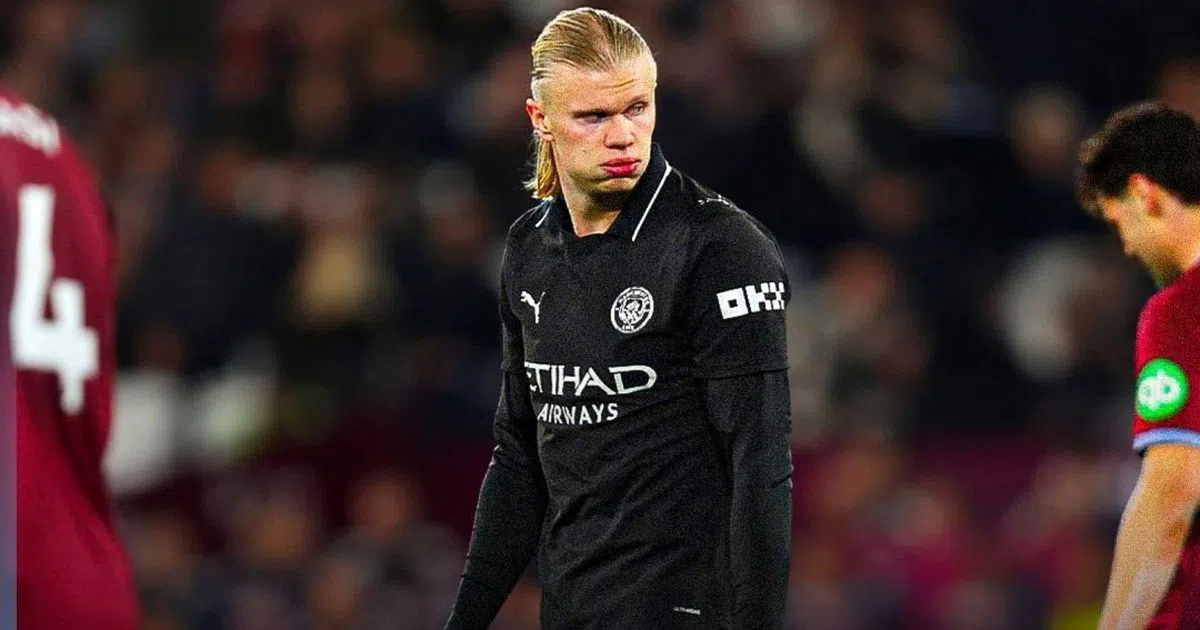
City’s talisman Erling Haaland, who scored 19 goals in his first 17 league games this season, has managed only three in his past 12 matches. His drop in form coincides with Pep Guardiola’s tactical tinkering following the arrival of Antoine Semenyo in January.
At West Ham, City lined up with Haaland and Omar Marmoush as a front two, with Semenyo playing as number 10. Despite dominating possession and creating 24 shots on goal, the side couldn’t break down West Ham’s well-organized defense. Guardiola admitted afterward, “We changed to make the players more dynamic, with Rayan, Jeremy [Doku] and Phil [Foden], but we could not win the game.”
Advertisement
On his decision to start Semenyo over Rayan Cherki as the attacking midfielder, Guardiola took responsibility: “Absolutely, for that role there is no-one better than [Cherki]. That is bad selection, you can criticise me, I deserve it. Sometimes for the balance, we are learning… I am still finding the best way to have stability and to balance the team.”
Missed chances cost City
City have only lost once in their past 18 league matches but have dropped 10 points from winning positions during that period, including draws against Chelsea, Brighton, Tottenham, Nottingham Forest, and now West Ham.
Advertisement
Premier League top 5 points table (updated till March 14)
Club
MP
W
D
L
GF
GA
GD
Pts
Arsenal
31
21
7
3
61
22
39
70
Man City
30
18
7
5
60
28
32
61
Man United
29
14
9
6
51
40
11
51
Aston Villa
29
15
6
8
39
34
5
51
Chelsea
30
13
9
8
53
35
18
48
Former City goalkeeper Joe Hart commented on the West Ham result: “Man City created a lot of chances but looked a bit desperate towards the end.”
The Title Race Hangs in the Balance
While City still hold a game in hand and can theoretically close the gap, the psychological advantage has clearly shifted to Arsenal. Guardiola’s men now face a crucial month with the League Cup final against Arsenal and a subsequent clash with Liverpool in the FA Cup quarter-finals. Their next league game isn’t until April 12 against Chelsea, giving fans a tense wait to see if City can regain balance and mount a serious challenge.
Advertisement
Haaland’s form and City’s tactical stability will be key as the Premier League enters its decisive stretch. Guardiola himself acknowledged the challenges but remains hopeful: “He [Haaland] will be back… the team is still growing.”
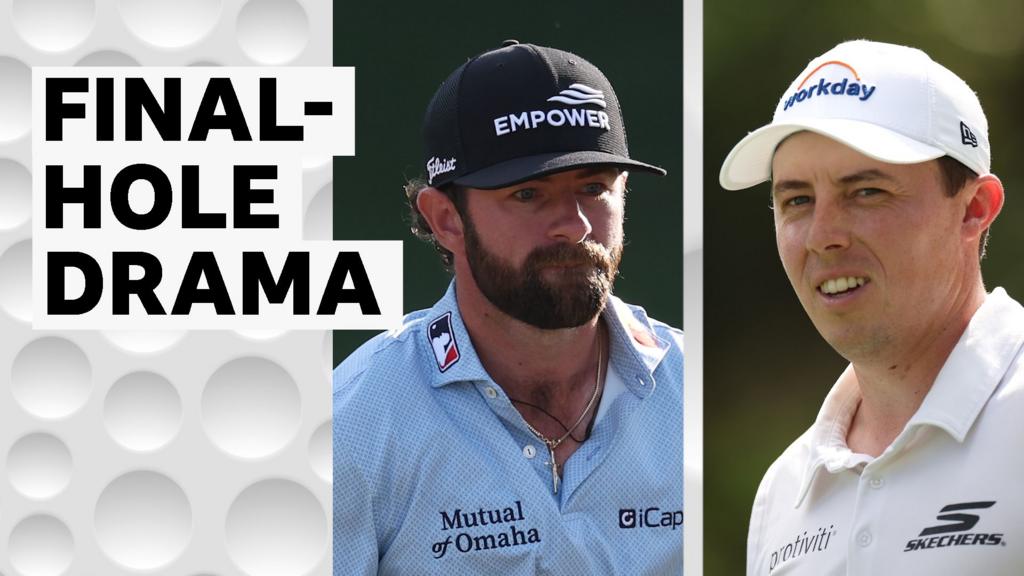
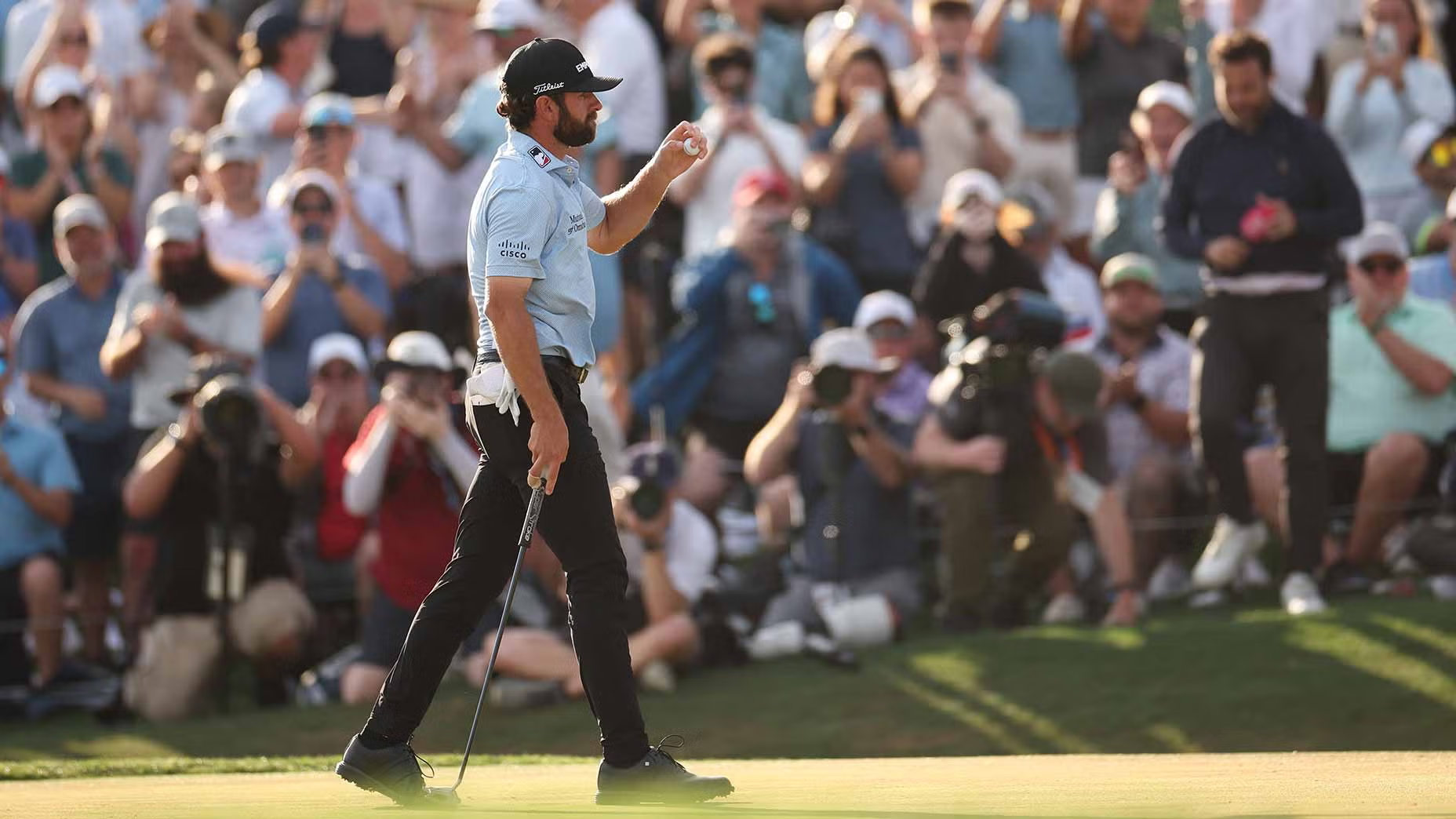
PONTE VEDRA BEACH, Fla. — Days (and likely months) before Cameron Young arrived on the 18th green with a chance to win the Players Championship, new PGA Tour CEO Brian Rolapp envisioned a grand finale unlike any in tournament history.
“I’m very excited,” Rolapp told NBC Saturday. “We’re going to drop the ropes on 18 when the final group comes up so the fans can actually experience that championship moment with the leader, and hopefully, with the eventual champion. It’s a tradition I’ve heard a lot of fans want back, so we’re going to do it this weekend.”
It was only fitting that Rolapp’s dream of a winner’s spotlight was foiled by Young — a character whose very essence repels the spotlight like a cockroach to a high beam. If Rolapp were to choose the antithesis of a star golfer under the Tour’s new high-flying vision of consequence, significance and showmanship, Young might be the golfer he drew — a low-key, low-profile introvert who treats fame with a wariness bordering on neurosis.
Young, after all, is the golfer whose press conference was briefly interrupted on Friday afternoon when he spoke so quietly that reporters standing less than five feet in front of him could not make out his answer. He is the golfer who wouldn’t dare attend (or worse, pontificate upon) Rolapp’s porcelein state-of-the-state presser from PGA Tour headquarters on Wednesday. And he is the golfer who could be found repeatedly at TPC Sawgrass in one of the places PGA Tour players are loath to visit: The large hill to the aft side of the course’s enormous clubhouse, where he spent time after multiple rounds chasing after his three children (two boys and girl) in endless pursuit of a large rubber golf ball.
Advertisement
So who better to claim the title in Rolapp’s first go-around at the biggest event of the Tour season than Young? And how better for Young to capture the biggest win of his life than in the penultimate group, in a tournament he did not lead until his ball found the bottom of the 72nd hole, and with a reaction that evoked less of Rory McIlroy’s jubilant exhale on the 18th at Augusta National and more of Rory McIlroy’s otherwise pedestrian par on the last at TPC Sawgrass more than four hours before the leaders appeared on the closing stretch?
“I was really, really good until I had to make the eight-inch putt on the last hole, and I just about fell apart,” Young said with a grin after it was over. “I couldn’t get my line to point anywhere near the hole, and I went and hit it anyway, which maybe I shouldn’t have. But it went in, so all is well.”
And indeed it is all well. Without pomp and circumstance. With no grand coronation. And even with a bit of a surprise from the NBC broadcast crew, which scurried to set the scene for his victory on the 18th after spending much of the afternoon preparing to anoint the tournament’s other two contenders, Matthew Fitzpatrick or 54-hole leader Ludvig Aberg.
And yet it was all oddly perfect. Sunday the Players Championship was better than most could have imagined when the day began with Aberg as a three-shot leader and an unheralded group of chasers — and Young was a better champion than anyone at Tour HQ could have fathomed to start the week … and for none of the reasons they imagined.
Advertisement
“I mean, I love my life, I love my family, I love my job,” Young said Sunday, capturing the essence of his appeal to regular golf fans with trademark brevity. “I couldn’t ask for much more.”
In the end, Young’s awkwardness in moments of great consequence and his skill for trapping his emotions before they escape from his body did nothing to quell the excitement or the story on Sunday. As he approached the famed closing stretch at TPC Sawgrass locked in a battle for his career’s biggest triumph, those same “weaknesses” might have even served as strengths. With Young in the fray, it was the Bethpage Ryder Cup hero against one of the Ryder Cup villains. It was the American versus the European. It was the noble, quiet good guy versus the (also noble, fairly staid) bad guy.
“My expression doesn’t tend to change that much, except for when I’m very upset,” he said. “I feel like that’s about the only thing you’ll get out of me out there. I’m never going to be real smiley, never going to be outwardly super positive.”
What Young’s words and actions couldn’t say, his golf did. He did not need an explosive reaction to know he was in hell when he followed up a pained caddie conversation with Kyle Sterbinsky on the 16th hole and smother-hooked his approach into the trees, leaving a 50-yard shot from a plugged-lie. He did not need a furious fist-pump when he braved the flagstick-side of the 17th hole, nor a protracted celebration after his 10-footer for birdie fell on the island green, to know he might have just delivered the shots of his life. He did not need a bicep-flex after a 375-yard drive into the broom-closet 18th fairway, the longest recorded drive on the hole in the ShotLink era, to know he might have corralled control of the tournament for good. At every turn, Young’s golf told the story.
Advertisement
“I mean, the stadium atmosphere out there is unbelievable,” he said. “The way everything is raised, you just know all eyes are right there on you. So there’s nowhere to hide, and I feel like I stepped up really well and hit a bunch of good shots those last couple holes, so I’m very proud of that.”
In some cases, the crowd helped the drama, shouting furious chants of “USA” as they tilted their volume heavily in his direction. (“That was literally child’s play compared to Bethpage,” Fitzpatrick quipped later.) In others, Fitzpatrick raised the temperatures, navigating the tournament pressure with a handful of spine-tingling shots that raised the stakes of every shot on Young (and ultimately, the impressiveness of his execution). And when those two characters couldn’t create all the drama themselves? Young stepped to the fore himself with his golf, which showed Sunday it belongs in a very small group of peers when it is at its best.
“I think a lot of people that are good at what they do expect a lot of themselves,” Young said. “I kind of am starting to learn to maybe let go of them a little bit, and like I said, kind of just focus on where my feet are.”
In the end, the winning moment was delightfully awkward, and Young was not the champion or the “golf evangelist” Rolapp will spend his tenure at the Tour canvassing to find. But golf is not always a game of television ratings and Meltwater Mentions; it is often a game of how well you know yourself.
Advertisement
At the Players Championship, Young won as his truest self — right down to the celebration. It wasn’t the finale Brian Rolapp or the PGA Tour pictured — but goodness, it was grand.
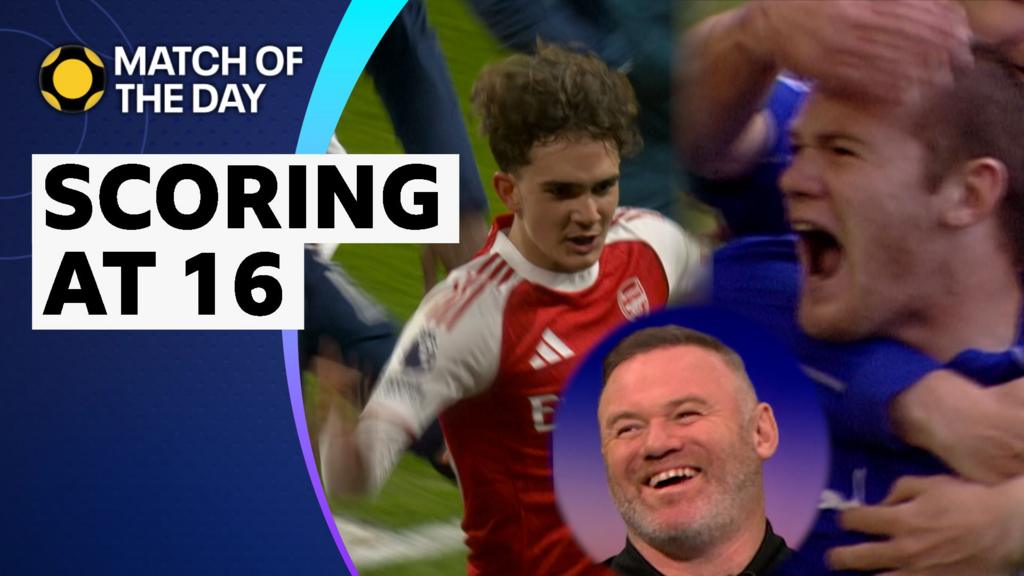
Match of the Day pundit Wayne Rooney describes Max Dowman becoming the youngest goalscorer in Premier League history as a “moment he’ll never forget” and argues it will bring those connected to Arsenal closer together, seeing an academy graduate make his mark on the first team.
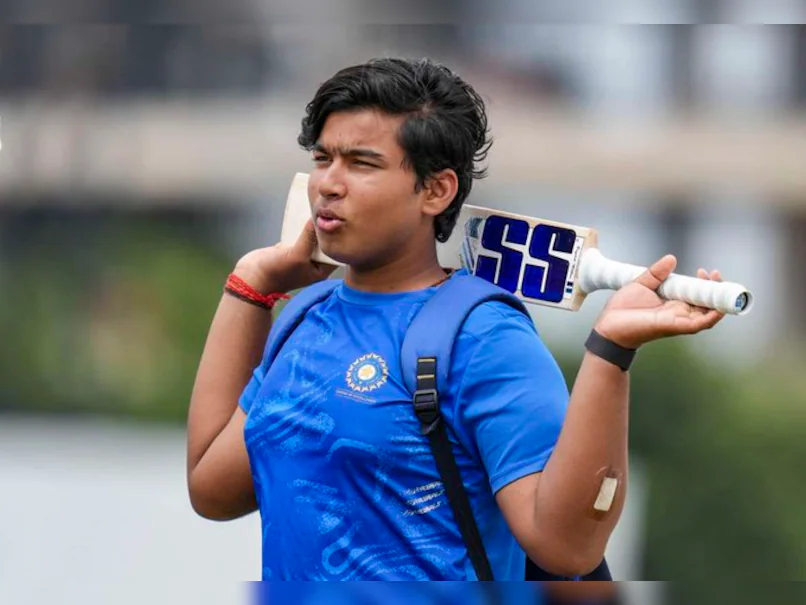
An U-19 World Cup winner at 14, batting prodigy Vaibhav Sooryavanshi now has his eyes set on winning the Indian Premier League title for Rajasthan Royals in the upcoming season. Sooyavanshi took the IPL 2025 by storm by becoming the tournament’s youngest centurion, and earlier this year, his 80-ball 175-run knock in the final against England propelled India to a record-extending sixth U-19 World Cup title in Harare. He is now focussed on the IPL. “The goal this IPL season is to win the trophy for the team, as it is a very important thing. I want to do well, and my performance will help the whole team. This is my goal — to contribute to RR’s wins and win the trophy for the franchise,” Sooryavanshi told broadcaster Star Sports on the sidelines of the BCCI Naman Awards on Sunday.
Known for his explosive batting, Sooryavanshi met his World Cup-winning teammates at the awards function.
“(It) feels really nice. Won a trophy as well for India at the World Cup. Because of this award ceremony, feeling nice to meet my teammates and coaches again here,” the teen sensation said.
Advertisement
Sooryavanshi became the youngest player to sign an IPL contract when Rajasthan Royals picked up the then 13-year-old in 2024 for Rs 1.1 crore.
The youngster from Bihar recalled his early days with the RR scouts.
“When I made my domestic debut, RR had been keeping an eye on me during my domestic and Under-19 games. Their scouting team had been keeping an eye on me for a long time. I felt that I could go to RR because my trial with them had gone very well,” he said.
“I am happy to be with RR, as I have improved a lot too in my life while playing for them.” Sooryavanshi said he has learned a lot from the legendary Rahul Dravid and other seniors in the team.
Advertisement
“For any youngster, the first IPL camp is always interesting and it was the same for me too.
“Rahul (Dravid) sir was there at that time, so I got to learn a lot from him. There were a lot of senior players in the team, and I had a good learning experience from them during the first camp as well as the first IPL,” he said.
(Except for the headline, this story has not been edited by NDTV staff and is published from a syndicated feed.)
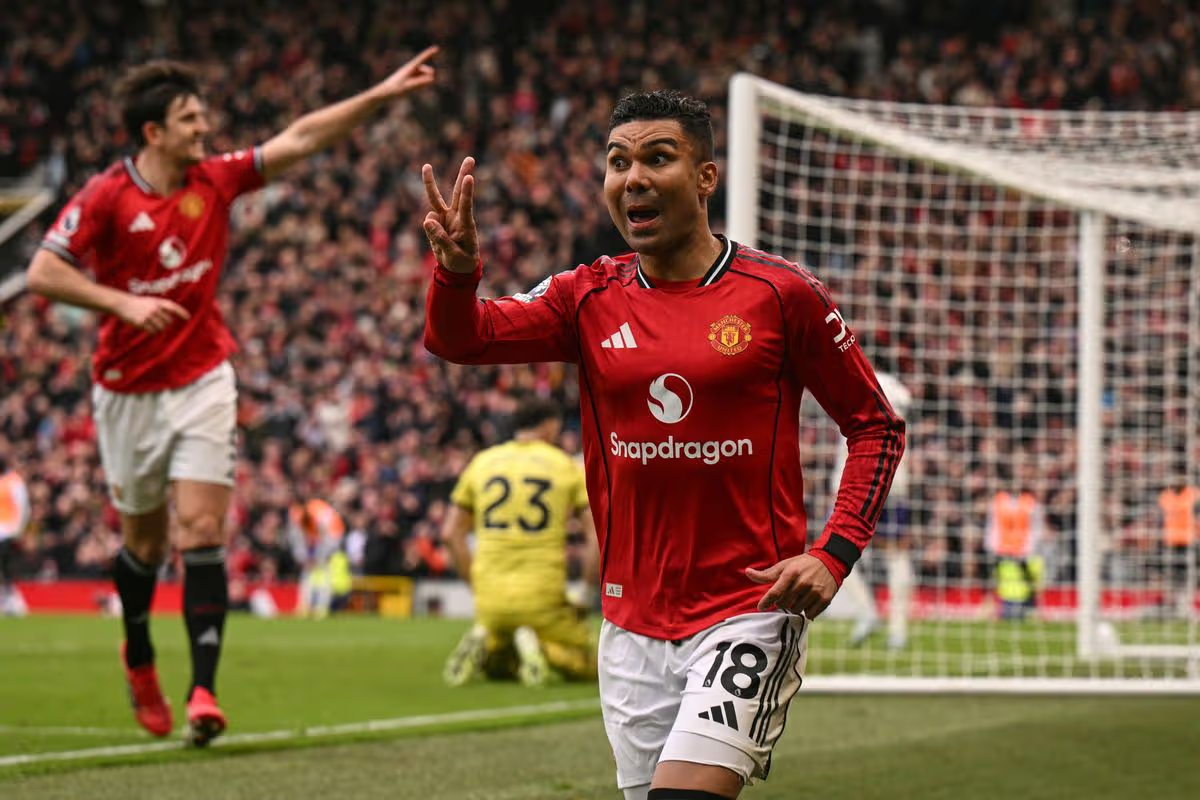
Man Utd fans made their feelings over Casemiro clear as they chanted for the Brazilian to stay for another season during the 3-1 win against Aston Villa at Old Trafford.
Michael Carrick still expects Casemiro to leave Manchester United this summer, despite leaving open the possibility that an effort could be made to try and tempt the Brazilian to stay.
Both parties have come to the decision that the 34-year-old will leave the club when his contract expires at the end of this season, but his recent form has been exceptional and he was involved in all three goals as United beat Aston Villa 3-1.
Advertisement
Casemiro headed in the opener and then played key passes in the build-up to goals for Matheus Cunha and Benjamin Sesko that strengthened United’s grip on a Champions League place.
Get MEN Premium now for just £1 HERE – or get involved in our United WhatsApp group by clicking HERE. You can also join our United Facebook page by clicking HERE and don’t miss out on our brilliant selection of newsletters HERE.
The former Real Madrid midfielder has started all nine games under Carrick so far and is playing some of the best football of his four-year stay at Old Trafford, but he is on £350,000-a-week and a departure this summer will help reduce the wage bill.
But the Stretford End chanted ‘one more year, one more year Casemiro’ throughout Sunday’s win and Carrick was asked whether it was possible that a U-turn would be made before the end of the season.
Advertisement
“I think in some ways it’s difficult to say, I think it’s when something’s decided and in some ways the fact that it was decided makes things a little bit easier and everyone understands the situation really,” he said.
“I think the impact he’s had has been terrific, certainly since I’ve been here and working with him and his influence within the team and big moments and goals.
“It was a nice moment at the end there with the supporters and having that connection, and the respect. That was a nice moment. I think you’ll enjoy that one.”
United might save more than £18million a year in wages when Casemiro departs, but replacing him will be a mammoth task. He has seven goals in the Premier League this season and has recovered his form to be one of the division’s standout holding midfielders.
Advertisement
As a five-time Champions League winner for Real Madrid, he also brings bags of experience to the club, but Carrick played down the idea that replacing him would be an almost impossible task.
“I think this is totally no disrespect to Case, he’s been fantastic, he has been a big player for us and has been important in the dressing room and one that I have spoken to and connected with really well,” he said.
“But I think as a club and as a team, your players come and go, some may be bigger, some may be more important than others at different times.
“I don’t think it’s ever really about replacing them like for like, I think you can go with different directions, you understand what the balance of the squad will need, whether that’s on the pitch, off the pitch leadership, positionally, there’s all sorts of different things going into it.
Advertisement
“Case’s done some really, really good things and certainly since I’ve been here he’s been an absolute pleasure to work with.”