Connect with us
DAPA Banner

Business

QSR stocks slump up to 47% as weak investor appetite, rising fuel risks dent mood. Time to bottom fish?

Published

on

QSR stocks slump up to 47% as weak investor appetite, rising fuel risks dent mood. Time to bottom fish?
Investors first lost their appetite for quick service restaurants (QSR) stocks and now the sector risks running out of fuel. The Iran-Israel/US war has brought the food sector into a quagmire with shares of Sapphire Foods India, Jubilant Foodworks, Westlife Foodworld, Devyani International and Restaurant Brands Asia declining up to 15%, this week.

While the troubles facing these stocks are not new, the ongoing crisis has only deepened the losses. Sapphire Foods India, which operates KFC and Pizza Hut outlets, has seen its share price fall 12% this week. Devyani International, set to merge with Sapphire to create a single Yum franchise in India, slipped 4% on Friday. Jubilant FoodWorks, the operator of Domino’s and Dunkin’, has lost about 4% over the same period, while shares of Westlife Foodworld (McDonald’s franchisee) have declined 4%. Meanwhile, Restaurant Brands Asia (RBA) has fallen around 3% week-on-week.

The impact on restaurants across the country is already visible as media reports suggest rapid closures. Though these QSR companies have not flagged any likely disruption in operations, so far, brokerage firm JM financial has warned that a prolonged crisis in LPG availability could pose operational challenges for those QSRs where cooking processes depend heavily on gas-based kitchens.

The risk has surfaced as the conflict in West Asia begins to disrupt fuel supplies, pushing restaurants to reassess operations, cooking methods and menu strategies, JM noted.

Advertisement

“For QSR operators such as Westlife FoodWorld, Devyani International, Sapphire Foods India and RBA (Restaurant Brands Asia), the immediate concern pertains to higher kitchen operating costs and the probability of store closures in certain micro markets, which could temporarily affect outlet operations and restaurant-level margins,” the brokerage note added.


However, ElaraCapital sees lesser impact of the LPG shortage on QSR chains compared to non-QSR based restaurants, citing that the QSR companies have minimal dependency on LPG and rely on electric ovens and fryers. In fact, it sees them benefitting due to a consumer substitution effect from LPG-dependent cuisine to QSR format.
Also read: As Iran Israel crisis clouds outlook for tile makers, what is next for Cera, Kajaria, Somany after 26% slide?

Weak investor appetite

Restaurant Brands Asia, which operates Burger King remains the only exception. Its shares have managed positive returns of 2% over a one-year period, nearly matching Nifty’s 3% returns in the same period.

Sapphire Foods shares are down 47% in the past 12 months, Westlife Food 36% lower while Jubilant and Devyani have plunged, 27% each.

The institutional appetite for QSR stocks has also taken a beating with Foreign Institutional Investors (FIIs) offloading stakes.

Advertisement

FII holding in Sapphire Foods fell 210 bps sequentially in the December quarter while recording a 90 bps decline in Westlife Food in same quarter. In Jubilant and Devyani, foreign stakes dropped by 150 bps and 80 bps, respectively.

The worst happened with Restaurant Brands Asia, where holding declined by 380 bps.

Also read: ONGC, Oil India shares outperform sector with double-digit gains in 2026. Will Iran-Israel crisis fuel more upside?

Earnings snapshot

Earnings cut a patchy picture with Devyani widening its consolidated December quarter losses to 10 crore though revenue growth stood 12% YoY to Rs 1,453 crore. The Q3 net profit for Westlife Food fell 86% though total revenue saw a 3% YoY uptick.

Advertisement

Jubilant reported strong set of numbers with profit after tax (PAT) growing 65% to Rs 71 crore while topline rising by 13%. As for RBA, YoY losses narrowed to Rs 7 crore versus 19 crore in Q3FY25 riding on 18% jump in revenue.

What should investors do?

Sudeep Shah, Vice President & Head of Technical and Derivative Research Desk at SBI Securities said QSR stocks have been under significant pressure over the past year and the recent weakness cannot be attributed solely to the LPG shortage concerns. Technically, most of these stocks were already in well-established downtrends, he said, adding that the current crisis has merely aggravated existing weakness rather than causing it.

“Sapphire Foods has been declining since October 2025 and continues to trade well below its key moving averages. Westlife Foodworld is exhibiting a classic lower-high, lower-low structure, with the MACD line positioned below the zero line, indicating sustained bearish momentum. Jubilant FoodWorks remains in a strong downtrend with the RSI languishing around 22, reflecting oversold but weak sentiment. Meanwhile, Devyani International has slipped close to its IPO levels,” Shah said.

Advertisement

His advice to investors is to avoid bottom-fishing and wait for clear signs of fundamental and technical improvement before considering exposure to the QSR space.

Also read: As crude oil price breaches $100 mark, Systematix recommends RIL, a potential multibagger and 4 more stocks to buy

(Disclaimer: The recommendations, suggestions, views, and opinions given by the experts are their own. These do not represent the views of The Economic Times.)

Continue Reading
Click to comment

You must be logged in to post a comment Login

Leave a Reply

Business

Ex-shire executive charged with stealing, fraud

Published

on

Ex-shire executive charged with stealing, fraud

A former council deputy chief executive has been accused of stealing and attempting to gain thousands of dollars through fraud and deceit.

Continue Reading

Business

Bentley Motors confirms 275 job losses at Crewe factory as workers left ‘stunned’

Published

on

Business Live

Luxury car maker says it ‘remains strongly committed to Crewe’

Inside Bentley's plant in Crewe, Cheshire

Inside Bentley’s plant in Crewe (Image: Steve Morgan)

Workers at luxury car maker Bentley have been left ‘stunned’ after the company confirmed its intention to cut hundreds of jobs. Union officials said the cuts have ‘come out of the blue’, citing contributing factors such as ‘Trump’s tariffs’ and the continued impact of the covid lockdowns.

Advertisement

Despite recording an operating profit of £186m in 2025, and a seventh consecutive year of profitability, the company said it planned to cut 275 roles, around 6% of its workforce, by cutting up to 150 staff and not filling vacant positions.

The GMB said Bentley had experienced a 40% year-on-year drop in profits, with GMB organiser Karen Lewis adding: “These cuts have come out of the blue and the workforce is stunned.

“Trump’s tariffs’ have hit Bentley hard and the company is still feeling the affects of the covid lockdown.

“GMB will stand side by side with members in Bentley to ensure the minimum redundancies and the maximum pay outs.”

Advertisement

Bentley said it remains committed to UK manufacturing,, reports the Liverpool Echo. It confirmed that work continues on the transformation of its Pyms Lane factory, including the ongoing conversion of the site’s oldest building, which will become the future electric vehicle assembly line.

A spokesperson for Bentley said: “Bentley has delivered a seventh consecutive year of profitability while continuing to invest significantly in the transformation of our Pyms Lane site for the next generation of Bentley vehicles, including our first fully electric model.

“As part of ensuring the business remains competitive and prepared for the future, we have begun a consultation programme covering management, agency and non-manufacturing roles, which could result in up to 275 positions being removed from the organisational structure, which equates to approximately six per cent of the organisation.

“These are difficult decisions and our priority is to support any colleagues who may be affected throughout the consultation process.

Advertisement

“Bentley remains strongly committed to Crewe and continues to invest in the long-term future of luxury car manufacturing at our Pyms Lane site.”

Continue Reading

Business

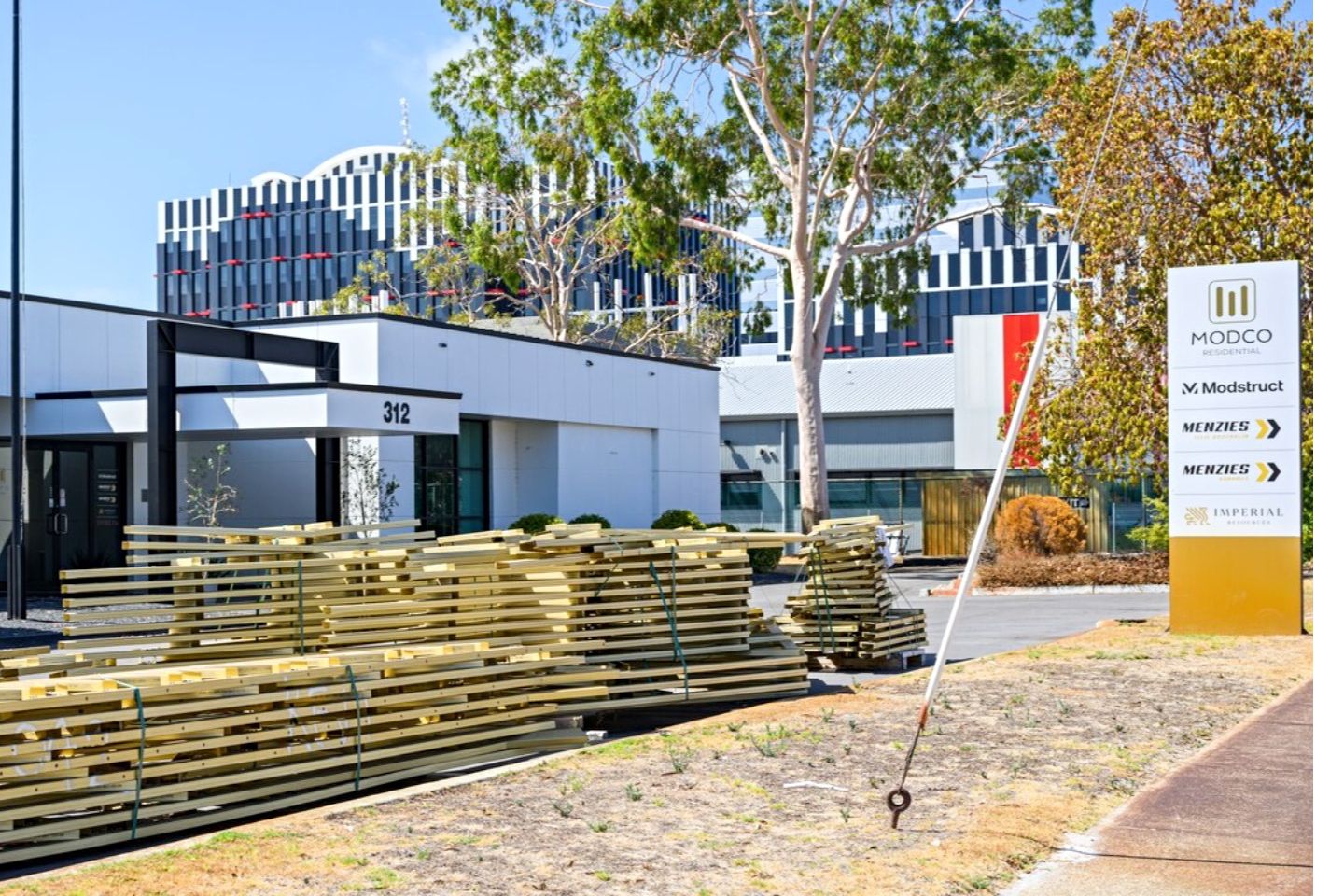
Last minute save for Modco liquidators’ legal action

Published

on

Last minute save for Modco liquidators’ legal action

A legal action by Modco liquidators will progress after a 10-month delay, after a successful eleventh-hour bid to continue the dispute in the Federal Court.

Continue Reading

Business

Iran strikes Tel Aviv with cluster warheads in retaliation for killing of security chief

Published

on

Iran strikes Tel Aviv with cluster warheads in retaliation for killing of security chief


Iran strikes Tel Aviv with cluster warheads in retaliation for killing of security chief

Continue Reading

Business

EFG Holding reports 2025 net profit of EGP4.1 billion

Published

on


EFG Holding reports 2025 net profit of EGP4.1 billion

Continue Reading

Business

45 Days Later, FBI Pursues DNA Leads in Abduction of Savannah Guthrie’s Mother

Published

on

Savannah Guthrie & Nancy Guthrie

TUCSON, Ariz. — More than six weeks after 84-year-old Nancy Guthrie vanished from her home in an affluent Tucson suburb, the investigation into her suspected abduction remains active but without a breakthrough arrest. Pima County Sheriff’s Office and FBI agents continue to analyze evidence, including a mixed DNA sample from the scene and additional surveillance images recovered from her residence, as the case enters its seventh week on March 18, 2026.

Savannah Guthrie & Nancy Guthrie

Nancy Guthrie, mother of NBC “Today” show co-anchor Savannah Guthrie, was last seen at her Catalina Foothills home on the evening of Jan. 31, 2026. Family members dropped her off around 9:30 p.m. local time after dinner. She failed to appear at church the next morning, Feb. 1, prompting a welfare check that escalated into a full-scale missing person probe.

Authorities quickly classified the disappearance as an abduction. Drops of blood believed to be hers were found on the front porch. Her doorbell camera was tampered with or disconnected around 1:47 a.m. on Feb. 1, and footage released by the FBI shows a masked, armed individual at the doorstep that night. Investigators believe she was taken against her will in the middle of the night, possibly while in bed. She left behind her cellphone, medications she requires daily for health conditions, and other essentials — factors that heightened concerns for her well-being early on.

The FBI joined the case immediately, establishing a dedicated tip line (1-800-CALL-FBI) and offering an initial $50,000 reward for information leading to her recovery or an arrest. In late February, the Guthrie family announced a separate $1 million reward, payable only upon Nancy’s safe recovery and consistent with FBI guidelines. Savannah Guthrie, her siblings Annie and Camron, and other relatives have made emotional public appeals via social media videos, pleading for tips and insisting “someone knows how to find our mom and bring her home.”

As of mid-March, no ransom has been confirmed paid, despite early speculation about demands. Pima County Sheriff Chris Nanos has said investigators have a theory on motive and believe the home was targeted, though he stopped short of confirming it definitively. He has not ruled out the possibility the perpetrator could strike again. Family members have been cleared as suspects.

Advertisement

Recent developments include FBI recovery of additional thumbnail images from home security cameras showing people in the yard area before the abduction — but nothing overtly suspicious, sources told outlets including ABC News and CBS News. The images are low-resolution and lack full video. Officials expressed hope in a DNA sample recovered from the scene, describing it as a potential breakthrough for identifying the suspect.

Tip volume surged initially but has tapered, per FBI statements. Investigators have focused on two dates in late January — Jan. 11 and Jan. 24 — and questioned neighbors about nearby construction crews or unusual activity. Experts note the case’s challenges: abductions of elderly individuals are rare (less than 0.2% of reported U.S. kidnappings involve those in their 80s), and the victim’s age complicates survival odds after prolonged captivity without medication.

The disappearance has drawn intense national attention due to Savannah Guthrie’s prominence. Media coverage has included timelines, expert panels on motive theories (ranging from targeted theft to more sinister possibilities), and comparisons to other unsolved cases. Public speculation on forums and social media has ranged from hopeful calls for her return to grim assessments of the odds.

Authorities emphasize the investigation’s ongoing nature. No arrests have been made, and Nancy’s whereabouts remain unknown. Officials urge anyone with information — even seemingly minor details — to contact the FBI anonymously. The family continues to hold out for her safe return while grappling with what experts call “ambiguous loss,” the prolonged grief of uncertainty.

Advertisement

As Day 46 approaches, the search for Nancy Guthrie stands as a stark reminder of vulnerability even in secure neighborhoods. With forensic leads still under review and a substantial reward outstanding, investigators and loved ones alike cling to hope amid the silence.

Continue Reading

Business

At Close of Business podcast March 18 2026

Published

on

At Close of Business podcast March 18 2026

Justin Fris and Mark Beyer discuss Business News’ recent junior miners magazine feature.

Continue Reading

Business

Factbox-Airlines cancel more flights as Middle East conflict escalates

Published

on

Factbox-Airlines cancel more flights as Middle East conflict escalates


Factbox-Airlines cancel more flights as Middle East conflict escalates

Continue Reading

Business

Manishi Raychaudhuri sees earnings revival as key for FII comeback in India

Published

on

Manishi Raychaudhuri sees earnings revival as key for FII comeback in India
A persistent divergence between foreign and domestic institutional flows continues to define the trajectory of Indian equities, even as valuations begin to look more reasonable after last year’s excesses. While foreign institutional investors (FIIs) remain cautious, steady domestic inflows are providing a crucial cushion to the market.

Speaking on the evolving dynamics, veteran investor, Manishi Raychaudhuri, noted, “Now, the phenomenon that you mentioned that FIIs are selling and they have been selling for last 18 months roughly and the domestic institutions buying, that is not something new. I mean, we have seen this for last 18 to 24 months.”

He added that the sustained outflows from FIIs have been offset by robust domestic participation, particularly through systematic investment plans (SIPs). “The spate of FII selling has been neutralised by this massive systematic investment plans, the SIPs, that continue to come in, almost about $3 billion every month.”

Global Opportunities vs India’s Structural Story

Advertisement

According to Raychaudhuri, the reluctance of foreign investors is not necessarily a reflection of weakness in India alone, but rather a function of relative attractiveness elsewhere. “The foreign investors have a large firmament, a large universe to choose from and compared to India, they have better choices elsewhere in the emerging market space.”

He pointed to North Asian markets, where themes like artificial intelligence and related capital expenditure remain strong, alongside relatively lower geopolitical risks. “So, it is a combination of stronger growth and slightly lower risk that the FIIs are playing.”
In contrast, domestic institutional investors continue to benefit from a structural shift in household savings. “This is a direct consequence of the financialization that we have seen, it is not recent, it has been there for about last five to seven years.”
Importantly, he believes this trend still has room to run. “Indians are on an average still underinvested in equities… maybe it is still about 85-90-95% of Indian investments would remain focused on the home markets.”
Valuations Cooling, But Earnings Still a Concern
India’s valuation premium, once a major deterrent, has seen meaningful moderation. “At the peak in September 24 India’s price earnings multiple 12-month forward price earnings multiple was 87% higher… The last 15 years average is about 38-39%. And today India’s premium has actually come down below that level.”

He noted that the current premium of around 35–36% makes India relatively more attractive again. However, that alone may not be enough to trigger a strong return of FII flows. “The FII universe as a whole is not biting into this yet simply because the earnings environment is not yet supportive.”

Highlighting global comparisons, Raychaudhuri said, “If you look at last six months… you have Korea right on top… about 80% upgrade… Taiwan… 20-25%… But the Indian consensus EPS estimate… has still declined over the past six months by about 4.5% or so.”

This lag in earnings revisions remains a key overhang.

Advertisement

Macro Triggers and the Earnings Outlook
The outlook for earnings, in turn, hinges on a mix of fiscal, monetary, and external factors. “At some point this large fiscal stimulus that went in in 2025… will begin to have some effect… but it needs to be more sustained.”

He also indicated room for monetary easing, subject to inflation trends. “The central bank can perhaps afford to cut rates a little more… if we do have a situation where the Middle East situation settles down… we could have this concern about earnings destruction behind us.”

A moderation in crude oil prices toward the $60–70 per barrel range could be particularly supportive.

Can Valuations Hold?
On the question of sustainable valuation levels, Raychaudhuri struck a cautious note. “If you look at last 15 years average one year forward PE for India, it is about 18.8 times.”

Advertisement

However, he warned that valuations cannot remain elevated without earnings support. “If it remains in single digits, then those high-teens kind of PE are unsustainable.”

He emphasized the importance of reverting to a healthier growth trajectory. “Unless we get back to that situation… nominal GDP growth of about 10% to 12% and therefore corporate revenue and earnings growth of 13% to 14%… it will be difficult for these long range PE multiples to hold on.”

Sectoral Preferences: Banks, Industrials, Consumption
Despite near-term uncertainties, Raychaudhuri remains constructive on select pockets of the market. “Private banks… I have been kind of thumping the table on this for quite some time.”

He also highlighted opportunities in industrials and defence. “Defence expenditure is likely to rise stratospherically across the world… Industrials would also cater to India’s infrastructural ambitions.”

Advertisement

On the consumption side, he sees broad-based potential. “I would also be looking at consumer discretionaries in India… auto companies… household electronics goods… even some of the hospital and diagnostic chains.”

Additionally, cyclical sectors could offer tactical opportunities. “In the near term some of the cyclical sectors like base metals could also do well.”

IT Under Pressure
One notable exclusion from his preferred list is information technology. “I have stayed away from Indian IT for… almost a year now.”

He believes structural changes driven by artificial intelligence could weigh on the sector. “Indian IT… they are the classic AI losers… the average man-hour rate comes down and therefore the valuations of the IT companies come down.”

Advertisement

With earnings growth in single digits and valuations still elevated, he added, “They are trading at about 18 to 20 times PE, simply not sustainable.”

Continue Reading

Business

Aussie shares climb on steady oil price, rate outlook

Published

on

Aussie shares climb on steady oil price, rate outlook

Australia’s share market has logged a second session of gains on easing oil prices, and as the Reserve Bank’s recent split interest rate decision softened the outlook for future hikes.

Continue Reading

Trending

Copyright © 2025