

Business
Trump demands others help secure Strait of Hormuz, Japan and Australia say no plans to send ships




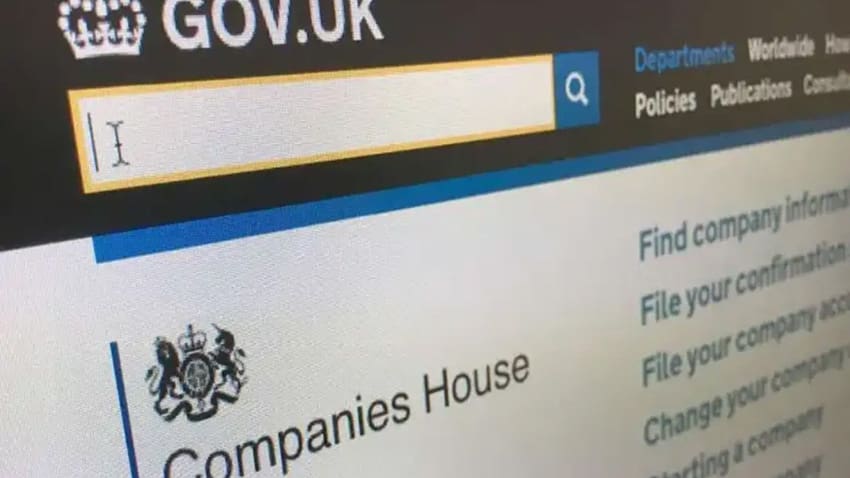
Companies House has suspended its online WebFiling service after a cyber vulnerability allowed users to access and potentially edit sensitive personal data belonging to other businesses registered on the UK’s corporate register.
The issue emerged after a security flaw in the government agency’s online dashboard allowed individuals to navigate into the accounts of other companies simply by pressing the browser’s back button. According to reports, the glitch could expose confidential information including directors’ home addresses, email addresses and dates of birth – data that could potentially be exploited for fraud or identity theft.
The vulnerability was identified by Dan Neidle, founder of Tax Policy Associates, who alerted Companies House to the issue on Friday. Neidle warned that the flaw could have serious implications if it had existed for a prolonged period before being detected.
“This could be very serious if it’s been around for a long time,” he said, describing the vulnerability as “an absolutely insane flaw in how easy it is to find.”
Following the alert, Companies House confirmed it had shut down the WebFiling system while an investigation takes place. The platform is widely used by businesses across the UK to submit official documents such as annual accounts, confirmation statements and other statutory filings.
A spokesperson for Companies House said: “We are aware of an issue with our WebFiling service and have closed it while we investigate. We apologise for any inconvenience to our customers.”
The temporary suspension of the service is likely to disrupt routine company filings while technical teams assess the scale of the problem and determine whether any data was accessed improperly.
Cybersecurity experts say vulnerabilities of this nature could create opportunities for criminal activity, particularly where sensitive corporate information is involved. Personal data such as directors’ home addresses and dates of birth can be used by fraudsters to impersonate business leaders, submit fraudulent filings or attempt identity theft.
Graeme Stewart, head of public sector at cybersecurity firm Check Point Software, warned the flaw could have exposed company directors to significant risk if exploited by malicious actors.
“This is the latest in a series of public sector data disasters that threatens the privacy, security and personal safety of hundreds of thousands of company directors,” he said.
“A bug of this scale is a gift to cybercriminals seeking to upload false documentation, impersonate CEOs and facilitate data theft. It’s time for a complete overhaul of core systems, with security built in from the outset rather than added as an afterthought.”
The incident has also raised concerns about the resilience of digital systems used by government agencies to manage critical national data. Companies House maintains records for more than five million UK companies and processes millions of filings every year.
Kenny MacAulay, chief executive of accounting software platform Acting Office, said the vulnerability highlighted deeper issues around digital security and system oversight.
“Another day, another massive public sector data blunder,” he said. “It defies belief that hackers can so easily gain access to seemingly the entire dashboard of tens of thousands of companies and their respective directors across the UK.
“Basic compliance requirements should be in place to prevent data leakage like this from happening, with sites thoroughly checked for bugs and security weaknesses on a regular basis.”
Under the UK’s Computer Misuse Act 1990, gaining unauthorised access to computer systems or data can carry serious legal consequences. Accessing computer material without permission can lead to a prison sentence of up to two years, while accessing data with intent to commit further crimes such as fraud can carry penalties of up to five years.
The discovery of the flaw comes amid increasing scrutiny of the UK’s corporate registry system. Companies House has undergone significant reforms in recent years aimed at improving transparency and reducing fraud, including the introduction of new identity verification rules for company directors.
However, cybersecurity specialists say the latest incident underlines the need for continued investment in secure digital infrastructure, particularly for systems that hold sensitive personal and corporate data.
Companies House has not yet confirmed how long the vulnerability existed or whether any data was accessed or misused before the service was taken offline. Investigations into the breach are ongoing, and the agency is expected to provide further updates once the review is complete.

Amy Ingham
Amy is a newly qualified journalist specialising in business journalism at Business Matters with responsibility for news content for what is now the UK’s largest print and online source of current business news.

BofA initiates Sunbelt Rentals stock coverage with underperform rating

The talks are currently exploratory, and there is no certainty they will result in a deal, people familiar with the matter told ET. The renewed investor interest in the loss-making company comes after it received substantial financial relief earlier this year from the government, which is also its largest shareholder.
IDBI Bank shares tumble 15% as govt likely to halt divestment process: Here’s why
“There are a few serious suitors for the company, and simultaneous talks are going on with them,” one of the people close to the matter said. The company’s management is scheduled to meet institutional investors in Singapore and Hong Kong on March 16 and 17.
The government, which holds nearly 49% stake in Vodafone Idea, has been looking for a strategic investor who could put in capital and run the telecom company. The Aditya Birla Group and the UK’s Vodafone Group Plc are its promoters. “As of now, it is not decided if the promoters would sell their stake, or it would be a fresh issuance of equity,” said another person familiar with the matter.

According to estimates by IIFL Securities, if a strategic investor infuses Rs 50,000 crore fresh equity in Vi, the government could convert Rs 48,000 crore of the company’s spectrum liability into equity without increasing its stake beyond 49%. It would also bring down Vi’s spectrum liability by 40%.
QSR stocks slump up to 47% as weak investor appetite, rising fuel risks dent mood. Time to bottom fish?
Earlier this year, Vodafone Idea received a 10-year relaxation on the bulk of its adjusted gross revenue (AGR) liabilities, providing major cash-flow relief to the debt-laden telecom operator. The Department of Telecommunications (DoT) froze the company’s AGR dues and allowed staggered repayments spread over 16 years until 2041.(Disclaimer: Recommendations, suggestions, views and opinions given by the experts are their own. These do not represent the views of The Economic Times)

Farmers are facing the prospect of needing another bumper crop to turn a profit should the rising costs of diesel and fertiliser not be brought under control.

The local authority said it was a “difficult decision” but other support would still be available


I’ve been researching companies in-depth for over a decade, from commodities like oil, natural gas, gold and copper to tech like Google or Nokia and many emerging market stocks, which I believe could help me provide useful content for readers. After writing my own blog for about 3 years, I decided to switch to a value investing-focused YouTube channel, where I researched hundreds of different companies so far. I would say my favorite type of company to cover are metals and mining stocks, but I am comfortable with several other industries, such as consumer discretionary/staples, REITs and utilities.
Analyst’s Disclosure: I/we have no stock, option or similar derivative position in any of the companies mentioned, but may initiate a beneficial Long position through a purchase of the stock, or the purchase of call options or similar derivatives in SSRM over the next 72 hours. I wrote this article myself, and it expresses my own opinions. I am not receiving compensation for it (other than from Seeking Alpha). I have no business relationship with any company whose stock is mentioned in this article.
Seeking Alpha’s Disclosure: Past performance is no guarantee of future results. No recommendation or advice is being given as to whether any investment is suitable for a particular investor. Any views or opinions expressed above may not reflect those of Seeking Alpha as a whole. Seeking Alpha is not a licensed securities dealer, broker or US investment adviser or investment bank. Our analysts are third party authors that include both professional investors and individual investors who may not be licensed or certified by any institute or regulatory body.

Despite macroeconomic uncertainty, banking earnings are showing resilience. Aggarwal said in an interview to ET Now, “Banking earnings still look decent. Margins had declined over the past year, but with credit growth gaining traction and asset quality holding up, earnings are recovering. Stock performance will depend on investor sentiment and news flow, but we maintain a positive view on valuations relative to earnings outlook.”
PSUs, after years of losing ground, have started regaining market share. “Over FY25 and FY26, PSUs have marginally gained share. Most PSUs are now comfortable deploying liquidity and tolerating some mismatch between loans and deposits. Large PSU banks like SBI are targeting 13% to 15% loan growth, which supports their market share gains and improved earnings profile,” Aggarwal explained. This improved earnings profile and capitalization position PSUs well for the next two years.
At the same time, private banks continue to offer compelling investment opportunities. “Certain private banks were impacted by the unsecured cycle, but as credit growth picks up across retail, corporate, and SME segments, private banks will gain traction. Axis, ICICI, and HDFC are likely to report stronger growth over FY27 and beyond, supporting the case for private banks,” he said. Larger private banks are likely to see strong growth, supported by easing focus on regulatory ratios and an improving credit cycle.
Aggarwal also highlighted the strong asset quality among PSUs. “Asset quality is under control. Many PSU banks now report benign credit costs, with provisioning coverage higher than private banks. Recoveries continue and incremental slippages are manageable, keeping credit costs within control in FY27,” he noted.
Among private banks, larger institutions like ICICI and HDFC remain the preferred picks, with AU Bank favored among mid-sized banks. “Our preference is for larger private banks like ICICI and HDFC. ICICI could see 15-16% growth in FY27, while HDFC Bank expects growth ahead of the industry. Among mid-sized banks, AU Bank remains attractive,” Aggarwal added.
Non-banking financial companies (NBFCs) are being approached selectively. “We will play NBFCs for growth. Margin expansion may be limited, but vehicle financers like Shriram Finance remain attractive. Bajaj Finance has corrected, and given improving credit outlook, we may turn more positive in FY27,” he said. Competition across lending markets remains intense, keeping yields range-bound. “The lending market is very competitive. Yields will remain range-bound as banks cannot easily cut deposit rates. Margins may expand modestly, but FY27 should be better than FY26,” Aggarwal explained.
Smaller banks focused on microfinance (MFI) and MSME lending are also showing signs of normalization. “We recently upgraded Bandhan Bank after five years, expecting MFI delinquencies and credit costs to normalize. RBL Bank also has potential for industry-leading growth, though execution remains key,” he noted.
Overall, the banking sector appears poised for selective growth. PSUs are regaining market share, large private banks look set for strong credit growth, and NBFCs remain selective plays. With asset quality and margins stable, well-capitalized institutions present attractive opportunities for investors as FY27 unfolds.


UniCredit launches offer to own more than 30% of Commerzbank without taking control

A dispute between Maali Group co-owners Halo Civil and KRGM has escalated to the state’s highest court but the latter’s owner Mitch Matera claims the matter has been resolved.

AstraZeneca wins EU approval for Imfinzi in early gastric cancer

Andy Farrell: Ireland head coach challenges players to keep ‘momentum’ with clubs

5 Best Money Rules – How to Get Rich in 2026 | Financial Freedom | Sonu Sharma

Brooklyn Beckham attends godfather Elton John’s Oscars party after Mother’s Day snub


-
 Tech5 days ago
A 1,300-Pound NASA Spacecraft To Re-Enter Earth’s Atmosphere
-
 Crypto World2 days ago
HYPE Token Enters Net Deflation as HyperCore Buybacks Outpace Staking Rewards
-

 News Videos7 days ago
10th Algebra | Financial Planning | Question Bank Solution | Board Exam 2026
-

 Business6 days ago
ExxonMobil seeks to move corporate registration from New Jersey to Texas
-

 Crypto World7 days ago
Paradigm, a16z, Winklevoss Capital, Balaji Srinivasan among investors in ZODL
-

 Fashion3 days ago
Weekend Open Thread: Addict Lip Glow
-

 Tech6 days ago
ChatGPT will now generate interactive visuals to help you with math and science concepts
-
Sports2 days ago
Why Duke and Michigan Are Dead Even Entering Selection Sunday
-

 NewsBeat5 days ago
Residents reaction as Shildon murder probe enters second day
-

 Business5 days ago
Search Enters Sixth Week With New Leads in Tucson Abduction Case
-
 NewsBeat6 days ago
Pagazzi Lighting enters administration as 70 jobs lost and 11 stores close across Scotland
-

 Business14 hours ago
Search for Savannah Guthrie’s Mother Enters Seventh Week with No Arrests
-

 Tech7 days ago
Despite challenges, Ireland sixth in EU for board gender diversity
-

 Business2 days ago
US Airports Launch Donation Drives for Unpaid TSA Workers as Partial Government Shutdown Enters Fifth Week
-
Crypto World2 days ago
Coinbase and Bybit in Investment Talks: Could Bybit Finally Enter the US Crypto Market?
-

 NewsBeat5 days ago
I Entered The Manosphere. Nothing Could Prepare Me For What I Found.
-

 Business7 days ago
Search Enters 39th Day with FBI Tip Line Developments and No Major Breakthroughs
-

 Sports7 days ago
Skateboarding World Championships: Britain’s Sky Brown wins park gold
-

 Business2 days ago
Country star Brantley Gilbert enters growing non-alcoholic beer market
-
 Crypto World6 days ago
Will Chainlink price reclaim $10 amid volatility squeeze?

