Dressed in a red wig with heavy white make up, like the antagonist from the film, he could be seen playing table tennis with Chalamet in Marty Supreme, running across the stage of the Globe in Hamnet, in the car with Benicio del Toro in One Battle After Another and trying to get into the juke joint in Sinners.
The 55-year-old suffered serious injuries on Dent Street in Shildon on Tuesday, March 10, and was later pronounced dead in hospital.
Robert Davies appeared in the dock at Teesside Crown Court this morning (Monday, March 16) charged with Mr Blair’s murder, possession of an offensive weapon, and affray.
The 49-year-old, wearing a green and yellow prison uniform, is to be psychologically assessed to determine whether he is fit to enter a plea to the charges.
Police working at the scene on Dent Street, Shildon (Image: NORTHERN ECHO)
Judge Jonathan Carroll said: “Your case will be heard on April 13. Between now and then you are likely to be interviewed by one or two psychologists.
Advertisement
“In the mean time you are remanded in custody.”
Davies will next appear in Leeds Crown Court for a pre-trial preparation hearing.
A potential trial date will be set at a later date.
Jeff Blair was working as a bailiff at the time of his death.
“His ability to apply humour and laughter to any situation and lighten the mood will be irreplaceable to our family.
“We are devastated to lose Jeff in such tragic circumstances, and he will be forever missed and remembered always, with much love and affection.”
Darlington Storm Basketball Club said Jeff was a former player, coach and committee member.
Advertisement
In a tribute shared on social media, the club said: “Our thoughts and prayers are with his family at this very traumatic and troublesome time.”
Mr Blair, a former Durham Constabulary police officer, had worked as a response PC across the south of the county for 22 years before retiring in 2017.
POZNAN, Poland (AP) — A generation ago, Poland rationed sugar and flour while its citizens were paid one-tenth what West Germans earned. Today its economy has edged past Switzerland to become the world’s 20th largest with over $1 trillion in annual output.
It’s a historic leap from the post-Communist ruins of 1989-90 to today’s European growth champion that economists say has lessons on how to bring prosperity to ordinary people — and that the Trump administration says should be recognized by Poland’s presence at a summit of the Group of 20 leading economies later this year.
The transformation is reflected in people like Joanna Kowalska, an engineer from Poznan, a town of half a million people midway between Berlin and Warsaw. She returned home after five years in the U.S.
“I get asked often if I’m missing something by coming back to Poland, and, to be honest, I feel it’s the other way around,” Kowalska said. “We are ahead of the United States in so many areas.”
Advertisement
Kowalska works at the Poznan Supercomputing and Networking Center, which is developing the first artificial intelligence factory in Poland and integrating it with a quantum computer, one of 10 on the continent financed by a European Union program.
Kowalska worked for Microsoft in the U.S. after graduating from the Poznan University of Technology in a job she saw as a “dream come true.”
Advertisement
Newer skyscrapers flank the communist-era Palace of Culture and Science, foreground, in n, Poland, May 25, 2018. (AP Photo/Alik Keplicz, File)
Advertisement
Newer skyscrapers flank the communist-era Palace of Culture and Science, foreground, in n, Poland, May 25, 2018. (AP Photo/Alik Keplicz, File)
Advertisement
Advertisement
But she missed having a “sense of mission,” she said.
“Especially when it comes to artificial intelligence, the technology started developing so rapidly in Poland,” Kowalska added. “So it was very tempting to come back.”
Advertisement
Multiple factors in breaking out of poverty
The guest invitation to the G20 summit is mostly symbolic; no guest country has been promoted to full member since the original G20 met at the finance minister level in 1999, and that would take a consensus decision of all the members. Moreover, the original countries were chosen not just by GDP rank, but by their “systemic significance” in the global economy.
But the gesture reflects a statistical truth: In 35 years — a little less than one person’s working lifetime — Poland’s per capita gross domestic product rose to $55,340 in 2025, or 85% of the EU average. That’s up from $6,730 in 1990, or 38% of the EU average and now roughly equal to Japan’s $52,039, according to International Monetary Fund figures measured in today’s dollars and adjusted for Poland’s lower cost of living.
Poland’s economy has grown an average 3.8% a year since joining the EU in 2004, easily beating the European average of 1.8%.
It wasn’t simply one factor that helped Poland break out of the poverty trap, says Marcin Piątkowski of Warsaw’s Kozminski University and author of a book on the country’s economic rise.
Advertisement
One of the most important factors was rapidly building a strong institutional framework for business, he said. That included independent courts, an anti-monopoly agency to ensure fair competition, and strong regulation to keep troubled banks from choking off credit.
As a result, the economy wasn’t hijacked by corrupt practices and oligarchs, as happened elsewhere in the post-Communist world.
Poland also benefited from billions of euros in EU aid, both before and after it joined the bloc in 2004 and gained access to its huge single market.
Above all, there was the broad consensus, from across the country’s political spectrum, that Poland’s long-term goal was joining the EU.
Advertisement
“Poles knew where they were going,” Piątkowski said. “Poland downloaded the institutions and the rules of the game, and even some cultural norms that the West spent 500 years developing.”
As oppressive as it was, communism contributed by breaking down old social barriers and opening higher education to factory and farmworkers who had no chance before. A post-Communist boom in higher education means half of young people now have degrees.
“Young Poles are, for instance, better educated than young Germans,” Piatkowski said, but earn half what Germans do. That’s “an unbeatable combination” for attracting investors, he said.
An electric bus ride to success
Solaris, a company founded in 1996 in Poznan by Krzysztof Olszewski, is one of the leading manufacturers of electric buses in Europe with a market share of around 15%. Its story shows one hallmark of Poland’s success: entrepreneurship, or the willingness to take risks and build something new.
Advertisement
Workers build electric buses at the Solaris bus factory in Poznan, Poland, Thursday, Jan. 29, 2026. (AP Photo/Pietro De Cristofaro)
Advertisement
Workers build electric buses at the Solaris bus factory in Poznan, Poland, Thursday, Jan. 29, 2026. (AP Photo/Pietro De Cristofaro)
Advertisement
Advertisement
Advertisement
Educated as an engineer under the Communist government, Olszewski opened a car repair shop where he used spare parts from West Germany to fix Polish cars. While most enterprises were nationalized, authorities gave permission to small-scale private workshops like his to operate, according to Katarzyna Szarzec, an economist at the Poznan University of Economics and Business. “These were enclaves of private entrepreneurship,” she said.
Advertisement
In 1996, Olszewski opened a subsidiary of the German bus company Neoplan and started producing for the Polish market.
“Poland’s entry to the EU in 2004 gave us credibility and access to a vast, open European market with the free movement of goods, services and people,” said Mateusz Figaszewski, responsible for institutional relations.
Then came a risky decision to start producing electric buses in 2011, a time when few in Europe were experimenting with the technology. Figaszewski said larger companies in the West had more to lose if switching to electric vehicles didn’t work out. “It became an opportunity to achieve technological leadership ahead of the market,” he said.
An aging population is still a challenge
Challenges still remain for Poland. Due to a low birth rate and an aging society, fewer workers will be able to support retirees. Average wages are lower than the EU average. While small and medium enterprises flourish, few have become global brands.
Advertisement
Poznan Mayor Jacek Jaśkowiak sees domestic innovation as a third wave in Poland’s postsocialist economic development. In the first wave, foreign countries opened factories in Poland in the early 1990s, taking advantage of a skilled local population.
Around the turn of the millennium, he said, Western companies brought more advanced branches, including finance, IT and engineering.
Workers stand together at a shipyard in Gdansk, Poland, Aug. 23, 2007. (AP Photo/Czarek Sokolowski, File)
Advertisement
Workers stand together at a shipyard in Gdansk, Poland, Aug. 23, 2007. (AP Photo/Czarek Sokolowski, File)
Advertisement
Advertisement
Advertisement
Customers queue outside a bakery in Warsaw, Poland, Aug. 23, 1989. (AP Photo/David Caulkin, File)
Advertisement
Customers queue outside a bakery in Warsaw, Poland, Aug. 23, 1989. (AP Photo/David Caulkin, File)
Advertisement
Advertisement
Advertisement
Advertisement
“Now it’s the time to start such sophisticated activities here,” Jaśkowiak says, adding that one of his main priorities is investing in universities.
“There is still much to do when it comes to innovation and technological progress,” added Szarzec, the Poznan economist. “But we keep climbing up on that ladder of added value. We’re no longer just a supplier of spare parts.”
Szarzec’s students say more needs to be done to reduce urban-rural inequalities, make housing affordable and support young people starting families. They say Poles need to acknowledge that immigrants, such as the millions of Ukrainians who fled the Russian invasion in 2022, contribute to economic development in an aging population.
“Poland has such a dynamic economy, with so many opportunities for development, that of course I am staying,” said Kazimierz Falak, 27, one of Szarzec’s graduate students. “Poland is promising.”
Advertisement
Computer equipment at the Poznan Supercomputing and Networking center is seen in Poznan, Poland, Wednesday, Jan. 28, 2026. (AP Photo/Pietro De Cristofaro)
Advertisement
Computer equipment at the Poznan Supercomputing and Networking center is seen in Poznan, Poland, Wednesday, Jan. 28, 2026. (AP Photo/Pietro De Cristofaro)
The Motherland spin-off has been even more popular than the original show, and now a real Amandaland has been created within BBC Radio 2
Amandaland fans are in for a Red Nose Day treat with a sketch featuring FIVE famous Amandas – plus radio DJ Sara Cox.
Advertisement
Chaos ensues when SoHa’s Amanda, played by Lucy Punch, is invited for a “collab” on Radio 2 with her pal Anne (Phillipa Dunne).But when they arrive for their live interview they can barely move without tripping over another Amanda – with BGT’s Amanda Holden, 55, travel presenter Amanda Lamb, 53, 90-year-old Corrie fave Amanda Barrie, Irish TV presenter Amanda Byram, 52, and The Traitors’ detective Amanda Collier, 58, all wandering around Broadcasting House at the same time.
Sara’s overwhelmed radio producer is played by Big Mood’s Lydia West while the production runner is comedian Lucia Keskin. Amandaland was the BBC’s biggest comedy of 2025, with more than 7million tuning in for the Christmas special. A second series has already been made and will air later this year. One insider said of the Comic Relief sketch: “Expect mix-ups, misunderstandings, and classic slapstick humour in this unmissable Comic Relief Amandaland special.”
Phillippa said that she jumped at the “pretty iconic” chance to create a sketch for Comic Relief. “It’s a great honour to be asked, and any chance to do a bit of Amanda and Anne stuff is always fun as far as I’m concerned. We could perform Amanda and Anne in our sleep, but the main thing is we just really love it. We just have the utmost fun when we’re doing those two characters because we get to be silly.”
Ahead of filming, the comedy actress said she was looking forward to working with Los Angeles-based Lucy again. “I’m also looking forward to meeting all the Amandas, being inside the BBC building and having a nose around – not that I’ll be doing that.”
She said that if the characters were tasked with raising money for Red Nose Day, she knows exactly how it would go down. “Number one Amanda would have to be in charge and she would have to get Anne to do all the heavy lifting, and then it would be as over the top and dramatic as possible. They’d probably all just fall out, but when they raise a load of money, they’d all be best friends again.”
Amanda Holden said she was thrilled to be getting a part because she is a huge fan of the sitcom. “I can’t quite believe I’m involved in this Amandaland sketch for Comic Relief,” she told the Mirror. “I am a massive, massive fan of Amandaland. We watch it religiously in our house, so it’s a little bit of an out of body experience for me, especially because my name gets mentioned in the sitcom quite a bit.”
Advertisement
She said that when all the different Amandas turn up to the BBC, no one knows what to do with them. “The premise is that there’s been a mix-up and we’ve all come to the same place but aren’t all meant to be here.” And as ever, it might end up in a situation where “Anne is the star of the show in the end”.
Sara said she was “buzzing” from the experience, even though all she had to do was be herself. “I mean, I was playing the DJ, so it wasn’t that much of a stretch, but it was just brilliant to work with actual Amanda from Amandaland, and so many iconic Amandas. I mean come on, we had Lamb, we had Holden, we had Barrie – who I grew up with, not literally – but on Coronation Street. So, it’s been an incredible time pretending to be an actor and getting to work with amazing Lydia West who was playing my producer. What a morning – it’s been incredible.”
Comic Relief: Funny for Money is on BBC1 on Friday 20 March from 7pm, and for the first time will be live streamed on the official BBC YouTube channel. Comedy fans will also be given a behind the scenes look at the filming of the sketch on The One Show on Thursday 19 th March.
Addressing the crowd on Sunday, Bobby Vylan said: “Here we are today as a community in an attempt to remain human and let this Government know that despite all of their scare tactics, for every doctor they harass with repeated arrests; for every musician they attempt to ban from playing shows; for every pensioner with a placard they bundle into a police van; for every political prisoner they hope starves to death; we are here unbreakable and human standing always with the people of Gaza.
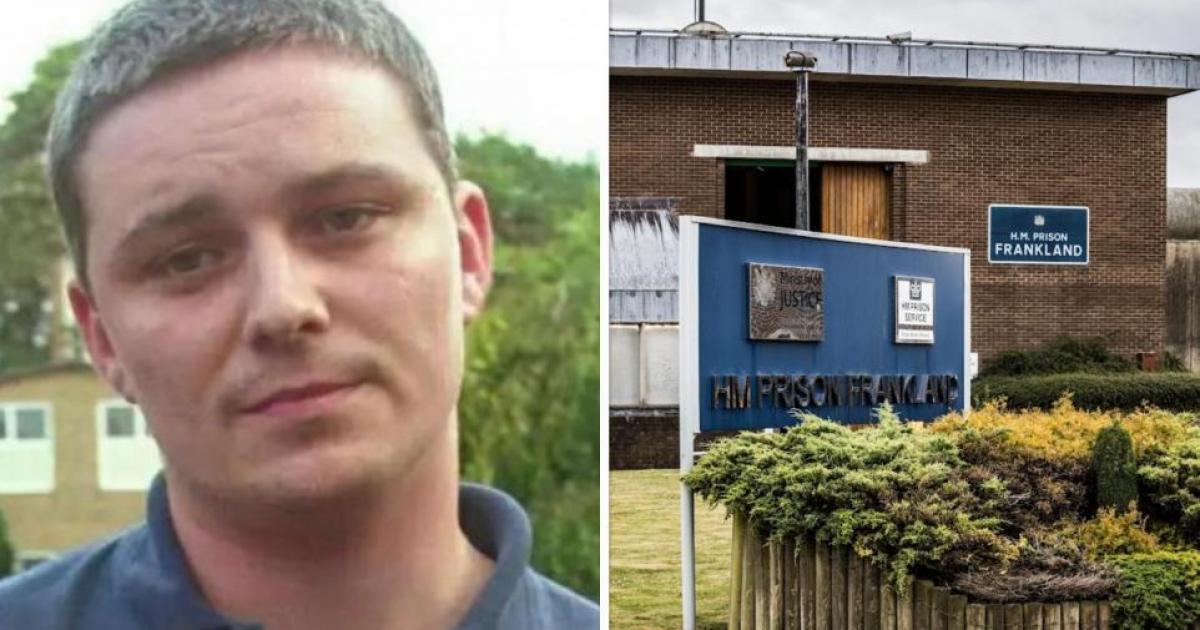
Huntley was reportedly assaulted with a metal bar at a prison recycling workshop at the County Durham jail on February 26.
The 52-year-old was taken to the Royal Victoria Infirmary in Newcastle where he was believed to have been placed on life support but died on March 7.
Inmate Anthony Russell, 43, has since been charged with murder and appeared at Teesside Crown Court via videolink for a 10 minute preliminary hearing.
Now, the Prison and Probation Ombudsman has confirmed it is investigating the death, saying the report is expected to take 26 weeks.
Advertisement
A spokesperson said: “We are investigating the death of Ian Huntley. Mr Huntley’s final investigation report will be published on our website after the inquest concludes.”
Huntley was serving a life sentence for the 2002 murders of 10-year-olds Holly Wells and Jessica Chapman.
Huntley murdered schoolgirls Holly Wells and Jessica Chapman in Soham in 2002 (Image: ARCHIVE)
The ex-school caretaker killed the best friends after they left a family barbecue to buy sweets in Soham, Cambridgeshire, on August 4 2002. He dumped their bodies in a ditch 10 miles away.
They were not found for 13 days despite a search involving hundreds of police officers.
Advertisement
At the time, Huntley lived with Maxine Carr who was a teaching assistant at Holly and Jessica’s primary school.
He denied murdering the girls but was convicted after a trial at the Old Bailey in 2003 and was jailed for life with a recommended minimum term of 40 years.
Carr gave Huntley a false alibi and was jailed for 21 months for perverting the course of justice. She is now living under a new identity.
null (Image: PA)
During the hearing at the higher court on March 12, murder accused Russell confirmed his name and date of birth before Judge Francis Laird KC.
Advertisement
Sitting at a table in a conference room, he followed the proceedings in court.
Court artist sketch by Elizabeth Cook of Anthony Russell appearing via video link at Newton Aycliffe Magistrates Court,
He was not asked to enter a plea and was told there will be a pre-trial preparation hearing on April 24 at Newcastle Crown Court.
The judge confirmed with Tyrone Smith KC, defending, that Russell was on the link and cooperating fully with the proceedings.
Concluding the hearing, Judge Laird said: “Mr Russell, that is the end of the case today.
Advertisement
“You will next be before the court on April 24 and I direct you may attend that hearing remotely.
“If your lawyers feel there is merit in you being at Newcastle Crown Court then they will be at liberty to apply to the court administratively to ensure your attendance at that hearing.”
The village will be filled with local street food vendors and small businesses
A Cambridgeshire village with just 350 residents is expecting 14,000 visitors in one weekend. The village of Thriplow, near Duxford is set to hold its annual Thriplow Daffodil Weekend.
Advertisement
The Weekend festival will take place on March 21 and 22. Described as a “super-sized village fete gone mad”, the event will have over 100 stalls of local street food vendors, small businesses, beer tents, two music stages, plenty of entertainment for children and of course, half a million daffodils.
Over 80 coaches will be travelling from across the country to attend and car parks will be located on Church Street and Farm Lane. From there, visitors can walk down Middle Street to the hive of activities along School Lane and the footpath opposite Pegg’s Close, also accessible from Church Street.
The roads will will be closed on Friday , March 20 for the event set-up. Daffodil HQ is located at the caravan on the corner of Middle Street where staff can support visitors with any questions they may have.
For safety reasons, the Daffodil Festival is a ticketed event which costs £12 for adults and £6 for children aged between five and 16. Tickets will only be sold through the official Daffodil Weekend website. Tickets are limited and sell out quickly.
Paul Earnshaw, Chairman of Daffodil Weekend, also known locally as the “resident Vicar of Dibbley”, has organised the event for the past 11 years. He said: “This is England at its best. You’ll come to Thriplow and see people being friendly, helpful and having a good time”.
Hayley Lewin, General Manager at The Green Man, a pub in Thriplow, said: “Its always one of our busiest weekends of the year and we are always packed out. It’s always a great atmosphere and amazing to have this many people in a village so small and all run by volunteers.”
Music performers, Unit 4a said: “We love playing here as it is a full blown festival right on our doorstep. This is our third year playing at the Daffodil Festival. It is a privilege to be a part of this huge event in our local community which last year raised £80K for local charities.”
Advertisement
This year, the Thriplow Daffodil Weekend Trust is supporting Royal Papworth Hospital, East Anglia Children’s Hospice and Cambridge’s Global Health partnerships.
The Festival started 58 years ago in 1968 to raise money for a new church roof. Today they have raised more than £500,000 for charities within 30 miles of Thriplow.
The former flanker has 33 caps for Wales and spent his entire career at Cardiff Rugby, but now he is working as a DJ in stadiums he used to play in
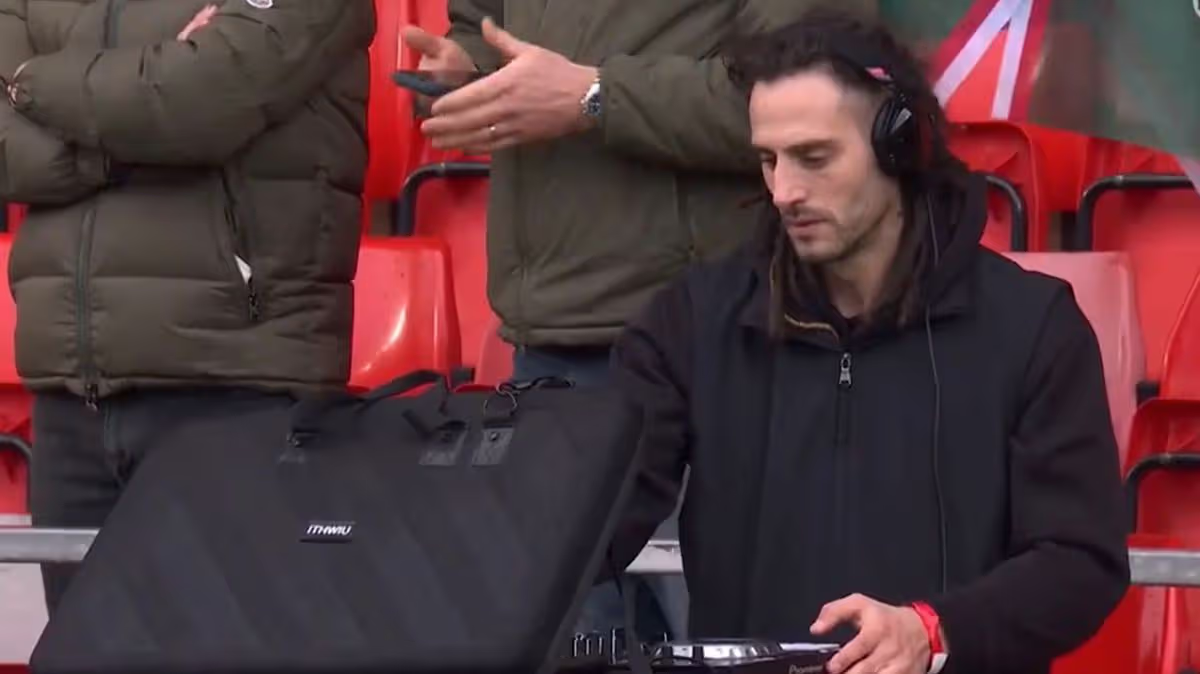
Josh Navidi has swapped the scrum for the decks after spending almost a decade as a rugby star for Wales.
Advertisement
The former flanker and number eight briefly captained his country in 2019 and also played at the Rugby World Cup that year. The Bridgend-born star spent his entire career at Cardiff, making 184 appearances and scoring 105 points.
Internationally, Navidi also appeared for the British and Irish Lions and scored five points in total for Wales. Following a serious neck injury in 2023, the Welshman retired with three Six Nations titles under his belt.
Three years on, Navidi is showing out in a new job as he was spotted working as a DJ at a rugby cup final in Leicester.
The 35-year-old was caught on camera spinning the decks before Leicester Tigers’ triumphant Premiership Cup win over the Exeter Chiefs on Sunday.
Many would assume that Navidi would take the leap into punditry like many ex-rugby stars, but he has instead chosen to take a dip into the music industry. He was spotted on TNT Sports DJing both the pre-match and half-time show as Leicester beat Exeter 66-14.
Navidi had also been seen on the DJ decks as Wales took a 31-17 win over Italy in the Six Nations. Fans were stunned by the ex-flanker’s new job as they took to social media.
Advertisement
One said: “Josh Navidi on the decks? That’s a sight! Bet his mixing skills are as solid as his tackling.
“Let’s see if he can drop a beat better than some teams drop their lineouts. Hope he brings the same energy as he did in the back row!”
Content cannot be displayed without consent
Another questioned his wages as they said: “He did half time at the Wales game yesterday. I’d like to know how much he got paid for sticking a few dance records on?”
A third wasn’t too keen on the half-time show as they added: “Lovely bloke. But something literally no rugby fan needs. Half time is for talking about rugby with a beer not DJ’s.”
Advertisement
Navidi also works as the director of Cute Club, a car dealership close to Cardiff in Llantwit Major.
Get the latest Wales Rugby merch at Kitbag
This article contains affiliate links, we will receive a commission on any sales we generate from it. Learn more
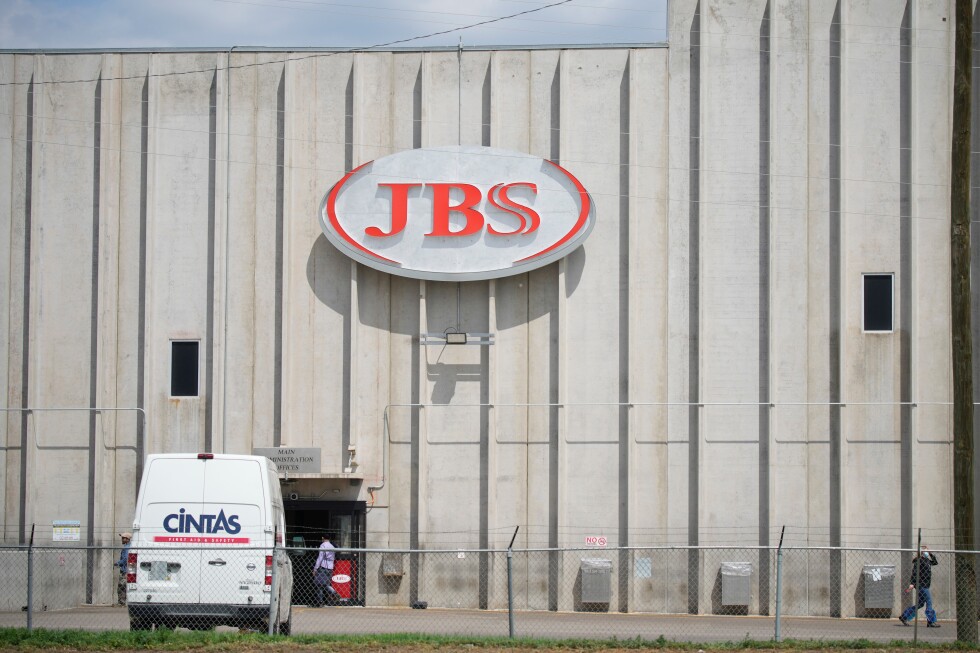
GREELEY, Colo. (AP) — About 3,800 workers at one of the nation’s largest meatpacking plants were set to strike Monday morning in Colorado in what union representatives said would be the first walkout at a U.S. beef slaughterhouse since the 1980s.
The strike at the Swift Beef Co. plant in Greeley was set to begin at 5:30 a.m. MDT, said Kim Cordova, president of United Food and Commercial Workers Local 7, which represents the workers.
It follows accusations from union officials that owner JBS USA retaliated against workers and committed other unfair labor practices amid contract negotiations. A previous contract was due to expire at midnight Sunday.
The expected strike comes at a 75-year low for the U.S. cattle population, with a Jan. 1 inventory of 86.2 million animals — down 1% from the prior year. Beef prices have added to economic anxiety in the U.S., while the administration of President Donald Trump has turned to a trade deal with Argentina in efforts to lower prices for food, including beef.
At the Greeley plant, the company tried to intimidate workers to quit the union in one-on-one meetings, union general counsel Matt Shechter said.
Cordova said 99% of workers voted to authorize the strike. No formal negotiations took place over the weekend after the company refused a union request to negotiate on Saturday, Shechter said.
JBS USA said in statement that any employee who didn’t want to strike would have work and be paid. The company said it would operate two shifts at the plant Monday and would temporarily move production as needed to other JBS facilities.
Advertisement
The statement said the company operates in full compliance with federal and state labor and employment laws.
“Our goal is to minimize impact to our customers, our partners, and the broader marketplace while we work toward a fair resolution in Greeley,” the company said.
It’s the first strike at a U.S. slaughterhouse since workers walked out at a Hormel plant in Minnesota in 1985, Cordova said. That strike lasted more than a year and included violent confrontations between police and protesters, according to the Minnesota Historical Society.
WASHINGTON (AP) — President Donald Trump is suggesting he may delay his much-anticipated visit to China at the end of the month as he seeks to ramp up the pressure on Beijing to help reopen the Strait of Hormuz and calm oil prices that have soared during the Iran war.
In an interview Sunday with the Financial Times, Trump said China’s reliance on oil from the Middle East means it ought to help with a new coalition he is trying to put together to get oil tanker traffic moving through the strait after Iran’s threats have throttled global flows of oil. Trump said “we’d like to know” before the trip whether Beijing will help. “We may delay,” Trump said in the interview.
The uncertainty underscores just how much the U.S.-Israeli strikes on Iran have reshaped global politics in the past two weeks. Calling off the face-to-face visit with Chinese President Xi Jinping could have its own major economic consequences: Relations between Washington and Beijing have been fraught as both sides have threatened the other with steep tariffs over the past year.
The White House did not immediately respond to requests for comment.
Advertisement
In Beijing, a Foreign Ministry spokesperson said only that China and the U.S. have maintained communication on Trump’s visit. “Head-of-state diplomacy plays an irreplaceable strategic guiding role in China-U.S. relations,” Lin Jian said at a daily briefing.
In the early days of the Iran conflict, Trump had said U.S. navy vessels would escort oil tankers through the strait, and downplayed the threat posed by Iran. But as oil prices soared, he and his administration have been forced to consider new options — including the idea, broached this weekend, for other countries to join the push with their own warships. So far, none has yet formally heeded the call.
Trump told reporters aboard Air Force One as he returned to Washington from a weekend in Florida that the U.S. had spoken to “about seven” nations about offering military support. He wouldn’t say which ones, though, and demurred when he was asked directly about China — though he subsequently suggested that he’d made such an offer to Beijing.
Advertisement
“China’s an interesting case study,” he said, noting its reliance on Gulf oil. “So I said, ‘Would you like to come in’ and we’ll find out. Maybe they will, maybe they won’t.”
War in Iran has sent the price of oil skyrocketing, which has raised the price Americans pay at the pump, just as the midterm election season begins to heat up. China, though, has faced its own economic pressures and recently lowered its 2026 target for growth slightly to 4.5% to 5%, its slowest projected growth since 1991 — meaning prolonged disruptions in the strait could have long-term impacts for Beijing as well.
Lin, at the briefing in Beijing, did not respond directly to questions about Trump’s call for outside help in the strait. He noted the impact on goods and energy trade and repeated his government’s call for an end to the fighting.
“China once again calls on all parties to stop military actions immediately, avoid further escalation of tensions, and prevent instability in the region from having a greater impact on global economic development,” he said.
Advertisement
___
Associated Press writer Ken Moritsugu in Beijing contributed.