

Business
Oil Holds Above $100, Stocks Mixed as Global Markets Look for Direction


Oil prices held above $100 a barrel and stocks struggled for direction as traders weighed mixed signals heading into the third week of conflict in the Middle East.
The dollar was flat and Asian and European stocks were mixed after President Trump sought to pressure a range of countries to help protect trade through the Strait of Hormuz. The success of Trump’s push remained unclear. Investors are focused on the crucial waterway, with markets highly sensitive to developments.
Copyright ©2026 Dow Jones & Company, Inc. All Rights Reserved. 87990cbe856818d5eddac44c7b1cdeb8


Retail entrepreneur Theo Paphitis has stepped in as interim chief executive of Robert Dyas as the high-street chain battles declining sales and changing consumer habits.
Paphitis, who owns the business through the Theo Paphitis Retail Group, said he had taken a more direct role in the company’s leadership in recent months in an effort to stabilise operations and reshape the brand’s strategy in what he described as a “testing time” for the retailer.
The 66-year-old businessman, widely known for his appearances on the BBC programme Dragons’ Den, said he increased his involvement last summer to “steady the ship and refocus the strategic direction” as the company faces a tougher trading environment on the UK high street.
Robert Dyas, which operates 93 stores across the UK, has been grappling with declining footfall and softer consumer demand. Like-for-like sales fell by 5 per cent in the year to the end of March, with the company blaming reduced shopper traffic and unusually mild seasonal weather that dampened demand for some of its core products.
The retailer also experienced a slowdown following a surge in sales the previous year during the height of the cost-of-living crisis. At that time, customers had flocked to purchase energy-saving products such as air fryers, dehumidifiers and related accessories, boosting demand across the sector. As household spending patterns normalised, however, sales momentum faded.
In response, the company said it has begun implementing a series of strategic changes aimed at revitalising the brand. These include reviewing its product ranges, sharpening its focus on traditional home and garden categories, and expanding in-store services designed to drive customer engagement.
Although Robert Dyas has faced a more difficult trading period, other businesses within the group have reported stronger performance. The stationery chain Ryman delivered improved results, with earnings before interest, tax, depreciation and amortisation rising 20.5 per cent to £1.94 million in the most recent financial year. The company expects that figure to grow further to around £3 million in the current year.
Ryman’s recovery has been driven by improved margins, the expansion of its own-brand arts and crafts ranges and the introduction of additional services across both physical stores and online platforms. The retailer is also experimenting with new store formats, including combined outlets with Robert Dyas, partnerships with the Post Office and the rollout of a new “Ryman Design” concept.
Meanwhile, lingerie brand Boux Avenue has also delivered improved results, reporting a significant increase in profitability. Earnings improved by £6.4 million following a 6.9 per cent rise in sales and stronger profit margins. The company expects EBITDA to reach at least £4 million in the current financial year after a strong Christmas and Valentine’s trading period that delivered double-digit growth.
Paphitis has built a reputation over several decades for turning around struggling retail businesses. He first rose to prominence after rescuing the stationery chain Ryman from administration in 1995. He later moved into the lingerie sector by acquiring the UK arm of La Senza in 1998, successfully reviving the business before selling his stake in 2006 for a reported £100 million.
He subsequently founded Boux Avenue before expanding further into the homewares sector by acquiring Robert Dyas in 2012 for approximately £10 million. The purchase came after the 140-year-old ironmongery and homewares retailer had been put up for sale by its lenders.
Reflecting on the challenges facing traditional retailers, Paphitis said heritage brands must constantly adapt to remain relevant in an era when consumer behaviour is rapidly shifting toward online shopping and digital marketplaces.
“We are in a time where other heritage brands, such as WH Smith, have disappeared from the high street,” he said. “It’s a stark reminder to retailers that they must constantly evolve, remember their purpose and give customers a reason to visit their stores.”
He added that modern consumers are more willing than ever to switch between brands and retailers because of the abundance of online choices available.
Despite the difficult trading environment, Paphitis said he believes Robert Dyas can regain momentum through sharper product positioning, stronger store experiences and a renewed focus on its core home and garden categories.
The appointment signals a more hands-on approach from the entrepreneur as he attempts to steer the retailer through what he described as one of the most challenging periods for high street businesses in recent years.

Jamie Young
Jamie is Senior Reporter at Business Matters, bringing over a decade of experience in UK SME business reporting.
Jamie holds a degree in Business Administration and regularly participates in industry conferences and workshops.
When not reporting on the latest business developments, Jamie is passionate about mentoring up-and-coming journalists and entrepreneurs to inspire the next generation of business leaders.

Civil unrest has played a role in Perseus electing to divest its 70 per cent stake in the Meyas sand project in Sudan.

“We have relied on word of mouth for support up to now, but we’ve decided in our 60th year to get out there and raise awareness, to try to attract more referrals from all areas of the Scottish Borders and more funding to help us meet these needs,” she said.

Books and records of a Nicheliving-linked entity will be inspected by companies mulling a legal action against the founder of the troubled builder, a recent judgment shows.
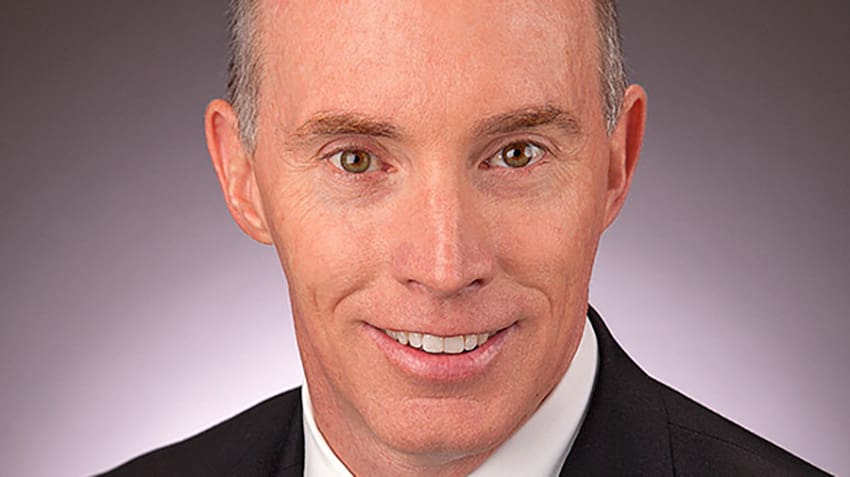
Daniel Tuffy is a healthcare leader with a career built on service, discipline, and operational excellence.
He began his professional journey in clinical care, working as a Physical Therapist Assistant for nearly a decade. This hands-on experience gave him a deep understanding of what patients and clinicians need most.
Over time, Daniel moved from patient care into leadership roles within healthcare organisations. He became focused on improving access to ambulatory care, strengthening workforce engagement, and reducing provider burnout. He is known for helping teams remove barriers, improve quality, and deliver better outcomes while managing costs.
Daniel has a strong background in healthcare operations, including surgical schedule utilisation and smart growth strategies within orthopaedic and outpatient settings. His leadership style centres on trust, communication, and building cultures where teams can learn, adapt, and perform at a high level.
He holds a Bachelor’s degree in Health Administration from the University of Central Florida, an Associate degree in Physical Therapist Assistance, and an MBA from Webster University. He also completed an Executive Presence and Influence programme through Wharton Business School. Daniel is a Fellow of the American College of Healthcare Executives.
Beyond his professional work, Daniel is part of the Leadership Gwinnett Class of 2026 and remains active in community service. He brings the same commitment to personal growth through endurance sport, having completed multiple Ironman triathlons.
Daniel’s career reflects a steady focus on leadership, culture-building, and delivering meaningful improvements across healthcare systems.
Q: You started your career in clinical care. What drew you into healthcare in the first place?
I grew up in Florida, and both of my parents ran a private duty home health agency for 30 years. Healthcare was always part of dinner table conversation. But what really pushed me toward it was my own knee surgeries in middle and high school. I spent a lot of time in physical therapy. That experience stuck with me.
By the time I graduated high school, I had volunteered around 700 hours at a local hospital. I knew I wanted to work in healthcare, even if I did not yet know in what capacity.
Q: Your early career was hands-on. What did those clinical years teach you?
I worked as a Physical Therapist Assistant for about ten years in Orlando. Those years grounded me. When you are face-to-face with patients every day, you see the system up close. You see what works. You also see what creates frustration.
It taught me that small operational issues can have a big impact on patient care. A delayed schedule. A staffing gap. Poor communication. Those things matter. That perspective has stayed with me as I moved into leadership.
Q: Why did you transition from patient care into leadership?
At first, I thought success meant taking on more and doing everything myself. I believed high performance meant not depending on others. Over time, I realised that my mindset was limiting. After a few hard lessons, I began to see that leadership is about building trust and empowering a team.
I had also experienced a leader who relied on intimidation. I saw how that damaged morale and performance. I decided I wanted to lead differently. That shift moved me towards operational and administrative roles.
Q: What became your focus as you moved into executive leadership?
Access, efficiency, and culture.
In ambulatory and orthopaedic settings, access to care is critical. If patients cannot get timely appointments or surgery slots, outcomes suffer. I became very focused on surgical schedule utilisation and operational flow. When schedules are optimised and teams communicate well, both quality and cost improve.
At the same time, I saw provider burnout increasing. Clinicians often feel burdened by systems that make their work harder than it needs to be. I believe leaders have a responsibility to remove barriers so clinicians can focus on patients.
Q: How do you approach culture building?
Trust is the foundation. I set long-term goals and communicate them clearly to the team. That creates clarity. It also creates accountability.
I also believe in benchmarking performance. If you are not aiming to be in the top quartile nationally in the metrics you track, you are probably not pushing hard enough. But performance cannot come at the expense of culture. Teams need psychological safety. They need room to learn and, at times, to fail.
I have learned that perfection is not the goal. Growth is.
Q: You continued your education while building your career. Why was that important to you?
Education has always been part of my development. I earned a Bachelor’s degree in Health Administration, later an MBA, and recently completed an Executive Presence and Influence programme at Wharton. I also achieved Fellowship in the American College of Healthcare Executives.
For me, continuing education is about staying relevant. Healthcare changes quickly. Leaders need to adapt. I attend continuing education events each year because I do not think you ever stop learning.
Q: Outside of work, you have completed eight Ironman-distance triathlons. Has endurance sport influenced your leadership?
Absolutely. Training for an Ironman teaches discipline and long-term thinking. You cannot prepare for that distance overnight. It requires structure, resilience, and patience.
Leadership is similar. You set a goal, build a plan, adjust when things do not go as expected, and keep moving forward. I have competed in around 20 half-Ironman races as well. The process is humbling. There is always room to improve.
Q: What motivates you today?
The idea of being better every day, in some way. That could be in leadership, communication, or simply listening more effectively.
I am currently part of the Leadership Gwinnett Class of 2026, which has given me a broader perspective on community impact. Healthcare does not operate in isolation. It is part of a larger system.
Looking back, I started working odd jobs at 12 and later delivering pizzas to help make ends meet. That background shaped my work ethic. It also shaped my respect for teams at every level of an organisation.
Healthcare is complex. But when leaders focus on access, culture, and removing friction for clinicians, real improvement is possible. That is the work that continues to drive me.

Transportation Secretary Sean Duffy discusses autonomous vehicle innovation, TSA shortages, and the future of aviation on ‘Varney & Co.’
More than 1,800 flights within, into or out of the United States had been canceled as of 7 a.m. ET Monday, as a massive weather system disrupted air travel across parts of the country, according to flight-tracking site FlightAware.
More than 1,200 additional delays involving U.S. flights were also reported, the data showed.
The disruptions come during the busy spring break travel season — one of the peak periods for airline demand — leaving many travelers scrambling to find alternative flights.
The bulk of the cancellations were reported at airports in the New York region, with 149 flights canceled at LaGuardia Airport, 88 at John F. Kennedy International Airport, about 63 at Boston Logan International Airport and 27 at Newark Liberty International Airport, according to FlightAware.
2K FLIGHTS CANCELED IN SINGLE DAY, TURNING MAJOR AIRPORT INTO VIRTUAL GHOST TOWN

Travelers look at a flight information display board showing several flights cancelled due to weather at LaGuardia Airport in New York. (CHARLY TRIBALLEAU / AFP via Getty Images / Getty Images)
The region is one of the busiest aviation corridors in the world, meaning disruptions there can quickly ripple across the national air travel network.
Another major disruption point was Chicago O’Hare International Airport, one of the nation’s largest airline hubs, which reported 133 canceled departures and 202 canceled arrivals, according to the data.
Several major airlines were also heavily affected. Endeavor Air reported 278 cancellations, followed by Southwest Airlines with 265, Delta Air Lines with 231, American Airlines with 181, Republic with 171 and SkyWest with 156, FlightAware data showed.

Minneapolis-St. Paul International Airport resembled a ghost town on March 15, 2026. (Fox 9 Minneapolis-St. Paul / Fox News)
Other major US hubs reporting cancellations included Atlanta’s Hartsfield-Jackson International Airport, Baltimore/Washington International Airport and Orlando International Airport, indicating the severe weather was disrupting flights across multiple regions of the country.
The travel disruptions come as a powerful March storm system sweeps across the United States, bringing blizzard conditions to parts of the Midwest and a rare severe storm threat along the East Coast.
The FOX Forecast Center warned that the East Coast faces a Level 4 out of 5 severe weather risk, with damaging winds of 70 to 80 mph and several tornadoes possible from the Mid-Atlantic into parts of the Carolinas later Monday.
Meanwhile, parts of the Midwest and Great Lakes are digging out from historic snowfall totals, including Green Bay, Wisconsin, which recorded 14.8 inches in its snowiest day in 137 years, according to FOX Weather. Spalding, Michigan, also recorded 26 inches of snow, FOX Weather reported.

A fierce snow blizzard lashes the exterior of the airport, grounding flights and disrupting travel at MSP. (MSP Airport/Fox 9 Minneapolis-St. Paul / Fox News)
FOX Weather reported that more than 5,000 flights have already been canceled nationwide through Tuesday as the sprawling storm system continues to disrupt travel across multiple regions.
CLICK HERE TO GET FOX BUSINESS ON THE GO
Ground stops were also anticipated at major hubs later Monday as severe storms approached the Atlantic coast, according to FOX Weather.

The Jurassic World Exhibition in Bangkok can be included on the list of the best places to visit in the city as it provides high levels of immersion to the dinosaur and adventure movie fans.
The exhibition is the embodiment of the scenes of the famous franchise, with the use of realistic animatronics and detailed settings and with the interactive presence.
The large dinosaurs and dramatic sets usually draw the attention of the visitors and one can easily miss numerous small details in the course of the exhibition. When the travellers plan their visit via Gother, they usually find that the attraction has a lot of little details that are incorporated to make the experience more realistic. Since the presentation in the exhibition can be enjoyable, it can be even better when attention is drawn to the design details, including interactive ones.
1. The Realistic Sound Design Throughout the Exhibition
Another thing that most visitors overlook is the sound environment which is well-planned. Even though the animatronic dinosaurs cannot be overlooked, the background music has been employed to give the impression of a living prehistoric park.
As you are walking through the different regions you can hear the fading calls of dinosaurs, the sound of rustling leaves and other activities within the setting that are appropriate to the particular setting. These sound effects are not accidental, they are well synchronized and are used to make the exhibition more realistic.
When you take a moment and listen to it, you will hear how the sound design varies in each zone and creates the impression of going through various habitats.
2. Small Interactive Elements Built Into the Displays
Most of the exhibits have interactive features which visitors tend to pass by without perusing. Some sections enable you to feel replica fossils, look through dinosaur eggs or switch on little screens that give you more information on the animals in the exhibition.
The interactive features are aimed at making the exhibition more educative and interesting to the families and to younger visitors. Spending a bit of time at every exhibit can give one information that one would have overlooked when just rushing one dinosaur to the other.
Slow tourists can discover that these minor details can create the experience in a much more meaningful manner.
3. Film-Inspired Props Hidden Throughout the Experience
The viewers of the Jurassic World movies might identify a couple of props which are present all over the exhibition. Some details, like laboratory equipment, security signs, and control panels, can be seen in some parts, which makes it look like the setting is real.
These props are not emphasized directly all the time, yet they contribute to the creation of the atmosphere of the fictional dinosaur park, which is observed in the movies. A close examination of the environment can reveal allusions that the franchise enthusiasts will enjoy.
A lot of tourists prefer to buy Jurassic World Bangkok ticket on Gother and have more time to enjoy the attraction and not to worry about waiting in a long queue to buy tickets.
These details inspired by the films become an added value to the experience when a visitor takes time to see beyond the displays on the surface.
4. The Environmental Design of Each Zone
The other minor aspect that can be easily missed is the architecture of every themed area. The exhibition is split in various areas which are symbolic of various settings in which dinosaurs may have inhabited.
The lightings, plant layouts, and textures used in the background are well tailored to suit each background. Certain regions are like thick prehistoric forests and some other sections seem to be research centers in which scientists examine the behavior of the dinosaurs.
These environmental features allow the visitors to feel that it is the world of Jurassic World that they are entering and not just another traditional exhibition place.
5. Educational Information Hidden in the Displays
Though the show is an entertainment one, in addition, it contains educational data on dinosaurs, fossils and prehistoric life. Most exhibitions have brief texts that describe what these various species are and how they were discovered in science.
Those visitors who will find time to read these passages can learn some interesting facts about the way in which palaeontologists investigate dinosaurs and how contemporary research is extending our knowledge about ancient animals.
These learning facts increase the depth of the experience and, as such, the exhibition can be an enjoyable experience not just to movie fans but also to people interested in science and natural history.
A Deeper Way to Experience the Exhibition
The Jurassic World Exhibition Bangkok has much to offer other than great dinosaur models. The attraction has numerous details that the visitors might miss at first sight: hidden props and environmental design, subtle sound effects, educational displays, and so on. Slowly exploring the sites will enable the visitors to be thankful about the innovativeness and the hard work made on the display. To sightseers who are fond of immersive attractions, a visit to the attraction may become an absolute experience after learning these hidden secrets.

What does it take to lead growth inside fast-moving companies?
For Natalie Shpiegel, it starts with learning how to adapt.
Born in Israel, she spent much of her childhood moving every two years. Her father worked for Motorola, and the family relocated often. She lived in Toulouse, France. Scottsdale, Arizona. Austin, Texas. Seoul, South Korea. Beijing, China.
At 14, she moved back to Israel.
Those early years shaped how she sees the world. And how she leads.
“When you grow up changing countries that often, you learn how to read a room fast,” Shpiegel says. “You learn how to listen first. You learn how to adjust.”
Today, she is the Director of Sales and Marketing at RIGID Industries. Her career spans brand marketing, operations, and large-scale program management. But the thread running through it all is simple: growth through smart execution.
Early Life and Global Perspective
Shpiegel describes her childhood as both exciting and grounding.
Each move meant a new school. A new language. A new culture.
“You don’t get comfortable for long,” she says. “You figure out how to build relationships quickly. That’s a skill I still use every day.”
After returning to Israel as a teenager, she finished high school at Maagan Michael. She later earned a BA in Economics and Business Management from Tel Aviv University.
She knew she wanted to work in business. But she also wanted range.
That desire led her to the Kellogg School of Management at Northwestern University, where she earned her MBA.
“Kellogg helped me think bigger,” she says. “It pushed me to connect strategy with execution.”
Starting in Brand Marketing at Miller Coors
Shpiegel began her career at Miller Coors, now Molson Coors.
She worked as a Marketing Manager on the Blue Moon brand. Later, she became Project Manager for Saint Archer Gold.
Brand marketing gave her a strong foundation.
She learned how products are positioned. How campaigns are built. How teams align around growth goals.
“Blue Moon was about protecting and growing an established brand,” she says. “Saint Archer Gold was different. It was about building something new and figuring out product-market fit.”
She saw both sides of the equation. Defend the core. Test the edge.
That mix would define her career.
Moving Into Operations at Redfin
After brand marketing, Shpiegel shifted into program management at Redfin.
It was a big change.
Instead of focusing on brand voice and campaigns, she was managing systems, teams, and cross-functional projects.
She became a Program Manager and later a Manager of Program Management.
“Real estate is complex,” she says. “You’re dealing with agents, customers, technology, and local markets all at once.”
At Redfin, she worked on scaling processes. Improving coordination. Driving consistency across regions.
It was here that her ability to “learn new industries quickly,” as she puts it, became a strength.
“I like walking into an industry I don’t know well,” she says. “You ask better questions when you’re not stuck in old assumptions.”
Market Operations at Carvana
Shpiegel later joined Carvana as Associate Director, focusing on Market Operations, Carvana’s the Last Mile Division.
Carvana operates at speed. It blends logistics, customer experience, and digital platforms.
Her role required both strategic thinking and hands-on problem solving.
“Last mile is where the brand promise meets reality,” she says. “If the car shows up late or the experience feels off, nothing else matters.”
She worked on market-level execution. Team alignment. Operational improvements.
This phase deepened her understanding of turnaround environments and fast-scaling models.
“High-growth companies are messy,” she says. “You can’t wait for perfect conditions. You build structure while moving.”
Leading Sales and Marketing at RIGID Industries
Today, Shpiegel serves as Director of Sales and Marketing at RIGID Industries.
The role brings together everything she has done before. Brand. Operations. Growth. Cross-functional leadership.
She leads teams focused on growth strategy, brand development, and customer engagement.
“Sales and marketing can’t operate in silos,” she says. “They have to move as one engine.”
Her approach is practical.
She focuses on clear goals. Clean execution. Feedback loops.
“RIGID required a deep look inwards at what made the brand what it was, and what it lost along the way” she says. “We had to redefine the brand mission and build it back from first principles.”
Leadership Style: Adaptability and Range
Across every role, Shpiegel emphasizes adaptability.
Her career moves show a pattern. Marketing to operations. Established brands to scaling companies. One industry to another.
She calls it a “holistic background.”
“I never wanted to be boxed into one lane,” she says. “Understanding the full system makes you a better leader.”
Colleagues describe her as calm under pressure. Structured in chaos. Comfortable learning fast.
That mindset traces back to her childhood.
“When you’ve changed countries six times before high school, change doesn’t scare you,” she says.
Life Outside the Office
Outside of work, Shpiegel stays active.
She skis and snowboards. She travels as often as she can.
She is also a self-described foodie.
“Food is one of the best ways to understand a culture,” she says. “I’ve moved around my whole life. That curiosity never left.”
She is a mother of three and says family remains central.
“No matter how busy work gets, family keeps you grounded,” she says.
What Natalie Shpiegel’s Career Shows About Modern Leadership
Shpiegel’s career reflects a broader trend in business.
Leaders today are not defined by one function. They are defined by range.
They move between marketing and operations. Between strategy and execution. Between industries.
They scale systems. They fix gaps. They build alignment.
“At the end of the day, it’s about impact,” Shpiegel says. “Are you helping the business grow? Are you building something that lasts?”
From global childhood to boardroom leadership, her path has not been linear.
But it has been consistent.
Adapt fast. Learn quickly. Build systems that scale.
And keep moving forward.

Toubani Resources has begun construction at its Kobada gold project in Mali, a week after the project was greenlit by the company’s board.

Klarna Group plc (NYSE: KLAR), the Swedish fintech giant known for its “buy now, pay later” services, saw its shares climb sharply in recent trading as Board Chairman Michael Moritz acquired approximately $50 million worth of stock, signaling confidence in the company’s long-term prospects despite ongoing market pressures following its 2025 initial public offering.

Klarna closed at $15.91 on March 13, 2026, up $1.29 or 8.82% from the previous session’s close of $14.62, according to data from major financial platforms including Yahoo Finance, CNBC and TradingView. Pre-market trading on March 16 showed the stock dipping slightly to around $15.76 to $15.67 in after-hours and early sessions, reflecting typical volatility. Trading volume reached 8.8 million shares on the surge day, well above average.
The rally followed SEC filings disclosing that Moritz, through an affiliated entity, purchased 3,472,845 ordinary shares between March 3 and March 11, 2026, for a total of about $49.9 million. Separately, Chief Product & Design Officer David Fock bought 27,000 shares on March 9 for roughly $388,552. While some executives sold small amounts under pre-arranged plans, the chairman’s substantial investment stood out as a bullish indicator.
“**This is a strong vote of confidence from leadership at a time when the stock has faced significant headwinds**,” one market analyst noted in commentary on platforms like Seeking Alpha and Investing.com. Moritz’s move helped spark pre-market gains of around 6% earlier in the week before the full session rally.
Klarna went public on the New York Stock Exchange in September 2025, pricing its IPO at $40 per share and raising funds amid a rebound in fintech listings. Shares debuted strongly, jumping as much as 30% on the first day and briefly valuing the company near $20 billion. However, the stock has since declined sharply, down more than 60% from its IPO price and hitting a 52-week low of $12.50. The 52-week high stands at $57.20.
The post-IPO trajectory reflects broader challenges in the buy-now-pay-later sector, including rising interest rates, regulatory scrutiny and competition from players like Affirm and Afterpay. Klarna’s market capitalization now hovers around $6 billion to $11 billion depending on intraday fluctuations, a fraction of its peak private valuation of over $45 billion in 2021.
A key recent event was the expiration of the post-IPO lock-up period on March 9, 2026, making approximately 335 million shares eligible for sale by early investors and insiders. Market observers had anticipated potential selling pressure, but the stock found support instead, partly due to the insider buying. Bloomberg and Seeking Alpha reports noted that while some pre-IPO shareholders could now trade freely, the chairman’s purchases countered bearish sentiment.
Klarna operates as a global digital bank and flexible payments provider, leveraging an AI-powered network for commerce and payments. The company partners with merchants worldwide, offering installment plans that allow consumers to split purchases into payments without immediate full cost. Its mission emphasizes smarter, more accessible shopping, with services expanding into full banking features in select markets.
Recent performance metrics highlight resilience. Analysts point to guidance for 2026 projecting gross merchandise volume exceeding $155 billion and revenue around $4.34 billion, with adjusted operating margins potentially above 6.9%. Earlier quarterly results post-IPO showed adjusted EBITDA beating expectations in some periods, underscoring operational improvements even as the share price lagged.
The fintech landscape remains dynamic. Klarna has navigated economic shifts by focusing on cost efficiencies, product innovation and geographic expansion. Its “fair financing” initiatives and emphasis on transparent terms aim to differentiate from competitors amid consumer caution over debt.
Investor sentiment appears mixed. While the recent surge provides short-term optimism, longer-term charts show a downward trend since late 2025. Technical indicators on platforms like TradingView reveal the stock trading well below key moving averages, with a one-month decline of nearly 24% and year-to-date losses around 45%. Beta stands at approximately 3.19, indicating high volatility relative to the broader market.
Market watchers continue monitoring for signs of stabilization. The chairman’s investment could encourage retail and institutional buyers seeking undervalued opportunities in fintech. Some analyses suggest the current levels price in overly pessimistic scenarios, with potential upside if consumer spending rebounds and regulatory environments remain favorable.
Klarna’s leadership has emphasized sustainable growth over rapid expansion seen in prior years. The company continues investing in technology, including AI enhancements for personalized shopping and risk management in lending.
As of mid-March 2026, no major new announcements have emerged beyond the insider transactions, but the episode underscores leadership’s commitment amid a challenging post-listing phase. Shares remain a focal point for investors tracking the evolution of digital payments and consumer finance.
With the lock-up expiration now in the rearview and insider buying providing a floor, Klarna’s path forward may hinge on upcoming earnings, macroeconomic trends and execution on strategic priorities. The fintech’s ability to balance growth with profitability will likely determine whether recent momentum sustains or proves fleeting in a volatile market.

Harry Maguire and Casemiro both backed for another year at Manchester United

The IPV4 We Didn’t Get

Why crypto isn’t cool any more | The Economist


-
 Tech5 days ago
A 1,300-Pound NASA Spacecraft To Re-Enter Earth’s Atmosphere
-
 Crypto World2 days ago
HYPE Token Enters Net Deflation as HyperCore Buybacks Outpace Staking Rewards
-

 Business6 days ago
ExxonMobil seeks to move corporate registration from New Jersey to Texas
-

 Crypto World7 days ago
Paradigm, a16z, Winklevoss Capital, Balaji Srinivasan among investors in ZODL
-

 Fashion3 days ago
Weekend Open Thread: Addict Lip Glow
-

 Tech6 days ago
ChatGPT will now generate interactive visuals to help you with math and science concepts
-
Sports2 days ago
Why Duke and Michigan Are Dead Even Entering Selection Sunday
-

 NewsBeat5 days ago
Residents reaction as Shildon murder probe enters second day
-

 Business5 days ago
Search Enters Sixth Week With New Leads in Tucson Abduction Case
-
 NewsBeat6 days ago
Pagazzi Lighting enters administration as 70 jobs lost and 11 stores close across Scotland
-

 Business17 hours ago
Search for Savannah Guthrie’s Mother Enters Seventh Week with No Arrests
-

 Tech7 days ago
Despite challenges, Ireland sixth in EU for board gender diversity
-

 Business2 days ago
US Airports Launch Donation Drives for Unpaid TSA Workers as Partial Government Shutdown Enters Fifth Week
-
Crypto World2 days ago
Coinbase and Bybit in Investment Talks: Could Bybit Finally Enter the US Crypto Market?
-

 NewsBeat5 days ago
I Entered The Manosphere. Nothing Could Prepare Me For What I Found.
-

 Business7 days ago
Search Enters 39th Day with FBI Tip Line Developments and No Major Breakthroughs
-

 Business2 days ago
Country star Brantley Gilbert enters growing non-alcoholic beer market
-

 Crypto World6 days ago
Will Chainlink price reclaim $10 amid volatility squeeze?
-

 Business2 hours ago
Australian shares drop as Iran war enters third week
-

 Sports5 days ago
PWHL, Senators discussing plan to keep Charge in Ottawa

