Connect with us

Tech

UKRI and Research Ireland’s memorandum of understanding to increase innovation

Published

on

The agreement coincides with the second UK-Ireland Summit taking place in Cork.

UK Research and Innovation (UKRI), which is the UK’s national funding agency for research and innovation and Research Ireland, which is Ireland’s national competitive research and innovation development agency, have announced a memorandum of understanding (MoU). 

The MoU is designed to support the current partnership and will coincide with the second UK-Ireland Summit taking place in Cork. The initiative will enable further collaboration on research areas that are critical to technological innovation and economic growth.

It will also support researchers in a number of key areas, such as telecommunications, advanced materials, quantum technologies and a new creative industries programme which will be launched later this year. 

Advertisement

Furthermore, via the MoU, there will be continued collaboration between the existing lead agency agreement between the UKRI Engineering and Physical Sciences Research Council and Research Ireland.

Commenting on the announcement, Research Ireland’s CEO, Dr Diarmuid O’Brien, said, “Research Ireland is delighted to agree this MoU with UKRI, which paves the way for both an extension and expansion of our partnership arrangements. The MoU is aligned with our strategy, launched earlier this month,which is structured around the three interconnected impact themes of talent, economy and society. 

“We look forward to the research collaboration, knowledge exchange, capacity-building and other cooperative activities that will be facilitated by the agreement.”

UKRI international champion and AHRC executive chair professor Christopher Smith, added, “From the creative industries, design and advanced communications to vaccines and biomedical research, collaborations between the UK and Ireland are addressing the major challenges and opportunities of our time.

Advertisement

“This Memorandum of Understanding deepens the already strong ties between the UK and Ireland’s research and innovation sectors, enhancing our ability to work together to advance our knowledge and deliver growth for the benefit of everyone in society.”

Don’t miss out on the knowledge you need to succeed. Sign up for the Daily Brief, Silicon Republic’s digest of need-to-know sci-tech news.

Source link

Advertisement
Continue Reading
Click to comment

Leave a Reply

Your email address will not be published. Required fields are marked *

Tech

Pixelpaw Labs’ Phase Delivers Mouse Precision and Controller Comfort in One Split Device

Published

on

Pixelpaw Labs Phase Mouse Controller Split Device
If you spend your days at a desk and your evenings on the couch, chances are you have two completely separate sets of gear to show for it. Pixelpaw Labs thinks that’s one too many, and the Phase is their answer to the problem, a single wireless device that handles both without asking you to compromise on either


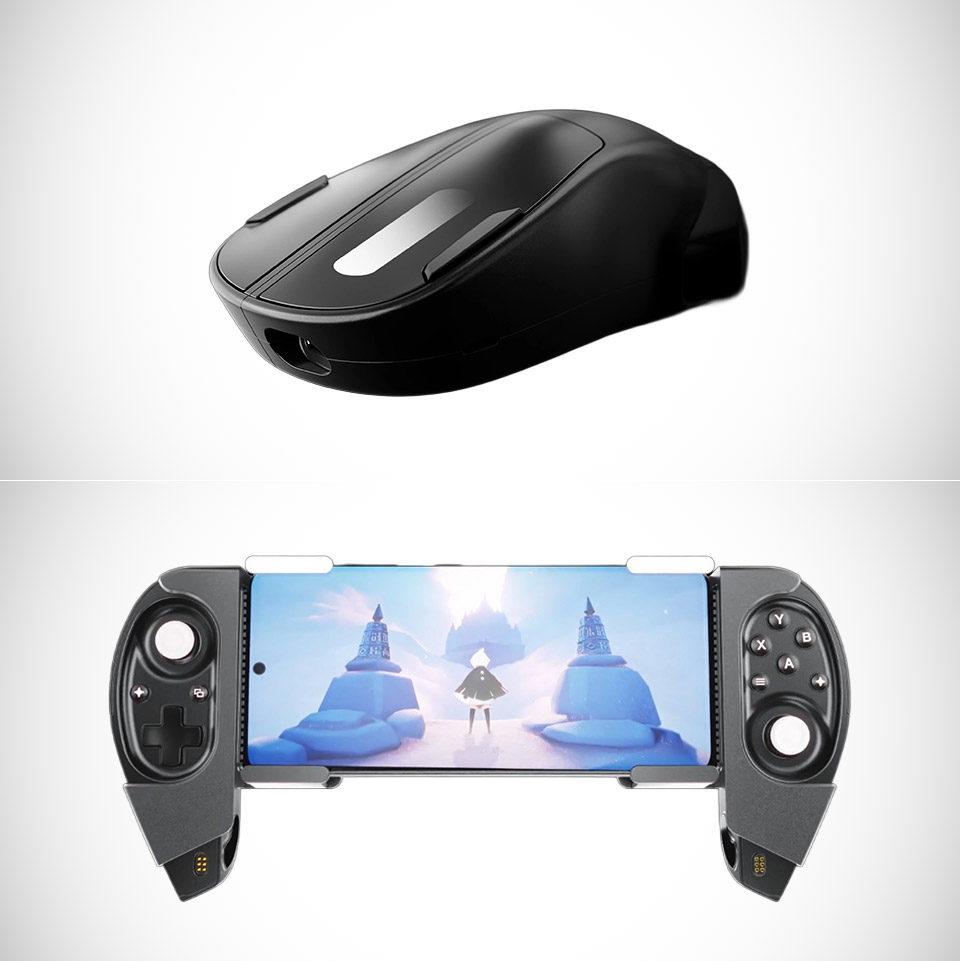
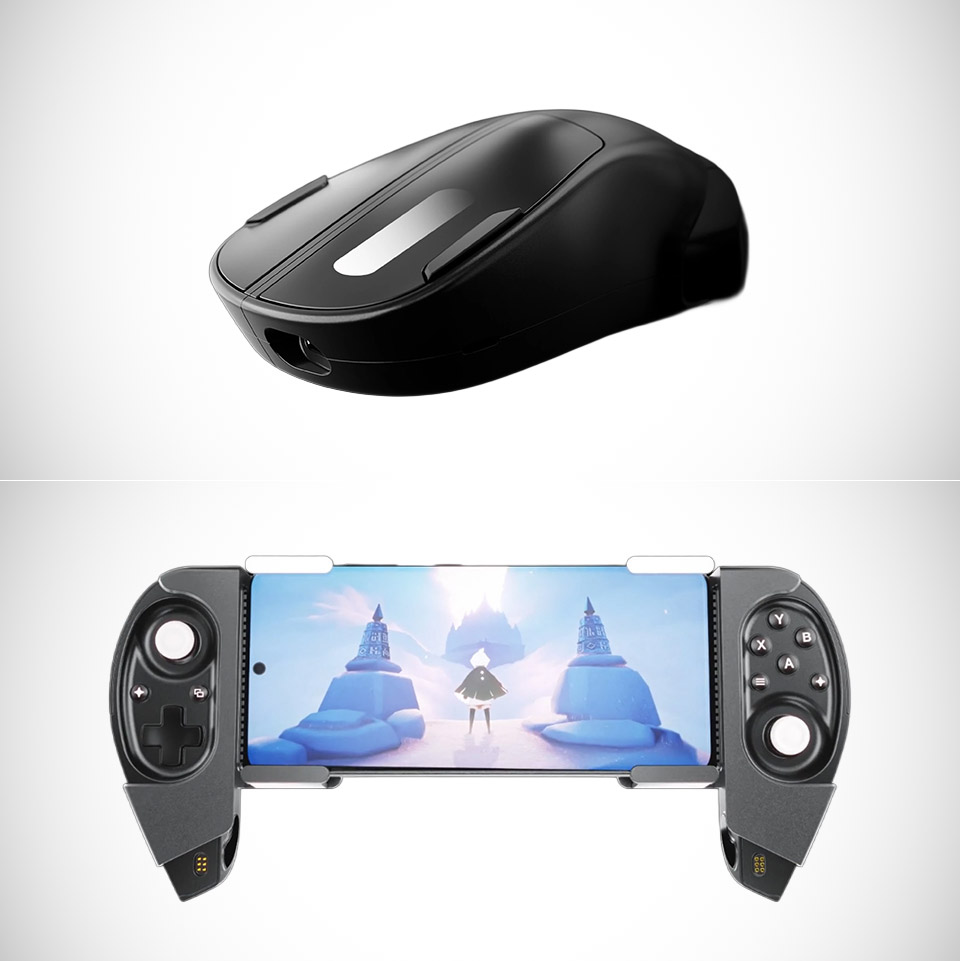
At first glance the Phase looks like a perfectly ordinary mouse sitting on your desk, symmetrical and unremarkable in all the right ways. Give it a firm tug though and the whole thing splits cleanly down the middle along a set of nearly invisible seams held together by strong magnets. What you’re left with are two independent controllers, each packing a thumbstick, a directional pad, face buttons, and a pair of triggers on the back, ready to go the moment you sink into the couch.


abxylute M4 Snap-On Mobile Gaming Controller for Android & iPhone, Switch 1&2, Portable Bluetooth Mini…
  • Why Choose the abxylute M4 Snap-On Phone Controller?Designed exclusively for on-the-go retro gaming. Trusted by 6000+ backers on a tech-focused…
  • 【Easy Setup – Power On & Play Instantly!】We recommend attaching the magnetic stickers to a phone case for all phones, rather than using a bare…
  • 【Wide Compatibility – Android & iPhone】Compatible for Android devices, iPhones, and card-size phones (Android devices and iPhone 11/SE and…

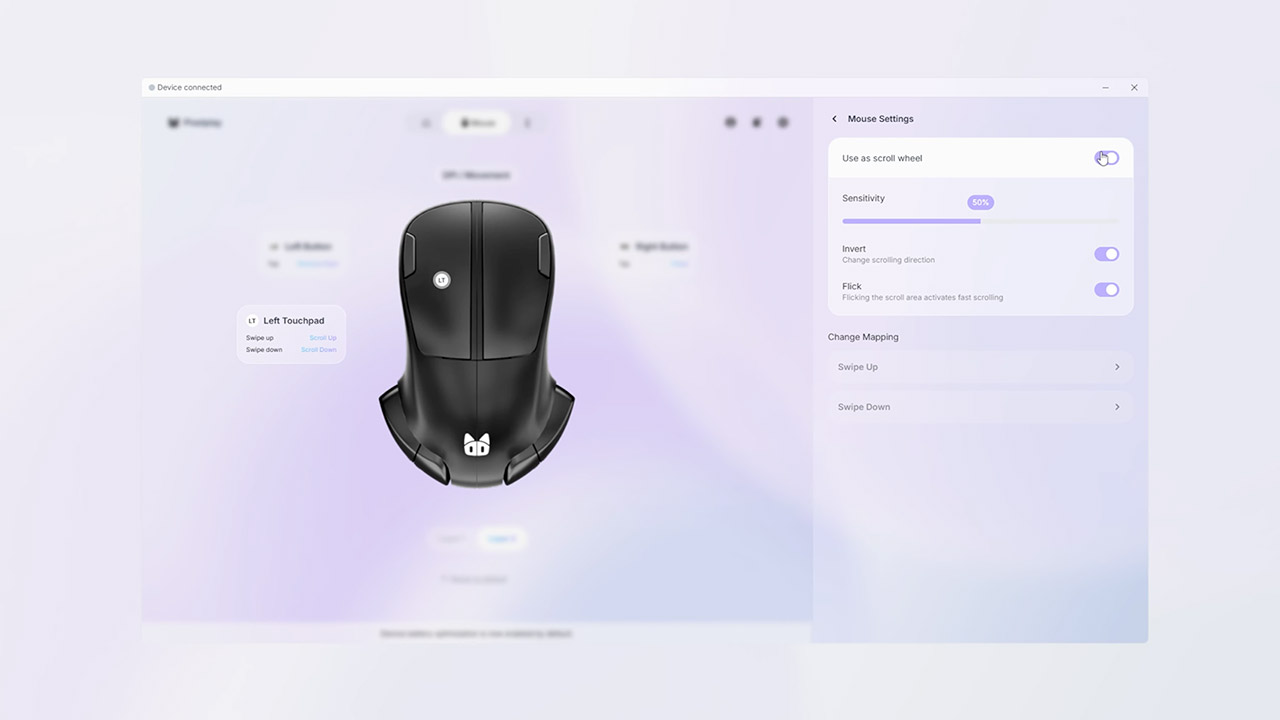
The gaming controls tuck away completely when the Phase is assembled, leaving you with something that looks and behaves like a standard desktop mouse with no hint of what’s hiding inside. The base provides plenty of stability and keeps the whole thing planted firmly on the mat. Tracking comes courtesy of a 16,000 DPI optical sensor on the right half, which should satisfy even the more demanding users. In place of a traditional scroll wheel there is a slim capacitive strip running along the left click button, letting you slide or tap through documents and web pages in a way that feels surprisingly intuitive. Two additional buttons sit at the outer corners of the primary clicks for extra functionality without making things feel busy, and the Omron switches behind the main clicks are crisp and satisfying with every press.

PixelPaw Labs Phase Mouse Controller Split Device
Split it apart and the full controller layout reveals itself, a directional pad and face buttons on one side with mirrored controls on the other. The thumbsticks feel smooth and precise thanks to Alps Alpine components, and the triggers use Hall Effect sensors which should keep them feeling just as good years down the line. Each half also has a dedicated Layer button that effectively doubles your available inputs by assigning a second function to every other control, and once you start mapping things out you might be surprised by just how much the Phase can handle.

Connectivity is equally well thought out whether you’re using it as a mouse or a controller. Bluetooth lets you pair the Phase with up to three devices at once, covering computers, phones, and tablets, and if you need the lowest possible lag there is a 2.4 gigahertz dongle option for PC. It plays nicely with just about every platform going, including Windows, macOS, Linux, Android, and iOS, with no extra adapters required. A USB-C port on the left half takes care of charging when the battery starts to run low, and with a claimed 72 hours of life on a single charge, that shouldn’t need to happen very often.

Advertisement

PixelPaw Labs Phase Mouse Controller Split Device
The free companion app PixelPlay is where things get really interesting. All eighteen buttons are fully remappable, the sensor speed is adjustable, multiple profiles can be saved, and firmware updates are handled right there in the app. Profiles switch over automatically when you connect to a new device or flip between mouse and controller mode, which means there is nothing to manually configure every time you move between setups. No extra hardware, no fuss, just slip it into your pocket or bag and you’re ready to go.

For travelers there is an optional add-on called Phasegrip that takes things a step further. The small clip attaches each half of the Phase to the edges of your smartphone, turning the whole setup into a self contained mobile gaming rig in one neat package. It extends out just like a familiar handheld controller, letting you jump straight into Steam titles or mobile games without juggling separate pieces. The bundle costs a little more, but everything stays compact enough to disappear into a backpack without a second thought.

PixelPaw Labs Phase Mouse Controller Split Device
Pixelpaw Labs has set the full retail price at $159, but getting in early makes a meaningful difference. Early backers can reserve a unit for $115 with a $20 deposit, locking in a 15% discount ahead of the Kickstarter launch. Production is set to kick off once the necessary hardware inspections, molds, and certifications are all squared away, with delivery expected sometime in late 2026 or early 2027.
[Source]

Source link

Advertisement
Continue Reading

Tech

Roborock Saros 20: When robot cleaning moves beyond power to real intelligence

Published

on

Robot vacuum cleaners have evolved rapidly over the past decade. Early models focused mainly on basic automation – moving around a home and cleaning floors with minimal input. But as homes become more complex, simply offering stronger suction or longer battery life is no longer enough. What homeowners increasingly want is a system that can understand its environment and make intelligent decisions about cleaning.

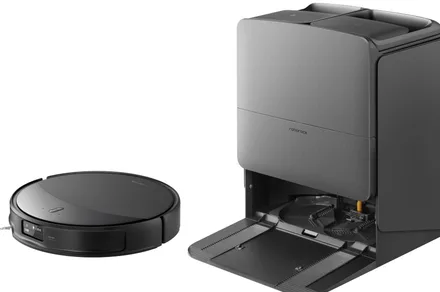
That shift toward smarter automation is exactly what Roborock is aiming to achieve with its latest flagship robot vacuum, the Roborock Saros 20. Designed for modern homes with mixed flooring, carpets, thresholds, and dense furniture layouts, the Saros 20 focuses less on raw hardware performance and more on real-world intelligence and navigation accuracy. The system allows the robot to adapt its cleaning behavior dynamically based on different environments and floor types.

From Powerful Robots to Intelligent Home Systems

Traditional robot vacuums often struggle in real homes. Carpets can confuse navigation systems, thresholds interrupt cleaning cycles, and cluttered rooms make mapping difficult. The Saros 20 approaches these challenges differently by combining advanced sensing technologies with adaptive hardware designed to interpret its surroundings before taking action.

Advertisement

Rather than simply executing a cleaning route, the robot continuously evaluates its environment and determines the most effective way to clean. That could mean adjusting its height for different surfaces, avoiding obstacles more precisely, or returning to areas that need additional attention.

This approach represents a shift in how robotic cleaning systems are evolving – from simple automation tools to intelligent home systems capable of strategic decision-making.

StarSight Autonomous System 2.0: Faster Mapping and Smarter Navigation

At the core of the Saros 20 is StarSight Autonomous System 2.0, Roborock’s latest navigation platform. Unlike many traditional robot vacuums that rely on laser-based LDS navigation, the Saros 20 uses a 3D Time-of-Flight (ToF) vision system with dual transmitters and solid-state sensing.

Advertisement

This system samples the environment at a much higher frequency than earlier laser-based technologies, allowing the robot to build home maps faster while maintaining high accuracy around thin furniture legs, suspended cabinets, and cluttered spaces.

The improved system also enhances positioning accuracy. According to Roborock, the Saros 20 AI obstacle recognition system can detect more than 300 types of objects and identify obstacles only a few centimetres in size. This enables the robot to avoid collisions more effectively while maintaining consistent coverage across the home.

The robot can also localize itself more precisely inside a room, allowing it to recover quickly if moved and maintain orientation even in low-light environments where traditional vision systems often struggle.

AdaptiLift Chassis 3.0: Built for Complex Homes

Advertisement

Modern homes often feature a mix of flooring surfaces, rugs, and raised thresholds that can challenge standard robot vacuums. To address this, Roborock has equipped the Saros 20 with AdaptiLift Chassis 3.0, an adaptive mobility system designed to handle difficult transitions.

The chassis can automatically raise itself to cross single-layer thresholds up to 4.5cm and double-layer thresholds up to 4.3cm, allowing the robot to move between rooms more smoothly.

Despite this capability, the Saros 20 maintains an ultra-slim 7.95cm body, enabling it to reach under beds, sofas, and low cabinets where dust often accumulates.

Smarter Edge Cleaning with VertiBeam

Advertisement

Another challenge for robot vacuums is cleaning close to walls and furniture edges. The Saros 20 introduces VertiBeam lateral obstacle avoidance, which uses vertical structured light to eliminate side blind spots.

This technology allows the robot to navigate closer to walls and irregular furniture edges while maintaining safe clearance from obstacles, improving edge cleaning performance without increasing collision risks.

While intelligence and navigation are the focus of the Saros 20, cleaning performance remains a priority. The robot is powered by Roborock’s 36,000Pa HyperForce digital motor, the strongest suction rating in the company’s lineup to date.

The system is paired with dual spinning mops with adjustable downward pressure, allowing the robot to scrub floors more effectively. A dual anti-tangle brush system also helps prevent hair buildup, making the Saros 20 particularly suitable for homes with pets.

Advertisement

Together, these features enable the robot to tackle both hard floors and carpets while maintaining consistent performance across different surfaces.

Built for the Complexity of Modern Homes

Roborock presents the Saros 20 as more than just another robot vacuum. By combining faster mapping, improved positioning accuracy, adaptive mobility, and intelligent obstacle recognition, the company is positioning the device as a next-generation autonomous cleaning system.

Instead of simply following preset routes, the Saros 20 is designed to interpret its surroundings and make smarter cleaning decisions in real time. For households with mixed flooring, complex layouts, and constantly changing environments, that level of intelligence could make robotic cleaning feel far more reliable and effortless.

Advertisement

With the Saros 20, Roborock appears to be pushing the idea that the future of home cleaning isn’t just about stronger motors or bigger batteries – it’s about robots that truly understand the homes they clean.

Source link

Advertisement
Continue Reading

Tech

Firefly is getting rebooted as an animated series

Published

on

Firefly aired for just one season in 2002 before Fox canceled it. In the 24 years since, the sci-fi show has skyrocketed in popularity and now fans are finally getting more. Nathan Fillion has announced that an animated Firefly series is currently in advanced development, Deadline first reported.

Fillion shared the news at AwesomeCon during a live taping of his podcast Once We Were Spacemen with his Firefly co-stars Gina Torres, Morena Baccarin, Summer Glau, Sean Maher, Jewel Staite and Alan Tudyk. Tudyk co-hosts the podcast, in which the duo look back at their careers and interview past coworkers. Each of the actors present at AwesomeCon are expected to voice the animated versions of their characters.

This isn’t one of those maybe one day it will happen announcements, with many steps already being taken. The animated reboot is under the direction of showrunners Tara Butters (Agent Carter, Reaper) and Marc Guggenheim (DC’s Legends of Tomorrow, Arrow) — original creator Joss Whedon is not involved, but has given his blessing. It has early concept art from ShadowMachine, an Oscar- and Emmy-winning animation studio. Fillion is producing the show through Collision33, his production company, and with 20th Television Animation. There’s even already a script in place.

According to Fillion, the one thing left is a home for the series. He and his co-stars took to Once We Were Spacemen‘s Instagram to provide more details and implore FireFly fans to show demand for the reboot.

Advertisement

Firefly took place in 2517, centuries after a universal civil war. It followed a group of people living aboard a transport ship, Serenity, flying through the galaxy. In 2005, the show got a sequel in the form of a movie, Serenity.

Source link

Continue Reading

Tech

The IPV4 We Didn’t Get

Published

on

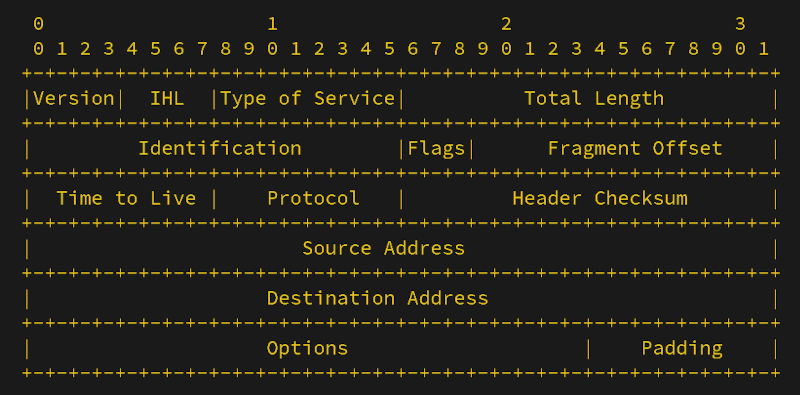
If you have ever read science fiction, you’ve probably seen “alternate history” stories. You know, where Europeans didn’t discover the New World until the 19th century, or the ancient Egyptians stumbled upon electricity. Maybe those things happened in an alternate universe. [BillPG] has an alternate history tale for us that imagines IPv6 was shot down and a protocol called IPv4x became prominent instead.

The key idea is that in 1993, the IP-Next-Generation working group could have decided that any solution that would break the existing network wouldn’t work. There is precedent. Stereo records play on mono players and vice versa. Color TV signals play on black and white sets just as well as black and white signals play on color TVs. It would have made perfect sense.

How could this be? The idea was to make everyone who “owns” an IPv4 address the stewards of a 96-bit sub-address block. IPv4x-aware equipment extracts the entire 128-bit address. IPv4-only equipment routes the packet to the controlling IPv4 address. Wasteful? Sure. Most people don’t need 79 octillion addresses. But if everyone has that many, then why not?

The fictional timeline has DNS and DHCP, along with dial-up stacks, changing to accommodate the new addresses. Again, you had to assume some parts of the network were still IPv4-only. DNS would return both addresses, and it was up to you to pick the IPv4x address if you understood it.

Advertisement

Your ISP would probably not offer you the entire extra space. A regional router could handle all traffic for your neighborhood and then direct it to your specific 128-bit address or your pool of addresses, if you have multiple devices. No need for NAT to hide your devices, nor strange router configurations to punch traffic through.

Of course, back in the real world, we have two incompatible systems: IPv4 and IPv6. IPv6 adoption has been slow and painful. We wondered why [BillPG] wrote about this future that never was. Turns out, he’s proposed a gateway that IPv6 hosts can provide to allow access from IPv4-only networks. Pretty sneaky, but we can admire it. If reading all this makes you wonder what happened to IPv5, we wondered that, too.

Source link

Advertisement
Continue Reading

Tech

Netflix’s ‘Frankenstein’ wins three Oscars, ‘KPop Demon Hunters’ wins two

Published

on

Two Netflix films, “Frankenstein” and “KPop Demon Hunters,” won multiple Academy Awards tonight.

Director Guillermo del Toro’s reimagining of “Frankenstein” won for Best Production Design, Best Costume Design, and Best Makeup and Hairstyling, while Netflix’s most-watched movie ever “KPop Demon Hunters” won for Best Animated Feature and Best Original Song.

In recent years, films produced and distributed by streaming companies have become a steady presence at the Oscars, with “Roma,” “The Power of the Dog,” and “All Quiet on the Western Front” winning major awards. However, the biggest prize seems to remain out of reach for Netflix — Apple’s “CODA,” released near the height of the pandemic, remains the only streaming film to win Best Picture.

Host Conan O’Brien even noted the presence of Netflix co-CEO Ted Sarandos at the beginning of the ceremony, joking, “This is exciting: It’s his first time in a theater!”

Advertisement

“Frankenstein” was nominated for nine Oscars, including Best Picture and Best Supporting Actor. Netflix’s “Train Dreams” and Apple’s “F1” (which won for Best Sound) were also nominated Best Picture, but that award went to “One Battle After Another.”

Source link

Continue Reading

Tech

Hacker unveils exploit that cracks the "unbreakable" Xbox One at the silicon level

Published

on


The demonstration marks the first public, reproducible breach of the Xbox One’s hardware-level defenses, a milestone in console hacking that recalls the famous Reset Glitch Hack that compromised the Xbox 360 years earlier. But Gaasedelen’s technique goes deeper, operating below the software stack, against the boot ROM on the Xbox…
Read Entire Article
Source link

Continue Reading

Tech

Your HEMI Engine May Have 16 Spark Plugs (And For Good Reason)

Published

on


The HEMI nameplate has been practically synonymous with raw Chrysler horsepower since the 1960s, though the engine configuration itself dates back much farther. Named for its hemispherical combustion chamber, these engines feature inherently unique geometries: Valvetrains, pistons, and other components are all different to other layouts by design — combustion chambers are optimized for different purposes based on what’s expected of the engine. 

In the HEMI’s case, a hemispherical combustion chamber generates higher chamber pressures versus a a more typical pentroof chamber, meaning it burns all the fuel faster and hotter, pushing the piston down sooner. This gives more mechanical leverage on the crankshaft, thus producing more power for a given amount of fuel, at least in principle.

Advertisement

It’s this unique configuration which leads to some interesting design choices with the HEMI’s cylinder head. Unlike a typical pentroof-shaped design, a HEMI uses a dome-shaped chamber with a rounded piston head, functionally increasing the surface area that the explosion pushes on and improving the engine’s volumetric efficiency. However, this increased surface area leads to a number of downsides, the notable ones here being heat and airflow. The more surface area there is, the faster heat dissipates. The airflow tends to get squashed in the sides of a traditional HEMI, which leads to poor efficiency. Moreover, the valves are huge; you simply cannot put a spark plug directly in the middle.

To solve this problem, modern HEMI designs incorporate two spark plugs on opposite ends of the combustion chamber. This ensures a more complete, even, and efficient burn across the entire chamber, as opposed to one centralized explosion which isn’t possible with the head design or airflow pattern. Let’s dive in and discuss how this works.

Advertisement

Airflow and spark in modern HEMI engines

Right off the bat, why do modern HEMI engines have two spark plugs at all when you only need one, aside from the valvetrain? Simple: Modern HEMI engines aren’t actually hemi engines in the traditional sense, and that’s a good thing. As stated before, a true hemi head, while excellent for hotter loads (think high-performance applications), isn’t ideal for passing modern EPA standards. 

All those unburnt hydrocarbon emissions sitting so far away from the explosion, tucked away along the sides of the combustion chamber, eventually go out the exhaust and create too much pollutants. The solution Chrysler implemented was to modify the hemispherical chamber design into what’s best described as an oblong spheroid.

If you look at a HEMI piston head, you’ll notice grooves cut into the top. These are called quench pads, designed to swirl airflow in a certain predictable pattern. This allows the combustion process to occur more efficiently and cleanly, flowing like a river throughout the cylinder.

Advertisement

Basically, you want the airflow to reach every part of the combustion chamber for the most efficient burn. It’s like a miniature wind tunnel — if you have a pocket that’s out of the way, it won’t get enough air, whereas other areas get too much airflow. The modern HEMI’s head is designed in such a way to minimize these areas, creating its own unique airflow pattern within the combustion chamber. In order to provide a complete and efficient burn, Chrysler implemented a dual spark plug orientation, with 16 spark plugs across eight cylinders.

Advertisement

The valvetrain simply won’t allow it

One of the benefits of a hemi head is being able to fit larger valves; in the case of modern Gen III HEMIs, these valves are so large that there’s no physical space between them to fit a single spark plug. This means using two spark plugs on either side of the valves, which then necessitates different airflow for a complete burn with two spark plugs, and so on. In other words, this all revolves around the head design and the combustion event’s inconsistency within the domed shape.

Is the second spark plug even necessary, though? In the old days, hemispherical chambered engines have implemented various fixes for the inconsistent combustion event dilemma. Because the more domed you make the chamber, the more disrupted and awkward the combustion process becomes, engineers have attempted fitting different shaped pistons, specialized slots, different chamber and head coatings, and more. Conversely, a modern HEMI’s design differs from the original template in substantial ways, thanks to its more advanced piston configuration. Its coil-on-plug ignition system, coupled with the dual spark plug configuration, leads to a more consistent, reliable, and even burn.

Against the classic (single-plug) HEMI configuration, modern designs offer a far cleaner solution while still making good power. Granted, it might not have the same character as older HEMI designs, but let’s be real: you simply cannot produce such an inefficiently-burning design today and get away with it; the engine would simply produce too many hydrocarbon emissions. In that sense, yes, it’s absolutely worth the trade-off of buying the extra eight spark plugs when you go to change them on your 5.7-liter HEMI.

Advertisement


Source link

Advertisement
Continue Reading

Tech

How To Get Verified on Instagram in 2026: A Complete Step-by-Step Guide

Published

on

Instagram verification has become an important feature for creators, influencers, and businesses looking to build trust online. The well-known blue badge confirms that an account truly belongs to the person or brand it represents. Today, Instagram provides two main ways to obtain verification: through a Meta Verified subscription or by qualifying as a notable public figure. Each method comes with its own requirements, approval process, and costs depending on the region.

What Does the Instagram Verified Badge Mean?

A verified profile with a blue badge on Instagram indicates that the profile is genuine and associated with the actual person or brand it claims to represent. The blue badge helps people distinguish between genuine and fake accounts. One should be aware that a verified badge on an Instagram account does not reflect the account’s popularity. There are two ways to get verified on Instagram in 2026. One way is by subscribing to the Meta Verified program, which is paid. The second way is to apply as a public figure or brand that meets Instagram’s requirements for the verified program.

1. Get Verified with Meta Verified

The easiest way to get the Instagram blue checkmark is by subscribing to the Meta Verified program. Meta Verified is a paid monthly subscription that allows users to get verified and earn the verified badge on their accounts. Here’s how to subscribe to the program.

  1. Open Instagram. Go to your profile.
  2. Tap the menu icon (three horizontal bars) at the top right of your screen.
  3. Select Meta Verified from the menu.
    image to Get Verified with Meta Verified on Instagram
  4. Add your government ID to verify your identity.
  5. Turn on two-factor authentication for extra security.
  6. Complete the payment for the subscription.
    Pay to get Verified
  7. Submit your application. If your account is okay, Instagram verifies it within 48 hours.

Prices vary depending on your location and device. In India, it will cost you around ₹699 to ₹899 per month. In the United States, it costs $14.99/month when you use a web browser. iOS and Android users will be charged $19.99/month.

2. Apply for Instagram Verification

Users of Instagram can apply for the verified badge through the Instagram app itself. If your account meets Instagram’s eligibility criteria, you can request a verified badge by following these steps. However, Instagram does not consider paid or sponsored articles when reviewing media coverage.

Advertisement
  1. Go to your Instagram profile.
  2. Tap the Menu (three lines) at the top.
  3. Choose Account Type and Tools.
    Account Type and Tools
  4. Select Request Verification.
    image from Select Request Verification.
  5. Fill in your name and account details.
    image to Fill in your name and account details.
  6. Upload a valid ID or official business document.
  7. Submit the application. The review process may take up to 30 days.

Tips to Increase Your Chances of Getting Verified

To increase your chances of being verified on Instagram, try to develop a strong online presence. Your goal is to be featured by popular media sources. This will allow Instagram to easily locate your public profile. Meanwhile, on your Instagram profile, try to keep it clean. Ensure your bio is clear, your profile picture is decent, and you’re posting regularly.

Source link

Continue Reading

Tech

Focal/Naim buyout shows how big the custom install market is becoming

Published

on

In slightly unexpected news this week, Barco, a Belgian company that specialises in AV projection has just snapped up the Focal / Naim brands for €135 million.

While Focal / Naim is a premium, even luxury brand, I think this deal is different from the spate of acquisitions seen over the last few years, where Bose bought the McIntosh Group, and Harman ate up Sound United.

Those were MA deals where brands were looking to move into more luxury areas of the market, as well as grab a foothold in the growing in-car audio market, too. I suspect that this deal from Barco is more about the custom install space.

Similar to the in-car audio market, this is an area that seems to be growing and growing, though not getting much attention in the mainstream market. But give Naim’s expertise with two-channel amplification, while Focal has pushed towards more immersive sound systems; Barco’s own knowledge in the projection market would make an obvious lining up of all these skills.

Advertisement

Your own private cinema

I can’t really speak to what’s driven interest in the custom install market but there’s increasingly more attention being paid to that area by brands.

Advertisement

Sonos has been a player in that space for years, releasing its Amp Multi as a solution to driving multiple speakers in a custom home audio set-up. Q Acoustics has been making forays into that area with its in-wall systems and speakers, as has Linn Audio and L Acoustics, which if you ever go to a music festival in 2026, you’re likely to hear sound through one of their speakers.

And let’s not forget the likes of Loewe, Sharp, JBL, DALI, all of whom were present at ISE 2026 with their professional AV solutions. I went to an event by a prominent British audio brand (which I’m not allowed to talk about yet) that had a prominent emphasis on custom-install and private cinema-based solutions. There’s even a whole awards show (CEDIA) that’s dedicated to this area of the market.

Advertisement
L-Acoustics HYRISS hidden speakerL-Acoustics HYRISS hidden speaker

So it is growing, and given these systems can start in the range of a few hundred Pounds for a speaker, to tens of thousands for kitting out a private cinema, this is an area where there’s a lot of money to be made.

The pandemic has likely contributed to this growth, with people hunkering down in their homes rather than venturing out to the cinema, with video delivery systems such as Kaleidescape that can funnel films to your home network that are arguably even better in terms of quality than 4K Blu-ray.

So Barco’s purchase of Focal / Naim would seem, from what I can see, to be firmly entering an area where they can now offer the visual solution (with its projectors) and the audio solution (with in-wall/ceiling speakers), it seems like a match made on the silver screen. It’s a surprise that no one else made a bid for these brands.

Advertisement

What does it mean for Focal / Naim?

There’s no smoke without fire, and while we’ve seen this deal from Barco’s POV, it’s possible that Focal / Naim were inviting bidders on their part.

Advertisement

But I don’t think Focal / Naim will stop being Focal / Naim. They’re a luxury brand(s) that have done impressive work in the last few years with their streaming products, wireless speakers and large-sized active speakers – so I don’t see much changing on that front.

Focal already covers indoor and outdoor audio solutions – it even has audio solutions for boats, another area I could see Barco pushing into – and Focal has been developing in-car solutions for the likes BWM, Toyota, Tesla, Mercedes, Volkswagen, Ford and others.

Focal Hadenys on carry caseFocal Hadenys on carry case
Image Credit (Trusted Reviews)

I see the Barco deal enhancing what Focal / Naim already does and not mucking about with its DNA. And I imagine they’ll be a renewed focus on the professional side but considering it exists, and has existed, along with the commercial side for decades, I don’t imagine any disruption to headphones, wireless speakers etc

Advertisement

I could be wrong, but Barco seems to have bought Focal / Naim for what they represent now, rather than purchasing them as a means to turn them into something other than what they are. I sense a “if it ain’t broke, don’t fix it” attitude to this acquisition, which could be a good thing for the future of Focal / Naim.

Advertisement

Source link

Continue Reading

Tech

Fixing AI failure: Three changes enterprises should make now

Published

on

Recent reports about AI project failure rates have raised uncomfortable questions for organizations investing heavily in AI. Much of the discussion has focused on technical factors like model accuracy and data quality, but after watching dozens of AI initiatives launch, I’ve noticed that the biggest opportunities for improvement are often cultural, not technical.

Internal projects that struggle tend to share common issues. For example, engineering teams build models that product managers don’t know how to use. Data scientists build prototypes that operations teams struggle to maintain. And AI applications sit unused because the people they were built for weren’t involved in deciding what “useful” really meant.

In contrast, organizations that achieve meaningful value with AI have figured out how to create the right kind of collaboration across departments, and established shared accountability for outcomes. The technology matters, but the organizational readiness matters just as much.

Here are three practices I’ve observed that address the cultural and organizational barriers that can impede AI success.

Advertisement

Expand AI literacy beyond engineering

When only engineers understand how an AI system works and what it’s capable of, collaboration breaks down. Product managers can’t evaluate trade-offs they don’t understand. Designers can’t create interfaces for capabilities they can’t articulate. Analysts can’t validate outputs they can’t interpret.

The solution isn’t making everyone a data scientist. It’s helping each role understand how AI applies to their specific work. Product managers need to grasp what kinds of generated content, predictions or recommendations are realistic given available data. Designers need to understand what the AI can actually do so they can design features users will find useful. Analysts need to know which AI outputs require human validation versus which can be trusted.

When teams share this working vocabulary, AI stops being something that happens in the engineering department and becomes a tool the entire organization can use effectively.

Establish clear rules for AI autonomy

The second challenge involves knowing where AI can act on its own versus where human approval is required. Many organizations default to extremes, either bottlenecking every AI decision through human review, or letting AI systems operate without guardrails.

Advertisement

What’s needed is a clear framework that defines where and how AI can act autonomously. This means establishing rules upfront: Can AI approve routine configuration changes? Can it recommend schema updates but not implement them? Can it deploy code to staging environments but not production?

These rules should include three elements: auditability (can you trace how the AI reached its decision?), reproducibility (can you recreate the decision path?), and observability (can teams monitor AI behavior as it happens?). Without this framework, you either slow down to the point where AI provides no advantage, or you create systems making decisions nobody can explain or control.

Create cross-functional playbooks

The third step is codifying how different teams actually work with AI systems. When every department develops its own approach, you get inconsistent results and redundant effort.

Cross-functional playbooks work best when teams develop them together rather than having them imposed from above. These playbooks answer concrete questions like: How do we test AI recommendations before putting them into production? What’s our fallback procedure when an automated deployment fails – does it hand off to human operators or try a different approach first? Who needs to be involved when we override an AI decision? How do we incorporate feedback to improve the system?

Advertisement

The goal isn’t to add bureaucracy. It’s ensuring everyone understands how AI fits into their existing work, and what to do when results don’t match expectations.

Moving forward

Technical excellence in AI remains important, but enterprises that over-index on model performance while ignoring organizational factors are setting themselves up for avoidable challenges. The successful AI deployments I’ve seen treat cultural transformation and workflows just as seriously as technical implementation.

The question isn’t whether your AI technology is sophisticated enough. It’s whether your organization is ready to work with it.

Adi Polak is director for advocacy and developer experience engineering at Confluent.

Advertisement

Welcome to the VentureBeat community!

Our guest posting program is where technical experts share insights and provide neutral, non-vested deep dives on AI, data infrastructure, cybersecurity and other cutting-edge technologies shaping the future of enterprise.

Read more from our guest post program — and check out our guidelines if you’re interested in contributing an article of your own!

Source link

Advertisement
Continue Reading

Trending

Copyright © 2025