
Politics
A Full Timeline Of Women’s First Oscars Wins By Category


Sinners cinematographer Autumn Durald Arkapaw made Oscars history last night. She’s the first woman to win an Academy Award for Best Cinematography, and on receiving the accolade, she invited women in the audience to stand with her.
Of course, plenty of other women have won in non-gendered Oscars categories (ie, not “best actress,” which, of course, women have always won).
Cassandra Kulukundis, for instance, just won the new Best Casting Oscar category for One Battle After Another; Kate Hawley snagged the Costume Design win for Frankenstein, too.
But given that the Oscars have been running for almost a hundred years, a woman winning in this specific category may seem a little, well, late.
In fact, the first woman to even be nominated for best cinematography – Rachel Morrison, whom Arkapaw shouted out in her speech – reached the coveted status in 2018.
The American Society of Cinematographers didn’t accept its first woman member until 1979, 60 years after it was founded.
Women made up 7% of cinematographers working in the top 100 films in 2025, compared to 28% of producers, 20% of writers, and 10% of directors. In the same year, 75% of the top-grossing 250 films employed 10 or more men in “pivotal behind-the-scenes roles”, while only 7% did the same for women.
With that in mind, it might not be so shocking to learn that many other non-gendered categories were later to award women than you might realise.
The first year a woman won an Oscar in every non-gendered category
In order of oldest to most recent, here are the first years in which a woman won a non-gendered Oscars category:
-
Best Original Screenplay (1930) – Frances Marion – The Big House
-
Best Adapted Screenplay (1933) – Sarah Y Mason – Little Women
-
Best Original Song (1936) – Dorothy Fields – The Way You Look Tonight’s ‘Swing Time’
-
Best Film Editing (1940) – Anne Bauchens – North West Mounted Police
-
Best Costume Design (1948) – Dorothy Jeakins Karinska – Joan of Arc
-
Best Production Design (1948) – Carmen Dillon – Hamlet
-
Best Documentary Feature (1955) – Nancy Hamilton – Helen Keller in Her Story
-
Best Short Film (Animated) (1962) – Faith Hubley – The Hole
-
Best Short Film (Live Action) (1969) – Joan Keller Stern – The Magic Machines
-
Best Documentary Short Subject (1972) – Martina Huguenot van der Linden – This Tiny World
-
Best Picture (1973) – Julia Philips – The Sting
-
Best Makeup and Hairstyling (1982) – Sarah Monzani and Michèle Burke – Quest for Fire
-
Best Original Score (1983) – Marilyn Bergman – Yentl
-
Best Sound Editing (1984) – Kay Rose – The River
-
Best Visual Effects (1986) – Suzanne M. Benson – Aliens
-
Best International Feature Film (1995) – Marleen Gorris – Antonia’s Line
-
Best Director (2008) – Kathryn Bigelow – The Hurt Locker
-
Best Sound (2010) – Lora Hirschberg – Inception
-
Best Animated Feature (2012) – Brenda Chapman – Brave
-
Best Cinematography (2026) – Autumn Durald Arkapaw – Sinners.

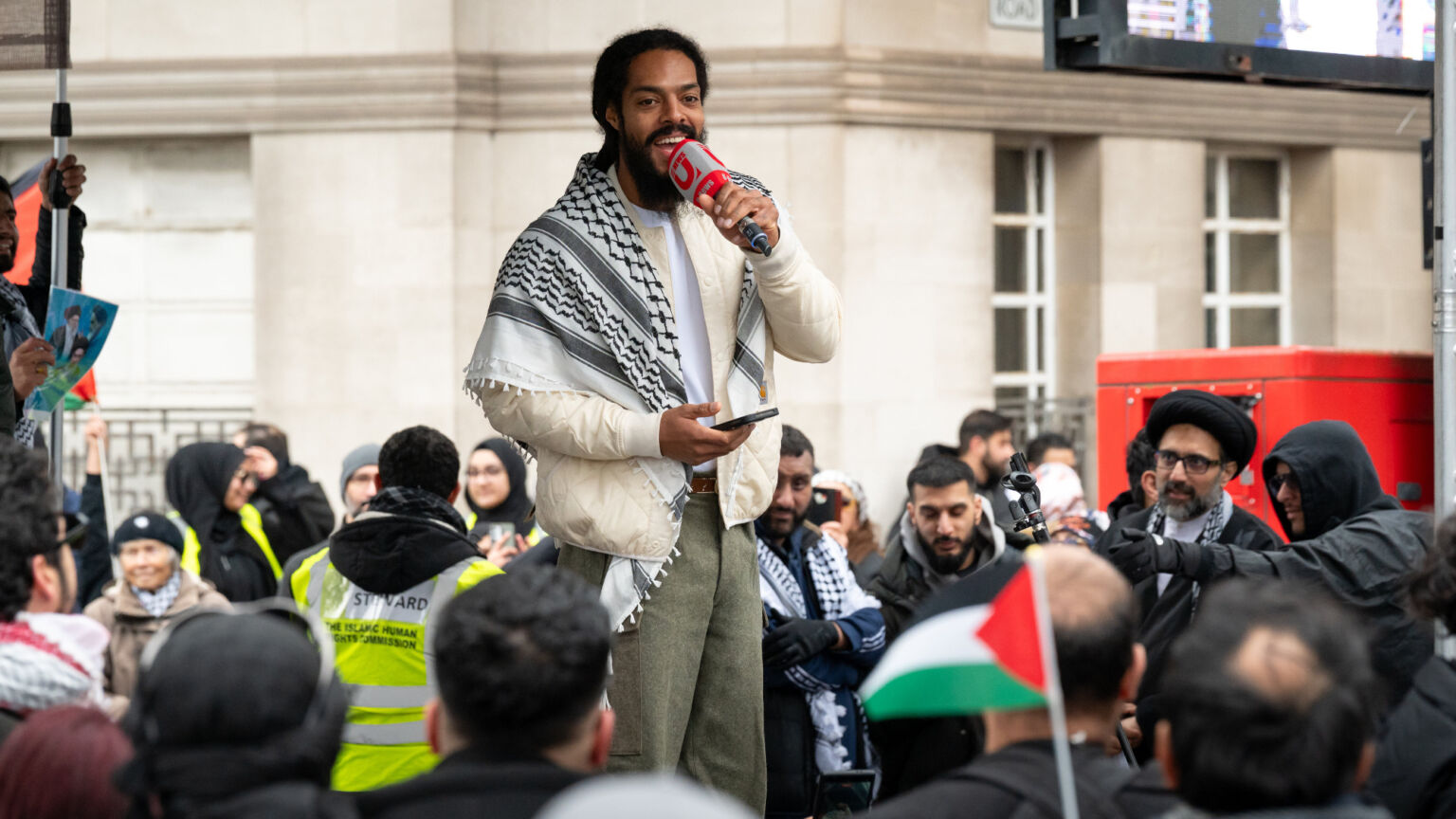
We’ve all been there. You rock up to speak at a demonstration, intending to lend your voice to the oppressed and the downtrodden, only to realise you are surrounded by Islamists celebrating an anti-Semitic tyrant, who oppressed and butchered his own people. Welcome to the world of Bob Vylan, the punk-rapping affront to our eardrums and basic moral decency.
Bob Vylan frontman Bobby Vylan – real name Pascal Robinson-Foster – was one of the star speakers at the Al-Quds Day demonstration in London on Sunday. Because of course he was. What ‘progressive’ pin-up wouldn’t want to be seen at this despicable annual shindig with a well-earned reputation for descending into a carnival of Islamist apologism and open Jew hatred?
You’d think anyone with a truly anti-racist bone in their body would give Al-Quds Day a swerve. It all began in 1979, when the Islamic Republic of Iran’s freshly installed Supreme Leader, Ayatollah Khomeini, declared the final Friday of Ramadan to be a day for Muslims worldwide to stand in ‘solidarity’ with the Palestinians. Unsurprisingly, the keenest supporters of the late Khomeini and the anti-Semitic terror state he founded have been taking it as an opportunity to air blood libels and support for Islamist terror groups ever since.
Don’t believe me? Sunday’s festivities in London were downgraded to a static protest after the Metropolitan Police requested the traditional full march be banned. This came after a memo circulated in the Home Office, warning that Al-Quds Day is a magnet for ‘racial hatred’, ‘anti-Semitic rhetoric’ and ‘open displays of support for proscribed groups’. Jeremy Corbyn, the world’s unluckiest anti-racist, was once snapped speaking from the platform in front of the flag of Hezbollah – the Jew-killing jihadi army set up in Lebanon by the Islamic Republic in the 1980s and banned under British law.
Despite its diminished presence this year, the Al-Quds attendees made up for in vim what they lacked in plain old numbers. One was arrested for showing support for a proscribed group, another for dangerous driving, a third for threatening and abusive behaviour. spiked’s Brendan O’Neill was surrounded by a mob and had to be escorted away by police for his own safety, after he questioned a woman about her anti-Semitic placard.
Any pretence that this was all about the benighted people of Palestine was dropped this year, replaced by tear-drenched mourning for the recently despatched Ayatollah Khamenei, Khomeini’s successor as Supreme Leader, who was assassinated in the opening salvos of the US and Israel’s war with the Islamic Republic. One speaker – reportedly from the Islamic Human Rights Commission, a troll of a name given this organisation’s well-documented links to the brutal, rights-crushing mullahs – called Khamenei a ‘great martyr’. This is the same Khamenei who is believed to have killed as many as 30,000 of his own people this year because they dared to demand their freedom, and who threw money and resources at every anti-Semitic militia going.
Among all this was that prick Bobby, addressing the crowd in front of a banner depicting Khamenei and claiming this murderous theocrat was on ‘the right side of history’. Bobby finished his speech with a reprisal of his favourite chant, ‘Death, death to the IDF’. It was this blood-curdling cry to kill the soldiers of the Jewish State – the army almost all Israelis are required to serve in, charged with protecting Jews from the genocidal, Tehran-backed forces on Israel’s borders – that first sealed Bob Vylan’s infamy when they debuted it to thousands during their Glastonbury set last summer. (Avon and Somerset Police eventually concluded the chant didn’t meet the criminal threshold. The Met are currently investigating Robinson-Foster once again.)
Bobby luxuriated in the Glasto backlash. He didn’t so much refute claims the chant was anti-Semitic as casually brush them off. He even told a credulous Louis Theroux on a podcast that the only reason he chose the word ‘death’ is because it rhymed with ‘IDF’. He was only speaking up for the innocents of Gaza, of course. Is anyone seriously still buying this? Here’s an idea: if you don’t want to be accused of being anti-Semitic and calling for the murder of Jews, maybe don’t address a demonstration glorifying an anti-Semite who commissioned the murder of Jews. It’s not hard.
The Bob Vylan debacle has shown the Israelophobes are truly beyond shaming. Or saving. They clearly get off on the notoriety, on the shudders they send through our already embattled Jewish communities, on the frisson of the Islamist company they now keep. It’s been tempting to call the ‘progressive’ wing of the ‘pro-Palestine’ movement useful idiots, marching in lockstep with 7th-century nostalgists who would happily hang them from a lamppost. But they clearly know exactly what they’re doing. They just don’t care. They are lost to this bigotry, to this cocky nihilism, to this barbarian chic.
I don’t want them censored, or locked up. It only fuels their grift. But I do want everyone to stop pretending that this is anything other than old poison in a new bottle.
Tom Slater is editor of spiked. Follow him on X: @Tom_Slater_.

If you’re a runner, it can feel tempting to go above your limits to improve your pace, duration, VO2 max, and other metrics.
But lots of research suggests that going easy is beneficial. Elite athletes only spend about 20% of their time intensively training, for instance – they’re mostly “zone 2” running.
You might think the exception to that is the speedy part of interval training, which sees runners switch between jogs and sprints.
But even in those, researchers think we should only be giving it a seven out of 10 effort.
Why might “7/10 effort” help runners?
Researchers wanted to see how running at different intensities affected people’s VO2 max, or their ability to use oxygen efficiently, and their heart rates.
They asked participants to run three times. Each run was three minutes each, with two minutes’ rest in between.
Runners were asked to run at three different levels of perceived intensity: 6/10, 7/10, and 8/10 effort. That was measured by how hard the participants felt they were pushing themselves in their run (they were told to keep the level of difficulty the same throughout).
The longer you spend close to your maximum VO2 and heart rate during exercise, the more your aerobic capacity will increase.
The scientists noticed that people who ran with 6/10 effort in interval training spent less time at 90% of their VO2 max and heart rate levels.
But for those giving it a 7/10 or 8/10, the results were about the same; they spent roughly as long in the 0% or higher zone. And training at 7/10 provided less “ventilatory stress,” or difficulty breathing, than doing so at 8/10.
In other words, 6/10 seemed not to benefit interval runners as much as running at a 7/10 or 8/10. Both of those had the same potential to improve participants’ fitness, but the harder workout was more stressful with no added benefits.
Does the 7/10 rule always help runners?
Probably not. Different runs, and even walks, have their own benefits for runners; this test was only done on interval runs, which involve shorter sprints.
The runners only spent nine minutes in total at this higher level of effort, too. Training your aerobic capacity is helpful for more efficient running, but running slowly and long can train your endurance.
But for short bursts of interval training, the study suggests that forcing yourself too far beyond your limit might not necessarily be better. And as anyone who’s struggled with exhausting sprints will know, any mercy is welcome.

Israel’s assault on Lebanon saw the settler-colonial state hit 30 locations across the country’s south and in the Beqaa valley. Israel said on 16 March ‘limited’ ground operations were underway.
In theory, Hezbollah breached a US-brokered ‘ceasefire’ with Israel which had held since their last war in 2024. In practice, the US had given Israel carte blanche to strike Lebanon ever since. Israel has done so constantly since the deal was struck.
You can read about the secretive Israel-US ‘side letter’ pact here. And our extensive coverage of Israel’s ceasefire breaches here.
Lebanon hammered
Journalist Courtney Bonneau reported on 15 March:
🔴Summary of Israeli attacks on Lebanese territory on 15/3/2026:
🟠Airstrikes:
🔅South:
Zebdine
Hanin
Yatir
Toul
Haniyah
Mifdoun
Qalila
Taybeh
Wadi al-Hujair
Majdal Selm
Touline
Nabatieh al-Fouqa
Khiam
Sinai
Ali al-Taher
Naqoura
Jabour
Aitat
Sharqiyah
Adchit Nabatieh
Kfar… https://t.co/3z9cxWuq55— courtneybonneauimages (@cbonneauimages) March 16, 2026
Drop Site News said Israel used a mix of airstrikes, drones, and artillery. On 16 March, Bonneau and her cameraman showed fighting between the Israeli and resistance forces underway – alleging Israel was using chemical weapons:
Americans, your tax dollars are paying for illegal chemical warfare.
Cameraman: @aliezzedine7 pic.twitter.com/E25Pb6VT7C
— courtneybonneauimages (@cbonneauimages) March 16, 2026
Smoke was visible over the town of Khaim, roughly 6km north the the Israeli border.
Intense fighting now in Khiam, Lebanon pic.twitter.com/dHqlBQP7vy
— courtneybonneauimages (@cbonneauimages) March 16, 2026
Analysts told Al Jazeera on 16 March that Israel was using military occupation as a tool to enforce potential ceasefire terms:
By holding Lebanese territory, Israel is forcing Lebanon to negotiate over its sovereignty, with a question mark over whether Israeli troops will eventually withdraw or if currently occupied areas will be permanently transformed into an unpopulated buffer zone.
The Guardian’s Will Cristou reported Israel had killed three first responders on 16 March, bringing the total to 35 in the last two weeks:
An Israeli strike killed 3 first responders in Kafr Seer, south Lebanon this morning.
At least 35 medical workers have been killed by Israel in Lebanon in under two weeks. pic.twitter.com/YVO6bRiW37
— Will Christou (@will_christou) March 16, 2026
Death and defiance in the south
Sky News reported that mourners in the south have defied Israeli evacuation orders to bury their dead. And France 24 reported that Israel was still hitting densely populated areas of the capital Beirut with airstrikes:
On 12 March Israel bombed the tents of displaced people who’d fled rom the south to Beirut. One observer described the scenes as:
An outrageous war crime reminiscent of the massacres carried out in Gaza.
Israel also bombed a university, killing two academics:
BREAKING:
Israel just bombed the Lebanese National Public University in Beirut.
They murdered the Director of the Faculty of Science, Dr. Hussein Bazzi, and Dr. Murtada Srour.
They are not just killing people — they are erasing knowledge and attacking the future of Lebanon. pic.twitter.com/OoSSow5zJ3
— sarah (@sahouraxo) March 12, 2026
Reuters reported on 15 March:
Israel and Lebanon are expected to hold talks in the coming days aimed at securing a durable ceasefire that would see Hezbollah disarmed, two Israeli officials said on Sunday, though the timing and terms have yet to be agreed.
The outlet said three sources had claimed:
Beirut is forming a delegation for talks but no date has been set. Lebanon needed clarity on whether Israel would abide by President Joseph Aoun’s first point — a demand for a full ceasefire to allow negotiations to take place.
Israel’s aggression is taking place in the context of its ongoing genocide in Gaza and now a regional war with Iran. Its ambitions in Lebanon are deeply linked with the Greater Israel project, an ethnonationalist fever-dream which subjects the region and its indigenous people to a decades-old cycle of war, occupation and extermination.
Featured image via the Canary
The Department for Work and Pensions (DWP) has announced that employers will receive £3,000 for every 18-24-year-old they employ. They will also give small and medium businesses £2,000 for every apprentice they take on.
But, as usual, the approach they’re taking is totally wrong.
DWP pushing kids into shit jobs
Pat McFadden, the Secretary of State for the DWP, has announced the Youth Jobs Grant. This will work alongside the Youth Guarantee. As the Canary has reported, this will push young people into low paid and low skilled work, regardless of whether they’re well enough to work.
These measures will give life-changing opportunities to young people and significantly reverse the increase we inherited in those not in education, employment or training.
We are focusing funding where it’s needed most and giving employers the flexibility and support they’ve asked for.
The press release, bizarrely, includes a staggering thirty-two quotes ranging everyone from the prime minister to the CEO of B&M.
This gives us a flavour of the sort of employers who will be involved in the scheme. It includes Lloyds Banking Group, Severn Trent, B&M and Amazon. As the Canary previously reported, McFadden’s first Youth Guarantee jobs fair was packed to the teeth with military and weapons companies.
The grant is being touted as incredible reforms, but nobody is looking at the big picture. Yes, it’s great that more jobs are being created for young people, but why do big conglomerates like Amazon need a financial incentive to employ someone? While no doubt some of them will be good jobs, it’s looking more like it will just trap working-class kids in crap jobs with no way out.
Apprenticeships instead of fully paid work
The DWP has also announced £2.5 billion in funding for training and apprenticeships. But then you have to look at what the apprenticeships are. As part of the scheme, the DWP will introduce short apprentice units in:
- AI Leadership – developing AI strategy
- Electric vehicle charging point installation and maintenance
- Electrical fitting and assembly
- Mechanical fitting and assembly
- Permanent modular building assembly
- Solar PV installation and maintenance welding
While some of these are useful and practical, a lot seem like babysitting the robots, don’t they?
The department is also ‘streamlining’ many ‘apprenticeship standards’. But again, looking at the list, these are low-skilled jobs for which people will be paid even less than usual. The jobs involve ‘cleaning hygiene operative’, which lets be honest, is a cleaning job. And “custody and detention professional’, which is a prison officer.
What support for work?
While this grand announcement was made, there were, of course, no specifics published. So we don’t know who will be able to apply for the grants and how many they will be able to claim. It goes without saying that this will be wide open to abuse from greedy companies. It’s ironic that the DWP are going to seemingly allow this after accusing employers of abusing the Access to Work scheme just last week.
With each announcement, it becomes clearer just how little the DWP actually cares about supporting young people into work. It’s time the DWP stopped pretending and instead owned up to the fact that they only care about how much money they can exploit from people.
Featured image via the Canary

Academic and author Professor Keon West is a social scientist and expert in the psychology of racism – and, he appeared on Green party leader Zack Polanski’s Bold Politics podcast to discuss the UK’s burgeoning racism problem.
Professor West was asked why the phrase “unconscious bias” has become so common.
West’s answer will challenge many. West told Polanski that the phrase is a way of spreading and universalising guilt and responsibility as a way of avoiding taking responsibility ourselves for our own attitudes. And he said that it is helping racists excuse their racism while simultaneously spouting and touting it:
It’s incredibly comfortable. In the UK it’s so hard to have a conversation about racism or sexism.
You won’t hear people say: I did that and that was a racist thing to do. You can go on TV and say you hate seeing a bunch of black and brown faces – like Reform UK’s Sarah Pochin – and say you cannot be racist, it must be a misunderstanding.
Similarly men will say all sorts of things but not say that was sexist.
Instead, West explained how added buffers make those making racist or sexist statements feel better:
I think that it is considered so impolite and so hurtful, to own up to that bias, that we sneak in a word in front of that, ‘unconscious’, and suddenly we don’t have to feel quite so bad. And everybody has it.That focus that makes us calmer about the bias, that’s really for the benefit of the people being biased. It’s not at all for the benefit of the people on the receiving end of the bias.
Featured image via X

Nigel Farage has incurred the internet’s wrath after promoting English Tourism Week with a trip to his own constituency of Clacton-on-Sea.
The Reform UK leader posted a video on Sunday evening showing hims out and about in the coastal town, mingling with his constituents.
In the short clip, the politician says: “This week marks English Tourism Week, and where better to come for a day out, rain or shine, than Clacton.
“Miles of sandy beaches and this six and a half acres, the biggest pier space in the whole of Europe. Things for people of all ages to do.
“I promise you, come to Clacton, it’s a great day out – and there’s lots of hospitality, too.”
Since winning his seat at the eighth attempt at the last election, Farage has been accused of rarely visiting his constituency, although he insists he spends a “couple of days a week” there.
Farage’s clip may prove that he is definitely visiting his own town – but doing so to promote tourism seemed to take the biscuit among many of his online critics…
Politics
Politics Home Article | Government Does Not Expect Labour MPs To Rebel On New Welfare Reforms

(alamy)
3 min read
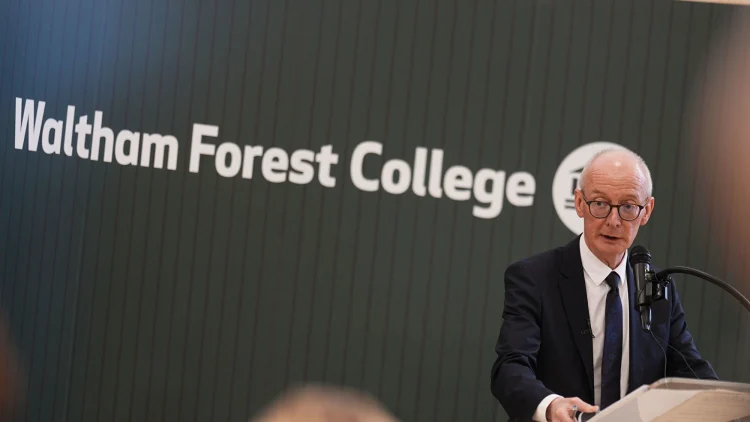
Pat McFadden said he has “no reason” to believe Labour MPs will oppose a new wave of welfare reforms as he set out plans to get more young people into work.
Speaking at a press conference in north London on Monday, the Secretary of State for Work and Pensions said he was confident that Labour MPs would support the government on a plan that puts “work and opportunity at its heart”.
McFadden set out proposals to incentivise companies to hire young people as part of the government’s bid to tackle rising rates of youth unemployment. Around one in eight 16 to 24-year-olds are not in employment, education of training.
Under the plans, businesses will receive £3,000 for every 18-24-year-old hired who has been on Universal Credit or looking for work for six months. Businesses that take part in the scheme will be paid in two instalments, with the first expected to be a substantial amount to make the scheme worthwhile. The jobs given to young people must be at least 25 hours per week and paid minimum wage.
Additionally, an apprenticeship incentive of £2,000 will be given to SME’s for each new employee aged between 16 and 24, and a scheme subsidising minimum wage work for benefits claimants who have been looking for work for 18 months will be raised to include those aged up to 24 from its current limit of 21.
McFadden defended young people trying to find work and hit back at claims that young people were “shirkers” and “snowflakes”. He said there was a moral case for helping people get into work, describing it as fundamentally “good for pride, purpose and identity”.
The cabinet minister said: “Two years ago, I had the honour of co-ordinating the general election campaign that led to the first Labour victory for 19 years, and only the fourth majority Labour victory from opposition for 100 years.
“The reason I say this is because, historically speaking, Labour governments don’t come along too often. I want us to use our time in office well, to understand that every day in office is precious.
“We are not here to keep things ticking over. We have both a responsibility and an opportunity to take on the challenges facing the country, to change things for the better.”
McFadden said he was confident that a new government bid to reduce spending on benefits would be supported by Labour MPs.
Keir Starmer was forced to abandon planned reforms to Personal Independence Payments last year after more than 120 Labour backbenchers threatened to rebel in a House of Commons vote.
“Welfare reform should be about opportunity and work, and that’s what I mean by a working state. This is an approach that puts work at its heart,” said McFadden.
“I don’t believe that the best way to do reform is to pluck a figure out of air, and retrofit a policy next to it. I think the best way to approach reform is to give people a chance.”
He added: “I see no reason why Labour MPs should not support welfare reform [with] work and opportunity at its heart.”
Earlier this month, the Office for Budget Responsibility estimated that welfare spending will rise by nearly 6 per cent to £330bn this year, driven by health-related benefits as well as pensions. It is expected to hit £407bn in 2030-31.
The Starmer government has previously warned that current levels of welfare spending are not sustainable and must be reduced in the long-term.

A new report has shown crucial solutions to limit mineral demand for a green transition. These include public transportation, improved recycling programmes, and advanced battery technologies.
Greenpeace International commissioned the report: Beyond Extraction: Pathways for a 1.5°C-aligned Energy Transition with Less Minerals. The authors are academics from the Institute for Sustainable Futures at the University of Technology, Sydney in Australia.
The report uses different 1.5°C-compatible energy scenarios to explore pathways toward mineral sufficiency and efficiency. And it shows how Earth’s minerals can be administered for a clean renewable energy transformation. One that protects vital Earth support systems from terrestrial or deep sea mining of so-called ‘critical minerals’.
Elsa Lee, co-head of biodiversity at Greenpeace International, said:
Mining often brings environmental destruction and social harm. It is reportedly linked to child labour, workers’ rights violations, land grabs from Indigenous Peoples, ecosystem damage, and threats to communities.
Around the world, the minerals ‘rush’ repeats extractivist and colonial patterns, disregards the rights of Indigenous Peoples and local communities, and threatens to undermine the very possibility of a just and green energy transition.
We all want a just world where energy is clean, affordable and available to everyone, rights are respected, peoples’ land access and livelihoods are protected, and our planet has a stable climate and rich biodiversity.
With this report we underline that it is incumbent upon our governments who regulate the extractive industry to power an ambitious energy transition without mining critical ecosystems on land or at sea.
A key recommendation of the report is that decision makers must prioritise mineral use for essential energy transition purposes. We’re in an era of eroding international cooperation and intensifying conflict. And this underscores the importance of coordinated action to protect people and nature, and achieve climate objectives.
Greenpeace International deep sea mining campaigner Ruth Ramos said:
Lines have been crossed on the land that need never be crossed in the deep ocean. Now we know: not only does deep sea mining run against science, ethics, people and the planet, it’s not even needed for a renewable transition.
What is needed is for the nations of the world to unite against rogue actors like The Metals Company and Donald Trump and their affronts to international law and cooperation, and instead keep moving towards a moratorium on deep sea mining.
Imagine if humans could have protected the world from the harms of the fossil fuel industry before it even started. That is the opportunity when it comes to deep sea mining: it is a historic privilege, and one we must now embrace wholeheartedly.
The report compared potential mineral reserves areas with areas that, due to their exceptional environmental, ecological, and social importance, must be out of bounds to mining. The analysis finds that there is no need to mine these fragile areas, including, amongst others, the global ocean and protected areas on land, for an ambitious energy transition.
Report author Professor Sven Teske said:
This research highlights how sound policies and innovative technologies can limit mineral demand in a 1.5°C-aligned energy transition. Realising this potential, however, requires responsible political leadership and decisive action today.
Featured image via the Canary

There’s a lot to be said for No-Mow May and other initiatives that encourage gardeners to leave some, or all, of their lawns wild. That can help wildlife to flourish.
But to maintain a healthy lawn, sometimes, a haircut is necessary.
Here are 11 rules to help you do it perfectly:
1) Wait for 7°C to start mowing…
Grass begins to grow at this temperature, so there’s no point cutting it when the weather’s any colder. Wait until it’s 7°C or warmer consistently to whip the strimmer out.
2) …And stop mowing at 6°C or lower.
The grass isn’t growing at those temps, which usually begin in late October.
3) Never mow a wet lawn
That can clog your mower, weaken your grass, and leave unsightly imprints.
4) Wait until any new grass is at least 5cm tall to cut it
Any shorter, and you risk “scorching” a new lawn.
5) Do your first mow on the highest blade setting, too
Even if you have an established lawn, do your first mow of the year on your mower blade’s highest setting. If you cut the grass too short early on, you increase the risk of disease, dehydration, and bare patches.
6) Mow at different rates according to season and lawn type
Per the RHS, the following schedule works for these lawns in spring and autumn:
- Conventional lawn: Every 1-2 weeks,
- Wildflower lawns or flower-rich meadows: Leave to grow wild.
- Conventional lawn: Weekly, unless in drought; then, mow fortnightly or less,
- Wildflower lawns or flower-rich meadows: Every 4-6 weeks,
- Long-grass lawns: 1-2 times per summer.
It’s not usually necessary to cut lawns in winter.
7) Follow the one-third rule
Regardless of whether it’s your lawn’s first-ever cut or your third strim of the summer, don’t cut off more than a third of the grass’s height at once.
Even established lawns risk forming clumpy, unpleasant patches and becoming weaker if you cut off a high proportion of their height all at once.
8) Keep your mower blades sharp and clean
Blunt mower blades and mower blades with lots of clogged-up grass in them can make mowing your lawn harder and less effective. Always ensure your mower is switched off before going anywhere near blades, and seek specialist help for cylinder mowers.
9) Skip the job in May
We mentioned No-Mow May before. It involves not cutting your lawn in the month and can boost wildlife, but it doesn’t have to be all or nothing; a “low-mow May,” meaning you mow some parts of your garden but leave others wild, can help too.
10) Clear the lawn before mowing
Check for loose stones and hidden objects, like toys and bulbs, in the garden before mowing. Clear them along with any garden furniture before beginning the task.
11) Change direction every month or so
If you change the direction you mow in about once a month, you’ll be able to cut any blades of grass you’d previously missed and can avoid unsightly wheel ruts.
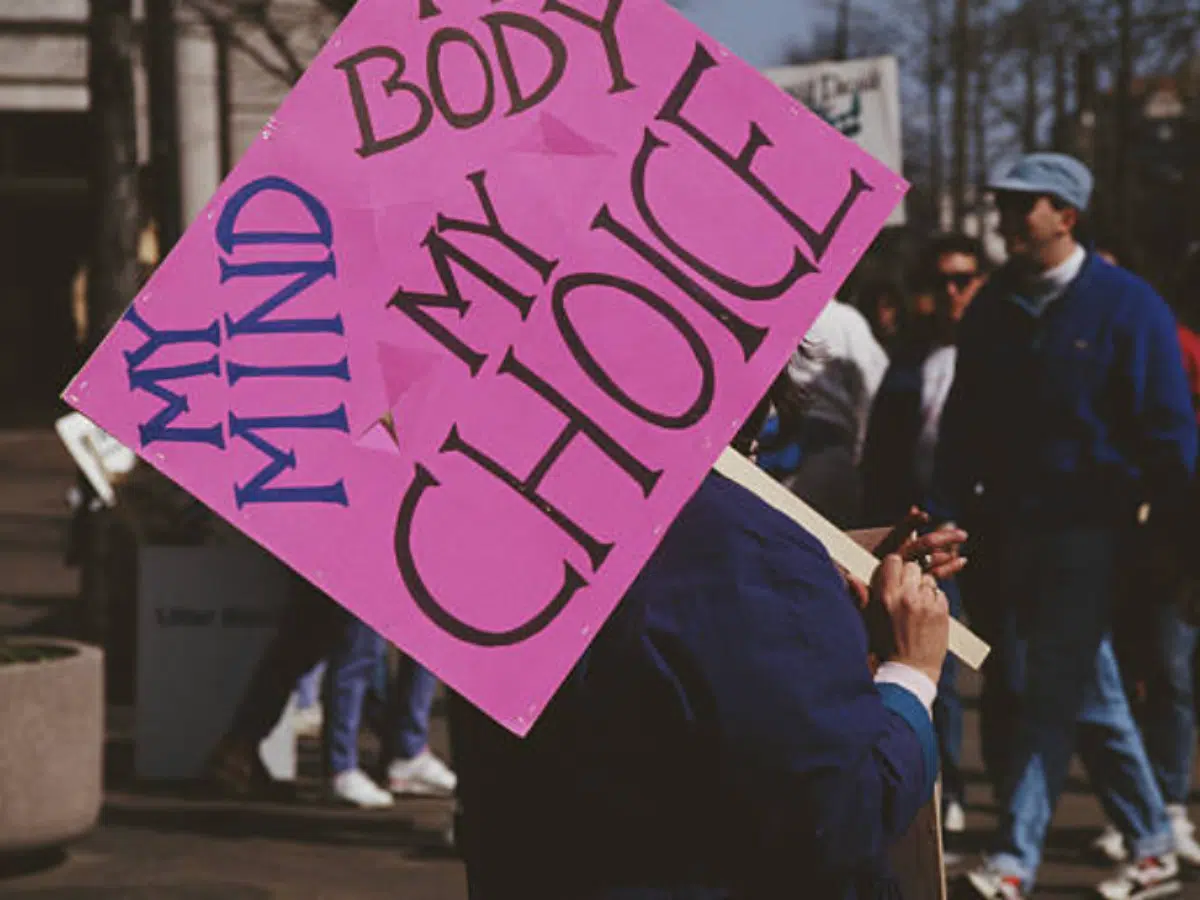
Police in England are still making arrests and investigating ‘illegal’ pregnancy terminations, according to the responses to a Guardian Freedom of Information (FOI) request.
That’s in spite of the fact that legal amendments decriminalising abortion are currently passing through parliament. The move was part of Labour’s Crime and Policing Bill, submitted by backbencher Tonia Antoniazzi. In June 2025, it progressed with a massive 379 votes in favour, versus just 137 against.
Abortion: ‘Victorian-era law’
The dystopian treatment of women continues under this Victorian-era law despite the House of Commons being clear that this has no place in modern society. The police and wider criminal justice system cannot be trusted with abortion law.
Women have been targeted, vilified and imprisoned following complications in their abortion treatment, miscarriage, stillbirth or premature labour. Forced to endure acute trauma at the worst moments of their lives for absolutely no reason, because criminalisation is completely unnecessary for upholding abortion law and safeguards.
The amendment would decriminalise abortion in England and Wales. This means that an individual could no longer be prosecuted for obtaining a termination, whether within or outside of a legal framework. However, the popular change has not yet passed into law.
Currently, the framework sets limits on the timeframe for an abortion, and requires two doctors’ signatures. The proposed amendments would do nothing to alter this legislation.
‘Utmost sensitivity and compassion’
The Metropolitan Police and Nottinghamshire Police both responded to the Guardian’s FOI. Both confirmed that, between June and January, they had made arrests over suspected illegal terminations.
However, abortion providers also highlighted the fact that we’re not seeing the full picture from these responses. They stated that they were aware of arrests by polices forces which refused the FoI. Worse still, some of the forces which did respond also made arrests for illegal termination, but didn’t record the cases under relevant legislation.
A spokesperson for the National Police Chiefs’ Council said:
Police do not routinely investigate unexpected pregnancy loss. An investigation is only initiated where there is credible information to suggest criminal activity, and this would often be because of concerns raised from medical professionals.
Each case would have a set of unique factors to be assessed and investigated depending on its individual circumstances.
It would be at the discretion of the senior investigating officer leading the case to determine which reasonable lines of enquiry to follow, again depending on the merits of the specific case.
We recognise how traumatic the experience of losing a child is, with many complexities involved, and any investigation of this nature and individuals will always be treated with the utmost sensitivity and compassion.
That claim of the “utmost sensitivity and compassion” is a bare-faced lie.
Inappropriate, insensitive and harmful
Jonathan Lord, a co-chair of the Royal College of Obstetricians and Gynaecologists’ abortion taskforce, explained:
It is the investigations that cause most harm; few progress to charging and fewer still to prosecutions.
The police and CPS have shown consistently – in multiple areas and in numerous cases – that they do not act appropriately or with sensitivity. In several cases they have only targeted the woman, and not investigated potential abuse by a coercive partner.
In one case, police arrested a woman in her 40s, who had safeguarding concerns and a history of being targeted by domestic abuse.
She called an ambulance after delivering a foetus still inside its gestation sack. Paramedics found her panicking and hyperventilating. Despite believing that she was still early in the pregnancy, the foetus was found to be around the 24-week mark.
Her children witnessed their mother’s arrest, and were forced to leave their home over Christmas whilst police searched the house.
‘What happened was horrifying’
In another case, a woman miscarried at 17 weeks, shortly after arriving in hospital. Staff called the police after finding tablets in her vagina. At the time, a clinician claimed that:
When I called the police, I really thought they would offer her support and protection. What happened was horrifying.
Cops arrived to arrest her whilst she was still in the delivery suite, in spite of her denial of seeking an abortion. Officers searched her home while she was detained on the ward. They confiscated devices that the woman used to monitor her unstable diabetes, which is notoriously difficult to control after pregnancy.
The woman later said that she felt unsafe around both police and the NHS, following their betrayal of her trust.
Harriet Wistrich, chief executive of the Centre for Women’s Justice, stated that:
In some of the cases we have seen women being arrested from hospital shortly after the abortion when they may be extremely traumatised and certainly there is no need to arrest them then and there.
But arrest, investigation and charging will be determined by two tests – is there sufficient evidence that an offence has been committed and if so is it in the public interest. There is a strong argument to make that in circumstances where the House of Commons have voted by a large majority to stop criminalisation, that discretion should be exercised in the public interest not to arrest.
‘A historic opportunity’
Louise McCudden, head of external affairs at MSI Reproductive Choices UK, said:
We know from providing reproductive healthcare across six continents that criminalisation harms women and makes abortion less safe. The House of Lords now has a historic opportunity to end the threat of prosecution once and for all, pardon women who have been previously convicted and drop ongoing investigations.
At a time when we are seeing rollbacks in reproductive rights around the world, most notably in the US, it’s encouraging that our parliament is standing up for women.
On 18 March, the House of Lords will debate Antoniazzi’s abortion decriminalisation clause. The proposed amendments run the gamut from striking the clause altogether, to halting ongoing police investigations, and even pardoning people who were already convicted under the previous law.
Investigations for suspected illegal terminations serve only to deepen the distress of the victims of heavy-handed policing. Our parliament must show their compassion by passing Antoniazzi’s amendment – or confirm themselves willing participants in the degradation of reproductive rights.
Featured image via the Canary

Ethereum Rallies Toward $2,300 Despite $800M Whale Exodus

Bob Vylan and the rise of ayatollah chic

India’s T20 World Cup Hero Ishan Kishan Likely To Captain Sunrisers Hyderabad In Pat Cummins’ Absence. Not Abhishek Sharma


-
 Tech5 days ago
A 1,300-Pound NASA Spacecraft To Re-Enter Earth’s Atmosphere
-
 Crypto World3 days ago
HYPE Token Enters Net Deflation as HyperCore Buybacks Outpace Staking Rewards
-

 Business6 days ago
ExxonMobil seeks to move corporate registration from New Jersey to Texas
-

 Fashion3 days ago
Weekend Open Thread: Addict Lip Glow
-

 Tech6 days ago
ChatGPT will now generate interactive visuals to help you with math and science concepts
-
Sports2 days ago
Why Duke and Michigan Are Dead Even Entering Selection Sunday
-

 NewsBeat5 days ago
Residents reaction as Shildon murder probe enters second day
-
 NewsBeat7 days ago
Pagazzi Lighting enters administration as 70 jobs lost and 11 stores close across Scotland
-

 Business5 days ago
Search Enters Sixth Week With New Leads in Tucson Abduction Case
-

 Business23 hours ago
Search for Savannah Guthrie’s Mother Enters Seventh Week with No Arrests
-

 Business2 days ago
US Airports Launch Donation Drives for Unpaid TSA Workers as Partial Government Shutdown Enters Fifth Week
-
Crypto World2 days ago
Coinbase and Bybit in Investment Talks: Could Bybit Finally Enter the US Crypto Market?
-

 NewsBeat5 days ago
I Entered The Manosphere. Nothing Could Prepare Me For What I Found.
-

 Business7 days ago
Search Enters 39th Day with FBI Tip Line Developments and No Major Breakthroughs
-

 Business2 days ago
Country star Brantley Gilbert enters growing non-alcoholic beer market
-

 Business8 hours ago
Australian shares drop as Iran war enters third week
-

 Crypto World6 days ago
Will Chainlink price reclaim $10 amid volatility squeeze?
-

 Sports5 days ago
PWHL, Senators discussing plan to keep Charge in Ottawa
-

 Crypto World8 hours ago
Crypto Lender BlockFills Enters Chapter 11 with Up to $500M in Liabilities
-

 Sports3 days ago
College Basketball Best Bets: Conference Tournament Semifinal Picks


You must be logged in to post a comment Login