American Petroleum Institute President and CEO Mike Sommers explains how Middle East war is impacting the world demand for oil on Mornings with Maria.
The war in Iran is pushing oil and gas prices higher, and while the world economy faces a shock from energy prices, an analysis by Goldman Sachs finds that the conflict is unlikely to lead to a broader supply chain crisis like what occurred due to the COVID-19 pandemic.
Economists at Goldman Sachs found that the Iran war is expected to lead to higher oil prices that will reduce global economic growth by 0.3% of GDP while increasing headline inflation by about 0.5 to 0.6 percentage points over the next year, with a smaller 0.1 to 0.2 percentage point boost to core inflation.
Advertisement
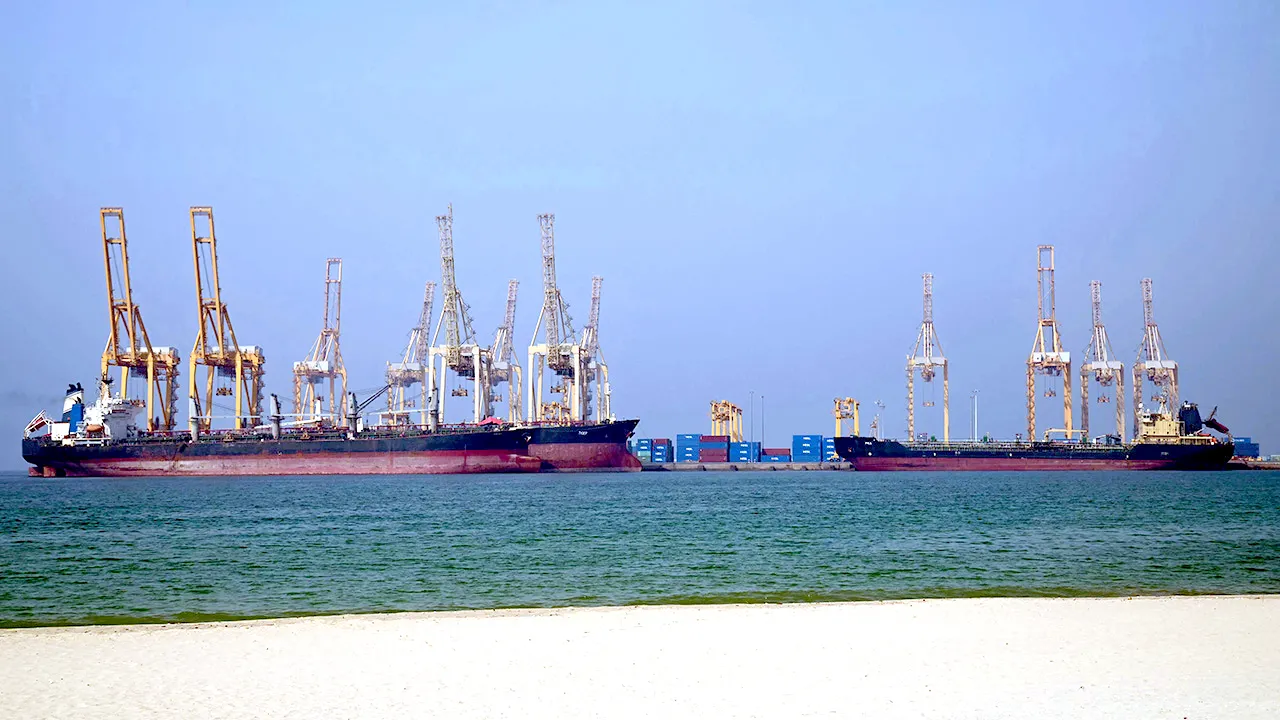
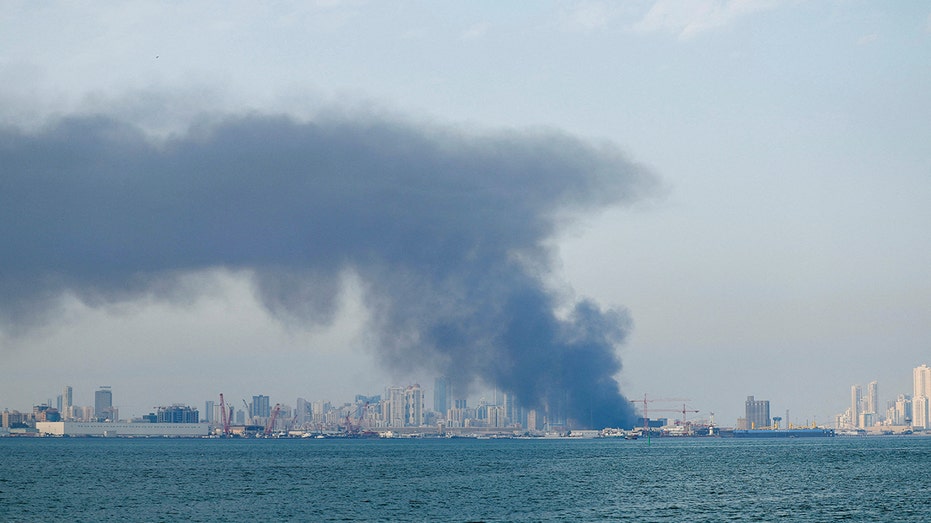
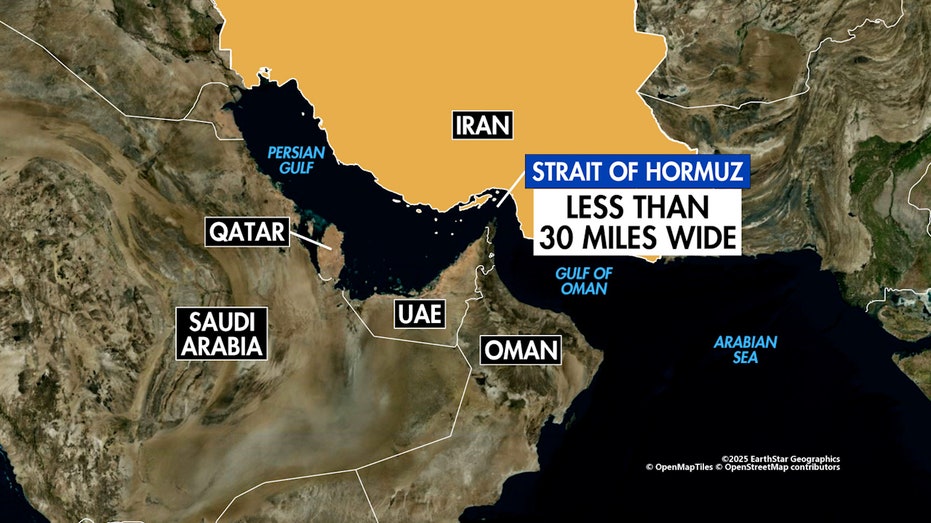
The report noted that risks are skewed toward larger impacts as long as the Strait of Hormuz remains closed to shipping. The strait is a narrow choke point that shipping traffic from the Persian Gulf must pass through to access global sea lanes.
Goldman Sachs assessed that global central banks will be particularly sensitive to inflation concerns in the wake of the supply chain disruptions that occurred due to the pandemic and were a key contributor to a surge in inflation. However, the economists’ analysis sees the Iran war supply shock as being limited to energy as opposed to the broader supply chain.
Iran has conducted missile strikes against targets in the Middle East amid the conflict. (Reuters)
“A key difference between 2021-2022 and today, however, is that today’s shock is more narrowly concentrated in the energy sector, whereas the energy price increases in 2022 were only one aspect of a much broader global supply chain crisis and inflation surge,” the Goldman Sachs economists wrote.
Advertisement
One of the reasons for the supply shock being confined to energy products is that most of the developed economies around the world have limited non-energy trade exposure to countries in the Middle East.
The report found that less than 1% of imports to the U.S. and other developed markets like the Eurozone, the U.K., Japan and Canada come from the Middle East. By comparison, China and East Asia account for more than 20% of global trade, Goldman’s analysis noted.
One reason why the supply shock is being confined to energy products is that most of the developed economies have limited non-energy trade exposure to countries in the Middle East. (Giuseppe Cacace/AFP via Getty Images)
Another contrast with the 2021-2022 supply chain issues is that fewer disruptions of critical inputs and “just in time” inventory management are anticipated, as the analysis found the Middle East’s potential bottleneck exports are focused on certain chemicals and metals that are unlikely to create significant disruptions.
Advertisement
Goldman Sachs said methanol appears to be the most likely source of production disruptions, as it’s used in making acetic acid, which helps produce industrial adhesives, solvents and paints.
Iran is the source of about 20% of global production capacity and while the loss of that supply could have an impact over the longer term, the economists don’t see clear choke points at this time.
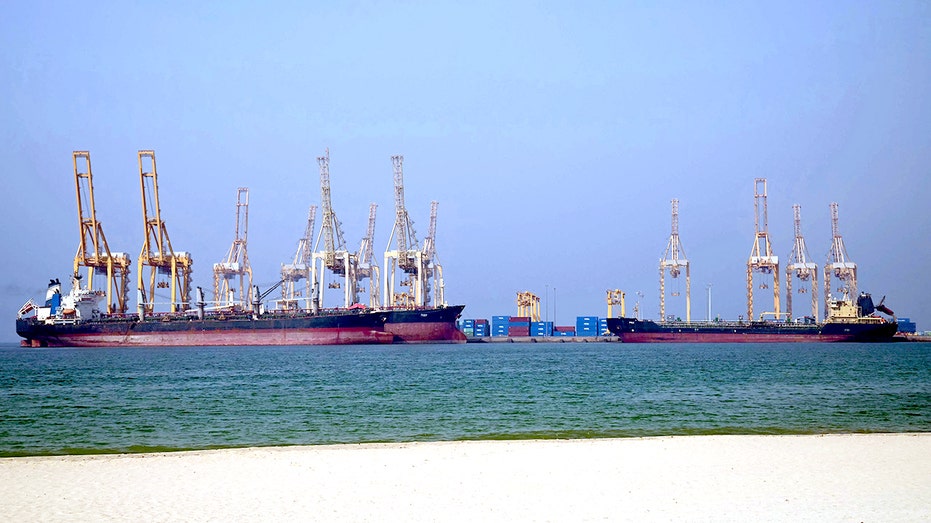
Ships transiting the Strait of Hormuz are at risk of attack from Iran. (Fox News)
The third reason the firm sees limited supply chain impacts beyond the energy sector is that the Middle East isn’t a significant trade hub where products are re-exported from.
Advertisement
Vessels such as yachts, tugboats and floating cranes are the main goods that are re-exported from Middle Eastern countries.
“In summary, our analysis suggests that the major risk to global supply and inflation is mostly confined to energy, which limits the risk that the severe supply chain disruptions (and associated surge in inflation) and large second-round inflation effects observed in 2021-2022 will re-emerge,” the Goldman Sachs economists said.
Wall Street ended sharply higher on Monday, fueled by gains in AI-related stocks, with Meta Platforms climbing after a report that it is preparing for sweeping layoffs, while oil prices retreated amid ongoing uncertainty about the Middle East conflict.
The Dow Jones rose 387.94 points, or 0.83%, to 46,946.41, the S&P 500 gained 69.92 points, or 1.05%, to 6,702.18, and the Nasdaq advanced 268.82 points, or 1.22%, to 22,374.18.
Meta jumped after Reuters reported that the social media platform plans to shrink its workforce by at least 20% to offset costly artificial-intelligence infrastructure bets and prepare for greater efficiency brought about by AI-assisted workers.
Nvidia climbed after CEO Jensen Huang announced new components at the chipmaker’s annual developer conference.
Advertisement
Taiwan’s Foxconn, which makes AI servers using Nvidia chips, issued a strong quarterly revenue forecast on Monday.
Live Events
Tesla rose after CEO Elon Musk said the company’s Terafab project to make AI chips will launch in seven days. Micron Technology jumped after the memory chipmaker announced plans for a second manufacturing facility in Taiwan. A modest drop in crude prices after the U.S. said it would be “fine” with some Iranian, Indian and Chinese ships moving through the Strait of Hormuz also offered some relief to the market.
“You’ve got news that Iranian oil tankers are moving through, or are soon going to be moving through, the Strait of Hormuz, which is a positive for global economic stability,” said Terry Sandven, chief equity strategist at U.S. Bank Wealth Management in Minneapolis.
“But on balance, the path forward is filled with twists and turns. … There’s lack of visibility when the conflict is likely to end.”
Higher energy prices are likely to feature prominently in central bank meetings globally this week.
Advertisement
The Fed is widely expected to leave interest rates unchanged at the end of its two-day meeting on Wednesday. Traders have pushed back their expectations for an interest rate cut of at least 25 basis points beyond October, according to LSEG-compiled data, compared with their previous expectation of a cut in July.
“There are a couple of reasons to take any signals from this meeting with a pinch of salt. First, a swing in oil prices in either direction could quickly change the Fed’s thinking, and second, markets might slightly discount messages from Chair (Jerome) Powell, given this will be one of the last of his term,” said James McCann, senior economist at Edward Jones in a note.
Wall Street’s fear gauge, the CBOE volatility index, dropped, while the rate-sensitive Russell 2000 index gained.
Despite logging declines over the past three weeks, U.S. equities have fared better than global peers, buoyed by a rebound in beaten-down technology stocks and as the country is a net oil exporter. However, the S&P 500 remains down about 2% so far in 2026.
Advertisement
February industrial production increased 0.2%, slightly better than expectations of a 0.1% rise.
Travel stocks Delta Air Lines and Norwegian Cruise Line Holdings both gained, lifted by lower oil prices.
Crypto stock Strategy Inc climbed as bitcoin rallied around 3%.
Discount retailer Dollar Tree rose after signaling it could benefit from favorable tariffs in the near term.
Hyundai has stopped sales of certain 2026 Palisade SUVs and plans a recall after a problem with power-folding seats that the company says may fail to detect contact with an occupant or object.
The announcement comes after a young child died in an incident involving a Palisade that is still under investigation, according to the automaker.
Advertisement
Reuters reported the victim was a 2-year-old girl from Ohio who was killed on March 7.
“Hyundai is aware of a tragic incident involving a Palisade. While Hyundai does not yet have the full details and the incident is still under investigation, a young child lost her life. Hyundai extends its deepest sympathies to her family,” the company said in a press release Friday.
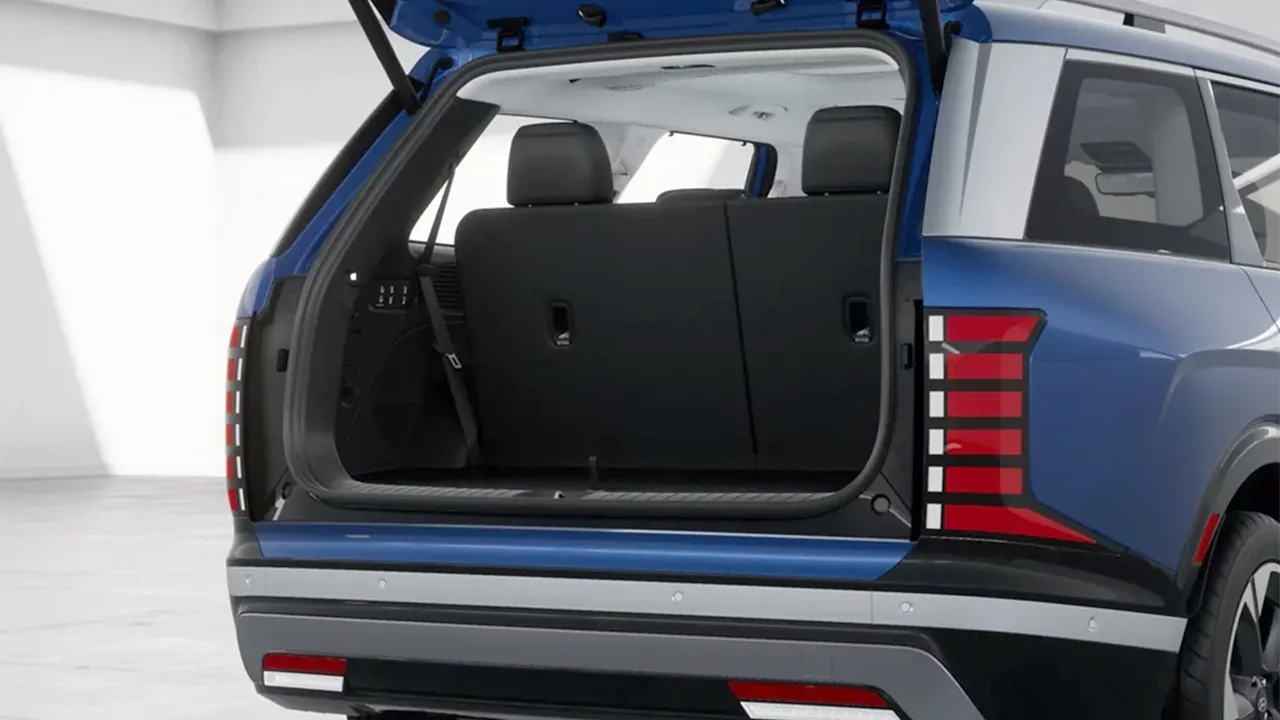
A view from the interior of a Hyundai Palisade showing the gray leather upholstery of the second-row power-folding seats. (Credit: Hyundai USA)
Sales of the 2026 Palisade Limited and Calligraphy trims are currently on hold while Hyundai works with the National Highway Traffic Safety Administration on the recall.
Advertisement
Hyundai said about 68,500 vehicles could be affected, including roughly 60,500 in the United States and nearly 8,000 in Canada.
The automaker said it is developing a recall repair and an interim over-the-air software update designed to improve the system’s ability to detect contact with occupants or objects and introduce additional safeguards.
Hyundai issued a stop-sale for approximately 68,500 2026 Palisade Limited and Calligraphy models on March 13, 2026. (Credit: Hyundai USA)
Hyundai is advising owners to ensure no person or object, including children, is in the seat or seat-folding area before operating the power seat.
Advertisement
“When using the second-row one‑touch tilt‑and‑slide feature to access the third row, customers should avoid pressing the seatback button during entry or exit,” the company said.
The automaker added that it may offer rental vehicles to affected customers until a permanent repair is implemented.
Advertisement
“Hyundai’s top priority is the safety of its customers, and additional details regarding the interim software update and final recall repair will be provided as they become available,” it said.
Lucid Motors interim CEO Marc Winterhoff discusses the impact of high gas prices on the EV market, the unveiling of new models during the companys investor day, his outlook on profitability and more on The Claman Countdown.
Honda announced a $15.7 billion writedown of its electric vehicle (EV) business last week as the company shifts its U.S. strategy to account for weak consumer demand for EVs.
The second-largest automaker in Japan said Thursday that it will restructure its EV business and cancel three planned battery-powered EV models that were going to be built and sold in the U.S. market.
Advertisement
Demand for EVs has pulled back in recent years as consumers have shown a preference for hybrid vehicles, while President Donald Trump’s administration has pulled back tax credits that helped incentivize EV purchases.
Honda’s move to pull back on its EV plans, as well as to write down the value of some of its operations in China, may cost as much as $15.7 billion, while the company also said it will report its first annual loss in nearly 70 years. The company’s cash outflows stemming from the writedowns will largely be due to the cost of compensating suppliers.
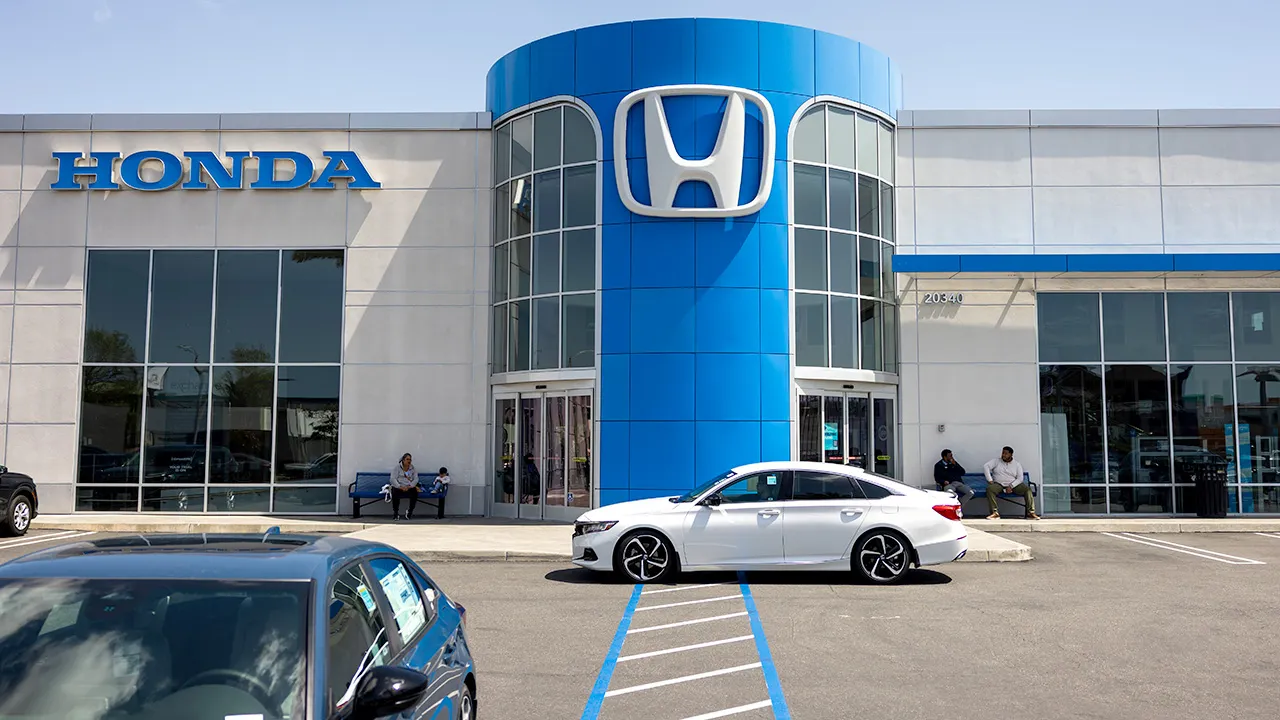
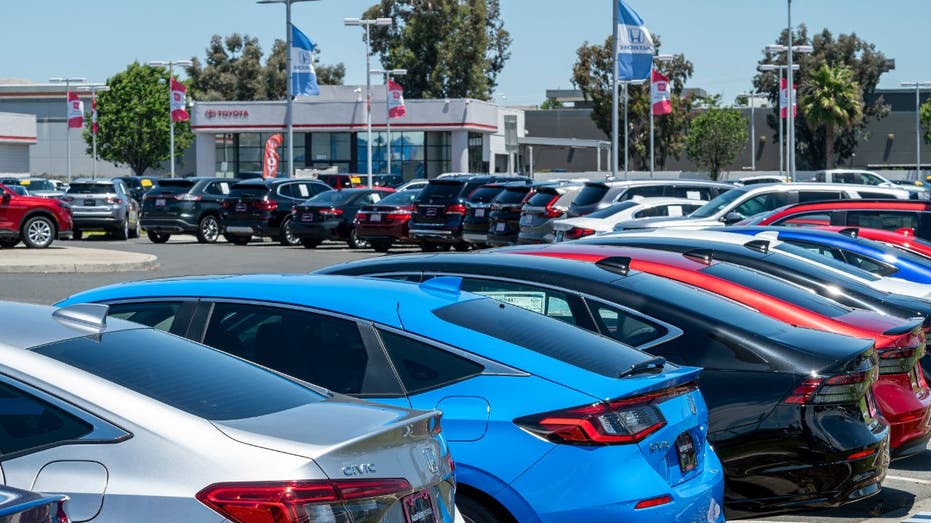
Honda’s writedown comes as consumers are turning away from EVs in favor of hybrids. (Jay L Clendenin/Getty Images)
Honda first unveiled two concept models for its “Honda 0 Series,” including the Saloon sedan, at the CES trade show in Las Vegas in January 2024, and it had expected to roll out the series’ first vehicles this year, starting in North America.
Advertisement
Those plans have now been called off, with Honda canceling the Saloon along with the Honda 0 SUV and the Acura RSX.
Honda will now pivot its U.S. focus to hybrid vehicles and will also look to strengthen lineup and cost competitiveness in India.
The company also said that it has struggled to compete with newer companies in China that are focused more on short development cycles and software technologies, like advanced driver-assistance systems (ADAS).
Advertisement
“In such a difficult competitive environment, Honda was unable to deliver products that offer value for money better than that of newer EV manufacturers, resulting in a decline in competitiveness,” the company said.
Battery-powered cars accounted for 2.5% of Honda’s 3.4 million global sales last year, or about 84,000 vehicles.
Honda is refocusing its U.S. production on hybrid vehicles. (David Paul Morris/Bloomberg via Getty Images)
China is the world’s largest auto market and Honda introduced several battery-powered models in the market, but it only sold 17,000 last year, which accounted for just 2.5% of its sales of around 677,000 vehicles in the country and just a fifth of its total EV sales.
Advertisement
Honda said that its initiatives around future EV model introductions will be implemented with flexibility from a long-term perspective while “monitoring the balance between profitability and market trends.”
The company also said it will announce details related to the reestablishment of its mid- to long-term strategy for its auto business at a press conference in May.
AFGE Local 554 President Aaron Barker said TSA workers on struggling financially amid the ongoing shutdown.
Union leaders representing Transportation Security Administration (TSA) workers in Atlanta called on lawmakers Monday to end the Department of Homeland Security (DHS) shutdown, saying the stalemate has crippled its members financially as they continue to work without being paid.
Aaron Barker, the president of AMG local 554, said the union’s members are financially exhausted as they face a range of fiscal difficulties amid a standoff between lawmakers in Washington over DHS funding on the heels of their first missed full paycheck.
Advertisement
“Unlike other federal agencies such as ICE and CBP, TSA employees are working without pay,” Barker said at Hartsfield-Jackson Atlanta International Airport. “Many are coping with eviction notices. Vehicle repossessions, empty refrigerators and overdrawn bank accounts.”
“Every available financial option has been exhausted, yet these officers are still coming to work to protect the traveling public, facing disciplinary action if they do not show up to work,” he added.
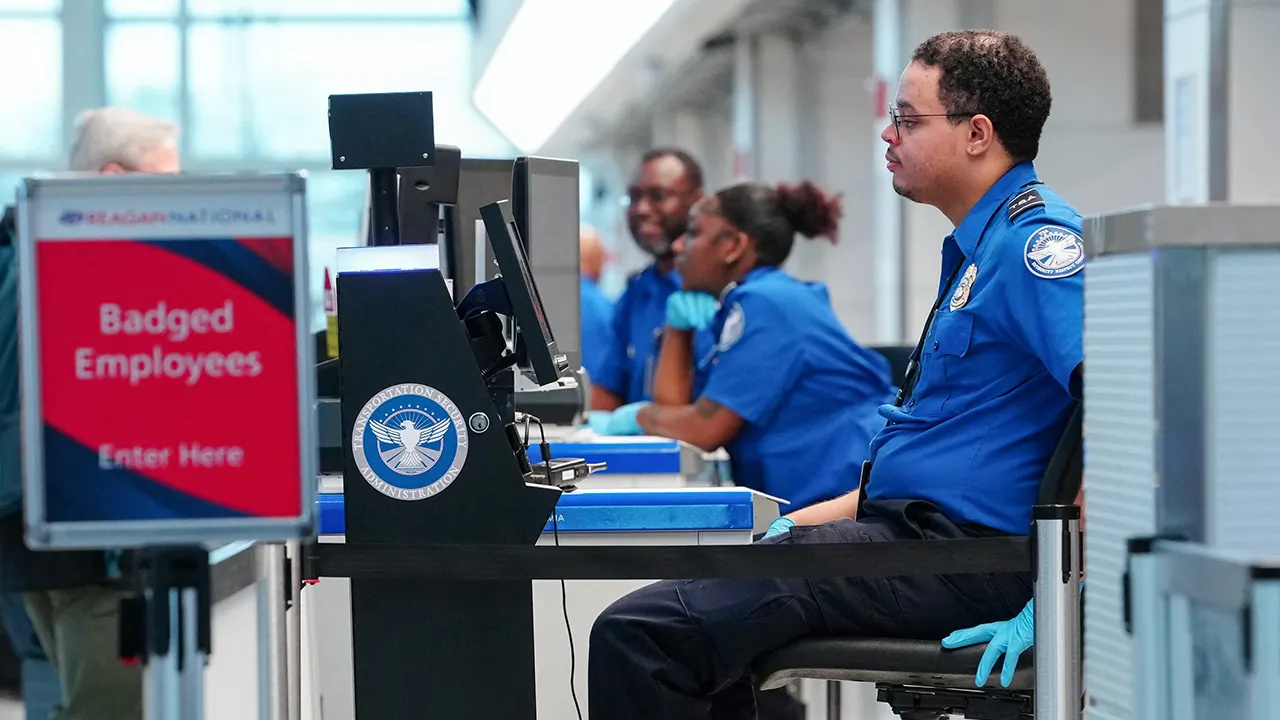
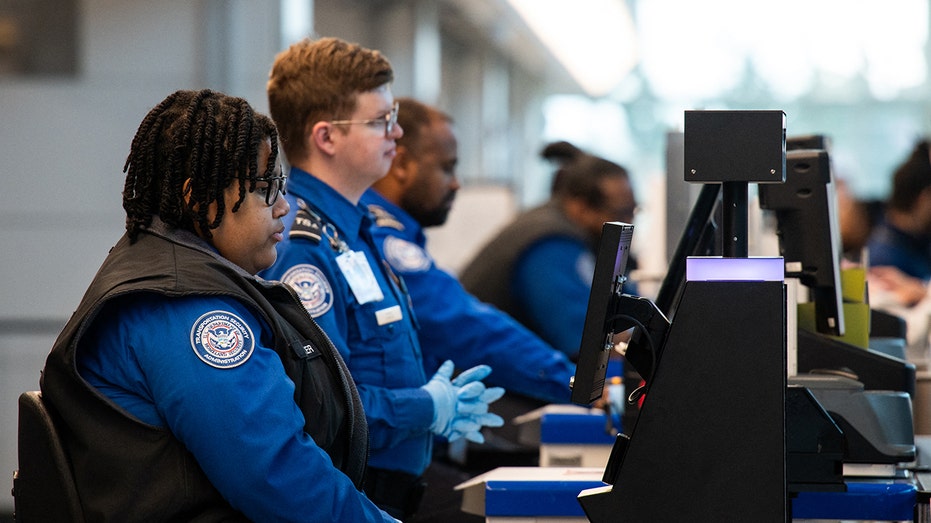
TSA agents work at a security checkpoint at Ronald Reagan International Airport in Arlington, Virginia., March 15, 2026. (Aaron Schwartz / Reuters Photos)
About 300 TSA agents have quit, Transportation Secretary Sean Duffy said Sunday, and call-outs have doubled.
Advertisement
Duffy has blamed Democrats for the funding standoff, amid a debate over proposed reforms to U.S. Immigration and Customs Enforcement (ICE), which many Republicans oppose.
DHS has been partially shut down for more than 30 days as Republicans hold out for a budget proposal that fully funds all parts of the agency. Democrats have said they’re willing to fund individual branches within the department, including TSA, but not Immigration and Customs Enforcement (ICE) or Customs and Border Protection (CBP) until the Trump administration agrees to immigration reform.
Meanwhile, Barker said, TSA personnel are bearing the burden of the standoff.
Travelers and staff walk through Ronald Reagan Washington National Airport in Arlington, Virginia, on March 13, 2025. Union leaders in Atlanta called on Congress to end the Department of Homeland Security shutdown amid the financial stress for TSA wo (Annabelle GORDON / AFP via Getty Images)
“I’ve heard from officers who cannot afford co-payments for cancer treatments or office visits for their sick children,” he said.
“Requiring employees to work without pay is unconstitutional, and the financial consequences of this shutdown — damaged credit, missed payments and lost housing — will remain ever after the government reopens,” he added. “This is not a partisan issue. TSA employees did not cause this shutdown, yet they are bearing the burden of congressional inaction.”
A DHS spokesperson told FOX Business that 100,000 DHS workers did not receive their first full paycheck last week, amounting to $1 billion in unpaid wages each month.
“American travelers across the country are facing hours-long airport lines, that will worsen as this shutdown continues,” the spokesperson said. “Democrats are shamelessly playing politics with national security, punishing hardworking TSA workers and their families.”
Advertisement
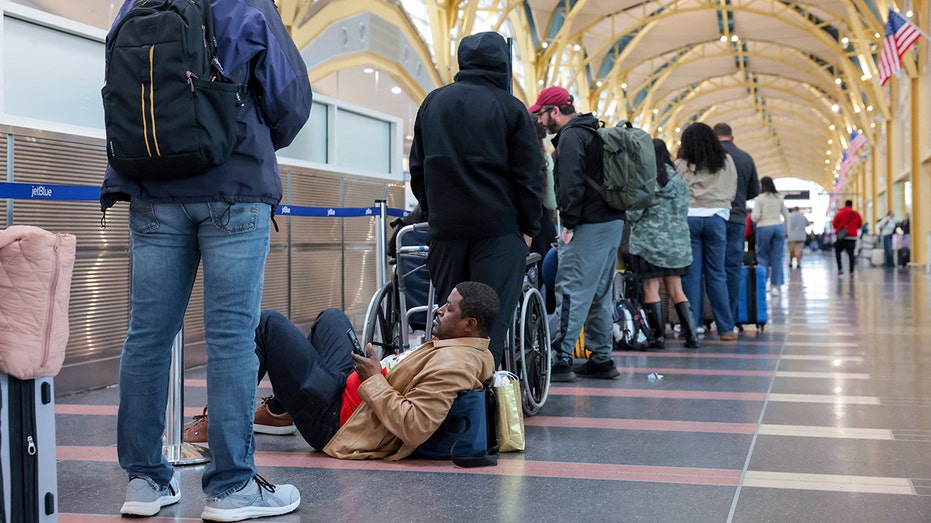
Passengers wait in a check-in line at Ronald Reagan Washington National Airport, as the Department of Homeland Security (DHS) continues to go unfunded, in Arlington, Virginia, March 16, 2026. (Kylie Cooper / Reuters Photos)
Barker said essential public services shouldn’t be used as leverage in political disputes, especially while members of Congress continue to receive their own paychecks. He said TSA officers have resorted to finding other ways to make ends meet, such as ridesharing.
“To be quite frank, officers are pissed off. And we’re not just talking about here in Atlanta,” said Barker. “We’re talking about nationwide. The officers are pissed off. They want this to end. They’re ready to get back to…some normalcy or some consistency within their lives.”
FOX Business’ Max Becall contributed to this report.
Microsoft Corp. (NASDAQ: MSFT) shares advanced modestly in early trading on March 16, 2026, as the tech giant participated in a broader equity rebound fueled by easing geopolitical tensions and a retreat in oil prices. The stock, a key component of the NASDAQ Composite, traded higher after a sharp pullback last week that saw it close at $395.55 on March 13 — down 1.57% or $6.31 from the prior session.
By mid-morning Eastern Time, MSFT was changing hands around $397, up approximately $1.50 or 0.38% from Friday’s close, with volume picking up steadily. Real-time quotes showed the stock opening near $397.95, reaching a session high of $398.14 and dipping to a low of $394.79 before stabilizing. Pre-market activity had pointed to gains, aligning with positive sentiment across major indices following reports of potential de-escalation in Middle East conflicts that had previously driven crude prices higher and pressured growth stocks.
The move came after a volatile stretch for Microsoft shares. The stock had declined notably in early March, part of a broader correction in big tech amid concerns over sustained AI infrastructure spending, macroeconomic uncertainty and regional instability. From a recent peak in late 2025 near $540, MSFT had shed significant value, trading in the mid-$390s by mid-March — a level some analysts viewed as presenting a buying opportunity for long-term investors.
Microsoft’s performance remains closely tied to its dominance in cloud computing through Azure and its aggressive push into artificial intelligence via the OpenAI partnership and Copilot integrations across its product suite. Despite recent headwinds, the company continues to report robust demand for its AI-enabled services, with analysts highlighting Azure’s growth as a primary driver. Wall Street consensus maintains a “Strong Buy” rating on the shares, with average price targets hovering well above current levels, some projecting upside to $600 or more over the next 12-18 months.
Recent commentary has emphasized Microsoft’s strategic positioning. In analyst notes and market discussions, the focus has shifted toward upcoming earnings potential and productivity gains from AI tools. One portfolio manager described the current dip as a potential entry point, noting that “AI is still going to be a major influence on markets,” particularly in enhancing enterprise efficiency. Microsoft’s heavy investments in data centers and AI infrastructure — part of an industry-wide surge expected to approach hundreds of billions in spending — have drawn scrutiny over costs but also praise for long-term revenue prospects.
Advertisement
The stock’s recent weakness contrasted with its strong fundamentals. For fiscal 2026, expectations call for continued double-digit revenue growth, driven largely by Intelligent Cloud segment performance. Azure’s year-over-year expansion has consistently outpaced rivals in recent quarters, bolstered by enterprise adoption of generative AI features. Microsoft has also expanded partnerships in key regions, though some reports noted temporary concerns around data center stability in volatile areas — issues that appear to have eased in recent days.
Broader market dynamics supported the March 16 uptick. With oil retreating and inflation fears moderating, investors rotated back into growth names like Microsoft, which had been oversold relative to historical multiples. The NASDAQ’s parallel advance — up over 1% in early action — underscored renewed risk appetite, with tech heavyweights leading the charge after a period of rotation toward more defensive sectors.
Microsoft’s valuation metrics reflect a premium but justified by growth. Trading at forward multiples that account for its AI exposure, the stock has historically rewarded patient holders through cycles of innovation. Analysts point to recurring revenue streams from Office 365, Dynamics and enterprise agreements as providing stability amid macro volatility.
Looking ahead, attention turns to Microsoft’s next earnings report and any updates on AI monetization. Upcoming catalysts could include further details on Copilot adoption rates, Azure capacity expansions and potential new product announcements. Market participants also monitor geopolitical developments closely, as any escalation could renew pressure on tech spending sentiment.
Advertisement
Despite the pullback year-to-date — with shares down roughly 18% from 2026 highs in some calculations — optimism persists among bulls. Predictions for the stock in coming years vary, but many forecast sustained compounding from cloud and AI tailwinds. One analysis suggested the current environment offers “203 billion reasons” to stay invested, referencing massive projected infrastructure outlays.
Trading volume on March 16 remained healthy in early sessions, with institutional participation evident. Options activity showed interest in calls at higher strikes, signaling some conviction in a near-term recovery. Market breadth favored advancers, and Microsoft’s gains contributed meaningfully to index performance.
As the trading day progressed, the focus remained on whether MSFT could hold above key technical levels, such as its 21-day moving average, amid ongoing choppiness. Investors weighed the balance between short-term risks — including energy market fluctuations and economic data — and the company’s entrenched position in the world’s most transformative technologies.
Microsoft’s trajectory continues to serve as a bellwether for the broader tech sector and AI investment theme. With the stock showing signs of stabilization on March 16, many see the recent correction as a healthy pause rather than a reversal of longer-term uptrends. For now, the shares reflect a market recalibrating expectations while betting on Microsoft’s ability to deliver on its ambitious vision.
Scheme focuses on growing student population at Tremough Campus
Lee Trewhela and Local Democracy Reporter
16:00, 16 Mar 2026
How part of the Halo Village student development could look(Image: Verto)
The next stage of an approved scheme to build a “village” for 1,858 students has been submitted to Cornwall Council.
Advertisement
Verto Homes, which is based at Threemilestone, near Truro, has applied for a ‘targeted planning performance agreement’ (PPA) for the Halo Village development on land at Penvose Farm, Roskrow, Penryn.
A PPA is a voluntary, project-managed framework between a developer and local council to manage the design and development of complex or large-scale proposals.
Cornwall Council granted planning permission in 2024 for the purpose-built student accommodation and amenities for 1,858 students after first rejecting the “objectionable” scheme in 2023.
The development is for 1,858-bed student accommodation including 97 wheelchair-accessible units, amenities for students and the local community, including a new doctor’s surgery, business units and sustainable transport infrastructure.
Advertisement
As part of the village, a 48-bed budget hotel, a pub, restaurant, café and hot food takeaway, a shopping parade, children’s day nursery and sports and leisure facilities, including gym, yoga studio, squash and tennis courts, and sports clinic could also be built.
How part of the Halo Village student development could look(Image: Verto)
The development is intended to service the growing student population at the Tremough Campus in Penryn. It will house students from both Exeter and Falmouth universities.
At the time it received planning consent for the scheme, Verto said the new student village would be constructed to “the very highest environmental standards, while embodied and operational carbon will be net zero – or even beyond zero”.
Verto previously said that the project could create 1,550 construction jobs over the build period, as well as 350 permanent jobs once the development is up and running.
Advertisement
For more details see PA26/00357/PREAPP.
To find all the planning applications, traffic diversions, road layout changes, alcohol licence applications and more in your community, visit the Public Notices Portal.
















































You must be logged in to post a comment Login