Jensen Huang walked onto the GTC stage Monday wearing his trademark leather jacket and carrying, as it turned out, the blueprints for a new kind of monopoly.
The Nvidia CEO unveiled the Agent Toolkit, an open-source platform for building autonomous AI agents, and then rattled off the names of the companies that will use it: Adobe, Salesforce, SAP, ServiceNow, Siemens, CrowdStrike, Atlassian, Cadence, Synopsys, IQVIA, Palantir, Box, Cohesity, Dassault Systèmes, Red Hat, Cisco and Amdocs. Seventeen enterprise software companies, touching virtually every industry and every Fortune 500 corporation, all agreeing to build their next generation of AI products on a shared foundation that Nvidia designed, Nvidia optimizes and Nvidia maintains.
The toolkit provides the models, the runtime, the security framework and the optimization libraries that AI agents need to operate autonomously inside organizations — resolving customer service tickets, designing semiconductors, managing clinical trials, orchestrating marketing campaigns. Each component is open source. Each is optimized for Nvidia hardware. The combination means that as AI agents proliferate across the corporate world, they will generate demand for Nvidia GPUs not because companies choose to buy them but because the software they depend on was engineered to require them.
“The enterprise software industry will evolve into specialized agentic platforms,” Huang told the crowd, “and the IT industry is on the brink of its next great expansion.” What he left unsaid is that Nvidia has just positioned itself as the tollbooth at the entrance to that expansion — open to all, owned by one.
Advertisement
Inside Nvidia’s Agent Toolkit: the software stack designed to power every corporate AI worker
To grasp the significance of Monday’s announcements, it helps to understand the problem Nvidia is solving.
Building an enterprise AI agent today is an exercise in frustration. A company that wants to deploy an autonomous system — one that can, say, monitor a telecommunications network and proactively resolve customer issues before anyone calls to complain — must assemble a language model, a retrieval system, a security layer, an orchestration framework and a runtime environment, typically from different vendors whose products were never designed to work together.
Nvidia’s Agent Toolkit collapses that complexity into a unified platform. It includes Nemotron, a family of open models optimized for agentic reasoning; AI-Q, an open blueprint that lets agents perceive, reason and act on enterprise knowledge; OpenShell, an open-source runtime enforcing policy-based security, network and privacy guardrails; and cuOpt, an optimization skill library. Developers can use the toolkit to create specialized AI agents that act autonomously while using and building other software to complete tasks.
The AI-Q component addresses a pain point that has dogged enterprise AI adoption: cost. Its hybrid architecture routes complex orchestration tasks to frontier models while delegating research tasks to Nemotron’s open models, which Nvidia says can cut query costs by more than 50 percent while maintaining top-tier accuracy. Nvidia used the AI-Q Blueprint to build what it claims is the top-ranking AI agent on both the DeepResearch Bench and DeepResearch Bench II leaderboards — benchmarks that, if they hold under independent validation, position the toolkit as not merely convenient but competitively necessary.
Advertisement
OpenShell tackles what has been the single biggest obstacle in every boardroom conversation about letting AI agents loose inside corporate systems: trust. The runtime creates isolated sandboxes that enforce strict policies around data access, network reach and privacy boundaries. Nvidia is collaborating with Cisco, CrowdStrike, Google, Microsoft Security and TrendAI to integrate OpenShell with their existing security tools — a calculated move that enlists the cybersecurity industry as a validation layer for Nvidia’s approach rather than a competing one.
The partner list that reads like the Fortune 500: who signed on and what they’re building
The breadth of Monday’s enterprise adoption announcements reveals Nvidia’s ambitions more clearly than any specification sheet could.
Adobe, in a simultaneously announced strategic partnership, will adopt Agent Toolkit software as the foundation for running hybrid, long-running creativity, productivity and marketing agents. Shantanu Narayen, Adobe’s chair and CEO, said the companies will bring together “our Firefly models, CUDA libraries into our applications, 3D digital twins for marketing, and Agent Toolkit and Nemotron to our agentic frameworks to deliver high-quality, controllable and enterprise-grade AI workflows of the future.” The partnership extends deep: Adobe will explore OpenShell and Nemotron as foundations for personalized, secure agentic loops, and will evaluate the toolkit for large-scale workflows powered by Adobe Experience Platform. Nvidia will provide engineering expertise, early access to software and targeted go-to-market support.
Salesforce’s integration may be the one enterprise IT leaders parse most carefully. The company is working with Nvidia Agent Toolkit software including Nemotron models, enabling customers to build, customize and deploy AI agents using Agentforce for service, sales and marketing. The collaboration introduces a reference architecture where employees can use Slack as the primary conversational interface and orchestration layer for Agentforce agents — powered by Nvidia infrastructure — that participate directly in business workflows and pull from data stores in both on-premises and cloud environments. For the millions of knowledge workers who already conduct their professional lives inside Slack, this turns a messaging app into the command center for corporate AI.
Advertisement
SAP, whose software underpins the financial and operational plumbing of most Global 2000 companies, is using open Agent Toolkit software including NeMo for enabling AI agents through Joule Studio on SAP Business Technology Platform, enabling customers and partners to design agents tailored to their own business needs. ServiceNow’s Autonomous Workforce of AI Specialists leverage Agent Toolkit software, the AI-Q Blueprint and a combination of closed and open models, including Nemotron and ServiceNow’s own Apriel models — a hybrid approach that suggests the toolkit is designed not to replace existing AI investments but to become the connective tissue between them.
From chip design to clinical trials: how agentic AI is reshaping specialized industries
The partner list extends well beyond horizontal software platforms into deeply specialized verticals where autonomous agents could compress timelines measured in years.
In semiconductor design — where a single advanced chip can cost billions of dollars and take half a decade to develop — three of the four major electronic design automation companies are building agents on Nvidia’s stack. Cadence will leverage Agent Toolkit and Nemotron with its ChipStack AI SuperAgent for semiconductor design and verification. Siemens is launching its Fuse EDA AI Agent, which uses Nemotron to autonomously orchestrate workflows across its entire electronic design automation portfolio, from design conception through manufacturing sign-off. Synopsys is building a multi-agent framework powered by its AgentEngineer technology using Nemotron and Nemo Agent Toolkit.
Healthcare and life sciences present perhaps the most consequential use case. IQVIA is integrating Nemotron and other Agent Toolkit software with IQVIA.ai, a unified agentic AI platform designed to help life sciences organizations work more efficiently across clinical, commercial and real-world operations. The scale is already significant: IQVIA has deployed more than 150 agents across internal teams and client environments, including 19 of the top 20 pharmaceutical companies.
Advertisement
The security sector is embedding itself into the architecture from the ground floor. CrowdStrike unveiled a Secure-by-Design AI Blueprint that embeds its Falcon platform protection directly into Nvidia AI agent architectures — including agents built on AI-Q and OpenShell — and is advancing agentic managed detection and response using Nemotron reasoning models. Cisco AI Defense will provide AI security protection for OpenShell, adding controls and guardrails to govern agent actions. These are not aftermarket bolt-ons; they are foundational integrations that signal the security industry views Nvidia’s agent platform as the substrate it needs to protect.
Dassault Systèmes is exploring Agent Toolkit software and Nemotron for its role-based AI agents, called Virtual Companions, on its 3DEXPERIENCE agentic platform. Atlassian is working with the toolkit as it evolves its Rovo AI agentic strategy for Jira and Confluence. Box is using it to enable enterprise agents to securely execute long-running business processes. Palantir is developing AI agents on Nemotron that run on its sovereign AI Operating System Reference Architecture.
The open-source gambit: why giving software away is Nvidia’s most aggressive business move
There is something almost paradoxical about a company with a multi-trillion-dollar market capitalization giving away its most strategically important software. But Nvidia’s open-source approach to Agent Toolkit is less an act of generosity than a carefully constructed competitive moat.
OpenShell is open source. Nemotron models are open. AI-Q blueprints are publicly available. LangChain, the agent engineering company whose open-source frameworks have been downloaded over 1 billion times, is working with Nvidia to integrate Agent Toolkit components into the LangChain deep agent library for developing advanced, accurate enterprise AI agents at scale. When the most popular independent framework for building AI agents absorbs your toolkit, you have transcended the category of vendor and entered the category of infrastructure.
Advertisement
But openness in AI has a way of being strategically selective. The models are open, but they are optimized for Nvidia’s CUDA libraries — the proprietary software layer that has locked developers into Nvidia GPUs for two decades. The runtime is open, but it integrates most deeply with Nvidia’s security partners. The blueprints are open, but they perform best on Nvidia hardware. Developers can explore Agent Toolkit and OpenShell on build.nvidia.com today, running on inference providers and Nvidia Cloud Partners including Baseten, CoreWeave, DeepInfra, DigitalOcean and others — all of which run Nvidia GPUs.
The strategy has a historical analog in Google’s approach to Android: give away the operating system to ensure that the entire mobile ecosystem generates demand for your core services. Nvidia is giving away the agent operating system to ensure that the entire enterprise AI ecosystem generates demand for its core product — the GPU. Every Salesforce agent running Nemotron, every SAP workflow orchestrated through OpenShell, every Adobe creative pipeline accelerated by CUDA creates another strand of dependency on Nvidia silicon.
This also explains the Nemotron Coalition announced Monday — a global collaboration of model builders including Mistral AI, Cursor, LangChain, Perplexity, Reflection AI, Sarvam and Thinking Machines Lab, all working to advance open frontier models. The coalition’s first project will be a base model codeveloped by Mistral AI and Nvidia, trained on Nvidia DGX Cloud, that will underpin the upcoming Nemotron 4 family. By seeding the open model ecosystem with Nvidia-optimized foundations, the company ensures that even models it does not build will run best on its hardware.
What could go wrong: the risks enterprise buyers should weigh before going all-in
For all the ambition on display Monday, several realities temper the narrative.
Advertisement
Adoption announcements are not deployment announcements. Many of the partner disclosures use carefully hedged language — “exploring,” “evaluating,” “working with” — that is standard in embargoed press releases but should not be confused with production systems serving millions of users. Adobe’s own forward-looking statements note that “due to the non-binding nature of the agreement, there are no assurances that Adobe will successfully negotiate and execute definitive documentation with Nvidia on favorable terms or at all.” The gap between a GTC keynote demonstration and an enterprise-grade rollout remains substantial.
Nvidia is not the only company chasing this market. Microsoft, with its Copilot ecosystem and Azure AI infrastructure, pursues a parallel strategy with the advantage of owning the operating systems and productivity software that most enterprises already use. Google, through Gemini and its cloud platform, has its own agent vision. Amazon, via Bedrock and AWS, is building comparable primitives. The question is not whether enterprise AI agents will be built on some platform but whether the market will consolidate around one stack or fragment across several.
The security claims, while architecturally sound, remain unproven at scale. OpenShell’s policy-based guardrails are a promising design pattern, but autonomous agents operating in complex enterprise environments will inevitably encounter edge cases that no policy framework has anticipated. CrowdStrike’s Secure-by-Design AI Blueprint and Cisco AI Defense’s OpenShell integration are exactly the kind of layered defense enterprise buyers will demand — but both are newly unveiled, not battle-hardened through years of adversarial testing. Deploying agents that can autonomously access data, execute code and interact with production systems introduces a threat surface that the industry has barely begun to map.
And there is the question of whether enterprises are ready for agents at all. The technology may be available, but organizational readiness — the governance structures, the change management, the regulatory frameworks, the human trust — often lags years behind what the platforms can deliver.
Advertisement
Beyond agents: the full scope of what Nvidia announced at GTC 2026
Monday’s Agent Toolkit announcement did not arrive in isolation. It landed amid an avalanche of product launches that, taken together, describe a company remaking itself at every layer of the computing stack.
Nvidia unveiled the Vera Rubin platform — seven new chips in full production, including the Vera CPU purpose-built for agentic AI, the Rubin GPU, and the newly integrated Groq 3 LPU inference accelerator — designed to power every phase of AI from pretraining to real-time agentic inference. The Vera Rubin NVL72 rack integrates 72 Rubin GPUs and 36 Vera CPUs, delivering what Nvidia claims is up to 10x higher inference throughput per watt at one-tenth the cost per token compared with the Blackwell platform. Dynamo 1.0, an open-source inference operating system that Nvidia describes as the “operating system for AI factories,” entered production with adoption from AWS, Microsoft Azure, Google Cloud and Oracle Cloud Infrastructure alongside companies like Cursor, Perplexity, PayPal and Pinterest.
The BlueField-4 STX storage architecture promises up to 5x token throughput for the long-context reasoning that agents demand, with early adopters including CoreWeave, Crusoe, Lambda, Mistral AI and Nebius. BYD, Geely, Isuzu and Nissan announced Level 4 autonomous vehicle programs on Nvidia’s DRIVE Hyperion platform, and Uber disclosed plans to launch Nvidia-powered robotaxis across 28 cities and four continents by 2028, beginning with Los Angeles and San Francisco in the first half of 2027.
Roche, the pharmaceutical giant, announced it is deploying more than 3,500 Nvidia Blackwell GPUs across hybrid cloud and on-premises environments in the U.S. and Europe — what it calls the largest announced GPU footprint available to a pharmaceutical company. Nvidia also launched physical AI tools for healthcare robotics, with CMR Surgical, Johnson & Johnson MedTech and others adopting the platform, and released Open-H, the world’s largest healthcare robotics dataset with over 700 hours of surgical video. And Nvidia even announced a Space Module based on the Vera Rubin architecture, promising to bring data-center-class AI to orbital environments.
Advertisement
The real meaning of GTC 2026: Nvidia is no longer selling picks and shovels
Strip away the product specifications and benchmark claims and what emerges from GTC 2026 is a single, clarifying thesis: Nvidia believes the era of AI agents will be larger than the era of AI models, and it intends to own the platform layer of that transition the way it already owns the hardware layer of the current one.
The 17 enterprise software companies that signed on Monday are making a bet of their own. They are wagering that building on Nvidia’s agent infrastructure will let them move faster than building alone — and that the benefits of a shared platform outweigh the risks of shared dependency. For Salesforce, it means Agentforce agents that can draw from both cloud and on-premises data through a single Slack interface. For Adobe, it means creative AI pipelines that span image, video, 3D and document intelligence. For SAP, it means agents woven into the transactional fabric of global commerce. Each partnership is rational on its own terms. Together, they form something larger: an industry-wide endorsement of Nvidia as the default substrate for enterprise intelligence.
Huang, who opened his career designing graphics chips for video games, closed his keynote by gesturing toward a future in which AI agents do not just assist human workers but operate as autonomous colleagues — reasoning through problems, building their own tools, learning from their mistakes. He compared the moment to the birth of the personal computer, the dawn of the internet, the rise of mobile computing.
Technology executives have a professional obligation to describe every product cycle as a revolution. But here is what made Monday different: this time, 17 of the world’s most important software companies showed up to agree with him. Whether they did so out of conviction or out of a calculated fear of being left behind may be the most important question in enterprise technology — and it is one that only the next few years can answer.
Full-color 3D printing is something of a holy grail, if nothing else just because of how much it impresses the normies. We’ve seen a lot of multi-material units the past few years, and with Snapmaker’s U1 and the Prusa XL it looks like tool changers are coming back into vogue. Just in time, [Radoux] has a fork of OrcaSlicer called FullSpectrum that brings HueForge-like color mixing to tool changing printers.
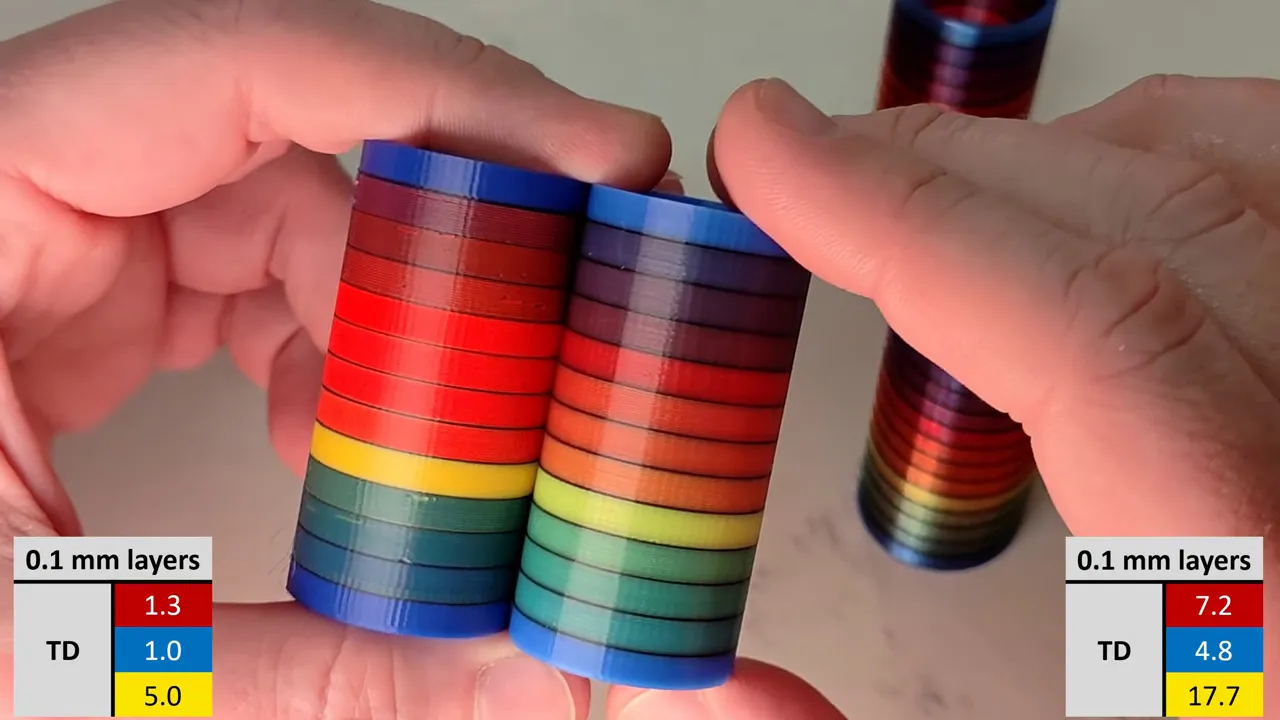
The hook behind FullSpectrum is very simple: stacking thin layers of colors, preferably with semi-translucent filament, allows for a surprising degree of mixing. The towers in the image above have only three colors: red, blue, and yellow. It’s not literally full-spectrum, but you can generate surprisingly large palettes this way. You aren’t limited to single-layer mixes, either: A-A-B repeats and even arbitrary patterns of four colors are possible, assuming you have a four-head tool changing printer like the Snapmaker U1 this is being developed for.
FullSpectrum is in fact a fork of Snapmaker’s fork of OrcaSlicer, which is itself forked from Bambu Slicer, which forked off of PrusaSlicer, which originated as a fork of Slic3r. Some complain about the open-source chaos of endless forking, but you can see in that chain how much innovation it gets us — including this technique of color mixing by alternating layers.
[Wombly Wonders] shows the limits of this in his video: you really want layer heights of 0.8 mm to 0.12 mm, as the standard 0.2 mm height introduces striping, particularly with opaque filaments. Depending on the colors and the overhang, you might get away with it, but thinner layers generally going to be a safer bet. Fully translucent filaments can blend a little too well at the edges, but the HueForge community — that we’ve covered previously — has already got a good handle on characterizing translucency and we’ll likely see a lot of that knowledge applied to FullSpectrum OrcaSlicer as time goes on.
Advertisement
Now, you could probably use this technique with an multi-material unit (MMU), but the tool-changing printers are where it is going to shine because they’re so much faster at it. With the right tool-changer, it’s actually faster to run off a model mixing colors from the cyan-yellow-magenta color space that it is to print the same model with the exact colors needed loaded on an MMU. That’s unexpected, but [Wombly] does demonstrate in his video with a chicken that’s listed as taking nineteen hours on Bambu’s MakerWorld as taking under seven hours.
Could this be the killer app that pushes tool-change printers into the spotlight? Maybe! Tool changing printers are nothing new, after all. We’ve even seen it done with a delta, and lots of other DIY options if you don’t fancy buying the big Prusa. If you’ve been lusting after such a beast, though, you might finally have your excuse.
We spend hours testing every product or service we review, so you can be sure you’re buying the best. Find out more about how we test.
Oukitel WP61 Plus: 30-second review
Unveiled at IFA 2025 in Berlin, the Oukitel WP61 Plus is the brand’s flagship all-in-one rugged smartphone, featuring a 20,000 mAh battery, an integrated 2W DMR walkie-talkie, and a high-powered camping flashlight.
But what is likely to confuse people is that the WP60 and WP62 have been available for some time, but Oukitel held the WP61 Plus back.
Advertisement
Built for outdoor professionals, search-and-rescue workers, or those who routinely find themselves in the great outdoors, the WP61 Plus is entering a highly competitive market.
There are four versions of the WP61 that all share the same SoC, memory, and storage model but differ in the special features included. There is a base model, the Plus model reviewed here, that has a 2W DMR walkie-talkie, the WP61 Ultra with thermal imaging, and the WP61 Ti with NTN Skylo Satellite communications.
All of them use the Dimensity 7025 processor, have 12GB of RAM, 512GB of storage and the same 108MP primary camera.
Advertisement
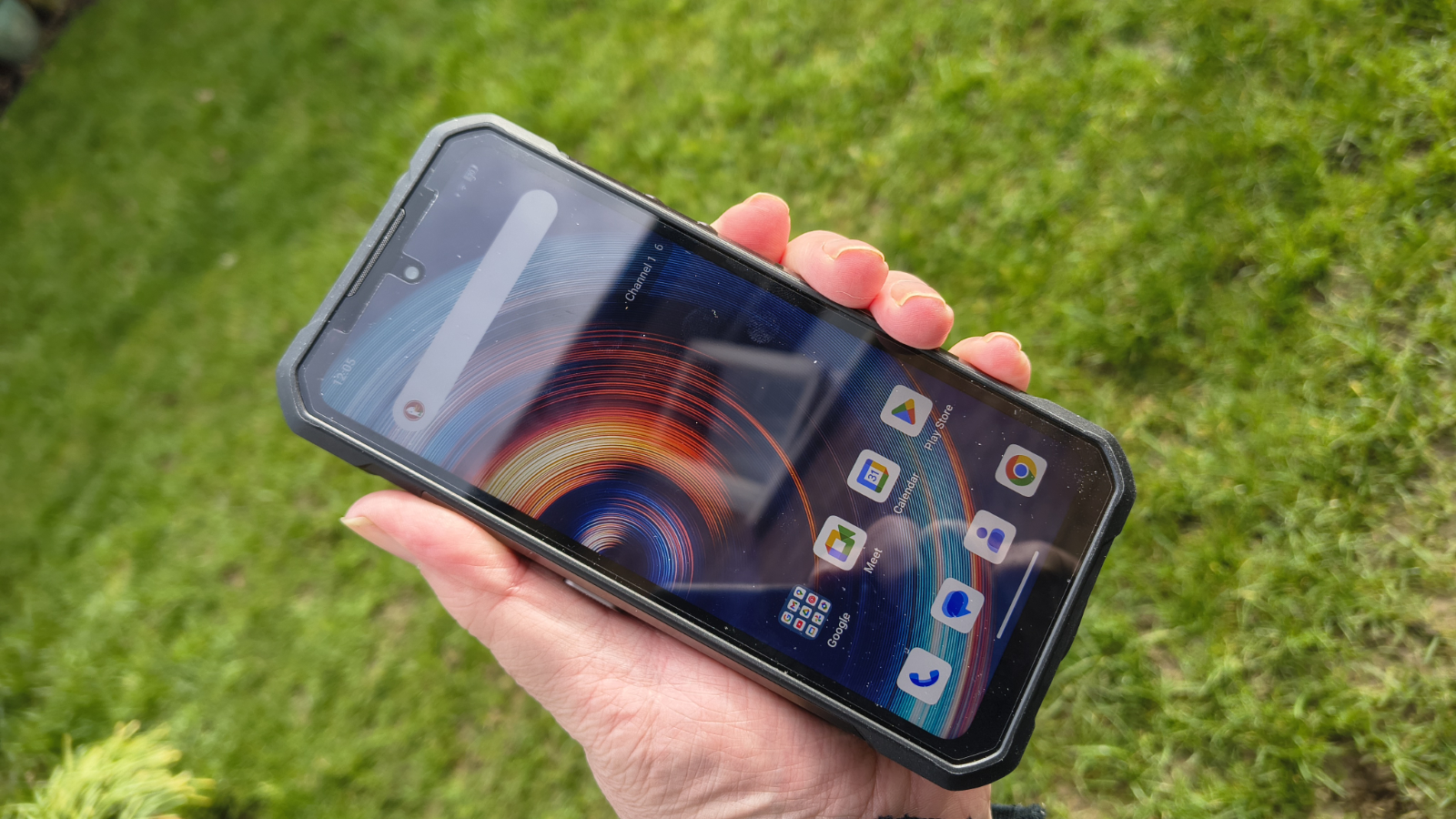
The large 6.8-inch FHD+ display runs at 120Hz, which is a welcome touch for a rugged device, and Android 16 puts it on the cutting edge for that platform
Where the WP61 Plus truly distinguishes itself, however, is in its extended utility features. The built-in DMR (Digital Mobile Radio) walkie-talkie operates at 2W and is designed to maintain group communications in areas where cellular coverage fails.
Sign up to the TechRadar Pro newsletter to get all the top news, opinion, features and guidance your business needs to succeed!
Oukitel quotes a range of 5.5km (3.4 miles) for DMR communications, but this will work without any cell service.
Advertisement
Combined with the camping light and the ability to act as a power bank for smaller devices, this phone is positioned less as a smartphone and more as a portable field communications and survival tool.
The only significant downside of this design is its physical scale; at over 650g, this isn’t a small or lightweight design, and with the walkie-talkie antenna attached, it becomes even more unwieldy.
The WP61 Plus might not break into our best rugged smartphone selection, but if you are looking for a general-purpose rugged phone for an adventure trek, then it could be an option.
(Image credit: Mark Pickavance)
Advertisement
Oukitel WP61 Plus: price and availability
How much does it cost? $370/£280/€323
When is it out? Available soon
Where can you get it? You can get it directly from Oukitel or via online retailers such as Amazon.
Direct from Oukitel, the asking price for the WP61 Plus is $369.99/£279.99/€322.68, which is a good deal if you accept the view that this is a discount from $499.99/£378.37/€436.06, a price at which this product has never been sold.
You read that correctly. At the time of writing, while Oukitel are promoting this product, it remains out of stock. Also, it’s not available via online retailers, but that’s probably right around the corner.
The Plus model is $50 more than the base model, but $60 less than the Ultra option. There is no price yet for the Satellite model.
There are lots of phones that use the same or similar SoCs, like the Blackview Oscal Tank 1, RugOne Xever 7 Pro, Doogee S200 and Oukitel WP300. All these are cheaper, but lack the DMR walkie-talkie technology.
Advertisement
Blackview has the Xplore 1 Walkie Talkie that sells for €383.95 direct from the makers, a good amount more than the WP61 Plus.
The Unihertz Atom XL is a much smaller phone with the same DMR technology, priced at $289.99 at the official Unihertz outlet. However, I’d avoid this phone because there are no US or Global models.
A better choice is the Armour 26 Ultra Walkie-Talkie, but its base price is $649.99, making it substantially more expensive.
For a DMR-capable phone, the WP61 Plus is reasonably priced, though it might seem a little expensive for the platform specification.
Advertisement
(Image credit: Mark Pickavance)
Oukitel WP61 Plus: Specs
Swipe to scroll horizontally
Item
Spec
CPU:
Advertisement
MediaTek Dimensity 7025 (6nm)
GPU:
IMG BXM-8-256
NPU:
Advertisement
MediaTek’s APU 780
RAM:
12GB
Storage:
Advertisement
512GB
Screen:
6.8-inch FHD+ LCD
Resolution:
Advertisement
1080 x 2460 pixels 650nits
SIM:
2x Nano SIM + TF (one shared position)
Weight:
Advertisement
651.6 grams
Dimensions:
179.5 x 85 x 27.5 mm
Rugged Spec:
Advertisement
IP68 IP69K dust/water resistant (up to 2m for 30 minutes), MIL-STD-810H Certification
Rear cameras:
108MP Camera + 8MP Night vision +2MP macro
Front camera:
Advertisement
32MP Sony IMX616
Networking:
5G bands, WiFi 5, Bluetooth 5.2
Audio:
Advertisement
130 dB 5W speaker
OS:
Android 16
Battery:
Advertisement
20000 mAh (45W wired, 5W reverse charge)
Colours:
Black
Advertisement
Oukitel WP61 Plus: design
Built for the field, not the pocket
DMR Antenna
Standard layout
The WP61 Plus makes no apologies for its bulk. At 179.5 x 85 x 27.5 mm, it is a substantial device, and one that is clearly engineered to accommodate its enormous 20,000mAh battery alongside the walkie-talkie antenna hardware and camping light module. The extra 27.5 mm of depth alone sets it apart as a very different prospect from a standard smartphone, and not one you can easily fit in a pocket.
What can make this design even more challenging to store is that in the box is a 92mm antenna for the DMR walkie-talkie that screws into the top right of the phone. You can choose not to attach that, but I presume that will impact the ability to communicate using that functionality.
The Oukitel WP series devices have traditionally used a combination of reinforced polycarbonate and aluminium alloy framing, and the WP61 doesn’t deviate from that, making it a device that can withstand heavy abuse.
The device supports a ‘seat charger’, a docking cradle that allows the phone to be mounted and charged in a fixed location, such as a vehicle dashboard or on a desk. This is a thoughtful addition for fleet operators or those who need their device always charged and ready. The dock isn’t included as standard, and its arrival date and price haven’t been released yet.
(Image credit: Mark Pickavance)
In terms of the general aesthetics and layout, there isn’t anything especially surprising about the WP61 Plus. The button arrangement is the one most rugged phones use, with the power (doubling as a fingerprint reader) and volume buttons on the right, the custom button on the left, where the SIM tray is also placed.
Advertisement
The buttons are all metal, and the sides of the chassis are all machined aluminium, making this phone feel both comfortable to hold and seemingly indestructible.
Both the top and bottom edges feature a waterproof plug: one for the antenna on the top and another covering the USB port on the bottom. Both of these are held in place with screws, suggesting they could be replaced when they wear out if Oukitel makes replacements available.
To avoid wearing out the USB-C cover, the dock has four metal contact points on its bottom face, allowing it to be charged without inserting a cable.
The rear has three noticeable features: a camping light, a 5W speaker, and the camera cluster. The 1200-lumen camping light is obscured by a reference sticker that contains important information you don’t want to misplace by peeling it off and throwing it away, annoyingly.
Advertisement
According to Oukitel, the speaker is rated at 130 dB, which would undoubtedly damage your hearing if you held it against your ear while it was making noise. The top-centre placement of that speaker also pushes the three rear camera lenses to the phone’s outer edge, which isn’t ideal.
While I’ve seen worse, the WP61 Plus seems to try to be many things at once and has slightly compromised some of its features in the process.
(Image credit: Mark Pickavance)
Design score: 3.5/5
Advertisement
Oukitel WP61 Plus: hardware
MediaTek Dimensity 7025
20000 mAh battery
Walkie-talkie
This is the third phone I’ve covered that uses the MediaTek Dimensity 7025, and I haven’t changed my opinion of it.
Instead of this being a new and exciting SoC, it’s a renaming of the older Dimensity 930, a chip from May 2022. If you research this silicon, you will find that the Dimensity 7025 was launched in 2024, but the underlying chip is at least two years older.
That explains why all the 70XX SoCs are made using a 6nm process, whereas all the 73XX and 74XX chips use the new and superior 4nm process.
Ironically, that’s not the biggest issue with this platform, since, as SoCs go, the Dimensity 7025 is an effective power-efficient system that delivers a good user experience for the most part.
A bigger problem is that the CPU is coupled with the IMG BXM-8-256 GPU, one of those PowerVR IMG designs that is poor by modern standards. It drives the Android 16 interface reasonably, but it’s not a game-friendly GPU. Critically, it lacks some of the OpenGL and Vulkan functionality that interactive graphics apps often use.
Advertisement
For the WP61 Plus’s intended use cases, it is a sensible and efficient choice, but more modern MediaTek designs, such as the Dimensity 7300 and 7400, offer far more potential.
In large, rugged phones, a 20000 mAh battery isn’t exceptional, but this device helps because it supports a 45W charger, which is included. That enables the phone to charge from zero to full capacity in about four hours, and get more than half of a charge in ninety minutes.
This is dramatically better than the WP60 offered with the same battery capacity, as that phone could only charge at 33W. Though, as I recall, the WP60 did reverse charge at 7W, where the WP61 Plus only puts out 5W.
(Image credit: Mark Pickavance)
You can get a similar platform and battery in a wide range of rugged phones, but the final feature I’ll talk about here is something that is in relatively few: a DMR (Digital Mobile Radio) walkie-talkie.
Advertisement
The radio in the WP61 Plus transmits at 2W, which is a meaningful output for direct device-to-device communication. DMR is a professional-grade digital radio standard, typically used in construction, security, and emergency services, making this a genuine productivity tool rather than a novelty. And, the hardware here can also work with Analogue technologies, alongside DMR-capable handsets.
As I only have one WP61 Plus, I wasn’t able to test the assertion that communication of over 5.5km was possible, but the technology is capable of that, so I don’t doubt it could work at that range in theory. The beauty of this technology is that it doesn’t rely on any other infrastructure to operate, though the practical range may be limited by terrain.
For those working together off the grid or at a building site, the range seems enough to be practical, even if it won’t work if you travel beyond the potential range, or put a mountain between those talking.
The custom button opens the DMR app to initiate a call, and you can select a channel to communicate over. While you can add custom channels, the app includes the standard DMR-approved channels for a range of countries, including Europe, the USA, Australia, and Taiwan. Iran, Korea, Malaysia, Russia, Japan and China.
Advertisement
As a matter of interest, I researched the DMR frequencies for various countries, and discovered that for some, like India, for higher power transmitters like this one, using 5W and with better range, a WPC license is required. So if you are not in any of the countries I previously listed, it might be worth researching which DMR channels you can use and any other clearances required before purchasing.
Even with those potential caveats, the DMR part of this device is undoubtedly the best aspect, should you have more than one of these or other DMR handsets to hand.
Oukitel WP61 Plus: cameras
108MP, 8MP night vision and 2MP Macro on the rear
32MP on the front
Four cameras in total
(Image credit: Mark Pickavance)
The Oukitel WP61 Plus has four cameras:
Advertisement
Rear camera: 108MP Samsung ISOCELL HM6 (S5KHM6), 8MP SK Hynix Hi-846 night vision IR sensor, 2MP BYD BF2257CS Macro Front camera: 32MP Sony IMX616 Sensor
Oddly, this camera arrangement is remarkably similar to a range of phones I’ve recently reviewed, except that many of them use a GalaxyCore sensor for the 2MP macro function, whereas the WP61 Plus uses the BYD BF2257CS for the same job.
The combination of the 108MP Samsung ISOCELL HM6 (S5KHM6) and the 8MP SK Hynix Hi-846 night-vision IR sensor was seen on the Oukitel WP60 Pro. But that phone didn’t use the Sony IMX616 front-facing sensor, and it used a GalaxyCore GC02M1 for the Macro.
The Sony IMX616 is better than the 32MP GalaxyCore GC32E1, but the 2MP Macro sensors don’t make a huge difference to the close-up shooting you can do.
Advertisement
The weakness of this layout is that the 108MP Samsung ISOCELL HM6 (S5KHM6) is used to avoid the need for zoom optics by providing a high-resolution sensor that can be cropped or pixel-binned. It offers a range of zoom settings from 1.0x to 4.0x. But it’s still not as good as having actual zoom optics, as the zoom jumps between settings, and the results for some digital zoom factors are better than for others.
The SK Hynix Hi-846 night vision sensor delivers impressive results in complete darkness, although it captures only in monochrome. And the Macro sensor is exceptionally grainy and requires excessive amounts of light to produce passable results.
Probably the biggest disappointment of this camera is that the primary Samsung ISOCELL has a resolution of 108MP, and you can shoot at that full resolution, but incredibly, the best video resolution available is only 1440p. That this phone, with a 108MP sensor, can’t offer 4K video is embarrassing.
The hardware is rated for 8K at 24 frames per second (fps) and 4K at 120fps, so the video resolution is down to the choices Oukitel made about the SoC and the Android camera application.
Advertisement
This camera can take some excellent still images, but if I were to drag a phone this big and heavy about the wilderness, I would at least expect it to shoot 4K video.
(Image credit: Mark Pickavance)
Oukitel WP61 Plus Camera samples
Image 1 of 12
(Image credit: Mark Pickavance)
(Image credit: Mark Pickavance)
(Image credit: Mark Pickavance)
(Image credit: Mark Pickavance)
(Image credit: Mark Pickavance)
(Image credit: Mark Pickavance)
(Image credit: Mark Pickavance)
(Image credit: Mark Pickavance)
(Image credit: Mark Pickavance)
(Image credit: Mark Pickavance)
(Image credit: Mark Pickavance)
(Image credit: Mark Pickavance)
Oukitel WP61 Plus: performance
Older 6nm SoC
GPU issues with OpenGL 3.1 and Vulkan 1.3
Great battery life
Swipe to scroll horizontally
Phone
Oukitel WP61 Plus
Advertisement
Blackview Oscal Tank 1
SoC
MediaTek Dimensity 7025
MediaTek Dimensity 7050
Advertisement
GPU
IMG BXM-8-256
Mali‑G68 MC4
NPU
Advertisement
MediaTek’s APU 780
MediaTek NPU 550
Memory
12GB/512GB
Advertisement
12GB/256GB
Weight
656g
640g
Advertisement
Battery
20000
20000
Geekbench
Advertisement
Single
959
920
Multi
Advertisement
2362
2466
OpenCL
failed
Advertisement
2471
Vulkan
failed
3036
Advertisement
PCMark
3.0 Score
13080
11684
Advertisement
Battery
40h 9m Est.
33h 57m Est.
Charge 30
Advertisement
%
28
13
Passmark
Advertisement
Score
6620
6861
CPU
Advertisement
5284
5285
3DMark
Slingshot OGL
Advertisement
3741
5293
Slingshot Ex. OGL
3738
Advertisement
4150
Slingshot Ex. Vulkan
2614
3940
Advertisement
Wildlife
Failed
2232
Row 19 – Cell 0
Nomad Lite
Advertisement
Failed
266
Rather than putting the WP61 Plus against another phone with the same SoC, I thought it might be appropriate to compare it with a marginally better chip, so I chose the Blackview Oscal Tank 1. It uses the MediaTek Dimensity 7050, slightly better than the 7025.
Both of these phones have the same battery capacity and RAM, which makes them closer to each other than many other rugged phones. size
Advertisement
What these results show is that the Dimensity 7025 is modestly slower than the 7050 used in the Tank 1, until you test it with a graphics benchmark. The IMG BXM-8-256 GPU can’t run the OpenGL and Vulkan APIs used by GeekBench and is required for 3DMark Wildlife and Nomad Lite.
But the upside of poor GPU performance is that the battery lasts much longer, with the WP61 Plus running for more than 40 hours. However, that result is a predicted endpoint because, like the Oscal Tank 1, the WP61 Plus crashed PCMark before exhausting the battery. Not sure if this is an issue with the benchmark or how both these phone makers are managing their batteries.
The overall performance of the WP61 Plus is fine for most uses, but it’s not a phone that gamers or anyone who uses VR will embrace. However, with curation, the battery could easily last six days or more, which could be useful off-grid.
(Image credit: Mark Pickavance)
Advertisement
Oukitel WP61 Plus: Final verdict
The Oukitel WP61 Plus is a device that sets out to do something genuinely different in a crowded market. Rather than competing solely on processing power or camera resolution, it bundles a professional-grade walkie-talkie, an enormous battery, and a camping light into a package that could plausibly replace multiple pieces of equipment for an outdoor professional or expedition team.
The Dimensity 7025 is not the most exciting chipset, and the physical dimensions mean this is not a device you will comfortably carry in a trouser pocket. But if your priorities are extended endurance, off-grid communications, and resilience in harsh environments, the WP61 Plus presents a compelling case at the asking price.
How useful DMR technology is to you will depend on whether you already use it or intend to buy multiple phones for walkie-talkie use. If it’s not something you’ll use immediately, you could save yourself $50 by buying the base model, since it has everything else I’ve mentioned here.
Advertisement
Should I buy a Oukitel WP61 Plus?
Swipe to scroll horizontally
Oukitel WP61 Plus Score Card
Attributes
Notes
Rating
Value
Advertisement
Reasonable cost for a well-made device
4/5
Design
Substantial but purpose-built for outdoor use
Advertisement
3.5/5
Hardware
Unique walkie-talkie, 20,000mAh battery and mid-range SoC
4/5
Advertisement
Camera
Good for still images, but the lack of 4K video is poor
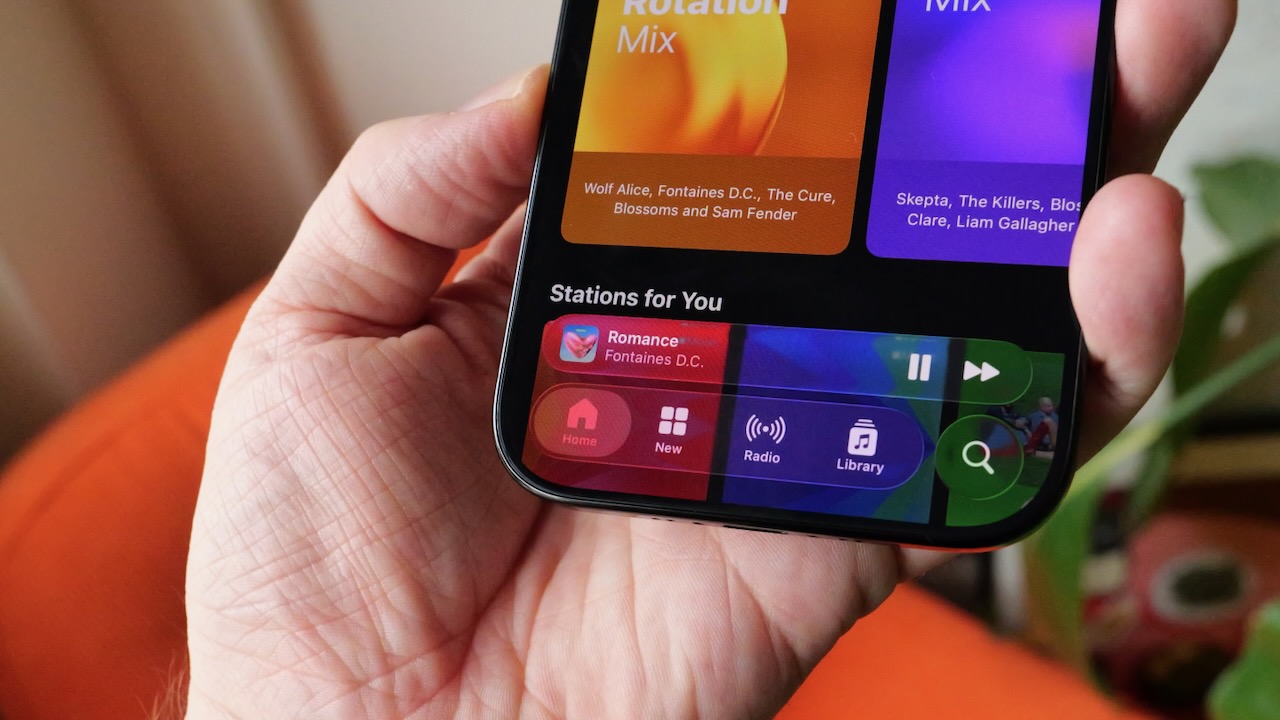
Liquid Glass first arrived across Apple’s recent platforms, including iOS 26 and macOS Tahoe. This brought a translucent, layered look to menus, widgets and system UI elements. While the redesign sparked mixed reactions from users, it appears Apple is committed to refining the style. They are refining it rather than replacing it.
The report says internal versions of iOS 27 and macOS 27 largely stick with the same design direction. That’s partly because the interface has strong backing internally. Apple’s new software design chief Steve Lemay — who took over the role after Alan Dye departed for Meta — was closely involved in developing Liquid Glass. In fact, he is expected to continue evolving the concept rather than replacing it outright.
Advertisement
That approach mirrors how Apple handled another major visual shift in the past. When iOS 7 abandoned skeuomorphic textures for a flat design, Apple spent several years gradually refining the look. Instead of dramatically changing it again, they chose to refine it.
Advertisement
In the meantime, Apple has already started offering small tweaks for users who find the effect too strong. Updates like iOS 26.1 introduced a “Tinted” option that increases the opacity of Liquid Glass elements across the system. Additionally, iOS 26.2 added a slider to adjust the transparency of the Lock Screen clock.
Apple had reportedly explored a system-wide Liquid Glass opacity slider during the development of iOS 26. However, they ran into engineering challenges when trying to apply the setting consistently across the entire interface. According to Gurman, the company could revisit that idea in a future version of iOS 27.
Advertisement
For now, though, the direction seems clear: Liquid Glass isn’t a short-lived experiment; it’s the foundation of Apple’s next generation of software design.
No matter how much we don’t like and oppose it, personal data is now a commodity. Our phone numbers, addresses, shopping habits, or employment history details are collected, analyzed, and traded among data brokers, marketers, recruiters, insurers, and countless other buyers, not to mention frauds and thieves.
However, trying to remove your online presence manually means tracking down every single company that holds your data (which can be hundreds), submitting legal deletion requests, and repeating the process when your data reappears or your request is ignored. This can easily become a full-time job.
That’s why data broker removal services exist: to automate, manage, and repeat those requests on your behalf.
But how to choose the best provider? Below, you will find a 2026 evaluation of the most recognized names in the industry.
Advertisement
Top Data Broker Removal Services at a Glance
Category
Incogni
Aura
DeleteMe
Optery
OneRep
Pricing (monthly when billed annually)
From $7.99
From $9.99
From $6.97
From $3.25
From $8.33
Free option
30-day money-back guarantee
14-day free trial, 60-day money-back guarantee
Free scan
Basicself-service, 30-day money-back guarantee
5-day trial, 30-day money-back guarantee
Automation Level
High
Medium-High
Medium-Low
Medium
Medium-High
Broker coverage
420+ public and private brokers
200+ brokers, mainly private
up to 850+ brokers (varies by plan), mainly public
120-640+sites (varies by plan)
310+ sites, mainly public
Verification
Dashboard, Deloitte Limited Assurance Report
App alerts and screenshots
Quarterly reports and screenshots
Screenshots and exposure scans
Dashboard and monthly reports
Best for
Long-term, low-effort privacy
Identity + privacy bundle
Detailed proof and control
Data exposure prediction
Public removals, Families
Incogni: Best for Balanced Automation, Coverage, and Accountability
Overview and Pricing
Incogni focuses on the continuous removal of personal data from data brokers, including both public people-search sites and private commercial databases.
Incogni’s plans start at $7.99/month when billed annually, and even the basic option contains all you need for effective data removal. Higher-tier plans only change prioritization and scope. There’s no free option, but you can take advantage of its 30-day money-back guarantee to see if the service suits your needs.
Features
Fully-automated opt-out and deletion requests across 420+ data brokers
Recurring removal cycles: 60 days for public, 90 days for private brokers
Supported by Deloitte’s limited assurance assessment, Incogni officially reports that it has processed 245+ million removal requests from 2022 to mid-2025, indicating sustained operations rather than one-time cleanups. As data brokers can reacquire information and their databases refresh regularly, the recurring cycle is vital if you want to protect your online footprint in the long run.
Transparency and Reputation
Apart from a limited assurance report by Deloitte, the service also holds Editors’ Choice Awards from PCMag and PCWorld, which praise its automation system and wide coverage.
On Trustpilot, Incogni has generally positive feedback, with an average rating of 4.4 based on over 2,000 reviews. Users often note actual reductions in spam and visible listings.
Advertisement
User Experience
Once you set up your account, you need to verify your identity. After that, Incogni will handle most data removal activity in the background without involving you directly. The clear, straightforward dashboard will show you all the brokers Incogni has contacted, confirmed removals, responses, and next scheduled cycles. You can peek into it whenever you like, but you don’t have to engage to make the process effective.
Advantages
Disadvantages
High automation
No screenshots
Broad coverage
No free trial
Deloitte Limited Assurance Report
Basic reporting
30-day money-back guarantee
Phone support only on Unlimited plans
Industry recognition
Recurring cycles and resubmitted requests
Clear interface, straightforward user experience
Aura: Best All-in-One Identity and Privacy Suite
Overview and Pricing
Aura is not a provider like others on this list, as it combines data removal service with broader digital protection features, including credit alerts, antivirus, VPN, device security, and identity theft monitoring.
Aura’s prices begin at $9.99/month when billed annually. What’s more, you get a 14-day free trial and a 60-day money-back guarantee for risk-free testing.
Features
Automated data removal across 200+ data brokers (mainly private)
Identity theft monitoring
Dark web monitoring
Credit score and breach alerts
Antivirus/anti-malware protection
VPN
Family and multi-device plans
Effectiveness
When it comes to data removal itself, this Aura functionality is automated. The platform first scans broker and people-search sites, submits deletion requests whenever finding your
information, and re-checks for reappearances. However, as it’s not its main focus, its data removal coverage is quite narrow compared to dedicated solutions. Aura’s value is the strongest only if combined with the whole toolkit.
Advertisement
Transparency and Reputation
Aura has been widely described in the identity protection space with overall positive sentiments. You can find Aura reviews on PCMag, Forbes, and NerdWallet. On Trustpilot, it holds an average rating of 4.2 based on almost 1,000 reviews. Users appreciate its all-in-one service, but broker removal results themselves don’t match those ensured by services focused exclusively on that problem.
User Experience
Aura’s interface contains all the features offered by the providers, showing alerts, scans, security postures, removal status, and more. This holistic view appeals to people who seek central management of their online presence, but for many users, it can be overwhelming.
Advantages
Disadvantages
Privacy+security bundle
Narrower coverage
Insurance
Manual approval steps
60-day money-back guarantee
Overwhelming user experience
14-day free trial
No third-party verification
Comprehensive alerts
DeleteMe: Strong for Proved Public People-Search Listing Deletion
Overview and Pricing
DeleteMe focuses on public people-search sites and background information databases. These are mentions that usually appear in search results when someone Googles your name.
The cheapest DeleteMe plan is $6.97/month when billed annually and can be used by 1 person.
Advertisement
Features
Automated scans of people-search sites (up to 850+, depending on the plan)
Expert manual handling
Quarterly detailed reports
Coverage for individuals, couples, and families
Limited custom removal requests (40-60 per year, plan-dependent)
DIY opt-out tutorials
Effectiveness
DeleteMe is quite effective at removing visible information from many major public listings. The company was a pioneer when, in 2010, it entered the industry with its
part-automatic, part-human-assisted approach. The team submits requests and tracks
progress, then provides you with scheduled, detailed reports that include, for example, even screenshots.
Transparency and Reputation
DeleteMe has been in the industry since 2010, which says a lot about its reliability. It has generally positive user reviews, especially when it comes to its detailed reporting system and exhaustive explanations about what was removed. There have been no third-party assessments of its services, but the provider has a good reputation in the industry, as seen in the review in PCMag or praise from Forbes. When it comes to user feedback, it has a rating of
4.0 on Trustpilot, though based only on 180+ reviews.
Advertisement
User Experience
Contrary to Incogni’s live and always-on progress monitoring, which you can check but don’t have to, DeleteMe is more report-centric. Users receive quarterly PDF summaries that show what sites were contacted, where their information was removed, and what remains pending.
Many people appreciate their human approach.
Advantages
Disadvantages
Clear, detailed reporting
Slower cycles
Long-standing service
Less automation
Human expertise
Narrower broker reach
30-day money-back guarantee
US-mainly coverage
Optery: Best for Exposure Visibility
Overview and Pricing
Optery’s main field of expertise is discovering where your personal data exists, providing users with insight into exposures before and during removal attempts.
Optery’s offer starts at $3.25/month when billed annually. The company also has a free, self-service version. Apart from that, you get a free scan and a 30-day money-back guarantee.
Advertisement
Features
Exposure dashboard displaying where your personal data exists
Automated removal from up to 630+ brokers with paid plans
Initial free scan across 120+ sites and free self-service plan
Guided removal request sending process
Custom removal submissions
Manual tracking of opt-outs and their status
Effectiveness
Optery is most effective at identifying where your personal data has been exposed. Then, for its removal, it blends automatic attempts with user-guided actions and manual tracking.
It doesn’t have the same automated recurring cycles as, for example, Incogni, but it may be helpful if you want to truly understand data exposures.
Transparency and Reputation
Optery is often highlighted for its exposure insights and transparency. Users appreciate the “seeing where my data lives” model, but many note that broader coverage comes only with more expensive plans, while manual user input is still needed.
On Trustpilot, Optery has 171 reviews with an average rating of 4.1. It has also been reviewed by PCMagquite enthusiastically, though they mentioned that the service doesn’t distinguish between removed data and never-found data. TechRadarpraised it for its ease of use.
User Experience
Optery is more interactive and gives you more control of the process (which can be both an advantage and a disadvantage, depending on how much time you’re willing to sacrifice). Its dashboard clearly shows where your personal data is, and then you need to decide which removals are more important and what to do next. You also get before and after screenshots as visual proof, while reports are AI-improved to make them more accurate and detailed.
Advertisement
Advantages
Disadvantages
Free scan
Broader coverage with more expensive plans
Free self-service
US-focused
30-day money-back guarantee
Slower with cheaper plans
Clear interface & control
No phone support
Onerep: Best for Public Listing Removal and Families
What It Does
OneRep automates removal requests issued to public people-search sites. Its focus is on high-risk databases like Intelius and Whitepages. The service also ensures quarterly recurring checks to combat resurfacing of your data.
However, there’s significant controversy around the company (more of that below).
Onerep’s prices start at $8.33/month when billed annually. It also offers a 5-day free trial. What makes it attractive and more affordable is its family plans that cover up to 6 members.
Features
Automated scans and removal requests across 310+ data brokers
Quarterly re-scanning
Great family value
Clear and straightforward dashboard tracking
Effectiveness
Optery is effective when it comes to reducing online visibility on many public sites, including those deemed high-risk. However, this provider doesn’t focus on private commercial
brokers that are responsible for a large portion of the spam. It makes Optery’s reach much narrower.
Advertisement
Transparency and Reputation
OneRep has a mixed reputation in the privacy protection community.
User reviews vary: some praise successful public listing removals, while others complain about slow relisting or only partial effects. Still, it holds a quite impressive average rating of
However, it’s essential to know that Krebs on Security revealed that in March 2024, Mozilladecided to drop OneRep from its list of recommendations due to the company’s CEO’s involvement in running people-search networks. This raised serious questions about conflict of interest in the industry. While the provider stated that Onerep operates completely independently and never sells user information, it is still often referenced in privacy circles.
Advertisement
User Experience
Onerep’s dashboard is pretty simple to manage. It shows progress on targeted sites and all removal requests, though it’s not really an automated model, so it only suits users who don’t mind handling the process.
Advantages
Disadvantages
Great family value
Industry controversies
5-day free trial
30-day money-back guarantee highly conditioned
Quarterly re-scans
US focus
Public listing coverage
Little customization
No third-party verification
Narrower scope
Final Perspective for 2026
When it comes to choosing a data removal service, the main difference is usually in scope and depth. Some providers focus on visible people-search listings, while others dig deeper to find your personal information in harder-to-find databases. They also vary in the recurring cycles they offer (or not).
Managing your overall online visibility is vital, but if you really want to reduce the amount of your information circulating on the web, you need to focus on less visible broker networks. Or rather, choose a provider built around large-scale broker coverage. Only then will you be able to enjoy more sustained results.
In 2026, Incogni stands out among its competition, as it combines a wide broker reach, continuous removal cycles, and a streamlined, low-maintenance experience. Not to mention that it was independently assessed. While other providers are not to be altogether dismissed, Incogni’s focused, automated approach offers the most comprehensive way out.
Advertisement
FAQ
Why can’t I just remove my data from brokers myself?
Manual removal means identifying hundreds of brokers, submitting individual opt-out requests, repeatedly verifying your identity, and rechecking when your data reappears. For most people, that quickly becomes too time-consuming to manage consistently.
How often does my data reappear after removal?
Advertisement
Data brokers regularly refresh and repurchase data, which means listings can resurface even after deletion. That’s why recurring removal cycles are critical for long-term results.
What’s the difference between public and private data brokers?
Public brokers (like people-search sites) display your information in search results, while private brokers trade data behind the scenes with marketers, insurers, and other businesses. Private databases often contribute more to spam and profiling, even if you don’t see them.
Advertisement
Do all services provide proof that removals were completed?
No. Some providers offer screenshots or quarterly reports, while others rely on dashboards or summary updates. The level of transparency varies significantly by service.
Advertisement
Is a bundled identity protection service enough for data removal?
All-in-one tools can help, but their broker coverage is often narrower than services dedicated specifically to data removal. If reducing online exposure is your main goal, specialized coverage may deliver stronger results.
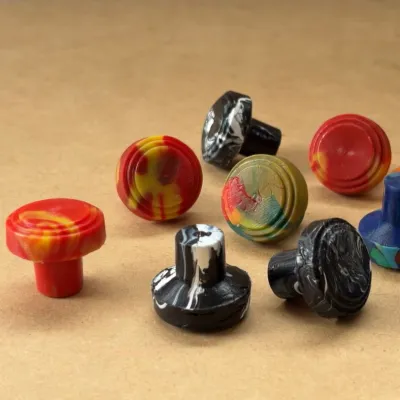
Recycling plastic at home using 3D printed molds is relatively accessible these days, but if you do not wish to invest a lot of money into specialized equipment, what’s the most minimal setup that you can get away with? In a recent [future things] video DIY plastic recycling is explored using only equipment that the average home is likely to have around.
Lest anyone complain, you should always wear PPE such as gloves and a suitable respirator whenever you’re dealing with hot plastic in this manner, just to avoid a trip to the emergency room. Once taken care of that issue, there are a few ways of doing molding, with compression molding being one of the most straightforward types.
With compression molding you got two halves of a mold, of which one compresses the material inside the other half. This means that you do not require any complex devices like with injection molding, just a toaster oven or equivalent to melt the plastic, which is LDPE in this example. The scrap plastic is placed in a silicone cup before it’s heated so that it doesn’t stick to the container.
The wad of goopy plastic is then put inside the bottom part of the mold before the top part is put in place and squeezed by hand until molten plastic comes out of the overflow opening(s). After letting it fully cool down, the mold is opened and the part released. Although the demonstrated process can be improved upon, it seems to work well enough if you are aware of the limitations. In terms of costs and parts required it’s definitely hard to come up with a cheaper way to do plastic molding.
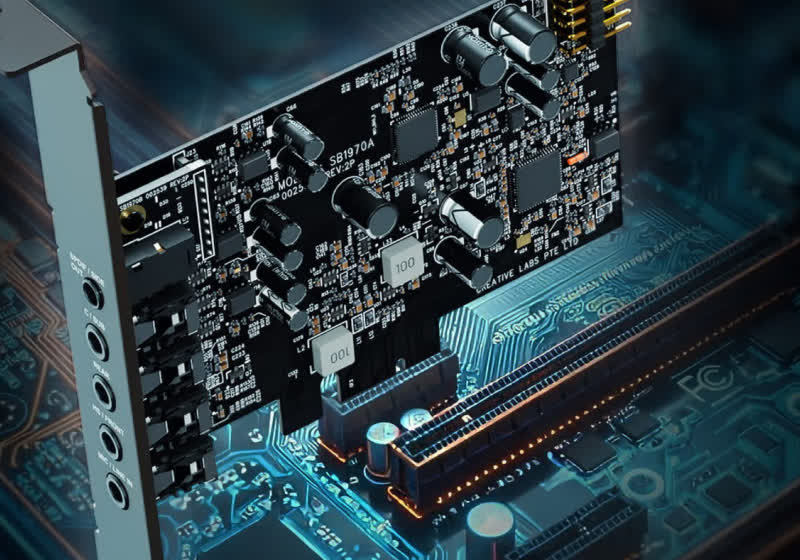
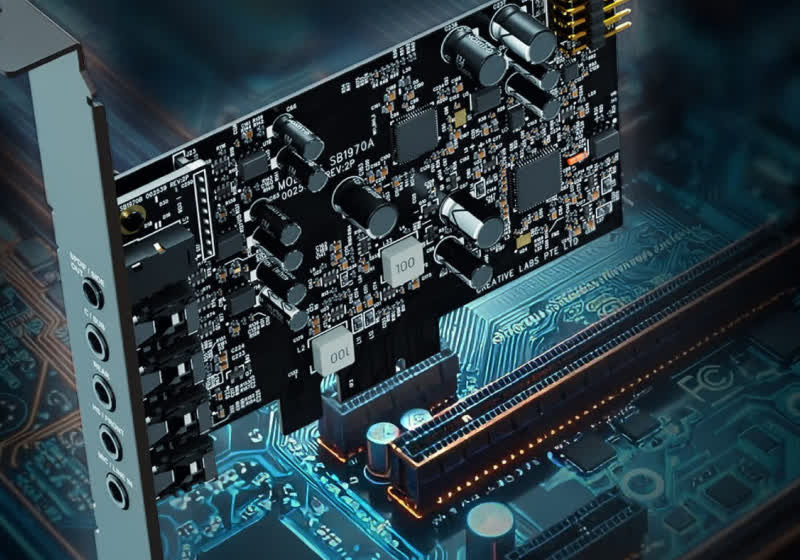
While the traditional discrete sound card has largely become a niche product for enthusiasts and hardware obsessives, Creative is attempting to attract new customers with a fresh model. The newly launched Sound Blaster Audigy Fx Pro can significantly upgrade the audio experience, the company says, and includes an additional layer… Read Entire Article Source link
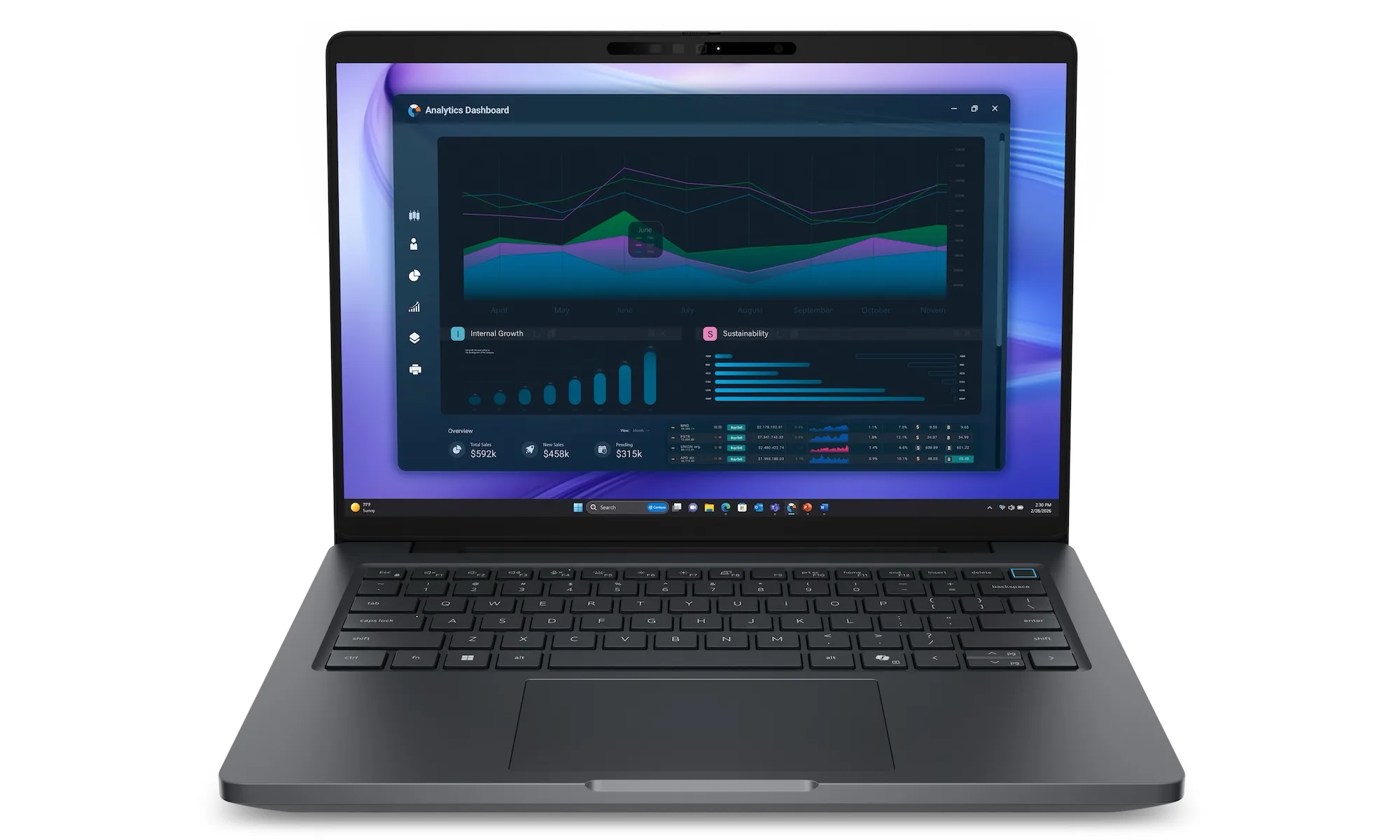
Dell has officially refreshed its Precision lineup with four new laptops, and there’s something here for every professional. The new range includes the Precision 5 Series in 14-inch and 16-inch sizes and the more powerful Precision 7 Series in the same size configurations. All four laptops are designed for users who demand more than a standard laptop can deliver.
All models are powered by the Series 3 Intel Core Ultra processors, with a built-in NPU that handles local AI tasks at up to 50 TOPS. You can spec the Precision 5 laptops with Intel Core Ultra 5, Ultra 7, and Ultra 9, and the Precision 7 laptops with Core Ultra 7, Ultra 9, and Ultra X7 processors.
Both Precision series can be equipped with up to 64GB of RAM, with the only difference being that the Precision 7 series gets onboard RAM. You also get NVIDIA RTX PRO Blackwell graphics across the range, though the top-end Precision 7 pushes all the way up to the RTX PRO 3000 with 12GB of dedicated video memory.
Which one should you pick?
The Precision 5 is the friendlier entry point. The 14-inch version weighs only 3.98 lbs and offers a QHD+ display (non-touch) option, up to 2TB of Gen5 NVMe storage, and a 72Wh battery.
Advertisement
Dell
The larger 16-inch model is essentially the same, with the only difference being an option to get a more powerful NVIDIA RTX PRO 2000 Blackwell graphics, a bigger display, and a larger 96Wh battery.
The Precision 7 is where things get serious. The 14-inch model weighs 3.51 lbs, which is impressive given what’s packed inside, including an optional QHD+ Tandem OLED display with VESA HDR TrueBlack 500 support.
Dell
The 16-inch bumps up to a 4K Tandem OLED with a 120Hz refresh rate and HDR TrueBlack 1000. If you work with color-critical content, that display alone is worth a serious look. You can also spec both these models with up to 4TB Gen5 NVMe SSDs.
Both 7 Series models feature Thunderbolt 5 ports, a significant upgrade for anyone who regularly transfers large files or relies on high-bandwidth accessories. You also get Wi-Fi 7, Bluetooth 6.0, and an 8MP IR camera on all models.
Is it worth the upgrade?
There’s no doubt that the Dell Precision laptops are packed with features and the latest hardware. However, whether they are worth buying will totally depend on their price.
The Champlain Hudson Power Express, a $6 billion, 339-mile buried transmission line, will soon deliver Canadian hydropower from Hydro-Quebec to New York City. The project could supply up to 20% of the city’s electricity and power roughly one million homes throughout the year. “This is far and away the largest project I have ever worked on,” said Bob Harrison, who has worked in infrastructure for 40 years and is the head of engineering for the Champlain Hudson Power Express. “We like to say it’s the largest project you’ll never see.” The New York Times reports: The massive power project, expected to provide energy to a million New York City customers a year, travels underground and underwater, from the northern plains at the Canadian border to the filled-in marshlands of coastal Queens, much of it loosely following the Hudson River. Its construction included the underwater installation of more than two million feet of cable imported from Sweden. It also required special boats, loaded with equipment that could shoot water jets deep into the sediment, to create trenches for the cable. Then, when it came to placing cable beneath the landscape, more than 700 land-use easements were needed, plus an additional 1.55 million feet of cable.
The Champlain Hudson Power Express has found a way to plug into the city, but it wasn’t easy. The work included 10 new manholes and more than three miles of new underground circuitry, according to Con Edison, the city’s primary electricity provider. “It was literally a hand weave under the streets of Queens,” said Jennifer Laird-White, the head of external affairs for Transmission Developers. The hydropower travels from Canada via two buried cables that are as round as cantaloupes. Those lines snake for hundreds of miles under a lake, several rivers (including the Hudson for about 90 miles) and through buried trenches alongside train tracks and roads. The cables resurface in Astoria, Queens, where a converter station shapes, filters and refines the raw power into a product that New Yorkers can consume.
In two cavernous rooms that could be mistaken for “Star Wars” sets, the electricity flows through 30 hanging structures encased in what look like metallic, dinosaurlike exoskeletons. Each one weighs about as much as a small humpback whale and contains microprocessors, thousands of valves and fiber wires. “I am still wowed when I walk into that facility,” said Mr. Harrison, the engineer. “I mean, it is just mind-boggling.”
Nvidia CEO Jensen Huang threw out a lot of numbers — mostly of the technical variety — during his keynote Monday to kick off the company’s annual GTC Conference in San Jose, California.
But there was one financial figure that investors surely took notice of: his projection that there will be $1 trillion worth of orders for Nvidia’s Blackwell and Vera Rubin chips, a monetary reflection of a booming AI business.
About an hour into his keynote, Huang noted that last year Nvidia saw about $500 billion in demand for its Blackwell and upcoming Rubin chips through 2026.
“Now, I don’t know if you guys feel the same way, but $500 billion is an enormous amount of revenue,” he said. “Well, I’m here to tell you that right now where I stand — a few short months after GTC DC, one year after last GTC — right here where I stand, I see through 2027, at least $1 trillion.”
Advertisement
The Rubin computing chip architecture, which was first announced in 2024, has been described by Huang as the state of the art in AI hardware that outperforms its Blackwell predecessor. The company said in January, when it officially started production of Rubin, it would operate 3.5x faster than the Blackwell architecture on model-training tasks and 5x faster on inference tasks, reaching as high as 50 petaflops.
Nvidia has said it expects to ramp up production in the second half of the year.
Viral AI prompts are usually just a little party trick, but a new one shared on Reddit promised to evoke actual feelings, simply by asking ChatGPT to travel to the future on your behalf and send a letter from a more successful version of yourself.
Specifically, the prompt designed by the user was:
“You are me, 10 years in the future. You have achieved everything I am currently working toward. Write a letter to the present-day me (who is struggling with [insert your current worries]). Be kind, specific, and encouraging. Sign it ‘Love, Future You.’ “
Advertisement
Article continues below
The idea sounded equal parts sentimental and intriguing. At worst, I expected a generic motivational speech. The response letter quickly appeared and surprised me a little with its depth of insight and knowledge.
Advertisement
Future letter
“Dear Eric,” it began, “I know exactly where you’re sitting as you read this. The desk is tidy, the bookshelves are a little too full, there’s probably coffee somewhere within arm’s reach, and your mind is running about six different loops at once.”
That description was essentially accurate both of my environment and my thinking. I suspect it was a little generic there simply because it’s hardly unusual to have a lot on your mind. The letter continued by outlining the kinds of worries that tend to swirl around people working in creative or technology-driven fields.
“One of them is about work. Another is about whether the ideas you’re chasing will actually go anywhere. A third is about the usual daily juggling act of family, deadlines, and trying to make something meaningful out of a world that changes faster every year.”
Sign up for breaking news, reviews, opinion, top tech deals, and more.
Advertisement
The message framed the present moment as a temporary stage of uncertainty. Instead of offering grand promises, the letter leaned into the idea that progress tends to appear gradually. “The fog lifts. Not all at once, and not in some cinematic breakthrough where everything suddenly clicks. It clears gradually, the way morning does.”
The advice continued in that quietly reflective tone. According to this imagined future self, the scattered creative experiments that often feel unfocused are actually the key to finding a distinctive voice.
Toward the end, the advice became more direct. “If I could give you one practical piece of advice from ten years down the road, it would be this: keep following your curiosity instead of your anxiety. The fog you feel right now is just the early part of the journey. Keep going. Love, Future You.”
Advice from yourself
Reading the letter, the most surprising thing was not the encouragement itself but how believable the voice felt. ChatGPT was not simply producing generic optimism. It was weaving together familiar experiences, creative anxieties, and the kinds of personal details that make a message resonate.
Experiments like this highlight a broader shift in how people are starting to use AI tools. Much of the early conversation around chatbots focused on efficiency. The promise was that AI could summarize documents, answer questions, or automate tasks.
Prompts like the “future self” exercise reveal how AI can function as a reflective writing partner. Instead of treating the chatbot purely as a tool for information, users frame prompts that encourage perspective, storytelling, and emotional insight.
Advertisement
In that sense, the exercise works less like advice from a machine and more like a structured form of self-reflection. The AI synthesizes common human experiences and presents them back in a narrative voice that feels thoughtful and personal.
It also explains why prompts like this spread so quickly online. People are not just searching for productivity shortcuts. They are experimenting with ways to use AI to think differently about their own lives.
Of course, the technology itself is not peering into anyone’s future. ChatGPT is simply assembling language based on patterns it has learned from people. When those patterns are guided by a carefully framed prompt, the results can feel remarkably meaningful. The power of the exercise comes from the framing rather than the prediction.
As a way of starting up your own self-reflection, the prompt works surprisingly well. Try it on ChatGPT yourself today and see what you get back.















































You must be logged in to post a comment Login