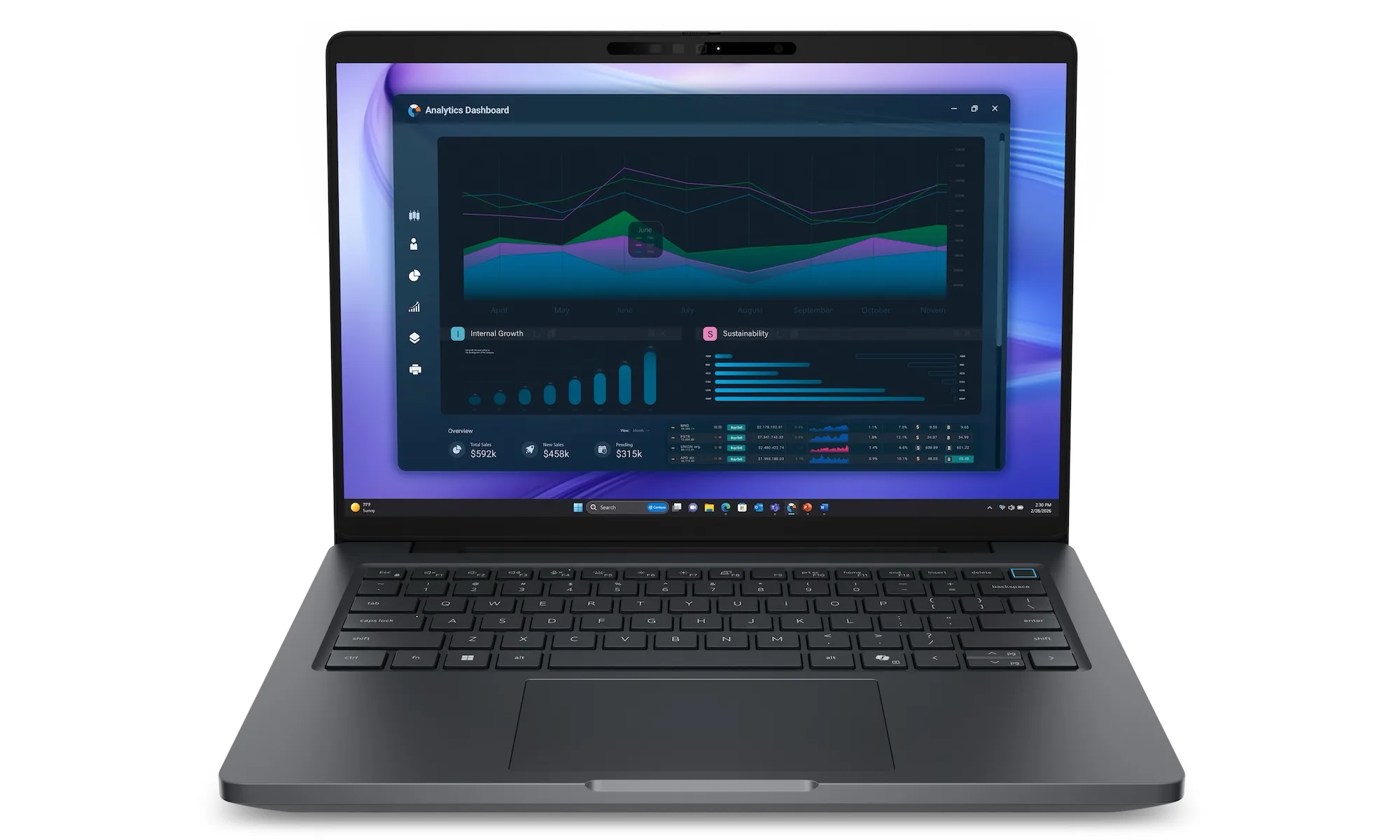
Dell has officially refreshed its Precision lineup with four new laptops, and there’s something here for every professional. The new range includes the Precision 5 Series in 14-inch and 16-inch sizes and the more powerful Precision 7 Series in the same size configurations. All four laptops are designed for users who demand more than a standard laptop can deliver.
All models are powered by the Series 3 Intel Core Ultra processors, with a built-in NPU that handles local AI tasks at up to 50 TOPS. You can spec the Precision 5 laptops with Intel Core Ultra 5, Ultra 7, and Ultra 9, and the Precision 7 laptops with Core Ultra 7, Ultra 9, and Ultra X7 processors.
Both Precision series can be equipped with up to 64GB of RAM, with the only difference being that the Precision 7 series gets onboard RAM. You also get NVIDIA RTX PRO Blackwell graphics across the range, though the top-end Precision 7 pushes all the way up to the RTX PRO 3000 with 12GB of dedicated video memory.
Which one should you pick?
The Precision 5 is the friendlier entry point. The 14-inch version weighs only 3.98 lbs and offers a QHD+ display (non-touch) option, up to 2TB of Gen5 NVMe storage, and a 72Wh battery.
Advertisement
Dell
The larger 16-inch model is essentially the same, with the only difference being an option to get a more powerful NVIDIA RTX PRO 2000 Blackwell graphics, a bigger display, and a larger 96Wh battery.
The Precision 7 is where things get serious. The 14-inch model weighs 3.51 lbs, which is impressive given what’s packed inside, including an optional QHD+ Tandem OLED display with VESA HDR TrueBlack 500 support.
Dell
The 16-inch bumps up to a 4K Tandem OLED with a 120Hz refresh rate and HDR TrueBlack 1000. If you work with color-critical content, that display alone is worth a serious look. You can also spec both these models with up to 4TB Gen5 NVMe SSDs.
Both 7 Series models feature Thunderbolt 5 ports, a significant upgrade for anyone who regularly transfers large files or relies on high-bandwidth accessories. You also get Wi-Fi 7, Bluetooth 6.0, and an 8MP IR camera on all models.
Is it worth the upgrade?
There’s no doubt that the Dell Precision laptops are packed with features and the latest hardware. However, whether they are worth buying will totally depend on their price.
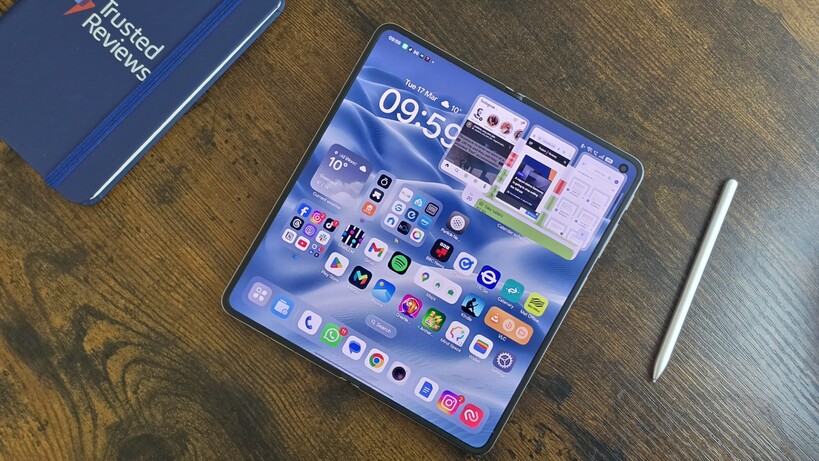
Oppo has announced the Find N6, its latest flagship foldable — and it’s taking direct aim at one of the category’s longest-standing issues: the crease.
The headline feature here is what Oppo calls a “Zero-Feel Crease”, achieved through a redesigned hinge and updated display materials. According to Oppo, the new second-generation Titanium Flexion Hinge reduces surface unevenness to just 0.05mm.
This is significantly lower than typical foldables, which tend to measure around 0.2mm, resulting in a noticeably flatter inner display. Combined with a new Auto-Smoothing Flex Glass, the company claims up to 82% less visible creasing over time.
Durability has also been a focus. The Oppo Find N6 is rated for up to 600,000 folds, with additional testing pushing it to one million cycles. It also boasts IP56, IP58 and IP59 ratings for dust and water resistance — a rare combination for foldables, even if it’s not the best around. That’d go to the IP68-rated Google Pixel 10 Pro Fold.
Advertisement
Advertisement
Image Credit (Trusted Reviews)
Beyond the hinge, Oppo is refining the overall experience. The Find N6 features a 6.62-inch outer display and an 8.12-inch inner screen, both capable of reaching 1,800 nits peak brightness. Despite the larger footprint, Oppo says the device remains one of the thinnest and lightest book-style foldables, measuring in at 4.2mm thick and 225g. As a result, it aims to feel closer to a standard smartphone in day-to-day use.
Multitasking is another key focus. A new Free-Flow Window system allows up to four apps to run simultaneously, with flexible resizing and smoother transitions between tasks. It’s paired with ColorOS 16, which brings a range of AI-powered tools. These include AI Recording, AI Mind Space, and cross-device features through O+ Connect.
Oppo is also introducing the AI Pen, a stylus with 4,096 levels of pressure sensitivity. It supports note-taking, annotation, and tools like Circle to Capture and AI-assisted image generation. It snaps onto the rear of the device via a dedicated case when not in use, and charges wirelessly.
Image Credit (Trusted Reviews)
Under the hood, the phone runs on the Snapdragon 8 Elite Gen 5 (seven-core version), backed by a 6,000mAh battery with 80W wired and 50W wireless charging. This aims to balance performance with all-day battery life.
Advertisement
Advertisement
Camera hardware is equally ambitious. The Find N6 includes a 200MP main sensor, alongside 50MP ultra-wide and 3x periscope lenses, all tuned with Hasselblad. In addition, it features support for 4K Dolby Vision video across all cameras, with up to 120fps via the main rear camera.
The Oppo Find N6 will be available globally from March 20, 2026, though just like with last year’s Find N5, Oppo has decided against releasing the N6 in the UK, US and Europe, instead focusing on regions like China, Japan, Malaysia, Thailand, Australia and New Zealand.
“The inference inflection has arrived,” Huang said during the keynote, framing the next stage of the AI boom around systems designed not just to train models but to run them at massive scale. Read Entire Article Source link
For most of us, catching a bus is second nature and a routine. A shade of bright green comes into our view, we glance at the service number, take one step forward, and that’s it—we’re on our way.
But for someone visually impaired, that everyday task can feel completely different. At a crowded bus stop, they rely on the distant hiss of brakes or snippets of conversation to guess whether the next bus is theirs.
One wrong step could send them to an unfamiliar neighbourhood and derail their whole day.
Advertisement
This constant tension became painfully real for Lee Kiah Hong, who watched his uncle struggle in his daily commute after losing his sight. “Something as simple as a trip to the market became a source of real anxiety.”
Determined to find a solution, he and his three friends—Ryan Yeo, Chia Wee Leong, and Sriram “Ram” Jeyakumar—founded Oculis, a mobile app created to return autonomy, assurance, and dignity to visually impaired commuters.
They had big ambitions, but reality hit
(L-R): Ryan Yeo, Chia Wee Leong, Lee Kiah Hong and Sriram “Ram” Jeyakumar; founders of Oculis./ Image Credit: Oculis
Kiah Hong, Ryan, Wee Leong and Ram met each other whilst pursuing their Diplomas in Applied AI at Singapore Polytechnic, and bonded over a shared interest in using technology to create meaningful, real-world solutions. The quartet often participates in hackathons and competitions together, and Oculis is one of their many projects.
“What really brought us together was discovering that we complemented each other incredibly well,” said Ram. “We’d often find ourselves debating not just how to build something but whether it was worth building in the first place.”
So when they learnt about Kiah Hong’s uncle’s struggles after being diagnosed with glaucoma, it revealed how independence can be hindered by visual impairment—and inspired them to develop a solution.
Advertisement
And it was an ambitious one at that. The founders initially aimed to tackle the broad challenge of navigation, designing a tool that could help with everything from finding your way through shopping malls to reading street signs and identifying landmarks. But the scale was too ambitious, and the quartet had to shift gears quickly.
“Tasks that seem simple to us turned out to be far more challenging to replicate through technology, especially at the speed needed for real-world use,” explained Ryan. “We needed our solution to work instantly and reliably, and achieving that across all navigation scenarios felt impossible.”
To gain more firsthand insights and refine their app, the quartet connected with organisations like the Singapore Association of the Visually Handicapped (SAVH) and Purple Symphony. Through them, they met members of the community—not just to test their app, but to understand what daily life was really like.
“Before meeting them, we thought we understood the challenges like general navigation and getting around large spaces,” shared Wee Leong.
Advertisement
“But our understanding was quite surface-level and shaped more by assumptions than actual experiences. Working with members of the community showed us firsthand how they required a lot of reliance on other people when navigating more unfamiliar environments.”
Through their conversations, they discovered one pressing pain point: bus navigation. This insight ultimately led to the creation of Oculis.
How the app works
Users first start by selecting the bus service they are waiting for, which they can save as their favourite if they wish. They will then wait for the audio signal and lift up their phone to scan for buses, which will audibly announce the bus number and arrival./ Image Credit: Oculis
Navigating the mobile app is simple—all it takes is 3 Ss: Select, Signal, Scan
Select: Users select the bus service they are currently waiting for at a specific bus stop.
Signal: Users wait for the audio signal, which informs them when any of the bus services they have selected is arriving by using data provided by LTA.
Scan: Users lift up their phone to scan for buses, which will audibly announce the bus number and arrival.
The process sounds simple to execute, but it took over 200 navigation sessions at more than 100 bus stops with 30 visually impaired users to get it right. Kiah Hong recounted an instance when one of their testers told them he found it difficult to determine where to point the camera—a simple comment that made them realise what the app was missing.
“We were building an app to help visually impaired people identify buses, yet we’d overlooked the fact that they might not be pointing in the right direction because we had been so focused on making the AI recognition accurate that we hadn’t fully considered the user experience from their perspective,” he explained.
Oculis conducting their pilot tests with the visually impaired./ Image Credit: Oculis
That comment pushed the team to further develop the app’s haptic feedback functions, which use vibrations to guide users in aiming their cameras in the right direction. “It was a reminder that accessible technology isn’t just about what the app does but about how people will actually use it in real life,” Kiah Hong reflected.
With its new improvements, they have received positive feedback from testers. Some had even shared that Oculis was easier to use than existing navigation apps—signifying to the team that they are on the right track.
Advertisement
That said, there is still room for improvement. Ryan shared that the app sometimes struggles with older LED displays on buses and that the team is working to fix this so that Oculis works reliably across Singapore’s entire bus fleet, regardless of how old the buses are.
Filling the gaps through partnerships
While their tech backgrounds meant that they had the technical side down, that was only part of the equation. The team joined the Build For Good Accelerator, an initiative by Open Government Products (OGP), where they picked up skills beyond tech, such as operations, marketing, and business strategy.
The financial support from the accelerator also allowed them to focus their efforts on building the best possible solution without worrying about costs. “We didn’t have to cut corners on testing, compromise on features due to budget constraints.”
Beyond the resources and funding, what the team really needed was something they could not build themselves: connections and trust.
Advertisement
We had the technical skills and the energy to build quickly, but we had no relationships with the community. We were just sending cold emails, hoping someone would reply. The Build for Good team opened doors for us, connected us with organisations like Purple Symphony, and gave us credibility. Without that, we were just four students with an app idea.
Lee Kiah Hong, Ryan Yeo, Chia Wee Leong, and Sriram “Ram” Jeyakumar, founders of Oculis
Oculis founders at 2025’s National Day engagement event (left) and Innofest (right)./ Image Credit: Oculis
Since completing their pilot testing in 2025, Oculis has partnered with more organisations that helped to grow its reach and impact. MINDEF Nexus has provided the team with opportunities to present the app at events such as the National Day Parade Stakeholder Engagement, while Purple Symphony connected them with testers who used Oculis in their daily routines.
“These partnerships helped us meet people we wouldn’t have reached otherwise,” the team shared.
Keeping focused on creating solutions for those in need
The response has been encouraging so far, but it is only just the beginning for the quartet. Currently, Oculis is available via TestFlight for beta testing. Ryan explained that iPhones are the preferred choice for many visually impaired users due to their built-in accessibility features, which is why the team decided to focus on iOS first.
The app has already made its way through several accessibility group chats within the visually impaired community—including Kiah Hong’s uncle, who has finally tried the app for himself.
Advertisement
It wasn’t a dramatic, movie-worthy moment, but seeing something we built to address the exact challenge that started the journey felt deeply meaningful. It started with a real person we cared about.
Lee Kiah Hong, founder of Oculis
And it’s not just that one moment that keeps them going. “Every time someone tells us Oculis made their commute less stressful, or we watch someone use it successfully on their own for the first time—those small wins remind us why we’re doing this”.
Looking forward, Wee Leong revealed that the team will be focused on enhancing the overall user experience, such as refining the interface and smoothing out any friction points. They are also working towards developing the app to work independently on Android devices as well, even before expanding it to wearable devices such as smart glasses.
“Success for us isn’t just about the number of downloads or navigation sessions completed, but more about the meaningful impact. In the next one to two years, we want Oculis to become a trusted, everyday tool for the visually impaired community in Singapore,” the quartet shared.
Advertisement
“Ultimately, we want Oculis to be so seamless and reliable that it fades into the background, just a tool that works, allowing people to focus on where they’re going, not how they’ll get there.”
Their advice to others with ideas? Find people who can help. The team had the technical skills, the community had the lived experience, and the partnerships gave them access and credibility. None of them could have done it alone.
Through the Build For Good programme, the quartet could collaborate with like-minded individuals who remained focused on solving real-world issues for those in need, beyond profits and transactions.
“This alignment in values made all the difference and allowed us to build something that truly serves the community rather than chasing commercial goals,” shared the founders.
Inspired to launch your own community project? On top of project guidance, the Singapore Government Partnerships Office has launched a new SG Partnerships Fund to support citizen-led initiatives at different stages of development. Applications for the Seed and Sprout tiers of the fund start from 1 Apr 2026. Visit www.sgpo.gov.sg/sgpf to learn more.
Every time you unlock your smartphone or start your connected car, you are generating a trail of digital evidence that can be used to track your every move.
In Your Data Will Be Used Against You: Policing in the Age of Self-Surveillance, just published by NYU Press, law professor Andrew Guthrie Ferguson exposes how the Internet of Things has quietly transformed into a vast surveillance network, turning our most personal devices into digital informants. The following excerpt explores the concept of “sensorveillance,” detailing the specific mechanisms—such as Google’s Sensorvault, geofence warrants, and vehicle telemetry—that allow law enforcement to repurpose consumer technology into powerful tools for investigation and control.
A man walked into a bank in Midlothian, Va., his black bucket hat pulled low over dark sunglasses. He handed a note to the teller, brandished a gun, and walked away with US $195,000. Police had no leads—but they knew that the robber had been holding a smartphone when he entered the bank. Guessing that the smartphone, like most smartphones, had some Google-enabled service running, police ordered Google to turn over information about all the phones near the bank during the holdup. In response to a series of warrants, Google produced information about 19 phones that had been active near the bank at the time of the robbery. Further investigation directed the police to Okelle Chatrie, who was ultimately charged with the crime.
Cathy Bernstein had a tough time explaining why her own car reported an accident to police. Bernstein had been driving a Ford equipped with 911 Assist, which was automatically enabled when she struck another vehicle. Rather than stick around to trade insurance information, she sped away. But her smart car had registered the bump—and called the police dispatcher, leading to a fairly awkward conversation:
Advertisement
Apparently, Bernstein did do something “like that.” She was soon caught and cited for leaving the scene of the accident. Her own car provided evidence of her guilt.
The Rise of “Sensorveillance”
Once upon a time, our things were just things. A bike was a tool for biking. It got you from one location to another, but it didn’t “know” more about your travels than any other inanimate object did. It was dumb in a comforting way, and we used it as intended. Today, a top-of-the-line bike can track your route and calculate your average speed along the way. Hop on an e-bike from a commercial bike share, and it will collect data for your trip, plus the trips of everyone else who used it that month.
These “smart” objects belong to what technologist Kevin Ashton named the Internet of Things. Ashton proposed adding radio-frequency identification (RFID) tags and sensors to everyday objects, allowing them to collect data that could be fed into networked systems without human intervention. A sensor in a river could monitor the cleanliness of the water. A tag on a bottle of shampoo could trace its journey throughout the supply chain. Add enough sensors to enough objects and you can model the health of an entire ecosystem—or learn whether you’re sending too much of your inventory to Massachusetts and too little to Texas.
Ashton first theorized the Internet of Things (IoT) in the late 1990s. Today, the IoT goes well beyond his initial vision, including not only RFID tags but also sensors with Wi-Fi, Bluetooth, cellular, and GPS connections. These small, low-cost sensors record data about movement, heat, pressure, or location and can engage in two-way communication.
Advertisement
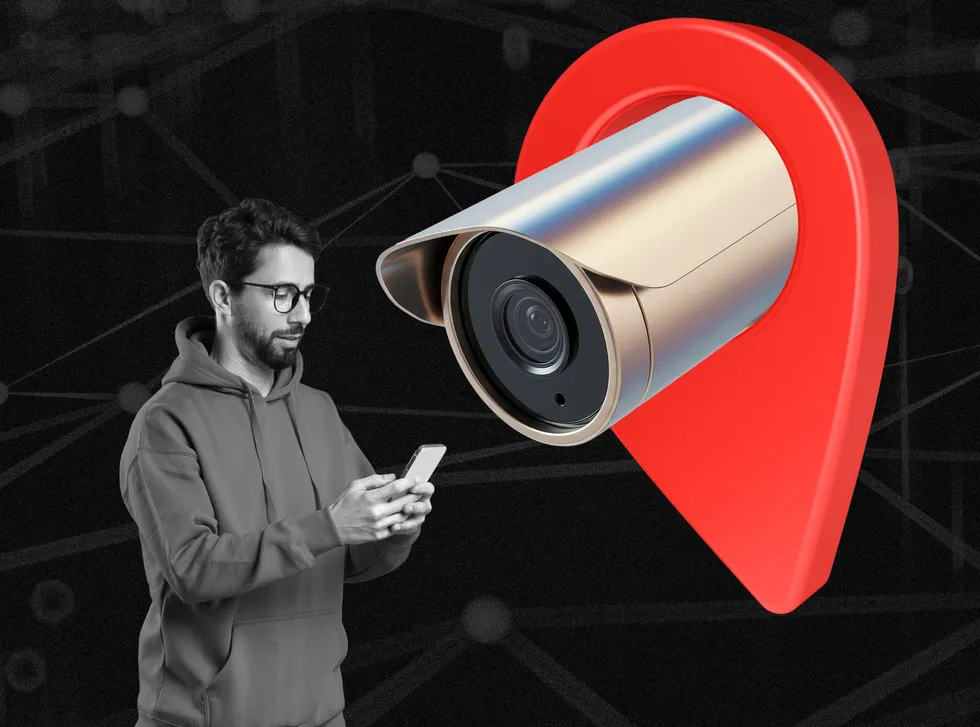
Of course, such a system is also, by necessity, a system of surveillance. “Sensorveillance”—a term I created to highlight the intersection of sensors and surveillance—is slowly becoming the default across the developed world.
Cellphone Surveillance Networks
Let’s start with phones. You’re probably not surprised that your cellphone company tracks your location; that’s how cellphones work. Both smartphones and “dumb” mobile phones use local cell towers, owned by cellphone companies, to connect you to your friends and family, which means those companies know which towers you are near at all times.
If you always carry your phone with you, your phone’s whereabouts—recorded as cell-site location information (CSLI)—reveal yours. One man, Timothy Carpenter, found this out the hard way after he and a group of associates set out to rob a series of electronics stores. Carpenter was the alleged ringleader, but he didn’t enter the stores himself. He served as the lookout, waiting in the car while his associates stuffed merchandise into bags.
It might have been hard for investigators to tie him to the crimes—if not for the fact that every minute he kept watch, his cellphone was pinging a local tower, logging his location. Using that information, the FBI was able to determine that he had been near each store during the exact moment of each robbery.
Advertisement
Cell signals are the tip of the proverbial data iceberg. If you have a smartphone, you’re almost certainly using something created by Google. Google makes money off advertising. The more Google knows about users, the better it can target ads to them. Google’s location services are on all Android phones, which use the company’s operating system, but they’re also on Google apps, including Google Maps and Gmail.
For years, all that location information ended up in what the company called the Sensorvault. The Sensorvault, as the name suggests, combined data from GPS, Bluetooth, cell towers, IP addresses, and Wi-Fi signals to create a powerful tracking system that could identify a phone’s location with great precision. As you might imagine, police saw it as a digital evidence miracle. In 2020, Google received more than 11,500 warrants from law enforcement seeking information from the Sensorvault.
“Sensorveillance”—a term I created to highlight the intersection of sensors and surveillance—is slowly becoming the default across the developed world.
In 2024, Google announced that it would no longer retain all of this data in the cloud. Instead, the geolocation information would be stored on individual devices, requiring police to get a warrant for a specific device. The demise of the Sensorvault came about through a change in corporate policy, which could be reversed. But at least for now, Google has made it significantly harder for police to access its data.
Advertisement
And while the Sensorvault was the biggest source of geolocational evidence, it is far from the only one. Even apps that have nothing to do with maps or navigation might nonetheless be collecting your location data. In one Pennsylvania case, prosecutors learned that a burglar used an iPhone flashlight app to search through a home, and they used the data from the app to prove he was in the home at the time of the break-in. These apps might be advertised as “free,” but they come with a hidden cost.
Cars, increasingly, collect almost as much information as phones. Mobile extraction devices can collect digital forensics about a car’s speed, when its airbags deployed, when its brakes were engaged, and where it was when all that happened. If you connect your phone to play Spotify or to read out your texts, then your call logs, contact lists, social media accounts, and entertainment selections can be downloaded directly from your vehicle. Because cars are involved in so many crimes (either as the instrument of the crime or as transportation), searches of this data are becoming more commonplace.
Even without physically extracting information from the car, police have other ways to get the data. After all, the car’s built-in telemetry system is sharing information with third parties. In addition to the usual personal information you give up when buying a car (name, address, phone number, email, Social Security number, driver’s license number), when you own a Stellantis-brand car, the company collects how often you use the car, your speed, and instances of acceleration or braking. Nissan asserts the right to collect information about “sexual activity, health diagnosis data, and genetic [data]” in addition to “preferences, characteristics, psychological trends, predispositions, behavior, attitudes, intelligence, abilities, and aptitudes.” Nissan’s privacy policy specifically reserves the right to provide this information to both data brokers and law enforcement.
The Law of Smart Things
The fact that government agents can glean so much information from our things does not mean that they should be able to do so at any time or for any reason. The U.S. Fourth Amendment—drafted in an era without electricity—protects “persons, houses, papers, and effects” against unreasonable search and seizure, but is naturally silent on the question of location data.
Advertisement
The first question is whether the data from our smart things should be constitutionally protected from police. In the language of the constitutional text, the smart device itself is an “effect”—a movable piece of personal property. But what about the data collected by the effect? Is the location data collected by your smartwatch considered part of the watch, or part of the person wearing the watch? Neither? Both?
To its credit, the U.S. Supreme Court has addressed some of the hard questions around digital tracking. In two cases, the first involving GPS tracking of a car and the second involving the CSLI tracking of Timothy Carpenter’s cellphone, the court has placed limits on the government’s ability to collect location data over the long term.
United States v. Jones involved GPS tracking of a car. Antoine Jones owned a nightclub in Washington, D.C. He also sold cocaine and found himself under criminal investigation for a large-scale drug distribution scheme. To prove Jones’s connection to “the stash house,” police placed a GPS device on his wife’s Jeep Cherokee. This was before GPS came standard in cars, so the device was physically attached to the undercarriage of the vehicle.
Data about Jones’s travels was recorded for 28 days, during which he visited the stash house multiple times. The prosecutors introduced the GPS data at trial, and Jones was found guilty. Jones appealed his conviction, arguing that the warrantless use of a GPS device to track his car violated his Fourth Amendment rights.
Advertisement
“When the Government tracks the location of a cell phone it achieves near perfect surveillance.” — the Supreme Court
In 2012, the Supreme Court held that a warrant was required, based on the reasoning that the physical placement of the GPS device on the Jeep was itself a Fourth Amendment search requiring a warrant. Justice Sonia Sotomayor agreed regarding the physical search but went further, discussing the harms of long-term GPS tracking: “GPS monitoring generates a precise, comprehensive record of a person’s public movements that reflects a wealth of detail about her familial, political, professional, religious, and sexual associations.”
Timothy Carpenter’s ill-fated robbery spree gave the Supreme Court another chance to address the constitutional harms of long-term tracking. In their attempts to connect Carpenter to the six electronics stores that had been robbed, federal investigators requested 127 days of location data from two mobile phone carriers. The problem for the police, however, was that they had obtained the information on Carpenter without a judicial warrant.
Carpenter challenged the FBI’s acquisition of his CSLI, claiming that it violated his reasonable expectation of privacy. In a 5–4 opinion, the Supreme Court determined that the acquisition of long-term CSLI was a Fourth Amendment search, which required a warrant. As the Court stated in its 2018 ruling: “A cell phone faithfully follows its owner beyond public thoroughfares and into private residences, doctor’s offices, political headquarters, and other potentially revealing locales…. [W]hen the Government tracks the location of a cell phone it achieves near perfect surveillance.”
Advertisement
Jones and Carpenter are helpful for setting the boundaries of location-based searches. But, in truth, the cases generate a lot more questions than answers. What about surveillance that is not long-term? At what point does the aggregation of details about a person’s location violate their reasonable expectation of privacy?
The Warrant According to Google
Okelle Chatrie’s case, in which police used Google’s location data to identify him as the mystery bank robber, offers a stark warning about the limits of Fourth Amendment protections under these circumstances. It’s also a terrific example of why “geofence” warrants, which request information within a certain geographic boundary, are appealing to police. From surveillance footage, detectives could see that the suspect had a phone to his ear when he walked into the bank. A geofence could identify who the suspect was, and likely where he came from and where he went. Google held the answer in its virtual vault. A warrant gave investigators the key.
The police cast a broad net. The geofence warrant asked for data on all the cellphones within a 150-meter radius, an area, as the court described it, “about three and a half times the footprint of a New York city block.” After receiving the police’s initial request for information on all the phones in the area, Google returned 19 anonymized numbers. Over the course of a three-step warrant process, the company narrowed those 19 phones down to three and then to one, which it revealed as belonging to Okelle Chatrie.
If the police wish to buy the data, just like an insurer or marketing firm might, how can you object? It’s not your data.
Advertisement
The three-step warrant process is a unique innovation in the digital evidence space. Google’s lawyers developed a procedure whereby detectives seeking targeted geolocation data had to file three separate requests, first requesting identifying numbers in an area, then narrowing the request based on other information, and finally obtaining an order to unmask the anonymous number (or numbers) by providing a name.
To be clear, Google—a private company—required the government to jump through these hoops because Google considered it important to protect its customers’ data. It was the company’s lawyers—not the courts or the government—who demanded these warrants.
Buying Data
Warrants provide at least some procedural barrier to data collection by police. If government agencies want to avoid that minor hassle, they can simply buy the data instead. By contracting with data-location services, several federal agencies have already done so.
The logic for this Fourth Amendment loophole is straightforward: You gave your data to a third-party company, and the company can use it as it wishes. If you own a car that is smart enough to collect driving analytics, you clicked some agreement saying the car company could use the data—study it, analyze it, and, if it wants, sell it. If you don’t want to give them data in the first place, that is okay (although it will likely result in less optimal functionality), but you cannot rightly complain when they use the data you gave them in ways that benefit them. If the police wish to buy the data, just like an insurer or marketing firm might, how can you object? It’s not your data.
Advertisement
Who Is to Blame?
Fears about the amount of personal information that could be revealed with long-term GPS surveillance have become reality. Today, police don’t need to plant a device to track your movements—they can rely on your car or phone to do it for them.
This happened because companies sold convenience and consumers bought it. So it might be tempting to blame ourselves. We’re the ones buying this technology. If we don’t want to be tracked, we can always go back to using paper maps and writing down directions by hand. If few of us are willing to make that trade, that’s on us.
But it’s not that easy. You may still be able to choose a dumb bike over a smart one, but a car that tracks you will soon be the only type of car you can buy. And while cars and data can, in theory, be separated, that’s not true for all our smart things. Without cell-signal tracking capabilities, a cellphone is just a paperweight. And in today’s world, living without a phone or a car is simply not practical for many people.
There are technological steps we can take toward protecting privacy. Companies can localize the data the sensors generate within the devices themselves, rather than in a central location like the Sensorvault. Similarly, the information that allows you to unlock your Apple iPhone via facial recognition stays localized on the phone. These are technological fixes, and positive ones. But even localized data is available to police with a warrant.
Advertisement
This is the puzzle of the digital age. We can’t—or don’t want to—avoid creating data, but that data, once created, becomes available for legal ends. The power to track every person is the perfect tool for authoritarianism. For every wondrous story about catching a criminal, there will be a terrifying story of tracking a political enemy or suppressing dissent. Such immense power can and will be abused.
Brendan Carr is once again doing Brendan Carr stuff.
Carr has threatened to revoke the broadcast licenses of broadcasters that tell the truth about Trump’s disastrous war in Iran. In a post over at Elon Musk’s right wing propaganda website, Carr insists that news outlets that are “running hoaxes and news distortions” (read: telling the truth) about the war will face potential headaches when their licenses come up for renewal:
If you can’t read that, it says:
Broadcasters that are running hoaxes and news distortions – also known as the fake news – have a chance now to correct course before their license renewals come up.
The law is clear. Broadcasters must operate in the public interest, and they will lose their licenses if they do not.
And frankly, changing course is in their own business interests since trust in legacy media has now fallen to an all time low of just 9% and are ratings disasters.
Advertisement
The American people have subsidized broadcasters to the tune of billions of dollars by providing free access to the nation’s airwaves.
It is very important to bring trust back into media, which has earned itself the label of fake news.
When a political candidate is able to win a landslide election victory after in the face of hoaxes and distortions, there is something very wrong. It means the public has lost faith and confidence in the media. And we can’t allow that to happen.
Time for change!
Advertisement
That’s certainly a lot of tough-talking bullshit.
Carr’s only authority comes over broadcast affiliates (not national media companies or cable TV outlets), most of which are already owned by Republicans and already kiss Trump’s ass (because they want to merge). The FCC hasn’t denied a license renewal in decades, and any attempt to do so would result in a massive, protracted First Amendment legal mess that the FCC would be extremely likely to lose.
Carr’s actual goal for this kind of stuff is three fold.
One, he’s putting on a show for our mad, idiot king that Carr is being a good boy. Two, he’s trolling the press so they’ll hyperventilate about his behaviors; those stories then advertise to the MAGA base the false impression that Carr is doing useful and bold culture war stuff (so he can potentially run for higher office). They’ll assume it all must be useful and important because he’s upsetting people of intellect, importance, and conscience, which they enjoy.
Advertisement
But most importantly it sends a message to media companies that they should get in line with the Trump administration or face costly and expensive (no matter how pointless) legal annoyances. Of course those threats haven’t really been needed, because most U.S. media companies (and big corporations) have been happy to bribe the president or kiss his ass anyway.
That sort of feckless journalistic failure in the face of power is why so much of the public has lost faith in U.S. news, not because they’ve historically been too critical of war or too tough on wealth and power.
While these sorts of threats certainly are dangerous, Carr is a monumental clown who is putting on a big show to try and pretend he’s a person of substance and power doing important things.
Meanwhile Trump is upset that some news outlets have been making it clear he was too stupid to understand the evolving nature of low cost, modern drone warfare (despite all the evidence in Ukraine). In his own post at his own right wing propaganda website, Trump went off on a local rambling tirade about Iran somehow misleading the entirety of U.S. media:
Advertisement
That one says:
Iran has long been known as a Master of Media Manipulation and Public Relations. They are Militarily ineffective and weak, but are really good at “feeding” the very appreciative Fake News Media false information. Now, A.I. has become another Disinformation weapon that Iran uses, quite well, considering they are being annihilated by the day. They showed phony “Kamikaze Boats,” shooting at various Ships at Sea, which looks wonderful, powerful, and vicious, but these Boats don’t exist — It’s all false information to show how “tough” their already defeated Military is! The five U.S. Refueling Planes that were supposedly struck down and badly damaged, according to The Wall Street Journal’s false reporting, and others, are all in service, with the exception of one, which will soon be flying the skies. Buildings and Ships that are shown to be on fire are not — It’s FAKE NEWS, generated by A.I. For instance, Iran, working in close coordination with the Fake News Media, shows our great USS Abraham Lincoln Aircraft Carrier, one of the largest and most prestigious Ships in the World, burning uncontrollably in the Ocean. Not only was it not burning, it was not even shot at — Iran knows better than to do that! The story was knowingly FAKE and, in a certain way, you can say that those Media Outlets that generated it should be brought up on Charges for TREASON for the dissemination of false information! The fact is, Iran is being decimated, and the only battles they “win” are those that they create through AI, and are distributed by Corrupt Media Outlets. The Radical Leftwing Press knows this full well, but continues to go forward with false stories and LIES. That’s why their Approval Rating is so low, and I can win a Presidential Election, IN A LANDSLIDE, getting only 5% positive Press — They have no credibility! I am so thrilled to see Brendan Carr, the Chairman of the Federal Communications Commission (FCC), looking at the licenses of some of these Corrupt and Highly Unpatriotic “News” Organizations. They get Billions of Dollars of FREE American Airwaves, and use it to perpetuate LIES, both in News and almost all of their Shows, including the Late Night Morons, who get gigantic Salaries for horrible Ratings, and never get, as I used to say in The Apprentice, “FIRED.” Thank you for your attention to this matter! President DONALD J. TRUMP
These are not the behaviors of competent, confidence people who believe things are going well. They’re the sad gyrations of pathetic men who know Trump is on historic trajectory to be the worst and least popular President in U.S. history (with ample room to fall). No amount of posturing can hide it.
By Itamar Apelblat, Co-Founder and CEO, Token Security
Agentic AI represents a once-in-a-generation shift in how organizations operate. AI agents are not copilots. They are not better chatbots.
They are autonomous actors that plan, decide, and act. Increasingly, they will write code, move data, execute transactions, provision infrastructure, and interact with customers often without a human in the loop. They will also operate continuously, across systems, at machine speed.
This transformation is already unlocking enormous business value. But, it will only succeed if it is secured properly. And today, most organizations are not prepared.
Advertisement
The prevailing approach to AI security focuses on guardrails such as prompt filtering, output controls, and behavior monitoring. That thinking is flawed. Guardrails attempt to constrain behavior after access has already been granted. But once an AI agent has credentials and connectivity, a single misstep can cause data exfiltration, destructive actions, or cascading failures across interconnected systems.
If you want to secure AI agents without slowing innovation, they need to rethink the control plane. Identity, not prompts, not networks, not vendor assurances, is the only scalable foundation for securing and governing autonomous systems.
Here are the five most important actions CISOs should take today to ensure AI agent security:
Advertisement
1. Treat AI Agents as First-Class Identities
The moment an AI agent connects to production systems, APIs, cloud roles, SaaS platforms, or infrastructure, it stops being an experiment and becomes an identity.
Every AI agent uses identities, often many of them: API tokens, OAuth grants, service accounts, cloud roles, secrets, and access keys. Yet in most organizations, these identities are invisible, unmanaged, and poorly governed.
You must mandate that every AI agent is treated as a first-class digital identity:
Advertisement
It must have a clear owner
It must be authenticated
Its permissions must be explicitly defined
Its activity must be logged and monitored
If you don’t know which identities your agents are using, you don’t control them.
2. Shift from Guardrails to Access Control
Guardrails assume that AI can be safely constrained by rules. But AI agents are non-deterministic and adaptive. With an unlimited number of possible prompts and interactions, bypass is not a question of if it will happen, but when.
Even if prompt controls worked 99% of the time, 1% of infinity is still infinity.
Security must move down the stack to where real control exists: access. You need to ask these questions:
Advertisement
What systems can this agent reach?
What data can it read?
What actions can it execute?
Under what conditions?
For how long?
Once access is tightly scoped, behavior becomes far less dangerous. Identity-based access control is the containment layer for autonomous software. Network controls are too coarse. Prompt filters are too weak. AI platform assurances are not enough.
Identity is the only control plane that spans every system an agent touches.
AI agents create, use, and rotate identities at machine speed, outpacing traditional IAM controls.
Token Security helps teams manage the full lifecycle of AI agent identities, reduce risk, and maintain governance and audit readiness without sacrificing speed.
3. Eliminate Shadow AI by Gaining Identity Visibility
Advertisement
Shadow AI is not primarily a tooling problem. It is an identity problem. Developers, IT admins, and business users are already creating AI agents that connect to business-critical systems, leverage APIs, retrieve data, and trigger workflows.
These agents don’t announce themselves. They simply start acting. When security teams lack visibility into these identities, Zero Trust collapses. Unknown agents become trusted by default because their credentials are valid.
You must prioritize:
Continuous discovery of machine and non-human identities.
Identification of agent-related tokens, service accounts, and OAuth grants.
Mapping which agents have access to which systems.
If you can’t see it, you can’t secure it. And in the AI era, what you can’t see is often autonomous.
4. Secure Based on Intent, Not Just Static Permissions
Advertisement
AI agents are goal-oriented. Two identical agents with identical permissions can behave very differently depending on their objective. This introduces a missing dimension in traditional access models: intent.
To secure AI agents effectively, organizations must answer:
What is this agent meant to accomplish?
What actions are required to achieve that goal?
Which actions are outside its purpose?
An agent created to summarize support tickets should not be able to export the full customer database. An infrastructure optimization agent should not be able to modify IAM policies. Intent defines acceptable behavior.
This breaks the dangerous assumption that agents can simply inherit human permissions. An agent acting “on behalf of” a highly privileged engineer should not automatically gain every permission that engineer has.
Security for AI agents is not about predicting behavior. It is about enforcing intent through tightly scoped identity and access controls.
Advertisement
5. Implement Full AI Agent Lifecycle Governance
Security failures rarely happen at the moment of creation. They happen over time. Access accumulates. Ownership becomes unclear. Credentials persist. Agents are modified, repurposed, and eventually abandoned, often silently. AI agents compress this lifecycle dramatically. What used to unfold over months can now happen in hours or even more rapidly.
You must ensure lifecycle governance for every agent:
Who owns it today?
What access does it currently have?
Is that access still aligned to its intent?
When should secrets be rotated, access reviewed, or the agent decommissioned?
Without continuous lifecycle control, risk compounds invisibly. If you cannot answer these questions at any given moment, you do not control your AI agents.
Agentic AI is inevitable and it is overwhelmingly positive for business. The value lies in autonomous access that allows agents to act across systems at scale and machine speed. But, autonomy without identity control is chaos.
Organizations that bolt AI onto legacy, human-centric identity models will either overprivilege agents or slow innovation to a halt. Organizations that ignore identity will eventually lose control. The path forward is not to slow down AI. It is to secure it properly.
Identity is the only scalable control plane for agentic AI. Lifecycle governance is non-negotiable. And security must enable, not obstruct, innovation.
The companies that win in the coming decade will be those that leverage AI to transform their business while remaining secure. The key to doing that is identity.
Sony is rolling out a firmware update for its PlayStation Portal handheld that introduces a new quality option for both Remote Play and Cloud Streaming. Choosing the 1080p High Quality mode means that you’ll be able to stream games at a higher bitrate compared with the 1080p Standard option.
You can switch to this mode by going to Quick Menu > Max Resolution and picking 1080p High Quality while you’re playing a game. You’ll need to restart your game session for the change to take effect. Naturally, 1080p High Quality will use more data than the other resolution options.
Sony says that more than half of all Portal users are now PlayStation Plus Premium subscribers, meaning they can use the Cloud Streaming option on the device. With that in mind, the company is making some Cloud Streaming changes as part of this firmware update.
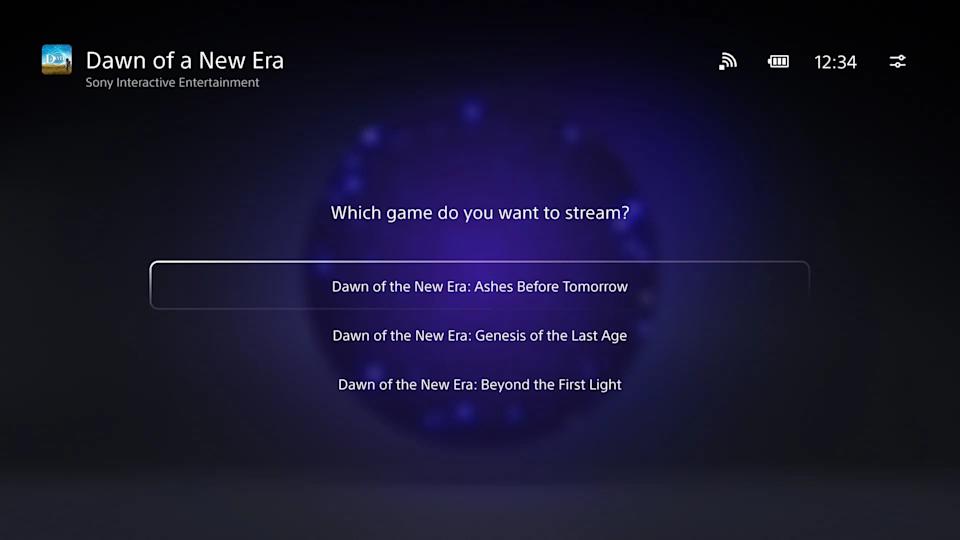
The company says it has refined the search screen — from now on, whenever you open this up, the on screen keyboard will pop up immediately. That’s a nice little quality-of-life update that streamlines things a bit. When you pick the “stream” option on pages for game bundles (i.e. for any title that includes multiple games), you’ll be able to select a specific game to jump into.
Advertisement
Sony Interactive Entertainment
There are notification changes too. If you receive a game invite while playing a supported title, you’ll now see a clear notification on your screen. Trophy notifications should now display properly too, with the trophy name and image showing up. Unlocking a platinum trophy will cause an animated notification to appear.
There’s one more tweak to the system with this Portal update as Sony attempts to make the onboarding experience a bit smoother. Those who pick up a Portal but don’t already have a PlayStation account will be able to create one and then sign in on the handheld by scanning a QR code on their mobile device. Such folks will still need to have access to a PS5 or sign up for PS Plus Premium to actually get any use out of the Portal, of course.
China is escalating pressure on Apple’s App Store just days after a fee cut, signaling the fight is shifting from commissions to the rules that govern payments and app distribution.
China is escalating pressure on Apple
China’s ruling party newspaper, the People’s Daily, said on March 17 that Apple should ease what it called “monopolistic” policies. The editorial followed Apple’s move to cut its App Store commission in mainland China from 30% to 25%. Chinese officials framed the move as a result of regulatory pressure, with the change following communication with regulators. The timing shows regulators are pushing beyond pricing and into how Apple controls iOS. Continue Reading on AppleInsider | Discuss on our Forums
Handala hackers hit Stryker via compromised Intune admin
Tens of thousands of devices wiped, but no data theft confirmed
Medical products remain safe; order systems offline and manual only
When cybercriminals struck Stryker last week and wiped tens of thousands of electronic devices, they did so without using any malware. Instead, they used Intune, Microsoft’s cloud-based endpoint management service, sources are saying.
Last week, a hacking collective calling itself Handala (AKA HAtef, Hamsa) said they broke into Stryker, a Fortune 500 healthcare company with tens of billions in annual sales. They claimed to have stolen 50 terabytes of data and wiped “tens of thousands of systems and servers across the company’s network.”
“In this operation, over 200,000 systems, servers, and mobile devices have been wiped, and 50 terabytes of critical data have been extracted,” the attackers allegedly said at the time. “Stryker’s offices in 79 countries have been forced to shut down.”
Article continues below
Advertisement
Abusing Intune
Stryker soon confirmed the reports with an 8-K filing. Multiple employees also confirmed their electronic devices were wiped overnight.
Then, a “source familiar with the attack” told BleepingComputer that Handala managed to compromise an Intune admin account and used it to create a new Global Administrator account. With the master account, they initiated the wipe command, erasing data from almost 80,000 devices in a matter of hours. The investigators have also disputed Handala’s claims of data exfiltration, saying they found no evidence that any data was removed whatsoever.
Advertisement
In a subsequent update, Stryker said its medical devices are safe to use, but electronic order systems are offline, meaning customers can only place orders manually, through sales representatives.
“All Stryker products across our global portfolio, including connected, digital, and life-saving technologies, remain safe to use,” the company said. “This event was contained to Stryker’s internal Microsoft environment, and as a result it did not affect any of our products—connected or otherwise.”
Sign up to the TechRadar Pro newsletter to get all the top news, opinion, features and guidance your business needs to succeed!
Although unconfirmed, reports are saying Handala are “hacktivists linked to Iran’s Ministry of Intelligence and Security”, targeting mostly Israeli organizations around the world.
We spend hours testing every product or service we review, so you can be sure you’re buying the best. Find out more about how we test.
Marshall Bromley 450: two-minute review
The Marshall Bromley 450 is the second party speaker that the audio specialist has released. It’s a smaller variant of its older sibling, but aims to condense everything we like about that model into a less costly, more mobile unit. But just how well can it do that?
Well, at first glance, the similarities between the Marshall Bromley 450 and its sibling are striking. It has a very similar amp-inspired build, it’s got those classic tactical knobs for controlling volume, bass, and treble levels, and it’s adorned with the golden Marshall logo. But the similarities don’t stop there.
Advertisement
Its older sibling sits in our guide to the best Bluetooth speakers around, so unsurprisingly, the sound signature here is actually quite similar. You get agile and punchy, yet warm bass, which really feels like the star of the show. But you also get controller, expressive highs, paired with decently-detailed mids. Like the Marshall Bromley 750 before it, this is a great-sounding speaker, and has the raw power required to offer awesome audio outdoors as well as indoors.
My criticisms of the Bromley 450’s sound are very few and far between. It doesn’t offer the most rippling sub-bass, and I needed to adjust EQ now and then to get vocals to sound their best in particular tracks. But these are pretty minor qualms, and this is still an impressive performer — especially when you account for this model’s excellent soundstage, stereo sound capabilities, and ‘true’ 360-degree stereophonic sound tech.
Something else I highly rate is the Bromley 450’s design. Its premium construction — with faux-leather casing, a metal grille, and golden details — is as stunning as it was before. Meanwhile, the included handle makes it relatively easy to transport, even if this is a hefty model overall. The Bromley 750’s wheels and suitcase-esque handle are gone here though, which makes this a little tougher to carry over longer distances.
Advertisement
Still, you get better protection against the elements compared to the Bromley 750, with this smaller alternative packing an IP55 rating. This means that the speaker is dust-protected, and can withstand multi-directional water jets, making it a good fit for outdoor use.
You will make a few sacrifices when choosing the Bromley 450 over Marshall’s larger party speaker, though. You get less power, and thus slightly less omnipresence through the deep bass registers — understandable given that the Bromley 450 covers a little less of the frequency range. But you also lose the sound character control feature, which enables you to find the right balance between ‘dynamic’ or ‘loud’ audio output.
Sign up for breaking news, reviews, opinion, top tech deals, and more.
But still, you do get quite strong functionality from the Bromley 450, all things considered. It has a whole host of connectivity options, including XLR/6.35mm slots for karaoke and instruments. It supports Auracast for multi-speaker pairing with another Bromley unit or other Marshall speakers — like the Marshall Middleton II or Marshall Kilburn III. And it has a replaceable battery which packs an incredible 40 hours of playtime, and can be used as a portable charger.
Advertisement
And if all of this wasn’t enough, you also get classy stage-inspired lighting, with three dynamic options for different vibes. You can also turn these off if you want to conserve more battery life.
If there’s one flaw that sticks out to me, it’s the Marshall app. It feels underbaked, lacking EQ controls or the ability to adjust effects like delay and reverb. I wish you had more ways to remotely control this unit, especially if you’re further away from it and want to make a quick adjustment to the bass, for instance.
But overall, there’s a whole lot to love about the Marshall Bromley 450. It does a great job at shrinking the 750’s talents down and replicating them, and it’s a luxurious party speaker in just about every way imaginable.
Yes, it comes at quite the cost, and those on a tighter budget may favor a rival from the JBL PartyBox line. But the Marshall Bromley 450 is almost a different proposition entirely — it’s masterfully constructed, built to be a true centerpiece, and brings an air of retro-style classiness that its RGB-laden contemporaries fail to deliver.
Advertisement
(Image credit: Future)
Marshall Bromley 450 review: price and release date
List price of $799.99 / £549.99 / AU$1,079
Available now via the Marshall website
And available from other select retailers from March 31, 2026
The Marshall Bromley 450 launched in March 2026 for $799.99 / £549.99 / AU$1,079. It’s available now via Marshall’s digital store, but select retailers will also begin to sell the speaker from March 31, 2026. It’s available in a single colorway — Black & Brass.
The Bromley 450 is the younger sibling of the Marshall Bromley 750 — Marshall’s first party speaker which is larger, more powerful, and in turn, a lot pricier. The Bromley 750 comes in at $1,299 / £899 / AU$1,799, placing it in competition with speakers such as the JBL PartyBox 720.
Marshall Bromley 450 review: specs
Swipe to scroll horizontally
Weight
Advertisement
26.9lbs / 12.2kg
Dimensions
19.4 x 14.2 x 10.3 inches / 492 x 359.9 x 260.9mm
Connectivity
Advertisement
Bluetooth 5.3, 3.5mm, USB-C, RCA, 2x XLR/6.35mm combo jacks
Battery life
40 hours
Speaker drivers
Advertisement
2x 6.5-inch 40W woofers, 4x 2-inch 6W full-ranges
Waterproofing
IP55
(Image credit: Future)
Advertisement
Marshall Bromley 450 review: features
Excellent connectivity options, including XLR/6.35mm slots for karaoke / instruments
Phenomenal 40-hour battery life
Sound character control left out, app is underwhelming
The Marshall Bromley 450 follows in its larger sibling’s footsteps with an incredibly similar feature suite. So that means you’re getting the basics, like multi-point connectivity, fast-pairing, and companion app support, although there’s a decent amount more to uncover.
First of all, this thing has a whole host of connectivity options. You’ve got Bluetooth 5.3, 3.5mm wired, USB-C, and even RCA inputs. If you’d like to use this unit as a karaoke machine, then no problem either. There are two XLR / 6.35mm combo jacks on the top side of the speaker, which you can use. Again, there are effects you can add, including reverb and delay if you wanna spice things up a bit.
Another thing I love about the Marshall Bromley 450 is its battery life. 40 hours of playtime is absolutely fantastic for a speaker of this size, blowing most of the competition out of the water. But there’s more. This is actually the same battery used on the Marshall Bromley 750, meaning you can interchange them if you own both units. This also highlights Marshall’s heightened efforts in the sustainability field again — it’s issuing components that can be used across multiple units, and are fully replaceable.
One more feature I appreciated on the Marshall Bromley 450 was its Auracast capabilities. Although more traditional multi-speaker pairing is not available, you can connect a bunch of compatible Marshall devices together using Auracast for even more powerful and immersive sound. I tried linking the Bromley 450 up with the Marshall Kilburn III and it worked without a hitch. I also tried linking it with a second Bromley 450 unit — something I’ll discuss at length in the ‘Sound quality’ section.
Advertisement
This is all great stuff so far, but I do have a few qualms with the Bromley 450’s feature-set. First of all, I have to say that the Marshall companion app feels a bit bare. Although there are some neat physical EQ options on the speaker itself — which let you adjust bass and treble levels — there’s no way of altering this remotely. The same goes for the reverb and delay effects.
Yes, the app provides a way to tap into Auracast broadcasts, and some simple customization options for the ‘M’ button, but that’s about it. Given that Marshall has rolled out a more complete app for its home theater tech — like the Marshall Heston 120 and Heston 60 — I’d expect a few more controls for the Bromley 450.
On top of this, it was a bit of a shame to see the sound character controls from the Bromley 750 get dropped on this new model. This worked really well on that model, and enabled listeners to tailor audio towards a ‘dynamic’ or ‘loud’ style. I get it, this is a smaller, cheaper model, but it would’ve been nice to see again here.
But I want to be clear: the Marshall Bromley 450 still has a very capable set of features. I haven’t even mentioned my favorite yet, the integrated stage lights. There are three presets: the first is ambient, suited to an occasion like a dinner party or solo listening session; the second is representative of actual stage lights, with bold and dynamic patterns that sync to your music; and the final preset is high-energy and flashy, intended to create more of a party atmosphere.
Advertisement
All of the presets work well, and the white lighting is tasteful and classy — something that I can’t say about the swathe of party speakers with loud RGB lighting. The second is my favorite, simply for its authenticity and dynamism, but I was glad to see an option to disable lights for the moments where you want to conserve battery life.
(Image credit: Future)
Marshall Bromley 450 review: sound quality
Energetic sound that rocks indoor and outdoor spaces
Excellent soundstage and no real sweet spot
Powerful bass overall, although the darkest depths could hit harder
I was a big fan of how the Marshall Bromley 750 sounded, so I had pretty high hopes for its lil’ bro. But did it deliver? Yes, yes it did.
Let me begin by stating the obvious: this is a seriously powerful model. The Bromley 450 harnesses the power of two 6.5-inch 40W woofers, four 2-inch 6W full-ranges, and a couple of passive radiators to make that bass feel even heftier. The result is powerful, regimented sound that travels brilliantly, no matter whether you’re listening indoors or outdoors.
When tuning into Timeless by Shinchiro Yokota, I was wowed by the impact of mid-bass, as well as the snappiness of higher-pitched percussion. The speaker’s sense of rhythm and handling of dynamics also remained impressive, whether I was listening at low volumes or cranking things up towards max loudness.
Advertisement
In Morning Wonders – Leo Pol Remix by Kolter, a track with pretty aggressive drums in the treble range, the Bromley 450 replicated highs with confidence. There was a snappy responsiveness and satisfying tone to percussion, even while the tune’s intent-filled bass consumed our music testing space.
As the Bromley 750’s smaller sibling, you are of course going to make a few sacrifices in terms of sound. Most noticeably, the Bromley 450 is less powerful — but it’s also less adept at handling the darkest sounds in the frequency range. For instance, tracks with rippling low bass, like Max Dean’s Fascinator, didn’t quite have that full-sounding rumble that mightier models can muster. Sub-bass is audible in tracks, don’t get me wrong, and the Bromley 450 can still reach down to a solid 42Hz, just don’t expect the most palpable deep bass ever.
One minor thing I noticed is that there’s also a bit of compression at absolute peak volumes. This is pretty common for Bluetooth speakers, but the Bromley 750 barely showed any hints of compression — in part thanks to its sound character control function, which helped the speaker sound ultra-clean in ‘Dynamic’ mode.
My complaints run out there though. Sure, vocals could sound a little subdued at times when I listened to voice-led tunes indoors. But two things: the onboard EQ options totally solved this issue — I just had to turn the bass down two notches; and this speaker is designed for parties rather than the most detailed, high-fidelity listening.
Advertisement
Overall, the Marshall Bromley 450 is a very strong performer in the audio department. Its punchy bass, direct-sound, and vibrant treble are great of course. But the inclusion of Marshall’s 360-degree ‘true stereophonic’ audio tech also helps this unit to stand out among the crowd.
This thing genuinely sounds awesome from every angle. It doesn’t matter if you’re in front, behind, near, or far away from the speaker, it doesn’t have any real acoustic sweet spot. This tech impressed me on smaller speakers like the Marshall Kilburn III, but it was even more striking on a hulking model like the Bromley 450.
In a product briefing, Marshall also explained how the speaker’s full-range drivers are mounted on the four sides of the speaker (two on the left, two on the right) which keeps stereo channels well separated for a more immersive listening experience.
One more note on sound: this thing can reach new heights if you pair it with a second unit via Auracast. I was lucky enough to be testing the Bromley 450 at the same time as my Future colleague, Nikita, and we decided to combine our two units outside, via an Auracast broadcast from my phone. And the results were exceptional.
Advertisement
In Felini by Venerus and Marco Castello, I was astonished by how absorbing the trickle of flowing waters and strumming of natural acoustic guitars sounded. It really felt as if I was standing front and center at a gig. And with deeper tracks like Chris Stussy’s Breather, I was enveloped in pumping, euphoric bass. Of course, you’ll get awesome power with multiple units as well — when positioning the speaker on the far side of a parking lot, I could still hear that rich bass from the other side. Impressive stuff.
Sound quality score: 4.5/5
(Image credit: Future)
Marshall Bromley 450 review: design
Classy Marshall aesthetic is as satisfying as ever
Tasteful lights and premium physical controls
Very hefty, and the wheels are no more
Every time that I review a Marshall product, I feel like I’m repeating myself. But that’s simply because I’m always full of praise for the captivating retro-style design that the company brings to each and every product. And the Marshall Bromley 450 is no different.
Everything from the faux-leather casing, through to its metal grille and golden details is a joy to behold — just as it was on the Bromley 750. This is a pricey model, but you do feel like the luxurious looks, high quality materials, and tasteful stage lights help to make your investment feel worthwhile.
The golden control panel on top of the speaker is also laid out beautifully, and is incredibly easy to use. Red LEDs symbolize which connectivity option you’re using, and tactical knobs are available to alter volume, bass and treble levels, and more. The mic and instrument ports are also located on top of the speaker this time, making it even easier to get a guitar performance or karaoke session underway.
Advertisement
Something that Marshall Bromley 450 actually improves on compared to its pricier sibling is its protection against the elements. You’re getting an IP55 rating here, which means that the speaker is dust-protected, and can withstand multi-directional water jets. In practice, this essentially means that the Bromley 450 is perfect for taking into outdoor spaces, and will be able to handle a spot of rain without issue. As the Bromley 450 is smaller than its older sibling, and easier to take outdoors, this feels like a very smart design decision indeed.
But what else is different from the Bromley 750? Well, the most noticeable difference is the removal of wheels. Yep, this is a wheelless Party Speaker, and you’ll have to lug it around using the handle on the side of the unit. Now don’t get me wrong: the handle is well-made, but if you’re transporting this thing over long distances, a word of warning.
This speaker is honestly pretty hefty, coming in at 26.9lbs / 12.2kg. Sure, the 750 was essentially double the weight, but its suitcase-style handle and wheels made it fairly painless to lug about. If you’re keeping your speaker in one place, or only moving it over short distances, the handle will certainly suffice, but its weight is worth keeping in mind.
(Image credit: Future)
Advertisement
Marshall Bromley 450 review: value
It’s by no means cheap
But quality is undeniably high, even compared to rivals
Repairability makes the speaker feel like a worthwhile investment
Let’s not beat around the bush here. The Marshall Bromley 450 is an expensive model, even when you consider its output power and sonic talents. But a high price doesn’t mean a speaker can’t be good value for money.
And I do think you get bang for your buck overall with this model. At $799.99 / £549.99 / AU$1,079, the Bromley 450 is costlier than similarly powered rivals, like the JBL PartyBox Stage 320, for instance. But, in turn, you’re getting considerably better battery life, improved dust and waterproofing, a more luxurious build, and a larger array of speaker drivers.
Is that going to be worth it? It depends. For some, the lower price and specs of the JBL speaker will be plenty good enough. But if you’re looking for a premium quality, long-lasting option, then the Marshall may be more attractive.
On top of this, the Bromley 450 is repairable, with Marshall offering maintenance and parts via its website. That helps the speaker to feel like a worthwhile investment for years to come rather than a short-term audio solution.
(Image credit: Future)
Advertisement
Should I buy the Marshall Bromley 450?
Swipe to scroll horizontally
Attributes
Notes
Rating
Features
Advertisement
Brilliant battery life, connectivity options, and stage lights – but the companion app is underequipped.
4/5
Sound quality
Powerful, spacious sound, with no real drop off in listening angles, deep bass could be a little more full sounding.
Advertisement
4.5/5
Design
Stellar, luxurious looks with IP55 dust and waterproofing, but pretty hefty and no wheels this time.
4.5/5
Advertisement
Value
It’s pricey, but you get a luxury build and great sound, with top-tier battery life.
Spent hours listening to music both indoors and outdoors
Used alone and while paired with a second unit via Auracast
Predominantly tested using Tidal
I spent hours listening to music on the Marshall Bromley 450, during which time I exhausted its various features and tried it both indoors and outdoors.
When listening to tunes, I made sure to try out a wide variety of genres, and run through tracks in the TechRadar testing playlist. For the most part, I used Tidal to blast my tunes, but I also dipped into Spotify now and then. I used the Bromley 450 on its own to begin with, but I also had the opportunity to pair it with a second unit, and connected the two together via Auracast.
More generally, I’m an experienced audio gear reviewer, and have spent the last two years testing everything from premium headphones — like the Sony WH-1000XM6 — through to some of the best Dolby Atmos soundbars, including the LG Sound Suite Immersive Suite 7 Pro. I also reviewed the Marshall Bromley 750 myself, so I’m intimately familiar with Marshall’s quality in the party speaker domain.

























































You must be logged in to post a comment Login